9 July 2019

Is India Losing Its Grip on Bhutan?

By Kashish Kumar

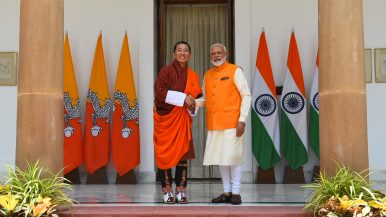
It was not much of a surprise when India’s newly appointed External Affairs Minister S. Jaishankar chose Bhutan for his maiden bilateral visit, reflecting once again India’s ever-growing desperation for continued friendship with its neighbor. Similarly orchestrated visits have been common from the Modi government; Bhutan became Modi’s first foreign visit under his “Neighborhood First Policy” in his previous tenure.

Does this necessarily mean that India-Bhutan relations stand as a glorious example of “love thy neighbor”? Or does the Indian government simply consider Bhutan a necessary piece for ensuring its economic and strategic dominance in the region?

Russia-India-China Trilateral Grouping: More Than Hype?

By Rajeswari Pillai Rajagopalan

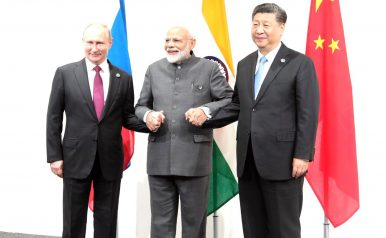
During the G-20 Summit in Osaka, Russia, India, and China (RIC) held the latest iteration of a trilateral meeting between them. While the grouping itself is nothing new – the notion of meeting on the sidelines of the G-20 meeting began last year and many other meetings were held during the G-20 meeting this year as well – the RIC nonetheless stole the headlines this year.

RIC as a strategic grouping first took shape in the late 1990s under the leadership of Yevgeny Primakov as “a counterbalance to the Western alliance.” Primakov, a Russian politician and diplomat who was also the prime minister of Russia from 1998 to 1999, is credited with the idea for RIC. The group was founded on the basis of “end[ing] its subservient foreign policy guided by the U.S.,” and “renewing old ties with India and fostering the newly discovered friendship with China.”

A Long & Undeclared Emergency

by Gyan Prakash

Speaking on November 25, 1949, just as India became a democratic republic, B.R. Ambedkar, the chief architect of the Indian constitution, exhorted his countrymen to maintain “democracy not merely in form, but also in fact.” Ambedkar, born in a low, formerly untouchable Hindu caste (Dalits), had ensured a progressive character to the constitution. It promulgated universal adult franchise in an overwhelmingly illiterate population; conferred citizenship without reference to race, caste, religion, or creed; proclaimed secularism in a deeply religious country; and upheld equality in a society marked by entrenched inequalities. The constitution made Indian democracy seem another milestone on humankind’s journey to freedom and dignity.

Ambedkar, however—as Gyan Prakash writes in Emergency Chronicles, his acute analysis of the sudden collapse of democracy in India in the mid-1970s—was “convinced that Indian society lacked democratic values.” India’s new ruling elite “had not broken from the hold of the privileged landed classes and upper castes.” Inheriting power from the country’s departing British rulers in 1947, they presided over a “passive” revolution from above rather than a radical socioeconomic transformation from below. This is why Ambedkar felt that in a society riven by caste and class, where neither equality nor fraternity was established as a principle, “political democracy” urgently needed to be supplemented by broad social transformations—the end, for instance, of cruel discrimination against low-caste Hindus.

A socialist by conviction, Ambedkar had plenty of reason to be worried in 1949 about some dangerous “contradictions” in his project of emancipation. As he explained:
Afghanistan: Deal On Foreign Troops Withdrawal ‘Likely’

By Sayed Salahuddin

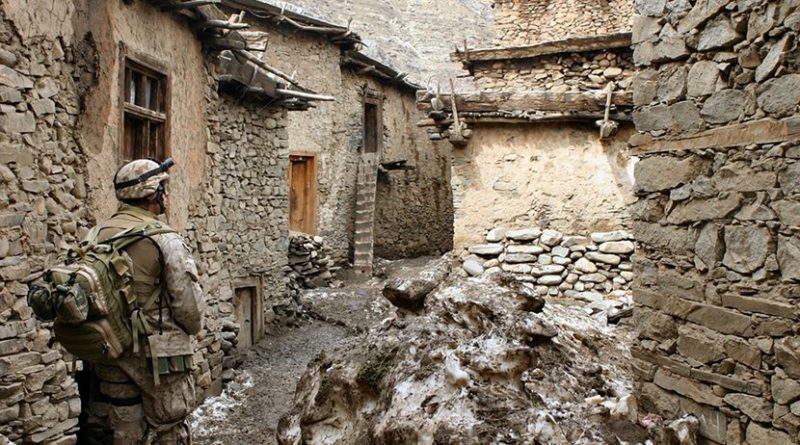
Talks between Taliban delegates and US diplomats in Qatar have entered a crucial stage, with the finalization of a draft agreement pushing for the withdrawal of US troops from Afghanistan said to be not far away.

A member of the American negotiating team on Friday described the talks as “very productive,” while strenuously denying Washington sought a fixed deadline for the withdrawal of its estimated 14,000 troops from Afghanistan as part of a final peace deal.

The news comes as Afghan politicians make their way to Doha, Qatar, to begin their own discussions with the group on Sunday.

Taliban spokesman Suhail Shaheen said both Germany and Qatar have jointly hosted the intra-Afghan dialogue.

“We have made some progress,” he told The Associated Press on Friday, “we are working on the draft agreement.”

In Afghanistan, We Have Three Dreams – OpEd

By Dr. Hakim Young

Dear fellow human beings,

Some of us have wondered, “Are people today too disconnected and frantic to calm down, in order to solve global challenges together? Are we so polarized and self-absorbed that we cannot stop judging one another or insisting on our partisan ways?”

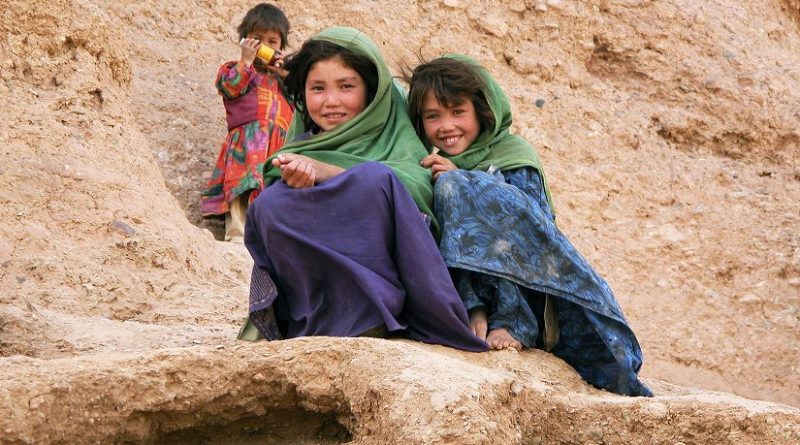
In Kabul, our thoughts and feelings are diverse, complicated and flawed, so we centre our three dreams on relationships.

We have felt much joy in creating this video-letter. We dedicate it to planet earth and to everyone in the human family.

We hope that each of us can take tiny actions to free ourselves from the ravages of money and power.

With love from Afghanistan,

Sri Lanka: Landmark Judgement Regarding Refugees Of Indian Origin In Tamil Nadu – OpEd

By Dr. V. Suryanarayan*

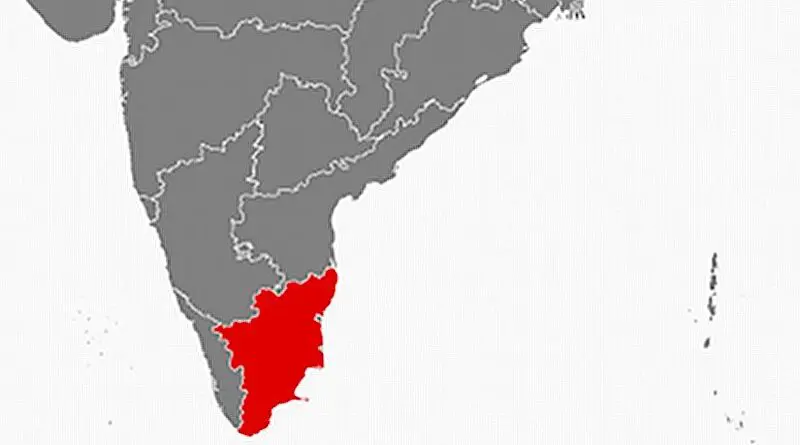
Justice G. R. Swaminathan of the Madurai Bench of Madras High Court delivered a welcome judgment on June 17, 2019 which will have far reaching repercussions on the future of nearly 29,500 refugees of Indian Tamil origin, who are staying in refugee camps scattered throughout Tamil Nadu. In this significant judgment the Honourable Judge has instructed the Government of India to consider the applications for conferment of Indian citizenship on these refugees. 

The 65 applicants are living in Kottapattu camp in Tiruchi district. They had submitted applications for Indian citizenship to the local authorities. These applications were not forwarded to New Delhi because it was New Delhi’s policy not to confer citizenship on refugees. New Delhi subscribed to the view that when normalcy returns the refugees will return to their homeland.

A World Safe for Autocracy?

By Jessica Chen Weiss

The Chinese people, President Xi Jinping proclaimed in 2016, “are fully confident in offering a China solution to humanity’s search for better social systems.” A year later, he declared that China was “blazing a new trail for other developing countries to achieve modernization.” Such claims come as the Chinese Communist Party (CCP) has been extending its reach overseas and reverting to a more repressive dictatorship under Xi after experimenting with a somewhat more pluralistic, responsive mode of authoritarianism.

Many Western politicians have watched this authoritarian turn at home and search for influence abroad and concluded that China is engaged in a life-and-death attempt to defeat democracy—a struggle it may even be winning. In Washington, the pendulum has swung from a consensus supporting engagement with China to one calling for competition or even containment in a new Cold War, driven in part by concerns that an emboldened China is seeking to spread its own model of domestic and international order. Last October, U.S. Vice President Mike Pence decried China’s “whole-of-government” effort to influence U.S. domestic politics and policy. In February, Christopher Wray, the director of the FBI, went further: the danger from China, he said, was “not just a whole-of-government threat but a whole-of-society threat.” Such warnings reflect a mounting fear that China represents a threat not just to specific U.S. interests but also to the very survival of democracy and the U.S.-led international order.

China Likely Tested Missiles That Can Kill Aircraft Carriers in the South China Sea

by James Holmes

Earlier this week China’s People’s Liberation Army (PLA) Rocket Force most likely tested a DF-21D or DF-26 anti-ship ballistic missile—sometimes know as "carrier-killers"—in the South China Sea. Details remain sketchy, as Chinese spokesmen have remained close-mouthed about the exercise. The test came on the heels of news last May that PLA weaponeers had installed anti-ship cruise missiles and surface-to-air missiles on Fiery Cross Reef, Subi Reef, and Mischief Reef, west of the Philippine Islands. Pentagon spokesman Lt. Col. Dave Eastburn told CNBC that this week’s missile test contradicted China’s “claim to want to bring peace to the region and obviously actions like this are coercive acts meant to intimidate other South China Sea claimants.”

Col. Eastburn has it half right. Beijing clearly wants to coerce others. But the test was entirely consistent with its claim to want to bring peace to the region. It does want peace; it simply wants to transform the nature of that peace, and force is a means to that end. If Chinese Communist Party prelates in Beijing get their way, they—not foreign governments or international institutions—will make the rules in the South China Sea. They will issue laws or policy decrees mandating or proscribing certain actions in regional seaways, and others will obey. Peace will prevail.

How The Dalai Lama Is Chosen And Why China Wants To Appoint Its Own

by Brooke Schedneck, Rhodes College

The 14th Dalai Lama, Tenzin Gyatso, the spiritual leader of Tibet, is turning 84 on July 6. With his advancing age, the question of who will succeed him, has become more pressing.

Winner of the 1992 Nobel Peace Prize and one of the most recognizable faces of Buddhism, the Dalai Lama is an important figure bringing Buddhist teachings to the international community.

The successor to the Dalai Lama is traditionally located by senior monastic disciples, based on spiritual signs and visions. In 2011, however, the Chinese foreign ministry declared that only the government in Beijing can appoint the next Dalai Lama and no recognition should be given to any other succession candidate.

As a scholar of transnational Buddhism, I have studied Buddhism and its refashioning in the context of globalization.

How Chinese Mobile Money Technology Can Mitigate Excess Sovereign Debt

By Xiaochen Su

Recent years have seen a surge in sovereign debt across a vast swath of developing Africa and Asia as a result of loan-financed, state-led large scale developmental projects. As I noted in a previous piece for The Diplomat, China’s ambitious Belt and Road Initiative is threatening to trap many African states in unsustainable debt as they take up easy loans to build up infrastructure. Failure to repay loans may lead to long-term political and even security implications as debtor states are forced to hand over strategic state assets as collateral to ill-intentioned loan-givers.

One of the primary reasons loan-receiving states fail to pay back loans is the inability to earn enough revenues from loan-financed projects. This is particularly true for infrastructure projects like roads and railways, in which cost overruns, overstated capacities, financial mismanagement, and suppressed demands together make original projections and schedules for repayment highly unrealistic. As I noted in another piece for TheDiplomat, governments may emulate business models from Japan to boost alternative sources of revenues, but such propositions may not always be feasible under differing socioeconomic conditions.

U.S.-China Rivalry in the Trump Era


Integrating China into the liberal trade order was expected to have a moderating effect on Beijing. Instead, under President Xi Jinping, China has asserted its military control over the South China Sea and cracked down on domestic dissent, all while continuing to use unfair trade practices to boost its economy.

Download U.S.-China Rivalry in the Trump Era today to take a deeper look the relationship, the Trump administration's policy, and a glimpse at what the future may hold. 

In this report, you will learn about all aspects of the U.S.-China rivalry, including:

What Those Decrying America’s ‘Endless Wars’ Are Really Talking About

James Carafano

James Jay Carafano, a leading expert in national security and foreign policy challenges, is The Heritage Foundation’s vice president for foreign and defense policy studies, E. W. Richardson fellow, and director of the Kathryn and Shelby Cullom Davis Institute for International Studies. Read his research.

From the presidential candidate debate stage to new think tanks, voices from both left and right are demanding an end to America’s endless wars. Only one problem: We’re not fighting any endless wars.

No matter. The endless-war warriors want us to do less on the world stage.

Even in this age of great power competition, these “new” isolationists would prefer America step off the playing field and wave from the sidelines. It’s a strategy that would work well for Beijing, Tehran, and Moscow—but not for the U.S.

No one is denying we’ve seen plenty of wars—and long ones at that. The U.S. has fought more than it ever wanted, including the global war on terrorism and related conflicts in Iraq and Afghanistan. But America’s endless war days have ended—at least for now.

United states of Europe could spell the end of the western alliance


The changing of the guard at the top of the European Union, with a new line-up of top officials set to be approved by the European parliament, could well result in increased tensions in the western alliance, as Brussels intensifies its efforts to create a European superstate.

And the emergence of a new EU leadership that is preoccupied with pursuing its own, federalist agenda, could have a profound bearing on its approach to global issues, especially in the Middle East, where its insistence on sticking to the controversial nuclear deal with Iran could increase tensions in the region.

That is certainly the conclusion being reached by many western diplomats following 27 hours of intense summit negotiations in Brussels earlier this week that resulted in the nominations for the EU’s most important posts for the next five years.

Foremost among those to emerge victorious from the brutal power-brokering between Germany and France over who should hold these key positions was Ursula von der Leyen, a close ally of German Chancellor Angela Merkel and a committed European federalist.

Can Mongolia Shape the Modern World Once Again?

By Roncevert Ganan Almond

The Tuul River snakes through the southern edge of Ulaanbaatar, Mongolia’s sprawling capital city, coiling westward until discharging into the Orkhon River near the center of the Orkhontuul sum and, ultimately, flowing into Lake Baikal in Siberia, the Arctic, and beyond. Like the Onon and Kherlen Rivers, the Tuul originates in the Khentii Mountains near the sacred Burkhan Khaldun, or “God Mountain.” According to The Secret History of the Mongols – Mongolia’s oldest literary work, chronicling the story of Temujin and his rise to become Genghis Khan (Chinggis Khaan) – the slopes of the Burkhan Khaldun served as a place of refuge, worship, governance, and ultimately burial for the world conqueror.

In the telling of anthropologist Jack Weatherford, Chinggis Khaan was more than an unprecedented and fearsome military leader: He was a nation-builder who embraced the rule of law, protected religious freedom, promoted international trade, and established new diplomatic relations among the great population centers of Asia and Europe. The Mongolian empire connected a formerly disjointed world by creating a “single intercontinental system of communication, commerce, technology and politics.” Due to Chinngis Khaan, the “globe was shaken” and a new order commenced, the historian Edward Gibbon observed.

Is the United States Ready for a Tech War?

by Daniel Gerstein

A global “technology war” that will likely shape U.S. economic and national security well into the twenty-first century is emerging. Many technologies have become the focus of this war, with winners and losers are already beginning to emerge. At this point, the United States finds itself at a distinct disadvantage.

Ironically, the seeds of this emerging conflict were inadvertently sown by the United States. The world has seen the impact of technology—how it has led to the buildup of significant wealth and overwhelming military capacity with global reach. With approximately one-quarter of the global gross domestic product and military spending that exceeds the spending of the next seven nations combined, the United States became what some have labelled the world’s “hyperpower.” And others want in, which has meant growing competition and now an emerging tech war.

The Popular Backlash Against Migration Is Making a Global Problem Worse

July 05, 2019

Around the world, the popular backlash against global migration has fueled the rise of far-right populist parties and driven some centrist governments to adopt a tougher line on immigration. But with short-term strategies dominating the debate, many of the persistent drivers of migration go unaddressed, even as efforts to craft a global consensus on migration are hobbled by demands for quick solutions. 

Around the world, migration continues to figure prominently in political debates. In Europe, far-right populist parties have used the Migrant Crisis of 2015 and latent fears of immigrants to fuel their rise and introduce increasingly restrictive border policies in countries, like Italy, where they have entered government. The popular backlash against immigrants has also pushed centrist governments to adopt a tougher line on immigration at home, while working with countries of origin and transit to restrict migration, whether through improving border controls or strengthening economic incentives for potential emigres to stay in their home countries.

Sharp Increase In H-1B Visa Denials

by Niall McCarthy

H-1B visa petitions for intitial (new) employment in the U.S. are being increasingly denied. That's according to a National Foundation for American Policy analysisfound that the denial rate nationwide grew from 6 percent in FY2015 to to 32 percent in FY2019. The H-1B program is the largest temporary visa program in the U.S. and it serves as the primary means of entry to the country for skilled immigrants.

President Trump has criticized the scheme on numerous occasions, claiming it has been abused by employers and that it has driven down wages for Americans. When Trump issed his "Buy American and Hire American" executive order in April 2017, it resulted in USCIS and its adjudicators raising the standard of proof for approving H-1B petitions despite the fact that no new law or regulation allowed it to do so legally.

Closing Off America From Its Neighbors Isn’t Keeping It Great

Howard W. French

As the 17th-century poet John Donne wrote in those immortal lines, “No man is an island, entire of itself; every man is a piece of the continent, a part of the main.”

Don’t be alarmed. This is not a column about poetry, or metaphysics, but about how the world economy has churned and woven its way, however unsteadily, toward closer and closer ties between different countries and regions, and thus toward greater integration overall. These processes are generally called globalization, lending to a sense that this is something relatively new, but in fact, it has been going on in one form or another for centuries.

This is also a column conceived as a sort of letter, one that is virtually addressed to Americans who are favorably inclined toward the foreign policy of President Donald Trump, especially regarding matters of trade and immigration. I’m not talking here about the most fervent members of his base, but rather, to those who are willing to reflect more on the question of what is meant practically by the slogan “Keep America Great,” and how one might infuse it with more positive meaning.

Can Ethiopia Defy Its Own History?

By Allison Fedirka 

When the country tries to function as a federation, it tends to suppress its people.

High-profile political violence in Ethiopia has brought into question Prime Minister Abiy Ahmed’s ability to implement long-awaited political reforms. Abiy inherited a divided country, and his primary tasks are to reduce violence, encourage a more participatory political system and establish free elections. Importantly, he needs to create a more unified federation – Ethiopia has rarely been able to maintain civil order in such a politically decentralized system. So for Abiy, the challenge is twofold. He needs to figure out how to govern a multinational state, and he needs to define a government that has struggled to define itself ever since the end of the Cold War.

A Rise of Militias

“Inept”: Leaked diplomatic cables reveal what Brits really think of Trump

By Ephrat Livni

The US and the UK have long enjoyed a “special relationship,” as evidenced by a recent visit by US president Donald Trump and his family to meet with the queen of England. But that bond may have just hit a bump in the road now that secret diplomatic cables from Britain’s top ambassador to the US were leaked, revealing a not-so-diplomatic or flattering assessment of the American president and his administration.

The Mail on Sunday reported on July 7 that Nigel Kim Darroch’s private cables, memos, and briefing notes paint a devastating picture of the White House under Trump. “We don’t really believe this Administration is going to become substantially more normal; less dysfunctional; less unpredictable; less faction riven; less diplomatically clumsy and inept,” the diplomat wrote. He referred to battles among members of the Trump administration as “knife fights” and predicted that the Trump presidency could end in “disgrace.”

Yet the diplomat admitted that Trump, despite being otherwise “inept,” appears especially resilient. His downfall should not be counted on. Although he has been “mired in scandal” throughout his life, Darroch writes of Trump, he says that the president may nonetheless “emerge from the flames, battered but intact, like [Arnold] Schwarzenegger in the final scenes of The Terminator.” The documents note that Trump has some hope for reelection, remarking however that attendees of his campaign rallies are “almost exclusively white.”

What Is the Endgame in Syria?


After more than seven years of civil war that gutted Syria, the endgame is here. But there are more questions than ever. Download your FREE copy of What Is the Endgame in Syria? to learn more today.

What does victory on President Bashar al-Assad’s brutal terms look like? How has the rise and fall of the Islamic State changed Syria’s political map? And what about reconstruction, let alone reconciliation? This WPR report provides a comprehensive look at those questions and several others that will determine what’s to come in Syria, with impacts far beyond the Middle East.

Download What is the Endgame in Syria? today to take a deeper look at these conflicts and get a glimpse at what the future may hold. 

In this report, you will learn about a variety of issues, including:

What a post-ISIS order in Syria will actually look like.

America's incoherent Syria policy.

How the country will recover from the war.

Whether there will be justice in Assad's "Victorious Syria."

How the wider Jihadi movement could take over where the Islamic State left off.

Wimbledon 2019: The Serena Williams–Andy Murray Mixed-Doubles Match Shows the Future That Tennis Should Be Embracing

By Gerald Marzorati

The unwritten brand promise of professional tennis is that, for its largest events, it alone among sports brings together men and women at the same venue, at the same time, to play the same game. Does it do enough, as a business, to reinforce this value proposition? It does not. In too many of its C-suites, the executives who head up its tournaments or direct the telecasts of its matches cling to the belief—or, anyway, they often enough act as if they do—that the women’s side of things is not quite up to the men’s game. They look upon the Age of Federer, Nadal, and Djokovic—the finest era, arguably, that men’s tennis has ever known—and, reifying it, decide things and plan things with the mentality that it was always so and will forever be so. They fail to see, or so it can seem, the clusters of men sitting together courtside watching women play; or the groups of women watching a men’s match; or the thousands of men and women commingled, as you will seldom glimpse in such numbers at any other global sporting event, happily watching men or women, so long as the tennis is outstanding and competitive.

THE ULTRA-PURE, SUPER-SECRET SAND THAT MAKES YOUR PHONE POSSIBLE


FRESH FROM CHURCH on a cool, overcast Sunday morning in Spruce Pine, North Carolina, Alex Glover slides onto the plastic bench of a McDonald’s booth. He rummages through his knapsack, then pulls out a plastic sandwich bag full of white powder. “I hope we don’t get arrested,” he says. “Someone might get the wrong idea.”

GLOVER IS A recently retired geologist who has spent decades hunting for valuable minerals in the hillsides and hollows of the Appalachian Mountains that surround this tiny town. He is a small, rounded man with little oval glasses, a neat white mustache, and matching hair clamped under a Jeep baseball cap. He speaks with a medium‑strength drawl that emphasizes the first syllable and stretches some vowels, such that we’re drinking CAWWfee as he explains why this remote area is so tremendously important to the rest of the world.

Spruce Pine is not a wealthy place. Its downtown consists of a somnambulant train station across the street from a couple of blocks of two‑story brick buildings, including a long‑closed movie theater and several empty storefronts.

Keynes' Philosophy: Induction, Analogy And Probability

by Philip Pilkington

In a recent post I dealt with Keynes’ opinions on the application of statistics and theories based on probability (e.g. econometrics). There I noted that Keynes thought that much applied work failed because it improperly deployed the use of Analogy and Induction. The natural question, which some then asked, was “what on earth are Analogy and Induction?"

In this post I will deal with Keynes’ views on these two processes of reasoning - again, this is not hero-worship, Keynes was fallible and I disagree with him on many points, but I think that were contemporary economists to have a better understanding of these issues much of the disciplines irrelevance would begin to fade away.

Infographic Of The Day: Missions To Mars


Here is a complete list of both the successful and failed missions to Mars.

8 July 2019

India’s National Security Challenge – Analysis

By Harsh V. Pant and Kartik Bommakanti*

States across Asia face growing challenges to their security. The gradual shift in the balance of power from the West to the East has introduced security competition among the major states. As India’s economic and military profile grows in the wider Indo-Pacific, it too faces a range of intrastate and interstate security challenges, which it has to manage. In this context, it is worth considering the nature and scope of India’s military modernisation in view of the types of conflicts it faces. The modernisation of the Indian defence forces is a complex process covering issues pertaining to the balance between manpower and firepower as well as that between the acquisition of weaponry from indigenous sources and the import of arms. India’s efforts to revamp and restructure its military in response to security challenges are characterised by a quest to meet the needs of the three services without compromising transparency and integrity in the acquisition of weapons.

Who Will Win the India-China Railway Race in Nepal?

By Biswas Baral

The race is on between two old geopolitical rivals in Nepal to bring a railway to Kathmandu. According to the new Nepali budget, work on joining Kathmandu with Raxaul (on the Indian border) and with Keyrung (on the Chinese border) will start in the next two years. This pair of projects is part of the communist government’s bid to turn Nepal into a “vibrant economic bridge” between India and China. It would indeed be wonderful if Nepalis could tomorrow hop on a train in Kathmandu and get off in New Delhi or Beijing. Yet that dream is a long way from being realized.

Let’s start with China. In 2008 it was announced that the Qinghai-Tibet railway would be extended right up to Keyrung on the border with Nepal. Why not extend the line all the way to Kathmandu? asked Nepal. China agreed, in principle. There was even a pre-feasibility study of the 72-kilometer line, which found that a proper feasibility study would cost around 35 billion Nepali rupees ($314 million). China wanted Nepal to foot most of the bill; Nepal would like China to do it pro bono.

A robust relationship with the US is central for India. But at what cost?

Brahma Chellaney 

Narendra Modi has wisely gone to the strategic Maldives on his first overseas trip after re-election. It speaks for itself that the leader of the world’s largest democracy has begun his new term by visiting the world’s smallest Muslim nation — in population and area. Generous Indian financial assistance, including $1.4 billion in aid, has helped president Ibrahim Solih escape a Chinese debt trap and enabled his Maldivian Democratic Party to sweep the April parliamentary elections.

Modi also shrewdly kept out troublesome Pakistan from his inauguration by inviting leaders from the Bay of Bengal Initiative for Multi-Sectoral Technical and Economic Cooperation (Bimstec) grouping. While the moribund South Asian Association for Regional Cooperation (Saarc) boxes India in a narrow, artificial framework limited to the Indian subcontinent, the east-oriented Bimstec seeks to realign India along its historical axis. India’s main trading and cultural partners in history were the countries to its east. From the west, India experienced mainly invaders or plunderers.

Why Would Trump Want a Trade War With India?


Sudha Ramachandran

Fears of a full-blown trade war between the United States and India seem to have faded for the moment following last week’s meeting between President Donald Trump and Prime Minister Narendra Modi on the sidelines of the G-20 summit in Japan. Trump and Modi agreed to instruct their trade officials to meet soon to find solutions to an escalating row over tariffs that had triggered concern in both countries. It was a climbdown of sorts for Trump, who just a day before the Osaka meeting had taken to Twitter, as usual, to air his grievances. “India, for years having put very high Tariffs against the United States, just recently increased the Tariffs even further,” he wrote. “This is unacceptable and the Tariffs must be withdrawn!”

Following the G-20 meeting, the two sides will now move to the negotiating table to address the most contentious issues. This is a step forward, albeit a small one. It came on the heels of Secretary of State Mike Pompeo’s visit to New Delhi, where he held out the prospect of major U.S. investments in India. Trump followed that up in Osaka by promising India “very big things… in terms of trade, in terms of manufacturing”—without providing details.

Pakistan PM to Be First Head of State to Meet Taliban

Ayesha Tanzeem

ISLAMABAD, PAKISTAN - Pakistan's prime minister is expected to become the first head of state to meet the Taliban leadership since the militant group's ouster from power in 2001. An Afghan official confirmed, on the condition of anonymity, that the move has the Afghan government's consent. 

"It's coordinated with the Afghan side," the official said, adding that Pakistan was expected to brief the Afghan government after the meeting.

The news broke on Pakistan's state media early Thursday. 

"Special Assistant to Prime Minister Naeem-ul-Haq has said Imran Khan will meet the Taliban leader soon for the peaceful resolution of Afghan crisis," a story published on Radio Pakistan's website said.  

Chinese Private Security Moves Into Central Asia

By Yau Tsz Yan

As Kyrgyz President Soornbay Jennbekov pushed efforts to make the China-Kyrgyzstan-Uzbekistan Railway a reality, a private Chinese security company signed deals to protect the contested project for China Railway Group. 

The 2016 Chinese embassy bombing in Bishkek heightened risk perception among the Chinese business community in Central Asia. Chinese companies operating in Kyrgyzstan since then have begun to swap out local security services for imported private Chinese security personnel.

Currently, there are relatively few Chinese private security companies in Kyrgyzstan, compared to 400 local Kyrgyz private security companies. But the some 574 Chinese enterprises in Kyrgyzstan are beginning to favor Chinese staff on their grounds over locals.

Zhongjun Junhong, a top Chinese private security service provider, branched out into Kyrgyzstan in September 2016. With 281 security personnel, a local weaponry license, and military gear brought from China, Zhongjun Junhong is quickly becoming a leader in Kyrgyzstan providing full-scale security service resembling the company formerly known as Blackwater, since 2011 operating under the name Academi.

THE REAL ORIGINS OF THE U.S.-CHINA COLD WAR

BY CHARLES EDEL AND HAL BRANDS

How should Washington deal with an authoritarian regime that is expanding its influence abroad and repressing its citizens at home? That is the question the United States faces today in dealing with Xi Jinping’s China. But it is not a new challenge. After World War II, the United States faced another authoritarian state intent on expanding its borders, intimidating its neighbors, undermining democratic institutions, exporting its authoritarian model, and stealing U.S. technology and know-how. The result, after a period of initial debate and uncertainty in U.S. policy, was the Cold War: a 40-year competition over power, influence, and the contours of global order.

As tensions between Beijing and Washington harden, there is a growing fear that China and the United States are entering a new cold war—another multi-decade struggle to shape the international system. There is also a growing debate about who or what is responsible for the deterioration in the relationship. Is it the vaulting ambition and personalistic rule of Xi Jinping? The nature of Communist rule in China? The tragic qualities of international relations? America’s own behavior and global ambitions?

Is China Winning Its War on Pollution?

By Shannon Tiezzi

In January 2013, China’s capital of Beijing found itself choking under an epic cloud of smog. Beijing – along with dozens of other Chinese cities – was in the middle of an air pollution crisis that exceeded the maximum measurement levels. China’s air pollution had long been an open secret, despite state media’s preference for referring to such episodes as “fog.” But the high-profile global coverage of the 2013 “airpocalypse,” coupled with the outrage from Chinese people suffering in the smog, finally forced the Chinese government the take action.

Beijing declared a “war on pollution” and began rolling out new measures to combat the problem – new standards and targets for air pollution levels; revisions to China’s Environmental Protection Law designed to increase penalties for polluters; and repeated government inspection campaigns, coupled with heavy fines for violators. But as is usually the case in China, implementation has struggled to keep up with the new regulations. That, coupled with the severity of the problem to begin with, means China’s “war on pollution” has had a mixed record thus far.

U.S. Imports From Vietnam Surge At China's Expense

by Felix Richter

As the trade war between the United States and China drags on, U.S. companies are weighing other options to avoid the tariffs currently levied on goods sourced from China. Last week, the Nikkei Asian Review cited anonymous sources saying that Apple is considering moving up to 30 percent of iPhone production out of China, with India and Vietnam the top candidates to help Apple diversify its supply chain.

Apple isn’t alone in its efforts to reduce its dependency on Chinese imports, as U.S. import data for the first four months of 2019 shows. Imports from Vietnam, Taiwan and South Korea surged 38.4, 22.1 and 17.1 percent, respectively, compared to the same period of last year, while imports from China dropped by 12.8 percent year-over-year. Vietnam in particular has been profiting from the trade dispute as it supplies many of the goods that are typically imported from China and are now hit by tariffs.

The Next Phase of Trump’s Trade War with China

YU YONGDING

China remains committed to its 40-year-old process of reform and opening up. But following through on this commitment will require China's leaders to find ways to manage escalating tensions with the US and avoid a costly – and potentially devastating – reconfiguration of the global economy.

BEIJING – US President Donald Trump and Chinese President Xi Jinping may have agreed at the G20 summit in Osaka to resume trade negotiations, but the path to ending the trade war remains far from clear. After all, the two leaders reached a similar agreement at the previous G20 summit – in Buenos Aires last December – and those talks ultimately failed, not least because Trump mistook China’s conciliatory attitude for weakness.

Whether Trump makes the same mistake this time remains to be seen. In any case, it is worth considering how the trade war might unfold over the coming months and years – and what China can do to protect itself.