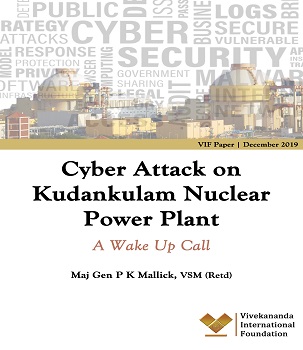
 … India is among the top three countries in the world after the U.S. and China when it comes to phishing and malware attacks ... While governments can’t control every aspect of cyber security, they can certainly help shape the future of cyber security based on lessons learned from other nations, threats and technologies ... all stakeholders have to their heads together, identify the vulnerabilities in the critical information infrastructure and take remedial measures in a time bound manner …
2 February 2020
Cyber Attack on Kudankulam Nuclear Power Plant – A Wake Up Call
… India is among the top three countries in the world after the U.S. and China when it comes to phishing and malware attacks ... While governments can’t control every aspect of cyber security, they can certainly help shape the future of cyber security based on lessons learned from other nations, threats and technologies ... all stakeholders have to their heads together, identify the vulnerabilities in the critical information infrastructure and take remedial measures in a time bound manner …Will India Now Finally Invite Australia to the Malabar Exercise?
By Rajeswari Pillai Rajagopalan
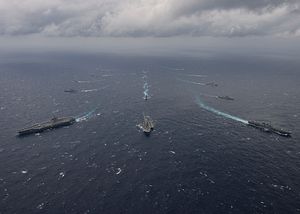 In a significant development that has been through multiple rounds of headlines and controversy, India might be finally getting ready to invite Australia to the Malabar naval exercise, according to media reports. The next edition of the exercise is scheduled to take place around July or August this year.
The question of inviting Australia to the exercise, which currently includes India, Japan and the United States, has been controversial. India has for several years resisted bringing Australia on board, reportedly because of possible negative reactions from China. The fact is that the first and only time Australia has been part of this exercise was in 2007, when both Australia and Singapore were invited to join India, Japan and the United States.
Nonetheless, if India finally agrees to invite Australia for the 2020 Malabar naval exercises, it will be a welcome break and would suggest the growing seriousness and synergy among four key Indo-Pacific powers – Australia, India, Japan, and the United States.
SPECIAL INSPECTOR GENERAL FOR AFGHANISTAN RECONSTRUCTION (SIGAR) RELEASES ITS FORTY-SIXTH QUARTERLY REPORT TO CONGRESS
Today, the Special Inspector General for Afghanistan Reconstruction (SIGAR) released its forty-sixth Quarterly Report to Congress.
Key Points:
-- Enemy-initiated attacks (EIA) and effective enemy-initiated attacks (EIA resulting in casualties) during the fourth quarter of 2019 exceeded same-period levels in every year since recording began in 2010.
-- The month of the Afghan presidential election (September 2019) saw the highest number of EIA in any month since June 2012, and the highest number of effective enemy-initiated attacks (EEIA) since recording began in January 2010. The high level of violence continued after the presidential election; October 2019 had the second highest number of EIA in any month since July 2013.
-- The Afghan Special Security Forces (ASSF) conducted fewer ground operations (534) in the fourth quarter (October - December), than any other quarter in 2019. Only 31% of those missions were completely independently, without U.S. or Coalition support. Less than half (43%) of all ASSF operations in 2019 were completed independently, compared to 55% in 2018.
Afghanistan’s Mineral Resources Are a Lost Opportunity and a Threat
By Ahmad Shah Katawazai
 “We are at risk of the curse of plenty, [the] curse of resources.”
— President Ashraf Ghani
Torn by four decades of war and desperate poverty, Afghanistan is believed to be sitting on one of the richest troves of minerals in the world. The value of these resources has been roughly estimated between $1-3 trillion.
Afghanistan has vast reserves of gold, platinum, silver, copper, iron, chromite, lithium, uranium, and aluminium. The country’s high-quality emeralds, rubies, sapphires, turquoise, and lapis lazuli have long charmed the gemstone market. The United States Geological Survey (USGS), through its extensive scientific research of minerals, concluded that Afghanistan may hold 60 million metric tons of copper, 2.2 billion tons of iron ore, 1.4 million tons of rare earth elements (REEs) such as lanthanum, cerium, neodymium, and veins of aluminium, gold, silver, zinc, mercury, and lithium. According to Pentagon officials, their initial analysis at one location in Ghazni province showed the potential for lithium deposits as large as those of Bolivia, which has the world’s largest known lithium reserves. The USGS estimates the Khanneshin deposits in Helmand province will yield 1.1.-1.4 million metric tons of REEs. Some reports estimate Afghanistan REE resources are among the largest on earth.
China’s Social Control Mechanisms on Full Display Amid Coronavirus Epidemic
By Dake Kang
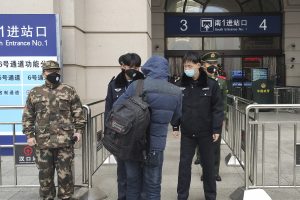 Meron Mei, a sophomore at Wuhan University in the Chinese city at the heart of a viral outbreak, went back to his home village and started to cough.
So he went to the hospital and got checked. Doctors determined it was a common cold, not the new coronavirus, he says, and he returned home. Then a week ago, he says, five officers showed up at his house in Xishui County, a two-hour drive from Wuhan. They wore masks and wielded blue, gun-shaped thermometers.
Now Mei finds himself under constant surveillance by plainclothes police. His doorstep has been posted with a red warning: “Do not approach – patient with suspected pneumonia.” Doctors in gowns, goggles and masks check his temperature three times a day, and the government calls him constantly to monitor his condition — despite tests that he says show his body is free of the coronavirus. His phone is constantly checked; its camera has been disabled and his photos deleted. He relayed his story to The Associated Press via messages in English to prevent officers from reading them.
“I am in prison,” said Mei, whose story could not be independently verified by the AP. “I’m so angry. I feel physically and mentally exhausted.”
China 2049: Economic challenges of a rising global power
David Dollar, Yiping Huang, and Yang Yao
The following is drawn from the executive summary of the forthcoming edited volume “China 2049: Economic Challenges of a Rising Global Power” (Brookings Institution Press, May 2020). The book is the outcome of a joint research project between economists at the National School of Development at Peking University and the Brookings Institution.
China is on track to be the world’s next economic superpower, but it faces tremendous challenges, such as fostering innovation, dealing with an aging population, and coping with a global environment skeptical of a more powerful People’s Republic. This policy brief draws from a forthcoming edited volume — “China 2049: Economic Challenges of a Rising Global Power” (Brookings Institution Press, May 2020) — which is the result of a collaborative effort among economists from China’s Peking University and the Brookings Institution. The book will offer in-depth analyses of these challenges and explore a number of essential questions: Does China have enough talent and the right policy and institutional mix to transit from an input-driven to innovation-driven economy? What does an aging population mean for the country in terms of labor supply, consumption demand, and social welfare expenditures? Can China contain environmental and climate change risks? How should the financial system be transformed in order to continuously support economic growth and keep financial risks under control?
The Novel Coronavirus Outbreak
The explosive outbreak of a novel coronavirus (now known as 2019-nCoV) in China’s Hubei province is advancing at a breakneck pace. The case count stands, as of early Tuesday, January 28, at 4,474, with 107 fatalities. Cases have spread across China and to more than a dozen other countries.
The Wuhan-centered outbreak, which first began in December 2019, is expected to continue to spread widely within China, with additional cases exported to other countries. In the coming days, the outbreak will soon exceed the 8,000 cases of SARS that occurred during the 2003 outbreak in southern China.
The Chinese government has imposed a quarantine on Wuhan and 15 other cities in Hubei province, affecting an estimated 57 million people. This is a staggering scale of ambition—an unprecedented use of quarantines as an emergency public health measure. This sudden decision, borne of fear, and indeed even desperation, is a historic gamble by China’s anxious leadership that quarantines can contain the outbreak from spreading to other parts of China and the world. Other controls that fall short of a full quarantine have been imposed in Beijing, Shanghai, and other major hubs.
Challenging China’s Bid for App Dominance
By Kristine Lee and Karina Barbesino
Executive Summary
Social media platforms are emerging as central to China’s efforts to shape the global information architecture. Beijing is exploiting the relative openness of the United States’ and other democracies’ social media platforms to manipulate the narrative around its policies, while the virality of some of China’s own social media applications (colloquially known as “apps”) has positioned Beijing to quietly export its model of surveillance and censorship. Social media platforms will continue to be an important vector by which information is disseminated and consumed, and control over these platforms will yield significant influence over perceptions of the United States and China.1 As Beijing executes a more aggressive global social media strategy, the U.S. government should coordinate closely with both like-minded countries and social media companies to backstop the integrity, transparency, and competitiveness of their own platforms.
China’s Social Media Platforms: A New Instrument of National Power
Just a decade ago, American companies dominated the global social media ecosystem. Facebook had already captured a billion users across more than 200 countries by 2012 while many of China’s popular “super apps”—which bundle several different services under a single interface—were either nonexistent or marginal players.2 But today, the gap between the userbases of American and Chinese platforms appears to be closing. Facebook-owned WhatsApp, for example, currently has about 1.5 billion users globally,3 while WeChat—a messaging app that the Chinese tech giant Tencent created in 2011—has already captured 1.08 billion users globally, though principally within China’s borders.4
China Is Perfectly Prepared to Fight the Last Virus
Daniel Moss
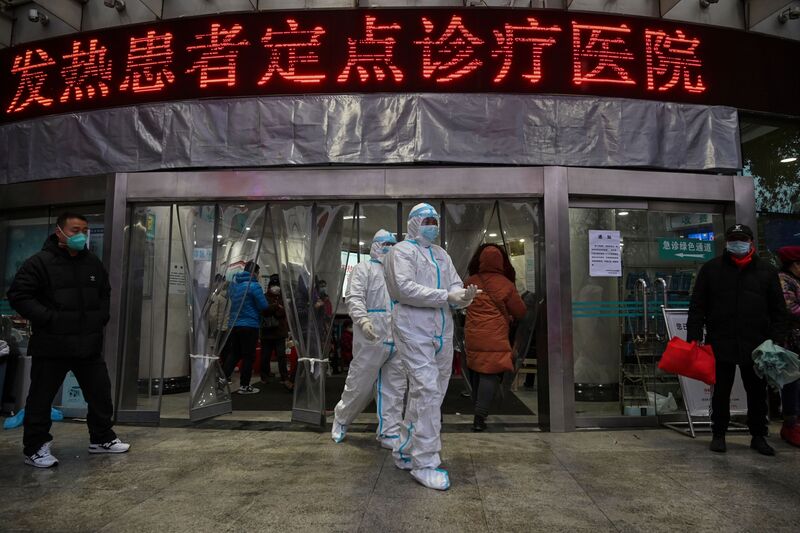 The economy has a much more sophisticated array of tools to boost growth than during SARS. Unfortunately, its problems are bigger.
China has a bigger and more sophisticated toolbox to combat any economic slowdown from the coronavirus than in 2003, when it battled the SARS pandemic. The challenge now is a worsening backdrop both domestically and abroad, and how both hamper the effectiveness of Beijing's response.
It's hard to be precise about the damage given the situation is still unfolding. Bloomberg Economics is likely to downgrade its projection for China’s first-quarter growth from its current forecast of 5.9%. When Severe Acute Respiratory Syndrome raged in the second quarter of 2003, China's expansion cooled to 9.1% from 11.1% in the prior three months.
Trouble is brewing beyond China's shores, too. With trade wars, heightened tension between Iran and the West and declining demographics, there were plenty of challenges before this outbreak. The International Monetary Fund is penciling in growth of 3.3% this year, after crawling along at 2.9% in 2019. Yet that pace has stalled from the 3.4% estimate just a few months ago. In 2003, the world economy expanded more than 4% and approached 6% in 2007.
Saudi Arabia in the Caribbean? Guyana Is the World's Newest Petrostate
by Ryan Berg

Guyana does not feature prominently in US strategic thought towards the Western Hemisphere, but this year could change that. Guyana is set to become one of the world’s best performing economies in 2020 thanks to 6 billion barrels — and counting — of offshore oil deposits found by ExxonMobil. (Recently, several corporations made a major find off the coast of Suriname, too.) The discovery is sufficient to completely transform the economy of this small South American country.
Under normal circumstances, Guyana’s oil discovery would contribute to a glut of resources. Yet, regional energy production is anything but normal. Of course, US sanctions on Venezuela, formerly the largest oil producer in the region, have curtailed production. So has twenty years’ worth of sheer incompetence, lack of maintenance, and corruption. Political and social unrest in Ecuador, a deep economic recession in Argentina, an ill-fated effort to save Mexico’s bloated state-owned oil company (the most indebted in the world), and lackluster auctions for offshore drilling blocks in Brazil have all slowed the production figures of Latin America’s major oil producers. Guyana’s known reserves place it near the top worldwide on a per capita basis, and initial estimates are that the country will have a production capacity of between 700,000 and 1 million barrels of oil per day in a country of just 770,000 people.
Kim Jong Unchained
By Aidan Foster-Carter
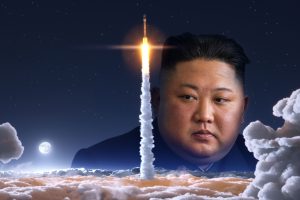 Whatever happened to the North Korea peace process, which in 2018 looked so promising?
We have been here before, in broad terms. So let us begin with some background.
Since the Korean War ended in 1953 – with an armistice only, no peace treaty ever followed – after three bloody and hugely destructive years, the peninsula has known a tense peace for two-thirds of a century. That peace, underpinned by allied deterrence, has been punctuated by regular crises – especially in the 30 years since North Korea’s nuclear ambitions began to be apparent, transforming the DPRK’s threat from a local to a global one.
In 1994, the Korean Peninsula came perilously close to a new war. The Kim regime defied the International Atomic Energy Agency (IAEA) by removing spent fuel from its nuclear reactor at Yongbyon. That plutonium could have made half a dozen nuclear bombs. Then-U.S. President Bill Clinton took this threat so seriously that he considered a military strike, but drew back because the risks and casualties would have been unacceptably high. Instead, after ex-President Jimmy Carter’s semi-unauthorized visit to Pyongyang, Clinton switched to a peace process. That October, the United States and DPRK signed a detailed Agreed Framework (AF) for denuclearization.
The Long-Term Costs of NATO Expansion
by Michael Krepon
 NATO expansion was pre-cooked in 1993. It would have taken an extraordinarily farsighted president, largely immune from political pressures, to have opted for political, military and economic engagement without NATO expansion.
"An alliance is like a chain. It is not made stronger by adding weak links to it." — Walter Lippmann, Today and Tomorrow column, August 5, 1952
"An alliance is effective only to the extent that it reflects a common purpose and that it represents an accretion of strength to its members." — Henry Kissinger, Nuclear Weapons and Foreign Policy
"Alliances are worthwhile when they put into words a real community of interests; otherwise they lead only to confusion and disaster." — A.J.P. Taylor, Origins of the Second World War
The apogee of nuclear arms control occurred between 1986 and 1996. In 1986, Mikhail Gorbachev agreed to on-site inspections for conventional military exercises in Europe and the Reykjavik Summit happened. Both broke the dam holding back nuclear treaties. Ten years later, in 1996, President Bill Clinton oversaw the completion of negotiations on a Comprehensive Nuclear-Test-Ban Treaty. In between, there were conventional and nuclear arms reduction treaties, the Chemical Weapons Convention, the indefinite extension of the Nonproliferation Treaty, and much more.
Did America Learn These 5 Important Lessons From the First Gulf War?
by James Jay Carafano
 Key point: Ever war has lessons to draw from. America easily won the First Gulf War, but that result could have gone differently.
In the summer of 1990, U.S. forces began flooding into the Middle East. By the following February, they were on their way home.
The war over how to interpret the war seemed to break out before the troops had washed the sand off the tanks. Twenty-five years later, the squabbling over what history has to teach us continues.
Following the war, the Army appointed Brigadier General Bob Scales to direct the Desert Storm Special Study Group. Its assignment: to deconstruct the liberation of Kuwait and the roll-up of Saddam Hussein’s armed forces. Scales’ assessment appeared in the book Certain Victory. Not to be outdone, the Air Force commissioned the Gulf War Air Power Survey, a massive review edited by Tom Keaney and Eliot Cohen.
Others outside the Pentagon got into the act. Retired Colonel Harry Summers, who had written an influential analysis of the military failure in Vietnam, penned On Strategy II: A Critical Analysis of the Gulf War (1992). Unmatched in sheer volume is Anthony Cordesman’s Lessons in Modern War Vol. IV (1994).
What Did the United Kingdom Just Decide on Huawei and 5G?
James Andrew Lewis
The United Kingdom is trying to finesse the Huawei problem by instituting a partial ban. Huawei equipment will be excluded from "sensitive" areas (such as around Whitehall or military bases) and its use confined to the "edge" of telecommunications networks. There is much debate over whether this partial ban is enough to mitigate the risk of using Huawei equipment, which the United Kingdom readily admits exists.
The decision will be presented in different forms to different audiences. To the Chinese, the United Kingdom will say that Huawei remains a "valued partner." The United States will be told it is a partial ban and that the United Kingdom shares its views of Chinese espionage.
Is this a defeat for the United States? It is definitely a rebuff and will be spun as a defeat, but this is not a clear win for either side. The United States was unprepared for the decision to go against it and now must recover. The greatest damage to the U.S. push for a total ban will be that other countries that remain undecided about Huawei, like Germany, will now use the UK decision as a rationale for adopting some variant of a partial ban, and it is possible that in some cases, any ban will be much weaker.
Snapshot of the U.S.-China Trade War
 Summary
• The U.S.-China Trade War is the culmination of a longstanding trade friction. Washington cites unfair Chinese trade practices and intellectual property violations, allegations that Beijing has challenged.
• The trade war began July 06, 2018, as the U.S. implemented the first round of China-specific tariffs. Subsequently, four more rounds of tit-for-tat tariffs ensued.
• As of January 2020 tensions have finally eased as the two sides have signed a partial Phase I deal. The document agreed to roll back tariffs and expand trade purchase.
• The U.S. economy has mainly been hit on the consumer-side by the trade dispute, whereas in China, exporters have suffered the biggest losses.
• Hong Kong and South Korea have suffered important losses, as they have major supply chains overlapping with both the U.S. and China. Meanwhile, Taiwan has seen industries return from the Chinese mainland.
Europe in the face of US-China rivalry
 A report by the European Think-tank Network on China (ETNC), January 2020
The European Think-tank Network on China (ETNC) has devoted its fifth year of meetings and research to analyse – from a national, bottom-up approach – how the EU is responding to increased US-Chinese geopolitical rivalry.
The report contains 18 country chapters, all from EU member states, and a further one focused on the EU’s perspective on Europe’s difficult balancing act between the US, a long-term strategic and economic partner, and China, the EU’s second most important market and, probably, the next economic superpower.
The report was edited by Mario Esteban and Miguel Otero-Iglesias along with MERICS analyst Lucrezia Poggetti, Una Aleksandra Bērziņa-Čerenkova, Alice Ekman, Björn Jerdén, John Seaman, Tim Summers and Justyna Szczudlik.
MERICS expert Jan Weidenfeld contributed the chapter on Germany-China relations. He argues that Germany’s China policy has undergone a major overhaul in recent years, as a growing number of German government officials have come to see China as a systemic competitor’ and even as a ‘systemic rival’. Beijing’s attempts to capitalise on the difficult relationship between Berlin and Washington under US President Donald Trump have therefore largely fallen flat. download the full report as PDF.
‘Polluted Air’ Could Be An Important Cause Of Wuhan Pneumonia – OpEd
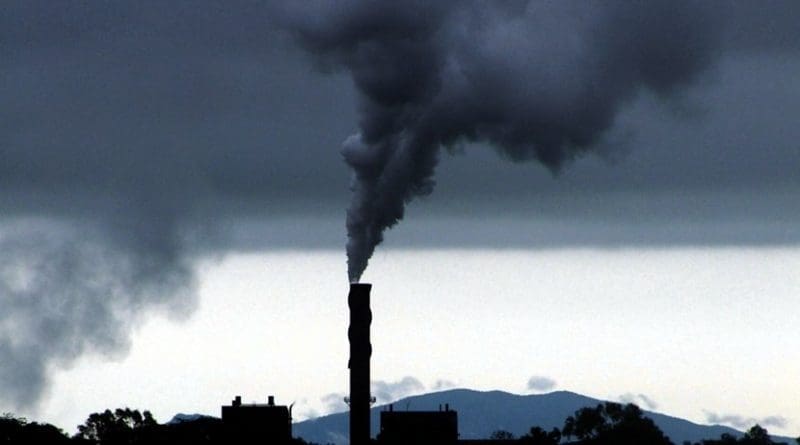 Air pollution, or atmospheric pollution, is caused by human activities or natural processes that cause certain substances to enter the atmosphere. When more and more substances are emitted, far exceeding the self-purification capacity of the atmosphere, the composition of the atmosphere would change. Air pollution occurs when the quantity, concentration, and duration of pollutants in the atmosphere reach a harmful level that endangers human comfort, health, or the environment.
The most common pollution occurrence is haze and fog. In fact, fog and haze are two different weather phenomena. Meteorology “fog” and “haze” have clear definitions, yet they are often used interchangeably.
“Fog” is composed of a large number of tiny water droplets or ice crystals suspended in the air near the ground, making the horizontal visibility below 1 km. “Haze” is a phenomenon in which a large number of extremely fine dry dust particles evenly floating in the air, making horizontal visibility less than 5 km. In the hazy days, “particulate matter” is the most common term used to describe air quality. This term actually refers to dust particles in the air. Many people are familiar with three types of such particles, namely inhalable particles, fine particles, and ultrafine particles. Inhalable particulate matter (PM10) refers to particulate matter with an aerodynamic equivalent diameter of 10 micrometers. Fine particulate matter (PM2.5) refers to particulate matter with an aerodynamic equivalent diameter of 2.5 micrometers. Ultrafine particles (PM0.1) refer to particles with an aerodynamic equivalent diameter of less than or equal to 0.1 micrometers.
The Coronavirus Plague and Social Media
By MICHAEL BRENDAN DOUGHERTY
 Certain news stories drive me to an unhealthy reliance on social media. With my infant daughter sleeping in a bassinet beside me, I watched a series of individually broadcast livestreams of the mayhem developing in Paris on November 13, 2015. I suppose the first step is admitting you have a problem.
I doubt I’m the only person who seems to find every discomfiting YouTube video or Twitter thread about developments out of Wuhan, China.
Even just having your digital ear open for the chatter, you hear that Shanghai has been almost entirely “shut down,” with its residents driven to social-media boredom and rumormongering. You hear that Wuhan has been half-evacuated. I can’t even begin to comprehend what it would look like to evacuate half of a city that is larger than New York or London. Or wonder what that might mean for the rest of China, absorbing a population of that size, when the coronavirus is contagious well before it shows symptoms.
As in all tragedies, the alt-right-ish comedian Sam Hyde has been falsely and hilariously blamed for the spread of coronavirus. Earlier in the week there was a long Twitter thread by Matt Parlmer, urging people to look at the signs coming from China — the massive shutdowns and travel restrictions — that signaled a number of very likely events to anticipate, namely the disruption of global supply chains and international travel. This has now happened, and we are on the way to its being a global emergency. Firsthand accounts about how under-resourced Wuhan is for this outbreak are sprawling across YouTube. Here’s a particularly vivid one, with rumors that the virus has been known about by cab drivers in Wuhan since mid-December.
Can Artificial Intelligence Compensate for Strategic Shortcomings?
To frame this question, we should first note that the United States has not won a war in more than 20 years (if we count Serbia as a "win"). Nor has it has had an effective strategy. This is not a criticism of the military, but of its civilian leadership.
Second, artificial intelligence (AI) is not good at developing strategy. Perhaps this will change as the technology matures, but we cannot expect AI alone to remedy our current weaknesses. AI is a vastly improved computing tool, but it cannot conceptualize and combine interests, goals, and means in ways that develop strategy. Strategy development remains a human function.
Third, better technology does not guarantee success. Building the fastest car and giving it to a cautious driver is unlikely to win a race, particularly against skilled competitors. (How skillful our competitors are is a different question, but in key regional competitions in Europe, Asia, and the Middle East, they have been more skillful than the United States at obtaining outcomes that advance their interests.) The experience in Afghanistan shows that enormously superior technology and exceptional forces, when married to impracticable strategy, do not produce success even against a primitively equipped but determined opponent.
Cyberwar to Kinetic War: 2020 Election and the Possibility of Cyber-Attack on Critical Infrastructure on the United States
Jonathan F. Lancelot
The current possibility of the United States walking into a trap of a kinetic war is exceptionally likely, given the conditions that will be enumerated here, and the historical pattern of the US reacting to surprise attacks with the force of a giant rudely awakened from a deep slumber is not ahistorical. The Election of 2016 was a sure indicator of one phase of election manipulation. The plan of a full-scale cyber-attack targeting critical infrastructure and other systems that are essential for domestic peace is a real threat. Joseph Marks from the Washington Post states "officials from the FBI, Department of Homeland Security, and US Secret Service are working with police in Arlington, Virginia, to game out how to respond if hackers from Russia or elsewhere in 2020 disrupt electricity at polling place places, shut down streetlights, or hijack radio and TV Stations to suppress voter turnout and raise doubts about election results". The Department of Homeland Security, nonetheless, might not be prepared to mitigate a large-scale cyberwar attack, which would go beyond polling places, streetlights, radio, and TV stations. Regional electrical grids, telecommunications, and waterworks are compelling targets for adversaries wanting to plant discord domestically, and it would also invite the US into a kinetic war, which would be an expected reaction to civilian injuries and death from subsequent cyber-attacks. Ted Koppel, in his book 'Lights Out: A Cyberattack, A Nation Unprepared, Surviving the Aftermath' states, "it would be comforting to report that those agencies charged with responding to disaster are adequately prepared to deal with the consequences of a cyberattack on the grid. They are not. The Department of Homeland Security has no plans beyond those designed to deal with the aftermath of natural disasters". The facts do not lend itself to a plan of public safety as a means to aid millions of Americans stranded in cities like New York City or Miami.
China Will Lose the Artificial Intelligence (AI) Race (And Why America Will Win)
Salvatore Babones
 It's tempting to think that the best way forward for AI is to make it easy. In fact, the exact opposite is true. Like a muscle pushed to exercise, AI thrives on challenges. Chinese AI may take some giant strides operating in a stripped-down reality, but American AI will win the race in the real world. Reality is complicated, and if it's one thing Americans are good at, it's dealing with complexity.
Artificial intelligence (AI) is increasingly embedded into every aspect of life, and China is pouring billions into its bid to become an AI superpower. China's three-step plan is to pull equal with the United States in 2020, start making major breakthroughs of its own by mid-decade, and become the world's AI leader in 2030.
There's no doubt that Chinese companies are making big gains. Chinese government spending on AI may not match some of the most-hyped estimates, but China is providing big state subsidies to a select group of AI national champions, like Baidu in autonomous vehicles (AVs), Tencent in medical imaging, Alibaba in smart cities, Huawei in chips and software.
The Military Planned To Nuke Cold War Enemy Aircraft Out Of The Sky
by Adam Rawnsley
 These days, lasers are the new hotness if you want your military to be on the cutting edge of air and missile defense. But during the Cold War, America looked to another then-cutting edge technology to keep the skies clean of enemies.
Hard as it may be to fathom now, the U.S. Army built and deployed nuclear-tipped Nike Hercules air defense missiles to dozens of sites across the U.S. and abroad. In the event that the Cold War ever turned hot, America would nuke the skies above to prevent the Soviets from nuking the ground below.
By the end of World War II, the U.S. military was beginning to realize that traditional anti-aircraft artillery just wasn’t going to cut it. The jet age had begun to reshape military aviation — and these planes could fly higher and faster than the guns could reach.
To keep up with the times, the United States kicked off the Nike program with the help of Western Electric Corporation, Bell Telephone Laboratories and Douglas Aircraft. The project would attempt defeat enemy air power with missiles instead of artillery.
The first incarnation of the Nike — the Nike Ajax — got a boost once the Soviets tested their first nuclear weapon in 1949. Suddenly, the threat of nuke-armed communist bombers was very real.
1 February 2020
Return of the Hashishin (Assassin) Cult?: Wider Implications of the Attack on Saudi Oil Facilities
Maj Gen P K Mallick,VSM(Retd)
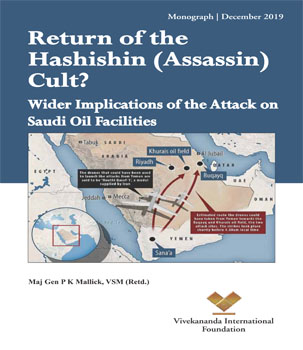 The attack on Saudi oil installations has large scale implications for the hydrocarbon supply to the world specially for countries like China, India and the Asian giants of Japan and South Korea. The Strait of Hormuz becomes critical for energy imports of these countries.
The Middle East has become the world’s most polarized region. Both Saudi Arabia and Iran exploit the Shiite-Sunni rift to mobilize their respective constituencies. Iran’s military strategy is to keep tensions at a low level and avoid a direct confrontation with the U.S. Even if neither side wants to fight a war it could still happen due to miscalculation and missed signals. A minor clash can lead to a regional conflagration with devastating effects for Iran, the U.S. and the Middle East. India has to remain sensitive to the happenings in the Gulf region. India spent $111.9 billion on oil imports in 2018-19. Saudi Arabia is the second-largest supplier of crude oil and cooking gas to India. Every dollar increase in the price of oil raises the import bill by around Rs10,700 crore annually.
This Monograph tries to provide how the attack took place, its effect on world economy and oil market, effects on various stake holding countries and their reactions, military implications and India’s concerns..
India's indigenous missile defense capability is nowhere near strong
By Fang Xiaozhi
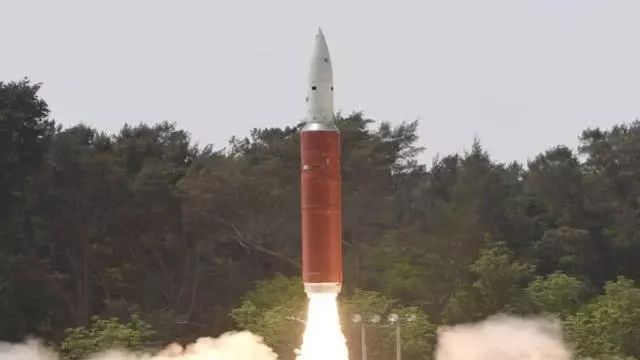 India has recently completed the development of its homemade ballistic missile defense system and all the tests have been successful. The Indian Air Force and the Defense Research and Development Organization (DRDO), the system developer, are seeking the approval to install and activate this system near the capital city of New Delhi, which is expected to take three or four years.
India has been working to develop its own anti-missile system for a long time, and even formed a cross-service committee to conduct comprehensive and elaborate research on the technology, combat capability and cost of establishing a missile defense network covering the whole country. It has developed a “two-step” strategy, which means that theater/tactical ballistic missile defense system that is of a low technological level will be deployed first, which will then be upgraded gradually to the strategic defense system.
The successful development of homemade missile defense system marks a critical step forward on India’s way to achieving that goal, laying a solid foundation for it to establish the Indian-style missile defense network and maintain its strategic superiority in South Asia.
However, missile defense system is a very complicated project that reflects a major country’s overall strength, and it requires a thorough and solid technical foundation in terms of anti-missile early warning system, missile interception system and command and control system, in all of which India has nothing much to say for itself. Compared with Russia, the US, Israel and other countries with strong anti-missile capabilities, India’s technology is completely left behind and its R&D has had too many twists and turns. Besides, it has conducted too few tests, far from enough for it to fully understand the technology.
Across the Border from China, How Should India Prepare for the Coronavirus?
SHRUTI SHARMA
The December 2019 outbreak of the coronavirus originated in a city in central China called Wuhan, and the strain has now spread to more than ten countries. In China, over 4,500 people are known to be infected, and 106 have been reported dead; these numbers are rising rapidly every day. The global spread of this outbreak should serve as a wake-up call for governments around the world, particularly India, which not only shares a border with China and is densely populated but also has a fragile public health infrastructure.
Wuhan and several other Chinese cities have been quarantined to contain the disease. But amid the Chinese New Year celebrations, millions of people elsewhere in the country have been traveling, exacerbating the risk that the virus has continued to spread.
Since the Wuhan outbreak, India has taken some steps to ramp up its vigilance and preparedness. But it needs a stronger strategy to deal with any infections. So far, a travel advisory has been issued and at least twenty airports in major metropolitan areas have been instructed to screen passengers coming from China. Several laboratories under the Indian Council of Medical Research, including the National Institute of Virology, have been equipped to test samples of the virus. India’s Health Secretary has also told all states and union territories “to review their preparedness, identify gaps and strengthen core capacities needed to prepare for, detect, and respond to possible outbreaks.”
COOPERATION BETWEEN THE UNITED STATES AND PAKISTAN: WHAT IS THE FUTURE?
 Within the Indo-Pacific region, the United States and Pakistan have sharply divergent strategic objectives. While American objectives have changed over time, focusing in recent years on rivalry with China, Pakistan’s strategic objective has remained constant—to maintain a balance of power with India. Yet Pakistan retains close strategic and economic ties with China, and the United States considers India an important strategic partner. Nevertheless, the two countries have worked together for nearly two decades toward two tactical goals—achieving a political settlement in Afghanistan and eliminating terrorism in South Asia. There is potential for them to cooperate more broadly, for example, increasing direct foreign investment to Pakistan and helping Islamabad balance its relations with the United States and China. Washington’s willingness to expand such cooperation will depend on Pakistan’s cooperation in fighting terrorism in the region.
All Weather Friends: China and Pakistan Space Cooperation
By Preethi Amaresh

Pakistan’s space program is set to benefit greatly from China’s advanced technology.
The increasing competition for space-related power and prestige in Asia has echoes of the Cold War space race of the mid-20th century. In 1961, John F. Kennedy, a young, charismatic leader determined to land a man on the moon, had just taken the oath of office in the United States; the Soviet Union put the first man in space; and in Pakistan, world renowned physicist Abdul Salam was convincing President Ayub Khan to set up a national space agency, which was considered to be the first in the subcontinent.
In September of the same year, Salam started the Space and Upper Atmosphere Research Commission (SUPARCO) in Karachi, eight years before India formalized its own space agency, the Indian Space Research Organization (ISRO). After that, four top scientists from Pakistan were sent to United States for training at NASA. Salam’s growing eminence in the scientific world won him accolades. He was awarded the Nobel Prize in Physics in 1979, which became a beacon to attract young talents to Pakistan’s space organization.
In 1962, Pakistan became the third Asian country to launch rockets. That year, SUPARCO launched its first rocket, Rehbar I, from the Karachi coast with help from NASA just before India launched its first rocket from Thumba launching station. Despite this headstart, today SUPARCO is a long way behind ISRO due to poor education funding and military leadership interfering in scientific goals.
The Indo-Pacific Vs. the Belt and Road: Nepal’s Great MCC Debate
By Kamal Dev Bhattarai
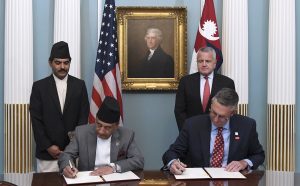 A $500 million grant under the U.S. Millennium Challenge Corporation faces opposition within Nepal’s ruling party.
Nepal, which is in the club of Least Developed Countries (LDC), aspires to become a middle-income country by 2030. To achieve that goal, it desperately needs massive international investment in the form of both grants and loans. Yet despite that, the United States’ $500 million grant under Millennium Challenge Corporation (MCC) — one the largest U.S. grants in recent history for the development of energy infrastructure and road maintenance in Nepal — has faced opposition inside the ruling Nepal Communist Party (NCP).
The MCC, describes itself as an “independent U.S. foreign assistance agency that is helping lead the fight against global poverty.” Nepal formally requested an MCC grant back in 2012 and all successive governments – meaning all major political parties — supported that request.
Once Nepal made its formal request, the United States started its study of conditions that individual countries have to fulfill to get an MCC grant. Some of the necessary indicators are quality of the electoral process, political pluralism and participation, government corruption and transparency, and fair political treatment of ethnic groups. After Nepal was found to fulfill all the conditions, the two governments started to negotiate on specific ideas for cooperation. The projects were selected by Nepal based on its local needs.
China’s economy held up well in 2019 – Serious challenges ahead
2020: Making a smooth transition to lower levels of growth will be the government’s key challenge
Given the serious challenges confronting China’s economy, 2019 GDP growth held up well. China’s economy suffered no major disruption from either the deteriorating Sino-US relationship or domestic efforts to contain risks in the financial system. GDP growth grew by 6 percent in the fourth quarter of 2019, unchanged to growth in the previous quarter.
For the year the economy expanded by 6.1 percent, well within the government’s growth target of between 6 and 6.5 percent. However, though China ended the year with stronger economic data, 2020 will remain a challenging year.
Expansionary fiscal and monetary policies unleashed in stages during 2019 played a large part in stabilizing China’s economy. China’s economy will continue to slow in 2020, despite the improvements in key macroeconomic data in the last quarter of 2019. There is no indication of a sharp decline in growth. Nor is a GDP growth rebound likely. Instead, China’s economy will continue to slow but at a more moderate pace than in 2019.
The CCP Response to the Wuhan Coronavirus: A Preliminary Assessment
By: Ryan Oliver
Editor’s Note: Our previous issue contained an initial analysis of the Chinese government’s response to the outbreak of a previously unknown coronavirus in the central Chinese city of Wuhan (The State Response to a Mystery Viral Outbreak in Central China, January 17). Since the publication of that earlier article, the Wuhan virus has proliferated rapidly—in terms of both persons infected and the geographic spread of the disease. In this issue, contributor Ryan Oliver provides an update on the spread of the virus, as well as further analysis regarding the government response at both the local and national levels.
Introduction: The Latest on the Wuhan Coronavirus
In December 2019, a novel coronavirus (冠状病毒, guanzhuang bingdu) emerged in the central Chinese city of Wuhan. The precise origin of the coronavirus remains unclear, although experts agree that it is zoonotic and likely originated at a now-closed marketplace that sold seafood and other animal products for consumption. After initial submissions to the World Health Organization (WHO) on December 31 reported that an unknown pneumonia virus had infected 59 people in Wuhan, cases soon began to surface in other Chinese cities (WHO, December 31). The disease—now officially designated “2019-nCoV”—has spread beyond China’s borders and is now present in 16 other countries. As of January 28, the Wuhan coronavirus has resulted in 4,599 confirmed cases of infection and 106 fatalities (Phoenix News, January 28).
The Takshashila PLA Insight
I. The Big Story: CMC’s Outlines to Strengthen Primary-level Units
China’s Central Military Commission (CMC) released a set of outlines to strengthen the military at the primary level. The outlines, approved by President Xi Jinping, will take effect from February 1. The newly revised outlines adhere to Xi’s thought of ‘socialism with Chinese characteristics in the new era.’ CMC issued the first formal outline in 1990, providing basic guidelines for the grassroots construction of the armed forces. Since then, it has been revised five times in 1993, 1995, 2003, 2009 and 2015. This is the second revision since Xi became the President of the People’s Republic of China.
The PLA and CMC are undergoing reforms since late 2015. “There are requirements of a new system, new functions and new missions, the grassroots construction is facing many new situations, and some difficulties need to be solved urgently. It is necessary to come up with a radical solution,” claims the organising bureau of the Political Work Department of CMC in an interview to the PLA Daily.
The outlines insist on the establishment of grassroots-level party organisations in important positions. It puts forward specific requirements around strengthening the political advantage of "branch construction on the continuum," sets new standards for building the "four teams" and gives new roles of two mass organizations.
The Wuhan Virus Is Not a Lab-Made Bioweapon
BY JUSTIN LING
 The recent outbreak of a new and potentially deadly coronavirus in China has, unsurprisingly, kicked off a deluge of misinformation and conspiracy theories.
As of Tuesday, there were more than 6,000 confirmed cases of the virus, with 132 people dead. The center of the epidemic, and still the location of around a third of the cases, is Wuhan, in the central province of Hubei. Other cases have rapidly sprung up worldwide—but the transmission of paranoia and inaccurate information has managed to keep pace.
There is still plenty unknown about the virus, but researchers say it shares similarities to Middle East respiratory syndrome (MERS) and severe acute respiratory syndrome (SARS)—two infectious diseases that have emerged in recent decades but that have been managed. While concerns inside China are serious and travel restrictions have been imposed across much of the country, public health officials stress there is no need for panic, especially not in the West where the risk of transmission remains low.
Subscribe to:
Posts (Atom)