3 February 2020

Top commander sees increased Iran threat in Afghanistan


KABUL, Afghanistan (AP) — There has been an increase in Iranian activity in Afghanistan that poses a risk to American and coalition troops there, a senior U..S. commander said, as the threat from Tehran continues to churn across the Middle East.

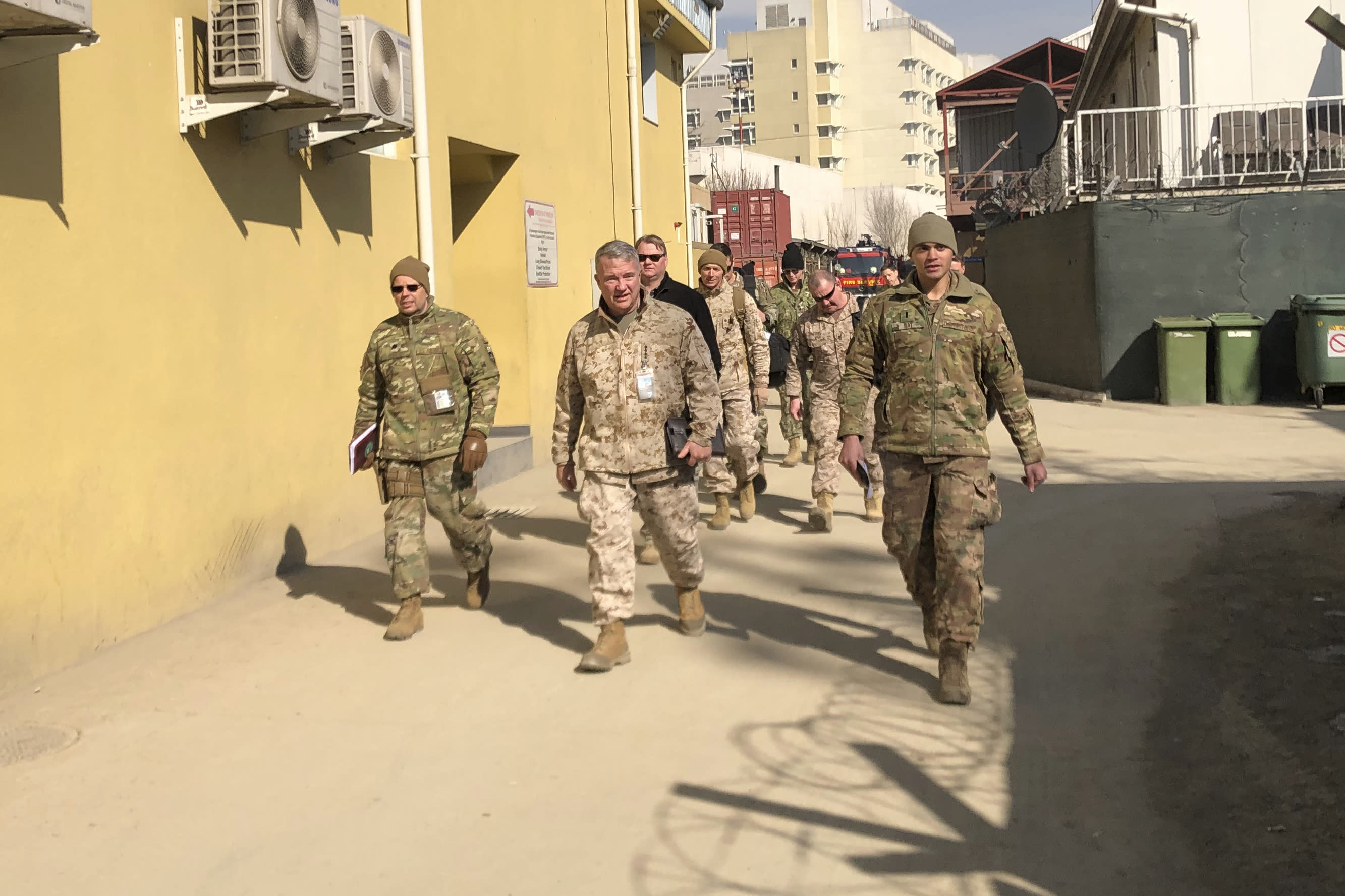
Marine Gen. Frank McKenzie, the top U.S. commander for the Middle East made an unannounced visit to Afghanistan this week. He told reporters traveling with him that he is seeing a “worrisome trend,” of Iranian malign interference.

“Iran has always sort of dabbled a little bit in Afghanistan, but they see perhaps an opportunity to get after us and the coalition here through their proxies,” McKenzie said. “So, we are very concerned about that here as we go forward.”

McKenzie's warnings come just weeks after Iran launched as many as two dozen ballistic missiles at two bases in Iraq where American forces are stationed. No one was killed, but several dozen U.S. troops received traumatic brain injuries. The attack was in retribution for a U.S. drone strike in Iraq that killed Qassem Soleimani, a top Iranian Quds Force general.
Why China’s Strategy To Contain The Coronavirus Might Work – OpEd

By Fei Chen*

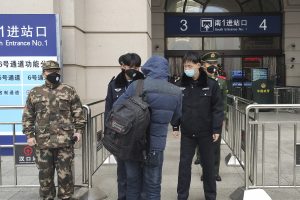
On January 23, the authorities of Wuhan City, China, sealed off the motorways and shut down all public transport to stop the corona virus outbreak from spreading. Shortly afterwards, at least ten other cities in China were under quarantine orders, most of them located in the areas surrounding Wuhan.

It sounds unbelievable to quarantine a city of 11 million people, but it may work because movement within and between cities in China relies heavily on public transport infrastructure. Major cities in China are well connected by airports, express railways, motorways and long-distance buses.

Once the entry points of these transport routes are controlled and patrolled, people cannot easily get out. The transport infrastructure is built by the state and over 90% funded by public money, so control remains in the hands of the authorities. The one-party government in China also helps to effectively implement such a strategy.

Another reason this containment strategy may work is that major Chinese cities are large and dense. Wuhan has an urban area of 1,528km2, which makes it extremely difficult for people to walk out of the city if they are not able to take public transport or travel on the motorways using private cars.

The Chanciness Of Squirming Back From The Brink Of Nuclear War – Analysis

By Vice Admiral (Retd) Vijay Shankar*

Stanislav Yefgrafovich Petrov, Colonel Second Rank of the Soviet Strategic Air Defence Forces, stood as watch-in-charge at the Oko nuclear early warning surveillance system at the top secret Serpukhov-15 complex in a South Moscow suburb. His duty was to monitor remote sensing data coming in from the Molinya satellite for an early warning of ballistic missile launches from the North Dakota plains, the location of Minuteman III inter-continental ballistic missiles (ICBMs) of the US’ 455 Strategic Missile Wing. If a launch targeting the USSR was detected, he was to alert the Kremlin for release of a retaliatory strike. The process was rigid and beyond recall. At civil twilight (US Central Time) on 25 September 1983, the system reported the launch of multiple Minuteman missiles. Allowing for a flight of 25 minutes and decision-making-cum-retaliation time of 20 minutes, Petrov had less than five minutes to sound the alarm and set in motion the chain of a possible nuclear holocaust.

There was neither time for a re-check nor the luxury of second source validation. Given the gravity and tensions intrinsic to the situation, it must have taken enormous fortitude to make the judgement that he did. Petrov classified the six sequential ‘missile attack warnings’ as false alarms even though he had no authority to do so. This decision prevented a possible retaliatory nuclear attack and escalation to full-scale nuclear war. Investigation of the Molniya system later determined that it had malfunctioned.

Huawei Wins the 5G Battle for Britain (But America and China's 5G Fight Is Not Over)

by Daniel R. DePetris

British politics have been upended by Brexit ever since that fateful day in June 2016, when the British public surprised the world and voted to leave the European Union. The last three years and seven months have consisted of two British prime ministers, Theresa May and Boris Johnson, trying to figure out how to implement the Brexit separation with the least amount of damage to the UK’s economic and diplomatic power as possible. 

Brexit, however, has moved over as of late to make room for another important issue—whether Huawei, the Chinese telecommunications company, will be granted permission to build Britain’s 5G telecommunications infrastructure. After considerable debate and division in the cabinet, Prime Minister Johnson decided to allow Huawei into the British system. For Johnson, the Chinese company is the most cost-efficient way to introduce the fastest internet connections available. 

The Huawei issue is not just another kerfuffle in the rough British political wilderness. It also represents the geopolitical battle now underway between the United States and China, two global powerhouses that are trying to gain an advantage over the other. 

Millions of Soldiers: How to Deal With North Korea's Big and Powerful Army

by Kyle Mizokami

Key point: Pyongyang spends most of its money on its military. Although America is more advanced, you can bet North Korea would put up a big fight.

North Korea is just slightly larger than Ohio. To the south it borders South Korea, to the west it borders the Yellow Sea, and to the east it borders the Sea of Japan. To the North it shares an 880 mile border with China and a much smaller one with Russia. The southern border is heavily fortified, with a 2.5 mile demilitarized zone separating the two Koreas. About a tenth of the population resides in the capital, Pyongyang, with the rest primarily residing in cities on both coastlines, often separated by water, hilly or rough terrain.

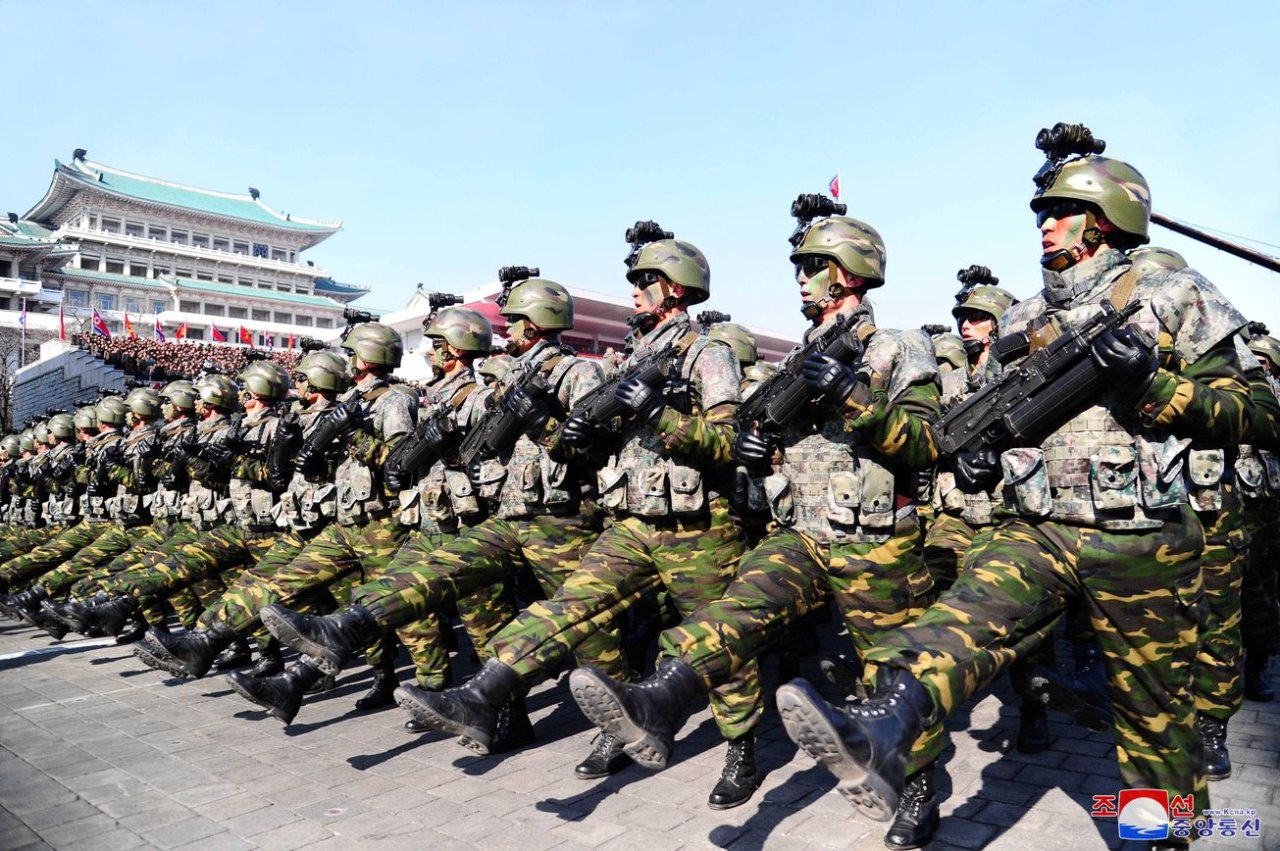
Any invasion of North Korea would have to take account these geographical realities. The 1.2 million man Korean People’s Army is organized into nineteen corps-sized units, including nine infantry corps, four mechanized corps, one armored corps, one artillery corps, the Pyongyang Defense Command, Missile Guidance Bureau and Light Infantry Instruction Guidance Bureau. More than half of these forces, particularly the mechanized, armor, and artillery forces are located near the DMZ, making an early cross-border assault unattractive.

The Korean War is unique in that a war has already been fought over the same terrain, against the same enemy, in a largely conventional war. Its legacy suggests that if the United States and South Korea wish to invade the North, an amphibious assault would be the opening blow. North Korea has 1,550 miles of coastline, and while not all of it is favorable to amphibious operations there is plenty that is.

The Fragmentation of the European Union

By George Friedman

At the end of this week, the United Kingdom, the second-largest economy in Europe, will exit the European Union. Meanwhile, Poland is under intense attack by the bloc for violating EU regulations by attempting to limit the independence of Polish judges; Hungary is also under attack for allegedly violating the rule of law; and one of the major parties in Italy has toyed with the idea of introducing a parallel currency that would allow the country to manage internal debt without regard for EU regulations and wishes.

The founding principle of the EU was the unification of hitherto warring nations into a single bloc, built around common economic and political principles and a common European identity. The assumption was that given Europe’s history, putting aside differences was a self-evident need for all European countries. But as we see in the case of Italy, it is not clear that there is a common European economic interest. Given the tensions with Poland and Hungary, it’s also unclear if there is a common political interest. And the U.K.’s decision to leave also raises questions over whether these common interests persist and whether national identity can be subsumed under a European identity. The tensions within the EU do not reflect marginal disagreements; they represent fundamental questions over whether national interests and identities can be reconciled with poorly defined European interests. The EU, therefore, is moving toward an existential crisis. It may survive, but only as a coalition of nations representing a fraction of Europe.

Human Rights Are Under Attack. Who Will Protect Them?


Globally, human rights remain under assault, whether by populist movements desperate to gain power or authoritarian governments eager to maintain it. Technology has opened up new frontiers for curbing people’s ability to express and share dissenting ideas. And broad assaults are underway on institutions like the International Criminal Court, which was established not only to offer recourse for the victims of rights violations, but to establish an international human rights benchmark. Instead, it is being replaced by a dangerous intolerance.

Around the world, populist authoritarians have built their movements by demonizing minorities. In Brazil, for instance, newly elected President Jair Bolsonaro reveled in his provocations calling into question women’s rights as well as those of the LGBT and indigenous communities. With their verbal assaults, these leaders and the movements that follow them are inspiring people to commit acts of physical violence. In just a matter of months last year, Jews were targeted in Pittsburgh, Muslims in New Zealand and Christians in Sri Lanka.

At the same time, the populist rise has invigorated civil society efforts to protect historically marginalized communities, including members of the LGBT community, religious minorities and indigenous groups.

AT WAR WITH THE TRUTH

By Craig Whitlock

U.S. officials constantly said they were making progress. They were not, and they knew it, an exclusive Post investigation found.

Aconfidential trove of government documents obtained by The Washington Post reveals that senior U.S. officials failed to tell the truth about the war in Afghanistan throughout the 18-year campaign, making rosy pronouncements they knew to be false and hiding unmistakable evidence the war had become unwinnable.

The documents were generated by a federal project examining the root failures of the longest armed conflict in U.S. history. They include more than 2,000 pages of previously unpublished notes of interviews with people who played a direct role in the war, from generals and diplomats to aid workers and Afghan officials.

The U.S. government tried to shield the identities of the vast majority of those interviewed for the project and conceal nearly all of their remarks. The Post won release of the documents under the Freedom of Information Act after a three-year legal battle.

U.S. Says Some Troops To Stay In Africa Amid Moves By Russia, China


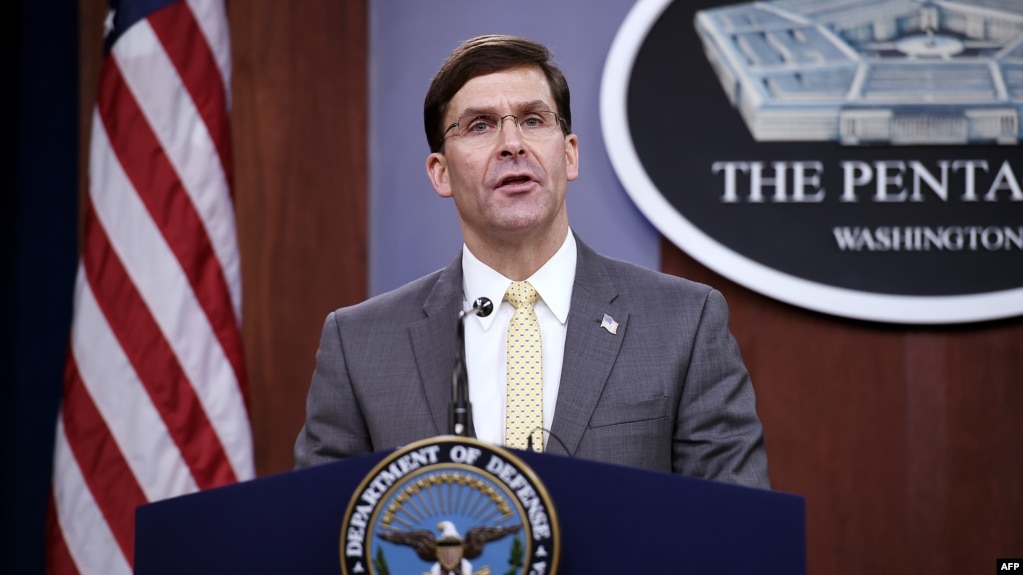
U.S. Defense Secretary Mark Esper says the Pentagon does not intend to remove all its forces from Africa, amid concerns from allies that Washington could abandon the continent militarily while China and Russia “aggressively” look to increase their influence and as the extremist threat remains.

"We are not going to totally withdraw forces from Africa...I know that is the concern of many folks, but again I would say that no decisions have been made yet. This is a process," Esper said on January 30.

Esper is carrying out a global troop review meant to find ways to free up more resources to address challenges from China's military in Asia.

France especially has expressed concerns about a dramatic U.S. pullout of its 6,000 forces from various troubled areas in Africa. Paris relies on U.S. intelligence and logistical support for its 4,500-strong mission in the Sahel region, which has been hit by deadly extremist violence.

Separately, in a congressional hearing on January 30, General Stephen Townsend, the head of U.S. Africa Command, said Africa is key ground for competition with China and Russia “who are aggressively using economic and military means to expand their access and influence."

He also pointed out the “first visible sign of cooperation we've seen” in Africa between the militaries of China and Russia, including their joint naval exercise off the coast of South Africa last year.

Crippling the Capacity of the National Security Council

By Kathryn Dunn Tenpas

The Trump administration’s first three years saw record-setting turnover at the most senior level of the White House staff and the Cabinet. There are also numerous vacancies in Senate-confirmed positions across the executive branch. As of Sept. 22, 2019, the turnover rate among senior White House aides had reached 80 percent, a rate that exceeded President Trump’s five predecessors after their entire first terms in office. The frequent departure of senior staff has been one of the most noteworthy features of this administration.

My previous analysis examined the first instance of turnover on the president’s “A Team,” and includes 65 individuals in key White House offices e.g., Legislative Affairs, White House Counsel, as well as the Office of Management and Budget, the National Security Council (NSC) and smaller entities. Senior level departures were so frequent that I created a table that documents serial turnover (repeat instances of turnover in particular offices). As of Jan. 2020, over one-third of the offices experiencing turnover had more than two occupants—in some cases, as many as six. The most upheaval has occurred in the NSC, a highly influential office that provides the president with advice on national security and foreign policy issues and coordinates these policies with other key departments and agencies, including State, Defense, Homeland Security and the CIA.

Will Coronavirus Help the U.S. Economy?

by Desmond Lachman

Over the past three years, a fundamental problem with the Trump administration’s economic policy approach has been its insularity. Rather than seeing the US economy as being integrally interconnected with and influenced by the global economy, the administration has chosen to run US economic policy with little regard as to the impact that it might have on the rest of the world. It has also paid little attention to the potential spillovers that might result from economic troubles abroad to our economy and our financial markets.

Judging by Secretary of Commerce Wilbur Ross’s recent statement that the coronavirus will prove to be beneficial to the US economy, one should not expect the insularity of US economic policy to change anytime soon. This could prove very costly to both the US and global economies.

In Ross’s worldview, the current coronavirus scare, coupled with the earlier SARS and Chinese swine flu episodes, will cause US companies to re-evaluate their decisions to have China continuing to play a crucial part in their global supply chains. That will cause US companies to relocate their investment away from China and towards the United States. That in turn will be a boon to US wages and employment.

The future of work in America: People and places, today and tomorrow


The US labor market looks markedly different today than it did two decades ago. It has been reshaped by dramatic events like the Great Recession but also by a quieter ongoing evolution in the mix and location of jobs. In the decade ahead, the next wave of automation technologies may accelerate the pace of change. Millions of jobs could be phased out even as new ones are created. More broadly, the day-to-day nature of work could change for nearly everyone as intelligent machines become fixtures in the American workplace.

Until recently, most research on the potential effects of automation, including our own, has focused on the national-level effects. Our previous work ran multiple scenarios regarding the pace and extent of adoption. In the midpoint case, our modeling shows some jobs being phased out but sufficient numbers being added at the same time to produce net positive job growth for the United States as a whole through 2030.

The day-to-day nature of work could change for nearly everyone as intelligent machines become fixtures in the American workplace.

If the US launches cyberattacks on Iran, retaliation could be a surprise

Thomas S. Warrick

On the morning of Jan. 8, the Islamic Revolutionary Guards Corps fired 22 surface-to-surface missiles at two Iraqi airbases. If Americans had died, the Pentagon would have put in front of President Trump options for cyberattacks to disable Iran’s oil and gas sector.

Would the U.S. oil and gas industry have been ready for an Iranian cyber counterattack?

While Americans celebrated Thanksgiving, someone hit Iran with a massive cyberattack that disclosed 15 million Iranian bank debit card numbers on a social media site. On Dec. 11, Iran’s telecommunication minister admitted this was “very big” and that a nation-state carried it out.

Will U.S. banks and credit card companies be ready if Iran tries to hack the card numbers of millions of Americans?

The Trump Administration uses sanctions and cyberattacks as their go-to tools against Iran. U.S. officials have admitted twice on background to recent cyberattacks on Iran.

Pentagon’s top artificial intelligence official to retire

By: Mike Gruss and Jeff Martin 

The Pentagon plans to announce Jan. 31 that Lt. Gen. Jack Shanahan, the Department of Defense’s top artificial intelligence official, will retire from the Air Force this summer, C4ISRNET has learned.

Shanahan has served as the first director of the Pentagon’s Joint Artificial Intelligence Center, an effort to accelerate the Pentagon’s adoption and integration of AI at scale, since December 2018.

Lt. Cmdr. Arlo Abrahamson, a spokesman for the center, confirmed the retirement in a Jan. 30 email and said a search for the next director is underway.

Shanahan previously oversaw the Pentagon’s algorithmic warfare cross-functional team, better known as Project Maven, a pathfinder effort to apply AI and machine learning in analyzing full-motion video.

Pentagon leaders created the JAIC after noting nearly 600 projects and programs across the department had come to touch on artificial intelligence in some way. Officials wanted a central hub to help facilitate progress. In late 2018, Dana Deasy, the Defense Department’s chief information officer, appointed Shanahan to lead the new center.

A New Decade and New Cybersecurity Orders at the FTC

By Randy Milch, Sam Bieler

The Federal Trade Commission (FTC), America’s de facto consumer cybersecurity regulator, is welcoming the 2020s with a shift in its approach to cybersecurity. On Jan. 6, Andrew Smith, the director of the Bureau of Consumer Protection, announced via blog post that in the previous year the commission had “made three major changes” to its “orders in data security cases” to “improve data security practices and provide greater deterrence.” But Smith’s post ignores a significant shift in the FTC’s 2019 cybersecurity orders: the disappearance of the word “reasonable.” This unmentioned shift put the FTC’s new orders at odds with its statutory and regulatory authorities.

Smith acknowledges that the FTC’s cybersecurity orders have long required companies “to implement a comprehensive information security program subject to a biennial outside assessment.” Smith says that the 2019 orders have been improved by requiring “more specific” safeguards as part of the data security program, “require[ing] even more rigor” in the third party assessment, and obligating the settling respondent to present to its board or “governing body” the written data security program and to have its senior officers annually certify compliance to the FTC.

Spies Like AI: The Future of Artificial Intelligence for the US Intelligence Community

BY PATRICK TUCKER

Putting AI to its broadest use in national defense will mean hardening it against attack.

America’s intelligence collectors are already using AI in ways big and small, to scan the news for dangerous developments, send alerts to ships about rapidly changing conditions, and speed up the NSA’s regulatory compliance efforts. But before the IC can use AI to its full potential, it must be hardened against attack. The humans who use it — analysts, policy-makers and leaders — must better understand how advanced AI systems reach their conclusions.

Dean Souleles is working to put AI into practice at different points across the U.S. intelligence community, in line with the ODNI’s year-old strategy. The chief technology advisor to the principal deputy to the Director of National Intelligence wasn’t allowed to discuss everything that he’s doing, but he could talk about a few examples. 

At the Intelligence Community’s Open Source Enterprise, AI is performing a role that used to belong to human readers and translators at CIA’s Open Source Center: combing through news articles from around the world to monitor trends, geopolitical developments, and potential crises in real-time.

This is the biggest risk we face with AI, by Google CEO Sundar Pichai

By Briony Harris

The combination of AI and Quantum will help solve the world's problems.
The biggest risk will be failing to grasp its potential for good.
We will need quantum encryption to keep data secure.

The combination of AI and quantum computing will help us tackle some of the biggest problems we see, Alphabet and Google CEO Sundar Pichai said at Davos 2020.

"When I look at the future and say - 'how do we drive improvements?' - quantum will be one of the tools in our arsenal," he said.

He also admitted that there would be challenges as well as opportunities. For example, quantum computing will be able to break traditional encryption methods within the next 5 or 10 years, meaning that quantum encryption will needed.

He also said that he was clear-eyed about the risks of technology, including AI, and called for a governance framework.

Automation and AI sound similar, but may have vastly different impacts on the future of work

Michael Gaynor

Last November, Brookings published a report on artificial intelligence’s impact on the workplace that immediately raised eyebrows. Many readers, journalists, and even experts were perplexed by the report’s primary finding: that, for the most part, it is better-paid, better-educated white-collar workers who are most exposed to AI’s potential economic disruption.

This conclusion—by authors Mark Muro, Robert Maxim, and Jacob Whiton—seemed to fly in the face of the popular understanding of technology’s future effects on workers. For years, we’ve been hearing about how these advancements will force mainly blue-collar, lower-income workers out of jobs, as robotics and technology slowly consume those industries.

In an article about the November report, The Mercury News outlined this discrepancy: “The study released Wednesday by the Brookings Institution seems to contradict findings from previous studies—including Brookings’ own—that showed lower-skilled workers will be most affected by robots and automation, which can involve AI.”

Next-Generation Combat Vehicles “all about the soldier”: US General

By Harry Lye

US Next-Generation Combat Vehicle (NGCV) Cross-Functional Team (CFT) director Brigadier General Ross Coffman recently gave an update on the US Army’s plan to replace several vehicles, why they chose to reset the OMFV programme and putting the soldier first.

Speaking at Defence IQ’s recent International Armoured Vehicles (IAV) 2020, Brigadier General Ross Coffman made clear that despite heading up the NGCV programme CFT, ‘vehicles’ were not his priority when it comes to upgrading and enhancing the capabilities of the US land fleet, but rather that the aim of the programme was about giving the warfighters access to the best equipment possible.

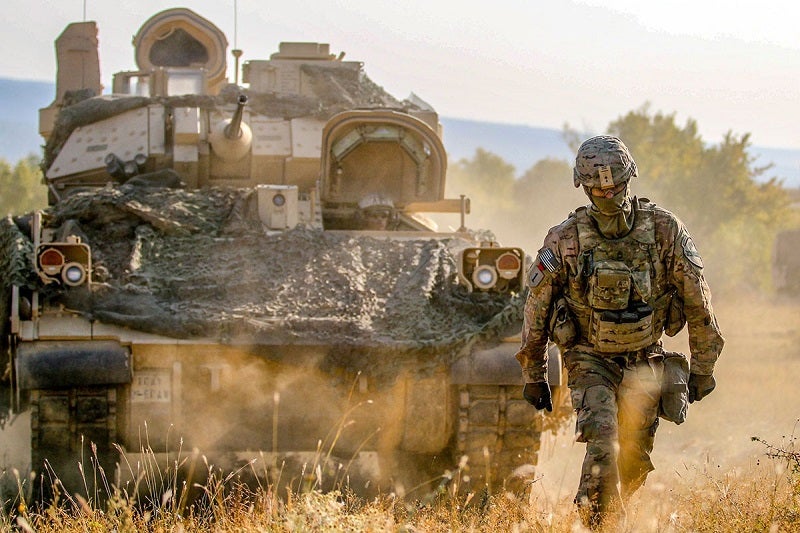
Coffman said: “Nothing we’re doing is about vehicles, it has nothing to do with vehicles. On my hierarchy, vehicles come really come right after this person. It is all about the soldier.”

Emphasising, this Coffman tapped into the aims of the wider industry and defence market saying: “That’s what we’re all about industry, academia, the military, the acquisition, the requirements, it’s all about the soldier. And if we keep that in mind that this business becomes fairly simple. It’s getting the best equipment as fast as possible – as long as the budget allows – into his or her hands because the enemy is real.”

2 February 2020

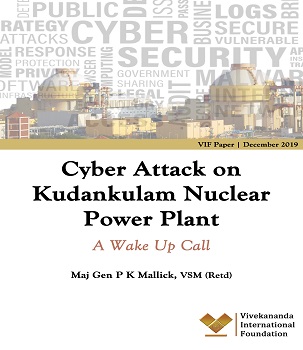
Cyber Attack on Kudankulam Nuclear Power Plant – A Wake Up Call


… India is among the top three countries in the world after the U.S. and China when it comes to phishing and malware attacks ... While governments can’t control every aspect of cyber security, they can certainly help shape the future of cyber security based on lessons learned from other nations, threats and technologies ... all stakeholders have to their heads together, identify the vulnerabilities in the critical information infrastructure and take remedial measures in a time bound manner …

Will India Now Finally Invite Australia to the Malabar Exercise?

By Rajeswari Pillai Rajagopalan

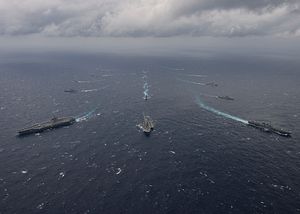
In a significant development that has been through multiple rounds of headlines and controversy, India might be finally getting ready to invite Australia to the Malabar naval exercise, according to media reports. The next edition of the exercise is scheduled to take place around July or August this year.

The question of inviting Australia to the exercise, which currently includes India, Japan and the United States, has been controversial. India has for several years resisted bringing Australia on board, reportedly because of possible negative reactions from China. The fact is that the first and only time Australia has been part of this exercise was in 2007, when both Australia and Singapore were invited to join India, Japan and the United States.

Nonetheless, if India finally agrees to invite Australia for the 2020 Malabar naval exercises, it will be a welcome break and would suggest the growing seriousness and synergy among four key Indo-Pacific powers – Australia, India, Japan, and the United States.

SPECIAL INSPECTOR GENERAL FOR AFGHANISTAN RECONSTRUCTION (SIGAR) RELEASES ITS FORTY-SIXTH QUARTERLY REPORT TO CONGRESS


Today, the Special Inspector General for Afghanistan Reconstruction (SIGAR) released its forty-sixth Quarterly Report to Congress.

Key Points:

-- Enemy-initiated attacks (EIA) and effective enemy-initiated attacks (EIA resulting in casualties) during the fourth quarter of 2019 exceeded same-period levels in every year since recording began in 2010.

-- The month of the Afghan presidential election (September 2019) saw the highest number of EIA in any month since June 2012, and the highest number of effective enemy-initiated attacks (EEIA) since recording began in January 2010. The high level of violence continued after the presidential election; October 2019 had the second highest number of EIA in any month since July 2013.

-- The Afghan Special Security Forces (ASSF) conducted fewer ground operations (534) in the fourth quarter (October - December), than any other quarter in 2019. Only 31% of those missions were completely independently, without U.S. or Coalition support. Less than half (43%) of all ASSF operations in 2019 were completed independently, compared to 55% in 2018.

Afghanistan’s Mineral Resources Are a Lost Opportunity and a Threat

By Ahmad Shah Katawazai

“We are at risk of the curse of plenty, [the] curse of resources.”

— President Ashraf Ghani 

Torn by four decades of war and desperate poverty, Afghanistan is believed to be sitting on one of the richest troves of minerals in the world. The value of these resources has been roughly estimated between $1-3 trillion.

Afghanistan has vast reserves of gold, platinum, silver, copper, iron, chromite, lithium, uranium, and aluminium. The country’s high-quality emeralds, rubies, sapphires, turquoise, and lapis lazuli have long charmed the gemstone market. The United States Geological Survey (USGS), through its extensive scientific research of minerals, concluded that Afghanistan may hold 60 million metric tons of copper, 2.2 billion tons of iron ore, 1.4 million tons of rare earth elements (REEs) such as lanthanum, cerium, neodymium, and veins of aluminium, gold, silver, zinc, mercury, and lithium. According to Pentagon officials, their initial analysis at one location in Ghazni province showed the potential for lithium deposits as large as those of Bolivia, which has the world’s largest known lithium reserves. The USGS estimates the Khanneshin deposits in Helmand province will yield 1.1.-1.4 million metric tons of REEs. Some reports estimate Afghanistan REE resources are among the largest on earth.

China’s Social Control Mechanisms on Full Display Amid Coronavirus Epidemic

By Dake Kang

Meron Mei, a sophomore at Wuhan University in the Chinese city at the heart of a viral outbreak, went back to his home village and started to cough.

So he went to the hospital and got checked. Doctors determined it was a common cold, not the new coronavirus, he says, and he returned home. Then a week ago, he says, five officers showed up at his house in Xishui County, a two-hour drive from Wuhan. They wore masks and wielded blue, gun-shaped thermometers.

Now Mei finds himself under constant surveillance by plainclothes police. His doorstep has been posted with a red warning: “Do not approach – patient with suspected pneumonia.” Doctors in gowns, goggles and masks check his temperature three times a day, and the government calls him constantly to monitor his condition — despite tests that he says show his body is free of the coronavirus. His phone is constantly checked; its camera has been disabled and his photos deleted. He relayed his story to The Associated Press via messages in English to prevent officers from reading them.

“I am in prison,” said Mei, whose story could not be independently verified by the AP. “I’m so angry. I feel physically and mentally exhausted.”

China 2049: Economic challenges of a rising global power

David Dollar, Yiping Huang, and Yang Yao


The following is drawn from the executive summary of the forthcoming edited volume “China 2049: Economic Challenges of a Rising Global Power” (Brookings Institution Press, May 2020). The book is the outcome of a joint research project between economists at the National School of Development at Peking University and the Brookings Institution.


China is on track to be the world’s next economic superpower, but it faces tremendous challenges, such as fostering innovation, dealing with an aging population, and coping with a global environment skeptical of a more powerful People’s Republic. This policy brief draws from a forthcoming edited volume — “China 2049: Economic Challenges of a Rising Global Power” (Brookings Institution Press, May 2020) — which is the result of a collaborative effort among economists from China’s Peking University and the Brookings Institution. The book will offer in-depth analyses of these challenges and explore a number of essential questions: Does China have enough talent and the right policy and institutional mix to transit from an input-driven to innovation-driven economy? What does an aging population mean for the country in terms of labor supply, consumption demand, and social welfare expenditures? Can China contain environmental and climate change risks? How should the financial system be transformed in order to continuously support economic growth and keep financial risks under control?

The Novel Coronavirus Outbreak


The explosive outbreak of a novel coronavirus (now known as 2019-nCoV) in China’s Hubei province is advancing at a breakneck pace. The case count stands, as of early Tuesday, January 28, at 4,474, with 107 fatalities. Cases have spread across China and to more than a dozen other countries.

The Wuhan-centered outbreak, which first began in December 2019, is expected to continue to spread widely within China, with additional cases exported to other countries. In the coming days, the outbreak will soon exceed the 8,000 cases of SARS that occurred during the 2003 outbreak in southern China.

The Chinese government has imposed a quarantine on Wuhan and 15 other cities in Hubei province, affecting an estimated 57 million people. This is a staggering scale of ambition—an unprecedented use of quarantines as an emergency public health measure. This sudden decision, borne of fear, and indeed even desperation, is a historic gamble by China’s anxious leadership that quarantines can contain the outbreak from spreading to other parts of China and the world. Other controls that fall short of a full quarantine have been imposed in Beijing, Shanghai, and other major hubs.

Challenging China’s Bid for App Dominance

By Kristine Lee and Karina Barbesino

Executive Summary

Social media platforms are emerging as central to China’s efforts to shape the global information architecture. Beijing is exploiting the relative openness of the United States’ and other democracies’ social media platforms to manipulate the narrative around its policies, while the virality of some of China’s own social media applications (colloquially known as “apps”) has positioned Beijing to quietly export its model of surveillance and censorship. Social media platforms will continue to be an important vector by which information is disseminated and consumed, and control over these platforms will yield significant influence over perceptions of the United States and China.1 As Beijing executes a more aggressive global social media strategy, the U.S. government should coordinate closely with both like-minded countries and social media companies to backstop the integrity, transparency, and competitiveness of their own platforms.

China’s Social Media Platforms: A New Instrument of National Power

Just a decade ago, American companies dominated the global social media ecosystem. Facebook had already captured a billion users across more than 200 countries by 2012 while many of China’s popular “super apps”—which bundle several different services under a single interface—were either nonexistent or marginal players.2 But today, the gap between the userbases of American and Chinese platforms appears to be closing. Facebook-owned WhatsApp, for example, currently has about 1.5 billion users globally,3 while WeChat—a messaging app that the Chinese tech giant Tencent created in 2011—has already captured 1.08 billion users globally, though principally within China’s borders.4

China Is Perfectly Prepared to Fight the Last Virus

Daniel Moss

The economy has a much more sophisticated array of tools to boost growth than during SARS. Unfortunately, its problems are bigger. 

China has a bigger and more sophisticated toolbox to combat any economic slowdown from the coronavirus than in 2003, when it battled the SARS pandemic. The challenge now is a worsening backdrop both domestically and abroad, and how both hamper the effectiveness of Beijing's response.

It's hard to be precise about the damage given the situation is still unfolding. Bloomberg Economics is likely to downgrade its projection for China’s first-quarter growth from its current forecast of 5.9%. When Severe Acute Respiratory Syndrome raged in the second quarter of 2003, China's expansion cooled to 9.1% from 11.1% in the prior three months.

Trouble is brewing beyond China's shores, too. With trade wars, heightened tension between Iran and the West and declining demographics, there were plenty of challenges before this outbreak. The International Monetary Fund is penciling in growth of 3.3% this year, after crawling along at 2.9% in 2019. Yet that pace has stalled from the 3.4% estimate just a few months ago. In 2003, the world economy expanded more than 4% and approached 6% in 2007.

Saudi Arabia in the Caribbean? Guyana Is the World's Newest Petrostate

by Ryan Berg

Guyana does not feature prominently in US strategic thought towards the Western Hemisphere, but this year could change that. Guyana is set to become one of the world’s best performing economies in 2020 thanks to 6 billion barrels — and counting — of offshore oil deposits found by ExxonMobil. (Recently, several corporations made a major find off the coast of Suriname, too.) The discovery is sufficient to completely transform the economy of this small South American country.

Under normal circumstances, Guyana’s oil discovery would contribute to a glut of resources. Yet, regional energy production is anything but normal. Of course, US sanctions on Venezuela, formerly the largest oil producer in the region, have curtailed production. So has twenty years’ worth of sheer incompetence, lack of maintenance, and corruption. Political and social unrest in Ecuador, a deep economic recession in Argentina, an ill-fated effort to save Mexico’s bloated state-owned oil company (the most indebted in the world), and lackluster auctions for offshore drilling blocks in Brazil have all slowed the production figures of Latin America’s major oil producers. Guyana’s known reserves place it near the top worldwide on a per capita basis, and initial estimates are that the country will have a production capacity of between 700,000 and 1 million barrels of oil per day in a country of just 770,000 people.

Kim Jong Unchained

By Aidan Foster-Carter

Whatever happened to the North Korea peace process, which in 2018 looked so promising?

We have been here before, in broad terms. So let us begin with some background.

Since the Korean War ended in 1953 – with an armistice only, no peace treaty ever followed – after three bloody and hugely destructive years, the peninsula has known a tense peace for two-thirds of a century. That peace, underpinned by allied deterrence, has been punctuated by regular crises – especially in the 30 years since North Korea’s nuclear ambitions began to be apparent, transforming the DPRK’s threat from a local to a global one.

In 1994, the Korean Peninsula came perilously close to a new war. The Kim regime defied the International Atomic Energy Agency (IAEA) by removing spent fuel from its nuclear reactor at Yongbyon. That plutonium could have made half a dozen nuclear bombs. Then-U.S. President Bill Clinton took this threat so seriously that he considered a military strike, but drew back because the risks and casualties would have been unacceptably high. Instead, after ex-President Jimmy Carter’s semi-unauthorized visit to Pyongyang, Clinton switched to a peace process. That October, the United States and DPRK signed a detailed Agreed Framework (AF) for denuclearization.

The Long-Term Costs of NATO Expansion

by Michael Krepon

NATO expansion was pre-cooked in 1993. It would have taken an extraordinarily farsighted president, largely immune from political pressures, to have opted for political, military and economic engagement without NATO expansion.

"An alliance is like a chain. It is not made stronger by adding weak links to it." — Walter Lippmann, Today and Tomorrow column, August 5, 1952

"An alliance is effective only to the extent that it reflects a common purpose and that it represents an accretion of strength to its members." — Henry Kissinger, Nuclear Weapons and Foreign Policy

"Alliances are worthwhile when they put into words a real community of interests; otherwise they lead only to confusion and disaster." — A.J.P. Taylor, Origins of the Second World War

The apogee of nuclear arms control occurred between 1986 and 1996. In 1986, Mikhail Gorbachev agreed to on-site inspections for conventional military exercises in Europe and the Reykjavik Summit happened. Both broke the dam holding back nuclear treaties. Ten years later, in 1996, President Bill Clinton oversaw the completion of negotiations on a Comprehensive Nuclear-Test-Ban Treaty. In between, there were conventional and nuclear arms reduction treaties, the Chemical Weapons Convention, the indefinite extension of the Nonproliferation Treaty, and much more.