8 August 2020

Japan’s Painful Choice on RCEP

By Shin Kawashima

The Regional Comprehensive Economic Partnership (RCEP) is emerging as a mega FTA centered on the ASEAN+3. Although ASEAN is the obvious driving force behind RCEP, the negotiations are also influenced by Japan and China, as well as India and other major players.

Roughly ten years ago, Japan made the decision to join the Trans-Pacific Partnership (TPP). With the U.S. withdrawal, Tokyo then took on a leadership role in the conclusion of the Comprehensive and Progressive Agreement for Trans-Pacific Partnership, or CPTPP. Subsequently, Japan has tried to promote the formation of highly liberal and advanced economic and trade frameworks around the world, for instance with the conclusion of the Japan–EU Economic Partnership Agreement. So how does RCEP fit in with Japan’s trade vision?

First, given its low degree of trade liberalization, RCEP is not especially meaningful in trade terms for Japan, given the conclusion of the CPTPP. Rather, its significance lies in the building of a framework that involves such a large number of countries and regions.

Second, although trade liberalization under RCEP is less ambitious that it is under the CPTPP, Japan has being doing its best to increase it. The thinking is that while the level of trade liberalization of the proposed Japan–China–Republic of Korea Free Trade Agreement lies somewhere between the CPTPP and RCEP, a more aggressive RCEP would encourage the Japan–China–Republic of Korea Free Trade Agreement to go further, to Tokyo’s benefit.

The Case of Shipki la – Claude Arpi


After looking at the ‘dispute’ in Chuva-Chuje area, I shall continue eastward and study the case of Shipki la (pass), also in Himachal Pradesh.

This is another tenuous claim from China, with no historical, cartographical or geographical backup. Presently it is a dormant claim, but with Beijing in the mood to claim Tajikistan’s Pamir Region and Vladivostok (and Ladakh), it is worth looking into the facts.

The First Incursion

The first Chinese incursions inside India’s northern border, in Barahoti in June 1954; took place hardly two months after the signature of the Agreement on Tibet. I shall come back to it in a later post.

In a way, Barahoti could be explained by the fact that Indian negotiators omitted to insist on Tunjun-la as a pass notified in the 1954 Tibet Agreement. This gave an opportunity to the Chinese to claim an area south of the border pass.

But what happened two years later, cannot be justified under the same principle. It was plain violation of the Indian territory, without any justifications.

Trump Looks to Arms Sales to Deepen Ties With India

BY ROBBIE GRAMER, JACK DETSCH
Source Link

The Trump administration is looking to ramp up arms sales to India in the wake of the country’s deadly border clashes with China, opening a new front of tensions between Washington and Beijing, U.S. officials and congressional aides told Foreign Policy. 

The Trump administration in recent months has laid the groundwork for new arms sales to India that go above and beyond what previous administrations considered, including longer-term weapons systems with higher levels of technology and sophistication, such as armed drones, according to the officials. 

For senior U.S. officials, better ties with India, including a closer defense relationship, are key to countering China’s emerging superpower role. “It’s important that democracies like ours work together, especially as we see more clearly than ever … the true scope of the challenge posed by the Chinese Communist Party,” U.S. Secretary of State Mike Pompeo said in a virtual address to the U.S.-India Business Council on July 22. “The recent clashes initiated by the [Chinese military] are just the latest examples of the CCP’s unacceptable behavior.”

India and the United States Need Each Other Mostly Because of China

BY SUMIT GANGULY 
Source Link

On Dec. 15, 1971, the USS Enterprise, the largest aircraft carrier in the U.S. Navy at the time, entered the Bay of Bengal as the spearhead of a naval task force of the U.S. 7th Fleet. The task force had been dispatched to help evacuate beleaguered Pakistani forces in East Pakistan as the Indian military steadily advanced toward Dhaka, the regional capital. But Dhaka fell to Indian forces on Dec. 16, and the task force’s entry into the Bay of Bengal seemed to be futile. East Pakistan soon became Bangladesh, and India gained a grateful new regional ally.

Washington’s main goal, it turned out, was to send a signal to Islamabad and Beijing that it was a reliable ally that would stand by its commitments at a time of need. The message to China was especially important because Henry Kissinger, then-secretary of state, had recently made a clandestine trip to Beijing using Islamabad as an interlocutor. Kissinger’s mission, as is now well known, was the opening gambit in Richard Nixon’s outreach to China.

Decades later, the episode still deeply rankled policymakers in New Delhi. In its wake, some, most notably India’s leading strategist of the time, K. Subrahmanyam, even argued that India should pursue nuclear weapons to ensure that no country could again have the ability to threaten it. And in subsequent years, in official U.S.-India meetings, the incident almost invariably affected the tenor of discussions.The contrast between the two episodes in the Bay of Bengal underscores how dramatically U.S.-India security ties have evolved.

Islamic State attack on Afghan prison ends on second day, with at least 29 dead

Susannah George, Aziz Tassal and Sharif Hassan
Source Link

KABUL — A sophisticated attack on a major prison in eastern Afghanistan that began Sunday night was finally shut down Monday evening, after scores were killed or injured and hundreds of prisoners escaped.

The main assault on the prison in Jalalabad, Nangahar's provincial capital, lasted more than 18 hours, and a clearing operation continued into the night Monday. At the tail end of the operation, led by Afghan special forces, suicide bombers inside the complex detonated their explosive vests.

At least 29 people, including civilians, security forces and inmates, were killed and 49 wounded in the course of the raid, according to the provincial governor's office. Those tolls are expected to rise as bodies are recovered from the prison.

The Islamic State asserted responsibility for the assault, the most ambitious operation the group has mounted in Afghanistan since it officially established a branch in the country in 2015. It follows the announcement Saturday by Afghanistan's main intelligence agency that the militant group's intelligence director had been killed near Jalalabad.

The attack also comes at a tense moment, as pressure builds to bring the Taliban and Afghan government together for peace talks. It began just hours before a confidence-building cease-fire was set to end, and the complex planning it entailed prompted suspicions among Afghan officials of Taliban involvement despite a statement from the group denying responsibility.

Bait and switch

Looking Past China’s Rise for the Trends Shaping Asia


Under the leadership of President Xi Jinping, China has begun to more aggressively challenge America’s role as the key economic and political power in Asia. Increasingly repressive at home, Xi has not shied away from asserting China’s regional influence, positioning Beijing as the powerbroker on everything from trade routes to the ongoing efforts to denuclearize North Korea. And with its Belt and Road Initiative, China’s influence is spreading well beyond Asia, into much of Africa and even Europe. China’s ascendance is also evident in how much attention other global powers are paying to Beijing and its policies. U.S. President Donald Trump made his trade war with China the centerpiece of his first term in office, and has publicly vilified China over its response to the coronavirus.

But while China’s rise often makes headlines, it is not the only trend shaping events in Asia. Nationalism has become a force in democracies like India, where Prime Minister Narendra Modi rode the wave of Hindu nationalism to a massive victory in the country’s 2019 parliamentary elections, and the Philippines, where President Rodrigo Duterte’s electoral gains in midterm elections in 2019 left even fewer checks on his increasingly autocratic behavior. Meanwhile, Myanmar’s government continues its persecutions of Rohingya Muslims.

Xi Jinping sends shock waves with his 2035 manifesto


TOKYO -- At the end of last month, the Chinese Communist Party announced it will convene a key policy meeting in October.

"The fifth plenary session of the 19th Central Committee of the Communist Party of China will be held in Beijing in October," the Xinhua article read. 

Attendees will assess the proposals for the next five-year plan that spans 2021 to 2025 "and future targets for 2035," it said.

For China watchers around the world, the second half of that sentence is a coded message that could not go unnoticed. 

"President Xi Jinping really does intend to stay in power for the long run," one political pundit said. "This must be, in effect, the manifesto for the next 15 years."

While China has modernized over the years, it still retains some remnants of its socialist planned economy era, including the formulation of five-year plans. Therefore, the decision to discuss a new plan comes as no surprise.

Who Will Be China’s Next Premier?

By Andrei Lungu

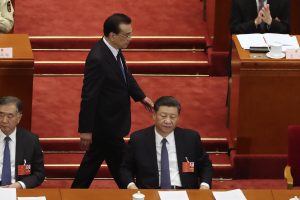
Who would have imagined street stalls could grab so much attention in China? Premier Li Keqiang’s comments about expanding street stalls to promote employment and the apparent pushback by Xi Jinping’s allies against his proposal have also revealed something that has become an afterthought in the Xi era: the power and importance of the country’s premier.

Li’s days as premier are limited – in fact, a little less than 1,000. When the National People’s Congress (NPC) amended China’s constitution in 2018 to remove term limits for the positions of president and vice president, it left the two-term limit for the premier unchanged. Li will have to either retire a bit early (he will be 67 at the 20th Party Congress in 2022, an age at which Politburo-level Chinese politicians usually receive a new five-year term) or move to a different position, for example chairman of the Standing Committee of the NPC or the Chinese People’s Political Consultative Conference, similar to what Li Peng did in 1998. Because of the focus on what Xi will do in 2022, an important question has been ignored: Who will take Li Keqiang’s place?

Normally, it should have been clear who will be China’s next premier: the current first-ranked vice premier, who is also a member of the Politburo Standing Committee (PSC). But when the PSC omitted any successor for Xi as party leader at the 2017 Party Congress, it also omitted a successor for Li. Han Zheng, the current first-ranked vice premier, will be 68 years old in 2022, which is exactly the traditional retirement age. As Han is not a close ally of Xi, it’s unlikely that he would be promoted after this age. This muddies the waters, but also increases Xi’s possibilities.

What Does Vietnam Think About America’s Indo-Pacific Strategy?

By Derek Grossman

On July 13, Secretary of State Mike Pompeo shifted U.S. policy in the South China Sea, prompting Southeast Asian counterclaimants to China’s expansive sovereignty claims to respond. For Vietnam, Pompeo’s announcement represented a clear victory — Washington would no longer remain on the sidelines in maritime disputes, and now would actively uphold counterclaimants’ sovereignty in their respective exclusive economic zones (EEZs).

In its response, however, Vietnam’s Ministry of Foreign Affairs (MoFA) withheld any mention of the United States by name. Instead, Hanoi noted that “Vietnam welcomes countries’ positions on the East Sea [Vietnam’s term for the South China Sea] issues which are consistent with international law and shares the view, as stated in the statement issued on the occasion of the 36th ASEAN Summit, that the UNCLOS [United Nations Convention on the Law of the Sea] sets out the legal framework within which all activities in the oceans and seas must be carried out.”

Keen observers of Vietnam’s security policy, including myself, are not surprised in the least by this outcome. Since the Soviet Union abandoned its alliance with Vietnam to mend ties with China in 1986, Hanoi has been consistent over decades to avoid repeating the mistake of aligning with one great power against another. Within the context of rising U.S.-China competition, the same rule has applied. Complicating the matter further has been Vietnam’s “Four Noes and One Depend” defense policy — no alliances, no foreign military bases on Vietnamese territory, no activities with a second country against a third, and no starting war (more on the “One Depend” below). Even though there may be some flexibility in the Four Noes policy, particularly on the third no if Chinese assertiveness in the South China Sea intensifies, Hanoi has typically taken a conservative approach to its interpretation to avoid unnecessarily antagonizing Beijing.

China’s Rise Is MacArthur’s Vindication

By Francis P. Sempa

In the midst of President Harry Truman’s controversial firing of General Douglas MacArthur during the Korean War, Air Force General George Kenny, who brilliantly led MacArthur’s air force in the Southwest Pacific in World War II, wrote that when the histories of the Korean War are written, they will "add still more to the luster of MacArthur's reputation as a military leader." General Kenny was wrong about historians, who have largely taken Truman’s side in the debate over how to deal with China’s entry into the war. But in a larger geopolitical sense, General Kenny was right. China’s rise in the 21st century and its challenge to America’s global preeminence have vindicated MacArthur.

Truman’s partisans have long portrayed MacArthur’s conduct during the Korean War as reckless, dangerous, and likely to lead to World War III. They have blamed MacArthur for attempting to liberate North Korea from communist rule, even though that was the initial policy of the Truman administration and the United Nations. They have blamed MacArthur for sending forces under his command to the Yalu River, even though MacArthur was told by General George Marshall to “feel unhampered strategically and tactically to proceed north of the 38th Parallel." They claimed that MacArthur's reckless advance into North Korea provoked China to enter the war in October-November 1950, even though China had decided to massively enter the war as early as July 1950, long before Inchon and long before MacArthur’s forces crossed into North Korea. They have blamed MacArthur for suggesting that Nationalist forces on Taiwan be used to help defeat the Communist Chinese army, even though Mao Zedong’s planned invasion of Taiwan was only forestalled by America’s entry into the war and dispatch of warships to the Taiwan Strait. They have blamed MacArthur for suggesting the use of nuclear weapons against China, even though both Presidents Truman and Eisenhower threatened their use, and the Joint Chiefs of Staff ordered unassembled atomic bombs to Guam in case their use was authorized. And they have blamed MacArthur for wanting to win the war instead of settling for stalemate, claiming, in the words of General Omar Bradley, that Korea was the wrong war, in the wrong place, at the wrong time, even though that stalemate has produced 70 years of misery and horrors for the North Korean and Chinese people, led to our disastrous defeat in Vietnam, and enabled China to consolidate its political hold on the mainland and develop into a most dangerous peer competitor of the United States.

China’s Emerging Middle Eastern Kingdom

MICHAEL DORAN AND PETER ROUGH

American policymakers have long assumed that Chinese and American goals in the Middle East are largely complementary. Beijing, so the prevailing wisdom holds, is fixated on commerce, with a special emphasis on oil and gas. “China’s strategy in the Middle East is driven by its economic interests,” a former senior official in the Obama administration testified last year before Congress. “China … does not appear interested in substantially deepening its diplomatic or security activities there.” According to this reigning view, China adopts a position of neutrality toward political and military conflicts, because taking sides would make enemies who might then restrict China’s access to markets.

This oft-repeated shibboleth ignores clear signs that China is very actively engaged in a hard-power contest with the United States—a contest that the Chinese occasionally acknowledge and are capable of winning. In 2016, Xi Jinping toured the Middle East for the first time in his capacity as president of the People’s Republic of China, visiting Saudi Arabia, Egypt, and Iran. Chinese propaganda hailed the trip as a milestone. The Chinese Foreign Ministry issued a white paper on its Arab policy, the first of its kind. “We will deepen China-Arab military cooperation and exchange,” the paper read. “We will … deepen cooperation on weapons, equipment and various specialized technologies, and carry out joint military exercises.”

The following year, in 2017, the Chinese navy opened a naval base in Djibouti, the first overseas base it has ever established—a tacit renunciation of the traditional Chinese credo of noninterventionism. Djibouti sits on the southern end of the Bab-el-Mandeb Strait, which guards the passage to the Red Sea and the Suez Canal from the Gulf of Aden. On the northern end, only 18 miles away, lies Yemen.

What Iran Gets from the Strategic Deal with China

by Ilan Berman


A new day is dawning in Sino-Iranian relations. Earlier this month, Iranian officials revealed publicly that they were in the final stages of negotiations with China on a sprawling, 25-year strategic pact. The deal will, if implemented in full, dramatically expand military, economic, and political ties between the two countries. The new accord should not be surprising; Tehran and Beijing have historically cooperated on everything from arms sales to energy. Even so, the agreement – which is scheduled to be finalized in coming weeks – represents a landmark expansion of bilateral relations between the two strategic partners. It is also a development with major implications for regional geopolitics and a clear threat to the United States’ efforts to isolate and contain the Islamic Republic.

A Lifeline for Tehran 

The US-China Relationship Is a Shakespearean Tragedy

By Zheng Wang

The one common and peculiar aspect of most Shakespearean tragedies is the fact that the catastrophic events and unfolding misfortunes seem almost inevitable. While characters within the play are well aware of the fact that things are quickly going from bad to worse, it seems almost impossible to change the course of events. Unfortunately, the current U.S.-China relationship seems to be showing the same tendency.

Many Shakespearean tragedies were caused by accidents, which in turn were a result of carelessness and miscommunication. U.S.-China relations have never been smooth and peaceful and have in the past experienced various ups and downs and dangerous crises such as the 1999 bombing of the Chinese embassy in Belgrade and the 2001 military aircraft collision incident, among others. The main reason why none of these incidents developed into a major tragedy, despite their severity, was owing to the different generation of political leaders, diplomats, and military officials on both sides, who shared a high level of mindfulness and sensitivity toward this fragile relationship. Throughout their years of association, both sides took extra care and preventive measures to avoid misjudgment and accidents.

China: Security Concerns Over Record Oil Imports – Analysis

By Michael Lelyveld

China has been buying record volumes of foreign oil as tensions with the United States and energy security concerns climb.

In June, China’s oil imports set an all-time high of 12.9 million barrels per day (mbpd), overtaking the previous record of 11.3 mbpd posted only one month before.

In the first half of the year, crude imports of 268.7 million metric tons (1.97 billion barrels) rose nearly 10 percent from a year earlier on an average daily basis, Reuters calculated from customs figures.

First-half imports of 10.78 mbpd were up 6.1 percent from the previous record-setting daily average in 2019.

China’s oil imports increased even during the COVID-19 lockdown period in January and February, gaining 5.2 percent year-on-year, and shipments have yet to slow down.

Inbound supplies have clogged China’s ports as dozens of tankers sit offshore, Argus Media reported on July 17.

Thirty-one very large crude carriers (VLCCs), each capable of carrying some 2 million barrels, have been turned into floating storage with wait times for unloading averaging 21 days, Argus said.

The traffic jams are partly the result of bargain buying in April when world prices plunged and futures of West Texas Intermediate (WTI) crude turned negative following the pandemic and a price war between Russia and Saudi Arabia.

Israel's Evolving Iran Policy


From the Israeli perspective, Iran’s expanding missile capacity and network of non-state militia partners pose a grave threat. Iran’s past support for terrorist attacks within Israel itself and against Israelis abroad, combined with inflammatory rhetoric expressing the intention to ‘wipe Israel off the map’, further elevates the Iranian menace in the Israeli psyche, write Dalia Dassa Kaye and Shira Efron.

Concerns about Iran’s nuclear ambitions have consumed Israeli decision-makers for decades. Another grave concern is what Israelis perceive as Iran’s growing political and military influence in the region, particularly in Lebanon, Syria and Iraq. Capitalising on regional conflicts and political vacuums, Iran is building what Israel views as a ‘land bridge’ of friendly, largely Shia forces from Tehran to the Mediterranean. Never mind that Iran faces serious limitations to its regional power-projection capabilities and is domestically vulnerable after years of sanctions, repressive rule and poor governance. Or that Israel remains the most powerful and well-equipped military force in the region, supported by its strategic ally, the United States. From the Israeli perspective, Iran’s expanding missile capacity and network of non-state militia partners pose a grave threat. Iran’s past support for terrorist attacks within Israel itself and against Israelis abroad, combined with inflammatory rhetoric expressing the intention to ‘wipe Israel off the map’, further elevates the Iranian menace in the Israeli psyche. In short, there is little debate in Israel about Iran’s desire or ability to do it harm.

Why Hydroxychloroquine And Chloroquine Don't Block Coronavirus Infection Of Human Lung Cells

by Katherine Seley-Radtke

A paper came out in Nature on July 22 that further underscores earlier studies that show that neither the malaria drug hydroxychloroquine nor chloroquine prevents SARS-CoV-2 - the virus that causes COVID-19 - from replicating in lung cells.

Most Americans probably remember that hydroxychloroquine became the focus of numerous clinical trials following the president’s statement that it could be a “game changer." At the time, he appeared to base this statement on anecdotal stories, as well as a few early and very limited studies that hydroxychloroquine seemed to help patients with COVID-19 recover.

‘The Biggest Monster’ Is Spreading. And It’s Not the Coronavirus.

By Apoorva Mandavilli
Source Link

It begins with a mild fever and malaise, followed by a painful cough and shortness of breath. The infection prospers in crowds, spreading to people in close reach. Containing an outbreak requires contact tracing, as well as isolation and treatment of the sick for weeks or months.

This insidious disease has touched every part of the globe. It is tuberculosis, the biggest infectious-disease killer worldwide, claiming 1.5 million lives each year.

Until this year, TB and its deadly allies, H.I.V. and malaria, were on the run. The toll from each disease over the previous decade was at its nadir in 2018, the last year for which data are available.

Yet now, as the coronavirus pandemic spreads around the world, consuming global health resources, these perennially neglected adversaries are making a comeback.

“Covid-19 risks derailing all our efforts and taking us back to where we were 20 years ago,” said Dr. Pedro L. Alonso, the director of the World Health Organization’s global malaria program.

It’s not just that the coronavirus has diverted scientific attention from TB, H.I.V. and malaria. The lockdowns, particularly across parts of Africa, Asia and Latin America, have raised insurmountable barriers to patients who must travel to obtain diagnoses or drugs, according to interviews with more than two dozen public health officials, doctors and patients worldwide.

America in the World

By JAY NORDLINGER

NRPLUS MEMBER ARTICLEFor as long as anyone can remember, conservatives have been labeled “warmongers.” Gore Vidal called William F. Buckley Jr. “the leading warmonger in the United States.” Reagan was called a “warmonger” every day, as was Goldwater before him.

Bella Abzug, the radical congresswoman from New York, was a little more creative. She accused Reagan of conducting a “Rambo-Bonzo foreign policy.” (John Rambo was an action hero; Bonzo was the chimp in a Reagan movie, from 1951.)

John Bolton is a veteran Reaganite, and Goldwaterite, for that matter: On Election Day 1964, when he was 15, he got permission to be absent from school, in order to pass out leaflets for Goldwater. He has served in every Republican administration from Reagan on.

His critics on the left have always called him a “warmonger” — that’s dog-bites-man. But lately, man has been biting dog.

When Bolton published a memoir in June, damning of President Trump, the Republican National Committee issued a statement calling Bolton, among other things, a “warmonger.” Trump called him a “warmongering fool.” “All he wanted to do is drop bombs on everybody,” said Trump.

Like NATO, But for Economic Warfare

BY ANTHONY VINCI
Source Link

On their own, few countries are powerful enough to stand up to bullying by China, and the existing security alliances upon which the world’s major democracies depend weren’t built to address the economic threats now emanating from Beijing. This spring, shortly after Australia called for an international investigation into the origins of COVID-19, the Chinese ambassador to that country threatened an economic boycott, declaring that the Chinese public could go without Australian wine and beef, among other products. Since China is Australia’s largest export market, this was no small threat. Subsequently, China blocked imports from major Australian meat producers and placed tariffson Australian barley. More and more, China is using its massive economic weight to threaten countries that challenge its actions, criticize its leaders, or express sympathy for people whom it considers dissidents or separatists.

In April, Chinese officials threatened the European Union with unnamed repercussions if an official EU report described a Chinese “global disinformation campaign” related to COVID-19. (The EU toned down the report.) Beijing has threatened economic harm to German automakers if Germany attempts to exclude equipment made by the Chinese telecom giant Huawei from its 5G networks. Last year, China also threatened to impose trade restrictions on Sweden after a Chinese Swedish author was awarded a prize for persecuted writers by the Swedish chapter of the group PEN International. These moves represent a kind of economic imperialism. The Chinese Communist Party, which suppresses dissent at home, is trying to force other countries to abide by its authoritarian norms and use its preferred company to build their own essential communications networks.

The Other Putin on Europe’s Doorstep

MARK LEONARD

BERLIN – Is Turkey the new Russia? That question is increasingly being asked in European capitals as Turkish President Recep Tayyip ErdoÄŸan adopts a more aggressive foreign policy. In addition to using migration to threaten and finagle the European Union, ErdoÄŸan has also been deploying military power to expand Turkey’s sphere of influence across the wider region.

From Latin America’s lost decade in the 1980s to the more recent Greek crisis, there are plenty of painful reminders of what happens when countries cannot service their debts. A global debt crisis today would likely push millions of people into unemployment and fuel instability and violence around the world.

Since the end of the Cold War, Europeans have viewed regional security through a unipolar Western lens. While NATO guaranteed military security, the EU – with its 80,000-page rulebook for everything from LGBTQ rights to lawnmower sound ordinances – provided legal order. Back in the 1990s, it was widely assumed that the two big non-Western regional players, Russia and Turkey, would gradually be accommodated to this arrangement.

But over the last 15 years, the dream of European unipolarity has given way to a multipolar reality. Both Russia and Turkey have had a long, tortured love-hate relationship with Europe, and both have grown more assertive under national leaders who share a disdain for EU norms and values.

Japan’s Coal Policy Updates—A Glass Half Full or Half Empty?


Japan’s relationship with coal-fired power generation is once again under scrutiny following two key announcements by the Japanese government in July meant to curtail both its domestic reliance on coal as well as its export of coal-fired power generation technology abroad. Is coal’s role as an important source of low-cost, energy-secure fuel in Japan coming to an end? A closer look at the policy details suggests neither of the announcements signify a radical departure from Japan’s existing coal policy.

In early July, the minister for economy, trade and industry (METI) announced that Japan was considering concrete measures to facilitate the retirement (mothballing or decommissioning) of coal-fired power generation units that use subcritical and supercritical technologies. Today, coal makes up 32 percent of Japan’s power generation mix. The announced action would likely affect approximately half the coal-fired power supply (see chart below).

Welcome to the Post-Leader World

BY OONA HATHAWAY, SCOTT J. SHAPIRO

On April 14, as the enormity of the coronavirus crisis was finally becoming clear, U.S. President Donald Trump announced that he was halting funding to the World Health Organization (WHO), delivering a major blow to an organization that depends on the United States for nearly 10 percent of its budget. Washington followed that decision with a declaration 10 days later that it would not take part in a global initiative to speed up the development, production, and distribution of drugs and vaccines to fight the COVID-19 pandemic. In early May, the United States sat out a global vaccine summit led by the European Commission, and later that month, Trump announced that the United States would withdraw from WHO altogether. Meanwhile, the United Nations Security Council has been silent, paralyzed by the rising tensions between China and the United States.

The coronavirus pandemic has laid bare how much global institutions have come to rely on a United States that has now abdicated its role as the world’s indispensable nation. The Trump administration hasn’t just responded to the emerging health crisis by imposing travel bans, carrying out draconian restrictions on immigration and asylum, and pressing intelligence agencies to distort assessments on the source of the outbreak. The United States has also turned on the global institutions it was instrumental in creating after World War II to address just such global threats.

But the United States’ abandonment of global leadership may have an unexpected upside. As the world loses the positive impact of American exceptionalism, it might also start shedding its downside—top-down global governance that has favored a small number of nations, too often at the expense of the rest. The waning of U.S. hegemony opens up new possibilities for more decentralized, democratic systems of global governance involving genuine cooperation among a critical mass of nations. Rather than a world governed by a hegemon, it may be time for one managed by what might be called global clubs.

"The Security of Our Citizens Is at Stake"

by Michael Roth


Presidents Xi and Macron together with Chancellor Merkel in Paris in 2019 Foto: 

Coronavirus does not care about ideology or geopolitics, and yet the pandemic has long been a catalyst for the rivalry between the major powers, throwing the complex geopolitical situation into sharp relief. The U.S., already in retreat, is mainly preoccupied with itself. Meanwhile, China is taking a tougher stance and is driving its global agenda forward with determination. This has brought home all the more clearly the fact that Europe must become more resilient and that it urgently requires a clear compass, also in terms of its approach to China.

The EU’s relations with China are complicated. China is both an important partner and an economic competitor. The country is the European Union’s second-largest trading partner for goods while the EU is at the top of the tree as far as China is concerned. Our economies are interconnected, and cooperating with one another is in our mutual interest. We can only be successful together with China, particularly when it comes to global issues such as combating epidemics, fighting climate change and resolving regional conflicts.

The Exaggerated Threat of Oil Wars

By Emily Meierding

The USS Montgomery navigates near a Panamanian-flagged drillship in the South China Sea on May 7, 2020. Photo credit: U.S. Navy photo by Naval Aircrewmen Helicopter 3rd Class Christopher Fred.

Over the past year, Chinese seismic survey vessels and their paramilitary escorts have interfered repeatedly with Vietnamese and Malaysian oil and natural gas exploration in the South China Sea, harassing drilling rigs and support ships. These confrontations have prompted concerns that they could provoke a larger military conflict, especially as China exploits the unsteadiness created by the coronavirus to become more aggressive in its various international territorial disputes.

Happily, the historical record indicates that China and its neighbors are unlikely to escalate their energy sparring. Contrary to overheated rhetoric, countries do not actually “take the oil,” to use President Trump’s controversial and inaccurate phrase. Instead, my recent research demonstrates that countries avoid fighting for oil resources.

No Blood for Oil

TikTok and the Evolution of Digital Blackface


AS this story—the cover of our September issue—went to press, TikTok's fate remained uncertain. We've updated the story with the latest news.

Everything will change in six days, when George Floyd stops breathing under the knee of a white police officer. But for now, it is May 19, an ordinary day during a global pandemic, and Brianna Blackmon is just waking up in her bedroom in Columbia, South Carolina, where she lives with her boyfriend and their blue-nose pit bull, DJ.

Blackmon showers, carefully applies powder-blue eyeshadow in the bathroom mirror, and marbles her lips with a muted sparkle gloss. The shirt she picks out is a simple crop top, on which the phrase “More Self-Love” is printed. Blackmon is a 23-year-old musician who performs under the name BJ From the Burbs. After she finishes her morning routine, she walks into her home office to record a new freestyle. The space doubles as a makeshift studio, and today's session will be extra special. Once there, comfortably situated on the couch, Blackmon opens the TikTok app on her phone and taps Record.

7 August 2020

Indian Billionaires Bet Big on Head Start in Coronavirus Vaccine Race

By Jeffrey Gettleman

PUNE, India — In early May, an extremely well-sealed steel box arrived at the cold room of the Serum Institute of India, the world’s largest vaccine maker.

Inside, packed in dry ice, sat a tiny 1-milliliter vial from Oxford, England, containing the cellular material for one of the world’s most promising coronavirus vaccines.

Scientists in white lab coats brought the vial to Building 14, carefully poured the contents into a flask, added a medium of vitamins and sugar and began growing billions of cells. Thus began one of the biggest gambles yet in the quest to find the vaccine that will bring the world’s Covid-19 nightmare to an end.


The Serum Institute, which is exclusively controlled by a small and fabulously rich Indian family and started out years ago as a horse farm, is doing what a few other companies in the race for a vaccine are doing: mass-producing hundreds of millions of doses of a vaccine candidate that is still in trials and might not even work.

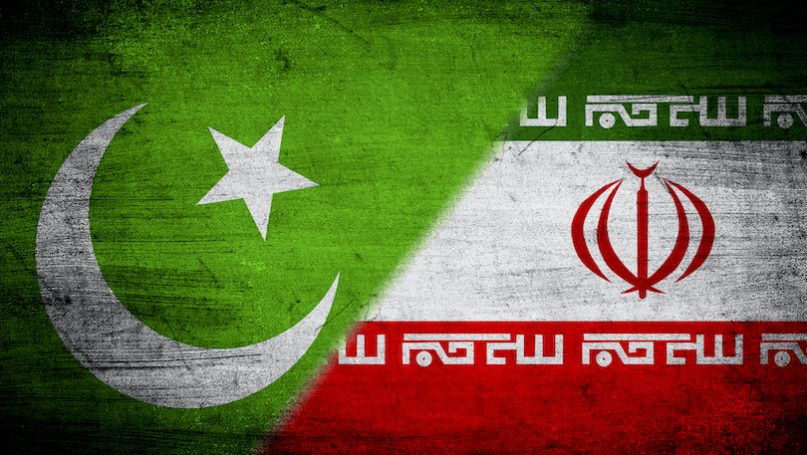
The Challenges and Inconsistencies of the Iran-Pakistan Relationship

Nadeem Ahmed Moonakal

Iran’s approach towards Pakistan has seen multiple changes over time because of the geopolitical shifts in the region as well as domestic changes within Iran. Iran became the first country to recognize the sovereign status of Pakistan after it was formed in 1947. The convergence of strategic objectives facilitated by the Anglo-American alliance during the Cold War also helped in building a foundation for a stable Iran-Pakistan relationship initially. However, over time the geopolitical challenges and domestic dynamics of both countries caused inconsistencies in their bilateral engagement.


In the 1950s, Iran and Pakistan came closer through the Baghdad Pact which aimed at preventing communist incursions in the region. The geographic proximity to the Soviet Union at the time of the Cold War pushed Iran to join the Western bloc and the skepticism towards India and the tensions in Afghanistan urged Pakistan to join the same alliance. Hence, both Iran and Pakistan were a part of the Western alliance for their own security and survival. Even in the 1970s, Iran maintained very close ties with Pakistan and this was apparent in Iran’s support to Pakistan during the 1971 India-Pakistan war. After the liberation of Bangladesh, Pakistan faced an economic crisis primarily due to the loss of markets in the then East Pakistan, and in the following years, the bilateral trade volume between Iran and Pakistan increased exponentially.

Beware the Guns of August—in Asia

By Kevin Rudd

In just a few short months, the U.S.-Chinese relationship seems to have returned to an earlier, more primal age. In China, Mao Zedong is once again celebrated for having boldly gone to war against the Americans in Korea, fighting them to a truce. In the United States, Richard Nixon is denounced for creating a global Frankenstein by introducing Communist China to the wider world. It is as if the previous half century of U.S.-Chinese relations never happened.

The saber rattling from both Beijing and Washington has become strident, uncompromising, and seemingly unending. The relationship lurches from crisis to crisis—from the closures of consulates to the most recent feats of Chinese “wolf warrior” diplomacy to calls by U.S. officials for the overthrow of the Chinese Communist Party (CCP). The speed and intensity of it all has desensitized even seasoned observers to the scale and significance of change in the high politics of the U.S.-Chinese relationship. Unmoored from the strategic assumptions of the previous 50 years but without the anchor of any mutually agreed framework to replace them, the world now finds itself at the most dangerous moment in the relationship since the Taiwan Strait crises of the 1950s.

From Competition to Confrontation with China: The Major Shift in U.S. Policy

By Anthony H. Cordesman

Over a period of a little more than a month, the U.S. has gone from a mixture of competition and cooperation with China to direct confrontation. This confrontation has also focused largely on the civil level – more specifically on ideology, economics, industrial espionage, cyberattacks on civil networks and databases, and disinformation campaigns.

Top Administration officials have given five major speeches which assert that China can no longer be treated as a state evolving towards a more liberal power that will pursue security and economic objectives on terms the U.S. and other states can accept. These speeches assert that China has become an authoritarian state that is driven by a Communist ideology, is seeking to become the world’s dominant power, and is using methods of competition that are illegal and violate international norms.

Secretary of State Pompeo made this clear in the last – and most definitive – of these five speeches by stating that,

… we have to admit a hard truth. We must admit a hard truth that should guide us in the years and decades to come, that if we want to have a free 21st century, and not the Chinese century of which Xi Jinping dreams, the old paradigm of blind engagement with China simply won’t get it done. We must not continue it and we must not return to it.

… We opened our arms to Chinese citizens, only to see the Chinese Communist Party exploit our free and open society. China sent propagandists into our press conferences, our research centers, our high-schools, our colleges, and even into our PTA meetings…We marginalized our friends in Taiwan, which later blossomed into a vigorous democracy…We gave the Chinese Communist Party and the regime itself special economic treatment, only to see the CCP insist on silence over its human rights abuses as the price of admission for Western companies entering China.

… we have to keep in mind that the CCP regime is a Marxist-Leninist regime. General Secretary Xi Jinping is a true believer in a bankrupt totalitarian ideology. It’s this ideology, it’s this ideology that informs his decades-long desire for global hegemony of Chinese communism. America can no longer ignore the fundamental political and ideological differences between our countries, just as the CCP has never ignored them.

U.S. moves against TikTok reflect a pushback against China’s rise as a tech power, expert says

Saheli Roy Choudhury

TikTok is owned by Chinese tech firm ByteDance and has grown in popularity over the years, especially among younger users.

As of April, the app has been downloaded more than 2 billion times globally across Apple’s App Store and Google Play, according to data from Sensor Tower. 

U.S. officials have said Washington could ban the app from the United States. 

Microsoft this week confirmed it has held talks with ByteDance to acquire the U.S. operations of TikTok. 

The United States’ efforts to clamp down on the popular short video-sharing app, TikTok, can only be understood in the wider context of the fight for technological dominance with China, a cybersecurity expert said. 

TikTok is owned by Chinese tech firm ByteDance and has grown in popularity over the years, especially among younger users. As of April, the app has been downloaded more than 2 billion times globally across Apple’s App Store and Google Play, according to data from Sensor Tower. 

Last month, U.S. Secretary of State Mike Pompeo said that the U.S. was looking at banning TikTok and other Chinese social media apps over national security concerns. 

Technological surveillance of religion in China

Chris Meserole

Chairwoman Gayle Manchin, Vice Chair Tony Perkins, and Vice Chair Anurima Bhargava, thank you for the opportunity to speak this morning. The rise in digital authoritarianism and corresponding decline in human rights, including the right to worship freely, are two of the most pressing issues the world faces today. Nowhere do those issues enjoy greater urgency than in modern China, where the Xi regime and Chinese Communist Party (CCP) have relied on digital technologies to carry out human rights abuses and curtail religious freedom with unprecedented efficiency and scale.

DIGITAL AUTHORITARIANISM & THE CCP

Before turning to the Xi regime and religion, I should first lay out what I mean by digital authoritarianism more broadly. As with all political regimes, authoritarian leaders are obsessed with their survival. Yet staying in power is not easy: regimes need to closely monitor not only elite opinion and public opinion, but also potential dissidents and opposition groups. Digital technology offers a new way to solve that challenge. As the cost of storing, collecting, and analyzing data has plummeted, the capabilities of digital surveillance systems have grown exponentially. Regimes with sufficient technical expertise can now monitor both aggregate opinion and specific individuals with greater precision and detail than ever before. Digital authoritarianism refers to the use of such technologies to consolidate regime power and better ensure regime survival.

Big Tech and antitrust: Pay attention to the math behind the curtain

Tom Wheeler

It was the “Wizard of Oz” in digital format as the four titans of Big Tech testified via video before the House Antitrust Subcommittee. Just like in the movie, what the subcommittee saw was controlled by a force hidden from view. The wizard in this case—the reason these four companies are so powerful—is the math that takes our private information and turns it into their corporate asset.

The hearing was the next step in the subcommittee’s year-long investigation of Big Tech’s effect on a competitive market and the effectiveness of America’s antitrust laws. The witnesses, subcommittee chairman David Cicilline (D-RI) said, were “gatekeepers to the economy…[with] the power to pick winners and losers, shake down small businesses and enrich themselves while choking off competitors.”

During nearly six hours of testimony the CEOs of Facebook, Amazon, Apple, and Alphabet (Google) dealt with a litany of diverse topics. Republicans saw an opportunity to work the referees and complain about alleged bias by social media. The subcommittee’s Democratic majority, however, was clearly prepared. The CEOs were forced to defend practices as diverse as their relationship with China, their acquisitions of other companies, and the myth that they protect consumer privacy.

US-China research benefited Chinese military efforts

By Matthew Strong

TAIPEI (Taiwan News) — Cooperation between academics in the United States and Chinese universities with a military background benefited the modernization of China’s armed forces, a Hoover Institution report concluded Thursday (July 30).

“Global Engagement: Rethinking Risk in the Research Enterprise,” edited by historian Glenn Tiffert, found several issues overlooked during cooperation programs between an American academia guided by liberal values and a communist country like China. The study identified “diversions of U.S. research to PRC defense programs and weapons system development, which can undermine or eliminate U.S. military superiority,” as one of the key issues.

While only a limited number of cases had been reported, the Hoover Institution claims it has found more examples, showing that “U.S. scholars and research institutions have been contributing directly to the PRC’s military modernization.”

America’s Huawei Challenges

By Scott Kennedy and Shining Tan
Source Link

Few companies on this planet are as controversial as Huawei. Figuring out how Western industry and governments should respond to this daunting commercial and security challenge is no mean feat. This post discusses two kinds of challenges to developing and implementing an effective strategy. The first is the fact that just the mention of Huawei invokes strong passions, making it difficult to have a reasoned and dispassionate national debate. The second is insufficient familiarity with how Huawei has grown and evolved, especially over the last decade, complicating how one would effectively confront and manage the risks it poses.

Debating Huawei

Last year, we hosted a debate at CSIS, “Should the United States Severely Restrict Huawei’s Business?” Both sides made impressive arguments, but the in-person audience chose the “Yes Team” over the “No Team” 56% to 44%. A subsequent Twitter poll taken just after the event was even more definitive in favor of tough measures (82% yes, 18% no). In late April 2020, I again asked Twitter whether the United States should block the sale of semiconductors used in Huawei’s 5G equipment; respondents were still in favor of restrictions (59.8%), but at a rate closer to the in-person poll from a year prior than the first Twitter poll. Obviously, answers are affected by the way the question is posed and the evolving context. My sense is that the level of concern about Huawei in the United States is sky high, with general acceptance of doing almost anything in the name of protecting U.S. national security. But there still is no consensus on exactly how to proceed, in part because there is still insufficient information about Huawei in the public realm, and in part because the U.S. is struggling to develop a broader framework toward managing its relationship with China in which to fit the Huawei challenge.

China Is Now Working On a Deadly Kamikaze Drone Army

by Michael Peck
Source Link

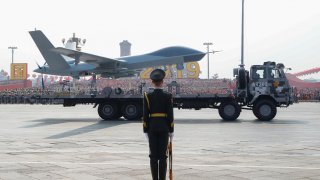
China’s military is looking to buy suicide drones.

The military wants two types of suicide drones, according to an announcement posted on a Chinese military procurement Web site. The desired technical specifications of the drones, or the number to be purchased, is classified.

But Chinese drone manufacturers do have products that might satisfy the demands of the People’s Liberation Army. In 2018, China Aerospace unveiled the CH-901, which Chinese media described as being 4 feet long and weighing 20 pounds, with a speed of 150 kilometers (93 miles) per hour, a range of 15 kilometers (9 miles) and an endurance of two hours. The larger WS-43 is a 500-pound weapon with a range of 60 kilometers (37 miles) and an endurance of 30 minutes.

Either expendable attack drones or flying artillery shells, depending on how you look at them, suicide drones are lethal newcomers to the 21st Century battlefield. Called “loitering munitions” by military customers who are understandably reluctant to refer to them as suicidal, these weapons seek to bridge the gap between artillery shells – which can’t stay up in the air – and strike drones like America’s Reaper and Predator, which are big and expensive unmanned aircraft