1 October 2020

In First Debate, Biden and Trump Get Personal

BY MICHAEL HIRSH 

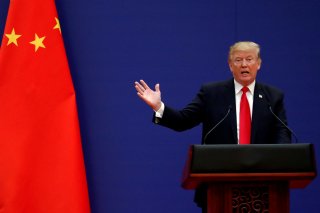
In a debate that amounted to little more than an hour-and-half-long harangue from both sides, U.S. President Donald Trump and former Vice President Joe Biden savaged each other in the most personal terms Tuesday, with Trump questioning Biden’s intelligence and Biden calling Trump a “clown.”

In a typical exchange, Biden told Trump: “You’re the worst president America has ever had.” Trump responded: “I’ve done more in 47 months than you’ve done in 47 years, Joe.”

On the whole, Trump, who is well behind in the polls, was plainly more rattled than Biden during the entire night. He appeared to interrupt the moderator, Chris Wallace of Fox News, as much as he did Biden, earning constant rebukes from Wallace.

Early reactions from pundits and polls suggested that the sometimes gaffe-prone Biden won the debate by merely standing up to the president and sounding coherent while a heavily sweating Trump seemed to unravel several times. An early CNN poll of debate watchers found that 60 percent thought Biden won, while only 28 percent believed Trump did, though the survey was skewed toward Democratic voters.

Who Won the First Presidential Debate Between Trump and Biden? Analysis and Highlights

BY JENNI FINK

The two-man presidential debate produced three losers. Donald Trump failed to condemn white supremacy; Joe Biden failed to create any excitement; and moderator Chris Wallace failed so completely that Wolf Blitzer felt compelled to apologize to America for the debacle.

The 90-minute debate at Case Western Reserve University in Cleveland was supposed to focus on six key topics—the candidates' records, the Supreme Court, COVID-19, race and violence, the economy and the integrity of the election—but the topic that really took center stage was "please stop interrupting." Much of the candidates' hard-fought-for time at the microphone was spent challenging their opponents' comments on their records on health care, nationwide unrest and the future of America.

From the first response to the first question, the two battled for air time. They interrupted each other to the point that host Wallace, who had hoped to be "invisible," ended up debating Trump himself in trying to enforce the rules.

"I hate to raise my voice but why should I be different than the two of you?" Wallace told the candidates. "I think the country would be better served if we let both people speak without interrupting."

India, The G20 And An African Agenda – Analysis

By Rajiv Bhatia

India’s leadership reiterates regularly that Africa figures among its top foreign policy priorities. Beyond the bilateral track, however, the multilateral domain is also consequential. It is now time to match words with action. India is set to join the G20 Troika in January 2021, on the way to assuming the G20 presidency in January 2022, and will be part of the Troika (of G20 immediate future, present and past Presidents) till December 2023, a year after its presidency ends. It therefore has three years in which to include the African Continent into its G20 priorities.

African issues began to seep into the G20’s consciousness after 2010 when under the Korean presidency, the Seoul Development Consensus on Shared Growth was crafted, with its emphasis on “economic growth based on private-sector development and equal partnership between low-income countries and donors.”[1] The spread of the Ebola pandemic in 2014 elicited financial contributions from a few G20 countries to counter it effectively in Africa. The 2016 summit at Hangzhou under the Chinese presidency resulted in an articulation of strong support for the industrialisation in Africa – but no concrete action followed. It was Germany which, under its presidency in 2017, took cooperation with Africa to a new level, with a structured approach to drive the agenda anchored on the Compact with Africa (CwA). The immediate propellant for this was the refugee crisis in Europe, the result of the wars in Syria and Libya, with whom also flowed in vast numbers of African refugees. China’s dominating presence in Africa was the other consideration.

At the G20 summit in Hamburg 2017, this initiative was launched to persuade African countries to improve their macro-economic, business and financial environment for greater induction of foreign investments, especially in infrastructure. Only 12 African countries[2] joined this project. Three years later, the initiative has been judged to be a mixed success and “a long game.”[3]

China takes 1959 line on perception of LAC

Sutirtho Patranobis

China has said it abides by the Line of Actual Control (LAC) as proposed by Premier Zhou Enlai to Prime Minister Jawaharlal Nehru in a letter dated November 7, 1959 — the first time in decades that it has clearly spelled out its stand on the notional Sino-India boundary by reiterating a position that New Delhi has consistently rejected since it was first made 61 years ago.

Beijing’s position, in an exclusive statement to HT amid the ongoing border friction in eastern Ladakh, is a reiteration of the long-existing differences on the boundary question and a sign that the ongoing military standoff is unlikely to be resolved soon.

In the statement in Mandarin, the Chinese foreign ministry, while blaming the Indian Army for the ongoing tension since May and for the June 15 clash in eastern Ladakh’s Galwan valley, said the clash was an “unfortunate” event.

“Firstly, China-India border LAC is very clear, that is the LAC on November 7, 1959. China announced it in the 1950s, and the international community including India are also clear about it,” the ministry said on Friday. 

The 5G Question And India’s Conundrum – Analysis

By Harsh V. Pant and Aarshi Tirkey

The 5G network, the latest generation of wireless technology, is described as the next frontier of digital revolution. It has, however, come to the forefront of an ongoing geopolitical and technological rivalry between the China and the United States. Chinese telecom giant Huawei is dominating the market and has become the leading supplier and manufacturer of this new technology. However, its close ties with the Beijing government, opaque ownership structure and past allegations of legal violations, has raised concerns that its equipment could be used for espionage and surveillance.

The United States has taken a slew of measures to ban Huawei and is persuading its allies to follow suit. Beijing has criticized nations for blocking Chinese telecom companies—terming it is a flagrant attempt to politicize a technology issue—and has hinted towards the use of ‘reverse economic sanctions’ if Chinese companies are banned. Against this backdrop, India’s decision on a supplier for 5G technology, equipment, and software is a crucial one.

A complex matrix of technological, economic, and strategic factors will affect this decision. Cybersecurity risks and surveillance concerns are a major concern for India, since the Indian government is yet to formulate a robust legal and institutional mechanism for protecting privacy and data. The possible installation of “backdoors” which could allow China to intercept and monitor communications is evinced through what was revealed about Cisco’s routers (an American company) in the 2013 Edward Snowden leaks. Strategic concerns relate to the trade and technology war between the US and China. Tensions between the two countries have escalated, leading to the splintering of global cyberspace and technology into distinct spheres of influence. India, based on its strategic interests will need to decide with which camp to align. The final aspect of economic considerations relates to the cost of the equipment, which is an important factor for developing developed countries since they have limited finances to spend on expensive 5G equipment.

Tehreek-e-Taliban Pakistan Factions Reunited for ‘Holy War’ Against Islamabad

By: Animesh Roul

Since the death of firebrand Taliban leader Mullah Fazlullah in June 2018, Tehreek-e-Taliban Pakistan (TTP) has witnessed a substantial decline in stature and firepower due to a leadership crisis, inherent factionalism, and a sustained military offensive on its strongholds across the Durand Line, the border between Pakistan and Afghanistan. Following nearly two years of internal conflict, the Pakistani Taliban under the leadership of Abu Mansoor Asim Mehsud (a.k.a. Noor Wali Mehsud) has seemingly recovered from those reversals and is back from a near obsolescence.

In a surprise show of force and integration, Taliban factions in Pakistan renewed their pledge of allegiance to the present TTP chief Noor Wali Mehsud on August 17. Two major, violent Taliban factions—Jamaat-ul-Ahrar (JuA) under Omar Khalid Khurasani and Hizb ul-Ahrar (HuA) led by Omar Khurasani—have re-joined the anti-Pakistan jihadist conglomerate. The statement issued by TTP’s official media arm Umar Media congratulated the Muslim Ummah and the Taliban commanders for the merger. The announcement communicated that the factions are currently fighting individually, and that the jihad in Pakistan and efforts to establish sharia would be strengthened following the merger. The statement also emphasized the ‘Holy War’ (jihad) and vowed to continue it until the ‘tyrannical system’ in Pakistan is eradicated. [1] Both of the Ahrar factions have pledged to join TTP and adhere to the principles of TTP and Islamic sharia law.

The other major pro-Taliban groups that re-joined the TTP bandwagon were Maulvi Khush Muhammed Sindhi, led by Lashkar-e Jhangvi (of the Saifullah Kurd faction), the Amjad Farooqi-led Punjabi Taliban, and the Sayyid Ahmad Shaheed group. A video message issued later by Umar Media showed the oath of allegiance ceremony (Jihadology, August 8; Jihadolgy, August 19).

The Code of Conduct for the South China Sea: A Long and Bumpy Road

By Viet Hoang

During last month’s ASEAN Regional Forum, foreign ministers from the 10 members of the Association of Southeast Asian Nations (ASEAN) once again called for an expedited negotiation of the Code of Conduct for the South China Sea (COC). But there are many obstacles that will have to be overcome before the long-expected agreement sees the light of day.

The region and world is currently in the throes of a fierce competition between the United States and China. In recent weeks, military exercises and the deployment of aircraft carriers by both powers have left regional observers fearing a potential military conflict. The South China Sea is perhaps the key flashpoint in Sino-American competition. It seems that the current American approach in the South China Sea is to respond to China’s increasingly assertive actions through the deployment of its own military power. Defense Secretary Mark Esper said that the U.S. is actively building up the capacity needed to prevent China’s domination of the region. “The Indo-Pacific is the epicenter of a great power competition with China,” he said last month. “We’re not going to cede this region – an inch of ground, if you will – to another country.”

The growing U.S.-China tensions have put the ASEAN countries in a difficult position. China is strong and aggressive, but is a neighbor; the U.S., meanwhile, is supportive, but occasionally fickle. As Singaporean Prime Minister Lee Hsien Loong recently put it, the region lives “at the intersection of the interests of various major powers and must avoid being caught in the middle or forced into invidious choices.”

COVID-19 and China’s information diplomacy in Southeast Asia

Audrye Wong

Amidst growing attention in the United States to authoritarian foreign influence operations, China has been actively developing and mounting its own information campaigns in an attempt to shape global narratives. Such narratives are not only propagated through official channels and traditional state media propaganda — including what have come to be known as “wolf warrior”-style diplomats — but also amplified through the manipulation of social media platforms. Especially in response to recent crises such as the COVID-19 pandemic and the Hong Kong protests, Beijing appears to have partially adopted Moscow’s disinformation playbook.

At the same time, China’s choice of tactics has varied across regions and countries. In Southeast Asia, Beijing has focused on striking a cooperative tone and highlighting China’s positive image. This contrasts with its highly aggressive information operations toward the United States and Europe. Chinese state media coverage emphasized Association of Southeast Asian Nations (ASEAN) solidarity and cooperation with China in fighting the virus, as well as Southeast Asian leaders’ expressions of confidence in the Chinese government’s ability to control the outbreak. Additionally, in line with Beijing’s widespread touting of its mask diplomacy, Southeast Asian countries were presented as examples of China’s largesse.

Unsurprisingly, social media platforms have become an important part of the information propagation toolkit. For example, the Chinese embassy in Manila is relatively active on Twitter. In addition to rebutting U.S. policies toward China, it has spotlighted Beijing’s continued medical assistance to the Philippines, and trumpeted President Rodrigo Duterte’s plea to Xi Jinping for the Philippines to gain priority access to a COVID-19 vaccine (and Manila’s subsequent gratitude). Similarly, the Chinese embassy in Bangkok publicized on its Facebook page additional deliveries of medical supplies and personal protective equipment to Thailand in May and June.

Strengths Of Chinese Foreign Policy – OpEd

By Nageen Ashraf

INTRODUCTION: 

China is one of the strongest nations in the world both militarily and economically, the biggest market, the epicenter of almost all the global supply chains and the emerging super power. Geographically, it has many neighbors and together with Russia has the largest number of land borders with neighboring countries because it is a huge state with an extremely long international border. It has 14 neighbors including Russia, Mongolia, North Korea, Kazakhstan, Kyrgyzstan, Tajikistan, Afghanistan, Pakistan, India, Nepal, Bhutan, Myanmar, Laos and Vietnam. Since its independence, it has worked hard to remain an important player in the international arena. Being a member of United Nations Security Council, it has an advantage too. The most prominent rival of China in the International affairs is the Unites States of America. The relations between the two have always been sour, but they never involved in a direct military confrontation with each other. And unlike Russia, China never wanted to be integrated into the west or be a part of the West; rather it realizes its own importance in the international sphere and has adopted rational approaches in becoming the major global player. This paper will be discussing the strengths of the contemporary foreign policy of China under the leadership of Xi Jinping. China has undoubtedly become a major influence under his regime and has improved its relations with the other states. Although there are many plus points and advantageous aspects of the contemporary foreign policy, but there are some backlashes too. 

STRENGTHS: 

Shift from Traditional policy: 

Xi Jinping has been crowned as the China’s most powerful leader since Mao Zedong. Xi wants to change the policy and deviate it from the traditional policies of China, and these policies have invited the comparison to Trump’s difficulties in achieving his diplomatic and legislative agenda. An important strength of the Chinas new foreign policy under Xi Jinping is it grand strategy that China will abandon the “avoiding brightness” strategy of Deng Xiaoping and shift towards an activist and more visible posture. China has also been a part of many summits with Donald Trump that reflects that it is willing to break the traditional diplomatic constraints. 

China Fires Back at US Over Environment, South China Sea


U.S.-China friction flared again Monday, with Beijing firing back at accusations by Washington that it is a leading cause of global environmental damage and has reneged on its promise not to militarize the South China Sea. 

A document issued last week by the State Department cited China’s record on issues from greenhouse gas emissions to air and water and soil pollution, illegal logging and wildlife trafficking. 

“While the Chinese people have suffered the worst environmental impacts of its actions, Beijing also threatens the global economy and global health by unsustainably exploiting natural resources and exporting its willful disregard for the environment,” the document said.

Department spokesperson Morgan Ortagus followed that with a statement Sunday saying China has “pursued a reckless and provocative militarization” of disputed outposts in the South China Sea’s Spratly Islands, adding that China’s ruling Communist Party “does not honor its words or commitments.” 

Foreign ministry spokesperson Wang Wenbin responded Monday by asking why the United States was withdrawing from the Paris agreement on climate change, calling the U.S. the “biggest destroyer of international environmental cooperation.” 

China’s Leaders Can’t Be Trusted

CHRIS PATTEN

LONDON – When I was governor of Hong Kong, one of my noisiest critics was Sir Percy Cradock, a former British ambassador to China. Cradock always argued that China would never break its solemn promises, memorialized in a treaty lodged at the United Nations, to guarantee Hong Kong’s high degree of autonomy and way of life for 50 years after the return of the city from British to Chinese sovereignty in 1997.

Cradock once memorably said that although China’s leaders may be “thuggish dictators,” they were “men of their word” and could be “trusted to do what they promise.” Nowadays, we have overwhelming evidence of the truth of the first half of that observation.

Chinese President Xi Jinping’s dictatorship is certainly thuggish. Consider its policies in Xinjiang. Many international lawyers argue that the incarceration of over one million Muslim Uighurs, forced sterilization and abortion, and slave labor meet the UN definition of genocide. This wicked repression goes beyond thuggery.

A recent Australian Strategic Policy Institute study based on satellite images indicates that China has built 380 internment camps in Xinjiang, including 14 still under construction. Having initially denied that these camps even existed, some Chinese officials now claim that most people detained in them have already been returned to their own communities. Clearly, this is far from the truth.

Colonialism and cultural erasure in Xinjiang

MICHAEL CLARKE

On 17 September, the Information of Office of the State Council of the People’s Republic of China released a White Paper, “Employment and Labour Rights in Xinjiang”, detailing the Chinese Communist Party’s “proactive employment policies” in the region. The paper is clearly part of China’s messaging and propaganda on Xinjiang that seeks both to counter international criticism and to justify its systematic repression of the region’s Uighur population.

While the physical architecture of the system of “re-education” and “vocational training” has been extensively documented, the discursive and ideological underpinnings of it have received relatively less attention. The recent White Paper highlights a central dynamic in this respect: the intersection between concern for the “welfare” of subject populations and the desire to eradicate “defective” elements of cultural identity that has often lain at the heart of modern colonial projects.

For the CCP, “extremism” is now identified as being inherent to everyday markers and practices of the Uighur profession of Islam.

Although the intersection of these two opposed dynamics may seem counter-intuitive, the history of the subjugation of indigenous populations throughout the globe suggests otherwise. Indeed, in Australia, as Robert van Krieken has shown, the removal of Aboriginal children from their families by the government was consistently justified in terms of “welfare” and the “interests” of these peoples themselves. Van Krieken notes that for administrators of “Aboriginal affairs”, Aboriginal culture was perceived to be “inherently flawed, fragile and basically worthless, producing only illness, disease, drunkenness, filth and degenerancy”, and as such, the removal of Aboriginal children was a means to provide such subjects with the possibility of becoming “civilised” and assimilated citizens. Detaching Aboriginal children from their familial and communal ties, and so preventing cultural reproduction of Aboriginal identity, was thus seen by “most White Australians” as “evidently synonymous with civilisation and progress itself”.

The Inconvenient Truth about Taiwan’s Place in the World

by Paul Heer

Tensions are rising again on the Taiwan Strait.

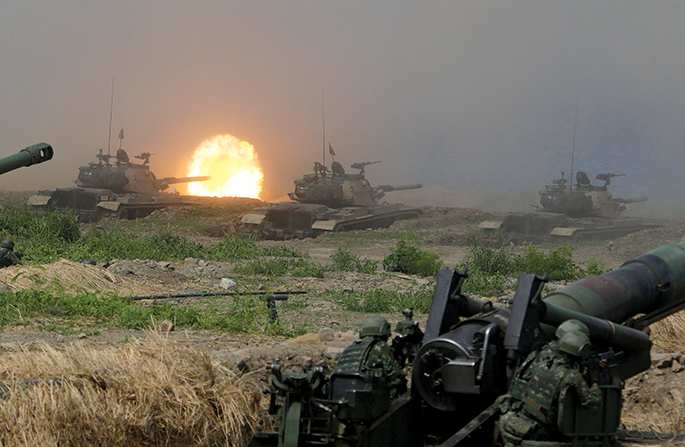
Beijing, having apparently decided to increase the pressure on Taipei to surrender to “unification with the motherland,” has ramped up military maneuvers aimed at intimidating the island and is warning in the Chinese media that it means business It has also issued ultimatums for Taiwan president Tsai Ing-wen to come to the negotiating table on Beijing’s terms and renewed its efforts to lure third countries away from diplomatic recognition of Taiwan. These actions have been generally attributed to China’s prevailing trend toward belligerence and expansionism, and especially Chinese Communist Party chief Xi Jinping’s aggressive streak and desire to make Taiwan a legacy issue for himself. 

Washington has responded by reaffirming and taking steps to bolster its “unofficial” relationship with Taiwan and its support for Taiwan’s security and involvement in international organizations. In recent weeks, Secretary of Health and Human Service Alex Azar and Undersecretary of State Keith Krach have visited Taiwan, the Trump administration has announced new arms sales to the island, and Members of Congress have tabled multiple bills that would strengthen American material and moral support for Taiwan’s self-determination. In addition, calls have arisen for Washington to abandon its longstanding policy of “strategic ambiguity” on potential U.S. intervention to protect Taiwan from a Chinese attack, in favor of “strategic clarity”: by making an explicit public commitment to defend Taiwan in such a contingency. According to Council on Foreign Relations President Richard Haass and CFR Research Fellow David Sacks, this “should strengthen U.S.-Chinese relations in the long term by improving deterrence and reducing the chances of war in the Taiwan Strait.”

Don’t Let China Conclude Its Opportunity Is ‘Now or Never’

By James Holmes

What “spark” or “trigger” will set the next war in motion? This question implies some peacetime crisis will escalate suddenly into armed strife that no one wants. There is no gainsaying that possibility—witness the brinksmanship during the Cuban Missile Crisis of 1962, which brought the United States and Soviet Union to the verge of global nuclear war despite misgivings among decisionmakers in Washington and Moscow. Something similar could befall the world in the coming months or years. 

But national leaders also make conscious decisions to strike sparks or pull triggers. In fact, to switch metaphors, military history is replete with strategic leaders who saw a window of opportunity and resolved to act before it slammed shut. East Asia has seen its share of opportunism. Imperial Japan was the region’s rising power during the late nineteenth and early twentieth centuries. Japanese leaders pieced together a battle fleet with British help using imported boilers and other major components. That fleet took to the Yellow Sea and stunned naval experts by crushing the Qing Dynasty’s Beiyang (Northern) Fleet off the Korean west coast in 1895. Only in the past few decades has China’s navy made a comeback. 

The Imperial Japanese Navy (IJN) next cast eyes on tsarist Russia, which banded with fellow European powers to deprive Tokyo of the bulk of its gains from the Sino-Japanese War. IJN commanders glimpsed a fleeting opportunity. They studied the Russian Navy’s Far Eastern fleet in 1903. Careful scrutiny revealed that the IJN Combined Fleet overshadowed the Russian armada but would not for long. Russia’s European shipyards were building battleships. New-construction warships would soon make their way to the Pacific, combining their firepower with ships already on station. Japanese superiority would vanish—perhaps forever. So, the Imperial Japanese Navy acted. In February 1904 a torpedo-armed detachment of IJN destroyers lashed out at the Russian First Pacific Squadron at Port Arthur. 

The tech war between the U.S. and China escalates

Dion Rabouin

Economic tension between the U.S. and China continues to escalate but is shifting in focus — away from the tit-for-tat trade war and toward a more direct confrontation over the future of technology at the heart of the conflict between the world's two largest economies.

Why it matters: The battle between the U.S. and China was always about tech supremacy and the direct confrontation could result in an accelerated splintering of global supply chains and a significant reduction of international commerce.

There are $700 billion of U.S. companies' assets in China, generating $500 billion in domestic sales annually, per Barron's.

Yes, but: The torrent of anti-Chinese rhetoric by the Trump administration recently has been countered by much softer actions, as the administration attempts to "thread the needle" of looking tough heading into the election while having the Chinese continue to purchase U.S. goods, Mary Lovely, senior fellow at the Peterson Institute for International Economics, tells Axios.

"The tech issue is the big one … for the long term, but for the election it’s not at all clear to me that the tech issue is the big one."

Between the lines: The U.S. trade deficit to China has increased notably this year and China's manufacturing sector has benefited from exporting medical equipment and its recovery from the coronavirus pandemic being far ahead of other economies, especially the U.S.
The Chinese also have insisted they are increasing purchases of U.S. goods in line with the "phase one" trade deal, though they remain well behind a pace necessary to meet the agreement.

China’s Xi: COVID reveals isolationism as a futile pursuit

By TED ANTHONY 

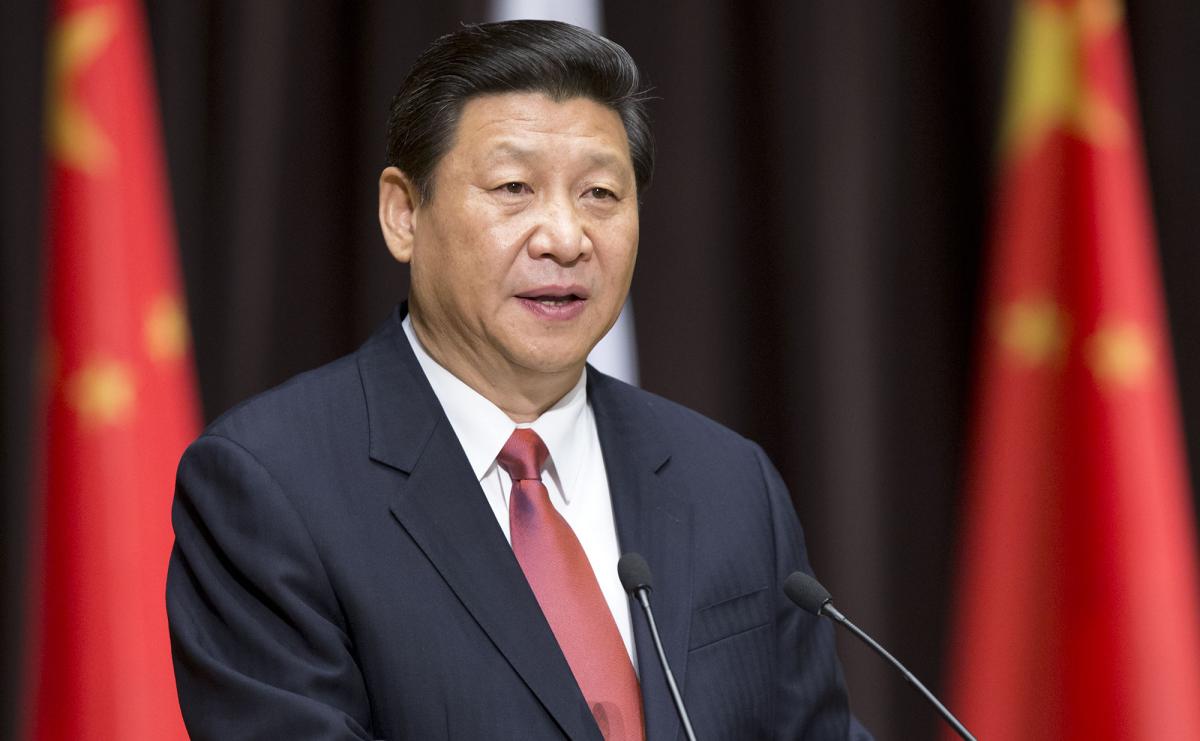
China’s leader took oblique potshots at the United States and its foreign policies Tuesday, cautioning in a U.N. address that the world must “not fall into the trap of a clash of civilizations” — remarks played minutes after delegates heard the American president insist that the United Nations “hold China accountable” for how it handled the emergence of the coronavirus.

“Major countries should act like major countries,” Xi Jinping said in a speech to the U.N. General Assembly, a speech made remotely and recorded in advance because the pandemic prevented leaders from convening as they have for decades. The virus first emerged in China early this year and has spread around the world, killing nearly 1 million people.

Xi, China’s president and the leader of its Communist Party, cast the fight against the virus as an important exercise in international cooperation, an opportunity to “join hands and be prepared to meet even more global challenges.”

“COVID-19 reminds us that the economic globalization is an indisputable reality and a historical trend,” Xi said. “Burying one’s head in the sand like an ostrich in the face of economic globalization or trying to fight it with Don Quixote’s lance goes against the trend of history. Let this be clear: The world will never return to isolation.”

Two Years After Khashoggi’s Murder, the Fight for Justice Isn’t Over

Sherif Mansour, Michael De Dora 

Dozens of countries took Saudi Arabia to task at the United Nations Human Rights Council earlier this month for its human rights violations, demanding accountability for the murder of Washington Post journalist Jamal Khashoggi. The rebuke came just days after U.S. President Donald Trump was revealed to have admitted on tape that he helped shield the Saudi crown prince, Mohammed bin Salman, from scrutiny by obstructing Congress’ inquiries into Khashoggi’s brutal murder at the Saudi consulate in Istanbul, in October 2018. “I saved his ass,” Trump reportedly said of the crown prince in an interview with the journalist Bob Woodward.

Trump’s remarks were nothing less than an admission that he gave MBS, as the crown prince is widely known, a license to kill journalists with impunity. It fits with the broader message he’s sent to Saudi Arabia and other authoritarian countries in the wake of Khashoggi’s murder: Do business with us, and we’ll look the other way when you surveil, intimidate or murder critics of your government—even if they are U.S. residents. The Saudi government has responded, unsurprisingly, by intensifying its domestic crackdown on the press, arresting journalists and sentencing them to years in prison.

Now, as the second anniversary of Khashoggi’s murder approaches, U.S. policymakers and elected officials must take steps to send a different message: that the assassination of a journalist will never be tolerated.

Saudi Arabia’s current state of affairs

Bruce Riedel

Saudi Arabia is America’s oldest partner in the Middle East. This relationship goes back to 1943 when then-President Franklin Delano Roosevelt invited the king of Saudi Arabia to send some of his sons to Washington to begin a dialogue between the United States and Saudi Arabia. He sent Prince Faisal, later King Faisal. FDR sealed the deal in a famous meeting on Valentine’s Day 1945 in Egypt on board the USS Quincy with King ibn Saud directly. The deal has always been quite simple between the United States and Saudi Arabia. The United States gains access to Saudi energy resources in return for which the United States provides support for Saudi security at home and abroad.

I have been following this relationship since 1977 when I joined the CIA. It has had marked ups and downs. Some of the ups have been extremely high, like 1991, the Gulf War, and some of the lows have been extraordinarily low, the 1973 oil embargo and, of course, 19 years ago today, the attack on September 11. But we are in a fundamentally different and new relationship with Saudi Arabia today than anything I have seen in the last 75 years. Saudi Arabia today, under King Salman and his son, Mohammed bin Salman, MBS, the crown prince, has embarked on a series of foreign policies which are reckless and dangerous and, most important, are inimical to America’s vital interests in the Middle East and in the world.

Mohammed bin Salman is very much the driving force on these policies. He is one of the ultimate micromanagers of any policy. He needs it boiled down to the smallest details. I think that tells us a lot about Jamal Khashoggi’s death. But the king is also particularly important in this whole process. King Salman provides legitimacy, and he is like air cover for the crown prince’s activities.

Drive Them into the Sea

Brian J. Dunn

China has a longstanding claim to Taiwan that “persistently remains the PLA’s [People’s Liberation Army] main ‘strategic direction.’”1 Now, however, China’s rising military power has made this core interest an objective that is within its reach.2 China would prefer to avoid outside intervention in this endeavor, but what would it have to achieve in order to capture and annex Taiwan without drawing in an American-led coalition?

Too much effort is spent looking at China’s insufficient amphibious lift assets, whether Taiwan can resist until the American cavalry arrives, or whether Taiwanese asymmetric strategies could deter China by raising PLA casualties to unacceptable levels. What if China is willing to pay the price to invade? What if China can achieve key objectives within America’s reaction time? And what if China doesn’t share the assumptions about what it needs to take an army across the Taiwan Strait? A U.S. Army corps will be key to thwarting China’s ambitions regarding Taiwan.

To defeat Taiwan and avoid war with America, all China needs to do is get ashore in force and impose a cease-fire prior to significant American intervention. Once that is achieved, a future phase two of overrunning or simply overawing Taiwan into submission can take place at a time of China’s choosing after reinforcing and supplying its occupied Taiwan territory.

The only method of preventing China from successfully annexing Taiwan is to reject calls for a cease-fire, contain Chinese bridgeheads and airheads into as small a perimeter as possible, and then drive the invaders into the sea. Contrary to the limited Army supporting role envisioned in the Pacific, an Army corps will be indispensable and must be fully incorporated into U.S. Indo-Pacific Command (INDOPACOM) Taiwan contingency plans.3

The Geopolitical Link Between the Baltic and Black Seas: Belarus and the Strategic E40 Waterway

By: Alexandra St John Murphy

Executive Summary

The proposed E40 Waterway would connect the Baltic and Black seas, from the Port of Gdańsk, in Poland, to the Port of Kherson, in Ukraine, running through Belarus. This riverine route offers numerous potential benefits to its participating countries, such as providing greater integration, diversifying trade routes, and developing local regions. For Belarus, the completion of the waterway means closer integration with EU-NATO member Poland and Western-leaning Ukraine, and economic benefits such as access to transport corridors leading to increased trade with Turkey, Central Asia, the South Caucasus and further afield, alongside the strategic benefit of direct access to the Baltic and Black seas.

At the same time, however, the development of the E40 presents a number of drawbacks, including fierce environmental opposition, questions of economic viability, expensive bottlenecks and funding concerns. The options for financing the more than $14.5 billion project are varied, with potential investors including the European Union, the Three Seas Initiative and states such as China. Yet funding looks to be dependent on the E40’s economic benefits offsetting the potential environmental damage. This waterway has so far attracted varying degrees of support from the governments of Ukraine, Poland and Belarus.

Until recently, the E40 Waterway proposal highlighted Minsk’s evolving geopolitical outlook, underscoring the Belarusian state’s willingness to deepen cooperation with Ukraine and Poland. The current political crisis and social unrest in Belarus following the August presidential election, however, has seen relations between the partners cool considerably. That said, Belarus’s long-term outlook may still see the country seeking closer integration with both Poland and Ukraine eventually. To date, construction of the E40 Waterway has faced significant setbacks. Nonetheless, Ukraine has already begun dredging part of the route, Belarus had approached investors for the construction of a deep-water port, and Poland is investing heavily to enhance its position as a key transit hub, demonstrating that the project is by no means dead in the water.

A Million Deaths From Coronavirus: Seven Experts Consider Key Questions

by Sarah L Caddy

On January 13, we published “Mystery China pneumonia outbreak likely caused by new human coronavirus" by Connor Bamford, a virologist at Queen’s University Belfast. Since then, we have published more than 3,500 articles on the now not-so-novel coronavirus, officially named Sars-CoV-2. Despite this huge output from the world’s leading experts, we have merely skimmed the surface of all there is to know about this perplexing pathogen. So much remains a mystery.

At this important juncture, we asked several experts from different fields what their burning question about the coronavirus is. Here is what they said:

Connor Bamford, Research Fellow, Virology, Queen’s University Belfast

How did Sars-CoV-2 enter the human population?

We must understand how Sars-CoV-2-like viruses jump into humans if we are to stop the next pandemic, as we do for influenza. Although originally thought to have emerged in the Huanan Seafood Wholesale Market in December 2019, the earliest patient had no link to the market suggesting the virus had emerged before then. How did this happen?

U.S.-China Competition and Washington’s Case for ‘Quad Plus’

by Jagannath Panda Akriti Vasudeva

The supremacy of the United States in world politics is increasingly being challenged by Xi Jinping’s China. Beijing’s confrontation with Washington in the economic domain, the Chinese Navy’s continued adventurism in the South and East China Sea even amidst the coronavirus pandemic, Chinese posturing against key U.S. allies and partners such as Taiwan, Japan, Australia, and India, coupled with the country’s increasing technological prowess are raising questions about the United States’ status as the preeminent superpower. 

The protection and maintenance of the existing U.S.-led global order has become Washington’s foremost strategic endeavor as a revisionist China seeks to challenge this status quo, to emerge as an equally dominating world power—perhaps one that could be more powerful. This contest has pushed the United States to actively develop coalitions with countries that have a shared interest in preserving the current liberal international order. The most widely discussed of these groupings is the Quadrilateral Security Dialogue or Quad, comprised of the United States, India, Australia, and Japan. But in recent months, Washington has begun exploring a new framework for Indo-Pacific cooperation, dubbed the “Quad Plus.” 

Its origins trace back to March 20, 2020, when U.S. Deputy Secretary of State Stephen Beigun initiated a weekly online meeting with his counterparts in India, Japan, Australia, Vietnam, South Korea, and New Zealand to exchange views on and coordinate responses to the coronavirus pandemic. Less than two months later, in a higher-level meeting, Secretary of State Mike Pompeo held a videoconference with the foreign ministers of India, Australia, Japan, Brazil, Israel, and South Korea. During the virtual meeting, he stressed, among other things, the importance of transparency and accountability in countering the coronavirus. Various calls featuring both these configurations have happened since that time. This U.S.-led engagement is not just a mechanism to trade best practices to address a common challenge, develop resilient supply chains, or pool efforts and expertise to develop a coronavirus vaccine. Rather, to an extent, the United States views this coalition of like-minded countries from the prism of its competition with China and sees it as a way to reemphasize its leadership in the Indo-Pacific region by building on increasing global concerns about dependence on Beijing.

On the world stage, France struggles to be both European and French


The pandemic has grounded most European leaders. But not Emmanuel Macron. In recent weeks, the French president has been in hyperactive diplomatic mode. He has jetted off twice to Lebanon, once dropping in on Iraq on the way back. He has dispatched a frigate and two fighter jets to help Greece and Cyprus defend their waters from Turkish incursions, and held a sea-front summit of Mediterranean leaders in Corsica to try to rally others to make a tougher stand against Turkey. On September 28th-30th the French president is off again, this time to Latvia and Lithuania, where he will visit French soldiers serving in a nato battlegroup.

What is Mr Macron up to? Three years ago this month, in the amphitheatre of the Sorbonne, he outlined an ambitious plan to reinvigorate the European Union. This stood on two principles: more “solidarity” among member countries, and more assertion of European “sovereignty” in the face of big-power rivalry. In July, when all 27 eu members agreed to issue mutualised debt for a massive recovery fund, Mr Macron made progress on his first point. On the second, however, France is still trying to work out how to reconcile its version of the collective European interest, notably in response to regional troublemakers in Turkey, Russia, Libya and elsewhere, with how others see it.

Russia Plays It Cool With Belarus

By Ekaterina Zolotova

On Sept. 23, Alexander Lukashenko officially took office as president of Belarus again. It wasn’t your typical inauguration ceremony, the date of which was kept secret until recently and which was attended by only 700 or so government officials. Anti-government protesters, already upset about what they consider a sham election, are even angrier. Protests this Sunday are expected to be even larger than the previous Sunday’s, which boasted 100,000 people.

It’s unclear how exactly this will shake out. On the one hand, Lukashenko hasn’t completely cracked down on the protests, and efforts to do so may fail. On the other hand, the opposition has yet to overwhelm the president – either through labor strikes or by crippling the government. No matter what happens, the Belarusian people will have to count on the good graces of Russia – which is exactly what Russia wants. That’s because neither the inauguration nor protests have solved Belarus’ problems. Lukashenko may stay, or he may go, but either outcome will be inclined to maintain good ties with Moscow.

Another Lukashenko term certainly means that he will continue relations with Russia. Relations between Minsk and Moscow are periodically overshadowed by trade and economic disputes, but Lukashenko has rarely strayed too far outside Russia’s orbit. Similarly, if Moscow had a choice, it would choose Lukashenko; the Kremlin already understands how to deal with him and how to leverage him.

Despite Advances in Women’s Rights, Gender Equality Lags Around the World


Despite progress in codifying women’s rights into law, advances in gender equality around the world have been halting, at best. This, despite the additional attention that the #MeToo movement brought to incidents of sexual assault and harassment in parts of the Global North.

In South Africa, President Cyril Ramaphosa made news in mid-2019 when he appointed a Cabinet that included as many women as men. Later the same year, the European Commission also achieved the European Union’s self-imposed goal of gender parity. The thinking behind gender parity in government is that with greater levels of representation, women policymakers and legislators will pay more attention to issues that are often ignored by men, like gender-based violence or inheritance laws that discriminate against women.

Quotas are not a panacea, though. Even with increased representation, policymakers must figure out how to turn good intentions into change on the ground, so that removing restrictions on education, to take one example, actually leads to improved school attendance rates for girls and young women. Rwanda, for instance, also has gender quotas for political representation, but the increase in political gains has not necessarily translated to social advances for women, as efforts to promote gender equality have not fostered an understanding of its importance, particularly among men.

FBI Feeds Intel to DoD for Offensive Cyber Ops, Director Tells Congress

BY MARIAM BAKSH

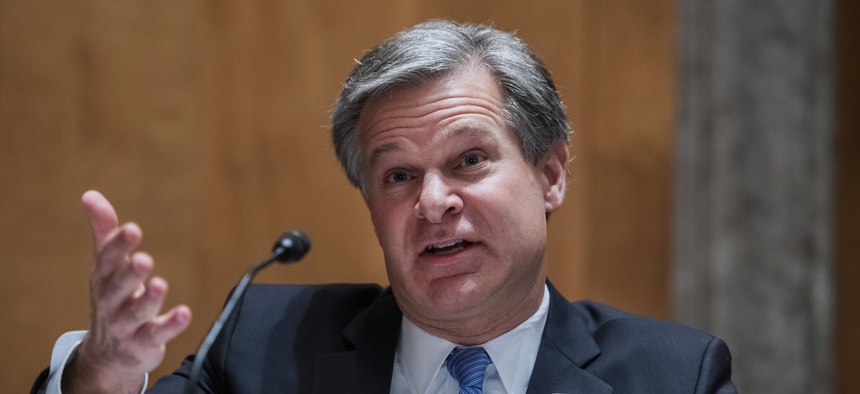
The FBI’s new strategy to establish costs for entities perpetrating cyberattacks will include supplying intelligence to the Department of Defense and related intelligence agencies to carry out offensive cyber operations, the director of the bureau told members of Congress.

“An important part of fighting back against our foreign adversaries in the cyber realm is offense as well as defense,” FBI Director Christopher Wray said testifying before the Senate Homeland Security and Government Affairs Committee Thursday during an annual hearing on worldwide threats to the homeland. “That’s a big part of this new FBI strategy that I rolled out.”

The strategy, which Wray announced Sep. 16 during the Cybersecurity and Infrastructure Security Agency Summit, is to “impose risk and consequences on cyber adversaries.” 

Wray also pointed to a recent escalation of indictments against alleged cyber criminals, including those the FBI has tied to the governments of China, Iran and Russia during investigations where it sometimes partnered with CISA and the Treasury Department. 

Wray added the cyber offense component in response to a question from Sen. Mitt Romney, R-Utah. “I think we can agree the best defense is a good offense,” Romney said, asking whether the government is doing enough on that front.

War in the Desert, 21st-Century Style

By SETH J. FRANTZMAN

The explosive sound of an Israeli Merkava IV tank firing reverberated from behind a hillside, a cloud of dust marking where the shell had been fired from. The shell flew across a field of shrubs and landed in the distance. Then another tank targeted the same location. The symphony of firing continued for ten minutes before the tanks, followed by Namer armored personnel carriers and a menagerie of vehicles from Israel’s 7th Armored Brigade’s engineers, proceeded towards where they had been firing.

The tank fire had been the closing salvos of a multi-day drill to keep Israel’s armored units and infantry at their highest level of readiness for the next conflict. That conflict could come in the Gaza Strip against Hamas, or against the Iranian-backed Hezbollah in Lebanon. As the exercise was taking place in the Golan Heights, not far from the border with Syria and Lebanon, the terrain looked like what Israel would confront in a battle with Hezbollah. The mock “village” that the tanks and infantry from Israel’s storied Golani brigade assaulted this month also looked like the kind of challenge Israel would face against Hezbollah. The village, a series of metal sea containers, included mock Katyusha rocket launchers and cutouts of enemy fighters hiding amid the rocks and trees.

The exercise, which includes tanks and infantry operating together, is part of a series of drills Israel is putting its units through to keep them ready for night and day fighting, as well as keep them used to fighting together on the battlefield. In the 2006 war with Hezbollah, one of the problems Israel faced was communications failures between various armored and infantry and other units. Today the IDF’s focus is on landing a knockout blow against enemies by leveraging Israel’s technology and intelligence to move faster and strike at key threats. This is made possible by Israel’s investment in new technologies, such as looping in lower-level commanders to real-time intelligence from Israel’s army headquarters. It’s all part of what Israel calls “Momentum,” a multi-year plan to concentrate on the latest abilities of F-35s and air-defense and other systems that Israel’s defense companies have put in the field. That means more drones, better communications technology, and the brute force that traditional tanks and their 120mm guns bring to the battle.

30 September 2020

Space War Between India & China Since 2007? US Says China Attacked Indian Satellites

By Sheetal Bhalerao

It seems that China is taking all the efforts to strike India from every front.

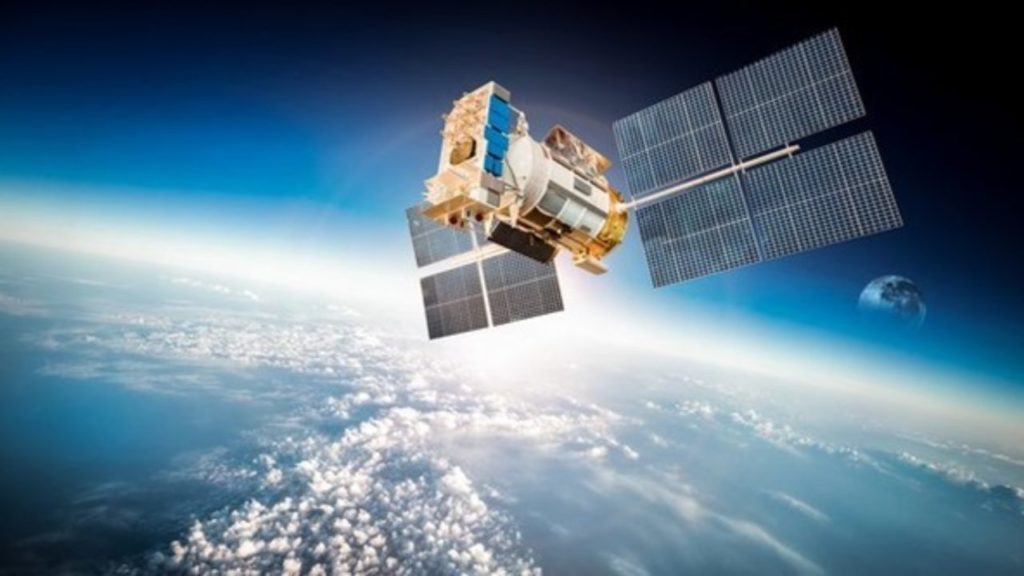
China has already carried out a series of cyber-attacks between 2007 to 2018 that also includes the computer attacks against Indian satellite communication in 2017, according to a new report by US-based China Aerospace Studies Institute (CASI).

CASI Report

Further, The 142-page report notes that China has carried out multiple cyber-attacks between 2012 and 2018.

So far, this report elaborates on the result only in one case.

The report points out a Chinese network-based computer attack on the Jet Propulsion Laboratory (JPL) In 2012.

It further says that the attack “allowed ‘full functional control’ over JPL networks.” 

While listing out some of these attacks, the report quotes multiple sources.

Here CASI is a think-tank that basically supports the secretary, chief of staff of the US Air Force, the US chief of space operations, and other senior air and space leaders.

CASI is tasked to provide China’s space narrative among other things. 

An Asian Pandemic Success Story

By Swee Kheng Khor and David Heymann

Just as a heart attack can jolt a person into changing habits for the better, a pandemic can spur a nation to profoundly improve its public health systems and policies. The harsh experience with Severe Acute Respiratory Syndrome in 2003—and to a lesser extent, H1N1 in 2009–10 and Middle East Respiratory Syndrome (MERS) in 2014–15—had such an effect on East Asian countries. China, South Korea, Taiwan, and Vietnam, among other states, retooled their public health systems after SARS in a manner that allowed them to mount particularly effective responses to COVID-19.

As the world struggles with the coronavirus pandemic, East Asian countries lead the way in both control and recovery. They consistently report lower death rates from COVID-19 than do countries in Europe and North America, suggesting that their governments have been better able to protect those at risk of serious illness and death. By and large, their public discourse has already shifted to restarting the economy and public life instead of remaining focused on initial measures to flatten the curve of infections. East Asian societies have demonstrated solidarity, rather than allowing the disease and its control to become unnecessarily politicized or weaponized. At the root of the efficacy of this response lie the hard-won lessons of the region’s experience with SARS.

Global China: Global governance and norms


From human rights to energy to trade and beyond, how is China approaching global norms and norm development?

The fears that China is changing the United Nations from within seem if not overblown, at least premature. The U.N. can still be a force multiplier for the values and interests of the United States, but only if Washington now competes for influence rather than assume automatic U.N. deference.

China’s involvement in United Nations peacekeeping is one of its better-known investments in the multilateral system. But its contributions to blue helmet missions remain limited, and Beijing has taken a cautious approach to expanding its commitments.

Is the Chinese government’s greater engagement with international institutions a gain for the global human rights system? A close examination suggests not.

Chinese Communist Party policies towards Xinjiang have increased colonial development, further eroded Uyghur autonomy through force and ethnic assimilationism, and co-opted the “Global War on Terror” framing to portray all Uyghur resistance as “terrorism.”

China’s Economy Bounces Back, But to Which Growth Path?

David Dollar

China is leading the major economies in recovery from the COVID-19 pandemic and recession. But for a variety of reasons there is unlikely to be a quick “V-shaped” recovery back to the old growth path. Prolonged global weakness plus the U.S.-China trade war mean that exports will not play the same role as they did in the past. The buildup of debt to risky levels also sets limits on the role that investment will play. Furthermore while uncertain at this moment, there is a good chance that people will be more cautious about many activities even after a vaccine is developed, so it is likely that private consumption will be lower than it was on the previous growth path. China can turn all of these factors to its advantage, but it will take an acceleration of reform to do so. Particularly important will be new trade agreements, financial sector reform, and expansion of social services to migrants. 

China’s economic growth plummeted from 6.0 percent in the fourth quarter of 2019 to –6.8 percent in the first quarter of 2020—a breath-taking drop in activity. This was the economy’s response to the COVID-19 pandemic, with most factories, offices, and retail establishments closed for a month. The lockdown, coupled with the recipe for testing, tracing, and isolation, brought the virus under control (recognizing that it will not be fully under control until a reliable vaccine is developed and distributed worldwide). Starting in March, the economy began to bounce back, and in many ways the recovery has been faster in China than it has been in other major countries. But a key question remains—to which growth path is the economy bouncing back?

The next section of this essay examines the immediate recovery of the economy during mid-2020. The remainder of the essay focuses on potential long-term changes occasioned by the pandemic. There is tremendous uncertainty at the moment about the path of both the virus and the economy. But I argue that it is unlikely that China will return to its former growth path. Also, because that path was unsustainable it is not necessarily a bad thing that the growth model will be adjusted. The crisis creates an opportunity to implement reforms that will enhance the welfare of the Chinese people, have spillover benefits for the rest of the world, and make Chinese growth more sustainable.

As U.S.-Taiwan Ties Flourish, China’s Discontent Grows

J. Michael Cole

Recent Chinese military maneuvers were a stark reminder that the Taiwan Strait remains one of the world’s most dangerous flash points. After months of saber-rattling near Taiwan, China’s air force sent dozens of warplanes into Taiwan’s air defense identification zone on Sept. 18 and 19, across the median line in the Taiwan Strait that both sides have long tacitly acknowledged as an unofficial border. Days later, and amid further incursions by Chinese aircraft, a Chinese Foreign Ministry spokesperson denied the existence of any “so-called median line,” raising concerns of further escalation by Beijing. Although several factors account for this belligerence, one major cause is the closer relationship that has developed in recent months between Taiwan and the United States.

Since withdrawing its diplomatic recognition of Taiwan in 1979, Washington has relied upon the Taiwan Relations Act to govern its unofficial ties with Taipei. To avoid undermining relations with Beijing, which views Taiwan as a breakaway province, the U.S. has maintained a so-called “One China” policy, acknowledging Beijing’s contention that the People’s Republic of China is the sole legal government of China. At the same time, to help Taiwan deter potential Chinese attempts to take it over by force, the U.S. government regularly provides Taiwan with the defensive materiel it needs to counter a Chinese assault.

Much of U.S. policy toward Taiwan occurred under the premise that peaceful engagement with China, and its integration into the world economy, would eventually result in a China that is more liberalized and more open, if not altogether democratic. This view, which up until recently was the prevalent one in Washington, also had a constraining effect on U.S. willingness to engage Taiwan. There were long periods, particularly under the administrations of George W. Bush and Barack Obama, during which Washington either refrained from selling arms to Taiwan or substantially reduced their delivery.

Chinese nuclear forces, 2019

By Hans M. Kristensen, Matt Korda

 
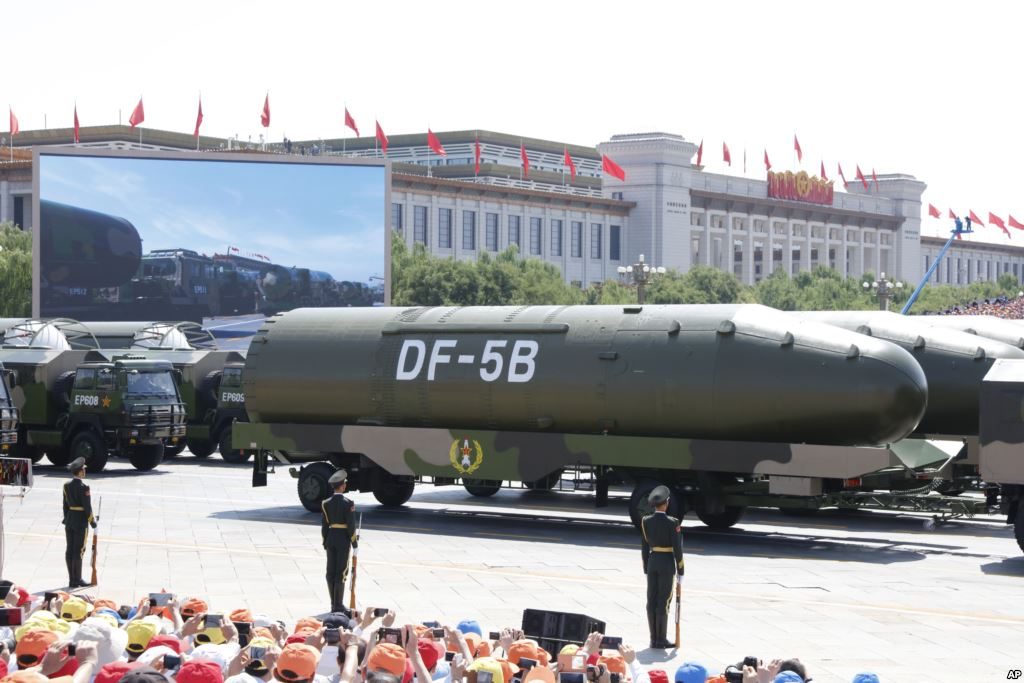
The Nuclear Notebook is researched and written by Hans M. Kristensen, director of the Nuclear Information Project with the Federation of American Scientists, and Matt Korda, a research associate with the project. The Nuclear Notebook column has been published in the Bulletin of the Atomic Scientists since 1987. This issue’s column examines China’s nuclear arsenal, which includes about 290 warheads for delivery by ballistic missiles and bombers. This stockpile is likely to grow further over the next decade, and we estimate that China will soon surpass France as the world’s third-largest nuclear-armed state.

China’s nuclear arsenal includes about 290 warheads for delivery by ballistic missiles and bombers and is likely to grow over the next decade,

The climate risks of China’s Belt and Road Initiative

By Sagatom Saha

China’s Belt and Road Initiative (BRI) is not the green project that Beijing claims it is. Leading up to the first BRI forum in May 2017, the Chinese government published official documents declaring BRI would promote the Paris Agreement and UN Sustainable Development Goals (Chen 2019). At the forum itself, Chinese Communist Party General Secretary Xi Jinping advertised BRI as a “vision of green development and a way of life and work that is green, low-carbon, circular, and sustainable” (Xinhua 2017). BRI, which promises sustainable development for all participating countries, hinges on the truth of this premise. General Secretary Xi accrued significant international support and global participation for BRI with this claim. China established the International Green Development Coalition on the Belt and Road in partnership with the United Nations Environment Programme, increasing BRI’s international legitimacy (Liqiang 2019).

However, evidence abounds of the environmental harm the Chinese government wreaks beyond its borders. China has long been the world’s largest exporter of coal power equipment, exporting twice as much as Japan, its nearest competitor (United Nations 2020). Chinese banks are financing more than 70 percent of all coal plants outside of China, with Chinese firms constructing many of them, including in countries like Egypt and Pakistan that previously burned little to no coal (Quartz 2019). At current rates, Chinese coal equipment exports and financing make it virtually impossible to limit global warming to safe levels, which would require retiring one coal plant per day globally (Hilton 2019). BRI’s environmental damage is not limited to the energy sector. Transportation infrastructure, mining, and land reclamation for mega-cities carry their own environmental and climate risks that are harder to