11 November 2020

Mired in red tape

Sandeep Unnithan

Four big-ticket Indian Army procurements for carbines, mobile air defence gun-missile systems, light helicopters and shoulder-launched missiles worth over $5 billion (Rs 36,000 crore) have been caught in an impasse for several months now. But for the ongoing military standoff with China, delays in acquiring this urgently required hardware would not have spelt a crisis. This is because India’s process-driven defence acquisitions move at a snail’s pace, with each contract taking an average 7-8 years to be concluded.

These four cases are only part of the Rs 90,048 crore the ministry of defence (MoD) plans to spend on buying new hardware for the forces in the present financial year, minister of state (MoS) for defence Shripad Naik told the Lok Sabha on September 15.

Two cases are particularly urgent as they are meant to replace the army’s vintage in-service military hardware. The army’s 1970s model Cheetah helicopters used to resupply troops in high altitudes at Siachen and Ladakh and the dwindling stock of shoulder-fired missiles meant to provide low-cost air defence solutions, particularly in the frontlines, are nearing the end of their lifespans. The army needs new air defence gun-missile systems to replace the World War II-era L-70 guns. For three of these imports, light helicopters, air defence guns and carbines, we have indigenous alternatives which are fit cases for the government’s ‘Aatmanirbhar Bharat’ initiative. Yet, these deals, held up for reasons ranging from deviations in procedure, budgetary constraints, complaints from competitors and a recent renewed thrust for indigenisation, have become a sort of Gordian knot the ministry seems unable to slice through. Adding to the difficulties is the looming shadow of India’s largest arms supplier and strategic partner Russia. Russian state-owned firms are in the fray for three of the big-ticket items and Moscow is believed to have lobbied for stalling the deals at the political level. The UAE government, another country with significant diplomatic heft in New Delhi, owns the firm in the fray for carbines. The defence ministry has held a series of recent meetings to resolve the intractable delays in these cases, but without much success.

The Great Game for Space: Basic Exchange and Cooperation Agreement (BECA) between US and India has been signed.

BYADITYA PAREEK
Source Link


The newly signed agreement will grant India access to US DoD and US National Geospatial-Intelligence Agency’s (NGA’s) “geospatial information bank”. This will have a direct impact on India’s long range missiles, providing essential corrections to inertial navigation systems that help guide these missiles. This could improve the accuracy of the missiles, which according to some analysts will be accurate within 100 meters.

In some of the reports covering the 2+2 dialogue, one comment by the US Secretary of Defense Mark Esper stood out:

“working to establish new cyber and space dialogues to increase cooperation in domains where both our countries face emerging threats.”

The comment indicates there was at least some sort of discussion about India’s part in the US’s vision for international cooperation in their space programme and possibly the Artemis Accords.

China has again bolstered its Satellite facilitated Ocean Surveillance Capability. 

With three new launches of Yaogan-30 Sats. China’s Chuangxin-5 Constellation of Ocean Surveillance SIGINT Sats. sees expansion.

In a cursory survey of the literature on the matter it appears that these satellites in the Yaogan family are suspected to be the ones collecting SIGINT and IMINT on China’s adversaries and the movement of their naval forces. The US has a rough counterpart in the Naval Ocean Surveillance System(NOSS).

SMART and the Challenge of Submarine Hunting

BYADITYA PAREEK

The Supersonic Missile Assisted Release of Torpedo tested last month might seem an impressive weapon on paper, but to make it an effective weapon, India will need drastically improve its ability to monitor the oceans depths.

The Government of India and DRDO announced on 5 October 2020 that they have successfully tested a Supersonic Missile Assisted Release of Torpedo (SMART) system. The system has been dubbed a “game changer” in anti-submarine warfare, by the government.

The official statement claimed that all the mission objectives of the test launch were successful including: the missile reached the desired range, the nose cone separated, and the torpedo splashed into the water with the help of a velocity reduction mechanism. The launch was also reportedly tracked by Land Observation and Tracking stations with Radar and Electro Optical Systems and down range ships (this is important to note since the system also boasts a two-way data link connecting it to a warship or an airborne submarine target detection system, which provided the exact location of the hostile submarine to the SMART projectile to correct its flight path at any point.)

SMART’s Lineage

As the name suggests the SMART platform is a supersonic hybrid platform which has separating air and subsurface propulsion stages that decouple to deliver the payload to destroy a subsurface target located at relatively long ranges deemed beyond the capability of a surface or subsurface launched torpedo.

Takshashila Discussion Document – Analysis of COVID-19 Serosurveys in India

BY SUNILA DIXIT AND SHAMBHAVI NAIK

The Union and various state governments have conducted seroprevalence surveys at national and city/state levels to study the spread of COVID-19. We argue

The disparity in estimated cases as per seroprevalence studies and actual detected cases is a result of limited testing capacity and flawed testing strategy.

City level sero-surveys can help understand testing demand and should be used to tailor testing capacity at the local level.

China’s New Aircraft Carrier Killer Is World’s Largest Air-Launched Missile

H I Sutton

Navies are racing to develop hypersonic missiles which may change the pace of naval warfare. Russia will deploy the Zircon hypersonic missile aboard warships and submarines. The US Navy has started down the path of the common hypersonic glide body (c-HGB) for its destroyers. Meanwhile China’s latest hypersonic weapon is something completely different; it is air launched.

The massive new missile, labelled CH-AS-X-13, is probably the largest air-launched missile in the world.

The missile was first reported by Ankit Panda, the Stanton Senior Fellow at the Nuclear Policy Program, Carnegie Endowment for International Peace, in April 2018. More recently candid images have appeared on Chinese social media. These provide a clearer view of the novel weapon.

Analysts believe that it may be intended to target high-value warships, particularly aircraft carriers. This makes it an anti-ship ballistic missile (ASBM). And it appears to be carrying a hypersonic glide vehicle (HGV). This may give it extended range and increase survivability against air defenses.

'You will pay': China issues remarkable threat to Australia as Beijing warns of 'tremendous' economic damage if we continues to 'side with the US' - as they prepare for another round of crippling trade sanctions

By LEVI PARSONS

China has warned that Australia will suffer further economic pain if it continues to be part of the US administration's 'roughneck gang'.

A strongly worded editorial in the Communist Party mouthpiece, China Daily, blasted the Morrison government for 'aggressively sending warships to China's doorsteps' as part of Exercise Malabar.

Australia's decision to take part in the war games this week alongside Beijing's Indo-Pacific rivals - the US, Japan and India - has outraged the authoritarian regime as tensions between the two countries rapidly deteriorate.

To punish Australia for pushing back against the totalitarian nation in the wake of the COVID-19 pandemic, which originated in the Chinese city of Wuhan, Beijing has threatened to ban an unprecedented number of Australia exports.

Several reports suggested all Chinese companies have been instructed by the Communist Party to stop buying Australian products, but there has been no official sanction.

This includes barley, sugar, red wine, timber, coal, lobster and copper as Beijing looks to turn the screws on Australia's largest export market, worth more than $150billion.

China Thinks America Is Losing

By Julian Gewirtz

The consequences of the presidency of Donald Trump will be debated for decades to come—but for the Chinese leadership, its meaning is already clear. China’s rulers believe that the past four years have shown that the United States is rapidly declining and that this deterioration has caused Washington to frantically try to suppress China’s rise. Trump’s trade war, technology bans, and determination to blame China for his own mishandling of the COVID-19 pandemic have all confirmed the perception of Chinese policy elites that the United States is bent on keeping their country down.

To be sure, the idea that the United States seeks to stymie and contain China was widespread among Chinese officials long before Trump came to power. What many Americans see as disruptive effects attributable only to Trump’s presidency are, to China’s current rulers, a profound vindication of their darkest earlier assessments of U.S. policy.

But Trump has turned what Beijing perceived as a long-term risk into an immediate crisis that demands the urgent mobilization of the Chinese system. The Trump administration has sought to weaken the grip of the Chinese Communist Party (CCP) on society, force the liberalization of the state-dominated Chinese economic system, and block China’s drive to technological supremacy. Nearly four years into this gambit, however, Trump’s policies appear to have produced the opposite result in each domain.

Washington needs a China strategy that not only assesses Chinese capabilities and aims but also takes full account of the way China’s leaders understand the United States and have reacted to Trump’s presidency. This strategy must also reject the faddish but inaccurate notion that China is somehow an impervious force, advancing on an immutable course and unresponsive to external pressure and incentives. The United States can craft a strategy that much more effectively deters China’s most problematic behavior. But to do so, Washington must endeavor to upend Chinese leaders’ assumption that the United States is inexorably declining. 

Progressive Priorities at Risk as Biden Plans to Deal with 'Immovable' McConnell

BY STEVE FRIESS

Even before Joe Biden passed the 270 electoral votes he needed to win the U.S. presidency on Saturday, plans were being laid for his administration in Zoom rooms, on conference calls and in occasional in-person, socially distant meetings in Washington D.C. and Wilmington, Delaware. For the many teams working under Biden-Harris transition chair Ted Kaufman, the tumultuous four days following Election Day, with their shifting results in swing states and an incumbent falsely declaring victory, might as well have occurred in an alternate universe. They stayed focused on creating a government-in-waiting, planning how to fill key positions and plotting strategies for the ambitious agenda the former vice president had laid out since winning the Democratic nomination this summer.

What has changed since Election Day—and dramatically: The much-hyped prospect that Democrats might take control of the U.S. Senate now seems unlikely and Republican Mitch McConnell of Kentucky will probably remain Majority Leader. As a result, the start of President-elect Biden's tenure, which was envisioned as an ambitious flurry of expensive programs and progressive legislation on immigration, climate change, health care and criminal justice reform is being downscaled in anticipation of a divided government.

"In a matter of a Tuesday night, we went from expecting an FDR-like First Hundred Days to, basically, unpausing the dynamic of the last six years of Obama Administration where McConnell was an immovable object," a transition official tells Newsweek on background because they aren't authorized to speak to the press. "We knew this was possible. It wasn't even until around September that the polls told us a Democratic Senate was a more serious possibility. But it definitely was more fun preparing to govern with a friendly Congress."

The challenges facing a nascent Biden administration are further complicated by the devastating—and worsening—pandemic, as new coronavirus infections keep hitting daily records and the total number of cases in the U.S. closes in on the 10 million mark. COVID—"It's all we talk about now," the Biden transition official says. "We're still dreaming big. We just aren't sure how a lot of this can actually happen."

Trump Fires His Embattled Pentagon Chief by Tweet

By Jack Detsch, Robbie Gramer

U.S. President Donald Trump announced that he fired long-embattled Defense Secretary Mark Esper in a tweet on Monday, just two days after news networks called the U.S. election against the incumbent commander in chief, another move that current and former officials worry could upset an already tumultuous transition to a new administration.

The move comes amid lingering tensions between Esper and Trump. The Department of Defense chief’s decision to publicly oppose using active-duty U.S. troops to quell protests against racial injustice in June and his endorsement of renaming military bases that honor Confederate generals angered Trump and nearly led him to push Esper out earlier. Top aides and senior Republican lawmakers helped convince him to keep Esper in place so the administration did not look to be in chaos ahead of the elections, current and former officials said.

Trump tweeted that Christopher Miller, a former Defense Department official recently confirmed as director of the National Counterterrorism Center, would take over as acting secretary of defense. Under federal vacancies law, the president can appoint another Senate-confirmed official in place of Esper, who some officials in the Pentagon and on Capitol Hill had hoped would remain in place after Trump leaves office to ensure a smooth transfer of power.

“Chris will do a GREAT job! Mark Esper has been terminated. I would like to thank him for his service,” Trump tweeted. The move marks another Trump firing by tweet, after he removed his embattled Secretary of State Rex Tillerson by surprise two years ago while the top diplomat was traveling in Africa.

A Preview of Biden’s Foreign Policy

James Stavridis

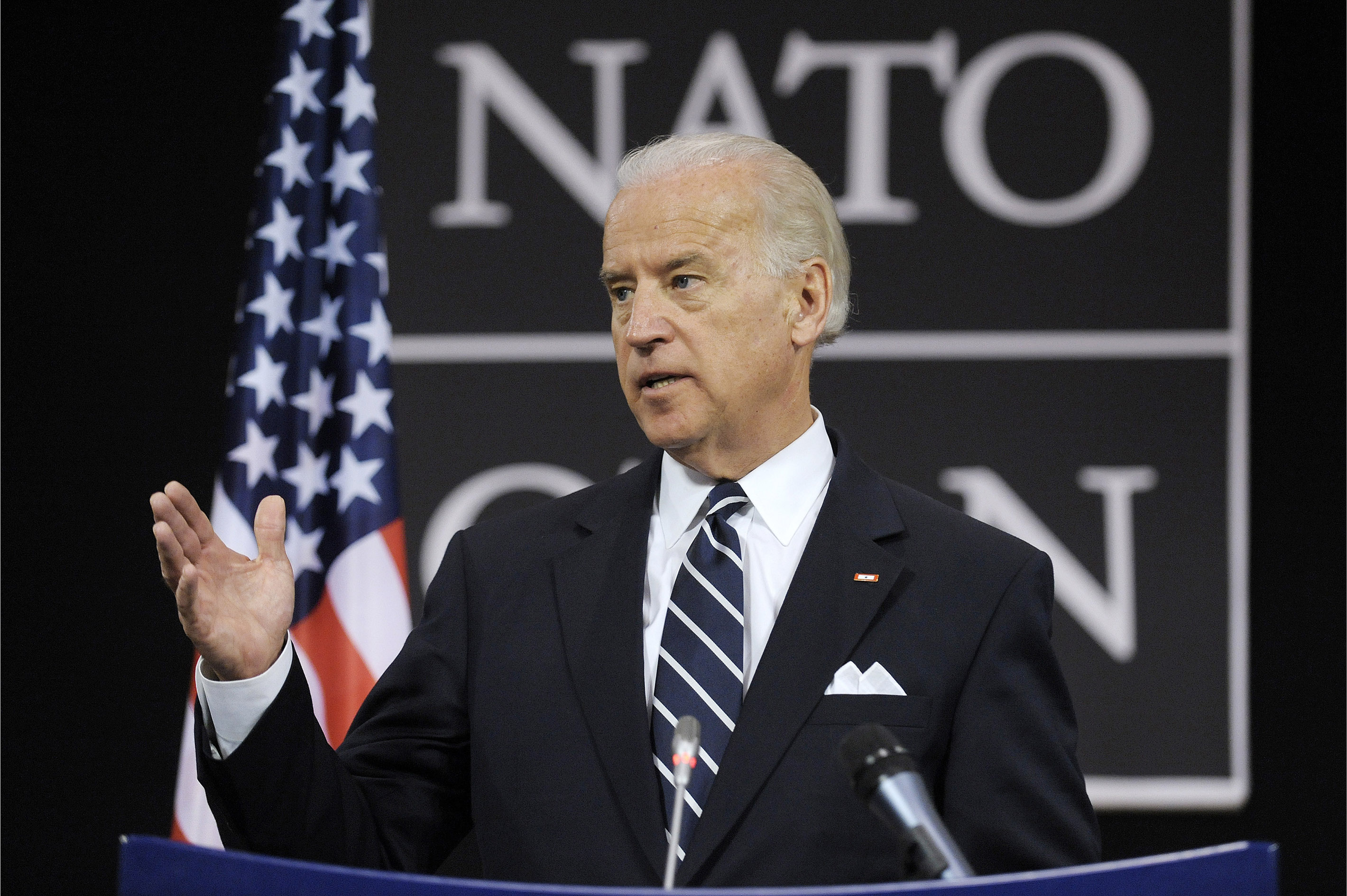
I got to know Joe Biden when I was a combatant commander for the Barack Obama administration, first at the U.S. Southern Command and then most deeply in my four years at the North Atlantic Treaty Organization. Once, at a dinner hosted by America’s NATO ambassador in Brussels, I watched the then-vice president meet with ambassadors and foreign ministers from the 27 other nations then in the alliance.

Biden walked around the large table and was able to comment in depth on any number of the countries, from huge Germany to tiny Iceland, with a short vignette about a visit to this or that city, or a telling anecdote concerning a head of state, or a comment on current policy. This was not the result of memorized crib sheets from his staff: Biden did it off the top of his head, and it was a natural and unforced demonstration of his long term of service not just domestically, but also in the larger world.

While the 2020 election campaign understandably focused on domestic issues, Biden is a former chairman of the Senate Foreign Relations Committee, and reinforcing America’s geopolitical primacy will be high on his agenda.

He will bring a deeply experienced team of foreign and security policy advisers with him into government, many veterans of the Obama administration. Having worked alongside nearly all of them, I would say this might be the deepest initial bench any president has brought to the White House in the post-Vietnam era. Among them: Nicholas Burns, William Burns and Tony Blinken held top jobs at the State Department; Avril Haines and Michael Morell similarly helped guide the CIA; Michele Flournoy, Lisa Monaco and Jeh Johnson filled senior roles involving defense and homeland security; Susan Rice was ambassador to the United Nations and national security adviser

Whether all of these serious players will take on official roles remains to be seen, but it is a very good start. And a real strength of a Biden foreign policy team would likely be stability. Donald Trump has had four national security advisers in as many years. Look for members of a Biden team to have long terms.

Can the UK Achieve Its Naval Ambitions in the Indo-Pacific?

By Ian Storey

This time next year, if all goes according to plans currently being drawn up by the United Kingdom’s Ministry of Defense, the Royal Navy (RN) will have deployed its biggest flotilla of warships to Asia in a generation.

The carrier strike group (CSG) will be led by the RN’s largest ever warship, the $3.9 billion, 65,000-ton aircraft carrier HMS Queen Elizabeth. The carrier will embark a squadron of Royal Air Force F-35B fighter jets as well as a squadron of U.S. Marine Corps (USMC) F-35Bs. The Queen Elizabeth will be accompanied by approximately nine to 10 other warships, a mix of destroyers, frigates, support ships and submarines, possibly including a vessel from a NATO ally. A dress rehearsal recently took place off Scotland.

The flotilla will visit Southeast Asia, almost certainly calling in at Changi Naval Base in Singapore. It may also participate in naval activities to mark the 50th anniversary of the Five Power Defense Arrangements (FPDA), the military alliance that links the U.K. with Singapore, Malaysia, Australia, and New Zealand. It will sail through the South China Sea — probably participating in combined exercises with warships from the U.S., Japan, and Australia — inevitably raising China’s ire. The CSG may then move on to Japan, calling in at ports along the way. After the five to six month deployment the flotilla will return to the U.K.

Although the mission has elicited much interest in the media, it is the Queen Elizabeth’s future activities, and those of her sister ship HMS Prince of Wales (due to become operational in 2023), that are more intriguing. For the RN’s top brass has indicated that they would like to see the carriers spend a good deal of their working lives in the Indo-Pacific region.

The Royal Navy and the Indo-Pacific Region

At a webinar hosted by the International Institute for Strategic Studies (IISS) in July, Vice Admiral Jerry Kyd, the RN’s fleet commander, described aircraft carriers as a “metaphor for a nation-state that intends to be relevant on the global stage at the strategic level.” Carriers can, he said, fulfill a number of missions including strategic messaging, power projection, naval diplomacy and trade promotion.

Germany Plans a Greater Peace and Security Role in the Indo-Pacific

By Brendan Nicholson

As the political and economic centre of the world shifts from the Atlantic to the Indo-Pacific, and geostrategic competition increases, Germany, the EU and NATO want closer defence cooperation with nations such as Australia.

Germany’s defence minister, Annegret Kramp-Karrenbauer, told an online seminar organised by ASPI that Australia was regarded as a ‘rock of stability’ in the region and had a key role to play in maintaining peace and security.

‘We intend to expand security and defence cooperation with those who share our values in the region, intensify our military contexts and promote dialogue on matters of security.’

Germany planned to send naval vessels to patrol Indian Ocean trade routes next year and it was discussing with the Australian Defence Force the possibility of placing liaison officers aboard Australian naval vessels, she said.

‘This is where the shaping of the future international order will be decided’, Kramp-Karrenbauer told the seminar hosted by ASPI’s executive director, Peter Jennings, and Dr Beatrice Gorawantschy, the head of the Konrad Adenauer Foundation office in Canberra, who were involved in a wide-ranging discussion with the minister and her Australian counterpart, Linda Reynolds.

Report on World Geography and U.S. Strategy


Most of the world’s people, resources, and economic activity are located not in the Western Hemisphere, but in the other hemisphere, particularly Eurasia. In response to this basic feature of world geography, U.S. policymakers for the last several decades have chosen to pursue, as a key element of U.S. national strategy, a goal of preventing the emergence of regional hegemons in Eurasia. This objective reflects a U.S. perspective on geopolitics and grand strategy developed by U.S. strategists and policymakers during and in the years immediately after World War II that incorporates two key judgments:

that given the amount of people, resources, and economic activity in Eurasia, a regional hegemon in Eurasia would represent a concentration of power large enough to be able to threaten vital U.S. interests; and

that Eurasia is not dependably self-regulating in terms of preventing the emergence of regional hegemons, meaning that the countries of Eurasia cannot be counted on to be fully able to prevent, though their own choices and other actions, the emergence of regional hegemons, and may need assistance from one or more countries outside Eurasia to be able to do this dependably.

Preventing the emergence of regional hegemons in Eurasia is sometimes also referred to as preserving a division of power in Eurasia, or as preventing key regions in Eurasia from coming under the domination of a single power, or as preventing the emergence of a spheres-of-influence world, which could be a consequence of the emergence of one or more regional hegemons in Eurasia. The Trump Administration’s December 2017 national security strategy document states that the United States “will compete with all tools of national power to ensure that regions of the world are not dominated by one power.”

The British Army warned of the threat of World War III

Bhavi Mandalia

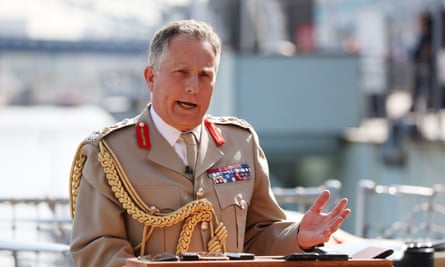
The head of the British Defense Staff, General Nick Carter, said that global political instability and economic crisis due to the coronavirus pandemic could lead to World War III. His words on Sunday, November 8, reports Reuters

“We live at a time when the world appears to be very hectic and unstable, not to mention the familiar global competition between countries. Given how many local conflicts are unfolding across the planet, the risk of escalation due to miscalculation is quite real, ”Carter said.

In response to the question of whether the threat of the Third World War is really realistic, the general then said: “I am only saying that there is a risk, and we need to take it into account.” He also urged to remember the victims of previous global confrontations in order to prevent their recurrence.

Earlier in October, Carter, who heads the UK Defense Headquarters, announced that China and Russia are already waging a “political war” against the West to “break its will,” using disinformation campaigns, cyber attacks and mass surveillance.

On October 2, Germany was named the best tank for the third world war, if it began several decades ago. It turned out to be a Soviet (Russian) T-72.

'Robot soldiers could make up quarter of British army by 2030s'

Dan Sabbagh

Thirty thousand “robot soldiers” could form an integral part of the British army in the 2030s, working alongside humans in and around the frontline, the head of the armed forces said in a television interview on Sunday.

Gen Sir Nick Carter said the armed forces needed “to think about how we measure effects in a different way” – and he called on the government to proceed with the previously promised five-year integrated defence review.

Speaking to Sky News on the morning of Remembrance Sunday, the chief of the defence staff suggested that “an armed forces that’s designed for the 2030s” could include large numbers of autonomous or remotely controlled machines.

“I mean, I suspect we could have an army of 120,000, of which 30,000 might be robots, who knows?” Carter said, although he stressed he was not setting any particular target in terms of future numbers.

Investment in robot warfare was to be at the heart of the planned integrated five-year defence review, whose future was thrown into doubt after the chancellor, Rishi Sunak, postponed the cross-government spending review to which it had been linked last month.

Why America Must Lead Again

By Joseph R. Biden, Jr.

By nearly every measure, the credibility and influence of the United States in the world have diminished since President Barack Obama and I left office on January 20, 2017. President Donald Trump has belittled, undermined, and in some cases abandoned U.S. allies and partners. He has turned on our own intelligence professionals, diplomats, and troops. He has emboldened our adversaries and squandered our leverage to contend with national security challenges from North Korea to Iran, from Syria to Afghanistan to Venezuela, with practically nothing to show for it. He has launched ill-advised trade wars, against the United States’ friends and foes alike, that are hurting the American middle class. He has abdicated American leadership in mobilizing collective action to meet new threats, especially those unique to this century. Most profoundly, he has turned away from the democratic values that give strength to our nation and unify us as a people.

Meanwhile, the global challenges facing the United States—from climate change and mass migration to technological disruption and infectious diseases—have grown more complex and more urgent, while the rapid advance of authoritarianism, nationalism, and illiberalism has undermined our ability to collectively meet them. Democracies—paralyzed by hyperpartisanship, hobbled by corruption, weighed down by extreme inequality—are having a harder time delivering for their people. Trust in democratic institutions is down. Fear of the Other is up. And the international system that the United States so carefully constructed is coming apart at the seams. Trump and demagogues around the world are leaning into these forces for their own personal and political gain. 

The next U.S. president will have to address the world as it is in January 2021, and picking up the pieces will be an enormous task. He or she will have to salvage our reputation, rebuild confidence in our leadership, and mobilize our country and our allies to rapidly meet new challenges. There will be no time to lose.

The Abraham Accords and the Palestinian Issue

Massimiliano Fiore

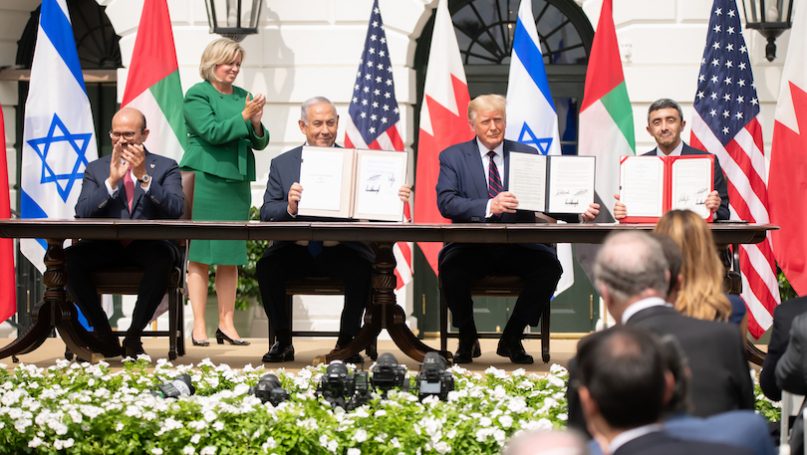
A new chapter in the history of the Middle East has begun with the signing of the Abraham Accords. These agreements between Israel, Bahrain and the United Arab Emirates reflect a strategic realignment against the two non-Arab powers, Iran and Turkey, threatening their interests in the region. The uprisings and civil wars of 2011 heightened the decades-old divisions between the competing sides in the Middle East and gave rise to a more genuinely regional geopolitical order, defined by mutually hostile nationalisms and sectarian identities. These developments led Bahrain and the UAE, nervous of a diminishing US commitment to the Middle East, to re-evaluate their priorities and to turn towards peace with Israel, the region’s dominant military power. In doing so, the Gulf monarchies are seeking to counter efforts to extend Iranian influence across the region and to lessen that of the Muslim Brotherhood and affiliated Sunni Islamist movements backed by Turkey and Qatar, regardless of the impact on the Palestinians.

This unprecedented rapprochement has left the Palestinians feeling abandoned by traditional allies and reaching for a well-worn playbook in a fast-changing Middle East. Their isolation is attributable to a failure to grasp these changes and the Sunni Arab world’s resultant unwillingness to continue to accept a veto from the West Bank or Gaza on a development that is clearly in its interest and necessary for its defense against Iran, Turkey and the Muslim Brotherhood.

The Palestinians have long sought to secure freedom from Israeli occupation on the basis of the Arab Peace Initiative, a pan-Arab policy calling for Israeli withdrawal from the occupied territories and acceptance of Palestinian statehood, offering normalization of relations with the Arab world in return. However, 18 years have passed since its formal adoption in March 2002, and other common interests have taken precedence. In the absence of progress or any realistic hope of achieving it, standing by the Palestinians has ceased to be a priority for the Gulf monarchies in the face of clear and present threats from Iran, Turkey and the Muslim Brotherhood, combined with the emergence of common economic and security interests. Relations with Israel have simply become more urgent than the Palestinian question.

How Successful Has the UN Been in Maintaining International Peace and Security?

Anette Sonnback

This content was originally written for an undergraduate or Master's program. It is published as part of our mission to showcase peer-leading papers written by students during their studies. This work can be used for background reading and research, but should not be cited as an expert source or used in place of scholarly articles/books.

This year, the United Nations (UN) is celebrating its 75th year. Born out of war, the UN has sought to curtail plagues of a past characterized by two world wars. Based on the idea of liberal institutionalism where multilateral institutions are to facilitate inter-state cooperation, the UN intended to bring the major military powers together with the main task of maintaining international peace and security (Weiss 2018: 174, Hanhimaki 2015: 18). This has, however, been fraught with difficulties that this essay will address along with the challenges and opportunities with different peace and security initiatives, in an attempt to evaluate the UN’s success in its main task. It will specifically focus on peace operations, nuclear disarmament and humanitarian intervention, some of the main areas through which the UN is maintaining international peace and security (UN 2020a). As one main actor in global governance, I conclude that the real success of the UN has been in its role as a normative power, guiding the global understanding of acceptable behavior.

UN’s Role in Maintaining Peace and Security – A Tense Security Council and Ambiguous Peace Operations

Intelligence Isn’t Just for Government Anymore

By Amy Zegart

Foreign election interference must be bad if spy agencies are making public service announcements. Two weeks ago, Director of National Intelligence (DNI) John Ratcliffe and FBI Director Christopher Wray held a press conference warning that Russia and Iran have been acquiring voter registration data and waging influence operations to sow division and tilt the election. And earlier in October, counterintelligence chief William Evanina and General Paul Nakasone—who heads both the Pentagon’s cyberwarriors and the supersnoopers of the National Security Agency—participated in a video alert designed to reassure Americans that the threats are real but they are on the job.

What these officials said is important. But the fact that they said it is pathbreaking.

Intelligence agencies have never operated so publicly before, and doing so doesn’t come naturally. The 17 spy agencies of the U.S. intelligence community are hardwired for a secret world, in which Washington officials with security clearances transmit information in locked bags and read it in guarded rooms. Secrecy is in their DNA. The National Security Agency was once so hidden that for years nobody would acknowledge its existence—insiders joked that NSA stood for “no such agency.” The Central Intelligence Agency has “neither confirmed nor denied” public reports of its activities since an agency lawyer first came up with that phrase in the 1970s. 

Cyberthreats and other emerging technologies are transforming this secret world, and intelligence agencies have to adapt fast—not least by reimagining who counts as a decision-maker.

JUST IN: Joint Artificial Intelligence Center Embarks on Next Chapter

By Yasmin Tadjdeh

The Pentagon’s Joint Artificial Intelligence Center is accelerating work as it moves toward what its new director calls "JAIC 2.0."

Marine Corps Lt. Gen. Michael Groen — who took the helm of the organization Oct. 1 — said the center aims to implement transformational change.

“The early days of the JAIC were all about building AI — solving mostly small problems or small AIs, connecting data sources to problems, to algorithms,” he said Nov. 6. “We were really about products, … [and] it was seeding the environment to kind of show what was possible.”

While the center’s 30-plus different projects are all valuable, making products only is not sufficient to transform the Defense Department, he said during an online event hosted by the Center for Strategic and International Studies, a Washington, D.C.-based think tank.

“Our mission is to accelerate DoD adoption of AI technology,” Groen said of the JAIC, which was stood up in 2018. “Our vision is to transform the department through the integration of artificial intelligence. … For us, as we roll into what we've called JAIC 2.0, the issue of transformation becomes really, really important.”

The center is looking at what is the right balance between product development, product building and broad enablement of AI across the department, he said.

Follow the leaders: How governments can combat intensifying cybersecurity risks

By Ankit Fadia, Mahir Nayfeh, and John Noble

Against a backdrop of escalating geopolitical and geo-economic tensions, one of the biggest threats nations face today is from state-sponsored cyber warfare. From election interference to the alleged attempted theft of sensitive COVID-19 vaccine research to power-supply cutoffs for nearly a quarter-million people, state-sponsored cyberattacks are infiltrating the critical infrastructure of countries around the world.

Not just state actors but also nonstate actors today have more technical prowess, motivation, and financial resources than ever before to carry out disruptive attacks on a country’s critical infrastructure. Any attack on critical infrastructure in one sector of a country can lead to disruption in other sectors as well. An attack on a country’s telecommunications, for example, may disrupt electronic payments.

But this is just part of the problem. Today, individuals and businesses are more dependent than ever on digital connectivity in virtually every aspect of their existence. Most people cannot imagine going even a few hours without access to the internet. Globally, an estimated 127 new devices connect to the internet every second. Any disruption in digital connectivity is considered an obstacle in the path of progress.

Owing to the COVID-19 pandemic, our dependence on all matters digital has increased dramatically. With remote working having become integral to our economies and the medical response, the rising dependence of citizens and businesses on everything digital is only going to continue.

With every new device, user, and business that connects to the internet, however, the threat of cyberattacks increases. If a government cannot provide secure and trusted digital connectivity, societies can’t prosper and economies won’t thrive.

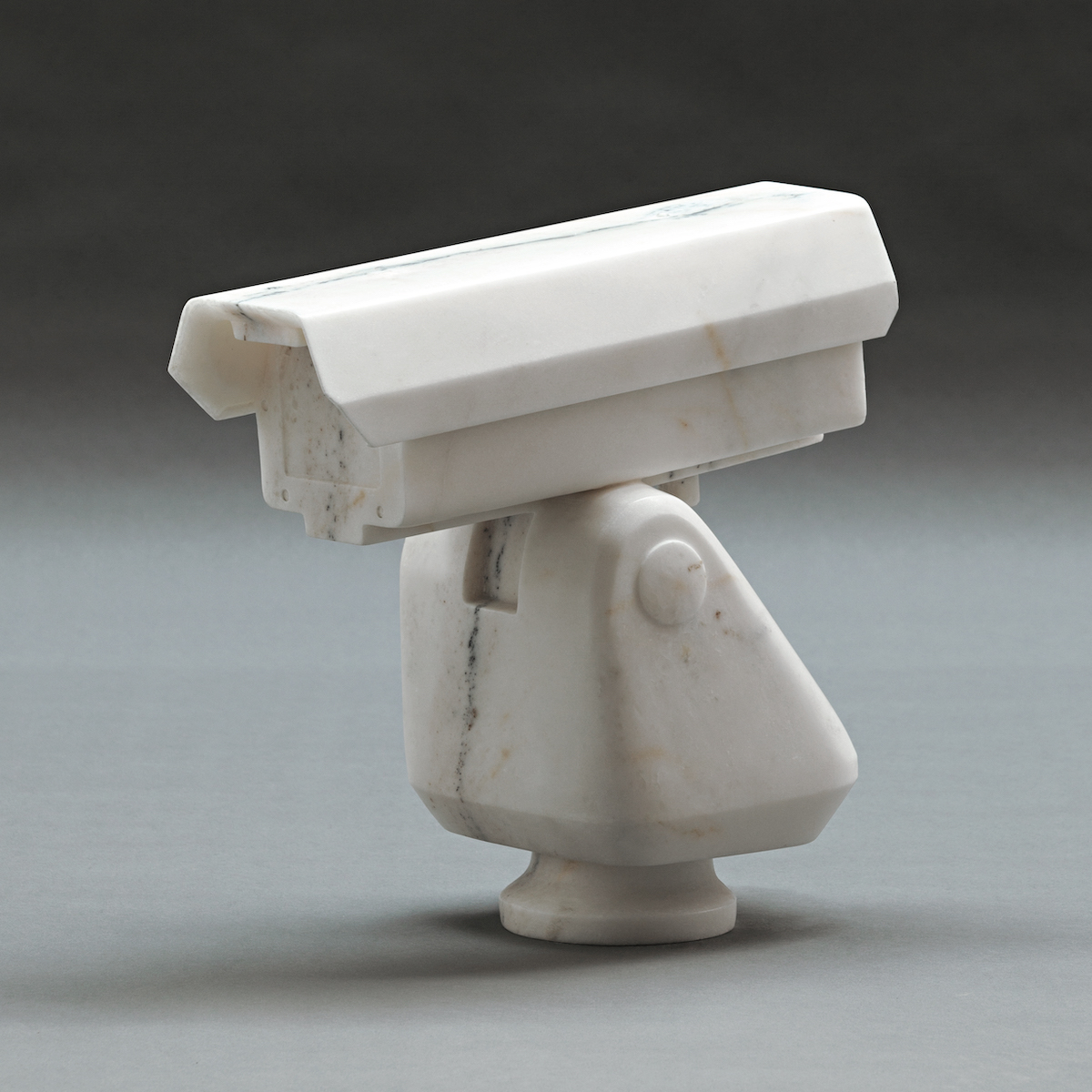
State of Surveillance

Jessica Batke, Mareike Ohlberg

High atop Mount Xiqiao, an extinct volcano that soars above the Pearl River Delta, a towering statue of the Buddhist goddess Guanyin gazes down on the concrete sprawl of the city of Foshan. For centuries, the mountain’s scenic caves and waterfalls provided a refuge for scholars and artists. But today, Xiqiao is a far more crowded place. Some five million tourists visit each year. And as they wend their way up the mountain through groves of peach and banyan, Guanyin is not the only one keeping watch.

In 2019, local officials in Xiqiao, a district of Foshan, devised a plan for the ideal placement of surveillance cameras throughout their jurisdiction. A visitor making an ascent of Mount Xiqiao might first have her face captured by one of the three cameras at the Xiqiao bus station, and again at the bus stop closest to the mountain’s base. If she followed the usual route, a camera could next catch her entering the Qiaoyuan public bathroom, resting a moment to admire the Tingyinhu waterfall, or stopping in for a snack at the Qiaoshan hotel. All together, Xiqiao’s police would have at least nine chances to collect images of this visitor’s face during her journey. And when she reached the summit, a tenth camera, mounted just beside Guanyin’s own serene visage, would snap a final shot.

Over the past five years, local Communist Party officials charged with maintaining “social stability” in Xiqiao have planned purchases of surveillance technology to blanket their town with cameras. This would help bring about a “breakthrough in addressing the difficult problem of how to control people,” explained a document outlining Xiqiao’s desired purchases. Government records show that officials made at least six separate surveillance equipment purchases between 2006 and 2019, with the goal of installing at least 1,400 cameras throughout Xiqiao, including 300 facial recognition cameras last year alone.

Xiqiao may be just a small district of a fairly ordinary Chinese city (albeit one on the leading edge of surveillance practice in China), but the worries and aspirations of its officials are hardly unique. Rather, they reflect a profound unease among China’s leaders about what can happen when the country’s citizens go unwatched. Across China, in its most crowded cities and tiniest hamlets, this has led to an unprecedented surveillance shopping spree by government officials. The coordination of the resulting millions of cameras and other snooping technology spread across the country remains partial at best, its efficacy uncertain. Yet, despite these limitations, officials in China are working to make the system as effective and advanced as possible.

Double Agency? On the Role of LTTE and FARC Female Fighters in War and Peace

Fiona Morrison-Fleming

This content was originally written for an undergraduate or Master's program. It is published as part of our mission to showcase peer-leading papers written by students during their studies. This work can be used for background reading and research, but should not be cited as an expert source or used in place of scholarly articles/books.

Discourses around women and conflict often center on women’s victimhood, or else their innate affinity for peace (Smeuler, 2015; Alison, 2004; Afshar, 2003). As a vulnerable population worldwide, women are indeed uniquely impacted by conflict and suffer particularly (Smeulers, 2015; Parashar, 2009; Carter, 1996); this manifests in the targeting of women and girls through systematic sexual assault and slavery, as well as the economic responsibility many women are made to undertake when the men in their families go to fight, or are killed, wounded or imprisoned (Yusuf, 2009). In this narrative of women as victims or peacemakers, female combatants must be made sense of somehow. Why is it that a woman who should naturally abhor violence is participating in it? Often she is branded as brainwashed; she must have suffered Stockholm Syndrome; she cannot possibly have chosen this for herself (Gowrinathan, 2018b). Many female combatants, especially in rebel groups or paramilitaries, are in fact initially abducted or else feel that they have no option but to join; yet, some of these women go on to assume leadership roles in their organizations and commit their lives to the cause. To call them brainwashed is to deny them agency (Gowrinathan, 2012; 2018b).

As “liberatory movements” both the Sri Lanka’s Liberation Tigers of Tamil Eelam (LTTE) and Colombia’s the Revolutionary Armed Forces of Colombia (FARC) were able to hold ideological space not only for the inclusion of women but also the improvement of their position in a future society, leading to high numbers of committed women in their ranks. But is this theoretical commitment born out in practice? And what happens to female fighters when their organizations’ bids for liberation fail? This paper will look to the literature on gender in war and peace to examine the role played by female combatants—and their agency as political actors—in the LTTE and FARC both during and after violence; ultimately finding that in the absence of victory, these combatants’ gendered realities improved very little, if at all.

The Batteries of the Future Are Weightless and Invisible

Daniel Oberhaus

There’s a renaissance underway in structural battery research, which aims to build energy storage into the very devices and vehicles they power.

Elon Musk made a lot of promises during Tesla’s Battery Day last September. Soon, he said, the company would have a car that runs on batteries with pure silicon anodes to boost their performance and reduced cobalt in the cathodes to lower their price. Its battery pack will be integrated into the chassis so that it provides mechanical support in addition to energy, a design that Musk claimed will reduce the car’s weight by 10 percent and improve its mileage by even more. He hailed Tesla’s structural battery as a “revolution” in engineering—but for some battery researchers, Musk’s future looked a lot like the past.

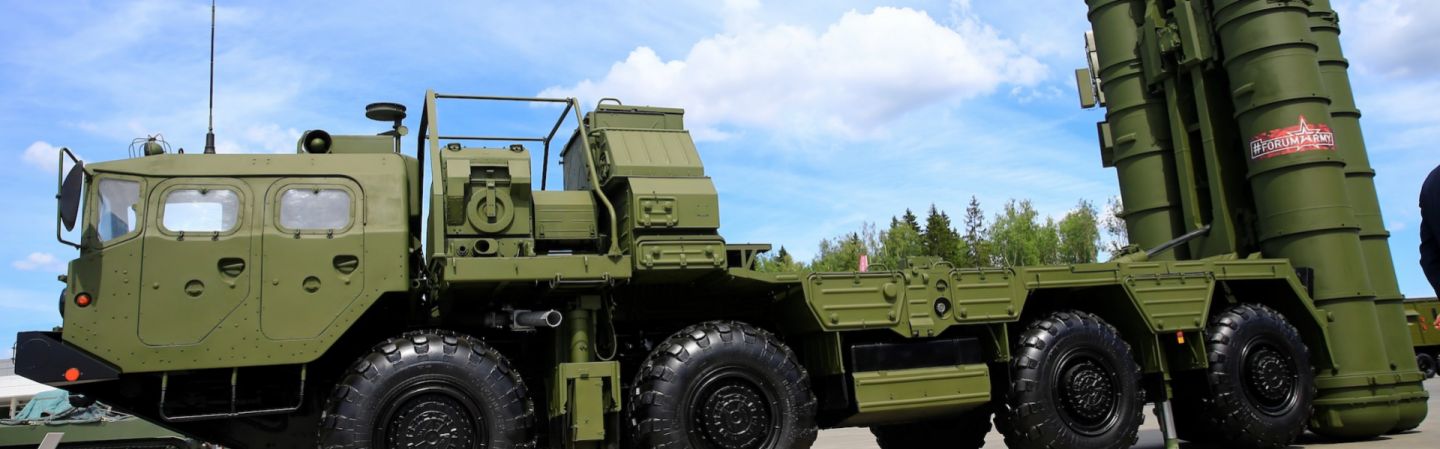
Why the S-400 Missile is Highly Effective — If Used Correctly


HIGHLIGHTS
Modern long-range surface-to-air missile systems provide some of the most effective air defense in existence. 

However, extended-range SAMs are also inherently vulnerable to standoff and saturation attacks if not properly supported. 

Ultimately, the effectiveness of long-range SAMs depends on the country where they are deployed and how that country uses them. 

Russian surface-to-air missiles (SAMs) continue to dominate the headlines. The country's long-range S-400 SAM systems recently made landfall in Turkey, much to the consternation of the West, while its older S-300 variants have been exported to a variety of countries, including Syria. Public discussions persist over whether Gulf states should buy long-range Russian air defense platforms — as opposed to American ones — or whether Iran could acquire S-400s to bolster its air defenses. Given the system's power, it's no wonder that such sales are dominating the news. But the reality remains that the value of long-range SAMs does not directly equal their theoretical capabilities, depending far more on who is using the system — and how.

The Big Picture

Layered air defense is critical for any country seeking to protect its landmass and airspace. Given the heightened state of tensions in the Middle East — and beyond — countries seeking to acquire the most capable protective measures are weighing the options. However, beyond cost and capability, deeper factors prevail — such as whether to align with one great power or another. 

10 November 2020

What Is India’s Foreign-Policy Vision?

By Sumit Ganguly

Since India’s independence in 1947, several of its diplomats have produced diplomatic memoirs, sometimes of great quality. Those familiar with this genre will recall the account of K.P.S. Menon, one of India’s ambassadors to Moscow, or K.M. Panikkar or Sisir Gupta, both noted scholar-diplomats. But few Indian foreign-policy officials have written a book on New Delhi’s relations with the world while still in office.

Consequently, Subrahmanyam Jaishankar’s new book, The India Way, marks an important departure from the past. Jaishankar, currently India’s minister of external affairs, has enjoyed a distinguished diplomatic career: A former ambassador to the United States and to China, he was appointed foreign secretary in 2015, the highest civil service post in the Indian foreign service. After a brief stint in the corporate world following his retirement in 2018, Prime Minister Narendra Modi inducted him into his cabinet in May 2019.

Why write a book now? Jaishankar attempts to sketch out how India should forge a foreign policy in a world where China’s rise and assertiveness are changing the contours of global politics. It also sketches out a pathway for India to deal with significant and novel forces in international politics—especially resurgent nationalism and a rejection of globalization. But while Jaishankar touches on these subjects, his book suffers from too many abstractions and generalities.

After all, writing a book about a country’s foreign policy while serving as its foreign minister is laden with pitfalls. One of them, of course, is the critical question of candor. How does Jaishankar’s book fare on this score? The writer deserves credit for bluntly stating that three events and choices have hobbled India’s emergence on the global stage: the partition of British India at the time of independence in 1947, the delay in undertaking economic reforms until 1991, and deferring the decision to cross the nuclear Rubicon until 1998.

Building Indian States’ Capacity in Monitoring FDI

By Ammar Nainar

Screening foreign investments has assumed new importance in the international order where economic security has become an integral part of national security. To that end, India’s Ministry of Home Affairs (MHA) issues security clearances for foreign investments in sensitive sectors and the consolidated foreign direct investment policy (FDI) also lays out screening mechanisms. As FDI inflows into India increase, it is important to remember that Indian states are the principal recipients. Thus, when medium to high risk FDI deals are concluded, state governments can play a critical and proactive role in monitoring their operational afterlife for security risks.

Foreign Investment Screening 

FDI in India is allowed through the automatic and government route. The former does not require a prior approval though the latter does, above a certain investment “cap”. The government route includes strategic sectors like the defense industry where FDI proposals beyond 74 percent require the government or in this case, the Ministry of Defense’s approval. The Foreign Investment Promotion Board was abolished in 2017 and FDI proposals are now reviewed by the concerned ministry. Yet, it is mainly the MHA which grants security clearances for foreign investments particularly in “sensitive sectors”. Between May 2014 to March 2019, the MHA disposed security clearances for 5490 FDI proposals through its “e-sahaj” portal. 

In April 2020, the Department for Promotion of Industry and Internal Trade (DPIIT) issued a notification stating that foreign firms in countries sharing a land border with India can only invest after securing government approval. The move sought to “curb opportunistic takeovers of Indian firms”, especially by Chinese entities during the Covid-19 pandemic. Irrespective of the country of origin and even after MHA’s clearance, certain investments can pose security risks like damaging the integrity of critical infrastructures and supply chains, and risk exposing the personal and sensitive data of Indian consumers. 

10 Principles for Peace : Critical Points of Understanding for Guiding a Durable Peace in Afghanistan

Colonel (Retired) Robert C. Jones

“The war is over. Now the real fighting begins.” – Afghan proverb

1. The Revolution is over! Long live the Revolution!

Given the history and culture of Afghanistan; and the extreme role family and tribal patronage play upon the distribution of power and privilege, one thing is certain: The terms ending the current insurgency will set the conditions for the insurgency that immediately follows.

The agreement will determine winners and losers within both the government and the insurgency. The winners from each will form the new government and divvy the spoils of patronage. The losers will flee, becoming the next crop of expats, or form the new insurgency. If we allow self-determination, the naturally stronger victors can manage the insurgency alone.

2. No Group owns the legitimacy high ground (#1 driver of insurgency these past 18 years)

Any government created and/or sustained by a foreign power over the express objections of its own population is collaborator & de facto illegitimate. These foreign actions are fundamentally provocative of revolution & resistance regardless who does it, or how good their cause. Equally, culturally inappropriate elections overseen by those same foreign powers cannot cure this lack of popular legitimacy. Legal legitimacy, (external recognition) is largely irrelevant for stability.

An insurgency standing up to the US-led coalition for 18 years earns inherent popular legitimacy.

The Return of Militancy in Pakistan

By Muhammad Akbar Notezai

Pakistan has enjoyed comparative peace over the past few years, other than sporadic incidents. Following a devastating attack on a school in Peshawar in 2014, the state cracked down on religious and other banned militant outfits under the National Action Plan (NAP), the country’s 20-point counterterrorism strategy. This offensive pushed such groups back into hiding, temporarily disrupting their networks. As a result, the country’s major cities have been largely immune to militancy.

An October 27 IED blast at a religious school in Peshawar, in which eight young people died and more than 110 were injured, has disrupted that peace.

It is believed that Sheikh Rahimuddin Haqqani, a Afghan cleric originally from Jalalabad, in Afghanistan, was the target. He was taking a class in the religious school where the explosion took place. He was the target of suspected elements of the Islamic State in a gun attack in 2016. He escaped safely back then, as he did this time, protected by his young security guards from the religious school.

Close to the Afghan border in Pakistan’s Khyber Pakhtunkhwa province, Peshawar has witnessed some of the worst violence of the last two decades, since the United States invaded Afghanistan in 2001. The most horrific and horrendous attack was the 2014 incident in which Taliban gunmen stormed a military school. By the end, 150 were dead, most of them children. The attack shook the conscience of the world, and provoked Pakistan’s security forces to take a sterner approach under NAP, which was formulated in the aftermath of the tragedy. The NAP called for the military to go after banned outfits of all sorts, including religious and nationalist groups often believed to be implicitly backed by Pakistani authorities. The strategy provided a brief calm, but now once again Peshawar has been hit, allegedly by religious militants.

Balancing China in the Indo-Pacific: France Joins Hands with – India and Australia

Niklas Swanström, Jagannath P. Panda and Mahima N. Duggal

Introduction
Balancing China’s unilateral authoritarian outreach is increasingly becoming a priority for democratic powers. Among European powers, France has taken the lead in shoring up defenses against China. France is also an Indo-Pacific power, and Paris has now joined hands with India and Australia to advance a trilateral that appears to be balancing out China.

On September 09, 2020, India, France, and Australia launched a trilateral dialogue with the aim of boosting cooperation to ensure a “peaceful, secure, prosperous and rules-based Indo-Pacific.”1 The meeting marked the formal entrance of a leading European power, France, into an Indo-Pacific orbit and represents the first step of a major, cross-continent effort to question and check China’s autocracy in the region. As such, it may potentially have considerable ramifications, especially if other European powers are encouraged to engage in similar efforts.

Described as “outcome-oriented”, the summit included an exchange of views on priorities and mutual challenges and exploration of possible avenues for practical cooperation, particularly in the maritime domain and in promoting global commons. The foreign ministers of India, France, and Australia also reportedly devised strategies to enhance their future collaboration on regional and multilateral platforms.2 The dialogue is launched at a time when China’s conduct of its foreign policy is becoming a key source of concern for the states in the Indo-Pacific region, and when distrust of China internationally has reached new levels following its handling of the outbreak of the pandemic. Moreover, Beijing’s military assertiveness on the India-China border and in the East China Sea has dented its image as a responsible power in the Indo-Pacific region. Although there are no reports that the discussion centered on, or even included, China, the potential, geopolitical implications of the trilateral dialogue are hardly lost on Beijing.

China’s Discourse and Interests Related to Its Role in U.N. Peacekeeping

By: Nikita Savkov

Introduction
In his video message marking the International Day of United Nations (UN) Peacekeepers on May 29, the People’s Republic of China (PRC) Ambassador to the UN Zhang Jun (张军) said that China is a major contributor to UN peacekeeping operations (UNPKO) and will “implement its commitment to multilateralism and world peace with concrete actions and make greater contributions to peacekeeping operations for the maintenance of international peace and security” (Xinhua, May 30). On September 18, the PRC State Council Information Office published its first white paper on peacekeeping operations, noting in the introduction: “The Chinese government is issuing this white paper to review the glorious journey of China’s armed forces in the UNPKOs over the past 30 years, to expound their ideas on safeguarding world peace in the new era, and to elaborate on the efforts they make” (Xinhua, September 18). Together, these recent messages show the importance that China places on participating in UNPKO, and underscore China’s future readiness to deploy more troops and provide more funding for peacekeeping operations.

China’s participation in UNPKO began in 1988, when it officially joined the UN Special Committee on PKO. The PRC sent few engineering, transport, or medical units to UNPKO throughout the 1990s. However, this began to change in the new millennium. From January 2000 to January 2009, the number of Chinese personnel deployed to UNPKO increased from 52 to 2,146. [1] The new era of Chinese peacekeeping officially began in September 2015, when PRC President Xi Jinping gave a speech to the United Nations General Assembly announcing that China would shoulder more responsibilities in maintaining world peace. Xi pledged that China would train 8,000 troops for UNPKO, commit $1 billion to a ten-year joint China-UN Peace and Development Fund, and provide $100 million in military assistance to the African Union (Xinhua, September 29, 2015).

Today, President Xi’s 2015 pledge has been fulfilled. In addition to supplying around 3 percent of total UNPKO forces, China contributes around 15 percent of the UNPKO budget (USIP, September 2018; UN Peacekeeping, undated). Since 2018, China has maintained a 8,000-person standby force to carry out peacekeeping missions for the United Nations (China Daily, March 31, 2019). Further, although for many years no Chinese national held a senior post on any UNPKO missions, last year Ambassador Huang Xia was appointed special envoy for hotspot regions in the African Great Lakes Region (Xinhua, January 23, 2019).

Russian and Chinese Combat Air Trends: Current Capabilities and Future Threat Outlook

Justin Bronk

The Soviet Union, and latterly Russia, have been the source of both aerial and ground-based pacing threats to Western airpower since the end of the Second World War. However, from a position of dependency on Russian aircraft and weapons, China has developed an advanced indigenous combat aircraft, sensor and weapons industry that is outstripping Russia’s. As a result, for the first time since 1945, the likely source of the most significant aerial threats to Western air capabilities is shifting. 

Modern air combat is primarily decided by the balance of advantage in situational awareness. Given broadly comparable numbers, the force which can provide its aircrew with superior awareness of enemy position, track and identity will have a major advantage in any clash. In scenarios where situational awareness is relatively equal, missile reach and seeker performance, crew experience, aircraft performance, electronic warfare (EW) and countermeasures systems all contribute to the likely outcome.

Russia and China currently field superficially similar combat aircraft fleets. Both rely heavily on the Su-27/30 ‘Flanker’ family of combat aircraft and their various derivatives. They have also both pursued a fighter with low-observable (LO) – also known as stealthy – features, alongside increased multirole capability for their main fighter fleets. However, a clear Chinese lead is now emerging over Russia in most technical aspects of combat aircraft development.

Beyond Huawei and TikTok: Untangling US concerns over Chinese tech companies and digital security

Robert D. Williams

EXECUTIVE SUMMARY
Washington’s growing focus on the risks posed by Chinese technology companies operating in the United States embodies the complexity of the challenges confronting U.S. policymakers in responding to China’s rise in technological, economic, and geopolitical power. Concerns over companies such as telecommunications equipment-maker Huawei and social-media platform TikTok are multidimensional and scarcely amenable to characterization in terms of discrete national security risks.

This paper traces one aspect of the “securitization” of technology policy in U.S.-China relations. It seeks to identify and disaggregate the main challenges facing policymakers who are troubled by China’s growing technological power as expressed through the actual or potential effects of Chinese technology companies doing business in the U.S. market. These concerns can be broadly categorized along (at least) two dimensions: risks inherent in the nature of emerging technologies and risks related to the nature of China’s governing system. The paper illustrates how these concerns apply in the context of 5G telecommunications and artificial intelligence.

The essay concludes with several recommendations for U.S. policy reform: (1) enacting comprehensive federal data privacy legislation; (2) advancing a digital trade agenda with U.S. allies and partners; (3) rationalizing the U.S. cybersecurity liability regime; (4) increasing the costs for malicious hackers; and (5) improving mechanisms for governmental policy coordination along domestic and international dimensions.