13 November 2020

The “Quad”: Security Cooperation Among the United States, Japan, India, and Australia


Overview
In October 2020, in the midst of a global pandemic, U.S. Secretary of State Mike Pompeo and his three counterparts from Australia, India, and Japan convened an in-person meeting in Tokyo. The focus was on boosting the Quadrilateral Security Dialogue, aka “the Quad,” a fourcountry coalition with a common platform of protecting freedom of navigation and promoting democratic values in the region. The gathering released no joint statement, but Pompeo stated that the purpose of the group was to “protect our people and partners from the Chinese Communist Party’s exploitation, corruption, and coercion.” Although the three other ministers framed the meeting differently in their opening statements, fears of China’s growing influence and assertiveness in the region loom large. Tensions with China have worsened for all four countries in 2020, driving increased defense cooperation among them. Despite this confluence, the Quad faces major challenges in defining itself and its goals. Does expanding defense cooperation provide meaningful strategic advantages? Will the Quad broaden its activities on democracy promotion? Is it durable as a framework even in the face of leadership changes in member countries? These questions may be of critical importance to Congress given its oversight responsibilities, interest in security alliances, and growing concern about China’s power and influence in the region. 

Earlier iterations of the Quad faltered. The grouping originally arose from the 2004 Indian Ocean earthquake and tsunami: in the disaster relief effort, the four navies coordinated, providing inspiration for more maritime cooperation. In 2007, a series of “Quad” meetings was denounced by China as an attempt to encircle it. The effort dissipated amidst member leadership transitions, concern about economic repercussions from China, and attention to other national interests.
From Trump to Biden: Will Anything Change for Pakistan in Washington?

By Umair Jamal

Pakistan’s Prime Minister Imran Khan has congratulated U.S. President-elect Joe Biden for winning the November 3 presidential election.

“Congratulations @JoeBiden & @KamalaHarris. Look forward to President-Elect Biden’s Global Summit on Democracy & working with him to end illegal tax havens & stealth of the nation’s wealth by corrupt leaders [leaders]. We will also continue to work with the US for peace in Afghanistan & the region,” Pakistan Prime Minister Imran Khan said in a Twitter message.

While many other Asian leaders simply congratulated Biden, Khan was oddly specific in his message. In a way, his message shows Islamabad’s policy concerns that could become a challenge under the Biden presidency.

Khan, in his message, said that he looks forward to working with Biden to end illegal tax heavens. Arguably, the message underscores Pakistan’s concerns with the Biden administration’s possible view of Islamabad’s position at the Financial Action Task Force (FATF). It is important to note here that the Obama administration advocated adding Pakistan to the FATF’s grey-list due to the country’s weak anti-money laundering structures. Biden served as Obama’s vice president through both of his terms in the White House and he understands how and where to push Pakistan to gain concessions. Certainly, under Biden, Pakistan will have to work hard to plug loopholes in its money-laundering laws.

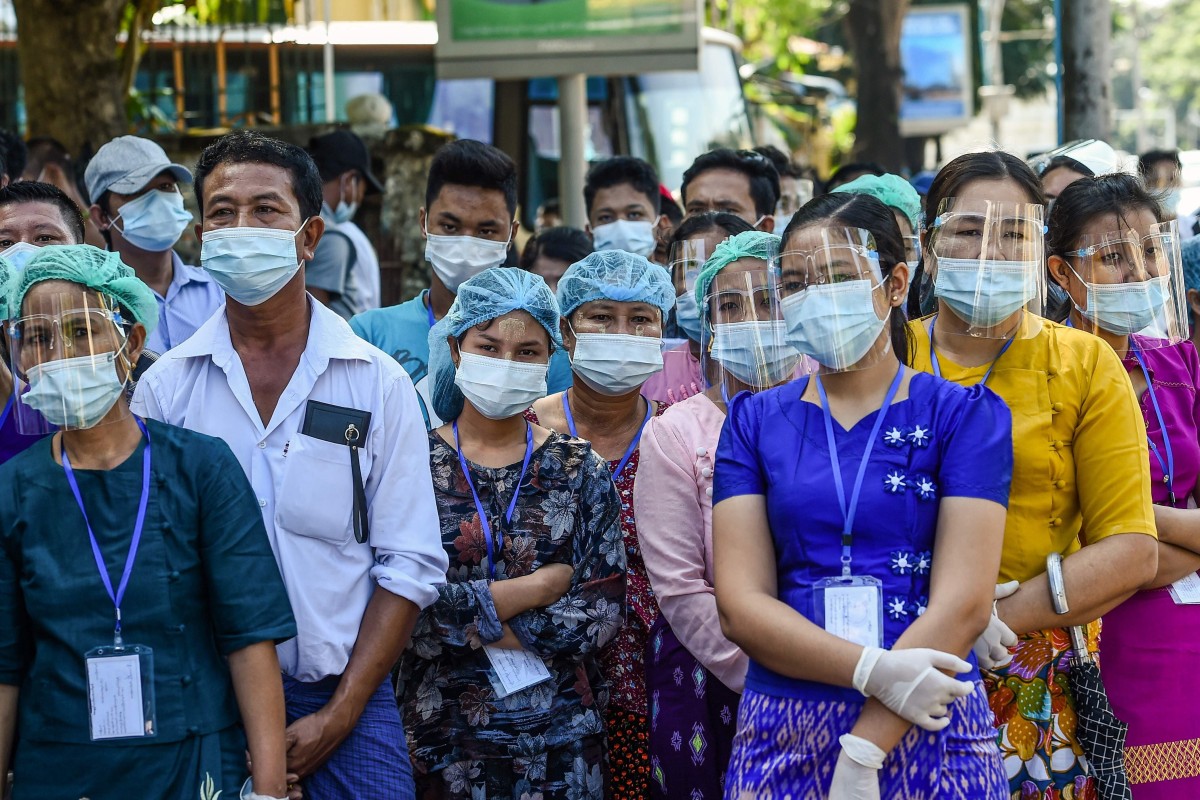
Myanmar’s Suu Kyi forecast to triumph in coronavirus-hit ‘apartheid’ election


Vote counting started in Myanmar as polls closed on Sunday in an election that is expected to return to power the government of Aung San Suu Kyi, who remains a hero at home in spite of a reputation abroad shattered by the Rohingya crisis.

The election is just the second since the Southeast Asian nation emerged from nearly half a century of junta rule in 2011.

Five years ago, Suu Kyi’s National League for Democracy (NLD) won a landslide victory but was forced by the constitution into an uneasy power-sharing agreement with the still-mighty military.

This time, the civilian leader – in a bid to maintain an absolute majority – has implored citizens to overcome their coronavirus fears to turn out and cast their ballots.

Millions turned out early to line up outside polling stations before the sun had even risen, while others waited for hours in the heat to enter temples, shopping centres and offices to cast their ballots.

Plenum Means Full

William C. McCahill Jr. 

The Central Committee of the Chinese Communist Party (CCP) met in full complement in late October for the fifth time in this 19th Central Committee’s term. At its end, this “fifth plenum” issued the communiqué traditional for such meetings, along with a raft of ancillary reports. To no one’s surprise, party media like the People’s Daily and the Global Times enthusiastically have endorsed the documents. But nonpartisan coverage of the meeting has been harder to come by this time around. With a score or more of the most experienced foreign journalists having been expelled from China, international media coverage of the plenum was slim compared to reporting on previous years’ plenums. This commentary will consider key outcomes from the meeting and provide a primer on the plenum format.

THE FIFTH PLENUM: DETERMINED SELF-RELIANCE

Devoid of quantitative targets (those will come later) and written in the CCP’s inimitable combination of cant, code, and cliché, the documents produced from the 19th Central Committee’s fifth plenum catalogued the party leaders’ aims for economic growth and social change over the next five years. Their plans had a familiar ring. Technological innovation came first on the list. It was followed by balanced economic growth emphasizing domestic consumption (now dubbed the “dual circulation” theory), “green” development, and “optimizing the spatial layout of the country in a new type of urbanization.” These goals were then complemented by promises of “a high level of opening up to the outside world…in a new situation of win-win cooperation,” social stability and domestic tranquility, and continued strengthening of military capabilities.

China drafts new antitrust guideline to rein in tech giants, wiping US$102 billion from Alibaba, Tencent and Meituan stocks

Yujing Liu and Daniel Ren

China has released a draft antitrust guideline to rein in internet-based monopolies, signalling policymakers’ heightened concerns over the growing power, influence and risks of digital platforms and their market practices in the economy. The move immediately erased about US$102 billion of market value from Alibaba Group Holding, Tencent Holdings and Meituan.

Monopolistic practices by internet platforms, such as demanding vendors to transact only on one platform exclusively, or providing differentiated prices to customers based on their shopping history and profiles, could potentially be outlawed, according to the guideline released by the State Administration for Market Regulation on Tuesday.

This is the first time the market regulator has attempted to define what constitutes anti-competition practices among internet companies under the law. 

An overhaul to the Anti-Monopoly Law in January went only as far as tweaking the language to encompass internet companies. It will seek public opinion on the draft until the end of November.

Is China a New Colonial Power?

By Amitai Etzioni

Critics argue that the People’s Republic of China (PRC) has become a neocolonial power. Although it does not hold the kinds of colonies imperial powers used to lord over, it is said to conduct itself as one of them. Thus, for instance, according to Jean-Marc F. Blanchard, a China scholar, “the general features of China’s relations with many countries today bear close resemblance to the European colonial powers’ relations with African and Middle Eastern countries in the 19th and 20th century. Among other things, we witness countries exchanging their primary products for Chinese manufactured ones; China dominating the local economy; countries becoming heavily indebted to the PRC; China exerting greater weight on local political, cultural, and security dynamics; and Chinese abroad living in their own ‘expat enclaves.’”

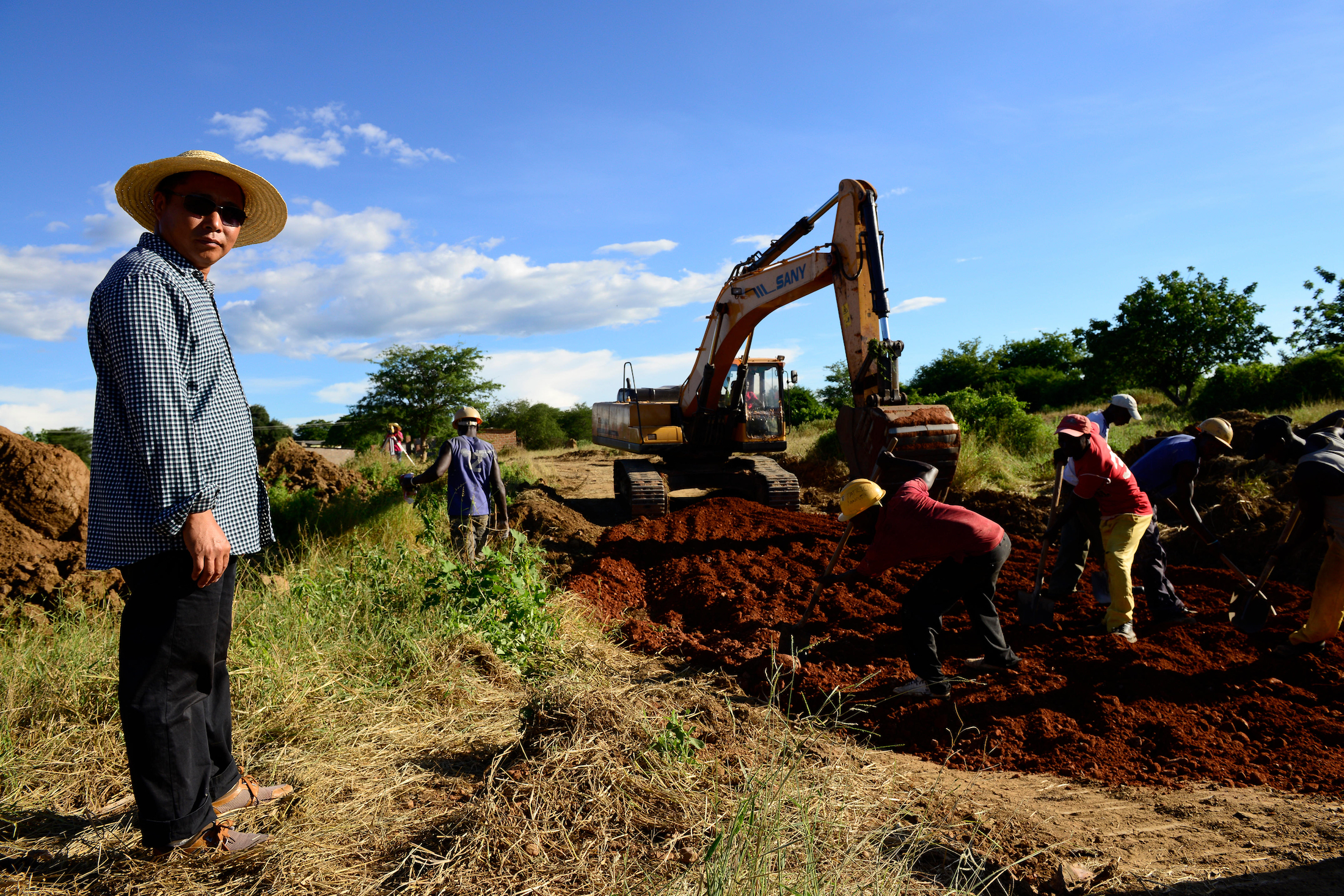
Beijing’s new transnational infrastructure, like pipelines and highways, are viewed as initiatives to send more resources to the PRC. These projects are reported to deplete national treasuries. Moreover, Chinese projects and investments draw on few local suppliers and partners and contribute little to job creation, partly because they employ many Chinese laborers. Finally, China is said to doing more harm than good to the host countries because its cheap goods destroy local manufacturing.

Africa is depicted as the major victim of this new Chinese global abuse drive. China is said to propping up its own industries by extracting raw materials, such as minerals, fossil fuels, and agricultural commodities, from all over the world, with Africa as its main target. China is “present” in 39 African countries and is the continent’s biggest trade partner. China’s tens of billions of dollars in investments and loans are readily accepted by cash-starved African states, however they have come with many strings attached.

China Coast Guard Law May Raise Risk of Clash in Disputed Seas

Iain Marlow, Natalie Lung

President Xi Jinping effectively neutered the most democratic institution under China’s rule, sending a message to Joe Biden that no amount of pressure will prompt him to tolerate dissent against the Communist Party.

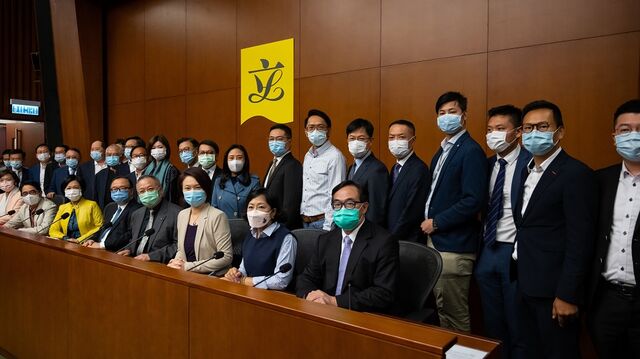
China’s top legislative body on Wednesday passed a resolution allowing for the disqualification of any Hong Kong lawmakers who aren’t deemed sufficiently loyal. Chief Executive Carrie Lam’s government immediately banished four legislators, prompting the remaining 15 in the 70-seat Legislative Council to resign en masse hours later at a joint press briefing.

“This move makes it clear that dictatorship has descended onto Hong Kong and that Chinese Communist Party can eradicate all opposing voices in the legislature,” Fernando Cheung, one of the lawmakers, told Bloomberg News. “There’s no more separation of powers, no more ‘one country, two systems,’ and therefore no more Hong Kong as we know it.”

The resolution is the latest sign of China’s determination to rein in dissent in the wake of anti-government protests last year calling for meaningful elections in the semi-autonomous territory. Beijing has since passed a series of measures asserting greater control over Hong Kong, first targeting democracy activists who hit the streets and now going after dissenters in democratic institutions set up under British colonial rule.

For the US and China, There’s No Going Back

By Phillip Orchard

For months leading up to the U.S. election, there was no shortage of speculation over who Beijing would prefer to have in the White House in January. In several (unsourced) interviews with Western media, Chinese officials insisted that President Xi Jinping and his inner circle didn’t have a particularly strong preference – that neither a Biden nor a second Trump administration would fundamentally reshape the trajectory of U.S.-China relations.

Yet nearly all of Beijing’s recent behavior has betrayed an expectation that there’d be worse to come with either outcome – and that any window of opportunity opened by electoral chaos would likely be far too brief to capitalize on. And for good reason. Beijing’s own immense internal pressures and unforgiving geopolitical imperatives are what’s locking it into its increasingly assertive course. And this, in turn, is forging an increasingly bipartisan consensus in Washington that Communist Party-led China is the country’s foremost strategic and economic challenge. As a result, there will be some tactical differences under a Biden presidency, as well as some changes in what particular challenges the administration prioritizes. But broadly speaking, the U.S.-China rivalry will only intensify from here.

The Bipartisan Consensus

It’s become fashionable to claim that U.S. strategy toward China under several of Trump’s predecessors was grounded in naivete and wishful thinking. The constant emphasis on engagement and bringing it into the global trading system was rooted in rose-colored assumptions that helping China get rich would eventually help bring democracy to China and incentivize Beijing to abide by the rules and norms of the established order – or so the argument goes.

Lira rebounds on Berat Albayrak’s exit

MENEKSE TOKYAY

ANKARA: The surprise resignation of Turkey’s finance minister, who is also the president’s son-in-law, has capped a chaotic weekend for the country’s economic leadership.

Treasury and Finance Minister Berat Albayrak announced he was leaving in an emotional Instagram post, citing health reasons. His departure followed the sacking of central bank governor Murat Uysal by presidential decree.

Albayrak, who held the post for five years and was expected to succeed President Recep Tayyip Erdogan, leaves the economy in a dreadful state.

One dollar was worth TRY4.53 when he took on the ministerial job, but the lira has plummeted to lows of TRY8.54 and is one of the worst-performing emerging market currencies this year.
His resignation could be connected to a feud within the government’s inner circle as Albayrak is known to be at odds with Interior Minister Suleyman Soylu. Turkish mainstream media, which is majority-owned by pro-government companies, did not cover his resignation.

Albayrak’s bombshell comments — on not caring about the lira’s freefall and how its value could be restored if it were a government priority — may have also had a hand in his fall from grace.

For the Middle East, Biden is no Obama


There is palpable anxiety among a number of America’s Arab allies about what the election of Joe Biden to the presidency will mean for the region. Conventional wisdom has it that a Democratic administration will revert back to former president Barack Obama’s more accommodating posture towards Iran. Memes depicting Biden locked in loving embrace with the Iranian side are flooding social media.

While the incoming administration will surely seek negotiations with Tehran -- it is worth noting that outgoing President Donald Trump had also pledged to do so -- it would be a mistake to conflate President-elect Biden’s prospective approach to the Middle East with that of Obama’s. When it comes to US foreign policy and the Middle East, Mr Biden is no Obama.

All recent presidential hopefuls since George W Bush, both Republican and Democratic, have promised to “end forever wars” and reduce the American footprint in the Middle East. This is partly due to changes in US geopolitical priorities stemming from the growing challenge posed by China and Russia as well as America’s greater energy independence. It is also a reflection of the deep scars the wars in Iraq and Afghanistan left on US public opinion. Scars that no presidential hopeful can ignore.

EU agrees on tighter rules for surveillance tech exports


LONDON (AP) — The European Union on Monday agreed to tighten up rules for the sale and export of cybersurveillance technology.

EU lawmakers and the European Council reached a provisional deal to update controls of so-called dual use goods such as facial recognition technology and spyware to prevent them from being used to violate human rights.

Under the new rules, European companies will have to apply for government licenses to export certain products and they’ll have to meet criteria that have been beefed up to include requirements to consider whether the sale poses a risk to human rights.

EU countries will also have to be more transparent by publicly disclosing details about the export licenses they grant. And the rules can also be swiftly changed to cover emerging technologies.

Dual use technology could also include high-performance computers, drones and certain chemicals.

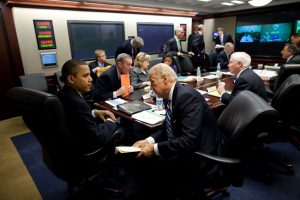
Reports: Biden’s top pick for Defense Secretary is Michèle Flournoy; would be first woman SECDEF

Ryan Morgan

Joe Biden is reportedly considering Michèle Flournoy, a former Under Secretary of Defense for Policy during President Barack Obama’s administration, as his top pick to serve as the Secretary of Defense. Biden’s considering of Flournoy for the Pentagon position comes after several media outlets on Saturday projected him as the winner of the 2020 presidential election. If chosen for the position, Flournoy would be the first woman to serve America’s Secretary of Defense.

Fox News reporter Lucas Tomlinson on Saturday tweeted, “Joe Biden presidency paves the way for first female defense secretary Michèle Flournoy, officials say.”

On Saturday, the New York Times and Politico both reported Flournoy was already being considered a frontrunner for the position of Secretary of Defense.

Politico reported Sen Tammy Duckworth (D-IL), a U.S. Army Iraq War veteran and Purple Heart recipient was also being considered for the Pentagon position. Sen. Jack Reed (D-RI), a West Point Graduate Army veteran and ranking member on the Senate Armed Services Committee was also reportedly being considered for the Pentagon position, though Politico reported Duckworth and Reed are seen as less likely contenders for the position than Flournoy.

Rejoining the Paris Agreement Is the Easy Part for Biden on Climate Change

Stewart M. Patrick 

Last Wednesday, with a divided and anxious citizenry awaiting the outcome of an agonizingly close election, President Donald Trump voted for climate change, as the United States became the first nation to formally withdraw from the Paris Agreement. The good news is that Joe Biden, now the winner of the presidential election, can restore U.S. participation at the stroke of a pen. The bad news is that rejoining the pact won’t by itself do much to reduce greenhouse gas emissions. That will require dramatic domestic action from a deeply divided nation.

The Paris Agreement is the most impressive multilateral agreement ever reached to combat global warming. Negotiated at the 16th Conference of Parties to the U.N. Framework Convention on Climate Change in 2015, it commits signatories to hold the rise in average global temperatures from the pre-industrial era to 1.5 degrees Celsius, with 2 degrees Celsius as a fallback goal. Each country can determine how it will contribute to this goal, tailoring its actions to national circumstances. Parties further agree to review progress every five years, to “ratchet up” their efforts over time, and to provide poorer countries with $100 billion in climate financing. Unlike the 1997 Kyoto Protocol, it imposes obligations on developing and emerging countries rather than merely advanced economies. ...

In Search of the Biden Doctrine

Dominic Tierney
Source Link

Every election season, commentators search for the Holy Grail of American foreign policy, the presidential doctrine, or a leader’s defining set of diplomatic beliefs. The George W. Bush doctrine was to hunt down terrorists and spread democracy, if necessary, at the point of a bayonet. The Barack Obama doctrine was to avoid “dumb” wars like Iraq. The Donald Trump doctrine was to stop allies and international institutions from taking America for a ride. What’s Joe Biden’s doctrine? It should be easy enough to figure out, given his long career as a senator and vice president. Some on the left see the Biden doctrine as a hawkish agenda, while Trump supporters describe Biden as a proponent of “activist liberalism” and endless wars. Meanwhile, others on the right hammer Biden as a consistent dove. In reality, there’s no fixed Biden doctrine—and that’s probably a good thing.

The idea that presidents somehow stamp a unique doctrine on foreign policy is a version of the “great man” theory of history. But even the greatest man is also a creature of his age. During the Civil War, Abraham Lincoln seemingly held the destiny of the nation in the palm of his hand. And yet, Lincoln wrote: “I claim not to have controlled events, but confess plainly that events have controlled me.”

Biden’s personality also blurs the idea of a distinctive Biden doctrine. He’s not a visionary thinker but a pragmatist. His strongest views on foreign policy are often about the means rather than the ends—the importance of conciliation, deal-making, and alliances. His governing style is closer to the collegial model of John F. Kennedy than the top-down approach of Richard Nixon. Whereas Trump once revealed that his main foreign policy advisor is “myself,” Biden has mobilized a brigade of 2,000 diplomatic gurus. And Biden’s bridge-building doesn’t stop at the water’s edge. He puts great weight on cultivating personal relationships with foreign leaders and prefers to use force alongside international partners. If elected, he’ll be “schmoozer-in-chief.”

What happens if Donald Trump refuses to concede 2020 presidency after losing the US election?

By Ben Riley-Smith, David Millward Nick Allen

Democratic challenger Joe Biden has been elected to become the 46th president of the United States, but Donald Trump shows no sign of conceding defeat, repeating threats that he would go to court with "valid and legitimate legal challenges" over the election.

Despite TV networks declaring Mr Biden the winner, Mr Trump vowed he "will not rest" until there was an "honest vote count".

The president's said moments after the declaration: “We all know why Joe Biden is rushing to falsely pose as the winner, and why his media allies are trying so hard to help him. They don’t want the truth to be exposed. The simple fact is this election is far from over. Legal votes decide who is president, not the news media."

Later, Mr Biden's campaign spokesman, Andrew Bates, told reporters: "The American people will decide this election and the United States government is perfect capable of escorting trespassers out of the White House."

21st-Century Proxy Wars

By Captain Michael Hanson, U.S. Marine Corps 

With publication of his Commandant’s Planning Guidance in 2019 and Force Design 2030 in 2020, General David Berger made clear that the Marine Corps is restructuring its tables of organization and equipment and the methods in which it employs them to facilitate a strategy of deterrence against Chinese naval forces in the western Pacific. These sweeping changes signal that, for all intents and purposes, the United States is locked in a new cold war with the People’s Republic of China. As the Marine Corps begins the long work of preparing for this 21st-century rivalry, it should look to history for lessons from the Cold War that dominated the second half of the 20th century.

Though the United States and the Soviet Union squared off from 1945 to 1991, the two superpowers never fought one another directly. Instead, they clashed through client states and proxy forces. The United States could tangle with China through similar means.
Cold War Proxies

The Korean War. This was one of the first campaigns of the Cold War. In this conflict, the United States joined in a conventional war against North Korea, a Soviet client state, to defend the sovereignty of South Korea, a U.S. ally. The war escalated when China, a state aligned with the Soviet Union, intervened on behalf of North Korea to prevent it from being overrun by United Nations forces. 

How the Biden Administration Could Tackle Climate Change


On November 4, the United States officially withdrew from the 2015 Paris Climate Accord — the ending of the mandatory one-year notice period after President Donald Trump notified the United Nations last November. President-elect Joe Biden has promised to rejoin the climate agreement on his first day in office.

If the U.S. rejoins the accord, that “by itself gives us good reason to think that the U.S. will be on at least a somewhat better path” in terms of its efforts to mitigate climate change, Wharton professor of legal studies and business ethics Brian Berkey said on the Wharton Business Daily radio show that airs on SiriusXM on November 5, before the election was officially called. (Listen to the full podcast above.) He noted that the U.S. is the No. 2 emitter of carbon dioxide globally.

“Having us as part of the agreement, where there’s an official commitment to substantial emissions reductions, gives other countries some assurance that we will be part of this effort, and their efforts won’t be overwhelmed by … our refusal to participate,” Berkey added.

Pacific States Gather Behind Nuke Ban Treaty

By Joshua Mcdonald

The United Nations announced recently that 50 countries had ratified the Treaty on the Prohibition of Nuclear Weapons (TPNW), triggering its entry into force by January 22, 2021, despite protests from the United States, its allies and other nuclear powers. 

Seventy-five years on from the devastating nuclear attacks on Hiroshima and Nagasaki, in the closing days of World War Two, the ratification by Honduras, pushed the treaty across the line.

While Japan has not ratified the treaty, plenty of other nations impacted by the development, stockpiling and testing of nuclear weapons, have. Among them are a majority of the Pacific Island nations, including the Cook Islands, New Zealand, Palau, Kiribati, Samoa, followed by Fiji, Nauru, Niue and Tuvalu. Papua New Guinea is expected to ratify in the coming months. 

During the 1950s and ‘60s, more than 300 nuclear weapon tests were conducted by colonial powers in the Marshall Islands, Kiribati, Australia and French Polynesia. 

Turkey and Russia Jockey for Power in the South Caucasus

by Mark Episkopos

One of the many geopolitical flashpoints left in the wake of the Soviet collapse, the Nagorno-Karabakh conflict erupted when a majority-Armenian autonomous region within the Azerbaijan Soviet Socialist Republic voted to secede and to unify with neighboring Armenia. Following tens of thousands of casualties and numerous reports of ethnic cleansing, Armenia and Azerbaijan negotiated a ceasefire in 1994 with Moscow acting as the mediator. Barring minor skirmishes over the following decades, the conflict has remained largely frozen—until now. In late September, Azerbaijan launched a full-scale war to retake Nagorno-Karabakh. Thousands of combatants on both sides are already dead, and fresh war crimes are being committed weekly.

Ankara’s fingerprints were all over the 2020 Nagorno-Karabakh conflict since its inception. Previously negligible in volume, Turkish arms sales to Baku exploded in the months leading up to the Azerbaijani offensive. Just weeks prior to the offensive, Turkish and Azerbaijani troops conducted large-scale exercises in the South Caucasus. Earlier that summer, Azerbaijan’s Deputy Defense Minister reportedly met with the Turkish Minister of National Defense to discuss how to respond to Armenian “provocations.” Given this overwhelming weight of evidence, it strains credulity to suggest that Ankara was in no way implicated in Azerbaijan’s decision to retake Nagorno-Karabakh by force. Turkey’s subsequent involvement is even less ambiguous. There is extensive documentation to support the charge—formally leveled by Paris in early October and later echoed by Moscow—that Turkey recruited thousands of mercenaries from Syria and Libya to fight in Nagorno-Karabakh.

International institutions still matter to the US

Joseph S. Nye

Donald Trump may have despised international institutions, but his presidency has reminded the world of the importance of effective and resilient ones. In the 2016 election, Trump campaigned on the argument that the post-1945 multilateral institutions had let other countries benefit at American expense. His populist appeal rested on far more than foreign policy, of course, but Trump successfully linked domestic resentments to foreign policy by blaming economic problems on ‘bad’ trade deals with countries like Mexico and China and on immigrants competing for jobs. The post-1945 liberal international order was cast as a villain.

As I show in my book Do morals matter? Presidents and foreign policy from FDR to Trump, American presidents were never perfect institutional liberals. Dwight Eisenhower’s support of covert action in Iran and Guatemala, and John F. Kennedy’s in Cuba, were inconsistent with a strict reading of the UN Charter. Richard Nixon broke the rules of the Bretton Woods economic institutions and levied tariffs against US allies in 1971. Ronald Reagan ignored an International Court of Justice ruling that found his administration’s mining of Nicaraguan harbours illegal. Bill Clinton bombed Serbia without a security council resolution.

Nonetheless, prior to 2016, American presidents in most instances supported international institutions and sought their extension, whether it was the Non-Proliferation Treaty under Lyndon Johnson; arms control agreements under Nixon; the Rio de Janeiro agreement on climate change under George H.W. Bush; the World Trade Organization and the Missile Technology Control Regime under Clinton; or the Paris climate agreement under Barack Obama.

In first for Fed, U.S. central bank says climate poses stability risks


(Reuters) - The U.S. Federal Reserve for the first time called out climate change among risks enumerated in its biannual financial stability report, and warned about the potential for abrupt changes in asset values in response to a warming planet.

“Acute hazards, such as storms, floods, or wildfires, may cause investors to update their perceptions of the value of real or financial assets suddenly,” Fed Governor Lael Brainard said in comments attached to the report, released Monday.

“Chronic hazards, such as slow increases in mean temperatures or sea levels, or a gradual change in investor sentiment about those risks, introduce the possibility of abrupt tipping points or significant swings in sentiment,” Brainard said.

Such abrupt price changes from climate-related disasters could also create difficult-to-predict knock-on effects through financial markets, the report said, particularly because not enough is understood, or disclosed, about the true extent of exposures to climate risks.

The energy-sector threat: How to address cybersecurity vulnerabilities

By Tucker Bailey, Adam Maruyama, and Daniel Wallance

In our experience working with utility companies, we have observed three characteristics that make the sector especially vulnerable to contemporary cyberthreats. First is an increased number of threats and actors targeting utilities: nation-state actors seeking to cause security and economic dislocation, cybercriminals who understand the economic value represented by this sector, and hacktivists out to publicly register their opposition to utilities’ projects or broad agendas. The second vulnerability is utilities’ expansive and increasing attack surface, arising from their geographic and organizational complexity, including the decentralized nature of many organizations’ cybersecurity leadership. Finally the electric-power and gas sector’s unique interdependencies between physical and cyber infrastructure make companies vulnerable to exploitation, including billing fraud with wireless “smart meters,” the commandeering of operational-technology (OT) systems to stop multiple wind turbines, and even physical destruction.

To answer these challenges, we apply our work in more cyber-sophisticated industries (e.g., banking, national security) and our on-the-ground international experience with utilities at various stages of technological sophistication to propose a three-pronged approach:

Strategic intelligence on threats and actors before attacks on the network. Companies must move beyond reactive measures and take a forward-looking approach to security that integrates the security function into critical decisions about corporate expansion and the accompanying increase in infrastructure and geographic complexity. In parallel, leaders must develop security-minded plans to address “known unknowns” as attackers continue to find and utilize new attack vectors.

Everything You Need to Know About Energy

Rhett Allain

It should be clear that our world runs on energy. Driving your car, washing your clothes, heating your house, and even running your computer (so you can read this post)—these things all require energy. But where does this energy come from? Does it even matter? Yes, it really does matter. Some forms of energy contribute to climate change and other sources are renewable. And since we are all living on the same planet, these energy choices can be quite important. This means that everyone should have a basic understanding of energy. Don't worry, I'm going to explain this at the level every human should understand.

EU inches closer to ban on end-to-end encryption

by: Dale Walker

The Council of the European Union appears to have a near-completed resolution that would propose a ban on the use of end-to-end encryption on off-the-shelf apps such as WhatsApp and Signal, according to a leaked document.

The memo, dated 6 November and addressed to representatives from EU member states, reveals that strong encryption remains a priority for lawmakers but that the availability of end-to-end encryption has made it overly difficult for law enforcement to conduct investigations.

It adds that a coordinated approach between lawmakers, companies, and academia is required to come up with an alternative that serves all parties – effectively banning the use of any security that fully encrypts data at every stage of its transmission.

The document appears to be a draft resolution from a meeting held on 3 November between members of the Justice and Home Affairs Council, titled ‘Security through encryption and security despite encryption’. Resolutions of this kind are not legally binding, but it may be used in the future to inform new legislation.

The U.S. Army Wants a New Way to Fight in a Twenty-First Century War

by Kris Osborn

If an enemy fighter was several hundred yards away, another was attacking from one mile away, while yet a third fired from a nearby room in a close-quarters urban warfare circumstance, how would U.S. Army soldiers apprehend, integrate, and quickly map the locations of multiple targets at once in 3D, all while knowing the range and distance of the enemy forces? Could something like this be possible, one might wonder, given the nuances in perspective, range, navigational circumstances, and the limitations of a human eye?

These complexities form the conceptual basis upon which the Army is fast-tracking its Integrated Visual Augmentation System (IVAS), soldier-worn combat goggles engineered with advanced sensors able to overcome some of the limitations of human vision and quickly organize target data.

Army soldiers recently conducted a wide range of combat operations using an augmented reality visual heads up display device that enables individual soldiers to fight, rehearse, and train all on a single system.

The service’s Integrated Visual Augmentation System has been demonstrated by an Army team of developers through a series of recent exercises at Fort Pickett, VA, an Army statement said.

12 November 2020

Chinese hacking competition cracks Chrome, ESXi, Windows 10, iOS 14, Galaxy 20, Qemu, and more

Simon Sharwood

VMware has taken the unusual step of warning about an imminent security advisory after a Chinese team successfully popped its flagship product.

News of the crack came from Tianfu Cup, a hacking contest staged in China over the weekend and modelled on events like "Pwn2Own" where vendors allow teams to take down their wares under controlled conditions.

The targets for the competition included the iPhone 11 running the new iOS 14, and the big four browsers – Chrome, Safari, Firefox and Edge. Cup organisers said 11 of the attacks succeeded.

And that's a little scary because the challenge for ESXi, Qemu and Docker was to get control of the host OS.

The good news is that details of the cracks have not been released. So while VMware has admitted flaw-probers' attempts on ESXi were "successful", it should be able to get its patch done before the flaw is actually exploited.

If it gets the remediation right, that is: the company last week updated a patch for a critical-rated flaw that allowed a malicious actor residing in the management network who has access to port 427 on an ESXi machine to conduct remote code execution. The first patch did not fix the problem and has been suggested as the cause of a Brazilian ransomware attack.

Other vendors and projects whose code was combed for exploitable flaws at the competition appear not to have publicly acknowledged the issue at the time of writing.

Is China Building Its Own "Mother of All Bombs"?

by Michael Peck

Here's What You Need to Know: China has joined the “Mother of All Bombs” club.

A Chinese arms maker back in 2019 unveiled a weapon similar to America’s GBU-43/B Massive Ordnance Air Blast bomb, or MOAB (hence the nickname “Mother of All Bombs”). The Chinese version was dropped from an H-6K bomber, the Chinese version of the 1950s Soviet Tu-16 aircraft.

Photographs on China’s state-owned Global Times news site showed earlier in the year what appeared to be a large bomb falling from a bomb bay, and then a large explosion. Chinese military analyst Wei Dongxu told Global Times that based on photographic evidence and the size of the H-6K’s bomb bay, the bomb was five to six meters long (16.4 to 19.7 feet long). Chinese media also suggested that the bomb weighed several tons, and was so big that the H-6K could only carry one.

“The massive blast can easily and completely wipe out fortified ground targets such as reinforced buildings, bastions and defense shelters," or knock down trees so troops can rappel down from helicopters, Wei said.

According to Global Times, military observers claimed that “the weapon will also spread fear among enemies if a weapon of this caliber is deployed.”

China: Still the world’s growth engine after COVID-19

By Felix Poh and Daniel Zipser

In early January, our main concern was choosing where to go with our families to celebrate the Lunar New Year. Then, just a few days before the holiday began, the announcement of a lockdown in Wuhan threw all our plans into disarray. The outbreak of the COVID-19 pandemic changed life as we knew it literally overnight. Measures to contain the spread of the novel coronavirus drastically altered the way consumers behaved and how companies ran their operations. Everyone from frontline staff to executives were impacted by a temporary ban on travel, the move to remote working, and the impossibility of entertainment or excursions outside home. Even though China’s recovery is now gaining momentum, all of us are grappling with a new environment in which digital tools and innovation have proved indispensable.

At McKinsey, we redoubled our efforts to help clients and colleagues in China to maneuver through the crisis. We also worked hard to share crucial lessons with other parts of the world, connecting the dots on best practice on reopening businesses while keeping workers and consumers safe. Meanwhile, we conducted extensive research over the course of the past few months to help China-focused consumer and retail companies to emerge from the pandemic in a position of strength. Drawing on proprietary insights, we investigated how consumer behavior shifted and will continue to shift during and post-COVID-19, how consumer and retail companies are responding, and how China is faring versus other markets. We collaborated with Oxford Economics to project macro-economic recovery curves; conducted monthly polls of executive opinion on likely recovery scenarios; tapped into research by the McKinsey Global Institute (MGI) on long-term trends; took our weekly “pulse” surveys, which were conducted multiple times to assess consumer sentiment in China and 44 other countries worldwide; and executed an in-depth analysis of over 100 million points-of-sale data on purchase behavior before, during, and after the COVID-19 crisis.

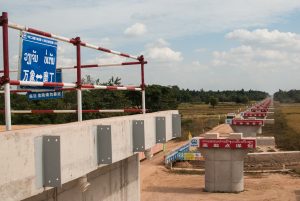
China’s BRI and its High-Speed Railways to Nowhere

By James Guild

China’s Belt and Road Initiative (BRI) has become something of a Rorschach test, taking on different meanings to different people, often colored by the vantage point from which one views it. It is frequently described in terms of “debt-trap diplomacy,” where the overarching goal is to bind developing countries to China through the accumulation of infrastructure-related debt. If and when these debts become unpayable, Chinese companies take over key strategic assets such as electric grids or ports.

Others have compared it to a 21st century Marshall Plan, with China trying to beat geostrategic rivals like Japan and the United States in shaping the physical, financial and political environment of key regions. In doing so they are also creating overseas demand for Chinese technology, investment and labor which is arguably a productive way for a country that runs big surpluses to make use of its reserves and idle assets while bolstering its strategic muscle. The truth, as is often the case, probably lies somewhere in the middle.

As Shahar Hameiri writes in the Lowy Institute’s Interpreter, “Never attribute to malice what can be explained by incompetence.” There is certainly merit to the strategic logic of underwriting infrastructure development in fast-growing or geographically important countries. But sometimes geostrategic ambitions can get ahead of practical considerations on the ground, and China’s experience with building high-speed railways in Southeast Asia certainly underscores this.

Russia and China: Could they Form an Aircraft Carrier Alliance?

by Robert Farley

Key point: Russia has the knowledge, but China has the money. Would Moscow help Beijing for the right price?

It appears that China is relying on Russian know-how and experience to develop the reactor for its first nuclear aircraft carrier. As the South China Morning Post reports, China appears to be studying the nuclear reactors on Russia’s largest icebreakers, an approach that the Soviet Union also took when it planned to build nuclear carriers in the 1980s. Specifically, Russia has invited China to bid on the construction of a new class of nuclear icebreaker, necessarily requiring the development of surface-ship based reactors. This approach stands in contrast to how the United States and France developed nuclear reactors for their largest carriers, but probably represents the best choice for China at this point. 

This first appeared earlier and is being republished due to reader interest.

History: 

To appreciate what’s at stake in China’s pursuit of nuclear-powered surface warships, it’s important to review the experience of the United States and the USSR. After the successful development of the USS Nautilus and the Skate class nuclear attack submarines (as well as the merchant ship NS Savannah) provided proof-of-concept regarding nuclear propulsion, the USN began to evaluate nuclear power for surface warships. The first USN nuclear surface warship was the cruiser USS Long Beach, commissioned in 1961. Long Beach was powered by 2 C1WS reactors, generating around 120 MW, enough power to produce a speed of 30 knots for the 17,000-ton cruiser hull. The USN rapidly followed up with USS Enterprise, powered by 8 A2W reactors, each quite similar in construction and output to the C1W. Those reactors generated 120 MW each, translating to 280,000 SHP, driving the 100,000-ton Enterprise at up to 33 knots.

New Strategic Sichuan-Tibet Railway Link To Strengthen Border Defense – Analysis

By Prof Ashok Tiku*

Chinese President XI is calling for expediting the construction of the new railway line connecting Lhasa with Chengdu to strengthen border defense.

China announced its intention to connect Tibet with another new railway line — the Sichuan-Tibet railway line to protect China’s borders. On the eve of starting the construction of this new route, Chinese president said (Xinhua Nov 9) that the new route will be key to safeguarding China’s national unity and consolidating border stability and called for building the railway line expeditiously by “concentrating resources “ for its completion. 

Recently China Railway announced the bidding results for the construction of two tunnels and one bridge, as well as the power supply project for the Ya’an—Linzhi ( Ya’an-Nyingchi) section of the Sichuan-Tibet Railway. This will be the second railway line connecting Tibet with China and will shorten the travel time to Lhasa from 48 hours to just 13 hours. The Sichuan-Tibet railway line starts from Cheng du, the capital of Sichuan province and the new addition Ya’an-Nyinngchi section will be 1,011 kms long, and includes 26 stations when completed — taking Chinese railway right up to the disputed boundary with India. The cost of the project is estimated at 319.8 billion yuan.

It would be interesting to recall that China started the railway survey of linking Lhasa with China in late 80s and the survey team had submitted three links for railway connectivity with Tibet:

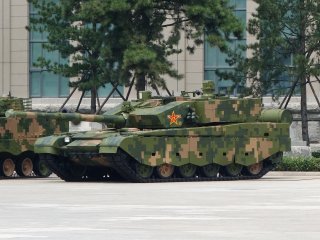
China Has Lots of Tanks - And This One is Its Favorite

by Kyle Mizokami

Here's What You Need To Remember: For a main battle tank, the Type 99 is light, maneuverable, and fast. It doesn't pack the firepower of the Abrams, but it has a much higher range with comparable armor.

China has a lot of tanks. Like, eight to nine thousand of them.

Who else would bother to maintain such a ridiculous number?

The United States. And Russia. (Note that such counts include vehicles in storage and reserve. The numbers for tanks in operational units are lower in every case).

However, the majority of Beijing’s tanks are old designs, particularly Type 59 and 69 tanks more or less directly copied from the 50s-era Soviet T-54 tank. Such is their profligacy that I once had the pleasure of bumping into one in a children’s playground in Tianjin serving the needs of the (young) people.

However, China’s top of the line tank, the Type 99, has commanded healthy respect from international observers, even though it has never been exported, nor used in combat. The reason is simple: the reported performance parameters are equal to many top Western designs, and the Type 99 also packs a few unique tricks of its own.

Today we’ll look at how the Type 99 stacks up to two important contemporaries, the American M1A2 Abrams and the Russian T-90A tank.

U.S. Tried a More Aggressive Cyberstrategy, and the Feared Attacks Never Came

David E. Sanger

From its sprawling new war room inside Fort Meade, not far from Baltimore-Washington International Airport in Maryland, United States Cyber Command dived deep into Russian and Iranian networks in the months before the election, temporarily paralyzing some and knocking ransomware tools offline.

Then it stole Iran’s game plan and, without disclosing the intelligence coup behind the theft, made public a part of Tehran’s playbook when the Iranians began to carry it out.

Now, nearly a week after the polls closed, it is clear that all the warnings of a crippling cyberattack on election infrastructure, or an overwhelming influence operation aimed at American voters, did not come to pass. There were no breaches of voting machines and only modest efforts, it appears, to get inside registration systems.

Interviews with government officials and other experts suggest a number of reasons for the apparent success.

One may be that the United States’ chief adversaries were deterred, convinced that the voting infrastructure was so hardened, Facebook and Twitter were so on alert, and Cyber Command and a small group of American companies were so on the offensive that it was not worth the risk.

Azerbaijani Military Takes Over Key Town In Nagorno-Karabakh


(RFE/RL) — Officials from the de facto government in the breakaway area of Nagorno-Karabakh have confirmed that Azerbaijani forces have taken control of the strategic town of Shushi amid heavy fighting and reports forces are approaching the region’s capital, Stepanakert.

“Today, unfortunately, we have to accept that a chain of unlucky events has followed us for days and the city of Shushi is completely out of our control,” Vahram Poghosian, a spokesman for the leader of the unrecognized republic’s de facto government, said on November 9.

The statement confirms comments by Azerbaijani President Ilham Aliyev on November 8 that his country’s forces had taken Shushi, the second-largest settlement in Nagorno-Karabakh. That announcement had sent many people into the streets of Baku, Azerbaijan’s capital, to celebrate.

However, Armenian Prime Minister Nikol Pashinian, in a message on Facebook, later said that “the fighting for Shushi continues,” without elaborating.

Surrounded by sheer cliffs, Shushi (known as Susa in Azeri) is seen as a strategic point for Azerbaijani forces to launch attacks on Stepanakert.

Earlier, Aliyev told the BBC that Yerevan’s “opportunities to compromise are shrinking” and said he saw no possibility of peace talks with Armenian Prime Minister Nikol Pashinian.

Nagorno-Karabakh is recognized as part of Azerbaijan, but the ethnic Armenians who make up most of the population reject Azerbaijani rule. They have been governing their own affairs, with support from Armenia, since Azerbaijan’s troops were pushed out of the region in a war that ended in a cease-fire in 1994.

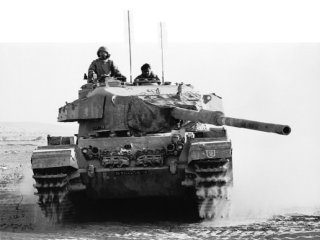
Israel Nearly Went Nuclear to Win the 1973 Yom Kippur War

by Sebastien Roblin

Here's What You Need To Remember: The Yom Kippur war resulted in the death of 2,500 to 2,700 Israelis and an estimated ten to 16,000 Arab soldiers—and wounded over twice that number. The IDF lost roughly 1,000 tanks destroyed or temporarily knocked out and 102 jets, while Arab forces lost 2,400 armored vehicles and over 400 hundred aircraft. The IDF would later recover 400 knocked-out T-55 and T-62 tanks for IDF service.

During the Cold War, the armies of NATO and the Warsaw Pact stood poised to wage devastating, large-scale mechanized warfare using a bewildering arsenal of modern weapons including main battle tanks, infantry fighting vehicles, helicopter gunships, jet fighters, short-range ballistic missile launchers, supersonic bombers, surface-to-air missile systems, and tactical nuclear artillery.

Yet fortunately for humanity, that conflict never took place. Despite numerous bloody proxy and civil wars, there were few interstate clashes between large mechanized armies. The handful of exceptions notably include the 1965 and 1971 Indo-Pakistani conflicts and the Iran-Iraq war. However, the most intense mechanized battles since World War II took place in October 1973 when Egypt and Syria launched a surprise assault on the Israeli border fortifications during the Jewish Yom Kippur holiday.

The Arab and Israeli armies were lavishly equipped with then state-of-the-art tank, jets, and missiles from the Soviet Union and West respectively, including new types of weapons that would see their first major combat test. The result was a hi-tech slugging match of unprecedented scale and tempo.

The war was conceived by Egyptian President Anwar Sadat and Syrian leader Hafez al-Assad to recapture the Golan Heights and Sinai, which had been seized by Israeli forces in the humiliating Six Day War. The wide-open deserts of the Middle East heavily favored armor and air power, and the IDF's tank and fighter units had significantly outperformed their adversaries.