23 December 2020

26/11 set up India-Saudi strategic ties

By SYED FIRDAUS ASHRAF
Ambassador Talmiz Ahmad, an Indian Foreign Service officer of 1974 vintage, served as India's Ambassador to Saudi Arabia, Oman and the UAE.

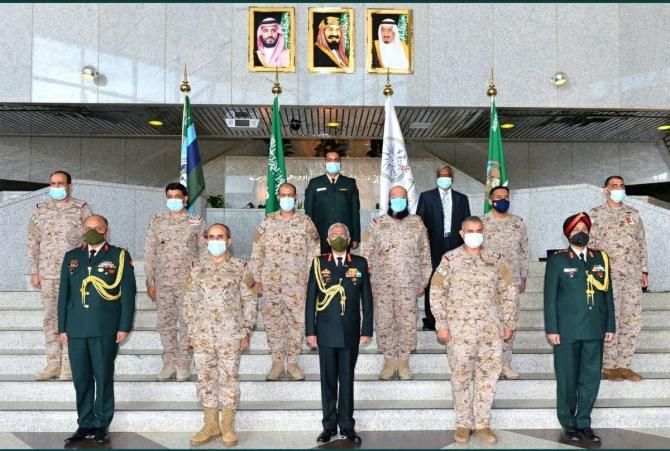
Arguably, India's best-informed voice on matters relating to India's relationships with Saudi Arabia and the Persian Gulf, Ambassador Ahmad explains to Syed Firdaus Ashraf/Rediff.com the significance of Army Chief General Manoj Mukund Naravane's recent visits to Saudi Arabia.

What is the significance of General Naravane's visit to Saudi Arabia? What message does it convey to India-Saudi ties and to the global community?

It is an extremely important visit. It affirms that ties between India and Saudi Arabia are very deep and substantial.

The basis for these ties lies in the Riyadh Declaration that was issued during the visit of Prime Minister Dr Manmohan Singh in February 2010.

In a pioneering initiative, the two countries had then committed themselves to setting up a 'strategic partnership', encompassing cooperation in security, defence, the economy and cultural fields.


India-China standoff: Satellite image of winter at Galwan Valley emerges


The image shows Galwan valley and the exact faceoff site picked by satellite marked in a blue square.

Galwan Valley satellite image in winters

As winter sets in across India, an open source intelligence Twitter handle @detresfa_ posted a satellite image from the European Space Agency showing Galwan Valley in Ladakh's face-off site in its "winter transformation".

The image shows Galwan valley and the exact faceoff site picked by satellite marked in a blue square. Indian and Chinese had clashed at Galwan Valley on June 15-16 leading to the death of 20 Indian soldiers, although the PLA had lost troops as well however the Chinese foreign ministry has refused the divulge the exact number of Chinese casualties.

LinkedIn’s top 10 ‘Future of Work’ predictions for 2021


ndia will reimagine the future of work across 5 key segments: the workplace, careers, recruiting, business, and leadership.

As 2020 comes to a close, LinkedIn, the world's largest online professional network, shared 10 key predictions that will define the future of work in 2021. India will reimagine the future of work across 5 key segments: the workplace, careers, recruiting, business, and leadership. 

Here are the Top 10 ‘future of work’ predictions: 

Old work paradigms will die

Only 1 in 4 Indian professionals were offered flexible work hours and well-being support during the early stages of the lockdown this year. This will change in 2021, as companies recognize new employee needs - many of which would depend on sectors and geographies - in an increasingly remote reality where commutes may soon become a thing of the past. Be it location, work hours or ways of working, flexible work policies will play a dominant role in defining a positive work culture in the future. Those going back to work can expect their offices to transform into spaces where professionals will gather for leadership and personal development, or simply to collaborate and congregate.

Technology will scale collaboration and communities will be built through software

India Needs a More Transparent Approach To Space Situational Awareness

ADITYA PAREEK AND PRADEEP MOHANDAS

The recent, barely avoided collision between India’s Cartosat 2F and Russia’s Kanopus V satellites highlights the need for transparent space situational awareness (SSA) in India.

Information about the close call only became public after a tweet by Roscosmos – the Russian state space corporation – that went into specifics about the incident. The response of the Indian Space Research Organisation’s chairman K. Sivan makes it clear that India does not publicly discuss such events, and resolves them by coordinating with other space agencies.

Indeed, Earth’s orbits are getting crowded with both active satellites and with junk. To keep its satellites working and achieve its long-term goals in space, India will need a more transparent and permissive approach to SSA. This will achieve the dual task of mitigating the dangers of accidents and boost India’s demonstrated capabilities in space.

Some of the immediate changes to the approach of ISRO and the Department of Space can include accepting inputs from credible but informal sources as supplemental streams of data, releasing non-sensitive SSA data from own assets, and encouraging scholarship on SSA from Indian space professionals made accessible to the world.

The trouble with opacity

Pacific Island Nations Wary of Chinese Fishing Fleets

By Joshua Mcdonald

Long a topic discussed in connection with the South China Sea, illegal Chinese fishing vessels are of increasing concern for Pacific Island nations.

As recently as early this week, the archipelago nation of Palau, east of the Philippines and north of New Guinea, announced that it had intercepted and detained a Chinese fishing vessel and six smaller boats in its territorial waters after it was confirmed the vessel had entered unlawfully and was illegally fishing sea cucumber. 

The fishing vessel was apprehended in Helen Reef, Palau’s most southernmost region, by a Guardian-class patrol boat that Australia had delivered to Palau in September.

“They did have sea cucumber on there… it’s estimated about 500 pounds (225 kilograms),” Victor Remengesau, director of Palau’s division of marine law and enforcement, told reporters. “It’s unlawful entry. We may care about COVID and the spread of COVID, but we can’t just let people do whatever they want, and disguise [illegal activity].”

China Won’t Rescue Iran

BY WANG XIYUE

 
In June 2020, a draft of the China-Iran Comprehensive Strategic Partnership was leaked to the media by an Iranian source. In this purported deal, which ostensibly covers bilateral cooperation in economic, political, cultural, and military spheres for the next 25 years, China pledged a maximum investment of $400 billion to improve Iran’s oil, gas, and transportation infrastructure.

Some observers were quick to point out that this groundbreaking deal not only demonstrates China’s unrelenting ambition to succeed globally, but also shows the failure of the Trump administration’s so-called maximum pressure campaign against Iran, which instead has pushed Iran into China’s orbit. Others noted that should President-elect Joe Biden try to rejoin the Joint Comprehensive Plan of Action (JCPOA), the China-Iran deal would potentially harden Iran’s bargaining position vis-a-vis the United States. These commentators all regard the deal as a fait accompli, as if it has already been signed—but they are exaggerating China’s will and capacity to aid Iran in defiance of the United States.

Although China has been Iran’s largest trading partner since 2009, Iran has remained a minor one for China. Even in the Middle East, Saudi Arabia and the United Arab Emirates outperform Iran when it comes to trading with China. According to China’s Ministry of Commerce, at its peak in 2014, Chinese-Iranian trade was $51.85 billion, or 1.2 percent of China’s total foreign trade volume—and it has plummeted since then. That same year, China’s trade with Saudi Arabia and the UAE were $69.15 billion and $54.8 billion, respectively. In contrast, the volume of Chinese-U.S. trade that year was $555 billion, or 12.9 percent of China’s total foreign trade.

'GREATEST THREAT' China using 5G to take over internet and control world’s info while developing Star Wars weapons, experts warn

Chris Pollard

CHINA wants to “infect” the world with its 5G technology so it can seize control of the internet, experts have warned.

The communist country is also secretly developing hypersonic jets which can travel more than five times the speed of sound, and Star Wars-style weapons which could allow it to wage war from SPACE.
4Battle tanks pass an image of Chinese leader Xi JinpingCredit: AP:Associated Press

4Dr Patricia Lewis said China posed a 'long range threat' to Western democraciesCredit: Wikipedia

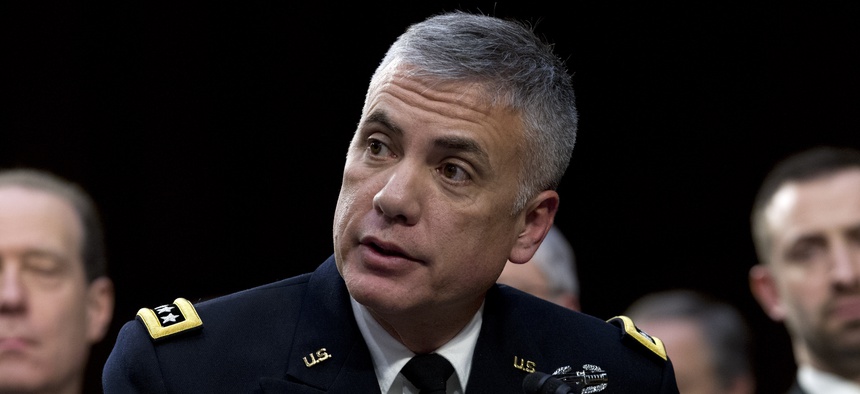
Gen Sir Patrick Sanders described China as a 'chronic' threat

Cyber warfare researcher Dr Patricia Lewis said China’s efforts to control the flow of information around the globe pose a “long-range threat” to Western democracy.

She said: “We are very concerned about China’s activities in trying to establish new rules on internet standards.

China’s Economy May Be ‘Slowing Down’, But Don’t Write Off BRI Yet

MANOJ KEWALRAMANI

Ever since it was launched, there’s been a raging debate about the sustainability of China’s Belt and Road Initiative (BRI). Conventionally, these conversations take shape depending on where you stand. In other words, depending on one’s ideological and geopolitical prism, BRI is either a grand strategic plan that is reshaping the global political and economic order or an example of Xi Jinping’s hubris, which is leading to overreach, and will eventually collapse under the weight of its own contradictions. A new Financial Times report this week, highlighting a sharp decline in Chinese overseas lending, sparked another such debate.

The report draws on data from China’s Overseas Development Finance Database at Boston University. The database tracks lending commitments by China Development Bank (CDB) and the Export-Import (EXIM) Bank of China. These are the two key policy banks that Beijing relies on to finance BRI projects. The researchers estimated China’s overseas development finance between 2008 and 2019 at USD 462 billion, merely USD 5 billion less than the World Bank’s lending during the same period. More importantly, the researchers found that China’s overseas lending tumbled in the aftermath of the 2009 financial crisis only to start picking up steam in 2012.

After a dramatic spike in 2015 and 2016, which is when it hit a peak of USD 75 billion, there has been rapid decline to just USD 4 billion in 2019. The numbers are not without controversy.

Decoding the DC-Brussels-Beijing geopolitical triangle

Manoj Kewalramani

Joe Biden’s election as the United States (US) president has led to talk of greater coordination between Washington and Brussels over China. In early November, European Union (EU) foreign affairs chief Josep Borrell was quick to call for “a coherent and robust China stance” between the transatlantic allies. Biden, meanwhile, has promised to consult traditional allies to “develop a coherent strategy” on China.

In late November, Financial Times reported that a draft EU Commission paper had called for working with the US to deal with the “strategic challenge presented by China’s growing international assertiveness” with the technology domain being the “the backbone of a wider coalition of like-minded democracies”. This was followed by reports of the EU proposing a new Transatlantic Trade and Technology Council to jointly set standards on new technologies, strengthen technological and industrial leadership and expand trade and investment. None of these reports have been confirmed. But the EU Council highlighted “shared priorities” for Brussels and Washington.

At the same time, however, Borrell was keen to point out the need to strengthen European autonomy. This desire lies at the heart of EU-US tensions, particularly after the tumult of the Trump era. Autonomy has emerged as a strategic objective for the EU. Not surprising then that it is one of the spaces around which Beijing has focused its efforts. For instance, Chinese officials have repeatedly emphasised the threat of US unilateralism and a new Cold War undermining EU’s interests. Chinese media and analysts have been dismissing the possibility of a coordinated EU-US action.

Why Is China Going to the Moon?

By Namrata Goswami

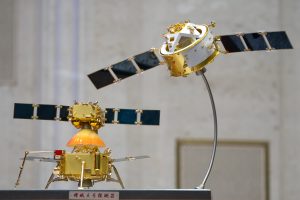
The Chang’e 5 returner, carrying about 2 kilograms of lunar rocks and soil, has successfully landed in Siziwang Banner in the Inner Mongolia Autonomous Region on December 17 local time. The Chang’e 5 followed upon the Chang’e 4 far side landing in January 2019 and has successfully accomplished some of China’s most technologically difficult feats yet. This included collecting the samples of lunar regolith, not only on the lunar surface but from six feet under; gathering the samples and sealing it in automated operations; and finally ascending from the lunar surface and docking with the orbiter waiting 200 km above. As per the China National Space Administration (CNSA), the ascender then transferred the samples to the returner, for which China utilized an autonomous grabbing machine.

Developing lunar access and presence capacity is vital to China’s conception of space power, which I define as the ability to persuade or coerce countries to behave in a manner in space that is beneficial to the country wielding space power. Space power consists of an ability to demonstrate space presence, independently launch to orbit and beyond, project and maintain military space power, and enable access to key zones in space to include the moon and the Lagrange points. For China, the Moon is a pit stop or a base to enable it to become a truly space faring nation, reflecting civilizational vibrancy, ideological superiority, and technical prowess. Based on this, there are three reasons why China is going to the moon.

Reason 1: The Moon Is a Tremendous Supplier of Energy

Protection Without Protectionism

By Shannon K. O’Neil

For two decades, the free movement of goods, services, and capital was the world’s guiding principle, crystallized in the so-called Washington consensus. Although countries didn’t always live up to these ideals or implement laissez-faire policies, most aspired to do so. They had to explain, justify, and limit their deviations from this consensus, at least in theory. The vast majority of the world’s countries signed on to multilateral institutions that promoted and enforced this view—such as the International Monetary Fund (IMF) and the World Trade Organization (WTO). 

Yet the era of the Washington consensus is now over—and despite what some commentators have argued, the COVID-19 pandemic is not the cause of its demise. Developing countries started pushing back against the consensus in the early years of this century. Mature economies began to sour on its tenets after the 2008 global financial crisis. Today, advanced countries and developing ones alike are embracing “industrial policy,” a catchall term for government interventions in certain industries and in the broader economy. This shift is apparent even in the United States. The Trump administration ignored and attacked the liberal world order that the United States has led for decades. But its approach partly reflected a new conventional wisdom in Washington in favor of an economic path that relies much more on active government involvement.

The Arab Uprisings Never Ended

By Marc Lynch

There are few, if any, celebrations planned for the tenth anniversary of the uprisings that swept the Arab world in late 2010 and early 2011. The days of television screens filled with crowds chanting, “The people demand the overthrow of the regime” seem like ancient history. Early hopes for revolutionary change crashed into the blunt force of military coups, civil wars, and fractured states. In 2021, there may be few beliefs more universally shared than that the Arab uprisings failed.

It is easy to understand the appeal of this idea, eagerly promoted by autocratic regimes and foreign policy realists alike. It means a return to business as usual. Both the Obama and the Trump administrations tacitly accepted that view as they shifted their gaze to other goals in the region—the former to nuclear negotiations with Iran, the latter to normalizing Arab relations with Israel.

Yet that conviction is in fact just the latest in a series of premature conclusions. Before 2011, most analysts took the stability of Arab autocracies for granted. This was wrong. As popular pressure drove four long-ruling dictators from power—Tunisia’s Zine el-Abidine Ben Ali, Egypt’s Hosni Mubarak, Libya’s Muammar al-Qaddafi, and Yemen’s Ali Abdullah Saleh—some observers rushed to assume that an unstoppable democratic wave had arrived; others warned that democratization would open the door to Islamist domination. Both were wrong. In 2012, most thought that the Syrian regime of Bashar al-Assad was finished. Wrong. In 2013, supporters of Egypt’s military coup argued it would put the country back on a path toward democracy. Wrong again.

Betrayed by Their Leaders, Failed by the West, Arabs Still Want Democracy


BY OZ KATERJI 

On Dec. 17, 2010, the world was changed forever by the actions of one man. A Tunisian fruit seller named Mohamed Bouazizi doused himself in petrol and set himself on fire outside the provincial headquarters of Sidi Bouzid in protest against local police officials who had seized his fruit cart.

Just 28 days later, Tunisia’s Jasmine Revolution had ousted President Zine el-Abidine Ben Ali, driven by the righteous fury of a population who had witnessed enough, a reaction not just to the desperation and subjugation of a 26-year-old street vendor, but to the routine humiliation and oppression of many decades.

One question frequently asked during the early days of the Arab Spring was whether the Arab world was ready for democracy. After 10 years, it is clear that it was always the wrong question. The Arab public systematically dismantled decades of oppressive silence overnight. The question was always whether the rest of the world was ready to support them. The answer to that question should be clear from the decade of Middle Eastern blood spilled to almost total indifference from world powers.

For generations, Middle Eastern dictatorships had grown bloated and complacent, consoled by the false belief that their security apparatus could intimidate their populations into subservience in perpetuity.

But by 2010, those dictatorships no longer held a monopoly over information. Greater access to the internet in the Middle East brought social media, and with it access to the kind of platforms for ideas and debate that many of these same dictatorships had so effectively prohibited, repressed, and criminalized in previous decades.

The War in Tigray Is a Fight Over Ethiopia’s Past—and Future

BY TEFERI MERGO 

It has come as a shock to many that a civil war is raging in Ethiopia, with the Ethiopian government waging what it startlingly called a “law enforcement operation” in the Tigray region, branding the former ruling party in Ethiopia—the Tigray People’s Liberation Front (TPLF)—a criminal organization and vowing to destroy it. The conflict, which has already claimed thousands of lives and displaced tens of thousands, has caused trepidation in foreign capitals that it could lead to one of the largest state collapses in modern history, with significant implications for peace and stability in the Horn of Africa and beyond.

Despite the government’s declaration that it has already concluded the operation, it is far from certain that the capture of Tigray’s capital, Mekelle, by government forces will bring the conflict to an end any time soon—with the TPLF retreating to the mountains and, in all likelihood, positioning its fighting forces for a costly and drawn-out guerrilla war. There is a palpable fear that the war might induce civilians unfamiliar with the rules of war to actively engage in the conflict, and this could lead to a dire human tragedy. Evidence is emerging that the recent massacre in Mai-Kadra in Tigray state was perpetrated by vigilante groups—the Amhara group Fano and the Samri youth organization—with loose connections to their respective regional governments, the Amhara and Tigray states.

Ironically, the international community—which neglected many serious misgivings from credible corners about the suitability of the untested Abiy Ahmed as Ethiopia’s prime minister and welcomed (and likely enabled) the Nobel Committee’s imprudent awarding of the coveted Peace Prize to Abiy—was reduced to trying to persuade the peace laureate to refrain from escalating the conflict.

U.S. Cyber Experts Scramble to Assess the Scope of the 'Hack of a Decade'

BY KIMBERLY DOZIER

U.S. government cyber experts are working furiously in secure offices around the globe, sifting through computer traffic to figure out which federal systems have been penetrated in the sweeping cyber-spying attack that the FBI warned this week is “significant and ongoing.” Suspected Russian hackers have broken into sensitive U.S. government computer networks from the Pentagon to the Department of Energy, as well as top U.S. private businesses, rummaging around in them and likely reading emails and gathering data.

The Department of Homeland Security’s Cybersecurity and Infrastructure Security Agency (CISA) called the attack, which started in March or possibly earlier, “a grave risk” to the U.S. government. Experts from both the government and top U.S. private firms compromised in the attack are taking whole sections of their computer networks offline or quarantining them for a deeper forensic dive to figure out what was copied or taken, and if the hackers left any malware code behind.

The hackers exploited a little-known but widely used software program called Orion made by cyber company SolarWinds, whose client list includes the Office of the U.S. President, the Pentagon, NASA, NSA, all five branches of the U.S. military and most of the Fortune 500 companies, including the top ten U.S. communications companies.

The Austin, Texas-based company removed its client list from its website after reporting the hack may have affected some 18,000 customers. The company says it has been “advised that the nature of this attack indicates that it may have been conducted by an outside nation state” and is urging clients to update their systems to remove the threat. The company did not immediately respond to request for comment. CISA referred to the attackers as “a patient, well-resourced, and focused adversary” adding that the Orion software vulnerability wasn’t the only way it attacked, but declining to share further details.

What’s Next for the Western Sahara Conflict?

By Intissar Fakir 

On Dec. 10, Morocco scored a long-dreamed-of foreign policy victory. After decades of international impasse and intense lobbying, the United States recognized Morocco’s sovereignty over the disputed Western Sahara territory, which Morocco has occupied since 1975. The U.S. recognition, in exchange for Morocco normalizing relations with Israel, opens a new chapter in an issue that has long been static. And it has implications not only for Morocco and the Polisario Front—which represents the Sahrawi Arab Democratic Republic (SADR), the government in exile that aims to govern Western Sahara—but also for those indirectly involved: Algeria, the United States and the European Union. 

The deal does not end the conflict, nor will it affect the broader international status of Morocco’s claims. However, it does give Rabat a key practical victory. In gaining recognition for its annexation of Western Sahara, the kingdom achieved a central foreign policy objective without having to define the political terms of that annexation. The status of the Polisario Front, the rights of Sahrawi refugees in Algeria and the terms of the territory’s political status all remain unsettled. While these questions need to be resolved for a permanent solution, Morocco is able for now to bypass these thorny issues.

For the Polisario Front, the U.S. decision weakens its military and political position further—in what had already been a lopsided struggle. It diminishes opportunities for negotiations as Morocco, with the United States on it side, will have little incentive to compromise. For Algeria, the deal forces questions about the utility of its support for the Polisario. The quid pro quo aspect of the deal, which undermines Sahrawi and Palestinian rights, brings greater salience to Algeria’s ideological opposition to Morocco’s occupation. For Europe, the efforts to balance important Morocco-EU relationships with concern for Sahrawi human rights and support for their self-determination will become more difficult. And for the U.S. foreign policy establishment, and the incoming Biden administration, the announcement leaves few options but to stay the course. 

Entrenched Views

The Strategic Implications of SolarWinds

By Benjamin Jensen, Brandon Valeriano, Mark Montgomery

Recent reports of a widespread Russian cyber infiltration across U.S. government networks are a sign of how great power competition will play out in the 21st century. The new great power game is digital, with the shadowy alleys and cafes of Cold War spy games replaced by massive data breaches and compromising corporate security. Some strategies see this world as dominated by offensive operations—but the SolarWinds case suggests the opposite. The U.S. Cyber Solarium Commission, on which we served, found that the future of cybersecurity strategy will come to rely on layered cyber deterrence to enable defensive denial operations, international entanglement and cost imposition when aggressors defy the norms of the international system. The SolarWinds hack emphasizes the importance of implementing this strategy. 

It’s simpler to list the agencies that have not been caught up in the SolarWinds infiltration, which was run by Russian hacking group APT29 under the umbrella of the Russian intelligence services, the SVR. So far, only the intelligence community has not been reported to have been breached. 

The goal of the operation seems to have been exfiltrating data and digital tools from the targets. The attackers leveraged a supply chain vulnerability in the ubiquitous SolarWinds Orion program, a network monitoring tool, to insert backdoors into an update released months ago. Once inside the networks, the attackers were able to maintain a permanent presence. The operation was so devastating that SolarWinds employees appear to have engaged in a massive sell-off of stocks prior to public disclosure of the vulnerability.

Trump Officials Deliver Plan to Split Up Cyber Command, NSA

BY KATIE BO WILLIAMS

Trump administration officials at the Pentagon late this week delivered to the Joint Chiefs of Staff a proposal to split up the leadership of the National Security Agency and U.S. Cyber Command. It is the latest push to dramatically reshape defense policy advanced by a handful of key political officials who were installed in acting roles in the Pentagon after Donald Trump lost his re-election bid.

A U.S. official confirmed on Saturday that Joint Chiefs Chairman Gen. Mark Milley — who along with Acting Defense Secretary Chris Miller must certify that the move meets certain standards laid out by Congress in 2016 — received the proposal in the last few days.

With Miller expected to sign off on the move, the fate of the proposal ultimately falls to Milley, who told Congress in 2019 that the dual-hat leadership structure was working and should be maintained. 

Military officials have watched warily as Miller, his chief of staff Kash Patel, and Acting Under Secretary of Defense for Intelligence Ezra Cohen-Watnick — all installed since Election Day — have sought significant policy changes with just over a month remaining in office. Recent outgoing administrations have declined to push through major changes during the transition period. 

The post of NSA director and CYBERCOM commander are held by one person — currently, Gen. Paul Nakasone — in a "dual-hat" arrangement. For years, cybersecurity and national security policy leaders have debated how and when to split that job into two positions. The Trump administration’s proposal, if approved, “would mark a significant shift in policy, and without the proper analysis and certification would run contrary to law,” a House Democratic aide said Saturday, calling the potential change “severe.” 

Suspected Russian cyber-attack growing in scale, Microsoft warns

Dan Sabbagh 

Microsoft has said the UK and six other countries outside the US have been affected by a suspected Russian hacking attack that US authorities have warned poses a grave risk to government and private networks.

Brad Smith, Microsoft’s chief legal counsel, said the company had uncovered 40 customers, including government agencies, thinktanks, NGOs and IT companies, who were “targeted more precisely and compromised” after the hackers had gained initial access earlier this year.

Eighty per cent were in the US, including, it is feared, agencies responsible for the US nuclear weapons stockpile. But the remainder were spread out across other countries.

“This includes Canada and Mexico in North America; Belgium, Spain and the United Kingdom in Europe; and Israel and the UAE in the Middle East,” Smith said. “It’s certain that the number and location of victims will keep growing.”

Known British victims are currently small in number and security sources indicated do not include any public sector organisations. However, checks are ongoing, partly because the sophistication of the hack makes it unclear who may have been affected.

A Hack Foretold

By FRED KAPLAN

The most stunning thing about Russia’s latest hack of 18,000 computer networks—including those of at least six federal agencies, including the State Department, the Homeland Security Department, and the National Nuclear Security Administration—is not how sophisticated the attack was.* It’s that these sorts of attacks are still happening—are still possible, in some cases easy—and that months can go by with nobody noticing them.

It’s not as if the hacking threat is new; it’s been going on—its scope and possible fixes have been known—for a very long time.

As far back as 1997, a presidential commission concluded that the “information networks” controlling much of our economy and society were vulnerable to “cyber attacks.” The ability of foreign powers to launch these hacks and do us harm, the report went on, “is real; it is growing at an alarming rate; and we have little defense against it.”

One year before that report, the Pentagon’s Defense Science Board released a report on “Information Warfare Defense,” warning that our “increasing dependency” on vulnerable networks amounted to a “recipe for a national security disaster.” Its authors recommended more than 50 actions to be taken over the next five years, at a cost of $3 billion. None of the actions was taken.

‘They’ve Got to Be Visionary’: Dambisa Moyo on Post-Pandemic Economic Recovery


In addition to its human toll, the coronavirus pandemic has wreaked economic havoc around the world. Entire economies ground to a virtual standstill as governments implemented strict lockdowns to prevent the spread of the virus. The impact on individual countries has only been exacerbated by the disruptions to global trade caused by the pandemic, and uncertainty still surrounds the shape of the economic recovery that will come in its aftermath.

But even before the pandemic, the developed economies of Western democracies faced structural obstacles to growth that have called into question their models of governance, even as China’s high-growth development path offers a competitive alternative.

For this week’s big picture Trend Lines interview, Dr. Dambisa Moyo joins WPR editor-in-chief Judah Grunstein for a look at the challenges facing the developed economies, and how the pandemic will affect them and the global economy more broadly. Dr. Moyo holds a Ph.D. in economics from Oxford University and a master’s degree from Harvard University. She worked at the World Bank and Goldman Sachs for nearly a decade, and she is the author of four New York Times bestselling books, most recently, “Edge of Chaos: Why Democracy Is Failing to Deliver Economic Growth—and How to Fix It,” published in 2018. Her upcoming book, “How Boards Work—and How They Can Work Better in a Chaotic World,” is scheduled to be published in the spring of 2021.

SolarWinds Isn't the Only Way Hackers Entered Networks, CISA Says

BY AARON BOYD

The fallout from the SolarWinds breaches will be far more difficult and time-consuming to remediate than originally assumed, as the attackers likely found more ways to enter federal networks than just the SolarWinds Orion product and have been targeting IT and response personnel, according to the government’s lead cybersecurity agency.

The Cybersecurity and Infrastructure Security Agency, or CISA, released an alert Thursday through the U.S. Computer Emergency Readiness Team, or US-CERT, detailing what the agency currently knows about the attack. The alert calls out at least one other attack vector beyond SolarWinds products and identifies IT and security personnel as prime targets of the hacking campaign.

“CISA has determined that this threat poses a grave risk to the federal government and state, local, tribal, and territorial governments as well as critical infrastructure entities and other private sector organizations,” officials wrote.

While the alert does not name suspects, officials offered a look into what is known about the attackers’ techniques and motivations.

“The adversary’s initial objectives, as understood today, appear to be to collect information from victim environments,” the alert states. “CISA has observed in its incident response work adversaries targeting email accounts belonging to key personnel, including IT and incident response personnel.”

Stronger together: A strategy to revitalize trans-Atlantic power

Constanze Stelzenmüller

As President-elect Joe Biden prepares to take office, leaders in Europe and Canada are breathing easier: Starting in just six short weeks, they will have a committed Atlanticist as their American partner. But the result of the American election alone will not repair the trans-Atlantic breach, as a 16-member team (myself included, along with Brookings colleagues Victoria Nuland, Amanda Sloat, and Torrey Taussig) of American and European former government officials and experts write in a new report. We argue: “The U.S. and Europe cannot simply rebuild the ties of a previous era if we are to succeed in meeting today’s challenges.” Instead, “the world needs a more powerful and purposeful transatlantic alliance to drive a new global agenda.”

The group — convened by the Harvard Kennedy School and the German Council on Foreign Relations — developed eight individual action plans, which lay out an ambitious agenda for tackling challenges to the trans-Atlantic community. They focus on economics and trade, security and defense, China, Russia, climate change and energy, democracy, technology, and the Middle East and North Africa. Each action plan includes an in-depth assessment of key challenges and proposes recommendations to U.S., Canadian, and European policymakers.

We contend that “[t]he United States, Europe and Canada must work together toward one ambition in 2021—to renew, revitalize and retool for the decade ahead the most powerful democratic community in modern history.” The U.S., Canadian, and European members of the alliance together can deploy tremendous diplomatic, economic, technological, and military assets. But they face new and grave challenges: the rise of China, an aggressive Russia, resurgent authoritarianism, and the existential threat of climate change.

Technical Difficulties of Contact Tracing

By Amy Robinson, Jim Waldo 

On Dec. 14, the United States administered the first doses of a coronavirus vaccine to health care workers. The U.S. government has set an aggressive timeline aimed at vaccinating the majority of Americans by June 2021. The end is in sight, but we still have a long way to go. Controlling the spread of the pandemic in the intervening months remains an urgent priority. Currently, many states are still chasing the promise of coronavirus exposure notification apps. Last week, California rolled out CA Notify, joining 18 other states as well as Guam and the District of Columbia in deploying the Exposure Notification System developed by Apple and Google (Apple | Google ENS). But it is essential to recognize that the inherent technical limitations mean that contact-tracing apps, at best, play a relatively small public health role and, at worst, risk doing more harm than good.

Effective exposure notification tools must minimize both false positives and false negatives. 

In mid-October, thousands of English and Welsh citizens using a National Health Service (NHS) app built with the Apple | Google ENS received phantom alerts that they had potentially been exposed to the coronavirus. While the NHS later fixed the bug, the incident caused wide-scale confusion, fear and frustration. These sorts of false positives are not harmless. They can overburden limited testing capacity, as concerned citizens seek unnecessary tests. And false positives increase the likelihood users will ignore future exposure warnings and thus fail to obtain needed testing.

False negatives are also problematic. A false negative occurs when a person who was exposed to the coronavirus does not receive a notification. If asymptomatic and unaware of a possible infection, the individual could spread the virus further. Medical experts have dubbed such oblivious asymptomatic transmission “the Achilles’ heel” of the pandemic, especially as the holiday season strains social distancing compliance. Contact-tracing apps that do not alert people of actual exposure are not assisting in the larger public health response and may create a false sense of security among individuals who use them. 

Bad Idea: All Sensors, All Shooters, All the Time – a Joint All-Domain Command and Control System That Prioritizes Centralization

Mark Seip

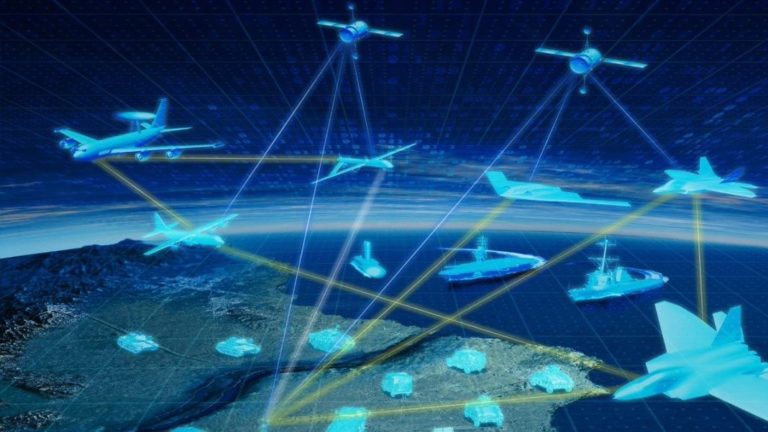
Joint All-Domain Command and Control (JADC2) is touted as an innovative upgrade to the military’s command and control structure for the modern age of warfare: an integrated network linking kinetic platforms; intelligence, surveillance, reconnaissance assets; and command and control nodes across a wide-ranging, all-domain battlefield. This all-seeing interplay will allow for unprecedented sharing of data and information, allowing for kill chains that spread across thousands of miles and up and down all echelons of warfighting. Centralized clouds, resilient operational systems, and long-distance communications pathways are often held up as examples of the technology needed to make this a reality.

This high-level consolidation and integration sounds like a great idea but is actually a bad one if its proponents continue to prioritize the idea of a centralized architecture across a wide battlespace. The reality is any expected fight with an adversary like China will include the degradation of battlefield information and consequent loss of the centralization for which JADC2 appears to be designed. Instead, a joint command and control structure should be reimagined as an architecture biased toward a likely collapse to the tactical unit or task group level — allowing the system to be rebuilt to facilitate operational inputs but not predicated on the ability to do so. This new focus will help facilitate greater integration between disparate unit types in a challenged communications environment while continuing to execute the commander’s intent.

Fully Connected: Looming Failure Sounds like Success

22 December 2020

India Inches Forward to Block Chinese Telecom Equipment

By Abhijnan Rej

Indian media reported on December 16 that the Narendra Modi government has decided to issue certification for equipment used by telecom companies in the country based on their perceived security risk. Such certification could pave the way for an effective ban on the acquisition of Chinese telecom equipment in the future, including those related to 5G internet solutions. The decision follows a meeting of the Indian Cabinet on Wednesday, leading to a new National Security Directive on the Telecommunication Sector.

According to the Hindustan Times, the certification would be issued by a new National Security Committee on Telecom headed by Deputy National Security Advisor Rajinder Khanna, a former chief of the Research and Analysis Wing, India’s lead external intelligence agency. The newspaper quotes Ravi Shankar Prasad, minister of telecommunications, as saying after the cabinet meeting: “This is a very important decision with respect to national security.” It also notes that India’s National Cyber Security Coordinator will issue the list of equipment that will fall under the ambit of the new directive.

While India in the recent past has periodically hinted that it is ready to ban Chinese firms from 5G trials in the country, officially such a decision is yet to be taken. On November 6, India’s Home Secretary Ajay Bhalla, speaking at the National Defense College, noted: “On 5G the government has not taken any call. Discussions are still on… when it (the trials) will be allowed and who will be allowed to participate. The penetration of (Chinese firms’) telecom hardware and software is extensive.”

How the CCP Took over the Most Sacred of Uighur Rituals

Timothy Grose

The rooster hadn’t even stopped his crowing when the police arrived at my Uighur host’s courtyard in rural Turpan one early spring morning in 2008. Although they spoke calmly, almost apologetically, the uniformed Uighur officers demanded that the foreign guest return on the next bus to Urumqi. Not wanting to invite more trouble for my friends, I scrambled to pack my bags and headed toward the village bus station.

Two years later, I received a wedding invitation from the same family. The eldest son and groom-to-be followed up with a phone call to personally ask that I attend. After some hesitation, I agreed to make the cross-country trip from Beijing. This time, however, I would stay two hours away from his village in hopes of preventing another visit from the cops. Stepping off the crowded van at the same dusty Turpan bus station from which I had made my hasty departure, my anxiety must have shown on my face. “Änsirmä! [Don’t worry!],” the groom’s friend confidently reassured me. “They don’t bother us at weddings and funerals. You’re fine being here.”

My presence spoke to the precariousness of Uighur hospitality. I was a citizen from a far-away country who was affiliated with a university in Beijing, and so I possessed the potential to raise the profile of the celebration. But as an American researcher examining Uighur ethno-national identity, visiting my friends risked attracting state authorities. Still, my Uighur hosts had finalized their guest list on their own. In 2010, China’s government had yet to “territorialize,” or claim, sacred Uigher rites by making them seem as though they are and always have been part of China.

Online Event: China’s Power: Up for Debate 2020 – Keynote Address by Rep. Rick Larsen


Bonnie S. Glaser: Welcome to the fifth and final debate of the 2020 China Power Debate Series. I’m Bonnie Glaser, director of the China Power Project at the Center for Strategic and International Studies. Thanks to all of you for joining us today virtually.

Before we begin our debate, we have a special guest joining us to talk about U.S.-China relations. I’m delighted to have with us Congressman Rick Larsen, who represents the 2nd Congressional District of Washington state and, importantly for this conversation, is the co-chair of the Bipartisan U.S.-China Working Group, which was created in 2005 to providing accurate information to members of Congress on critical issues pertaining to China and to provide a forum for discussion with Chinese officials and leaders. And in this capacity Congressman Larsen has really made a significant contribution to the understanding of China within Congress. He has frequently engaged with experts on China as well to discuss China’s internal developments and its evolving approach to the world. And I admire his determination to help Congress understand China, and his dedication to protecting American interests and to promoting better understanding between our two countries.

So, we’re going to start with some framing remarks from Congressman Larsen, and then I’ll pose a few questions. If time allows, we’ll take a few questions from our viewers. And if you want to submit a question, you can go to the CSIS page for this event and click on the “Ask Live Questions” button. So, with that, I would like to hear, Congressman Larsen, your perspectives on U.S.-China relations at this really challenging time for our country and so many people around the world.

How Globally Competitive Are China’s Cities?


Since 2009, a greater proportion of the global population has lived in urban areas than in rural areas. Cities are key centers of economic, political, and cultural activities. “Global cities” are particularly critical nodes within the international economy, as they provide specialized services, such as finance, and serve as hubs for innovation. Countries with more global cities can thus better benefit from the international flow of capital and talent. As China has rapidly developed in recent decades, historically prominent Chinese cities such as Beijing and Shanghai have grown in international influence, and many new global cities like Shenzhen have emerged as increasingly significant players in global commerce.
Patterns of Global Cities

The employment opportunities brought by Chinese economic reforms launched in the late 1970s led to a surge of people moving out of rural areas and into cities. In 1979, only 18.6 percent of the Chinese population resided in urban areas. In 2011, more than half of all Chinese citizens lived in cities for the first time in history, and by 2020 the urbanization rate in China stood at 61.4 percent.

In addition to domestic population movements, the growth of Chinese cities has drawn travelers, students, and workers from other countries. International companies have also set up offices in different cities to better access China’s vast market. As a result, cities have become one of the main gateways through which China interacts with the world.

Is China Leading in Global Innovation?


Innovation is the process by which new knowledge and ideas are created. Global leaders in innovation produce the scientific discoveries and technological advances that shape the modern world, making it critical to national power. An economy’s capacity to innovate is dependent on a variety of factors, including its commitment to research and development, the quality of its workforce, and the effectiveness of government institutions. As China works to upgrade its economy, its innovative strengths and weaknesses will shape its long-term economic competitiveness and prospects for global leadership.

China’s Strengths in Innovation

Decades of rapid economic growth have enabled China to invest in key areas that drive innovation, such as research and development and the creation of new intellectual property. These investments have improved China’s GII ranking and enabled it to compete with advanced economies, such as the United States and Sweden.

Research and development (R&D) is the backbone of innovation. It supports the development of new products and services, which can boost growth and productivity. In recent decades, China has increasingly prioritized R&D, with spending as a percent of GDP rising from 0.72 percent in 1991 to 2.13 percent in 2017. Although this is less than the OECD average of 2.37 percent, the immense size of China’s economy means that its R&D expenditure is now second only to the United States at $442.7 billion (in 2010 USD).

China’s Hyperactive Debates on Personal Data Protection

By Xiao Liu

On October 21, 2020, a draft of China’s much-anticipated Personal Information Protection Law (PIPL) was released for public comments. Along with the Cybersecurity Law implemented in 2017 and the Data Security Law (a draft of which was also released for public comments in July 2020), the PIPL is regarded as a major milestone in China’s legislative efforts to establish a set of comprehensive regulations around data. Particularly, the PIPL establishes lawful rights around personal information, as it is formulated to “protect personal information rights and interests, standardize personal information handling activities, safeguard the lawful, orderly, and free flow of personal information, and stimulate reasonable uses of personal information”(Article 1). The draft drew intensive media and public interest. Legal professionals, academics, and business representatives held discussion sessions to compare the draft law with the European Union’s General Data Protection Regulation and other major data laws around the world, and raise issues for clarification and improvement.

One month later, the ruling in the first trial of a highly publicized case involving the use of facial recognition technology, touted as the “first lawsuit against facial recognition,” was announced. The victory of the plaintiff, who had objected to use of the technology by a safari park, generated another flurry of coverage and social media responses.

Personal information protection has already become a hyperactive field in China, which is continuously energized not only by national legislation and policymaking, but also by the participation of legal professionals, conscious actions taken by common citizens, as well as immense media attention and active public discourses.

PLA No-Shows US-China Maritime Safety Talks

By Steven Stashwick

The Chinese military was a “no-show” at annual air and naval safety talks with the United States this week, according to an Indo-Pacific Command news release.

The talks were supposed to take place over three days, from December 14-16, by video teleconference.

The two militaries had previously agreed to hold the meeting virtually due to the COVID-19 pandemic. Chinese officials apparently did not cancel the meeting ahead of time or inform the U.S. side that they would not be attending; they just did not dial into the teleconference, leaving U.S. officials waiting.

Admiral Phil Davidson, the head of U.S. Indo-Pacific Command, said that, “The PRC’s refusal to show up to MMCA [Military Maritime Consultative Agreement] is another example that China does not honor its agreements, and this should serve as a reminder to all nations as they pursue agreements with China going forward.”

The MMCA was set up in 1998 as an annual forum to discuss naval and air safety issues between the two countries following concerns over the potential for escalation during the Taiwan Strait Crises several years prior. Envisioned as a U.S.-China version of the famous Cold War Incidents at Sea agreement between the U.S. and Soviet navies to prevent dangerous incidents at sea, the MMCA lacked that agreement’s emergency communication protocols and prohibition of dangerous behaviors. Congressional reports have described the MMCA mostly an agreement “to talk about talking.”

China Building Massive Myanmar Border Wall: Reports

By Sebastian Strangio

Reports have emerged that the Chinese government is constructive a 2,000-kilometer reinforced fence along its coiling border with Myanmar, following a spike in COVID-19 cases in the latter country.

According to a report in Radio Free Asia (RFA), the giant undertaking has been codenamed the “Southern Great Wall” and began construction earlier this year. According to the RFA report, stretches 659 kilometers of the barrier have so far been completed.

The reports have been accompanied by social media images from the town of Wanding and the city of Ruili – both of which sit on the border between Yunnan province and Myanmar’s Shan State – that appear to show reinforced steel fences topped with barbed-wire.

The Chinese government has long struggled to maintain control of Yunnan’s 2,200-kilometer border with Myanmar, which touches on regions controlled by ethnic armed groups and rebel armies that are effectively independent of the Myanmar state.

Are Turkey's days in Nato numbered?


Turkey’s future participation in the Nato alliance is likely to come under renewed scrutiny following Washington’s decision this week to impose sanctions against Ankara over the recent purchase of a sophisticated, Russian-made S-400 anti-aircraft missile system.

Tensions were already growing between the US and Turkey, both major players in the military alliance, ever since Turkish President Recep Tayyip Erdogan announced in 2017 that he was negotiating a major arms deal with Russia, which included the purchase of the missile system.

The deal is particularly problematic for Nato as the system was specifically designed to destroy the new F-35 stealth fighter jet, which has been developed by the US in conjunction with a number of key allies, including Britain. Indeed, Turkey was one of a few countries – including the UAE – that have secured approval from Washington to purchase the state-of-the-art aircraft. The administration of US President Donald Trump has since cancelled Turkey’s participation in the F-35 programme over the Russian deal.

Now the row has moved to another level, after US Secretary of State Mike Pompeo earlier this week announced that Washington was imposing sanctions on key elements of the Turkish defence industry. The move prompted an angry reaction from both Ankara and Moscow, which claimed it was intended to punish the defence sectors of both of their nations at once.