10 January 2021

Meeting the Challenge in Asia

by Evan A. Feigenbaum

TRUMP ADMINISTRATION veterans like to argue that they have “transformed” American foreign policy—first, by emphasizing strategic competition among the big powers, and second, by centering this competition on the rise of Chinese power in particular. Trump’s former National Security Advisor, H.R. McMaster, touts “the competitive approach to China” as “the biggest shift in U.S. foreign policy since the Cold War.”

But to compete in geopolitics—as in sports, business, and life—one needs to actually compete. Washington has to outperform the Chinese competition, not just belittle it. And it has to define the competition in terms that are both realistic and workable.

By these standards, the United States is not just falling short. It is making three significant strategic mistakes that have undermined its competitive position. To succeed in Asia, President-elect Joe Biden will need an administration that whines less, competes more, and leverages American strengths in the Asia that actually exists, not the one of its wishes, dreams, and fantasies.

For one thing, competing with China requires enlisting partners in Asia. And while many Asian governments also think in competitive terms and seek robust U.S. engagement to counterbalance Chinese power, they need Washington’s efforts to reflect two objective realities of their region—the map, and economic gravity.
Judy Asks: Is the EU-China Deal a Mistake?

JUDY DEMPSEY

The EU’s new investment deal with China robs the bloc of leverage, contradicts its policy of working closely with the United States on Beijing, and makes a mockery of Europe’s commitment to values.

The recent negotiations over the EU-China Comprehensive Agreement on Investment (CAI) have been seen by EU officials as a bellwether for future economic relations with China.

Certainly, this was a big-ticket item for Chancellor Angela Merkel during the German EU presidency. After U.S. President Donald Trump’s phase one trade deal with Beijing and the Asian mega trade pact, the Regional Comprehensive Economic Partnership, in 2020, the EU was keen not to be left behind.

The fact that EU trade negotiators pounced upon China’s eleventh-hour offering to agree a deal on December 30, 2020, after slogging for seven years, is hardly surprising.

Still, the optics and timing of the deal right before the new administration of U.S. President-elect Joe Biden assumes office on January 20, 2021, are definitely far from ideal. The EU is also kidding itself if it takes for granted that Beijing will necessarily adhere to the commitments made in the deal and assumes that more “cooperation” and “trust” with the Chinese regime is possible.

The CAI may disappoint some in Washington and complicate prospects for a quick transatlantic reset with the new Biden team, but it should not preclude forging a strong joint transatlantic agenda on China in the coming years. This should include human rights—where the EU’s new Magnitsky-style human rights instrument could be a useful tool given new crackdowns in Hong Kong—investment screening, and technology restrictions.

Chinese Airborne C4ISR


As we move further into the era of 21st century great power competition, it is important to understand the many facets of that competition. This report is the next in a series of studies by the China Aerospace Studies Institute (CASI) that seeks to lay the foundation for better understanding the Aerospace Sector of the People’s Republic of China (PRC).

An effective modern military requires timely information on the location and disposition of friendly and enemy forces, precise timing and positioning data, and communication links between physically separated forces. As a result, accompanying the rapid modernization of China’s military has been the fielding of a wide range of airborne sensors and command and control aircraft along with constellations of satellites. These include early warning aircraft, specialized electronic intelligence (ELINT) aircraft, and maritime patrol aircraft, both manned and unmanned, as well as communications, radar, optical, and signals-collecting satellites. These platforms are essential enablers of the new combat aircraft and precision weapons that China’s aerospace forces have been acquiring and are vital to China’s ability to conduct long-range precision fires as well as pre-strike reconnaissance and post-strike damage assessment.

The Roar of the Wolf Warriors: China’s Increasingly Aggressive Diplomacy


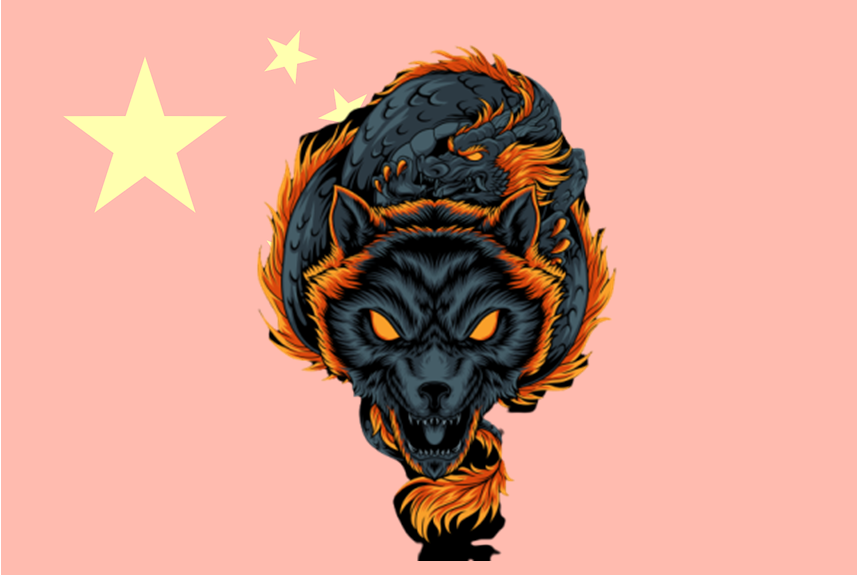
The patient, quiet diplomacy that characterized China over many decades has changed entirely under the current leader and has become decidedly aggressive. Now, with the change of administration in Washington, the question is whether this new policy, dubbed “wolf warrior diplomacy,” will continue, and whether the wolf, which until now has only roared, will resort to physical force

The strategic message that was the legacy of former Chinese leader Deng Xiaoping to keep a low profile, move forward quietly, and be patient, changed under Xi Jinping's leadership, and especially during the four years of the Trump administration. Deng’s policy was succeeded by the "wolf warrior diplomacy," reflected in China’s greater extremism in statements against other countries, aggressive reactions to criticism, and punishment of countries that it believes harm its interests. It is an open question whether in the coming years, and especially with a new American administration, China will continue this diplomatic style and perhaps even intensify it, including in the context of potential military force. Israel must study Chinese policy carefully and maintain bilateral trade ties while strengthening its strategic ties with the United States. Against the background of the struggle between the powers, Israel would do well to follow the messages bequeathed by Deng: be patient, maintain a low profile, and progress toward long-term goals – without loud or provocative rhetoric.

Towards a NATO China Strategy

Una Aleksandra Bērziņa-Čerenkova

NATO’s search for a common, cohesive strategy towards China is among the challenges most likely to reveal deep fractures between the positions of the Allies.

In the second of our series of policy briefs intended to shed light on some of the issues related to the Alliance’s further adaptation, Una Aleksandra BÄ“rziņa-ÄŒerenkova of the Latvian Institute of International Affairs examines the Allies’ public statements on China to find the common ground that might form the backbone of a NATO Strategy for China, and the differences between them that still need to be addressed.

In the first policy brief in the series, Wojciech Lorenz of the Polish Institute of International Affairs examines how NATO’s mechanisms for consultation among Allies have evolved in response to shifts in the security environment, and offers suggestions as to how these mechanisms might be strengthened as a means of mitigating tensions in NATO today.

Could this new building in Israel be the future of offices?

Harry Kretchmer

The technology company says distinctive design features mean the building is prepared for the pandemic and beyond.

These include a ‘flexible grid’ where offices can be easily reshaped and desks can be rolled into new positions.

“Why does a person actually want to come into an office? Why do they need an office at all?”

These are the questions that Vered Gindi, Lead Architect of Microsoft’s new Herzliya campus in Israel, set out to answer four years ago when she started to design it. Her questions proved timely.

When the technology giant commissioned its new 46,000-square-metre state-of-the-art facility, it could scarcely have imagined the extent to which a global pandemic could throw into question the very idea of a physical office. Indeed, some tech firms have given employees the option of working from home forever.

As companies plan hybrid home-and-office futures, and some consider the estimated 30% that could be saved on real-estate costs by downsizing, the Herzliya campus shows one way that offices can reinvent themselves – and find new meaning.

The power of soil: How our precarious climate shaped the Arab Spring

Olivia Lazard

The history of the Middle East, and the recent teachings of the 2010-11 uprisings, highlight an important lesson: Ignore ecological integrity at your peril

In 149 BC, Marcus Porcius Cato - a politician, soldier and citizen dedicated to the study of agriculture - saw a major goal realised when Rome declared war on Carthage. When arguing for this in the senate, Cato brought with him an unlikely weapon: figs homegrown on enemy territory. 

The figs were a delicacy, a sign of Carthaginian prestige. Cato aimed to demonstrate that as an agricultural powerhouse, Carthage represented both a threat and an opportunity. Thanks to the quality of its soils, Carthage was becoming a trade hub and a military rival - and it therefore needed to be defeated. If victorious, Rome could use Carthaginian lands to feed its growing empire. And so the Third Punic War began, ending in 146 BC with the defeat of Carthage. 

Figs decided the fate of a civilisation whose ruins now lie in modern-day Tunis. This is a reminder that what is known today as Tunisia was once a lush, productive terroir that cradled a civilisation overlooking the Mediterranean Sea, at a time when civilisational power stemmed from soil. The ability to grow in abundance was equated with security, political institutionalisation and the beginnings of trade. It was intertwined with population growth, territorial expansion and cultural standing.
Lost habitats

Iran tests drones in military exercise


DUBAI (Reuters) - Iran launched exercises featuring a wide array of domestically produced drones on Tuesday, Iranian media reported, days after the anniversary of the U.S. killing of a top Iranian general by a drone strike in Iraq.

Iran and the regional forces it backs have increasingly relied in recent years on drones in Yemen, Syria, Iraq and the Strait of Hormuz at the mouth of the Gulf.

Iran’s armed forces are to test combat drones used as bombers, interceptors and in reconnaissance missions in the two-day exercises in central Semnan province, the semi-official Fars news agency said.

“The fingers of our heroic armed forces are on the trigger, and if enemies commit the slightest mistake, the armed forces will surely respond fiercely,” said Mohammad Baqeri, chief of staff of the armed forces, quoted by state media.

Foreign Minister Mohammad Javad Zarif has said U.S. President Donald Trump may be trying to find an excuse to attack Iran in his last days in office, or Israel might try to provoke a war. Israel rejected the allegation.

The exercises coincided with increased tensions between Iran and the United States, two days after the first anniversary of the killing of Iranian general Qassem Soleimani in a U.S. drone strike at Baghdad airport, and two weeks before President-elect Joe Biden takes office.

Stable Nuclear Deterrence Requires a Modern Nuclear Arsenal

By Steve Cimbala & Adam Lowther

President-elect Joe Biden recently indicated that he would review the nation’s nuclear deterrence strategy and weapons modernization program, focusing on reducing their role in national strategy. The review will also look to reduce funding for nuclear modernization. Depending on the administration's actions, there is a real risk of compromising the credibility of American deterrence when both China and Russia see the United States as a weakened great power. 

Although the arms control community is focused on the opportunity to cut the nuclear deterrent, the President has a responsibility to listen, as well, to the expert advice of his uniformed military advisors who must plan for, operate, and deploy nuclear and conventional forces.

Undoubtedly, pressure exists within the Democratic party to do anything that seems anti-Trump. Tossing out the Trump administration’s nuclear modernization program would certainly fit that bill, but the Trump plan mostly followed the Obama script in calling for preserving all three legs of the strategic nuclear triad. 

Tech Companies Can’t Stay Out of National Security — Irrespective of What They Want

By Jacob Parakilas

Senator Tim Scott, R-S.C., stops to look at damage in the early morning hours of Thursday, January 7, 2021, after a pro-Trump mob stormed the Capitol in Washington, on Wednesday.

Yesterday, egged on by outgoing President Donald Trump in person and via social media, a group of armed Trump supporters stormed the United States Capitol as Congress met to certify Joe Biden’s electoral victory. Amidst chaotic scenes, one woman died of a gunshot wound and three others from undisclosed medical emergencies, Congress was forced to evacuate to secure locations, and far-right figures were photographed briefly occupying the Senate chamber, Speaker Nancy Pelosi’s office and other supposedly secure locations. But the occupation was eventually cleared by the Capitol Police and DC National Guard, Congress returned, and a day which began with the Democrats winning effective control of the Senate ended with the final certification of Joe Biden’s victory over Trump.

The smoke has not yet cleared, and the implications of what happened yesterday — the first forcible occupation of the Capitol since 1814 — will no doubt reverberate for years to come. But one key element of understanding what happened yesterday was the interface between the president, his supporters in the Capitol and the rest of the world watching, all mediated by social media.

Trump had encouraged his supporters to come to Washington and protest the certification, and in the morning he addressed the gathered crowd, listing his grievances about the election and suggesting — falsely, in the event — that he would accompany them to the Capitol. Once the mob had breached the barriers and entered the Capitol complex, Trump tweeted a call for calm, but like many of his responses to violence committed by the far-right, the de-escalatory rhetoric was perfunctory and leavened with asides suggesting that he supported them.

American Democracy Will Survive Trump’s Failed Insurrection

Judah Grunstein

If the events in Washington, D.C., yesterday demonstrate one thing, it is this: Words have power. Donald Trump used them to incite a mob, and that mob then attacked the U.S. Capitol building to disrupt the congressional certification of the presidential election results taking place there. That incitement by Trump—and the speakers who preceded and followed him at a rally of his supporters earlier yesterday—was not even veiled.

It followed months now of similar incitement, a concerted campaign of lies and fabulations that sought to replace the reality of Trump’s defeat with feverish fantasies of stolen victory. As those fantasies took hold among Trump’s political base, the initial awkward discomfort felt by Trump’s Republican enablers in Congress gradually shifted. What began as arms-reach indulgence of Trump’s fragile, narcissistic ego soon became a wholehearted embrace of his attempt to overturn the will of the American people and the laws that govern their elections.

What happened yesterday represents the sad, predictable outcome of that campaign. Because words have power, it is important to put the proper name to it: insurrection. More precisely, and importantly, it is Trump’s insurrection, as he is responsible for fomenting and directing it.

How charging in buildings can power up the electric-vehicle industry

By Zealan Hoover, Florian Nägele, Evan Polymeneas, and Shivika Sahdev

How charging in buildings can power up the electric-vehicle industry

More than 50 million electric vehicles could be sharing roads in the next five years. Updating charging infrastructure is key to scaling the industry.

E-mobility has reached a tipping point. More than 250 new models of battery electric vehicles (BEV) and plug-in hybrid electric vehicles (PHEV) will be introduced in the next two years alone, and as many as 130 million EVs could be sharing roads the world over by 2030.1 To support these numbers, significantly expanded charging is required—and it will not be cheap. In fact, an estimated $110 billion to $180 billion must be invested from 2020 to 2030 to satisfy global demand for EV charging stations, both in public spaces and within homes.

While EV charging stations in private residences are quite common today, on-site commercial charging will need to become a standard building feature in the next ten years to meet consumer demand. Across the three most advanced EV markets—China, the EU-27 plus the United Kingdom, and the United States—charging in residential and commercial buildings is the dominant place for the foreseeable future and will remain key to scaling the industry. Yet without upgrading buildings’ electrical infrastructure, there simply will not be enough accessible EV chargers to satisfy demand. Further complicating matters, EV charging at scale requires careful planning of a building’s electrical-distribution system as well as local electric-grid infrastructure.

Coal demand has seen its biggest drop since World War II. But it’s not all good news

Johnny Wood

Coal is the single largest source of energy-related CO2 emissions.

Demand is falling in the US and EU, but continues to grow in some Asian countries.

Existing energy infrastructure must be decarbonized or retired to help meet climate targets.

A perfect storm of renewables growth, cheap natural gas prices and growing awareness of the urgent need to cut emissions, not to mention stilted energy demand caused by the COVID-19 pandemic, could signal the end of rising coal demand in the US and Europe.

But this emissions-heavy fossil fuel’s day isn’t over yet.

Demand from some of the burgeoning economies of Asia could fill the void left by those nations switching away from coal, and Asia could be where the future of coal is decided.

Demand change

Climate Change Is Turning Cities Into Ovens


WHICHEVER SIDE OF the subjective city-versus-rural debate you’re on, the objective laws of thermodynamics dictate that cities lose on at least one front: They tend to get insufferably hotter, more so than surrounding rural areas. That’s thanks to the urban heat-island effect, in which buildings and roads readily absorb the sun’s energy and release it well into the night. The greenery of rural areas, by contrast, provides shade and cools the air by releasing water.

Climate change is making the urban heat-island effect all the more dire in cities across the world, and it’s only going to get worse. Like, way worse. An international team of researchers has used a new modeling technique to estimate that by the year 2100, the world’s cities could warm by as much as 4.4 degrees Celsius on average. For perspective, that figure obliterates the Paris agreement’s optimistic goal for a global average temperature rise of 1.5 degrees C from preindustrial levels. In fact, the team’s figure more than doubles the agreement’s hard goal of limiting that global rise to no more than 2 degrees C.

Up until this point, global climate models have tended to snub urban areas, and for good reason, as they make up just 3 percent of the planet’s land surface. Cities are but a blip. Researchers are more interested in the dynamics of things like the ocean, ice, and air currents. “We're closing this kind of gap,” says Lei Zhao, a climate scientist at the University of Illinois at Urbana-Champaign and lead author on a recent paper published in Nature Climate Change describing the modeling. “We provide urban-specific projections for the future.”

Thirteen Days of Peril: Managing the Chaotic End of the Trump Presidency


Since a violent mob instigated by President Donald Trump surged into the U.S. Capitol on the afternoon of 6 January, a question that U.S. political leaders have arguably been dodging for too long became especially acute: how to safeguard the United States’ people and institutions, and for that matter global peace and security, from the U.S. president. While the thirteen days left in Trump’s administration may seem a modest period to weather, they could be a perilously long time given the extraordinary powers of the U.S. presidency. Members of the president’s Republican Party in Congress and in senior roles in his administration must use the influence afforded by their constitutional powers to rein in Trump for the next two weeks, which at a minimum will mean wielding a credible threat to expel him from office if he threatens to do more harm on the scale of the 6 January events. Then it will be up to the incoming Joe Biden administration to begin tackling the internal rifts and tensions that have led the world’s most powerful nation to this precarious place.

While the thirteen days left in Trump’s administration may seem a modest period to weather, they could be a perilously long time given the extraordinary powers of the U.S. presidency.

When, in October 2020, Crisis Group wrote for the first time in our 25 years about the risk of election-related violence in the U.S., we highlighted risk factors that would spell danger in any country. These included years of political polarisation overlaid with issues of race and identity; the rise of armed groups with ideological agendas; the likelihood of a contested outcome; and above all President Trump himself, whose toxic rhetoric and willingness to court conflict in the service of his personal interests have no precedent in modern U.S. history. We also observed that the country’s mature democratic institutions could serve as guardrails that might, with some luck, keep it from heading over a cliff.

First Thoughts on a National Tragedy

By George Friedman

A physician is taught to avoid emotional involvement with patients. If he suffers with them, the pain will break him and his judgement will be impaired. He must be clinical and disinterested in order to understand what he is seeing. Avoiding emotions is necessary, but it exacts an extraordinary toll of either pain or an insensitivity to pain. Striving to understand demands distance, but that distance inevitably breaks.

The task I have set myself is to try to understand the way the world works, and to do that, to some extent, I must not allow myself to participate in it. The world is filled with opinions about what ought to be, and the cacophony of self-certainty is a luxury from which I must imperfectly try to remove myself. As Wednesday unfolded, the opinions were overwhelming. I am a citizen of the United States, and it is at times impossible to keep my distance, much as it would be for a physician to treat his own child.

My job is to say something, but what can you say about the unthinkable? How can you speak when you are grieving? The capital of our country was invaded by a mob, some carrying weapons, who had been encouraged to do so by the president. Nothing that was said for or against Donald Trump was sufficient for the moment, and all those who claimed to have foreseen this or claimed that what we saw did not happen are merely continuing the routine chatter of political discourse. I am supposed to be able to explain what has happened, but the ordinary criticism or defense of Trump doesn’t comprehend the moment, and in any case it misses the point. It is not Trump but we ourselves who are to blame, and what we have become toward each other that has somehow been corrupted. None of this could have happened without the rancor tacitly or deliberately embraced.

Profound Rebuilding Needed to Shore Up U.S. Democracy

RACHEL KLEINFELD

A mob, egged on by a presidential speech earlier in the day, breached the U.S. Capitol, spun in the president of the Senate’s chair, and sent members of Congress running for safety, some in gas masks. Its goal was to stop a peaceful transition of power by upending the certification of election results. These acts were hardly spontaneous, but rather emerged from a series of rallies of white supremacists, conspiracy theorists, militias, and Trump supporters who believe that the election was stolen.

This is the United States of America in January 2021. Its problems are typically blamed on the country’s immense polarization—and that’s true. But it’s not the whole story. The United States is stretched to near-breaking by partisan polarization (though not by left-right ideology). Yet the nation is simultaneously dealing with a Republican Party that is increasingly captured by a faction willing to undermine democracy itself. Each development is problematic, but they are particularly combustible in combination. We’ll have to first look at them separately to understand how they work together.

GROWING POLARIZATION

It’s not news that the United States is facing severe partisan polarization. But this polarization is not primarily about policies. In fact, a majority of Americans agree on the broad strokes of abortion, immigration, and gun legislation. Instead, U.S. citizens have grown to hate and fear the other side and cleave to their own party, with only a minimal relationship to the policies each side embodies—an emotional tribalism known as affective polarization.

This severe polarization started years before President Donald Trump took office. But it didn’t come from the ether—it grew out of the structural incentives politicians face.

POLITICAL INCENTIVES TO POLARIZATION

The Conflict in Ethiopia Calls Into Question Authoritarian Aid

NIC CHEESEMAN

The European Democracy Hub is a joint initiative of Carnegie Europe and the European Partnership for Democracy that brings together practitioners and academics to provide policy-relevant analysis on external EU democracy support and democracy trends within Europe. It aims to act as a focal point for work on democracy, drawing on research to generate ideas for democracy support and democratic renewal.

The conflict in Ethiopia’s northern Tigray region is a tragedy for the citizens caught up in the fighting. It also threatens to destabilize the country’s economic and political system for years to come. Compared with these catastrophes, the implications of the war for the model of authoritarian development promoted by the Ethiopian government over the last two decades pale in significance. But these effects are nonetheless likely to be profound and may lead to a recalibration of international aid models.

In recent years, the impressive economic performances of Ethiopia and Rwanda have meant that international donors have become increasingly willing to fund authoritarian regimes in Africa on the basis that they deliver on development. Beyond the obvious concern that donors become complicit in human rights violations, the main question facing authoritarian development in Africa has always been whether the economic gains achieved under repressive rule are sustainable. Critics of this model worried that sooner or later, exclusionary political systems would face major challenges from marginalized groups and individuals, and that these challenges could undermine development plans. Recent events in Ethiopia suggest that these fears were well founded and will lead to greater scrutiny of the decisions made by so many donors to pump so much funding into authoritarian states.

The United States Can’t Stay a Great Power Without Beating Threats at Home

BY ELSA B. KANIA

Today, the gravest threats to U.S. national security come not from foreign adversaries and strategic competitors but from extremists and domestic terrorists who are attempting to subvert American democracy in support of President Donald Trump. The United States, once regarded—if sometimes chiefly in its own eyes—as the global champion of democracy, has grossly failed to achieve a peaceful transfer of power.

The invitation and encouragement of such mobs by Trump and his enablers in Congress has provoked violence and sedition in the Capitol in which only America’s adversaries can rejoice. Even in urging violent rioters to “go home in peace,” Trump continued to claim falsely the election had been “stolen” and was “fraudulent.”

The future of American democracy appears disturbingly precarious, and the damage of the past four years may take decades to repair. Not since the Civil War has white supremacy so threatened the American republic. At the height of the crisis on Jan. 6, the phrase “civil war” was trending on Twitter as violent insurrectionists stormed the Capitol, interrupting the certification of the results of the Electoral College.

America Can’t Promote Democracy Abroad. It Can’t Even Protect It at Home.

BY EMMA ASHFORD

“What if journalists wrote about U.S. politics the way they wrote about other countries?” asked a dozen tongue-in-cheek articles since 2016. Twitter users joked about the embattled president of a former British colony, huddling in his palace, refusing to concede the election. But all of that ended Wednesday afternoon, when a violent mob rushed past U.S. Capitol Police and invaded Congress, forcing the evacuation of lawmakers and ending with tear gas, gunfire, and at least four deaths. The pictures called to mind Boris Yeltsin on top of a tank, the Arab Spring, or the streets of Venezuela. For those watching around the world, the United States had become what American leaders so often decried: a weak democracy unable to prevent violence and bloodshed from marring the transition of power from one leader to the next.

It’s a sign of how broken U.S. foreign-policy debates are that the primary reaction from many commentators was to worry about America’s moral authority and global leadership. There were comments about how happy China’s Xi Jinping must be and worries that this would undermine U.S. democracy promotion abroad. Michael McFaul, a former Obama-era ambassador to Moscow, tweeted that “Trump today delivered his latest, but hopefully his last gift to Putin.” Meanwhile, a group of NGOs, including the National Endowment for Democracy, issued a statement reaffirming its “commitment to stand in solidarity with all those around the world who share democratic values.” In short: in the middle of a literal coup attempt aimed at halting the certification of a democratic election, with insurrectionists storming the Capitol, many foreign-policy hands were fretting about whether the United States could continue to spread democracy and human rights abroad and whether it might impact America’s ability to engage in great-power competition with China.

Ten Years In: Implementing Strategic Approaches to Cyberspace


This book represents a look beyond theories and analogies to examine the challenges of strategy implementation. In the essays that follow, practitioners who are building cyberspace forces at-scale join scholars who study power and force in this new domain to collectively offer a unique perspective on the evolution and future of cyber strategy and operations.

Domestic Terrorism Strikes U.S. Capitol, and Democracy

By Bruce Hoffman

The breaching of the U.S. Capitol and disruption of the presidential succession by a pro-Trump mob has inflicted lasting damage on the nation’s image as a bastion of democracy. The country should now dedicate itself to rebuilding civil discourse.

You track armed movements and terrorism around the world. Were these domestic terrorists?

Yes. Terrorism is determined by the act itself, not by the type of perpetrator or their cause. This is the U.S. government’s approach. The FBI, the lead agency for countering terrorism, cites the definition of terrorism found in 18 U.S. Code 2331(5) [PDF]: “the unlawful use of force and violence against persons or property to intimidate or coerce a government, the civilian population, or any segment thereof, in furtherance of political or social objectives.” The FBI further defines [PDF] domestic terrorism as acts intended to be a means to “Intimidate or coerce a civilian population; [or] Influence the policy of government by intimidation or coercion.”

What occurred at the U.S. Capitol yesterday conforms to this definition. It involved people using violence or the threat of violence to intimidate democratically elected representatives, the wanton vandalization and destruction of government property, the deliberate subversion of the U.S. electoral process, and the derailment of the peaceful transfer of power that is the hallmark of U.S. governance.

How much is the president to blame for the violent actions of these rioters?

Five Key Cybersecurity Themes from 2020

Javvad Malik 

2020 will go down as recent history’s most notorious year for many reasons - and cybersecurity is no exception. Over the past 12 months, we witnessed countless cyber-attacks including fraud, data breaches, espionage, nation state attacks, insider threats and many more as hackers looked to exploit the vulnerable and desperate state the world found itself in. While some incidents were more common than others, I observed five key themes that stood out to me from last year and I’ll evaluate them to see how we, as a collective, can better prepare ourselves in 2021.

Social Engineering and Fake News

At the height of the pandemic, hackers were exploiting confusion and uncertainty to their advantage, pushing out phishing and scams, to the point where there was a 6000% increase in pandemic-related phishing attacks. With confusion and fear consuming the masses, many didn’t know what information to believe and what information provided crucial pandemic advice and this played into the hands of cyber-criminals who preyed on this anxiety, leading to the noticeable spread of fake news and disinformation. The fake news campaigns largely dominated social media platforms - which at the time were unregulated - to misinform the public about the possible vaccine and its effects. However, the focus of these campaigns quickly revolved around the US elections which became a hot topic for debate. Nevertheless, at a time when many were seeking answers, the internet had become a hotbed of abuse, where lies were being spread and cyber propaganda was being found in tweets, deepfakes and unvetted articles. What may have once been seen as a joke had now become a new method to deceive and commit fraud.

Remote Working and Tech Debt

NATO Science presents: Training by gaming


Project description: In the future, threats could come from all sides: disinformation, urban warfare, cyber attacks, civil unrest, robots, drones, and even augmented humans. It's NATO's job to imagine every possible threat and plan how to best protect our populations. Gamification can be a valuable tool in getting people to ask questions they haven't asked before. The combination of competition, excitement and fun is crucial when training the next generation of security specialists. Through its Science and Technology Organization, NATO is working with cognitive and behavioural scientists at Atılım University in Turkey to set up simulations – from board games to future games in virtual reality – that hit the perfect pitch of learning and creativity. In the end, the knowledge and experience gained from these games will help NATO and Allied leaders make better-informed decisions on defence matters.

What is gamification and why is it important?

Gamification is the application of game-design elements and game principles in non-game contexts. It can also be defined as a set of activities and processes to solve problems by using or applying the characteristics of games. More simply, you can think of gamification as using games to explore complex, real-life situations. It is important because it allows people to be immersed in a complex scenario and struggle with challenging issues in an exciting and fun environment.

How does this research project fit within NATO?

The Military Stayed Out of the Insurrection, but It Isn’t Over Yet

BY PETER FEAVER 

The angry mob that attempted an insurrection in the U.S. Capitol yesterday failed. Congress, presided over by Vice President Mike Pence, reconvened to fulfill its constitutional duty to formalize President-elect Joe Biden’s victory.

To be sure, the insurrectionists succeeded in a number of things. First, they breached the defenses of the Capitol building and put the lives of legislators and staff at risk. Second, they created scenes of chaos that will stain the United States’ reputation for the rest of history. Third, they underscored once again that outgoing President Donald Trump is the least capable leader in a crisis that Americans have had in their lifetimes. The spectacle of a president unwilling to denounce those physically attacking another branch of government is the gravest failure of a failed presidency precisely because what was required of Trump at that moment was so easy. Fourth, the insurrectionists wrecked the political careers of numerous Republicans hoping to challenge Biden in 2024—most prominently, I suspect, that of Trump himself.

But the mob failed in its larger goal of thwarting the constitutional order and handing the presidency back to Trump—or perhaps one should say that they will fail, since there is still a mopping up that need to be completed. First, all those who stepped beyond their right to peaceful protest by crossing police barriers and entering the Capitol Building need to be held accountable in courts of law. Second, those who went further still and prepared explosive devices and other violent mayhem that was thwarted must likewise face justice. Third, whatever conspiracies fomented the insurrection need to be uncovered and prosecuted. Fourth, any attempt to replicate Wednesday’s chaos elsewhere in the country needs to be nipped in the bud with a decisive and preemptive response by law enforcement. And finally, every single Republican must denounce both the criminal actions of the insurrectionists and what drove them: the massive and baseless allegations promoted by Trump and his misguided enablers about the legitimacy of the November elections.

9 January 2021

China-India border dispute: PLA ‘has built frontline observation post’

Minnie Chan

The Chinese military has said for the first time that it has established a fully fledged strategic observation post near its 

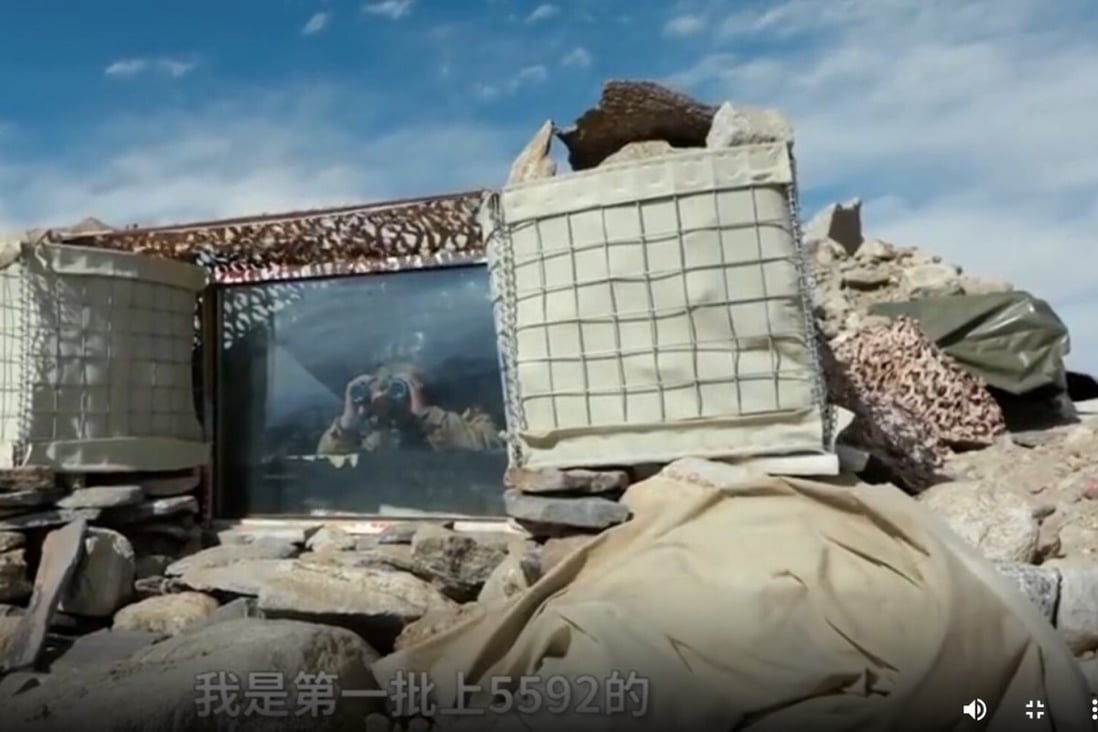
A 10-minute report by China Central Television (CCTV) said a platoon of People’s Liberation Army (PLA) troops held a ceremony this month marking the establishment of the post, based around rocky walls 5,592 metres (18,346 feet) above sea level on Doklam Plateau.

“Compared with their Indian peers who still need to build rock walls as a windscreen in the border area, the PLA troops’ facilities are more advanced and will be combat-ready for any possible fights,” Beijing-based military expert Zhou Chenming said.

“The ‘5592’ post [had been] a temporary sentry stop in the aftermath of the  2017 border stand-off, but now it is a permanent observation post with 24-hour and all-weather military observers inside.”

India pushes to build roads near Chinese border, in a bid to boost infrastructure in border areas

The post, under the garrison based in Shigatse Military Base in Tibet, is located close to where the 2017 stand-off occurred between Chinese and Indian troops, according to CCTV.

America Already Won in Afghanistan But We Missed the Victory

Jason Criss Howk

America “won” in Afghanistan years ago, but the analysts in think tanks, the press, and the intelligence agencies missed it. Sound confusing? Let me explain. The Afghan security forces and their leadership have always been the key to victory, and the winner of the war was decided when the U.S. and NATO decided to make a long-term investment in a professional security sector—that happened in 2002 and 2003. But claiming an ultimate American or NATO victory has never been important to the war effort.

VICTORY SHOWN IN THE AFGHAN PEOPLE AND THE ANDSF

The Afghan people are the only ones that can assign victory or defeat to this war. They do so by sustaining human rights and democratic principles while constantly building a secure environment for education, healthcare, and other societal advances to occur. This is all enabled by the Afghan National Defense and Security Forces (ANDSF). The ANDSF is the foundation for a peaceful Afghanistan—it always has been.

I saw another evergreen headline recently, celebrating the strength of the Taliban movement, and its ability to “outlast a superpower” in Afghanistan. This demonstrates clearly that the pundits never understood the mission in Afghanistan, and unfortunately that has not allowed American citizens, or Afghans, to fully understand it. This has never been about America or NATO versus the Taliban; it’s about the Afghan people versus those who commit violence and crime in their nation.

From Elections to Ceasefire in Myanmar’s Rakhine State


What’s new? Following vote cancellations in conflict-affected areas of Rakhine state during the 8 November general election, Japan has helped broker an informal ceasefire between Myanmar’s military and the Arakan Army in order to hold supplementary elections. Both sides say they are in favour, but the civilian government is reluctant. 

Why does it matter? The initiative has halted almost two years of intense fighting and enabled dialogue to resume for the first time since December 2019. Negotiations over elections could be a stepping stone to a formal ceasefire, but the process remains fragile, particularly without civilian government buy-in.

What should be done?  The Arakan Army should release three National League for Democracy candidates it has detained. The civilian government should support elections and – if the Arakan Army lets the captives go – drop its designation as a terrorist organisation. The Tatmadaw should stop insisting that the Arakan Army leave Rakhine under a ceasefire.
I.Overview

China Wages War NOT Competition

By Bob Howard

China at War with the United States

The concept of Great Power Competition (GPC) is flawed. The term GPC leads to an apathetic response by those with a responsibility to act and protect western democratic interests such as businessmen, politicians, intelligence, academia, media, national and international government institutions, and the military.[2] China’s government is waging war against the United States (US); NOT COMPETING.[3]

A frank acknowledgement that the United States and China are now adversaries is a necessary precondition for a realistic strategic accommodation that constrains their rivalry and avoids worst case outcomes. – Dr Alan Dupont [4]

As of late 2020, Japan’s National Institute for Defense Studies assessed the following regarding China, “active defense is expected to take on a more offensive nature in the military strategy in the new era. At the same time, it should be taken into account that, as it prepares for these wars, the PLA has proposed warfare methods combining a variety of domains such as “Unrestricted Warfare.” [5]

‘We need a real policy for China’: Germany ponders post-Merkel shift


The country will be key to whether Europe works more with the US to defend democracy or seeks to engage Beijing © FT montage Share on Twitter (opens new window) Share on Facebook (opens new window) Share on LinkedIn (opens new window) Save Erika Solomon and Guy Chazan in Berlin JANUARY 5 2021 345 Print this page Few people have heard of IMST — a small German company with just 145 employees, specialising in satellite, 5G, and radar technology. That was until last month, when the government in Berlin stopped it being acquired by a subsidiary of Casic, the Chinese arms conglomerate. The deal, concluded the German economics ministry, represented a “serious threat to public order and national security”. “What is being sold? It’s a key technology that the Chinese don’t have . . . Why is it being sold? 

Because there’s a gap the Chinese have to fill,” a German official told the Financial Times. “It’s not just about weapons, it’s also about high tech, different sectors where Germany is a world leader.” The nixing of the IMST deal is symptomatic of a growing mistrust overshadowing the Sino-German relationship. It also provides important pointers to the future direction of German policy on China after Angela Merkel, chancellor for the past 15 years, finally quits the political stage. Ms Merkel personifies old ideals of rapprochement — the principle that ever deepening economic ties with the west would encourage political change in Beijing, and a shift to liberalism and western values. “Wandel durch Handel” — change through trade — was for years a key precept of German policy. 

Refugees Are Victims of Chinese Espionage, Not Accomplices


BY KELSANG DOLMA

Since its occupation of Tibet, the Chinese Communist Party has displaced and murdered tens of thousands of Tibetans with genocidal settler colonial policies. As refugees, Tibetan Americans have worked tirelessly to preserve their language and culture. But it’s a small community of about 26,700 people—and treachery inside it hits particularly hard.

Baimadajie Angwang, a now 33-year-old Tibetan American, traveled to the United States on a cultural-exchange visa when he was 17, which he then purposefully overstayed. He claimed that he would be tortured if he was forced to return to China. His name was a Sinicized version of the Tibetan original, Pema Dhargyal Ngawang, and he couldn’t speak Tibetan, but that’s not unknown for young Tibetans in China, the victims of policies designed to destroy their culture and language. Angwang was granted asylum, and eventually citizenship. He became a police officer, serving as a community liaison in New York, as well as a U.S. Army reservist.

In September, the Department of Justice shocked the Tibetan American community when it charged Angwang with espionage. But this case, disturbing as it is, should mean intensified scrutiny of CCP efforts, especially the support given to them through consulates, not of Tibetan refugees themselves. Efforts by some politicians to use the fear of espionage to block the arrival of more refugees are deeply misguided.

Although CCP-backed espionage is documented in India, where the Dalai Lama and large numbers of Tibetans reside, the New York espionage case hit close to home for many Tibetans; New York is home to the majority of Tibetans in the United States.

The United States is well aware of major intelligence breaches instigated by Beijing and is constantly seeking to uproot covert Chinese actors. However, the Angwang case is unprecedented. Dharamshala, the home of the Tibetan Indian community, has been the target of many CCP espionage efforts, but this is one of the first prominent cases against the Tibetan American community.

The Current Situation in Libya


Nine years after the fall of Muammar Qaddafi, Libya continues to struggle to end its violent conflict and build state institutions. External actors have exacerbated Libya’s problems by funneling money and weapons to proxies that have put personal interests above those of the Libyan people. U.N. efforts to broker a lasting peace have not yet succeeded, overshadowed by competing peace conferences sponsored by various foreign governments. Meanwhile, Libya’s borders remain porous, particularly in the southern Fezzan, facilitating an increase in trafficking and smuggling of illicit materials, including weapons.

At the subnational level, many local conflicts reflect long-standing feuds between various factions, tribes, and ethnic groups. Though Libya’s national conflict has stalled in recent months, prospects for a political solution are complicated by the country’s deep political and tribal divides.

USIP’S Work

Iran’s Provocations Are a Warning Shot to Biden

James Stavridis

James Stavridis is a Bloomberg Opinion columnist. He is a retired U.S. Navy admiral and former supreme allied commander of NATO, and dean emeritus of the Fletcher School of Law and Diplomacy at Tufts University. He is also an operating executive consultant at the Carlyle Group and chairs the board of counselors at McLarty Associates.Read more opinion

Iran’s announcement that it would begin enriching uranium to 20%, well over the limit of 4% set in the 2015 nuclear agreement, sounded a clear warning in advance of President-elect Joe Biden’s inauguration. The Iranians followed up on Monday by seizing a South Korean tanker in the Arabian Gulf, claiming it was violating environmental standards — a rich accusation from a nation that has planted mines in the Strait of Hormuz.

The U.S., for its part, recently deployed long-range bombers fitted with cruise missiles to the Gulf, and the aircraft carrier Nimitz is on station (after a brief and perplexing announcement that she would sail for home). The U.S. also has cruisers and submarines with tomahawk land-attack missiles in the region, poised for action.

What is happening in Tehran, and how will U.S.-Iranian relations spin out in 2021?

How Azerbaijan Won the Karabakh War

Simon Ostrovsky

There is a saying in Azerbaijan, the bigger your roof, the more snow falls on it. Last year, Azerbaijan’s roof grew significantly larger when it emerged victorious from a 44-day war against Armenia for control of the Nagorno-Karabakh enclave.

Both Azerbaijan and Armenia are nestled in the strategically important Caucasus Mountains, a region where Russia, Turkey, and Iran meet. Nagorno-Karabakh is a province whose very name exemplifies the tangled interests that have long vied for influence there: it’s an appellation that combines Slavic, Turkic, and Farsi words. And although Azerbaijan is surely the main beneficiary of its successful campaign to reclaim territory it lost during the first Karabakh war in the 1990s, observers have asked the question: who among the outside powers of the region came out on top at the end of this most recent war?

Armenia’s capitulation on Nov. 9 makes it the clear loser in the conflict. As Azerbaijani forces took Shusha, a major city deep in the Karabakh heartland, Russian President Vladimir Putin used his influence in both the Azerbaijani and Armenian capitals to broker a deal that halted the Azerbaijani offensive and left ethnic-Armenians in control of a much-reduced slice of the region. Armenia was forced to give up its claim not just to areas that it lost in fighting, but also to several other districts of Azerbaijan that surround Karabakh, which Armenians had controlled since 1994. These areas were at the heart of Azerbaijan’s grievance against Armenia, because in the Soviet period they were populated mainly by ethnic-Azeris unlike Karabakh, which was and remained populated predominantly by ethnic-Armenians.

GCC Rift over Qatar Comes to an End


Saudi Arabia, Bahrain, the United Arab Emirates (UAE) and Egypt announced on January 5 they would lift the embargo they had imposed on Qatar in 2017, and Qatar agreed to drop a slew of cases against those states in international organizations. While the agreement does not restore unity to the Gulf Cooperation Council, it does end an open rupture that had undermined any collective action.

Q1: How did the embargo start?

A1: In June 2017, Qatar television broadcast statements attributed to the emir of Qatar that were pro-Iranian and anti-Donald Trump, prompting Saudi Arabia, the UAE, Bahrain, and Egypt to cut ties with the country. The four argued that the comments were the last straw in a long list of Qatari offenses that included support for the Muslim Brotherhood, involvement in terrorism, and close ties with Iran. They were unswayed by an FBI determination that the statements were the result of a hack by Russian nationals; instead, they came up with a list of 13 demands that included shutting down all of Qatar’s regional news outlets, cutting links to any political figures in the region, and pulling back from ties with Iran and Turkey. Many of the complaints about Qatar go back decades, and Qatar has periodically promised its neighbors it would moderate its actions. Regional concerns increased when Qatar developed close ties with Islamist political groups during the Arab Spring.

Q2: Why did this conflict go on so long?