23 February 2021

Chinese Intransigence in Ladakh: An Overview

Major General PK Mallick, VSM (Retd)

China and India are heirs to the two oldest civilisations of the world. Both emerged in their present form after World War II. India became independent in 1947 and the People’s Republic of China was founded in 1949. They share one of the world’s longest borders, about 3488 kms, across the Himalayas. Both are nuclear weapon states. China’s missiles can reach anywhere in the world. India’s latest Agni series missiles can reach Beijing comfortably. On border issues there have been instances where the security forces were facing each other in contested areas and were increasingly indulging in fistfight, pushing and shoving etc in very difficult terrains. On Jun 15 this year in a brutal, savage skirmish when, fists, rocks, rods, baton, spikes, knuckle-dusters and nail-studded clubs and wooden clubs wrapped in barbed wire were used in a post at Galwan on Indian side of Line of Actual Control (LAC) in Ladakh sector at an altitude of 4,250 meters. This type of battle used to be fought in medieval times. Armies fight with bayonets and close quarter battles in extreme situations when all other means of fighting ends.   
Rise of the US-India-China triangle

By Sumit Kumar

The rise of China as a major economy and military power has been a major development this century. While China’s economic clout is felt across the world, it has also been aggressively pursuing a military modernization program.

One study published by the Washington-based Center for Strategic and International Studies in May last year said that since 2016, China’s annual defense budget has been 7.2 to 8.1 percent of total government spending.

Although China has projected its rise as peaceful, the truth is that Beijing has begun to redefine the power structure in Asia in its favor, leading some international relations experts to argue that its rise must be seen in the historical context of the rise and fall of great powers.

For a long time in the post-Cold War era, the US had the illusion of China’s peaceful rise. Only during the administration of former US president George W. Bush did Washington began to view China as a major strategic competitor.

The administration of his successor, Barack Obama, after failing to convince China to work together in managing global and regional affairs under the “Group of Two,” also redirected its efforts to retain its leadership role in the region through its Asia pivot policy.

Under former US president Donald Trump, the US launched a trade dispute against China and also initiated efforts to strengthen a strong relationship with its allies and partners through its “free and open Indo-Pacific” strategy, with the aim to retain its sole super-power status in the region.

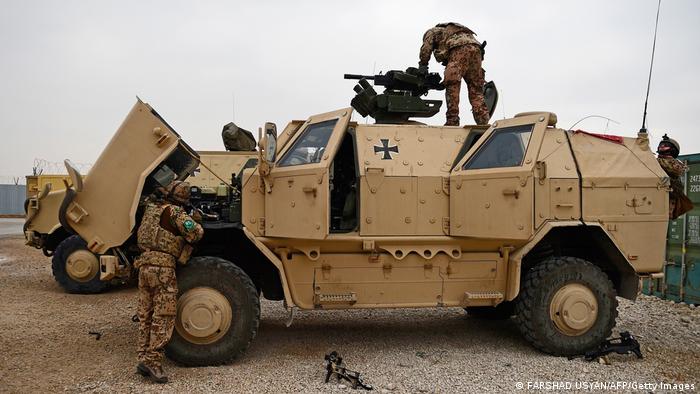
Taliban threat in Afghanistan 'will significantly rise,' says German defense minister


NATO has made no decision on whether or when to pull out of Afghanistan, the military alliance's Secretary-General Jens Stoltenberg said on Thursday.

A peace deal struck in February 2020 between the Taliban and the United States calls for all US and NATO forces to leave Afghanistan by May 1 in exchange for the Taliban to reduce violence and cooperate with the Afghan government

However, the Taliban have increased violent attacks, and the so-called "intra-Afghan" talks with the government have gone nowhere.

"We are faced with many dilemmas, and there are no easy options," Stoltenberg told journalists after talks between defense ministers in Brussels.

"If we stay beyond May 1, we risk more violence, more attacks against our own troops," he said. "But if we leave, then we will also risk that the gains that we have made are lost."
Germany warns of threat to NATO troops

Is NATO Getting Ready to Take on China?

by Kris Osborn

Members of the North Atlantic Treaty Organization are stepping up cooperation and commitment to collective security by increasing defense contributions and joining the U.S. in deterring China, what Defense Secretary Lloyd Austin calls a “pacing threat.”

Members of the North Atlantic Treaty Organization are stepping up cooperation and commitment to collective security by increasing defense contributions and joining the U.S. in deterring China, what Defense Secretary Lloyd Austin calls a “pacing threat.”

Briefing reporters following the virtual NATO Defense Ministerial meeting, Austin praised what he called the “unique perspectives” on deterring China from several key member nations to include Finland, Sweden and the European Union.

“I applaud NATO's work on China and I made it clear that the United States is committed to defending the international rules-based order, which China has consistently undermined for its own interests,” Austin said, according to a Pentagon transcript of the discussion.

Rebranding China’s Global Role: Xi Jinping at the World Economic Forum

Selim Öterbülbül

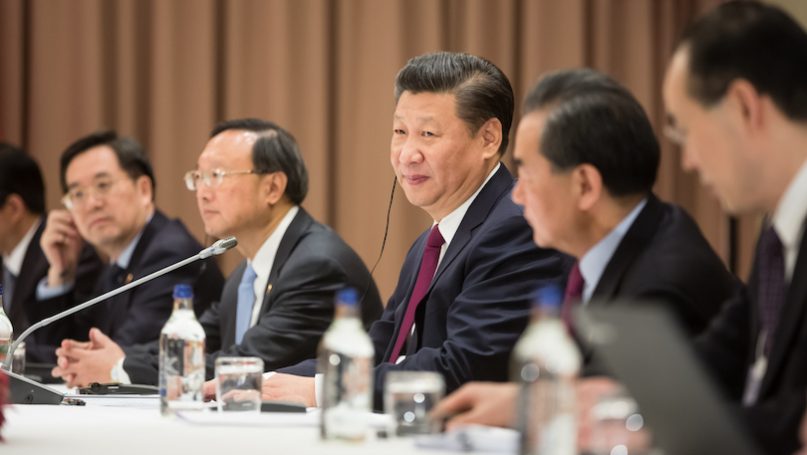
In 2017, Xi Jinping became the first premier of the People’s Republic of China (PRC) to attend the Annual Meeting of the World Economic Forum (WEF) in Davos. At this summit, one that both exemplifies and upholds the liberal international order, President Xi delivered the opening plenary in order to address not only the gathering of the global financial elite, but also the forthcoming challenges he surveyed concerning the then new Trump administration. Four years later, Xi Jinping once again delivered a special address at the WEF 2021, this time online however due to the COVID-19 measures, a few days apart from the US President Biden taking office. One could argue that such timing could be a coincidence, or, rather a deliberate choice. Nevertheless, it is a fact that President Xi’s participations in the WEF have coincided, interestingly, with the inaugurations of United States (US) Presidents Trump and Biden. The timing of these speeches indicates that the WEF can provide a platform for the President of the PRC to deliver a monologue indirectly aimed at the President-elect of the US in front of a global audience; allowing Chinese leadership to both present the perspective and demonstrate that its great power status is equal with that of the US. Another reason for such a choice of timing could concern the clarification of China’s position on the global issues, especially since the Chinese leadership is required to further explain its numerous positions to the world in order to overcome its ‘closed book’ image if it does not want keeping a low-profile anymore. The final reason includes addressing the upcoming challenges via normative grounds in order to promote certain grand principles.

Stable and in Control? China’s Party Regime and its Challenges

Joseph Yu-Shek

Abstract
Despite domestic and international difficulties, the survival and stability of the Chinese Communist regime does not seem to be severely threatened. China’s successful domestic handling of the pandemic and its quick economic recovery has served to reaffirm the confidence of the Chinese leadership in the superiority of their political-economic system and will have boosted the domestic standing of the regime. Yet as it seems that the Chinese leadership will have to accept an economic slowdown sharper than expected under normal circumstances, they will likely be relying on the appeal of nationalism even more than usual. Despite the fact that China’s continued economic development risks being hampered by its heavy-handed international conduct and by its domestic oppression, the regime remains in a stable state of control.

A New Pivot to Asia

BY C. RAJA MOHAN

As he takes a fresh look at Washington’s China strategy, President-elect Joe Biden faces hard choices. China has become a powerful challenger to the United States’ post-World War II global primacy. To make matters worse, the political coalition that propelled Biden to victory is deeply divided on how to deal with China. There is strong opposition among Democrats to the total political confrontation and complete economic decoupling from China that outgoing U.S. President Donald Trump’s administration articulated toward the end of its term. Among progressives, there is deep resistance to a cold war with China, even as they want to intensify the pressure on Beijing on human rights. Powerful corporate interests on Wall Street and in Silicon Valley, many of them with close ties to the Democratic Party, would love to go back to business as usual with China. American workers and their advocates are wary of ceding even more manufacturing jobs to China in the name of renewed economic globalization. Many other Democrats see climate change as the most important challenge to humanity and believe the United States must cooperate with China to mitigate the threat.

In responding to these competing demands, Biden smartly avoided specifics during his successful campaign for the presidency. He argued that China is not a threat but a competitor and that this competition can be addressed and won by the United States. To do this, Biden would take to industrial policy to rebuild traditional U.S. strengths. Criticizing Trump’s tariff wars as a blunt instrument, Biden promised to develop a more sophisticated strategy of economic engagement and competition with China.

Are the US and Iran headed for a military showdown before Trump leaves office?

Clive Williams

Tensions are running high in the Middle East in the waning days of the Trump administration.

Over the weekend, Iran’s foreign minister, Mohammad Javad Zarif, claimed Israeli agents were planning to attack US forces in Iraq to provide US President Donald Trump with a pretext for striking Iran.

Just ahead of the one-year anniversary of the US assassination of Iran’s charismatic General Qassem Soleimani, the head of Iran’s Revolutionary Guards also warned his country would respond forcefully to any provocations.

Today, we have no problem, concern or apprehension toward encountering any powers. We will give our final words to our enemies on the battlefield.

Israeli military leaders are likewise preparing for potential Iranian retaliation over the November assassination of senior Iranian nuclear scientist Mohsen Fakhrizadeh — an act Tehran blames on the Jewish state.

The defender’s dilemma: Defining, identifying, and deterring gray-zone aggression

Elisabeth Braw
Source Link

Key Points
Gray-zone aggression takes place in the gray zone between war and peace and is used to weaken another country using means short of war.

Using it is advantageous to the attacker, as it involves far smaller risks and expenses than armed aggression does, and to date results in scant punishment.

Russia and China are today’s main practitioners of gray-zone aggression against the West, each using a different combination of means of aggression.

Because gray-zone aggression exploits open societies’ vulnerabilities, any country can use the opportunity and can create new means of aggression.

As it does not involve the sustained use of force and targets civil society, defense and deterrence must include all parts of society.

The Challenge of Iran

by Geoffrey Kemp

As the Biden administration surveys the Middle East, one of its top priorities will be how to deal with the threats to the region posed by Iran's nuclear and missile programs. Will Iran be prepared to refreeze its nuclear program in exchange for sanctions relief? How will other countries react to U.S. efforts to reengage in regional nuclear diplomacy?

Experts Shai Feldman, Gary Samore, and Ellen Laipson answer these questions and more in a panel moderated by Geoffrey Kemp.

Biden says he will listen to experts. Here is what scholars of the Middle East think.

Marc Lynch and Shibley Telhami

Is the Israeli-Palestinian two-state solution dead? Would a Biden administration decision to return to the JCPOA — the 2015 Iran nuclear deal — reduce the risk of Iran obtaining a nuclear bomb? How important were the Arab uprisings a decade ago, and are they coming back?

The Middle East never lacks for commentary and opinions. Several high-quality surveys regularly ask political scientists and foreign policy experts their views on U.S. policy in the region. But what do scholarly experts on the Middle East think?

Last week, we fielded a unique survey of scholars with expertise in the Middle East, the first of our new Middle East Scholar Barometer. Drawing on the membership of the Middle East Studies Association, the American Political Science Association’s MENA Politics Section and the Project on Middle East Political Science at George Washington University, we identified 1,293 such scholars. The vast majority speak regional languages, have spent significant time in the Middle East, and have dedicated their professional lives to the rigorous study of the region and its politics. Within three days, 521 scholars had consented and responded (a 40% response rate), divided almost equally between political scientists and nonpolitical scientists.

Respect Thy Neighbor: Russia and the Baltic Region

By Dmitri Trenin

Twenty-five years ago, soon after I joined Carnegie, I launched my first project at the Carnegie Moscow Center. It was focused on the Baltic Sea area. As a result, I even wrote a short book for CMC called The Baltic Chance: The Baltic States, Russia, and the West in the New Europe. The idea behind both the project and the book was to conceptualize the role of the Baltic Sea region as a laboratory for ever closer collaboration between Russia and the rest of Europe.

Fast forward to today. The Baltic Sea area has become the part of Europe where Russia and NATO, as a result of its enlargement to the east, sit physically side by side along a broad front. To all intents and purposes, it is a de facto front line. Following the 2014 Ukraine crisis, relations between Russia and NATO have turned as hostile as they were during the Cold War. Small Western military contingents are now deployed in each of the Baltic states. Poland is emerging as a new hub for the U.S. military presence in Europe.

Why America’s Debt Does Matter: Control It Now or Suffer Later

by Bruce Yandle

As America prepares for another $1.9 trillion in federal coronavirus relief, the day approaches when policymakers and taxpayers will have to sit down at the proverbial kitchen table and look at the books. Yes, the coronavirus is very much still here; there are lots of people suffering, and Americans’ wants are many.

Even so, Americans have no choice but to come to grips with federal spending and growing debt. And the United States has time to do it. Otherwise, an ugly federal spending collision lies in the offing.

Consider that the federal budget contains three broad categories: discretionary, nondiscretionary, and net interest payments. In the first category in 2020, there was $713 billion for defense and $724 billion for nondefense, or all the rest of government. Under nondiscretionary, there was $2.97 trillion for Social Security, Medicare and Medicaid.

Finally, there was $376 billion provided for net interest payments. It’s a net figure because the federal government both earns and pays interest. The 2020 interest cost of the debt came in at $522.7 billion.

Of course, the interest cost of the debt is determined by the total amount of outstanding national debt and the average interest rate paid on that balance. The current low-interest rate environment makes a huge difference. On January 31, the total debt outstanding stood roughly at $27.7 trillion. On the same date in 2020, it was $23.3 trillion, and reaching back to 2015 was $18 trillion. Federal debt has increased by almost $10 trillion, or 56 percent, in six years.

Review – Rights as Weapons: Instruments of Conflict, Tools of Power

By Clifford Bob

Human rights are generally thought of as defensive in nature. That is, they are held up by certain individuals and groups as a means to protect their dignity from the state or other malevolent actors. Moreover, rights are often viewed as either philosophically grounded in principles of human dignity and/or religiously endowed by a creator. Even absent a philosophical or religious grounding, rights are often regarded as legal concepts and taken as inviolate. These views of human rights treat them as generally positive and used by oppressed groups for liberal ends. In Rights as Weapons: Instruments of Conflict, Tools of Power, Clifford Bob cuts against the hagiography of human rights, and rights in general, to focus on the fundamental political nature of rights and how they are often used strategically, aggressively, and even for “illiberal ends”. In previous books such as The Marketing of Rebellion (2005) and The Global Right Wing and the Clash of World Politics (2012) Bob has shown a knack for viewing common topics in international relations and comparative politics (e.g., rebellions, international norm diffusion) from different perspectives enabling a nuanced view of political phenomenon that one does not always find in academic studies. For these reasons Bob’s view of how rights work in international and domestic politics are worth grappling with.

Covid-19 is up-ending capitalism

BY PATRICK FOULIS

RECESSIONS ARE capitalism’s sorting mechanism. Weak businesses shrink or fail and stronger ones expand. But in 2020 the process of creative destruction did not take place in the typical manner. Because the downturn was the result of a health crisis rather than, say, a financial crash or inflation scare, there were some idiosyncratic corporate winners and losers: think of the boom in video streaming, or cruise-liner firms being wrecked. Meanwhile vast state handouts propped up companies around the world, masking the scale of the corporate carnage. In 2021 the toll will become clearer as stimulus tapers down and more firms fail. Healthy businesses will ramp up investment, giving them an enduring advantage. These top dogs will, however, face a new climate in which three tenets of modern business—the primacy of shareholders, globalisation and limited government—are in flux.

Downturns tend to be infrequent and swift: since the second world war America has been in recession only 14% of the time. But they have a profound impact on the structure of business. During the previous three slumps the share prices of American firms in the top quartile of each of ten sectors rose by 6% on average, while those in the bottom quartile fell by 44%.

Technology, growth, and inequality: Changing dynamics in the digital era

Zia Qureshi

Ours is a time of exciting technological change. The era of smart machines holds the promise of a more prosperous future for all. But it demands smarter policies to realize that promise. To capture potential gains in productivity and economic growth and to address rising inequality, policies will need to be more responsive to change as technology reshapes markets. And change will only intensify as artificial intelligence and other new advances drive digital transformation further—and at an accelerated pace in the aftermath of the COVID-19 pandemic.

As technology shifts market dynamics, policies must ensure that markets remain inclusive and support broad access to the new opportunities for firms and workers. New thinking and policy adaptations are needed in areas such as competition policy, the innovation ecosystem, digital infrastructure development, upskilling and reskilling of workers, and social protection regimes. Fostering wider diffusion of new technologies among firms and building complementary capabilities in the workforce can deliver both stronger and more inclusive economic growth.

Major economic reform, inevitably, is politically complex. Today’s deeper political divisions add to the challenges. But political support appears to be building in some key areas of reform, such as addressing the market dominance of tech giants and putting in place an adequate regulatory framework governing data. Crises can shift the political setting for reform. The fault lines exposed by the COVID-19 pandemic can catalyze action to address mounting economic disparities. All too often, reform is paralyzed by trite debates about conflicts between boosting economic growth and reducing inequality. Encouragingly, however, policy is increasingly being informed by research findings that show this to be a false dichotomy. In realizing the promise of brilliant new technologies, the growth and inclusion agendas are one and the same.

Back to the Future? International Climate Policy in 2021

Susanne Dröge, Tessa-Sophie Schrader

In 2021 the international climate policy agenda will need to catch up on much that was not accomplished in 2020. Because of the pandemic, deadlines were postponed and processes slowed down. What is the position of major climate policy powers in early 2021, and what momentum can we expect for international negotiations? The most important impetus this year will come from the EU, the US and China. However, since these three powers are also competitors, the EU and its member states will have to strengthen multilateral cooperation overall so as to push for reaching the Paris Agreement targets, formulate clear expectations, and ensure that all actors remain on equal terms. For Germany and the EU it will therefore be crucial to continue to focus decisively on joint action with partner countries within networks, and to concentrate on core issues with the US. Obvious areas for cooperation with Washington are a joint diplomatic approach for the next international climate conference (COP26), and rec­on­ciling climate and trade policy.

The COP26 in Glasgow will be the climate policy focus in 2021. The postponement by one year has given its co-organisers, the United Kingdom and Italy, more time to prepare. Both also hold additional impor­tant positions in 2021: Italy chairs the G20, the UK the G7. These and other formats could be used to prepare the COP26. Con­structive momentum for the conference also comes from climate-policy announcements being made much more concrete in the EU (Green Deal), the US (regulations) and China (five-year plan). Moreover, sus­tainable, “green” earmarking of stimulus packages became popular that most coun­tries have had to pass because of the pan­demic, as well as “greening” of the means made available by international financial institutions for overcoming the crisis. The related financial flows will continually have to be monitored for their de facto climate impacts.

Forecasting the governance of harmful social media communications: findings from the digital wildfire policy Delphi

Adam Edwards,Helena Webb,William Housley,Roser Beneito-Montagut,Rob Procter

ABSTRACT
Social media exhibits the core characteristics of emergent technologies. It is disruptive of established ways of organising social relations, is evolving at an exponential pace and its effects, including the production of new ‘goods’ and ‘bads’, are highly uncertain. Interest in understanding these effects has intensified in the context of fears over so-called ‘digital wildfire’, a policy construct referring to rapid propagation of harmful communications, particularly those involving children and other vulnerable social groups but also those threatening the integrity of the political process in liberal democracies. Even so, proponents of social media are anxious to protect its potential for enhancing freedom of speech and revitalising civil society through the redistribution of editorial powers to shape public debate and facilitate the democratic scrutiny and oversight of elites. This article reports findings of the ‘Digital Wildfire policy Delphi’, which asked key informants to consider the political and technical feasibility of regulating harmful social media communications and to forecast likely scenarios for their prospective governance. Key forecasts are that forms of enforcement are limited, stimulating ‘self-regulation’ will become increasingly important but, more controversially, the likelihood is that harm to vulnerable groups will be ‘accommodated’ in liberal democracies as a price to be paid for the perceived political and economic benefits of unmoderated social media. The article concludes with conjectures about future directions in the policing of social media and their implications for shaping the emerging research agenda.

The WTO’s Historic New Leader

ZAINAB USMAN

WHAT’S HAPPENING IN THE WORLD OF TRADE?
Global trade policy circles are abuzz with the news that Ngozi Okonjo-Iweala has been confirmed as the new director general of the World Trade Organization (WTO). Her appointment comes after months of deadlock in the selection process for the next head of the trade body to replace outgoing director general Roberto Azevêdo. Okonjo-Iweala was a clear front-runner, backed by most WTO member states including Japan and countries throughout Europe, but former president Donald Trump and his administration preferred South Korea’s trade minister, Yoo Myung-hee. The United States had been the sole member country to oppose Okonjo-Iweala’s appointment until President Joe Biden and his administration changed course and declared “strong” support for her after his inauguration—a policy shift that permitted a quick resolution of the drawn-out process.

WHY DOES OKONJO-IWEALA’S APPOINTMENT MATTER?

Okonjo-Iweala is the first female head of the WTO. She is also the first African to head the body. A Harvard- and MIT-trained development economist, Okonjo-Iweala was a two-time finance minister of Nigeria and a former managing director at the World Bank. She brings vast experience in policy reforms and international economic relations to her new role at the WTO. Okonjo-Iweala played a key role in 2005 in Nigeria’s debt relief agreement, which cut the country’s debt by $30 billion. She also instituted various transparency initiatives in the management of Nigeria’s oil revenues, earning her a reputation as a reformer. At the World Bank, she managed the development portfolio for South Asia, Africa, Europe, and Central Asia.

The Next Generation Problem: The Ups and Downs of Sweden’s Huawei Ban

Johannes Nordin

Abstract
After months of pending legal challenges, Sweden proceeded with the long-delayed 5G-frequency auctions in January this year, finally allowing Swedish telecom providers to continue the 5G-rollout; however, still without partnerships with Chinese 5G-equipment provider Huawei Technologies, which remains banned from Swedish networks on national security grounds. The ban was upheld in court on February 09 and has now put Stockholm on an open collision course with Beijing, which has threatened retaliation against Swedish businesses in China. In completely excluding Huawei, Sweden has, atypically, joined ranks with the U.S., the UK, Japan, New Zealand, and Australia, willingly or not getting pulled into the fray of the Sino-American rivalry. On the sidelines of a play involving government officials, national intelligence services, Swedish industry, telecom providers, Brussels, Washington, and Beijing, other European states are now keenly observing the Swedish experience with interest. Will Beijing make a discouraging example of Stockholm, or will the latter call bluff? Whatever the final answer may be, it is sure to set a precedent. To this end, this Issue Brief aims to explore Sweden’s experience thus far and outline the possible implications for the future.

Outsourcing Death, Sacrifice and Remembrance: The Socio-Political Effects of Remote Warfare

Malte Riemann and Norma Rossi

This is an excerpt from Remote Warfare: Interdisciplinary Perspectives. Get your free download from E-International Relations.

Late modern warfare is increasingly characterised by ‘the technical ability and ethical imperative to threaten and, if necessary, actualise violence from a distance – with no or minimal casualties’ (Der Derian 2009, xxi). The term remote warfare has been coined to capture this process where states and societies of the Global North are progressively distancing the effects of war. New technologies, such as drones, and actors, such as private military and security companies (PMSCs) and special forces, are a fundamental feature in enabling such types of warfare, and their importance has attracted increasing attention (Chamayou 2015). In this chapter, we focus on what Der Derian has referred to as the ‘ethical imperative.’ This imperative, we argue, underpins the commitment towards forms of remote warfare and actively shapes the direction and focus of the techniques it employs. In order to think about remote warfare, it is necessary to recognise the normative commitment that underpins this way of war. This is a commitment which emerges clearly from the definition of remote warfare as a series of methods and approaches, such as the use of proxies, special operations forces, PMSCs and drones, to ‘counter threats at a distance’ (Watts and Biegon 2017). The chapter focuses on the ethical imperative sustaining the process of distancing by looking at the normative commitment embedded within forms of remote warfare. We do so by exploring remote warfare’s socio-political effects on intervening states, which so far has generated only limited attention from scholars.

Recent literature on remote warfare, or variously termed ‘liquid warfare’ (Demmers and Gould 2018), ‘surrogate warfare’ (Krieg and Rickli 2018) and ‘vicarious warfare’ (Waldman 2018), has mainly focused on the very spaces and times in which remote forms of warfare are enacted. In this, the literature has moved its focus away from an analysis of remote warfare’s legal and technical aspects (see Rae 2014; Boyle 2015), and towards the socio-political effects this form of warfare has on the everyday social realities of people living within the areas where remote warfare takes place.

The Quad: Form without Substance?

June Teufel Dreyer

The declassification of the U.S. Strategic Framework for the Indo-Pacific in the waning days of the Trump administration stated forthrightly America’s intention to align its Indo-Pacific strategy with those of Australia, India, and Japan by “aim[ing] to create a quadrilateral security framework with India, Japan, Australia and the principal hubs.” Lest it be thought that the group, informally known as the Quad, and its raison d’être not survive the incoming administration, President Joseph Biden’s National Security Advisor Jake Sullivan immediately stated his intention to further develop ties among the four-nation configuration, emphasizing, “We are going to stand up for a certain set of principles in the face of aggression and kinds of steps that China has taken.” The four will hold an online meeting in what some observers believe could become a mini-NATO.

Origins: Quad 101

The Quad is not new. According to the Japan Times, the idea was first mentioned by Japanese Foreign Minister Aso Taro in November 2006 to U.S. Secretary of State Condoleezza Rice, but that her response, “very interesting . . . hope to continue discussions,” essentially meant “no.” Reiterated by Prime Minister Abe Shinzo in 2007 as part of a Japan-sponsored initiative to ensure a Free and Open Indo-Pacific (FOIP), the concept seemed to have gained traction. Members held their first meeting in May of that year in Manila, on the sidelines of the Association of Southeast Asian Nations Regional Forum (ARF). However, as is the nature of such gatherings, the conversation was dominated by truisms on the need for regional stability, the importance of fealty to an international rules-based order, and assurances that the meeting was not directed toward any country.

Speed Racer: The U.S. Military's New Drone Swarm Weapon?

by Kris Osborn

It is not clear what size, shape, or technical capacity the new “Speed Racer” may incorporate, yet all the military services are looking for new mini drones for swarming, stealthy drones for high-risk reconnaissance, and even armed attack drones to execute dangerous offensive missions. The new Speed Racer is not likely to be a group of mini drones, but could easily fall within the scope of some of these other categories.

Lockheed officials have announced the existence of a new, high-tech “Speed Racer” drone set to enter ground testing in the coming months, but offered little to no details about the new platform.

Any specifics, including mission scope, weapons, sensors, or technical systems were not discussed or offered, likely for understandable security reasons, yet the existence and general plan for the new drone were announced last Fall, according to an interesting story from Aviation Week.

A Lockheed spokeswoman did tell Aviation Week that the new “Speed Racer” is awaiting the pending delivery of small turbojet engines supplied by Technical Directions Inc.

Ranked for 2021: Top 5 Militaries On Planet Earth

by Mark Episkopos

What are the most powerful militaries in the world? It’s an outwardly simple question that hides a remarkable degree of complexity. Power, after all, is relative. Militaries decide where to invest their resources based on unique national factors of topography and geostrategy—a development path that makes one military “powerful” would not necessarily be viable for another. With that being said, GlobalFirepower’s Military Strength Ranking index employs a unique formula that manages to control for many of the variables that can make these comparisons so fraught. Here are the five militaries that, by widespread expert consensus, are currently the strongest.

1. The United States

The United States has again taken the crown of the world’s strongest military in 2021, outpacing its nearest competitor by a small, but steady margin. With its massive—even if partially bloated—defense budget, expansive infrastructure, vast manpower, and a large pool of potential fit-for-service recruits, the United States passes all the underlying criteria of modern military power with flying colors. Its raw potential is matched by a robust defense industry, responsible for some of the advanced military hardware in the world. The United States leads the world in airpower, quantitatively and qualitatively beating its nearest competitor in most if not all aircraft categories. It maintains by far the most active-service aircraft carriers in the world, enjoying a global strike reach through the U.S. Navy’s doctrinal concept of Carrier Strike Groups.

The Plane That Plays a Leading Role in Israel’s Shadow War on Terror

By Yaakov Lappin

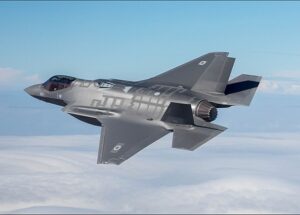
In 2018, a now-famous photo leaked of an Israeli F-35 fighter jet flying over Beirut. The image encapsulates a core truth—that this stealth aircraft, with its unprecedented ability to use advanced sensors to gather intelligence on enemy activities on the ground, evade enemy detection, and share its data across the military’s network, has become a prime tool in the Israeli shadow war against the activities of the Iranian axis in the region.

On January 25, 2021, Lebanese photographers snapped images of the aircraft flying overhead, suggesting that the planes are routinely gathering intelligence on Hezbollah as well as on Iranian and Shiite militia activity in the region.

By 2024, the Israeli Air Force (IAF) will possess 50 stealth F-35s, which operate out of the Nevatim Air Force Base in southern Israel. The IAF is hoping to acquire a third squadron of F-35s—which would bring the fleet up to 75—though Israeli budgetary and political uncertainty are holding up this critical decision.

Capstone Report: Robotic and Autonomous Systems in a Military Context


Militaries around the world are developing, integrating and using robotic and autonomous systems (RAS) in line with the evolution of warfare. Further thinking needs to be done regarding the conditions under which this process takes place within the Netherlands and what challenges and implications are likely to arise as a consequence. The HCSS project ‘RAS in a Military Context’ sought to contribute to this discussion.

Over a two year period, the project yielded five public research papers covering a range of topics relevant to the implementation of RAS in a military context. These research papers cover military applicability, ethical considerations, legal discourse, requirements for cooperation and the implementation of RAS in a military context. All papers are combined in this Capstone document, including a Synthesis, which briefly summarizes the analyses, and a series of six factsheets.

22 February 2021

India and the Biden administration: Consolidating and rebalancing ties

Tanvi Madan

The evolution of the relationship between India and the United States over the next few years will take place as both countries face a trifecta of crises. Washington will be grappling with the coronavirus and vaccine distribution, the pandemic’s economic fallout, and the consequences of political divisiveness. Delhi will also be dealing with the health crisis and its economic consequences while facing a national security crisis with an assertive China.

In this context, Prime Minister Narendra Modi will seek to consolidate and even expand ties with the United States, a partner he has called “indispensable.” Delhi will hope that Washington continues to be helpful to its interests, and—in part to ensure that—will try to be responsive to the Biden administration’s priorities. Given that, India will likely focus in the near term on cooperating with the United States to ensure that a rules-based order and multipolarity prevails in the Indo-Pacific region, on global health security, and on climate change.

Over the last few years, intensified U.S. and Indian concerns about China paved the way for deeper and more institutionalized defense and security ties, new or revived mechanisms to engage each other and with partners (including the Quadrilateral dialogue), and consultation, coordination, or cooperation in third countries and regional or global institutions, as well as incentives for the two countries to manage differences on a range of issues. Significantly for India, this also resulted in diplomatic, military, and intelligence support in its ongoing border crisis with China.

Pakistan meets conditions to get next $500 million from IMF

By Asif Shahzad

ISLAMABAD (Reuters) - The International Monetary Fund (IMF) and Pakistan on Tuesday reached a staff-level agreement that Pakistan had completed reforms required for the release of around $500 million in IMF funds that had been suspended for about a year.

“The package strikes an appropriate balance between supporting the economy, ensuring debt sustainability and advancing structural reform,” the Fund said in a statement issued by both sides.

“Pending approval of the Executive Board, the reviews’ completion would release around US$500 million.”

Financial analysts say the hold-up was due to questions around fiscal and revenue reforms.

“This is a good development for Pakistan,” Finance Minister Abdul Hafeez Shaikh said in a tweet.

How a Rising China Has Remade Global Politics


As much as any other single development, China’s rise over the past two decades has remade the landscape of global politics. Beginning with its entry into the World Trade Organization in December 2001, China rapidly transformed its economy from a low-cost “factory to the world” to a global leader in advanced technologies. Along the way, it has transformed global supply chains, but also international diplomacy, leveraging its success to become the primary trading and development partner for emerging economies across Asia, Africa and Latin America.

But Beijing’s emergence as a global power has also created tensions. Early expectations that China’s integration into the global economy would lead to liberalization at home and moderation abroad have proven overly optimistic, especially since President Xi Jinping rose to power in 2012. Instead, Xi has overseen a domestic crackdown on dissent, in order to shore up and expand the Chinese Communist Party’s control over every aspect of Chinese society. Needed economic reforms have been put on the backburner, while unfair trade practices, such as forced technology transfers and other restrictions for foreign corporations operating in China, have resulted in a trade war with the U.S. and increasing criticism from Europe.

Meanwhile, China’s “quiet rise” has given way to more vocal expressions of great power aspirations and a more assertive international posture, particularly with regard to China’s territorial disputes in the South China Sea. Combined with Beijing’s military modernization program, that has put Asia, as well as the United States, on notice that China’s economic power will have geopolitical implications. Now the global spread of the COVID-19 pandemic has opened up opportunities for China to expand its influence, even as it has called into question both China’s credibility as a responsible stakeholder and the future of the supply chains that have fueled its economic success story.

Semiconductors as Natural Resources – Exploring the National Security Dimensions of U.S.-China Technology Competition

By Akinori Kahata

This blog post is the third a series on U.S.-China technology competition. Click here to read the previous posts in this series, Managing U.S.-China Technology Competition and Decoupling, and Assessing the Impact of U.S.-China Technology Competition and Decoupling: Focusing on 5G.

In recent years, the U.S. government has taken a variety of steps to both control China’s access to semiconductor technology as well as to improve the United States’ own ability to lead in chip design and production. Key among these were the export controls enacted by the Trump administration against companies including Huawei and Semiconductor Manufacturing International Corporation Incorporated (SMIC), and the passage of the National Defense Authorization Act for Fiscal Year 2021, which included funding for semiconductor manufacturing and research.

Technological competition around semiconductors is not only happening between the U.S. and China. In December 2020, a group of European Union countries announced “A European Initiative on Processors and Semiconductor Technologies” with the aim of increasing Europe’s semiconductor production capability throughout the value chain. Recent reports indicate that the European Commission has entered into discussions with TSMC and Samsung about investing in advanced manufacturing facilities on the continent to reduce its dependence on China and the United States.

China’s Military-Civil Fusion Strategy: What to Expect in the Next Five Years

By ALEX STONE and PETER W. SINGER

As a new administration takes power in Washington, Beijing is preparing its next Five-Year Plan, which will set overall guidance for policies and national development goals through 2025. The final version is expected in March, but the world received a teaser about policy priorities for the next five years and beyond when the Chinese Communist Party’s Central Committee released its Recommendations on the Plan last October. One section of the Recommendations is particularly relevant for China’s Military-Civil Fusion strategy, the future trajectory of which is a key issue for the incoming Biden administration.

As one of the hallmark policy initiatives of the Xi Jinping administration, MCF is envisioned as a state governance tool to balance the goals of security and development, directly supporting China’s ability to prevail in a long-term strategic competition. In the near term, Beijing is attempting to have both “guns and butter,” creating synergy between central and local government regulatory agencies, military end-users, and defense, civilian, and commercial R&D ecosystems in critical domains. The longer-term goal is to unify the government’s various security and development strategies to create a strategic posture—a “unified system of strategies and strategic capability”—that can bring all of China’s capabilities to bear in competitions with other nations. By design, MCF is not simply another yet national plan, but rather a strategy whose components are to be woven into China’s other national strategic priorities, advancing the PRC’s overarching security and development goals.

How to Understand Iranian Information Operations

By Sonja Swanbeck 

On Oct. 20 and 21, 2020, just two weeks before Election Day, Iranian actors sent out spoofed emails to thousands of American voters in Florida, Alaska and Arizona. The emails were designed to appear as though they were sent by the Proud Boys, a far-right extremist group, and threatened “we will come after you” if recipients did not vote for Donald Trump. Some of the emails were also accompanied by a link to a video depicting Trump calling vote-by-mail “a terrible thing” and followed by what was made to look like a demonstration of how to fraudulently produce a mail-in ballot. Government officials and cybersecurity experts debunked the video’s demonstration, but the video continued to circulate on social media. Within 48 hours, then-Director of National Intelligence (DNI) John Ratcliffe attributed this disinformation campaign to Iran, alleging that Iran’s purpose was to undermine Trump’s presidential campaign.

In the past few years, Iran has become increasingly sophisticated and active in online communities targeting the American public. And its brazen tactics leading up to the election could mark a shift in the country’s influence strategy toward the United States. According to the public record, this is the first time that Iranian actors have engaged in an election interference campaign targeting the United States utilizing stolen voter information in influence operations.

But to the extent that Iran targets U.S. audiences in sustained disinformation campaigns, it still typically aims to broadly promote Iranian interests—such as denigrating sanctions against the country and bolstering their moral standing compared to the U.S.—rather than attempting to induce a specific result in American domestic affairs. More importantly, Iran is almost certainly expending far more of its resources on its geopolitical sphere of influence in the Middle East and North Africa.

As Right-Wing Extremism Rises, Jihadism Still Persists


Six separate terrorist attacks took place in Europe between late September and late November of last year—three in France, and one each in Germany, Austria and Switzerland. All six attacks were inspired by Salafi-jihadist ideology, which is, and will remain, a persistent terrorism threat to Europe and elsewhere in the West for the foreseeable future.

Among the incidents in France was a stabbing attack outside the offices of the satirical magazine Charlie Hebdo in Paris, which has published caricatures of religious figures, including the prophet Muhammad, and where al-Qaida-affiliated gunmen killed 12 staff members in 2015. Weeks later, a middle school teacher named Samuel Paty was beheaded after he showed his students caricatures of Muhammad as part of a classroom presentation on freedom of speech. And in early November, three people were fatally stabbed at the Notre Dame Basilica in Nice. None of the perpetrators of these attacks were known to law enforcement or had connections to foreign terrorist organizations like al-Qaida or the Islamic Stat

To save Iraq from economic collapse and fight ISIS, contain Iran’s proxies

Ranj Alaaldin

The day after President Biden was inaugurated, Baghdad was hit by two suicide bombers who, in macabre fashion, killed at least 32 people and wounded at least 100. The attack was a stark reminder that the Iraq theater is still a critical one for combatting ISIS and preventing it from mounting a resurgence. With this in mind, U.S.-Iraq ties are worth salvaging after their deterioration over the past four years. ISIS is strongly positioned to carry out more routine mass-casualty attacks. While the January bombing was its first major terrorist attack in Baghdad in over three years, ISIS carries out near-daily attacks in the rest of the country and could develop a momentum similar to that which preceded its declaration of a caliphate in 2014.

There are two underlying challenges that makes ISIS capable of carnage and launching a resurgence: Iraq’s desperate need for an economic revival and the threat from Shiite militia groups. Addressing both requires that Washington adopt a set of guiding principles for its engagement with Iraq — an approach premised on the fact that Iraq’s economic crisis and the threat from Iran-aligned Shiite militia groups are two sides of the same coin.

Brief: Blackouts Highlight Mexico’s Energy Dilemma


Background: The Mexican economy’s high dependency on the U.S. economy is a double-edged sword. On one hand, having close ties to the biggest economy in the world – made all the more accessible because of their proximity and trade agreements – is an advantage for many industries. On the other hand, Mexico’s reliance on an external market means that many of the factors that determine the health of its economy are out of Mexico’s control. It thus has a strategic interest in reducing this dependency but faces a multitude of factors that limit its ability to do so.

What Happened: Mexico’s Federal Electricity Commission said Monday that a winter storm in Texas reduced natural gas exports from the U.S. by around 25 percent, causing blackouts in parts of northern Mexico. The shortage affected Sinaloa, Sonora, Durango, Chihuahua, Coahuila and Nuevo Leon states and disrupted production at electricity generation stations. President Andres Manuel Lopez Obrador used the occasion to point out Mexico’s high dependence on the U.S. for natural gas. Mexico’s energy secretary estimated last month that 70 percent of the country’s gas supplies came from the U.S., while the remaining 30 percent was produced domestically.