20 April 2021

CO21060 | India’s China Policy: Strategic Shift or a Drift?

P. S. Suryanarayana

RSIS Commentary is a platform to provide timely and, where appropriate, policy-relevant commentary and analysis of topical and contemporary issues. The authors’ views are their own and do not represent the official position of the S. Rajaratnam School of International Studies, NTU. These commentaries may be reproduced with prior permission from RSIS and due recognition to the author(s) and RSIS. Please email to Mr Yang Razali Kassim, Editor RSIS Commentary at RSISPublications@ntu.edu.sg.

SYNOPSIS

Successful disengagement by the confronting Chinese and Indian soldiers at a key site along their disputed frontier in February 2021 is optimistically seen as a pause for peace. It is time for India to choose to remain an autonomous player or become a frontline-state in a US-led coalition focused on China.

CHINESE PRESIDENT Xi Jinping has portrayed his globalised foreign policy in the glowing terms of an epigram from his country’s ancient statecraft. “Men of insight see the trend; men of wisdom ride it”, he said at a video-linked international conference hosted by Russian President Vladimir Putin in Moscow last year. Indian Prime Minister Narendra Modi was among the leaders participating in that conference.

Withdrawing troops from Afghanistan: Biden’s unforced error puts America at risk

Madiha Afzal and Michael E. O’Hanlon

Writing in USA Today, Madiha Afzal and Michael O'Hanlon argue that "the most likely outcome of any quick troop exit this year is very ugly, including ethnic cleansing, mass slaughter, and the ultimate dismemberment of the country. No one can see the future, of course, but this type of outcome seems much more likely than any smooth transition to a new government run by a kinder, gentler, more moderate Taliban."

President Biden’s decision to bring home all U.S. troops from Afghanistan by the 20-year anniversary of the 9/11 attacks is a major mistake. U.S. troops have already been cut more than 95% since their peak levels, troop casualties in recent years have been reduced even more than that, and costs to the taxpayer have dropped by 90% over the last 10 years. There is no endless cycle of buildups, but in fact a gradual ongoing drawdown — and therefore no need to rush completely for the exits before giving the fledgling peace process a real chance.

An unconditional U.S. troop withdrawal goes beyond what the Trump administration negotiated with the Taliban in the first phase of that peace process, on February 29 of last year in Doha, Qatar. There, the United States promised a withdrawal — once several conditions were met. But they have not been. The Taliban, according to the U.N. and U.S. government, has not cut ties to al Qaeda, has not engaged seriously in the intra-Afghan peace process, and has not reduced violence against Afghan forces.  (Nor has it moderated its misogynistic and intolerant views.) It has not held up its end of the bargain; we should feel no obligation to do so, either.

Under Biden, Pakistan and the US face a dilemma about the breadth of their relationship

Madiha Afzal

After the unpredictability of the Trump years, Pakistan approached Joe Biden’s win and the new administration with both expectation and apprehension. It hoped that the administration would buy its pitch for a reset and for broadening relations beyond Afghanistan, but it worried about “baggage” that the Biden team could bring from its experience during the Obama years — the second half of which was a relative low point in the U.S.-Pakistan relationship. Nearly 100 days into the new administration, it appears that redefining U.S.-Pakistan relations isn’t going to be quite as easy as Islamabad had hoped, even as Pakistan concertedly pushes a new geo-economic vision.

President Biden has not yet spoken to Prime Minister Imran Khan. Nor did Biden invite Pakistan to a planned leaders summit on climate change later this month, though the leaders of India and Bangladesh will be there, and Pakistan was the only country among the world’s 10 most populous to not receive an invitation. Its absence is all the more pointed given Pakistan’s efforts to mitigate climate change, including its commitment to plant a billion trees. Khan claims he’s not bothered. Biden’s Special Envoy for Climate Change John Kerry, meanwhile, is currently in the region — visiting India and Bangladesh, but not Pakistan. Separately, Pakistan continues to play a key role in the Afghan peace process.

Trump took a transactional approach to Pakistan, which worked well in some ways. What Pakistan wants now is a relationship with the U.S. that is broader in scope, and includes trade and investment. Will Biden deliver?

WHAT PAKISTAN WANTS

Leaving Afghanistan, and the Lessons of America’s Longest War

By Steve Coll

Early in 2010, Mikhail Gorbachev, the last leader of the Soviet Union, offered advice to President Barack Obama about the Afghan war. After the Soviets had invaded Afghanistan, in 1979, and found themselves mired in an unwinnable conflict against Islamist mujahideen rebels aided by the United States and others, Gorbachev overruled hawks in his Politburo and ordered a military retreat, which was completed in 1989. He warned Obama that America risked a similar “major strategic failure,” and he recommended “a political solution and troop withdrawal.” This “two track” approach—a managed troop pullout and talks with the Taliban and other Afghan factions in the war—should seek to foster “national reconciliation” in the country, Gorbachev advised.

Obama authorized secret peace talks with the Taliban later that year, and, ever since, the United States has essentially followed Gorbachev’s approach, albeit slowly, through policies laced with contradictions, and at a very high cost in expenditure and lives—more than twenty-two hundred American troops. The American presence in Afghanistan peaked at about a hundred thousand troops, in August, 2010, and fell to a little less than ten thousand by the end of Obama’s Presidency. The Obama Administration’s talks with the Taliban failed, but when Donald Trump became President he revived the negotiations. In early 2020, Zalmay Khalilzad, Trump’s envoy, struck a deal with the Taliban that included a pledge to remove all U.S. troops by May 1st, 2021. Trump also ordered a reduction in U.S. forces to twenty-five hundred by the time he left office. (About seven thousand nato troops also remained.)

Biden’s 9/11 Withdrawal From Afghanistan: What to Know

By Max Boot

President Joe Biden will announce that all U.S. troops in Afghanistan will be withdrawn by September 11, 2021, after more than twenty years of U.S. involvement in the country’s war. But the withdrawal comes with major risks: the Taliban could expand its control over Afghanistan, and the ongoing peace process between the group and the Afghan government could collapse.

The most important aspect is that it is not conditions-based. Previous U.S. presidents have generally said they would make redeployment decisions in Afghanistan and Iraq based on the threat posed by local enemies and the capabilities of local allies. Even the Donald Trump administration, which set a May 1 deadline for withdrawal in last year’s negotiations with the Taliban, insisted that the Taliban denounce al-Qaeda (which it has never done) and refrain from attacks on U.S. troops (which it has generally done).

The Taliban is currently on the offensive, and peace talks between the group and the Afghan government are stalled. But Biden announced a withdrawal anyway. By ditching any conditions for withdrawal, Biden has made it possible to pull out the remaining 3,500 U.S. troops—but at considerable risk. The U.S. intelligence community has assessed that the Taliban could take over much of Afghanistan within two to three years of a U.S. withdrawal.
Could U.S. or other foreign forces remain in Afghanistan beyond September 11?

This seems very unlikely. Biden has said he is pulling all the U.S. forces out, with no exception for Special Operations Forces, and the roughly seven thousand other international troops will likely follow them out the door because they rely on U.S. enablers. The question now is whether the United States will even be able to keep its embassy open.
Will the Taliban expand its control?

Pakistan’s Celebration Of America’s Afghanistan Defeat Will Be Short-Lived

By Michael Rubin

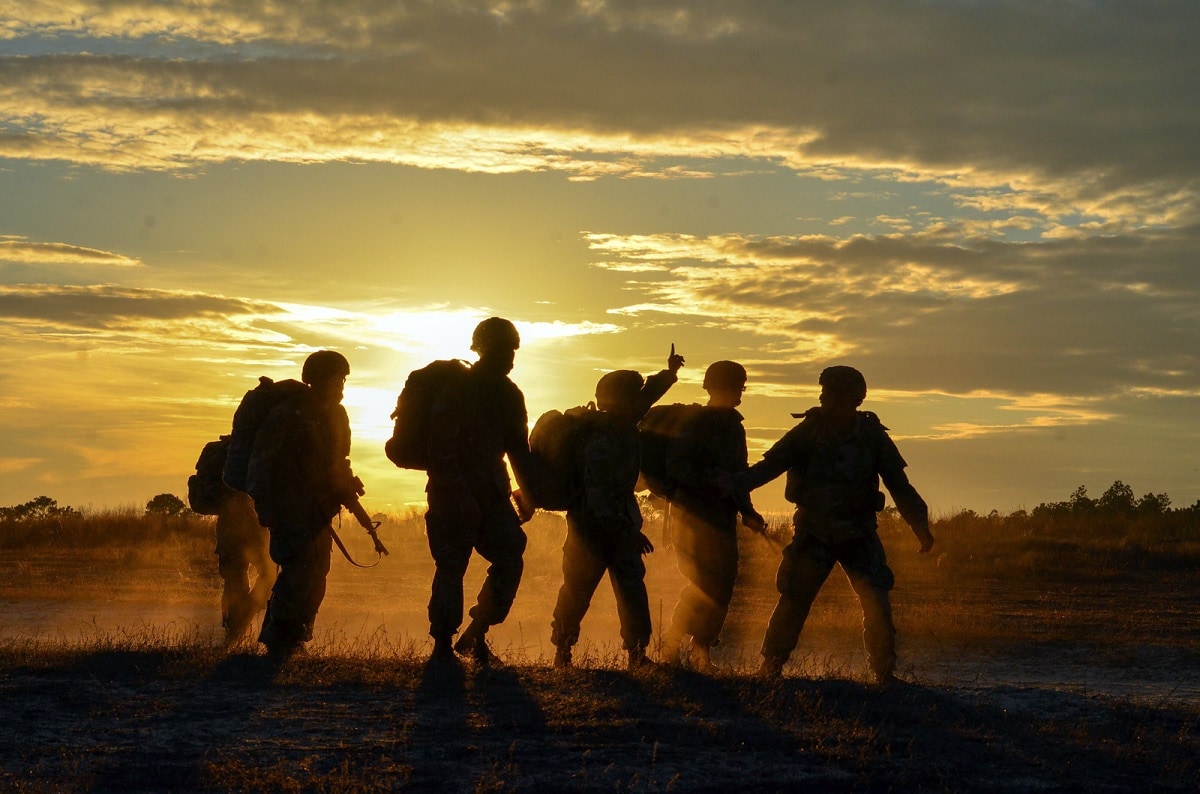
U.S. Army paratroopers assigned to the 3rd Brigade Combat Team, 82nd Airborne Division move to an assembly area Feb. 1, 2019 at Normandy Drop Zone, Fort Bragg, North Carolina. The paratroopers conducted a combat equipment static line airborne operation onto the drop zone to maintain their proficiency and rehearse their roles during follow-on missions. (U.S. Army photo by Sgt. Taylor Hoganson).

President Joe Biden announced yesterday that he would withdraw all remaining U.S. forces from Afghanistan to end the “forever war.”

Bizarrely, he made the final withdrawal date to be the 20th anniversary of the September 11, 2001 terror attacks in New York and Washington.

Perhaps some among his top aides thought this cute or clever but it is not: it compounds a disaster by allowing Al Qaeda and their Taliban allies to transform the anniversary and augment its meaning as symbolic of victory against the United States.

Within Washington, Americans will debate whether Biden’s move is wise. Biden’s team will try to spin the withdrawal as something other than a defeat.
Sponsored Content

DC spin, however, seldom sticks outside an administration’s most partisan supporters. Others will question the cost on Afghans and especially Afghan women.

How Long US Will Fund Afghan Military An ‘Open Question’

By PAUL MCLEARY

WASHINGTON: Several Democratic members of the House Armed Services Committee said today they expect Congress to support funding the Afghan army and air force for years to come, even after US and European troops pull out this summer.

The roughly 3,500 American, and 7,000 NATO troops on the ground in Afghanistan will likely start leaving by the end of April, taking with them the surveillance and air support that are crucial to the overstretched Afghan forces as they struggle to blunt the Taliban’s momentum.

As the withdrawal kicks into high gear and Washington increasingly turns its attention to Chinese moves in the Pacific and Rusian provocations in Europe and the Arctic, it’s not at all clear how willing the US will be to spend billions a year on the flailing Afghan military.

“I think there should still be an appetite for a support package, because pulling out the combat troops is one thing, but reducing our financial support is another challenge,” said Rep. Jason Crow, a member of the House Armed Services Committee who served in Afghanistan as an Army Ranger. “Reducing that money I think would be a major detriment to not just Afghanistan, but also our efforts to counter China,” he said during a call with reporters today.

The bill won’t be small.

The US decision to withdraw from Afghanistan is the right one

Vanda Felbab-Brown

The Biden administration’s decision to withdraw all U.S. troops from Afghanistan by September 11, 2021 is a wise strategic choice that took significant political courage. The administration correctly assessed that perpetuating U.S. military engagement in Afghanistan has become a strategic liability and a futile investment that lost the capacity to alter the basic political and military dynamics in Afghanistan. That does not mean that desirable political and security developments will follow in Afghanistan after the U.S. military withdrawal. Unfortunately, the possibility of an intensified and potentially highly fragmented and bloody civil war is real, and at minimum, the Taliban’s ascendance to formal power will bring painful changes to the country’s political dispensation.

The basic wisdom of the administration’s decision is the realization that perpetuating U.S. military engagement would not reverse these dynamics and that U.S. military, financial, diplomatic, and leadership resources would be better spent on other issues. Even so, the administration made some serious tactical mistakes in its announcement.

STRATEGIC PRIORITIES AND LIABILITIES

The U.S. primary objective in Afghanistan since 2001 has been to degrade the threat of terrorism against the United States and its allies. That basic goal was accomplished a decade ago: Al-Qaida’s capabilities are a fraction of what they used to be. The Islamic State in Khorasan (ISK) continues to operate in Afghanistan, but the Taliban has been fighting ISK assiduously. However, perpetually bad governance in Afghanistan has undermined stability and allowed the Taliban to entrench itself. While the Taliban too is implicated in many illicit economies, it is often seen as less predatory and capricious, even if brutal and restrictive, than powerbrokers associated with the Afghan government.

The ‘Forever War’ Is Over. Let the Reckoning Begin


Candace Rondeaux 

After two decades of a war that started out with what he called clear objectives and a just cause, President Joe Biden announced Wednesday that he would withdraw the last remaining American troops from Afghanistan. In a 15-minute speech from the White House Treaty Room, where then-President George W. Bush informed the nation in October 2001 of the first U.S. airstrikes against al-Qaida training camps, Biden declared, “I’m now the fourth United States President to preside over American troop presence in Afghanistan: two Republicans, two Democrats. I will not pass this responsibility on to a fifth.”

How he inherited the burden of pulling U.S. troops from the country, and why he determined he would not leave it to his successor, is what makes the war in Afghanistan so tragic. As vice president, Biden and his presidential predecessor and former boss Barack Obama began to debate the possibility of a substantial drawdown of American troops from Afghanistan in 2014. By then, the phrase “fragile but reversible” had already become a tired refrain of Pentagon briefings and Congressional hearings. Year after year, military officials, diplomats and humanitarian aid experts had trooped up to the podium to tell an anxious American public that any U.S. withdrawal must be “conditions-based” to avoid undoing whatever gains had supposedly been made. The implicit subtext each time was that the year ahead would not only be different, but would make the difference between a responsible and irresponsible American exit from Afghanistan.

Supply Chain Risk in Leading-Edge Integrated Circuits

Laura A. Odell, Project Leader Cameron D. DiLorenzo Chandler A. Dawson Matthew D. Kowalyk

The long-term strategic impact from future supply chain disruptions, including the potential inability of the U.S. to produce leading-edge1 integrated circuits (ICs) domestically, is a critical risk. This, coupled with the fact that demand for production is outpacing current manufacturing capacity, will have long-term consequences for the Department of Defense (DoD), Department of Energy, Department of Homeland Security, and the National Intelligence communities when ensuring national security objectives are achievable. Integrated circuits (ICs) are a fundamental, foundational element of electronics in components and systems. For the U.S. Army specifically, ICs are critical in weapon systems, core business systems, key communications systems, and artificial intelligence (AI) computational systems. Once a global leader, the United States finds itself in a position of decreasing control and influence in the leading-edge IC markets, a critical segment for enabling U.S. dominance. The lack of technical advancement from trusted foundry participants, strategic and production defects by U.S. companies, prohibitive capital expenditure required to join the market, and foreign state-subsidized competitors have all contributed to limiting trusted supply options for the U.S. Army and other U.S. government entities. This quick look report details the impacts facing the Army strategically in this competitive market.

How Green is China's Belt and Road Initiative?

Alice Politi*

China’s Belt and Road Initiative (BRI) has been described as the largest infrastructure project in history, affecting around 60 per cent of the global population.[1] Whilst promoting a narrative of connectivity, growth and “win-win partnerships”, the project has received opposing assessments regarding its wider impact, particularly in the environmental domain.

The implications are indeed colossal. Assessments posit that BRI-related infrastructure projects will necessarily pass through and compromise eco-fragile regions and key biodiversity areas worldwide, leading some to describe the initiative as the “riskiest environmental project in history”.[2] Such is its global reach that the BRI is recognised as instrumental in meeting global CO2 emission targets, meaning that even if all non-BRI countries met their targets, a failure to comply with environmental standards for BRI-related projects would still cause a 2.7C increase in global temperatures.[3]

In 2016, President Xi Jinping committed to create a green and sustainable BRI. This followed the implementation of the concept of “ecological civilisation”, introduced in the Constitution of the Communist Party in 2012.[4] Endorsing this concept in 2013, Xi promised to pursue climate change cooperation and oversee China’s renewable energy transformation.[5] In the framework of “greening the BRI”, Chinese banks involved in funding BRI projects (such as NDB, AIIB, Silk Road Fund) have tried to include this concept in their investments, creating their own environmental guidelines.[6]

Faced with a domestic economic slowdown over recent years, Beijing has launched green financing initiatives to encourage both Chinese and international banks to finance the BRI. As a result, in April 2019, the Singapore branch of the Industrial and Commercial Bank of China issued the first green Belt & Road Interbank bond, worth 2.2 billion US dollars.[7] More recently, the COVID-19 pandemic has caused considerable financial distress for BRI participant countries, many of which are relatively small economies with fewer possibilities to take on new debt financing.[8] Yet, the overall slowdown caused by COVID is on the whole expected to be manageable for banks and Chinese companies involved in the BRI.[9]

Technological Competition: Can the EU Compete with China?

Francesca Ghiretti

The debate on technological development and the unfolding fourth technological revolution tends to neglect the role of the EU, relegating it to follower status. The leadership positions are occupied by the US and China, who compete with one another for technological supremacy. Yet, despite lagging behind in some areas, the EU is better placed than is often assumed and still stands a chance of guaranteeing the delivery of a technological revolution that is not only environmentally but also socially sustainable. This is critical in proposing a model of technological development alternative to that of China, in particular, and especially in such sectors as artificial intelligence, supercomputing and digital skills.

Study produced as part of the project “La geopolitica del digitale”, March 2021. IAI Papers

Northern expedition: China’s Arctic activities and ambitions

Rush Doshi, Alexis Dale-Huang, and Gaoqi Zhang

This report explores China’s internal discourse on the Arctic as well as its activities and ambitions across the region. It finds that China sometimes speaks with two voices on the Arctic: an external one aimed at foreign audiences and a more cynical internal one emphasizing competition and Beijing’s Arctic ambitions. In examining China’s political, military, scientific, and economic activity — as well as its coercion of Arctic states — the report also demonstrates the seriousness of China’s aspirations to become a “polar great power.”[1] China has sent high-level figures to the region 33 times in the past two decades, engaged or joined most major Arctic institutions, sought a half dozen scientific facilities in Arctic states, pursued a range of plausibly dual-use economic projects, expanded its icebreaker fleet, and even sent its naval vessels into the region. The eight Arctic sovereign states — Canada, Denmark, Finland, Iceland, Norway, Russia, Sweden, and the United States — exercise great influence over the Arctic and its strategically valuable geography. China aspires to be among them.

The report advances several primary findings:

China seeks to become a “polar great power” but downplays this goal publicly. Speeches by President Xi Jinping and senior Chinese officials with responsibility for Arctic policy are clear that building China into a “polar great power” by 2030 is China’s top polar goal. Despite the prominence of this goal in these texts, China’s externally facing documents — including its white papers — rarely if ever mention it, suggesting a desire to calibrate external perceptions about its Arctic ambitions, particularly as its Arctic activities become the focus of greater international attention.

China describes the Arctic as one of the world’s “new strategic frontiers,” ripe for rivalry and extraction.[2] China sees the Arctic — along with the Antarctic, the seabed, and space — as ungoverned or undergoverned spaces. While some of its external discourse emphasizes the need to constrain competition in these domains, several others take a more cynical view, emphasizing the need to prepare for competition within them and over their resources. A head of the Polar Research Institute for China, for example, called these kinds of public spaces the “most competitive resource treasures,” China’s National Security Law creates the legal capability to protect China’s rights across them, and top Chinese Communist Party (CCP) officials have suggested China’s share of these resources should be equal to its share of the global population.[3]

The US has very little to gain by overdemonizing China

Michael E. O’Hanlon

Writing in the Washington Post, Michael O'Hanlon argues that "while the Biden administration suggests that we compete against Beijing in some realms, cooperate with it in others, and confront the Chinese where we must, Washington seems all too willing to overemphasize this last leg of the policy triad."

The recent bipartisan push in the United States to be tough on China seems to be confirming the adage: If it’s worth doing, it’s worth overdoing. While the Biden administration suggests that we compete against Beijing in some realms, cooperate with it in others and confront the Chinese where we must, Washington seems all too willing to overemphasize this last leg of the policy triad.

An important aspect of this is the decision to designate China as a perpetrator of genocide for its treatment of the Uyghur population in Xinjiang. “Genocide” is a big and loaded term. Its use here seems historically and legally inappropriate, and purposefully incendiary within the U.S.-China relationship. But the genocide designation is simply emblematic of a broader tendency toward the demonization of China in American foreign policy that is trending toward dangerous groupthink.

The Promise and Perils of Big Tech


Technology has the potential to dramatically improve the quality of life for the world’s populations, but there are no guarantees it will. Concerns remain about everything from how the growing digital divide risks leaving large swathes of society—and the world—behind, to questions about the security of data and its potential weaponization. And, of course, there is the ongoing debate around how technology and information platforms can be used to undermine democratic processes, including elections.

To address these concerns, a panel of experts assembled by the United Nations in 2019 called for a “multistakeholder” approach that would convene governments, members of civil society, academics, technology experts and the private sector in an attempt to develop norms and standards around these technologies. Even they could not agree on what this structure might actually look like, though, underscoring how difficult it will be to ensure that technology is harnessed for everyone’s benefit.

The risks are particularly acute under authoritarian regimes, which are more interested in utilizing new technologies to strengthen their grip on power—and stifling dissent—than in having their hands tied by whatever multistakeholder vision ultimately emerges. There are also the questions raised by technological advances in weaponry—particularly the ethical questions and legal concerns surrounding autonomous weapons that remove humans from the decision-making chain.

Did China Simulate An Attack On A U.S. Navy Aircraft Carrier?

By Stephen Silver

The move coincided with the U.S. and the Philippines planning military exercises, which are to last two weeks and are known as “Balikatan” (Shoulder-to-Shoulder).

One Chinese aircraft carrier, in turn, has also reportedly entered the area.

Now, there’s a report that China has “simulated an attack” on the U.S. aircraft carrier that’s in the area, one which triggered Taiwan’s air defense radars.

The report from Newsweek cited defense analysts, including Su Tzu-yun, described by Newsweek as a senior fellow at Taiwan’s defense ministry-backed Institute for National Defense and Security Research.

According to Newsweek, the Chinese fleet “likely simulated an attack on a U.S. aircraft carrier group [with] a record 25 fighter jets and nuclear-capable bombers.”

The attack came after the arrival of the Theodore Roosevelt Carrier Strike Group, and also the recent comments by U.S. Secretary of State Tony Blinken, who warned China not to threaten Taiwan.

Home advantage: How China’s protected market threatens Europe’s economic power

Agatha Kratz, Janka Oertel

China’s vast yet protected home market has allowed some of its firms to acquire a scale that provides them with significant advantages when they compete in other markets.

These firms are able to undercut European companies both in the EU and around the world, including in sectors key to Europe’s future economy and security, from energy to telecommunications.

The EU urgently needs to incorporate the concept and reality of this ‘protected home market advantage’ into its thinking on China.

Europe can defend its own industries by adopting an integrated policy approach, working with like-minded partners around the world, and even prising open closed parts of China’s domestic market.

The EU should also look to enhance its single market – both as a defensive measure and a way to improve its strategic sovereignty.

Introduction

Oman: First Arab leader to Washington in 1938, and due for another visit

Bruce Riedel

The first Arab head of state to make an official visit to Washington was the sultan of Oman, Said bin Taimur bin Faisal al Bustan, who met with President Franklin Delano Roosevelt in early March 1938 as the world was heading into World War II. Oman had recognized the United States as early as 1832, when Andrew Jackson was president. It has become an important ally since 1970, when Sultan Qaboos seized power in a British-supported coup and began to modernize the country. Qaboos died last year, and President Joe Biden should invite the new sultan for an early visit because Oman is an important voice for moderation and stability in the polarized region.

Sultan Said’s was one of only three foreign visits to the White House in 1938. The world was still in the midst of the Great Depression. Japan had invaded China, Nazi Germany was annexing Austria and Czechoslovakia, and most Americans wanted no role in the world. But FDR was not an isolationist: He was also aware that the Persian Gulf was the repository of the world’s oil reserves, and that Oman was a stable country in that soon to be critical region.

The trip’s origins lay in a letter the sultan sent Roosevelt in March 1937 telling the president of his intention to travel to America. Roosevelt promptly wrote back with a formal invitation to the White House. Sultan Said left Muscat for India, then the jewel in the crown of the British Empire. Oman was also a de facto British protectorate, with very close ties to South Asia.

Next Steps for Ensuring America’s Advanced Technology Preeminence

David Adler

By a number of metrics—including its dropping position in international innovation ranking systems, its growing trade imbalance in high-tech industries, its decline in real manufacturing value-added output, and in the weaknesses of its defense industrial base—the United States has clearly seen its technological leadership in both innovation and production erode.

It is critical that the United States maintain its preeminence in technological innovation and production, particularly against a surging and adversarial China, because it enables national power (both soft and hard), as well as a thriving economy and good middle-class jobs.

In order to compete in a world in which Chinese economic and technology advancements threaten to displace U.S. leadership, the federal government must put in place and fully fund a national advanced technology strategy. Without such a strategy, the United States will in all likelihood continue to lose market share in a host of advanced industries—including aerospace, computing and communications, Internet services, life sciences, materials, semiconductors, and vehicles—with negative implications for innovation, national security, and living standards.

This requires updating antiquated economic thinking, especially thinking that holds that laissez-fare markets (which China does not embrace) are enough. This “black box” view of technology and its applications might have worked 50 years ago, when innovation industries represented a smaller part of the U.S. economy—and when the Chinese economy was backward. But today, holding on to the market-only view makes it more difficult to advance the kinds of policies needed to effectively help American innovators and producers outcompete economic systems in which “innovation mercantilism” on the one hand and strong and legitimate industrial strategies on the other make it harder for companies in America to compete.

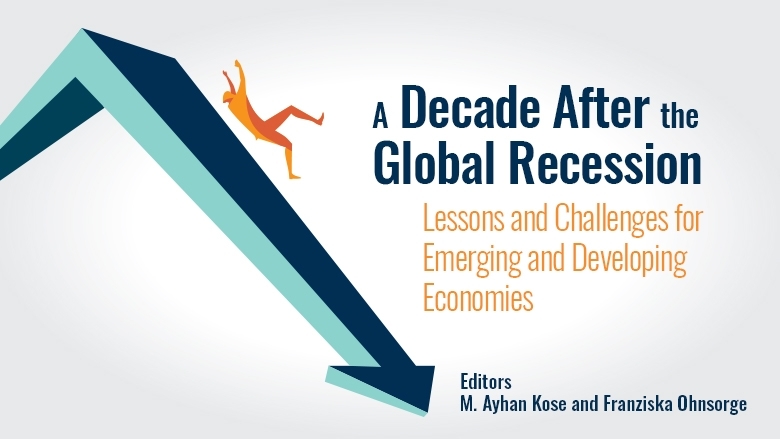
A Decade After the Global Recession


This year marks the tenth anniversary of the 2009 global recession. Most emerging market and developing economies weathered the global recession relatively well, in part by using the sizeable fiscal and monetary policy ammunition accumulated during the prior years of strong growth. However, their growth prospects weakened since then, and many have less policy space.

A Decade After the Global Recession provides the first comprehensive stock-taking of the decade since the global recession from the perspective of emerging market and developing economies. Many of these economies have now become more vulnerable to economic shocks. The study discusses lessons from the global recession and policy options for these economies to strengthen growth and be prepared should another global downturn occur.

PRAISE FOR THE BOOK

"This excellent book extracts a comprehensive and compelling set of lessons from the experiences of emerging market and developing economies over an eventful decade. The book is ambitious in scope, rich in analytical content, and lucid in its content and structure. It seamlessly weaves together a vast amount of rigorously researched analytical material and valuable policy insights. It will serve as a very useful reference for academics, policymakers, and investors alike."

-- Eswar Prasad, Nandlal P. Tolani Senior Professor of Trade Policy and Professor of Economics, Cornell University

Building the Future Force


The Department of Defense (DOD) develops a new National Defense Strategy (NDS) every four years to align the U.S. military’s force structure, operational concepts, programs, and budgets with the president’s national security priorities. Secretary of Defense Lloyd Austin plans a comprehensive review of the present NDS, published in January 2018, and has indicated that while the strategy’s focus on great power competition and conflict remains sound, updates may be warranted. Austin suggested during his confirmation hearings the next NDS must address “the continued erosion of U.S. military advantage vis-à-vis China and Russia, in key strategic areas” due to trends such as China’s accelerating military modernization, its increasingly belligerent activities in the Indo-Pacific, and its growing ability to project power against the U.S. homeland.

Three issues threaten to further erode the U.S. military’s advantages in the future, increasing the risk of failure in the event of great power conflict. Two of these stem from the 2018 National Defense Strategy, which directed how the services should size and shape their forces, while the third results from DOD’s inadequate means for calculating the relative benefits of investment trade-offs. Left unaddressed, these issues threaten to increase gaps in U.S. forces and capabilities and to reduce the nation’s ability to defeat peer aggression, deter nuclear attacks, and defend the U.S. homeland.

Biden Finally Got to Say No to the Generals


By Susan B. Glasser

On Wednesday, Joe Biden announced the close of the two-decade-long American war in Afghanistan, giving the U.S. military a deadline of the upcoming twentieth anniversary of the 9/11 attacks to withdraw all remaining troops. “It’s time to end the Forever War,” he said, in a speech that was both deeply personal and politically emphatic. Speaking from the White House Treaty Room, where George W. Bush had declared the start of the fight, to root out Al Qaeda and its Taliban enablers, Biden declared that there would be no more extensions of the American military presence, rebuffing pleas of the teetering, pro-Western Afghan government and his own generals. It’s finally, really, for-better-or-worse over. I guess this is how eras end: not with a culminating battle or some movie-thriller crescendo but with a Tuesday-morning leak to the Washington Post and, a day later, a fifteen-minute Presidential speech confirming the historic decision.

Biden pulled the plug in an unsentimental, sober address, with the only passionate notes reserved for the U.S. military personnel who have served in Afghanistan and Iraq over the two decades, including his late son Beau. “War in Afghanistan was never meant to be a multigenerational undertaking,” he said. The President seemed genuinely sick and tired of the endless pleas for just a little more time. “So when will it be the right moment to leave?” he said, pointedly summarizing the arguments that he had dismissed. “One more year? Two more years? Ten more years?” he asked.

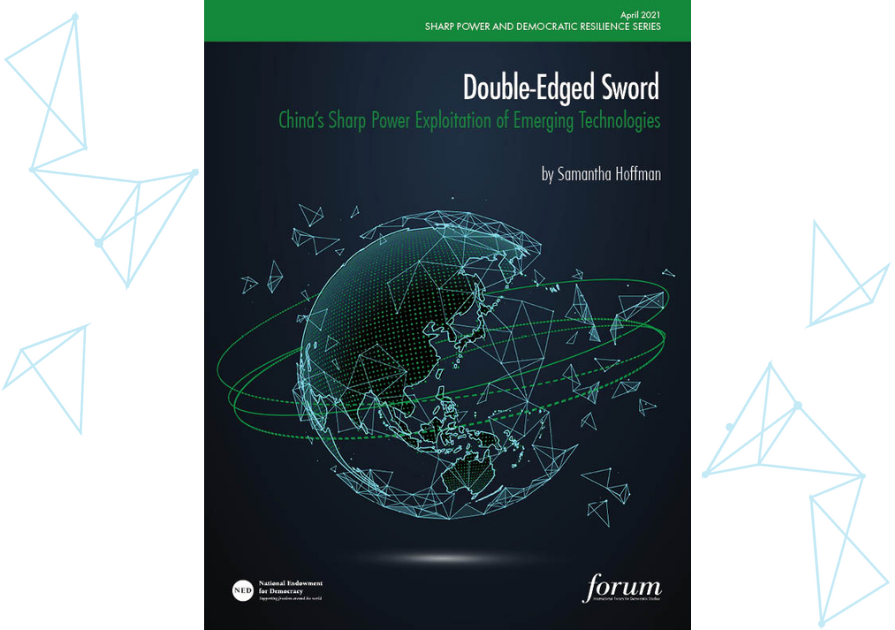
SHARP POWER AND DEMOCRATIC RESILIENCE...


The Sharp Power and Democratic Resilience series aims to contextualize the nature of sharp power, inventory key authoritarian efforts and domains, and illuminate ideas for nongovernmental action that are essential to strengthening democratic resilience.

Dr. Samantha Hoffman is a senior analyst with the Australian Strategic Policy Institute’s International Cyber Policy Centre. Her research explores the domestic and global implications of the Chinese Communist Party’s approach to state security and offers new ways of thinking about how to understand and respond to China’s technology-enhanced political and social control efforts.

In the final thematic report of the Sharp Power and Democratic Resilience series, Dr. Samantha Hoffman describes how the People’s Republic of China (PRC) leverages emerging technologies to undercut democracies’ stability and legitimacy while expanding its own influence. The PRC’s development and global export of “smart cities” technology, for example, showcases the character of tech-enhanced sharp power and authoritarianism. The Chinese Communist Party (CCP) does not distinguish basic public goods, like traffic safety or the prevention of violent crime, from the authoritarian suppression of pluralism and dissent. Instead, it blends the two together. The PRC prioritizes regime security over essential rights, and uses these technologies to monitor its populace and control society. Beijing’s active role in international standards-setting enables the PRC to exploit emerging technologies to enhance its sharp power capabilities. If PRC-originated technical standards are adopted internationally, PRC-made systems will enjoy greater interoperability and market access around the world in ways that erode democratic integrity.

Forget Bitcoin or Tesla, Invest in Quantum Computing While It’s Still Early

Cody Collins

In 2016–2017 it was pot stocks. In 2020–2021 it’s EV stocks. And in a few years, it will be quantum computing stocks.

As is often the case, there are industries that offer innovation and potential returns years before profits are made. A few years ago marijuana companies saw their share prices skyrocket as legalization crept across states. Recreational marijuana is still not legalized on the federal level. These companies have seen their share prices fall as they haven’t been able to produce revenue and profit numbers that meet analysts’ expectations.

Tesla has been on a remarkable ride the last few years. They are one of the best known electric vehicle companies. Recently, many other companies in the same space have seen astronomical growth. Examples include Workhorse Group, Nio, and Nikola. While all these companies offer great ideas, it will be years before they are able to create sustainable, high-level profits.

…the potential is so great, and the technological advances are coming so rapidly, that every business leader should have a basic understanding of how the technology works, the kinds of problems it can help solve, and how she or he should prepare to harness its potential.

Investors are often looking for the next big thing. They want to get in early to make good money. Sometimes they will get into industries before they are developed or profitable. The next big industry this may occur in is quantum computing.

What is Quantum Computing

Smaller armies and better defenses in a new world

BY DAVID HOWELL

Concern has been raised that the United Kingdom is once again reducing the size of its armed forces. A chorus of complaints has come from retired generals, from defense experts and from politicians, all bemoaning the planned reduction in military manpower and in tanks and other equipment, as well as in warships.

Voices have also joined in from the United States expressing doubts about the U.K. continuing as a military power. What these critics all find it hard to grasp is that a fundamental change is taking place in defense requirements, in the whole gamut of security concerns and in the very nature of warfare itself.

Indeed, as one military authority put it “wars are no longer declared,” meaning not that threats of conflict and invasion are over but that, on the contrary, they were becoming continuous conditions of enmity between states and extending into areas such as space and cyberspace. They are also moving into the vital arteries and inner nerve systems of societies, on a scale and in a manner never before experienced.

Two huge new building blocks have been heaved into place in the founding structure of modern and future defense thinking.

The first is that the whole of society is under attack and must therefore be defended in all its dimensions, be they economic, infrastructural, social, political, diplomatic, scientific, educational, health-related or almost anything else. This means that areas far outside military organization have to be involved both in heading off constant threats and dangers, and in mounting counter offensives.

19 April 2021

Rethinking Chinese School of IR from the Perspective of Strategic Essentialism

Yih-Jye Hwang, Apr 13 2021 

This article is based on insights from ‘Reappraising the Chinese School of International Relations: A Postcolonial Perspective’. Review of International Studies (2021).

As early as 1977 Stanley Hoffmann claimed that International Relations (IR) is an American social science (Hoffmann 1977), and according to Ann Tickner (2013), little has changed since then. Mainstream IR scholars perceive different regions of the world as test cases for their theories rather than as sources of theory in themselves. Thereby, the “non-West” became a domain that IR theorists perceived as backward; a domain which requires instruction in order to reach the “end of history” that Western modernity encapsulates (Fukuyama 1992). The phenomenon of American-centrism is closely related to the experience of the United States as a world hegemonic power after World War II. Although US hegemony has often been challenged by other countries in the world, its hegemonic status has never been replaced. Even if other countries looked like they would surpass the US at certain times (the Soviet Union in the 1970s, and Japan in the 1980s), they actually did not have the global, sustainable and all-round appeal of the American model. Therefore, American hegemony in the contemporary world not only enjoys technological, economic, and political superiority, but is also cultural, ideational and ideological.

However, any great power in history has its rise and fall, and the United States is no exception. The financial crisis in 2008, Brexit, the emergence of populism in Western countries, as well as the rise of non-Western countries, have challenged the current liberal order led by the United States. First of all, the stability of American society itself has been declining in recent years, especially under Trump’s administration. Racial divisions, coupled with other accumulated social and economic problems, have plunged the United States into serious trouble. The COVID-19 pandemic that began in 2020 has weakened the West as a role model for governance and accelerated the transfer of power and influence from the West to the “rest.” In addition, the voice of developing countries and non-Western regions has become stronger in the past few decades as their wealth and power has increased. The combined nominal GDP of the BRICS countries, for instance, accounts for approximately one-quarter of the world’s total GDP. Some scholars have pointed out that the norms, institutions, and value systems promoted internationally by the West are disintegrating. The world is entering a “post-Western era” (Munich Security Report 2017).

The Impact of the UNSC on the EU’s Combatting Terrorist Financing Sanctions Regime

Sophie Domres, Apr 12 2021

This content was originally written for an undergraduate or Master's program. It is published as part of our mission to showcase peer-leading papers written by students during their studies. This work can be used for background reading and research, but should not be cited as an expert source or used in place of scholarly articles/books.

Over the last decades, the European Union (EU) and other international institutions (IIs) have continuously become important research objects in the field of international relations (IR) (Jørgensen, 2009, S. 188). A closer look at this trend reveals that the EU has increasingly been recognized and studied as an actor of the international system itself (Biscop & Whitman, 2013, pp. 1-2; Cremona, 2008, pp. 333-350; Cameron, 2012, pp. 1-8; Hill, Smith & Vanhoonaker, 2017, pp. 3-20; Scheffler, 2011, pp. 1- 51). However, scholars have predominantly been focusing either on the role or performance of the EU as an actor of the international system in general or its influence on other international institutions in particular (Blavoukos & Bourantonis, 2011; Drieskens & Van Schaik, 2014; Hoffmeister, 2007, pp. 41-68; Jørgensen & Laatikainen, 2013; Odermatt, Ramopoulos & Wouters, 2014, pp. 211-223). While centering most research around “[…] the bottom-up component of the interaction between international institutions and the EU […]” (Costa & Jørgensen, 2012, p.1), literature has largely overlooked the influence that international institutions might have on the EU (Kelley, 2004, pp. 425-457).

A decisive factor for the selection of the UN system as unit of analysis is the fact that the United Nations is the only International Organization (IO) with almost universal membership. As of today, the UN is composed of 193 member states (UN, n.d.). Equally significant is the increasing importance of the European Union as an actor in the UN system. The steadily growing commitment of the EU in almost all fields of activity and the associated bodies of the United Nations system is undisputed (Odermatt, Ramopoulos & Wouters, 2014; Scheffler, 2011, pp. 1-51). By strengthening its responsibilities in external relations, the EU has been advocating for deeper integration into the UN system (Odermatt, Ramopoulos & Wouters, 2014; Scheffler, 2011, pp. 1-51). As enshrined in the Treaty of Lisbon, which entered into force on 1 December 2009, the work of the EU in the UN system should be based on close cooperation (EU, 2007, Art. 10 A, Art. 188 P, Art. 2 §5). However, there is no uniform representation of the EU in the UN system. While there is no unitary representation in the Security Council (UNSC), the EU has got full representation, including the right to vote, in three UN bodies (European Council & Council of the EU, 2019; Odermatt, Ramopoulos & Wouters, 2014). In May 2011, the EU even received “enhanced observer status” in the United Nations General Assembly (UN, 2011, A/RES/65/276). The resolution marks a major step towards a more coherent representation of the interests of the EU in the UN system (Brewer, 2012, p. 182). Accumulated, the EU Member States own more than one eighth of all votes in the United Nations General Assembly (UNGA) (European Council & Council of the EU, 2019). Additionally, when accumulating the contribution payments of the EU member states, the European Union proves to be the largest contributor to the UN system (Cameron, 2012, p. 1; UNGA, 2019).

The EU-Turkey Refugee Deal: Protection For Whom?

Alexandra Pinto Damas, Apr 12 2021 

In March 2016, the European Union (EU) and Turkey announced they would cooperate in managing the ‘migration crisis’ that resulted from the Syrian Civil War. According to the EU-Turkey Statement – also called EU-Turkey Refugee Deal -, every new ‘irregular’ migrant that cannot apply for asylum in Greece is sent back to Turkey. Moreover, the great novelty of the Refugee Deal is the establishment of the so-called ‘one-to-one mechanism,’ in which the EU would accept a Syrian refugee for every other returned from the Greek islands to Turkey, taking into account the refugee’s particular vulnerability.[1] The Refugee Deal has been strongly criticised by non-governmental organisations (NGOs), such as Amnesty International and the Human Rights Watch. NGOs argue that refugees still live in dreadful circumstances on the Greek Islands, especially women and girls.[2][3] Moreover, it is argued that Turkey cannot be considered a safe country for asylum seekers and refugees since they do not have adequate access to integration or resettlement; neither can live in dignity.[4] One might wonder, thus, if the agreement, in fact, protects refugees or if it increases even more their insecurities. Furthermore, the fact that the EU concluded that the Refugee Deal was a proper tool to address the ‘migration crisis’ shows that the EU frames this crisis in a specific sense, with particular interests at stake.

It is important to point out that, at the time of the EU-Turkey Deal, discourses around Europe emphasised the need to assure the protection of European women from potentially aggressive male migrants, especially after 2015-16 New Year’s Eve sexual assaults in Germany.[5] Nevertheless, some refugees – women and children – were still considered as worthy of compassion, as an invocation of the ‘the white man’s burden’ to protect the colonised.[6] It is argued that these discourses and ideas played a role in defining who would be entitled to humanitarian protection under the EU framework and the underlying assumptions within the idea of protection. Thus, this paper asks to what extent the EU-Turkey Refugee Deal is based on a gendered and racialised logic of protection.[7]

In order to answer such a question, the paper is structured as follows: First, I explain the method of discourse analysis based on socially constructed meanings. Second, I address the conceptual framework applied in the paper, that is, the concepts of ‘intersectionality’, ‘human security’, ‘crisis,’ ‘continuum of violence’ and ‘logic of protection’. ­­­­­Third, I discuss the EU framing of the ‘migration crisis’ and its consequent policy effects within the Refugee Deal. Fourth, I address the continuum of violence experienced by the refugees under the EU-Turkey Deal. Fifth, I discuss the ­­­­­­­­­­­logic of protection within the public discourses at the time of the EU-Turkey Statement. Finally, the paper concludes that the EU-Turkey Refugee Deal is based on a gendered and racialised logic of protection that subordinates non-Western refugees to the EU masculinity, without effectively protecting them.

New Sanctions Reveal the Dangerous Low of U.S.-Russian Relations

Washington and Moscow continue to engage in a risky tit-for-tat with no offramp from potential escalation in sight.
The Kremlin is threatening the Biden administration with severe repercussions over a new U.S. sanctions package, bringing the troubled U.S.-Russian relationship to an unprecedented low.

The Biden administration imposed a robust sanctions package this week targeting the Russian economy. The measures included sanctions on all debt Russia issues after June 14, preventing U.S. financial institutions from buying government bonds from the Central Bank of the Russian Federation, the National Wealth Fund of the Russian Federation, or the Ministry of Finance of the Russian Federation. The directive “provides authority for the U.S. government to expand sovereign debt sanctions on Russia as appropriate,” laying the groundwork for further sovereign debt sanctions against Russia in the future. The package also contained sanctions against six Russian companies thought to be associated with Russian cyberhacking operations. Finally, ten officials at the Russian embassy in the United States, all identified as intelligence officers, will be expelled.

President Biden, who held a phone call with Russia’s President Vladimir Putin earlier this week, offered brief clarifying remarks on Thursday. “We can not allow a foreign power to interfere in our democratic process with impunity,” he said. “And I told them [the Kremlin] if it turned out as I thought that there was engagement in our elections that I’d respond. Later during the transition as we learn more about the SolarWinds cyber intrusion, I made clear that I respond once we determined who had in fact conducted a hack on the scope and scale that occurred.”

“When we spoke again this week, I told them that we would shortly be responding in a measured and a proportionate way because we concluded that they had interfered in the election and SolarWinds…,” Biden said. “Today I’ve approved several steps, including expulsion of several Russian officials as a consequence of their actions. I’ve also signed an executive order authorizing new measures, including sanctions to address specific harmful actions that Russia has taken against U.S. interest.”

Nevertheless, Biden reaffirmed that he hopes “Russia and the United States work together” to address “critical global challenges” including Iran, North Korea, the coronavirus pandemic, and climate change.

Iran names suspect in Natanz nuclear plant attack


Iran has named a suspect in the attack on its Natanz nuclear facility that damaged centrifuges there, saying he had fled the country “hours before” the sabotage happened.

While the extent of the damage from the 11 April sabotage remains unclear, it comes as Iran tries to negotiate with world powers over allowing the US to re-enter its tattered nuclear deal and lift the economic sanctions it faces.

Already, Iran has begun enriching uranium up to 60% purity in response – three times higher than ever before, though in small quantities. The sabotage and Iran’s response to it also have further inflamed tensions across the Middle East, where a shadow war between Tehran and Israel, the prime suspect in the sabotage, still rages.

State television named the suspect as 43-year-old Reza Karimi. It showed a passport-style photograph of a man identified as Karimi, saying he was born in the nearby city of Kashan.
The report also aired what appeared to be an Interpol “red notice” seeking his arrest. The arrest notice was not immediately accessible on Interpol’s public-facing database. Interpol, based in Lyon, France, declined to comment.

The TV report said “necessary actions” are under way to bring Karimi back to Iran through legal channels, without elaborating. The supposed Interpol “red notice” listed his foreign travel history as including Ethiopia, Kenya, the Netherlands, Qatar, Romania, Turkey, Uganda and the United Arab Emirates.

A Different Kind of Army: The Militarization of China’s Internet Trolls

By: Ryan Fedasiuk

Introduction

The Chinese Communist Party (CCP) believes it is engaged in a global struggle for China’s “image sovereignty” (形象主权 xingxiang zhuquan).[1] Party leaders recognize that “the main battlefield for public opinion” is on the internet, and are adamant that “the main battlefield must have a main force” (Central CAC, April 4, 2017). For China, that force is embodied in an array of “internet commentators”—trolls tasked with artificially amplifying content favorable to the CCP. Their mission is to “Implement the online ideological struggle” (落实网络意识形态斗争; luoshi wangluo yishi xingtai douzheng).[2] Their tactics are well-known to anyone who has spent time on the internet: “Quickly and accurately forward, like, and comment on relevant information on Weibo, blogs, websites, forums, and post bars, to effectively guide online dynamics” (Huailai County CAC, 2020). Still, English-language information about China’s internet trolls remains discordant and contradictory.[3]

This article illuminates the shifting size and mission set of the forces behind China’s struggle to control online public opinion. It finds that, in addition to 2 million paid internet commentators, the CCP today draws on a network of more than 20 million part-time volunteers to engage in internet trolling, many of whom are university students and members of the Communist Youth League (CYL; 共产主义青年团, gongchan zhuyi qingnian tuan). It concludes that although internet commentators are primarily concerned with shaping China’s domestic information environment, they are growing in number, and the scope of the Party’s public opinion war (舆论战; yulun zhan) is broadening to include foreigners.

Raising China’s Internet Troll Army

From United Kingdom to Untied Kingdom

Source Link

Apr 15th 2021

The bonds that hold England, Scotland, Wales and Northern Ireland together are weaker than at any time in living memory

The united kingdom was not born in glory. The English conquest of Ireland in the 17th century was brutal, motivated by fear of invasion and facilitated by the superiority of Cromwell's army. The English takeover of Scotland in the 18th century was more pragmatic, born out of Scottish bankruptcy after an ill-fated American investment and English worries about France. But the resulting union was more than the sum of its parts: it gave birth to an intellectual and scientific revolution, centred on Edinburgh as well as London; an industrial revolution which grew out of that, enriching Glasgow as well as Manchester and Liverpool; an empire built as much by Scots as Englishmen; and a military power which helped save the world from fascism.

That union is now weaker than at any point in living memory. The causes are many, but Brexit is the most important. Political leaders in London, Edinburgh and Belfast have put their country at risk by the way they have managed Britain’s departure from the European Union.

U.S. CAATSA Sanctions and India: Waivers and Geopolitical Considerations

Jeff Smith

The Biden Administration will soon have to decide whether to impose sanctions on India under the Countering America’s Adversaries Through Sanctions Act (CAATSA) for India’s purchase of the Russian S-400 defense system. CAATSA, passed in the wake of Russian interference in the U.S. 2016 presidential election, was designed to punish Russia by discouraging trade with its defense and intelligence sectors. In India’s case, however, sanctions are unlikely to alter its longstanding defense relationship with Russia. They could, however, undermine the U.S.–Indian strategic partnership, handing Moscow a victory in the process. The Biden Administration has a clear path for issuing India a CAATSA waiver, and should exercise it.Download Report

The Taliban Are Ready to Exploit America’s Exit

By Carter Malkasian

In September of last year, peace talks between the Taliban and the Afghan government finally opened in Doha, only to immediately stall. Negotiators have been unable to address even the most basic issues, such as an agenda for a political process, let alone the tougher ones, such as what type of government the country should have. But as representatives of both parties have talked in circles in the Qatari capital, events in Afghanistan have taken a dramatic turn.

The United States has withdrawn thousands of troops from the country in accordance with a deal it struck with the Taliban in February 2020, leaving a security vacuum that the militants have readily exploited. Over the last six months, the Taliban have won major battles and recaptured large swaths of territory, likely incentivizing them to fight on and to shun compromise at the negotiating table. Why agree to share power when you can