29 April 2021

A cyber tool that started at DARPA moves to Cyber Command

Mark Pomerleau

WASHINGTON — A critical cyber tool, one that could help military commanders make better decisions during cyber operations and has been in development for many years, has officially transitioned to U.S. Cyber Command.

Project Ike is a prototyping effort that once got its start under the Defense Advanced Research Project Agency under the name Plan X in 2013. It was later moved to the Pentagon’s Strategic Capabilities Office in July 2019 with an award to contractor Two Six Labs for $95 million dollars. Then in early April, the program officially transitioned to a program under the Joint Cyber Command and Control (JCC2) program management office, a Department of Defense spokesperson told C4ISRNET. Ike, will be used to map networks, assess the readiness of cyber teams and command forces in cyberspace.

Project Ike was thought by many to be a precursor to JCC2, which is one pillar of Cyber Command’s Joint Cyber Warfighting Architecture, which will guide how Cyber Command leaders develop and procure capabilities. The Air Force is managing JCC2 on behalf of Cyber Command and the joint cyber force.

Few details about the work of JCC2 program have surfaced in recent years. The Department of Defense requested $38.4 million for the initiative in the fiscal 2021 budget with efforts primarily dedicated toward developing new capabilities, expanding the program office, building up DevSecOps teams for pilot programs at combatant commands, creating a development environment and infrastructure and integrating situational awareness capabilities.

Re-Engineering America’s Cyber Glass House

Dr. Georgianna Shea

Blackouts caused by an explosion hit the Natanz uranium enrichment site in Iran last Sunday in what appears to be an attack aimed at slowing down nuclear weapons development. Iran blamed Israel for the blast, and press reports speculated it was a result of an Israeli cyberattack. Although the attack is broadly consistent with Washington’s goal of preventing a nuclear-armed Iran, the episode is yet another reminder of the vulnerability of America’s own infrastructure to cyberattack.

The attack on Natanz provides an immediate reminder of the 2009-2010 Stuxnet attack on Iran in which malware caused 1,000 centrifuges to break by spinning out of control. This time, instead of developing highly tailored malware and carefully placing the virus on USB drives to evade Natanz’s airgaps, the attackers took out the facility’s power source. To this day, analysts have debated the long-term impact of Stuxnet on Iran’s nuclear progress. Sunday’s incident, however, is likely to cause long-term headaches for Iran, as some intelligence officials are estimating it may take nine months to restore Natanz’s full productivity.

Did a cyberattack cause the blackout? Maybe. The lack of immediate certainty regarding the cause of the power source failure implicitly acknowledges the potential kinetic effects caused by cyberattacks. Just as the days of moats and castle walls are obsolete, the end has also come to the safety provided by virtual firewalls. Today’s cyberattacks are complex and multidimensional. Hackers spend significant time formulating an effective attack strategy, not only targeting vulnerabilities in the bits and bytes but also exploiting the people and processes of the enterprise. Too many private companies and public utilities narrowly focus their cybersecurity fixes, implementing a series of controls and standards with little understanding of how the system as a whole may respond to an attack.

Hybrid War and What to Do About It

Jeffrey Bristol

The National Security Strategy (NSS) dictates America’s transition to “Great Power Competition.” While the 2017 NSS fails to define the term and uses it only once, the tone of the document is rife with its essential idea: The United States is no longer the hegemon and must operate in a global milieu of rising nations whose interests only sometimes align with the United States’ own. Within this context, the NSS dedicates itself to “preserv(ing) peace through strength.”[1] In no environment since the Cold War has the adage si vis pacem, para bellum--if one wants peace, (prepare) for war--rung louder or truer. Perhaps nothing is more essential in this effort than asking the question “What is hybrid war?” and then answering the follow-on: “what should we do about it?”

WHAT IS HYBRID WAR?

The Russian General Valery Gerasimov articulated the best-known articulation of hybrid war in his article “The Value of Science Is in the Foresight.”[2] According to Gerasimov, hybrid war combines military activities with the “protest potential of the population.”[3] Local politics provide entrée to the Russian military. Information operations shape the environment initially. Once organized protest solidifies, military operators infiltrate covertly. Conventional forces then invade, finalizing the conquest. This cycle, presented by Gerasimov as the result of new technologies and political realities, is hybrid war. Despite this 2016 article’s claims to innovation, the Russain use of hybrid war is much older. In fact, Russia’s Cold War strategy was hybrid war avant la lettre.[4]

28 April 2021

Managing the Military Problem of Space: The Case of India

By Robert Farley

How are the great powers of the Indo-Pacific managing the military problem of space? In 2020 the United States stood up the U.S. Space Force, an independent service dedicated to the military aspects of space. This represents one institutional solution to space, but hardly the only one. Beginning with India, this series explores how several countries have determined to solve their military space problems through institutional reform.

Historically, the Indian defense establishment has been bedeviled by a set of interconnected problems, including a sclerotic procurement system, poor civil-military relations, and difficult inter-service integration. Space warfare depends on a foundation of cooperation between civilian and military institutions, but if done successfully can facilitate tight integration and even fusion between military and intelligence services. Consequently, India’s efforts at developing space capabilities deserve close scrutiny. The Indian Space Research Organization (ISRO), a civilian agency, has coordinated India’s military and civilian space programs since the 1960s. However, in 2019 India took major technological and institutional steps toward marshaling a globally competitive space warfare capability.

India conducted a successful anti-satellite test in March 2019. Although Indian authorities took steps to limit the extent of the debris field caused by the destruction of the satellite, it nevertheless resulted in some 400 fragments, many of which remained in low earth orbit for some time. The test placed India in the company of China, Russia, and the United States in terms of fielding a practical anti-satellite capability.

What the Second Wave of COVID-19 Means for India’s Public Diplomacy

By Muhsin Puthan Purayil and Anudeep Gujjeti

As COVID-19 has drawn global attention to the significance of public health in national security strategy, international public health has also become a new frontier in international relations between countries. With the elevated significance of international public health, vaccine diplomacy has emerged as an effective diplomatic tool for nation-states. As a rising power looking to enhance its role and influence in the international system, India was quick to recognize this opportunity and play its part in international healthcare management. India’s leading position as a manufacturing hub of generic drugs and vaccines places it in a solid position to pursue vaccine diplomacy. India is currently the world leader in producing generic medicines, accounting for 20 percent of their global production and 62 percent of global demands for vaccines.

Thus, well-placed to employ vaccine diplomacy, India not only proactively engaged in the international system but also gave a massive impetus to its public diplomacy. India’s supply of vaccines to other countries under the Vaccine Maitri (Vaccine Friendship) program has far exceeded its domestic usage. In doing so, New Delhi also exhorted the international community to view the situation with shared concerns and share vaccines with less developed countries. Indian Foreign Minister S. Jaishankar’s statement that New Delhi’s global vaccine outreach has “raised India’s standing and generated great international goodwill” speaks to the emphasis on this pandemic public diplomacy, which India perceived as a win-win situation for itself and its target countries.

However, owing to the alarming surge in COVID-19 cases within India (its second wave of COVID-19), New Delhi’s commitment to equitable vaccine distribution and its active role in global coordination efforts to fight the pandemic seems to have taken a hit, with knock-on effects on India’s public diplomacy.

Vaccine Diplomacy as Effective Public Diplomacy

Afghanistan Shows the Limits of India’s Power


BY SUSHANT SINGH 

At the dawn of 21st century, as most of the world was shutting down to celebrate Christmas Eve, policymakers in India were suddenly very busy.

On Dec. 24, 1999, Indian Airlines Flight 814, commonly known as IC 814, was on its way from Kathmandu in Nepal to Delhi when it was hijacked by five men belonging to the Islamist terrorist group Harkat-ul-Mujahideen. After stops in Amritsar, India; Lahore, Pakistan; and Dubai, the plane eventually landed in Kandahar, Afghanistan, on Dec. 25. The city was a Taliban stronghold, and India, having closed it embassy in Kabul in 1996, had no officials available to talk to the Taliban. India’s top intelligence officials flew there to negotiate with the hijackers and the Taliban, and after eight days, all passengers and crew were released in exchange for three top Pakistani militants from Indian prisons: Ahmed Omar Saeed Sheikh, who went on to be arrested in Pakistan for the kidnapping and killing of the journalist Daniel Pearl; Maulana Masood Azhar, who within days of his release launched the militant group Jaish-e-Mohammad, the organization responsible for the suicide car bombing in southern Kashmir in February 2019 that set off airstrikes and border skirmishes between India and Pakistan; and Mushtaq Ahmad Zargar, who is connected to armed militancy in Indian Kashmir and is ensconced in a “safe house” in Pakistan-administered Kashmir.

On the Indian side, one of the intelligence officials involved in the Kandahar negotiations was Ajit Doval, who has more recently been India’s national security advisor since Narendra Modi became prime minister in May 2014.

With Recent Coup, Myanmar’s Military Diverges From the Indonesian Path

By Richard Borsuk

Then Maj. Gen. Suharto, left, pictured in Jakarta on Oct. 6, 1965, shortly before the takeover that marked the beginning of his 32 years of military-backed rule.Credit: AP Photo

In March, six weeks after the military in Myanmar staged its shocking coup, Indonesia’s military commander offered to share with it Jakarta’s “experience in building professional armed forces in the context of a democracy.”

Air Chief Marshal Adi Tjahjanto’s well-intentioned offer was ignored. Myanmar’s military, which decades ago sent officers to learn from Indonesia, doesn’t want lessons on coping with the transition from an authoritarian country to a democratic one. The Indonesian military, after Suharto’s dramatic fall in 1998, did what Myanmar’s Tatmadaw needs to do (but won’t): relinquish an overt role in politics.

After the February 1 coup that crushed Myanmar’s fledgling democracy, the junta has turned away from Indonesia and instead looked to Thailand as a potential model. Ten days after the coup, its leader Senior Gen. Min Aung Hlaing asked for help to “support democracy” from general-turned-Prime Minister Prayut Chan-o-cha, who in 2014 staged a coup that overthrew a democratically-elected Thai premier. After the Thai coup, Prayut entrenched himself in power via a re-tooled political system that let him fend off calls to quit and which made Thailand into what scholar Paul Chambers calls a “pseudo-democracy.”

Tellingly, Thailand hasn’t criticized the coup, calling it Myanmar’s internal affair, but Indonesia has firmly criticized it and the brutal killings by Tatmadaw, as Myanmar’s military is known, and called for the release of Aung San Suu Kyi. And the Indonesians, unlike the Thais, didn’t join Myanmar Armed Forces Day ceremonies in Naypyidaw on March 27 – a day on which more than 100 unarmed civilians were shot dead.

China’s Military Has a Hidden Weakness

By Steve Sacks

On March 3, Ryan Haas published an article in Foreign Affairs cautioning analysts and policymakers against adopting an exclusively alarmist attitude toward China. Such an alarmist attitude leads to increased anxiety among analysts and policymakers but is not based on the totality of the evidence. Haas speaks directly to how successful authoritarian regimes project strength while concealing weakness by controlling information leaving their borders. He argues that “policymakers in Washington must be able to distinguish between the image Beijing presents and the realities it confronts.”

By developing a clear and comprehensive picture of both Chinese strengths and weaknesses policymakers can better inform decision-makers on key competition questions. Analyses that focus exclusively on the projected images of strength are only incorporating half of the evidence. To avoid creating the anxiety Haas describes, analysts and policymakers must ensure that assessments of Chinese military power are equally informed by its projected strengths and current shortfalls. In this piece I will highlight imbalances that exist across current analyses of China’s military and provide complementary evaluations of existing weaknesses that analysts should incorporate into military power assessments.

The Two Halves of Assessing PLA Military Power and Advancements

China and Artificial Intelligence

By Sara Hsu

The U.S. National Security Commission on Artificial Intelligence released its final report recently, listing China as a strategic competitor to the United States in this field. The report describes China as a U.S. peer in many areas and an AI leader in some areas. This new technology allows machines to exhibit characteristics associated with human learning and problem-solving, and can be applied to areas such as facial and speech recognition, natural language processing, and automated reasoning.

While China has made technological strides in the AI field, the authors of the report view these developments as a threat. As recorded in the report, potential threatening applications can be made in a number of areas.

First, AI boosts the threat imposed by potential cyberattacks coming from China. Cyberattacks can be made more rapidly, with better precision, and in greater secrecy with the use of AI. Already, cyberattacks have been used to steal trade and government secrets. Intellectual property protection was a central issue in the China-U.S. trade war and may become more vulnerable as China accelerates its AI capabilities. Cyberattacks have also been used to disseminate disinformation, which was prevalent during the 2016 U.S. election, and spread self-replicating AI-generated malware. Use of AI-fused data for blackmail, deepfakes, or swarms are possible in the future.

Beijing’s Military-Heavy Approach to Taiwan Locks the US and China in a Security Dilemma

By Jo Kim

An unofficial delegation sent by President Joe Biden visited Taiwan last week in a reaffirmation of the U.S. commitment to Taiwan’s security. The visit came a week after the United States announced new guidelines to “encourage U.S. government engagement with Taiwan that reflects our deepening unofficial relationship.” The visit, along with the formal invitation of Taiwan’s top representative to Biden’s inauguration, followed by supportive policies and statements, has removed doubts that there could be cutbacks to the U.S. commitment to Taiwan in order to stabilize relations with Beijing.

Beijing, which views Taiwan as a breakaway province that should be put under PRC control, responded to the delegation’s visit with live military drills, its go-to response for incidents indicating closer Taiwan-U.S. relations. Live-fire exercises were conducted as a “strong countermeasure” to then-Health Secretary Alex Azar and then-Energy and Economy Undersecretary Keith Krach’s visits to Taiwan last year.

In response to growing Taiwan-U.S. ties, Beijing flew a record of 380 jets across the Taiwan Strait in 2020, and has broken the record for the size of jet incursions into Taiwan’s airspace twice in the three month since Biden took office. The trend reflects China’s growing reliance on military means to reign in Taiwan’s “pro-independence” behaviors. Experts call China’s steps a form of psychological warfare meant to “constantly remind Taiwan’s people of its growing power, induce pessimism about Taiwan’s future, deepen splits within the island’s political system and show that outside powers are impotent to counter its flexes.”

China’s leader, Xi Jinping, promises to ‘strictly limit’ coal.


President Xi Jinping of China said his country would “strictly limit increasing coal consumption” in the next five years and phase it down in the following five years.

That’s significant because China is, by far, the world’s largest coal consumer and is continuing to expand its fleet of coal-fired power plants. Coal is the dirtiest fossil fuel.

Mr. Xi repeated his pledge from last year to draw down carbon emissions to net zero by 2060. And, in a pointed reminder to his host, President Biden, he said that the industrialized countries of the West had a historic responsibility to act faster to reduce emissions.

The United States is history’s largest emitter. China is today’s largest emitter.

Mr. Xi added a conciliatory note by saying “China looks forward to working with the international community, including with the United States” on addressing climate change.

Neither China nor India, whose prime minister, Narendra Modi, spoke after Mr. Xi, made any new commitments to ramp up their climate ambitions. Mr. Modi repeated India’s pledge to expand its fleet of renewable energy projects, urged people to make lifestyle changes to address climate change, and announced a vague new partnership with the United States on green energy projects.

Unpacking the Russian Troop Buildup along Ukraine’s Border


On March 31, U.S. European Command raised its awareness level to “potential imminent crisis” in response to estimates that over 100,000 Russian troops had been positioned along its border with Ukraine and within Crimea, in addition to its naval forces in the Sea of Azov. This deployment, representing the highest force mobilization since Russia’s annexation of Crimea and military incursion into Eastern Ukraine in 2014, came on the heels of a sharp escalation in fighting along the line of control separating Ukrainian forces from Russian-backed separatists in Donbas in March. Ukraine has been under extraordinary pressure in light of the scale and scope of this mobilization. On April 13, Russian minister of defense Sergei Shoigu stated that this mobilization constituted a “response to threatening activities” by NATO. However, NATO has not significantly shifted its forces other than to continue preparations for a previously notified multistage annual exercise, DEFENDER-21, which involves approximately 30,000 forces from 27 nations and began in March.On April 22, the Russian government appeared to turn down the heat on these deployments, with Minister Shoigu announcing a drawdown of the exercise and ordering troops to return to their permanent bases by May 1, to include the 58th Army of the Southern Military District, the 41st Army of the Central Military District, as well as the 7th and 76th Airborne Assault and 98th Airborne divisions, according to the statement. Importantly, the equipment and weapons of the 41st Army are to remain at Pogonovo, a military training ground 17 kilometers south of Voronezh. According to Shoigu, they will be used in Russia’s annual Zapad exercises in Western Russia and Belarus in September. Moreover, all troops should remain “in a state of readiness for an immediate response in case of the unfavourable development,” he said, referring to NATO’s DEFENDER-21 exercises.

An Assessment of the Russian Airborne Troops and Their Role on Tomorrow’s Battlefield


During the last several years, the Russian Airborne Troops (VDV) have undergone important changes in organization as well as the procurement of equipment—a process that is by no means complete. For the foreseeable future, the VDV is set to expand the number of units and continue to introduce modern combat vehicles like the BMD-4M and BTR-MDM. At the same time, however, the changes represent at least a partial return to Soviet practices with the reintroduction of tank units and, in the next few years, helicopter and artillery units to the VDV. In addition, the Airborne Troops’ exercise activities have shown an increased intensity, with progressively more comprehensive drills in recent years. The Russian military leadership clearly continues to see the VDV as having a crucial role to play on the current and future battlefield.

Jörgen Elfving is a former Swedish army and general staff officer. During his military career, he mainly served in staff positions handling the Soviet Union/Russia. He has also previously been posted as a assistant military attaché to the Baltic States. After retiring from the Swedish Armed Forces, Elfving has worked for a number of Swedish government agencies as a consultant and participated in a research project at the Swedish National Defense University regarding the development of Russia’s military capabilities. In addition, he has been active as a translator and written a number of articles about the Russian military for a Swedish and a foreign audience as well as a book about reforms of the Russian Armed Forces.

To read the full, free report, please click on the PDF link below:

Moscow Forming First Robotic Military Units

By: Roger McDermott

The Russian Uranium-9 military robot (Source: NVO)

Russia’s Defense Minister Sergei Shoigu has confirmed plans to create the country’s first robotic military unit. These plans draw on existing research and development (R&D) within the domestic defense industry, which has made advances in the field of applying artificial intelligence (AI) for military purposes and experimented with prototype systems during military operations in Syria (Tvzvezda.ru, April 9). While the formation of the country’s first military robotic unit is a step forward in the process of using AI to increase Russian combat capabilities, significant challenges stand in the way of effectively introducing this as a force multiplier. Nevertheless, Shoigu’s comments indicate that the defense ministry is moving beyond robotic systems to improve demining, streamline command and control (C2), or to enhance the accuracy of battlefield fires (see EDM, June 19, 2019).

The specifics of Shoigu’s remarks during a recent visit to the defense company playing a leading role in this area of the State Defense Order imply continued experimentation and features of Russian military thinking on AI. In Russian military terminology, robotic systems used in this way are denoted as “robototechnical complexes” (robototekhnicheskiye kompleks—RTK). Shoigu explained that a new unit is being created “to develop methods and forms of using units with robotic systems.” In the future, based on this new structure, the training of army personnel will be conducted within the framework of these units to operate shock robotic systems in combat units. Shoigu added, “We intend to continue expanding the line of robots, which, of course, are already in demand among the troops today. As expected, these will be heavy robots (demining) and everything related to the further development of radiation and chemical reconnaissance robots; this concerns surface and underwater robots” (Nezavisimoye Voyennoye Obozreniye, April 15).

Russia Effectively Seizes Control of Sea of Azov, Threatening Ukraine

By: Paul Goble

The Russian naval ship “Azov” crosses under the new Kerch Strait Bridge while patrolling the Sea of Azov in 2018 (Source: Warsaw Institute)

The international community has focused on Moscow’s buildup of forces on land adjoining Ukraine, concerned that such a concentration of Russian military power will be used against its neighbor (see EDM, April 8, 15, 19). But as Moscow routinely insists, it has the right to shift its forces about on its own territory. In its view, these units would only be a problem if the Russian government were to send them across the border. In contrast, in the waters off Ukraine, Russia, by its latest actions, is already in violation of international law: Moscow has announced that it is unilaterally closing the Kerch Strait between the Black Sea and the Sea of Azov to naval vessels of Ukraine and other countries until the end of October (RIA Novosti, April 16).

Moscow’s justification for what it has done is that it is planning naval exercises in the region and wants to avoid any accidental clashes. And the Russian foreign ministry has declared that, therefore, this move in no way represents either a violation of international law or a threat to Ukraine and its partners (RIA Novosti, April 15). But as the Ukrainian foreign ministry has pointed out, “such actions by the Russian Federation are the latest attempt to violate the norms and principles of international law” because they “usurp the sovereign rights of Ukraine as a littoral state since Ukraine has rights to regulate shipping in these areas of the Black Sea” (Kmu.gov.ua, April 15).

The EU’s Indo-Pacific Strategy in 10 Points

By Eva Pejsova

On April 19, the European Union adopted its long-awaited strategy for the Indo-Pacific, formally the “EU Strategy for cooperation in the Indo-Pacific.” The 10-page-long Council Conclusions represent a balanced effort of the 27 European countries to formulate a common position in the evolving debate on the Indo-Pacific.

Here are the 10 main takeaways:

1. Working with partners. As its title suggests, the promotion of cooperation stands at the core of the EU’s approach to the Indo-Pacific. This applies not only to Europe’s long-standing friends and allies that share its values, but also to cooperation with “third countries for mutual benefit,” as well as enhancing cooperation within regional multilateral organizations, such as ASEAN-centered mechanisms or those within the Asia-Europe Meeting (ASEM) process. Flexible and pragmatic cooperation is part of Brussels’ long-term effort to enhance its strategic autonomy and promote its interests in the region.

2. China is in. Against the lively and often blurry debate on China’s role in the strategy Europe seems to have made up its mind: If China is part of the problem, it is also part of the solution. The need to work with China is implicit through the reference to the China-EU Comprehensive Agreement on Investment (CAI) and the ASEM process, of which Beijing is part. In many ways, this joins the recently published policy guidelines by Germany and the Netherlands, as well as the U.K.’s Integrated Review, in striking a more inclusive and balanced approach, recognizing the need to engage with China on issues of common interest.

Biden announces US will aim to cut carbon emissions by as much as 52% by 2030 at virtual climate summit

By Kate Sullivan and Kevin Liptak

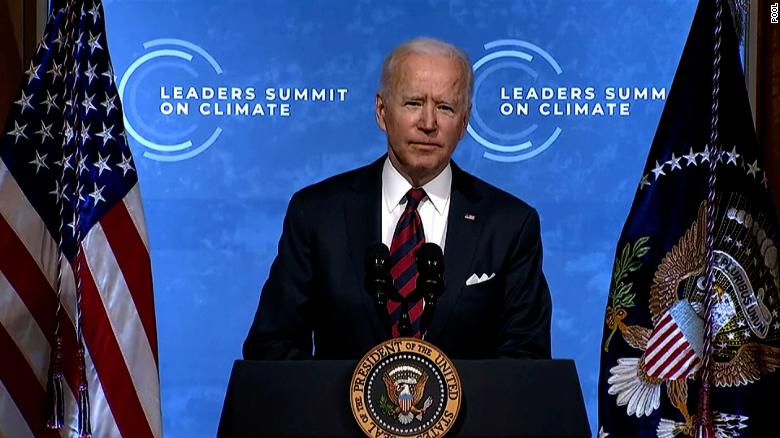
(CNN)President Joe Biden on Thursday kicked off a virtual climate summit attended by 40 other world leaders by announcing an ambitious cut in greenhouse gas emissions as he looks to put the US back at the center of the global effort to address the climate crisis and curb carbon emissions.

At the White House summit, which is taking place on Thursday and Friday, Biden committed the United States to reducing its greenhouse gas emissions by 50%-52% below its 2005 emissions levels by 2030. While the goals are a part of the Paris climate agreement that Biden rejoined upon taking office, they are non-binding and the administration has not rolled out a plan on how the US will meet them. Officials said Biden and his team arrived at the final number in a meeting at the White House on Wednesday morning.

In an address opening the summit, Biden laid out his vision for a greener economy in which climate change is taken seriously across all sectors and results in more jobs for the blue-collar workers he has focused on throughout his career.

"That's where we're headed as a nation, and that's what we can do if we take action to build an economy that's not only more prosperous but healthier, fairer and cleaner for the entire planet," Biden said.

"These steps will set America's economy to net-zero emissions by no later than 2050," he added.

The US has pledged to halve its carbon emissions by 2030


by Charlotte Jeearchive page

The news: The US will pledge at a summit of 40 global leaders today to halve its carbon emissions from 2005 levels by 2030. This far exceeds an Obama-era pledge in 2014 to get emissions 26-28% below 2005 levels by 2025. The hope is that the commitment will help encourage India, China, and other major emitters to sign up to similar targets before the 2021 United Nations Climate Change Conference, set to be held in Glasgow, UK, in November. “The United States is not waiting, the costs of delay are too great, and our nation is resolved to act now,” the White House said in a
statement.

The big picture: The world has already warmed up by 1.2 °C since preindustrial times, and it’s getting ever closer to the 1.5 °C threshold that the 2016 Paris agreement aimed to avoid. Climate scientists have been warning for years now that a significant amount of climate damage is already baked in thanks to previous emissions, but there is still a short window to avoid catastrophic global warming. 

Is Biden’s pledge feasible? For now, there’s no specific road map to reaching this new target, but the White House is expected to release sector-by-sector recommendations later this year. To meet it, the US will have to radically overhaul its economy and drastically cut the use of oil, gas, and coal. Specifically, President Biden will need to push through a set of ambitious policies to spend $2.3 trillion to tackle emissions in high-polluting areas, such as cars and power plants, and accelerate innovation in clean energy and climate technology.

Russia pulls back troops after massive buildup near Ukraine border

By Zahra Ullah, Anna Chernova and Eliza Mackintosh

Moscow (CNN)Russia appeared to be pulling back from a confrontation with the West on Friday as state media reported that troops were returning to their bases after taking part in exercises near the border with Ukraine and in Crimea.

A buildup of Russian troops along the border in recent weeks had reignited tensions in eastern Ukraine, where government forces have battled Russian-backed separatists demanding independence from Kiev since 2014.

But on Thursday Russian Defense Minister Sergei Shoigu suddenly declared that the troops had completed their drills in the south of the country near Ukraine and Crimea, and would return to their permanent bases by May 1. "I believe that the objectives of the snap drill have been fully achieved. The troops have demonstrated the ability to provide a reliable defense of the country," Shoigu said at a meeting in Crimea, which Russia annexed from Kiev in 2014.

"At present, military units and formations are marching to railway stations, airfields, loading onto landing ships, railway platforms and military transport aircraft," Tass reported on Friday, citing the Ministry of Defense.

Shoigu's announcement came weeks after Moscow initiated the largest buildup of troops near the Ukrainian border since 2014. It was unclear from Thursday's announcement how many troops would remain in the region.

Digital Authoritarianism With Russian Characteristics?

LEONID KOVACHICH, ANDREI KOLESNIKOV

Is the Russian government seeking to emulate China’s strategic use of technology for social management and political control as part of an intensifying crackdown on the country’s political opposition? To be sure, Chinese authorities’ widespread use of high-tech tools for such purposes has more than piqued the curiosity of the Russian security establishment. Yet there are vast gaps between the Russian government’s aspirations and its actual ability to harness digital tools such as facial recognition software using artificial intelligence, or China’s nascent social credit system.

Russia’s approach is colored by wider geopolitical considerations. The unmistakable convergence of Russian and Chinese leaders’ political outlooks is a by-product of their increasingly adversarial relationships with the United States. Yet this alignment falls far short of a proper alliance or security partnership. Indeed, Sino-Russian relations are more complicated than they appear at first glance due to vast asymmetries between the two powers’ economic and political clout. Nor have Moscow and Beijing fully overcome lingering sources of mutual mistrust.

Contrary to commonly held perceptions and the rhetoric of Russian politicians, the Kremlin has big hurdles to overcome as it tries to decouple from Western technology in critically important areas. What’s more, Russia’s own use of digital repression is considerably less prevalent than such repression in China, where technology is deployed on a mass scale to surveil, control, and censor citizens said to be challenging political and social stability.
MYTH #1: RUSSIA IS DISCARDING ITS RELIANCE ON WESTERN TECHNOLOGY

A Novel Approach to Local Climate Action in France

IAN BABELON, NADJA NICKEL, PAOLA PIERRI

As societies and governments around the world more urgently prioritize addressing climate change, the relationship between this cause and democratic politics has become the focus of much debate. Some iconic environmental figures argue that democracy needs to be put on hold to address the climate crisis. Others make the inverse argument that more and better democracy is needed to address climate change and related environmental issues.

Qualitatively different forms of democratic engagement are required to advance democracy and climate action at the same time. Climate assemblies have drawn much attention as a vehicle for democratic participation on energy transition issues. While these assemblies offer valuable deliberative spaces, so far they have had a limited political impact and insufficient connections with actual policymaking processes. It is therefore important to explore other innovative and complementary forms of public engagement on the climate agenda. In particular, alternative territorial governance arrangements can provide useful lessons on long-term citizen engagement and more seamless connections between citizens and government officials, thereby complementing other forms of public deliberation such as climate assemblies.

Ian Babelon is a researcher at Northumbria University investigating digital tools for collaborative urban planning and sustainability in the built environment.

One such experiment is under way in the French metropolitan area of Orléans, where civic organizations and local policymakers have pushed for the development of a new climate-focused “social contract.” Several organizations in Orléans have worked together to create a novel French-made forum for better integrating public and private views on the climate transition. Lessons from this experience could be useful for other cities and regions as they, too, seek to advance the cause of climate action.

The EU’s Next Big Problem Is Switzerland


BY CAROLINE DE GRUYTER

One Sunday, not long after he moved to Bern, Switzerland, Michael Flügger, the German ambassador to Switzerland, walked from his residence to a bakery. On the street, he saw a far-right
campaign poster showing a man wearing a European Union flag as a belt sitting on a tiny depiction of Switzerland, crushing it under his weight.

“I was shocked,” Flügger recently told a Swiss newspaper. During a previous posting in Geneva, he had never encountered such animosity toward the EU, Switzerland’s main trading—and often like-minded—partner. But now, “the atmosphere about the EU has become so negative,” he said. “In some media and social networks, it is depicted as a monster.”

This growing animosity serves as the backdrop for Swiss President Guy Parmelin’s first official visit to Brussels on Friday for an important meeting with European Commission President Ursula von der Leyen. With Switzerland unable to implement a new institutional agreement with the EU, relations between the two have reached a dead end.

This will be the ultimate stress test for the bilateral relationship between these two neighbors—and, after Brexit, an indication of how tough the EU wants to be with nearby countries. At least Parmelin assured his fellow countrymen he “was not going to do a Boris Johnson” and slam doors behind him.

CLOSING THE GAPS IN CYBERSECURITY

Erica D. Borghard

Prior to the Biden administration’s recent announcement of the nomination of Chris Inglis to serve as the inaugural National Cyber Director (NCD), debates swirled in cybersecurity policy circles about the role the NCD would play and whether its office would be duplicative of functions that already exist within the National Security Council (NSC), particularly the newly-created position of Deputy National Security Advisor for Cyber and Emerging Technology, which Anne Neuberger currently holds.

Elevating the role of cybersecurity issues within the NSC was long overdue and is a positive development. There are, however, several areas where the NCD will fill an important gap in a way that complements and enhances, rather than overlaps with, the cybersecurity efforts within the NSC.

THE IDEA

The creation of a Senate-confirmed NCD, along with an Office of the National Cyber Director (ONCD), within the Executive Office of the President was an idea generated by the US Cyberspace Solarium Commission, created by Congress in the FY2019 National Defense Authorization Act (NDAA) to develop a strategy and set of policy recommendations to defend the United States against cyber attacks of significant consequences. One of the foundational recommendations that anchored the Commission’s March 2021 final report was the NCD.

27 April 2021

Why Does the Pandemic Seem to Be Hitting Some Countries Harder Than Others?

By Siddhartha Mukherjee

On December 2nd, Mukul Ganguly, an eighty-three-year-old retired civil engineer in Kolkata, India, went to the Salt Lake Market to buy fish. The pandemic was surging around much of the world, and he wasn’t oblivious of the risks of spending time at a wet market. His wife, a former forensic analyst, protested vehemently. But Mr. Ganguly wouldn’t be deterred. He picked up his fabric shopping bag, tucked a doubled-up handkerchief in his pocket, and stepped out.

Mr. Ganguly lives in a modest, two-story, book-filled house a few blocks from the market. He tied his folded handkerchief into a makeshift mask, and spent about two hours buying groceries, choosing vegetables and sweets, and bargaining with the venders. (Give a man a fish and you feed him for a day; teach a man to haggle with a fishmonger and you’ll feed him for a lifetime.) Two days later, he came down with a fever and a dry, incessant cough; he was barely able to walk to the bathroom. His daughter-in-law, in New Jersey—a cousin of mine—called me in a panic: he had tested positive for covid-19.

We worked up a plan. He was to be isolated in a room with a pulse oximeter. His vitals were monitored twice daily. We arranged for a supplemental oxygen tank to be brought home in case his O2 levels dipped too low. I called my doctor friends in Kolkata and asked them to stand by. For two days, Mr. Ganguly had a fever—100 degrees, 101 degrees—and then it subsided. By Christmas, he was pretty much back to normal. When I spoke to him in late December, he told me, in Bengali, that his experience had been typical. Various friends, all in their seventies and eighties, had contracted covid-19. All had bounced back.

India’s massive COVID surge puzzles scientists

Smriti Mallapaty

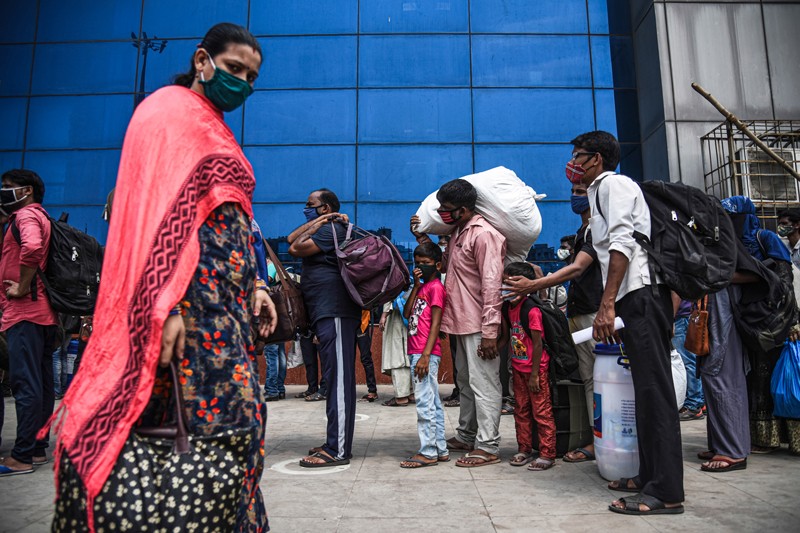
Ahead of a lockdown imposed on 14 April, migrant workers queue at a railway station to depart the city of Mumbai, India.Credit: Getty

The pandemic is sweeping through India at a pace that has staggered scientists. Daily case numbers have exploded since early March: the government reported 273,810 new infections nationally on 18 April. High numbers in India have also helped drive global cases to a daily high of 854,855 in the past week, almost breaking a record set in January.

Just months earlier, antibody data had suggested that many people in cities such as Delhi and Chennai had already been infected, leading some researchers to conclude that the worst of the pandemic was over in the country.

Researchers in India are now trying to pinpoint what is behind the unprecedented surge, which could be due to an unfortunate confluence of factors, including the emergence of particularly infectious variants, a rise in unrestricted social interactions, and low vaccine coverage. Untangling the causes could be helpful to governments trying to suppress or prevent similar surges around the world.

End the ‘Forever War’ Cliché


BY STEVEN A. COOK

Last week, President Joe Biden announced the withdrawal of U.S. forces from Afghanistan after two long and frustrating decades. Amid the praise and recriminations that followed, the phrase “ending endless wars”—and its variant, “ending forever wars”—was on repeat among pundits.

The planned withdrawal from Afghanistan by Sept. 11 poses a question for the foreign-policy community, however: Now what? “Ending endless wars” has become a neat and effective political slogan for analysts on the left and the right, but what does it actually mean for U.S. foreign policy after Afghanistan?

This is not to quibble with the president’s decision to withdraw. Once regarded as the “good war”—in contrast to the invasion of Iraq—the U.S. encounter in Afghanistan suffered from mission creep, interest creep, spectacular corruption, double-dealing partners, ineffectual partners, and an American public that remained mostly unaware of the conflict for the last two decades. The withdrawal from Afghanistan is hardly risk-free. Any objective observer must (or should) worry about the resurgence of the Taliban and what that means for the Afghan people and counterextremism efforts. Still, Americans have proved over and again that they cannot fix Afghanistan. Knowing this, Biden decided to end what truly seemed to be an endless war.

General Warns of Challenges to Tracking Terrorist Threats in Afghanistan After U.S. Exits

By Eric Schmitt

WASHINGTON — The top American commander in the Middle East said on Tuesday that it would be “extremely difficult” for the United States to watch and counter terrorist threats in Afghanistan like Al Qaeda after American troops leave the country by Sept. 11.

The head of the U.S. Central Command, Gen. Kenneth F. McKenzie Jr., offered the first extensive comments by a top commander about the effect of President Biden’s decision to withdraw more than 2,500 American troops from Afghanistan. Mr. Biden rejected the advice of top Pentagon and military advisers to keep a small force in place.

Among the major challenges once troops have left will be how to track and potentially attack militant groups in Afghanistan, a landlocked nation far from any major American base. General McKenzie said the administration was discussing with other countries where it could reposition forces to prevent Afghanistan from again becoming a terrorist base.

Possibilities in the region include Tajikistan, Kazakhstan and Uzbekistan, but those countries are under the sway of Russia to one degree or another, and the sanctions the administration imposed on Moscow last week complicates any such discussions, diplomats and military officials said.

Attack planes aboard aircraft carriers and long-range bombers flying from land bases along the Persian Gulf, Indian Ocean and even in the United States could strike insurgent fighters spotted by armed surveillance drones. But the long distances are costly and riskier.

“It’s going to be extremely difficult to do, but it is not impossible,” General McKenzie said under questioning from both Democrats and Republicans on the House Armed Services Committee.

Biden Made the Right Decision on Afghanistan

By P. Michael McKinley

The decision to withdraw the U.S. military from Afghanistan could have been made years ago or years hence: there was never going to be a perfect time, but the time has come, and President Joe Biden has made a difficult but right choice at a moment of historic shifts in global geopolitical realities.

Since 2001, successive U.S. administrations have carried out foreign policy through the prism and primacy of the wars in Afghanistan and Iraq and the global “war on terror” in the broader Middle East. While Washington’s attention was fixed on these concerns, China emerged as a global “strategic competitor” and Russia vied for influence in eastern Europe and the Middle East. The United States focused more energy on developing “out of areaNATO engagement in Afghanistan and the Middle East than on addressing the concerns that preoccupied its partners in Europe. And as the world underwent

Iran’s ‘New’ Partnership With China Is Just Business as Usual

Dina Esfandiary 

The recently finalized 25-year comprehensive cooperation agreement between Iran and China has been referred to in the media as a “game-changer,” a “breakthrough” and a “major geopolitical shift,” but in reality, it is much ado about nothing. Signed with great fanfare on March 27, during Chinese Foreign Minister Wang Yi’s visit to Tehran, the deal does provide Iran with a political and rhetorical win in the context of its ongoing negotiations over the revival of the 2015 nuclear deal. Beyond the optics of the agreement with China, though, the substance follows the same playbook that Beijing and Tehran have developed over decades of bilateral relations: agreeing to deepen ties but on vague terms that are scant on details and concrete commitments.

The deal itself has not been made public, and Iranian Foreign Minister Javad Zarif took pains to highlight that the agreement with China was not a treaty, removing the requirement for parliamentary approval. He also denied that it outlined any specific figures—despite reports of $400 billion in promised Chinese investments—or obligations for either side.

Leaders of the two countries first publicly discussed their growing partnership when Chinese President Xi Jinping went to Iran in 2016. During the visit, Xi and his Iranian counterpart, Hassan Rouhani, pledged to expand their bilateral ties and to boost two-way trade from $32 billion to $600 billion over the next 10 years—an ambitious goal. Xi agreed to increase Chinese investments in Iran’s energy, infrastructure and even nuclear sectors. The plan also covered greater defense and military cooperation, something Iran was starved for after a decade-long arms embargo. But notwithstanding these pledges, progress on building ties remained slow.

China's vaccine nationalism softens as country signals it may approve foreign-made shots

By Nectar Gan and James Griffiths

Hong Kong (CNN)As much as China may want to promote its domestically-produced Covid-19 vaccines, it has to face reality.

Last month, Beijing issued a new policy making it easier for foreigners to apply for a visa to China if they had received a Chinese vaccine -- raising concerns among experts, who warned it risked setting a dangerous precedent which could leave the world separated into vaccine silos.

There was also a practical problem: in many countries, including the United States, it is impossible to get a Chinese vaccine because they have not been approved for use by regulators.

With about half of adults in the US having received at least one Covid-19 shot, many travelers eligible to enter China -- either Chinese citizens or foreigners who managed to obtain a visa -- were left unsure whether the vaccine they received would be deemed sufficient to travel to China.

This confusion was fed by the fact Chinese officials and state media have been openly critical of foreign vaccines, particularly the mRNA-based shots primarily used in the US, exaggerating their alleged risks and boosting conspiracies in an apparent attempt to shore up support for China-made vaccines.

Looking Past China’s Rise for the Trends Shaping Asia


Under the leadership of President Xi Jinping, China has begun to more aggressively challenge America’s role as the key economic and political power in Asia. Increasingly repressive at home, Xi has not shied away from asserting China’s regional influence, positioning Beijing as the powerbroker on everything from trade routes to the ongoing efforts to denuclearize North Korea. And with its Belt and Road Initiative, China’s influence is spreading well beyond Asia, into much of Africa and even Europe. China’s ascendance is also evident in how much attention other global powers are paying to Beijing and its policies.

But while China’s rise often makes headlines, it is not the only trend shaping events in Asia. Illiberalism has become a force in democracies like India, where Prime Minister Narendra Modi rode the wave of Hindu nationalism to a massive victory in the country’s 2019 parliamentary elections. And in the Philippines, President Rodrigo Duterte’s electoral gains in midterm elections in 2019 left even fewer checks on his increasingly autocratic behavior. Meanwhile, Myanmar’s already faltering process of democratization came to an abrupt end in February, when the military seized power from the democratically elected government. The subsequent protests and the military’s violent crackdown in response have left the country teetering on the edge of civil war and failed state status.

Countering China’s Military Challenge, Today

By ERIC SAYERS and ABRAHAM DENMARK

In recent years, Defense Department planners have been intent to focus on the military challenge China will pose in the 2030s, when emerging technologies and military hardware promise to offer new operational capabilities to close the military gap with China. However, Washington would be falling into a temporal planning trap if it only organized to address the China military dilemma of 2035. As the past year has demonstrated, Beijing has escalated its use of coercion and aggression in areas of significant American interest in the western Pacific. Given this, the Pentagon, lawmakers, and the White House need a better strategy — and more targeted funding — that effectively deters the PLA of 2025. The grave costs, potential for miscalculation, and impact of an eroding military balance on America’s allies necessitates a near-term approach to ensure Beijing does not miscalculate.

Such a strategy need not seek to dominate the People’s Liberation Army (PLA) in all domains in all regions at all times — indeed, such a goal would be foolhardy. As with the Soviet Union in Europe during the 1970s and 1980s, the U.S. military faces a peer competitor that enjoys significant geographic advantages. Dominance or preeminence may have entered our military thinking in the 1990s when the United States faced no true competitor, but it is no longer a realistic approach and we know of no serious policymakers talking about dominance. As former Pentagon strategist Elbridge Colby testified to the Senate Armed Services Committee, our “armed forces will therefore need to shift from an expectation that they could dominate the opponent to one in which they must expect to be contested throughout the fight – and yet still achieve the political objectives set for them in ways that are politically tenable.”

The Chinese government embraces tech industry competition

Tom Wheeler

The Chinese government has been dismantling the bulwark behind which American Big Tech has been hiding to avoid domestic regulation. “While people are concerned with the size and power of tech companies,” Facebook Chief Operating Officer Sheryl Sandberg warned in 2019, “there is also a concern in the United States with the size and power of Chinese companies, and the realization that these companies are not going to be broken up.”

That argument just ran out of gas. In recent weeks, the Chinese government has moved forcefully to do what American tech companies have long fought in their home country: pro-market, anti-monopoly intervention and pro-innovation opening of big company chokeholds on digital information.

DE-TYCOONIFICATION

In what The Economist described as “de-tycoonification,” the Chinese government is moving to limit the power of its tech companies. In December, the State Administration for Market Regulation began investigating Alibaba’s online shopping platform practices. It took only until the first week of April for it to conclude the company’s practices had hindered competition. The result was a $2.8 billion fine against the tech giant and a message to all Chinese companies.