3 May 2021

How to Think About Counterinsurgency After Afghanistan

BY STEVEN METZ

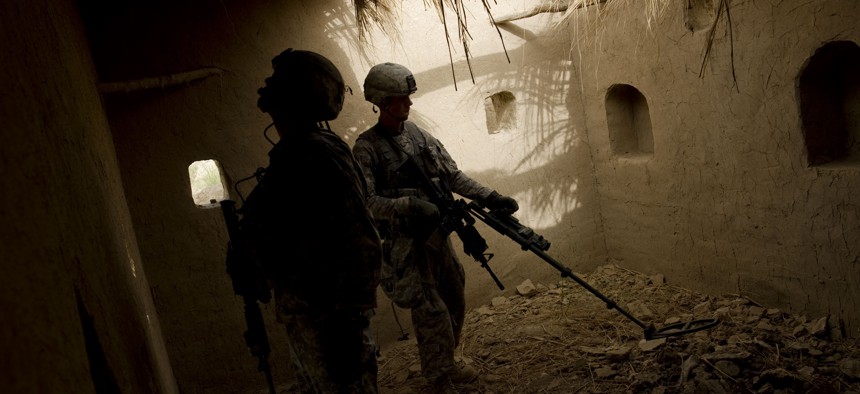
President Joe Biden’s recent announcement that all U.S. military forces would leave Afghanistan this year drew immediate criticism from a wide range of national security experts and elected officials. Some of this reflected fear of a human rights disaster if the Afghan government is unable to hold out against the Taliban once the American military leaves. But most of the pushback was based on the claim that the U.S. counterinsurgency campaign in Afghanistan is vital for preventing another major terrorist attack on the United States. The pervasiveness of this idea demonstrates that after sixty years of involvement in counterinsurgency, Americans still don’t truly understand it.

The first mistake leading the United States to a quagmire in Afghanistan was linking counterinsurgency and counterterrorism. When the United States became involved in counterinsurgency during the Cold War, it did so to prevent pro-Soviet rebels from seizing power in friendly nations. After the Soviet Union collapsed, the United States lost interest. Following the 9/11 attacks, the United States rediscovered counterinsurgency. This time, however, the objective was preventing transnational terrorists from gaining foreign sanctuary. It was, as former President George W. Bush put it, a way “to defeat them abroad before they attack us at home.” Based on this claim, the United States undertook counterinsurgency support in Iraq, Afghanistan, and, on a smaller scale, in a host of other places in the Islamic world.

Counter-terrorism Has the USA lost the Afghan war to Pakistan?

Roland Jacquard 

Afghanistan suffered two deadly suicide attacks on May 12. The first one hit the Dasht-e-Barchi maternity hospital run by Médecins Sans Frontières (MSF) in Kabul that killed at least 14, including 2 new born babies and the other was at a funeral of a local police commander in Khewa district of Nangarhar, killing 24. Both attacks were aimed at innocent civilians majority of who were women and children. While no group has yet claimed responsibility, the Afghan National Security Adviser Hamdullah Mohib in a statement held the Taliban and its ‘sponsors’ responsible for the attacks. He was most likely referring to the Pakistan-backed terror group Lashkar-e-Taiba (LeT), that is known to be operating with the Taliban in Afghanistan. 

In 2019, a report submitted by the UN Analytical Support and Sanctions Monitoring Team to the 1988 Sanctions Committee, which oversees sanctions on the Taliban, said LeT “continues to act as a key facilitator in recruitment and financial support activities in Afghanistan”. The report quoted Afghan officials as saying that some 500 LeT fighters are active in Kunar and Nangarhar provinces alone. These two incidents, coupled with the attack on Afghan soldiers in Helmand province on May 4, has laid bare the frivolity of the much publicized conditional peace agreement between the US and the Taliban in Doha on February 29 this year, that called for the withdrawal of foreign troops in 14 months if the Taliban upheld the terms of the agreement. However, this should not have come as a surprise for those who have observed the Af-Pak region for the last few decades. In fact, the US, impatient to sign a peace deal with the Taliban and exit Afghanistan, made the same mistakes that it had repeatedly committed in the past 18 years, since overthrowing the Taliban regime in Afghanistan in 2001. 

China’s Microsoft Exchange Cyberattack Puts Biden in a Bind


Emily Taylor 

The U.S. had barely begun its recovery from the SolarWinds compromise, when another large-scale, state-sponsored cyberattack came to light in January. Like the SolarWinds hack, the Microsoft Exchange Server data breach exploited several zero-day vulnerabilities and has been attributed to a nation-state. But unlike SolarWinds, while the Microsoft attack was initially a targeted attack, it went on to create widespread collateral damage, leading some commentators to characterize it as “reckless.” Microsoft has attributed the compromise to a Chinese state-sponsored espionage group called “Hafnium.”

Recent U.S. sanctions against Russia, in part motivated by the SolarWinds attack, have given rise to an expectation that the U.S. will respond against China for its alleged role in the Microsoft hack. Yet, so far, the U.S. response has been practical rather than symbolic, and domestic rather than geopolitical. More generally, invocations by the U.S. of the rules-based international order ring hollow given the lack of agreed norms for responsible state behavior in cyberspace.

The Coming Blockade of Taiwan by China?

by Simon Leitch

Since Taiwan’s democratisation over thirty years ago, the world has seen fit to promote a so-called “status quo” in which Taiwan’s friends pretend it isn’t a real country, while Taiwan pretends its problems will disappear, if given enough time. In this fantasy of failed strategy, China was meant to become peaceful, satisfied with wealth, amenable to Taiwan’s continued independence, and not at all a belligerent bully biding its time to wage a war Taiwan cannot win.

Yet here we are. As China’s routine warplane intrusions across the Strait wear down Taiwan’s air force, and its new carrier group performs sweeps near its coast, the military leadership of America, Japan and Taiwan are starting to speak more openly about the prospect of a Chinese attack on the island before the end of the Biden-Harris administration. Rightly so.

Unfortunately, there seems to be little understanding of just how desperate Taiwan’s situation is, and little appreciation of China’s likely tactics. Rather than defending Taiwan from a D-Day style attack, Taiwan and its allies need to be preparing for a possible coming blockade, one which will throttle the island over a period of months or years, and which will open the way to an air campaign that eventually compels the island’s surrender.

How TSMC has mastered the geopolitics of chipmaking


Chipmakers’ craft can seem magical. They use light to stamp complex patterns on a dinner-plate-sized disc of crystal silicon, forming arrays of electric circuits. Once cut out of the disc, each array is called a chip. The chip’s job is to shuttle electrons in a mathematical shimmer prescribed by computer code. They do the maths which runs the digital world, from Twitter and TikTok to electronics in tanks. Without them, whole industries cannot function properly, as carmakers forced to pause production because of microprocessor shortages are discovering.

The most important firm in this critical business is Taiwan Semiconductor Manufacturing Company (tsmc). It controls 84% of the market for chips with the smallest, most efficient circuits on which the products and services of the world’s biggest technology brands, from Apple in America to Alibaba in China, rely. As demand for the most sophisticated chips surges thanks to the expansion of fast communication networks and cloud computing, tsmc is pouring vast additional sums of money into expanding its dominance of the cutting edge.

Just How Safe Is Taiwan From China?

David Axe

Twenty-five years after the U.S. Navy steamed two aircraft carriers near Taiwan to deter a possible Chinese attack on the island country, there’s good news and bad for Taiwan.

The good news is that, despite hot rhetoric and frequent overt displays of military aggression, Chinese leaders seem to be happy with the status quo across the Taiwan Strait. Taiwan functionally is independent, but Taiwanese officials carefully avoid saying as much.

The Chinese Communist Party meanwhile insists it’s within its rights to enforce Chinese “unity,” but the Party at the same time maintains an elaborate fiction that the Republic of China and the People’s Republic of China in fact already comprise a single state.

The bad news is that there are few constraints on China when it comes to Taiwan. If Taipei were formally to declare independence, or if the CCP decided its unity fiction were losing credibility, then the Chinese People’s Liberation Army could invade—and possibly win.

Those are the main conclusions of a new assessment by RAND, a California think-tank with close ties to the U.S. military. RAND’s experts rated U.S. deterrence efforts in two conflicts—the Koreas and China-Taiwan.

Social Media Is Blurring the Lines of National Sovereignty

By Maxwell Lowe

In 2018, when I was in my first year of university, I moved into a student residence that mostly served to house Chinese students studying abroad in Australia. The Chinese students tended to stick together. Posters in student halls were in Mandarin, while stores and restaurants surrounding the residence catered to homesick students seeking groceries direct from China.

On the March 11 of that year, the Chinese government approved the removal of two-term limits on the presidency, and Xi Jinping effectively became “president for life.”

On that day, I walked out of my student accommodation and saw that, in a rare act of defiance, a student had put up posters of Xi with “NOT MY PRESIDENT!” written in bold letters across them. The posters were all over campus. Within three hours they had been taken down.

The stifling censorship faced by Chinese students in Australia from the Chinese Communist Party (CCP) has been well documented. Earlier this month, Human Rights Watch (HRW) published evidence that many Chinese students were afraid to speak out on politically sensitive issues in Australia due to fear of repercussions from Beijing.

China’s surprising drone sales in the Middle East

By: Bradley Bowman, Maj. Jared Thompson, and Ryan Brobst  

The Biden administration plans to move forward with $23 billion in weapons sales to the United Arab Emirates, according to press reports published last week. The sales include F-35 aircraft, MQ-9B armed drones and other equipment.

The Biden administration’s decision was likely informed, at least in part, by a new dynamic emerging in the Middle East arms market: Beijing has increasingly exploited Washington’s reticence to sell drones to key Gulf partners. If this trend continues in drones and other arms sales, it will undermine Washington’s leverage and potentially endanger core American interests.

The Stockholm International Peace Research Institute released a report in March noting that global arms transfers from 2016 to 2020 leveled off compared to 2011-2015 — but arms imports in the volatile Middle East grew by 25 percent in the same period. Arms sales to countries in the region included, for example, advanced tanks, aircraft, ships and satellites. The report demonstrates that the Middle East arms market is becoming increasingly crowded, robust and competitive.

Prospects of China-U.S. Climate Diplomacy: The Perspective From Beijing

By: Kevin Jianjun Tu

Introduction

As U.S.-China tensions have continued into the Presidency of Joseph R. Biden, climate change is seen by some to be a rare area for bilateral collaboration (21st Century, December 22, 2020; The Paper, January 20). However, despite the U.S.’ official return to climate diplomacy with its rejoining of the Paris Agreement on February 19, sustained bilateral tensions over issues including disagreements over the origin of the coronavirus, trade frictions, an ongoing military standoff in the South China Sea and human rights-related disputes in Hong Kong and Xinjiang make the prospects of bilateral climate cooperation uncertain.

To fend off rising domestic concern that climate diplomacy with China would be transaction-oriented and detrimental to other foreign policy goals, the U.S. Special Presidential Envoy for Climate John Kerry has said unequivocally that climate would be a “critical, standalone issue” that will never lead to a weaker China policy (VOX, January 27). His remarks immediately sparked a negative response from the Chinese Ministry of Foreign Affairs (MOFA) spokesperson Zhao Lijian (赵立坚), who stressed that “China-U.S. cooperation in specific areas, unlike flowers that can bloom in a greenhouse despite winter chill, is closely linked with bilateral relations as a whole” (MOFA, January 28).

The European Union's Turkish Neighbor: Can't Live with It, and Can't Live without It

Shimon Stein, Oded Eran

For years European Union heads of state have debated what policy the EU should adopt vis-à-vis Turkey. The dilemma has intensified in recent years due to the aggressive external policy and authoritarian internal policy pursued by Erdogan. Relations with Turkey have deteriorated substantially, from its being a candidate for EU membership to being an object of threatened European sanctions. These complex relations, and the attempt on both sides to contain the rift, also have implications for Israel. The lack of a comprehensive solution to these disputes will leave Turkey undermining stability in Israel’s strategic environment and threaten to harm Israeli interests, especially with regard to the exclusive economic zone in the Mediterranean and the transport of natural gas. Therefore, Israel has an interest in Turkey and the EU settling their relations, although not to the point of full Turkish membership in the Union.

Turkey's challenge to the European Union is multidimensional – cultural, demographic, political, economic, and security – and a solution to this complex challenge is not in sight. An expression of the deep disagreements between the EU and Turkey is reflected in a report submitted to the European Council in March 2021. In the political context, the report notes the ongoing deterioration in relations in recent years, mainly due to Turkey's activity in the Eastern Mediterranean – the Cyprus crisis, the ongoing conflict with Greece over the issue of territorial and economic waters and gas drilling – along with threatening steps and belligerent rhetoric. This joins Ankara’s assertiveness in other crisis areas: Syria, Libya, Russia, and Nagorno-Karabakh. There is also the continuing deterioration in Turkey’s domestic political affairs – including the deteriorating rule of law and protection of human rights; the violation of the independence of the judicial system; the violation of the freedom of speech; and the continued concentration of power by President Erdogan. This conduct is perceived by the EU as harming its interests, and as long as there is no change in Turkey's position it will therefore diminish the EU's willingness to move forward on a long list of bilateral issues on the agenda.

The Saudis Need More than a Scolding on Yemen

by Nick Danby

In the world of business, “under promise and over deliver” and you shall go far. The same holds true for the art of war. Saudi Crown Prince Muhammad bin Salman (MBS) flouted this golden rule in Yemen. Predictably, neither he nor the kingdom he leads has gotten very far.

Since the Yemeni conflict began in March 2015, the United States has acted like a bank, giving the Saudis a blank check to prosecute a war against the Houthis. Washington bolstered Riyadh’s efforts through intelligence-sharing, logistical support, targeting information, in-flight refueling, and billions of dollars’ worth of weapons. Six years later, the Saudis have failed to accomplish their initial objectives. The Houthi insurgents are still undefeated, and the official government of Yemen is still in tatters and exile. Instead, the Saudi war has thrown Yemen into a humanitarian crisis, with an estimated 230,000 people dead and another four million displaced. Riyadh has overdrawn on its bank account with the U.S. government. Like any responsible business lender—and world leader—it is high time the United States calls in the loan.

Ambiguity and Incongruity

International Involvement in Infrastructure Projects in Azerbaijan’s Newly Regained Territories

By: Shabnam Hasanova

Azerbaijani President Ilham Aliyev announced earlier this year that a number of large infrastructure projects had been launched in the territories liberated from Armenian occupation as a result of the 2020 Second Karabakh War. Importantly, he added that friendly countries and partners would be involved in these projects (Report.az, February 15).

When it comes to attracting foreign assistance in restoring and rehabilitating these regained southwestern areas of the country, Azerbaijan will prioritize its closest ally, Turkey, and Turkish businesses. Companies eager to participate in these projects have already submitted several proposals, according to Azerbaijan’s Economy Minister Mikayil Jabbarov (Trend, April 2). Another strategic partner invited to take part in reconstruction projects is apparently Belarus, whose president, Alyaksandr Lukashenka, visited Baku earlier this month to, in part, discuss the possibility of such participation by Belarusian firms (see EDM, April 20)

Iranian Foreign Minister Mohammad Javad Zarif met with Aliyev on January 25, 2021, and stated that Iran was ready and eager to engage actively in the reconstruction process. As President Aliyev had confirmed that the liberated territories will be a green energy zone, Iran and Azerbaijan reached an agreement in the area of renewable energy for the installation of the Khudaferin and Maiden Tower hydro junctions. Hydroelectric power plants, in particular, have tremendous potential in this region of Azerbaijan (Azertag.az, February 15).

The Ninja Missile: A Breakthrough in U.S. Counter-Terrorism Weaponry?

By: Jacob Ware

A February 2017 airstrike in Idlib, Syria targeted and killed Abu al-Khayr al-Masri, a deputy to al-Qaeda leader, Ayman al-Zawahiri. Al-Masri was one of the first foreign terrorists to have been killed using the U.S. military’s newest counter-terrorism weapon: the AGM-114R9X (R9X) Hellfire missile, often called the “ninja missile” or “the flying Ginsu” (Jerusalem Post, June 15, 2020). The missile is a new variant on the Hellfire. However, instead of delivering an explosive payload, the R9X missile releases six blades shortly before impact, crushing and cutting its target.

At first glance, the R9X missile, described as “a weapon that combines medieval brutality with advanced technology,” appears to be an important breakthrough in the U.S. counter-terrorism arsenal (Wall Street Journal, May 9, 2019). Despite its Hellfire connotation, the R9X missile is more like a long-range sniper round than its explosive cousins. The payload allows a drone operator based in the United States to target terrorist leaders anywhere in the world to an accuracy of only a few feet, and potentially without any collateral damage. But there are downsides, including a failure to adequately address ethical and human rights questions and a lack of clarity about if it can be deployed effectively in future battles.

Background and Early Use of the R9X

US SolarWinds Response Unlikely to Change Russia’s Behavior, Highlights Need for Improved Cyber Defense

Paul Kolbe

The United States has unveiled its overt response to Russia’s SolarWinds cyber operation—the expulsion of 10 Russian Embassy personnel from Washington, along with new sanctions on Russian sovereign debt and on Russian IT firms that support Moscow’s cyber intelligence operations. A “unseen” response promised by national security adviser Jake Sullivan, presumably cyber operations against Russian intelligence networks, has yet to publicly manifest. In response, Russia has denounced the “illegal” sanctions and predictably expelled 10 U.S. diplomats from Moscow.

Amid the flurry of accusation and counteraccusation, the question remains: Will the U.S. response to the SolarWinds compromise deter future Russian cyber activity? Based on what we’ve seen so far, I believe the costs on Russia imposed by the U.S. response will have little effect on future Russian cyber operations against U.S. government and private sector targets.

We do not know what the U.S. may undertake as part of the “unseen” response, but past experience would suggest cyber operations to signal displeasure are unlikely to change Russia’s behavior. A measured and proportional response will be shrugged off as the cost of business, and a cyber “shock and awe” campaign would risk escalation beyond U.S. intent.

US Agencies, Defense Companies Hacked Via VPNs

By BRAD D. WILLIAMS

WASHINGTON: US government agencies, critical infrastructure entities, and private sector organizations are back in the cyber crosshairs, the Cybersecurity and Infrastructure Security Agency said today — first in an alert and later in an emergency directive issued within hours of each other.

CISA’s emergency directive and alert were issued as US security companies FireEye and Ivanti disclosed separately — but in coordination with each other — that threat actors are targeting one newly discovered and three previously known vulnerabilities in Pulse Connect Secure appliances. Security patches are currently available for the three known vulnerabilities. A patch for the newly disclosed vulnerability is expected within weeks.

Ivanti, FireEye, Microsoft’s Threat Intelligence Center, and government and law enforcement agencies are said to be working together on this incident.

Pulse Connect Secure is an enterprise virtual private network (VPN) product. VPNs encrypt data as it’s transmitted across public networks, such as the internet. Pulse Connect Secure enables remote workers to securely access enterprise networks.

US military to blend electronic warfare with cyber capabilities

Mark Pomerleau

WASHINGTON — The U.S. Navy plans to blur the lines between traditional electronic warfare and cyber operations as it prepares to receive its new airborne electronic jammer, according to a top service official.

Cyberspace and the electromagnetic spectrum are inextricably linked, which sometimes leads to arguments over why cyberspace is considered a domain of warfare, yet the electromagnetic spectrum is not.

“Now with the ability to do phased array, advanced jamming techniques, we really start to blur the lines, I think, between what we would consider traditional jamming with cyberwarfare,” Rear Adm. John Meier, commander of Naval Air Force Atlantic, said April 13 during remarks at a virtual event hosted by the Association of Old Crows. “I think that the capabilities inherent in the jamming pod are going to open up a wide, wide array of not only jamming techniques, ranges, effective radiated power, but also taking us into other areas that we’ve never really had the ability to do before.”

Meier was talking about the Next Generation Jammer, the Navy’s — and by extension, the joint force’s — premier aerial electronic attack platform to be mounted on EA-18G Growler aircraft. It is broken into three pods covering three portions of the electromagnetic spectrum: mid, low and high.

The Time Is Now for U.S. Global Leadership on Covid-19 Vaccines


It is in the United States’ strategic interests to ensure that the world mobilizes effectively to end the SARS-CoV-2 pandemic. A proactive U.S. role is essential to secure the gains underway in the United States and ensure Americans’ health, safety, and prosperity into the future. Helping to secure the future of lower- and middle-income countries is also simply the right thing to do, on humanitarian, economic, and security grounds.

Today, the United States is quickly approaching a moment of genuine promise, when exceptionally effective vaccines, accelerated distribution at home, and an enlarged American vaccine industrial base open the door for the Biden administration to bring American leadership to urgent global vaccine challenges. The United States’ health, economic, and national security interests argue for seizing this moment, beginning with presidential leadership to explain the stakes to Americans still legitimately worried about the epidemic at home. The United States ignores at its own peril the acute threat posed by viral variants, geopolitical rivals who take advantage of the moment, and deep vaccine inequity around the world. By sharing American vaccine resources starting at the soonest possible moment, the United States can claim ascendancy against these risks. That essential step should be part of a four-part U.S. diplomatic strategy that will: DOWNLOAD THE REPORT

Sunk Indonesian Submarine Should Worry Pacific Powers

By Nick Danby

This undated underwater photo released April 25, 2021, by the Indonesian Navy shows parts of submarine KRI Nanggala that sank in Bali Sea, Indonesia.Credit: Indonesian Navy via AP

On the morning of April 24 local time, the Indonesian Navy changed the status of its missing submarine, KRI Nanggala 402, from “sub miss” to “sub sunk.” The announcement dashed hopes of finding the submarine’s 53 crew members alive.

Hours earlier, search assets identified a “high magnetic” force object floating 160-320 feet below sea level as well as an oil spillage near the submarine’s last known location, raising the prospect of finding the vessel. Further investigation and rescue efforts near the area, however, recovered “authentic evidence… believed to be from the submarine,” This included a periscope lubricant, a torpedo protective device, and prayer rugs.

The debris’ identification meant Indonesia would wind down its three-day search for the 44-year-old undersea vessel that lost contact on April 21 during a military exercise, after requesting permission to dive and conduct a torpedo drill. The cause of the sinking remains elusive. Indonesian naval officials suggest an electrical failure prevented the submarine from executing emergency procedures while it sank nearly 2,000 feet or more below sea level.

The accident is worrisome in light of regional developments. The Asia-Pacific’s decade-long arms race, territorial disputes, and access denial campaigns have triggered the procurement and modernization of submarines throughout the region. A greater propensity for undersea warfare, then, must beget a multinational effort to collaborate and enhance submarine safety awareness and protocols as well as search and rescue (SAR) techniques and tools.

This Researcher Says AI Is Neither Artificial nor Intelligent


TECHNOLOGY COMPANIES LIKE to portray artificial intelligence as a precise and powerful tool for good. Kate Crawford says that mythology is flawed. In her book Atlas of AI, she visits a lithium mine, an Amazon warehouse, and a 19th-century phrenological skull archive to illustrate the natural resources, human sweat, and bad science underpinning some versions of the technology. Crawford, a professor at the University of Southern California and researcher at Microsoft, says many applications and side effects of AI are in urgent need of regulation.

Crawford recently discussed these issues with WIRED senior writer Tom Simonite. An edited transcript follows.

WIRED: Few people understand all the technical details of artificial intelligence. You argue that some experts working on the technology misunderstand AI more deeply.

KATE CRAWFORD: It is presented as this ethereal and objective way of making decisions, something that we can plug into everything from teaching kids to deciding who gets bail. But the name is deceptive: AI is neither artificial nor intelligent.

The Nine Commandments on Countering Hybrid Threats


Most hybrid threats are non-kinetic, yet in grappling with the concept of “hybrid” the West still manages to shoot itself in the foot. Not only are there many different definitions, there is also a lack of discipline in applying the term. For example, cyber and hybrid attacks are often used interchangeably; terms like “hybrid war” are bandied about as if the term “war” had no specific legal meaning anymore; and even smaller, non-existential hybrid activities are said to be extremely dangerous.

How can one foster a common understanding of hybrid threats and responses? The following nine commandments (using 10 could have resulted in charges of copyright infringement) are intended to help the Western strategic community reach a common understanding and, consequently, chart a common course.

First Commandment: Thou shalt be precise

“Hybrid” always describes a combination of two or more tools or actions. Hence, we should not use the term when we are just describing a series of cyberattacks or a single disinformation effort. Only when several tools are applied together is the word “hybrid” really appropriate. Rule of thumb: whenever an expert uses the term “hybrid,” but only talks about cyber, he or she is no expert! By the same token, calling everything we don’t like “hybrid,” simply to get more attention, leads to semantic overstretch that will only confuse ourselves.

Second Commandment: Thou shalt not generalize

2 May 2021

Himalayan Geopolitics: Contemporary Analysis of Sino-Nepali Relations

Bibek Chand

Nepal and China share a land border of 1,414 kilometers along the Himalayan frontier. They established formal diplomatic ties on 1 August 1955. Ever since the establishment of official ties, the two states have maintained increasingly close relations. However, Nepal’s geopolitical and geoeconomic focus has been with its southern neighbor, India. Cultural, religious, linguistic and historical affinities coupled with Nepali reliance on India for trade have also played important roles in Indo-Nepali relations. On an official level, the bedrock of contemporary Indo-Nepali relations is the 1950 Treaty of Peace and Friendship which allows freedom of movement between the two countries. Despite these close cultural and social ties, China’s rise has certainly impacted Indo-Nepali relations. Overall, this article assesses contemporary Sino-Nepali relations by highlighting the specific interests of Nepal and China in forging closer ties. First, Nepal’s interests in having closer ties with China is assessed through the lens of Nepal being a small state and second, China’s interests in Nepal are highlighted. The final concludes the paper and briefly highlights the implications of closer Sino-Nepali ties for India’s security.

Nepal was founded in 1768 as a unified state by King Prithvi Narayan Shah who referred to his nascent empire as a ‘yam between two boulders’. The realization early on was that it was surrounded by two big powers – the Qing Empire in the north and the British East India Company in the south. Nepal’s status as a small state squeezed between two much larger powers continued with India’s independence from the United Kingdom in 1947 and the establishment of the People’s Republic of China in 1949. As a small state, Nepal’s structural constraints remained. Nevertheless, Nepal’s foreign policy has somewhat showcased an effort to internationalize its diplomatic ties. Despite the fact that small states are constrained by their relatively weak material and ideational position, an increasing literature on such states is emerging that highlights their agency.

We Got Afghanistan Wrong, but There’s Still Time to Learn Something

By JASON DEMPSEY

Jason Dempsey, PhD, is a veteran of the war in Afghanistan, an adjunct Senior Fellow at the Center for a New American Security, and the author of Our Army: Soldiers, Politics and American Civil-Military Relations.

President Biden was right to reject the recommendations of the Afghan Study Group and to order the withdrawal of American forces from Afghanistan. It was clearly not an easy decision, as it involved going against the recommendations of many current and former military leaders who were heavily invested in the conflict. With this difficult decision should come some introspection about the limits of military power and the danger of simplistic narratives of American capabilities, but initial responses suggest that this will not be the case.

We have already heard a lot about "conditions-based" approaches and all that Afghanistan might lose with our withdrawal. Notably missing from those arguments is any acknowledgment of how inefficient and ineffective our nearly 20-year-long military-led endeavor has been, how our efforts thus far have fed into Afghanistan’s dysfunction, and why we should not expect "more of the same" to lead to better outcomes now.

I spent a total of nearly two years in Afghanistan during my U.S. Army career, first serving in conventional infantry units and later as an advisor to the Afghan military, interacting with members of the Afghan army and police across six provinces — during which I've seen up-close how the U.S. military's approach can blind us to what really matters on the ground. Right now, we have less than five months before the announced pullout date, so the question of what we got wrong isn't just self-criticism: It's a necessary, and urgent, step to insuring we best use the remaining leverage we have now and after we withdraw troops from Afghanistan. And maybe, even at this late date, help to accomplish the goal of a country able to resist Taliban domination.

The Myanmar Conundrum: What Matters, and What Matters Less

Alfredo Zeli

The Republic of the Union of Myanmar, also known as Burma, is a multiethnic country in Southeast Asia that is mostly known today by the international public because of little – if anything – more than two infamous events occurring therein: (1) the Muslim Rohingya crisis; and (2) the military coup d’état staged by the national armed forces (called Tatmadaw, as each and every writing on Myanmar needs to remind) two months ago, precisely in the morning of February 1, 2021, bundled with the declaration of the year-long state of emergency and the brutal repression of the civil unrest ensued in response and still underway.

These have sparked outrage and indignation worldwide due to their blatant disregard of human rights, democratic governance, and accountability to the international community. Few would disagree on that the despotic oppression of the people(s) of Burma must end; tyrants must be removed from power and their foreign undemocratic supporters (supposedly, the People’s Republic of China) must be rebuked harshly; accordingly, action must be taken by the international community as soon as possible and with all available means to that end.

Nevertheless, upon more rigorous pondering, things unfortunately seem not to be as clear-cut as we might wish or believe. There is an even bigger problem in the country that still needs to be addressed. It is assumed in this article that the greatest overarching issue in Myanmar is the ethnic-based armed insurgency that has been ravaging the country for more than seven decades so far. Therefore, it is maintained that no invocation for a humanitarian intervention down there can be advanced soundly as long as the nature and character of the internal conflict in Myanmar is not properly considered.

Interests, Not Values, Should Guide America’s China Strategy

by Elbridge Colby

In Europe, this interest-based approach would be less ambitious than a global, ideological one, but be more likely to pay dividends. The United States should recognize that Europe is unlikely to be willing or able to contribute much to the hard power balance in Asia. Any soft power gains through a Summit of Democracies or the like, meanwhile, are likely to be ephemeral and derivative. The United States should accordingly focus its policy toward Europe on where European interests are most directly implicated vis-à-vis China, and otherwise encourage the Europeans to handle the bulk of their own defense and consume less American diplomatic capital that can then be allocated to Asia.

In the military sphere, the overall U.S. goal should be, while preserving the fundamental U.S. commitment and readiness to contribute to NATO’s defense, to have Europeans shoulder more of the burden of defending the alliance. The reality is that, given the stakes and consequences, the United States must prioritize Asia. The United States must therefore economize in its second theater, Europe. Since the United States will not have a military large enough to mount two major simultaneous wars with China and Russia, this means that it must prioritize Asia, even if war breaks out in Europe. Indeed, even if a war broke out only in Europe, the United States could not take too much risk in Asia and thereby open the way for Chinese opportunistic aggression there. NATO will therefore need to prepare for defense of its European members with an expectation of a more limited contribution from the United States.

New Concept Weapons: China Explores New Mechanisms to Win War

By: Marcus Clay

Introduction

The idea of “New Concept Weapons” (NCW, 新概念武器, xin gainian wuqi) is not new. In the parlance of the People’s Liberation Army (PLA), NCW was once almost a synonym for directed energy weapons (DEW) programs, with roots dating back to the 1960s.[1] In recent years, NCW has been increasingly associated with the PLA’s discourse on “new mechanism (新机理, xin jili) weapon systems.” (81.cn January 20, 2017; PLA Daily, September 28, 2017) It is often discussed in the context of broader military applications of disruptive technologies to create enduring asymmetric advantages. The majority of NCW operate in the information domain and overlap with the mission of the PLA Strategic Support Force (PLASSF). Because of this, NCW thinking may provide useful insights into the “new technology testing” (新技术试验, xin jishu shiyan) responsibilities of the PLASSF (Xinhua, October 1, 2019).

While this article does not delve into significant details of China’s NCW development, it provides an overview of the field and seeks to understand what factors shape Chinese views on NCW. It first summarizes the evolution of the PLA thinking on NCW over the past two decades. It then categorizes the main focus areas and analyzes the PLA’s key considerations for NCW development. Finally, it calls for better understanding China’s NCW programs as an integral component of the PLA’s deterrence strategy.

Something Old, Something New

Four Ways a China-U.S. War at Sea Could Play Out


James Stavridis

James Stavridis is a Bloomberg Opinion columnist. He is a retired U.S. Navy admiral and former supreme allied commander of NATO, and dean emeritus of the Fletcher School of Law and Diplomacy at Tufts University. He is also an operating executive consultant at the Carlyle Group and chairs the board of counselors at McLarty Associates. His latest book is "2034: A Novel of the Next World War."

In the mid-1970s, I set sail as a young ensign, my first deployment after graduating from the U.S. Naval Academy. We sailed west from San Diego on a brand-new Spruance-class destroyer. As a Cold War sailor, I was deeply disappointed that the ship was not headed into northern Atlantic waters to challenge the vaunted Soviet fleet. Instead, our six-month cruise was focused on the waters of the western Pacific, those around northern Australia, Singapore, Hong Kong and Taiwan.

The furthest thing from our minds was a serious threat from Communist China (as we called it then). It had a somewhat capable coastal navy in those days, but the ships and aircraft of the oddly named People’s Liberation Army Navy simply were not a significant competitor.

Things have changed remarkably. Over the course of my naval career, I watched China slowly, meticulously and cleverly improve every aspect of its naval capabilities. That trend has accelerated significantly over the past decade, as China has expanded the number of its sophisticated warships, deployed them aggressively throughout the region, and built artificial islands to be used as military bases in the South China Sea. It is now a peer competitor of the U.S. in those waters, and this has real risks.

China to US: Back Off and Calm Down

BY KEVIN BARON

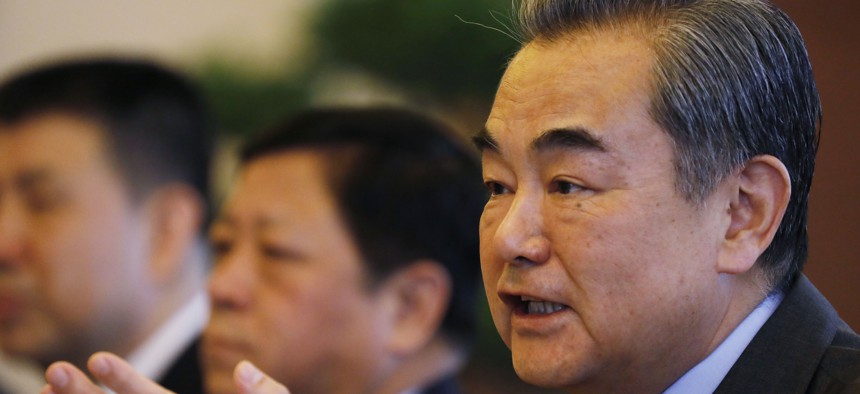
China’s Foreign Minister Wang Yi sent a warning to U.S. leaders on Friday, telling them in a virtual address that their increasingly anti-Chinese words and policies “will cause chaos in the world.”

Let's hope they were listening. The new Red Scare that American politicians have latched on to has, so far, failed to persuade Chinese leaders to Beijing to abandon their global ambitions. By the sound of it, it hasn’t even made them flinch.

For four years, Trump’s team — led bombastically by Secretary of State Mike Pompeo — worked to sell Americans and the world on China as the new immediate threat. They slammed the Chinese Communist Party leadership in what Pompeo portrayed as a battle for the soul of the world. Now, with Biden and “the blob” of foreign policy moderates firmly back in charge and striking a more hopeful and less confrontational tone, China’s top diplomat is seeking to establish a new narrative about the way ahead.

Speaking at a Council on Foreign Relations virtual event on Friday, Wang delivered an unflinching take on geopolitics that was broad-ranging, if also blatantly divorced from reality and laced with pro-Beijing propaganda.

“We do not act in a coercive way and we oppose any country doing so,” the foreign minister said. "China is committed to a path of peaceful development, one with peaceful coexistence."

It’s hard to believe that the diplomat thought it would be well received, much less taken seriously. But to his credit, Wang gave back as good as Washington has given on issue after issue, including the latest boogeyman issue being tossed about in national security speeches and pages: Taiwan.

Why the Russia-China Alignment Is So Worrisome

Thomas Joscelyn
Source Link

Earlier this month, the National Intelligence Council (NIC) published a report intended to provide policymakers with an overview of “the key trends and uncertainties that will shape the strategic environment for the United States during the next two decades.” The NIC’s officers, drawn from across the U.S. government, academia, and the private sector, support the Office of the Director of National Intelligence (ODNI)—that is, the body that oversees the sprawling U.S. intelligence community.

No one has a crystal ball, but the NIC has written a similar assessment every four years since 1979, hoping to “to help policymakers and citizens anticipate and prepare for a range of possible futures.”

There is much one can say about the report, which is 156 pages long. Titled “Global Trends 2040: A More Contested World,” the assessment envisions a world in which America continues to face formidable challenges, including from other nations.

Below are some observations that are relevant for the issues I focus on at Vital Interests.
China and Russia are “likely to remain strongly aligned.”

The partnership between Xi Jinping and Vladimir Putin is potentially the most worrisome relationship on the world stage.

Open-source analysis of Iran’s missile and UAV capabilities and proliferation


Iran’s ballistic missile systems, supplemented by cruise missiles and UAVs, are intended not only for deterrence, but for battle, including by Iran’s regional partners. In a new report, the IISS provides a detailed assessment of Iran’s missiles, and the manner and purposes for which it has been proliferating them.

Nuclear issues are the exclusive focus of the negotiations on the restoration of the 2015 Joint Comprehensive Plan of Action, which have taken place in Vienna. The Western powers are keen, however, to engage in follow-on talks to address Iran’s missiles and activities in the region. To inform the public policy debate on the latter matters, the IISS has produced a fact-rich technical assessment of Iran’s current missile and uninhabited aerial vehicle (UAV) capabilities and its proliferation of these technologies to Iran’s regional partners.
Robust arsenal

Drawing exclusively from open sources, including Persian-language material, the IISS report details Iran’s roughly 20 different ballistic missiles (the exact number depends on how variants are counted), as well as cruise missiles and UAVs. For now, all of Iran’s ballistic missiles apparently adhere to a self-imposed range limit of 2,000 kilometres. Iran’s priority is to improve precision, notable in several missile systems: ­

State Social Media and National Security Strategy: Israel’s Operation Protective Edge

Marisa Tramontano

Direct communication with social media followers is a relatively new tool for the state to narrate and characterize each use of force. For the purposes of international relations scholarship, the posts provide rich data to uncover the symbolic “mechanics” of how a state sold a violent national security strategy in general and how Israel sold Operation Protective Edge (OPE) to its Anglophone followers in particular. To accomplish this constructivist IR research agenda, in this article, I rely on sociological methods of interpretation. In particular, I analyze English-language social media discourse produced and shared by Israel Defense Forces, the Office of the Prime Minister of Israel, and the Israel Ministry of Foreign Affairs just before and during the 2014 operation.

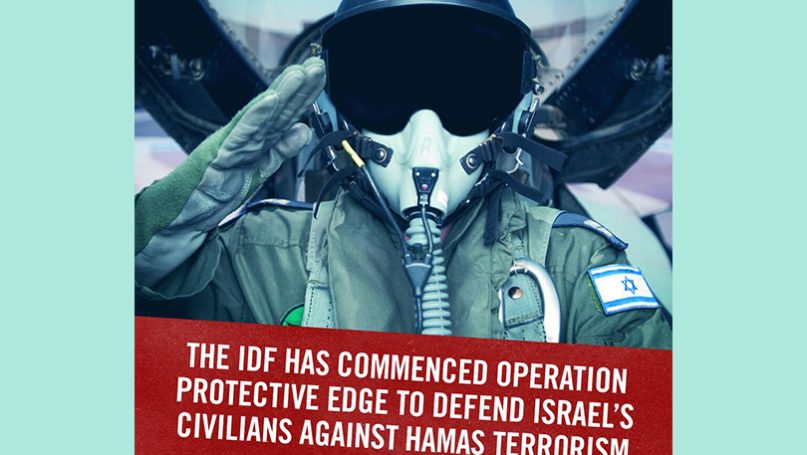
On July 23, 2014, fifteen days into Operation Protective Edge – air strikes and an Israeli ground invasion of Gaza – Lt. Col. (Ret) Avital Leibovich, creator of the Israel Defense Forces’ (IDF) social media unit and director of the American Jewish Committee in Israel at the time of writing, stated during an interview with CNBC that:

Social media is a warzone for us here in Israel. It’s a way to communicate with a large variety of audiences, worldwide, without an editor interfering. Here we can have our own campaigns, we can decide the size of the headline, what that headline will be, exactly which pictures and footage to upload. So it really enables us to reach millions and millions of people who use social media as their sole source of information.

How to Make Sure Peace Endures Once the Fighting Ends


The need for peacebuilding in post-conflict societies grew out of the realization that signing agreements to bring fighting to an end is a necessary but insufficient step toward true and enduring peace. Peacebuilding is now conceived of as a multistage process to strengthen the peace accord and begin unifying communities through approaches ranging from governmental capacity-building and economic development to reforms of the legal and security sectors. Each initiative is intended to be a step toward improving human security, and the process often includes a transitional justice mechanism to foster societal healing and reconciliation.

Peacebuilding is often a laborious and expensive process—and one that can easily be undone. Witness Brexit’s triggering of the long-dormant fault lines between unionists and nationalists in Northern Ireland. Moreover, as peacebuilding has evolved, there is still no consensus on who should lead these efforts. In the wake of Sept. 11, the United Nations introduced a Peacebuilding Commission, intended to push for the adoption of post-conflict interventions and then aid and track their implementation. But it lacks enforcement capacity, and key member states can block its activities. Regional bodies, including the European Union and especially the African Union, have shown an interest in prioritizing post-conflict peacebuilding, but their track records are mixed.

Kennan’s Containment Strategy: A Consensus on What Not to Do

by Robert D. Kaplan

THE MOST famous modern instance of the United States consciously adopting a grand strategy was the concept of “containment” against the Soviet Union, devised by the diplomat and Russian area specialist George Kennan in the immediate aftermath of World War II. Yet a look at how Kennan’s idea evolved, how it was adopted, and how it played out over time, indicates that it was no cut-and-dry affair; that it was adopted mainly in a negative sense; that it provided relatively little guidance during the long Cold War decades; and that it appeared prescient—romantic even—particularly in retrospect once the Cold War had ended.

American foreign policy elites have adopted a partial myth about containment in order to worship at the altar of grand strategy before declaring that such a sweeping approach is no longer possible. Both propositions are false and are driven partially by nostalgia—for a simpler era that was not so simple at all. In truth, Kennan’s theory codified the conventional wisdom of his colleagues who agreed only about what not to do. Moreover, achieving such a negative consensus is certainly possible today—if not in the larger foreign policy community scattered along the East Coast with all its divisions and “global” rather than “American” outlook, then at least within the community of defense experts centered around the Pentagon. By refusing to mythologize the past, the defense community can, on its own, better construct a framework about preparing for the middle decades of the twenty-first century.

War in All but Name

Derek Bernsen

The U.S. is already at war, and Great Power Competition is that war.[1] The information war that has raged in various forms since the 1920s has evolved into cyber operations, such as Moonlight Maze, and disinformation campaigns, as seen in the 2016 U.S. Presidential election.[2] The U.S. National Security Strategy has recently tried to prioritize cyber and information warfare—a necessary step in our modern world. Yet, these steps do not go far enough to counter adversaries in these domains. Information warfare, combined with political and economic acts of aggression, comprises the majority of actions between the United States and Russia, and the United States and China.[3] These actions are at levels of hostility not seen since the Cold War era, as evidenced by U.S. Cyber Command’s (USCYBERCOM) persistent engagement strategy and the Chinese strategy of Unrestricted Warfare.[4]

IMPLEMENTING AND PRIORITIZING NEW CYBER AND INFORMATION WARFARE INITIATIVES AS A PART OF THE NATIONAL SECURITY STRATEGY WILL BE CRUCIAL TO AMERICA’S SUCCESS IN MODERN GREAT POWER COMPETITION.

Ultimately, Russia and China plan on winning the Great Power Competition by undermining the U.S., sowing discord, and continuing a secret war until the positions in the world order are reversed.[5] Implementing and prioritizing new cyber and information warfare initiatives as a part of the National Security Strategy will be crucial to America’s success in modern Great Power Competition. Specifically, the U.S. must more effectively leverage its cyber capabilities, as well as improve its understanding of adversary information warfare tactics, to keep the balance in its favor. To compete in this raging war, the authors of the National Security Strategy must answer the question: how can the U.S. leverage strengths and overcome weaknesses in cyber and information warfare to regain domain superiority?

Bitcoin Is a Threat to National Security

by Ramon Marks David Harvilicz

Bitcoin is flying high, the glamour child of market speculators. Even Wall Street’s conservative wealth management firms have begun providing Bitcoin services to clients. Bitcoin was first launched in 2009 for an initial asset value of exactly $0. In October 2010, Bitcoin was trading for around 10 cents a coin. A hundred dollars would have bought about 1,000 Bitcoins. If an investor had held on to those digital “coins,” they would be worth over $62 million today.

Satoshi Nakamoto, a brilliant Japanese software engineer, invented Bitcoin back in 2008, using a blockchain algorithm. It was designed to be the world’s first decentralized digital currency, controlled by no central governmental authority or any middleman. Not surprisingly, Nakamoto has done well, possibly enjoying a personal fortune exceeding $30 billion.

Bitcoin is the anarchist’s dream, offering a currency falling outside the control of any central banking or government authority, and beyond the intermediary moderation levers of the Bretton-Woods global banking system. It was designed to serve as the perfect, anonymous digital medium for the direct purchase of any kind of good or service. Bitcoin is rapidly heading in that direction, gaining mainstream respectability as a “crypto,” electronic currency for the purchase of anything and everything. It is becoming the currency of the Internet, seen by millions as the cool future of a new global currency system, unfettered by government controls and bank clearing systems.