23 May 2021

China’s Cyber-Influence Operations

Maj Gen PK Mallick, VSM (Retd) 

The digital era has transformed the way we communicate. Using social media like Facebook and Instagram, and social applications such as WhatsApp and Telegram, one can be in contact with friends and family, share pictures, videos, messages, posts and share our experiences. Social media has become an effective way of influencing human society and behavior, and shaping public opinion. By sharing a post, tweeting an idea, contributing a discussion in a forum and sharing a sentimental picture, we can influence others and sometimes convince into with our opinion.

Use of cyber tools and methods to manipulate public opinion is called ‘Cyber Influence Operation’. In the present day, many countries use cyberspace, especially the social media, to accomplish Cyber Influence Operations as a part of Information Warfare. Most of these operations are done covertly. It is difficult to differentiate between legitimate or malicious influence operations. Continue Reading..... 

China’s Nuclear and Missile Capabilities: An Overview

Maj Gen PK Mallick, VSM (Retd)

Since China first conducted a nuclear weapon test in 1964, its nuclear doctrine has remained unchanged and is underpinned by two principles: a minimum deterrent doctrine and a No First Use (NFU) policy. China’s 2019 defence white paper states, “China is always committed to a nuclear policy of NFU of nuclear weapons at any time and under any circumstances, and not using or threatening to use nuclear weapons against non-nuclear-weapon states or nuclear-weapon-free zones unconditionally.”

However, a recent U.S. Department of Defence (DoD) report claims that the scope of China’s nuclear modernisation and its lack of transparency “raise concern that China is not only shifting its requirements for what constitutes a minimal deterrence but that it could shift away from its longstanding minimalist force posture.” The data available show that China is modernising and expanding virtually every element of its nuclear forces, including each aspect of its nuclear weapons and missile, sea, and air delivery systems. What is not clear are China’s current and planned holdings of nuclear weapons, China’s future plans for deploying additional delivery systems, its commitment to some form of NFU, first preemption, or launch on warning, and the extent to which it will accept what might be called a form of ‘minimum assured destruction.

Real-World Options for Afghanistan


It is time for the U.S. to face its real-world options in Afghanistan and to do so without false optimism or “spin.” The U.S. has not lost the war in a military situation, but it now faces a situation where there is little value in continuing it and equally little chance of creating a meaningful peace settlement or a stable peace.

The U.S. and its allies have already chosen that the most important option is protecting its withdrawal, and Afghanistan risks becoming a new case in point. They have sent in additional hundred troops to protect withdrawing units, and the U.S. has deployed additional combat aircraft to the region as well.

The key questions that affect the future, however, are not protecting the withdrawal, but what role – if any – the U.S. will play in:
Dealing with the fact that the fighting between the Taliban and Afghan central government continues, and Taliban forces continue to make gains in many areas against the Afghan National Defense and Security Forces (ANDSF).

Tying final withdrawal to the success of the peace process in actually reaching some form of peace settlement.

Ensuring that Afghanistan does not become a center for Al Qaeda, Taliban, or other extremist attacks on the U.S. and potentially its allies.

Guaranteeing a peace agreement if the Taliban violates it or resumes the conflict.

Treacherous Triangle: Afghanistan, India, and Pakistan After US Withdrawal

By Umair Jamal

U.S. troops in Afghanistan have begun packing gear after President Joe Biden announced last month that all American troops will leave Afghanistan by September 2021, after a nearly two-decade-long military presence in the country.

Defending his decision to withdraw all American troops from Afghanistan, Biden said, “With the terror threat now in many places, keeping thousands of troops grounded and concentrated in just one country and across the billions [of dollars spent] each year makes little sense to me and to our leaders.”

“I am now the fourth American president to preside over an American troop presence in Afghanistan. Two Republicans. Two Democrats,” he added. “I will not pass this responsibility to a fifth.”

Biden called on regional countries, particularly Pakistan, to do more to support Afghanistan. The international community, including the U.S., has often accused Pakistan of supporting militant groups in Afghanistan, including the Afghan Taliban, which have to some extent undermined Washington’s war efforts.

In 2018, then U.S. President Donald Trump tweeted that Washington had “foolishly given Pakistan more than $33 billion in aid over the last 15 years,” but Islamabad had, in return, given “safe haven to the terrorists we hunt in Afghanistan, with little help.” In another speech laying out his Afghan policy, Trump singled out Pakistan, saying that the U.S. “cannot be silent about Pakistan’s safe havens for terrorist organizations.”

Spy Agencies Seek New Afghan Allies as U.S. Withdraws

By Thomas Gibbons-Neff and Julian E. Barnes

KABUL, Afghanistan — Western spy agencies are evaluating and courting regional leaders outside the Afghan government who might be able to provide intelligence about terrorist threats long after U.S. forces withdraw, according to current and former American, European and Afghan officials.

The effort represents a turning point in the war. In place of one of the largest multinational military training missions ever is now a hunt for informants and intelligence assets. Despite the diplomats who say the Afghan government and its security forces will be able to stand on their own, the move signals that Western intelligence agencies are preparing for the possible — or even likely — collapse of the central government and an inevitable return to civil war.

Courting proxies in Afghanistan calls back to the 1980s and ’90s, when the country was controlled by the Soviets and then devolved into a factional conflict between regional leaders. The West frequently depended on opposing warlords for intelligence — and at times supported them financially through relationships at odds with the Afghan population. Such policies often left the United States, in particular, beholden to power brokers who brazenly committed human rights abuses.

Among the candidates being considered today for intelligence gathering is the son of Ahmad Shah Massoud, the famed Afghan fighter who led fighters against the Soviets in the 1980s and then against the Taliban as head of the Northern Alliance the following decade. The son — Ahmad Massoud, 32 — has spent the last few years trying to revive the work of his father by assembling a coalition of militias to defend Afghanistan’s north.

China Is a Paper Dragon

David Frum

China was mentioned only four times in Joe Biden’s first address to a joint session of Congress, but it shadowed almost every line of the speech. “We’re in a competition with China and other countries to win the 21st Century,” Biden said. His aides describe the president as preoccupied with the challenge from China. “It informs his approach to most major topics and the president regularly raises it in meetings, whether he is discussing foreign policy or electric bus batteries,” CNN’s Jeremy Diamond reported. “And aides say Biden believes it is a key test by which historians will judge his presidency.”

As Biden said to the nation from the well of the House of Representatives, the authoritarian President Xi Jinping is “deadly earnest” about China “becoming the most significant, consequential nation in the world. He and others—autocrats—think that democracy can’t compete in the 21st century with autocracies.”

So this might be a useful moment to hear a contrary voice. In 2018, the Tufts University professor Michael Beckley published a richly detailed study of Chinese military and economic weaknesses. The book is titled Unrivaled: Why America Will Remain the World’s Sole Superpower.

Transatlantic Cooperation on the China Challenge

By Mercy A. Kuo

Trans-Pacific View author Mercy Kuo regularly engages subject-matter experts, policy practitioners and strategic thinkers across the globe for their diverse insights into U.S. Asia policy. This conversation with Dr. Hans Binnendijk – distinguished fellow at the Atlantic Council’s Scowcroft Center for Strategy and Security, who has formerly held senior level leadership positions at the U.S. State Department, National Security Council, and Senate Foreign Relations Committee; and co-lead author of The China Plan: Transatlantic Cooperation for Strategic Competition (2021) – is the 271st in “The Trans-Pacific View Insight Series.”

You were a lead author of a major Atlantic Council study entitled “The China Plan.” Why is a transatlantic China Plan needed?

China under Xi Jinping has a clear and comprehensive strategic plan for the next 30 years that is harmful to transatlantic interests across the board. That plan includes stringent measures at home to repress any opposition to the Chinese Communist Party (CCP). Oppression of any criticism of the CCP narrative now extends to other nations as its diplomats use economic leverage to coerce and intimidate. Its unfair economic practices include state subsidies, debt traps which are part of the Belt and Road initiative, and other investments intended to create strategic dependencies. China uses its technological prowess to infiltrate cyber networks and seeks to impose its own cyber standards. It is forming new partnerships with other authoritarian regimes. Dangerously, Xi has stimulated Chinese nationalism and directed it toward China’s disputed claims in the South and East China Seas and towards Taiwan. China is following a divide and conquer strategy towards democratic nations.

The US Needs to Impose Costs on China for Its Economic Warfare

Maj Jared Thompson Annie Fixler
Source Link

The United States has failed to sufficiently deter China’s long-running campaign of cyber-enabled economic warfare. Beijing violated the Obama-era bilateral deal to cease economic espionage and then shirked the Trump-era agreement intended to recoup economic losses from its unfair trade practices. There are several components to a better deterrence policy, and it is time to find effective ways to impose costs on Beijing.

The costs to the United States, meanwhile, have been all but incalculable. Over the past decade, Chinese operatives have stolen plans for the latest fighter aircraft, missile defense systems, submarine technology, ships, helicopters, and personnel data. FBI director Christopher Wray called this campaign of cyber-enabled economic warfare “the greatest long-term threat to our nation’s information and intellectual property…and by extension, to our national security.”

So Washington needs to find a better combination of policies to change Beijing’s calculations — what the congressionally mandated Cyberspace Solarium Commission called “layered cyber deterrence.” Work must continue on shaping international norms so that adversaries and allies alike understand what America considers unacceptable, but this will have little effect on a government that believes the rules do not apply to it. Crucial as well is accelerating efforts to make U.S. government and private-sector systems harder to hack and faster to mitigate the damage and recover. This kind of resiliency should warn adversaries that America “will survive to defeat them with speed and agility,” the commission explained, but this only works if our adversaries believe that when we recover, we will strike back.

And so the linchpin of a more effective deterrence is developing a more effective way to hurt the Chinese Communist Party if it will not stop hurting the United States.

The logic of US–China competition

Joseph S. Nye

In his recent address to the US Congress, President Joe Biden warned that China is deadly serious about trying to become the world’s most significant power. But Biden also declared that autocrats will not win the future; America will. If mishandled, the US–China great-power competition could be dangerous. But if the United States plays it right, the rivalry with China could be healthy.

The success of Biden’s China policy depends partly on China, but also on how the US changes. Maintaining America’s technological lead will be crucial and will require investing in human capital as well as in research and development. Biden has proposed both. At the same time, the US must cope with new transnational threats such as climate change and a pandemic that has killed more Americans than all the country’s wars, combined, since 1945. Tackling these challenges will require cooperation with China and others.

Biden thus faces a daunting agenda and is treating the competition with China as a ‘Sputnik moment’. Although he referred in his address to President Franklin Roosevelt and the Great Depression, and avoided misleading cold-war rhetoric, an apt comparison is with the 1950s, when President Dwight Eisenhower used the shock of the Soviet Union’s satellite launch to galvanise US investment in education, infrastructure and new technologies. Can America do the same now?

Brace Yourself for the Outcome of Biden’s China Policy Review

by James Steinberg

Peter Beinart’s recent New York Times opinion piece on the Biden administration’s policy toward Taiwan misconstrues the new administration’s approach to Cross-Strait relations, but even more important, fundamentally misunderstands what will be necessary to sustain stability and prosperity in East Asia during a time when China’s increasingly assertive approach toward Taiwan threatens to upend more than four decades of peace in the Western Pacific.

Beinart asserts that Biden has abandoned the “One China” policy and in particular criticizes the increasing contacts, both official and unofficial, between the United States and Taiwan. Beinart’s claim on the One China policy is contradicted by the administration’s own words; on February 3, State Department Spokesman Ned Price said “our policy has not changed.” That policy has served the interests of the United States, Taiwan, China and U.S. friends and allies in East Asia since President Jimmy Carter recognized the People’s Republic of China (PRC) in 1978. But it is important to recall the basic understanding on which that policy is based: that the dispute between China and Taiwan should be resolved through exclusively peaceful means and that neither side would seek to alter the status quo through unilateral action including by force or coercion.

China and Russia’s Dangerous Convergence

By Andrea Kendall-Taylor and David Shullman

On March 23, Chinese Foreign Minister Wang Yi and his Russian counterpart, Sergey Lavrov, sat down for an auspiciously timed meeting. The high-level talks came just a day after an unusually heated public exchange between senior U.S. and Chinese officials in Anchorage, Alaska, and in sharp contrast, the Chinese and Russian foreign ministers struck an amicable tone. Together, they rejected Western criticism of their human rights records and issued a joint statement offering an alternative vision for global governance. The U.S.-led international order, Lavrov said, “does not represent the will of the international community.”

The meeting was noteworthy for more than its rhetoric, however. Within days of it, Russia began amassing troops along Ukraine’s border—the largest number since Moscow’s annexation of Crimea in 2014. Simultaneously, China began conducting highly publicized amphibious assault exercises and air incursions into Taiwan’s so-called air defense identification zone at the highest frequency in nearly 25 years. These military moves have reignited concerns in Washington about the potential depth of Chinese-Russian coordination.

China and Iran: Resurging Defense Cooperation?

Hiddai Segev

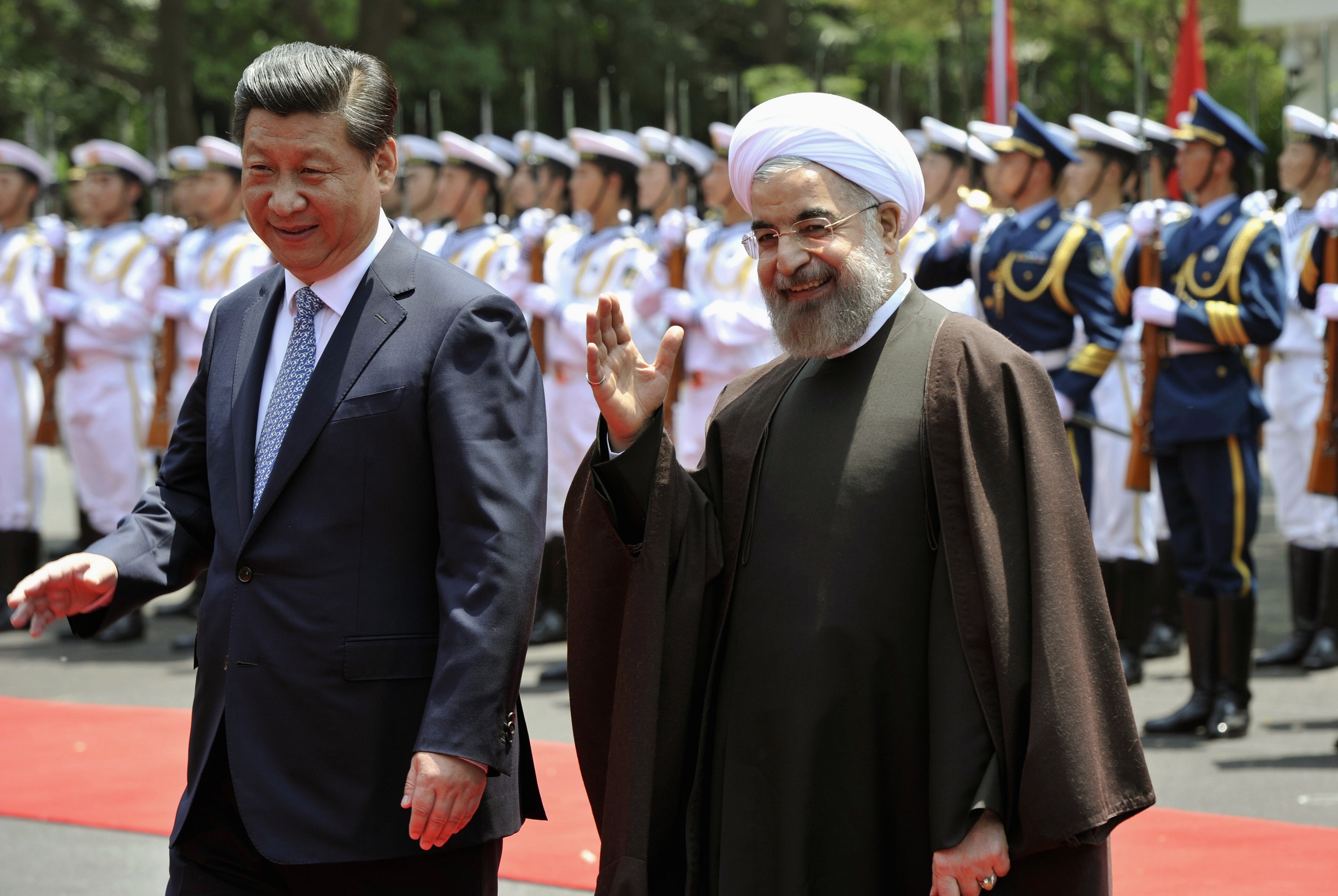
Defense cooperation between China and Iran reportedly began in the early 1980s during the Iran-Iraq War, when China became one of Iran’s main arms suppliers and contributed to its nuclear program. Following the war, and since then, Chinese arms exports to Iran gradually declined, and in 1997 the assistance to Iran's nuclear program formally ceased. Although the current level of cooperation between China and Iran pales in comparison with that of the 1980s and 1990s, there have been significant advances under Xi Jinping, reflected primarily in visits, joint exercises, and possible covert attempts to assist Iran’s nuclear and missile programs. Iran's commitment to the destruction of Israel and its pursuit of a nuclear program makes it the leading external threat to Israel; the proliferation of its missile and rocket arsenals among proxies throughout the region makes it the main military threat to Israel, but also to United States forces and its partners in the Middle East. Thus, the defense cooperation between China and Iran demands careful monitoring by Israel, and by the United States and its regional partners.

China-Iran defense cooperation reportedly began after Beijing dropped its support for revolutionary communism following the open-door policy of Chinese leader Deng Xiaoping in late 1970s. Iran’s radical policies after the 1979 revolution isolated it from the rest of the world, including the United States and the Soviet Union, as well as much of the Arab world, a stance with which China could identify and use for its own interests.

This paper explores the nature and range of defense cooperation between China and Iran from the 1980s until recently. It follows three defense areas in which China and Iran cooperate: arms export; contribution to Iran's nuclear program; and joint military exercises. It then estimates the future for the Iran-China defense relationship and draws implications for Israel.

The U.N.’s Historic Opportunity to Tackle Corruption


Kristen A. Cordell, Adam Day
 
The global response to the COVID-19 pandemic has generated an unprecedented level of spending, with more than $21 trillion committed to fighting the coronavirus so far, much of it falling under emergency measures that bypass bureaucratic hurdles and expedite the flow of funds. The speed and scale of this spending has created new opportunities for state-level corruption—ranging from fairly mundane examples, like demanding bribes for medical services, to more systemic forms of financial malfeasance, shady procurement practices and opaque spending.

The pandemic has also drawn attention to the ways in which pervasive graft exacerbates inequality in development outcomes, within and between states. Given the scale of the COVID-19 response, the United Nations has an opportunity to take meaningful steps on countering corruption in order to achieve the Sustainable Development Goals, or SDGs

The Tension Between Secrecy & Innovation

By Paul Bracken

One of the most harmful effects of China’s cyber espionage and from whistleblowers who publish classified information is the bureaucratic response that it triggers. Most agencies double down on secrecy. They install software to track access, monitor online behavior, and frequently attempt to entrap staff with “honeypots” and fake spearfishing bait to see who violates the rules. Those caught up in this morass of hi-tech security are usually singled out, with career reckoning implications. The purpose of these actions is to reinforce a culture of secrecy inside the organization.

Such bureaucratic behavior is predictable and understandable, at least to a degree. But it comes with a price. It sends a message that idea sharing and brainstorming with outsiders isn’t consistent with the values of the organization.

Contact with people in other departments and outside organizations is necessary for innovation. There’s a tension then, between secrecy and innovation. And we need to acknowledge this tension because we’re in a long-term competition, where innovation is such a critical part of American strategy.

For real innovation, people in different technology fields need to exchange ideas with one another, and with those in operational commands. Secrecy gets in the way of this conversation. Without an exchange of viewpoints with those outside of departmental lines, the tendency will be to think inside the box defined by the “official” security procedures and systems. The result is like Walter Lippmann once said, “When everyone is thinking alike, then no one is thinking.”

The Uses of Secrecy

US Pacific Deterrence Initiative too little, too late to counter China

Hugh White

The US–China rivalry has many dimensions, but at its heart is a strategic contest over primacy in the Western Pacific. Although this contest is being waged on many fronts — including economic, diplomatic and ideological — it is essentially military. China seeks to challenge US leadership in the Western Pacific by opposing the US maritime military supremacy. The United States is trying to resist that challenge and preserve its military preponderance.

Neither side wants a war. Instead, both hope to win by convincing the other side to back off in the face of the other’s evident military power and strategic resolve. In other words, they hope to deter one another.

The United States is in danger of losing this contest because its historically unassailable maritime power is being challenged by China’s growing naval, air and missile forces. US forces remain more powerful overall, but China has many advantages in the Western Pacific — fighting a defensive campaign close to home bases. China’s massive investment in maritime capabilities over the past 25 years has effectively exploited these advantages, so that today it has the potential to exact a heavy toll on US ships and aircraft projecting power towards China.

Biden official warns cyberattacks on US are 'here to stay' after 'Russian ransomware gangsters DarkSide' shut down America's largest fuel pipeline: Emergency declaration is issued in 18 states amid price hike fears

By LAUREN FRUEN and ANDREW COURT 

An emergency declaration has been issued for 18 states to keep fuel supply lines open after a cyberattack knocked out America's largest gasoline pipeline.

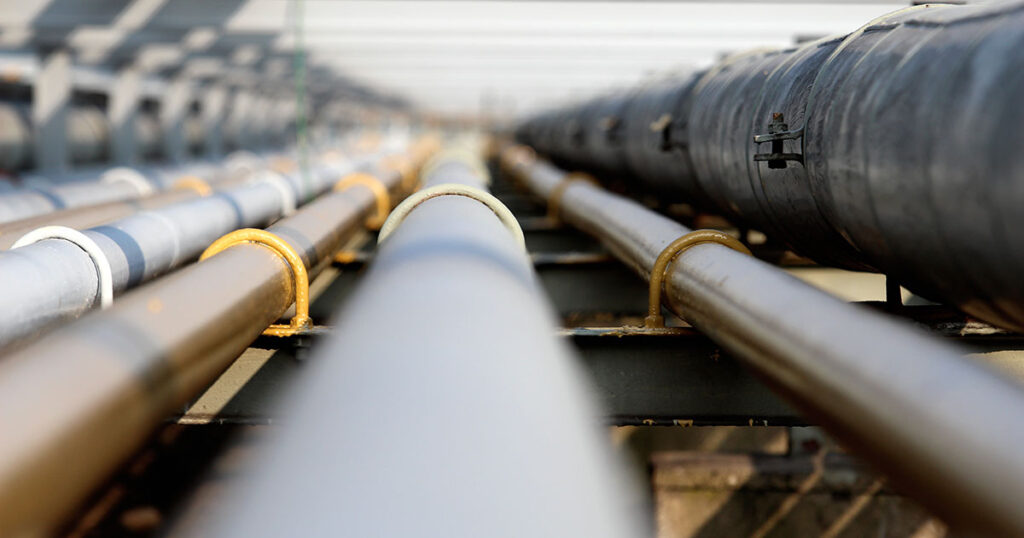
The hack of Colonial Pipeline, which supplies gasoline, diesel and jet fuel across 5,500 miles to the East Coast, on Friday night is believed to be the largest successful assault on US energy infrastructure in history.

Colonial Pipeline said it was forced to shut down all pipeline operations as a precaution after it became the victim of a ransomware cyberattack - a technique where the victim's computer systems are hacked and then payment is demanded to unlock them.

DarkSide, a Russian hacking outfit, is believed to be behind the attack, according to government sources. Colonial has not said whether it has paid or is negotiating a ransom.

The US government and Colonial are still working to secure the network as the shutdown to halt the ransomware cyberattack entered its fourth day on Monday.

It comes as Commerce Secretary Gina Raimondo warned that technological attacks such as these were 'here to stay.'

Claims of Microwave Attacks Are Scientifically Implausible


By Cheryl Rofer

“It’s an act of war,” said Christopher Miller, former President Donald Trump’s last acting secretary of defense. He was talking about alleged attacks on diplomatic and intelligence personnel by an unknown microwave directed-energy weapon. But before the United States declares war on the unknown enemy wielding that weapon, we should know what it is—and whether it exists at all.

Every few weeks, another alleged attack on Americans is reported, some recent, some decades ago. The symptoms are neurological, such as dizziness, headaches, and brain damage. The first wave of reports came in 2016, from the American and Canadian diplomatic missions in Havana, hence the name “Havana syndrome.” Since then, similar cases have been reported in other places, including China; Washington, D.C.; and Syria. State Department and intelligence personnel make up most of those affected.

The State Department and the CIA have investigated Havana syndrome, with much criticism by the victims and their legal counsel. The Jasons, a group of defense advisors, have been reported to be studying the incidents. Most recently, the National Academies of Sciences, Engineering, and Medicine also conducted a study that concluded a microwave attack was the most plausible explanation; it also considered chemical pollutants, infectious agents, and psychological and social factors, and found all these explanations wanting.

Big Pharma’s Patent Defeat Shows Corporate America Losing Power


By Edward Alden

Big Pharma expects to win. And it almost always does. To that end, the industry spent $92 million lobbying officials in Washington just in the first three months of 2021—more than double the next-most aggressive industry. So it was shocking last week to see U.S. President Joe Biden stiff-arm the big drug companies and stand with countries like India and South Africa in insisting companies hand over intellectual property for the coronavirus vaccines so urgently needed around the world. Pharmaceutical Research and Manufacturers of America, the industry’s trade association, slammed the decision as “an unprecedented step that will undermine our global response to the pandemic.”

The industry’s defeat was all the more striking because it comes at a time when drug companies are riding a rare wave of public approval for the speed at which they developed and produced remarkably effective breakthrough vaccines for COVID-19, including several that used a completely new technology never before deployed in vaccines. That the companies lost big despite this wave of sympathy should be a broader wake-up call to corporate America, which has grown accustomed to getting its way in Washington. Biden’s Democrats, who are pushing for tax increases on corporations and the wealthy, no longer genuflect to big business like Obama and Clinton administration Democrats. Republicans, while still reflexively pro-business, are in thrall to former U.S. President Donald Trump’s cult and no longer provide the cover to corporations they once did.

Is Mars Ours?

By Adam Mann

Last year, about a month into the pandemic, I reached for something comforting: the 1992 science-fiction novel “Red Mars,” by Kim Stanley Robinson. I’d first read it as a teen-ager, and had reread it a handful of times by my early twenties. Along with its two sequels, “Green Mars” and “Blue Mars,” the novel follows the first settlers to reach the red planet. They establish cities, break away from Earth’s control, and transform the arid surface into a garden oasis, setting up a new society in the course of a couple hundred years. On the cover of my well-worn copy, Arthur C. Clarke declared it “the best novel on the colonization of Mars that has ever been written.” In my youth, I considered it a record of what was to come.

It had been a decade since I’d last cracked open the book. In that time, I’d become a journalist specializing in space, covering its practical, physical, biological, psychological, sociological, political, and legal aspects; still, the novel’s plot had always stayed with me, somewhere in the back of my mind. It turns on a series of questions about what we owe to our planetary neighbor—about what we are allowed to do with its ancient geological features, and in whose interests we should be willing to modify them. In Robinson’s future, a disgruntled minority of settlers argue that humanity has no right to alter a majestic place that has existed without us for billions of years; they undertake ecoterroristic acts to undermine Martian terraforming efforts and, in the end, succeed in keeping parts of Mars a wilderness. I used to think it sensible that their opinion was relegated to the margins. Reading the novel again, I wasn’t so sure.

US fuel pipeline hackers 'didn't mean to create problems'

By Mary-Ann Russon

A cyber-criminal gang that took a major US fuel pipeline offline over the weekend has acknowledged the incident in a public statement.

"Our goal is to make money and not creating problems for society," DarkSide wrote on its website.

The US issued emergency legislation on Sunday after Colonial Pipeline was hit by a ransomware cyber-attack.

The pipeline carries 2.5 million barrels a day - 45% of the East Coast's supply of diesel, petrol and jet fuel.

The operator took itself offline on Friday after the cyber-attack. Work to restore service is continuing.

On Monday, the FBI officially confirmed that DarkSide was responsible for compromising Colonial Pipeline's networks, saying that it was continuing to work with the firm and other government agencies on the investigation.

Marine Corps University Press

Journal of Advanced Military Studies (JAMS), 2021, v. 12, no. 1

Political Warfare and Propaganda: An Introduction

Fake News for the Resistance: The OSS and the Nexus of Psychological Warfare and Resistance Operations in World War II

All Women Belong in the Kitchen, and Other Dangerous Tropes: Online Misogyny as a National Security Threat

Consistency of Civil-Military Relations in the Israel Defense Forces: The Defensive Mode in Cyber

Russian Cyber Information Warfare: International Distribution and Domestic Control

Propagandized Adversary Populations in a War of Ideas

Social Antiaccess/Area-Denial (Social A2/AD)

Representation of Armed Forces through Cinematic and Animated Pieces: Case Studies

Streaming the Battlefield: Theory of the Internet’s Effect on Negotiation Onset

The Crucible of War: What Do We Know about Military Adaptation?

National Security Is Still an Ambiguous Concept

Colonial Pipeline Cyberattack Follows Years of Warnings

By BRAD D. WILLIAMS

WASHINGTON: The cyberattack that shut down the major East Coast pipeline for gas and other fuels comes after years of repeated warnings to industry — some as recent as the past two weeks. The attack has had the greatest impact ever on US critical infrastructure, cybersecurity experts say.

Details are still emerging. Colonial Pipeline, which owns and operates the pipeline, issued a statement today saying it is dedicating “vast resources to restoring pipeline operations quickly and safely. Segments of our pipeline are being brought back online in a stepwise fashion… and this takes time.” The statement said the company’s goal is to restore pipeline service by the end of the week.

The Department of Energy is leading the federal government response, according to Colonial and sources familiar with the incident. DoE did not immediately respond to a request for comment.

Cybersecurity company FireEye is also said to be assisting Colonial with incident response. Seeking comment from the company, Breaking Defense was referred to Colonial’s statement.

Cyberattack Forces a Shutdown of a Top U.S. Pipeline

By David E. Sanger, Clifford Krauss and Nicole Perlroth

One of the nation’s largest pipelines, which carries refined gasoline and jet fuel from Texas up the East Coast to New York, was forced to shut down after being hit by ransomware in a vivid demonstration of the vulnerability of energy infrastructure to cyberattacks.

The operator of the system, Colonial Pipeline, said in a vaguely worded statement late Friday that it had shut down its 5,500 miles of pipeline, which it says carries 45 percent of the East Coast’s fuel supplies, in an effort to contain the breach. Earlier Friday, there were disruptions along the pipeline, but it was not clear at the time whether that was a direct result of the attack or of the company’s moves to proactively halt it.

On Saturday, as the F.B.I., the Energy Department and the White House delved into the details, Colonial Pipeline acknowledged that its corporate computer networks had been hit by a ransomware attack, in which criminal groups hold data hostage until the victim pays a ransom. The company said it had shut the pipeline itself, a precautionary act, apparently for fear that the hackers might have obtained information that would enable them to attack susceptible parts of the pipeline.

Administration officials said they believed the attack was the act of a criminal group, rather than a nation seeking to disrupt critical infrastructure in the United States. But at times, such groups have had loose affiliations with foreign intelligence agencies and have operated on their behalf.

State-Sponsored Cyberattacks Aren’t Going Away — Here’s How To Defend Your Organization

Adam Hunt

The world has never been as vulnerable to cyberattacks as it is today. The sheer number of attacks organizations face and the global scope of many of those attacks is putting today's CISOs on the hot seat.

There were nearly a dozen zero-day exploits in the first half of 2020 alone, an unprecedented rate of successful infiltration, making the lack of control and visibility for security leaders painfully evident.

Advanced persistent threats (APTs) are rising in frequency and their impact is increasingly devastating. Initially, the Microsoft Exchange vulnerability affected more than 400 thousand servers worldwide. Sophisticated attackers are taking advantage of the digital transformation where each of the internet's components is an individual thread woven together to create the Web as we know it.

Today, being a part of this tapestry isn't a choice; if you have an internet presence, you are interwoven with every other entity on the Web, including attackers. For the state-sponsored threat actors executing attacks against organizations all running the same systems, they're counting on this interconnectivity.

There's no turning back the clock on digital transformation and the rise of the extended enterprise, so there's no point in falling back on outdated cybersecurity methods to solve this crisis. We have to meet the challenges posed by the modern global attack surface head-on.

Red Cross Calls for More Limits on Autonomous Weapons

BY PATRICK TUCKER

The International Committee of the Red Cross is calling for new international rules on how governments use autonomous weapons, warning that such weapons will pose new challenges for international humanitarian law in the future and bring “significant risks of harm to civilians and combatants alike,” Peter Maurer, president of the ICRC, said in a speech Wednesday.

It's a move that will reshape the international discussion on autonomous weapons, experts told Defense One.

Wednesday’s call from the ICRC is significant because the group has a unique standing among governments as a humanitarian organization mitigating the effects of conflict. They refer to themselves as the “guardians” of international humanitarian law.

Autonomous weapons are those that “select and apply force to targets without human intervention...on the basis of a generalized ‘target profile’ and sensors, Maurer said in his speech. “What sets them apart from other weapons is that, after being activated by a person, they fire themselves when triggered by their environment, not by the user. This means that the user does not choose the specific target.”

Such weapons only exist on the battlefield today in extremely limited circumstances, such as the Phalanx weapon system for ships that automatically detects and fires on incoming missile threats. But the interest in these types of weapons is growing, Maurer said, raising the prospect that they will be used infights involving humans in coming years.

22 May 2021

China’s Cyber-Influence Operations

  Maj Gen PK Mallick, VSM (Retd) 

The digital era has transformed the way we communicate. Using social media like Facebook and Instagram, and social applications such as WhatsApp and Telegram, one can be in contact with friends and family, share pictures, videos, messages, posts and share our experiences. Social media has become an effective way of influencing human society and behavior, and shaping public opinion. By sharing a post, tweeting an idea, contributing a discussion in a forum and sharing a sentimental picture, we can influence others and sometimes convince into with our opinion.

Use of cyber tools and methods to manipulate public opinion is called ‘Cyber Influence Operation’. In the present day, many countries use cyberspace, especially the social media, to accomplish Cyber Influence Operations as a part of Information Warfare. Most of these operations are done covertly. It is difficult to differentiate between legitimate or malicious influence operations. Continue Reading..... 

China’s Nuclear and Missile Capabilities: An Overview

Maj Gen PK Mallick, VSM (Retd)

Since China first conducted a nuclear weapon test in 1964, its nuclear doctrine has remained unchanged and is underpinned by two principles: a minimum deterrent doctrine and a No First Use (NFU) policy. China’s 2019 defence white paper states, “China is always committed to a nuclear policy of NFU of nuclear weapons at any time and under any circumstances, and not using or threatening to use nuclear weapons against non-nuclear-weapon states or nuclear-weapon-free zones unconditionally.”

However, a recent U.S. Department of Defence (DoD) report claims that the scope of China’s nuclear modernisation and its lack of transparency “raise concern that China is not only shifting its requirements for what constitutes a minimal deterrence but that it could shift away from its longstanding minimalist force posture.” The data available show that China is modernising and expanding virtually every element of its nuclear forces, including each aspect of its nuclear weapons and missile, sea, and air delivery systems. What is not clear are China’s current and planned holdings of nuclear weapons, China’s future plans for deploying additional delivery systems, its commitment to some form of NFU, first preemption, or launch on warning, and the extent to which it will accept what might be called a form of ‘minimum assured destruction.

THE CRISIS AFTER THE CRISIS: HOW LADAKH WILL SHAPE INDIA’S COMPETITION WITH CHINA

ARZAN TARAPORE

The still-unresolved Ladakh crisis has created a new strategic reality for India, marked by renewed political hostility with China, and an increased militarisation of the Line of Actual Control.

This new strategic reality imposes unequal costs on India and China. India is likely to defer much-needed military modernisation and maritime expansion into the Indian Ocean — which would impair its ability to compete strategically with China.
In contrast, China incurred only marginal material costs; it was probably more concerned with the prospect of continued deterioration in its relationship with India. Even that cost was more threatened rather than realised, and largely reduced when the disengagement plan was agreed.

In May 2020, China launched several near-simultaneous incursions across the Line of Actual Control (LAC) in Ladakh, into territory hitherto controlled by India. Both sides reinforced their positions with tens of thousands of troops, engaged in a deadly skirmish, and reportedly came close to war. An agreement to disengage troops was announced in February 2021, but implementation has been halting. Regardless of how disengagement progresses, the crisis poses significant challenges for India’s long-term strategic competition with China.

As a result of the Ladakh crisis, India faces a new strategic reality in which China is a clear and abiding adversary. For India, the political relationship is now defined by hostility and distrust, and the LAC will remain more heavily militarised and violence-prone. Given this new reality, India is likely to further defer military modernisation and maritime expansion into the Indian Ocean. In the face of unremitting Chinese naval expansion, India risks losing significant political and military leverage in the Indian Ocean. At the same time, China appears to have escaped significant harm. Its better-resourced military could better absorb the material costs of the mobilisation. It may have been more concerned by the prospect of an increasingly hostile India, but the disengagement agreement has limited even those modest political costs.

Forget Herd Immunity! Winter COVID Surges Will Bring Lockdowns, Travel Bans, Crammed ICUs

BY FRED GUTERL 

As India descended into a COVID-19 tragedy that dwarfed anything the country had experienced in the pandemic so far, with hospitals inundated, oxygen supplies short and vaccines reportedly being stolen from warehouses, American politicians thousands of miles away were clamoring to end pandemic restrictions.

Representative Jim Jordan railed at Dr. Anthony Fauci in the House chambers, "You don't think Americans' liberties have been threatened in the last year, Dr. Fauci? They've been assaulted!" Alabama Governor Kay Ivey told Fox News, "We have been at this for more than a year now, and we have simply got to move forward. Endless government mandates are not the answer."

Many Americans are eager to invite friends for a barbeque, belly up to a crowded bar, attend concerts and eat dinner in popular restaurants. Texas and Florida opened beaches and bars in early May. The mayor of New York City, a year after its catastrophic outbreak, announced a lifting of restrictions on businesses would begin on July 1, only to be one-upped by the governors of New York, New Jersey and Connecticut, who moved the date up to May 19. As vaccinations reduce the virus' ability to spread, new cases are now expected to begin dropping exponentially. The summer of love is at hand.

But the pandemic is not over. In the U.S., the nation is still divided in its willingness to accept vaccines or heed precautions against infection. Vaccination rates have peaked and herd immunity now seems unlikely before next winter, almost guaranteeing that pockets of people will remain vulnerable to the coronavirus in the fall, as the cold weather closes in. So will millions of people around the world, who are still vulnerable to infection and have little prospect of getting shots anytime soon.

Geostrategic Storm in the Indian Ocean


China, the US, and India are competing for political, economic, and military influence in the Indian Ocean. In the future, the strategic order in this institutionally underdeveloped region will become more multipolar and unstable, argues Boas Lieberherr in this CSS Analysis. Maritime security is at risk, with possible repercussions for security of supply in Europe.

A storm seems to be brewing in the Indian Ocean. This maritime space, which stretches from the east coast of Africa to the west coast of Australia, is at the center of strategic rivalry between China, the US, and India. This is becoming apparent in many ways – the competition for infrastructure projects, the stronger interference in national affairs of the littoral countries, and the increasing militarization of the region. The economic and technology sector is likely to take center stage in this strategic rivalry. While China is increasing its influence in this area, the foreign policies of India and the US are more focused on security. No tectonic shifts are predicted for the foreseeable future in the military sphere. India’s stance is likely to play a decisive role in the future balance of power in the region.

WILL CULTURE DEFEAT STRATEGY? THE BRITISH MILITARY AND IRREGULAR WARFARE AFTER AFGHANISTAN AND IRAQ

Christian Tripodi 

In their recent introduction to the Irregular Warfare Initiative, Jacob Shapiro and Patrick Howell propose that a combination of Russian revanchism and China’s increasingly muscular global ambitions provides ample opportunity for friction to occur in a range of contested spaces, and thus for the re-emergence of irregular warfare (IW) as a persistent operational requirement for Western forces. The authors warn pointedly against mimicking the post-Vietnam era, when IW was abandoned by the US Army in favor of a renewed focus on major combat operations against peer and near-peer enemies. Responsibility for this lesser form of war—counterinsurgency in particular—was devolved to special operations forces (SOF) alone. This institutional and intellectual apartheid, the authors argue, was instrumental in dictating that the bulk of US conventional forces would be largely unprepared when eventually required to engage again, at scale, with the demands of IW in Iraq and Afghanistan.

It is interesting from a British perspective to ponder these warnings. On the first point, and at face value at least, the British government’s recent flagship integrated review of security, defense, development, and foreign policy displays a willing appetite to recognize irregular warfare as a core mission for UK forces. Talk of persistent engagement in hostile environments populated by a range of violet nonstate actors and the likelihood of state-on-state competition in the so-called gray zone has resulted in the formation of a new special operations Ranger Regiment. The regiment is designed to function specifically in such environments and to operate alongside local allies and proxies. The UK’s 6th Division and its component 77th Brigade promise to deliver information operations and unconventional capabilities for operations conducted below the threshold of war while the Royal Marines have given notice of their intent to recast themselves (in part) as gray zone operators. But these are all specialist formations—a combination of tier-2 SOF and other niche units. The broader British Army remains untouched by such innovations or taskings.

Afghanistan’s Importance to the Future of U.S. National Security

By David S. Clukey

Introduction:

September 11, 2021 will mark 20 years since the terrorist attacks of September 11, 2011 (911) and United States (U.S.) President Joe Biden recently called for the complete withdrawal of all U.S. military forces from Afghanistan on this date. U.S. forces have been on the ground in Afghanistan since October 7, 2001. In this time, the U.S. invested over 240,000 in human capital and over $2 trillion U.S.D. From 2001 – 2010, after the immediate route of the Taliban, the U.S. orchestrated a series of disjointed campaigns and priorities shifted almost as frequently as commanders. This misalignment with a concurrent refocus of U.S. resources to Iraq in 2003, realized a deteriorated situation in Afghanistan. Conditions improved in 2009 under a series of pragmatic U.S. Army Generals who commonly advocated Special Operations Forces driven Village Stability Operations (VSO).[1] VSO (2010 – 2014) achieved quantifiable improvements through a nested application of U.S. joint capabilities. Unfortunately, VSO’s potential was not realized due to U.S. President Barrack Obama’s decision to drawdown of U.S. forces in 2014.

The tumultuous history of Afghanistan has reinforced threefold enduring dynamics: 1) never underestimate the resilience of Afghanistan’s people, 2) Afghanistan is the proverbial “graveyard of empires”, and 3) Afghanistan and Pakistan are inextricably linked. Understanding these dynamics without diving into the cultural nuances of the country, it is imperative the U.S. does not permit Afghanistan to deteriorate into the conditions that ultimately realized 911. The U.S. arguably did this once, and can trace pre-911 conditions in Afghanistan to the conclusion of Operation Cyclone (1979-1989)[2], when the U.S. supported Mujahadeen insurgency drove the Soviet Union out of Afghanistan. Once the Soviet’s departed, so did U.S. support. The Soviet backed Afghan-government crumbled soon after in 1992, and Afghanistan subsequently endured years of turmoil. First, civil war ensued as warlord factions vied for control, and ultimately the Pakistani Inter-Services Intelligence (ISI) supported Taliban asserted its Islamic fundamentalist influence from its power base in Kandahar.

U.S. Foreign Policy, implications of the past shape the future

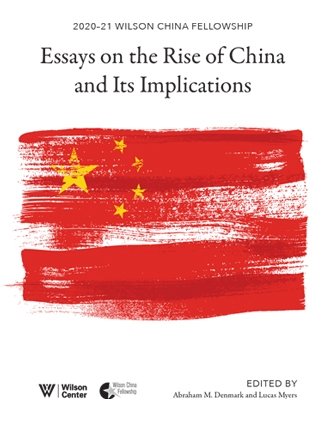
The 2020-21 Wilson China Fellowship: Essays on the Rise of China and Its Implications


In recent years, the rise of China has transformed the international system, and the downturn in U.S.-China relations increases tensions across a range of issues, from Taiwan to the South China Sea to human rights. Addressing these issues and crafting tailored policy responses will require nuanced and informed analysis of China from the U.S. academic community. With the generous support of the Carnegie Corporation of New York, the Wilson Center aims to bridge the gap between academia and policy by bringing together a cohort of rising scholars focused on China to undertake crucial, year-long research projects on China in our Wilson China Fellowship. The results of our first cohort's work are featured in this publication: The 2020-21 Wilson China Fellowship: Essays on the Rise of China and Its Implications.

From the South China Sea to the situation in Xinjiang, our 2020-21 Fellows explore a range of topics addressing the breadth and width of China policy. With accompanying essays by Stephen Del Rosso, Abraham M. Denmark, and Robert Daly, the Wilson China Fellowship essays and their policy recommendations come at a crucial time when the rise of China and its implications for the United States and globe increasingly dominates the foreign policy debate in Washington.

China’s Techno-Industrial Development: A Case Study of the Semiconductor Industry

Alex He

This paper reviews the strategies and plans, policy-making institutions, process and problems in China’s techno-industrial development. Although it has made noticeable progress in some areas in the past two decades, China still lags behind in most core technology and advanced manufacturing fields, such as high-end chips. There have been several real breakthroughs in the semiconductor sector by private companies such as HiSilicon and rapid advancement in frontier technologies — artificial intelligence, fifth-generation wireless communication network technology, big data, blockchain and the Internet of Things — by private companies such as Huawei, Tencent, Alibaba and Baidu; however, state-sponsored technological innovation and breakthroughs have been crippled by the existing problems in China’s science and technology research system and a campaign-style catch-up strategy that rewards bureaucrats on short-term goals, as well as by weak links between academic research and industry and a swing between the market-oriented approach for technology acquisitions and indigenous innovation for technology breakthroughs. A case study of China’s semiconductor industry demonstrates both the problems and progress in China’s techno-industrial development, as well as the implications for the country's prospects of evolving into a technological powerhouse.

Howling diplomats: Select examples of China’s “Wolf Warrior Diplomacy”


“Wolf Warrior Diplomacy” is a non-authoritative term used to describe the most aggressive form of highprofile diplomacy carried out by Chinese state actors (MoFA spokespersons and ambassadors) during the last 1-2 years. This form of diplomacy is held in a confrontational manner and does not avoid aggressive rhetoric and direct or indirect threats. As such, the Wolf Warrior Diplomacy is a specific case of coercive diplomacy employed by the Chinese Communist Party (CCP).

This report summarizes the most common triggers of Wolf Warrior Diplomacy as well as forms of responses CCP diplomats use and recommends appropriate policy measures that should be implemented by democratic countries in order to neutralize the possible effects “Wolf Warrior“ Diplomacy or any other form of coercion could bring about.

The most common triggers are:
Challenging the One-China policy
Exclusion of Huawei from 5G networks
Support of the pro-democratic movement in Hong Kong
Criticism of human rights abuses in China
The role of the People’s Republic of China (PRC) in the COVID-19 pandemic
Protection against China’s influence in local markets; and counterintelligence findings and warnings on China.