8 June 2021

Water Security as Part of Non-Traditional Security: Threat - Implications for India

Maj Gen P K Mallick, VSM (Retd)
Like oil or data, water is an integral part of the world’s economy. Although about 71 per cent of the earth’s surface is water-covered, the oceans hold about 96.5 percent of all Earth’s water which is salt water. Freshwater, most of it is frozen in glaciers, accounts for the rest. That leaves less than 1 per cent of the world’s water available to support human and ecological processes. We withdraw 4.3 trillion cubic meters of freshwater every year from the earth’s water basins. We use it in agriculture, which accounts for 70 per cent of the withdrawals. Industry and households consume 19 per cent and 11 per cent, respectively. However, these percentages fluctuate widely across the globe. In the United States, industrial and agricultural usage is almost the same around 40 per cent. In India, agriculture uses 90 per cent of water withdrawals, while only 2 per cent is consumed by industry. Over the past century, rate of withdrawal of available freshwater resources have risen almost six times, outpacing global population growth.

China’s Cyber-Influence Operations

Maj Gen PK Mallick, VSM (Retd) 

The digital era has transformed the way we communicate. Using social media like Facebook and Instagram, and social applications such as WhatsApp and Telegram, one can be in contact with friends and family, share pictures, videos, messages, posts and share our experiences. Social media has become an effective way of influencing human society and behavior, and shaping public opinion. By sharing a post, tweeting an idea, contributing a discussion in a forum and sharing a sentimental picture, we can influence others and sometimes convince into with our opinion.

Use of cyber tools and methods to manipulate public opinion is called ‘Cyber Influence Operation’. In the present day, many countries use cyberspace, especially the social media, to accomplish Cyber Influence Operations as a part of Information Warfare. Most of these operations are done covertly. It is difficult to differentiate between legitimate or malicious influence operations. Continue Reading..... 

Without U.S. contractors, the Afghan military will lose its main advantage over the Taliban — air power

By Dan De Luce

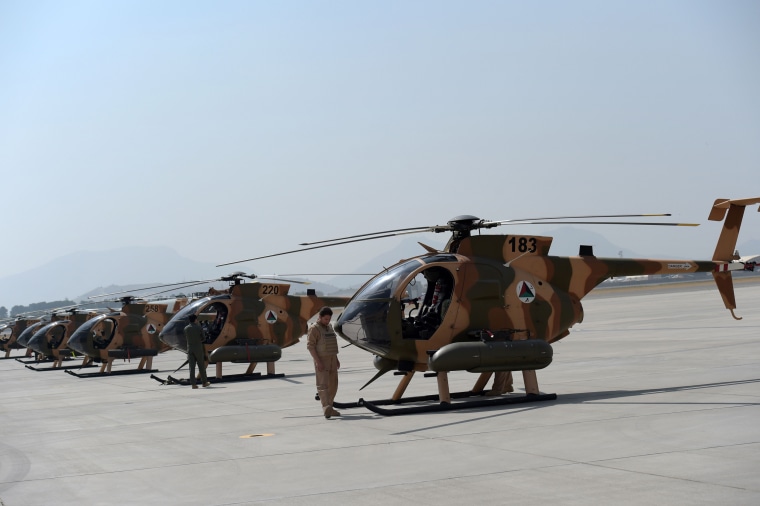
WASHINGTON — Afghan government forces could lose the single most important military advantage they have over the Taliban — air power — when private contractors and U.S. troops leave the country in coming weeks.

The Afghan security forces rely heavily on U.S.-funded contractors to repair and maintain their fleet of aircraft and armored vehicles and a whole array of other equipment. But the roughly 18,000 contractors are due to depart within weeks, along with most of the U.S. military contingent, as part of Washington's agreement with the Taliban to withdraw all "foreign" troops.

Without the contractors' help, Afghan forces will no longer be able to keep dozens of fighter planes, cargo aircraft, U.S.-made helicopters and drones flying for more than a few more months, according to military experts and a recent Defense Department inspector general's report.

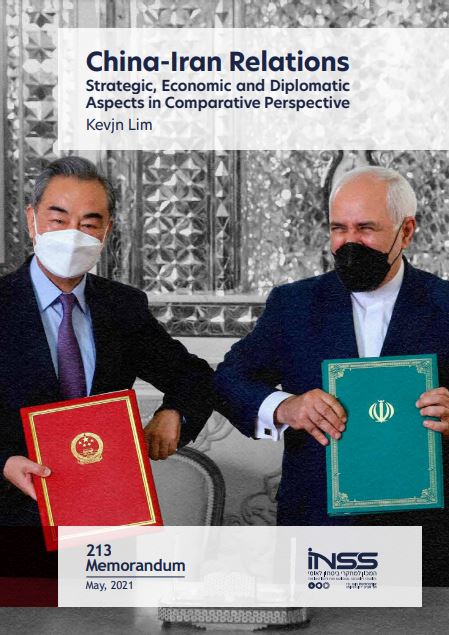
China-Iran Relations: Strategic, Economic and Diplomatic Aspects in Comparative Perspective

Kevjn Lim

Introduction
The People’s Republic of China and the Islamic Republic of Iran – and specifically the relationship between the two – pose a number of policy challenges for the State of Israel. China ranks among Israel’s leading trade partners and investors, but that relationship has created trilateral tensions involving Israel’s major power ally, the US, for whom China has become the principal strategic challenge. At the same time, Iran remains Israel’s leading nemesis and most critical national security threat, which means, at first blush at least, that what it gains from its interactions with China risks becoming Israel’s loss in the final ledger. These considerations and the questions they raise drive the research aims of the present memorandum.

Chapter 1: Strategic Considerations, Convergences, and Constraints

China and Iran’s conduct bears a number of similarities, evolving as both states have from separate revolutionary beginnings, the one in 1949, the other in 1979. There is, as a result, a certain convergence of interests. Yet, the divergences are hardly negligible, and it is these which impose constraints on the future trajectory of bilateral relations, with US policy constituting what is arguably the single most important external factor and source of interference. This chapter examines the broad strategic factors underlying bilateral relations. It begins with a survey of each partner’s core interests and areas of policy focus as they flow from, and in turn interact with, domestic conditions. The chapter then looks at the areas where bilateral interests converge and diverge. While the latter at times also necessarily assume the form of economic, diplomatic, and military interactions, these are ultimately a function of broader, strategic considerations.

Chinese Mercenaries in Africa

By César Pintado

Summary:
Chinese investments in Africa have multiplied in recent years, especially since the 2013 launch of the Belt & Road Initiative (BRI). But China has realized that it is a mistake to entrust security and development to trade alone.

A new generation of Chinese private security companies sees the BRI as an opportunity for lucrative contracts and international expansion, but its shortcomings are evident on the ground. Currently, the few properly certified Chinese private security companies in Africa appear to be operating semi-autonomously, oriented towards niche markets. And so far not as an extension of the state, but these companies may be the tool Beijing needs to prevent the defense of its citizens and assets from forcing it into military interventions that, for the time being, remain beyond its reach.

Introduction

Chinese investments in Africa have multiplied in recent years, especially since the launch of the Belt & Road Initiative (BRI) in 2013. The analysis of this increased presence has so far focused on infrastructure projects that have indebted the host countries and the establishment of some military bases such as the one in Djibouti.

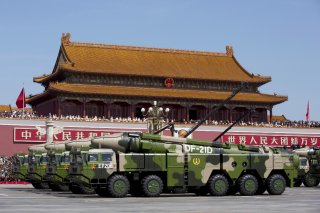
China Keeps Rattling its Nuclear Saber. How Long Until it is Unleashed?

by Anders Corr

Some China experts consider the Global Times to be a toothless tiger. Others see it as a loose cannon. On June 1, its editor called for more Chinese nuclear missiles and warheads. Global Times is state-run media, and the country is already in the midst of doubling the number of its nuclear warheads. And, widely-quoted estimates of Chinese nuclear weapons in the low hundreds are an underestimate, if hints from my sources are any indication.

President Joe Biden’s new defense budget reflects these concerning facts as America continues President Trump’s shift from hardware meant for international policing missions, for example in Iraq and Afghanistan, to defense and deterrence of near-peer adversaries like China and Russia.

The proposed 2022 U.S. defense budget seeks to counter Beijing in not only conventional military force, where China will increasingly have an advantage due to its larger population and economy (by purchasing power parity), but in the nuclear arena, where the United States can more easily maintain its own.

Cracks in the Israeli Consensus

David Shulman

Looking back on the latest round of fighting in Gaza, one can’t escape the grim sense of déjà vu. How many such rounds have there been? I can’t remember. Worse, eerie and compulsive repetition suits the way many, perhaps most, Israelis—including, it seems, the higher echelons of the army and intelligence services—tend to think about Gaza and Hamas. On the surface, the primitive logic goes like this: Hamas is a murderous, barbaric organization that wants only to kill as many Israelis as possible and is continuously building up its military capabilities to that end. In practice, the only useful way of dealing with Hamas is therefore to pound it to pieces once every few years (or months), thus reestablishing what the Israeli army and government fondly call “deterrence” (it’s their favorite word).

The trouble with this approach is that it never works. To revert to the army lingo, which Israelis hear every night on TV during episodes of fighting: deterrence is inherently entropic; the passage of time inevitably erodes it. Hence the need for that periodic pounding. Moreover, the time lag can be remarkably short. The army is already saying that another round of warfare in Gaza could break out soon.

How Israel Targeted Hamas Underground (And What It Could Do Next)

by Seth J. Frantzman

In eleven days of fighting in mid-May, Israel used precision airstrikes to try to damage Hamas infrastructure in Gaza and handed the militant group a blow that it will take years to recover from. The goal was not to target large numbers of Hamas low-level fighters, but rather its strategic underground tunnels and infrastructure that enable it to move around masses of rockets that it has used to target Israel. More than 4,300 rockets were fired at Israel and Israel’s advanced Iron Dome air defense system intercepted most of the rocket threats to Israel’s cities.

In an interview with the head of the Israel Defense Forces (IDF) southern command underground department, which played a key role in the recent conflict, the IDF sketched out how it went about targeting Hamas. This was a unique operation against what Israel calls the “Metro” in Gaza, a series of underground tunnels that link more than 100 kilometers beneath the Gaza Strip. It should be noted the Gaza Strip is only 41km long and between 6 and 12km wide which means that the underground tunnel system was not only extensive but crisscrossed areas underneath the civilian buildings that make up a large swath of the Gaza Strip. The area is festooned with low-rise buildings and towns and villages, making it one of the more crowded areas in the world.

Strategic Training Advantage: How US Foreign Training Programs Enhance National Defense

by Christopher P. Mulder

Imagine a world where a British student pilot can strap into a German-owned jet aircraft and be instructed by a Greek instructor pilot on an American base in the United States. While that may sound far-fetched or utopian, it is the reality of the ENJJPT program at Sheppard Air Force Base, Texas.

As a former Instructor Pilot and Operations Support Squadron Commander in the Euro-NATO Joint Jet Pilot Training Program (ENJJPT) program, I can attest that investing in foreign training programs as part of a robust national defense strategy is well worth the resource commitment. Training together in a multi-national environment enhances allied and local relationships, fosters multinational operations, builds interoperability, breaks down cultural barriers, and results in the future ability to capitalize on the comparative advantages of our allies and partners.

During his first visit to the Pentagon, President Biden charged the US military to “defend vital interests, deter aggression, fight and win.” His administration plans to lean heavily on allies and partners in current and future challenges, emphasizing foreign training programs as part of the broader policy solution for strengthening existing relationships and building new ones. The US will need allies and partners to contend with great-power competitors China and Russia, non-traditional threats such as pandemics, and gray zone warfare. Considering this, the U.S. should seize the training advantage that our predecessors thoughtfully pursued to ensure the military is ready to respond. We should expand these training opportunities with robust goals for the U.S., our allies, and partners to best accomplish his direction. The administration should include foreign training, in all its shapes and sizes, as a key sub-pillar of the next National Defense Strategy (NDS).

Biden ‘mulling cyber war’ after spate of high profile attacks on US

Mayank Aggarwal

The Biden administration is said to be actively considering engaging in acts of cyberwarfare after a spate of high profile attacks on the US believed to be the work of hackers inside Russia.

According to US government officials and other sources familiar with the matter, the Biden administration is thinking about treating ransomware attacks as a national security threat, and is considering spying on foreign criminals as well as its own offensive cyber operations against hackers inside Russia, reported NBC News.

White House press secretary Jen Psaki said the administration was reviewing the way it handles incoming cyberattacks and, asked if the US would consider retaliation, said president Joe Biden was “not taking any options off the table”.

The move is being contemplated following a series of ransomware attacks over the last few years that have become a major source of economic damage.

Could the US fight a four-front war? Not today

BY LEONARD HOCHBERG AND MICHAEL HOCHBERG

While President Biden seeks to renegotiate the Iran nuclear deal, Hamas, an Iranian terrorist proxy, launched a war on Israel, an American ally. Even as some progressives in the Democratic Party argue for sacrificing Israel on their altar of political correctness, foreign policy experts recognize that the United States must defend its allies to remain credible. An attempt to appease Iran in nuclear negotiations in exchange for restraining Hamas would serve Iran’s long-term strategy, which aims to dominate the territorial crescent from the Tigris-Euphrates Valley through Syria, Lebanon and Gaza.

Halford John Mackinder, arguably the founder of geopolitical analysis, in his “Democratic Ideals and Reality” (1919), emphasized the importance of the Holy Land to Great Britain for the control of the Suez Canal. In a wider geopolitical perspective, he highlighted how building railways across Siberia could allow a land power, alone or in alliance, to mobilize resources across Eurasia and challenge the hegemony of maritime power. Two world wars and the Cold War were waged to keep the powers that threatened to dominate what Mackinder termed “the Heartland” from dominating the nation-states of the Eurasian littoral.

If the US went to war with China, who would win?

James Stavridis

Admiral James Stavridis was 16th Supreme Allied Commander of NATO and 12th Dean of the Fletcher School of Law and Diplomacy at Tufts University. He spent the bulk of his operational career in the Pacific, and is author of "2034: A Novel of the Next World War."

A great deal has been written about the possibility of a war between the U.S. and China. It tends to be measured in theoretical terms, and much of the analysis centers on exactly when it might occur. But the vital question is really quite simple: who would win?

Of course -- no one really "wins" a major war. But the best way to avoid having to go to war at all is to convince your potential opponent that they almost certainly would be the biggest loser. The military balance between China and the United States is complicated, and requires thinking about budgets, numbers of warships and aircraft, geography, alliance systems and technology -- especially undersea capability, cybersecurity and space.

Global war on ransomware? Hurdles hinder the US response

By ALAN SUDERMAN 

RICHMOND, Va. -- Foreign keyboard criminals with scant fear of repercussions have paralyzed U.S. schools and hospitals, leaked highly sensitive police files, triggered fuel shortages and, most recently, threatened global food supply chains.

The escalating havoc caused by ransomware gangs raises an obvious question: Why has the United States, believed to have the world’s greatest cyber capabilities, looked so powerless to protect its citizens from these kind of criminals operating with near impunity out of Russia and allied countries?

The answer is that there are numerous technological, legal and diplomatic hurdles to going after ransomware gangs. Until recently, it just hasn’t been a high priority for the U.S. government.

That has changed as the problem has grown well beyond an economic nuisance. President Joe Biden intends to confront Russia’s leader, Vladimir Putin, about Moscow's harboring of ransomware criminals when the two men meet in Europe later this month. The Biden administration has also promised to boost defenses against attacks, improve efforts to prosecute those responsible and build diplomatic alliances to pressure countries that harbor ransomware gangs.

What the ‘Restrainers’ Get Wrong About U.S. Alliances


Proponents of a U.S. grand strategy of “restraint” are perhaps most well-known for advocating the end of America’s “forever wars” and reducing the country’s military footprint in the Middle East and Afghanistan. But the so-called restrainers have also questioned the rationale for maintaining the United States’ extensive networks of alliances in Europe and East Asia, and particularly the presence of forward-deployed American troops in those regions.

On the Trend Lines podcast this week, WPR’s Elliot Waldman was joined by Thomas Wright, a senior fellow at the Brookings Institution, for a critical look at the ideas and assumptions underpinning restraint. ...

Political Will: The Most Crucial Element In Foreign Affairs

By Jason Hyland

As a Foreign Service Officer in the US Department of State, I spent more than 30 years serving our country. I feel a special pride in the profession and the crucial role Foreign Service Officers play, deployed to every corner of the globe.

Everywhere I served I saw one factor that consistently was more important than any other in determining what was possible in foreign policy and what might just be a wasted effort: Political will.

Admittedly a vague term, it is commonly described, maybe clumsily, as the level of commitment by actors to undertake actions to achieve a set of objectives. Political will is the oxygen that animates foreign policy, and its absence constricts it. Where it exists in abundance, all things – almost – are possible; and going up against it head-on is in turn almost impossible. Where it is absent, in most cases good luck trying to enlist real support to accomplish a goal. I have seen all too often American foreign policy falter because we make common causes with groups that lack the political will to confront a challenge.

Big Agriculture Is Better for the Planet

By Ted Nordhaus

A reader could be excused for concluding from Matthew R. Sanderson and Stan Cox’s criticism of our recent essay, “Big Agriculture Is Best,” that virtually all environmental impacts associated with the production of food in the United States and globally can be laid at the feet of “industrial agriculture.” But it is a definitional sleight of hand, not “empirical evidence,” as they claim, that does most of the work here. Sanderson and Cox define “industrial agriculture” so capaciously as to be basically synonymous with “agriculture.”

In the United States, that is arguably true. Most agricultural output—and hence environmental impacts—comes from large-scale, industrial production. Globally, it is not true. In both cases, there is no free lunch. Agriculture, unavoidably, has environmental impacts for the simple reason that growing food requires the conversion of forests, grasslands, and other ecosystems into fields whose biocapacity is then monopolized to produce food for people.

As human populations have grown enormously over the last two centuries, from about a billion people globally in 1800 to nearly 8 billion today, and as those populations have become wealthier and able to eat higher on the food chain, the impacts associated with food production have grown as well. But that has little to do with the prevalence of industrial versus nonindustrial agriculture. Instead, it reflects the basic realities associated with scaling agriculture globally to meet those enormous new demands.

Britain’s Uncertain Future After Brexit


In July 2019, three years after British voters narrowly voted to leave the European Union in a 2016 referendum, Boris Johnson assumed the office of prime minister amid a political environment characterized by anger, turmoil and confusion. But despite initial stumbles that led some observers to predict he would suffer the same dismal fate as his predecessor, Theresa May, Johnson managed to deliver on his promise to renegotiate the U.K.’s transitional withdrawal agreement with the European Union. His subsequent decisive victory in December 2019 parliamentary elections, built in part on successfully wooing traditional Labour party voters, gave Johnson the ample majority he needed to see his deal through.

Before Johnson’s triumph, Brexit had been a disaster for both of the country’s two main political parties. The referendum outcome immediately brought down the Conservative government of former Prime Minister David Cameron, who had called for the vote in the first place. His successor, May, was felled by her inability to get the transitional withdrawal agreement she negotiated with Brussels through Parliament, mainly due to opposition by extremist Brexiteers within her own Tory ranks. For his part, Johnson achieved what May couldn’t, arriving at a transitional Brexit deal that a majority of Parliament could agree on—and then building on that majority in December 2019.

At the EU-Turkey Border, Human Rights Violations are No Longer Clandestine Operations

Meredith Veit and Flo Strass

The quaint and weathered island of Lesvos (also known as Lesbos), located in the far east of the Aegean Sea, is the third-largest of all the Greek islands. Lesvos is now home to 11 million olive trees, 86,000 Greeks, and over 14,700 asylum-seekers (Aegean Boat Report Data Studio 2020b; El-Rashidi 2019). Due to its physical proximity to Turkey, the island has a long history of transferred ownership – first the Anatolians, then the Byzantines, the Genoese, the Ottomans, and finally, the Greeks. An often-overlooked fact is that much of the current local population descends from refugees themselves, whose grandparents and great grandparents were forcibly displaced from Turkey in the aftermath of World War I.

Since 2014, more than 1.2 million migrants fleeing war, violence, and persecution have risked their lives crossing the northeast Mediterranean Sea en route to Europe, the majority of whom initially land on Lesvos (UNHCR 2020). They cross the deep and narrow strait on flimsy rubber dinghies – sometimes with duct-tape patchwork covering knife holes from previous crossings – typically carrying their lives on their backs, their children and babies, and a heavy-heart of tested faith, in utter contrast to their buoyant expectations.

Russian hackers pose new cyber attack threat: Report


Moscow: Russian intelligence has been accused by the US and UK of carrying out cyberattacks using new techniques after it was exposed that its hackers continue to target governments, organisations and energy providers around the world.

A joint advisory by the US Department for Homeland Security's Cybersecurity Infrastructure Security Agency (CISA), FBI and the National Security Agency (NSA), as well as the UK National Cyber Security Centre warned organisations about updated Tactics, Techniques and Procedures (TTPs) used by Russia's foreign intelligence service, the SVR -- a group also known by cybersecurity researchers as APT29, Cozy Bear and The Dukes.

It comes after cybersecurity agencies in the US and the UK attributed the SolarWinds attack to Russia's civilian foreign intelligence service, as well as several campaigns targeting Covid-19 vaccine developers, reports ZDNet.

"The SVR is a technologically sophisticated and highly capable cyber actor. It has developed capabilities to target organisations globally, including in the UK, US, Europe, NATO member states and Russia's neighbours," said the alert.

We Know What Space Wars Will Look Like

WALTER PINCUS

OPINION — “The United States must now be prepared for conflict to extend to, or even to originate in or from, space.”

That was a statement from Acting Assistant Secretary of Defense for Space Policy John D. Hill last Wednesday before the Senate Armed Services Subcommittee on Strategic Forces.

As with the cyber domain, space has become a contested arena and one in which the U.S. has grown heavily dependent.

“Space-based capabilities contribute to our modern economy, our democratic society, our military power and our way of life,” Hill said, “and space security is about the growing ability of others to deny those benefits as well as to leverage the power of their own space-based capabilities to their own competitive advantage. Most people have very little appreciation for how much of their daily life is intertwined with space, and how much of our national security power is based on an assumption of assured access to, and use of, space.”

And like cyber, “these space-based capabilities underpin the power of the Joint Force across all domains, they are integral to our deterrent capacity, and they have become a military center of gravity,” Hill said.

Are We Waiting for Everyone to Get Hacked?

By Nicole Perlroth

MONTEREY, Calif. — Leon Panetta is one of the few American government officials who can look around at the nation’s rolling cyberdisasters and justifiably say, “I told you so.”

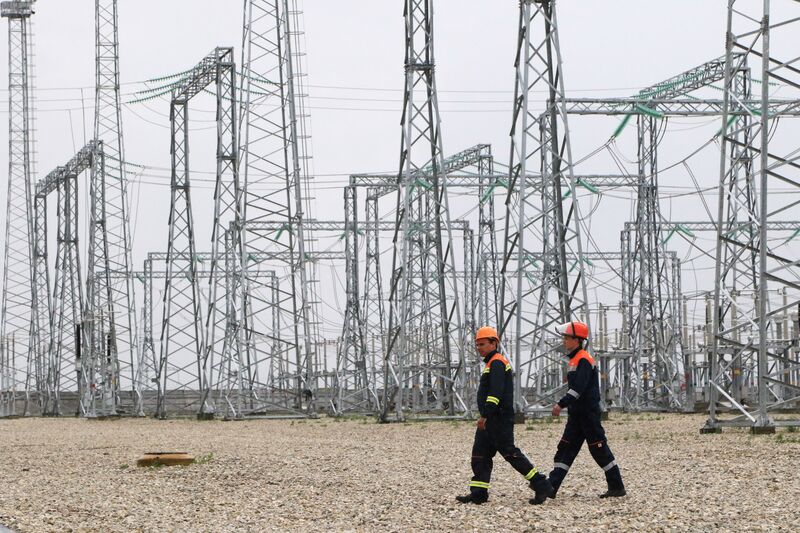
The former secretary of defense was among the first senior leaders to warn us, in the most sober of terms, that this would happen in a 2012 speech that many derided as hyperbolic. He didn’t foretell every detail, and some of his graver predictions — a cyberattack that could derail passenger trains loaded with lethal chemicals — have yet to play out. But the stark vision he described, of hackers seizing our critical switches and contaminating our water supply, is veering dangerously close to the reality we are living with now.

In just the past few months, hackers — we still don’t know who — were caught messing with the chemical controls at a water treatment plant in Florida, in what appeared to be an attempt to contaminate the water supply just ahead of Super Bowl weekend in Tampa. Ransomware attacks are striking every eight minutes, crippling hospitals and American mainstays like gas, meat, television, police departments, NBA basketball and minor league baseball teams, even ferries to Martha’s Vineyard. This past week, the targets were one of the world’s largest meatpacking operators and the hospital that serves the Villages in Florida, America’s largest retirement community. The week before it was the pipeline operator that carries half the gas, jet fuel and diesel to the East Coast, in an attack that forced the pipeline to shut down, triggered panic buying and gas shortages and was just days from bringing mass transit and chemical refineries to their knees.

Cyberwar: How Nations Attack Without Bullets or Bombs

By Jordan Robertson and Laurence Arnold

Russia, Iran, China and the U.S. are among the world’s leading practitioners of cyberwarfare -- state-on-state hacking to gain strategic or military advantage by disrupting or destroying data or physical infrastructure. Unlike combat with bullets and bombs, cyberwarfare is waged almost entirely with stealth and subterfuge, so it’s hard to know when and where it’s occurring, or whether full-scale cyberwar is on the horizon.
1. What are the hallmarks of cyberwarfare?

A cyberattack that disables essential services, such as telecommunications or electricity, might raise suspicions that a state or its proxies was behind it. So might the sheer scale of an attack, even if the direct target is private industry. Even disinformation campaigns, such as Russia’s targeting the 2016 U.S.

Culture war on the military

by Mackubin Owens

A recent U.S. Army recruiting ad that portrays a college graduate explaining how, after being raised by “two moms” and marching for gay and transgender rights, she decided to join the Army has elicited two reactions. Many liberals praised it as a welcome example of the Army’s attempt to reach out to more “diverse” groups. A fair number of conservatives mocked it as just the latest example of how the military has become another American institution signaling its “wokeness.”

Sen. Ted Cruz took the opportunity to compare the Army’s recruiting campaign to that of the Russians, arguing that the latter seemed to understand the purpose of a military better. In response, Kori Schake, the director of foreign and defense policy studies at the American Enterprise Institute, tweeted that “politicians like Senator Cruz are disgracefully trying to draw the military into culture wars that are terrible for cohesion in our military. Cohesion and commitment are what wins wars, and these attacks damage it.”

Ms. Schake is right about cohesion, although I believe she misconstrues its meaning, but her concern for keeping the military out of the culture wars comes several decades too late. To paraphrase Trotsky, “The military may not be interested in the culture wars, but the culture wars are interested in the military.” In fact, the U.S. military has always been battling to maintain its ethos against civilianizing forces.

A Leader’s Guide to Navigating Social Media in the Military

By Kristy Bell

Social media has blurred the lines between our private and professional lives in an unprecedented way, and has also, in some ways, eroded the idea of a “non-partisan military” that shores up our democratic ideals.

This came to the forefront recently when several senior military leaders engaged with Fox News host Tucker Carlson over Carlson’s comments about women in the military. The subsequent dust-up prompted some to decry the loss of the customary apolitical stance American citizens have come to expect from its military professionals.

While the example above involves senior leaders, potential pitfalls within the social media landscape run a continuum, and can impact users at all levels. Perhaps the most visible recent representative of poor judgment on social media was U.S. Army Second Lieutenant Nathan Friehofer. Friehofer posted an anti-Semitic joke to his three million TikTok followers back in August, and a backlash ensued that, as of January, resulted in his notification of the Army’s intent to separate him.

The Military Is Embracing a New Era of Artificial Intelligence

by Kris Osborn

Here’s What You Need to Remember: While some artificial intelligence-enabled autonomous jet fighter technology has performed quite well in dogfighting simulations against human pilots in air-to-air combat, many contend that human decision-making in air combat cannot be accurately replicated and should not be replaced fully by machines. The Air Force has already experimented with an integration of the two and has already flown an aircraft operating with a manned pilot and AI-capable computerized co-pilot.

This concept, as Raytheon explains it, may indeed inspire developers to envision a tailorable, “optionally manned” platform, wherein a done would operate in a coordinated or even at times interchangeable way with manned aircraft.

The need for this kind of human-machine mixture is precisely why many envision a sixth-generation platform as something which could be “optionally manned” or assisted by a sixth-generation capable armed drone fighter jet intended to dogfight or engage in high-risk attacks under enemy fire.

7 June 2021

Water Security as Part of Non-Traditional Security: Threat - Implications for India

 Maj Gen P K Mallick, VSM (Retd)


Like oil or data, water is an integral part of the world’s economy. Although about 71 per cent of the earth’s surface is water-covered, the oceans hold about 96.5 percent of all Earth’s water which is salt water. Freshwater, most of it is frozen in glaciers, accounts for the rest. That leaves less than 1 per cent of the world’s water available to support human and ecological processes. We withdraw 4.3 trillion cubic meters of freshwater every year from the earth’s water basins. We use it in agriculture, which accounts for 70 per cent of the withdrawals. Industry and households consume 19 per cent and 11 per cent, respectively. However, these percentages fluctuate widely across the globe. In the United States, industrial and agricultural usage is almost the same around 40 per cent. In India, agriculture uses 90 per cent of water withdrawals, while only 2 per cent is consumed by industry. Over the past century, rate of withdrawal of available freshwater resources have risen almost six times, outpacing global population growth.
China’s Nuclear and Missile Capabilities: An Overview

 Maj Gen PK Mallick, VSM (Retd)

Since China first conducted a nuclear weapon test in 1964, its nuclear doctrine has remained unchanged and is underpinned by two principles: a minimum deterrent doctrine and a No First Use (NFU) policy. China’s 2019 defence white paper states, “China is always committed to a nuclear policy of NFU of nuclear weapons at any time and under any circumstances, and not using or threatening to use nuclear weapons against non-nuclear-weapon states or nuclear-weapon-free zones unconditionally.”

However, a recent U.S. Department of Defence (DoD) report claims that the scope of China’s nuclear modernisation and its lack of transparency “raise concern that China is not only shifting its requirements for what constitutes a minimal deterrence but that it could shift away from its longstanding minimalist force posture.” The data available show that China is modernising and expanding virtually every element of its nuclear forces, including each aspect of its nuclear weapons and missile, sea, and air delivery systems. What is not clear are China’s current and planned holdings of nuclear weapons, China’s future plans for deploying additional delivery systems, its commitment to some form of NFU, first preemption, or launch on warning, and the extent to which it will accept what might be called a form of ‘minimum assured destruction.

An Afghan tragedy: the Pashtuns, the Taliban and the state

Anatol Lieven
Source Link

It is an old cliché that the Pashtun highlands of Afghanistan and Pakistan are highly resistant to state authority, and old masters of ‘the art of not being governed’ (to use James Scott’s phrase). Like so many clichés, this has a real basis in historical fact. The old name ‘Yaghistan’ (the land of lawlessness, rebellion or dissent) was given to them by the people of the region, not by Western observers. This name, and what it indicates, also corresponds very closely to patterns in other Muslim tribal regions, first systematically analysed by Ibn Khaldun in the fourteenth century CE in the Maghreb.

As an index of the Afghan state’s failure to make its society ‘legible’ (in another phrase of Scott’s), it may be noted that in the whole of modern Afghan history there has never been a census that could be regarded as remotely reliable. As for Max Weber’s classic definition of a state as ‘a human community that (successfully) claims the monopoly of the legitimate use of physical force within a given territory’, that has never been true of Afghanistan. Even when the Afghan state was at its strongest, local communities insisted, usually successfully, on keeping rifles, on conducting limited armed disputes with other kinship groups, and on executing their own members who violated traditional community norms.

Only in the late 1940s, as a result of the import of modern tanks and aircraft, did the Afghan state army become strong enough to defeat a general tribal uprising – and that superiority lasted a bare 30 years. It collapsed with the anti-communist revolts and army mutinies of the late 1970s, and since then, no Afghan state – not even the Taliban, which came closest – has successfully possessed a monopoly of organised armed force across the whole of Afghanistan.

The Security Challenges Facing Indonesia’s Submarine Cable Communication System

By Dedi Dunarto

In March, Indonesia’s Ministry of Fisheries and Marine Affairs issued Ministerial Decision No. 14/2021 on the Flow of Pipelines and Submarine Cables Policy. The regulation updated the technical guidance for the organization of pipelines and submarine cables, indicating that Indonesia is steadily moving to improve underwater infrastructure management.

The decision clarified the arrangement of 217 corridors for submarine cables and pipelines, 209 beach manholes, and the four national landing stations in Batam (Riau Islands province), Kupang (East Nusa Tenggara province), Manado (North Sulawesi province), and Jayapura (Papua province), as well as the 186 submarine cables installed outside the existing corridors. It stated that pipelines and submarine cables must be reviewed every five years or as required to account for changing environmental conditions and natural disasters.

This submarine cable network constitutes the vital connecting tissue for electronic communications between far-flung parts of the vast Indonesian archipelago. One program currently being pursued by the Ministry of Information and Communication is the construction of the East Palapa Ring, which will connect the eastern Indonesian islands to the rest of the country. This will involve the placement of 4,450 kilometers of submarine cables, including 3,850 kilometers of fiber-optic cables. As this suggests, Indonesia’s telecommunications infrastructure is tightly intertwined with its management of the maritime domain.

Regional Responses to U.S.-China Competition in the Indo-Pacific

by Bonny Lin, Michael S. Chase, Jonah Blank

In long-term strategic competition with China, how effectively the United States works with allies and partners will be critical to determining U.S. success. To enable closer cooperation, the United States will need to understand how allies and partners view the United States and China and how they are responding to U.S.-China competition.

In this report, which is the main report of a series on U.S.-China competition in the Indo-Pacific, the authors define what U.S.-China competition for influence involves and comparatively assess U.S.-China competition for influence in six countries in Southeast Asia—Indonesia, Malaysia, the Philippines, Singapore, Thailand, and Vietnam—as well as the roles of three U.S. allies and partners that are active in Southeast Asia—Australia, India, and Japan. The authors first explore why the United States is competing with China in the Indo-Pacific and what the two are competing for. They then develop a framework that uses 14 variables to assess relative U.S.-Chinese influence across countries in the Indo-Pacific. Drawing from interviews in all nine countries and data gathered, the authors apply this framework to assess how regional countries view U.S.-China competition in their respective countries and how China views competition in each of the regional countries. Finally, the authors discuss how the United States could work more effectively with allies and partners in Southeast Asia and beyond.

With Kazatomprom Deal, China Secures Nuclear Fuel Supply and Enhances Ties With Kazakhstan

By Gregory Xanthos

In April 2021, at the virtual global climate summit hosted by the United States, Chinese President Xi Jinping declared his country’s intention to start reducing its coal power generation in 2026, and reach peak carbon emissions before 2030. The announcement followed the issuing of China’s 14th Five-Year Plan, published in March, in which Beijing laid out its objective to increase nuclear power generation from 50 gigawatts (GW) to 70 GW in just five years. Nuclear power is a key component of China’s plan to reduce its carbon emissions and win the global clean energy race. With 17 plants currently under construction, China is undertaking the world’s largest nuclear power plant building program. According to Luo Qi of China’s Atomic Energy Research Initiative, “By 2035, nuclear plants in operation should reach around 180 GW,” almost quadrupling China’s current nuclear power generation in 15 years.

On the heels of Xi Jinping’s announcement in April, China finalized a nuclear fuel deal with Kazakhstan’s national atomic agency, Kazatomprom, the largest uranium supplier in the world. State-owned China General Nuclear Power Group (CGNPC) and Kazatomprom formed a joint venture to build the Ulba Nuclear Fuel Plant, giving China a 49 percent stake in the plant for $435 million, and guaranteeing that CGNPC will purchase 49 percent of the plant’s production annually. The initial investment from CGNPC, and its subsequent purchases, will enable Kazatomprom to ascend the value-added ladder and operate along the entire front end of the nuclear fuel cycle. The agreement also guarantees a buyer for the new plant’s production in a world of unpredictable demand for uranium and its byproducts. After the 2011 nuclear disaster in Fukushima, Japan, nuclear power became politically controversial and global uranium prices collapsed. China and Kazakhstan’s proximity and shared border will facilitate overland supply by railroad, avoiding foreign jurisdictions and the potential security risks posed by transporting uranium through them.

China’s One-Way Diplomacy

CHRIS PATTEN

LONDON – The late George Shultz, US Secretary of the Treasury under President Richard Nixon and Secretary of State under President Ronald Reagan, was one of the finest public servants in recent American history. When I was the last British governor of Hong Kong, he once offered me wise advice about dealing with the People’s Republic of China.

Shultz told me that, in his long experience in business and government, Chinese communists always tried to define other countries’ relationship with them entirely on their own terms. They wanted the rest of us to regard our ties with China as the political equivalent of a beautiful and priceless Chinese vase. They would allow us to look at or even touch it, provided we didn’t risk dropping it by saying or doing anything that they believed should disqualify us from the honor of Middle Kingdom’s favor.

In my experience, that is a pretty fair summary of Chinese attitudes. But it is not how sovereign states usually conduct their relations with each other.

Bilateral relationships are normally aggregates of the decisions that countries separately and jointly make to protect and advance their own interests. That includes the occasions when it suits each to accommodate the other side’s interests. There is sometimes a bit – or with friends, sometimes a lot – of give and take.

Deciphering Chinese Deterrence Signalling in the New Era

by Nathan Beauchamp-MustafagaDerek GrossmanKristen Gunness

In Xi Jinping's 'new era', Chinese ambitions are increasingly global, its behaviour is increasingly aggressive, and its military is increasingly a leading edge of national power. China is also changing its approach to deterrence signalling in this 'new era' as it leverages growing military capabilities and the availability of new communication channels.

This report is intended to help analysts and policymakers in Australia, the United States, and other countries better decipher Chinese deterrence signalling in this 'new era'. For China, deterrence (威慑, weishe) is not simply the objective of forestalling an adversary's undesired action, as in Western thinking—it also includes aspects of compellence, meaning that China often uses its military to coerce other countries to take actions Beijing desires. This report provides an analytic framework to interpret Chinese deterrence signalling and explores seven case studies of recent Chinese deterrence behaviour to illuminate what has stayed the same and what has changed in Chinese peacetime and crisis deterrence signalling.

The Limits on China’s Role in Syria

By Guy Burton, Nick Lyall, and Logan Pauley

Last week, Syria’s President Bashar al-Assad was re-elected with 95 percent of the vote. He has been keen to portray the poll as a sign that the country is returning to normality after a decade of chaos and civil war. That is important if he wants to attract outside investment in order to rebuild the country.

Certainly, since the last presidential election in 2014, Assad has regained control over much of the country and its population, as shown by the fact that the number of registered voters has risen from 15.8 to 18.1 million. However, parts of the country did not participate, including the Kurdish autonomous region in the north and the opposition-held province of Idlib.

Assad’s victory was treated skeptically in Western countries, where officials have shared the Syrian opposition’s view that the poll was neither free nor fair. By contrast, Assad’s Russian and Iranian allies have endorsed the result. They were followed by Belarus and China.

The Chinese endorsement will be especially welcome for Assad as he looks to leverage it into a more tangible form of assistance. Previously, he has played up the Sino-Syrian connection as a way to demonstrate that he is not diplomatically isolated and that he has a number of potential partners to support his reconstruction efforts.

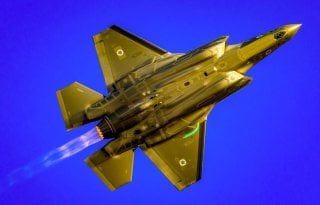
Israel’s Iron Dome Won’t Last Forever

By Seth J. Frantzman

In the recent war between Israel and Hamas, a cease-fire was achieved after 11 days of fighting. Both sides claimed victory, and both are expecting another round in the future. For Israel, a key to its success has been the Iron Dome air defense system, which uses radar and missiles to intercept rockets and other threats. This kept Israeli civilians relatively safe from the 4,340 rockets the Israel Defense Forces say were fired from Gaza. Israeli Defense Minister Benny Gantz is scheduled to meet U.S. Defense Secretary Lloyd Austin today to seek up to $1 billion in emergency military aid to help replenish Iron Dome interceptors used in the war.

The recent conflict was different than previous wars in 2009, 2012, and 2014. It was also different than the two rounds of multiday fighting that took place in 2018 and 2019. What makes this round different is the unprecedented rocket fire Hamas unleashed and Israel’s diminishing returns when trying to counter Hamas.

Hamas and its backers in Iran think the recent war was a success. More than 60 rockets got through the Israeli air defense umbrella.