25 October 2022

Bombing to Lose Why Airpower Cannot Salvage Russia’s Doomed War in Ukraine

Robert A. Pape

Beginning in early October, facing huge territorial loses and other reversals in Ukraine, Russian President Vladimir Putin reached for a military strategy in which Russia should have a decisive advantage: airpower. In the most widespread such campaign to date, he ordered a blistering series of missile attacks against a dozen cities and electrical infrastructure across the country. Ukrainians were forced into basements and bomb shelters, and some 30 percent of the country’s power generation capacity was knocked out, causing rolling blackouts that affected homes, hospitals, and even the basic functioning of the economy. In the weeks since, Russia has been sending waves of drones to attack residential buildings and offices in Kyiv and other cities. In effect, Putin was reminding the Ukrainian government of his ability to attack its main population centers—a threat that Ukraine, having scrapped Soviet-era bombers long ago, having no long-range rockets able to hit Russian cities, and having only a tiny number of ground attack aircraft—is unable to match. The goal, it seems, is to punish civilians, wearing them down in the hope of convincing their leaders to sue for peace.

But it is a strategy doomed to failure. As in earlier phases of the war, Russia’s supposed air superiority has done little to shift the overall momentum on the ground. Despite the significant damage they have caused, Putin’s airstrikes have failed to hinder Ukrainian advances in the east. And when they have reached civilian targets they have only served to strengthen Ukrainian resolve.

Baloch Conflict: No Longer a Low-Level Insurgency

Manish Rai

For decades, the Pakistani establishment has termed the Baloch insurgency a low-intensity conflict confined mostly to Balochistan, the country’s largest province by territory. But that seems to have changed, as a spate of attacks this year clearly demonstrates that the insurgency has entered into a new phase.

Despite Pakistani security forces claims of a sweeping crackdown on rebels, the insurgency’s lethality has increased many folds in recent times. As a result, more ferocious attacks, such as suicide bombings, high-profile targeted attacks, and kidnappings of high-ranking army officials are now shaping the course of Pakistan’s oldest separatist insurgency.

In particular since the start of this year, a remarkable shift in the strategy of Baloch militants has been evident. It started with a large-scale attack in January on a security checkpoint in Balochistan’s Kech region, which borders Iran. Less than a week later, another bold attack was carried out by militants from the Baloch Liberation Army (BLA) suicide wing (the Majeed Brigade). In these attacks, militants stormed two security camps in Balochistan’s Nushki and Panjgur districts.

Lt. Gen. Stephen N. Whiting on Posturing U.S. Space Operations for a Warfighting Advantage


Kari A. Bingen: Good afternoon. I’m Kari Bingen, the new director of the Aerospace Security Project at the Center for Strategic and International Studies.

It turns out that we share our event today with a famous space broadcast. On October 14th, 1968 the Apollo 7 crew transmitted the first live telecast from space. The broadcast began with a view of a card reading “from the lovely Apollo room high atop everything.” So it is fitting that I welcome everyone from the lovely CSIS Aerospace Security Project virtual room and I get to welcome Lieutenant General Whiting, commander of U.S. Space Operations Command, as my first guest in this new role to discuss how Space Operations Command is posturing U.S. space operations for a warfighting advantage.

What I think is remarkable about General Whiting’s career is that he is a true space operator and an engineer. Many Air Force Academy graduates at the time who wanted to pursue a space track got their start as missileers and then moved over to space. General Whiting started as a crew commander at a space warning squadron and then went on to command several operational space units – the UHF Follow-On system, Satellite Control Network, Missile Warning and Space Control, the Joint Space Operations Center – and as the deputy commander of Air Force Space Command. He brought a space perspective to tactics development at the Air Force Warfare Center, conducted scholarly analysis at RAND and the Navy’s Strategic Studies Group, and worked at the senior-most levels at the Pentagon as the deputy secretary of defense’s senior military assistant. I can’t think of anyone better positioned with the right breadth of experiences to lead the standup of Space Operations Command at this consequential time.

Will the Ukraine War Reshape the Internet?


Russia’s invasion of Ukraine, for the most part, seems an old-fashioned war of invasion and terror that demands boots on the ground. In reality it has blended traditional and innovative elements, and while the cyber dimension has been less visible, it has been full-fledged from the very start. A study by Microsoft indicates that as a prelude to the war, on Feb 23, 2022, one day before the official invasion, Russia launched a cyberweapon called “Foxblade” against computers in Ukraine. ­“Reflecting the technology of our time, those among the first to observe the attack were half a world away, working in the United States in Redmond, Washington,” the report said. As for the Ukrainian defense, it has been quick “to disburse its digital infrastructure into the public cloud, where it has been hosted in data centers across Europe.”

Ukraine also has launched one of the most successful public relations campaigns ever, amassing international information technology armies of 500,000 hacktivists. It lobbied the Western block for tough sanctions on Russia and was rewarded with the most severe sanctions ever levied on a major economy, and successfully orchestrated a private sector digital embargo. In addition, President Zelensky called for Russia’s right to vote in the UN Security Council to be discounted, and there are calls for similar action in other international institutions. While Vice Prime Minister and Minister of Digital Transformation Mykhailo Fedorov asked internet governance institutions to cut off Russia from the internet. Fedorov’s appeal received a collective but sympathetic no on the grounds that the core of the internet should remain apolitical. Today, Ukraine receives robust intelligence cooperation from the United States, while the European Union offers cyber capacity-building support through its Permanent Structured Cooperation (PESCO) policy. Meanwhile, an agreement has been signed between the State Archival Service of Ukraine and the National Archives of the United Kingdom on the temporary transfer of cloud data storage and backup copies of digital materials of Ukrainian state archival institutions in case of their potential loss.

China’s 20th Party Congress Report: Doubling Down in the Face of External Threats


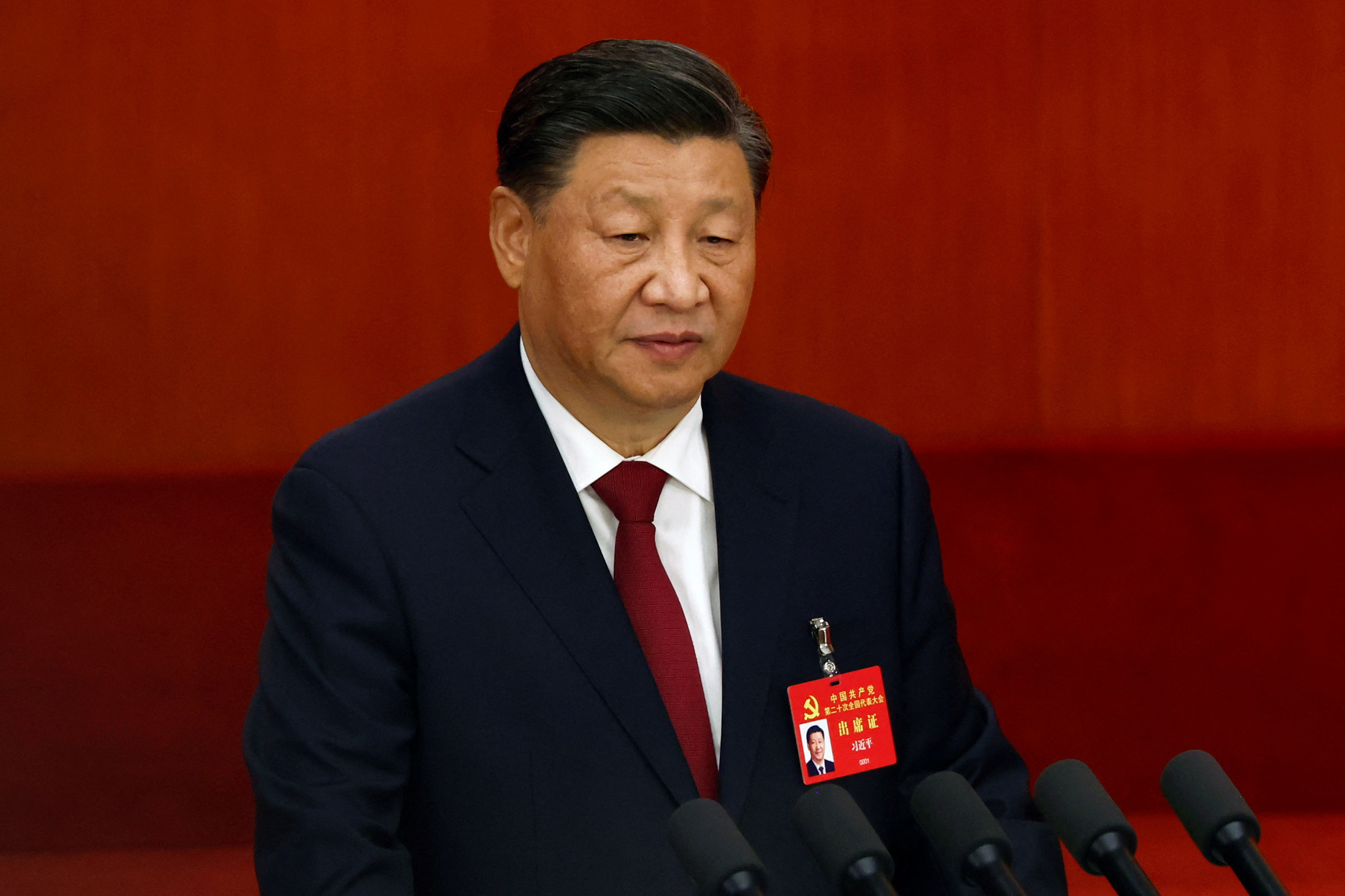
President Xi Jinping loomed large over the opening of the Chinese Communist Party’s 20th National Congress on October 16, 2022. He is all but guaranteed to emerge from the party congress with a history-making third five-year term, and he is widely expected to tighten his hold over the party by placing political allies in key positions.

Xi kicked off the party gathering with a landmark speech that stretched for nearly two hours. His address, an abridged version of the full party congress report, focused heavily on domestic issues but also provided a useful glimpse into how Xi and the party leadership view the world and China’s place in it. Xi’s address (and the full report) struck a different tone from the last one Xi delivered at the 19th Party Congress in 2017. While Xi still voiced confidence that China’s power and prospects are on the rise, he also doled out stark warnings about the growing threats and challenges that China faces.

China’s Worsening External Environment

In his 2017 report to the 19th Party Congress, Xi took a triumphant tone, proclaiming that China “stands tall and firm in the East” and asserting that China’s soft power and international influence were on the rise. That speech was seen at the time as presaging a more assertive and activist Chinese foreign policy. Those predictions panned out. The last five years witnessed Beijing ratchet up pressure on Taiwan and take steps to crush Hong Kong’s autonomy. Chinese “wolf warrior” diplomats also aggressively ramped up their rhetoric and tactics in defense of Chinese interests.

Team Biden Balks on Africa Sanctions

Robbie Gramer

The Biden administration is sitting on dozens of potential sanctions for human rights violators and coup-plotters in countries in Africa, refusing to pull the trigger despite mounting pressure from U.S. lawmakers and human rights advocates, according to seven officials, congressional aides, and experts familiar with the matter.

The U.S. State Department has extensive dockets for possible sanctions on people involved in grave human rights violations in countries including South Sudan; Ethiopia, where a deadly internal war has raged for nearly two years; and Sudan, where security officials helped plot a coup last year and then unleashed a deadly crackdown on pro-democracy protests, the officials and experts said. For reasons that are unclear to U.S. lawmakers and outside advocacy organizations, the Biden administration has yet to implement any of the potential sanctions.

Pakistan’s Military Is Here To Stay

Husain Haqqani

Pakistani politics have always revolved around the country’s military. Civilian politicians compete for support while criticizing—or seeking covert help from—a ubiquitous security establishment. Since his ouster as prime minister last April, cricketer-turned-politician Imran Khan has become the latest to challenge this system. But Khan’s polarizing rhetoric is only adding to Pakistan’s chaos—not marking the advent of a revolution.

The government elected after Khan’s removal via a no-confidence vote initially tolerated the former prime minister’s attacks on generals, judges, and political rivals in addition to his conspiracy theories about his ouster being the result of a U.S.-backed plot. Unlike previous civilian leaders who fell afoul of the military, Khan was not immediately arrested, charged with corruption, or disqualified from future elections by judicial fiat. But now, Khan and his close aides are beginning to face the wrath of the state apparatus. Both the security establishment and the civilian government seem to have realized that Khan’s populist influence will not diminish without prosecuting him and his associates.

Xi's call to win tech race points to new wave of Chinese state-led spending

Josh Horwitz

SHANGHAI, Oct 17 (Reuters) - President Xi Jinping's call for China to "win the battle" in core technologies could signal an overhaul in Beijing's approach to advancing its tech industry, with more state-led spending and intervention to counter U.S. pressures, analysts say.

Achieving self-reliance in technology featured prominently in Xi's full work report to kick off the once-every-five-years Communist Party Congress, with four mentions versus none in 2017. The term "technology" was referred to 40 times, up from 17 times in the report from the 2017 congress.

While the report did not mention any other countries or specific sectors for that goal, it comes days after Washington imposed sweeping new regulations aimed at undermining China's efforts to develop its own chip industry.

HSBC analysts said their takeaway was that increased spending in China, particular in STEM (science, technology, engineering and maths) fields, and policy support was likely.

Iris Pang, chief economist for Greater China at ING, said Xi's remarks addressed "the urgent need for talent and promoting self-sufficiency in technological advancement".

Profits at the Expense of Patriotism Is a Dangerous Game

Lawrence Kadish

Today's American mega-billionaires need to think long and hard about where their allegiances lie: perhaps reciting the Pledge of Allegiance before our nation's flag might be a good place to start.

If past history is any indication, their current corporate behavior will become their personal legacy illuminated under a harsh and revealing spotlight.

American industrial giants, General Motors and Ford, found that to be the case when lawyers dug through national archives in the 1990s and discovered documents that revealed how these two corporations had their German-based subsidies working hand-in-glove with the Nazi regime both before World War II and during the conflict.

Company spokesmen were quick to suggest that those firms were operating at a distance but researchers begged to differ. History records that there is reason to be skeptical of corporate "spin."

What Does Russia Hope to Achieve by Bombing Ukrainian Cities?

Mikhail Vinogradov

Russia’s recent aerial bombardment of Kyiv and other Ukrainian cities is a response to several new and unforeseen problems that the Kremlin has found itself facing in recent weeks. First and foremost was the mass withdrawal of Russian troops from the vicinity of Kharkiv and Lyman, which caught most Russian commentators unaware, regardless of their views on the war. Despite the mixed results of the first six months of the war, there was skepticism in Russia that Ukraine could really launch a counteroffensive.

Accordingly, Russia’s severe military setbacks in the Kharkiv and Kherson regions could not fail to cause dismay, and sparked a widespread desire to find a scapegoat, forcing the powers that be to engage with the public more than usual. This, in turn, had the effect of emboldening the public to be far more critical of the military campaign, which had until recently been widely considered to be nothing but victorious.

On top of this, it also became apparent that the Russian establishment had no plan in place for presenting a united front over the implementation of the partial mobilization announced by the Kremlin. Although the public reaction to the announcement was calmer than many had predicted, criticism of the military top brass over its erratic implementation was so widespread that it threw into question the seemingly self-evident theory about people rallying around the regime at a time of war. Combined with the shock of Russia’s military losses, it created the impression that the Russian political class was losing the ability to demonstrate any unity on difficult issues.

Can Putin’s Center Hold?

Tatiana Stanovaya

The question of how Russian elites are responding to further developments in the Russia-Ukraine war has become one of the most discussed issues in Russian and Western media. That’s understandable: While ordinary Russians remain relatively conformist and show no signs of politicization—despite the unpopular mobilization—there have been some hopes that the elites could perhaps play a role in restraining Russian President Vladimir Putin from further escalation. Or, at least, that they would become a factor Putin would have to take into consideration when making his decisions. The debate over whether Russian elites are split or not has been intensifying against the backdrop of unprecedented internal conflicts questioning Russian tactics in Ukraine. So, are the elites a threat to Putin? And how might possible further military failures impact the mood among the elites?

When it comes to the war in Ukraine, what is important is whether the splits concern Putin and his decisions. Putin’s regime is well known for its inter-elite fighting; indeed, that is its natural state. Security officials, or siloviki, clash with other siloviki (the FSB vs. the Federal Protective Service, the military intelligence service vs. the FSB); some of Putin’s friends with others (businessman and mercenary boss Yevgeny Prigozhin vs. St. Peterburg Gov. Alexander Beglov); senior officials with other officials (domestic policy overseer Sergei Kiriyenko has long been embroiled in a confrontation with his predecessor, State Duma speaker Vyacheslav Volodin); and so on.

ISIS Terrorists Living in Turkey - with Yazidi Captives

Uzay Bulut

In Ankara's Sincan district, a 24-year-old enslaved Yazidi woman was rescued after her relatives in Australia (who themselves are asylum-seekers) purchased her freedom on the dark web. The woman was held captive in a house in Sincan for 10 months and systematically raped. Signs of torture in the form of cigarette burns and razor cuts were found on her body.

[A] secrecy order was placed on the indictment against those ISIS members who had kidnapped a seven-year-old Yazidi child to Turkey and listed her for sale. These are allegedly high-ranking IS members. They are currently living in Ankara and remain free.

[I]t is difficult to obtain data on the detained ISIS members from state authorities. When we ask questions to authorities, it is not possible to get an answer from them. — Hale Gonultas, Turkish journalist, interview with Gatestone Institute, October 2022.

Germany’s Continued Illusions About China and Russia

JUDY DEMPSEY

As if the German government needed to be reminded of the high price of its dependence on Russia and China.

Over the years, these two authoritarian regimes embedded themselves in the German economy and ingratiated themselves with the elites. Such developments prevented the EU from forging a coherent, critical strategy toward both Moscow and Beijing.

The union is now conducting major political and economic reassessments of its relations with Russia and China. But what about Germany, Europe’s biggest economy?

Over the decades, regardless of whether the Social Democrats or the Christian Democrats were in government, both parties consistently pursued economic and political relationships with Russia and China. This pursuit was based on national, not European interests. It was motivated by profit, not values or principles. These policies were also naively based on the idea that closer trade and economic ties would lead to stability, even trust.

U.S. has viewed wreckage of kamikaze drones Russia used in Ukraine

Shane Harris, Dan Lamothe, Alex Horton and Karen DeYoung

The U.S. government has examined the wreckage of Iranian-made drones shot down in Ukraine, deepening its insight into the unmanned craft that Russia has launched in a spate of kamikaze attacks on the country’s critical infrastructure, according to two U.S. officials.

Information about the drones’ structure and technology could prove crucial in helping the United States and its Ukrainian allies better identify and ultimately defeat them before they can reach their targets. Officials said the process has been used in the past to study weaponry deployed by Iran’s proxies in conflicts in the Middle East. People interviewed for this report spoke on the condition of anonymity to discuss sensitive intelligence collection.

The Shahed-136 unmanned aerial vehicles (UAVs) used in this week’s attacks on the Ukrainian capital, Kyiv, have targeted power stations and other utilities, killing at least four, authorities there have said. Their use by Russian forces has underscored the growing ties between Moscow and Tehran, alarming Western leaders whose sanctions and other punitive economic measures have drastically undercut the Kremlin’s ability to regenerate its military after eight months of war.

China, Russia Deepen Partnership on Satellite Navigation

John Hardie

China and Russia signed contracts late last month to host ground stations for their respective global navigation satellite systems (GNSSs), BeiDou and GLONASS, which are alternatives to the U.S.-run Global Positioning System (GPS). These stations will improve the performance of their systems, which provide precision, navigation, and timing (PNT) services for both military and civilian purposes.

The two sides inked the contracts during the September 27 annual meeting of their Project Committee on Important Strategic Cooperation in Satellite Navigation, launched in 2015. He Yubin, head of the China Satellite Navigation System Committee, and Yuri Borisov, head of Russia’s state corporation Roscosmos, co-chaired the meeting.

Under the contracts, Beijing will place three ground monitoring stations at various locations throughout Russia, while Moscow will do the same in China. Both countries have sought to expand their respective networks of ground stations in recent years, aiming to bolster the performance of their systems. Sino-Russian talks on mutual hosting of ground stations have been ongoing since at least 2014.

24 October 2022

Palantir wins contract to help Army quickly process battlefield data

Colin Demarest

WASHINGTON — Palantir Technologies won a U.S. Army contract worth as much as $59 million to support the testing and rollout of software that allows analysts to parse vast amounts of data and quickly provide leaders the latest battlefield information.

The five-year indefinite delivery, indefinite quantity deal for the All Source II application was announced Oct. 17 by the Army’s Program Executive Office for Intelligence, Electronic Warfare and Sensors, or PEO IEW&S.

The All Source II application is expected to be deployed as part of the Command Post Computing Environment, a tailorable mission command suite operated and maintained by soldiers.

“ASII is integrated into, and built to interoperate with, the Command Post Computing Environment, which not only reduces the amount of hardware the Army intelligence community is required to maintain, but it also provides a streamlined way to deliver timely intelligence to the commander,” Col. Christopher Anderson, the project manager for intelligence systems and analytics, said in a statement.

Defiant Xi tells world China is ready to stand its ground

KARI LINDBERG  AND REBECCA CHOONG WILKINS

President Xi Jinping had a clear message to those who want to thwart China’s rise: You will fail.

In a speech running almost two hours on Sunday, Xi let the world know that China wouldn’t change course even as it faces “dangerous storms” in a more hostile world. Instead, he declared the “rejuvenation of the Chinese nation is now on an irreversible historical course” and more forcefully offered China up as an alternative to the U.S. and its allies.

“China’s international influence, appeal and power to shape the world has significantly increased,” Xi said in kicking off the Communist Party’s once-in-five-year party congress, at which he’s set to secure a norm-breaking third term in office. “Chinese modernization offers humanity a new choice for achieving modernization,” he added.

Xi’s remarks indicate that China is ready to stare down a growing challenge from the U.S. under President Joe Biden, who has moved to hinder Beijing’s ability to access advanced technology and sought to deter any military action against Taiwan — the biggest flash point between the world’s biggest economies. The Chinese leader hailed the nation’s “fighting spirit” and said the country was “well-positioned for pursuing development and ensuring security.”

Why the Pentagon’s Crush on Elon Musk Is Dangerous to Democracy

PATRICK TUCKER

SpaceX founder Elon Musk’s current spat with the Pentagon over who will pay for satellite internet services over Ukraine illustrates how democracy is vulnerable to the whims of authoritarian-minded tech magnates. But in the case of Musk, Pentagon officials are partially to blame.

A villain to some and a hero to others, Musk owns the Starlink communications satellites that are helping to keep many Ukrainians connected to the internet. Until recently, he seemed to many U.S. military leaders a model for how to build things in the age of information technology. Musk has headlined military conferences where he lectured the Defense Department on what it needed to do to be faster and cheaper. He has hosted key military leaders for private dinners, leaders who spoke about him in public with unguarded adulation.

“Look at SpaceX,” said Gen. John Hyten in 2020, when he was vice chairman of the Joint Chiefs of Staff. Hyten, who has since retired, lauded the company's ability to learn from launch failures. “Did they stop? No…They launched rapidly again. They changed systems. They changed subsystems. They go in a completely different direction."

Americans agree democracy is at risk. They disagree vehemently on why.

Philip Bump

There’s a fable to be written about a group of sailors who learn that their boat is taking on water. The crew divides into factions, each insistent that they understand the reason that the boat is sinking: One blames cracks in the hull, another broken bilge pumps. Instead of fixing the problem, their time is consumed with arguing over it. Eventually they’re just swimming there, sharks circling, fighting about who was right.

It’s been clear for some time that Americans see the country’s political system as endangered. Polling released this week by the New York Times and Siena College reinforces that point: 7 in 10 Americans believe it is. In fact, there’s an unusual bipartisanship to the issue: 7 in 10 Democrats, Republicans and independents all share that conclusion.

Of course, it’s easy to tell when the boat is taking on water; you need only check the moisture level of your shoes. What’s trickier is figuring out why and whether the problem can effectively be addressed. And there our expected partisan divide reemerges.

ASEAN bracing for US-China rivalry to explode

RICHARD JAVAD HEYDARIAN

Chinese paramount leader Xi Jinping’s fiery address before the Chinese Communist Party’s 20th Congress has dominated recent headlines, not least regarding his comments on Taiwan.

Despite Xi’s vow to pursue “peaceful unification” with the self-ruling island, the Chinese leader expressed his willingness to use force and flex muscles amid “stormy seas” in an increasingly volatile geopolitical environment.

Xi’s hardline ideological positioning and seeming refusal to loosen domestic political and Covid-19-related restrictions has raised concerns over the future of China’s sputtering economy.

For the first time in three decades, numerous countries in the region, from India to Bangladesh, Vietnam and the Philippines, are expected to outpace the Asian powerhouse for the foreseeable future. A decade earlier, Hong Kong-based expert Wily Lam warned about the perils of China’s more inward and ideological turn under Xi’s leadership.

Big Tech Goes to War To Help Ukraine, Washington and Silicon Valley Must Work Together

Christine H. Fox and Emelia S. Probasco

Even before he made a bid to buy Twitter, Elon Musk was an avid user of the site. It is a reason Ukraine’s Minister of Digital Transformation Mykhailo Fedorov took to the social media platform to prod the SpaceX CEO to activate Starlink, a SpaceX division that provides satellite Internet, to help his country in the aftermath of Russia’s invasion. “While you try to colonize Mars—Russia try [sic] to occupy Ukraine!” Fedorov wrote on February 26. “We ask you to provide Ukraine with Starlink stations.”

“Starlink service is now active in Ukraine,” Musk tweeted that same day. This was a coup for Ukraine: it facilitated Ukrainian communications in the conflict. Starlink later helped fend off Russian jamming attacks against its service to Ukraine with a quick and relatively simple code update. Now, however, Musk has gone back and forth on whether the company will continue funding the Starlink satellite service that has kept Ukraine and its military online during the war.

The tensions and uncertainty Musk is injecting into the war effort demonstrate the challenges that can emerge when companies play a key role in military conflict. Technology companies ranging from Microsoft to Silicon Valley startups have provided cyberdefense, surveillance, and reconnaissance services—not by direction of a government contract or even as a part of a government plan but instead through the independent decision-making of individual companies. These companies’ efforts have rightly garnered respect and recognition; their involvement, after all, were often pro bono and could have provoked Russian attacks on their networks, or even their people, in retaliation.

HOMELAND DEFENSE IN THE INFORMATION SPACE: LEARNING FROM RUSSIAN INFLUENCE CAMPAIGNS IN EASTERN EUROPE

Olga R. Chiriac and Jahara Matisek

On August 23, 2021, unknown organizers coordinated the “Baltic Way 2021” celebration to mark thirty years of freedom in the Baltic states, with advertising across social media promoting it. However, according to officials at the NATO Strategic Communications Centre of Excellence and Latvian cyber warfare military personnel we interviewed, the event was likely established and funded by Moscow. It quickly turned into, according to one Latvian military officer, an “anti-vax, anti-government meeting that celebrated ‘freedom’ and promoted conspiracies.” Fortunately, attendance was quite low, but this is the sort of sociopolitical-information warfare that has been occurring in Eastern Europe for decades.

A blending of social and political issues in the information environment allows an adversary to weaponize civil society in a way that leads to anomie, confusion, and hyperpolarization, ultimately aiming to undermine democracy and the social contract. The growing prominence of smartphones, constant connectivity, and social media has intensified such adversarial influence actions against the democracies of Eastern Europe, just as it has in the United States. And this influence is accomplished cheaply—Russia is “spending approximately $4 billion a year (comparable value) on cyber-influence operations against the West.”

China’s Surveillance State Pushes Deeper Into Citizens’ Lives

Brian Spegele

SHANGHAI—In many parts of Xi Jinping’s China, state surveillance and Covid-19 controls begin the moment you step out the door in the morning.

The day might start with a government-mandated Covid test from workers in white hazmat suits. Without proof of a negative result, public spaces are off limits, including office buildings, grocery stores and parks.

Surveillance cameras keep watch over the city streets. In a cab on the way to work, the driver requires you to scan a QR code for a government database tracking people’s movements. Scan again when stopping by Starbucks for coffee and then again at the office.

If the database shows you’ve crossed paths with someone infected by the virus, you’ll likely be forced into quarantine. It may be in a hotel room, at a converted convention center, or if lucky, at home with an alarm installed on the front door.

Why Biden’s National Security Strategy Is Destined To Fail

Mackenzie Eaglen

The Biden administration’s newly released National Security Strategy (NSS) calls for a military that can essentially do it all – from “backstopping diplomacy, confronting aggression, deterring conflict,” to fighting and winning the nation’s wars. Focusing the military on its core functions is wholly appropriate. But to do so ably requires robust policies, capable leaders, and sufficient resources in place.

This content is not permitted to load due to trackers that are not disclosed to the visitor. The website owner needs to setup the site with their CMP to add this content to the list of technologies used.powered by Usercentrics Consent Management Platform

National Security Strategy: Aspirational Only?

Unfortunately, the National Security Strategy is based on a false premise. The document states that America’s military power “continue[s] to grow, often outpacing those of other large countries.”

‘Massive blackouts’ as 30% of Ukraine’s power stations destroyed in just over a week, Zelensky says

Sana Noor Haq, Gul Tuysuz and Uliana Pavlova

Thirty percent of Ukraine’s power stations have been destroyed in just over a week, leading to “massive blackouts” across the country, President Volodymyr Zelensky said Tuesday, as the Kremlin steps up attacks on critical energy infrastructure.

“Another kind of Russian terrorist attacks: targeting energy & critical infrastructure. Since Oct. 10, 30% of Ukraine’s power stations have been destroyed, causing massive blackouts across the country,” Zelensky tweeted Tuesday.

He added that there was “no space left for negotiations with (Russian President Vladimir) Putin’s regime.”

The Russian Defense Ministry later confirmed that the country’s military had launched high-precision strikes on “energy systems” in Ukraine.

“During the day, the Armed Forces of the Russian Federation continued to strike with long-range high-precision air and sea-based weapons on military command and energy systems of Ukraine, as well as arsenals with foreign-made ammunition and weapons, all designated targets were hit,” Lieutenant-Colonel Igor Konashenkov said Tuesday.

Iranian Shahed-136 Drones Increase Russian Strike Capacity and Lethality in Ukraine

JOHN HARDIE & RYAN BROBST

Russia has conducted dozens of strikes against civilian and critical infrastructure targets across Ukraine over the past week, including with the Shahed-136 loitering munition. While the Shahed-136 is unlikely to change the overall direction of the conflict, it has increased Russia’s long-range strike capacity as Moscow’s traditional missile stocks dwindle. It also provides some additional capability and capacity against frontline Ukrainian positions, likely offering greater lethality than Russia’s indigenously produced loitering munitions.

Moscow is behind the curve in developing drones and is now racing to catch up. While the Russian military fields various UAVs for combat and intelligence, surveillance, and reconnaissance (ISR) roles, insufficient capacity has undermined Russia’s war effort in Ukraine. To help redress this weakness, Moscow turned to Tehran, which began pouring resources into its drone program in the 1980s and has since emerged as a regional UAV power and serial proliferator.

Back in July, the White House warned that Iran was “preparing to provide Russia with up to several hundred UAVs, including weapons-capable UAVs, on an expedited timeline.” Declassified U.S. intelligence indicated Tehran showcased various drones to Russian delegations in June and early July and began training Russian operators later that month. In mid-August, Russian cargo aircraft allegedly began picking up scores of Iranian drones, while Tehran dispatched advisors to Russia, and allegedly even into occupied Ukrainian territories, to help the Russians get going. The Russians reportedly began testing the Shahed-136 in Ukraine in August, and visual evidence of its employment in Ukraine first surfaced in mid-September.

Ransomware: Getting Started Guide and Deep Dive into REvil

JACLYN LASKY, CHRIS NAUGHTON 

This paper goes into detail about the REvil ransomware variant and its operators to provide an in-depth look at how it begins its infection chain and why. The paper also covers publicly available information on REvil’s cyber-attacks that targeted industries in the healthcare sector, and why it matters. The paper consists of two main parts. Sections 2 and 3 document the REvil malware’s operation in the flow of a typical operation, based upon observations documented in the MITRE ATT&CK® Framework, additional public threat reporting, and some internal analysis in the MITRE Lab. Section 4 reviews these adversary behaviors from the perspective of a defender, giving guidance on how cyber practitioners could detect and protect against such a threat

NewSpace and the Commercialization of the Space Industry: Challenges for the Missile Technology Control Regime

Kolja Brockmann and Nivedita Raju

The changing nature of the space industry—particularly through its NewSpace entrants—is resulting in changes in business practices, and new funding sources and capitalization models, as well as gaps in awareness and understanding of export controls. NewSpace is not only changing the nature of the space industry, but also exacerbating existing missile proliferation risks and posing challenges for the effective implementation of export controls. It therefore requires a coordinated response by the main multilateral missile export control instrument: the Missile Technology Control Regime (MTCR).

This report identifies developments, trends and possible proliferation scenarios linked to the NewSpace industry that pose possible missile proliferation risks and challenges for MTCR export controls. The report seeks to strengthen the implementation of export controls and related policy instruments through the MTCR and national measures, in order to prevent commercial space industry activities contributing to programmes for missiles and other delivery systems capable of carrying chemical, biological and nuclear weapons.

Putin’s Speech Offers a Way Out of This War … For Now

Emily Ferris

Attempting to parse Russian President Vladimir Putin’s thoughts and understand the inner workings of the Kremlin can often seem like staring into a mirror, which reflects back what we want to see. Some saw his recent address to the Federal Assembly, in which he formally annexed four territories of Ukraine, as an escalation of the war – indeed it was labelled as such by most major news outlets. US and EU representatives duly responded by maintaining that the four territories would never be recognised as Russia’s, and by issuing new sanctions.

But a close reading of the speech, and other Russian government actions over the past week, reveals important nuances about the Kremlin’s state of mind. At points where Putin could have escalated, it seems instead that he could be looking for a way out of this war – but more concerningly, he may be preparing for another.

Perhaps the most obvious takeaway is that the speech was heavy on polemic – plenty of history lessons, Western colonialism, and the obligatory reference to Nazis – but light on details, even about Ukraine itself. Indeed, Putin quickly noted at the start of the speech that the sham referenda in Ukraine were not up for discussion, and that was essentially the end of any real information about them. There was also no clarity about the delineation of the actual borders of these new territories; Kremlin spokesman Dmitry Peskov further muddied the waters that same day by saying that Russia would have to ‘consult with the population’ about the new borders, suggesting that there has been no firm decision taken.

THREE STEPS TOWARD MORE POSITIVE COMMAND CLIMATES IN THE ARMY

Jaron Wharton and Kris Fuhr

The Army is amidst a well-known recruiting crisis. While multiple factors potentially drive it, there is evidence that a trust deficit features prominently. Restoring that trust is part of the Army’s value proposition for future generations, not just for potential soldiers but also for their families, who greatly affect their decision to serve. It also requires steadfast commitment from engaged leaders and a deliberate emphasis on preventing harmful behaviours and addressing societal trends that may dwarf resources at installations and amplify structural flaws.

Multiple high-level commissions, from the Fort Hood Independent Review Committee to the Department of Defense–wide Independent Review Commission on Sexual Assault (DoD IRC), shed light on systemic issues and provide direction for reform. Specifically, both reports identified broken culture as the root of sexual harassment/assault response and prevention policy failures over the past few decades. While there has been progress in shifting from a crisis and response framework to a proactive, preventative mindset, the Army needs creative ways to complement those efforts and ensure recommendations have the intended effect at the unit level. This starts by embracing the well-established relationship between healthy organizational climates and preventative measures. It should also encourage the Army to discuss and track climate in much the same way it addresses safety and maintenance on a regular basis.

Inequality Has Been the Price of Winning in Big Tech; That’s Changing

David Moschella

As a symbol of extreme wealth, it’s been irresistible. The masts on Jeff Bezos’ new 417-foot sailing yacht are so tall that they wouldn’t fit under the historic Koningshaven bridge. Not surprisingly, the citizens of Rotterdam were unimpressed by the Dutch shipbuilder’s plan to temporarily dismantle the bridge at the Amazon founder’s expense. After protestors vowed to pelt the ship with eggs, it was the masts that were temporarily lowered.

Today, there is also less-symbolic evidence that Big Tech’s clout is receding. The world’s richest person, Elon Musk, has made most of his fortune in cars, batteries, and rockets. The war in the Ukraine has made it clear that the world is nowhere near ending its reliance on fossil fuels, and that the global food supply is less reliable than most people thought. Americans and Europeans are finally waking up to how their dependence on China and Russia for essential goods is fueling inflation, shortages, and empty shelves. Taken together, Disney’s Hulu, Disney+ and ESPN+ now have more subscribers than the once all-powerful Netflix.1

Extreme individual wealth during the 1995–2020 period was driven by the consumer market. The Internet enabled new online services to reach billions of individuals, creating unprecedented economies of scale. In contrast, the 2020–2045 period will be much more about applying technology to the physical world—food, housing, water, transportation, the environment, energy, and the military—as well as leveraging innovations in batteries, robots, space, and biotech. These new, and fundamentally more important, societal priorities are why we believe that the power of Big Tech—and its income inequalities—peaked during the covid pandemic.2

Reaching breaking point: The semiconductor and critical raw material ecosystem at a time of great power rivalry


This report covers new ground by specifically outlining pending disruptions in CRM value chains on which the EU relies for its access to semiconductors in the next five and ten years. The report also highlights key green technologies that rely on the same CRM value chains, as disruptions to these chains will also inhibit the energy transition. By doing so, an action plan is proposed for the Netherlands and the EU to deal with the risks and opportunities associated with the dependencies on the CRM needed for semiconductor production and green technologies. The action plan also outlines options to seize the opportunities related to the strengths of the Netherlands, the European Union and other technologically advanced democracies in the semiconductor value chain.

The report relies on a literature review, desk research, prior research, stakeholder interviews, and expert interviews with both regional and thematic experts from academia, think tanks, government, and the CRM and semiconductor industry. Ten threats that may well disrupt the supply of CRM to Europe or its partners in semiconductor manufacturing (e.g., Taiwan) in both the next five and ten years were identified. Ranking of the threats (probability * impact) was done on the basis of a foresight survey in which 49 experts participated. The formulation of the policy implications, opportunities, and recommendations relies on the findings of the previous chapters, additional desk research, and a global expert consultation with representatives from academia, think tanks, government and both the CRM and semiconductor industry from the US, Canada, Australia, Japan, and European states.

China’s Belt and Road Initiative: Successful economic strategy or failed soft-power tool?


The Belt and Road Initiative (BRI) is part of China’s efforts to integrate its neighbouring countries into its economic sphere, thus increasing China’s security in its immediate neighbourhood while facing an increasingly hostile international environment due to its rivalry with the US.

In reality, the BRI has evolved into an umbrella term for various infrastructure and development projects with no unified object or strategy. The projects should, in principle, increase goodwill towards China, and correspondingly boost its influence, but in practice they are mainly aimed at economic benefit.

The results of the BRI, especially as a soft-power tool, are ambiguous. Its ideational basis is thin, consisting mainly of China’s critique towards the “hegemony of the West”. This reduces the BRI to a hollow slogan with little appeal apart from the pragmatic gains.

Artificial Intelligence for Defence and Security

Daniel Araya

Artificial intelligence (AI) and machine learning are making weaponry and defence systems more sophisticated. As the threat landscape continues to evolve, the Department of National Defence (DND) and the Canadian Armed Forces (CAF) will need to make faster and better decisions to defend North America against new and emerging threats. This special report summarizes the findings of a series of interactive virtual workshops on using AI to address defence and security issues. Hosted by the Centre for International Governance Innovation and Defence Research and Development Canada, the workshops invited experts from Canada’s AI innovation sector and DND/CAF to share their perspectives on how the development and adoption of AI is impacting defence and security.

Hybrid threats, vulnerable order

Pol Bargués, Moussa Bourekba and Carme Colomina 

At a time of uncertainty and contestation of international norms, conflicts are becoming increasingly diffuse, as is the space between war and peace. Tactics are diversifying. Greater dependency and connectivity between actors is used to exploit the vulnerabilities of others. Concern is growing about hybrid threats like cyber-attacks, disinformation, electoral interference and the mobilisation of migrants, which are being deployed in many parts of the world. Unconventional threats fuel uncertainty, erode values ​​and norms, and strain international relations.

This CIDOB Report analyses the rise of hybrid threats. It aims to study their different forms and tactics, as well as the various scenarios in which they are deployed, in order to examine their impact, and analyse the responses that seek to address the multiple challenges they pose.