14 November 2022

Iranian Drones Are Changing the Battlefields of Eurasia

Sine Ozkarasahin

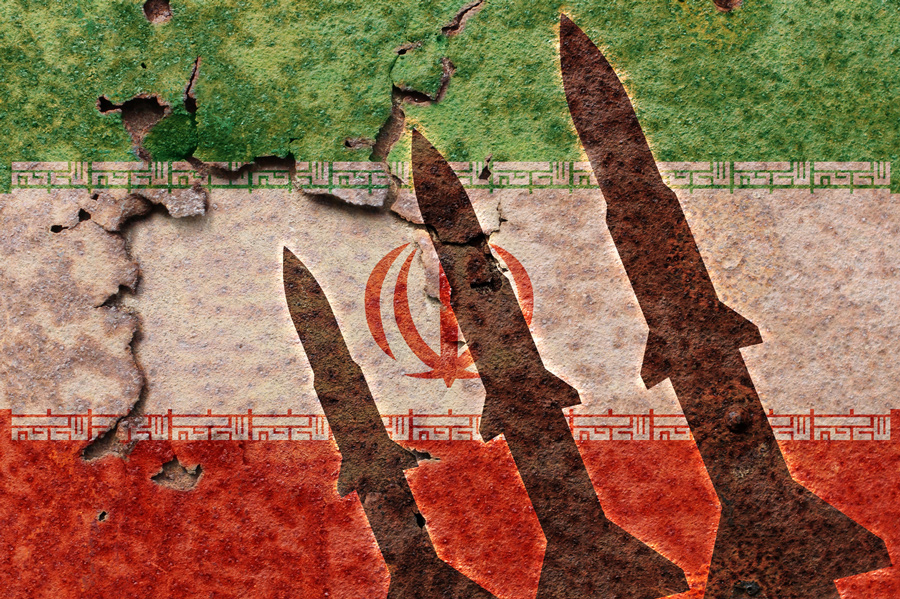
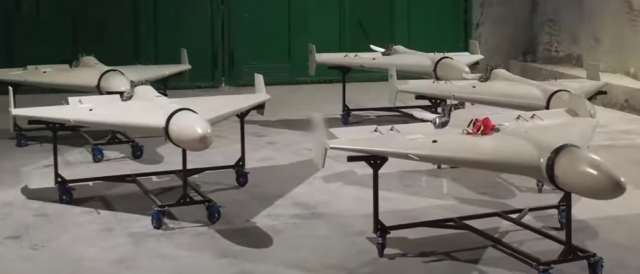
On October 10, Iranian loitering munitions rained over Ukraine’s urban centers, including Kiev. Two weeks later, Israeli forces struck an Iranian drone factory in Syria (Al Arabiya, October 23). This demonstrated how Iran’s drone program is now beyond Iran, both in terms of production and operational impact. Iran has become a drone-exporting nation and Iranian drones are creating new flashpoints in different geopolitical axes.

Tehran’s drone program is hardly new, however. In fact, it dates back to the 1980s war of attrition with Iraq and rests on a decades-long significant research and development (R&D) effort. Iran’s unmanned aerial vehicles (UAV) strategy is aggressive (Farsi Al Arabiya, April 23, 2021). It mainly focuses on utilizing UAVs to support the government’s capabilities and strengthen its proxy forces abroad. Led by the Islamic Revolutionary Guard Corps (IRGC) and its drone-maker Qods Aviation Industries (QAI), some of Iran’s existing drone technologies are developed from reverse-engineering Western systems that have crashed or landed on or near Iranian territory (including the ones allegedly intercepted or captured near its coast). For example, some of the Iranian government’s most sophisticated systems, including the Shahed-141 and 191, are modeled after the American RQ-171 Sentinel UAV that crashed in Iran back in late 2011 (Iran Press, December 16, 2020).
Will China Prove the Doomsayers Wrong?

MINXIN PEI

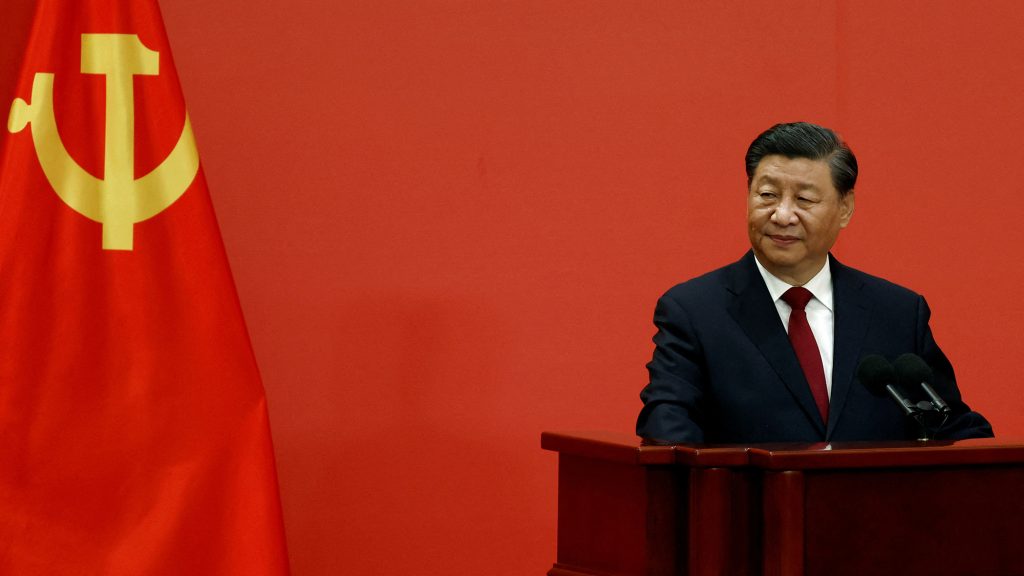
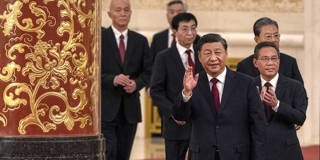
ATHENS – The new leadership team selected by Chinese President Xi Jinping at the 20th National Congress of the Communist Party of China failed to impress financial markets at home and abroad. In the week following the announcement of Xi’s new team, Hong Kong’s stock market declined by 8.3%, and the Shanghai Composite Index, China’s largest stock exchange, dropped 4%, despite the Chinese government’s intervention to prop up prices. US-listed Chinese stocks plunged by 15%.

Investors have good reason to worry. Though financial markets had already priced in Xi’s third term, investors had hoped that he would appoint a team of more moderate, experienced officials capable of putting pragmatism above politics. Instead, Xi packed the Politburo and its Standing Committee with loyal allies and protégés.

China’s next premier will be Li Qiang, who was Xi’s chief of staff (2004-07), before later serving as governor of Zhejiang province (2013-16), and CPC Secretary of Shanghai (2017-22). Li is widely credited with convincing Tesla to build its largest overseas factory in Shanghai – an achievement that has bolstered his business-friendly reputation. But, unlike every other premier since 1988, Li has no national-level administrative experience.

US tech powers Iran’s killer drones in Ukraine

STEPHEN BRYEN

Iran’s drones are devastating the critical infrastructure of Ukraine. What is surprising is that, beyond the physical drone airframe and the explosive payload, Ukraine is being savaged by equipment originating from outside of Iran.

In fact, these drones are made of parts from the United States and the European Union, along with some from Japan and China. But most of the electronics are American.

The United States has imposed sanctions on drone companies in Iran. Congress is considering legislation – for example, the “Stop Iranian Drones Act” (HR 6089). But both the proposed legislation and the US sanctions are unlikely to make any difference without a coherent policy aimed at blocking supplies to Iran.

US officials whisper to Congress that because the Iranian drones are made from easily available commercial parts there is nothing that can be done. But such claims simply are not true. Iran’s access to outside technology for its drones can be stopped but it will take smarts and leadership.

Why the Space Force is getting serious about on-orbit servicing

Courtney Albon

WASHINGTON — With fresh requirements in hand and a new unit focused on in-space servicing and maneuver, the U.S. Space Force is making moves to leverage a growing commercial market for on-orbit logistics, according to the head of the service’s mobility enterprise.

Brig. Gen. Stephen Purdy, commander of Space Systems Command’s Assured Access to Space Directorate, said the prospect of refueling, cleaning up debris and even repairing and building satellites in space has long been an interest for the service, but never a mission.

That may be changing, he said at an Oct. 20 industry conference in Los Angeles.

“Elements of that have actually been in the Space Force doctrine since the beginning, but we’ve had no operational units do it, no acquisition programs. It’s not been something that we’ve had a chance to get to,” Purdy said at the Armed Forces Communications and Electronics Association’s Space Industry Day conference. “So, our organization is getting after it in a serious way.”

China Will Increase Pressure on Taiwan in Next Two Years Rather Than Invade, Says Pentagon Official

John Grady

The Pentagon’s top civilian for policy does not think China is likely to attack Taiwan in the next two years, although he expects Beijing to ratchet up pressure on Tapei as Xi Jinping continues to expand his military’s capabilities for a possible amphibious invasion.

The Chinese response to House Speak Nancy Pelosi’s August visit to the island served as a “test drive” for what an invasion or blockade might look like, Colin Kahl said. To express their anger over her visit, the Chinese began wide-ranging live fire exercises, deployed its two aircraft carriers, an amphibious assault ship and accompanying warships close to the island and repeatedly sent military aircraft across the Taiwan Strait, reported USNI News. They also test-fired a variety of missiles around the island.

Speaking at the Brookings Institution Friday, Kahl said China also ratcheted up pressure to “establish a sphere of influence” by flying military aircraft dangerously close to American aircraft and allies operating in international airspace to clear the way for any future military action near Taiwan and the Western Pacific.

Japan's secretive move to break away from military restrictions

Xiang Haoyu

British Financial Times reported that the Japanese Defense Ministry has recently announced its official admission to the NATO Cooperative Cyber Defence Centre of Excellence (CCDCOE), which proclaims to be the most authoritative cybersecurity agency in the whole world. In recent years, Japan has had frequent interactions with the UK in military security and maintained a close relationship with NATO as well. Against such a background, joining NATO’s cyber defense center is the Japanese Liberal Democratic Party’s latest move to seek to break away from military restrictions.

The Ukraine crisis has shown a major feature of modern warfare is operations in the cognitive domain, mainly cyber war and information war, which lends an unprecedented importance to reinforcing cybersecurity and cyber offensive/defensive capability. The CCDCOE has shot up as a rising star in such a context, whose acceptance of two heavyweight Asian countries – Japan and ROK – this year marks a breakthrough in NATO’s efforts at globalization. From the US-led military bloc perspective, incorporating Japan and ROK in the US-dominated multilateral cybersecurity cooperation framework will further intensify the West’s domination over international cyberspace while fostering pivots of cyber confrontation in Northeast Asia to better serve their strategic needs of containing China.

Taiwan is on the frontlines of China’s worldwide cyberwar

Josh Rogin

As China ramps up its cyberattacks on Taiwan’s democracy, the island’s leaders are building both the infrastructure for defense and the capabilities to fight back. One of the Taiwanese government’s major projects is preparing a backup system to keep the country online if China tries to cut it off from the internet altogether.

Beijing is deploying cyber campaigns in many countries but nowhere as intensively as in Taiwan. After House Speaker Nancy Pelosi (D-Calif.) visited Taiwan in August, the Chinese government took its tactics to a new level. Beijing coordinated conventional retaliatory measures, such as missile tests, mock bombing runs and military exercises that mimicked a blockade, with a cyberwarfare and disinformation campaign meant to disrupt Taiwan’s democracy and undermine its people’s grasp on reality.

Taiwan is responding by bolstering its cyber resilience. The Ukraine war has heightened Taipei’s sense of urgency by demonstrating that a country under attack can’t necessarily rely on foreign governments or foreign billionaires — such as Elon Musk — when the crisis hits. And the reality is that China and Taiwan are already locked in online conflict on many fronts.

Imagining peace in Ukraine How a stable and successful country could emerge from the trauma of Russia’s invasion


Imagine a victorious Ukraine in 2030. It is a democratic nation, preparing to join the European Union. Reconstruction is almost complete. The economy is growing fast; it is clean and diverse enough to keep corrupt oligarchs at bay. All this is underpinned by stout Ukrainian security. Defence against another invasion does not depend on the Kremlin’s goodwill, but on the sense that renewed Russian aggression would never succeed.

Today, as Russia’s tattered army appears to retreat from Kherson in the south, an end to the fighting still seems far off. But news that Ukraine and its backers are starting to outline their views of the future makes sense, because the coming months will determine what is possible at the decade’s end. It means thinking about how to rebuild post-war Ukraine, and the security guarantees needed to deter future invaders.

In the past, Western leaders have wisely insisted that Ukraine should determine its own objectives. Ukrainians are dying in a conflict all about the right of sovereign countries to decide their own future. If peace is foisted on them, it is less likely to last. However, Ukraine’s Western backers have interests at stake, too. If the war escalates, they could be sucked in. If Russia ends up denying Ukraine victory, by creating a failing state on its western borders, Vladimir Putin or his successors would threaten the security of the entire Atlantic alliance.

Ukraine war, tensions with China loom over big Bali summit

ADAM SCHRECK and ELAINE KURTENBACHtoday

NUSA DUA, Indonesia (AP) — A showdown between Presidents Joe Biden and Vladimir Putin isn’t happening, but fallout from Russia’s invasion of Ukraine and growing tensions between China and the West will be at the fore when leaders of the world’s biggest economies gather in tropical Bali this week.

The Group of 20 members begin talks on the Indonesian resort island Tuesday under the hopeful theme of “recover together, recover stronger.” While Putin is staying away, Biden will meet with Chinese President Xi Jinping and get to know new British Prime Minister Rishi Sunak and Italy’s Giorgia Meloni.

The summit’s official priorities of health, sustainable energy and digital transformation are likely to be overshadowed by fears of a sputtering global economy and geopolitical tensions centered on the war in Ukraine.

The nearly 9-month-old conflict has disrupted trade in oil, natural gas and grain, and shifted much of the summit’s focus to food and energy security.

Here's what's at stake in Monday's meeting between Biden and China's Xi Jinping

JOHN RUWITCH

SHANGHAI — The rare face-to-face meeting between the leaders of the world's two largest economies will occur during what some call the first global summit of the second Cold War.

On Monday, President Joe Biden will sit down for talks with Chinese leader, Xi Jinping, on the sidelines of the Group of 20 meeting in Indonesia.

The last time a U.S. president shook hands with the leader of China was more than three years ago. Donald Trump was in the White House, the COVID-19 pandemic was months away and relations between Beijing and Washington, while experiencing friction over trade, were on much firmer ground.

Today, trust is running low, the rhetoric is increasingly antagonistic and disputes continue to fester in areas including trade, technology, security and ideology.

Whether Biden and Xi can find any common ground in Bali is a huge question — and a reflection of the current state of relations.

U.S. intelligence report says key gulf ally meddled in American politics

John Hudson

U.S. intelligence officials have compiled a classified report detailing extensive efforts to manipulate the American political system by the United Arab Emirates, an influential, oil-rich nation in the Persian Gulf long considered a close and trusted partner.

The activities covered in the report, described to The Washington Post by three people who have read it, include illegal and legal attempts to steer U.S. foreign policy in ways favorable to the Arab autocracy. It reveals the UAE’s bid, spanning multiple U.S. administrations, to exploit the vulnerabilities in American governance, including its reliance on campaign contributions, susceptibility to powerful lobbying firms and lax enforcement of disclosure laws intended to guard against interference by foreign governments, these people said. Each spoke on the condition of anonymity to discuss classified information.

The document was compiled by the National Intelligence Council and briefed to top U.S. policymakers in recent weeks to guide their decision-making related to the Middle East and the UAE, which enjoys outsize influence in Washington. The report is remarkable in that it focuses on the influence operations of a friendly nation rather than an adversarial power such as Russia, China or Iran. It is also uncommon for a U.S. intelligence product to closely examine interactions involving U.S. officials given its mandate to focus on foreign threats.

What The West Misunderstands About Power In China

XIAO MA

BEIJING — China is often portrayed as a monolithic authoritarian country, with the whole government acting on the command of a few top leaders. But this is a very large country — as large as the entire European continent. No ruler can govern alone. For most ordinary Chinese, Beijing is as distant and abstract as Washington for someone in rural Arkansas or Colorado. As an old Chinese proverb goes: “Mountains are high, and the emperor is far away.”

Instead, the government officials with the most impact on ordinary Chinese people’s lives are local officials, whose policies they interact with on a daily basis. Understanding how these administrations work not only reveals much about how nearly a fifth of humanity lives and is governed, but also helps to disrupt some commonly held myths and misperceptions about Chinese politics.

China has five levels of government. Under the national administration, there are 31 province-level regions, then 333 municipalities, 2,800 counties and, finally, at the bottom, more than 40,000 townships. Within each jurisdiction, leaders enjoy considerable autonomy over economic and social policymaking. They govern like national leaders, only with a reduced sphere of influence.

The fall of FTX: The stunning collapse of a massive crypto firm could send shockwaves through traditional financial markets

Benjamin Powers

The sudden demise of the cryptocurrency exchange FTX, which filed for bankruptcy Friday, has stunned the crypto world — and its effects are already rippling into traditional financial markets.

The stunning developments will almost certainly lead to further regulatory scrutiny of the industry. The collapse is also likely to reset the increasing investment and interest in crypto from investment banks, pension plans and other actors in traditional finance. The investors in FTX included the Ontario Teachers’ Pension Plan, the Japanese conglomerate SoftBank and the U.S. venture-capital firm Sequoia Capital.

The question now is how bad things will get. The Securities and Exchange Commission is investigating the matter, and regulators in the Bahamas have frozen the assets of FTX Digital Markets, a key FTX subsidiary based there.

“You have asset managers, investment funds and other entities that have investments in crypto companies and crypto-related companies marking those assets down,” said Howard Fischer, a former senior trial counsel at the SEC and a partner at law firm Moses and Singer. “The investors in those companies have seen their assets decrease, and there’s the potential ripple effect that will cause many people and companies and investors to be pressured to liquidate other assets to make up for the shortfall from FTX.”

Will Xi take a new economic direction? China has trillions at stake.

Niels Graham

As Chinese leader Xi Jinping kicks off his third term as general secretary of the Chinese Communist Party (CCP), the economy that greets him today is vastly different than the one that saw him ascend to his role a decade ago. The decisions he makes during this new term risk reducing the Chinese economy by as much as five trillion dollars over the next five years, with potentially devastating effects for global growth.

When Xi became China’s leader in 2012, he inherited a nation of newfound wealth growing at a rapid pace. Expanding at an average pace of around 7 percent a year, the Chinese economy nearly doubled in size over the course of Xi’s first two terms.

Now, the situation is markedly different. For the first time since 1989, China will miss its annual gross domestic product (GDP) growth target. Officially, Beijing points to the sweeping COVID-19 restrictions it has implemented across the country to explain the slowdown. However, deceleration in growth prior to the start of the pandemic and economic crises including a meltdown in the property sector, distressed local government finances, and rising youth unemployment suggest that the slowdown may have deeper roots.

A Cold Winter for Europe: Blame Strategic Blindness

Burak Bekdil

The story goes back to early 2000's when German's then Chancellor Gerhard Schroeder decided to develop strategic relations between Berlin and Moscow. He went so far as to offer partnership to Russia in EADS, a multinational European defense and aerospace powerhouse. In November 2004, Schroeder called Russian President Vladimir Putin a "flawless democrat." Unsurprisingly, in 2004, Schroeder hailed Turkey's Islamist autocrat, then prime minister (now president) Recep Tayyip ErdoÄŸan as a "great reformer."

On the evening of December 9, 2005, seventeen days after Schroeder left office as chancellor, he got a call from his friend Putin. Since leaving public office, Schroeder has worked for Russian state-owned energy companies, including Nord Stream AG, Rosneft, and Gazprom, for a salary of $1 million a year. On March 8, 2022, German's Public Prosecutor General initiated proceedings related to accusations against Schroeder of complicity in crimes against humanity due to his role in Russian state-owned corporations.

In 2008, the "flawless democrat" Putin invaded Georgia. The West was shocked. Putin critics, including this author, were shocked that the West was shocked. In 2014, Putin invaded the Crimean Peninsula, sovereign Ukrainian territory. The West remained shocked.

The Battle Over Semiconductors Is Endangering Taiwan

Frederik Kelter

The rivalry between the two powers has most recently burst fully into the technological sphere with the U.S. Congress passing the CHIPS and Science Act in August, which was reinforced with additional moves by the Biden administration in early October. The aim of these measures is to secure stable U.S. access to advanced semiconductors in the future and deny the Chinese the same by restricting the export to China of equipment and designs necessary to develop and produce advanced microchips.

Microchips are ubiquitous in modern electronics, from innocuous products like refrigerators and electric toothbrushes to less innocuous ones like cruise missiles and fighter jets. As electronics and technologies continue to advance, the semiconductor components within them must advance as well, and those that wish to be at the forefront of technological advancements must have access to advanced semiconductors.

That is why the United States’ political steps in August and October were groundbreaking. They did not constitute limited symbolic trade tariffs. Rather, they have the potential to be debilitating and stall China’s technological development for decades since China is dependent on U.S. technology to access high-end microchips. Washington seems to have definitively moved into a new era in which the focus on fostering trade ties that defined previous decades has been firmly replaced by a Cold War-style containment strategy.

The Dangerous Nexus: Russia and Iran's Mullahs

Majid Rafizadeh

The Iranian regime is now providing weapons and troops to Russia with full impunity. What are the ruling mullahs of Iran getting in return?

First of all, Iran's theocratic establishment is rushing to cross the nuclear threshold in order to become a nuclear-armed state. Iran wants Russia to help it bolster and speed up its nuclear program. On October 24, Ukrainian President Volodymyr Zelensky accurately warned:

"In eight months of full-scale war, Russia has used almost 4,500 missiles against us. And their stock of missiles is dwindling. Therefore, Russia went looking for affordable weapons in other countries to continue its terror. It found them in Iran."

Zelensky added:

"I have a question for you – how does Russia pay Iran for this, in your opinion? Is Iran just interested in money? Probably not money at all, but Russian assistance to the Iranian nuclear program. Probably, this is exactly the meaning of their alliance."

The Reason for Meta’s Massive Layoffs? Ghosts in the Machine

CHRIS STOKEL-WALKER

REMEMBERLibra, Meta’s ambitious plan to enter the cryptocurrency market? Or Lasso, Meta’s ambitious attempt to outdo TikTok? Alongside projects like Shops, Meta’s ambitious plan to turn Instagram and Facebook into e-ommerce giants; its podcast plans; Facebook Portal and a Meta smartwatch to compete with the Apple Watch, they all failed.

In pursuit of becoming the everything platform, Meta CEO Mark Zuckerberg has thrown a lot of stuff at the wall. Precious little of it has stuck, except for the headcount brought to work on these projects.

Yesterday, Zuckerberg announced mammoth layoffs at Meta: 11,000 people in all—some 13 percent of the company and nearly three times the number let go by Twitter, which fired 50 percent of its workforce on November 4. He blamed his own decision to increase investments and an ad revenue crunch caused by Apple’s decision to give users more control over how their personal information is used for advertising purposes.

French strategy report highlights threats from Russia, China


Paris, Nov. 10 (CNA) A defense strategy report published by the French government has highlighted the security risks posed by Russia and China, while noting the latter's increasingly "assertive" efforts to change the status quo in the Taiwan Strait.

The 2022 National Strategic Review, which is meant to describe how France's defense will look like in 2030, was released on Wednesday by the Secretariat-General for National Defense and Security (SGDSN).

In a section titled "Crystalization of the Main Antagonisms," the report states that Russia is "pursuing a strategy that seeks to undermine European security," most openly and recently with its invasion of Ukraine, but also more indirectly in the years leading up to the conflict.

Regarding China, the report leads with the assertion that the goal of the Chinese Communist Party (CCP) and the People's Liberation Army (PLA) is to "supplant the United States as the world's leading superpower."

Russia’s Return to Grain Deal Is a Sign of Turkey’s Growing Influence

Alexandra Prokopenko

After Moscow withdrew from the Ukrainian grain deal, it took Turkish President Recep Tayyip Erdogan just two days to get Russia to return to the agreement and abandon the idea of blocking the export of Ukrainian grain. The speed of this reversal shows just how much Ankara’s influence on Moscow has grown in the last eight months, drastically shifting the relationship balance in Turkey’s favor.

Moscow originally agreed to unblock Ukraine’s ports to allow the export of grain back in the summer, when Russia appeared to have the advantage in the war. The Kremlin was urged to sign the agreement by Turkey, key importers of Russian and Ukrainian grain in the Middle East, and the UN.

It was also in Russia’s interests to agree to the deal. The simultaneous loosening of sanctions to allow exports of Russia’s own grain and fertilizer wasn’t officially billed as part of the deal, but was agreed with the United States and the EU.

13 November 2022

Russia’s New Cyberwarfare in Ukraine Is Fast, Dirty, and Relentless


SINCE RUSSIA LAUNCHED its catastrophic full-scale invasion of Ukraine in February, the cyberwar that it has long waged against its neighbor has entered a new era too—one in which Russia has at times seemed to be trying to determine the role of its hacking operations in the midst of a brutal, physical ground war. Now, according to the findings of a team of cybersecurity analysts and first responders, at least one Russian intelligence agency seems to have settled into a new set of cyberwarfare tactics: ones that allow for quicker intrusions, often breaching the same target multiple times within just months, and sometimes even maintaining stealthy access to Ukrainian networks while destroying as many as possible of the computers within them.

At the CyberwarCon security conference in Arlington, Virginia, today, analysts from the security firm Mandiant laid out a new set of tools and techniques that they say Russia’s GRU military intelligence agency is using against targets in Ukraine, where the GRU’s hackers have for years carried out many of the most aggressive and destructive cyberattacks in history. According to Mandiant analysts Gabby Roncone and John Wolfram, who say their findings are based on months of Mandiant’s Ukrainian incident response cases, the GRU has shifted in particular to what they call “living on the edge.” Instead of the phishing attacks that GRU hackers typically used in the past to steal victims’ credentials or plant backdoors on unwitting users’ computers inside target organizations, they're now targeting “edge” devices like firewalls, routers, and email servers, often exploiting vulnerabilities in those machines that give them more immediate access.

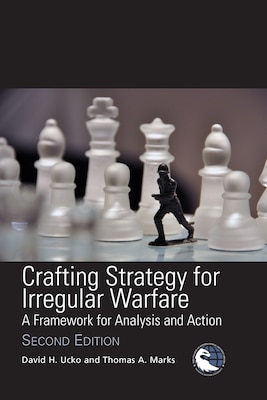
Crafting Strategy for Irregular Warfare: A Framework for Analysis and Action (2nd Edition)

David H. Ucko and Thomas A. 

The 2018 U.S. National Defense Strategy made headlines by officially downgrading terrorism as a national security priority in favor of “inter-state strategic competition.” Many interpreted the statement as signifying a return to “conventional combat,” yet a closer reading suggests that even state-based competition is likely to be “irregular.” Much like insurgent adversaries, revisionist states blend separate lines of effort to offset military weakness, weaponize narratives to ease strategic progress, and exploit social and political contradictions to undermine and divide target societies. This approach is appealing because it allows for gains that, although incremental, are less likely to face backlash and are therefore more sustainable. Indeed, it was precisely when Russia abandoned this playbook, through its conventional invasion of Ukraine in February 2022, that it succeeded in mobilizing significant local and global resistance, greatly complicating its military and political effort. Thus, for several reasons, irregular warfare is likely to be the strategy of choice for states seeking to contest international order.

The United States, and the West, struggle to understand and respond to irregular warfare, whether by states or nonstate actors. Attempts to master the art have generated much new jargon, ranging from “hybrid war” to “the gray zone,” and most recently “integrated deterrence.” The terminology belies a struggle to overcome entrenched presumptions about war—a confusion that generates cognitive friction with implications for strategy. To inform a better approach, this monograph presents an analytical framework to assess and respond to irregular threats. The framework is based on the pedagogical approach of the College of International Security Affairs (CISA) within the National Defense University (NDU), the only U.S. irregular warfare college. It is designed to cut through the analytical ambiguities of irregular warfare and map such strategies to design an effective counter. Though an analytical framework is no panacea for the malaise facing Western strategy, it is an indispensable starting point for all that must follow.

The Future of Global Economic Power

Seth G. Benzell, Laurence J. Kotlikoff, Maria Kazakova

Which region(s) will come to dominate the world economy? This paper develops the Global Gaidar Model (GGM), a 17-region, 2-skills, 100-period OLG model, to address this and other questions. The model is carefully calibrated to 2017 UN demographic and IMF fiscal data. Productivity growth and its interaction with demographic change are the main drivers of future economic power. Fiscal conditions and automation matter are secondary factors. Our baseline simulations, which forecast productivity growth using each region’s long-term record, predict China and India becoming the world’s top two economic hegemons. GGM also predicts an evolving global savings glut, major reductions in world interest rates, substantial increases in tax rates in China and other regions due to population aging, and permanent differences in regional living standards. Our findings are, however, highly sensitive to productivity growth. If productivity growth continues at each region’s very recent pace, India will account for one third of 2100 world output and China for over one fifth. The US output share will grow slightly. Under other scenarios, productivity growth in China and India dramatically slows; Sub Saharan Africa’s sky rockets, leaving China’s plus India’s 2100 output share at only 16 percent and Africa’s at an astounding 17 percent.

Kevin Rudd’s The Avoidable War: The Dangers of a Catastrophic Conflict between the U.S. and Xi Jinping's China

Susan Thornton, Rory Medcalf, Joseph Chinyong Liow

Susan Thornton is a Senior Fellow and Visiting Lecturer at Yale Law School (United States). She is a retired senior U.S. diplomat with almost three decades of experience with the U.S. State Department in Eurasia and East Asia.

Rory Medcalf is Head of the National Security College at the Australian National University (Australia) and author of Indo-Pacific Empire: China, America and the Contest for the World’s Pivotal Region (2020).

Joseph Chinyong Liow is the Dean of the College of Humanities, Arts, and Social Sciences at Nanyang Technological University (Singapore).

Carla P. Freeman is a Senior Expert on China at the United States Institute of Peace (United States). Previously, she was a member of the China Studies faculty at the Johns Hopkins School of Advanced International Studies (SAIS), where she also directed the SAIS Foreign Policy Institute. Dr. Freeman specializes in China’s foreign policy, nontraditional security issues, and U.S.-China relations.

THE FIVE REASONS WARS HAPPEN

Christopher Blattman

Whether it is Russian President Vladimir Putin’s threats of nuclear strikes or Chinese belligerence in the Taiwan Strait, the United States seems closer to a great power war than at any time in recent decades. But while the risks are real and the United States must prepare for each of these conflicts, by focusing on the times states fight—and ignoring the times they resolve their conflicts peacefully and prevent escalation—analysts and policymakers risk misjudging our rivals and pursuing the wrong paths to peace.

The fact is that fighting—at all levels from irregular warfare to large-scale combat operations—is ruinous and so nations do their best to avoid open conflict. The costs of war also mean that when they do fight countries have powerful incentives not to escalate and expand those wars—to keep the fighting contained, especially when it could go nuclear. This is one of the most powerful insights from both history and game theory: war is a last resort, and the costlier that war, the harder both sides will work to avoid it.

When analysts forget this fact, not only do they exaggerate the chances of war, they do something much worse: they get the causes all wrong and take the wrong steps to avert the violence.

The Weakness Behind China’s Strong Façade

Bonny Lin and Joel Wuthnow

In late October, Chinese leader Xi Jinping kicked off the Chinese Communist Party’s 20th Party Congress—a twice-a-decade, agenda-setting conclave of the party’s key leaders—with a report that touted China’s achievements and laid out a vision for the years ahead. In a move that was widely expected, Xi extended his own rule. But he surprised even the closest China watchers by unveiling a roster of leaders in which his confidants now occupy all the top positions within the party and state apparatus. Using direct and forceful language, Xi consolidated his hold on power and projected a strong and ambitious China to the world.

But the façade of a confident and robust Xi masked deep anxiety. Xi sees China hemmed in on all sides and facing intensifying security threats. This anxiety is driven by Beijing’s perception of a hostile Washington, its problematic relations with its neighbors, and the fact that the Chinese People’s Liberation Army still has a long way to go to become a force capable of fighting and winning local wars—never mind larger conflicts. Such a bleak outlook motivated Xi’s selection of new military leaders, underscored the urgency with which he has pressed the PLA to modernize, and resulted in a daunting list of tasks that the PLA must meet in the years ahead. Indeed, Xi’s insistence on Chinese military strength at the party congress was in truth an admission of weakness: China cannot yet defeat its rivals, and Beijing knows it.

One facet of China’s unrestricted hybrid war on America — TikTok

Laurence F Sanford

TikTok is a worldwide social media platform app with 1 billion active users who enjoy its easy yet sophisticated video sharing. It has become a major player in targeted advertising by its ability to collect sensitive personal data from users without their knowledge.

TikTok has 100 million American users, up 800% since 2018. ByteDance, headquartered in Beijing, China, founded TikTok in 2016.

Sensitive personal data from users collected by TikTok is a national security threat to America due to the 2017 Chinese National Intelligence Law, which states, “any organization or citizen shall support, assist and cooperate with the state intelligence work.” The collection of personal data on the enemy (United States citizens) is of strategic value.

The U.S. military plan to keep ISIS down: Infrastructure

LARA SELIGMAN, ALEXANDER WARD, MATT BERG and LAWRENCE UKENYE

The focus may be on the midterms and the Russia-Ukraine war, but the Pentagon is quietly starting to build infrastructure in Syria for a long-haul fight with the Islamic State.

Roughly 900 special forces are still working overtime to help local forces hunt ISIS remnants to keep the terrorist group at bay. The Department of Defense’s latest weapon of choice, though, is improved facilities and services so ISIS can’t break out the 10,000 or so former fighters languishing in crumbling detention centers across Syria.

ISIS fighters have targeted these areas multiple times in recent months, most brazenly attacking the Hasakah prison in northeastern Syria in January. Scores of prisoners escaped during the 10-day battle that ensued.

“We know that ISIS sees the detention centers, the detainee population, as the path to reconstitute its ranks,” said one defense official, who was granted anonymity to speak candidly about the situation. “So even though ISIS doesn’t hold territory… the inspiration and the will to reconstitute is not going away.”

JUST IN: Emerging Tech Essential for Logistics in Contested Battlespace

Josh Luckenbaugh

WASHINGTON, D.C. — As the Defense Department looks to build a joint force capable of operating in a contested logistics environment, it must harness advanced technology to address this challenge, officials said.

According to the 2022 National Defense Strategy, “The most comprehensive and serious challenge to U.S. national security is [China]’s coercive and increasingly aggressive endeavor to refashion the Indo-Pacific region and the international system to suit its interests and authoritarian preferences.”

Given China’s rapidly increasing military capability and the vastness of the Indo-Pacific, the region presents a unique logistics challenge in a potential conflict, the deputy commander of U.S. Indo-Pacific Command Marine Corps Lt. Gen. Steve Sklenka said.

“We're going to be operating in an environment unlike anything any of us have ever experienced,” Sklenka said during a panel discussion hosted by the National Defense Industrial Association and the Institute for Defense & Business Nov. 9.

Kyrgyzstan and Tajikistan Descending Into Chaos and Full-Scale War

Paul Goble

What had been a long-running local conflict between Kyrgyzstan and Tajikistan regarding the delimitation of borders and the fate of exclaves has now expanded over the past two weeks to include major military units and the targeting of infrastructure deep within the territory of both countries. As a result, the chance for a full-scale war between the two Central Asian countries has become ever more likely (see EDM, September 23; Ia-centr.ru, October 30). At the same time, a potential agreement resolving border disputes between Kyrgyzstan and Uzbekistan has now sparked protests by Kyrgyzstani citizens opposed to the accord, which threatens to further destabilize the already troubled country and possibly drive it into war (Cabar.asia, November 1). These developments would be serious enough on their own, but they have been compounded by the meddling of outside powers, including Russia, China and the United States (see EDM, February 15, June 22, October 25), as well as the growing threat emanating from Afghanistan for Tajikistan most directly but also for Kyrgyzstan and other parts of Central Asia (see EDM, September 20).

While the Kyrgyzstani-Tajikistani conflict is intertwined with the Kyrgyzstani-Uzbekistani clash, it is far more likely to lead to a major war than the latter, according to Aleksandr Knyazev, a specialist on Central Asia at St. Petersburg State University (Ia-centr.ru, October 30). Knyazev points out that the border clashes between Kyrgyzstan and Tajikistan have not only increasingly involved regular army units from both sides but have also led to the arming of both populations, something that raises the possibility of a partisan war in either country—one that could resemble the anti-Soviet Basmachi movement in the 1920s and 1930s. But what is most worrisome, he says, is that both countries are using drones and other long-distance weaponry to attack regions far from their shared border, including as distant as the Pamirs in southern Tajikistan on its border with Afghanistan.

Russia’s Position in Central Asia Continues to Slip

Stephen Blank

A major casualty of Russia’s full-scale aggression against Ukraine has been its weakening position and leverage in Central Asia. In truth, this war has plainly demonstrated Moscow’s risky imperial impulses are clearly damaging the region. The most obvious example of the region distancing itself from the Kremlin is Kazakhstan, which has repeatedly asserted its independence from Russia (Trendsreserach.org, August 26). But more recently, other Central Asian states have followed suit. For example, Kyrgyzstani analysts have reported a distinct cooling of ties (The Diplomat, October 11). Indeed, Kyrgyzstani President Sadyr Japarov cancelled joint military drills with the Collective Security Treaty Organization (CSTO) due to Russia’s support for Dushanbe against Bishkek in the controversies over their shared border; opposed the railroad project to connect Kyrgyzstan, Uzbekistan, and China; as well as decried Russia’s overall colonial hauteur directed against Kyrgyzstan (if not all of Central Asia).

Similarly, Tajikistani President Emomali Rahmon, normally a dependable Russian client, publicly upbraided Russian President Vladimir Putin for not respecting “small states” and for not paying sufficient attention to the needs of all the Central Asian states (Al Jazeera, October 18). He also complained that Moscow did not treat Tajikistan as an equal strategic partner. Finally, Rahmon further lamented that Russian businessmen only care about hydrocarbons and are not helping develop Tajikistan’s economy. These signs of common disapproval of Russian policy and the willingness to reprimand Russia and Putin publicly clearly derive inspiration from Kazakhstan’s example, which, like these actions of regional assertiveness, also continues to affirm its more independent course.

China’s Dominance Over Critical Minerals Faces New Challengers

Bruce Shen

It was only 10 months ago that François-Philippe Champagne, Canada’s industry minister, waved through the acquisition of Canadian miner Neo Lithium by China’s state-backed Zijin Mining Group. Brushing aside national security concerns, Champagne pointed to Neo Lithium’ assets in Argentina and assured skeptics that Neo Lithium is “really not a Canadian company.”

Chinese miners may have interpreted the deal as a welcome signal that they could continue buying up Canadian minerals unimpeded. Their relief would turn out to be short-lived.

In a dramatic twist, Ottawa announced on October 28 that foreign state-owned firms that pursue deals in Canada’s critical minerals sector would from now on “be approved on an exceptional basis.” A week later, Champagne ordered three Chinese firms to divest from three Canadian lithium miners, including two that operate in Argentina.

Pentagon: Russian Invasion of Ukraine a ‘Massive Strategic Failure’

Trevor Filseth L

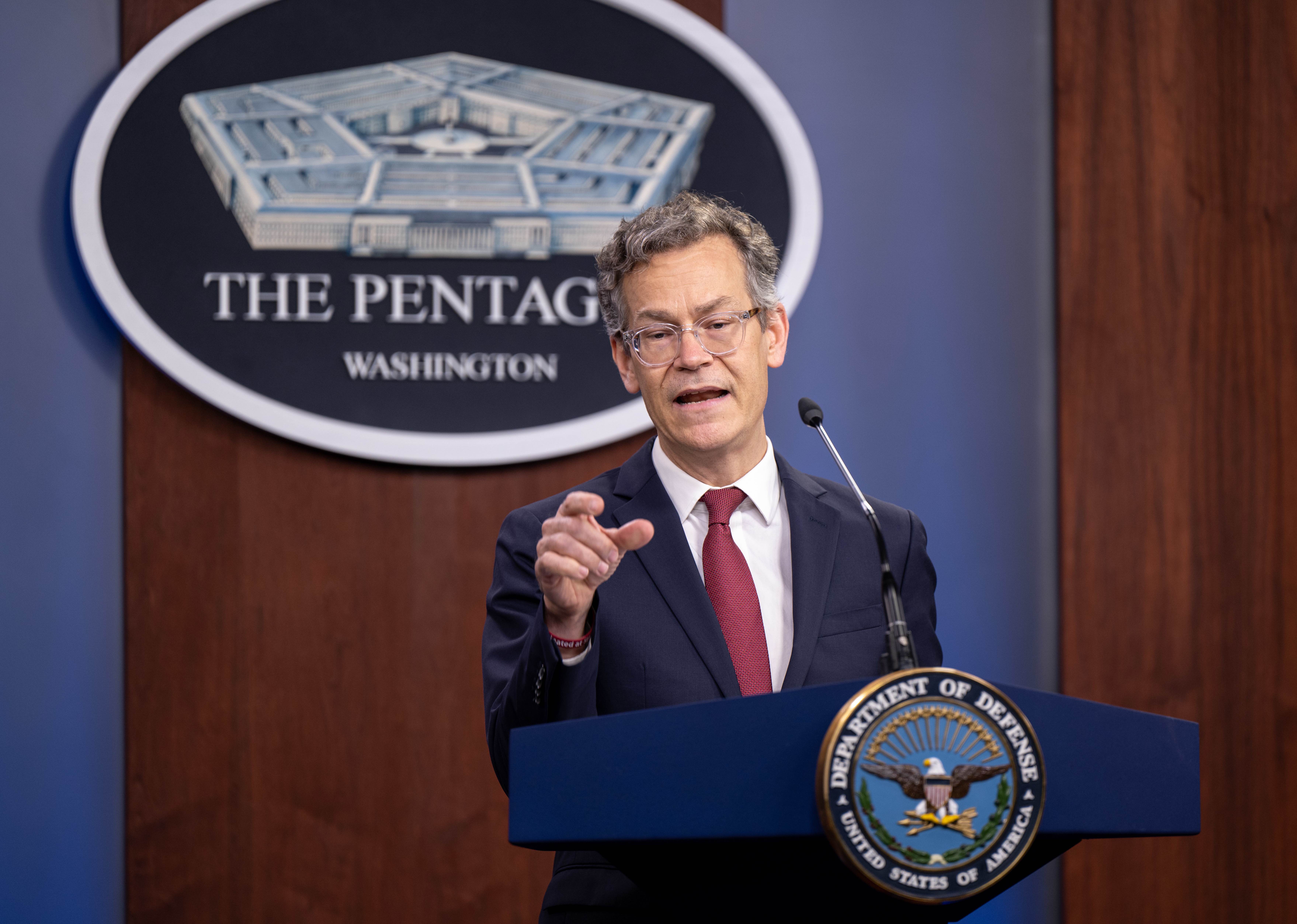
U.S. undersecretary of defense for policy Colin Kahl announced on Tuesday that the Russian military had lost more than half of its main battle tanks during its ongoing invasion of Ukraine, describing the war as a “massive strategic failure” and asserting that the Kremlin would be far weaker after the conflict ended.

During a scheduled press briefing, Kahl suggested that Russian forces had “probably lost half of their main battle tanks” during the war, which is now in its ninth month. He observed that these losses could not be easily replaced by the Russian military, noting that the country would consequently “emerge from this war weaker than it went in.”

Kahl assigned much of the blame for the disaster to Russian leader Vladimir Putin, who he said had ordered the invasion of Ukraine in order to “extinguish” the country’s independence. The undersecretary emphasized that the fight in Ukraine had global ramifications, chiefly regarding the consequences of the use of military force around the world. He noted that most nations had participated in an international order since 1945 that did not allow for the invasion and annexation of other nations’ territory, a key cause of World War II and consequently a major prohibition in the United Nations Charter.

Iranian Drones Are Changing the Battlefields of Eurasia

Sine Ozkarasahin

On October 10, Iranian loitering munitions rained over Ukraine’s urban centers, including Kiev. Two weeks later, Israeli forces struck an Iranian drone factory in Syria (Al Arabiya, October 23). This demonstrated how Iran’s drone program is now beyond Iran, both in terms of production and operational impact. Iran has become a drone-exporting nation and Iranian drones are creating new flashpoints in different geopolitical axes.

Tehran’s drone program is hardly new, however. In fact, it dates back to the 1980s war of attrition with Iraq and rests on a decades-long significant research and development (R&D) effort. Iran’s unmanned aerial vehicles (UAV) strategy is aggressive (Farsi Al Arabiya, April 23, 2021). It mainly focuses on utilizing UAVs to support the government’s capabilities and strengthen its proxy forces abroad. Led by the Islamic Revolutionary Guard Corps (IRGC) and its drone-maker Qods Aviation Industries (QAI), some of Iran’s existing drone technologies are developed from reverse-engineering Western systems that have crashed or landed on or near Iranian territory (including the ones allegedly intercepted or captured near its coast). For example, some of the Iranian government’s most sophisticated systems, including the Shahed-141 and 191, are modeled after the American RQ-171 Sentinel UAV that crashed in Iran back in late 2011 (Iran Press, December 16, 2020).
Defend. Resist. Repeat: Ukraine’s lessons for European defence

Hanna Shelest

Introduction

Ukraine’s response to the Russian invasion holds vital lessons for the rest of Europe. Kyiv has placed cross-society resistance at the heart of its national defence, bringing all military and security agencies under a single command, assisted by support from the civilian population. Since 2014, the country has transformed its armed forces, upgrading logistics and communications and empowering mid-level officers; put in place a network of reservists; and taken measures to ensure Ukrainian society’s broader resilience to crises. It built this approach both on the adoption of NATO best practices and on a unique movement of volunteers who raise funds to support the war effort, merging defence and measures to increase national resilience into a single system.

This constitutes a ‘third way’ between the ‘total defence’ model of Sweden, Finland, Singapore, and Switzerland, which brings together military and civilian actors in a whole-of-society approach to security; and the strongly hierarchical model of the United States, Russia, and China, where decision-making is centralised in the political leadership. The total defence approach concentrates on defence and deterrence, while Ukraine’s approach also prioritises resilience – including a comprehensive but agile coordination of a variety of forces within and beyond the government.