16 November 2022

How to Slow Climate Change While Fighting Poverty

Rabah Arezki

This year’s U.N. Climate Change Conference, or COP27—which opened on Nov. 6 in Sharm el-Sheikh, Egypt—has been called “Africa’s COP.” Voices from developing economies, most prominently Barbadian Prime Minister Mia Mottley, have become louder in demanding that richer countries compensate them for “loss and damage.”

That term, used in climate negotiations, refers to the irreversible consequences caused by climate change to which poor countries or communities cannot adapt. When options to adapt exist, they are not affordable to these countries or communities. The debate over loss and damage is occurring at a time when the future of traditional aid is in doubt. Indeed, political support for aid budgets has been dwindling.

Donor countries have increasingly been under pressure from a series of crises—from the global financial crisis in 2008 to the COVID-19 pandemic to Russia’s war in Ukraine—which have raised their debt levels. Fiscal and monetary space is increasingly limited, and taxpayers are facing rising costs of living. Politicians in advanced economies will increasingly face the difficult choice between giving citizens more financial support at home and providing aid internationally.

TikTok Time Is Running Out

Peter Schweizer

At a time when an invasion of Taiwan by Communist China looms ever larger, why worry about TikTok?

Targeted at American teens, TikTok is a mobile app for sharing short videos, owned by a Chinese company called ByteDance. After five short years on the market, it has more than one billion users worldwide. The app has lived under deep suspicion for much of that time, as American cyber-security and counter-intelligence experts have warned about its enormous reach and direct connections to the Chinese Communist Party.

During the administration of President Donald Trump, the White House considered an outright ban on the app. Senators as diverse as Charles Schumer (D-NY) and Josh Hawley (R-AR) led the charge to ban it or force its parent company to sell it. Nothing ever came of that push, and sale negotiations between ByteDance and both Microsoft and Oracle failed to reach a deal. The only concession made was that today, internet traffic to and from TikTok in the US supposedly flows only through servers owned by Oracle, which is paid by ByteDance to manage the app within the US.

IP22061 | 20th CCP Congress: Key Storylines and the Future of China

Benjamin Ho

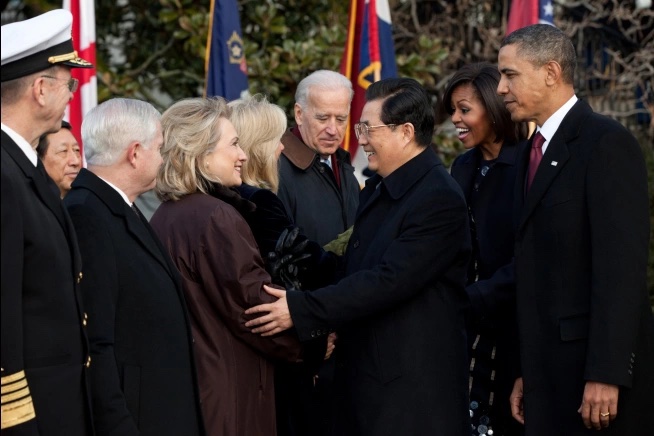
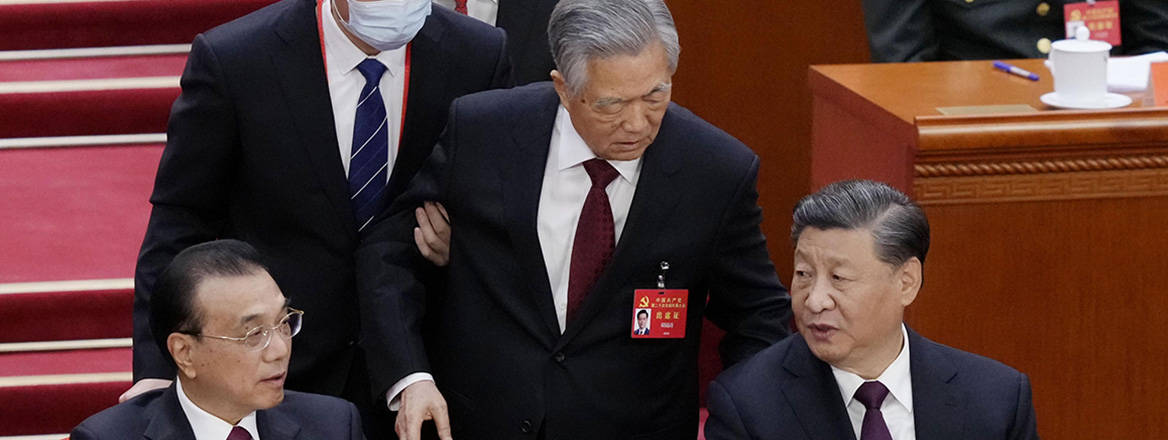
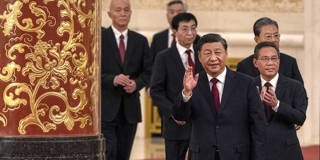
To many international observers, the week-long 20th congress of the Chinese Communist Party (CCP), held from 16 to 23 October 2022, will be best remembered for President Xi Jinping’s thorough consolidation of power within the party. This was symbolically evidenced by the image of a forlorn-looking former Chinese president Hu Jintao being escorted out of the meeting on the last day. Beyond this, however, what were some of the key storylines that have emerged in the course of the week-long meeting? And, what would they mean for the future of China?

Political Allegiance above All

Hindsight is always 20/20, and there were all sorts of speculation as to who would make the final list of the CCP’s Politburo Standing Committee. The final line-up however suggested a more straight-forward selection logic: political allegiance to Xi trumps everything else. Whether there was any horse-trading, compromise or concessions behind the scenes would never be known, but it would seem that in the final reckoning those who would lead China into the future are those who demonstrated loyalty to Xi in the past.

The new era of decoupling, deglobalisation and economic war

Graeme Dobell

China’s President Xi Jinping and US President Joe Biden give fresh shoves to the decoupling that will define this new world. Decoupling of trade and tech shapes the contours of strategic competition.

Biden last month lunged at Beijing’s throat by banning the sale of semiconductors and chip-making technology to China.

‘A superpower declared war on a great power and nobody noticed,’ was Edward Luce’s comment in the Financial Times. Biden had launched a ‘full-blown economic war on China—all but committing the US to stopping its rise—and for the most part, Americans did not react’.

America’s reaction was relatively low key because elements of the world being born are already the established reality. Given the reality, US policy responses follow.

How to defeat Russia and prevent nuclear armageddon with one weird trick

Rafael Loss

Three weeks before Russia launched its full-scale invasion of Ukraine, I suggested there “would not be a nuclear war, but a war with an undeniable nuclear dimension.” This remains true today – despite some recent claims to the contrary. The risk of nuclear escalation may have increased since 24 February, but it is still extremely remote. Genocide, however, is a certainty if Western leaders, paralysed by the Kremlin’s nuclear talk, were to abandon Ukraine.

Nuclear rhetoric from Russia has been the norm throughout this war. This should not come as a surprise. Russia’s nuclear weapons are an integral part of its escalation-management toolkit, and frequent referrals to its nuclear potential are standard practice. According to researchers Anna Clara Arndt and Liviu Horovitz, Russia calibrates its nuclear rhetoric in pursuit of three distinct goals: “to deter foreign military intervention; dis­suade foreign aid to Ukraine; and coerce the government in Kyiv”.

Defend. Resist. Repeat: Ukraine’s lessons for European defence

Hanna Shelest

Introduction

Ukraine’s response to the Russian invasion holds vital lessons for the rest of Europe. Kyiv has placed cross-society resistance at the heart of its national defence, bringing all military and security agencies under a single command, assisted by support from the civilian population. Since 2014, the country has transformed its armed forces, upgrading logistics and communications and empowering mid-level officers; put in place a network of reservists; and taken measures to ensure Ukrainian society’s broader resilience to crises. It built this approach both on the adoption of NATO best practices and on a unique movement of volunteers who raise funds to support the war effort, merging defence and measures to increase national resilience into a single system.

This constitutes a ‘third way’ between the ‘total defence’ model of Sweden, Finland, Singapore, and Switzerland, which brings together military and civilian actors in a whole-of-society approach to security; and the strongly hierarchical model of the United States, Russia, and China, where decision-making is centralised in the political leadership. The total defence approach concentrates on defence and deterrence, while Ukraine’s approach also prioritises resilience – including a comprehensive but agile coordination of a variety of forces within and beyond the government.

China’s Diaspora Policy under Xi Jinping


China estimates the number of people of Chinese origin outside the People’s Republic to be 60 million. Beijing considers them all to be nationals of China, regardless of their citizenship.

Xi Jinping views overseas Chinese as playing an “irreplaceable role” in China’s rise as a world power. Beijing is working hard to harness overseas Chinese resources for its own goals in the fields of economics, science and technology, as well as diplomacy and soft power.

Beijing also expects people of Chinese origin in Germany to deepen rela­tions between China and Germany. But not only that: As “unofficial ambassadors”, they are also expected to spread China’s narratives to the German public, defend China’s “core interests”, and help with the trans­fer of knowledge and technology to China.

Ukraine’s drone raid on Russian naval base was tactically innovative but not revolutionary

Alessio Patalano

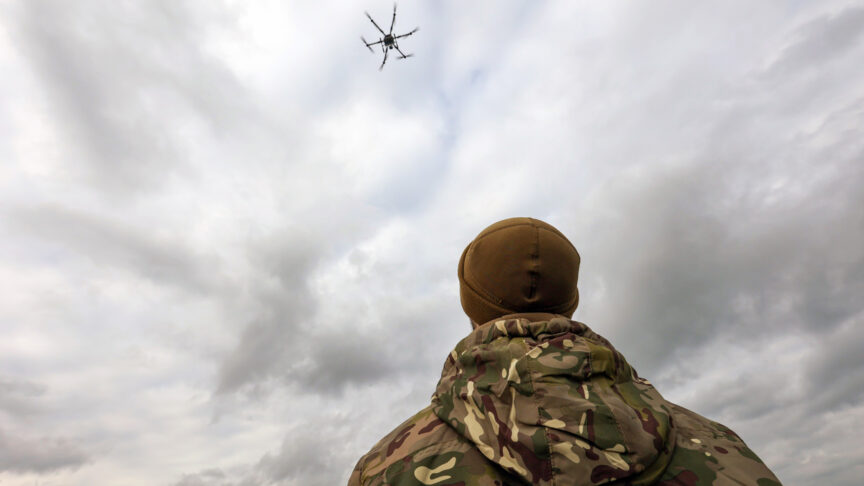
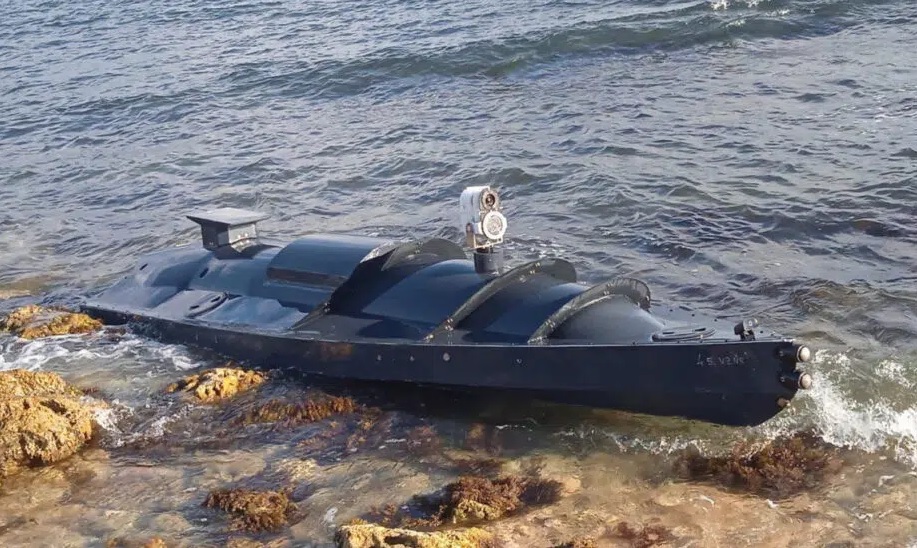
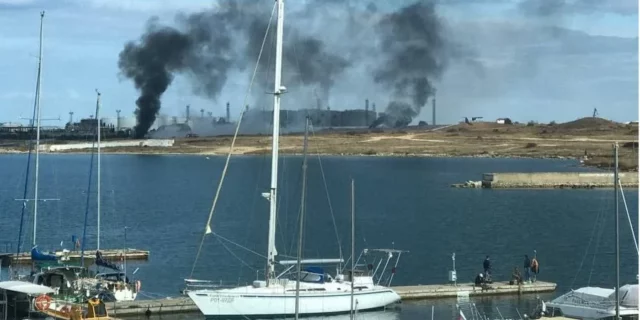
Last week the naval war in Ukraine came back to international attention. In a theatre that first defined by the Russian assault against Snake Island in the early stages of the invasion and then by Ukraine’s sinking of the cruiser Moskva, Russian sources report a new blow. This time, Ukrainian surface and air drones conducted a daring raid on the Crimean port of Sevastopol where Russia’s Black Sea Fleet is based.

Authorities in Moscow claim that the uncrewed capabilities involved in the attack were all neutralised, though they also admitted minor damage to a minesweeper and to harbour defences. With limited information available on overall battle damage, unlike in the Moskva’s case, the extent of the Ukrainian success this time remains unclear.

Nonetheless, unverified video footage of the events suggests that the attack was much more consequential than Russia claims. Images show uncrewed surface vessels reaching their targets, including the Black Sea Fleet’s flagship since the Moskva was sunk, the frigate Admiral Makarov. Images on Russian social media in the aftermath of the raid show the frigate damaged at sea. If confirmed, this would indeed be a significant result.

The End of the China Illusion

Horst Fabian and Andreas Fulda

A press photo from the closing day of the 20th Chinese Communist Party (CCP) Congress has captured the global imagination. It shows the moment former General Secretary Hu Jintao (2002–12) is forcibly removed from the main stage. The highly symbolic picture represents China's 'Fรผhrer era', which began in 2012. It is also a public repudiation of China's so-called 'reform and opening up era', which lasted from 1978 until 2012.

What had happened before Hu was walked off the stage, and why does this incident matter? A video recording by Singapore's CNA shows that he attempted to access a red folder in front of him. Hu was prevented from doing so by Li Zhanshu, the outgoing Chairman of the Standing Committee of the National People's Congress.

The Russian Air War and Ukrainian Requirements for Air Defence

Dr Justin Bronk, Nick Reynolds and Dr Jack Watling

Executive SummaryRussian Aerospace Forces (VKS) conducted significantly more extensive fixed-wing strike operations during the first days of the invasion than has been previously documented, while Ukrainian ground-based air-defence (GBAD) capabilities were suppressed by initial attacks.

During this period, Ukrainian fighter aircraft inflicted some losses on VKS aircraft but also took serious casualties due to being totally technologically outmatched and badly outnumbered.

Russian fighters have remained highly effective and lethal against Ukrainian aircraft near the frontlines throughout the war, especially the Su-35S with the R-77-1 long-range missile and, in recent months, the Mig-31BM with the R-37 very long-range missile.

From early March, the VKS lost the ability to operate in Ukrainian-controlled airspace except at very low altitudes due to its inability to reliably suppress or destroy increasingly effective, well-dispersed and mobile Ukrainian surface-to-air missile (SAM) systems.

15 November 2022

Probing the Intersection of Religion, Gender, and Political Violence

Luke M. Herrington

Despite enormous geographical, historical, and denominational differences, research on religion has convincingly and consistently demonstrated that women’s religious experiences are quite different from those experienced by men (e.g., Dionne, Jr., et al. 2014; Fahmy 2018; Hacket 2016; Marshall 2010). Likewise, research on the gendered dimensions of political violence demonstrates that women and other sexual minorities are uniquely vulnerable during spasms of international conflict and civil war (e.g., Hynes 2004). Given these two facts, it should be wholly without controversy to suggest that men and women may have distinct experiences when it comes to such phenomena as religious violence, religious persecution, or religious oppression. Yet, situated as they are on their relatively isolated islands of theory, some feminist researchers and scholars of international religious freedom do little more than talk past each other where the nexus of religion, gender, and political violence is concerned. This is problematic for multiple reasons, chief of which may be that an inability to dialogue prevents the field from achieving a more general understanding of religious persecution on the one hand, and gender-based or sexualized violence on the other. More specifically, their inability to dialogue results in theoretical, conceptual, and statistical ambiguity, as it obscures important differences that likely exist between gendered violence targeted against religious minorities and religiously motivated violence targeted at women and people identifying as lesbian, gay, bisexual, transgender, or queer (LGBTQ).

Transnational Corporations, State Capacity and Development in Nigeria

Olusola Samuel Oyetunde

In the past few decades, transnational corporations (TNCs) have become significant political and economic actors in the international political economy due to advances in globalisation, leading to growth in their power and influence (Macleod and Lewis, 2004). However, their contributions to contemporary world development are among the most intensely debated issues in the 21st century. While some studies acknowledge the influential roles played by the TNCs in transforming the global economy, especially in terms of production internationalisation and Global Value Chains (Whitfield et al., 2020), others contend that the TNCs have created imbalances in world development trajectories (Wei, 2010; Ahen, 2019). Notwithstanding these contradictory perspectives, TNCs continue to exercise significant global socio-political influence, thereby making it crucial to assess the developmental roles of the TNCs in order to understand if they are conducive or incompatible with the development of their host countries.

Using Nigeria as a case study and the dependency theory as an analytical framework, this essay argues that the ability of TNCs to contribute to a country's structural transformation and development largely depends on states’ capacity to regulate their activities and hold them accountable. Although TNCs are essential actors in Nigeria’s developmental space, they serve as mechanisms of exploitation and underdevelopment (Eaton, 2017; Stephens, 2017). While Nigeria has benefited from the TNCs through infrastructural development and employment creation, their activities have produced social ills, such as increased poverty levels, political instability, environmental degradation, and human rights violations, due to the absence of an effective regulatory framework (Morvaridi, 2008; Eze, 2017). Consequently, these challenges have exacerbated development woes and deepened socio-economic inequality in Nigeria. However, the lack of state capacity to control the TNCs results from Nigeria’s peripheral position in the international division of labour and the rent-seeking attitude of some Nigerian elites, who, because of their vested interests, sometimes use state power to advance the interests of foreign capital (Kohli, 2004; Watts 2004). This has made the role of the TNCs incompatible with Nigeria’s development, as the adverse effects of their activities outweigh the positives.

Review – The Age of AI

Arun Teja Polcumpally

AI will indeed become ubiquitous. The discussions on whether Artificial Intelligence (AI) is good or bad are no longer useful. The time has come for discussions on how to shape AI development as per the requirements of a nation (Kalluri, 2020). The geopolitical debates anchored in nuclear weapons have shifted to AI. In the era of such unprecedented changes, an analytical account of the socio-political impacts of AI is required. The book The Age of AI: and our Human Future allows the general public to understand the impact of AI on society and global politics. Interestingly, it builds on the conclusions put forward in The Third Wave (Toffler, 1981), Future Politics (Susskind, 2018), and Superintelligence (Bostrom, 2014). It reiterates the argument that AI can be politically disruptive. Validating this argument requires expertise in foreign affairs and technological development, and the authors of The Age of AI meet these qualifications.

Henry Kissinger has published American foreign policy, the Vietnam fiasco, and the rise of China. With this book, he picks up the next geopolitical shift anchored in digital technologies. Lacking the required expertise in technology, he joins Eric Schmidt, who is well known for his long executive stint at Google, and Daniel Huttenlocher from the Massachusetts Institute of Technology. This book introduces AI disruption by elaborating on its use in medical science, pharmaceutical research, social compositions, liberal values, and the defense industry. The authors, coming from government, industry and academia do not subscribe to the idea that AI can take away human intelligence. The excerpt below provides a peek into their conceptual position.

Measuring preparedness: Are public health systems ready for the next pandemic?

Sidebar

When COVID-19 was declared a pandemic, many nations—including highly resourced ones—found themselves unprepared to deal with the rapidly unfolding public health crisis. Underlying vulnerabilities that had long predated the pandemic—such as health inequalities and flawed communication between public health and healthcare delivery systems—were brought to the fore. Many response plans that had looked good on paper now failed to deliver in practice. The upshot: public health systems were not as resilient to acute threats as had been assumed. Indeed, criticism surrounding the initial response by some national public health authorities to monkeypox1 —which the World Health Organization declared a Public Health Emergency of International Concern on July 23, 2022, suggests there is more work to be done.

Many governments are investing in strengthening their pandemic preparedness. But how will they know if those investments will prove effective when the next crisis strikes? To help leaders gauge and track their state of readiness, identify opportunities for improvement, and ensure adequate funding continues to flow toward these efforts, McKinsey designed a Pandemic Preparedness Survey. In addition, this article outlines four action areas to help leaders contextualize survey findings, as well as broader lessons from the COVID-19 pandemic, to ensure that public health systems are ready for whatever crises the future brings.

Can India Rein In Putin’s Worst Impulses in Ukraine?

Mohamed Zeeshan

Ahead of Indian Foreign Minister Subrahmanyam Jaishankar’s visit to Moscow this week, Russian President Vladimir Putin was engaged in a significant but welcome flip-flop in Ukraine.

Late last month, Putin accused Ukraine of attacking Russia’s naval fleet and suspended a deal that allowed Ukrainian grain to transit through the Black Sea. But four days later, Putin backtracked on that threat and said that the deal was back on.

Putin’s excuse was that he had received assurances from Ukraine that it won’t use the grain corridor to attack Russian forces. But in a provocative and insightful essay for the Washington Post, military historian Max Boot argued that the U-turn might have been provoked by diplomacy from unlikely quarters. “It looks as though Putin buckled to pressure from Turkey and, more broadly, from developing nations that rely on Ukrainian grain to feed their people,” he wrote. “Putin didn’t want to risk the opprobrium that he would face from sinking cargo ships carrying grain to feed some of the world’s poorest people.”

India, ASEAN Elevating Ties to a Comprehensive Strategic Partnership

Niranjan Marjani

India’s Vice President Jagdeep Dhankhar is visiting Phnom Penh, Cambodia from November 11 to 13. During his visit he will attend the ASEAN-India Commemorative Summit on November 12 and the 17th East Asia Summit on November 13. Both sides are expected to review the status of their strategic partnership during the summit.

This year marks the 30th anniversary of ASEAN-India relations and is being celebrated as the ASEAN-India Friendship Year. India’s focused engagement with ASEAN started in 1992 when India launched its Look East policy and became a sectoral dialogue partner of ASEAN. In 1996 India became a dialogue partner and subsequently a summit level partner in 2002. At the 20th Commemorative Summit held in New Delhi in 2012, India-ASEAN relations were elevated to a strategic partnership. In 2014, India revamped the Look East policy as the Act East policy to add strategic focus to engagements with ASEAN. During the summit in Phnom Penh, India will reportedly be granted the status of a comprehensive strategic partnership by ASEAN.

What Will Japan’s Great Reopening Mean for Immigration Policy?

Maximilien Xavier Rehm

On October 11, 2022, Japan made headlines throughout the world when it reopened its borders to individual tourism and visa-waiver travel. On the same day, the government also scrapped the daily entry cap on international arrivals, which had stood at 50,000 per day. The canceling of the cap, which had been in place for almost the entire duration of the COVID-19 pandemic, also signified the removal of one of the last hindrances to entry for non-tourist entry into Japan.

This normalization of border control policy, which the current government led by Prime Minister Kishida Fumio implemented in stages beginning in March of this year, allows Japan to return to accepting foreign workers. Before the pandemic, the administration of the late Abe Shinzo oversaw a rapid increase in the number of foreigners in Japan. According to data from the Ministry of Justice (MOJ), the foreign population increased by about 900,000 to almost 3 million from 2012 to 2019 – the last year before the pandemic. Abe also implemented numerous reforms to Japan’s immigration control policy, including a points-based scheme to attract highly skilled foreign professionals as well as the 2019 launch of two new resident statuses, Specified Skilled Worker (SSW) i & ii, for low- and medium-skilled workers in 14 industries suffering a labor shortage.

Africa’s Past Is Not Its Future How the Continent Can Chart Its Own Course

Mo Ibrahim

Africa is a vast and abundant continent. Roughly ten times the size of India and three times the size of China, it is home to nearly 18 percent of the world’s population and roughly 30 percent of its mineral resources. With an average per capita GDP of just over $2,000, however, it remains the poorest continent by far. Of the 46 countries the United Nations has rated as the least developed, 35 are African. More than three-quarters of the continent’s population lives in countries where life expectancy, income, and education are well below the global mean. Africa, as the Ghanaian diplomat Kofi Annan once said, “is a rich continent with many, many poor people.”

We Africans are poor for a variety of reasons—some that are of others’ making and some that are of our own. Slavery, colonialism, and the Cold War caused serious damage to African societies and economies, much of which endures. Exclusion from Western-dominated institutions of global governance does still more harm today. But the blame for Africa’s failures cannot be pinned on external forces alone. The continent’s colonial history has another enduring insidious legacy: it gives some African leaders, and too many of Africa’s people, an excuse for not getting their own houses in order and for continuing to blame the West. Misrule, coups, and corruption have hindered progress and wasted many years since independence some 60 years ago. Yet we continue to point the finger at others.

The Ukraine War Is Not World War III

Robert Kelly

Since the start of the Ukraine war in February, there has been a regular current of alarmism and exaggeration among observers in the West. We have heard repeatedly that Ukraine is leading us into a massive conflict, one that might even end with a nuclear exchange between NATO and Russia. The Ukraine war, in this reading, is a great-power war. Russia is fighting not just Ukraine, but the whole West. It is similar to World War I, a general conflict during which all of Europe’s major powers lined up on one side or the other in a war of attrition.

The implication of this analogy is its great danger in the nuclear age. A full-scale great power war, however terrible, did not create an existential risk in the pre-nuclear era. Even though Germany was defeated in World War I, it was not annihilated, nor could it annihilate its opponents. Russia today, by contrast, has a nuclear arsenal, and if the Ukraine war is similar to World War I, then we are on the cusp of World War III with a nuclear adversary. This alarming interpretation appears routinely in the Western debate. If Russia believes it is facing all of NATO, we hear – or if it sits on the edge of a catastrophic defeat – it could go nuclear.
Ukraine War Is a Quagmire, Not a General War

Joint Prepared Statement and Opening Remarks Before the United States Senate Committee on Armed Services, United States Nuclear Strategy and Policy, September 20, 2022

Eric S. Edelman & Franklin C. Miller

Introduction

Chairman Reed, Ranking member Inhofe, members of the Committee, thank you for the opportunity to address the challenges that the United States faces in continuing to deter nuclear war and preserving the tradition of non-use of nuclear weapons that has prevailed globally since 1945. Today the United States faces the most complex configuration of questions about nuclear weapons than it has ever faced since the onset of the nuclear age. Some of these developments are the result of quantitative and qualitative changes in the composition of the nuclear arsenals of the major nuclear weapons states, some from the aspirations of new or prospective nuclear powers, and some arise from the advent of new technologies whose interaction with nuclear weapons may create new uncertainties about strategic stability.

Deterrence and The New Global Environment: What’s New?

The most important new factor is the potential that the U.S. will have to deal with two near nuclear peers simultaneously. For the 40 years of the Cold War the United States was preoccupied with the threats represented by Soviet nuclear forces. Even after the People’s Republic of China tested a nuclear weapon in 1964 the dangers presented by its nuclear forces were mitigated by what most observers concluded was China’s reliance on a minimum nuclear deterrence strategy and then later by the Sino-Soviet split and the ability of U.S. diplomacy to seek better relations with each of the communist power than they had with one another. Today, as Chairman Reed noted last week “We need to seriously consider that we are entering a new, trilateral nuclear competition era” in which the United States and its allies must “deter not one, but two near-peer nuclear adversaries,” a challenge, we would note that it is unprecedented.[1]

The PRC arsenal which experts had estimated to consist of roughly 200 warheads for many years has expanded significantly. Today China disposes of roughly 350 warheads — but that arsenal is expanding rapidly. The most recent report of the Department of Defense on Chinese military power suggests that by 2027 China will have some 700 warheads enroute to nearly 1000 by 2030. Although projections of the growth of nuclear arsenals are always subject to uncertainty commercially available satellite imagery of missile silos being excavated in northern China as well as the PRC’s efforts to expand plutonium production certainly suggest that these projects are well rooted in reality. It is no wonder that STRATCOM commander Charles Richards described the growth of China’s arsenal as “breathtaking” and former Vice Chairman of the Joint Chiefs of Staff General Hyten called it “unprecedented” and suggested that prudence required the U.S. to plan against this growing threat.[2]

China’s quantitative and qualitative nuclear modernization entails not just the growing size of its intercontinental ballistic missile threat but the development of a full nuclear triad on a timeline that is much earlier than most observers anticipated and capabilities that could call “strategic stability” into question. The key developments include the PLA Air Force’s H6N air refuelable bomber armed with air launched ballistic missiles that are likely dual capable as well as the prospective development of the H20 long range strategic bomber. In addition, the deployment of the type 094 SSBNs armed with JL-2 SLBMs provide the PRC with its “first credible, sea-based nuclear deterrent.” Finally, the test last year of what seems to be a Fractional Orbital Bombardments system raises the prospect of a short or no-warning attack – an extremely destabilizing development.[3]

Bad News Politically, Shrewd Move Militarily? What Russia's Kherson Retreat Means -- And What It Doesn't.

Mike Eckel

Even before they pulled off their jaw-dropping counteroffensive in the northeastern Kharkiv region, Ukrainian troops had thrashed Russian forces in the Kherson region 600 kilometers to the southwest, aided by powerful and precise Western weaponry.

Live Briefing: Russia's Invasion Of Ukraine

Since mid-October, the Ukrainians had crept southward along the west bank of the Dnieper River, pushing toward a strategic and symbolic goal: the port city of Kherson. Some of Russia’s most elite units, including paratroopers from the 76th Guards Air Assault Division, made sure it was a grueling advance for them.

On November 9, however, Russian commanders said enough, and ordered the thousands of Russian troops on the Dnieper’s west bank -- up to 30,000, according to a top U.S. general -- to retreat to the east bank. If implemented in full, it would include abandoning the city of Kherson, the only regional capital Russia has seized since its invasion in February. That same day, Ukrainian forces hoisted the country’s flag over Snihurivka, a town that sits on a major road into the city, 60 kilometers south.

Pentagon: Russian Invasion of Ukraine a ‘Massive Strategic Failure’

Trevor Filseth L

U.S. undersecretary of defense for policy Colin Kahl announced on Tuesday that the Russian military had lost more than half of its main battle tanks during its ongoing invasion of Ukraine, describing the war as a “massive strategic failure” and asserting that the Kremlin would be far weaker after the conflict ended.

During a scheduled press briefing, Kahl suggested that Russian forces had “probably lost half of their main battle tanks” during the war, which is now in its ninth month. He observed that the Russian military could not easily replace these losses, noting that the country would consequently “emerge from this war weaker than it went in.”

Kahl assigned much of the blame for the disaster to Russian leader Vladimir Putin, who he said had ordered the invasion of Ukraine in order to “extinguish” the country’s independence. The undersecretary emphasized that the fight in Ukraine had global ramifications, chiefly regarding the consequences of the use of military force around the world. He noted that most nations had participated in an international order since 1945 that did not allow for the invasion and annexation of other nations’ territory, a key cause of World War II and consequently a major prohibition in the United Nations Charter.

What the Midterms Mean for U.S.-China Tech Competition

Vincent J. Carchidi

Technological competition with China was not an issue on most voters’ minds during the 2022 midterm elections. However, American democratic institutions' resilience was frequently linked to these elections. This connection has implications for long-term technological competition between the United States and China.

The Republican Party is currently estimated by NBC to capture a slim majority of 221 seats in the House of Representatives, with seven races undecided. The Senate race in Georgia is heading to a runoff, which may decide control of the chamber as it did in early 2021. These results are unexpected against the backdrop of a “red wave.” But, with a GOP-led House likely, a divided Congress effectively means that President Joe Biden’s legislative agenda has ended, at least for his current term, barring unforeseen breakthroughs in partisan dynamics.

Prior to the midterms, however, the Biden administration and Congress had been on a technology policymaking hot streak.

The US/EU Alliance: Divided We Fall

Rufus Yerxa Kellie Meiman Hock

The strong security alliance between the United States and Europe in opposing Russian aggression has demonstrated why the world needs Transatlantic unity to preserve peace. But we are falling short when it comes to another existential challenge, taking on China’s authoritarian capitalism and the gravitational pull it exerts around the world. Instead, Europe and America are bickering, with irritants ranging from digital trade to industrial policy threatening to unravel more than seventy-five years of shared leadership in global commerce.

Why does that matter? Because responding to the aggression inherent in China’s state-driven economic model is as vital as standing up to military challenges. The threat might be less dramatic, but over time it is insidious and we risk losing the very underpinnings of our free societies. China’s success in deploying vast state power to capture world markets and technological leadership, coupled with its growing military might, is an existential security challenge. China’s rise has also eroded support for open trade—already wavering—in Europe and the United States, especially when coupled with the disruptions of Covid-19, supply chain constraints, and Russia’s war. As a result, our policy focus has turned inward, with reshoring and regionalization the buzzwords of the day.

Yet pulling back from world markets and pinning our hopes on self-sufficiency would be a tragic mistake. World trade is still growing; strategic sectors are globalized. Ignoring this reality and failing to align U.S. and European interests is a dangerous bet. We each need to build economic strength at home and maintain a leading edge in innovation, but not at the expense of disengagement from the battle to maintain our joint global gains.

In that battle, the power of strategic alliances is decisive. We are living in a new reality of “fractured globalization,” where trade policies still matter but play out in realigned spheres of influence with altered trade and investment patterns. Multilateralism will still exist but shaped more by competing blocs than by purely multilateral exercises. Against this backdrop, regional and a la carte alliances reign supreme.

Both Europe and the United States need diverse alliances around the world. But for historical and commercial reasons, the Transatlantic bond must be our indispensable cornerstone, singularly able to play the role of standard bearer for market democracy in a realigning world. As EU trade commissioner Valdis Dombrovskis said in Washington last month, it is “crucial that the EU and US stay on the same page as we face overlapping global challenges.” Neither Europe nor the United States should use a country’s level of democratization as a sole litmus test for a trading relationship, although Europe’s overreliance on Russia for energy has been a difficult lesson for us all. At the same time, authoritarian regimes rejoice when the United States and Europe lose sight of the importance of our alliance—including in the economic realm.

We have encouraged some joy on this score. Some long-standing bilateral troubles have been swept under the rug, but recent steps to join forces have fallen short of true strategic alignment. Even worse, both sides are adopting policies drawing us further into commercial conflict. A glance at the EU push for “digital sovereignty” or restrictions on agricultural imports, to say nothing of U.S. chips policy or its scheme to localize electric vehicle manufacturing, leaves us wondering if either side understands the existential importance of this moment in history, which demands more.

This dynamic undermines our competitiveness, undoing hopes for a shared economic security agenda. Instead, we should deploy mechanisms like the G7 and the U.S./EU Trade and Technology Council (TTC) to reverse this narrative. To be successful, we must grasp the dangers of fighting over local content requirements and data regulations while Rome burns. Choosing proactively to not hit the economic interests of one another demands a sense of urgency and political impetus from the top. Our agenda needs to be bigger and bolder, eliminating discrimination and embracing Transatlantic unity while seeking to make supply chains more resilient and addressing economic pressures at home. Only together can we meet today’s geopolitical threats, and only together (along with allies such as Japan, Korea, and others) can we craft future multilateral trade rules.

By closing gaps in our respective visions of the future geoeconomic order—and not prejudicing one another’s companies—we can navigate this era of great power competition 2.0. It is time to signal to the world that Europe and the United States are aligned, with less daylight than ever before. The alternative is unthinkable.


Russia Threatens to Target Commercial Satellites


On October 27, a senior Russian foreign ministry official warned that commercial satellites “may become a legitimate target for retaliation.” Commercial space systems like SpaceX’s Starlink communications satellites and Maxar’s fleet of imaging satellites are playing a highly visible and compelling role in Ukraine’s resistance to the Russian invasion. From tracking Russian military movements to connecting Ukrainian troops across the battlefield, to identifying humanitarian corridors and collecting evidence to support the prosecution of war crimes, some observers have portrayed it as the first “commercial space war.” With the increasing contribution of commercial space to battlefield outcomes, it is unsurprising that Moscow would seek to interfere with or deny use of this capability.

Q1: What has Russia employed in Ukraine and what else is in its space weapons arsenal?

A1: Russia is believed to have used systems to counter space capabilities (i.e., counterspace weapons) before its forces even set foot in Ukraine. In November 2021, it was suspected of widespread GPS jamming affecting drones that were monitoring the buildup of Russian forces near the Ukrainian border. At the outset of the conflict, Russian forces hacked Viasat, a U.S. company whose ground terminals were purchased by the Ukrainian military to provide secure space-based communications for its forces. Moscow also employed jamming tactics to deny Ukrainians access to Starlink ground terminals. Through these instances, and with likely additional localized GPS jamming, Moscow has attempted to create a more difficult battlespace for the Ukrainian military to operate in.

EU proposes cyber defence plan as concerns about Russia mount

John Chalmers

BRUSSELS, Nov 10 (Reuters) - The European Commission proposed on Thursday two action plans to address the deteriorating security situation following Russia's invasion of Ukraine to bolster cyber defence and to allow armed forces to move faster and better across borders.

The EU executive said Russian cyber attacks on European Union countries and their partners were a "wake-up" call. More action was needed to protect citizens and armed forces, and cooperation with NATO should be stepped up, it said.

"War is back to our borders and the Russia aggression against Ukraine is undermining peace and the international rule-based system globally," EU foreign policy chief Josep Borrell told a news conference to announce the plans.

Separately, NATO Secretary-General Jens Stoltenberg warned of growing cyberspace threats, noting recent attacks against satellites, critical infrastructure and government departments, especially as part of Russia's war against Ukraine.

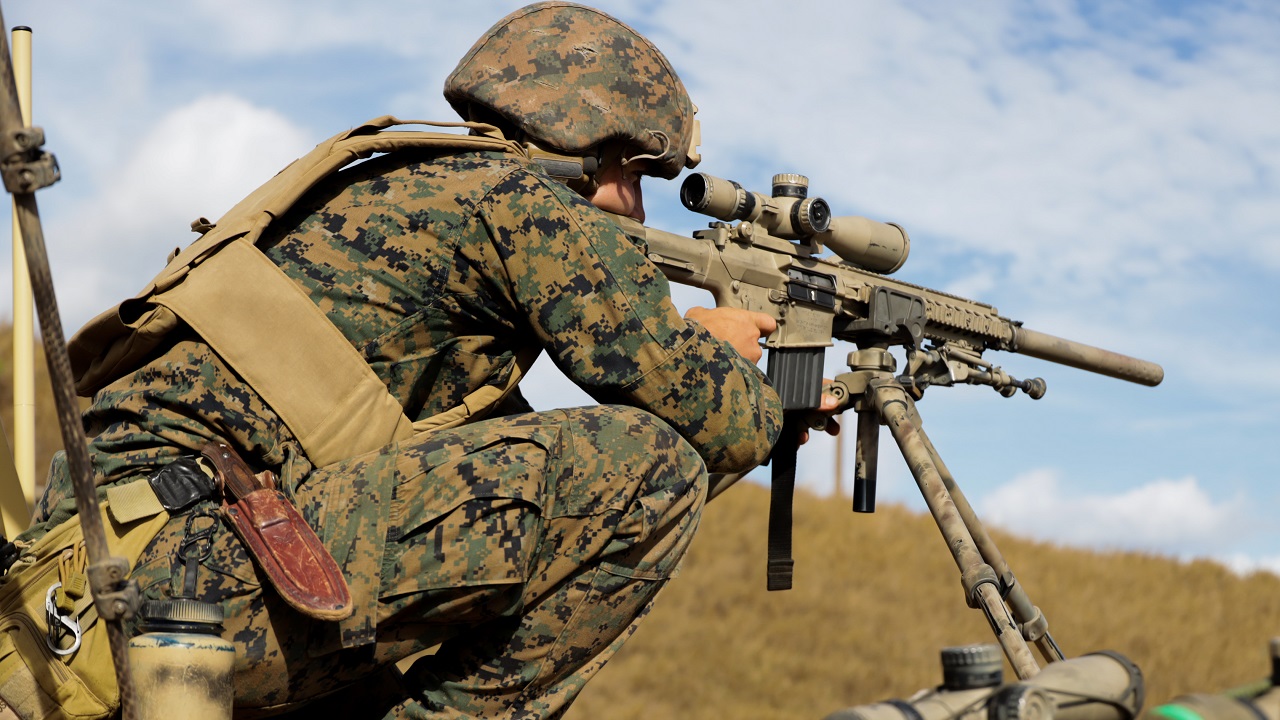
The U.S. Marine Corps Is Facing A Crisis Like No Other


The U.S. Marine Corps and its future is being hotly debated in think tanks around the DC area and the media. What role should the U.S. Marine Corps play in America’s national defense? What tools does it need to take on China?

The face of war is changing rapidly, and the Marine Corps is facing a crisis regarding where it fits in the U.S.’s future national defense strategy, especially against the threat of China. Tellingly, commandant of the Marine Corps, General David H. Berger, said upon assuming command of the branch in 2019 that the Marines were unprepared for the changes coming in the U.S. defense strategy.

While many senior leaders, active and retired, believe that the Marines need to adapt in their time-honored tradition to the emerging threats, they are split on how that should proceed.

Berger wants to get the Marine Corps back to its roots, according to his 2030 Force Design plan. Specifically, he wants the branch to conduct amphibious and land operations in support of naval campaigns to differentiate it from the Army and the special operations community and avoid becoming irrelevant. The Force Deisgn plan will be updated yearly.

Anti-Access Bubbles: How To Stop China From Militarily Dominating Asia?

James Holmes

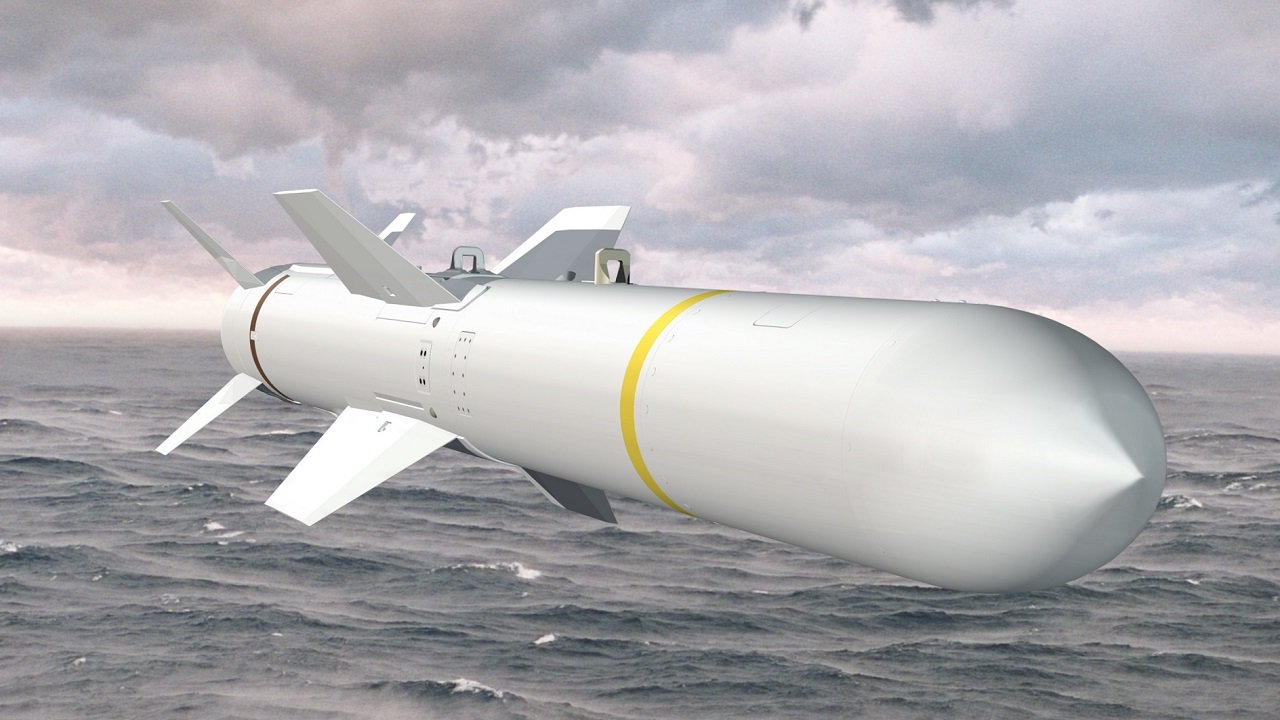
Anti-Access Bubbles: An Idea Whose Time Has Come? Help others help themselves. That’s the gist of a new report out of the London-based Royal United Services Institute (RUSI), Great Britain’s premier think tank on defense and security affairs. If Britain wants to help beleaguered Asian states guard their maritime sovereignty against such predators as China, say coauthors Sidharth Kaushal, John Louth, and Andrew Young, it should supply them with “anti-access bubbles” inflated by anti-ship and anti-air weaponry, sensors, and command-and-control systems.

Yes.

Thus armed, local powers can defend offshore waters and skies apportioned to them by the law of the sea while potentially competing to better effect in the gray zone. The weak can make things tough on a stronger aggressor bent on purloining their marine territory and resources. In effect the RUSI team wants to mimic what China’s People’s Liberation Army (PLA) has done vis-ร -vis the U.S. Navy and affiliated joint and allied forces. The PLA has strewn swarms of low-cost anti-ship weapons around Fortress China while constructing a sea-denial fleet founded on missile-armed submarines and surface patrol craft. PLA rocketeers can try to deter U.S. forces from coming within reach of anti-access weaponry, or make them pay dearly should they defy the threat and venture within range anyway.

Ukraine Got Its Miracle In Taking Kherson Without A Fight (But Winter Is Coming)

Daniel Davis

On August 6 here in 19FortyFive, I published a military assessment entitled, “Ukraine Needs a Miracle to Drive Russia’s Military out of Kherson” in which I argued Kyiv would need three miracles to retake the oblast of Kherson. In light of Ukraine’s recapture of the city of Kherson, its worth reexamining my arguments against how things have played out since. Possibly of greater importance is looking forward to what might come next.
The Fight for Kherson, Explained

To its great credit, Ukraine produced one of the three needed miracles and succeeded, against the odds, in retaking Kherson city. However, capturing the remainder of the oblast will require Kyiv to produce the other two miracles, each progressively more complex than the last.

The first of the three miracles Ukraine needed was for Russia to fail to make changes and adjustments to the Ukrainian offensive in the south so that Zelensky’s troops would be able to overcome the stout defenses. Up until barely two weeks ago, all appearances were that Russia had adjusted to the approaching reality of a Ukrainian drive on Kherson, in that Russia increased the number of troops it had defending the western bank of the Dnipro and reportedly building significant defensive positions in and around the city of Kherson.

Bosch, IBM join forces to seek substitute critical minerals


FRANKFURT/BERLIN, Nov 9 (Reuters) - Germany's Bosch (ROBG.UL) has formed a partnership with IBM to use quantum computing and simulation technology to find alternatives to the rare earths and metals needed for electric vehicles.

The minerals used in magnets in electric motors, membranes in fuel cells for hydrogen technology as well as in aerospace and defence are expensive and often mined in unsustainable ways.

China supplies 98% of European Union demand for magnets made from rare earths, and battery minerals lithium, nickel and cobalt are also almost entirely imported from abroad.

The research cooperation will use quantum computing to explore which different materials could partially or fully replace those currently used, Bosch's corporate research and development chief Thomas Kropf said. The aim is to achieve results within a decade.

Ukraine Launches Unprecedented Drone Attack on Russian Black Sea Fleet’s Sevastopol Headquarters

John C. K. Daly

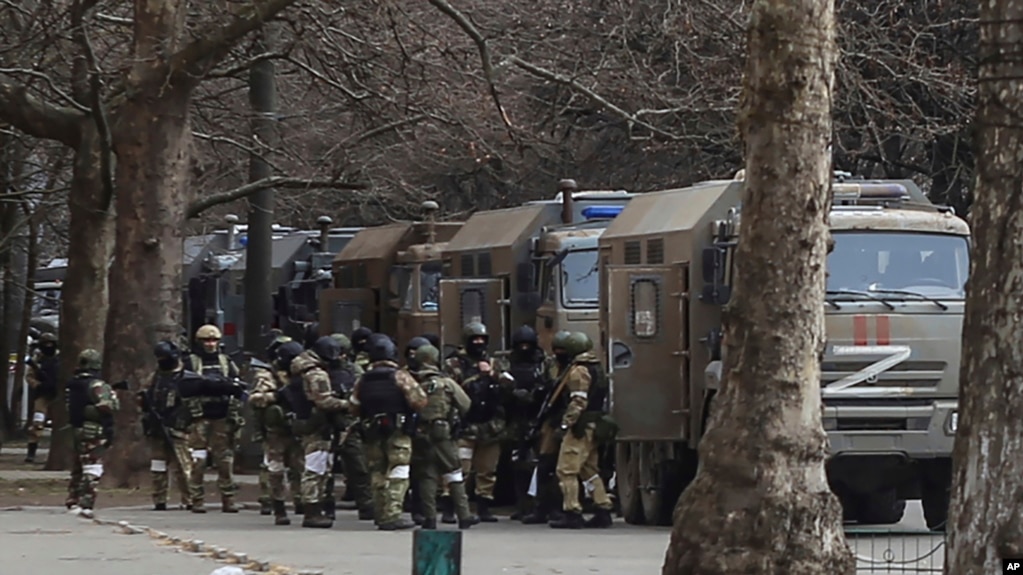
Eight months after Russian President Vladimir Putin began his unprovoked “special military operation” against Ukraine, one of the most striking emerging aspects of the conflict has been the Ukrainian Armed Forces’ surprising and increasingly effective denial of Russian naval efforts to establish “command of the sea” in the Black Sea. With an unexpected anti-ship missile attack on April 13, the Ukrainians sank the Black Sea Fleet’s (BSF) flagship, the Soviet-era Slava-class Moskva guided missile cruiser. In its most impressive operation yet, on October 29, the Ukrainian military launched a coordinated swarm of unmanned aerial vehicles (UAVs) and naval drones into Sevastopol, headquarters of the BSF for over two centuries. While the apparent level of damage was slight, the technological prowess of the attack on the highly symbolic target led Russia to assert that the Ukrainian military had received foreign assistance before and during the operation.

The Russian Ministry of Defense (MoD) briefed journalists that the attack occurred at 4:20 a.m. on the morning of October 29, when nine UAVs and seven unmanned robotic naval drones traveled 100 miles from their Ochakiv launch point, near Odesa, to Sevastopol on the Crimean peninsula, which Russia has occupied since 2014. The MoD asserted, “As a result of the operational measures taken by the ships of the Black Sea Fleet, all air targets were destroyed.” Four marine drones were destroyed by BSF weaponry and aviation, while the remaining three were destroyed in the port’s roadstead. The MoD stated that only the Ivan Golubets minesweeper and the boom-mesh barrier in the South Bay experienced minor damage (TASS, October 29).

14 November 2022

Iranian Drones Are Changing the Battlefields of Eurasia

Sine Ozkarasahin

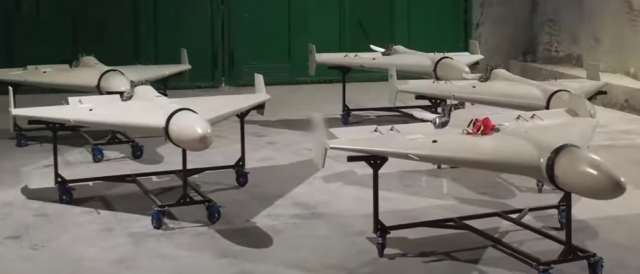
On October 10, Iranian loitering munitions rained over Ukraine’s urban centers, including Kiev. Two weeks later, Israeli forces struck an Iranian drone factory in Syria (Al Arabiya, October 23). This demonstrated how Iran’s drone program is now beyond Iran, both in terms of production and operational impact. Iran has become a drone-exporting nation and Iranian drones are creating new flashpoints in different geopolitical axes.

Tehran’s drone program is hardly new, however. In fact, it dates back to the 1980s war of attrition with Iraq and rests on a decades-long significant research and development (R&D) effort. Iran’s unmanned aerial vehicles (UAV) strategy is aggressive (Farsi Al Arabiya, April 23, 2021). It mainly focuses on utilizing UAVs to support the government’s capabilities and strengthen its proxy forces abroad. Led by the Islamic Revolutionary Guard Corps (IRGC) and its drone-maker Qods Aviation Industries (QAI), some of Iran’s existing drone technologies are developed from reverse-engineering Western systems that have crashed or landed on or near Iranian territory (including the ones allegedly intercepted or captured near its coast). For example, some of the Iranian government’s most sophisticated systems, including the Shahed-141 and 191, are modeled after the American RQ-171 Sentinel UAV that crashed in Iran back in late 2011 (Iran Press, December 16, 2020).

Will China Prove the Doomsayers Wrong?

MINXIN PEI

ATHENS – The new leadership team selected by Chinese President Xi Jinping at the 20th National Congress of the Communist Party of China failed to impress financial markets at home and abroad. In the week following the announcement of Xi’s new team, Hong Kong’s stock market declined by 8.3%, and the Shanghai Composite Index, China’s largest stock exchange, dropped 4%, despite the Chinese government’s intervention to prop up prices. US-listed Chinese stocks plunged by 15%.

Investors have good reason to worry. Though financial markets had already priced in Xi’s third term, investors had hoped that he would appoint a team of more moderate, experienced officials capable of putting pragmatism above politics. Instead, Xi packed the Politburo and its Standing Committee with loyal allies and protรฉgรฉs.

China’s next premier will be Li Qiang, who was Xi’s chief of staff (2004-07), before later serving as governor of Zhejiang province (2013-16), and CPC Secretary of Shanghai (2017-22). Li is widely credited with convincing Tesla to build its largest overseas factory in Shanghai – an achievement that has bolstered his business-friendly reputation. But, unlike every other premier since 1988, Li has no national-level administrative experience.

US tech powers Iran’s killer drones in Ukraine

STEPHEN BRYEN

Iran’s drones are devastating the critical infrastructure of Ukraine. What is surprising is that, beyond the physical drone airframe and the explosive payload, Ukraine is being savaged by equipment originating from outside of Iran.

In fact, these drones are made of parts from the United States and the European Union, along with some from Japan and China. But most of the electronics are American.

The United States has imposed sanctions on drone companies in Iran. Congress is considering legislation – for example, the “Stop Iranian Drones Act” (HR 6089). But both the proposed legislation and the US sanctions are unlikely to make any difference without a coherent policy aimed at blocking supplies to Iran.

US officials whisper to Congress that because the Iranian drones are made from easily available commercial parts there is nothing that can be done. But such claims simply are not true. Iran’s access to outside technology for its drones can be stopped but it will take smarts and leadership.

Why the Space Force is getting serious about on-orbit servicing

Courtney Albon

WASHINGTON — With fresh requirements in hand and a new unit focused on in-space servicing and maneuver, the U.S. Space Force is making moves to leverage a growing commercial market for on-orbit logistics, according to the head of the service’s mobility enterprise.

Brig. Gen. Stephen Purdy, commander of Space Systems Command’s Assured Access to Space Directorate, said the prospect of refueling, cleaning up debris and even repairing and building satellites in space has long been an interest for the service, but never a mission.

That may be changing, he said at an Oct. 20 industry conference in Los Angeles.

“Elements of that have actually been in the Space Force doctrine since the beginning, but we’ve had no operational units do it, no acquisition programs. It’s not been something that we’ve had a chance to get to,” Purdy said at the Armed Forces Communications and Electronics Association’s Space Industry Day conference. “So, our organization is getting after it in a serious way.”