26 September 2023

China’s Tech Industry Shows It Still Means Business

Rishi Iyengar and Christina Lu

The United States has spent the last two administrations, and certainly the last year of this one, trying to blunt what seems to be aggressive Chinese technology development, especially when it comes to semiconductors, artificial intelligence, and all the other nuts and bolts of the next industrial revolution.

Will the Russia-Ukraine War lead to World War III?

Jacob Nagel & Boaz Golany
Source Link

Oleksiy Danilov, secretary of Ukraine’s National Security and Defense Council, recently warned attendees at the Kiev Security Forum that “World War III is already underway.” He may be onto something.

The war between Russia and Ukraine began on February 24, 2022. In the first few weeks, it seemed as if the Russians would crush the Ukrainians in a blitzkrieg-style offensive. That prediction was wildly inaccurate. The Russian army was ill-prepared for the mission, and its equipment was far less effective than expected. To say that the morale of its soldiers was not high is an understatement.

By late Spring 2022, the Washington Blob was once again wildly off-base, with experts predicting that Russia would capitulate under the Western sanctions. Those expecting a calamity for the Russian economy learned nothing from Western sanctions on North Korea and Iran—two countries much smaller than Russia that have endured severe sanctions over many years. The sanctions undeniably damaged their economies but didn’t change the fundamental nature of the regimes.

RUSSIAN OFFENSIVE CAMPAIGN ASSESSMENT, SEPTEMBER 21, 2023

Riley Bailey

Ukrainian armored vehicles are operating beyond the final line of the Russian defensive layer that Ukrainian forces in western Zaporizhia Oblast are currently penetrating, although ISW is not yet prepared to assess that Ukrainian forces have broken fully through this Russian defensive layer. Geolocated footage posted on September 21 indicates that Ukrainian armored vehicles advanced south of the Russian anti-tank ditches and dragon’s teeth obstacles that are part of a tri-layered defense and engaged in limited combat immediately west of Verbove (18km southeast of Orikhiv).[1] It is unclear if Ukrainian forces retain these positions, however. This is the first observed instance of Ukrainian forces operating armored vehicles beyond the Russian tri-layer defense.[2] The presence of Ukrainian armored vehicles beyond the final line of the current Russian defensive layer indicates that the Ukrainians have secured their breach of the first two lines of this layer sufficiently to operate vehicles through the breach. Ukrainian forces have likely suppressed Russian artillery and other anti-tank systems in the area enough to bring their vehicles forward.[3] The Ukrainian ability to bring armored vehicles to and through the most formidable Russian defenses intended to stop them and to operate these vehicles near prepared Russian defensive positions are important signs of progress in the Ukrainian counteroffensive.[4] Additional geolocated footage published on September 20 and 21 indicates that Ukrainian forces also advanced west and southwest of Verbove.[5]

The Black Box of Moscow

Sam Greene

Wagner mercenary chief Yevgeny Prigozhin is dead, but the West’s desperation to interpret the larger meaning of his final weeks lives on. Western policymakers and pundits are still sifting through the details of Prigozhin’s odyssey from mercenary to mutineer to apparent murder victim, looking for the clues that would crack the mystery of the Kremlin’s behavior during the Ukraine war and help guide the West’s responses.

Many analysts see evidence that the Russian regime is brittle and that Russian President Vladimir Putin’s hold on power is tenuous. According to this analysis, Prigozhin’s beef with the Defense Ministry signals a deeper rot within the Russian military. The fact that the mutiny ended only when Belarusian President Alexander Lukashenko intervened signifies Putin’s inability to manage conflicts within his own regime. And the fact that Prigozhin met with Putin a few days after he marched on Moscow suggests that Putin is no longer invincible.

Other analysts point to the fact that the head of the Russian Aerospace Forces, Sergei Surovikin, was apparently sacked in August, after Prigozhin praised him; numerous lower-ranked officers faced a similar fate. And thus they conclude the opposite: that the whole mutiny was a false flag, designed by Putin to smoke out disloyal officers. With this mission accomplished, the story goes, Prigozhin was either killed to cover Putin’s tracks or perhaps was not killed at all.

But this hunt for meaning obscures the real lesson Westerners should take from Prigozhin’s arc: that they understand very little about Russian politics today. Despite a glut of intelligence and information, the truth is that the Western analytical establishment—both within and outside governments—was at a loss to illuminate Prigozhin’s motives to march on Moscow; the Kremlin’s immediate, forgiving response; and the ensuing weeks’ twists and turns.

Nagorno-Karabakh Shows Russia Has No Credibility as a Regional Peacekeeper

Mikhail Turchenko

Violence has once again returned to Nagorno-Karabakh. On Tuesday, Azerbaijan launched what it called an “anti-terrorism exercise” in the breakaway territory, effectively breaking the resistance separatist authorities had put up against Baku for 30 years with the support of Armenia, their closest ally.

There is a remarkable difference between Yerevan’s response to the most recent outbreak of violence and Second Nagorno-Karabakh War in 2020, as well as its subsequent border clashes. Back then, Armenia, as a member of the Russia-led Collective Security Treaty Organization (CSTO), appealed for military assistance from the alliance. Now the Armenian authorities have not even made such an attempt.

That said, as in 2020, Russia today would probably refuse to help Armenia during the conflict on based on legal grounds. Moscow recognizes Nagorno-Karabakh as a part of Azerbaijan, rather than Armenian territory. But it would have been worth asking for help. Why did Yerevan not turn to CSTO and what does the decision not to do so say about Russia’s positions in the post-Soviet space?

CSTO was established in 2002 as a collective security organization in the post-Soviet space. From the very beginning, Russia has played a leading role by contributing a disproportionate share of its funding, and providing military resources and infrastructure to other member states in return for their support of Moscow’s policies

How to Make Russia Really Pay for Invading Ukraine

Bret Stephens

Volodymyr Zelensky will visit Washington this week to give thanks to the United States for its generosity — while asking for $24 billion more, which is what the Biden administration is seeking from Congress in additional military and humanitarian aid to Ukraine. That will bring the total amount of American aid to $135 billion, which so far has been $223 million a day since the war began, according to one calculation.

Maybe it’s time to open a new funding source before American largess runs out — this time from Russia.

Since Russia’s invasion of Ukraine in February 2022, the United States and our democratic partners have frozen roughly $300 billion in Russian central bank assets, amounting to a little less than half of the Kremlin’s foreign currency and gold reserves. Some of us have been arguing ever since that the money should be transferred to Ukraine, both as a matter of justice and as a deterrent against this kind of aggression. As the former Treasury secretary Larry Summers has put it, “Bank robbers should not expect banks to honor their safe deposit boxes.”

So far, the Biden administration has disagreed. “It would not be legal now in the United States for the government to seize” Russia’s assets, Janet Yellen, the Treasury secretary, said in May 2022. The Economist magazine has argued that such measures would violate international law, and there are worries that they would also harm American economic interests as foreign countries sought to de-dollarize their economies.

Amid Reports on Chinese Expansion of Bases, Sri Lanka Unveils SOP: Need for a Reality Check?

Asanga Abeyagoonasekera

India has realized it cannot possibly balance China’s growing influence on its own, nor can it afford to have the U.S. leave the Indian Ocean Region (IOR) given China’s significant presence in the island littorals. New Delhi requires the island nations much more than in the past to collectively balance Indian Ocean security. Sri Lanka is pivotal in this equation. Reports published by Aid Data and RAND have identified the Sri Lankan port Hambantota as a highly probable PLA military base. This issue brief attempts to analyze the US research reports and further draws attention to the geopolitical trends in the IOR, where India, China, and the U.S. are entangled in a great power competition. Against this backdrop, how will Sri Lanka maneuver its foreign policy? Will India further facilitate space for the U.S., just like in the past establishment of Diego Garcia? What will be the success of the Standard Operating Procedure (SOP) introduced by the Sri Lankan government due to security sensitivities concerning New Delhi?

Does the BRI Increase China’s Influence?

Ethan B. Kapstein

Political leaders in the United States and other democratic nations have been expressing concern about growing Chinese “influence” around the world. In a 2022 speech at George Washington University in Washington, D.C., for example, U.S. Secretary of State Antony Blinken said: “China is a global power with extraordinary reach, influence, and ambition,” which has been using this power to alter the multilateral institutions and arrangements that have shaped the international system since the end of World War II. More recently, the former Australian Prime Minister Malcolm Turnbull, while introducing a new “foreign interference” law, called China “the most active state and political party seeking to influence public affairs in Australia.”

South Korea’s Indo-Pacific Strategy, Atmanirbhar Bharat, and the IPEF: Convergence and Commonality

Jagannath P. Panda

For some time now, the existing multilateral networks such as those of the United Nations (UN) system have been largely ineffective in providing good global governance and helping create resilience, especially among the emerging and developing economies. The latest example that highlights the inefficacy of the current system is the collapse of the Black Sea grain deal despite genuine UN efforts.1

As a result, the world order is experiencing a precarious transition. This has necessitated countries across the world to create newer cooperative multilateral mechanisms that are in tune with the times and can potentially give rise to a resilient strategic landscape, such as providing favorable conditions for economic security.

The U.S.-initiated Indo-Pacific Economic Framework for Prosperity (IPEF), which was launched in May 2022 with 12 founding members (currently up to 14, namely the United States, Japan, Australia, New Zealand, South Korea, India, Fiji, and seven countries belonging to the Association of Southeast Asian Nations [ASEAN]) representing about 40 percent of the world’s gross domestic product (GDP), is one such negotiation platform.[1] Notably, it is not a traditional trade deal, and does not offer tariff or market access negotiations, but focuses on creating sustainable (e.g., “worker-centric” trade) architecture.[2]

Azerbaijan halts Karabakh offensive after ceasefire deal with Armenian separatists

Paul Kirby

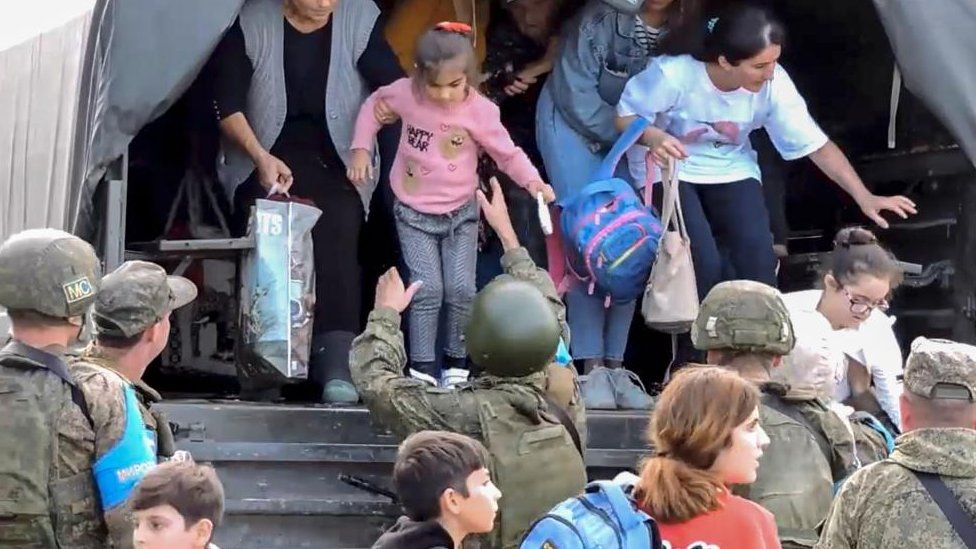
Azerbaijan's president has declared that his country's sovereignty has been restored over Nagorno-Karabakh after a 24-hour military offensive against ethnic-Armenian forces.

Ilham Aliyev praised the heroism of Azerbaijan's army hours after Karabakh forces agreed to surrender.

Some 120,000 ethnic Armenians live in the South Caucasus enclave, recognised internationally as part of Azerbaijan.

Azerbaijan now intends to bring the breakaway region under full control.

Its military launched an "anti-terror" operation on Tuesday, demanding that Karabakh's forces raise a white flag and dissolve their "illegal regime". With no means of support from neighbouring Armenia, and after an effective nine-month blockade, the ethnic Armenians soon gave in.

Armenian officials reported that at least 32 people were killed, including seven civilians, and another 200 wounded. However according to a separatist Armenian human rights official, at least 200 people were killed and more than 400 wounded. The BBC has not been able to verify any of the figures.

As Armenia and Azerbaijan Clash, Russia Is a Distracted Spectator

Andrew Higgins

Protests on Thursday in Yerevan, the Armenian capital, against Prime Minister Nikol Pashinyan, who has distanced his government from this week’s conflict.

Endorsing yet another cease-fire in the conflict that embroils two of Moscow’s closest partners — Armenia and Azerbaijan — President Vladimir V. Putin of Russia “noted with satisfaction” on Wednesday that the Russian peacekeepers he sent to the region to enforce an earlier, failed truce had helped quell the renewed fighting.

Not mentioned in the Kremlin’s account of Mr. Putin’s telephone discussion with the leader of Armenia, however, was the fact that Russia’s peacekeepers had done nothing to keep the peace in the ethnic Armenian enclave of Nagorno-Karabakh, as Mr. Putin had promised they would three years ago.

In just two days, Azerbaijan’s military, through a series of rapid attacks, forced the surrender of the pro-Armenian authorities in the region and shredded a 2020 cease-fire personally brokered by the Russian president.

Drained since by the war in Ukraine, Russia has been less the hegemon that Mr. Putin imagined — an indispensable power capable of knocking heads together until all sides come to their senses — than a distracted spectator of events across its former Soviet dominion.

Estonia plans loitering-munitions unit to hunt enemy air defenses

SAM SKOVE

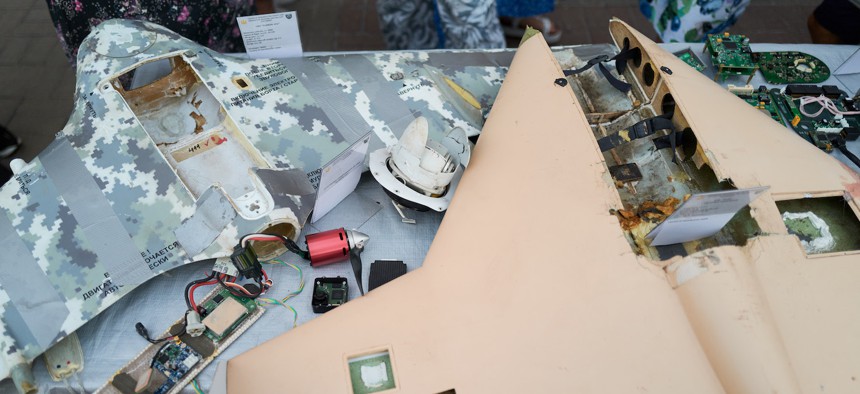
TALLINN—The Estonian army will soon stand up a unit solely dedicated to loitering munitions, drawing on lessons from the Ukrainian war, the battery’s prospective commander told Defense One.Estonian Land Forces Maj. Andrei ล labovitลก said he believed it would be the first unit of its kind in NATO, whose members have been watching the Ukrainian military’s extensive use of these one-way attack drones.

“Estonia is probably correct in saying they are the first to deploy loitering munitions,” said Larry Dickerson of Forecast International, a defense data and consulting firm owned by Defense One parent company GovExec.

“Others are also thinking about wider use of loitering munitions and how to best integrate them with their militaries,” Dickerson said. “The market is changing due to the press coverage loitering munitions are getting from the Russo-Ukrainian War.”

The U.S. Army is currently testing loitering munitions for use in infantry brigade combat teams, after first fielding them with Army Special Forces.

ล labovitลก said he was chosen to lead the company-sized unit because of his long experience with drones, including leading projects to integrate small drones into Estonian army units.

Will US M1 Abrams Be a Game-Changer in Ukraine War?

ELLIE COOK 

U.S.-made M1 Abrams tanks will be a "valuable addition" to Ukraine's military as Kyiv presses on with its counteroffensive, although doubts remain over just how much of a difference the long-awaited hardware will make at the front lines.

Although the arrival of the Abrams "will add a little more punch to Ukraine's counteroffensive," they will only be effective if Ukraine wields them alongside well-executed, combined-arms tactics, defense writer and military expert Michael Peck told Newsweek.

"While the Abrams is a valuable addition for Ukraine, 31 vehicles aren't enough to significantly affect the war," he added.

Some experts are more skeptical about the advantages Ukraine will gain in integrating yet another type of tank into its forces heading into the tougher months of the year.

"In military terms, I think there are more issues than advantages," Marina Miron, a post-doctoral researcher in the War Studies Department at King's College, London, U.K., told Newsweek.

On Tuesday, U.S. Defense Secretary Lloyd Austin said the U.S. military's Abrams tanks would be arriving in Ukraine soon, and that they would "add another formidable armored capability to join the Leopards that are already on the battlefield."

Biden Walks A Careful Line Through Worsening Canada-India Tensions

TOM O'CONNOR 

As President Joe Biden's administration seeks to deepen its strategic partnership with India, the White House has called on New Delhi to cooperate with a Canadian investigation into potential state-sponsored links to the killing of a Sikh dissident.

Speaking to reporters on Wednesday, National Security Council Strategic Communications Director John Kirby said the U.S. officials "believe the investigation opened by Canadian authorities into the June 18 slaying of Hardeep Singh Nijjar outside of a Sikh temple in British Colombia "should proceed, of course, unimpeded and that the facts should take the investigators where they may and that the perpetrators should be brought to justice."

And while he "was not going to get ahead of the investigation," he said, "We encourage India to fully cooperate" with the probe.


An image of former gurdwara president Jathedar Hardeep Singh Nijjar is displayed at the Guru Nanak Sikh Gurdwara temple in Surrey, British Columbia, Canada, on September 19. Prime Minister Justin Trudeau on demanded that India treat with "utmost seriousness" Canada's allegations of New Delhi's possible involvement in the slaying of a Sikh exile, a concern echoed by Washington

A Marine’s approach to organizational conflict

Uncle Walkie

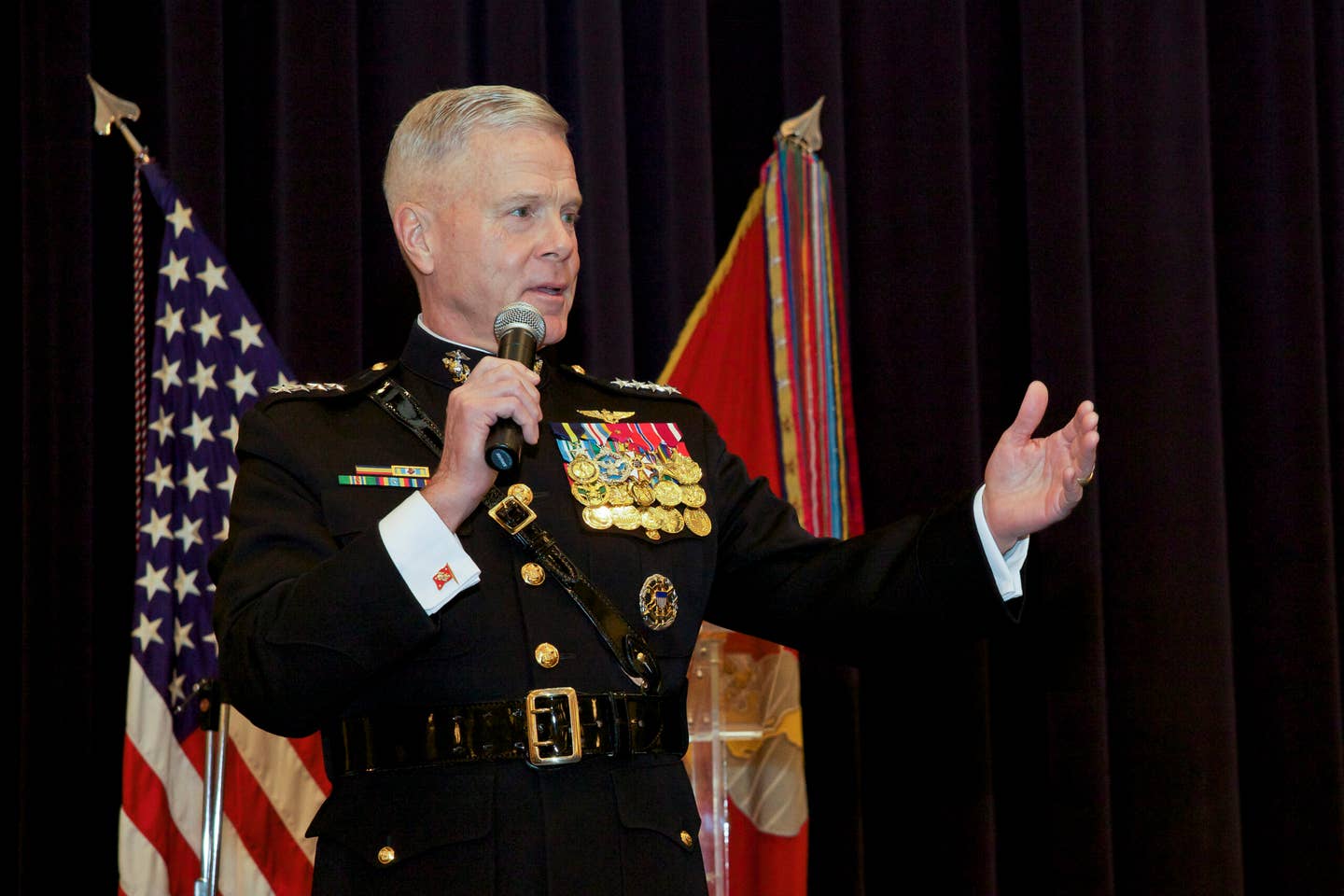
When one thinks of Marines and conflict, it generally evokes images of battle and a hostile enemy force. One might be surprised to learn that many instances of conflict can arise within the ranks, particularly among staff members of a unit. The Marine Corps’ premier doctrinal publication (MCDP-1 Warfighting) describes friction as “that which makes the inherently easy difficult.” The Corps’ cultural environment produces a certain approach and response to organizational conflict. Listed below, you will find a few perspectives Marines take when anticipating or responding to conflict, though perhaps unsuitable for the faint of heart.

As Joint Chiefs chair, Milley was a Pattonesque presence stepping carefully

David Ignatius

Milley had a farewell meeting last weekend with NATO allies in Oslo and then traveled here Tuesday to join Defense Secretary Lloyd Austin in meeting the Western “contact group” that is supplying an ever-expanding arsenal of weapons to Kyiv — “for as long as it takes,” Milley said, to expel Russian troops from Ukraine or force Moscow to the bargaining table.

Adm. Rob Bauer, a Dutch officer who chairs NATO’s military committee, told his colleagues in Oslo that Milley had led the alliance through the unparalleled stress of a pandemic, America’s chaotic withdrawal from Afghanistan and the Russian assault on Ukraine. And he recalled what might be the most enduring moment of Milley’s tenure: his opposition to what he saw as President Donald Trump’s effort to politicize the military.

“At a time when your nation’s constitutional values were shaken to their core, you made sure that the U.S. military continued to embody the values and ideals of the nation,” Bauer said in remarks provided to me and other journalists traveling with Milley. “There were mornings when you didn’t know if you would be fired by sunset, and yet you continued to fight for what you knew to be right.”

Milley’s stint as chairman of the Joint Chiefs, which ends this month, was as bold and sometimes as noisy as an artillery barrage. But the portrait that emerges from observing him over the past four years reveals a complex and sometimes surprising figure, in some ways the opposite of his public image.

Ukraine war inspires weapons that crack battle tanks at weakest point

Sebastian Sprenger

LONDON — Western companies are developing weapons aimed at cracking battle tanks from the top, their weakest point, or that can rain down thousands of metal fragments on dug-in infantry from falling drones.

The novelties come as arms manufacturers tune their lineups to the immediate experience of the brutal, close-range fighting in Ukraine, a trend on display at the DSEI defense trade show held last week in London.

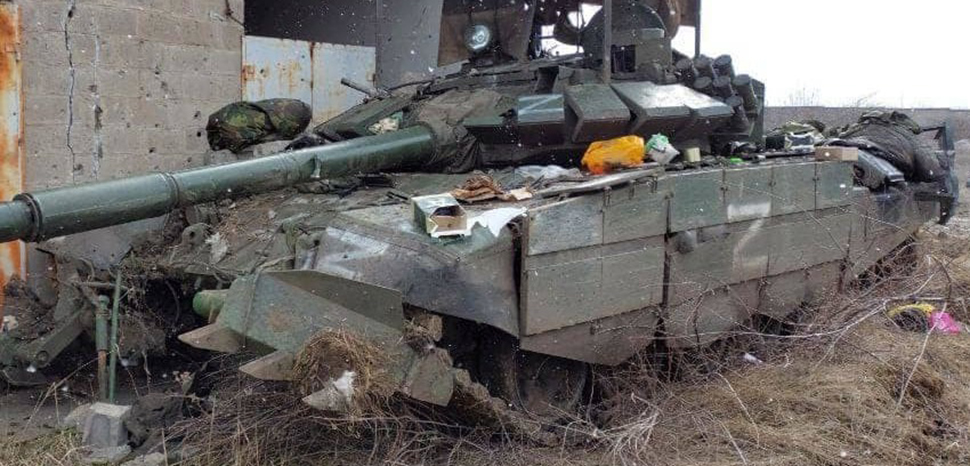
Germany’s Rheinmetall, for example, is reviving a Cold War concept of bouncing mines in its proposed Area Defence Weapon. The system, which resembles a small beer keg sitting on radial stabilizers, uses a combination of sensors to verify that a tank is passing by only to launch itself into the air and drill a 155-millimeter artillery munition into the vehicle’s topside on the way down.

The company said the weapon, ready for use in a few years, could be used in combination with traditional anti-tank mines, where the ADW munition goes after mine-clearing vehicles to keep adversaries’ armored columns from advancing through mined areas.

The re-emergence of mine warfare brings to mind the situation on the frontlines of Ukraine’s defense against Russia, described in a recent Washington Post report as the world’s most mine-contaminated piece of land.

Artificial Intelligence And The Boardroom: Immediate Action Items

Patricia Lenkov

Artificial Intelligence (AI) has been described as a Promethean Moment. What is meant by this is that it is one of the times in humankind’s history when everything changes due to a new tool being discovered. It may not be an exaggeration to compare the potential impact of AI to other monumental discoveries that changed how we live, like fire or perhaps the wheel.

It is still relatively early days, and for many, AI is simply customer service Chatbots, and self-driving car features. Or ChatGPT and the endlessly entertaining opportunity to ask all types of random questions, much as we did when Alexa showed up some years ago.

But for business leaders, AI is an unstoppable game-changer. It is the ability to improve productivity and performance, discover new products and services, and improve business results in many unanticipated ways. “McKinsey recently reported that “Generative AI’s impact on productivity could add trillions of dollars in value to the global economy.” McKinsey’s 2023 “research estimates that generative AI could add the equivalent of $2.6 trillion to $4.4 trillion annually across the 63 use cases we analyzed—by comparison, the United Kingdom’s entire GDP in 2021 was $3.1 trillion.”1 Truly staggering!

China accuses U.S. of hacking Huawei servers since 2009

CHENG TING-FANG and CISSY ZHOU

TAIPEI/HONG KONG -- China has accused the U.S. of continuously hacking Huawei's servers and conducting cyberattacks to steal other critical data since 2009, the latest salvo between Beijing and Washington as tensions further escalate.

China's Ministry of State Security on Wednesday released a post on its official WeChat account titled "Revealing key despicable methods by U.S. intelligence agencies in cyberespionage and theft."

The post explicitly points to U.S. government efforts against Chinese national tech champion Huawei Technologies. It also accuses Washington of having big, influential tech companies install backdoors in software, applications and equipment so it can steal vital data from countries including China and Russia.

"In 2009, the Office of Tailored Access Operations started to infiltrate servers at Huawei's headquarters and continued conducting such surveillance operations," the post says.

The U.S. Department of State has yet to respond to a request for comment.

Is Future Escalation in Cyber Conflict a Foregone Conclusion?

EMILIO IASIELLO

Recently, Artur Lyukmanov the director of the Russian Foreign Ministry’s International Information Security Department warned that continued cyber clashes threatened to catalyze into “all-out war” between Russia and the United States. Lyukmanov, who also serves as special representative to Vladimir Putin on international cooperation on information security, stressed that such cyber hostilities were a deteriorating force, which could lead to direct conflict, particularly if cyber attacks were misinterpreted or else caused a devastating impact against critical infrastructure, ultimately compelling some form of retaliatory action.

This statement comes at a time when the cyber part of the Ukraine war has brought in state, nonstate, and even private sector involvement in various aspects of coordinated and autonomous cyber offensive and defensive operations. The activities have extended beyond the two principal states involved in the war, with cyber attacks coming from foreign state and nonstate assets and targeting sympathetic governments and even private sector organizations that have demonstrated solidarity with either side. This situation underscores Lyukmanov’s concerns that cyber hostilities quickly risk becoming global problems given the amount of official and non-official participants such events can bring to the table, creating an unchecked free-for-all in cyberspace.

Decoding Emerging Threats: Ransomware and the Prevention of Future Cyber Crises

Louise Marie Hurel

In recent years, ransomware incidents have captured the attention of both developed and developing economies. While incidents vary in complexity, when successful, they can deliver nation-wide crippling effects. As many cases have shown, governments have become a particular target of many ransomware groups, leaving departments, critical infrastructures, essential services and entire local governments unable to function.

Within the context of the United Nations Open-Ended Working Group (OEWG) on security of and in the use of information and communications technologies – the UN’s main space for international dialogues on cybersecurity – several member states have highlighted the importance of recognising ransomware as an emerging threat in the context of international peace and security. While important, this also raises at least two challenges: one of determining when and what qualifies a ransomware incident beyond the criminal sphere, and another of understanding how cases of international cooperation on ransomware can further inform the development of better models for international cyber crisis assistance.

Artificial Intelligence: How big a threat to middle-class, white-collar jobs?

Philip Cross

Artificial intelligence (AI) is emerging as the most discussed technological, social, and economic phenomenon of 2023. But many people are concerned that if it proves to be an improvement over human intelligence, AI will significantly reduce the demand for labour, especially for middle-class jobs.

This paper looks at the possible economic impacts of AI. It makes no attempt to forecast how AI will evolve and does not address broader concerns about whether the capabilities of AI will outrun the ability of humans to understand and manage this technology. Rather, it examines the economic impact of AI so far and compares its evolution with past forecasts of how technological change would affect workers. It cautions against a rush to increase government regulations and spending based on as yet unfounded concerns about the impact of AI on jobs.

Machine automation has been feared for its impact on human jobs since the Industrial Revolution began. Earlier eras of automation disrupted employment patterns in farming and factories, but overall job growth actually accelerated as higher incomes drove the expansion of other industries. Despite that experience, there are numerous forecasts that the deployment of AI will lead to widespread job losses.

2023 Global Artificial Intelligence Infrastructures Reportc

J.P. Singh & Amarda Shehu & Caroline Wesson & Manipriya Dua & David Bray

This report uses computer science techniques to analyze national and sub-national AI policies published by 54 different countries. It’s the most comprehensive analysis to date on national AI policies. It provides important comparisons and contrasts of national and global priorities for the development and deployment of AI. The report analyzes the empirical determinants of dominant strategies for developing AI around the globe and shows where countries are converging and diverging in their approaches to AI. The cross-national and global comparisons are important for a host of important players in AI including policy-makers, governments, businesses, and civil society organizations.

Executive Summary

In 2016, the United States published its National Artificial Intelligence Research and Development Strategic Plan, usually understood in policy communities as the first statement of its AI infrastructure strategy (Select Committee on Artificial Intelligence, 2016). Since then over 60 countries have announced their national or sectoral AI policies.

This report employs computer science techniques to analyze the published national AI plans of 54 countries. In other words, we employ AI to analyze AI strategies. The report includes an analysis of 213 documents on AI strategies. Apart from national plans, the set includes reports and publications from various government departments, ministries, nation commissions, bodies appointed to forward recommendations for specific issues and sectors.

Science & Tech Spotlight:Drone Swarm Technologies


Fast Facts

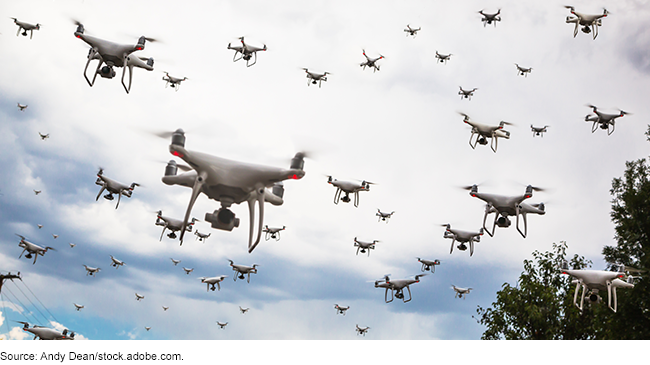
This Science & Tech Spotlight report explores drone swarm technologies, which use algorithms and local sensors to coordinate drones with minimal human intervention. Swarms could range from a few drones to possibly thousands. Advances in artificial intelligence and drone components have made swarms possible—even if they're limited to simpler missions like aerial light shows for now.

As the technology improves, it could be used to fight wildfires, detect crop disease, and more. However, it also raises concerns over safety, privacy, and cybersecurity. For example, a hacker could redirect a drone swarm for malicious purposes.


Why This Matters

Drone swarm technologies allow groups of drones to coordinate with each other, often without direct human control. Potential civilian applications include fighting wildfires and finding missing persons. But advances are needed in computing and communication to realize these applications, and the technology may raise safety, cybersecurity, and privacy concerns.

Complexity in Military Intelligenc

Bram Spoor & Peter de Werd

Abstract

Intelligence studies missed social science’s “complexity turn” more than twenty years ago. The aim of this article is to examine military intelligence from a complexity science perspective and discuss related concepts such as sensemaking and reflexivity. For this, military and intelligence theory, doctrine, and practice are studied. Complexity insights from military sciences are used to review mental models and current thinking in military intelligence. Rather than viewing it as a clearly defined and autonomous field or function embodied by a closed intelligence cycle, military intelligence is best seen as a situated practice. This situatedness is illustrated in two cases regarding vertical and horizontal contextual influences. First, a discussion of North Atlantic Treaty Organization deployments in Afghanistan shows important vertical influences: the impact of (political) context and task. Second, a review of United Nations missions exemplifies the horizontal dimension: the need for informal collaboration, ad hoc organization, and a holistic approach. However, both cases show vertical and horizontal influences. Overall, this article stresses the applicability of sensemaking rather than the intelligence cycle and makes suggestions for further incorporating complexity research into intelligence.

The idea that the world is increasingly complex is not new. Globalization, advancements in communication technology and a changing international order constitute a world that is ever more interconnected and interdependent. The influence of people and ideas, and the effects of events travel fast and unpredictably. In this context, war is also increasingly seen as complex, or as a complex system.Footnote1 For some,

What are the latest upgrades in China's military?

Albee Zhang and Greg Torode

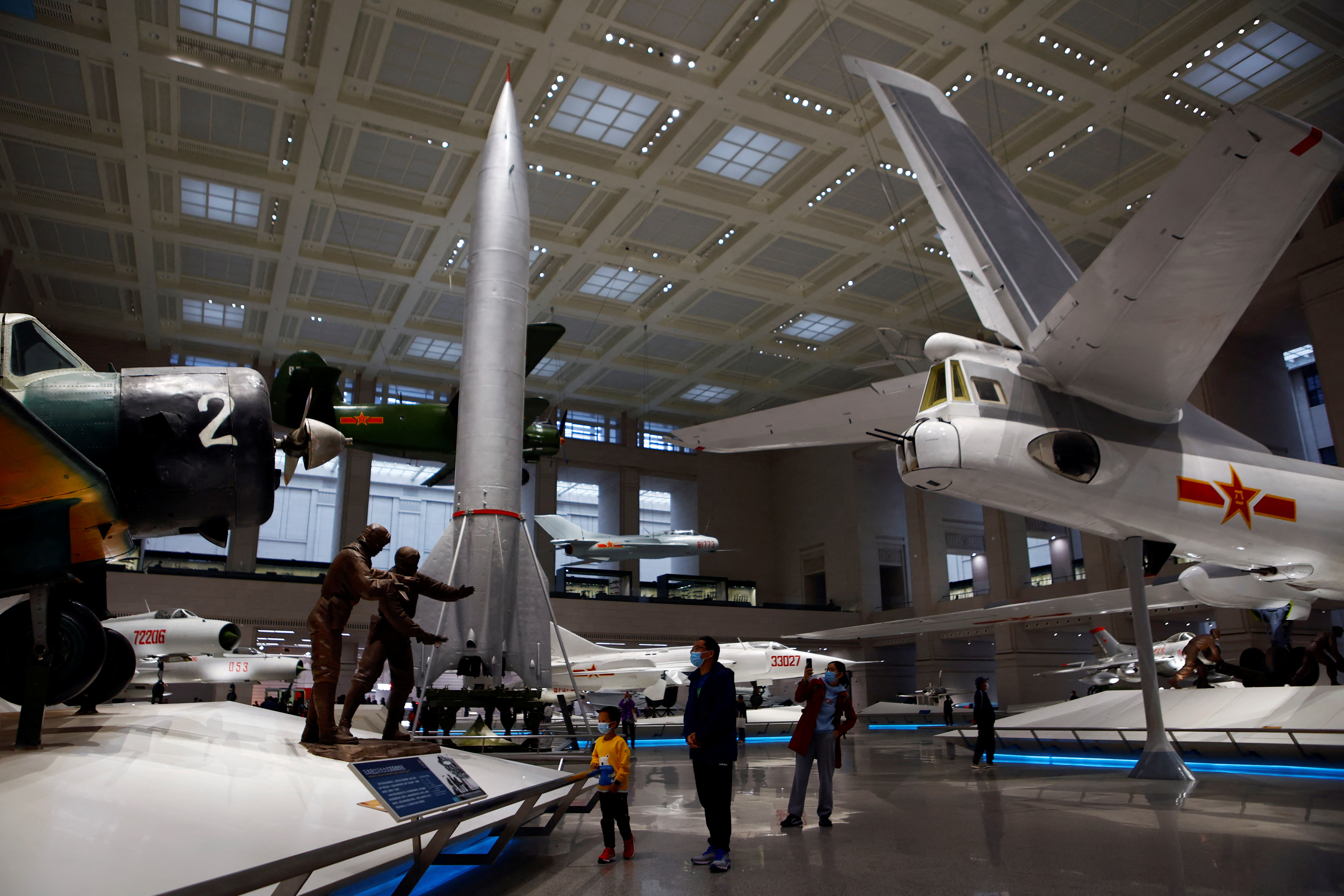
Sept 21 (Reuters) - China's long-term military modernisation efforts are bearing fruit, with a string of upgrades for its warships and warplanes under way amid intensifying tensions in the Indo-Pacific, particularly the Taiwan Strait.

NEW HELICOPTER ENGINE

China showcased a 1,100-kilowatt turboshaft helicopter engine at a helicopter expo in Tianjin last week. A Chinese military expert told Reuters the high-powered engine, shown for the first time, is key to China's development of medium- and heavyweight helicopters.
Advertisement · Scroll to continue

China still lags behind in the development of large helicopters, which can carry more weapons and cargo. They could also play a key role in transporting personnel and equipment in conflict scenarios.

BIGGER, MORE ADVANCED FRIGATES

China launched a bigger and more advanced version of its biggest frigate at the end August, according to state and Hong Kong media reports, which cited experts as saying the new Type 054B frigate could be equipped with an integrated electric propulsion (IEP) system, a more advanced radar with better detection capability, and a combined diesel and gas power system that makes it harder to detect.
25 September 2023

Blood on the street: violence, crime, and policing in Karachi

Vanda Felbab-Brown

Introduction

With 56 percent of the world’s population today living in urban spaces and 70 percent projected to do so by 2050,[1] major cities of the world play an ever-larger role in the 21st century global system, power distribution, and public policies. Decisions of city governments significantly influence major transnational issues—from climate change, global financial and trade patterns, to poverty alleviation, disease mitigation and refugee flows. More than ever, a country’s governing capacity and the legitimacy of its government are shaped by how it suppresses crime and delivers order in urban areas, a major challenge for many countries.[2] Many cities in Africa and Latin America struggle to deliver effective public security, despite receiving significant international assistance. Much less policy and academic focus has been devoted to urban public order management in Asia, including specifically Karachi, even though the city is a major world megapolis, a significant global hub of legal and illegal trade, and source of transnational and local violence, including terrorism.

Based on fieldwork I conducted in Karachi in 2016 and supplemented by subsequent remote interviews, this article analyzes the sources of insecurity and violence in Karachi since the 1990s, focusing especially on the period between 2008 and 2023. Through interviews with security and police officials, military and paramilitary forces officers, politicians, civil society and business community representatives, members of criminal gangs, and security experts, the article assesses the effectiveness of anti-crime measures adopted in the city. Examining what has worked well and what policies have been deficient is a valuable source of lessons for other countries. It is also important because crime and terrorism are again rising in Karachi, the city’s residents are demanding better public safety.

RUSSIAN OFFENSIVE CAMPAIGN ASSESSMENT, SEPTEMBER 20, 2023

Grace Mappes

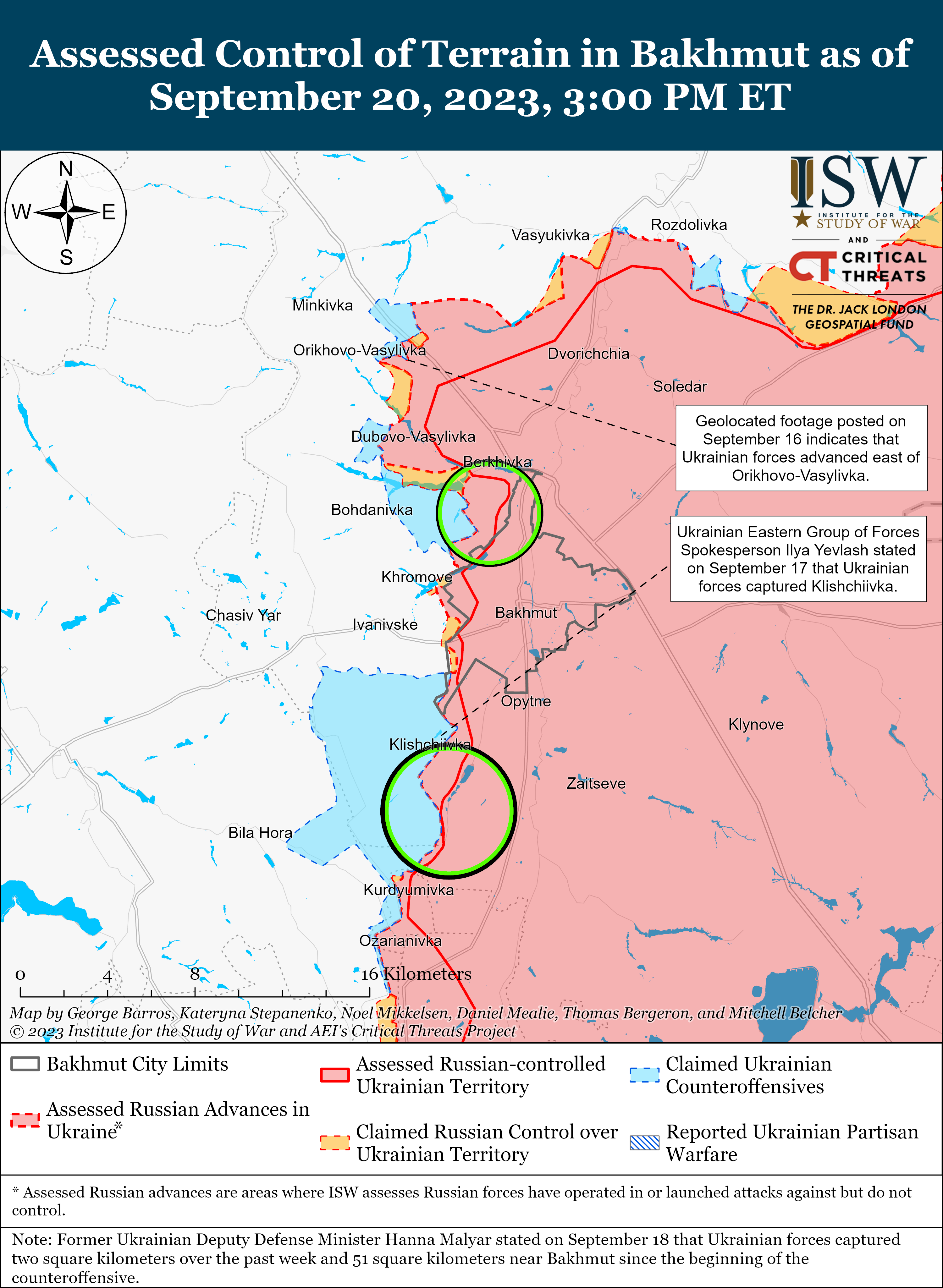
Ukrainian forces continued offensive actions near Bakhmut and in western Zaporizhia Oblast on September 20. The Ukrainian General Staff stated that Ukrainian forces continued offensive operations and inflicted significant losses on Russian manpower and equipment in the Melitopol (western Zaporizhia Oblast) direction.[1] The Ukrainian General Staff also reported that Ukrainian forces continued offensive actions in the Bakhmut direction and are consolidating in newly secured lines.[2] The UK Ministry of Defense (MoD) assessed that Ukrainian forces secured positions in Klishchiivka (7km southwest of Bakhmut) and Andriivka (10km southwest of Bakhmut) and that Russian redeployments of airborne (VDV) forces from Bakhmut to the Zaporizhia direction have weakened Russian defenses around Bakhmut.[3] ISW had previously observed elements of the 83rd Separate Air Assault Brigade operating in Zaporizhia, although it is unclear how large a proportion of that unit was redeployed from Bakhmut.[4] Ukrainian Eastern Group of Forces Spokesperson Captain Ilya Yevlash stated that Ukrainian forces are preparing defensive positions before Russian forces renew their assaults in the Kupyansk-Lyman direction.[5]


Russian servicemen and milbloggers revealed that the Russian military command orders Russian troops to carry out “ill-conceived and unsupported” counterattacks on Bakhmut’s southern flank to urgently regain lost ground.[6] Elements of Altai Krai’s 1st Battalion of the 1442nd Regiment (a mobilized unit) published a video appeal in which the soldiers claim that they abandoned their military equipment in the Klishchiivka (7km southwest of Bakhmut) area after receiving an order from the Russian military command to form an assault group and attack in the Bakhmut direction.[7] The servicemen noted that the Russian military command began deploying different types of personnel to the frontlines — including soldiers who are currently resting in the rear —

Only two scenarios for Russia’s war against Ukraine


There can be no such thing as a “draw” to resolve the Russia-Ukraine conflict. Any outcome other than victory for the Ukrainians, as they define it, will be a victory for the Kremlin.
  • Any supposed draw in the conflict would be a win for Russia
  • The long-term consequences of a Ukrainian defeat are often understated
  • Only the West, rather than either warring party, can decide the victor
Predicting when and how Russia’s war against Ukraine will end is a very difficult challenge. The basic scenarios may seem similar to a football match: a Ukrainian victory, a Russian victory, or a draw.

However, the situation is much more complex than a football match. Sports are played according to clear rules, recognized by both teams. Compliance with these rules is controlled and enforced by a referee, whose decisions are accepted by all sides. In football, what is considered a win, a draw and a loss – the difference in goals scored – is clearly defined and respected by both teams. Moreover, a football match (although it may be a big deal in some cases) is far from an existential, life-or-death affair. The consequences of any one outcome usually do not have major implications for other important areas – like the fates of dozens of countries and the lives of hundreds of millions of people, including the security, independence and territorial integrity of those states and their citizens.

Xi’s Personnel Mismanagement

Willy Wo-Lap Lam

Paramount leader Xi Jinping (ไน ่ฟ‘ๅนณ) has been widely blamed by foreign governments and media for failing to take effective measures to remedy an economy hurt by excessive leverage, weak exports, anemic consumer spending, and the massive withdrawal of investment by multinationals (Foreign Policy, September 6). Yet President Xi, who is Chinese Communist Party (CCP) General Secretary and Chairman of its Central Military Commission (CMC), has long been lauded for his grasp of Machiavellian palace intrigue and factional manipulations. For example, while the so-called Xi Jinping Faction did not even exist when the 70-year-old first came to power in 2012, the 20th Party Congress last October saw his acolytes monopolize the bulk of seats on the CCP Central Committee, the Politburo, the Politburo Standing Committee (PBSC) as well as the top echelons of the People’s Liberation Army (PLA) (NPR.com, October 23, 2022; Tw.news, October 23, 2022).

Over the past two months, evidence has frequently emerged that dozens of bad apples are being detained for infractions including corruption, leakage of state secrets, and failure to carry out the commander-in-chief’s orders — particularly among Xi protรฉgรฉs. These intriguing developments run counter to the conventional wisdom that Xi is a master of the party. That this series of stunning personnel movements has not been explained to the public only adds to the intrigue, and in the contributes to the CCP’s reputation for lack of transparency (New York Times Chinese, July 28; Deutsche Welle Chinese, July 26).

The Belt and Road Initiative Could Be a Debt Trap for China

TOSHIRO NISHIZAWA

As the world’s largest bilateral lender, China faces challenges in dealing with the debt distress of some of its borrowers under the Belt and Road Initiative (BRI). Whether China can support those debtors and avoid trapping itself in unpaid debts will depend on its policy choices.

China’s BRI has provoked criticism from parts of the Western world. The United States remains concerned that China’s rise will undermine its values and interests. The alleged lack of transparency and expensive lending terms of the BRI have been central issues. A “debt trap diplomacy” narrative persists in the media and certain policy circles despite recent research showing this is an unfounded myth. There are no winners in a debt trap strategy, as the debtor, trapped with unsustainable debt, leaves its creditor out of pocket.

The fundamental challenge of sovereign debt in the developing world is not China, but rather how to deal equitably with unsustainable debt owed to various creditors when the creditor composition varies from country to country. Bangladesh owes 53 percent of its external public debt to multilateral creditors and only 7 percent to China. Sri Lanka owes 35 percent to international bondholders, while Laos owes 49 percent to China alone.

Understanding the claims to a debtor is critical for successfully restructuring debt when it becomes unsustainable. This is the case for some Asian nations, with Sri Lanka declaring suspension of its debt payment in April 2022 and Laos remaining in debt distress.

The Case Against Containment

John Mueller

In the great debate over how the United States should respond to an increasingly assertive China, many commentators have advocated a ready-made solution: containment. Under this Cold War policy, Washington pushed back against Soviet (and Chinese) political and military advances wherever they appeared, seeking to prevent international communism from spreading. According to this accepted wisdom, containment won the Cold War, allowing the United States to check the power of the Soviet Union without engaging in a direct war with it.

Many argue that with a track record like this, the United States ought to dust off the containment playbook and apply it to today’s rival superpower. The historian Hal Brands, for example, has contended that this “elegant” and “winning” strategy would prove effective against Beijing, writing, “To succeed against a rising China, the U.S. must relearn the lessons of containment.” In Foreign Affairs, the political scientist Michael Mandelbaum likewise deemed Cold War containment a “success” and argued that it should be applied “once again, now to Russia, China, and Iran” although “modified and updated.”

Such calls are certainly overconfident and probably misguided. Containment was not particularly successful during the Cold War, and it is also unlikely to work well against China today. In reality, more than anything else, it was the Soviet Union’s own errors and weaknesses that caused its downfall. The main problem with U.S. foreign policy during the Cold War was that it tried to do too much, not too little. And like the Soviet Union yesterday, China today is its own worst enemy. As with last time, the key now is not so much to search for ways to balance against the rising hegemon. It is to let this troubled and perhaps declining country make its own mistakes.

Rules of Order: Assessing the State of Global Governance

STEWART PATRICK

On the morning of June 3, 2023, the American destroyer Chung-Hoon and Canadian frigate Montrรฉal entered the Taiwan Strait to conduct freedom of navigation operations. They did so in defiance of the Chinese government, which had declared these to be its sovereign waters. A Chinese warship, seeking to harass the vessels, came within 150 yards of the bow of the Chung-Hoon, forcing the latter to take evasive action. Had the two ships collided, the world might have witnessed the first violent clash between the two superpowers of the twenty-first century.

A few days earlier, several hundred technologists released a statement declaring that breathtaking advances in artificial intelligence (AI) threatened human extinction. This came on top of warnings from national security experts that growing reliance on AI would transform the nature of warfare—perhaps even increase the risk of nuclear war. Despite these and other growing dangers, national governments are nowhere near an international agreement on how to regulate the use of such technologies. Indeed, they face powerful geopolitical and economic incentives to unilaterally accelerate the pace of national AI innovation.

Also in May 2023, the World Health Assembly (WHA) convened in Geneva for its annual meetings to consider how to improve pandemic preparedness and response in the wake of the coronavirus pandemic. Among the most contentious topics was the latest draft of a proposed pandemic treaty, intended to close loopholes in—and strengthen compliance with—the International Health Regulations (IHR), a set of legally binding rules defining the rights and responsibilities of countries in cross-border public health emergencies. The heavily bracketed text—replete with suggestions for alternative treaty language—revealed sharp differences among UN member states (as well as private corporations and civil society representatives), including over matters like equitable access to vaccines and sovereign exemptions from global rules.

BRICS: An Inconvenient, Hard Truth

Dr. Nand C. Bardouille

In Ernest Hemingway’s novel The Sun Also Rises, a well-known passage centres on a character’s bankruptcy. In reflections therein on how he arrived at his misfortune, the following punchline is invoked: “Gradually, then suddenly.”

Changes in international politics happen much the same way, as the BRICS’ (Brazil, Russia, India, China and South Africa) story to-date attests.

It is fitting and timely to frame the BRICS in such terms, calling attention to the group’s recently held XV Summit. This landmark summit gave new impetus to the group, whose history is steeped as much in a narrative of reform of the US/Western-leaning international order as it is in a narrative of righteousness.

Some two decades ago, appalled with some of the worst excesses of the unipolar moment, Brazil took the lead in marshalling together a handful of like-minded, emerging nations.

At the time, in what was indicative of great hubris, Washington determined that “the United States enjoys a position of unparalleled military strength and great economic and political influence.”

Moreover, following 9/11 and related events, which ushered in the Global War on Terror, Washington zealously pursued military campaigns in the Middle East and beyond.

Whither the G20?

TAKATOSHI ITO

TOKYO – Following the latest G20 summit, held in New Delhi earlier this month, there is no longer any doubt about India’s central position in global power politics. But questions about the G20 itself are gaining traction.

India’s achievement with this G20 is indisputable. Prime Minister Narendra Modi, the summit’s host, managed to secure agreement on a joint communiquรฉ not at the eleventh hour, as is so often the case for multilateral summits, but on day one. This is particularly notable given the deep divisions among G20 members over the war in Ukraine. Many wondered whether there would be any final communiquรฉ at all.

The fault line is clear to see. The West wants to take a hard line on Russia’s invasion of Ukraine, whereas China and other Russia-friendly countries want to avoid any direct condemnations of the Kremlin’s actions. At last year’s G20 summit, the West’s perspective won out: the final declaration deplored “in the strongest terms the aggression by the Russian Federation against Ukraine,” and demanded Russia’s “complete and unconditional withdrawal” from Ukrainian territory.

But this year – despite the absence of Russian President Vladimir Putin and Chinese President Xi Jinping – the final declaration was much vaguer. “In line with the [United Nations] Charter,” it reads, “all states must refrain from the threat or use of force to seek territorial acquisition against the territorial integrity and sovereignty or political independence of any state. The use or threat of use of nuclear weapons is inadmissible.” Russia is not mentioned explicitly.