30 October 2023

Preventing War in the Taiwan Strait


What’s new? Tensions are rising over Taiwan. The fabric of political understandings that contributed to cross-strait peace and security for decades has begun to unravel as China’s power and assertiveness grows, competition between the U.S. and China spreads, and the Taiwanese people develop a distinct identity increasingly disassociated from the mainland.

Why does it matter? A Chinese military offensive to take over Taiwan is unlikely in the near term, but conflict risks are rising. Taiwan remains the most likely flashpoint between the U.S. and China. A direct confrontation between the big powers could mean global conflagration, global economic shocks and the potential for nuclear escalation.

What should be done? The parties should assure one another that the political understandings hold. China should reduce its military, economic and political coercion of Taiwan; the U.S. should clarify and uphold its “one China” policy; Taiwan’s next president should seek to resume dialogue with the mainland and strengthen the island’s defence.

Executive Summary

Tensions over Taiwan are rising, raising the prospect of a direct conflict between the U.S. and China that could bring with it global economic shocks and the potential for nuclear escalation. Political understandings that preserved peace for decades are fraying under the pressure of U.S.-China competition, a stronger and more assertive China, and the growth of a Taiwanese identity that sees itself as separate from the mainland. A Chinese invasion of Taiwan is unlikely any time soon, but the risk of conflict is rising. Managing it requires the parties to reestablish a baseline level of trust by shoring up longstanding political understandings. Washington should credibly assure Beijing that it does not seek to keep Taiwan permanently separated from the mainland. Taipei should credibly assure Beijing that it does not seek formal independence. Beijing should credibly assure Washington and Taipei that it has not decided to unify with Taiwan through military force. At the same time, Taipei’s military vulnerability is also an issue: it should develop better defensive capabilities to give deterrence the best odds of success.
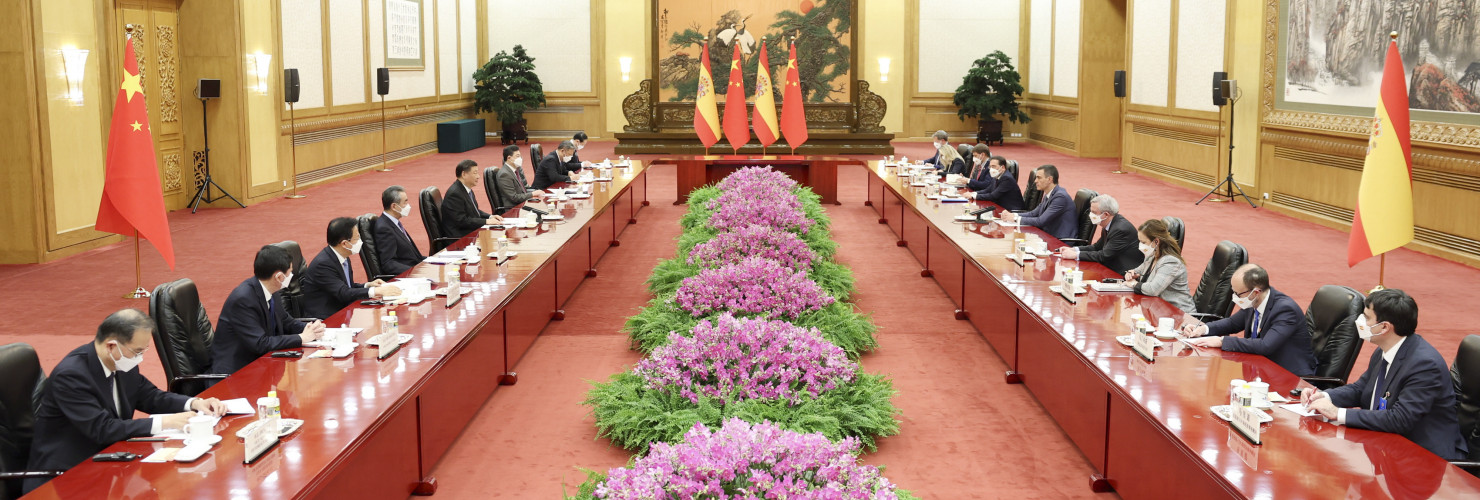
Why negotiating with China feels different


In this analytical piece on "Negotiating with China" Vijay Gokhale argues that the secretiveness, stage-setting and theatricality of Chinese counterparts should not throw Western negotiators off their game. It is the result of a workshop held at MERICS in Spring 2023. Another piece resulting from the conference by Charles Parton can be found here.

How do you negotiate with a government like the People’s Republic of China when you are constantly reminded of its glorious past, its venerable strategic and diplomatic culture, and its capacity to win against all odds? China evokes fear, awe, self-doubt, feelings of inadequacy or a sense of being in exalted company. Negotiators arrive at the table already convinced that China’s rise is unstoppable, that it is a world power and that its demands, however egregious, must be accommodated for those reasons. If these mind games succeed, the negotiation will be lost even before it has begun.

Understanding the psyche of Chinese counterparts is critical in preparing for negotiations. It starts with the simple fact that the party-army, known as the Chinese Communist Party, became the state in 1949. In other words, the People’s Republic of China is really the CCP. Therefore, China is driven by two key sources of conduct that motivate the party. First, the imagined reality that China has historically been the center of the world and the world should accept the CCP’s dominance because it is the natural order of things. Second, the sense that there is a deep-rooted conspiracy by outsiders to subvert and overthrow the CCP and, therefore, China. This means the outside world’s negotiating partner is not the PRC but the CCP. In addition, the CCP’s self-perception of dominance is laced with a deep-seated sense of besiegement. This insight should inform any negotiating strategy and tactics.

Understanding the mindset

The political factors behind China’s disappearing leaders

Mark Parker Young

Chinese Communist Party (CCP) General Secretary Xi Jinping has shaken China’s military and foreign affairs establishments in the past two months by abruptly replacing several senior military officers and China’s minister of foreign affairs. The removals were all the more surprising because Xi had promoted many of these same officials to lead their organizations less than a year earlier. A close look at the officials involved suggests that a variety of personal and institutional factors contributed to their downfall, but the disruptive impact of the sudden disappearances indicates underlying mistakes and misjudgments on the part of Xi and the personnel apparatus he oversees.

The recent removals suggest that Xi has approved prosecutions of several discrete pockets of corruption and misconduct rather than a repeat of the sweeping and interconnected purges of his first term. The senior officials involved had crucial roles within their respective military and civilian bureaucracies, but none was part of Xi’s core apparatus of political control.
Interpreting patterns among ousted officials

The reshuffles in the People’s Liberation Army (PLA) constitute its most significant internal upheaval since 2017. Recent anti-corruption investigations appear to be radiating outward from the traditional locus of military corruption: procurement and logistics. In the last two months, investigators have reportedly detained Minister of National Defense Li Shangfu, Rocket Force Commander Li Yuchao, Rocket Force Political Commissar Xu Zhongbo, and several of their deputies. Li Shangfu served from 2017 to 2022 as chief of the PLA’s armaments and procurement department and the Rocket Force is an extremely capital-intensive service that has expanded rapidly in the past decade, likely affording numerous opportunities for graft. Xu also previously served as political commissar of the Joint Logistics Department and is the latest in a long line of its former leaders to fall under suspicion. The new Rocket Force leaders have no prior experience with the force and its incoming political commissar significantly outranks the new commander in the CCP hierarchy, signaling Xi’s determination to uproot their predecessors’ personal networks and reimpose discipline.

U.S. Strikes Iranian-Linked Targets in Syria

Eric Schmitt

The Pentagon said the airstrikes against facilities used by the Islamic Revolutionary Guards Corps and its proxies were in retaliation for recent rocket and drone attacks on American forces.

Brig. Gen. Patrick S. Ryder, the Pentagon spokesman, said attacks last week by Iranian-backed militants had left 19 U.S. service members in Iraq and Syria suffering from traumatic brain injuries.Credit...Kevin Wolf/Associated Press

The United States carried out two airstrikes against facilities used by Iran’s Islamic Revolutionary Guards Corps and its proxies in eastern Syria early Friday in retaliation for a flurry of recent rocket and drone attacks against American forces in Iraq and Syria.

The strikes by Air Force F-16 jets, against a weapons storage facility and an ammunition storage facility, were intended to send a strong signal to Iran to rein in the attacks the Biden administration has blamed on Tehran’s proxies in Syria and Iraq without escalating the conflict in the Middle East, U.S. officials said. The targets, while limited in number, represent an escalation in striking facilities used by Iran’s own forces in the region, not just the militias in Iraq and Syria that Tehran helps to arm, train and equip.

“These precision self-defense strikes are a response to a series of ongoing and mostly unsuccessful attacks against U.S. personnel in Iraq and Syria by Iranian-backed militia groups,” Defense Secretary Lloyd J. Austin III said in a statement.

Will Lebanon Be Safe or Sorry?

MICHAEL YOUNG

Many Lebanese are playing a morbid game these days—assessing the probability that their country will be destroyed if Hezbollah enters the conflict in Gaza between Israel and Hamas. On several occasions the Israelis have warned that in any future war with Hezbollah, they would send Lebanon “back to the stone age.”

The assumption is that once Israel begins a ground invasion of Gaza, the prospect of a Lebanon conflict will greatly increase. Backing this up are reports that Iran has warned Israel that if such an operation were to go ahead, Iran would intervene. Iranian Foreign Minister Hossein Amir-Abdollahian was even more specific in his public statements, for example when he told Al-Jazeera, “If the measures aimed at immediately stopping the Israeli attacks that are killing children in the Gaza Strip end in a deadlock, it is highly probable that many other fronts will be opened. This option is not ruled out and this is becoming increasingly more probable.”

However, the real question is not whether Hezbollah will escalate against Israel if an invasion goes ahead, but how it does so and for what purpose. A southern Lebanese front has already been opened, though both Hezbollah and Israel are caught up in a sort of Kabuki dance, where each side is carefully measuring its actions and reactions to avoid a situation that may spin out of control and spread to the region.

So, can Lebanon dodge a bullet if Hezbollah responds to an Israeli entry into Gaza? Let’s answer with a question: Why has Iran supplied Hezbollah with between 150,000 and 200,000 rockets and missiles? The Iranians have used Hezbollah’s arsenal to deter Israel from attacking Lebanon, but more importantly to prevent Israel or the United States from striking Iran—the mother ship from which regional power and influence flows. While Lebanon is valued as the place where Tehran’s most effective proxy is based, it is not more important than Iran itself.

Iran’s ayatollahs play the Middle East’s most dangerous game


The warning signs that Israel’s war with Hamas may become a wider Middle East conflagration are flashing ominously. America has sent a second carrier strike group led by the uss Eisenhower to the Persian Gulf. “There’s a likelihood of escalation,” said Antony Blinken, the American secretary of state, on October 22nd. The chances of further attacks by Iranian proxies on American forces are growing, he continued: “We don’t want to see a second or third front develop.”

Fears are also growing in Lebanon that Israel could use America’s cover to launch a pre-emptive strike. Israel has evacuated its towns near the border with Lebanon and Binyamin Netanyahu, Israel’s prime minister, has cautioned that if Hizbullah, an Iran-backed militia in Lebanon, enters the fighting, the consequences for Lebanon will be devastating. One reason Israel has delayed its offensive in Gaza may be to bolster its preparations for escalation on its northern front. Iran’s foreign minister has said the region is like a “powder keg”.

World of Warfare

JOSCHKA FISCHER

BERLIN – When German Chancellor Olaf Scholz, in a speech to parliament on February 27, 2022, described Russia’s invasion of Ukraine as a “Zeitenwende” (turning point), the risk of the war spreading was already apparent. But did he anticipate that we would be witnessing a chain of regional wars, or that tensions between great powers would begin to ratchet up almost daily? Sadly, that is where we are today.

Russian President Vladimir Putin’s unprovoked war of aggression was merely the first domino. Now, Hamas has launched a brutal terrorist attack on Israel from Gaza, killing 1,400 Israelis – most of them civilians – and abducting more than 200 others. How could such a deadly blow be struck against the Middle East’s strongest military and intelligence power? Can a terrorist organization like Hamas have accomplished such a feat on its own?

Consider the precision of the attack, and all the planning that went into it. Clearly, the goal was not simply to stage a blood-soaked display of ruthless brutality against Israeli civilians, including grandmothers and infants. More than that, it was intended to reactivate Jewish trauma by reprising the atrocities of the Shoah – the Nazis’ attempt to exterminate the entire Jewish people. The message for Jews is that they should never feel safe, even with Israel’s military superiority. Of course, Hamas is not alone in promoting this goal. So, again, we must ask if there was a state behind the attack. For obvious reasons, suspicions have fallen on Iran.

Whatever the case, the October 7 attack has left the entire Middle East on the brink of a major war. With Israel’s very existence at stake, the United States and Europe have inevitably been drawn in. But so, too, have others, with China (a major importer of Iranian hydrocarbons) reportedly deploying warships to the region.

The Evolution of Modern Political Power

JONATHAN IRA LEVY

From the rise of large, bureaucratic states in the early twentieth century to the triumph of neoliberalism more recently, shifts in governance models cannot simply be reduced to the natural political instincts of those who find themselves in power at any given moment. There are much larger, and subtler, dynamics at work.

CHICAGO – Where power truly lies is not always clear. In 1998, US President Bill Clinton was certainly among the most powerful people in the world. Having triumphed in the Cold War, the United States had become what French Minister of Foreign Affairs Hubert Védrine called a hyperpuissance – a superpower in terms of both hard and soft power. Notwithstanding the Monica Lewinsky scandal, America’s “New Economy” was roaring, and Clinton was still polling well after his smashing re-election victory in 1996. American-led globalization was on the march, as was representative democracy.

A central feature of the neoliberal globalization of the late 1990s was the increasing cross-border mobility of short-term financial capital. When such “hot money” fled many East Asian economies in 1997, it caused a global financial crisis. Privately pondering convening the G7, Clinton wondered about the creation of a “Bretton Woods II” to succeed the international monetary system that had underpinned the national regulation of global financial capital since the end of World War II.

The George Kennan Who Wasn’t


Peering through the clouds of vapor emitting from U.S. National Security Advisor Jake Sullivan’s various profilers and character witnesses over the years, here is what we learn: Sullivan is a “once-in-a-generation intellect,” according to Joe Biden, and a “once-in-a-generation talent,” “a potential future president,” according to Hillary Clinton. “The sky’s the limit,” says former Deputy Secretary of State and Brookings Institution President Strobe Talbott. “He is somebody of extraordinary intelligence and temperament.” Sullivan has an admirable “habit of continually questioning his own assumptions” and a “methodical, hyperanalytical style.” He is “a genuinely nice guy” and “a good human being” with a “self-deprecating Midwestern modesty” who is a “really good listener” and “loved by everyone.”

Sullivan’s path to power is indeed impressive, from middle-class Minneapolis public school student to Yale graduate, Rhodes scholar, Supreme Court clerk, aide to the presidents of the Council on Foreign Relations and the Brookings Institution, chief counsel to the senior senator from Minnesota, adviser to the presidential campaigns of both Hillary Clinton and Barack Obama, deputy chief of staff to the secretary of state, director of policy planning, national security advisor to the vice president, and finally, United States national security advisor—all before his 45th birthday. Such a meteoric rise to power indeed begs explanation, even for a coxswain of the Yale lightweight crew team.

There are two revealing anecdotes, often repeated in the creation of the Sullivan legend, which are meant to illuminate his dizzying ascent. The first is from June 2009, when President Obama pushed for the ouster of a member of Secretary of State Hillary Clinton’s policy planning staff who had asked Jack Dorsey to delay scheduled maintenance of Twitter because members of Iran’s Green Movement depended on it for communication. In a meeting with Obama and White House and State Department officials, Clinton reportedly stood by her staffer and Iran’s anti-regime movement against the wishes of Obama, who claimed, implausibly, that he didn’t want to harm the protesters’ cause by appearing to interfere in Iran’s domestic politics.

Global Sanctions Dashboard: How Iran evades sanctions and finances terrorist organizations like Hamas

Kimberly Donovan, Maia Nikoladze, Ryan Murphy, and Yulia Bychkovska

Key takeaways

Tehran has been militarily and financially propping up Hamas for years, which ultimately advanced the terrorist group’s ability to launch the attack against Israel on October 7.

The UAE has become a haven for Iranian and Russian sanctions evasion and circumvention. The Financial Action Task Force (FATF), an international coordinating body combating money laundering, has gray-listed the UAE.

UN restrictions on Iran’s trade of missile-related technology expired on October 18. Ballistic missile components to and from Iran can move more freely now.

The scale and sophistication of Hamas’s October 7 attack on Israel has generated a lot of talk about the backing the group receives from Iran. Tehran has indeed been militarily and financially propping up Hamas and other terrorist groups such as Lebanese Hezbollah for years. But what does that support actually look like in practice? The map below visualizes Iran’s facilitation of terrorist activity in the Middle East, and depicts the financial and military support Tehran has provided to terrorist organizations encircling Israel.

The US Treasury has designated nearly one thousand individuals and entities to date connected to terrorism and terrorist financing by the Iranian regime and its proxies. Despite being heavily sanctioned, Tehran has continued to provide more than $700 million annually to support terrorist groups, including Lebanese Hezbollah, and up to $100 million annually to Hamas and other Palestinian terrorist groups. It has also transferred artillery rockets to Palestinian groups. More importantly, Iran has transferred the know-how and equipment to give Palestinian terrorist groups the capability to build rockets and missiles locally. Given Tehran’s long-standing support of Hamas, the United States and Qatar on October 12 agreed to block Iran’s access to six billion in funds from South Korea that were transferred to Qatari accounts last month as part of a deal to release American hostages in Iran.

Israel’s Army Is Ready to Invade Gaza. Its Divided Government May Not Be.

Patrick Kingsley and Ronen Bergman

In the 20 days since Hamas attacked, Israel’s Air Force has pounded Gaza and its troops have gotten into position. But its leaders disagree about what to do next.

To understand the reasons for the delay to Israel’s invasion, the reporters spoke to 13 Israeli officials, military officers and foreign diplomats.

Its troops are massed on the Gaza border and described as ready to move, but Israel’s political and military leaders are divided about how, when and even whether to invade, according to seven senior military officers and three Israeli officials.

In part, they say, the delay is intended to give negotiators more time to try to secure the release of some of the more than 200 hostages captured by Hamas and other armed Palestinian groups when they raided Israel three weeks ago.

But Israeli leaders, who have vowed to retaliate against Hamas for its brutal massacre of civilians, have yet to agree on how to do so, though the military could move as soon as Friday.

Some of them worry that an invasion might suck the Israeli Army into an intractable urban battle inside Gaza. Others fear a broader conflict, with a Lebanese militia allied to Hamas, Hezbollah, firing long-range missiles toward Israeli cities.

There is also debate over whether to conduct the invasion through one large operation or a series of smaller ones. And then there are questions about who would govern Gaza if Israel captured it.

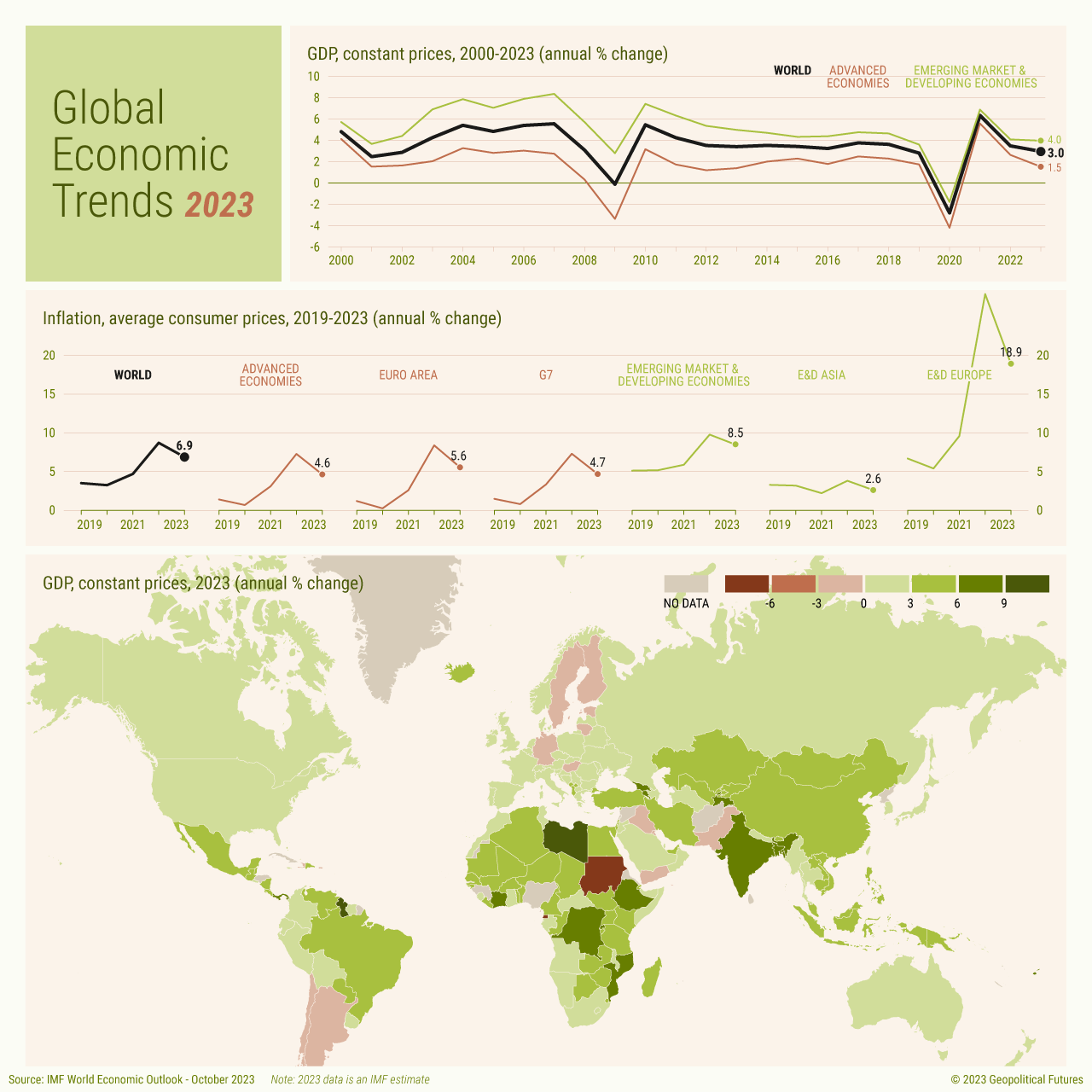
Global Economic Trends, 2023

Geopolitical Futures

Continued US and allied integration is essential to deter Russian CBRN use

Natasha Lander Finch, Ryan Arick, and Christopher Skaluba

This report presents the findings and recommendations of the Atlantic Council project, Conceptualizing Integrated Deterrence to Address Russian Chemical, Biological, Radiological, and Nuclear (CBRN) Escalation. The objective of this project was to develop an approach for incorporating European allies and partners into the US model of integrated deterrence against Russian CBRN use.

Key findings summary:Allies and partners already significantly contribute to US approaches to counter Russian CBRN threats in Europe. Future cooperation—bilaterally, multilaterally, and through NATO— should focus on areas of greatest need as mutually identified by the United States and its European allies and partners.

As a concept, integrated deterrence is a useful frame for examining cooperation with European nations to counter Russia’s CBRN threats, but the US Government should use this framing to identify new opportunities, rather than detract from or encapsulate ongoing cooperation.

Civil-military cooperation across a variety of sectors is essential to respond to CBRN threats, especially among public health agencies and law enforcement. To fully realize integrated deterrence in the next five to ten years, greater coordination among civilian and military communities—within the United States and among its European allies and partners—is essential to enhancing resilience.

Challenges for US cooperation with allies and partners to counter CBRN threats, especially as these threats become more complex. The United States and its European allies should remain vigilant about emerging threats, while leveraging new technological developments in detection and attribution systems and emergency response mechanisms to build comprehensive defenses against CBRN threats.

Pentagon’s CDAO queries industry about commercial data-mesh capabilities

JON HARPER

The Department of Defense’s Chief Digital and AI Office issued a call to industry as it scouts for data-mesh capabilities to underpin the U.S. military’s future warfighting network.

The request for information was recently posted to the CDAO’s Tradewinds website.

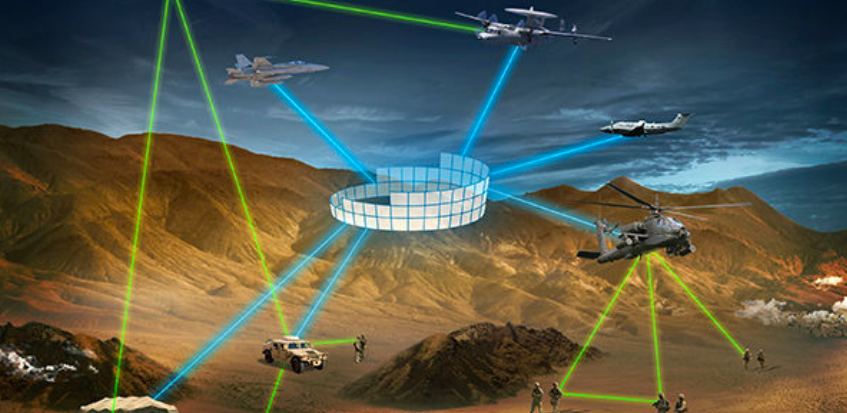
The office has been tasked with developing a “data integration layer,” or DIL, to help the Pentagon achieve its vision for connecting the various sensors, shooters and information streams of the U.S. military services, allies and partners under a unified network. Officials refer to the concept as Combined Joint All-Domain Command and Control (CJADC2).

“Warfighters continue to require the ability to maintain and improve the decision advantage through using a data centric approach for successful battlefield outcomes. DoD warfighters must be able to dynamically integrate and operate as one truly joint force. To inform possible future acquisitions and improve our operational advantage, the Department seeks information related to technologies designed to improve data visibility, simplify data connections, and automate data access for legacy and new globally distributed warfighting systems supported by the DIL,” the RFI states.

The Chief Digital and AI Office is eyeing commercial technologies that can be folded into a zero-trust cybersecurity model, which all Defense Department agencies are expected to implement by 2027.

SDA gets OK to begin limited testing of data satellites Link 16 nodes

THERESA HITCHENS

Link 16 is a tactical military data network, used by US and NATO air-, sea- and land-base platforms. (Viasat image.)

WASHINGTON — The Space Development Agency (SDA) finally can begin testing Link-16 signals from its Transport Layer of data relay satellites in low Earth orbit, having just received approval from a key international regulatory body — although the agency remains caught up in a long-running Defense Department spat with the Federal Aviation Administration that is preventing use of the venerable military data/communications link over US territory.

“I’m glad to report SDA received approval from the International Telecommunication Union (ITU) for experimental use of Link 16 from space from the radios being flown on the York Tranche 0 Transport satellites. This approval allows SDA to test over international water and over the territory of a Five Eyes ally,” SDA Director told Breaking Defense in an email today.

He did not, however, reveal which of those allies — Australia, Canada, New Zealand and the United Kingdom — are involved.

The ITU, headquartered in Geneva, manages electromagnetic spectrum usage that crosses borders to prevent interference. Individual nations, however, are responsible for allocating frequencies for various domestic uses and ensuring against interference inside their own borders. In the case of the United States, the semi-independent Federal Communications Commission is the chief regulatory body, but coordination of spectrum use among federal agencies is managed by the National Telecommunications and Information Administration.

What helped change the US Army counterinsurgency doctrine?

Christopher Goed

This article argues that the innovation of the US Army’s counterinsurgency doctrine between 2000 and 2008 was enabled by three factors. The first factor was that the relevant actors needed to have a common understanding of the need for change. Second, a consensus had to be achieved on which organizational actions should be undertaken. Last, external pressure was necessary to overcome the US Army’s inflexibility.

To demonstrate the above, this article will use a twofold approach. First, a framework will be identified to explain why and how militaries change. This will be done by providing an overview of the different theories on military innovation. It will be shown that there is no consensus on why armed forces innovate. Therefore, this article will use organizational learning theory and, within it, a model developed by Richard Downie. It provides a framework to track change and identifies factors influencing change. In the second step, this article will outline how the US Army counterinsurgency doctrine changed from 2000 to 2008. It will then use Downie’s model to identify the factors influencing innovation.

29 October 2023

Big strings attached to Biden’s Israel, Ukraine aid

DANIEL WILLIAMS

When US President Joe Biden, upon arrival in Israel last week, gave Prime Minister Benjamin Netanyahu what Americans call a “bro hug”, commentators interpreted the gesture as a show of solid support for Israel in its war with Hamas.

One commentator on Israeli TV offered a subtler and, it has turned out, reality-based analysis. Besides showing support, Biden’s gesture also meant, “You’re totally in my hands.”

It’s a reality being digested not only by Israel but also Ukraine, which Biden visited in February and had pledged full backing for its war with Russia. Whether it’s Biden saying “We stand with Israel” or a promise to do “Whatever it takes” to help Ukraine, there are caveats.

In both cases, he is playing chaperone in struggles that each country considers vital to their interests, if not existence. It makes for tense times between allies.

Even before he arrived in Tel Aviv, Biden cautioned Israel to fight within the bounds of the “rules of war” and spare civilians from harm, advice Israel thought it, as a democracy, didn’t need.

On October 25, Biden took a swipe at two of Netanyahu’s long-standing policies: rejection of Palestinian statehood and expansion of Israeli settlements in the West Bank.

“Israelis and Palestinians equally deserve to live side-by-side in safety, dignity and peace. When this crisis is over, there has to be a vision of what comes next,” Biden said. “And in our view, it has to be a two-state solution.”

Israel's war with Hamas is a battle to save human civilization

DAN ILLOUZ

As we stand on the precipice of a ground invasion into Gaza, a decision burdened with the gravity of imminent human cost, we as Israelis, and indeed, I as a member of the Knesset from Likud, feel the weight of responsibility far greater than the defense of our nation’s borders. We are, at this very moment, at the forefront of a war that threatens not just our own survival, but the survival of the values that underpin Western civilization itself.

The horrifying acts of aggression perpetrated by Hamas are not simply attacks on Israeli citizens; they are assaults on the very ideals of democracy, freedom, and basic human decency that form the foundations of civilized societies everywhere. With its recent unspeakable violence, Hamas has torn away the façade, revealing an ideology that mirrors the abhorrent dogmas that fueled the ISIS caliphate’s reign of terror and the Nazis’ genocidal fury.

The world must understand that Hamas, restrained until now only by its limited capabilities, harbors ambitions soaked in the bloodthirsty fanaticism we’ve witnessed in our darkest adversaries. Their goal transcends the destruction of Israel; it’s an affront to humanity, a cancerous ideology that despises life and venerates death, seeking to spread its malignant hatred far beyond our region.

Israel’s Defense Forces, though yet to set foot in Gaza, are preparing for a battle that we cannot shirk. For this is not aggression – this is a response necessitated by the defense of life itself. Our soldiers are the barrier standing between the ruthless fanaticism of Hamas and the vulnerable heart of human civilization. They carry on their shoulders the daunting task of upholding the principles that separate order from chaos, freedom from tyranny, and life from senseless death.

Israel Agrees to Delay Invasion of Gaza So U.S. Can Rush Missile Defenses to Region

Dion Nissenbaum, Gordon Lubold, Nancy A. Youssef and Dov Lieber

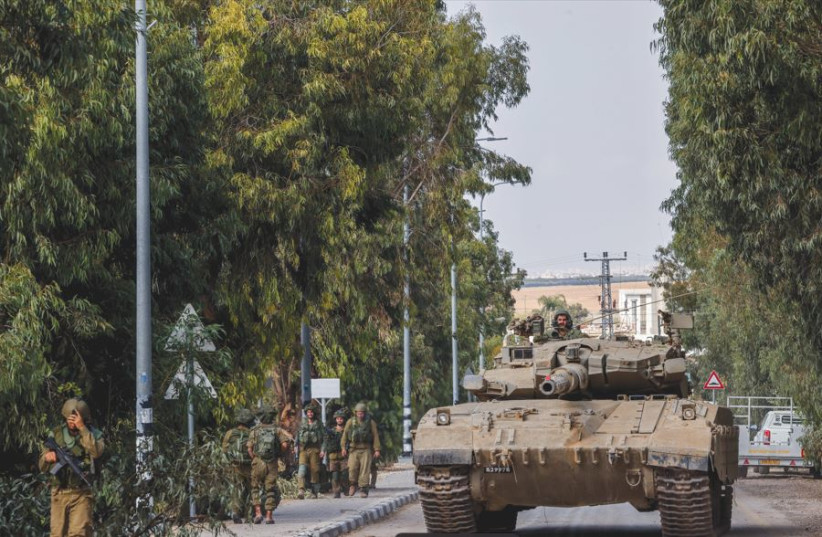
An Israeli soldier standing at a position near Sderot on Israel's border with the Gaza Strip on Wednesday. 

Israel has agreed, for now, to a request from the U.S. to delay its expected ground invasion of Gaza so the Pentagon can place air defenses in the region to protect U.S. troops, according to U.S. officials and people familiar with the Israeli planning.

The Pentagon is scrambling to deploy nearly a dozen air-defense systems to the region, including for U.S. troops serving in Iraq, Syria, Kuwait, Jordan, Saudi Arabia and the United Arab Emirates, to protect them from missiles and rockets. U.S. officials have so far persuaded the Israelis to hold off until those pieces can be placed, as early as later this week.

Israel is also taking into account in its planning the effort to supply humanitarian aid to civilians inside Gaza, as well as diplomatic efforts to free more of the hostages held by Hamas, officials said.

IRAN UPDATE, OCTOBER 25, 2023

Nicholas Carl, Brian Carter, Kathryn Tyson, Johanna Moore, Amin Soltani, Annika Ganzeveld, Peter Mills, and Andie Parry

The Iran Update provides insights into Iranian and Iranian-sponsored activities abroad that undermine regional stability and threaten US forces and interests. It also covers events and trends that affect the stability and decision-making of the Iranian regime. The Critical Threats Project (CTP) at the American Enterprise Institute and the Institute for the Study of War (ISW) provides these updates regularly based on regional events. For more on developments in Iran and the region, see our interactive map of Iran and the Middle East.

CTP and ISW have refocused the update to cover the Israel-Hamas war. The new sections address developments in the Gaza Strip, the West Bank, Lebanon, and Syria, as well as noteworthy activity from Iran’s Axis of Resistance. We do not report in detail on war crimes because these activities are well-covered in Western media and do not directly affect the military operations we are assessing and forecasting. We utterly condemn violations of the laws of armed conflict, Geneva Conventions, and humanity even though we do not describe them in these reports.

Key Takeaways:
  • Iran and its so-called “Axis of Resistance” are pursuing a coordinated strategy to (1) deter Israel from trying to destroy Hamas in the Gaza Strip, (2) prevent Israel from destroying Hamas if deterrence fails, and (3) deter the United States from providing military support for Israel’s ground operation in the Gaza Strip.
  • Hamas is conducting attacks targeting population centers and conducting an information operation to erode the will of Israel’s political establishment and public to launch and sustain a major ground operation into the Gaza Strip.
  • Palestinian militias are trying to drive anti-Israel unrest in the West Bank to draw in IDF assets and resources and fix them there.
  • The Axis of Resistance is harassing IDF forces with indirect and direct fire along the Israel-Lebanon border, which aims to draw IDF assets and resources toward northern Israel while setting conditions for successive campaigns into Israel.
  • Iran and the Axis of Resistance are trying to demonstrate their capability and willingness to escalate against the United States and Israel from multiple fronts.
  • Iranian and Axis of Resistance leaders will need to adjust their strategy and the subordinate campaigns if Israel launches a major ground operation into the Gaza Strip.
  • Palestinian militias continued attacks at the usual rate from the Gaza Strip into Israel on October 25. Hamas fired two long-range rockets Haifa and Eilat as part of its effort to erode the Israeli political establishment’s will to support a ground operation into Gaza.
  • West Bank residents demonstrated and took up arms against the IDF in response to calls from the Lions’ Den—an Iran-linked West Bank militia.
  • The IDF conducted airstrikes against two Syrian military positions in southwestern Syria on October 24 and an airstrike on the Aleppo International Airport runway on October 25. Militants are likely to respond with indirect fire attacks, which is the consistent response pattern to Israeli airstrikes in Syria since the war began.
  • The Islamic Resistance in Iraq claimed two attacks targeting US forces based at Abu Hajar Airport, Hasakah Province, Syria on October 24 and 25.
  • Hamas, LH, and PIJ appear to be coordinating and making final contingency preparations ahead of an Israeli invasion of Gaza.

The Persian-Russian Connection

Daniel Byman, Kenneth M. Pollack

The latest Gaza war is more than just another bloody round in the endless conflict between Israel and Hamas. The fighting is a product of a shifting Middle East, where new alliances are transforming the politics of the region. Although the Biden administration and other allies of Israel have been promoting Israeli-Saudi normalization as one such alliance, a counterforce is already in the works: deepening ties between Iran and Russia.

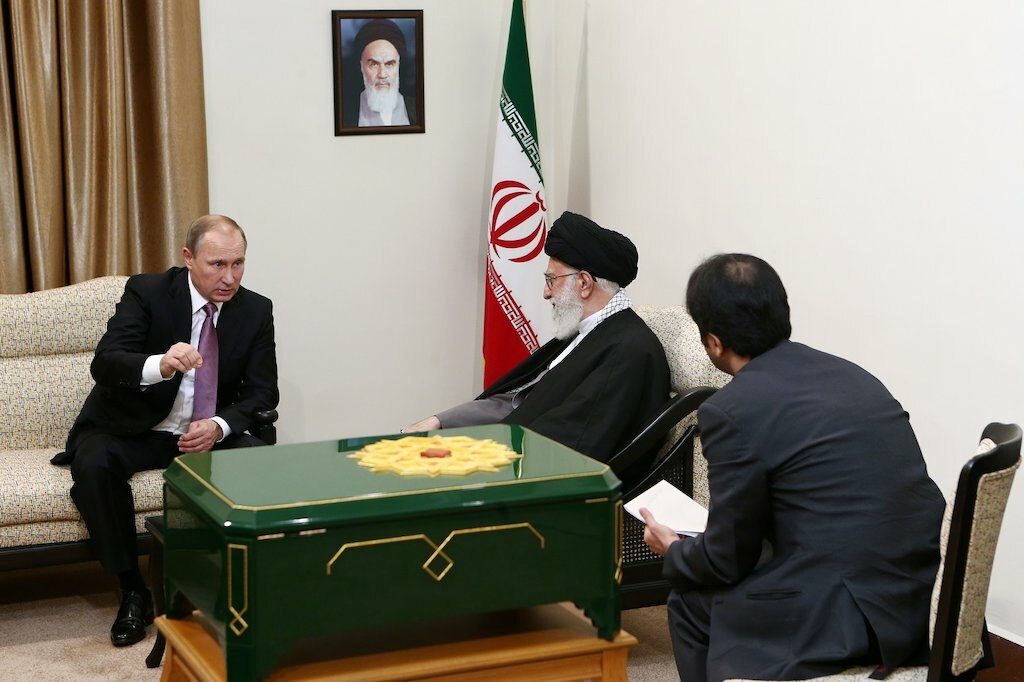
From Tehran’s perspective, an informal alliance with Russia is ideologically and historically odd, but it is strategically enticing. Iran and Russia have been rivals for almost two centuries and Iran’s former Supreme Leader Ruhollah Khomeini hated the Soviet Union almost as much as he hated the United States, scorning godless Communism and seeing the Soviet Union as an aggressive power that sought to undermine Iran’s revolutionary regime. But, today, the Islamic Republic needs a great power backer—and Russia fits their bill. Even if Russian arms are deficient compared with their Western counterparts, Moscow can provide the full range of weapons that Iran desperately needs. Add to this a friend on the United Nations Security Council that gives Iran diplomatic clout, as well as their mutual rejection of democracy and human rights, and Iran’s infatuation with Russia becomes even more understandable.

Moscow’s interest in Tehran is a bit harder to explain. It starts with a range of common interests that are generally anti-U.S., opposed to democratic values, and wary of Sunni Muslim fundamentalism. Indeed, the modern Iran-Russia relationship initially grew from cooperation between their respective intelligence services looking to keep an eye on various Sunni fundamentalist groups that emerged in the Caucasus and Central Asia after the collapse of the USSR. In the Middle East, they share a sense of fear and opportunism, worrying that regional unrest could topple anti-Western partners like Bashar al-Assad but hoping that the strife will allow them to undermine their enemies and expand their own influence.

New Power Polarization In Israel-Hamas Crisis

Collins Chong Yew Keat

Malaysian Prime Minister Datuk Seri Anwar Ibrahim’s visit to the Middle East, particularly to Turkey and Saudi Arabia, reflects the growing need for the country in stepping up its geostrategic role in transcending the conventional regional economic and security centric affiliation. The meeting with Egyptian President Abdel Fattah El-Sisi provides the missing key to for on the ground short term relief to the crisis involving the civilians, with the right regional effort.

It will be difficult for a solitary Malaysian push and pressure, and it will need the leverage and influence of combined interests and importance of vital players including Doha, Riyadh and Ankara, where Malaysia has maintained good ties with the latter two. Malaysia has also maintained growing ties with Tehran, and thus Malaysia’s role is also tied to the returns from these players in their US ties. Riyadh’s normalization plans with Israel are now jeopardised, and this affects Washington’s Middle East objectives.

The deep complexity of the Israel-Palestine conundrum and with the current power rivalry and bloc divide contribute to the impasse that has divided the world. Initial ground works to stabilize the region and prevent further escalation have been intensifying, but remain polarized by the ongoing power and West-East and North-South polarization.

Conflicting Dilemma for Ongoing West-Moscow-Beijing Rivalry

Beijing and Moscow have worked across different platforms in trying to provide solutions and pushing for de-escalation. Moscow has also condemned the West’s hypocrisy and blamed the US as the prime factor in the long running Middle East crisis that has long dominated Middle Eastern politics and moulded the geopolitics of the region in its own interest frame.

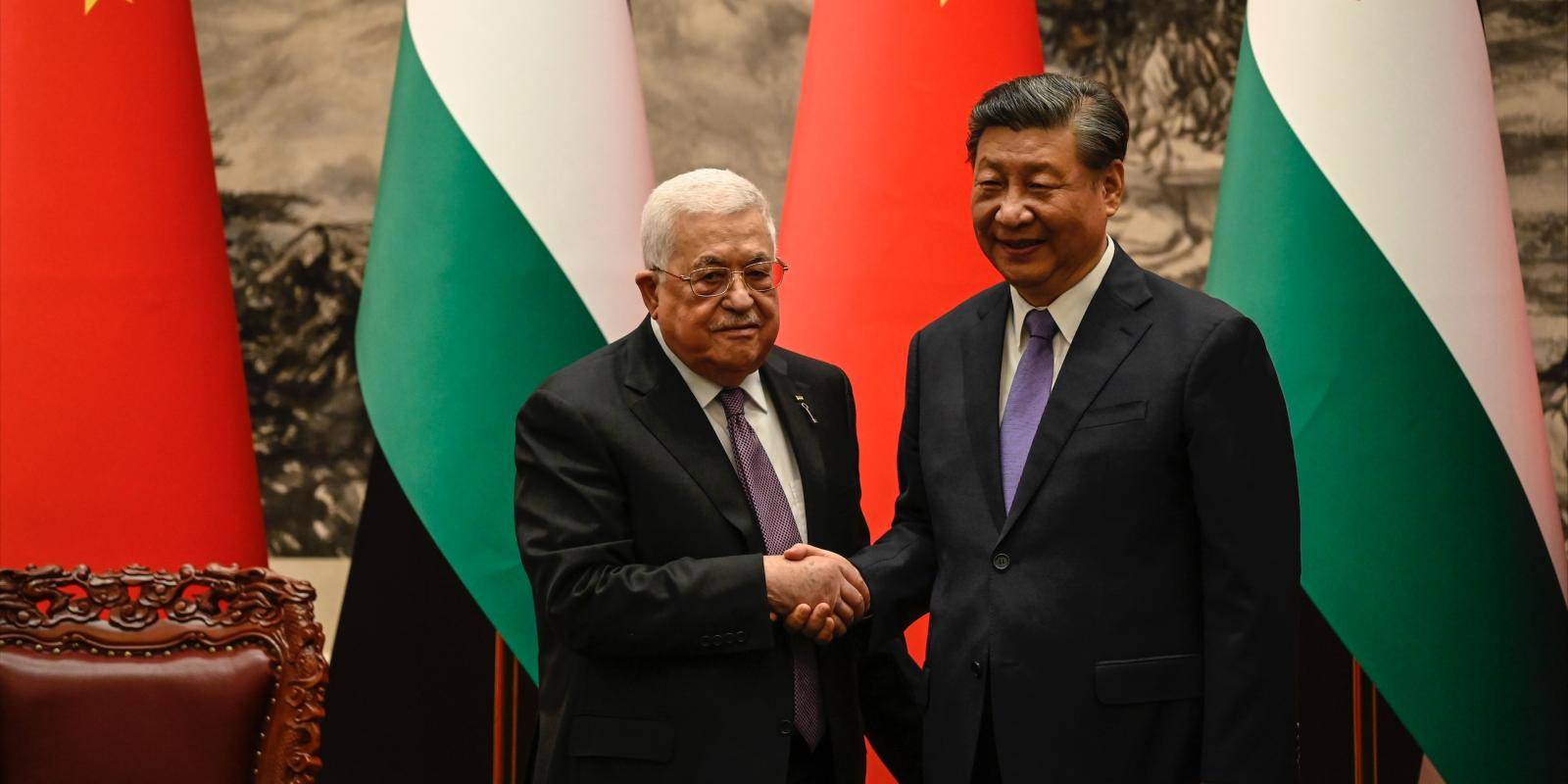
China’s approach to the war in Gaza is not anti-Israel. It’s designed to contain the US

Ahmed Aboudouh

China’s position on the war in Gaza is controversial and ambiguous to many observers. Beijing has criticized Israel’s blanket bombardment of civilians and condemned violations of international law.

President Xi Jinping waited until after the Third Belt and Road Forum to comment on the crisis, reiterating China’s long-held position that a two-state solution should be implemented and calling for a humanitarian corridor to allow aid into the besieged Gaza Strip.

Chinese Foreign Minister Wang Yi went further, describing Israel’s bombardment of civilians in Gaza as actions that ‘have gone beyond the scope of self-defence’. At the same time, Beijing avoided condemning Hamas’s atrocities against civilians.

As in Ukraine, China is positioning itself as a peace-seeking, ‘neutral’ great power, in contrast to the US, whose committed support for Israel is depicted by Beijing as a destabilizing, violent influence in the region.

But China’s comments on the war, and its non-interventionist stance, mean it is unable to influence events – an uncomfortable position when its interests are directly threatened by the war.

That may be why Beijing is increasingly aligning with Russia on the Palestinian issue, an unprecedented development that aims to guarantee a place at the negotiating table at minimal cost to both – and undermine US influence in the region.

Space Force, AFRL ink first non-US research agreements with Indian AI, sensor firms

THERESA HITCHENS

The US Space Force, working via the Air Force Research Laboratory (AFRL), has signed its first-ever Cooperative Research and Development Agreements (CRADAs) with non-US firms — two space startups from India, AFRL announced today.

Under the CRADAs, New Delhi-based 114AI, an artificial intelligence firm that builds dual-use software for domain awareness, and 3rd ITECH, India’s sole image sensor company with offices in New Delhi and Berkeley, Calif., will work in partnership with AFRL’s Space Vehicles Directorate. CRADAs can involve swapping of expertise, access to lab space and provision of equipment, but no transfer of any federal funds to industry partners.

“The CRADA will foster collaborative efforts in cutting-edge technologies, marking a significant milestone in advancing innovation in Earth observation sensors and space domain awareness,” AFRL said in a press release.

The two agreements come following the landmark June meeting between US President Joe Biden and Indian Prime Minister Narendra Modi, during which the two sides launched the India-U.S. Defense Acceleration Ecosystem (INDUS-X), in part, to shore up the defense industry cooperation and technology sharing.

Pakistan: With Nawaz Sharif’s Return, Politics Comes Full Circle

Sushant Sareen

The prodigal Nawaz Sharif has finally returned to Pakistan, ending a self-imposed exile of four years. For months, Pakistan was rife with speculation on whether or not he will return. It hinged on a number of things. The first was the political circumstances. Would elections be held, or will there be a prolonged caretaker setup run by the military? The second was, what sort of a judicial setup would Nawaz be facing if he returned? He wanted to time his return after the retirement of Chief Justice Umar Ata Bandial whose bias in favour of Imran Khan was the stuff of legends. His successor, Faez Isa, was seen as a safer bet for Nawaz Sharif, because Isa isn’t seen as a lackey of Imran Khan or the Army. The third factor was, what were the conditions he had to accept? Basically, the dos and don’ts given by the military establishment. Finally, it depended on the guarantees of personal safety and liberty as also of a political level playing field.

That his return has been permitted by Pakistan’s permanent establishment—the Pakistan Army—is a no-brainer. Technically, Nawaz Sharif is an absconder in the eyes of Pakistani law. And yet, he received the protocol of a Prime Minister in waiting. All doors were opened for him, all courtesies were extended to him, all facilities were laid out for him on his return. Even the courts, which were hostile to him and ousted him in what was a judicial coup in 2017, were ready to accommodate his return and ensure he wasn’t arrested as soon as he landed back in Pakistan.

With Nawaz—the great comeback kid (actually he is a septuagenarian) of Pakistani politics—making a bid to become Prime Minister for the fourth and perhaps last time, he is once again the Army’s chosen one to take on its (and his) bete noire Imran Khan.

Philippines ‘Suspends’ Its Sovereign Investment Fund

Mong Palatino

The Philippine government has suspended the implementing rules and regulations of the Maharlika Investment Fund (MIF), three months after it was passed into law. MIF critics welcomed the decision and urged the government to conduct more studies and consult stakeholders about it. But President Ferdinand “Bongbong” Marcos Jr. clarified that his government is merely “finding ways to make it as close to perfect and ideal as possible” and that the fund will be operational before the end of the year.

Marcos proposed the creation of a sovereign wealth fund in November 2022, despite it being neither part of his campaign agenda nor in his government’s original development plan. The House of Representatives passed the bill in 17 days but not before it agreed to remove pension funds as one of the sources of the program. The Senate passed its own version in May this year amid widespread concerns about the MIF’s viability and effectiveness as a tool to generate investments, create jobs, and stimulate the local economy. The opposition also warned that the MIF was prone to abuse and corruption.

Despite the doubts raised by some scholars and former economic managers of the government, Marcos signed the law creating the MIF in July and assured the public that it would yield substantial gains for the country.

But on October 12, the president released a memorandum directing state banks to suspend the implementation of the MIF.

South Korea, US, and Japan Condemn North Korea’s Alleged Supply of Munitions to Russia

Hyung-Jin Kim

South Korea, the United States, and Japan strongly condemned what they call North Korea’s supply of munitions and military equipment to Russia, saying Thursday that such weapons shipments sharply increase the human toll of Russia’s war in Ukraine.

A joint statement by the top diplomats of South Korea, the U.S., and Japan came days after Russia’s foreign minister scoffed at a recent U.S. claim that his country received munitions from North Korea, saying that Washington has failed to prove the allegation.

“We will continue to work together with the international community to expose Russia’s attempts to acquire military equipment from [North Korea],” said the joint statement by South Korean Foreign Minister Park Jin, U.S. Secretary of State Antony Blinken, and Japanese Foreign Minister Kamikawa Yoko.

“Such weapons deliveries, several of which we now confirm have been completed, will significantly increase the human toll of Russia’s war of aggression,” it said.

The joint statement was meant to show the three countries’ resolve to actively respond to a weapons transfer deal that Russia and North Korea have been pursuing in defiance of repeated warnings by the international community, South Korean Foreign Ministry spokesperson Lim Soosuk told reporters.

Is China Killing Its Fledgling Golden Geese?

Jeremiah May

As China modernizes, one of the constant fears of the country’s leadership and academia has been the middle income trap. Originally introduced by World Bank economists Indermit Gill and Homi Kharas, this trap occurs when a country’s income rises to the point where its labor costs make exports uncompetitive when compared to low income countries, but it still has not seen significant enough growth to compete with high income countries in the high-value-add industries, such as finance and technology.

In East and Southeast Asia only South Korea, Japan, Singapore, and Taiwan have escaped the trap and achieved high income status, defined as having a Gross National Income per capita of over $13,845 (in 2022). China, with a 2021 GNI per capita of $11,880, has long been attempting to become the fifth Asian country to achieve this escape.

Over the past two decades a critical driver of China’s income growth has been the nation’s burgeoning private sector, and particularly the country’s mega-corporations. This trajectory bears striking parallels to South Korea and Japan, where giant, often family-owned, conglomerates and corporations spearheaded innovation and economic growth by frequently using their enormous political and economic influence to advocate for business and export friendly policies.

China and the US Appear to Restart Military Talks


China and the United States appear to be restarting dialogue between their militaries, despite continuing disputes over Beijing’s claims to Taiwan and the South China Sea.

The U.S. confirmed on Thursday that it plans to send Cynthia Carras, principal director for China, Taiwan, and Mongolia, to represent the U.S. Defense Department at the Xiangshan Forum in Beijing this month.

The international gathering hosted by the Chinese Defense Ministry aims to discuss security cooperation and raise China’s status as a global power and rival to the United States and its Asian allies, including Japan and South Korea.

China froze military exchanges in August 2022, after then-Speaker of the House of Representatives Nancy Pelosi visited self-governing Taiwan, which China claims as its own territory.

In one of the most notable incidents, Chinese defense officials refused to answer a call in February from U.S. Defense Secretary Lloyd Austin following the shooting down of a suspected Chinese spy balloon that had flown across North America, sparking a major diplomatic crisis between the sides that had already seen ties plummet to a historical low.

In a statement, the Pentagon said it “welcomes the opportunity to engage with [People’s Liberation Army] representatives at the Xiangshan Forum on ensuring open and reliable lines of communication, ensuring crisis communications channels, reducing strategic and operational risk, and avoiding misperceptions.”

Can China Help in the Middle East?

Walter Russell Mead

As Team Biden contemplates the ruins of its Middle East diplomacy and scrambles to throw more U.S. military assets into the region in the hope of deterring Iran, it is looking to an unlikely partner. China’s Foreign Minister Wang Yi will be in Washington this week for talks with Secretary of State Antony Blinken and White House national security adviser Jake Sullivan.

Mr. Wang’s visit was originally part of a diplomatic process preparing the way for a trip by President Xi Jinping to next month’s Asia-Pacific economic summit in San Francisco. But as Mr. Blinken underlined in remarks to the United Nations Security Council on Tuesday, America wants help from China to prevent a wider war in the Middle East.

It isn’t a totally crazy idea. China imports a lot of Middle Eastern oil, and supply shortfalls and price hikes won’t help a Chinese economy struggling with the collapse of its real-estate market and a potential financial crisis. If China does want to play a major role, it is well prepared to do so. Because of a planned handover between China’s 44th and 45th naval escort task forces in the People’s Liberation Army Navy, both forces are currently active in the Persian Gulf, making Beijing, temporarily, the leading naval presence in the strategic waterway.

On paper, Team Biden and Team Xi seem to want pretty much the same things in the Middle East. China’s envoy Zhai Jun is touring the Middle East, Chinese state media reports, to promote dialogue, achieve a cease-fire and restore peace, as well as to promote a two-state solution. That sounds a lot like what Mr. Blinken says.

China's New "Multi-Domain Precision Warfare" Operational Concept "Mirrors" US Strategy

KRIS OSBORN

China’s emerging Core Operational Concept is described as “Multi-Domain Precision Warfare,” … a blend ot networking, AI, precision weaponry and joint operations all supporting what the People’s Liberation Army refers to as a “system-of-systems” approach.

Sound familiar? Interestingly, this PRC concept was fully articulated and unveiled to a certain extent in 2021, according to the Pentagon’s most recently published annual China Report, which describes the Chinese concept as specifically aimed at finding and countering US vulnerabilities.

“MDPW is intended to leverage a C4ISR network that incorporates advances in big data and artificial intelligence, what the PLA calls the “network information system-of-systems,” to rapidly identify key vulnerabilities in the U.S. operational system and then combine joint forces across domains to launch precision strikes against those vulnerabilities,” states the Pentagon annual China report to Congress, called Military and Security Developments Involving the People’s Republic of China.

Certainly upon initial examination with a mind to the Pentagon’s current thinking, the Chinese concept almost fully mirrors, replicates or simply “copies” the US military’s Joint All Domain Command and Control effort. The Chinese concept also appears to be a "several-years-behind" effort to copy the many US military Multi-Domain Task Forces which have for years been integrating land-sea-air operations into a joint warfare fighting conceptual paradigm.

So in a recent or immediate sense, the emphasis on networking, AI and multi-domain operational concepts could be seen as a transparent effort to simply “replicate” US modernization initiatives. An added variable to this is a concept of history to an extent, given the US Army introduced the “system-of-systems” idea as far back as 20-years ago as the foundatio

Newest F-35, F-15EX contracts are set. Here’s how much they cost

MICHAEL MARROW

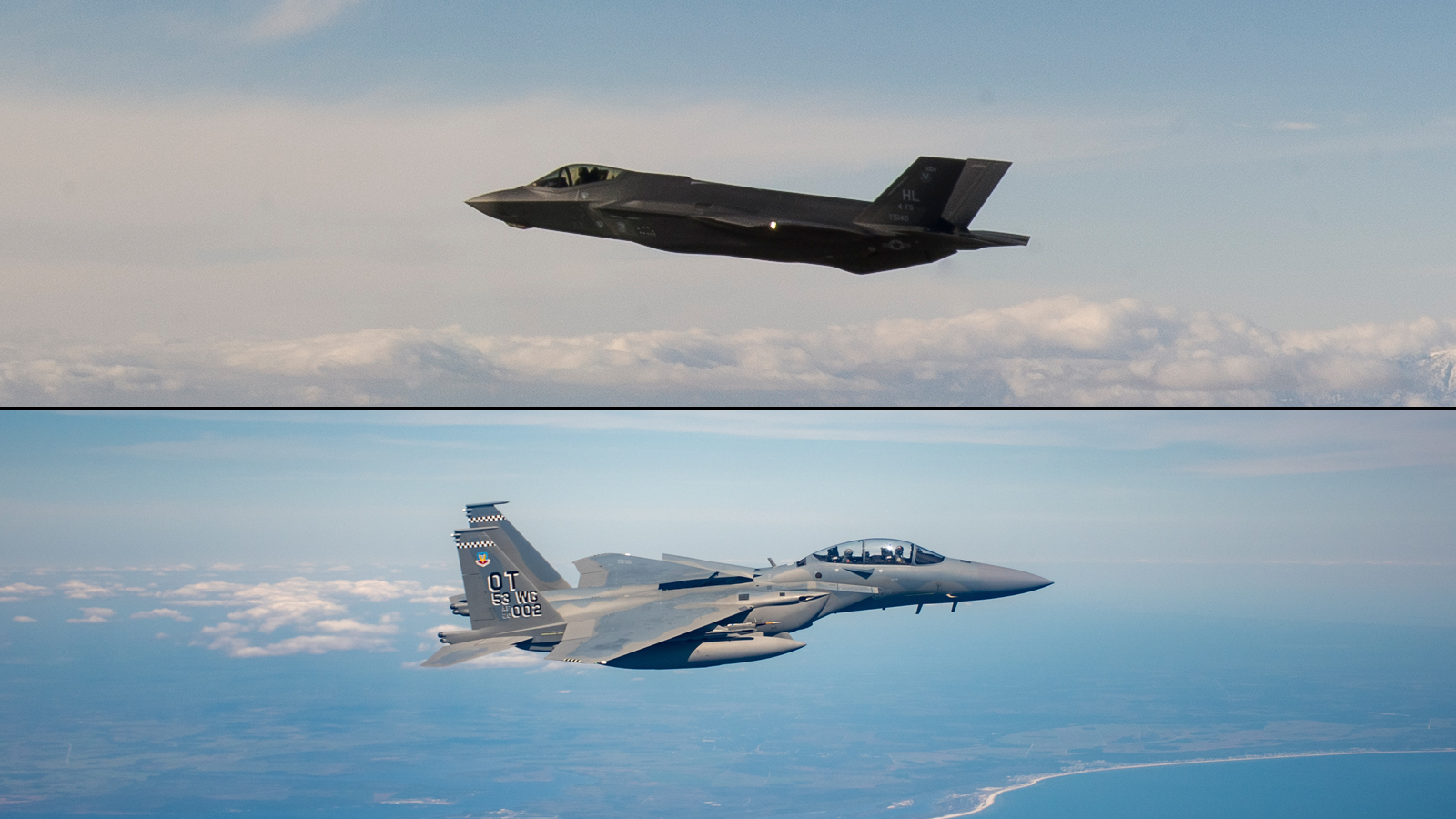
The flyaway cost for the F-15EX Eagle II is approximately $90 million for each aircraft in the program’s second production lot, about $7.5 million more than the newest price for an F-35A, Breaking Defense has learned.

The Air Force has confirmed to Breaking Defense that a contract for the next three production lots of the Boeing-made F-15EX was finalized on Sept. 28, a major milestone for the program. But the $90 million per unit cost in the contract — a number that is expected to grow in successive lots — will likely raise eyebrows among critics both within and outside the service who argue that officials should focus on buying more F-35s.

Under the new agreement, the price for an F-15EX will start at “approximately” $90 million for lot 2, rise to $97 million in lot 3 and then dip to $94 million in lot 4, according to an Air Force spokesperson. The two parties previously finalized a deal for the aircraft’s first lot in November 2022, setting a flyaway price of $80.5 million for six jets with two test aircraft already purchased — meaning the costs on the F-15EX are going up per unit year over year until the fourth lot is introduced. (The Air Force measures flyaway price in then-year dollars, which are adjusted for inflation.)

As a cost comparison, F-35 Joint Program Office spokesman Russ Goemaere told Breaking Defense that the Air Force’s variant of the stealth fighter has an “average” flyaway cost of $82.5 million for the jet’s 15th, 16th and 17th production lots, which will be delivered in calendar years 2023, 2024 and 2025.