Dale Pankhurst
ABSTRACT
Polarization, populism, and animosity amongst political parties, movements, and societies across Europe and North America has led to an increase in violent extremism in recent years. Groups and individuals motivated by extremist ideology have launched violent attacks against democratic institutions, murdered elected representatives, and bombed government buildings. Militia organizations with a pro-state orientation have also been involved in anti-government extremist violence and terrorism against their own governments. Despite being pro-nation-state, some of these militias now have an anti-government agenda leading to an awkward relationship with the state as a diverse actor encompassing both the government and other state institutions. How can we explain the shift in pro-nation-state militias from pro to anti-government extremism? Using contemporary case studies from both the United States of America and Ukraine, this article will propose that ideological de-alignment between the government and the militia group leads to pro-state militias becoming anti-government. Furthermore, the article will argue that bargaining processes relating to power and control between pro-state militias and governments can lead to these militias exhibiting anti-government extremist behaviour.
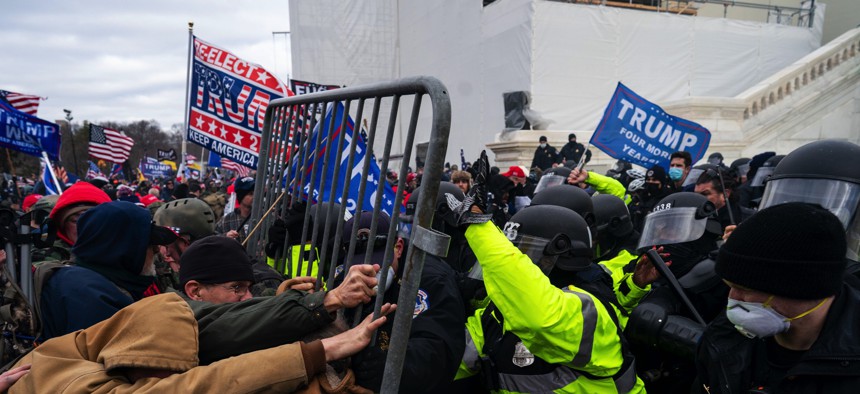
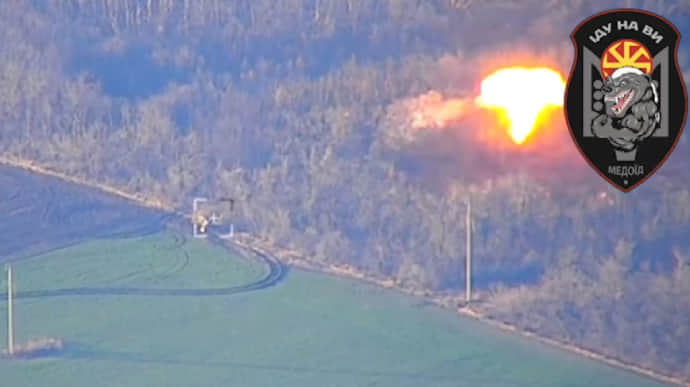
There is a growing body of empirical analysis on extra-dyadic actors that refers to “pro-state militias” (PSMs), conceived as non-state armed organizations that are pro-state, broadly defined. Because these groups are defined by their “pro-state” orientation, researchers often assume that PSMs exhibit a loyal attachment and adherence to their respective governments. However, a closer inspection reveals a variety of relationships with the state. These relationships, both official and unofficial, tend to shift overtime with PSMs sometimes morphing into anti-government extremist groups as they seek to fulfil their own agendas and aspirations as armed political organizations. For example, there is a tendency within the literature to view Loyalist paramilitary terrorist groups in Northern Ireland as pro-state due to their anti-insurgent (anti-Irish Republican Army) stance and their overall desire to remain part of the United Kingdom (Cadwallader, Citation2013). Yet these groups also engaged in anti-government extremism. Loyalist paramilitaries murdered the first police officer during the Troubles, launched bombing campaigns to undermine the Northern Irish government in 1969, and organized widespread strikes and protests that collapsed Northern Ireland’s first ever power-sharing arrangements in 1974 (Bruce, Citation1992). In contemporary Europe and America, militias such as the pro-Trump Oath Keepers or the Right Sector in Ukraine, have evolved from government-sympathetic militias to armed organizations displaying forms of anti-government extremism. How can we explain why PSMs evolve from pro-government armed groups into anti-government extremist organizations?







:quality(70)/cloudfront-us-east-1.images.arcpublishing.com/archetype/G4HJN6XEB5D2JHY2R3DTRSR5KU.jpg)