20 January 2024

What Gulf States Want in Gaza

Talal Mohammad

Three months ago, Hamas launched an unprecedented attack on Israel, which swiftly responded with an operation to eradicate the militant group. So far, around 1,200 Israelis and an estimated more than 23,000 Palestinians have died, with many more injured. Amid calls for a cease-fire, many observers are speculating what a “day after” might look like in the Gaza Strip.

Israel’s ‘People’s Army’ at War

Raphael S. Cohen

Since the Oct. 7 Hamas terrorist attack on Israel, a parade of U.S. defense officials, politicians, former generals, and defense policy wonks have offered advice—largely unsolicited—about how Israel should conduct its offensive in Gaza, based upon the lessons the United States learned from its wars in Iraq and Afghanistan. Most of these recommendations have centered on the need to protect the civilian population during the ongoing fighting and plan for the day the war ends, if only to prevent a power vacuum and subsequent insurgency. Much to this group’s increasing frustration, a lot of the advice has gone unheeded.

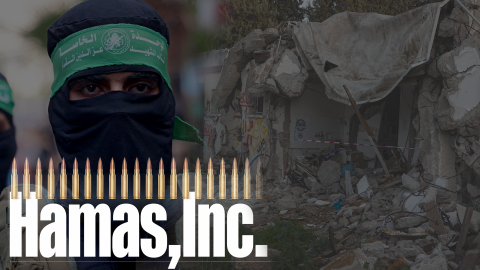
Hamas, Inc.: The Property Empire That Funded Militant Attack on Israel

SEAN O'DRISCOLL 

It seems a long way from the misery of Gaza's shattered buildings. Situated a short walk from the Golden Horn, an estuary of the Bosphorus in bustling Istanbul, AG Plaza boasts terraces, pools and commercial space, and is designed to attract tech companies that want to benefit from the city's Commerce University campus.

Yet the two places are indeed linked. The glistening project in Turkey's cultural capital was built by a company controlled by what the U.S. Treasury Department describes as "Hamas elements."

The AG Plaza in Istanbul is just one example of how, according to the U.S. Treasury Department, It reveals extensive new links between companies and individuals that the U.S. says are funding Hamas operations.


Hamas is running a network of construction companies worth hundreds of millions of dollars, a Newsweek investigation has found.

By examining business records and cross-referencing them with the sanctions lists, Newsweek's investigation shows how Hamas is using some of its key personnel to set up such companies around the Middle East and elsewhere to run its financial empire—often in places where, one expert said, it may find tacit approval for such operations. They include businesses in the United Arab Emirates, Turkey, Algeria, Saudi Arabia and Sudan, and may even reveal how the group is expanding into Western Europe.

It also illustrates that while the unprecedented aerial and ground assault on Gaza, which Israel says is necessary to ensure Hamas' destruction, may paralyze the militant group there, it seems unlikely to stop the flow of funds from abroad.

This task—cutting off Hamas funding at source—appears to have become an urgent priority for the Biden administration, which on January 5 announced it is offering a reward of up to $10 million for information that could dismantle the group's economic foundations.

The Rewards for Justice Program aims to disrupt the broader network that sustains Hamas, including targeting any source of revenue, major donors, financial facilitators and financial institutions that facilitate transactions for the group.

The program also focuses on businesses or investments owned or controlled by Hamas or its financiers, as well as front companies engaged in procuring dual-use technology and criminal schemes that financially benefit the organization.

The program reflects the difficulty of targeting such funding. Hamas' web of interconnected companies, which has also enriched senior Hamas figures to a degree unimaginable for the ordinary people of Gaza, is remarkable in its size and complexity.

Pakistan Supreme Court Strips Imran Khan’s Party of ‘Bat’ Symbol

Umair Jamal

The Supreme Court of Pakistan’s recent ruling depriving the Pakistan Tehreek-e-Insaf (PTI) of the “bat” symbol has dealt a significant blow to former Prime Minister Imran Khan’s party ahead of the February 8 elections.

The bat was a potent symbol for the PTI, which helped the party connect with its leader, Khan, who as captain of the Pakistan cricket team led it to victory in the 1994 Cricket World Cup tournament. The symbol had galvanized voters to back the PTI in this cricket-crazy country.

With the bat now out of the picture, the PTI has lost the one identification that would have counted on election day. Without the bat symbol, party candidates will have to contest the polls with different election symbols. Candidates will not have a symbol under which they used to stand united.

The Supreme Court said that the PTI cannot retain its electoral symbol as it failed to provide sufficient evidence of having conducted intra-party elections as directed by the Election Commission of Pakistan (ECP).

As the Chief Justice of Pakistan observed, “a fundamental aspect” of democracy in Pakistan “is the ability to put oneself forward as a candidate and to be able to vote, both within a political party and in general elections. Anything less would give rise to authoritarianism which may lead to dictatorship.”

The denial of the bat symbol to the PTI has created an impression that the party is being sidelined on account of its prolonged battle with the ECP and other important stakeholders. The decision has been critiqued as an excessive and punitive response to not conducting intra-party polls as per the law.

Taiwan Learned You Can’t Fight Fake News by Making It Illegal

Nick Aspinwall

Lai Ching-te will be Taiwan’s next president after winning Saturday’s election, ensuring that the ruling Democratic Progressive Party (DPP) will remain in power and dealing a rebuke to Beijing’s wishes for a more China-friendly administration. In the days before the election, Taiwanese voters were flooded with information. Look up, and they saw posters on buses and buildings declaring the virtues of all three candidates and their running mates. Look down, and they got a stream of news, gossip, and opinions from their phones—not all of it true and much of it likely stirred up by internet trolls in China.

What China wants out of Myanmar’s civil war

Ellen Ioanes

In Myanmar, a brief ceasefire between a powerful alliance of ethnic armed groups and the ruling military junta appears to have been broken just hours after it was negotiated at China’s urging.

The Three Brotherhood Alliance, one of the factions fighting in a coordinated armed struggle against the Tatmadaw (Myanmar’s military junta), agreed to the ceasefire Friday in the Chinese provincial capital of Kunming, about 250 miles from Myanmar’s northeast border with China. The ceasefire provision was seemingly limited to Shan state, which borders China, and aimed at protecting Chinese interests and civilians in the region.

But by Friday, the military had broken the agreement, according to a statement from the Ta’ang National Liberation Army (TNLA), one of the ethnic armed groups, along with the Arakan Army and the Myanmar National Democratic Alliance Army, in the Three Brotherhood Alliance. The junta attacked multiple positions in northern Shan State Friday and Saturday, the Irrawaddy and local Burmese outlets reported. Vox is unable to independently verify the claims.

The ceasefire came after multiple rounds of talks between the Tatmadaw and the Three Brotherhood Alliance. Both sides reportedly broke a previous ceasefire agreement negotiated last month, and some observers did not expect the current agreement to hold.

“The three parties, the three ethnic armed organizations up on the border actually had no intention in participating in these talks and did so really only because of very strong Chinese pressure,” Jason Tower, country director for the Burma program at the US Institute of Peace, told Vox. “And I think that the ceasefire was really doomed to fail from the outset, given that there was just no intention on the part of the different parties to seriously engage in any form of deeper dialogue about the situation.”

China’s population declines for second straight year as economy stumbles

Laura He and Simone McCarthy

China reported a record low birth rate in 2023 as its population shrank for the second year in a row. The trend marked the deepening of a demographic challenge set to have significant implications on the world’s second largest economy.

The country recorded 6.39 births per 1,000 people, down from 6.77 a year earlier, China’s National Bureau of Statistics (NBS) announced Wednesday. The birth rate is the lowest since the founding of Communist China in 1949.

Some 9.02 million babies were born, compared with 9.56 million babies in 2022. The overall population fell in 2023 to 1.409 billion, down 2.08 million people from the previous year, the bureau said.

“To be sure, last year’s sharp decline should be partly due to the lockdowns and most likely new births will rebound in 2024, although the structural down-trend remains unchanged,” said Larry Hu, chief China economist for Macquarie Group.

The country’s demographic shift comes at a time when its growth is sputtering. The NBS confirmed that China’s economy grew by 5.2% last year, compared to a government target of around 5%.

While this expansion marks a significant pick-up over 2022, when China’s economy grew by just 3%, it is still one of the country’s worst economic performances in over three decades.

Chinese stocks tumbled on Wednesday following the data release. Hong Kong’s Hang Seng Index closed down 3.7%. The CSI300, which consists of 300 major stocks listed in Shanghai and Shenzhen, fell 2.2%. Both indexes had a dismal year in 2023, down more than 10% each.

China has been beset by a series of economic problems, including investor exodus and deflation. The shrinking population will now force Beijing to make some structural changes in its economy and reshape sectors including health care and housing.

The Coming War of Civilizations

Joel Kotkin

Media coverage of world events focuses on one crisis at a time, as if each was a separate phenomenon. But Ukraine, the Israel-Hamas war, the assaults on shipping in the Red Sea, China’s threats on Tawain, the closing of the Red Sea by Yemen’s Houthis, and even Venezuelan plans to conquer much of oil-rich Guyana are not separate events, but highly related.

All follow patterns laid out in Samuel Huntington’s 1986 book, The Clash of Civilizations and the Remaking of World Order which predicted the rise of “revanchist” powers seeking to recover perceived past glory. The most critical struggle will be with China, whose stated aim is to emerge as the leading global superpower by 2050. Yet China’s rise as a totalitarian surveillance state is just one part of the ascendency of autocrats who seek to topple the long-standing liberal capitalist order and replace it with something more feudal in nature, essentially a world dominated by absolute rulers and their satraps.

To be sure, each of these malefactors, including China, suffers significant weaknesses that could limit their ambitions and leave an opening for a strong Western response. Yet the West’s current power structure seems to lack the will, much less the way, to fight back. Attacks on innocent civilians, particularly in Europe, and assaults on American military bases and commercial shipping, not to mention the use of social media to undermine Western resolve—most evident with the rise of TikTok—are met with weak responses.

Realpolitik Trumps Moralism

The response to the Ukraine war epitomizes the shifting power dynamic. As the West, particularly the traditionally pacifist Left, has rallied with dollars and heightened emotions to the Ukrainian cause, the rest of the world, including rising economic powers like Vietnam, has showed little interest. Virtually no power outside the West has stood by the Ukrainians, except the democracies of East Asia, notably Japan and South Korea, which now have reason to think they too will be abandoned eventually by the West as well.

Can a Regional War Be Avoided in the Middle East?

Daniel Byman and Seth G. Jones

The U.S. strikes on the Houthi rebels in Yemen show that the war that began after Hamas launched a brutal terrorist attack on Israel on October 7, 2023, is now a regional conflict. Regional actors, including Iran and the Houthis, want to demonstrate solidarity with Hamas and gain credibility with their constituencies for being part of the anti-Israel struggle. At the same time, however, Iran wants to avoid an all-out war with Israel and the United States. But the actions of both sides might accidentally spin out of control.

Deterring a regional war will be a challenge for the United States and require restraint on Israel’s part. Thomas Schelling, the U.S. foreign policy strategist and Nobel Prize-winning economist, argued that deterrence rests, in part, on the threat of inflicting more pain—what he called “latent violence.” This approach entails the United States using calibrated force against Iranian-backed groups in Yemen, Iraq, and Syria, signaling that it is prepared to use more force if necessary, and then following up if it is required.

The threat of latent violence is particularly important to send to Iran. Over the past decade, Iran and its paramilitary arm, the Islamic Revolutionary Guard Corps (IRGC)-Quds Force, have strengthened their relationships with partner forces in Lebanon, Syria, Iraq, Yemen, Gaza, the West Bank, and other areas in the region. Since October 7, the head of the Quds Force, Esmail Qaani, has promised to support Hamas in an “axis of resistance” and visited Iranian-backed groups in Syria and Iraq.

Israel’s deadliest foe is Lebanese Hezbollah. The risk of an all-out war with Hezbollah has loomed since October 7. Since that date, Hezbollah and various Palestinian groups it controls have attacked Israel more than 200 times, while Israel has struck over 1,200 targets in Lebanon. Twelve Israelis have died, and Hezbollah reports it has lost around 150 fighters from the attacks and Israeli strikes have killed 20 Lebanese civilians. Israel has also struck Hezbollah commanders and senior Hamas figures in Lebanon. A member of the country’s war cabinet warned that if there is no diplomatic solution soon, Israel’s military will act decisively.

Why Saudi Arabia Is Staying on the Sidelines in the Red Sea Conflict

Veena Ali-Khan

In the not-too-distant past, Saudi Arabia would have cherished the opportunity for a joint U.S.-U.K. strike targeting Houthi strongholds. After all, Riyadh fought a brutal war against the group for almost a decade. But today, a Western offensive on the Yemeni group is precisely the opposite of what Riyadh wants as it conducts a delicate peace negotiation with the Houthi leadership to extricate itself from Yemen and, it hopes, permanently protect itself from cross-border attacks.

Great Power Deterrence Lessons from the Middle East War

Keith B. Payne

Introduction

With Russia and China as heavily armed and aligned nuclear foes, Washington faces an unprecedented deterrence context and looming threats. Given this new great power alignment, more than 30 states are at increased risk, namely, those allies directly covered by the U.S. nuclear deterrent and those partners greatly affected by the credibility of that deterrent, such as Taiwan and Ukraine.

Most U.S. civilian and military leaders who must pay attention to this challenge appear to recognize that the U.S. understanding of deterrence, largely based on its Cold War experience, must be reconsidered in this unprecedented context. The search for guideposts for that understanding is now ongoing. The current war in the Middle East appears to offer some tentative lessons in this regard.

Possible Deterrence Lessons Learned from the Current Middle East War

Some elements of the current Middle East War suggest broader lessons for great power nuclear deterrence. This may seem counterintuitive. Is not nuclear deterrence sui generis—a unique class of its own?

Nuclear deterrence is not sui generis because the instrument of the threat does not obviate the importance of other factors playing out in deterrence engagements. Deterrence is a function of conflicting perceptions, values, wills, goals, cultural norms, threats, calculations and communications, not just the instruments of threat involved. Consequently, an international event not involving nuclear threats may provide insight into the functioning of deterrence more broadly. This allows the examination of non-nuclear crises and conflicts for possible lessons that may apply to great power nuclear deterrence. Simply put, crises and conflicts that provide insight into when, why, how and to what effect national leaderships perceive, calculate and communicate can provide insight into the functioning of deterrence—whether the threats involved are nuclear or not.

There appear to be tentative lessons to be learned from the current Middle East conflict; hopefully, folks in pertinent positions are studying it for this purpose. The following presents only two such possible lessons based on a preliminary understanding of events that may be revised with later, more refined, knowledge of events.

The Decline of Deterrence

Mike Coté

Deterrence – the ability to prevent enemies from acting against one’s interests by coercion or threat – has always been a mainstay of defense policy. The Romans used walls, outposts, and raids; the British Empire used its fleet and the threat of blockade; the United States and the Soviet Union used nuclear weapons. A quote from the British ‘invasion literature’ classic, The Invasion of 1910, sums up the idea perfectly: “To be weak is to invite war; to be strong is to prevent it.” Deterrence, however, is only as good as the resolve, consistency, and reputation of the power in question. A nation’s geopolitical status can change in an instant; as such, deterrence requires maintenance to remain credible over time. As is the case in life, it takes decades to cement a reputation, but seconds to lose it.

Over the past few years, the beach of American deterrence has eroded through the waves of foreign crises and the Biden administration’s failure to strengthen the proverbial protective dunes. Every additional crisis, if not responded to appropriately, eats away at America’s deterrent capability. Unfortunately, the White House has repeatedly neglected its responsibilities while further undermining deterrence through its policies and actions. As such, despite the stormy international weather, the ongoing decline of American deterrence is entirely avoidable.

The crux of deterrence is the belief that a nation’s enemies will face profound, disproportionate consequences for any malign action against said nation’s interests. Weak responses to attacks only embolden foes to continue up the escalation ladder, inevitably leading to worse outcomes. This was perhaps most infamously exhibited in the run-up to the Second World War, where Nazi Germany, Fascist Italy, and Imperial Japan were allowed to gobble up territory and dominate their neighbors with nary a reply from the democratic West. By the time a serious effort was made, it was too late to avoid cataclysmic warfare. Proper deterrence requires an aggressive response which stirs fear in the enemy. This approach finds an eloquent expositor in Sean Connery’s character from the 1987 film The Untouchables, who describes the Chicago Way: “He pulls a knife, you pull a gun; he sends one of yours to the hospital, you send one of his to the morgue.” Without the threat of truly disastrous defeat, many bad geopolitical actors will take risks to score a potential victory.

Iran Issues Houthi Warning to US—'Justified' Targets

David Brennan

Ambassador Amir Saeid Iravani, Iran's permanent representative to the United Nations, has accused the U.S. and the U.K. of declaring war against the Yemeni people after two nights of joint airstrikes on the country.

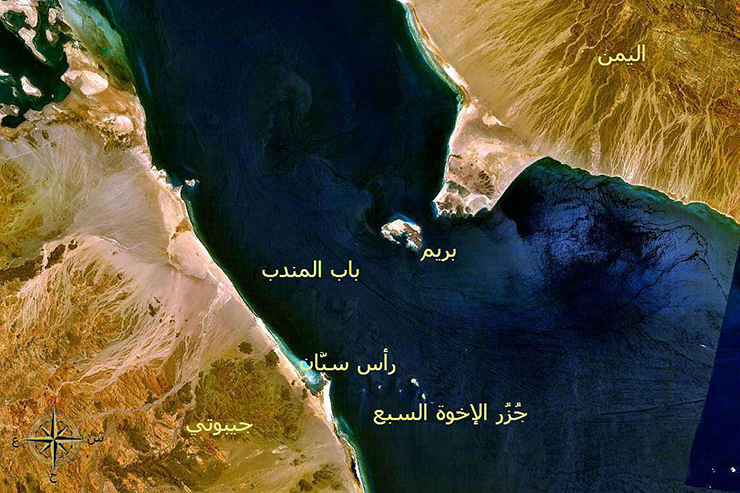
The strikes targeted positions of the Houthi movement—officially known as Ansarullah—that, since 2014, has been at war with the internationally recognized government backed by a Saudi Arabia-led coalition. The Houthis have long maintained close ties with Tehran and are widely considered to be part of Iran's regional "Axis of Resistance."

In response to Israel's war on Gaza—itself a response to the surprise October 7 infiltration attack by Hamas in southern Israel—the Houthis have been attacking shipping in the Red Sea. The U.S. and its allies responded by launching a new maritime security operation, which this week broadened to include airstrikes on Houthi targets.

The Houthis—who have weathered almost a decade of war with America's Gulf partners—have vowed retaliation.

In an exclusive interview with Newsweek, Iravani said that "any country engaging in this military aggression or subsequent hostilities may expose itself to potential danger."


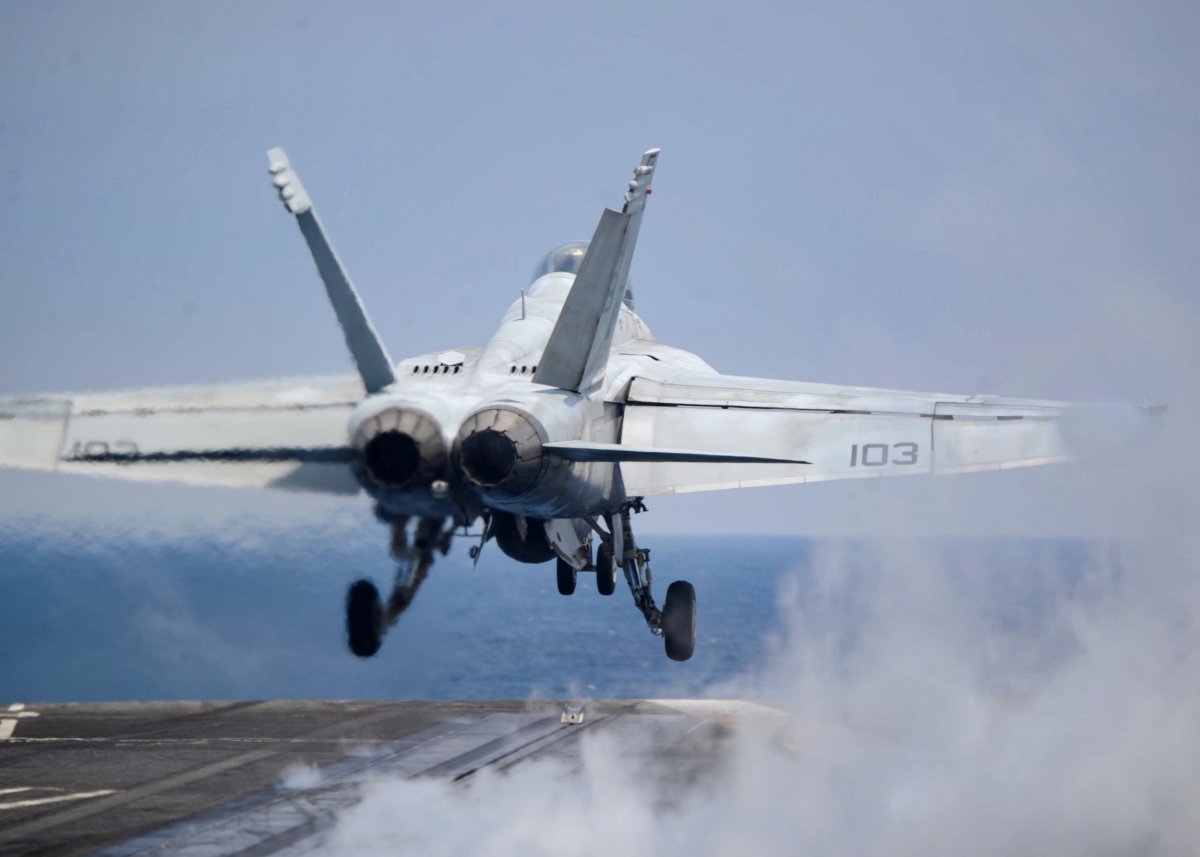
An F/A-18F Super Hornet aircraft launches from the Nimitz-class aircraft carrier USS Harry S. Truman at an undisclosed location in July 7, 2018. American aircraft have conducted a series of strikes against Houthi militants in Yemen.

Iravani: The actions taken by the United States and the U.K. in attacking Yemen constitute a flagrant violation of national sovereignty, a breach of international law, and a transgression of the United Nations Charter, ultimately amounting to a declaration of war against the Yemeni people. This military aggression is indicative of the success of the Israeli regime's lobbying in Washington to draw the U.S. into direct war and exacerbate the spill-over of conflicts to other parts of the region.

Why Is the World Seeing More Conflicts Than Usual?

Ravi Agrawal

2024 is off to a glum start, with wars raging on multiple continents and little hope for diplomatic breakthroughs. Every January in Foreign Policy, the International Crisis Group’s Comfort Ero and Richard Atwood list out 10 conflicts to watch in the year ahead. Their list includes Ukraine, Gaza, a wider Middle East war, and Sudan, of course, but it also details tensions in Ethiopia, the Sahel, Myanmar, Haiti, Armenia-Azerbaijan, and the possibility of conflict between the United States and China.

Cyber attacks, riots and lies: Leaked documents show step-by-step plan for how Putin could trigger World War Three

Will Taylor

The plans depict a hypothetical future scenario, where Russia mobilises 200,000 more men as its forces are bogged down in Ukraine.

Putin uses them to launch a spring offensive, winning the war in June in a nightmare scenario for Europe.

Hybrid attacks are then launched on the West, before Russia builds up forces on the border with Nato countries Poland and Lithuania.

After stirring up tensions in the Baltics, Nato deploys 300,000 soldiers east on "Day X" as they stare down Russian forces over the Suwalki gap, the region between Moscow's satellite Belarus and its Kaliningrad enclave.

The papers were leaked from the German Ministry of Defence to Bild.

The "Alliance Defence 2025" plans are not an early warning of how events will go - but a hypothetical scenario for decision-makers to consider as they evaluate possible future confrontations with Russia.


Nato troops are sent eastward under the scenario. 

About 300,000 Nato troops are sent to confront Russia in the papers. 

A spokesperson for the ministry said: "Basically, I can tell you that considering different scenarios, even if they are extremely unlikely, is part of everyday military business, especially in training."

A new Suez crisis threatens the world economy


Over a thousand miles from Gaza, a naval crisis is unfolding that could transform the war between Israel and Hamas into a global affair with implications for the world economy. Since December 15th four of the world’s five largest container-shipping companies, cma cgm, Hapag-Lloyd, Maersk and msc, have paused or suspended their services in the Red Sea, the route through which traffic from the Suez Canal must pass, as Iran-backed Houthi militants, armed with sophisticated weapons, escalate their attacks on global shipping flows. As one of the world’s major trade arteries suddenly closes, America and its allies are ramping up naval activity in the Middle East, and may even attack the Houthis, in order to re-establish free passage.

The Davos Paradox

Cameron Abadi

The 54th annual meeting of the World Economic Forum takes place this week in the small Swiss village of Davos. As always, the world’s political and economic decision-makers will gather to discuss their mutual interests and how they align with the interests of the rest of the world. This year, they’ll do so under the convening theme of “Rebuilding Trust.”

The Panama Canal Is Running Dry

Mie Hoejris Dahl

For months, a withering drought has created major traffic jams at the Panama Canal. The drought, which may have been exacerbated by climate change, has left the canal’s water levels lower than ever, forcing Panama to let fewer ships through. The restrictions have led to delays, increased shipping costs, and uncertainty over the future of one of the world’s critical trade chokepoints.

Seeker For U.S. Army’s New Anti-Ship Ballistic Missile Flight Tested

JOSEPH TREVITHICK

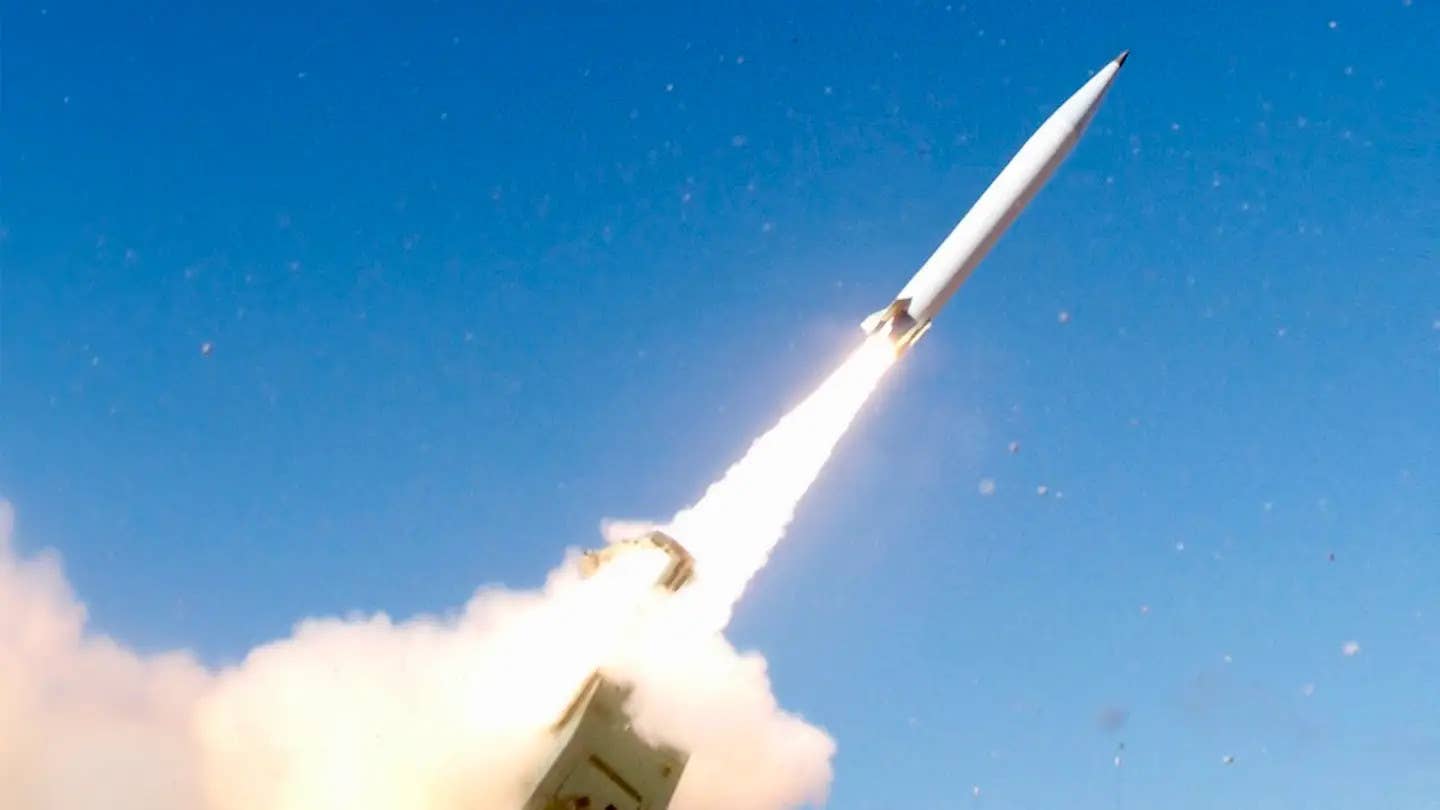
The U.S. Army has successfully flight tested a new seeker that will help transform its new Precision Strike Missile short-range ballistic missile into weapon that can strike moving ships and enemy air defenses. This news comes as Iranian-backed Houthi militants in Yemen have become the first to fire anti-ship ballistic missiles in anger and are now regularly using them in attacks in and around the Red Sea and the Gulf of Aden. Weapons of this type have also been a major topic of discussion in the context of a potential future conflict between the United States and China in the Pacific.

The initial flight testing of the seeker for what is officially known as the Land-Based Anti-Ship Missile (LBASM) or Precision Strike Missile (PrSM) Increment 2 was completed in 2023, according to the Army's Combat Capabilities Development Command's Aviation & Missile Center, or DEVCOM AvMC. The center disclosed the milestone in a round-up of achievements from last year that was published earlier this month.

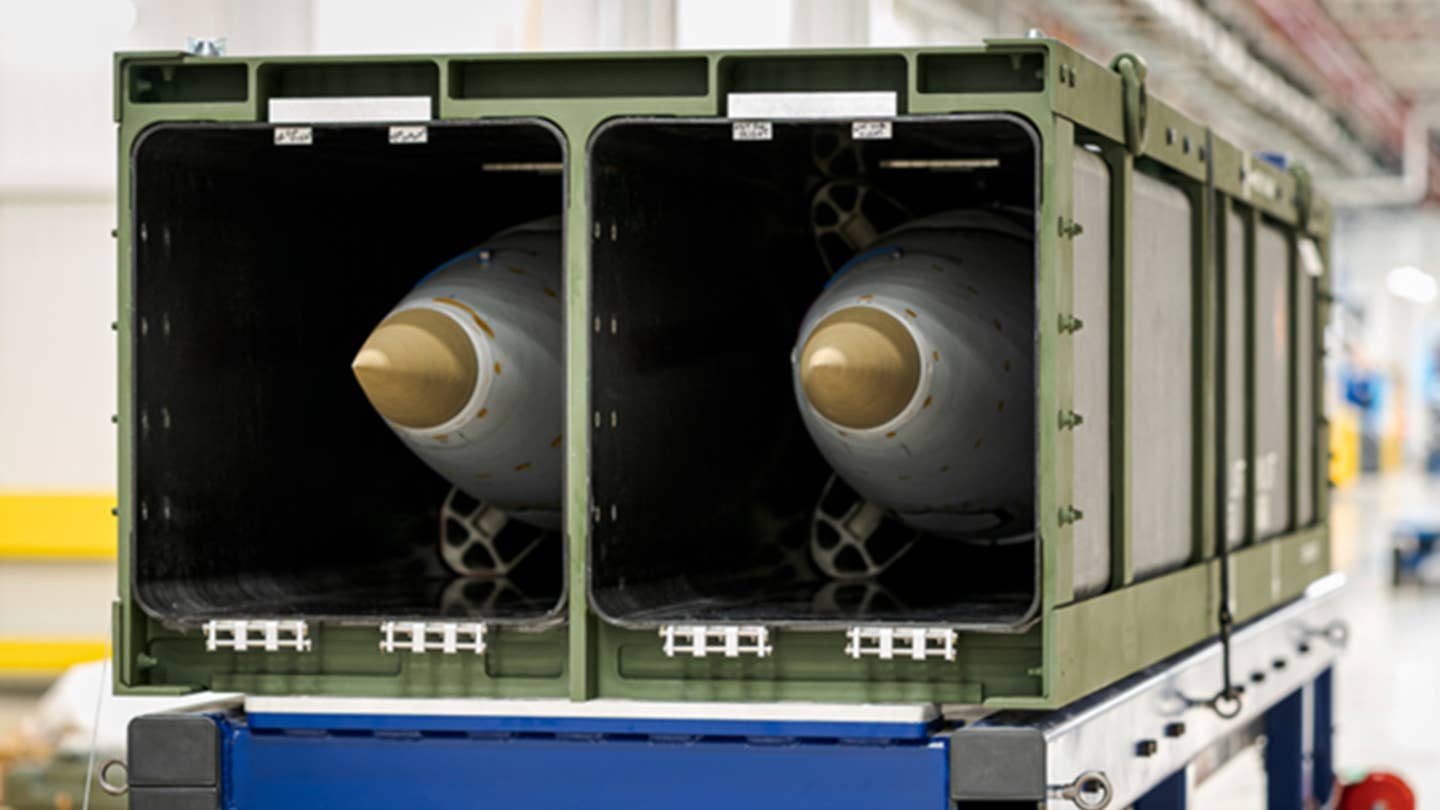
The Army began receiving its first operational examples of the baseline PrSM Increment 1 missile in December. These weapons are capable of hitting static targets only using a GPS-assisted inertial navigation system (INS) guidance package. They also have a maximum range of around 310 miles (500 kilometers) and this could grow to some 400 miles (650 kilometers) in the future. Existing M270 Multiple Launch Rocket System and M142 High Mobility Artillery Rocket System (HIMARS) launch vehicles can fire PrSMs.


A pair of Increment 1 PrSMs in their launch canisters. 

The Age of Middle Powers Has Arrived

Ali Mammadov

At the dawn of the new year, the geopolitical landscape underwent a transformative shift with the expansion of the BRICS to include Iran, Saudi Arabia, the United Arab Emirates, Egypt, and Ethiopia. This development has brought fresh attention to the reconfiguration of the global order, the ascent of multipolarity, and the increasingly influential role of middle powers. Despite their limited capabilities compared to great powers, middle powers strategically leverage the evolving global power distribution to secure opportunities for themselves.

Acknowledging that great powers rely on them for global influence, middle powers engage in power games, oscillating between collaboration and opposition to further their own interests. Generally, intensive high-stakes competition among great powers and sporadic collaboration present fertile grounds for middle powers to assert their influence. This prompts a critical examination of the evolving dynamics in international relations and the necessity for a nuanced approach in the face of an increasingly multipolar world.

In the aftermath of World War II, the globe was divided into two poles of power, compelling middle powers to align with either the United States or the Soviet Union. Genuine independent foreign policy for middle powers was nearly non-existent. The collapse of the Soviet Union presented a less binary choice: align with the U.S.-led world order or pursue an independent path. However, opting against the sole global superpower risked forgoing the security guarantees and economic benefits that accompanied alignment. Consequently, many middle powers aligned with the U.S.-led order, actively participating in international organizations.

The unipolar moment gradually waned as the relative global influence of the United States diminished. Factors such as the rise of China's economic power and its ability to attract allies, the 2008 global financial crisis, the substantial costs incurred during the Iraq and Afghanistan wars, and the overall empowerment of middle powers contributed to this paradigm shift. This diminishing influence posed challenges for the United States and its allies in advancing collective interests worldwide, creating a cadre of middle powers more inclined to take bold actions.

Biden’s foreign policy of ‘fear of escalation’ is a recipe for global disaster


As sure as night follows day, a Biden administration lackey will be sent out to proclaim a “fear of escalation” following any conflagration around the globe.

One that is reaping chaos and destruction across the world.

The latest is the president’s utter pusillanimity when it comes to Yemen’s Houthi terrorists — a Nazi-loving, America-hating proxy army of Iran — as they bar the Red Sea to commercial traffic.

Yes, after months of increasingly brazen Houthi attacks via rocket, drone and boat-to-boat warfare on commercial ships and US military forces, Biden finally authorized Thursday a display of actual kinetic force against Iran’s eager foot soldiers.

Yet despite media hyperventilating, it amounted to no more than a pinprick: five dead and six injured — and no Houthi leaders even targeted.

In other words, it was more of the same from Biden as Iran and its catspaws move against us in the Middle East.

Why on earth are we letting the Houthis humiliate us?

Because Biden fears escalation from Iran: “We don’t seek a conflict wider in the region, and we’re not looking for a conflict with the Houthis,” says White House flack John Kirby.

It’s why Biden took the Houthis off the US list of officially recognized terror groups soon after taking office.

It’s why the White House led up even to this meaningless squib with weeks of warnings about vague consequences, giving the Houthis ample time to move key assets and personnel out of harm’s way.

But it’s our current failure to exercise real deterrence that brings escalatory risk.

January 2024: A Perfect Global Storm Brewing

SRDJA TRIFKOVIC

It seldom happens that so many significant events in world affairs happen in so few days as has been the case in the first two weeks of 2024. The second epistle of St. Peter comes to mind: “With the Lord a day is like a thousand years, and a thousand years are like a day.”(A recent variant—“there are decades when nothing happens, and there are weeks when decades happen” —has been wrongfully attributed to Lenin.) There are clear signs that a series of small-to-medium fires in different parts of the world could soon explode into a global inferno.

The most important event of the new year thus far is the victory of Lai Ching-te, the candidate of the governing Democratic Progressive Party (DPP), in Taiwan’s presidential election on January 13. It came despite warnings from China—which claims Taiwan as part of its territory —that a vote for him would be “a vote for war.” Lai, the current vice president and a supporter of the island’s independence, was in a three-way race with Hou Yu-ih of the Kuomintang (KMT) and former Taipei Mayor Ko Wen-je from the Taiwan People’s Party (TPP), founded in 2019.

Lai’s success, with 40 percent of the vote, is owing entirely to the inability of the latter two—who do not support Taiwan’s bid for complete independence from China—to forge a common front. The fact that they won almost 60 percent of the vote between them prompted Beijing to declare, as soon as the result was known, that the DPP does not represent the mainstream public opinion on the island. A day later an editorial in the official China Daily said that the vote “will not be able to impede the inevitable trend of [China’s] national reunification. Beijing’s Taiwan Affairs Office spokesperson said that China would adhere to the one-China principle and firmly oppose the separatist activities as well as “foreign interference.”

In his victory speech, Lai said Taiwan had managed to resist attempts to influence the vote, in an obvious swipe at China. “The Taiwanese people have successfully resisted efforts from external forces to influence this election,” he said. He also pledged “to safeguard Taiwan from continuing threat and intimidation from China.” It was a deliberate provocation, from Beijing’s point of view, to talk of “the Taiwanese people” as an entity distinct from the Chinese people, and of Taiwan itself as an implicitly separate nation-state which is subjected to pressure from a foreign power, i.e. China.

U.S. forces recovered Iranian warheads in Navy SEAL mission gone awry

Alex Horton

American military personnel recovered Iranian-made missile warheads and related components during a ship-boarding mission near Somalia last week that disrupted the weapons resupply of militants in Yemen but left two elite Navy SEALs lost at sea, U.S. defense officials said.

A massive search-and-rescue operation is ongoing in the Arabian Sea, where the incident occurred Thursday. The SEALs moved to board the vessel, described by officials as a dhow lacking proper identification, amid suspicions that there were arms on board.

As The Washington Post and other media previously reported, Thursday’s nighttime operation, backed by helicopters and drones, took place in rough seas. When one of the SEALs slipped from a ladder while attempting to climb aboard the dhow, the second, having witnessed their comrade fall into the water, dove in to help, officials have said. Both were swept away by the powerful swells. Neither has been publicly identified.

As rescue operations began, other troops carried out a search of the boat, which had a crew of 14, according to a Tuesday statement by U.S. Central Command. They were taken into custody. The dhow was deemed “unsafe” and was sunk, according to the statement.

The seized items included Iranian-made ballistic and cruise missile warheads, propulsion and guidance systems, and air defense components. An “initial analysis” indicates the weapons match those the Houthis have used to target ships on the Red Sea, according to the statement, which accuses Iran and others involved of violating international law and a related U.N. resolution.

It is unclear where the vessel originated and who was on board. “Disposition of the 14 dhow crew members is being determined in accordance with international law,” the statement said. The operation marked the first U.S. Navy seizure of advanced Iranian-made ballistic components since 2019, the statement added. The Associated Press first reported some details of the seizure.

Soft Power and Smart Power

LAWRENCE FREEDMAN

Joseph Nye Jr. is one of the most influential figures in postwar international relations. He has combined a career as a leading academic at Harvard, where he was Dean of the Kennedy School of Government between 1995 and 2004, with service to multiple Presidents stretching back to Jimmy Carter. Under Bill Clinton he was Chair of the National Intelligence Council, and under Barack Obama a member of the Foreign Affairs Policy Board. His memoir - “A Life in the American Century” - is about to be published in the US and will be published in the UK in March. In it, he looks back over his storied career and discusses the challenges facing the US, and the wider world, today.

In this interview Joe discusses some of the now famous terms he coined, including “soft power” and “smart power” (the successful combination of hard and soft power). We also talked about America’s changing role in the world, challenges to liberalism, the field of international relations, and career advice for someone who wants to work in it today.

Lawrence

You describe yourself as being a public intellectual and you're almost the exemplar: you've been in and out of government, been a Dean at Harvard and written books that still have an impact in the discipline. Its quite an all-round performance. There is one point in your book where you say that the academic is allowed to be curious while when you're in government you don't really have that opportunity. Then later on you refer to moving out of government with the sudden loss of adrenaline and having to deal with the humdrum side of academic life. So how did you manage to balance these two roles and which - in the end - did you enjoy most?

Joseph Nye

Well, I enjoyed both, but as the economists say, looking at my revealed preferences, I eventually went back to academia. But I think the main difference between academia and policy is not just power, which is obvious, it's also time. When you're in government, it's like drinking from a fire hose, your inbox is constantly overflowing. There are people who demand you testify before Congress. There are foreign diplomats who want to come see you and it's urgent. And the idea that you can sit down and think through a problem. It's very hard to do.

Army has too many infantry, armor lieutenants, asks some to switch to combat-support jobs

COREY DICKSTEIN 

The Army is overstaffed with infantry and armor lieutenants and needs some of them who were commissioned in 2021 to move into combat-support jobs, service officials announced Tuesday. 

The service is asking some 250 infantry and armor officers from the group year of 2021 to move voluntarily to the adjutant general or finance or signal corps, Army Human Resources Command said. Service officials said they were concerned current staffing levels would soon leave the units without enough officers serving in those positions, raising potential combat readiness issues. 

“Unless we offer these steps to rebalance the force, the Army will face a shortage of battalion and brigade [personnel officers], [logistics officers] and finance positions worldwide,” said Col. Charlone Stallworth, the talent alignment and development director for Human Resources Command. “That not only impacts Army manning, but also our readiness and ability to take care of soldiers.” 

Officials pitched the needed changes in career fields as beneficial to the service and the officers — giving them a chance to align their job with their talents and interests. The moves also would help untangle a logjam of officers waiting to attend the Maneuver Captain’s Career Course, which is a required military education course for those who want to serve as a captain in the infantry and armor fields. 

Infantry and armor are among the most sought-after branches for new officers because of their front-line combat roles, opportunities to lead soldiers on the battlefield and the belief that serving in direct combat positions is the best path toward achieving high-ranking posts in the future. The service has long required more junior officers in the infantry and armor fields to lead platoons and serve in other staff roles than it does when officers reach midcareer and higher ranks. 

19 January 2024

The day after: A critical analysis of the US-UK strikes against Houthi rebels in Yemen and its repercussions (Part I)

Maj Gen P K Mallick, VSM (Retd)


The strikes were from fighter jets and Tomahawk missiles. More than a dozen Houthi targets were attacked by missiles fired from air, surface and sub-surface platforms which were chosen for their ability to degrade the Houthis’ war-waging capabilities.

In the wee hours of the morning of 12 January 2024, the United States in partnership with the United Kingdom launched a series of cruise missiles and airstrikes against the Houthis in Yemen. The strikes were from fighter jets and Tomahawk missiles. More than a dozen Houthi targets were attacked by missiles fired from air, surface and sub-surface platforms which were chosen for their ability to degrade the Houthis’ war-waging capabilities. This map shows the Cyprus base and the location of the strikes:


Weapon platforms used. The bulk of the firepower came from US fighter jets. The US has an aircraft carrier in the Red Sea and air bases in the region. The US deployed 22 fixed-wing aircraft including F18s from the aircraft carrier USS Dwight D. Eisenhower.

The Day After: A Critical Analysis of the US-UK Strikes Against Houthi Rebels in Yemen and its Repercussions (Part II)

Maj Gen P K Mallick, VSM (Retd)

The commander of US Navy Central Command, Vice Adm. Bradley Cooper, said that the US assesses 55 nations that have direct connections to the ships that have come under fire.

From mid-November 2023 onwards the Houthis started increasing attacks in the Red Sea. The US and its coalition partners kept on warning the Houthis to stop the attacks. The Houthis continued to push the envelope further in the escalation ladder. It had to culminate in the US-UK strikes against Houthi rebels in Yemen.

The US needed to respond militarily. It had warned the Houthis repeatedly over the last several months not to attack international shipping as these were intolerable. Rather than backing down, the Houthi attacks had gotten bolder. President Jo Biden said that the US administration needed to demonstrate both to the Houthis and also to the other maligned actors in the region that such behaviour is not acceptable and will prompt an American response.

There have been at least 27 Houthi attacks since November 19. The commander of US Navy Central Command, Vice Adm. Bradley Cooper, said that the US assesses 55 nations that have direct connections to the ships that have come under fire.

On October 19, 2023, one of the US Navy destroyers, USS Carney, intercepted four cruise missiles and 15 drones launched by the Houthis directed against Israel. On November 19, 2023, the Houthis turned their attention to commercial shipping, seizing a cargo ship, the Galaxy Leader, and diverting it to the port of Hodeidah. This remains their main success to date. On December 3, USS Carney, along with some commercial ships, were attacked in international waters with anti-ship ballistic missiles fired from Yemen. Three commercial ships were struck, while Carney shot down three drones.

Israel and Hezbollah Are Headed Toward a New War | Opinion

Ilan Berman

Storm clouds are gathering on Israel's northern border. There, intensifying attacks by Hezbollah, Lebanon's powerful Shiite militia, and targeted Israeli killings of high-value militants, are heightening tensions and raising the specter of a new conflict between Israel and the group that ranks as Iran's chief terrorist proxy.

Israel isn't itching for such an escalation, despite what some pundits have contended. Israel's current offensive in Gaza is complex, resource-intensive, and still far from over, and there are real world constraints on the country's ability to fight a two-front war. For its part, and despite all of its bluster, Hezbollah has made clear that it won't initiate large scale hostilities—at least for now. That doesn't mean another Israeli-Hezbollah war won't happen, though. To the contrary, Israel and Hezbollah are inexorably headed toward conflict, for at least two reasons.

The first reason is economic. Hamas' Oct. 7 terror campaign led to the mass displacement of some 200,000 citizens from southern Israel. Less publicized, but likewise significant, has been a parallel exodus of more than 60,000 residents of Israel's north, who—fearful of the possibility of a similar onslaught by Hezbollah—have fled cities and communities in the Golan and Galilee. As a result, life in the northern third of the country has ground to a halt, and the societal, economic, and strategic costs of this paralysis are steadily mounting.

Israeli Prime Minister Benjamin Netanyahu last week told visiting Biden administration envoy Amos Hochstein that allowing northern residents to "return to their homes and live in safety and security" is an overriding imperative—and one that requires a fundamental change in the current strategic status quo on the country's northern frontier. "We will not stop until this goal has been achieved," Netanyahu made clear.

Whether this can be accomplished diplomatically is uncertain at best, because it would require a major revision of the prevailing balance of power between the two parties. It's useful to remember that the last Israeli-Hezbollah conflict, in 2006, ended via United Nations Security Council Resolution 1701, which established a demilitarized zone in south Lebanon. Nevertheless, in the years since, Hezbollah militants have steadily crept closer to the border with Israel, establishing emplacements from where they can now hold Israel's northern communities at risk.

Israel’s Motion Offense

Jonathan Schanzer

It was not easy to read a book about Israel’s military excellence in the wake of the worst military and intelligence failure in the country’s history since the 1973 Yom Kippur War. It was also hard to ignore that the book was published by Harvard University, which has been at the center of an anti-Semitism scandal that drags on to this day.

But in the wake of the October 7 slaughter perpetrated by the Iran-backed Hamas terrorist organization, the story of Israel’s military innovations must not be forgotten. This is the country that made unmanned aerial vehicles (UAVs) a staple on every battlefield. It’s the country that developed the rear-engine Merkava tank that has forever changed armored warfare. Israel developed the Trophy active protection system that has protected those tanks, as well as tanks operated by the United States’ soldiers. Similarly, the Israelis developed the helmet-mounted display used in the F-35 multirole fighter flown by the United States and other Western allies. The Israelis also developed the remarkable Iron Dome missile defense system that has knocked thousands of threatening rockets out of the sky.

In a sense, it is the success of these and other systems that paved the way for the Hamas assault. The Israelis had negated the group’s threat from the skies with Iron Dome. They negated the group’s ability to dig commando tunnels into Israel through technology deployed deep beneath the Gaza border. The complex yet streamlined system for gathering signals and geospatial intelligence in Gaza gave Israel yet another edge. But in the end, it was brute force and a long disinformation operation that enabled Hamas to invade southern Israel, slaughter more than 1,200 Israelis, and take another 240 of them hostage.

This does not mean that Israel’s culture of military innovation is now no longer relevant. The opposite is true. The challenges and failures that Israel has endured are what historically inspired some of Israel’s most remarkable innovations.

The small population of Israel forced the country to adopt a reserve-center military force that continues to draw upon the human resources of men and women committed to Israel’s defense in ways not seen among other countries. The Israel Defense Forces are truly the "people’s army." And the morale of that army right now is soaring, despite the tough war it is fighting.

America’s Allies Shouldn’t Side With Hamas

Sarah Teich

U.S. officials have expressed support for Israel’s position that a ceasefire wherein Hamas remains in control of the Gaza Strip is not tenable but many of the United States’ traditional allies appear to disagree.

Canadian government officials have made vociferous statements in favour of an immediate and apparently unconditional ceasefire in Gaza. Australia, New Zealand, France, and others have likewise expressed support for an immediate ceasefire between Israel and Hamas. Canada's support for the ceasefire even garnered thanks directly from Ghazi Hamad, a senior leader of Hamas, in an interview late last year.

This represents a significant shift and a deterioration of support for Israel among the United States’ traditional allies.

The uninformed might be liable to believe that where there is smoke, there is fire – it might seem that, with a majority of nations expressing their support, calling for an immediate and unconditional ceasefire is the principled and necessary stance.

But this stance is wrong.

Hamas started this war on October 7 in the most vicious and brutal manner imaginable. An army of drugged-up Hamas fighters invaded Israeli towns and killed, pillaged, and raped civilians, including men, women, children, and the elderly. Hamas murdered approximately 1,200 people in the rampage, and violently abducted over 200 back to the Gaza strip. Numerous Israeli and Jewish women were subjected to sexual violence. The details of the accounts are horrific. It was the single most brutal massacre against Jewish people since the Holocaust.

In the aftermath of the massacre, Hamas leadership stated, proudly and publicly, that they will not respect a ceasefire with Israel, and that they will continue to massacre Israeli civilians, as they did on October 7, “again and again”.

Iran admits carrying out deadly strike on Pakistan territory

Paul Adams and Caroline Davies

Officials in Islamabad said two children were killed and three others injured in the attack in Balochistan.

Iran's foreign minister said the operation targeted the militant group Jaish al-Adli, which he described as an "Iranian terrorist group" in Pakistan.

As a result the Pakistan's government recalled its ambassador to Iran and has blocked Tehran's envoy from returning.

The Balochistan attack comes after Iran attacked targets in Iraq and Syria earlier this week.

Islamabad said the attack was "illegal" and warned of "serious consequences".

However Iran's Foreign Minister Hossein Amir-Abdollahian, speaking in Davos, insisted that no Pakistani citizens had been targeted, only members of Jaish al-Adl.

"We only targeted Iranian terrorists on the soil of Pakistan," Mr Amir-Abdollahian said.

He added he had spoken to his Pakistani counterpart and "assured him that we do respect sovereignty and territorial integrity of Pakistan and Iraq".

The latest air strike comes at a time of growing tension across the Middle East, with war raging between Israel and the Palestinian group Hamas in Gaza.

Tehran says it does not want to get involved in a wider conflict. But groups in its so-called "Axis of Resistance", which include the Houthi militants in Yemen, Hezbollah in Lebanon and various groups in Syria and Iraq, have been carrying out attacks on Israel and its allies to show solidarity with the Palestinians. The US and UK have launched air strikes on the Houthis after they attacked commercial shipping.