10 August 2014

What Makes ISIS Deadly Also Makes It Vulnerable to Air Power Militants’ hybrid form of warfare isn’t without its weaknesses


American warplanes now are bombing the Islamic State of Iraq and Syria militant group. No, those planes are probably not going to liberate northern Iraq from the extremist group nor end the war. But ISIS’s tactical advantages is a weakness against modern air power.

ISIS fights semi-conventionally. This means they’re able to maneuver on an open battlefield using standard military tactics. That’s different from an insurgency, which blends into the civilian population and avoids direct confrontation with a regular military force. ISIS is a hybrid—able to both openly fight and melt away.

ISIS also possesses heavy military hardware including tanks, Type 59–1 field guns and American-made M198 howitzers it captured form the Iraqi army. Shockingly, one Kurdish official told CNN that ISIS has even attacked with an M-1 Abrams tank the militants also seized from Baghdad’s retreating troops.

We haven’t confirmed the tank report. Still, ISIS’s hardware allows the group to hit Iraqi army and Kurdish Peshmerga troops from beyond the defenders’ line of sight.

“Given the rapidness in which it is able to maneuver, given its ability to direct indirect fire attacks followed by direct assaults with heavy weapons, it is a militarily proficient organization,” a senior White House official said of ISIS in a conference call on Aug. 7.
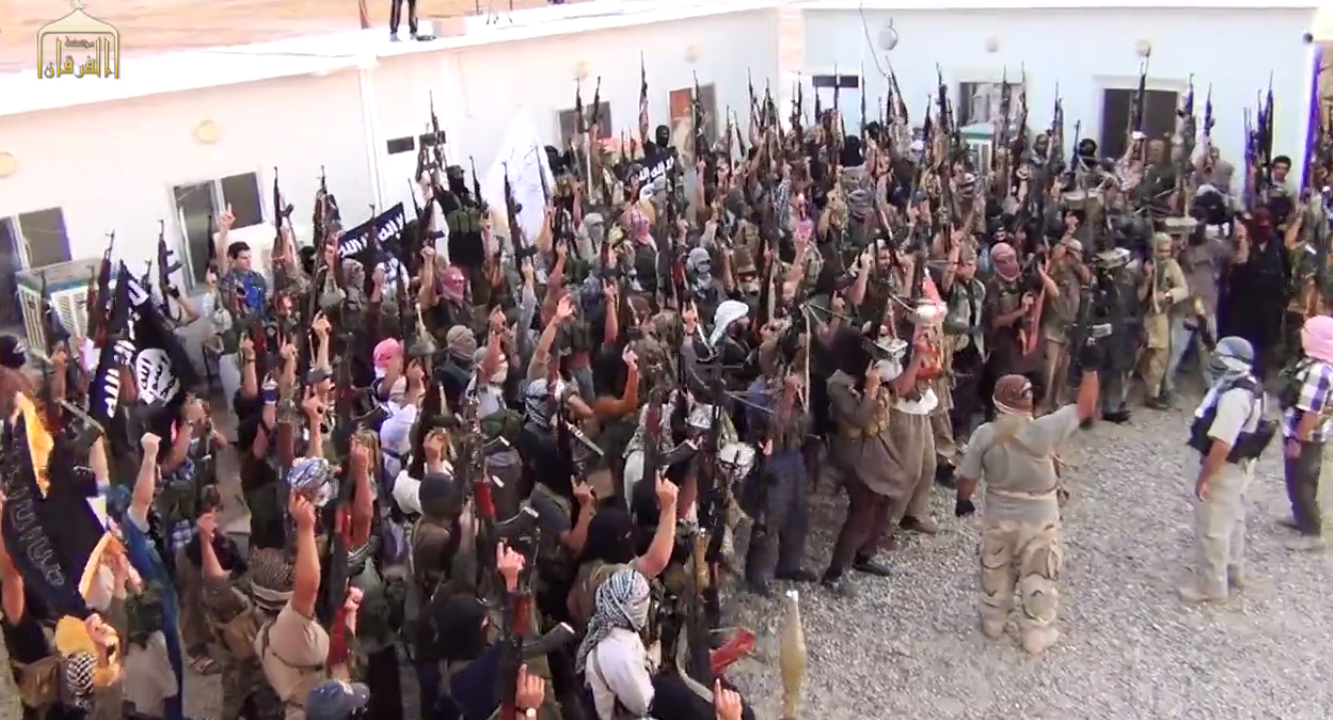
ISIS fighters in Iraq in mid-2014. ISIS propaganda video capture

It was ISIS’s skill at the former that lead to the current conflagration. On Aug. 2, the militant group launched an attack across several hundred miles against Kurdish positions holding the line in Iraq’s north.

Tens of thousands of people from the minority Yazidi religious group were caught in the gap between the advancing ISIS fighters and the retreating Kurds. Fearing a genocide, thousands fled up Mount Sinjar without food or water.

“[ISIS] is so ruthless—quite literally putting people’s heads on spikes as a sign of anyone—the fate of anyone that would resist them,” the administration official said. “In the case of the Yazidis, they were very clear that they were there to enslave the women and to kill all the men in these towns.”

America’s new war in Iraq is a lot different than the aborted plan to strike Syria.

Pres. Barack Obama came close to authorizing air strikes against Syrian dictator Bashar Al Assad’s forces last year. But this would have involved a major air campaign beginning with the destruction of Assad’s air defense network.

That attack plan risked dragging the U.S. into an open-ended conflict that likely would have not ended with Al Assad leaving power. For similar reasons, Obama has not jumped to defend Iraq’s sectarian prime minister Nouri Al Maliki.

Refugees Displaced From Recent Fighting in Sinjar

AUGUST 8, 2014

As many as 40,000 people are trapped on Mount Sinjar and some 200,000 have fled to other parts of northern Iraq. American planes have dropped enough food and water for about 8,000 people in the area. Most of the refugees are Yazidis, members of a religious minority group allied with the Kurds, from towns at the foot of the mountain range. 


American jets attacked mobile artillery vehicles that had been shelling Kurdish targets in Erbil, the capital of Iraq's Kurdistan region. The city has boomed since the American-led invasion of Iraq. It is home to a growing expatriate community of investment consultants and oil executives, as well as to an American consulate. 

THE IRAQ CRISIS AND PM NOURI AL-MALIKI – ANALYSIS


By Kanchi Gupta

As the Islamic State (IS) is rapidly gaining territorial and political control over key territories, oil fields and refineries in Iraq and Syria, domestic, regional and international stakeholders are calling for the resignation of Iraqi Prime Minister Nouri al-Maliki to pave the way for a political resolution to the crisis. Maliki, whose political bloc won the 2014 parliamentary elections by a small margin, asserted his will to stay in power by stating that calls for the formation of a national salvation government “represent a coup against the constitution” and seek to “eliminate the democratic experience”.

Despite his refusal to step down, the parliament elected Sunni Islamist Salim al-Jubouri as the new speaker on July 14, 2014. By Iraqi custom, the speaker is Sunni, the President is Kurdish and the Prime Minister is Shia-Arab.

Prime Minister Maliki has been accused of partisan politics which have played into the hands of Sunni insurgent groups like the IS. His consolidation of power has compromised the legitimacy of Iraq’s political, security and economic institutions. Iraq’s Deputy Prime Minister, Saleh al-Mutlaq contended in 2011 that Maliki’s “dictatorial power” will lead to a civil war and divide the country. Maliki’s key backer, the US, too is conceding that his divisive policies have contributed to the current crisis.

Nouri al-Maliki was born in 1950 in the village of Janaga in the Karbala province of Iraq. He is believed to have been inspired by his grandfather who represented the Shia clergy in the 1920 armed uprising against the British occupation of Iraq. Maliki joined the ‘underground’ Shia Islamist Dawa Party in the 1970s after the Arab countries’ loss to Israel in 1967. Following a crackdown on party members by Saddam Hussein’s forces, he escaped to Syria in October 1979.

The execution of Ayatollah Baqir al-Sadr – one of the founders of the Dawa party — the suppression of Shia uprisings in southern Iraq, the massacre of almost seventy of his relatives and the destruction of Shia villages and shrines radicalised Maliki. He helped set up guerrilla cells in Iraq and facilitated suicide attacks and assassinations targeted at Hussein’s regime. He helped integrate Dawa members across the region from Iran to Lebanon and also oversaw the military training camp in Iran from 1981 onward.

Iran’s efforts to co-opt the Dawa as a proxy in its war with Iraq splintered the party and Maliki was further disillusioned by growing ties between Damascus and Iraq in the 1990s. Thus, following the US-led invasion of Iraq that toppled Saddam Hussein, Maliki moved back to his hometown in April 2003. He served as board member of the de-Baathificationcommittee and spokesman for a coalition of Shia parties (United Iraqi Alliance) before being short-listed for the Prime Ministerial post by former US Ambassador to Iraq, Zalmay Khalilzad.

Maliki assumed the office of the Prime Minister in mid-2006, in an environment of civil war wherein Shia militias were engaged in a sectarian battle with Sunni insurgent forces, including the al-Qaeda in Iraq (AQI). Maliki secured political power by bypassing parliamentary oversight to fill up military and political institutions with Shia loyalists and removed potential rivals from power.

He circumvented the defence and interior ministries by creating institutions like Office of the Commander in Chief, which centralised his control over security forces, the intelligence apparatus, elite security units like the Baghdad Brigade and other counter-insurgency bodies. Post the elections in 2010, he used the delay in forming the new government to appoint himself minister of interior and defence as well as the national security advisor. Following opposition from other political blocs he relinquished the posts, while retaining control over their functions.

Marisa Sullivan of the Institute of War Studies writes, Maliki’s “desire to centralise and maintain power…stems more from political paranoia, distrust and fear than from strong ideological impulses”. However, his internal policies have polarised Iraqi society along sectarian lines as counter-insurgency strategies targeted Sunni and Kurdish Iraqis.

A prime example is the marginalisation of Sunni Awakening Councils Militia (or Sons of Iraq), a paramilitary force cultivated by the US to fight insurgent groups like the AQI. Maliki, initially unreceptive to the idea of arming Sunni fighters, conceded to US pressure and also promised them a role in state-building thereafter. However, many of these fighters were later removed from the Iraqi Security Forces (ISF) and arrested, pushing them towards radicalisation.

Maliki has been accused of politicising the security forces by awarding senior military positions to Shia loyalists, earning the ISF the label of “Maliki’s militia”.

IRAQ’S POLITICAL UNCERTAINTY, SECURITY CRISIS AND ENERGY MARKETS – ANALYSIS


By Hasan Selim Ozertem

Political uncertainty in Iraq has the potential to adversely affect the country’s territorial integrity and its energy sector. Resultant of the political vacuum, the biggest risk facing Iraq’s expected oil production is the possibility of a delay in much needed decisions regarding the investment for the upcoming period.

After the invasion of Mosul by the Islamic State (formally known as the Islamic State of Iraq and Syria-ISIS), scenarios related to the division of Iraq came to the agenda once again. Presently, the most tangible scenario that could prevent such disintegration of the Iraqi state can be seen in the formation of a triadic entity consisting of Sunni, Shia and Kurdish regions incorporated in a lax federal system. Before ISIS’s assault on Mosul, this formulation was also endorsed by American Vice-President Joe Biden in 2006. However, for the establishment of such an entity it is necessary to restore the political balance which shifted after June 11 and for different groups to reach a consensus on a common roadmap.

Dominated by a chaotic atmosphere, it is still unclear what will result from the country’s efforts to form a government. While Sunni Arabs and the Kurds have uttered on multiple occasions that they do not look positively on a formula in which Nouri al-Maliki will remain the President, they bring about political obstruction by not participating in the work of the parliament. Maliki is insistent on refusing to take a step back in this process. In the meanwhile, he harshly accuses the Kurdish Regional Government of hosting ISIS and Ba’ath forces. Nonetheless, with the Kurds withdrawing their delegates from Baghdad they show a more unreserved attitude regarding their independence in the upcoming period. While Mesut Barzani, the President of the Iraqi Kurdish Regional Government, claimed to be preparing for two referenda regarding the status of Kirkuk and national independence in his speech to the members of parliament at the beginning of July in Erbil, he does not refrain from emphasizing that it is too late to withdraw from Kirkuk.

The Kurdish Peshmerga forces have gained limited control of certain regions like Mosul, Diyala and Tuzhurmatu which were cleared by the central governments’ forces in the process of pursuing ISIS’s movement to Baghdad from the north-west of the country. This development raises two issue. The first issue is that since becoming the primary armed force in their controlled regions, the Kurds are expanding the areas under their control and thus they now have to create a line of defense that is beyond their capacity. The second prominent issue is that even though the Kurds would prefer to remain under the Iraqi flag, the question remains whether they will revert to their old borders and how the energy resources within their newly controlled borders will be used. These two issues are important for both the country’s security dynamics and the political economy of the energy sector in the near future.
Ensuring Security in Iraq

Considering the operations carried out by forces loyal to the Iraqi central government, it is seen that they cannot robustly move on the North. The increase in violent clashes while facing off against resistance in Salahuddin and Diyala show that certain coordination problems have emerged. To illustrate, it is stated that while one civilian lost his life in the July 6 air strike on Tuzhurmatu, 6 Peshmerga died in a helicopter attack on June 14. Meanwhile in Baghdad, news continue to flow in about the new execution teams whose associations still remain murky and the severe weakening of security standards there.

From time to time, the Iraqi security forces, which are supported by American military advisors, try to create a line of defense in coordination with the Peshmerga in order to defend their existing positions, while on the other hand trying to repel ISIS through ground operations. In this environment, with minorities being severely affected, the demographic map of the region has been drawn anew through the mobilization of peoples in and out of ISIS-controlled regions. While 200 Turkmens lost their lives in Ninova and Kirkuk during the clashes, more than the 200,000 others have left their homes to seek refuge in more secure regions.

Why can’t Islamic State be stopped? Analysts say it’s better armed, better organized

BY NANCY A. YOUSSEF 
August 7, 2014
Source Link


Tuesday, Jan. 14, 2014 - a photo which has been verified and is consistent with other AP reporting, shows fighters from the al-Qaida linked Islamic State of Iraq and Syria (ISIS) marching in Raqqa, Syria.

WASHINGTON — The Islamic State’s push toward the Kurdish city of Irbil on Thursday came as unwelcome news to those who’d believed that the Kurdish peshmerga militia would be the force most capable of halting the militant Islamists’ momentum.

The United States had such confidence in the Kurds that, in June, it moved its Joint Operation Center and some embassy staff to Irbil, where roughly 40 U.S. military advisers are now stationed.

Until this week, life in Irbil has been relatively normal despite the Islamic State offensive, which began with the fall of Mosul, Iraq’s second largest city, in early June. Everyone assumed that the Islamic State was shying away from confronting the peshmerga, with its substantial reputation as a fighting force.

But then the Islamic State moved against cities last week that were defended by the peshmerga, and the peshmerga retreated. On Thursday, the Islamic State captured at least four towns on the highway to Irbil and defeated peshmerga forces attempting to break its siege of the Mosul Dam. A near panic took hold in the Kurdish capital as militia forces rushed to set up a defensive line at Kalak, 25 miles northwest of Irbil.

It was another victory for the Islamic State, which before the peshmerga had defeated Syrian forces throughout much of eastern Syria, including recent seizures of major Syrian bases in Raqqa and Deir el Zour, and had sent Iraqi army forces fleeing almost to the gates of Baghdad.

What has made the Islamic State forces seemingly unstoppable?

We Can’t Have it Both Ways In Iraq

August 8, 2014 

"If we’re not prepared to devise a coherent strategy aimed at defeating ISIS, then no amount of advisors or air strikes will make a difference in the long run. ISIS will simply watch and wait."

We don’t want to be involved in Iraq, apparently, except when we do. After sending several hundred special operations soldiers to serve in an advisory capacity to the Iraqi government, President Obama promised to guard against mission creep. Just last night, though, the United States conducted its first round of air strikes against the Islamic State in Iraq and Syria (ISIS) near the northern Iraqi city of Erbil. Will this small amount of creep be enough to accomplish the mission?

It depends on what the mission is.

If the scope of the mission is simply to protect American personnel along with those that are trapped on Mount Sinjar, then air strikes might be sufficient. But what next? If our involvement in Iraq is tied to a larger goal of restoring stability, it would be difficult to argue that we can bomb ISIS into submission. Even if we could, little would stop them from retreating to Syria and regrouping, least of all the United States.

As Iraq descends further into chaos, the current administration needs to take a hard look at its long term goals. If the President’s aim is to help restore stability in Iraq, our past experiences have shown that a sustained counter-insurgency campaign is likely required. The verdict is still out as to whether the Iraqi Army or the Kurdish peshmerga, both trained by Americans, will be able to accomplish this, but the prospects so far do not look good.

Relying on US special operations advisers alone to prop up Iraq’s military is not likely to prove sufficient either. The effectiveness of the advisers will naturally be limited by the hesitation of the administration to allow their use outside of command centers, and even if they were allowed to engage in combat, the force multiplying effect of 300 soldiers is not likely to prove sufficient to defeating ISIS.

Take an example from a different conflict. In the early days of the war in Afghanistan, commanders relied heavily on indigenous forces, with small detachments of American special operations soldiers leading the way. At the Battle of Tora Bora, the lack of an adequately sized and resourced force enabled al Qaeda fighters—Osama bin Laden among them—to escape into Pakistan. This occurred even with American special operations forces in the field; our current rules of engagement in Iraq relegate our troops to the sidelines.

If the President’s goal is truly to help turn Iraq back on a course to stability, then it is difficult to see how he might accomplish this given that he has forsworn the use of additional ground troops. The 2007 Iraq surge was pivotal to pushing back the insurgency, and as I detail in a forthcoming monograph, it took the mass brought to bear by the US Marine Corps to successfully rout out insurgents in urban Fallujah. Is there reason to think that the case would be different in urban Mosul or Tikrit?

The Smart Way to Bomb ISIS

August 7, 2014 

Obama is reportedly weighing attacks on the Islamic State. What factors should shape his decision?

The Obama administration is reportedly considering airstrikes against the Islamic State after several days of advances by the putative caliphate. Also under consideration is the delivery of humanitarian aid to minority groups that fled as ISIS approached, with thousands reportedly trapped without food or water in rough terrain and scorching heat. France and Turkey may be joining in an American intervention—apparently, the Turks have already been delivering aid.

“Going back into Iraq” will be a tough sell for Obama at any scale. But a confrontation between America and the Islamic State is probably inevitable—if not now, then at some point in the future. ISIS’s gains profoundly destabilized the region, with diplomatic alignments put under pressure, vital infrastructure captured and large refugee flows. Kurdish independence and the broader breakdown of the region’s old colonial borders have both become more likely. The magnetic pull of jihad is growing. Iraq’s internal politics have grown even rougher; externally, Iran and Russia have increased their influence in Baghdad. An effort to contain or push back ISIS, in this light, is certainly worth considering. What factors should shape America’s approach?

Local leadership: Ideally, regional powers would bear most of the burden of an intervention. They have more at stake in the outcome and thus will be better at sustaining involvement. There are other benefits, too. As others have noted, it might not be smart for the United States to take the lead in crushing a proclaimed caliphate: among other things, it fits the narrative pushed by Osama bin Laden and others that attacking and defeating America must be the first step of an Islamist restoration. That narrative has lost its allure, with the Islamic State now the most prominent example of a trend back toward the more typical form of violent jihad: attacking local authorities first. A war initiated by France—rather like the war against Gaddafi—would address the first consideration. A war initiated by Turkey would address both.

The downside of using local actors is that they often have goals that are quite different from our own—that is why, for example, calls for Washington to work with Tehran against ISIS have not been met with much interest on either side. Local actors also lack many of America’s capabilities, limiting their ability to achieve results. Yet there are balances to these drawbacks: Turkey and Iran, for example, have long competed for influence in Northern Iraq, which should be a sign to us that there will be natural obstacles to either gaining dominance. And while Turkey’s military isn’t as adept as America’s, the odds are slim that America would bring the full range of its capabilities to bear on the ISIS problem—or that we’d do so for very long.

The Turks are also more familiar with local politics and local culture—a skill set we lack, and one that is going to be useful in establishing a sustainable, local solution. And while Turkey seems to be growing more autocratic and more unfriendly to America and its allies, it’s not the same kind of danger as ISIS, it’s still a NATO member, and the fact that it’s taking steps in Iraq that parallel our own shows that we still share interests there.

Obama’s Iraq Plan Has a Killer Flaw—and Airstrikes Alone May Not Save It


08.08.14 

The U.S. gambled on local militias to keep ISIS in check. The president’s authorization of airstrikes is an admission that bet didn’t pay off. 

Friday morning, with a humanitarian mission already underway, the United States began airstrikes on ISIS in northern Iraq. What had been the U.S. policy—to rely on local forces to contain ISIS while waiting for a new Iraqi government to reach a political solution—is finished. The new policy is still taking shape, but it may eventually lead to more involvement from the special operations troops who have been in Iraq for weeks. 

President Obama said Thursday night he had authorized airstrikes to protect American personnel and the Yazidi minority group stranded by ISIS on top of Mt. Sinjar. A senior administration official later stressed to reporters that U.S. forces were not launching a “sustained campaign” against ISIS in Iraq. 

But with the Kurds, America’s closest allies in the fight, recovering from heavy losses, some analysts and military veterans say that airstrikes alone may not be enough to turn the tide. A sustained—if small-scale—campaign may be the only way to achieve that. 

The Peshmerga, the Kurdish military, had been acting as a bulwark against ISIS, keeping the group tied up on a northern front while it also battled against the Iraqi military in the south and west. 

Then, starting on Saturday evening, came the waves of ISIS attacks on positions in northern Iraq. A senior administration official described it as “a multi-pronged attack across hundreds of kilometers in northern Iraq.” This official said ISIS “acted with tremendous military proficiency.” 

The Kurds were overrun. The surviving religious minorities and other vulnerable groups who had lived under their protection fled into the mountains to escape ISIS. 

And now these vulnerable groups—especially the Yazidi, trapped around Mt. Sinjar without food or water before an American airdrop—are at risk of being slaughtered

That’s what triggered the current humanitarian crisis and the growing threat that impelled the U.S. to act. The airdrop mission consisted of a C-17 and two C-130 aircraft that were escorted by two F-18 fighters. The cargo planes dropped food and water for 8,000 people, according to a senior administration official, who added that there were no U.S. personnel on the ground on Mt. Sinjar. 

No one questions the Kurds’ willingness to fight, but their military prowess appears to have degraded in the years since the U.S. military stopped training them and withdrew from Iraq. 

Though the Kurds have begun a counteroffensive with assistance from the Iraqi Air Force, ISIS has continued its march, seizing new towns and critical infrastructure—including a major dam near Mosul. For the first time, some observers believe that the Kurdish homeland itself, where the U.S. embassy and military forces are stationed, is under threat. 

Lessons from Gaza for Israel’s Military: Unprepared for Unconventional Warfare

07 AUGUST, 2014 DOWNLOAD

CO14159 | Lessons from Gaza for Israel’s Military: Unprepared for Unconventional Warfare 

RSIS / Africa / Commentaries / Conflict and Stability / General / Middle East and North Africa (MENA) 

Synopsis As Israelis and Palestinians negotiate a lasting ceasefire a public post-mortem has begun in Israel of the month-long assault on Gaza. At the core of the debate is the question whether the Israel Defence Forces’ organization, strategy and doctrine meets the requirements of unconventional rather than conventional warfare.

Commentary Israel’s post-Gaza domestic battles have erupted days after the withdrawal of Israeli forces, following almost a month of confrontation of Hamas, the Islamist militia-turned-army in the making that controls the Gaza Strip.

At stake is Israel’s performance in the war with Hamas, in which Gaza suffered billions of dollars in infrastructural damage and tremendous human losses and suffering, yet Hamas remains a military force to be reckoned with. Indeed Hamas has emerged as the key Palestinian player with which Israel is now negotiating, rather than the Palestine Authority of President Mahmoud Abbas, albeit through Egypt as intermediary.

Criticism in Israel focuses on the military’s politically mandated strategy and its failure in recent years to reorganize and review its doctrine and strategy in a world in which Israel is more likely to confront unconventional rather than conventional forces. Israel’s last four wars were against the Lebanese Shiite militia Hezbollah, and Hamas.

Changing politics and demography The debate about the Israeli military comes against the backdrop of its changed demography. Israel’s military today is not what it was in the late 1980s when it told then Prime Minister Yitzhak Rabin during the first Intifada or Palestinian popular uprising against Israeli occupation: ”We can solve this militarily but not on terms that would be politically or morally acceptable to the Israel Defence Forces (IDF) or the government. .. you, Mr. Prime Minister have to solve it politically.” A few years later Rabin engaged in the failed Oslo peace process with Yasser Arafat’s Palestine Liberation Organization (PLO).

Nor is the Israeli government similar to that of Rabin. The government of Prime Minister Benyamin Netanyahu in the first week of the assault on Gaza apparently turned down a proposal to conduct lightning strikes inside Gaza that would have destroyed Hamas’ command and control centres and other military infrastructure. It also refused to entertain a proposal for a full re-occupation of the Gaza Strip. Debkafile, a news website with close ties to the military and Israeli intelligence, suggested that had Israel opted for lightning strikes “at an early stage in the conflict, instead of ten days of air strikes, it might have saved heavy Palestinian losses and property devastation, the extent of which troubles most Israelis too.”

Too fat to enter a tunnel Israel’s liberal Ha’aretz newspaper added in an editorial: When you’re too heavy, big or bloated, it’s hard to move, run or even bend down. Your arm is so fat it can’t reach into a tunnel. It gets stuck and you stand there helplessly. That’s precisely the situation with the Israel Defence Forces. It’s a King Kong of an army — big and cumbersome; every move unintentionally knocks down a house, bridge or UN school in Gaza… The top brass has forgotten that line in the Book of Proverbs: ‘with wise advice thou shalt make thy war.’

LESSONS FROM GAZA FOR ISRAEL’S MILITARY: UNPREPARED FOR UNCONVENTIONAL WARFARE – ANALYSIS


Israel’s post-Gaza domestic battles have erupted days after the withdrawal of Israeli forces, following almost a month of confrontation of Hamas, the Islamist militia-turned-army in the making that controls the Gaza Strip.

At stake is Israel’s performance in the war with Hamas, in which Gaza suffered billions of dollars in infrastructural damage and tremendous human losses and suffering, yet Hamas remains a military force to be reckoned with. Indeed Hamas has emerged as the key Palestinian player with which Israel is now negotiating, rather than the Palestine Authority of President Mahmoud Abbas, albeit through Egypt as intermediary.

Criticism in Israel focuses on the military’s politically mandated strategy and its failure in recent years to reorganize and review its doctrine and strategy in a world in which Israel is more likely to confront unconventional rather than conventional forces. Israel’s last four wars were against the Lebanese Shiite militia Hezbollah, and Hamas.

Changing politics and demography

The debate about the Israeli military comes against the backdrop of its changed demography. Israel’s military today is not what it was in the late 1980s when it told then Prime Minister Yitzhak Rabin during the first Intifada or Palestinian popular uprising against Israeli occupation: ”We can solve this militarily but not on terms that would be politically or morally acceptable to the Israel Defence Forces (IDF) or the government. .. you, Mr. Prime Minister have to solve it politically.” A few years later Rabin engaged in the failed Oslo peace process with Yasser Arafat’s Palestine Liberation Organization (PLO).

Nor is the Israeli government similar to that of Rabin. The government of Prime Minister Benyamin Netanyahu in the first week of the assault on Gaza apparently turned down a proposal to conduct lightning strikes inside Gaza that would have destroyed Hamas’ command and control centres and other military infrastructure. It also refused to enter ta in a proposal for a full re-occupation of the Gaza Strip. Debkafile, a news website with close ties to the military and Israeli intelligence, suggested that had Israel opted for lightning strikes “at an early stage in the conflict, instead of ten days of air strikes, it might have saved heavy Palestinian losses and property devastation, the extent of which troubles most Israelis too.”
Too fat to enter a tunnel

Israel’s liberal Ha’aretz newspaper added in an editorial: When you’re too heavy, big or bloated, it’s hard to move, run or even bend down. Your arm is so fat it can’t reach into a tunnel. It gets stuck and you stand there helplessly. That’s precisely the situation with the Israel Defence Forces. It’s a King Kong of an army — big and cumbersome; every move unintentionally knocks down a house, bridge or UN school in Gaza… The top brass has forgotten that line in the Book of Proverbs: ‘with wise advice thou shalt make thy war.’

With analysts predicting increased differences between the military and Israel’s political leadership in the wake of the Gaza war, both entities are coping with very different political and demographic constituencies. Israel’s right-wing has moved further to the right forcing Netanyahu to fend off pressure from coalition partners like Foreign Minister Avigdor Lieberman whose Yisrael Beytenu (Israel is our Home) Party ended its alliance with the prime minister’s Likud early in the war, and economy minister Naftali Bennett’s Habait Hayehudi (The Jewish Home) Party that both advocated reoccupation.

Assessing the Damage and Destruction in Gaza


http://www.nytimes.com/interactive/2014/08/03/world/middleeast/assessing-the-damage-and-destruction-in-gaza.html?ref=world

The damage to Gaza’s infrastructure from the current conflict is more severe than the destruction caused by either of the last two Gaza wars, according to the United Nations Relief and Works Agency (Unrwa) and other organizations with staff on the ground, like Oxfam and Human Rights Watch. The fighting has displaced about a fourth of Gaza’s population. Nearly 60,000 people have lost their homes, and the number of people taking shelter in Unrwa schools is nearly five times as many as in 2009. The cost to Gaza’s already fragile economy will be significant: the 2009 conflict caused losses estimated at $4 billion — almost three times the size of Gaza’s annual gross domestic product. AUG. 3, 2014 

Buildings marked with red circles were assessed as being destroyed or severely damaged through satellite image analyses by Unitar/Unosat. Damage was assessed in northern Gaza as of July 25; central Gaza as of July 12. Other areas have not been assessed yet. 

The areas highlighted in orange show the areas that changed the most drastically between satellite photographs taken on June 28 and July 30.


Hamas Restarts War in Losing Position


It looks like the Israelis and Egyptians are sticking with their plan to push Hamas against the wall. After the Gazan militant group broke a ceasefire yesterday, Israeli forces responded, and while Egypt holds the blockade firm, every day now brings Hamas’ rocket supplies closer to zero.

The New York Times reports:

As a 72-hour truce in Gaza expired at 8 a.m. Friday, Palestinian militants fired barrages of rockets into Israel and the Israeli military responded with airstrikes, one of which killed a 10-year-old boy, according to relatives.

The renewed hostilities interrupted the indirect talks in Cairo, brokered by Egypt and backed by the United States, for a more durable cease-fire agreement. While the rocket fire signaled Hamas’s refusal to extend the temporary lull and its desire to apply pressure for its demands to be met at the talks, the Israeli government said in a statement that “Israel will not hold negotiations under fire.”

Given that Hamas seems to have fired one-third of its rocket supply against Israel and lost another third to Israeli military action, and that it currently has no means to rebuild its arsenal, neither Israel nor Egypt is probably very impressed by Hamas’ military capability at this point.

The one weapon Hamas has that works at all at this point is its capacity to provoke global outrage by arranging for its people to be killed in fighting. But even that has been dulled by Saudi and Egyptian counter-propaganda among Muslims and Arabs.

Meanwhile, Hamas may have missed one important calculation: The more of its rocket arsenal it expends, the greater the incentives both for Israel and Egypt to insist on ultra strict border and smuggling controls. Hamas is in effect disarming itself with every irreplaceable rocket it fires, and its enemies won’t want it to acquire more.

War is a tricky business, in which fortunes can switch overnight, but Hamas today seems in an extremely difficult position, demanding concessions its enemies have no reason to make. Under the circumstances, both Israel and Egypt appear to have solid reasons for sticking to tough negotiating positions and awaiting events.

They have inflicted a major and perhaps crushing military defeat on Hamas. They are now trying to turn this into a decisive political victory that will force Hamas to accept substantially more Egyptian power over Gaza as the price of Hamas’ survival.

Hamas is now about one-third as strong as it was at the start of the war, and it faces enemies who smell its weakness and who loathe and mistrust it. Yet it is insisting on an agreement that would amount to a victory even as its political wing reaches out to Iran. One can admire the chutzpah but doubt the wisdom of a strategy rooted in desperation and fear.

Stability Is Still Possible in Gaza. Here's How.

August 8, 2014 

All three players must take radical—but feasible—steps to settle the unending conflict.

On August 5, after twenty-nine days of fighting, Israel and Hamas accepted the Egyptian proposal for a seventy-two-hour unconditional cease-fire. The cease-fire was meant to provide a calmer environment for direct and indirect talks on stabilizing the relations between Israel and Gaza. At this writing, fire has been renewed—and indeed might even escalate—but the efforts to restore the ceasefire and to then establish the terms of a broader and more enduring understanding also continue. This fluid phase in the process might continue for some time before such an understanding is reached. The following is an attempt to sketch the basic requirements for transforming any cease-fire the parties may agree on to more stable relations between Gaza and Israel, and between Israelis and Palestinians more broadly.

The Strategic Environment

Any attempt to establish a more stable relationship between Israel and Gaza must begin with ascertaining the causes of these relations’ current instability and the circumstances that caused the most recent eruption of violence. In the broadest sense the failure of U.S.-led efforts—most recently, the attempts by Secretary of State John Kerry to broker a permanent status agreement between Israel and the Palestinian Authority—provided the environment in which the eruption of violence could be expected.

Regionally, during the past year Hamas has found itself in unprecedented isolation. This was partly self-induced—resulting from Hamas’ decision in 2011 to support the Syrian rebels and to relocate its headquarters away from Damascus. The decision alienated some of the movement’s most important regional supporters: Iran and Syria. But in part the isolation resulted from developments over which Hamas had no control, most important among them was the counter-revolution in Egypt in early July 2013 which ousted the Muslim Brotherhood, Hamas’s natural allies. The latter development led to very tough Egyptian measures to isolate Gaza by closing the Rafah crossing even more hermetically than before and, even more important, by destroying the network of tunnels that Hamas had built under the Gaza-Egyptian border. The tunnels were designed to circumvent the restrictions imposed by Egypt and Israel in the aftermath of Hamas’ take-over of Gaza in June 2007 by allowing the smuggling of weapons and goods to the Gaza Strip. The cumulative effect of these developments was to leave Hamas physically isolated and without regional allies. Not surprisingly, Hamas leaders were desperate to find a way to escape this growing isolation.

Internally, some members of Hamas’ military wing may have also turned to violence in order to thwart the April 2014 reconciliation agreement which they saw as enabled by excessive Hamas concessions. Thus, the abduction and killing of the three Israeli teenagers on June 12—a development that spurred the recent escalation—may have reflected the desire of some among the military wing to thwart the reconciliation efforts.

12 Russian Spetsnaz Special Ops Soldiers Have Reportedly Been Killed in Ukraine Fighting in Recent Weeks

Sam Jones

Financial Times, August 8, 2014
©ITAR TASS

President Vladimir Putin, left, and Sergei Ivanov, defence minister, visit Russia’s GRU (main intelligence agency)

In an anonymous military classroom somewhere in Moscow, 12 portraits in identical tortoiseshell frames stand on a metal bench placed on a dais. In front of each picture is a bunch of six roses, red and pink.
The dead, according to a source who showed the Financial Times photographs of last month’s quiet memorial – an individual with intimate knowledge of the Kremlin’s intelligence community – were operatives of Russian special forces. All 12 died in Ukraine in recent weeks. Officially, they were all on holiday.

The provenance of the photographs cannot be precisely verified. However, three of the deceased can be independently identified, using separate, open-source images of their training and uniforms, as serving military intelligence commandos.
Two bodies were also among those photographed by a Russian journalist for Novaya Gazeta crossing the Ukrainian border in June. Their truck was labelled “Cargo 200” – the Russian military code word for a transport of dead soldiers being repatriated.

It is a compelling, if circumstantial, fragment of evidence to back up claims Kiev has been making since April. Russia, Ukraine’s military chiefs allege, is not just arming separatist rebels in their country’s east but is waging an active, covert military campaign there using its own elite special forces and intelligence agents.
The Kremlin has consistently denied all such charges. Now, however, as Kiev’s military continues to push back rebels in the Donetsk and Lugansk regions, the evidence is mounting – and the involvement of Russian operatives will become more crucial to the way the conflict plays out.

Western intelligence chiefs agree with Kiev’s assessment of Russian undercover activity, sanctioned by President Vladimir Putin. Serving Russian operatives and special forces are “undoubtedly” operating extensively in eastern Ukraine, one senior UK security official said.
As to who is directing them – and what it may indicate about Russia’s intentions – that is also becoming easier to answer.

BOSNIA AND HERZEGOVINA AND XXI CENTURY: WE NEED A NEW WAR – ESSAY


(Bosnia and Herzegovina post-mortem)

In the land of gray and endless maimed bodies of people that call themselves humans, one word thinly resounding within the pulse of deserted desires-Strategy! Klaić’s Dictionary[1] of foreign words (edition 1951) describes Strategy as ascience, which explores and develops within the correlate connection, political, economic and especially war elements of preparing and waging the war!

Nineteen years later, with its featureless announces the continuation of daffodils of the better prediction and as such it just poured even more fuel to the fire for those who wants to warm themselves over the ashes of my beloved Bosnia and Herzegovina (Republic of Srpska and Federation of BiH). And why, my dear Professor, we need a new war? Say it, just say it, my never forgotten schoolboy, ringing in my ears the words of an old man with, at the same time an old and remarkable beauty, name, but also the sleeping name – Alter Ego.

Because here there is not even one Strategy for any field of human creation and life and without it we are doomed to slowly die out. Yes, dying out. Earlier (ah, the good old days), we made ​​movies about it making even the “Magpie strategy”[2], and today…

Let me, please, give the possibility to elaborate on the following theme: Education of the local youth. No, I do not want to lament over the already said and written, about the three headed, national mania overloaded Dragon, but I just want to, my dear Professor, in methodological way to outline, that HOW it would be nice if we have the Strategy of the educational process and at the same time not to awake Frankenstein monster created in the Dayton laboratories and to trick it in a very scientific way.

Quoted that word-HOW! Here you go – Let’s start with the Council of Ministers, the ruler above the rulers, and we request that the entity governments (and even those from lower levels) the following:

Information / Poll as the product results from the analysis of all companies and their needs for personnel in the next five years.

Are we asking too much? Yes, from their point of view. Because, then on the light of the son will finally surfaced complete information on the operations of each company and we would not have what we have today: unpaid taxes and not carried out duties towards the state. Not even talk about other things. HOW nice it would be coming out of the school and go directly to work. And not in Bureau of Employment or in order for a visa to a country that uses all the successful mind(s) from this area.

The Strategy of the educational process would do just that:

a) Construction of the country on healthy roots with oriented needs towards the common good,

b) Staying of the indispensable – educated personnel in the region,

c) Assumptions of market oriented economy,

d) The educational process unencumbered with surplus of knowledge and a lack of personnel.

The Twin Crises of 1956 and 2014

August 7, 2014 

At or near the top of the list of foreign policy challenges that U.S. and European statesmen have had to handle the past couple of months are the escalation of tensions with Russia over events in eastern Ukraine and the war in the Gaza Strip. These two problems clamoring for attention at the same time bring to mind one of the most memorable pairs of simultaneous crises, which occurred in October and November of 1956: the Hungarian revolt and crushing of it by Soviet military force, and the Suez crisis brought on by an Israeli-French-British scheme to invade Egypt and seize the Suez Canal.

The crises of 1956 had some obvious parallels with those of 2014, besides the simultaneity factor. In each case one of the problems involved questions of the extent to which Soviet or Russian power would hold sway over an East European state and the extent to which Moscow would act forcefully to prevent rollback of its sphere of influence. In each case the other problem involved an Israeli military assault against neighboring Arabs. (The tripartite plan that precipitated the Suez crisis involved Israel beginning the war with an invasion and then France and Britain intervening under the guise of separating Israeli and Egyptian forces and protecting the canal.) There were important differences, too. The sort of neutrality that would make for a stable solution in Ukraine today is nothing like the domination the Soviets were enforcing over Hungary and other Warsaw Pact states in the 1950s. In the Middle East, Arab postures toward Israel have changed significantly from where they were in 1956, while Israeli military power relative to that of the Arabs has grown significantly, as has the amount of land Israel has seized and occupied through military force.

Facing two major crises simultaneously makes it harder to respond effectively to either one. This was generally seen to be the case in the autumn of 1956. One problem concerns consistency of standards of international behavior and the difficulty of mustering international support for enforcement of a standard if one appears to be flouting it elsewhere. This was a source of anguish for many in Britain who wanted to stand up to the Soviets for what they were doing in Hungary but recognized the difficulty of doing so while Britain was participating in what was being done to Egypt. A prominent member of the Liberal Party, Lady Violet Bonham Carter, said, “We cannot order Soviet Russia to obey the edict of the United Nations which we ourselves have defied, nor to withdraw her tanks and guns from Hungary while we are bombing and invading Egypt. Today we are standing in the dock with Russia.”

In the same vein, U.S. Vice President Richard Nixon later observed, “We couldn't on one hand complain about the Soviets intervening in Hungary and, on the other hand, approve of the British and the French picking that particular time to intervene against Nasser.” It was partly for that reason that President Eisenhower did not approve of what Britain, France, and Israel were doing but instead called for an immediate withdrawal of Israel's forces from Egyptian territory and for United Nations-approved economic sanctions against it if it did not comply. Eisenhower encountered Congressional opposition to pressuring Israel, and in the U.N. Security Council Britain and France vetoed resolutions calling for withdrawal.

A few echoes of this can be discerned in this year's crises. The European economic interests that matter most today involve not the Suez canal but rather trade and energy relationships with Russia. Possibly those interests made sanctions against Russia weaker and slower in coming than they otherwise would have been. In the same respect and bearing in mind the role of consistency, there was less of a constituency for sanctioning Israel than there might otherwise have been.

We’re Scared of the Wrong Things Americans freak out over small threats and ignore big ones

https://medium.com/war-is-boring/youre-scared-of-the-wrong-things-f7b581e78aa3

The world—it seems—is on the verge of collapse. Wars rage in Africa and the Middle East. The Ebola virus spreads across West Africa. Edward Snowden, Chinese hackers and Anonymous make a mockery of national cyber security. Religious fanatics are trying to get their hands on nuclear and chemical weapons.

Americans are afraid. And who can blame us? Spend too long with any of the major news outlets and the future can look pretty bleak.

But many of things Americans fear the most more or less are fantasies. That doesn’t stop us from spending time, effort and billions upon billions of dollars trying to defend ourselves. Meanwhile, we often ignore the real threats—the technology, people and phenomena that actually can hurt us.

What are Americans getting wrong about national security? From nuclear terrorism to the much-ballyhooed “cyber 9/11,” here’s where we think our priorities are wrong. And while we’re at it, we’ll mention what we think you really should be afraid of.

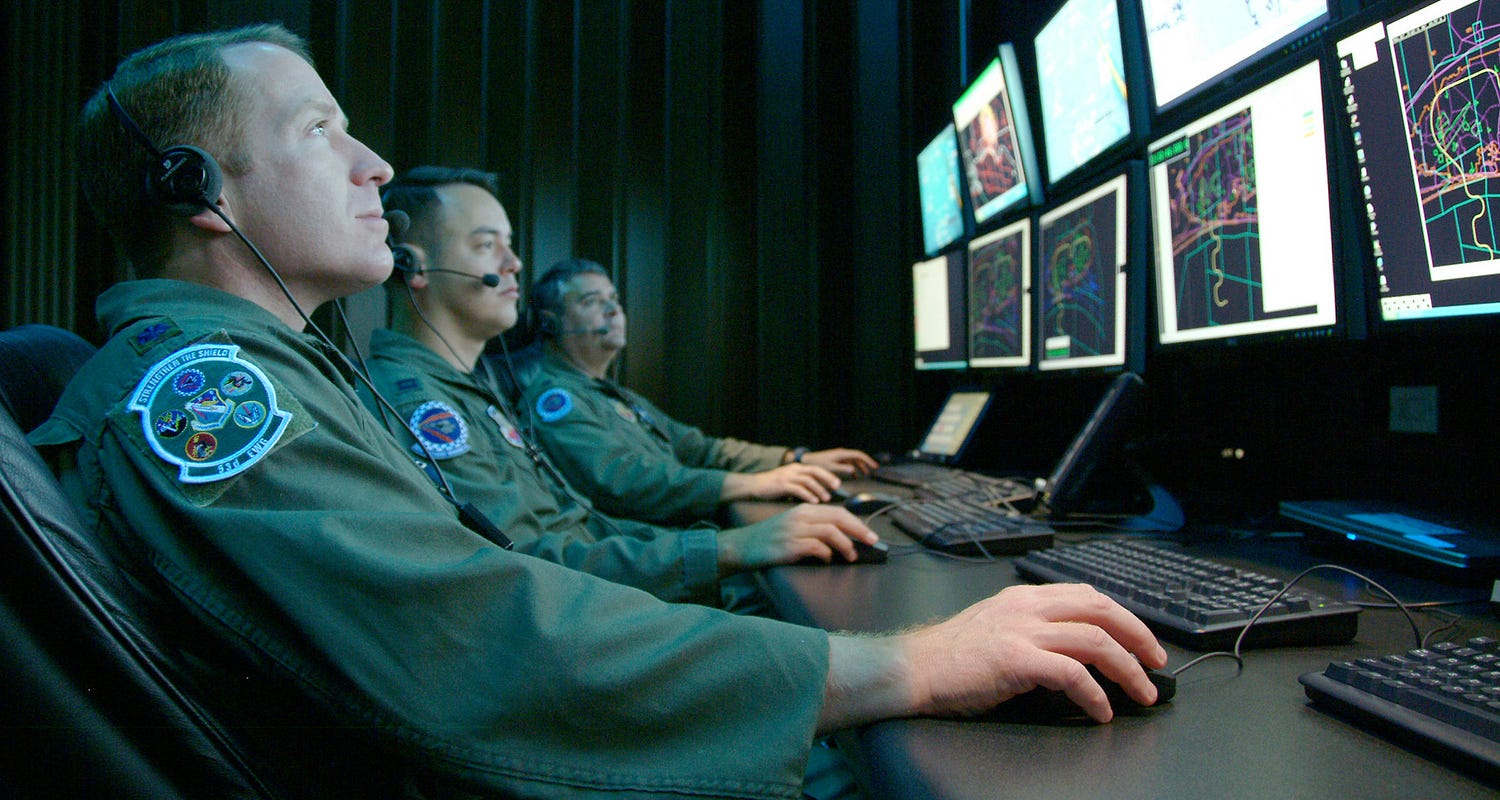
America’s Cyberwar defense team. Air Force photo


Don’t worry about ‘cyber 9/11'

Read about cyberwarfare in the media or in statements from Pentagon officials, and you’d be left with the impression that an army of hackers is on the verge of wiping out the U.S.

Here’s just one example. Last month, 10 formers members of the 9/11 Commission warned that a coordinated cyberattack could rival the 9/11 attacks in damage.

“One lesson of the 9/11 story is that, as a nation, Americans did not awaken to the gravity of the terrorist threat until it was too late,” the ex-commissioners wrote. “We must not repeat that mistake in the cyber realm.”

While cyber war is very much real, it’s tricky to untangle the actual threats from the ones we tend to exaggerate.

For one, it’s not easy building a cyberweapon that can cause serious industrial damage. Like the Stuxnet virus that tore through Iran’s nuclear centrifuges, these weapons are the purview of the richest nation-states.

Danzig: Focus On Cyber ‘Existential’ Threats Undermines U.S. Preparedness

August 8, 2014 · 

Danzig: Focus on Cyber ‘Existential’ Threats Undermines U.S. Preparedness

Washington’s recurring tendency to label cyber attacks an “existential” threat to the United States exaggerates the danger and fails to focus attention on managing significant cyber risks to critical infrastructure and U.S. national security, according to Richard Danzig, a key administration adviser and author of a recent cyber security study.

The State Department’s International Security Advisory Board used the term last month in its cyber-stability report: “Threats are particularly concerning to countries with a high degree of dependency on cyber infrastructure, including the United States, where the risks are massive and possibly existential.” Leaders from Capitol Hill, the Pentagon and other agencies have also used it in recent years.

“I don’t think that’s the right focus of debate,” Danzig told Inside Cyber security in an interview when asked whether cyber threats are existential and whether such a label matters. “It gets into a lot of semantic questions – what do we mean about existential and the like?”

Cyber attacks are unlikely to imperil the existence of the United States, he argued. “Would the U.S. still exist after a cyber attack, even if it were masterfully conducted and massively executed? I think the answer is yes, the U.S. would still exist,” he said. “How grave would such a thing be? Not only hard to tell now but whatever our answer was today, it would be a different answer years from now.”

The assertions by Danzig, who serves on the President’s Intelligence Advisory Board and was Navy secretary in the Clinton administration, come as Obama administration officials and lawmakers are grappling with an appropriate U.S. response to an evolving cyber threat.

White House Cyber security Coordinator Michael Daniel acknowledged in a March speech that cyber attacks do not threaten the country’s existence, at least for now. “We’re not quite in a world where attacks on our critical infrastructure can wipe us out imminently, but we are headed in that direction,” he said.

Other officials, by contrast, have explicitly invoked the “E” word. Sen. John McCain (R-AZ) said in 2012 that a large-scale cyber attack on the United States is inevitable and represents an existential threat.

“Despite all of the advantages of computers and the Internet, if we fail to act, the cyber threat can be an existential threat – meaning it can challenge our country’s very existence or significantly alter our nation’s potential,” then-FBI official Steven Chabinsky, now an official with CrowdStrike, said in March 2010.

In 2011, Adm. Michael Mullen, then chairman of the Joint Chiefs of Staff, described “cyber” as the biggest existential threat facing the United States, the other being Russia’s nuclear weapons.

But Gen. Martin Dempsey, Mullen’s successor, said that the United States faces “no obvious existential threat, now or in the foreseeable future” – a point he reiterated last month at a conference in Hawaii. Other cyber security analysts, including Jim Lewis of the Center for Strategic and International Studies and Jason Healey of the Atlantic Council, have also said that cyber attacks do not pose an existential threat to the country.

CLIMATE CHANGE: POINT OF NO RETURN – OPED


Time’s up, or so planet earth seems to be telling humanity. Extreme weather conditions around the globe, including rising temperatures, droughts, crop failures, melting sea ice, rising sea levels, disappearing glaciers and the loss of plant and animal species all point in only one direction. The tipping point towards the sixth great extinction is taking place right now.

It is clear that these problems are all human made. Rising carbon dioxide levels caused by fossil fuel emissions are creating a series of catastrophes in ecosystems around the world. The processes are clear to anyone who pays attention.

Two large craters, one more than 200 feet in diameter, were recently discovered in the remote Yamal peninsula of northern Russia. In an extreme case of irony, Yamal is said to mean “end of the world” in the local Nenets language. Scientists have concluded that the holes were formed when a mixture of salt, water and natural methane gas exploded underground. They theorize that rising temperatures made the permafrost unstable and released methane, the key ingredient in the explosions. A temperature rise of only two degrees centigrade is enough to make permafrost thaw and begin a chain of terrible events.

All of the bad news is relevant as the United Nations prepares to host a Climate Summiton September 23, 2014 in New York. Past climate conferences haven’t provided much in the way of relief, as the United States and other industrialized nations subverted the 2009 Copenhagen climate accords. The supposedly environmentalist president Barack Obama and his European cohorts forced an agreement that allowed a two degrees increase in temperature. This seemingly small amount will kill humans and other species and brought the giant holes to Siberia and now more dangerously, methane from the sea. Climatologist Jason Box recently made this pithy comment on Twitter. “If even a small fraction of Arctic sea floor carbon is released to the atmosphere, we’re f’d.”

As the situation is dire, so must the solutions be truly radical. The free for all of capitalism is deadly in so many ways as financial collapse, exploitation and wars bring misery to millions of people. Money is the problem and not individual decision making. We may feel useful when recycling trash or driving hybrid vehicles but these are bandages when the world needs major surgery. “Green capitalism” is doomed because capitalism can’t be green. The imperative to maximize profits is in direct conflict with environmental and human sustainability. The profit motive must be eliminated in favor of managed economies that limit growth, fairly distribute resources, regulate the polluting industries and activities, and end the gross inequalities of this gilded age.

Money is the elephant in the climate change room. Corporations are beholden to no one but themselves, only claiming to be like human beings when they really want to get their way with governments and citizens around the world. “Corporate personhood” is a one way street and everything from income inequality to planetary destruction is the proof.

Recently residents of Toledo, Ohio and southeast Michigan literally had no water to drinkfor three days. A combination of sewage, live stock manure, and fertilizer run-off create algae blooms which spread more rapidly because of rising temperatures. If the amount of algae grows enough it contaminates drinking water from lake Erie. The causes of this recurring problem are well known but the obvious solution of regulating the businesses responsible for the problems doesn’t happen and the inaction is a direct result of corporate power flexing political muscle. The Fertilizer Institute is the industry lobby which makes sure that neither federal nor local regulators restrict the use of fertilizers which deprived 500,000 people of drinkable water. Acquiescence to corporate interest makes life itself untenable.