3 September 2022

WHY RECAPTURING KHERSON IS SO IMPORTANT TO UKRAINE?

Stavros Atlamazoglou 

The war in Ukraine is in its seventh month, and after many weeks the focus of most of the fighting has shifted from eastern to southern Ukraine. Despite its renewed offensive in the Donbas, in eastern Ukraine, the Russian military has failed to achieve anything significant there.

Over the past two months, Russian troops have only advanced between six and 10 miles, only capturing Severodonetsk and Lysychansk, both of which the Ukrainians decided to abandon after they had inflicted heavy casualties on the Russian forces.

The Ukrainian military is using its new long-range fires, including Western High Mobility Artillery Rocket Systems (HIMARS), M270 Multiple Launch Rocket Systems (MLRS), and howitzers, to great effect, destroying Russian ammunition depots and logistical hubs all over the Donbas, thus grinding the Russian machine to a halt.

This Is the Other Way That History Ends

Bret Stephens

The End of History was supposed to have happened back in 1989, the year the Berlin Wall fell and Francis Fukuyama announced the conclusive triumph of liberal democracy. We know how that thesis worked out. But what happens when the other kind of History — academic, not Hegelian — starts to collapse?

That’s a question that James H. Sweet, a professor of history at the University of Wisconsin, Madison, and the president of the American Historical Association, tried to raise earlier this month in a column titled “Is History History?” for the organization’s newsmagazine. It didn’t go well.

Sweet’s core concern in the piece, which was subtitled “Identity Politics and Teleologies of the Present,” was about the “trend toward presentism” — the habit of weighing the past against the social concerns and moral categories of the present.

The Zaporizhzhia Nuclear Plant Is Kindling for World War III

Henry Sokolski

As the International Atomic Energy Agency (IAEA) readies itself to visit the Zaporizhzhia nuclear plant in Ukraine, Western officials are sighing a sigh of relief. However, there is a worry they have yet to consider—how civilian nuclear plants in war zones are becoming radiological bombs that could ignite World War III.

Seem shrill? Late last week, the chairman of the Select Committee on Defense in the British House of Commons warned that “any deliberate damage causing potential radiation leak to a Ukrainian nuclear reactor would be a breach of NATO’s Article 5.” Article V of the NATO treaty requires all signatories to come to the defense of any alliance members that suffer an armed attack.

How imminent might a radiological release be? Late Thursday, all external power to the Zaporizhzhia nuclear plant was cut off. The only source of electricity was the plant’s emergency diesel generators, which had no more than five days of fuel to power the plant’s essential safety and fuel-cooling electric water pumps. Had those generators run short of fuel (which could be exacerbated by Russian pilfering) and the one remaining power line not been reconnected, a loss of coolant accident (think Fukushima) could have ensued in eighty minutes.

Ukrainian authorities understand this. That’s why last week they distributed iodine tablets to Ukrainians to reduce thyroid cancers if the Zaporizhzhia plant should blow. Romania, a NATO nation, also grasps this: Earlier in the month, its health minister encouraged Romanians to pick up free iodine pills at their local pharmacies. Last week, Romania’s neighbor, Moldova, imported one million tablets for its own population.

What these states appreciate is not only that accidents are possible in war, but that Russian president Vladimir Putin might intentionally assault Ukraine’s nuclear plants turning them into “prepositioned nuclear weapons” whose dispersal of radioactivity could force evacuations and frighten Ukraine’s NATO supporters to relent. They also understand that the war’s not over: there are nine other Ukrainian power plants that Putin could attack in western and southern Ukraine.

And what is Washington’s response? It has two big ideas, both nearly seventy years out of date. The first is to get IAEA inspectors to visit. I have supported this if it helps establish that the Zaporizhzhia plant is still Ukraine’s, not Russia’s. But no one should be under any illusions. The IAEA was founded seventy years ago to promote nuclear power and to conduct occasional nuclear audits, not to physically protect plants against military attacks or to demilitarize zones around them. The IAEA can’t provide the Zaporizhzhia plant with any defenses, nor will it risk keeping IAEA staff on-site to serve as defensive tripwires.

The second idea also hails from the Atoms for Peace Program of the early 1950s—build nuclear power plants everywhere, including in Poland, Romania, and, unbelievably, Ukraine. President Joe Biden announced a U.S.-subsidized six-reactor project for Poland three weeks after Russian military forces fired upon and occupied Zaporizhzhia. The State Department then followed in May with details on the construction of an American small modular reactor and of a related U.S. taxpayer-funded nuclear simulator in Romania. Finally, in July, U.S.-headquartered Westinghouse announced a joint agreement with Ukraine’s state-owned nuclear utility to build at least two reactors in Ukraine.

The unspoken assumption here is that Putin will never strike another reactor in Ukraine, Romania, or Poland. Maybe. But after condemning the West for backing Ukraine’s views regarding Zaporizhzhia, former Russian president Dmitry Medvedev recently warned that there were reactors throughout Europe and that similar “incidents are possible there as well.” And it’s not just Europe. South Korea, Japan, and Taiwan also have reactors at risk. Since Russia’s occupation of Zaporizhzhia, each has increased planning and drills against Chinese and North Korean military threats to their nuclear plants.

Washington should pay attention. It should take several steps but two of the most important are dialing in “peaceful” reactors as prepositioned nuclear weapons into its strategic deterrence strategy and rethinking its enthusiasm for exporting reactors even into war zones. The first task requires clarifying when, and, if it ever, it would make sense for U.S. forces to fire on reactors overseas. It also entails determining how our forces might best deter and protect against attacks on friends’ reactors meant to harm or coerce them.

The second task demands examining what can be done physically to protect existing reactors overseas where U.S. troops are or might be deployed. It also requires assessing how prudent constructing new nuclear plants might be in or near likely war zones and where those zones might lie.

We cannot ask the IAEA to do this. It will not. But if we are serious about preventing the worst, including a nuclear-powered Sarajevo, we must.

The Gorbachev Vacuum How the Soviet Leader’s Legacy Helps Explain Russia’s Wars

Michael Kimmage

Russian folk culture cherishes the figure of the holy fool. Derived from Orthodox Christianity, the holy fool is out of sync with conventional society. The holy fool speaks the truth, though to others it may sound like nonsense. The holy fool stumbles through life, experiencing successes that are failures and failures that are successes. Holy fools can be prophets. Although everyone else is preoccupied with the world as it is, the holy fool can intuit the world as it might be, and perhaps the world as it will be. Wisdom can initially look like folly, and folly can appear at the outset to be wisdom.

It is possible to see Mikhail Gorbachev, the former Soviet leader who died on August 30, at the age of 91, as a holy fool. He was out of sync with the conventional Soviet society into which he was born, in 1931, precisely because he was so sincerely Soviet—and because he never ceased being sincerely Soviet, even after the collapse of the Soviet Union in 1991. He spoke an important truth about international politics: it should show some concern for humanity and not just national egotism, a truth that took on particular significance in the nuclear age. And his greatest success, the reform of the Soviet Union in the late 1980s, turned out to be his greatest failure, when reform led to peaceful revolutions across the Soviet imperium. Gorbachev reformed the Soviet Union out of existence.

Was Mikhail Gorbachev a hero? That depends on who — and where — you ask.

Tom Nagorski

The tributes pour in. “Few leaders in the 20th century, indeed in any century, have had such a profound effect on their time” (the New York Times). Mikhail Gorbachev was “the man who ended the war … [and] changed the course of 20th-century history” (the Economist). “Hard to think of a single person who altered the course of history more in a positive direction than Mikhail Sergeevich Gorbachev”(a tweet from former U.S. ambassador to Russia Michael McFaul).

While McFaul’s specific praise begs questions (what about Mahatma Gandhi? Nelson Mandela? Martin Luther King?), the plaudits are deserved. Mikhail Gorbachev altered the course of history.

But he was also a complicated figure — and his legacy equally so.

On the one hand, there is no question: The demise of the Soviet Union would never have happened in the peaceful way it did had a lesser statesman been at the helm. And that’s with more than the typical gratitude for a “peaceful transfer of power.” For decades, the notion that the USSR would collapse was considered naive; the idea that the endgame might play out as smoothly as a Christmas Day phone call from the Soviet leader to his counterpart in Washington would have been laughed at. But that’s what happened. Gorbachev picked up the phone on Christmas morning, 1991, two hours before his address to the world, and called President George H.W. Bush, notifying Bush of his decision and asking for his help in assuring that “the process of disintegration and destruction does not grow worse.”

Frenemies: Global approaches to rebalance the Big Tech v journalism relationship

Courtney C. Radsch

Big Tech has enabled unparalleled reach, engagement, and innovation in the news media even as the decoupling of advertising and journalism has threatened the very foundation of a commercial news model and ushered in the era of disinformation. Lawmakers in the U.S. now appear poised to join in efforts around the world aimed at rebalancing the codependent relationship between Big Tech and news publishers with the release of an updated Senate bill enabling small news organizations to negotiate compensation from tech giants like Meta and Google that appears to have bi-partisan and bi-cameral support.

More than a year after Australia adopted a pioneering new media bargaining code and the EU Copyright Directive went into effect, the idea of getting Big Tech to pay for the news they use is gaining greater support around the world, with lawmakers in Brazil, Canada, India, Indonesia, Sweden, the U.S., and the U.K. exploring interventions that they hope will support an industry facing an extinction event yet recognized as essential to democratic governance. Governments are also considering whether competition policy should be deployed to claw back revenue from tech behemoths and the AdTech infrastructure they control or to enable news media to collectively bargain with aggregators and other platforms that use their content.

US Military Satellites Need to Get Smarter, More Self-Reliant

PATRICK TUCKER

Predictive analytics and refuel-and-repair capabilities for satellites are some of Space Command’s key technology needs, a top official said Wednesday.

The command is charged with monitoring activity and debris in space, for the operation of military satellites as well as manned space missions. To do that—and to detect electromagnetic waveforms that could be signs of electronic warfare from adversaries—they’ll need new types of satellites or new capabilities for satellites, Lt. Gen. John Shaw, deputy commander of U.S. Space Command, said at the DARPA Forward event.

“Historically, we have typically done that mission set from mostly using sensors here on the planet,” he said.

The command is also seeking new types of AI software, deployable on satellites, to closely monitor electromagnetic noise or physical debris and watch for changes in “behavior.”

What inspectors will look for at Ukraine's war-damaged Zaporizhzhia nuclear plant

GEOFF BRUMFIEL

Rafael Mariano Grossi, director general of the International Atomic Energy Agency, arrives in a hotel with a delegation in Zaporizhzia, Ukraine, on Aug. 31. The delegation will travel to the Zaporizhzhia nuclear power plant amid the Russia-Ukraine war.Metin Aktas/Anadolu Agency via Getty Images

The International Atomic Energy Agency inspectors have been to some of the world's most sensitive nuclear facilities — from North Korean reactors to Iranian uranium plants. But it all seems straightforward compared to what awaits them at the Zaporizhzhia Nuclear Power Station in southern Ukraine.

Since March, the plant has been occupied by Russian forces, and run by a skeleton crew of Ukrainian workers. When they arrive, inspectors will walk past the boarded-up hulk of the main administrative building, which was pummeled by rocket-propelled grenades during the initial invasion. A nearby courtyard holds the charred remains of military tents, razed by a retaliatory Ukrainian drone strike in late July. In recent weeks, shells have punched through the roofs of vital support buildings, and wildfires have threatened the plant's power lines.

Here’s What Biden’s New National Security Strategy Should Say

Gabriel Scheinmann

After a long wait, the Biden administration may finally release the new U.S. National Security Strategy (NSS) this fall. Originally scheduled for publication late last year, the document was withheld as Russian war preparations on Ukraine’s borders intensified. The invasion and its fallout then presented Washington with a new strategic situation, requiring the document to be rewritten. Its absence has left many wondering about the administration’s strategic objectives, priorities, and plans to achieve them.

The Biden administration laid out its initial impulses on national security in its Interim National Security Strategic Guidance, published shortly after the new team moved into the White House in early 2021. That document prescribed a heavy dose of cooperation with other powers—including the United States’ adversaries. Beijing and Moscow were presented as partners on such issues as climate change, nonproliferation, arms control, public health, and economic stability.

Into the gray zone

Matt Armstrong

“Gray zone” is a popular label for various adversarial activities, specifically those activities “in the space between peace and war.” The term has been around for many years and is often considered to be—and is often used as—a replacement for the term political warfare. The problem with political warfare, of course, is the word warfare and the resulting reaction by some that “we don’t do ‘warfare’ and thus political warfare isn’t our job.” Political warfare was, however, more palatable than psychological warfare which, for example, was in the draft report from a special joint Senate and House Smith-Mundt Committee’s delegation that toured 22 European countries in 1947 but disappeared from the final copy made public: “The United States Information Service is truly the voice of America and the means of clarifying opinion of the world concerning us. Its objective is fivefold… (5) be a ready instrument of psychological warfare when required.”

Terms matter, and not just because they inherently have different meanings to different audiences at different times. Terms may also assign responsibilities just as they may be used to punt responsibilities to someone else. Public diplomacy, for example, has always been confusing because it was purposefully applied to the activities of an agency and not to specific methods or outcomes, which continues to cause confusion long after that agency went disappeared. Hybrid warfare may be discussed in a similar way as it seems to be military-focused and intended to lay claim on an enhanced role for the military.

The enemy gets a vote: The forever war and future war after Afghanistan

JOSEPH FELTER


One year ago today, at one minute before midnight in Kabul, a U.S. Air Force C-17 cargo plane lifted off the tarmac of Hamid Karzai International Airport with the acting U.S. ambassador to Afghanistan and our last remaining troops on board, marking the end of America’s nearly 20-year military presence in the war-torn country. In an address from the White House the following day, President Biden stated with finality, “My fellow Americans, the war in Afghanistan is now over.” He justified his decision to withdraw by stating, “I refuse to continue a war that was no longer in the service of the vital interests of our people.”

But America’s longest war is not over and cannot be terminated unilaterally. Our enemies get a vote. Terrorist groups such as al Qaeda will exploit the more favorable conditions in Afghanistan that a return of Taliban rule provides and continue to seek ways to harm us and others. It remains in our vital national interests to protect the homeland from international terrorist attacks, and in our important interests to help defend our allies and partners such as NATO and India from such attacks.

The war against Islamic extremists with global reach continues and we are obliged to wage this struggle from a much less advantageous position. Beyond undermining our ability to interdict terrorist threats, America is less prepared for contingencies and deterrence in future conflict with our strategic competitors and other rivals.

Turkey’s Latest Move to Undermine NATO

Bradley Bowman, Sinan Ciddi

Turkey is at it again, a NATO ally not acting like one. It’s admittedly not exactly new behavior for Turkish President Recep Tayyip ErdoÄŸan, but the actions over the last two weeks have been particularly troubling.

As of publication, Turkey is among a small number of allies that still has not ratified the accession of Finland and Sweden to the alliance. The U.S. Senate voted 95-1 to add the two Nordic countries, but ErdoÄŸan has slow-rolled the process to score domestic political points in advance of elections.

A week ago, Turkish Foreign Minister Mevlut Cavusoglu reportedly suggested Ankara would drop its request for new American F-16 fighter aircraft if their provision is contingent on a commitment from Turkey not to employ those aircraft for “unauthorized territorial overflights of Greece,” a key congressional demand. It hardly seems unreasonable to ask one NATO ally to refrain from such acts of aggression targeting another NATO ally.

Nuclear inspectors are in Ukraine for a high-stakes visit to the Zaporizhzhia plant.

Andrew E. Kramer

KYIV, Ukraine — A team of international nuclear inspectors was in Ukraine on Tuesday as part of a risky trip to assess the safety of a nuclear power plant that has been repeatedly struck by artillery shells, hoping to provide the world a first impartial glimpse of the threat.

The Zaporizhzhia Nuclear Power Plant, which is the first in the history of civilian nuclear power where active reactors have been imperilled by military conflict, is controlled by Russian troops but operated by Ukrainian engineers.

Conditions at the site, which was shrouded in smoke on Monday from wildfires touched off by combat nearby, have been unraveling for weeks. An image released Monday by a commercial satellite company showed blackened holes punched by artillery in the roof of one building.

Ukraine Tries to Make Southern Offensive a Turning Point in War

James Marson, Matthew Luxmoore and Ian Lovett

MYKOLAIV, Ukraine—After a crescendo of long-range strikes on Russian military facilities and bridges in the dark of night early Monday, Ukrainian forces launched a southern offensive with attacks along the front lines.

Ukrainian armor crashed over the Inhulets River and established a bridgehead, the main gains that Kyiv has made in two days of fighting.

Whether Ukraine can capitalize on its initial thrust and retake territory in its south that Russia seized at the start of its invasion will go a long way to shape the next phase of the war.

After repelling the Russians from the outskirts of Kyiv in the spring, Ukraine had been slowly losing ground in the east in the face of intensive shelling and airstrikes. But after all but halting the Russians there, Ukraine sought to cut off enemy forces on the western bank of the Dnipro River in the south by using precise, long-range rockets provided by the U.S. to strike bridges and military facilities.

AirLand redux? Early lessons from Ukraine

Michael P. Kreuzer

The war in Ukraine signals a return, with a vengeance, of the hider-finder game of air warfare, both for airspace superiority and to exploit the air for battlespace effects. Against what appeared at the onset to be a resurgent great power seeking to overwhelm a significantly weaker neighbor, Ukraine has relied on airpower, modern system tactics and training, and passion to at least level the playing field against the Russian onslaught to enable them to readily evade (‘hide’) from conventional force attacks and Russian air defense sensors while more efficiently finding conventional military targets. Though the war is far from over, it has already yielded numerous lessons that airpower advocates and joint-minded leaders should apply to other conflicts. Counter-land drone tactics and greater reliance on coordinated fires from multiple domains suggest that significant challenges are ahead for military operations. Long-simmering US doctrinal feuds that the US military has largely sidelined during the war on terrorism need to be directly addressed now in order to anticipate the future battlespace.
Drone paths diverge

The US Air Force’s precision-targeting model posits that airpower is a game-changer in war because it can bypass fielded forces and directly attack an adversary’s “vital centers,” in some cases by “cutting off the head of the snake” through targeting an enemy’s leadership. US drone operations have been guided by this model of targeting, as medium-altitude, long-endurance drones with precision munitions and reachback intelligence have provided a capability almost uniquely suited to the US military and its strategy in the war on terrorism.

Do Not Trust Your Gut: How to Improve Strategists’ Decision Making

James M. Davitch

INTRODUCTION

Military strategists often make decisions based on instinct and emotion rather than careful deliberation. However, as Daniel Kahneman’s book Thinking, Fast and Slow explains, most humans do as well because of mental limitations called cognitive biases.[1] Kahneman argues the mind’s tendency to make snap decisions rather than to proceed with caution can inhibit effective judgment. Cognitive biases may cause strategists to overlook salient yet inconvenient information and waste time pursuing solutions to the wrong problems. Unfortunately, the list of known cognitive biases is extensive and growing.[2] Faced with an overwhelming number of challenges to decision making, a strategist might question whether some biases are harmful specifically in a military planning environment and if there are any techniques to address them. This essay argues that, yes, some specific biases may directly affect military planning. Further, it argues that while there are historical examples of their negative influence, they can be mitigated through certain techniques.[3]

Each section below focuses on one of four cognitive limitations. The essay will describe each bias, relate it to an example in military history, and conclude with steps to mitigate it. This essay illustrates through historical analogies why confirmation bias, fundamental attribution error, anchoring bias, and representative bias are detrimental to a military strategist’s decision-making process.[4] These biases can cause strategists to privilege facts that confirm previously held beliefs, automatically attribute nefarious motivations to others’ actions, fixate on initial information, and draw incorrect associations between dissimilar events. Examples from the Cuban Missile Crisis, the Korean War, Operation Iraqi Freedom, and World War I provide historical context for these cognitive limitations. The mitigation steps include engaging in active open mindedness, empathy, consideration of the opposite, and the so-called “what if” technique. The common theme throughout the mitigation steps in this essay is that strategists would benefit from exercising patience and intellectual humility in their deliberations.

Fact and Analysis Check: Is Odesa ‘Putin’s Obsession?’

Graham Allison

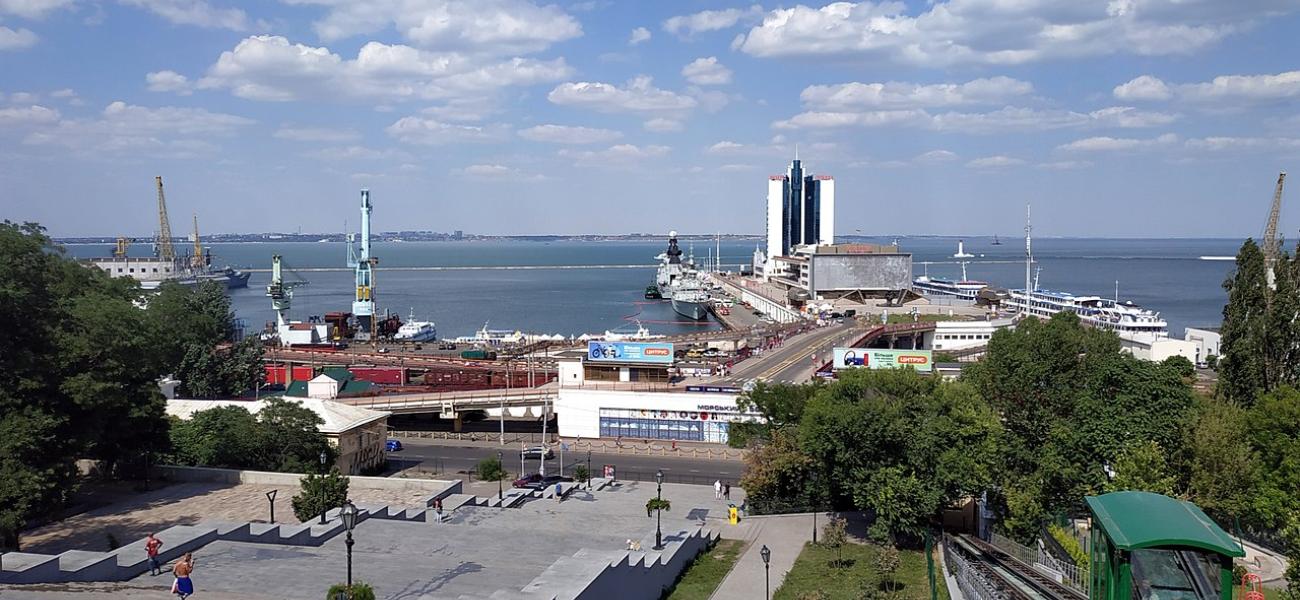
The New York Times’ lead story on the front-page of its Sunday Aug. 21 edition declares: Odesa is “Putin’s Obsession.” Needless to say, this is a big idea. In the midst of a brutal war, after an attempted Kyiv coup failed, Russian aggressors have succeeded in capturing all of Luhansk, 75% of Donetsk, the Zaporizhzhia nuclear plant and most of the southern tier, establishing a land bridge from Russia to Crimea, this proposition—if it were true—could provide a clue about where this phase of the bloody war might plausibly reach stalemate. Recognizing its importance, the editors gave veteran reporter Roger Cohen a rare 6000 words in which to make his case. He uses that space argue that Odesa is “the Russian leader’s obsession”; “the big prize in the war”; “militarily … the highest-value target”; and the “grain port to the world.”

When I read the article, I reacted: say what!? As a long-time student of the Soviet Union and Russia who has been tracking and writing about Putin’s war against Ukraine, I asked: how could I and every other analyst I know in and out of the U.S. government have missed this? Having now reviewed the evidence the article presents to support its key claims, and compared it to what is known from what other experts including Bill Burns (now Director of CIA but formerly Ambassador to Moscow whose 2019 memoir offers the best brief profile of Putin), Fiona Hill (former assistant to Trump and before that the National Intelligence Officer for Russia), Angela Stent (another Russia scholar who earlier serviced as NIO for Russia) and others, our fact-analysis check concludes that each of these claims is false or misleading.

A Winner Is Emerging from The War in Ukraine, But It's Not Who You Think

Aaron Pilkington


The war in Ukraine is helping one country achieve its foreign policy and national security objectives, but it's neither Russia nor Ukraine.

It's Iran.

Iran is among Russia's most vocal supporters in the war. This has little to do with Ukraine and everything to do with Iran's long-term strategy vis-à-vis the United States.

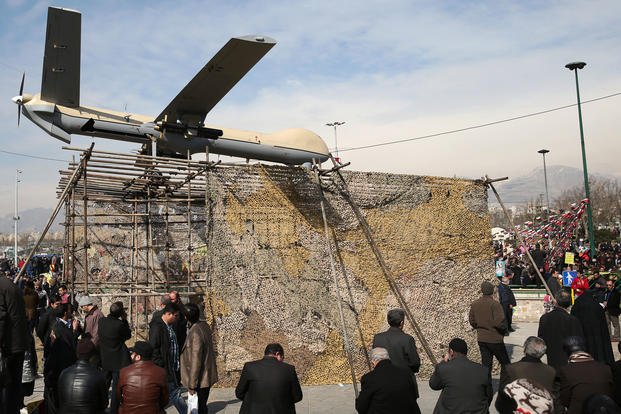
As Russia's war on Ukraine passes six months and continues eroding Russia's manpower, military stores, economy and diplomatic connections, leader Vladimir Putin has opted for an unlikely but necessary Iranian lifeline to salvage victory in Ukraine and also in Syria where, since 2015, Russian soldiers have been fighting to keep Bashar al-Assad's government in power.

Japan’s Lessons for Taiwan

TAKATOSHI ITO

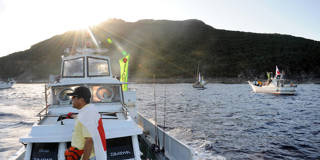
NEW YORK – Following US Speaker of the House Nancy Pelosi’s visit to Taiwan, China fired missiles into six areas surrounding Taiwan and sent fighter jets across the midline of the Taiwan Strait. Some of those missiles landed in Japan’s exclusive economic zone (EEZ), threatening fishing boats from the Japanese island of Yonaguni, which is just 68 miles (110 kilometers) from Taiwan.

Although China’s military exercises ended after several days, a new precedent has been set. China most likely will send more missiles and jets into the area surrounding Taiwan whenever it is displeased with the Taiwanese government or US actions toward the island.

This strategy of ratcheting up pressure on Taiwan is all too familiar to Japan. In 2010, a Chinese fishing boat entered Japanese territorial waters around the Senkaku Islands – an uninhabited archipelago that belongs to Japan, but that China claims – and intentionally rammed a Japanese coast guard vessel that had warned it to depart from the area.

When the Japanese coast guard seized the boat and detained its crew, China lashed out. Though Japan soon released the boat and most of the crew, it held the captain to face charges for the damage he had caused to the coast guard vessel.

How America Sealed Afghanistan’s Fate—Again

Lynne O’Donnell

The betrayal of Afghanistan by the United States was inked on Feb. 29, 2020, when an emissary of then-U.S. President Donald Trump signed a bilateral deal with the unreconstructed terrorist-led crime gang known as the Taliban, which U.S. forces had spent the last two decades fighting. The agreement sealed the withdrawal of all U.S. military forces who had been supporting Afghanistan’s democratic experiment for those same two decades, in exchange for empty Taliban promises about breaking ties with terrorists. The deal essentially handed the Taliban the victory they’d so long sought.

But the betrayal wasn’t completed until Aug. 30, 2021, when the last U.S. military transport plane left Kabul crammed with scores of desperate people who feared for their lives in a Taliban-ruled state. The final liftoff came after two weeks of pandemonium that followed the hurried flight of former Afghan President Ashraf Ghani and his circle.

There would be no “Saigon moment” in Afghanistan, U.S. President Joe Biden said of the departure from Kabul of American soldiers, diplomats, and Afghans who had worked with them, after he decided to abide by Trump’s Taliban deal. But the terror, chaos, and violence of those last days were as bad as anything that led up to the last choppers on the roof of the U.S. Embassy in Saigon on April 30, 1975, as the United States cut and ran from South Vietnam. Young men clung to the undercarriages of planes as they taxied for takeoff from Kabul’s international airport; some died as they plummeted to the tarmac. The horrific scenes, the capstone to America’s Afghan misadventure, were painfully reminiscent of the nameless silhouettes seen leaping from New York’s blazing Twin Towers after al Qaeda’s terrorist attack on Sept. 11, 2001, the event that precipitated the U.S. invasion of Afghanistan in the first place.

International Relations Theory Suggests Great-Power War Is Coming

Matthew Kroenig

This week, thousands of university students around the world will begin their introduction to international relations courses for the first time. If their professors are attuned to the ways the world has changed in recent years, they will be teaching them that the major theories of international relations warn that great-power conflict is coming.

For decades, international relations theory provided reasons for optimism—that the major powers could enjoy mostly cooperative relations and resolve their differences short of armed conflict.

Realist IR theories focus on power, and for decades, they maintained that the bipolar world of the Cold War and the unipolar post-Cold War world dominated by the United States were relatively simple systems not prone to wars of miscalculation. They also held that nuclear weapons raised the cost of conflict and made war among the major powers unthinkable.

2 September 2022

For Putin and Russia, the Wagner Group Could Be a Recipe for Disaster

Alexander Clarkson

In the Bavarian town of Rain am Lech, a statue in the market square serves as a reminder of more tumultuous times. It depicts Johann Tserclaes, the count of Tilly, who helped lead the armies of the German Emperor Ferdinand II against Protestant challengers during the first decade of the Thirty Years’ War. Tilly was considered a hero by imperial loyalists, despised by adversaries for the horrific war crimes his mercenary troops inflicted during the Sack of Magdeburg in 1631. Avoiding these inconvenient details, the monument in Rain commemorates his nearby death in battle in 1632, after defeat at the hands of Swedish Protestants.

The armies that Tilly helped lead were largely made up of mercenary troops called the Landsknechts or condottieri. Their pivotal role in imperial armies struggling to survive finds echoes today in private military contractors such as Russia’s Wagner Group, in that their fates are intertwined with those of the regimes they serve, but whose established command hierarchies they also disrupt.

No doubt, historical comparisons with contemporary events are a risky business. Each conflict has its own unique social context that cannot be easily transferred to dynamics shaping wars in other eras. Awareness of the specificities of each battlespace is crucial to ensuring that attempts to examine shared patterns do not lead to absurd analogies that ignore the vast differences between, for example, the pike and shot warfare of the 17th century and the drone-guided artillery battles taking place in Ukraine today. Yet with all these caveats in mind, there are two historical patterns that can provide insights into how the role that private military contractors, or PMCs, play within the Russian political system might evolve over time.

Pelosi’s Visit to Taiwan: Provoking the First AI War in History?

Cheng Li

For the past few years, prominent diplomats and scholars of U.S.-China relations have worried that the nearly half-century-long absence of major war in East Asia might end due to the drastic deterioration of the bilateral relationship. These worries have reached an unprecedentedly elevated level following the visit of U.S. Speaker of the House Nancy Pelosi to Taipei this August.

Beijing’s exceptionally strong reaction, which has included dispatching missiles, warships, and warplanes into the air and seas around Taiwan, has sent the unambiguous message that the Chinese leadership is prepared to use force. From the perspective of this rising authoritarian global power, Washington’s de facto support of Taiwan independence (of what the Chinese perceive to be a “runaway province”) challenges China’s “vital core interest.” The aggressive military drills by the People’s Liberation Army (PLA) have notably crossed the so-called “median line” in the Taiwan Strait. In addition, the PLA has fired missiles targeting seven sea areas surrounding the island of Taiwan, including the far side of the island facing the Pacific, the region frequently navigated by U.S. naval vessels. This development was seen by some experts as a move akin to rehearsing a blockade.

Russia Voices Aim to Increase Combat Readiness at Bases in Central Asia

Catherine Putz

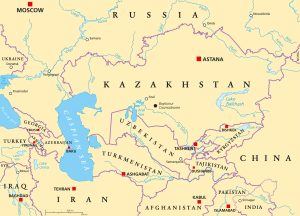
At a meeting of Shanghai Cooperation Organization (SCO) military heads on August 24 in Tashkent, Russian Defense Minister Sergei Shoigu said that Russia would be increasing the readiness of Russian forces in Central Asia in the context of continued instability in Afghanistan.

According to TASS, Shoigu said, “For our part, we are increasing the combat readiness of Russian military bases in Kyrgyzstan and Tajikistan, as well as other response forces for possible crisis situations.”

He said Afghanistan “remains a serious security challenge in Central Asia.”

“In the country, against the backdrop of the ongoing armed confrontation, the socio-economic situation is deteriorating, the ideology of religious radicalism is being implanted, drug trafficking and cross-border crime are flourishing.”

None of the issues cited by Shoigu are particularly novel; they have featured in Russian and Central Asian statements about Afghanistan for the last two decades. Concerns about religious radicalization and drug trafficking, especially, have fed wide-ranging investments into Central Asian border services and motivated tight control of religious and political expression in Central Asia. That said, with the U.S.-led withdrawal of American and NATO forces in August 2021 and the return of the Taliban to power, concerns have grown that Afghanistan could once again become a safe harbor for terrorists.

The Islamic State’s regional branch, Islamic State Khorasan province (ISKP) has expanded its vision and operations across South and Central Asia. Its amplified narratives directed toward Central Asia — especially Tajikistan and Uzbekistan are of particular concern. Al-Qaida also remains a concern, with its presence and protection by at least some faction of the Taliban government made evident when its top leader, Ayman al-Zawahiri, was killed in Kabul by a U.S. drone strike on July 31.

Russia maintains military bases and other facilities in both Kyrgyzstan and Tajikistan.

In Kyrgyzstan, Russia’s presence is largely concentrated in the Kant Air Base outside Bishkek's capital. Russia’s current presence at the base dates to 2003, when Moscow and Bishkek agreed to lease the former Soviet base to Russia. In 2012, the two sides settled a new agreement extending the lease 15 years (with an option to automatically extend for five more years); Moscow agreed to write off $500 million in Kyrgyz debt. The base is presently referred to as the 999th aviation base under the Russian 4th Air and Air Defense Forces Army and is believed to host various air frames, including Su-25 and Su-27 jets and Mi-8T helicopters.

In February 2020, Kyrgyz authorities announced that Russia was aiming to install new air- and missile-defense equipment and drones at the base. It’s unclear if those improvements were made or if the pandemic derailed the modernization efforts. Russia also reportedly maintains a naval testing station at Issyk Kul.

Tajikistan hosts Russia’s largest military presence abroad (with the exception of Ukraine, involuntarily). Collectively referred to as the 201st Russian military base or the 201st Motor Rifle Division, its history in Tajikistan stretches back to 1945. Given the breakout of civil war in newly independent Tajikistan in 1992, Russian forces never fully left the base (as they had in Kyrgyzstan). The base’s constituent parts include facilities and troops near Dushanbe, Kulyab, and Qurghonteppa (also called Bokhtar) and the force is estimated at around 7,000 troops.

In January 2021, Russian Ambassador to Tajikistan Igor Lyakin-Frolov told TASS that the “combat readiness of the Russian base, which can give a worthy response to threats and challenges emanating from Afghanistan, has increased.” Later in 2021, Russia dispatched 30 new tanks to the 201st.

There is less clarity on the Russian Air Force’s presence in Tajikistan. In 2017, Russia was apparently seeking to move more solidly into the Ayni Air Base outside Dushanbe, which it had used on an ad hoc basis over the years. The base had been renovated by India, which had hopes of moving in, but it’s unclear what kind of presence or control either have at the base at present. (The same goes for Farkhor Air Base, which is discussed in Indian media as the country’s first foreign base but about which little concrete is known.)

Back to Shoigu’s recent statements, it’s unclear precisely what he means by increasing “combat readiness” of Moscow’s forces in Central Asia, and how that relates to or differs from Lyakin-Frolov’s 2021 comments to the same effect. It may mean increased alert with regard to Afghanistan or increased activities; but it may also be just signaling on the part of Russia.

At present, the Russian military is bogged down in Ukraine, fighting six months into a war Moscow likely believed would be much shorter. In announcing the upcoming Vostok 2022 war games — which will involve military forces and observers from Algeria, Armenia, Azerbaijan, Belarus, China, India, Kazakhstan, Kyrgyzstan, Laos, Mongolia, Nicaragua, Syria, and Tajikistan — Russia said it was sending 50,000 troops to participate. Reuters noted that the 50,000 Russians are far below the reported 300,000 that participated in the exercise in 2018 (which may have been an exaggeration). The 50,000 number may also be an inflated figure. One Polish analyst, Konrad Muzyka, told Reuters: “It’s just Russia pretending everything is fine and they still have the capability to launch a large-scale military exercise with China. But in reality I think the scope of this exercise, especially from a ground force perspective, is going to be very, very limited.”

The joint communique that was issued after the recent SCO defense ministers meeting hones in on Afghanistan: “The defense ministers believe that settling the situation in Afghanistan without delay is one of the key factors in preserving and strengthening security and stability within the SCO space.”

But while the statement does not mention “Ukraine” directly, it does lay out a distinctly Russian talking point about Ukraine: “The ministers firmly condemned attempts to revise the causes and outcomes of World War II, and to rehabilitate Nazi criminals and their accomplices, as well as promote neo-Nazi ideas.”

The SCO includes as full members China, India, Kazakhstan, Kyrgyzstan, Russia, Pakistan, Tajikistan, and Uzbekistan.

Sri Lanka’s President Says IMF Talks Nearing Successful End

Krishan Francis and Bharatha Mallawarachi

Sri Lanka’s president said Tuesday that his bankrupt country’s talks with the International Monetary Fund for a rescue package have successfully reached final stages as he presented an amended budget that seeks to tame inflation and hike taxes.

President Ranil Wickremesinghe, who is also the finance minister, said in a speech in Parliament that his government will soon start negotiating debt restructuring with countries that provide loans to Sri Lanka.

Declaring that Sri Lanka is on the “correct course in the short term for recovery,” Wickremesinghe warned the country must prepare for at least 25 years of a national economic policy, staring with the 2023 budget.

An IMF team is visiting Sri Lanka and is expected to end Wednesday's current round of talks.

There Is No ‘New Normal’ in the Taiwan Strait – Yet

Gerrit van der Wees


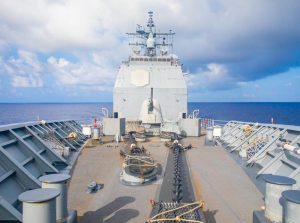
The passage of two U.S. guided-missile cruisers, Antietam (CG-54) and Chancellorsville (CG-62), through the Taiwan Strait on August 28 shows that there is anything but a “new normal” in the situation across the Taiwan Strait yet.

After the large-scale exercises by China’s People’s Liberation Army (PLA), which followed U.S. House Speaker Nancy Pelosi’s early August visit to Taiwan, a number of commentators had come to the misguided conclusion that with those exercises, Beijing had created a “new normal” under which it could cross the Taiwan Strait centerline and conduct military operations closer to Taiwan at will.

While Beijing is trying hard to push in the direction of such a “new normal,” it is far too early to tell, as Taiwan and the United States are pushing back against that notion. Both are working hard to prevent China from slicing another slice of the salami by pushing in the opposite direction, as expertly described by Bonnie Lin of the Center for Strategic and International Studies and Joel Wuthnow of the National Defense University.

China’s Exercises Had Their Limits

The “new normal” conclusion primarily arose from the mistaken perception that the exercises China conducted from August 4 through August 10 – right after the Pelosi visit – gave the PLA pretty much free rein on where and when to conduct military operations. That was simply not the case. At all points and at all times, Taiwan and U.S. military forces were close by to ensure that the Chinese did not cross any red lines.

Yes, the PLA reportedly fired a total of 11 short-range ballistic DF-15 missiles into pre-determined areas in the seas around Taiwan, thus “bracketing” the island and implying that at a future occasion China could hit land targets. However, in practice the main “result” of this exercise was that it clearly painted China as an aggressive, belligerent force, as was clearly reflected in the G-7 response, issued on August 4. That five of the missiles landed in Japan’s Exclusive Economic Zone (EEZ) certainly did not enhance Beijing’s standing in Tokyo either; the Japanese government strongly protested.

The exercises also involved large number of fighter aircraft, primarily of the Russian made Su-30 type, as well as the Chinese-made J-10, J-11, and J-16. No bombers were involved, except on August 7, when three H-6 bombers briefly flew across the median line of the Taiwan Strait, and then turned back when confronted by Taiwanese fighter aircraft. And this became the pattern: PLA aircraft crossed the line, were met by Taiwanese fighter aircraft, and then turned back.

The same happened with naval incursions by PLA Navy ships: They got closer to Taiwan’s coast than before, but they did not enter Taiwan’s territorial waters. The PLA fully realized that such a move would have resulted in a confrontation with unforeseen consequences. It certainly helped Taiwan that a number of U.S. ships were lingering in the background, including the nuclear-powered aircraft carrier USS Ronald Reagan (CVN-76), and the USS Tripoli (LHA-7), an amphibious assault ship on its maiden voyage with some 20 F-35B aircraft on board. All of this ensured that the PLA did not have a free rein on their operations.

Thus, did Beijing “gain ground” with these exercises? It may have been an opportunity to test their new integrated command structure, and they may have simulated some initial steps in a possible blockade or invasion, but internationally it had a very adverse effect. Particularly in the United States, Europe, and among like-minded countries in the region such as Japan and Australia, it called attention to the long-term threat posed by Beijing to the stability in the region.

Was Pelosi’s Visit “Provocative”?

With all of this in mind, can the visit by Pelosi be labeled “provocative” or “unwise,” as described in a number of U.S. publications? The answer is negative. For sure, the move led to an increase in tensions because of China’s military exercises. But as U.S. Secretary of State Anthony Blinken argued in his August 5 statement from Phnom Penh, “China has chosen to overreact and use Speaker Pelosi’s visit as a pretext to increase provocative military activity.”

The PLA exercises laid bare China’s aggressive intentions, and are thus an important motivation for Taiwan, the United States, and like-minded allies to strengthen their efforts to deter any similar moves in the future. This collective deterrence will be a main factor to maintaining peace and stability in the Taiwan Strait. The value of Pelosi’s trip is that it has brought this into sharp focus.

Pelosi’s trip also highlighted that Taiwan is a vibrant democracy under threat. In an op-ed in the Washington Post about her visit, Pelosi wrote: “…[D]isturbingly, this vibrant, robust democracy – named one of the freest in the world by Freedom House and proudly led by a woman, President Tsai Ing-wen – is under threat. ….. We cannot stand by as the CCP proceeds to threaten Taiwan – and democracy itself.”

How Far Will the U.S. Go to Help Taiwan?

One final question is, how far the United States will go to help Taiwan militarily? Newswires often recite a statement, "The United States has no formal diplomatic relations with Taiwan but is bound by law to provide the island with the means to defend itself.” That second part of the sentence, however, is only half the story.

Indeed, the Taiwan Relations Act, which indeed commits the U.S. to provide “arms of a defensive character” to Taiwan, also states that the U.S. “shall maintain the capacity of the United States to resist any resort to force or other forms of coercion that would jeopardize the security, or the social or economic system, of the people on Taiwan.”

This much more powerful language has been emphasized by U.S. Secretary of Defense Lloyd Austin at the June 2022 Shangri-La meeting in Singapore, and by Blinken in his recent speeches and statements.

We need to wait until the full effect of this (re)discovery of U.S. commitments under the Taiwan Relations Act plays out against the background of China’s heightened aggressiveness before deciding whether there is a “new normal” in the Taiwan Strait or not. The United States, together with Taiwan and other like-minded allies in the region, now has a much stronger focus on how to deter China from further adventurism.

And, as Pelosi emphasized in her Washington Post op-ed, the fight to preserve Taiwan’s democracy, and ensure that its 23 million people can freely decide their own future, is closely linked to Ukraine’s fight for its survival as a democratic nation. It is part of the worldwide struggle between democracy and autocracy. That is the real “new normal.”

The Evolving Role of Greenhouse Gas Emission Offsets in Combating Climate Change

Joseph E. Aldy

Abstract

As governments, firms, and universities advance ambitious greenhouse gas emission goals, the demand for emission offsets — projects that reduce or remove emissions relative to a counterfactual scenario — will increase. Reservations about an offset’s additionality, permanence, double-counting, and leakage pose environmental, economic, and political challenges. We review the role of offsets in regulatory compliance, as an incentive for early action, and in implementing voluntary emission goals. The rules and institutions governing offsets drive large variations in prices and in the types of projects deployed to reduce or remove emissions across offset programs. A lack of carbon price convergence and potential information asymmetries may contribute to limited price discovery and market segmentation. Considering offsets' financial properties, an array of financial and technological innovations could enhance offsets’ environmental integrity and promote liquid offset markets. Unresolved questions about policy's future will influence voluntary offsets markets' evolution.

The View from Olympus: The Marine Corps Gazette Gets the Evolution of Maneuver Warfare Right.

William S. Lind

The September issue of the Marine Corps Gazette includes an article for which there has been a long-standing need, namely an accurate recounting of the history of maneuver warfare’s evolution into official Marine Corps doctrine. Written under the pen name Marinus as part of an ongoing series, the Maneuverist Papers, it does what none of the books on the subject have managed, namely provide a non-partisan account that identifies all the streams that fed into the maneuver warfare river.

Of these streams, which the article calls threads, there were five: intense dissatisfaction among Marine Corps officers over our performance in Vietnam and our final loss of that war (something that seems to have vanished with more recent defeats); interest in mechanized operations because that is what a conflict in Europe with the Soviet Union seemed to require; the model offered by the Prussian/German Army, for which I was the main spokesman; renewed interest in classical military literature, especially Clausewitz and Sun Tzu; and the theoretical work of Col. John Boyd, USAF. My only quibble with the account is its failure to mention that I began the maneuver warfare debate with a critique of forthcoming Army doctrine that I wrote in 1976 and was published in Military Review in 1977. Like it or not, I was first.

US-Russian Contention in Cyberspace

Lauren Zabierek, Christie Lawrence, Miles Neumann

In recent years, as news of U.S.-Russian tensions in the cyber domain has dominated headlines, some strategic thinkers have pointed to the need for a bilateral cyber “rules of the road” agreement. American political scientist Joseph Nye, a former head of the U.S. National Intelligence Council, wrote in 2019 that, even “if traditional arms-control treaties are unworkable” in cyberspace, “it may still be possible to set limits on certain types of civilian targets, and to negotiate rough rules of the road that minimize conflict.” Robert G. Papp, a former director of the CIA’s Center for Cyber Intelligence, has likewise argued that “even a cyber treaty of limited duration with Russia would be a significant step forward.” On the Russian side, President Vladimir Putin himself has called for “a bilateral intergovernmental agreement on preventing incidents in the information space,” comparing it to the Soviet-American Agreement on the Prevention of Incidents on and Over the High Seas. Amid joint Russian-U.S. efforts, the Working Group on the Future of U.S.-Russia Relations recommended several elements of an agreement in 2016, among them that Russia and the U.S. agree “on the types of information that are to be shared in the event of a cyberattack” (akin to responses to a bio-weapons attack) and prohibit both “automatic retaliation in cases of cyberattacks” and “attacks on elements of another nation’s core internet infrastructure.” Most recently, in June 2021, a group of U.S., Russian and European foreign-policy officials and experts called for “cyber nuclear ‘rules of the road.’”

Hearing some of these calls, we at Russia Matters and the U.S.-Russia Initiative to Prevent Nuclear Terrorism were moved to probe them further: Is a cyber rules-of-the-road agreement feasible? If so, what form could it take? If not, what are some next-best alternatives? We proceeded to formulate research questions (see Appendix 2) and seek out authors who could separately explore the American and the Russian perspectives on the cyber-treaty idea. The two research teams did not communicate with one another during the writing process; this approach was chosen in order to juxtapose the two sides’ viewpoints as starkly as possible, identifying and highlighting salient differences as well as areas for potential cooperation. While the authors are all affiliated with different institutions, they have written this paper in their personal capacity, representing the views of neither their organizations nor their governments.