27 February 2018

India’s Role and China's Roads in the Indo-Pacific

By Bharath Gopalaswamy

India’s response to the turmoil that has beset the island nation of the Maldives in the last few weeks is especially critical to the perennial question as to what India’s role in the Indo-Pacific will look like in the 21st century. The authoritarian crackdown, issued by the Maldives’ pro-China President Abdullah Yameen, via an overturning of a ruling by the nation’s Supreme Court and subsequent declaration of a 15-day state of emergency is unprecedented. Additionally, it is in stark contrast to the sentiments of Yameen’s pro-democratic predecessor Mohammed Nasheed who tweeted a request for Indian military presence to instill order in the country.

Getting something ‘strategic’ out of Trudeau

by Bharat Karnad

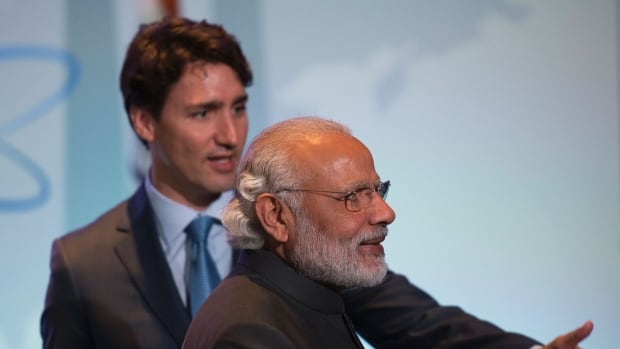
Alright, so the arrival at Palam of the photogenic couple — Prime Minister of Canada and Mrs. Justin Trudeau with three young kids in tow, was all but ignored by the BJP government. And, perhaps, his meeting and talks with the Indian PM, Modi, deserved to be pushed back to virtually the last day of his 6-day trip to India to show just how disillusioned Delhi is with Ottawa’s mollycoddling of sections of the half-million strong Sikh immigrant community that, while enjoying the salubrious climes of Vancouver, Montreal and Toronto, dream of a Punjab separated from India and emerging as they hope as the Republic of Khalistan. They’d have to be daft and have a lot of “khali sthan” between their ears to believe that will come to pass. So, that’s not the point.

India’s soft power push: just following a fad?


Critics of the concept of soft power point out that unlike hard power, it cannot be measured.

It is often said that what gets measured gets managed. It is probably with this dictum in mind that the ministry of external affairs (MEA) has decided to develop a “soft power matrix” to measure the effectiveness of India’s soft power outreach. The development of such a matrix was also recommended by the Parliamentary standing committee on external affairs in a

Trump, Pakistan, and Kashmir

By Fahad Shah

Will a shift in the U.S.-Pakistan relationship affect India-Pakistan relations and Kashmir? 

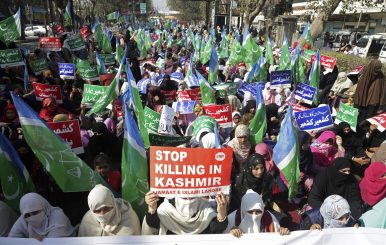
On the first day of 2018, the president of the United States, Donald Trump, took to Twitter to intimate a change in his country’s policy toward its long-time ally Pakistan. A day later, the White House confirmed a $255 million military aid cut to Pakistan, followed by the cutting of $1.3 billion in annual aid to the South Asian nuclear power, which has been the United States’ partner in the now 17-year-long Afghanistan war. The move had many connotations for South Asia, in general, but particularly for Pakistan, which has been in conflict with its neighbor India over many issues — mainly the status of Kashmir.

Afghanistan Unveils Plans for Controversial Militia Force

Ayaz Gul

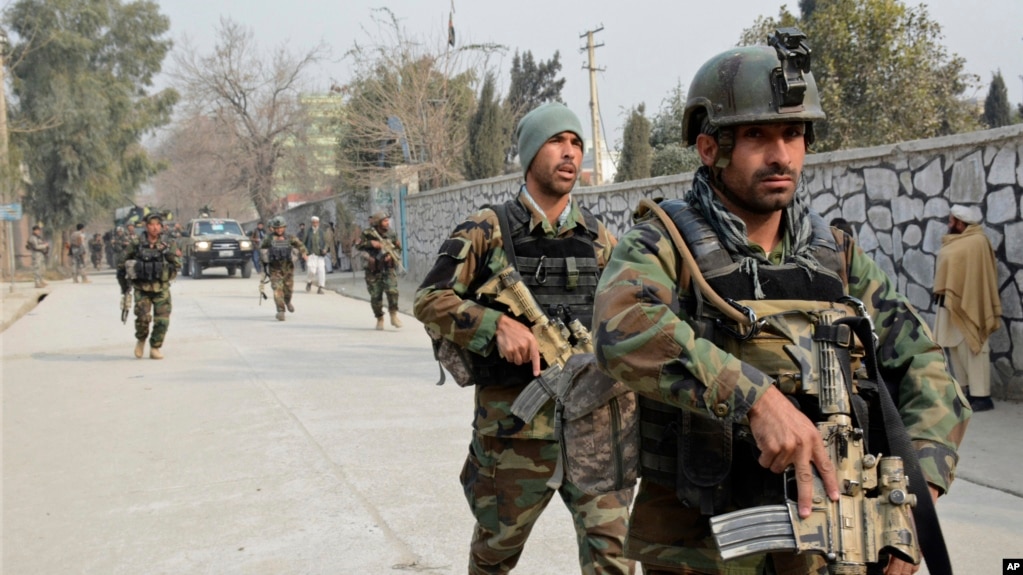
FILE - Afghan security forces patrol the site of a deadly suicide attack in Jalalabad, east of Kabul, Afghanistan, Jan. 24, 2018. The country plans to add 36,000 men to augment its existing forces with a contingent that would be charged with defending areas military-led operations have cleared of Taliban insurgents, but some see the initiative as controversial.

Next Door Nepal: Breakthrough and challenge

by Yubaraj Ghimire

Nepal under Oli no doubt, is as shaky as any of the previous 11 governments since 2006.

At long last, K P Oli, chairman of the Communist Party of Nepal (United Marxist-Leninist), has taken over as prime minister, the 11th in as many years. President Bidhya Devi Bhandari was visibly considerate towards Oli, her long-time boss in the party: Not only did she administer the oath of office and secrecy even before he was elected leader of the CPN-UML parliamentary party, she also nominated three “expert” members, minutes after they were recommended by the new PM to the upper house of parliament. She had ignored the names recommended by the outgoing prime minister, Sher Bahadur Deuba of the Nepali Congress, more than two weeks earlier.

China is the single most impediment to Korean Reunification

By Dr Subhash Kapila

Korean Reunification like the Germany Reunification can be brought about only when the citizens of North Korea in a massive upsurge like the East Germans tore down the Berlin Wall. Even if the above is attempted by the North Korean masses, China would not permit the end-aim to be achieved.

A unified Korean Peninsula would be a strong military and nuclear power sitting on the doorsteps of China’s highly industrialised North East and it would be a comprehensive challenge to China in geopolitical, strategic and military terms.

The WorldPost Opinion The rise of China as a digital totalitarian state

By Xiao Qiang

Xiao Qiang is an adjunct professor at the School of Information, University of California at Berkeley. He is also the founder and chief editor of China Digital Times. Born in China, he has been living in exile in the U.S. for 28 years. 

During its recent Lunar New Year gala show, state-run Chinese Central Television spotlighted a 93-year-old engineer who participated in China’s first nuclear submarine program.

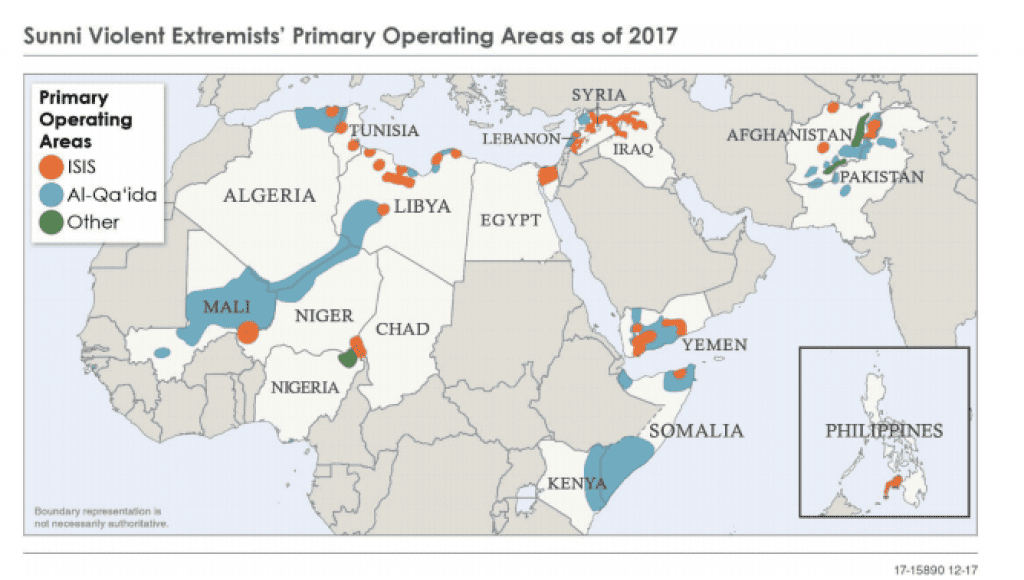
Analysis: ISIS hasn’t been defeated

BY THOMAS JOSCELYN

On January 19, the Pentagon released its new National Defense Strategy. The second paragraph of the 14-page declassified summary painted a dire picture. “Today, we are emerging from a period of strategic atrophy, aware that our competitive military advantage has been eroding,” the Defense Department warned. “We are facing increased global disorder, characterized by

The 3 Dilemmas for Russian Policy in Asia

By Aleksei Zakharov

Four years since the Ukraine crisis and it is still hard to see the vivid contours of Russian foreign policy towards Asia writ-large and in specific regions. The conventional wisdom comes down to the fact that decision-making mechanisms in Russia are still focused on the West, namely the United States, EU and Russian interaction with them on various issues in different parts of the world. When it comes to Asia, there is much less political interest and some reluctant economic activity induced by Western sanctions.

Russia’s Clash With the West Is About Geography, Not Ideology

BY BENN STEIL

At his dacha, standing before a map of the newly expanded Soviet Union shortly after Germany’s surrender in May 1945, Josef Stalin nodded with approval. The vast buffer he’d carved out of Soviet-occupied Eastern Europe would now protect his empire against future Napoleons and Hitlers. Stalin then took the pipe from his mouth, waving it under the base of the Caucasus. He shook his head and frowned.

“I don’t like our border right here,” he said to his aides, gesturing at the area where the Soviet republics of Georgia, Armenia, and Azerbaijan met the hostile powers of Turkey and Iran.

A Growing Strategic Gap between America and Europe?

By Olivier Schmitt and Stéphane Taillat

After last year’s fears that President Donald Trump would undermine NATO unity, we now have a clearer understanding of the administration’s ambition for transatlantic security. An unclassified version of the new U.S National Defense Strategy was released on Jan. 19, and it was generally well-received. Critics have lauded the strategy for clearly hierarchizing among competing priorities while others focused on funding issues, but all recognized the important shift towards prioritizing strategic competition with Russia and China (although the specifics of this competition with Moscow and Beijingare unclear), which consequently degraded the relative importance of fighting terrorism.

US preparing 'bloody nose' cyber attacks on North Korea


The United States is drawing up plans for cyber attacks on North Korea in an effort to bring the regime of Kim Jong-Un to heel, according to intelligence sources, as Pyongyang says it is ready for "both dialogue and war" as the Winter Olympics draws to a close.

Washington's potential plans for a series of "bloody nose" attacks on targets in North Korea, as revealed by The Telegraph, could focus on digital rather than conventional warfare, sources have suggested.

New Report Notes Erosion of Pentagon’s Technological Advantage

BY CAROLINE HOUCKSTAFF

The evidence ranges from a new long-range Chinese missile to ramped-up European defense spending, an annual assessment of the world’s militaries finds.

The U.S.’s latest national security documents aren’t alone in warning that many of the technical military advantages

Russian attacks on America require bipartisan response from Congress


It is troubling enough that Democrats and Republicans in Washington are now so divided they can barely pass a budget, let alone find common ground on taxes, guns or immigration. But we are really in trouble as a country if a major national security threat — attacks by an adversary on our sovereignty, democratic institutions and social fabric — cannot bring the two major parties together around a common response. If special

The World After McMaster

By George Friedman

U.S. National Security Adviser Lt. Gen. H.R. McMaster is rumored to be on his way out. The reason appears to be McMaster’s endorsement of the view that the Russians engaged in a disinformation campaign designed to create instability in the United States during the 2016 presidential election.

How to Downsize Russia in the Balkans

By Filip Vojvodic-Medic

As the EU-facilitated talks to normalize relations between Kosovo and Serbia enter the final stretch, the West faces a unique opportunity to help resolve two major issues in one go — normalize relations between Serbs and Albanians by resolving the Kosovo issue and downsize Russia’s influence in the Balkans. This is a unique opportunity that should not be missed because of rigidity or indecision. Swift action and tact are needed to close the final chapter in the breakup of former Yugoslavia and to allow the region a chance at a new beginning.

Project on Nuclear Issues A Collection of Papers from the 2017 Conference Series and Nuclear Scholars Initiative

Mark F. Cancian

The role that nuclear weapons play in international security has changed since the end of the Cold War, but the need to maintain and replenish the human infrastructure for supporting nuclear capabilities and dealing with the multitude of nuclear challenges remains essential. Recognizing this challenge, CSIS launched the Project on Nuclear Issues (PONI) in 2003 to develop the next generation of policy, technical, and operational nuclear professionals through outreach, mentorship, research, and debate. PONI runs two signature programs—the Nuclear Scholars Initiative and the Annual Conference Series—to engage emerging nuclear experts in debate and research over how to best address the nuclear community’s most pressing problems. The papers in this volume include research from participants in the 2017 Nuclear Scholars Initiative and PONI Conference Series. PONI sponsors this research to provide a forum for facilitating new and innovative thinking and a platform for emerging thought leaders across the nuclear enterprise. Spanning a wide range of technical and policy issues, these selected papers further discussion in their respective areas.

ESSAY March/April 2018 Issue AfricaGlobalization Stranger in Strange Lands

By Adam Hochschild 

In the late nineteenth century and the first decade of the twentieth, nothing reshaped the world more than European imperialism. It redrew the map, enriched Europe, and left millions of Africans and Asians dead. For example, in 1870, some 80 percent of Africa south of the Sahara was under the control of indigenous kings, chiefs, or other such rulers. Within 35 years, virtually the entire continent, only a few patches excepted, was made up of European colonies or protectorates. France, Germany, Italy, Portugal, Spain, and the United Kingdom had all seized pieces of “this magnificent African cake,” in the words of King Leopold II of Belgium—who took an enormous slice for himself.

US-UK Accuse Russia of “NotPetya” Cyberattack, Offer Zero Evidence

By Ulson Gunnar

The US and European press have both published stories accusing the Russian government, and in particular, the Russian military, of the so-called “NotPetya” cyberattack which targeted information technology infrastructure in Ukraine.

The Washington Post in an article titled, “UK blames Russian military for ‘malicious’ cyberattack,” would report:

A Nuclear Response to Cyberattacks? Comprehensive Defense Is a Better Approach

By David Wagner

Most of the world hopes there’s never a nuclear response to anything. Yet, the fact that the Pentagon is considering the nuclear option in the event of a cyberattack indicates the growing sophistication and risk underpinning modern cyberwarfare. Pixabay

The Pentagon has issued a report highlighting possible updates to the Nuclear Posture Review, which details the circumstances under which the U.S. will consider responding to an attack with nuclear force.

The Case Against Google

By CHARLES DUHIGG

Shivaun Moeran and Adam Raff met, married and started a company — thereby sparking a chain of events that might, ultimately, take down this age of internet giants as we know it — because they were both huge nerds. In the late 1980s, Adam was studying programming at the University of Edinburgh, while Shivaun was focused on physics and computer science at King’s College London. They had mutual friends who kept insisting they were perfect for each other. So one weekend, they went on a date and discovered other similarities: They both loved stand-up comedy. Each had a science-minded father. They shared a weakness for puns.

Have the North Koreans Been Able to Hack South Korean Military Operations Plans?


The recent change of attitude by North Korea towards South Korea could be attributed to a number of obvious factors like the continued collapse of the North Korean economy along with morale and effectiveness of the North Korean military and security forces in general. Recent defectors from North Korea report that conditions inside the military are bad and getting worse. Physical exams of these defectors confirms those reports.

What Went Wrong in Vietnam


For almost thirty years, by means financial, military, and diplomatic, the United States tried to prevent Vietnam from becoming a Communist state. Millions died in that struggle. By the time active American military engagement ended, the United States had dropped more than three times as many tons of bombs on Vietnam, a country the size of New Mexico, as the Allies dropped in all of the Second World War. At the height of the bombing, it was costing us ten dollars for every dollar of damage we inflicted. We got nothing for it.

We got nothing for pretty much everything we tried in Vietnam, and it’s hard to pick out a moment in those thirty years when anti-Communist forces were on a sustainable track to prevailing. Political and military

Teaching in a Time of Wars

By Rebecca Gordon

I was teaching the day the airplanes hit the World Trade Center. It was the second meeting of “The Communist Manifesto for Seminarians,” a course for my fellow graduate students. By the time I got to class, both towers had collapsed. A few hours later, Building 7 came down as well. We dispensed with a planned discussion about what Marxists mean by “idealism” and “materialism” and talked instead about the meaning of this particular example of the “propaganda of the deed.”

26 February 2018

INDIA'S RELATIONS WITH ASEAN: POSTURE VERSUS REALITY


by Vibhanshu Shekhar

Vibhanshu Shekhar, Former Visiting Fellow at the East-West Center in Washington, explains that “These incomplete projects highlight a fundamental difference between the posture and reality and raise questions over India’s ability to deliver results.”

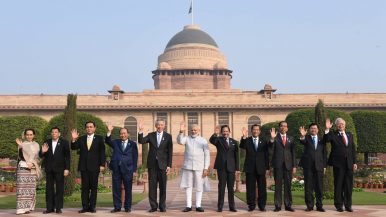
India-ASEAN relations reached a new level of euphoria during the last week of January, 2018 when leaders from the ASEAN countries marched to New Delhi to commemorate the silver jubilee (25 years) of the India-ASEAN partnership, and witness India’s republic day celebrations on January 26, 2018. For the first time in independent India’s history, New Delhi celebrated its republic day ceremony with the leaders of ten ASEAN states (as opposed to normal tradition of one head of state). India’s Ministry of External Affairs hailed the commemorative summit as “absolutely historic,” “unprecedented,” and filled with an “air of festivity.” Indian Prime Minister Narendra Modi called the commemorative summit “an unprecedented gesture of goodwill from ASEAN nations,” a “historic milestone in a remarkable journey,” and a “deepening partnership of great promise.” The Indian and ASEAN media called the summit “the ASEAN embrace,” “an epic bond,” “the most significant exposition” of India’s ‘Act East’ policy, and India and ASEAN were “lost in each other’s eyes,”. The year of 2017 marked 25 years of India-ASEAN relations, 15 years of summit partnership with ASEAN, and five years of strategic partnership.
India must impose punishing sanctions on the Maldives

Source Link
Brahma Chellaney 

China, the sole defender of the Maldives’ embattled autocrat, Abdulla Yameen, has issued an open threat through a State mouthpiece: If India militarily intervenes in the Maldives, Beijing won’t “sit idly by” but will “take action to stop” it. This essentially is an empty threat because China has no credible capability to sustain a military operation far from its shores. Despite China’s rising naval power, taking on India in its own maritime backyard will be a fool’s errand.

India could call China’s bluff through quick military action that deposes Yameen and installs the jailed Supreme Court chief justice as the interim president to oversee fair elections under United Nations’ supervision. In truth, an Indian intervention is not on the cards, in part because such action would trample on the principles India has long championed.

Unlocking US-India Trade

BY HON. PAULA STERN

The Trump administration's vision of an Indo-Pacific where democracy and open seas can flourish, needs sharpening. India can aid in the optimization of this objective by using bilateral and sectoral lenses to find where the they can best cooperate in order to offset bellicose incursions in the region from aggressive foreign powers. An agreement that focuses just on the technical sector minimizes the risks of a broader bilateral accord and opens the door for the geostrategic cooperation that India seeks. Given the centrality and significance of IT and e-commerce to both India and the United States, the links between the two nations in these spheres would facilitate a grander coalescence with ramifications not only in trade but for security capacity, defense interoperability, and regional peace and stability. The Honorable Paula Stern analyzes these groundbreaking themes in "Unlocking US-India Trade: Why a Bilateral Technology Agreement Works for India and the United States," which illuminates the major trends that will shape the region and the US-India bilateral partnership in coming years.Read the Publication (PDF)

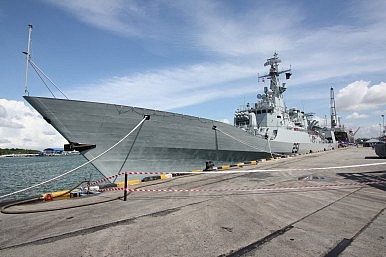
Maldives crisis: China sends a naval task force to muscle India, Australia out of power game

Jamie Seidel

CHINESE warships have entered the Indian Ocean, marking a significant shift in regional power. They’re there to keep India away from Beijing’s interests in the strife-torn Maldive Islands.

And their presence has implications for Australia.

Naval posturing is nothing new. Gunboat diplomacy has been a major player in great power games of thrones for centuries.

But it is odd for it to be played out so close to home.

A Nuclear Angle to the 2014 PNS Zulfiquar Attack

By Ankit Panda

Was a nuclear weapon really on PNS Zulfiquarwhen al-Qaeda terrorists tried to seize control of the ship?

A September 2014 attack by terrorists affiliated with Al Qaeda in the Indian Subcontinent (AQIS) on a Pakistani frigate, PNS Zulfiquar, may have targeted a nuclear warhead on board the vessel. This disturbing detail is included in Steve Coll’s latest book, Directorate S: The C.I.A. and America’s Secret Wars in Afghanistan and Pakistan, and sourced to an Indian intelligence report at the time. (Hat-tip to Vipin Narang for pointing out the excerpt from Coll.)

Sparks Fly Between Chile and Peru


Chile's relationship with Peru has improved since 2014, when the International Court of Justice issued a final ruling over their territorial dispute. That trend will continue this year as both countries prepare to connect their electricity systems.

Chile's need to increase the electricity supply to its growing lithium industry will play a key role in the drive for energy integration projects with Peru.

Chile's recently elected president, Sebastian Pinera, will assume office in March and is likely to continue pursuing this trend.

Xinjiang ‘separatists’ and Tibet’s ‘Dalai cliques’ – targets in China’s latest organised crime crackdown

Jun Mai

“Dalai surrogates” in Tibet and Xinjiang “separatists” are among the groups of people targeted by regional governments in China’s latest national crackdown on “organised crime”.

The authorities in the autonomous regions issued notices identifying the targets after a closed-door meeting of the Communist Party’s anti-graft watchdog in Beijing last month.

The meeting marked the start of the national campaign and featured a warning from President Xi Jinping about collusion between triads and officials, especially the protectors of “mafia-style organisations”, which he said had threatened the party’s rule.

China’s step into the maelstrom of the Middle East


The Middle East has a knack for sucking external powers into its conflicts. China’s ventures into the region have shown how difficult it is to maintain its principle of non-interference in the internal affairs of other states. 

China’s abandonment of non-interference is manifested by its (largely ineffective) efforts to mediate conflicts in South Sudan, Syria and Afghanistan as well as between Israel and Palestine and even between Saudi Arabia and Iran. It is even more evident in China’s trashing of its vow not to establish foreign military bases, which became apparent when it established a naval base in Djibouti and when reports surfaced that it intends to use Pakistan’s deep sea port of Gwadar as a military facility. 

In the South China Sea, US and UK Navy Deployments Won’t Change Anything

By Phillip Orchard

The turbulent waters of the South China Sea will get a bit more crowded over the next month. This week, a U.S. carrier strike group led by the USS Carl Vinson docked in Manila – the first visit by a U.S. carrier to the Philippines since 2014. In mid-March, the Vinson will head to Da Nang for the first such visit to Vietnam since the end of the Vietnam War. This comes a week after the U.K. Defense Ministry announced that a British frigate, the HMS Sutherland, would swing through the South China Sea in the coming weeks to assert the right of freedom of navigation in the contested waters.

ICSR Insight – ISIS And Terrorism In Europe: What Next?

By Peter R. Neumann

Just over three years after the launch of the military campaign against Islamic State, the United States-led Global Coalition, together with Iraqi and Kurdish forces, have accomplished their mission. Ninety-eight per cent of the territory Islamic State had once held in Syria and Iraq has been recaptured. The Caliphate’s most important cities, Raqqa and Mosul, are no longer controlled by jihadists. And of the 40,000 men who once fought for Islamic State, only 3,000 are thought to be left, hiding in the desert and hoping to survive.