14 June 2018

A Historic Breakthrough or a Historic Blunder in Singapore?

By Daniel R. Russel

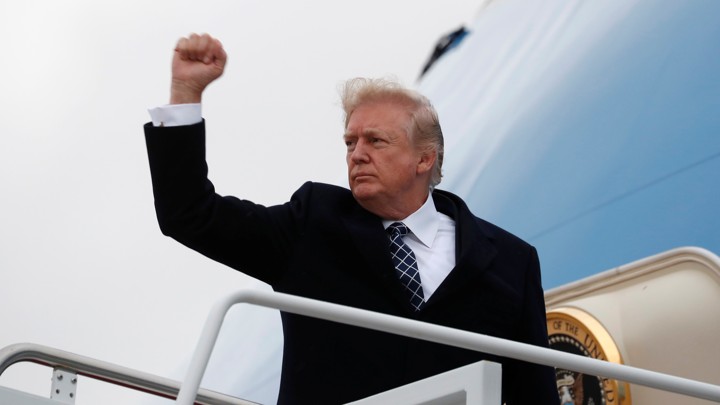
The Singapore summit was mesmerizing political theater. In this latest installment of “diplotainment,” live from the Oval Office, U.S. President Donald Trump assured the American people that they could trust Kim Jong Un and that North Korea's supreme leader was sincere about denuclearization. Further adding to the spectacle was a faux film trailer that Trump had prepared for Kim. Claiming to have been produced by “Destiny Pictures,” the video featured footage of Trump and Kim as tense music played in the background; a male narrator spoke in overly dramatic tones: “A new story, a new beginning, one of peace. Two men, two leaders, one destiny. A story in a special moment in time. When a man is presented with one chance that may never be repeated, what will he choose?” 

Trump is certainly correct in pointing out that he made history in meeting amicably with his North Korean adversary. But it is yet to be determined whether he made a historic breakthrough or a historic blunder. No previous U.S. president considered it prudent to embark on summitry with so little preparation or on terms so favorable to the other side, let alone to promise to unilaterally discontinue defensive joint U.S.–South Korean military exercises on the Korean Peninsula. For his part, Kim can rightfully boast that he has accomplished what his father and grandfather could only dream of: achieving the twin goals of building a viable nuclear weapons capability and then winning international acceptance as a “very honorable” peer, as he was referred to by the leader of the free world.
US to India: Buy American, Not Russian

BY MARCUS WEISGERBER

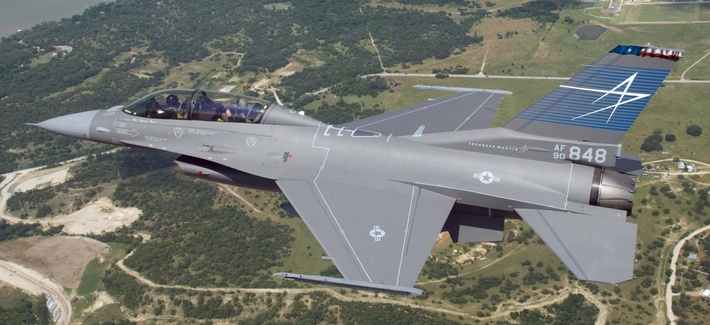
Officials hope Delhi’s $15 billion in US arms deals over the past decade are just the beginning. Even as India prepares to buy advanced missiles from Russia — a potentially sanctionable action — a top U.S. diplomat touted the “strategic importance” of the relationship between Washington and New Delhi. Russia has long been India’s top weapons supplier, but the U.S. has been gaining. Since 2008, Delhi has bought about $15 billion in American arms. “If we want to see that continue and I think both we and our Indian friends want to do that, then it’s incumbent on us to give them the best case and hopefully that will engender a willingness on the part of the Indian government to think about our systems as they go forward in their procurement,” Tina Kaidanow, principal deputy assistant secretary of the State Department’s Political-Military Affairs Bureau, said Thursday in a call with reporters.

The Taliban Made War. Are They Showing They Can Make Peace?

By Ahmad Shuja Jamal

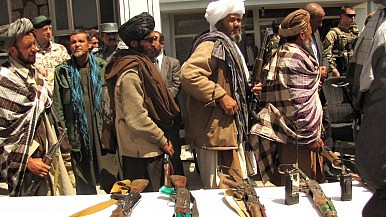
The Taliban’s announcement of a unilateral ceasefire is perhaps the most significant recent development in Afghanistan’s long-foundering peace efforts. Given the myriad spoilers and the potential of breakdown of discipline in the ranks, the significance of the ceasefire is not in whether it will hold; instead, it is in the politics of the move. The Taliban have long either declined to participate in peace talks or denied involvement in talks with the Afghan government when reports emerged. They deemed the Afghan government as not serious about peace and did not want their foot soldiers to see their leaders engaging with a government that they are fighting against.

Modifying Situational Awareness: Perfect Knowledge and Precision Are Fantasy

John Q. Bolton

Army Mission Command, significantly influenced by German concepts of Mission Orders, Auftragstaktik, Schwerpunkt, and the Truppenfuehrung (the Wehrmacht’s WWII field manual), emphasizes subordinate initiative within the framework of commander’s intent.[1] Combined with the Army Operating Concept, Mission Command reflects a now-codified common-sense approach to command in a complex environment. However, fully implementing Mission Command within the Army remains a challenge on both conceptual and practical levels. Conceptually, leaders fail to understand how to develop the mutual trust Mission Command requires while subordinates resent any oversight as micromanagement.[2] Practically, Army systems inhibit Mission Command by demanding precision and instantaneous results.

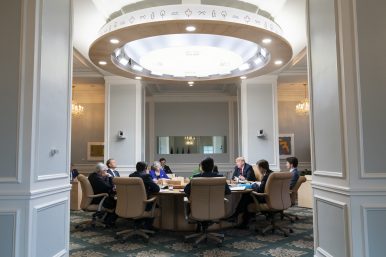
A West in Crisis, an East Rising? Comparing the G7 and the SCO Image Credit: White House A West in Crisis, an East Rising? Comparing the G7 and the SCO

By Catherine Putz

While much of the world watched the tense G7 meeting in Charlevoix, Canada from June 8 to 9 and chattered about the rapidly approaching June 12 Singapore summit between U.S. President Donald Trump and North Korean leader Kim Jong-un, in Qingdao, China on June 9-10 the leaders of eight other nations also gathered in concert. The Shanghai Cooperation Organization (SCO) annual summit returned to China at the opening of a new chapter. Not only has the organization expanded — this summit was India and Pakistan’s first as full-fledged members — but the global order itself appears to be sliding from West to East. The slide may not be new, but the two summits side-by-side display the dissonance: a West breaking apart and an East consolidating.

China’s Master Plan: A Global Military Threat

By Hal Brands 

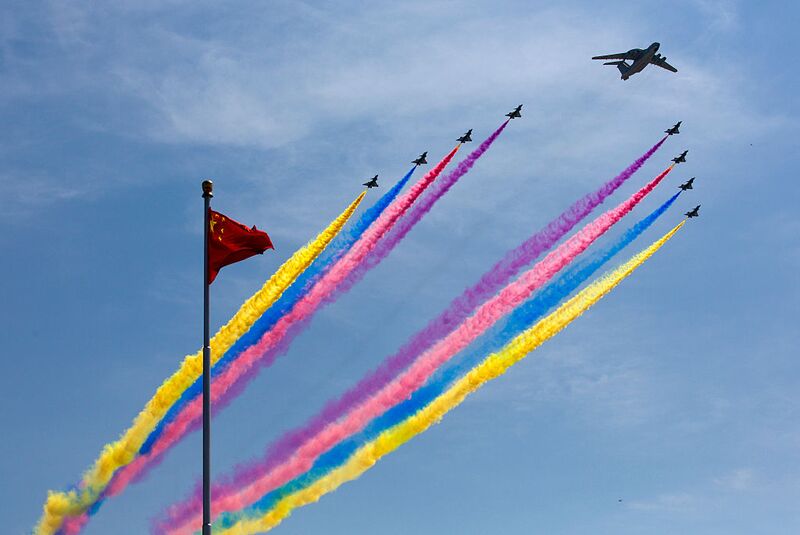
I wrote a column recently about how a longstanding assumption of America’s China policy -- that economic integration between the two countries is an unalloyed good -- has now been overtaken by events. But this isn’t the only area in which China’s rise is forcing a re-evaluation of old beliefs. Now, as the first in a series of columns on this phenomenon that Bloomberg Opinion will publish in the coming days, I'll delve into another issue with enormous implications for U.S.-China relations and American interests: the rise of China as a more globally oriented military power. For years, most experts believed that China’s military challenge to the U.S. was regional in nature -- that it was confined to the Western Pacific. After decades of tacitly free-riding on America’s global power-projection capabilities, however, Beijing now is seeking the capabilities that will allow it to project its own military power well outside its regional neighborhood.

Why Xi and Putin think "the West is in free fall"

Ben Geman

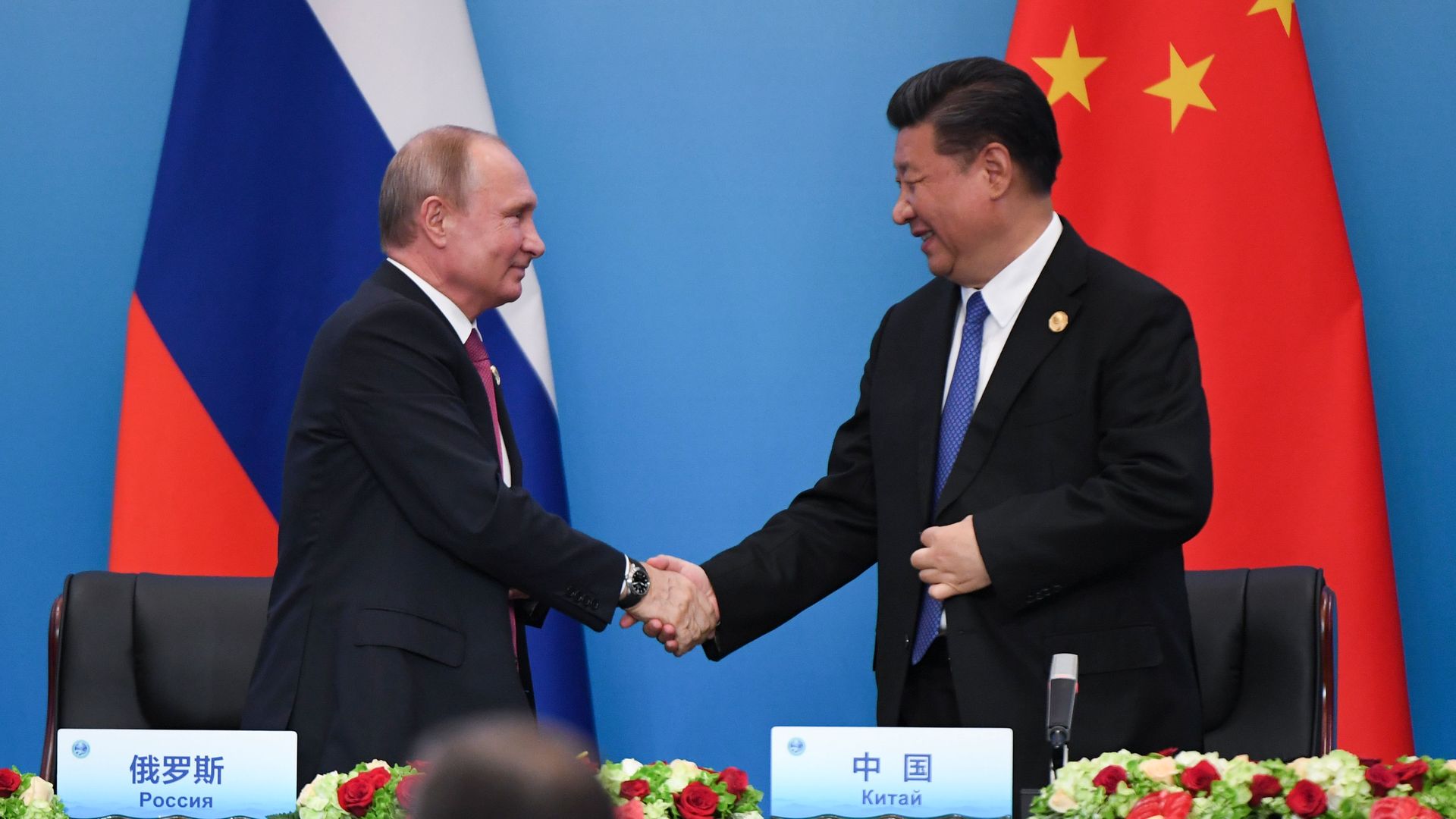
Chinese leader Xi Jinping and Russia's Vladimir Putin are strategizing how to reposition themselves for a new, more powerful future amid a rapid deterioration of the U.S.-led global order. What we're hearing: Xi and Putin, meeting Friday in Beijing and again yesterday in the city of Qingdao, don't appear to think they have the cachet — even combined — to create an entirely new system. Nor is it clear that at the moment they would want to trash the U.S.-led institutions that have anchored the global economy and political order since World War II.

Red Flag River’ diversion project


A few weeks ago, I mentioned a new scheme for diverting part of the waters of the Yarlung Tsangpo (Brahmaputra) towards the north and northwest of China. The project was spearheaded by Prof Wang Hua of Tsinghua University. It appears that many have started raising issues on the feasibility of such mega project. A scientific paper has come out in The Journal of Natural Resources in China.

It makes interesting points.

China's Secret Story

My article China's Secret Story appeared in Mail Todayand Daily

Every year during the first week of June, the thoughts of millions turn towards China and more particularly the Tiananmen Square, where 29 years ago thousands of young students lost their lives …while China lost a chance to become a ‘normal’ State. Today the Middle Kingdom, under an ‘Emperor for life’, has become so powerful that very few dare to officially talk about ‘human rights’ and even less about the massacre of youngsters dreaming of freedom and democracy. A publication dealing with China, Global Voice recently explained: “At the time, the Chinese Red Cross estimated that 2,700 civilians were killed, but other sources point to a much higher toll. A confidential US government document, revealed in 2014, reported that a Chinese internal assessment estimated that 10,454 civilians had died. Recently, a different report written by the then-British ambassador to China was declassified; it quotes a source from China's State Council who said that the minimum estimation of civilians killed is 10,000.”

Report describes Dubai real estate as money-laundering haven

Report describes Dubai real estate as money-laundering haven

War profiteers, terror financiers and drug traffickers sanctioned by the U.S. in recent years have used Dubai’s real-estate market as a haven for their assets, a new report released Tuesday alleges. The report by the Washington-based Center for Advanced Defense Studies, relying on leaked property data from the city-state, offers evidence to support the long-whispered rumors about Dubai’s real-estate boom. It identifies some $100 million in suspicious purchases of apartments and villas across the city of skyscrapers in the United Arab Emirates, where foreign ownership fuels construction that now outpaces local demand.

The government-run Dubai Media Office said it could not comment on the report.

Iran envisions currency arrangements with China

By Daniel J. Graeber  

June 11 (UPI) -- Facing U.S. pressures on its banking channels, Iran's economic minister said agreements were made with China to use their national currencies for trade. Iran's banking channels could be impacted by the sanctions pressures that would leave the country "battling to keep its economy alive," U.S. Secretary of State Mike Pompeo has said. In an effort to facilitate economic openness, the Central Bank of Iran in Aprilopened a line of credit with Turkey that could give Iran a way to continue trading. And in late May, after U.S. President Donald Trump pulled his country out of the multilateral nuclear deal, the European Union introduced a blocking statute to protect companies from U.S. sanctions and opened the door to working directly with Iran's Central Bank.

Hypersonic weapons race


Chinese researchers have been publishing technical papers at a blistering pace about their fundamental research into hypersonic flight, loosely defined as maneuvering in the atmosphere at speeds above 6,000 kph. Flying faster than Mach 5 could be a handy way to travel, but for the leaders in this field — China, Russia and the U.S. — the emphasis has shifted to weapons. At least some of China’s research appears to be headed in that direction, based on references to missiles in the published papers, although my inquiries to the Chinese Embassy’s press office about the purpose of this research went unreturned. The Pentagon reported to Congress earlier this year that China has conducted 20 times as many hypersonic flight tests as the U.S. The most noteworthy recent test was in November, when China flew a new hypersonic missile, the DF-17, capable of flying 1,800 to 2,500 kilometers, as first reported by The Diplomat website. 

What the US and North Korea Can Learn From Singapore

By Chirag Agarwa

Back in November 2015, Chinese President Xi Jinping met with then-Taiwanese president Ma Ying-jeou in Singapore, the first meeting between Chinese and Taiwanese leaders since the end of China’s civil war in 1949. While Singapore was happy to facilitate the meeting, former head of the Singaporean Ministry of Foreign Affairs and veteran diplomat, Ambassador Bilahari Kausikan, was quick to remind his many followers on Facebook :“We only provide the venue. Do not ascribe any larger role to us.” The upcoming meeting between U.S. President Donald Trump and North Korean leader Kim Jong-un is no different.

Trump Tries to Destroy the West

By David Leonhardt

The alliance between the United States and Western Europe has accomplished great things. It won two world wars in the first half of the 20th century. Then it expanded to include its former enemies and went on to win the Cold War, help spread democracy and build the highest living standards the world has ever known. President Trump is trying to destroy that alliance. Is that how he thinks about it? Who knows. It’s impossible to get inside his head and divine his strategic goals, if he even has long-term goals. But put it this way: If a president of the United States were to sketch out a secret, detailed plan to break up the Atlantic alliance, that plan would bear a striking resemblance to Trump’s behavior.

Berlin Worried about Losing Trump's Trade War


The U.S. has followed through with its threat to impose punitive tariffs on European steel and aluminum and the signs are pointing to a global trade war. The German government is doing what it can to prevent harm to its automobile industry. It was exactly 4 p.m. last Thursday when Peter Altmaier plopped into his seat. The pilot of the government plane quickly taxied to the runway and the German economics minister was happy to get out of Le Bourget business airport in Paris as quickly as possible. Altmaier had spent two days in the French capital last week as part of efforts to prevent the United States from imposing punitive tariffs on steel and aluminum from the European Union. And just before taking off for home, he received official word that his efforts had been in vain.

A Senior White House Official Defines the Trump Doctrine: ‘We’re America, Bitch’

JEFFREY GOLDBERG

Many of Donald Trump’s critics find it difficult to ascribe to a president they consider to be both subliterate and historically insensate a foreign-policy doctrine that approaches coherence. A Trump Doctrine would require evidence of Trump Thought, and proof of such thinking, the argument goes, is scant. This view is informed in part by feelings of condescension, but it is not meritless. Barack Obama, whose foreign-policy doctrine I studied in depth, was cerebral to a fault; the man who succeeded him is perhaps the most glandular president in American history. Unlike Obama, Trump possesses no ability to explain anything resembling a foreign-policy philosophy. But this does not mean that he is without ideas. 

5 Things You Need To Know About The IMF And Climate Change

by Ian Parry

The world is getting hotter, resulting in rising sea levels, more extreme weather like hurricanes, droughts, and floods, as well as other risks to the global climate like the irreversible collapsing of ice sheets. Here are five ways the IMF helps countries move forward with their strategies as part of their commitment to the 2015 Paris Agreement on Climate Change. 

The Rise Of Corporate Giants


The growing economic wealth and power of big companies - from airlines to pharmaceuticals to high-tech companies - has raised concerns about too much concentration and market power in the hands of too few. In particular, in advanced economies, rising corporate market power has been blamed for low investment despite rising corporate profits, declining business dynamism, weak productivity, and a falling share of income paid to workers.

New Russian Media Venture Wants to Wage ‘Information War’ in Washington, D.C.

LACHLAN MARKAY

USA Really launched with a goal of stopping disinformation about Russia. A video it ran features an American flag and a Confederate flag alongside a MAGA poster of Donald Trump. A Russian government adviser who aims to wage an “information war” in the U.S. and Europe is running a new media venture a block from the White House that cybersecurity experts say has ties to the country’s infamous disinformation apparatus. In April, Russia’s Federal News Agency (FAN) announced the creation of an American outlet called “USA Really.” Its website and accompanying social media pages sprang up in May and quickly began promoting a mid-June rally to be held in front of the White House in protest of “growing political censorship… aimed at discrediting the Russian Federation.”

HOW NATO DEFENDS AGAINST THE DARK SIDE OF THE WEB

Jens Stoltenberg

"OOPS, YOUR FILES have been encrypted!" This was the chilling message that greeted hundreds of thousands of computer users last summer. The WannaCry ransomwareattack brought production to a standstill at Renault factories across France, put lives at risk by attacking hospitals in the UK, and cost companies around the world billions of dollars in lost revenue. The digital revolution has transformed our lives for the better. But this revolution has a dark side: Cyberattacks are now a part of our daily lives. The very nature of these attacks poses a challenge. It is often difficult to know who has attacked you, or even whether you have been attacked at all. And the culprits vary from governments to criminal gangs to terrorist groups and lone individuals. Nowhere is the fog of war thicker than in cyberspace.

Soldiers are being forced to recognize one of their greatest vulnerabilities on the battlefield

By: Adam Stone  

As Army soldiers in Europe await the expected arrival of a new electronic warfare planning tool known as Raven Claw, several other recent technology upgrades are forcing better awareness of one of their own, greatest vulnerabilities: spectrum. Certainly, soldiers understand the potential for EW. Raven Claw, for one will allow them to manage the electromagnetic environment on the move and without network connection. And its Versatile Radio Observation and Direction capability, or VROD, and related VMAX “search and attack” function mean warfighters can detect and target potential electromagnetic interference threats.

THE DEATH OF THE CYBER GENERALIST

By Patrick Bell and Jan Kallberg 

DoD will continue to struggle to develop and employ effective cyber capabilities if it continues putting old wine in new bottles – applying a bad personnel model to the cyber force. The Department of Defense (DoD) must abandon its “up-or-out” promotion model for cyber forces. It should let competent officers hold their positions longer. Applying the outdated Defense Officer Personnel Management Act’s (DOPMA) staffing model to the cyber force is foolish, and makes it difficult to keep experienced, technically-proficient cyber officers in the military. DOPMA’s prescribed career paths entail officers’ attendance at a variety of schools, with several rotations through geographical areas and work domains. In the process, domain-specific knowledge that would allow officers to lead and understand the impact of their various choices in a technically complex and ever-changing environment evaporates. In a world of increasing complexity, shortened windows of opportunity to act, and constantly-changing technical environments, the generalist leaders that the DOPMA system yields may doom the military’s cyber force to failure.

Net Neutrality: To Deal or Not to Deal

By Bill Lucy 

Progressives looking ahead to the midterm election gold face a Hamlet-like question: Is it better to deal now with an Administration desperate to show it can govern or hold out for more favorable terms after expected gains at the polls? The tension can often be quite severe. Democrats remember well how Mitch McConnell’s unpatriotic “total-opposition” political approach in 2009 hurt the country while simultaneously bolstering Republican electoral fortunes. In most hot button areas, compromise seems beyond reach. The White House has refused to offer an olive branch on health care, guns, or protection for Dreamers — or it has floated compromises only to quickly yank them back. Nevertheless, it does appear that opportunity for progress may still remain on less inflammatory, but still critical issues — on internet regulation, for example, where both sides have strong reasons to deal.

When Will Google Defend Democracy?

by Ronald Robertson

Facebook has “taken it on the chin" for its role in the 2016 presidential election, and organizations like the political consulting firm Cambridge Analytica and the Russian troll farm known as the Internet Research Agency have dominated headlines. Yet, despite having a troubling history and collecting more personal data through more products than Facebook, Google has somehow managed to evade the public spotlight on this one. That may be changing. The U.S. Senate Judiciary Committee recently sent Google a letter asking a series of questions about the company’s personal data protections. As one of the researchers who helped discover that search engines can substantially influence users’ voting preferences, I found the last question to be the most intriguing:

COUNTERING HYBRID THREATS IN THE MARITIME ENVIRONMENT

By Chris Kremidas-Courtney

Today, there are state and non-state actors challenging nations, institutions, and private companies through a wide range of overt and covert activities targeted at their vulnerabilities. Both NATO and the European Union refer to these as “hybrid threats” and the maritime domain has proven to be especially vulnerable.1 As we’ve seen recently, in both Crimea and the South China Sea, a hybrid approach lowers the political price for aggression, making regime change and territorial annexation possible “on the cheap.”2 Many refer to this phenomenon as “hybrid warfare” and in the process militarize a phenomenon that is actually much broader and more complex. This phenomenon requires a whole-of-government and whole-of-society approach to access the necessary means and authorities to address them. Thus, hybrid threats are best understood when framed as an attack on governance, specifically democratic governance.

WHITHER THE HOVER TANK? WHY WE CAN’T PREDICT THE FUTURE OF WARFARE.

Jasmin Diab and Nate Finney

What’s the future of warfare? If you’re a science fiction fan (or just like thinking crazy thoughts) you’d say it’s robots, lasers, and hoverboards transponding through space and time to deliver lethal effects on behalf of a government. Or is it? There are often two schools of thought. One side looks at the possibilities based on current technologies and ways of war extrapolated to logical conclusions. The other side usually addresses the current and projected inhibitors to change, adhering more to what is probable than what is possible. As can be expected of two classically trained military officers, even of different nations, the authors acknowledge and do not disagree with the Clausewitzian thought that the enduring nature of war is a clash of wills between two of more groups of politically motivated human beings. What the authors address in this essay is the ever-shifting character of war—the changing tools and techniques employed on the battlefield to achieve success in that clash of wills.

13 June 2018

Full text of Trump-Kim signed statement


June 12, 2018

Joint Statement of President Donald J. Trump of the United States of America and Chairman Kim Jong Un of the Democratic People's Republic of Korea at the Singapore Summit
President Donald J. Trump of the United States of America and Chairman Kim Jong Un of the Democratic People's 

Republic of Korea (DPRK) held a first, historic summit in Singapore on June 12, 2018.
President Trump and Chairman Kim Jong Un conducted a comprehensive, in-depth and sincere exchange of opinions on the issues related to the establishment of new US-DPRK relations and the building of a lasting and robust peace regime on the Korean Peninsula. President Trump committed to provide security guarantees to the DPRK, and Chairman Kim Jong Un reaffirmed his firm and unwavering commitment to complete denuclearization of the Korean Peninsula.

Convinced that the establishment of new US-DPRK relations will contribute to the peace and prosperity of the Korean Peninsula and of the world, and recognizing that mutual confidence building can promote the denuclearization of the Korean Peninsula, President Trump and Chairman Kim Jong Un state the following:

The United States and the DPRK commit to establish new US-DPRK relations in accordance with the desire of the peoples of the two countries for peace and prosperity.
The United States and DPRK will join their efforts to build a lasting and stable peace regime on the Korean Peninsula.
Reaffirming the April 27, 2018 Panmunjom Declaration, the DPRK commits to work toward complete denuclearization of the Korean Peninsula
The United States and the DPRK commit to recovering POW/MIA remains, including the immediate repatriation of those already identified.

Having acknowledged that the US-DPRK summit -- the first in history -- was an epochal event of great significance in overcoming decades of tensions and hostilities between the two countries and for the opening up of a new future, President Trump and Chairman Kim Jong Un commit to implement the stipulations in the joint statement fully and expeditiously. The United States and the DPRK commit to hold follow-on negotiations, led by the US Secretary of State, Mike Pompeo, and a relevant high-level DPRK official, at the earliest possible date, to implement the outcomes of the US-DPRK summit.President Donald J. Trump of the United States of America and Chairman Kim Jong Un of the State Affairs Commission of the Democratic People's Republic of Korea have committed to cooperate for the development of new US-DPRK relations and for the promotion of peace, prosperity, and the security of the Korean Peninsula and of the world.

DONALD J. TRUMP 
President of the United States of America
KIM JONG UN 
Chairman of the State Affairs Commission of the Democratic People's Republic of Korea
June 12, 2018
Sentosa Island
Singapore

Electrifying mobility in India Future prospects for the electric and EV ecosystem

Sahil Ali and Rahul Tongia

By any measure, India’s electric vehicle (EV) aspirations are steep from where we stand today, but they have sparked remarkable interest and action in policy, industry and research arenas. A push to mandate all vehicles sold by 2030 to be electric seems to have tempered, but high EV penetration scenarios remain likely. While costs and consumer choice remain fundamental factors, there are three additional key issues for realising any growth: (1) manufacturing; (2) grid capabilities; (3) charging infrastructure. In this paper, we focus on points (2) and (3).

India and the Shangri-La Dialogue


The Modi Government has time and again showed adherence to the rules-based order in international forums. What Modi said at the Dialogue was the reiteration of this principle without directly pointing a finger at China Shangri-La is usually associated with a place in the Himalaya immortalised by James Hilton in his 1933 novel, the Lost Horizon; a mystical valley where people live in harmony under the compassionate direction of a lamasery: In other words, a paradise on earth, a high-altitude utopian retreat, a permanently happy land.

Taliban Demonstrates Resilience With Afghan Spring Offensive

By: Animesh Roul

The Taliban’s notorious spring offensive, an annual war ritual launched this year on April 25, has resulted in a series of violent strikes across Afghanistan, demonstrating once again the resilience of the group. The Taliban claims to have carried out as many as 300 attacks on various targets in the first three days of its offensive alone (Voice of Jihad/Alemarah, April 29). Government sources meanwhile say the group had, by May 7, carried out more than 2,600 operations across the country, of which the Afghan armed forces foiled as many as 1,700 (Tolo News, May 7). The deadly violence, unleashed at a time when the Afghan government has made a considerable effort to bring the Taliban to the negotiating table, is taking place against the backdrop of a major voter registration process with parliamentary and district council elections scheduled for October.

Pakistan’s soft coup

By Jon Boone

Nawaz Sharif remains the most popular politician in Pakistan 
Pakistan's army will likely be happy with an ineffectual coalition government led by Imran Khan  A nuclear armed state with 200m people may struggle to hold together if it is hit with a major shock Just a few years ago the smart thing to say about Pakistan was that the days of military coups were behind it. “It can’t happen,” the then US ambassador to Islamabad told me in 2012. “For one thing, there are too many TV stations. Think of how many they would have to take off air!” The ambassador had in mind the coup of 1999, the last time the army helped itself to power. In those analogue days it was a cinch. A few troops motored into Islamabad and scaled the front gate of state broadcaster PTV. The country’s only television station was under army control. Job done.

Assessment of the Military Implication of Chinese Investment in the Port of Djibouti

By David Mattingly

David Mattingly serves on the board of directors for the Naval Intelligence Professionals and is also a member of the Military Writers Guild. The views reflected are his own and do not represents the United States Government of any of its agencies. Divergent Options’ content does not contain information of an official nature nor does the content represent the official position of any government, any organization, or any group. Summary: Since the 9/11 attacks, U.S. policy in Africa has focused primarily on defeating Al-Qaeda franchises and other violent extremists. Djibouti’s natural deep-water harbor and stable government have made it the primary transshipment point for maritime trade in Northeastern Africa and as a naval base. The People’s Republic of China’s (PRC) recent investment in the Port of Djibouti, a country with a U.S. military base, begins another chapter in geopolitical competition.

Cyber Sovereignty and the PRC’s Vision for Global Internet Governance

By: Elliott Zaagman

Over the past eighteen months, major Western media outlets have followed every step of Facebook’s slow and painful fall from grace, including the recent Cambridge Analytica scandal. However, while the stories focus heavily on Trump and Putin, it is CCP General Secretary Xi Jinping who may benefit the most from a collective loss of faith in Western cyber systems and institutions. While the world’s attention has focused on accusations of collusion and election hacking, the Chinese leader has been promoting a homegrown PRC approach to technology, the internet, and governance, one that seeks to embed the PRC’s concept of “cyber sovereignty” (็ฝ‘็ปœไธปๆƒ) in the institutions of global internet governance.

Superpower Military Showdown: China vs. America (On Land, Sea and in the Air)

Sebastien Roblin

Two superpowers eye each other uneasily across the Pacific—one well established after decades of Cold War conflict, the other a rising power eager to reclaim regional hegemony. Fortunately, despite profoundly different political systems, China and the United States are not as intrinsically hostile to each other as were the West and the Soviet Union—in fact, they have a high degree of economic interdependence. Still, history shows that there is often a risk of war when a rising power challenges the ascendancy of an existing one. Beijing and Washington have profound—though fortunately not comprehensive—disagreements on matters of global governance. They also have reasons to mistrust each other. Fortunately, there are historical examples of rival superpowers coexisting mostly peacefully for long periods of time. For example, see the century in between the defeat of Napoleon and World War I, during which there was no European-wide war.

China is Buying Up Ports and Influence Across Europe

Ronald H. Linden

Roughly three thousand years ago, the eastern Mediterranean was dominated by the Mycenaeans, Hittites and the Egyptian empire of Rameses III. Then, in several places at once, an aggressive people of mysterious origins referred to as "the sea peoples," attacked the territories held by these empires. The invaders were defeated, but the reigning powers saw their dominance fatally weakened. In today's Mediterranean, the Chinese are the new "sea people." Their attacks are not military in nature, and their ambitions are not territorial conquest. Rather, they aim to construct a seamless route for investing in and selling their goods to the dominant commercial region of today, Europe. Chinese State Owned Enterprises (SOE's) are taking advantage of poorly performing economies (Italy) and antipathy toward the dominance of Europe (Greece, Turkey). China comes brandishing almost unlimited investment funds, and Beijing's SOEs have set up shop from Valencia to the Bosporus and from the North Adriatic to the Suez Canal.