30 October 2018

Women in peacekeeping: an operational imperative

By Bintou Keita

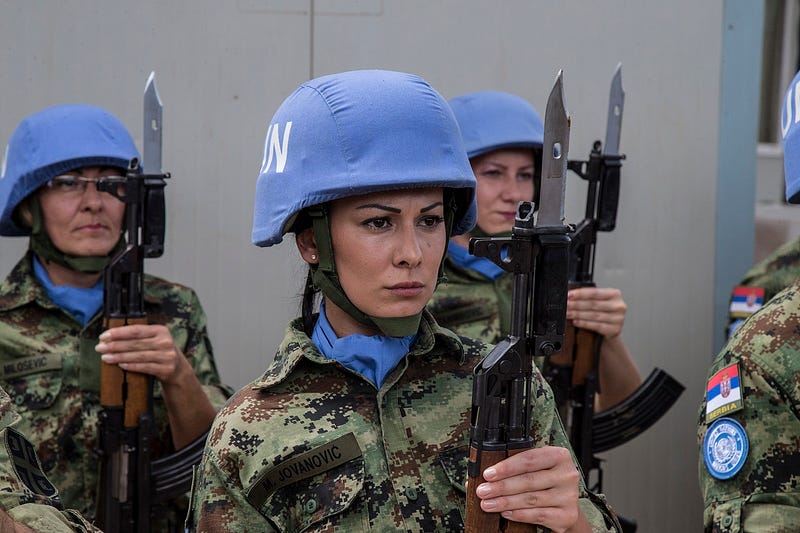
Some 8,000 women are currently deployed in our 14 peacekeeping missions across the world, more half of them wearing the police and military uniform. However, as the United Nations strives to reach gender parity by 2030, women represent less than 5% of the total uniformed personnel within our peacekeeping missions. Recruiting and retaining women in the field — including those in uniform — is an operational imperative, says Bintou Keita, Assistant Secretary-General for UN Peacekeeping Operations, in an interview with Medium UN Peacekeeping.

How important are women to the success of peacekeeping missions across the field?

Military tensions around Taiwan could make it harder to resolve the trade war

Kelly Olsen

Chinese authorities hate the word "independence." But whether spoken by fringe figures in Hong Kong or marchers demonstrating in Taiwan, they are hearing it all the same. Compounding frustrations in Beijing have worsened ties with the United States, which sailed warships through the Taiwan Strait on Monday for the second time since July. International criticism has also mounted over a human rights crackdown on ethnic Uighurs in the western region of Xinjiang, whom authorities fear want to break away. "The main problem is that the Communist Party of China is paranoid about calls for separatism and independence and continually overreacts to them," Michael Kovrig, senior advisor for North East Asia at the International Crisis Group, told CNBC on Thursday in an email.

China's foreign ministry did not immediately respond to CNBC's request for comment.

29 October 2018

A String of Fake Pearls? The Question of Chinese Port Access in the Indian Ocean

By Natalie Klein

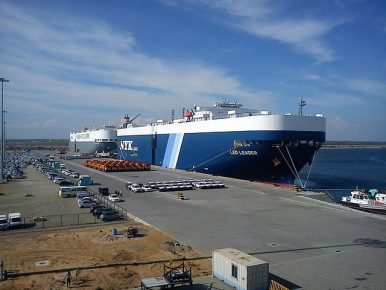
Earlier this month, Sri Lanka hosted a two-day conference among diplomats and non-government experts that rightly shone a spotlight on the increasing importance of the Indian Ocean. As highlighted by one delegation, it is currently what goes through the Indian Ocean (including half the world’s container traffic, one-third of bulk cargo transport, and around two thirds of the world’s maritime oil shipments) that particularly marks its global significance, rather than what may be produced from that ocean and its littoral states. The international trade associated with the Indian Ocean and the strategic significance of the region have become manifest.

Yet for anything that passes through the Indian Ocean, it is almost inevitable that it must stop somewhere. Herein lies the importance of ports.

With Eye on China’s Belt Road Initiative, India to step up economic partnerships with Eastern, Southern Europe


Economy-growth-bcclIndia is planning to boost economic ties with the erstwhile communist states of Eastern Europe and with Southern Europe amid inroads by China as part of its mega infrastructure project, Belt and Road Initiative (BRI). 

The upcoming back-to-back visits by President Ram Nath Kovind to Cyprus, Bulgaria and Czech Republic ( September 2-9) followed by a visit by Vice President Venkaiah Naidu to Malta, Serbia and Romania (mid-September) will underline India’s focus on this part of the world. This will be Kovind’s second visit to the region, after he outlined India’s Europe policy during his trip to Greece a few months ago. 

India enjoyed close relations with the Eastern European bloc during the period of the Soviet Union, and it is keen to enter these flourishing markets as well as seek technology and funds as opposition to BRI rises in Europe. 

India’s Trade With Iran


India has been keen to expand into Iran, where an Indian firm is developing a deep-water port in the southern coastal town of Chabahar. New Delhi has invested nearly $34 billion in the project.


Staying in Afghanistan is the Definition of Insanity

by Charles V. Peña

Last week, House Armed Services Committee Chairman Rep. Mac Thornberry returned from a trip to Afghanistan and proclaimed, “reconciliation can lead to a representative political solution and a sustainable U.S. presence in Afghanistan . . . [because that] is the only way we can reliably defend America from the dangerous terrorist organizations that continue to operate in Afghanistan.” If that sounds familiar, it should. It’s just more of the same old Washington groupthink: “stay the course.” But we’ve been staying the course now for over seventeen years with no end in sight. This is the very essence of the definition of insanity: doing the same thing over and over again but expecting different results.

Why Pakistan Isn’t Changing Its Taliban Policy

By Samuel Ramani

On September 28, Pakistan’s military chief, General Qamar Javed Bajwa, announced that 11 Taliban fighters would be executed for their role in killing 49 Pakistani civilians and 20 military personnel. In an official statement, Bajwa described the Taliban militants as “hardcore terrorists,” but declined to give a timetable for the executions or comment on possible death sentences for four other Taliban militants involved in similar criminal activities.

Although Pakistan legalized the use of capital punishment against Taliban militants after the 2014 Peshawar school terrorist attack, Bajwa’s announcement gained considerable media attention. Pakistan has long been criticized for allegedly providing material support to Taliban militants in Afghanistan. A recent report by the U.S. Department of State accused Pakistan of not taking sufficient action against the training of Taliban militants and stated that the Taliban continues to receive financial support from Pakistani donors. This report was enthusiastically endorsed by prominent Afghan analysts, like former intelligence chief Amrullah Saleh, who recently described the Taliban as a militant group backed by Pakistan’s Inter-Services Intelligence (ISI) agency.

CHINA’S COMING FINANCIAL CRISIS AND THE NATIONAL SECURITY CONNECTION

STEPHEN JOSKE

China is more economically vulnerable to a confrontation with the United States than it likes to admit. However, that weakness is not driven primarily by a budding trade war with America. China’s export volume growth has begun to slow with all major trading partners, not just the United States. A decade of reckless domestic credit growth is the primary source of China’s vulnerability. And that credit growth only temporarily abated in early 2018. There are already signs of more stimulus on the way. Over the past decade, China has been pursuing excessive GDP growth targets using massive injections of credit. China may respond to U.S. tariffs by pumping even more money into the economy, thereby exacerbating the underlying credit bubble. However, a renewed stimulus is going to occur anyway. Slow loan growth in 2017 has caused weaker GDP growth in 2018. To meet its GDP growth target for 2019, China again needs stronger credit growth.

What Will the US-China Trade War Mean for Africa?

By Bonnie Girard

The arguments on all sides of the ongoing trade confrontation between the United States and China are by now well known. American, European, and Asian pundits and prognosticators have all weighed in, and predictions abound of the ultimate outcome of the Trump administration’s gambit to restructure the U.S.-China trade relationship.

But what of those countries that might be considered “innocent bystanders,” who may be either beneficiaries or victims in a trade war over which they have little control, and no direct involvement?

Many of those “bystander” countries are in Africa, a continent that is seeing an explosion of interest and investment from China, while at the same time, according to the Brookings Institution, the United States remains Africa’s largest investor. What are the concerns, and views from African experts?

The U.S.-China Battle Complicates Vietnam's Economic Ambitions


By amassing political power, Vietnamese General Secretary Nguyen Phu Trong has effectively overturned the collective leadership in his country's political system, but questions remain as to whether such a model can continue after a leadership transition in 2021. The trade war between China and the United States could persuade some companies to relocate their high-end factories to Vietnam, yet the country's unskilled workforce and lower technological capacity will be a major weakness. Vietnam has been relying on a diversification strategy to reduce its economic reliance on China, but heightened competition between Beijing and Washington could complicate Hanoi's balancing act.

China and the Last of the Multilateralists

By François Godement

In the early years of Xi Jinping’s presidency, China became increasingly assertive. It challenged neighbours and irksome international rules, while painting its behaviour as a measured response to other states’ mischief. Beijing lashed out at what it called Japan’s “militarism”; the “wrongful” deployment of the Terminal High Altitude Area Defense system in South Korea; “unfair” international arbitration on territorial claims in the South China Sea; the European Union’s “protectionist” view of China’s market economy status; Indian “provocations” on the Chinese border; and, of course, the United States’ “threatening” presence in East Asia. In reality, China insisted that status quo powers accept policies on its terms, while it became ever more unpredictable in its dealings with them. Europe learned this the hard way – through botched summits, interrupted or delayed dialogues, constant Chinese attempts to divide the EU, and Beijing’s sweeping disregard for implementing joint agendas and addressing European complaints.

China Economy Dying: The Illusion Of Perpetual Growth

by Michael Clark
Source Link

The Illusion Will Kill Us If We Don't Learn From It

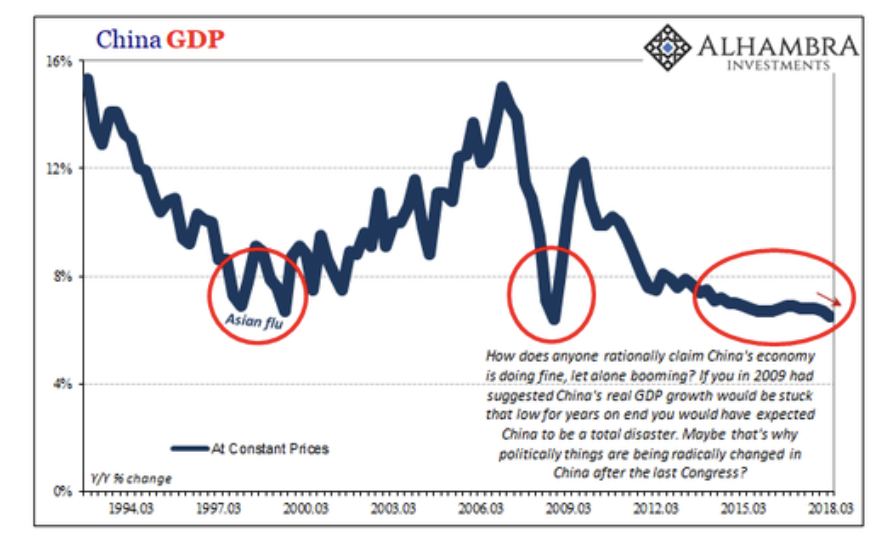
I came across a very interesting article today from Jeffrey Snider at Alhambra Investments. He says "China's Economy Is Not Crashing; It Is Worse Than That".

Abe-Xi summit comes as Chinese leader looks to create united front amid U.S. trade war

BY TOMOHIRO OSAKI

With all the fanfare generated by Prime Minister Shinzo Abe’s visit to Beijing later this week, perhaps the most significant aspect is that it is happening at all. Despite both taking office around the same time in 2012, Abe and his Chinese President Xi Jinping have never visited each other’s countries for a formal bilateral summit, with all of their previous encounters taking place on the sidelines of international conferences. But after six years, Abe will finally make the trek, paving the way for a reciprocal visit by Xi to Japan at some point in the future. “We want to use this opportunity to create momentum for us to map out and promote mutual cooperation and communication in various areas and to elevate Japan-China relations to a new level,” Chief Cabinet Secretary Yoshihide Suga said while announcing Abe’s visit to Beijing, which is scheduled to begin Thursday.

China Wants More Nuclear-Armed Submarines. Should Everyone Be Worried?

TONG ZHAO
China releases no official information about its nuclear weapons stockpile. However, according to open-source research, China currently has fewer than 300 nuclear warheads. China also has a wide range of nuclear weapon delivery systems. These are mostly ballistic missiles of various ranges, which can carry nuclear warheads to targets around the world. Unlike those of the United States and Russia, it is commonly believed that China’s nuclear weapons are kept in storage and are not deployed on active alert in peacetime.

DOES CHINA HAVE MORE OR FEWER NUCLEAR WEAPONS THAN ITS PEERS?

China’s overall nuclear arsenal is at least ten times smaller than those of the United States or Russia. Washington and Moscow each have around 4,000 nuclear weapons in their arsenals, plus thousands more that are retired and waiting to be dismantled.

A Year After Marawi, What’s Left of ISIS in the Philippines?

By Michael Hart

October 23 marked one year since the Philippine armed forces declared an end to combat operations in Marawi, bringing a brutal five-month urban siege that pitted government troops against radical Islamic State-linked militants to a close. The conflict devastated the city, cost more than 1,000 lives, and prompted more than 300,000 terrified residents to flee their homes. Many are yet to return, while the large Muslim-majority southern island of Mindanao – on which the historic Islamic city of Marawi sits on the shores of Lake Lanao in the northwest – has remained under a state of martial law ever since.

100-Megaton Nuclear Nightmare: How Do You Stop Russia's City-Killer Torpedo?

by Michael Peck
Source Link

Stopping weapons like Poseidon will likely require Western navies to develop a new generation of torpedoes.

How do you stop a nuclear-powered torpedo designed to bury enemy cities under a tsunami?


(This first appeared last month.)

Russia's Status-6 "Poseidon" torpedo has excited the fears -- or the overactive imaginations -- of Russia's enemies. Calling it is a torpedo is a misnomer. While the precise capabilities of the weapon are mysterious, it appears to be about 80 feet long -- which makes it more like a mini-submarine or an underwater ballistic missile. Poseidon is propelled by a nuclear reactor to a speed of 115 miles per hour and operates at deep depths up to 3,300 feet. It is armed with a massive 100-megaton warhead powerful enough to generate a giant tidal wave to destroy coastal cities.

Only Macron Can Save Europe, Says Macron

BY ROBERT ZARETSKY

In 2017, the planets aligned perfectly for Emmanuel Macron to ascend France’s presidency. Weakened by internal fissures, the mainstream political parties had nominated candidates who were either corrupt (the center-right Les Républicains’ François Fillon) or colorless (the Socialists’ Benoît Hamon). The collapse of their respective campaigns allowed Macron and Marine Le Pen, the leader of the far-right National Front, to face off in the second round of voting. Confronted with this stark choice between a liberal Europeanist on the one side and an authoritarian nationalist on the other, French voters handed the young and untested Macron an overwhelming victory.

US Navy’s New Naval Strike Missile to Deploy in 2019

By Franz-Stefan Gady

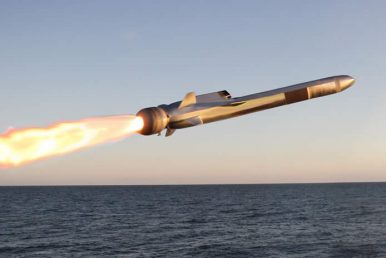
Norway-based Kongsberg Gruppen and U.S. missile maker Raytheon Company are expected to deploy and integrate their fifth-generation over-the-horizon Naval Strike Missile (NSM) in the U.S. Navy’s fleet of littoral combat ships (LCS) a few months ahead of schedule, defense industry executives revealed earlier this week at the at the Euronaval naval trade show in Paris. The U.S Navy selected the NSM for its LCS force and future frigates, designated FFG(X), in June of this year. “In that initial over-the-horizon award for LCS, the installation timeline was on a two-year delivery cycle,” Octavio Babuca of Raytheon company told Defense News. “But we are now working with the Navy to support an accelerated timeline to the deploying to littoral combat ships. That is mid-to-late 2019 time window.”

The U.S. Withdrawal From the INF Treaty Is the Next Step in a Global Arms Race


The end of the INF treaty would again place Europe between Russian and U.S. intermediate-range nuclear missiles. Withdrawing from the INF allows the U.S. military to build up a formidable arsenal of missiles to challenge China and Russia. The termination of the treaty will galvanize an arms race between the great powers and could threaten the future of the New START arms control agreement. U.S. President Donald Trump announced on Oct. 20 that he intends to withdraw the United States from the Intermediate-Range Nuclear Forces (INF) Treaty. That agreement prohibits the deployment of nuclear and conventional ground-launched ballistic and cruise missiles with intermediate ranges, defined as 500-5,500 kilometers (310-3,410 miles). While the withdrawal will allow the U.S. military to build a formidable arsenal of missiles to challenge China and Russia, the treaty's termination will undoubtedly stoke a budding arms race between global great powers, and it could lead to the demise of other key arms control treaties such as the New START agreement.

The Big Picture

The I.N.F. Treaty, Explained

By Andrew E. Kramer
Source Link

MOSCOW — The national security adviser, John R. Bolton, is in Moscow this week to explain to officials President Trump’s decision to pull out of a 1987 arms-control pact.

Mr. Trump and his hard-line aides, particularly Mr. Bolton, have long expressed their displeasure with the agreement, the Intermediate-range Nuclear Forces Treaty, because they say Russia is in violation of the terms and China is not a signatory.

“Unless Russia comes to us and China comes to us and they all come to us and they say, ‘Let’s all of us get smart and let’s none of us develop those weapons,’ ” America would pull out and start building new nuclear arms, Mr. Trump said after a campaign rally on Saturday.

U.S. Begins First Cyberoperation Against Russia Aimed at Protecting Elections

By Julian E. Barnes
WASHINGTON — The United States Cyber Command is targeting individual Russian operatives to try to deter them from spreading disinformation to interfere in elections, telling them that American operatives have identified them and are tracking their work, according to officials briefed on the operation. The campaign, which includes missions undertaken in recent days, is the first known overseas cyberoperation to protect American elections, including the November midterms. The operations come as the Justice Department outlined on Friday a campaign of “information warfare” by Russians aimed at influencing the midterm elections, highlighting the broad threat the American government sees from Moscow’s influence campaign.

What an artificial intelligence researcher fears about AI

Arend Hintze

As an artificial intelligence researcher, I often come across the idea that many people are afraid of what AI might bring. It’s perhaps unsurprising, given both history and the entertainment industry, that we might be afraid of a cybernetic takeover that forces us to live locked away, “Matrix”-like, as some sort of human batteryAnd yet it is hard for me to look up from the evolutionary computer models I use to develop AI, to think about how the innocent virtual creatures on my screen might become the monsters of the future. Might I become “the destroyer of worlds,” as Oppenheimer lamented after spearheading the construction of the first nuclear bomb? I would take the fame, I suppose, but perhaps the critics are right. Maybe I shouldn’t avoid asking: As an AI expert, what do I fear about artificial intelligence?

Could the cloud use the past to save troops in the future?

By: Kelsey Atherton
In this Saturday, Dec. 26, 2015 photo released by the U.S. Navy, the aircraft carrier USS Harry S. Truman transits the Strait of Hormuz. Iran flew a surveillance drone over a U.S. aircraft carrier and took "precise" photographs of it as part of an ongoing naval drill, state television reported Friday. The U.S. Navy said an unarmed Iranian drone flew near a French and American carrier on Jan. 12, but couldn't confirm it was the same incident. The U.S. Navy has transited the Strait of Hormuz for decades. Often, the conditions are smooth. Sometimes, the conditions are significantly less so and aircraft carriers are met with armed speedboats. There is an institutional memory to these incidents — word passed among sailors, logs recorded and archived, incident reports kept on file. But what if there was a way to make that information more immediately relevant, more functional? Rear Admiral Danelle Barrett, speaking at C4ISRNET’s Cloud 2020 event Oct. 18, wants the cloud to be the answer.

The Army turns its attention to aerial electronic warfare

By: Mark Pomerleau
Source Link
The Army’s rapid procurers are turning their focus to aerial electronic warfare solutions in response to ongoing needs in the European theater. The Army’s Rapid Capabilities Office has been working to deliver EW capabilities to Europe in phases that build upon each other, providing deployed forces with needed capabilities against a real threat now while also informing longer-term programs of potential requirements. A new effort “includes an aerial capability that extends the range of signal detection and will be used to inform the program of record, [Multifunction Electronic Warfare] Air Large,” Pete Manternach, EW lead for the RCO, said in written responses to C4ISRNET.

Bill Gates Says We Shouldn’t Panic About Artificial Intelligence

Dom Galeon

Artificial intelligence (AI) is one of today’s hottest topics. In fact, it’s so hot that many of the tech industry’s heavyweights — Apple, Google, Amazon, Microsoft, etc. — have been investing huge sums of money to improve their machine-learning technologies. An ongoing debate rages on alongside all this AI development, and in one corner is SpaceX CEO and OpenAI co-chairman Elon Musk, who has been issuing repeated warnings about AI as a potential threat to humankind’s existence. Speaking to a group of U.S. governors a couple of months back, Musk again warned about the dangers of unregulated AI. This was criticized by those on the other side of the debate as “fear-mongering,” and Facebook founder and CEO Mark Zuckerberg explicitly called Musk out for it.

Now, Microsoft co-founder and billionaire philanthropist Bill Gates is sharing his opinion on Musk’s assertions.

What Weapons Will The US Build After The INF Treaty?

By SYDNEY J. FREEDBERG JR.

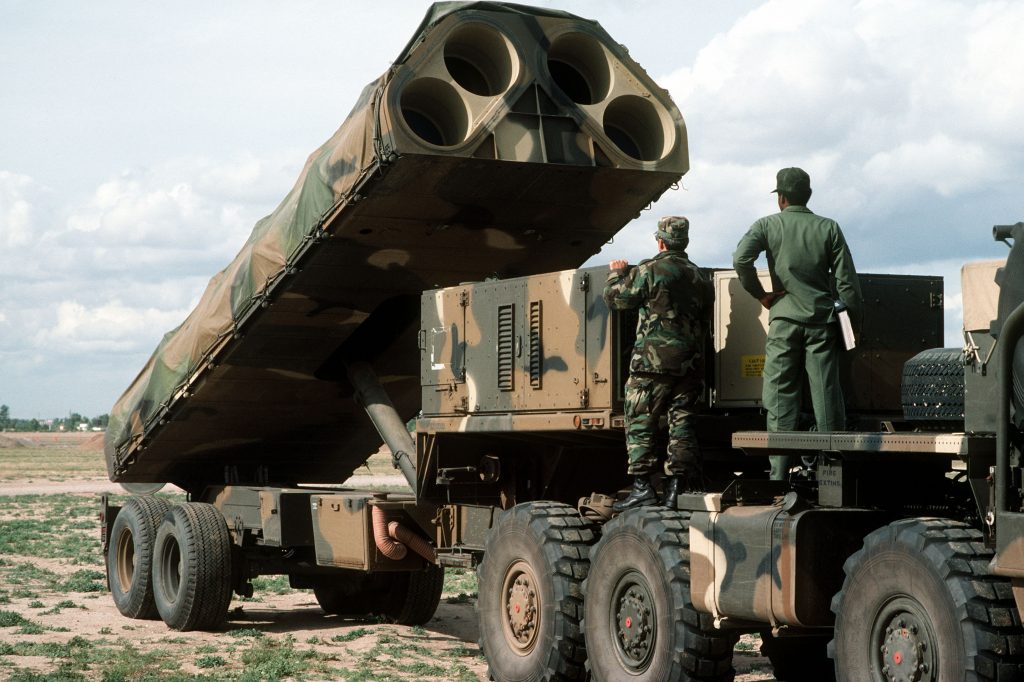
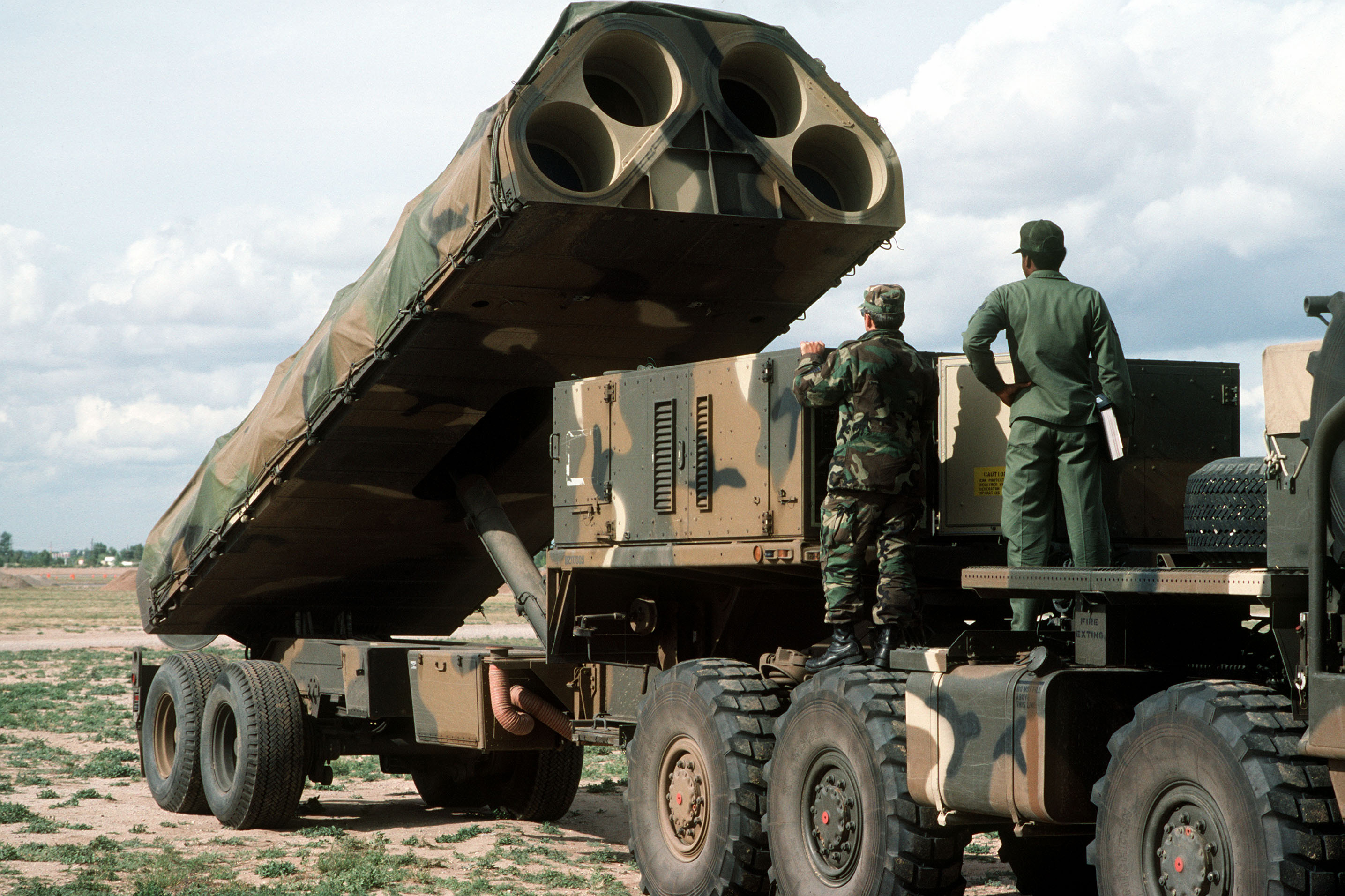
The Air Force’s BGM-109G Ground-Launched Cruise Missile (GLCM) was a Navy BGM-109A Tomahawk modified to fire from a Transporter-Erector-Launcher (TEL) truck. WASHINGTON: If President Trump withdraws from Reagan’s INF accord, it could jump-start fielding of new technologies that would have skirted the letter of the treaty, like ground-launched hypersonics. But it could also lead to less exotic solutions that the INF pact now bans outright, like mid-ranged ballistic missiles.As the product of a very particular moment in the Cold War, the misleadingly namedIntermediate-Range Nuclear Forces accord actually bans all cruise and ballistic missiles — . It doesn’t matter whether they carry nuclear warheads or conventional ones — that have a range between 500 to 5,500 kilometers, about 310 to 3,417 miles….but if and only they’re launched from the land. The exact same weapon, launched from a ship, submarine, or aircraft is completely legitimate.

Army Wants to Use Robots to Help Conduct Precision Strikes on the Enem

By Matthew Cox
Source Link

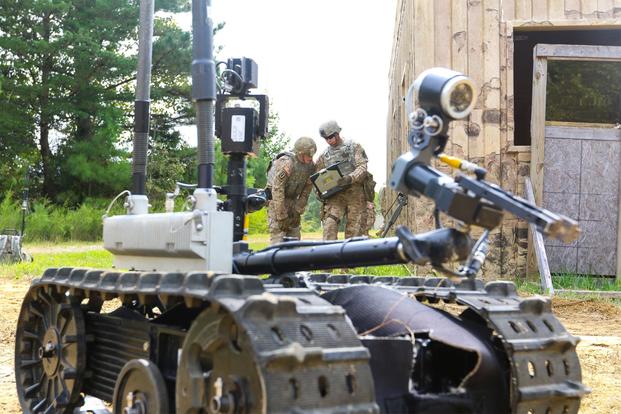
Army maneuver officials are hoping that a consortium of experts in non-military robotics can find new ways for combat units to defeat the enemy, especially in dense urban terrain. The Army's Capabilities Development and Integration Directorate, or CDID, at Fort Benning, Georgia, recently partnered with the National Advanced Mobility Consortium to conduct an outcome-based innovation workshop -- an approach to challenges that has been "proven in the commercial industry sector but never potentially used in a partnership with the military to get after some of the military's problems," according to Col. Tom Nelson, the head of CDID's Robotics Requirement Division.

28 October 2018

There’s No Path to Victory in Afghanistan

By FRED KAPLAN

This month, for the first time, the U.S. armed forces are recruiting young men and women who weren’t yet born when the invasion of Afghanistan took place. The war has been going on for 17 years now (17-year-olds can enlist with parental consent), making it the longest war in American history. Yet we are no closer than we have ever been to accomplishing our objectives, in part because those objectives have been so sketchily, inconsistently, and unrealistically defined. In fact, the Taliban is gaining strength; other jihadist groups, including ISIS and a revivified al-Qaida, are joining the fight (against the Afghan government, Western forces, and the Taliban); the Afghan Army is suffering casualties at an alarming rate; the chaos is spiraling to unsustainable levels. Just Thursday, a gunman wearing an Afghan Army uniform opened fire at a security meeting in a government compound, killing two top provincial governors, wounding three U.S. officers, and just missing the U.S. commander in Afghanistan, Gen. Austin “Scott” Miller, who was the apparent target of the attack.

'Series Of Oversights’ Reportedly Contributed To Recent Death Of US Soldier In Afghanistan

By JAMES CLARK 

A number of oversights may have contributed to the Oct. 4 death of a U.S. Army National Guard explosive ordnance disposal technician in Afghanistan’s Helmand province, the New York Times reportsThe Times investigation into the improvised explosive device strike that killed Army Spc. James A. Slape found that his unit repeatedly used the same patrol routes during its daily operations, “prompting Taliban militants to bury explosives nearby,” military officials toldthe Times. On the day Slape was killed, a platoon with Alpha Company, 1st Battalion, 41st Infantry Regiment left Camp Dwyer and drove seven miles to a ridge, which the unit frequently used as an observation post from which to intercept Taliban radio and phone traffic, the Times reports.

Ballots and bullets in Afghanistan

Vanda Felbab-Brown

Despite Taliban threats of violence to disrupt last Saturday’s parliamentary elections in Afghanistan, many Afghans showed up in large numbers to vote. Their commitment once again debunked the myths and caricatures so readily put forth by Western commentators that Afghans do not want democracy. Over and over the Afghan people have shown that they want accountability from their leaders, inclusion, and justice. And, once again, the long-delayed elections showed how the commitments and desires of the Afghan people are frustrated by dysfunctional political processes and systems that often render their voices meaningless, further exacerbating the steadily worsening security situation.

AFGHANISTAN’S PARLIAMENTARY ELECTIONS AND THEIR TRAUMAS

Trump’s Plan to Leave a Major Arms Treaty With Russia Might Actually Be About China

BY LARA SELIGMAN
Source Link

President Donald Trump’s proposal to pull out of a major U.S. arms control agreement with Russia is not just about Moscow, or nuclear weapons. The move also clears a path to boost America’s conventional forces in China’s backyard, according to arms control experts as well as current and former administration officials. The Intermediate-Range Nuclear Forces (INF) Treaty, signed in 1987 by U.S. President Ronald Reagan and Soviet General Secretary Mikhail Gorbachev, prohibits the use of nuclear and conventional missiles with ranges between 500 and 5,500 km (300 to 3,400 miles). But since China has never been a signatory, it has been able to build up a vast arsenal of conventional weapons that now threaten freedom of navigation in the region, such as the DF-21 “carrier killer,” experts say.

WHY DEMOCRACIES ARE TURNING AGAINST BELT AND ROAD

By Christopher Balding

China’s Belt and Road Initiative (BRI), an enormous international investment project touted by Chinese President Xi Jinping, was supposed to establish Chinese soft power. Since late 2013, Beijing has poured nearly $700 billion worth of Chinese money into more than sixty countries (according to research by RWR Advisory), much of it in the form of large-scale infrastructure projects and loans to governments that would otherwise struggle to pay for them. The idea was to draw these countries closer to Beijing while boosting Chinese soft power abroad.

China-US ties sinking amid acrimony over trade, politics


BEIJING (AP) — "Both ignorant and malicious" was how the official China Daily newspaper recently described comments by U.S. Secretary of State Mike Pompeo, offering a stinging insight into the current bitter tone of discourse between the countries. The White House's move to expand Washington's dispute with Beijing beyond trade and technology and into accusations of political meddling has sunk relations between the world's two largest economies to the lowest level since the Cold War. A major speech by U.S. Vice President Mike Pence on Oct. 4 was the clearest, highest-level sign that U.S. strategy was turning from engagement to confrontation. Pence accused China of interfering in the midterm elections to undermine President Donald Trump's tough trade policies against Beijing, warned other countries to be wary of Beijing's "debt diplomacy" and denounced China's actions in the South China Sea.

The Sino-American cold war’s collateral damage

Minxin Pei
Source Link

The escalating trade feud between the United States and China is increasingly viewed as the opening campaign of a new cold war. But this clash of titans, should it continue to escalate, will cost both parties dearly, to the point that even the winner (more likely to be the US) would probably find its victory Pyrrhic. Yet it is the rest of the world that would pay the steepest price. In fact, despite the low probability of a direct military clash between the US and China, a new cold war would undoubtedly produce collateral damage so far-reaching and severe that the very future of humanity could be jeopardised. Already, bilateral tensions are contributing to an economic decoupling that is reverberating across the global economy. If the end of the Cold War in 1991 launched the golden age of global economic integration, the beginning of the next cold war between the world’s two largest economies will undoubtedly produce division and fragmentation.

China: President Xi’s Digital Prison – OpEd

By Felix Imonti

As Mao Zedong saw his control over the Communist Party challenged, he unleashed the Cultural Revolution. The Great Leap Forward and other failed economic policies were of little importance. Only his continued leadership of the Chinese Communist Party and the survival of the Party as the sole source of power and thought was what Mao considered to be the essence of Chinese society. The Communist Party was the brain and the soul of the people; the state was the muscle.

Watching the violence of the swarming teenagers was the thirteen-year-old Xi Jinping. Today, Xi is applying the lessons learned during the Cultural Revolution between 1966 and 1976 to a society known only in the imaginations of George Orwell in 1984 and Aldous Huxley in Brave New World.