2 February 2021

Myanmar military seizes power, detains elected leader Aung San Suu Kyi


(Reuters) - Myanmar’s military seized power on Monday in a coup against the democratically elected government of Nobel laureate Aung San Suu Kyi, who was detained along with other leaders of her party in early morning raids.

Western nations condemned the sudden turn of events, which derailed years of efforts to establish democracy in the poverty-stricken country and raised even more questions over the prospect of returning a million Rohingya refugees.

The U.N. Security Council will meet on Tuesday, diplomats said, amid calls for a strong response.

The army said it had responded to “election fraud”, handing power to military chief General Min Aung Hlaing and imposing a state of emergency for a year in the country, also known as Burma, where neighbouring China has a powerful influence.

The generals made their move hours before parliament had been due to sit for the first time since the National League for Democracy’s (NLD) landslide win in a Nov. 8 election viewed as a referendum on Suu Kyi’s fledgling democratic rule.

India’s Vaccine Diplomacy: A Potent Card?

By Sudha Ramachandran

Days after it began vaccinating its own population against the novel coronavirus, India has begun dispatching millions of doses of its indigenously manufactured COVID-19 vaccines to its South Asian neighbors and key partner countries further afield.

After having sent consignments of testing kits, personal protection equipment, respirators, and medicines to other countries to help them fight the COVID-19 pandemic, India is now reaching out to them with “vaccine diplomacy.”

In keeping with its “Neighborhood First” initiative, the first consignments of the Covishield vaccine — which is developed by AstraZeneca and Oxford University and manufactured by the Serum Institute of India — and Covaxin, a locally developed and manufactured vaccine by Bharat Biotech and the Indian Council of Medical Research, have gone to its immediate neighbors, Bangladesh, Bhutan, Maldives, Myanmar, and Nepal, and to key Indian Ocean partners, Mauritius and Seychelles. Sri Lanka will begin receiving vaccine consignments from January 27 and Afghanistan will do so after it has completed regulatory clearance procedures.

The Indian Army’s Pivot to the North

By Ankit Panda

The Diplomat’s Asia Geopolitics podcast host Ankit Panda (@nktpnd) speaks to the Business Standard’s Ajai Shukla on his recent report concerning the Indian Army’s reorganization of the 1 Corps to a China-oriented mountain strike corps.

If you’re an iOS or Mac user, you can also subscribe to The Diplomat’s Asia Geopolitics podcast on iTunes here; if you use Windows or Android, you can subscribe on Google Play here, or on Spotify here.If you like the podcast and have suggestions for content, please leave a review and rating on iTunes and TuneIn. You can contact the host, Ankit Panda, here.

Escaping the Graveyard of Empires? U.S. Options in Afghanistan


This piece is part of the CSIS International Security Program’s Transition46 series on Defense360.

One of the Biden administration’s most contentious war-related decisions will likely be what to do about Afghanistan. The U.S. military has been fighting in Afghanistan for two decades in a war that has persisted nearly continuously since the late 1970s. However, a precipitous U.S. withdrawal from Afghanistan at this point—without an intra-Afghan peace agreement—will likely shift the military balance of power in favor of the Taliban and increase the possibility of an eventual Taliban takeover of the capital city, Kabul, and significant rural and urban areas of the country.

Q1: What is the current U.S. military presence in Afghanistan? What are U.S. interests in Afghanistan and the region?

A1: On February 29, 2020, U.S. and Taliban leaders signed an agreement that was intended to be an initial step toward an intra-Afghan peace deal. There were significant problems with the agreement, such as its failure to involve the Afghan government in the negotiations. Nevertheless, important provisions of the deal included a U.S. pledge to eventually withdraw all U.S. and foreign soldiers from Afghanistan, a Taliban commitment to prevent al Qaeda and other terrorist organizations from using Afghan territory to threaten the United States and its partners, and a promise by both sides to support intra-Afghan peace negotiations. Over the course of 2020, the United States withdrew its forces from a high of roughly 14,000 at the beginning of the year. On November 17, 2020, Acting Secretary of Defense Christopher Miller announced that the United States would cut its forces in Afghanistan to approximately 2,500 troops by January 2021.

The Netherlands’ Violent Anti-Lockdown Protests Are a Bad Omen

Frida Ghitis 

When riots erupted across the Netherlands last weekend against a new coronavirus lockdown, the scenes of mayhem triggered a cascade of emotions. “My city is crying, and so am I,” said John Jorritsma, the mayor of Eindhoven, the country’s fifth-largest city, contemplating the damage from all the violence. But the sentiment was not just sadness. Furious, and perhaps a bit frightened, Jorritsma called the rioters “the scum of the Earth” and warned that the country could be “on our way to civil war.”

The protests in nearly a dozen Dutch cities erupted under the banner of rejecting stricter measures to contain the COVID-19 pandemic, including a curfew—from 9 p.m. to 4:30 a.m.—imposed by the government in an effort to protect the country from the more contagious and perhaps deadlier U.K. variant of the coronavirus. The pandemic has left more than 13,700 people dead in the Netherlands, and led to about a million confirmed infections.

A closer look at last weekend’s turmoil, however, suggests that it was triggered by something more than a spontaneous explosion of pandemic frustration. While exasperation with the extended COVID-related hardships is genuine, the violence that tore across the Netherlands is evidence that political players with their own agendas are exploiting this crisis. Right-wing politicians and, more alarmingly, extreme far-right organizations are both taking advantage of the pandemic and the Dutch government’s ongoing efforts to control the spread of the virus to disrupt the country’s democratic system, grow their ranks of supporters and hone their skills at sparking violence.

Myths and Realities of China’s Military-Civil Fusion Strategy

By Elsa B. Kania and Lorand Laskai

Introduction

In U.S. policy debates on China, military-civil fusion (MCF) has emerged as a frequent subject of debate and concern. Once a niche topic of study among only avid watchers of Chinese military modernization and defense technological development, Beijing’s drive to break down barriers and create stronger linkages between its civilian economy and defense industrial base has started to draw considerable attention in Washington.1 During Donald Trump’s administration, Vice President Mike Pence, Secretary of State Mike Pompeo, senior officials across the State Department and Defense Department, and members of Congress all devoted time to MCF in speeches, using it to justify a broad range of policies. These included expanding investigations into intellectual property theft, banning Huawei from U.S. networks and critical infrastructure, urging companies like Microsoft and Google to stop working with Chinese counterparts, and even advocating for “decoupling” from the People’s Republic of China (PRC), such as in supply chains and by limiting technological collaboration.2 MCF has emerged as a key analytic driver of the intensifying economic and technological competition between the United States and the PRC in recent years. While Joe Biden’s administration will have an opportunity to reset the tone of the U.S.-China relationship and recalibrate the use of instruments of U.S. policy, China’s model of MCF is likely to remain a major concern for U.S. policymakers.

Then-Secretary of State Mike Pompeo addressed the Silicon Valley Leadership Group in January 2020, raising concerns about military-civil fusion and the implications for American companies, especially those involved in developing sensitive technologies. (U.S. Department of State)

Despite its increasing prominence in U.S. policy circles, MCF has remained poorly understood and under-studied relative to its increasing importance. That discrepancy could undermine U.S. policy responses and public messaging. Rather than prompting a deeper understanding of this complex subject, the recent surge in interest in MCF has at times instead contributed to a tendency toward oversimplification and mischaracterizations of MCF as a strategy, its potential implications, and the continuing challenges to its implementation. In particular, discussions in the United States on MCF have sometimes mischaracterized it as a fait accompli, instead of recognizing that this strategy has yet to be fully realized.

Protecting Democracy in an Age of Disinformation: Lessons from Taiwan


Taiwan has long defended itself from political meddling, including disinformation, by the People’s Republic of China (PRC). Attempts to influence Taiwan’s domestic politics have increased in both intensity and severity following the election of Tsai Ing-wen in 2016, with Beijing continuing to target the basic underpinnings of Taiwan’s democratic system. The disinformation campaigns carried out by the Chinese Communist Party (CCP) are often obscured by the secrecy and opacity of the CCP’s “united front” approach, which makes it difficult to accurately diagnose and right-size the problem of disinformation, complicating efforts to craft effective solutions. While CCP disinformation campaigns pose a clearly identifiable threat to the United States and Taiwan, they are only one part of a larger disinformation problem facing democracies in this era of instant and omnipresent communication technologies. Indeed, the experience of both Taiwan and the United States suggest that rival political parties are incentivized to exaggerate and weaponize charges of “foreign interference” against each other—charges which often are more damaging to underlying trust levels in a democracy than the original foreign disinformation attacks themselves.

This report was made possible by the generous support of the Taipei Economic and Cultural Representative Office in the United States (TECRO). All opinions expressed herein should be understood to be solely those of the authors and are not influenced in any way by any donation.

China Gets a Message That Taiwan Is a Bipartisan U.S. Issue

Tim Culpan

China flew a significant force of bombers and fighters near the Taiwan Strait over the weekend, one of the largest in an escalation of nerves over several months but more important as a test of President Joe Biden’s administration. The new team didn’t give Beijing a free pass.The State Department quickly issued a press release about the Chinese military maneuver, stressing regional alliances and rock-solid support for Taipei. This is less routine than it looks after four years in which Donald Trump’s cadre of China hawks showed unprecedented support for Taiwan, and the question arose whether the Biden team would feel compelled to keep pace. While Biden is likely to approach policy differently, the response reflects what will probably be a more bedrock bipartisan support steadier than the whims of the prior president. Earlier this month, I wrote that Trump’s “incessant desire to keep needling Beijing, for domestic political distraction, elevated Taiwan’s status.” The concern here in Taipei, and one shared by many who keep an eye on the trilateral Taiwan-China-U.S. relationship, is that Trump was merely using Taiwan as a cudgel in a broader fight over everything from trade to viral outbreaks. Taipei had to wonder if the new level of attention would end with his last day in office.

A New Tone in US-China Relations?

ANDREW SHENG, XIAO GENG

HONG KONG – Donald Trump has left the White House, but Trumpism has not left US politics. With Joe Biden as America’s president, the world hopes that the United States will shift away from Trump’s disruptive confrontational approach toward China relations and embark on a path of pragmatic engagement. At stake is whether this crucial bilateral relationship serves to strengthen or shatter the global order.

Trump and COVID-19 have together provided painful but essential tests of both national well-being and the concept of an interconnected global order. Trump viewed globalization as a hindrance to America’s national aspirations. But the pandemic proved that we live in an interconnected global society.

Systemic threats like the pandemic are beyond any country’s power to resolve. If we neglect the health and livelihoods of the world’s poorest, the coronavirus will mutate and come back to haunt us, even in the richest walled-in community.

Trumpism stood squarely against this reality, embracing the view that only nation-states or the elites who control them can address global problems. That “partialist” assumption is also shared by conventional defense and security strategists, who typically take national primacy for granted, resulting in zero-sum outcomes like the so-called Thucydides Trap.

But all threats to human security arise endogenously from the interaction of the world’s parts. As the ecologists Fritjof Capra and Pier Luigi Luisi observed in their 2014 book The Systems View of Life, “the major problems of our time are systemic problems – all interconnected and interdependent.” Accordingly, “they require systemic solutions.” Yet, systemic solutions fall into collective-action traps, because the parts will not work together to solve the problems of the whole.

Xi’s cynical warning against a new US-China ‘cold war’


The man whose mendacity unleashed a deadly pandemic on the world has a complaint to make: The West, in pushing back on Xi Jinping’s aggression, risks starting “a new cold war.”

And the Chinese president had the nerve to deliver the warning after a weekend of Communist military bellicosity targeting tiny Taiwan.

“To build small cliques or start a new cold war, to reject, threaten or intimidate others, to willfully impose decoupling, supply disruption or sanctions, to create isolation or estrangement will only push the world into division and even confrontation,” Xi said in his keynote address to the World Economic Forum.

This year’s forum is virtual, not the usual gathering in Switzerland’s Davos resort, thanks to the pandemic China’s government made more deadly through a coverup it continues to this day. When Australia called for an international investigation of the pandemic’s origins, an angry Beijing slapped restrictions and tariffs on Aussie imports and continues its own “cold war” against Canberra on multiple fronts.

Yet Xi’s speech still insisted any confrontation, whether a “cold war, hot war, trade war or tech war” would “end up harming every nation’s interests and sacrificing people’s welfare.”

Why China's economy is less healthy than it looks

BY FREDDIE HAYWARD

China was the only major economy to experience growth last year, as its industrial sector continued to expand. Following a year-on-year contraction of 6.8 per cent in the first three months of 2020 – the first fall in output in more than 40 years – the Chinese economy avoided a recession and registered growth of 2.3 per cent by the end of 2020.

Much of China’s apparent success can be attributed to its response to coronavirus. Its reported infection numbers flatlined at the beginning of March, though there has been a recent uptick in cases centred on Hebei province. Instead of suffering the punishing economic consequences of national lockdowns, China has been able to keep its factories open and its people working.

Yet, GDP growth does not equal economic health. According to Global Energy Monitor, China has heavily invested in coal plant development in order to prop up its GDP numbers. In the first half of 2020, the generating capacity for proposed new coal plants in China was almost equal to the entire coal fleet of South Africa (41.4 GW). This is despite the fact that China has an excess of coal-generated energy, leaving many coal plants redundant. Global Energy Monitor stated that the 360 coal-fired plants added in China from 2015 to 2019 absorbed at least $80bn of wasted investment in the form of construction costs.

The Pentagon Needs To Rethink Its Worst-Case Scenarios Against China And Russia

Bryan Clark

Pentagon force planning is a dense and complicated blend of assumptions and projections, but operational scenarios are its most impactful ingredient. Their importance varies as administrations change and threats come and go, but depictions of the situations U.S. military forces and systems need to address are essential to setting investment priorities. Unfortunately, organizational inertia and a desire to compete for dollars lead U.S. military services to plan for scenarios that privilege their largest existing programs–even as America’s adversaries are moving on to an entirely different type of warfare.

During the past decade, DoD naturally focused its planning on peer competitors China and Russia or nuclear-armed rogue states like North Korea. The most stressing campaigns U.S. forces could face against these adversaries dominate DoD analysis, under the assumption that worst-case scenarios like an invasion of Taiwan also capture the needs for “lesser-included” cases like a lengthy blockade of Japan’s southwest islands or a sustained submarine threat off the U.S. coast.

Recognizing DoD’s focus on high-intensity warfighting, its potential adversaries are methodically developing strategies and systems that circumvent the U.S. military’s advantages and exploit its vulnerabilities by avoiding the types of situations for which U.S. forces have prepared. DoD may be falling into a trap by continuing to use a narrow set of high-intensity conflicts as its pacing threats.

The new battleground

The Arab Spring 10 Years On

Dr Georges Fahmi

When reflecting on the past 10 years, it’s clear to see that the Arab Spring is far from over. The popular uprisings in Sudan, Algeria, Iraq and Lebanon over the last couple of years, coupled with ongoing political and socio-economic tensions across the region, show that no political equilibrium has been found. However, waiting for another 2011 moment, as if nothing has changed, would be a mistake.

The political upheavals of 10 years ago have brought about far-reaching transformations to both the political landscape, as well as to the determinants of popular mobilization. Calls for political reform will have to take these transformations into consideration if they are to achieve real change.

Waiting for another 2011 moment, as if nothing has changed, would be a mistake.

The 2011 uprisings have had three main consequences: fear of state collapse, increased social polarization and the increasing importance of socio-economic demands. Any strategy for political change must address these factors in order to be successful.
‘Us or chaos’ – fear of state collapse

Restoring state institutions in countries where such institutions have either collapsed or have become ineffective, and protecting the state from collapse in other cases, are now important factors that could either hinder or strengthen any project for political change.

Two US Destroyers Enter Black Sea; Russia Responds

By PAUL MCLEARY

WASHINGTON: For the first time in three years the Navy has sent three ships – including two destroyers – into the Black Sea, just days after President Biden confronted Vladimir Putin about Russian policy.

The move is sure to be read by Moscow as a statement of intent as the United States looks to confront Russia in response to its invasion of Ukraine, attempts to assassinate political rivals and reformers at home, and continuing acts of violence against Russians in NATO countries, as well as the persistent threats Vladimir Putin’s regime has made against NATO countries.

The USS Porter entered the Black Sea this morning, less than a week after USS Donald Cook and the replenishment oiler USNS Laramie entered the waterway to start running through a series of exercises with NATO allies. Russia reacted promptly, moving a Bastion missile defense system into position in Crimea and making a show by running virtual drills, according to Russian state media.

The two guided missile destroyers are conducting command and control and maritime multi-domain operations with US P-8 surveillance aircraft and NATO AWACS planes, Navy officials say.

Biden Orders Pentagon To Include Climate Change In New Strategy & War Games

By PAUL MCLEARY

WASHINGTON: The Pentagon will include climate change-related issues in its National Defense Strategy and war gaming, a major change driven by President Biden signing of an executive order today instructing the government to begin tackling climate change on a wider scale.

Biden’s order directs the Secretary of Defense and the Chairman of the Joint Chiefs of Staff to include climate risk assessments in developing a new National Defense Strategy, due in 2022, along with the Defense Planning Guidance, the Chairman’s Risk Assessment, “and other relevant strategy, planning, and programming documents and processes.”

The order gives the Pentagon and other federal agencies 120 days to produce “an analysis of the security implications of climate change (Climate Risk Analysis) that can be incorporated into modeling, simulation, war-gaming, and other analyses.”

In 2019 alone, the military identified climate-related impacts at 79 installations.

While the armed services has for years accepted that changes in climate will drive instability and have adverse effects on port infrastructure and bases at home and abroad, the 2018 National Defense Strategy did not name climate change as a national security priority. The order marks a sharp departure from Trump administration policies that pushed to expand oil and gas exploration and ignored climate change’s effects.

The Biden Administration’s Security Challenges in the Gulf


The U.S. needs to make fundamental changes to its security efforts in the Persian/Arab Gulf and the Middle East. The U.S. has done more to destabilize Gulf security over the last four years than to establish a stable structure of deterrence and defense. At the same time, the threat in the region has evolved far beyond extremist groups, such as ISIS, and past assessments of Iran’s nuclear weapons efforts.

If the Biden Administration is to succeed in creating a new structure of deterrence and defense in the Gulf, it must look beyond extremism and issues like the Israeli-Palestinian peace process – important as they are. It must rebuild and strengthen its security partnerships with Arab states and address a wide range of new security issues.

There are no easy, “good,” or simple solution to these challenges, and many will require years of patient efforts meant simply to contain the problems involved, rather than to solve them. The U.S. does, however, have a wide range of options, and it can make progress in many areas. There is still much to build upon even if the Biden Administration acts promptly and consistently to address the full range of challenges involved.

The broader issues in Gulf security include:

Restoring Trust in the U.S. as a Strategic Partner

Cultivating a Defense Department Workforce for the Digital Era


The Biden administration faces a host of competing priorities at the Department of Defense (DoD). Its new leadership team must define its approach to a shifting global landscape that is far from settled. DoD writ large must also modernize its aging infrastructure and equipment and cope with a stagnant budget, all the while continuing to develop and procure new technology to ensure U.S. safety and security in a world of twenty-first century threats. However, underlying each of these is the need for a highly skilled technical workforce—encompassing strong leadership, management, and individual subject matter experts—necessary to lead in the Digital Era.

Though the Pentagon has a legacy of leading in science and technology, it has struggled to adapt its industrial age approach to personnel management. As a result, it is struggling to recruit and retain the science, technology, engineering, and mathematics (STEM) workforce across the enterprise that it needs to compete. While pockets of success may exist in places like DoD Research and Engineering and the National Security Agency, the ubiquity of digital systems and increasing pace of technology development requires the entirety of the defense enterprise to integrate technologists throughout its ranks. DoD must no longer treat people as interchangeable parts; instead, it must manage skills, experiences, and preferences to build a modern workforce.

Q1: We’ve been continually hearing about hiring STEM talent for years, isn’t there enough?

Biden’s ‘Reversals’

By George Friedman

Just about every U.S. president promises a new era of U.S. foreign policy. George W. Bush promised to abolish nation building as a goal. Barack Obama promised to make the world, and particularly the Muslim world, like America more. Donald Trump promised a foreign policy that benefited the United States. Joe Biden is promising a foreign policy that reverses the damage Trump did to all of America’s foreign relationships. The operant principle is that the past was bad and the future will be good. And to be good, the bad must be reversed.

But policy represents only the wishes of leaders, not reality. Bush spent his two terms trying to build nations in Afghanistan, Iraq and elsewhere. Jihadism failed to succumb to Obama’s charms. Trump pursued U.S. interests but rarely defined what those interests were. All their intentions were real; the world is just not that compliant.

As an example of one of his first policy moves, Biden announced last week that he would cancel the Keystone XL pipeline, a $50 billion project running from Canada to the United States. Trump approved the pipeline, which Canadians reasonably understood to be a done deal. The cancellation has left oil-rich Alberta province enraged, and even Canadian Prime Minister Justin Trudeau, with whom Alberta is often at odds, condemned the decision.

Navalny’s Bravery Is Unlikely to Shift Putin’s Entrenched Power

BY JEFF HAWN 

On Jan. 23, tens of thousands of people across Russia turned out for demonstrations to support the release of the activist Alexey Navalny, who had returned to Russia on Jan. 17 five months after being poisoned with Novichok, a military-grade chemical weapon. On landing, Navalny was immediately arrested and is currently being held in a Moscow prison facing extended incarceration on highly dubious criminal charges.

Yet Navalny is not sitting idle. Shortly after his arrest, his Anti-Corruption Foundation released a video purporting to show Russian President Vladimir Putin’s sprawling Black Sea palace. Immediately before that, the Anti-Corruption Foundation released a list of the top eight Russian nationals whom the West should sanction if it wants to combat the avarice of Putin’s circle. The widespread and blatant corruption of Putin and other Russian elites, the constant perversion of justice, and stagnating living standards have left large swaths of the Russian public disaffected with the regime, hence the massive turnout for demonstrations.

But don’t expect a street revolution or the end of Putinism anytime soon. Navalny’s actions, though brave and sufficient to further diminish the popularity of Putin and the ruling United Russia party, currently have almost no chance of immediately deposing the current regime. The reason for this is that Navalny, though popular among a substantial number of Russians and able to mobilize large street protests, has little if any support from political and business elites on a local, regional, or national level. Many of these elites are indeed the people who have been the main target for Navalny’s crusade against corruption.

Russia Is in Agony, but Putin’s Dictatorship Is Going Down

BY JONATHAN TEPPERMAN 

Over the weekend, Russia erupted in some of the largest and most widespread protests in decades, after Alexey Navalny—the anti-corruption crusader-turned-opposition politician who was poisoned by Russian President Vladimir Putin’s agents last summer, and then spirited out of the country to recover in Germany—returned home for the first time and was immediately arrested. To get a sense of what the demonstrations mean, where they are headed, and whether this time will be different, Foreign Policy’s editor at large Jonathan Tepperman spoke to Garry Kasparov, the former Russian chess champion and democracy activist. Their conversation has been edited for length and clarity.

Jonathan Tepperman: What’s status of the protests?

Garry Kasparov: I don’t think anybody knows. Navalny’s team is calling for people to fill the streets and to support him and to express their anger with the regime. And the whole thing has become like a snowball. It went viral when Navalny released his movie about Putin’s palace [editor’s note: an online investigation, released after Navalny’s return to Russia last week, that explores Putin’s massive Black Sea estate and the money flows that financed it in great detail], which has already reached some kind of astronomical number of views. And now we’re seeing the accumulated effect of 20 years of Putin’s dictatorship, the growing disappointment of the Russian people with their socioeconomic conditions, and anger about corruption and the wealth of Putin’s oligarchs. We’re seeing a clear a message from the young generation of Russians that they’re not going to tolerate Putin’s indefinite rule.

JT: How are these protests different from earlier ones?

The Silent Pandemic of Antibiotic Resistance

PATRICIA GELI, OTTO CARS

WASHINGTON, DC/UPPSALA – When the World Health Organization launched last year’s World Antimicrobial Awareness Week, it expanded the campaign’s focus from antibiotics to all antimicrobials – including antiviral, antifungal, and antiprotozoal drugs. The WHO said that framing the response to antibiotic resistance (ABR) within the broader antimicrobial resistance (AMR) agenda, including HIV and malaria, would “facilitate programmatic synergy and efficiency, and catalyze country-level action to combat drug-resistant infections.” But although there are many commonalities between ABR and AMR, there are also important differences that justify paying specific attention to antibiotics.

ABR has been a slow-growing pandemic, fueled in part by relatively weak political support for implementing national action plans that include the establishment of well-resourced surveillance systems. The resulting lack of context-specific data on the health and economic burden of resistance has created an obstacle to policy action.

Although aggregate numbers on the global AMR burden exist – the most cited, from the United Kingdom’s independent 2014-16 AMR review, chaired by the economist Jim O’Neill, put the toll at 700,000 deaths per year – these underrepresent the ABR problem, owing to the limited scope of bacteria covered. In fact, estimates suggest that ABR alone claims more than 750,000 lives every year, with the largest toll most likely occurring among children in the poorest countries. In a recent global survey, 79% of physicians treating newborns reported an increasing trend of multi-drug-resistant infections over the last five years, while 54% cited ABR as the leading cause of failure to treat neonatal sepsis, a blood infection affecting newborns.

In the past, the drug-resistance problem has typically been addressed by researching and developing new antibiotics. But although R&D is an important element of the ABR response, it is scientifically challenging and expensive. In effect, an arms race between drug development and resistance has ensued. With few novel antibiotics in the development pipeline, we need incentives to spur R&D while decoupling investment returns from sales volumes in order to slow the evolution of resistance.

Biden’s Grand Opening

JAMES K. GALBRAITH

AUSTIN – In the space of less than three months, events have conspired to transform the American political scene. First, the COVID-19 pandemic defeated Donald Trump – not because public sentiment in this deeply polarized country changed, but rather because the virus forced open the gates of ballot access. Owing to a vast upsurge of early voting and mail-in ballots, the 2020 election’s turnout surpassed that of 2016 by 20 million votes, and featured a greater share of the electorate than any US presidential election since 1900.

Second, thanks to ten years of local organizing by voting-rights activists led by Stacey Abrams, Georgia replaced both of its Republican senators with Democrats in the January 5 runoff elections, thus handing narrow control of the US Senate to President Joe Biden’s Democratic Party.

Finally, Trump and some of his fellow Republicans incited a rabble to ransack the US Capitol. That catastrophic political miscalculation resulted in the death of five people (including a police officer), Trump’s second impeachment, and the lasting disgrace of the defeated president’s most aggressive would-be successors, Senators Josh Hawley of Missouri and Ted Cruz of Texas.

The moment was ripe for Biden to tell the country about his own economic plans. And when he spoke, it was with focus, precision, and a clear sense of the scale and range of action that the situation requires.

U.S. Strategy in Syria Has Failed

By Robert S. Ford

During his four years in office, U.S. President Donald Trump repeatedly promised to get the United States out of the nation-building business. Long-term U.S. efforts to reconstruct and stabilize postconflict societies, he argued, were misguided and doomed to fail. And for the most part, Trump delivered: he cut troop numbers in Iraq and Afghanistan, and he scaled back democracy-promotion funding by nearly $1 billion during his time in office.

But the Trump administration departed from its no-nation-building policy to pursue one long-shot effort—in Syria. The United States tried to use military force and financial pressure to compel Syrian President Bashar al-Assad to accept major constitutional reforms and a Kurdish autonomous zone in the country’s northeast. Under U.S. supervision, that region developed into a semistate with its own army, the Syrian Democratic Forces (SDF), and an entrenched bureaucracy—dominated by the Syrian Kurdish People’s Protection Units.

The Tactical Implications of North Korea’s Military Modernization

By Liang Tuang Nah

On January 14, to commemorate the end of the Eighth Congress of the Korean Workers’ Party, North Korean leader Kim Jong Un presided over a lavish military parade where many new models of military hardware were showcased. This was the second such parade in the last few months, as the last batch of new weapons was revealed during a parade in October 2020 to celebrate the 75th anniversary of the Korean Workers’ Party.

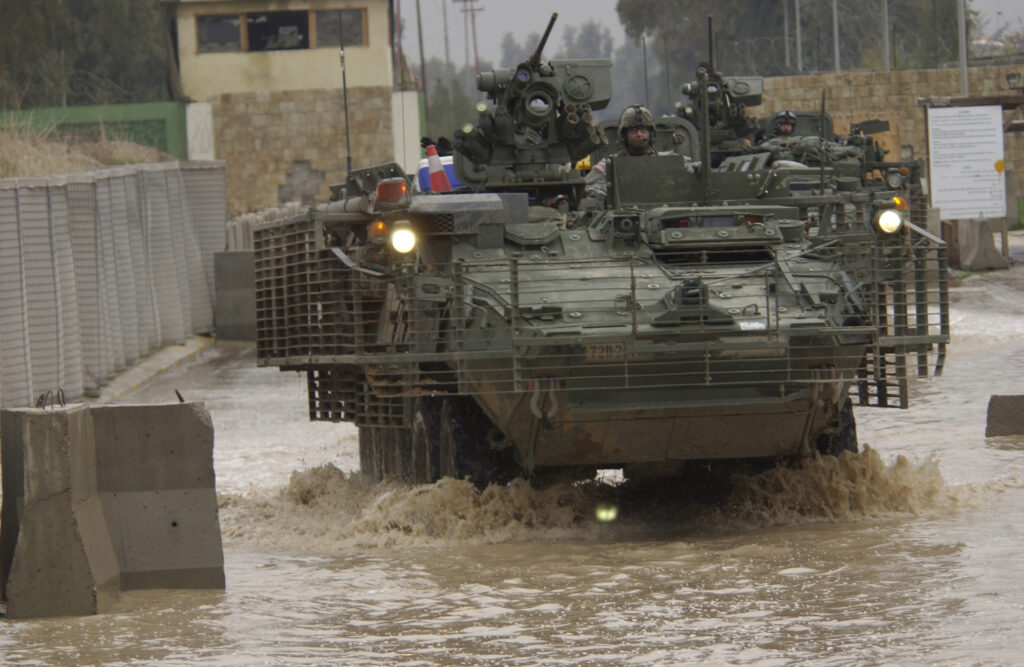
In the most recent parade, a variety of new equipment was shown, ranging from sniper rifles and semi-automatic grenade launchers for ground troops, to tank destroyers and heavy multiple launch rocket systems (MLRS), and lastly a new model of submarine launched ballistic missile (SLBM). Excluding the SLBMs, we can see inspiration for abroad for the new weapons. The rifle-sized grenade launchers mimic the high-tech South Korean Daewoo K11 infantry weapon system; the tank destroyers superficially resemble the M1128 mobile gun system from the Stryker family of armored vehicles produced by U.S. defense firm General Dynamics Land Systems; and the North Korean MLRS are meant to fulfill the same function as the U.S. Lockheed Martin M270 MLRS.

Much Less Than Meets the Eye?

Fiction and Consequences: War in Art and the Art of War

By Jacob Parakilas

For better or worse, science fiction and military futurism are deeply interlinked. Science fiction films and novels have proliferated throughout military recommended reading lists, influenced naming conventions and military symbolism, and contributed to a budding genre of fiction-as-informed-prediction.

But for every classic – for every “2001: A Space Odyssey” or “The Forever War” – there are dozens of more forgettable pieces of entertainment exploring the same themes.

Last night I watched one such film, “Outside the Wire,” a Netflix production. It was, I am sorry to report, not particularly good. Despite an overqualified cast and some halfway respectable special effects, the character motivations were inconsistent, the dialogue was clunky, and the plot descended quickly into incoherence, partly due to some fairly serious misunderstandings of how the military chain of command, robotics, and nuclear weapons work.

This hasn’t suddenly become a film review column; I’ll leave the parsing of Anthony Mackie’s portrayal of a mysterious combat android to the professionals. And it is worth acknowledging that mass-market film and TV are designed for the mass market; the vast majority of the audience won’t have their enjoyment of a film degraded by the nagging defense-analyst voice in their mind (or in my wife’s case, on the couch next to her) complaining loudly that a character who ought to know better just used the wrong name for the drone they’re flying.

To Defeat Enemy Drone Swarms, Troops May Have to Take a Back Seat to Machines, General Says

By Matthew Cox

The Army's top modernization official said Monday that the Pentagon may have to relax its rules on human control over artificial intelligent combat systems to defeat swarms of enemy drones that often move too fast for soldiers to track.

All branches of the U.S. military have expressed interest in using artificial intelligence, or AI, for faster target recognition; however, the Defense Department until now has stressed that humans, not machines, will always make the decision to fire deadly weapons.

But as small unmanned aerial systems, or UAS, proliferate around the world, Army modernization officials are recognizing that swarms of fast-moving drones will be difficult to defeat without highly advanced technology.

"It just becomes very hard when you are talking about swarms of small drones -- not impossible, but harder," Gen. John Murray, head of Army Futures Command, told an audience Monday during a webinar at the Center for Strategic & International Studies.

Murray said that Pentagon leaders may have to have conversations about how much human control of AI is needed to be safe but still effective in countering threats such as drone swarms.

1 February 2021

Is the China-India Border Dispute Shifting East?

By Bérénice Guyot-Réchard and Kyle Gardner

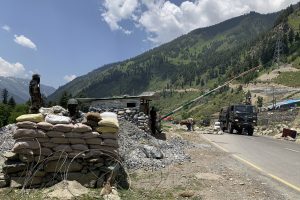
Media reports of a violent clash between Indian and Chinese soldiers at the Naku Pass in north Sikkim on January 20 have raised the specter of an eastward shift in the nine-month border standoff between the nuclear-armed neighbors. A clash between soldiers at the Naku Pass last May preceded the deadliest and longest standoff between the two countries in decades. Much of the past year’s border tensions have centered on the shared border’s western end, in Ladakh, more than one thousand miles west of Sikkim. But these latest reports suggest that tensions may be returning to the eastern sections of the 3,488-kilometer long disputed border. The confrontation could get more unstable if it spreads even further east, in Arunachal Pradesh, where just last week satellite images surfaced showing a Chinese-built village within India’s boundaries.

China and India’s antagonism along the Himalayas is a centuries-old story. Both countries want a fixed boundary line in the Himalayas; yet the physical geography, cultural landscape, and political history of the world’s greatest mountain range has made any straightforward demarcation impossible.

Is ‘Global Britain’ inimical to India?


As the United Kingdom (UK) charts its global path in the post-Brexit era, signals about India emanating from there have been overshadowed by news about the havoc that the new strain of Covid-19 is causing. Yet, the signs are unmistakable.

One day, a group of members of the UK Parliament lobbies the government on the farmers’ agitation in India; the next day, a discussion is held in the House of Commons on the situation of minorities in India; then there is a debate among parliamentarians on the “political situation in Kashmir”.

In India, not many have connected the dots, dismissing them as trivial pursuits of distant politicians, primarily from the Opposition Labour Party, pandering to their constituents. Can there be more to this?

Enter Chatham House. The century-old institution is formally known as the Royal Institute of International Affairs. An independent policy institute, it draws the name from its location — an 18th-century building, which was occupied in the past by several British prime ministers. One of its three current Presidents is a former Prime Minister — John Major. Chatham House reports are a vital resource for leaders and influence policymakers in the UK government, the private sector and civil society. A recent offering, Global Britain, Global Broker, authored by long-time director and chief executive, Robin Niblett, offers a plethora of recommendations about the UK’s future global role.

Farm Protests in India Are Writing the Green Revolution’s Obituary


By Aniket Aga

In September 2020, India’s Narendra Modi government
circumvented
parliamentary procedures to push through three bills that eased restrictions on private players in agricultural markets. The move enraged farmers—especially in the northwestern state of Punjab, an epicenter of the Green Revolution since the 1950s. After protesting in vain for two months, tens of thousands of Punjab farmers began a march to New Delhi in late November. The Modi government responded by deploying paramilitary troops armed with water cannons and tear gas shells, and protected by barricades, concertina wires and deep trenches dug into freeways at the borders of the capital city.

The demonstrations have since spread across the country and represent the largest-ever mobilization of farmers in independent India. They have already claimed over 70 lives; many have died of the cold and some have committed suicide as a political statement. The standoff is not just about the repeal of the three laws, but also includes the demand that the state guarantee minimum support prices (MSPs) for all public and private purchases of produce. In a broader perspective, however, this agitation is writing the obituary of the Green Revolution.

The Green Revolution—essentially the promotion of capital-intensive industrial agriculture—was more of a Cold War stratagem than a humanitarian initiative, as recent histories have forcefully argued. After independence in 1947, peasant movements led by communists had mounted fierce pressure on the Indian National Congress, the ruling political party, to redistribute land from landlords to peasants.

Afghanistan Wanted Chinese Mining Investment. It Got a Chinese Spy Ring Instead.


BY LYNNE O’DONNELL

The arrest in Kabul on Dec. 10 of an alleged Chinese espionage ring has prompted Afghanistan to recalibrate its relationship with China, its resource-hungry giant neighbor to the east. Afghan government officials said that the country has terminated oil and gas contracts with China and is seeking to renegotiate the terms of a massive mining concession that has been nearly dormant since it was inked by China more than a decade ago.

The Afghan officials said they busted an alleged Chinese espionage ring operating in Kabul to hunt down Uighur Muslims with the help of the Haqqani network, a terrorist outfit linked to the Taliban. A senior security official said the ring had been operating for six or seven years. Afghan authorities have cooperated with China in the past on the detention and deportation of Uighurs suspected of terrorist activity, but officials said they were shocked at China’s duplicity.

“Is this the behavior of a friend?” said one. Another source said the presence of the Chinese cell—widely reported by Indian news outlets, though notably not by Afghan or international media—was revealed to Afghan authorities by Indian intelligence.

The arrest has prompted Kabul, which is seeking to put its economy in order as it faces an uncertain future with the unfolding peace process, to use the incident as “leverage” against Beijing, one official said, especially in terms of renegotiating multimillion-dollar mining concessions.

The arrest has prompted Kabul to use the incident as “leverage” against Beijing.“We have put them on notice—make progress on the contract or we will reissue the tender. This sector is very important to the Afghan economy and it’s time to get moving,” one of the officials said. “We want to make progress on major national projects. It has been many, many years, we have given (China) security, and we need to see returns and economic benefits.”

Why Attempts to Build a New Anti-China Alliance Will Fail


BY KISHORE MAHBUBANI 

Australia, India, Japan, and the United States have perfectly legitimate concerns about China. It will be uncomfortable living with a more powerful China. And it’s equally legitimate for them to hedge by cooperating in the Quadrilateral Security Dialogue, informally known as the Quad. Unfortunately, the Quad will not alter the course of Asian history for two simple reasons: First, the four countries have different geopolitical interests and vulnerabilities. Second, and more fundamentally, they are in the wrong game. The big strategic game in Asia isn’t military but economic.

Australia is the most vulnerable. Its economy is highly dependent on China. Australians have been proud of their remarkable three decades of recession-free growth. That happened only because Australia became, functionally, an economic province of China: In 2018-2019, 33 percent of its exports went to China, whereas only 5 percent went to the United States.

This is why it was unwise for Australia to slap China in the face publicly by calling for an international inquiry on China and COVID-19. It would have been wiser and more prudent to make such a call privately. Now Australia has dug itself into a hole. All of Asia is watching intently to see who will blink in the current Australia-China standoff. In many ways, the outcome is pre-determined. If Beijing blinks, other countries may follow Australia in humiliating China. Hence, effectively, Australia has blocked it into a corner.

The Digital War: US-China Tech Competition in the Biden Era

By Mercy A. Kuo

Trans-Pacific View author Mercy Kuo regularly engages subject-matter experts, policy practitioners and strategic thinkers across the globe for their diverse insights into U.S. Asia policy. This conversation with Winston Ma – adjunct professor at NYU School of Law and Young Global Leader at the World Economic Forum (WEF) and author of newly published “The Digital War: How China’s Tech Power Shapes the Future of AI, Blockchain and Cyberspace” (Wiley 2021) – is the 256th in “The Trans-Pacific View Insight Series.”

Describe the strategic context of the digital war.

In May 2017, China hosted the historic Go match between the world champion and the artificial intelligence (AI) algorithm AlphaGo, designed by Google’s DeepMind Lab. The Wuzhen showdown was ripe with suspense and symbolism: human vs. machine, intuition vs. algorithm, tradition vs. modern – and, China vs. U.S. The AI machine’s straight 3-0 win over best human player stunned China’s internet industry.

Perhaps a coincidence, but months after the Wuzhen Go match, China’s central government released an “AI Development Plan,” calling Chinese AI to be the world’s undisputed leader by 2030. During the last few years, Chinese tech companies have proven their mettle by catching up to global rivals in the smartphone and fourth-generation (4G) technology. Now in the age of 5G, China is one of the most interesting innovation centers in the world, just like Silicon Valley. The current China-U.S. tech competition is a closer match than the Go game years ago.

Copy Cat: Even China Wants a Highly-Networked Military

by Kris Osborn

China’s visible effort to steal specs, copy U.S. platform designs and in many instances closely replicate U.S. weapons systems is both well documented and widely known. However, a less visible yet equally significant aspect of this phenomenon may well be found in apparent Chinese efforts to mirror U.S. military tactics and modernization strategies.

The United States has for many years now been developing and emphasizing multi-domain operations with a mind to how new technologies are creating synergies, opening up data sharing networks and inspiring fast-moving and sweeping tactical adjustments to modern warfare preparations. U.S. Army, Navy and Air Force multi-domain task forces have been operating in the Pacific for several years now, exploring new realms of joint combat interoperability, tactics and strategies.

During Project Convergence in the Fall of last year, U.S. Army ground forces succeeded in exchanging key targeting specifics with overhead F-35Bs in what was a breakthrough air-to-ground and ground-to-air multi-service connectivity demonstration.

Now, surprise surprise a Chinese newspaper is reporting that the PLA is now linking its Army and Air Force units into a single, unified combat alert duty in an effort to connect air defense radar and communications with PLA ground brigades.

“Thanks to the integration, the Army air defense brigades have become key nodes in Air Force early warning systems, as Army radars are more accurate and make up for blind zones of the Air Force’s early warning network, the report said, noting that the Army also gained a longer detection range that enabled troops to find enemies and prepare for attacks earlier, as the Air Force shares all intelligence through the network,” the Chinese-backed Global Times reports.

What is Holding China Back from Becoming a Military Superpower?

by Michael Peck

Here's What You Need To Remember: “China has the firm resolve and the ability to safeguard national sovereignty and territorial integrity, and will never allow the secession of any part of its territory by anyone, any organization or any political party by any means at any time.”

China’s new defense white paper has been eagerly awaited by Western analysts searching for clues to Beijing’s national security strategy.

The 2019 white paper (the last one was in 2015) lays out general principles of China’s defense policy. It avows the new face of the People’s Liberation Army (PLA). Cyberwarfare, more flexible command and control, long-range naval operations. Change the names and numbers, and you could be forgiven for thinking this was a planning document from the U.S. military or an American thinktank.

But before we fear the onslaught of the Dragon, take a look at the problems that the white paper says China’s military must solve.

The most glaring is corruption, which has led to numerous senior officers being punished for crimes such as selling promotions. “China’s armed forces are tightening political discipline and rules, investigating and dealing strictly with grave violations of CPC discipline and state laws,” the white paper says. “China’s armed forces punish corruption in strict accordance with CPC [Communist Party] discipline and relevant laws, and rectify any malpractice in key construction projects and the procurement of equipment and material...They have worked to implement full-spectrum audit, intensify the audit of major fields, projects and funds, and perform strict audits over the economic liabilities of officers in positions of leadership. Active efforts have been made to monitor the cost-effectiveness of applied funds, conduct whole-process audit, and combine civil and military efforts in auditing.”

Which Companies Are Winning in China?


When Amazon CEO Jeff Bezos visited China in 2007, he expected that one day soon China would be a double-digit percentage of Amazon’s sales. Yet, by 2019, Amazon, the most powerful and successful e-commerce company in the world, had quit China.

In Winning in China: 8 Stories of Success and Failure in the World’s Largest Economy, Wharton global fellow Lele Sang and Wharton vice dean of entrepreneurship and innovation Karl Ulrich explore the successes and failures of several well-known companies, including Amazon, Hyundai, LinkedIn, Sequoia Capital, and InMobi, as more and more businesses look to reap profits from China’s 1.4 billion consumers.

Sang and Ulrich recently sat down with Brett LoGiurato, senior editor of Wharton School Press, to discuss their new book and what it takes to succeed in the world’s second-largest economy.

An edited transcript of the conversation appears below.

Brett LoGiurato: Can you both first talk about your initial interest in China and how that grew into this collaboration?

Lele Sang: I was a journalist covering business and politics in China. One of my reporting topics was the development of multinational corporations in China.

Karl Ulrich: I had been interested in China for a long time. I made my first trip to China in 2006, but I’d never really done much professionally there. And Lele actually just stopped by my office and said, “I want to write a book about tech companies’ failures in China.” And I said, “Lele, that sounds pretty interesting, but it sounds kind of like a downer, and are there really no companies other than tech companies who’ve tried to enter China?” That’s what led us to this topic of looking at all kinds of companies and both successes and failures of foreign companies in China.