22 November 2022

The United States and Canada Share Critical Minerals Goals, but Different Critical Minerals

Frank Fannon

The United States, Canada, Australia, and other countries have issued critical minerals lists, but relative “criticality” varies. This variability could unintentionally frustrate free nations’ shared objective of developing a secure and responsible clean energy supply chain.

The United States Geological Survey (USGS) determination of whether a mineral should be considered “critical” includes a complex, multifactor test, which considers relative (1) U.S. import dependence, (2) production concentration, and (3) market dynamics. The service found that 35 minerals meet this definition. Copper was excluded from the United States’ critical minerals list under both the Trump and Biden administrations because the United States still produces some copper domestically, and most copper was produced in then-business friendly and reliable Chile and Peru.

Times have changed, and the industry has learned more about the copper market and geopolitical dynamics. Copper is a foundational metal for the energy transition, electrification, and global growth. The World Bank found that over the next 23 years, the copper industry needs to produce as much copper as humanity has produced in the last 5,000 years to meet demand. In a seminal report, S&P Vice Chairman Daniel Yergin found that copper demand will double by 2035 and that “there will not be enough supply to meet the demand of Net-Zero-Emissions by 2050.” While U.S. copper production has dropped to nearly half in the last 25 years, China controls much of the clean energy minerals supply chain.

In a First, Rich Countries Agree to Pay for Climate Damages in Poor Nations

Brad Plumer, Lisa Friedman, Max Bearak and Jenny Gross

SHARM EL SHEIKH, Egypt — Negotiators from nearly 200 countries concluded two weeks of talks early Sunday in which their main achievement was agreeing to establish a fund that would help poor, vulnerable countries cope with climate disasters made worse by the pollution spewed by wealthy nations that is dangerously heating the planet.

The decision regarding payments for climate damage marked a breakthrough on one of the most contentious issues at United Nations climate negotiations. For more than three decades, developing nations have pressed for loss and damage money, asking rich, industrialized countries to provide compensation for the costs of destructive storms, heat waves and droughts fueled by global warming.

But the United States and other wealthy countries had long blocked the idea, for fear that they could be held legally liable for the greenhouse gas emissions that are driving climate change.

An iPhone Factory Needs Workers. The Chinese Government Wants to Help.

Chang Che and John Liu

Apple’s largest iPhone factory, in the city of Zhengzhou, has been beset with production problems caused first by a Covid lockdown and then by a shortage of workers. Now, that plant is getting help from an unlikely source: the Chinese government.

Officials in central China have tapped the government’s vast network of party members, civil servants and military veterans to help Foxconn, the Taiwanese-based assembler of Apple’s iPhones, with its recruitment drive. They called on them to “respond to the government’s call” and “aid in the resumption of production” at the factory, according to county notices and state media reports.

The mobilization campaign highlights the Communist Party’s concerns over its reeling economy in a time of severe business disruptions, low demand and record-high debt. As businesses falter under the tough pandemic prevention measures of the nation’s top leader, Xi Jinping, the authorities are turning to party-led mechanisms to keep them humming.

Autonomy With Limits Essential For Future Drones Air Force Generals Say (Updated)

JOSEPH TREVITHICK

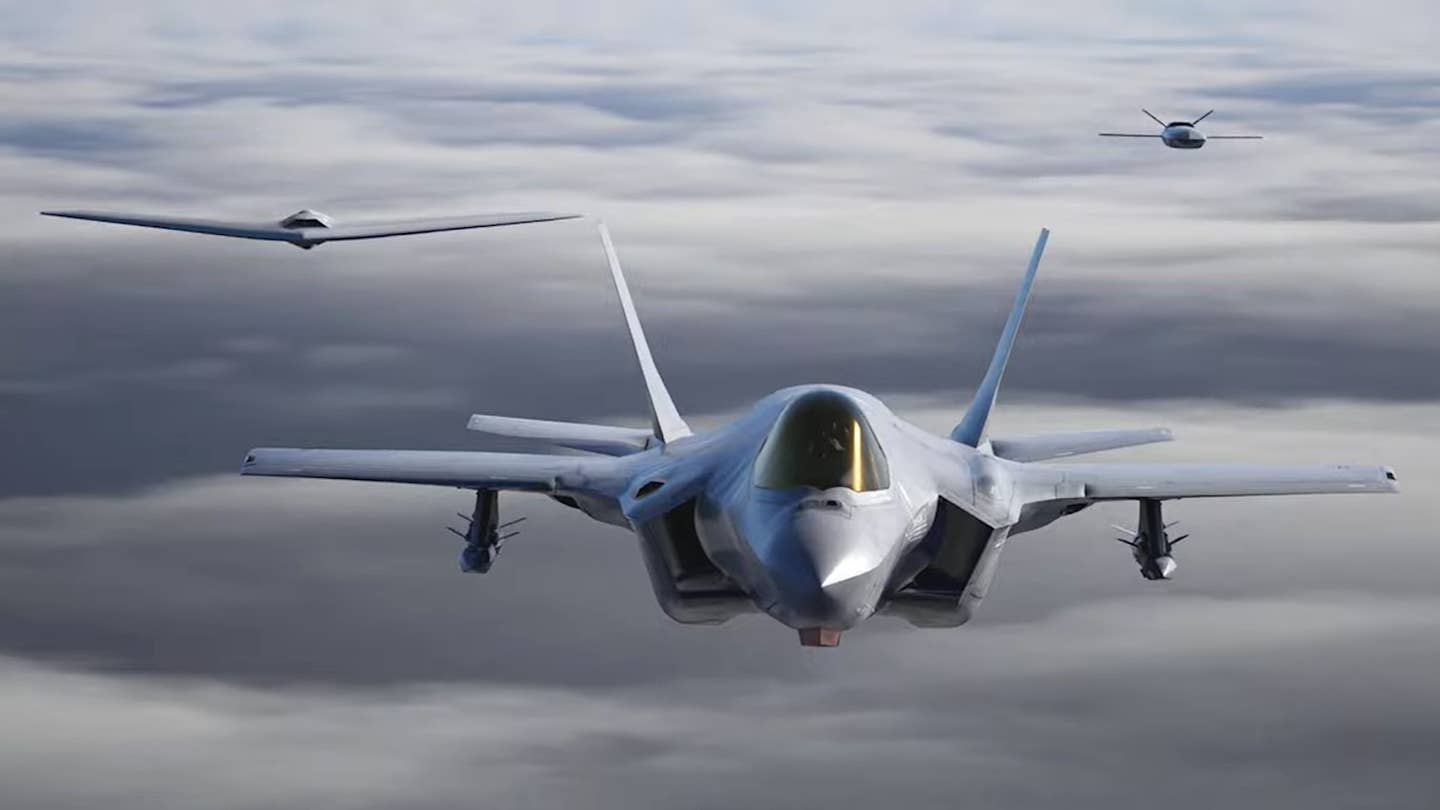
Senior U.S. Air Force officials have provided new details about the service's vision for integrating an evolving set of autonomous capabilities onto new uncrewed aircraft, as well as the groundwork that has already been laid through various recent testing initiatives. The Air Force views advances in autonomy as absolutely at the core of its plans for a forthcoming fleet of drones designed to work collaboratively with crewed platforms. However, humans are expected to remain heavily 'in the loop' for the foreseeable future when it comes to certain sensitive tasks, especially decisions about whether or not to employ lethal force.

This new information about what the Air Force is currently referring to as the Collaborative Combat Aircraft (CCA) effort came during a roundtable at the Pentagon that The War Zone and other outlets attended yesterday. CCA is a part of the Air Force's broader Next Generation Air Dominance (NGAD) program, which includes work on advanced stealthy crewed and uncrewed aircraft, as well as sensors, networking and battle management capabilities, weapons, next-generation jet engines, and more, as you can read more about here.

Army acquisition chief sees autonomy, system hardening as key to overcoming comms challenges in future drone wars

Jon Harper

As drones and counter-drone systems become more ubiquitous, developing hardened platforms with greater autonomy will be critical for reducing the burden on Army networks and defeating enemy jammers, the service’s top weapons buyer said Wednesday.

Robotic systems are a top modernization priority for the Pentagon, and Department of Defense officials are taking note of what’s happening in the Ukraine-Russia conflict.

“We in the Army have seen a few things so far. First, this is by far the largest drone war — to use a loose term — with both sides using unmanned aircraft of all sizes for a wide variety of battlefield missions. Second, this is also the largest anti-drone war with both sides again using all kinds of technologies from simple to high tech to try to counter their adversary’s unmanned aerial systems. We’ve even seen drone versus drone aerial combat. I’m sure a lot of you may have seen those videos online — a likely harbinger of something that will become ever more common in the future,” Assistant Secretary of the Army for Acquisition, Logistics and Technology Doug Bush said at a DARPA Forward event in College Station, Texas.

One of the challenges the service is facing as it looks toward the future is the need to develop autonomous UAS and ground vehicles which are higher tech than the robotic platforms that are currently in the inventory.

The Sneaky Way China Could Win a War Against America

James Holmes

Kill the Logistics Fleet: The U.S. armed forces can accomplish little in the Western Pacific without ample and regular supplies of all types, from fuel to ammunition to foodstuffs. Prospective foes—read China—know this. They will go after the logistics fleet hauling matรฉriel to the fighting forces, making it a priority target set.

And why not? That’s what I would do were I in charge of the People’s Liberation Army (PLA). Deprive hostile forces of what they need to accomplish their combat missions and you may as well have defeated them in a decisive battle. They slink away when they run out of supplies.

Better yet, they may never even reach the battleground.

The U.S. Army gets this. Or at least army chieftains are saying the right things. Army Chief of Staff James McConville recently told an event hosted by Politico, “we believe we’ll have what we call contested logistics” and intend to devise ways to assure that stores get through. Adds Army Secretary Christine Wormuth, supply “isn’t the sexiest thing, frankly, the Army does, but it is very important. Just look at how the Russian military in Ukraine has struggled to resupply and feed its soldiers. That shows you the importance of logistics today on a contested battlefield.”

Why Dual-Use and Defense Technologies are the Next Growth Sectors

Reed Simmons

Dual-use and defense technologies are at an inflection point. The return of great power competition has demonstrated the geopolitical importance of technological dominance. From semiconductors to AI, maintaining advantages in critical technologies is key to both national security and economic prosperity. As such, commercial and government investment incentives are increasingly aligned, presenting a growth opportunity for entrepreneurs and investors alike.

Haven’t we heard this hype before? A decade ago, the Obama Administration spearheaded many initiatives to bring Silicon Valley technology to government. But divides remained -- symbolized by Google’s 2018 Project Maven revolt.[i] For builders and investors in sectors where commercial interests and the public purpose interact, it is easy to conflate what one wants to succeed with what is profitable and technically feasible.

Yet there are reasons to believe the dual-use and defense technology sectors are on sure footing. Driven by the confluence of geopolitical, technological, and market forces, a transformation is occurring that describes a secular growth story – one that is resilient to the current market fluctuations. This is reinforced by four trends:

Seabed Mining Will Help Break China's Grip on Critical Minerals

Tom LaTourrette

China dominates global supply chains for nearly all critical mineral resources. Especially important are elements such as nickel, cobalt, lithium, copper, and the rare earths that power decarbonization technologies such as batteries, electric motors, and turbines. The rapidly increasing demand for these minerals has rekindled interest in extracting polymetallic nodules from the deep seabed.

China controls the supply of these resources through extraction, either within its borders (especially in the case of rare earths) or through ownership of critical foreign mineral resources (for example, cobalt in the Democratic Republic of the Congo). It also dominates mineral processing, controlling the vast majority of global operations. A recent study by S&P Global Inc. found that 11 of the 16 companies that make nickel sulfate are in China. The study projects that China will produce 824 billion metric tons of nickel sulfate per year by 2030, while North America and Europe will produce just 146 billion metric tons.

China’s dominance is the result of a long-term, dedicated effort to secure mineral resources, build extensive processing capacity, and make that capacity available at rates that underbid its competition. This strategy has benefitted from Chinese government support through state-owned-enterprises and financial backing.

Russia’s Missing Peacemakers Why the Country’s Elites Are Struggling to Break With Putin

Tatiana Stanovaya

Even in a war that has gone poorly for Russia, the Russian Defense Ministry’s November 9 announcement of a full retreat from the city of Kherson marked a special kind of disaster. Kherson was the first major Ukrainian city seized by Moscow after the invasion, and it was one of the four regions that Russia had illegally annexed just five weeks earlier, following sham referendums. In October, the city’s occupying authorities had plastered its streets with billboards declaring that Russia would be there “forever,” and Moscow had told Russian citizens that the city’s occupation was one of the war’s major successes. But by the time of the annexation, Russian forces were already struggling to hold their lines in the face of continued Ukrainian advances. Eventually, Russian leaders were forced to withdraw and to shore up defenses around Crimea and in the east.

This embarrassing retreat—which follows Ukraine’s successful counteroffensive in Kharkiv province in September—has caused many Russian elites to question and challenge the invasion. People who opposed the war from the outset (but who stayed silent to stay safe) have been joined by many people who actively supported the war but are now convinced that the invasion has been mishandled from the start and privately want it to end. Some of them worry that Russian President Vladimir Putin is unfit to lead, prone to missteps, and overly emotional in his decision-making.

China’s Xi attempts to claim diplomatic victory in battle for global influence after summit whirlwind

Nectar Gan

Xi Jinping may have rejected US President Joe Biden’s description of the 21st century as a battle between democracies and autocracies, but as the G20 and APEC summits showed, the Chinese leader remains intent on pushing back at American influence overseas.

Still basking in the afterglow of a Communist Party Congress that last month saw him consolidate and extend his grip on power at home, the strongman leader emerged from China’s zero-Covid isolation with a flurry of in-person meetings in Bali and Bangkok last week.

In contrast to his self-cultivated image as an ideological hardliner, Xi attempted to portray himself as a broad-minded statesman, telling Biden in their meeting last Monday that leaders “should think about and know how to get along with other countries and the wider world.”

This sweeping diplomatic outreach appeared specifically targeted at US allies and regional leaders caught in an intensifying rivalry between Washington and Beijing. Since taking office, Biden has shored up relations with allies and partners to counter China’s growing influence.

Takeaways From China’s Zhuhai Air Show 2022

Zachary Williams

The Zhuhai Air Show in Guangdong China is the largest aviation and military trade expo in all of China. The event ran from November 7-13 and provided an unusually large glimpse into the developmental gains in military technology in a wide array of categories. Everything from small arms to commercial shipping technology had a presence at the show, but the real gains were shown in missile, radar, unmanned systems, and fighter technology. The weapons showcased at this year’s show, undeniably highlight what the People’s Liberation Army (PLA) and ultimately the Chinese Communist Party (CCP), hold in high regard when it comes to flexing its military might in the future.

Parked at the air show was an H-6K bomber carrying the YJ-21E anti-ship ballistic missile. The YJ-21E has been considered in some circles as China’s deadliest weapon, in a conventional sense, and until now it has largely been kept out of the public eye. This missile has previously been known to be employed in a ground or ship-launched interface with a range assessed to upwards of 1,500 kilometers and has a terminal velocity of over Mach 10. The configuration with China’s strategic bombing force would seem to indicate the importance of anti-naval counter intervention when it comes to their strategic focus on Taiwan and the first island chain. It is unknown if this weapon will be developed on a larger scale, but the impact this missile could have in an anti-access, area-denial (A2AD) campaign could be astounding.

War a Possibility as Iran-Azerbaijan Tensions Flare

Taras Kuzio

Iran is a modern-day Persian empire, with Azerbaijanis accounting for a third of its population, and other national minorities also in sizeable numbers. Iran’s revanchism towards Azerbaijan has made it a long-term ally of Russia and Armenia.

Iran, because of Azerbaijan’s history, culture, and Shite religion, has always viewed Azerbaijan as either a lost territory that should be part of Iran or at the very least within its sphere of influence, which it views as the entire South Caucasus. In many ways, Iran views Azerbaijan in the same manner as Russia views Ukraine: as part of its homeland that has gone astray, but will one day “return home.”

During the last three decades up to the Second Karabakh War in 2020, Iran was content with Russian influence in the Caucasus and two manufactured frozen conflicts in Azerbaijan and Georgia. Iran’s double standards of being supportive of country’s territorial integrity was evident in how it ignored, but de facto supported, Armenia’s occupation of a fifth of Azerbaijan’s territory. At the same time, Iran is hyper sensitive about threats to its own territorial integrity. In the same manner, Iran is also supporting Russia’s annexation of Ukrainian territory. Therefore, Iran and Russia would both prefer a weak Azerbaijan and Ukraine, rather than revived countries with alliances to Turkey or the West. Armenia concurs, also preferring a weak to a strong Azerbaijan.

Qatar's Double Game: Funding Islamists While Pretending to Be America's Ally

Khaled Abu Toameh

A recent meeting in Doha, Qatar, between the Palestinian group, Hamas, and Afghanistan's Taliban, has served as yet another reminder of Qatar's double game of harboring and sponsoring Islamic extremists while simultaneously pretending to be an ally of the US and other Western countries.

This meeting, which took place on October 26, was attended by Hamas leader Ismail Haniyeh who, together with several officials from that Islamist group, relocated from the Gaza Strip to Qatar over the past few years.

Last year, Haniyeh, now based in Doha, was quick to telephone Taliban leaders to "congratulate" them on the "defeat of the American occupation of Afghanistan." Haniyeh said that Hamas sees the US withdrawal from Afghanistan as a prelude for the elimination of "all forces on injustice," especially Israel.

Struggle and Success of Chinese Soft Power: The Case of China in South Asia

Ashmita Rana

Soft power is a significant attribute for a state that is a great power or that aspires to be one. While hard power is more visible in the international system in the form of military and economic might, it is soft power that often works subtly in the background. Joseph S. Nye defined soft power or the “second face of power” as the ability to get others to want the outcomes one wants using co-option and not coercion” (Nye 2004: 5). Essentially, soft power deals with the ability to shape the preferences of others. In world politics, this can be translated as a state’s ability to shape the international agenda and attract the support of other states without having to threaten them with military force or economic sanctions. Nye pointed out three sources of the soft power of a state—its culture, its political values and its foreign policy (Nye 2004: 11). All these factors determine the attractiveness that a state enjoys in the world, and shapes international politics in ways that even hard power does not. The increasing acknowledgement of the utility of soft power in world politics can be seen in the ways states, especially great powers, have reoriented their international conduct in recent times. Most states today continue to invest in the promotion of their cultures and values. Moreover, these states also more actively seek to justify their actions (whether domestic or international) in a bid to win approval and moral legitimacy in the world.

The Danger of Passive Containment and Ignoring North Korea

Stephen Morgan

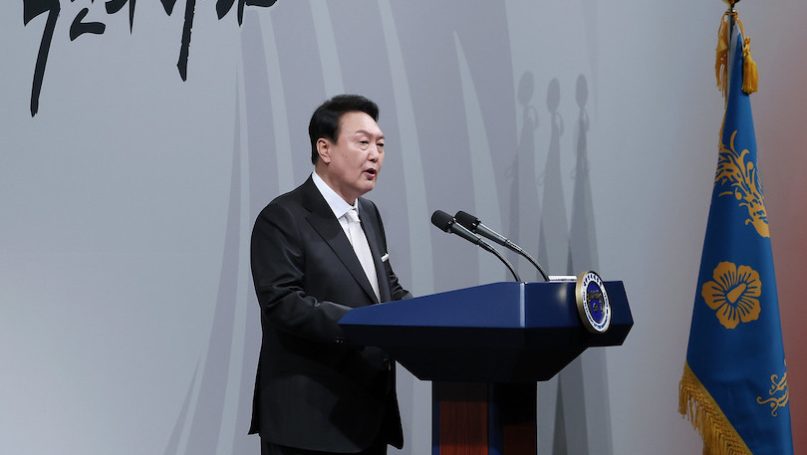
News of North Korean missile strikes are now so routine they tend to raise no more than a passing curiosity in the western media. So familiar is the story that the visual template for such reports are instantly recognisable, usually depicting South Korean citizens watching a domestic broadcast about a North Korean missile launch on a big screen in a bank or airport. As such, it is easy to just treat the latest fusillade of more than two dozen missiles fired into the sea off the east coast of Korea on November 2nd this year as another one of Pyongyang’s petulant cries for attention during joint US and South Korean military drills. And yet this launch stands out as it saw the first instance of a missile fired over the Northern Limit Line (NLL) from the North in the history of the divided Korean Peninsula. It also triggered the first air raid alert in the South since 2016 for Ulleung Island residents before landing in the waters of the Sea of Japan off the coast of South Korea’s Gangwon Province (which borders North Korea). This follows a series of increasingly aggressive provocations by the North following South Korean President Yoon Seok-yeol’s announcement about his vision for reviving the peace process with the North in August. Since then, his overtures have been met only with personal rebukes and for the Democratic People’s Republic of Korea (DPRK) to officially declare themselves a nuclear state.

This article explores how the domestic political divide in South Korean politics has shaped North Korea policy and why the legacy of the authoritarian military regime (1961-1987) still casts a powerful shadow over modern and democratic South Korea. President Yoon’s announcement of a ‘Bold Plan’, rather than providing a blueprint for reconciliation, instead reveals far more about how the internal South Korean political battle over North Korea has seen policy lurch between containment and engagement. This article will illustrate how ignoring the North and letting the peace process whither in the face of North Korea’s provocations is fraught with danger. In light of the high political stalemate in inter-Korean relations, this article also seeks to provide a possible way forward through what has now become a moribund peace process. The most urgent question is therefore: How can the Korean peace process be reimagined so as to bypass the deadlock at the inter-governmental level and revive the cause of engagement?

Lula’s Foreign Policy Path for Brazil and the Constraints on Grand Strategy Change

Jacob Shively

Brazil’s 2022 Bolsonaro-Lula election offers a natural experiment for international relations scholars. Their transition presents a unique opportunity to observe whether and how directly diverging visions affect Brazil’s grand strategy. Outgoing president Jair Bolsonaro embodied an almost textbook case of foreign policy nationalism. By contrast, during his first two presidential terms, incoming president Luis Inรกcio Lula da Silva, widely known simply as Lula, espoused textbook liberal internationalist foreign policy ambitions. Of course, as a set-piece narrative, the rightist versus leftist battle for Brazil’s political soul and its grand strategy is familiar. And in truth, that stylized story offers a helpful starting point for analysts. Still, digging deeper into the comparison reveals shared limitations. Where Lula dominated Brazil’s foreign policy in the early 21st century, Bolsonaro attempted to swing the ship of state back toward home ports. Out of this pair of opposites, keen observers can trace the likely foreign policy path of Lula’s next act.

A well-known labor activist and progressive, Lula defied expectations when he first assumed office in 2002. Where other leftist leaders like Venezuela’s Hugo Chรกvez promoted skepticism of existing international power structures and denounced the injustices of global capitalism, Lula adopted a path closer to the “third way” approach of US president Bill Clinton and UK prime minister Tony Blair. At home, as a central figure of Brazil’s Workers Party, Lula pushed direct support programs for the poor, but he also insisted that Brazil could only succeed if its economy thrived under the same capitalist growth models that had transformed the wealthy world. Abroad, Lula was equally—if not more—ambitious. He seized upon the notion that “BRIC” (Brazil, Russia, India, China) countries represented the century’s emerging economic and political growth potential. Over the next two presidential terms, he traveled widely, inserted Brazil into high-profile diplomatic issues (most notably in the Middle East), pushed Brazil’s role advocating for poor people across the Global South, paired respect for state sovereignty with support for democracy, and sought to build Brazilian military capacity in order to press his case for UN Security Council reform. He criticized US hegemonic behavior but also actively engaged classic postwar organizations like the World Trade Organization.

The Ukraine War in data: More than 100,000 Russian casualties — and almost as many on the Ukrainian side

Alex Leeds Matthews,Matt Stiles, Tom Nagorski

It’s been a regular feature of this “War in Data” series since the Russian invasion and a consistent challenge in terms of getting accurate assessments: How many Russians and Ukrainians have been killed or wounded in the war? The figures have ranged wildly; in terms of Russian casualties, Ukrainian estimates have been on the high end, the Kremlin’s very low (and infrequently reported), and landing in the middle have been periodic assessments by outsiders — typically, officials in the U.S. and other NATO nations. Until recently, the highest American estimate had been 70,000 to 80,000 Russians killed or wounded in the war.

So it was stunning to hear the chairman of the Joint Chiefs of Staff, Gen. Mark Milley, say that his current estimate of Russian casualties — again, dead and wounded combined — was now more than 100,000. And equally surprising that the assessment of Ukrainian casualties was of a similar magnitude.

‘General Frost’ is coming: What the cold, dark winter ahead means for the war in Ukraine

Joshua Keating

As the weather turns colder and the days shorter, nearly all the momentum in the war is on the Ukrainian side. Last week saw what may have been the most consequential setback for Russia’s forces since the invasion last February, as they retreated from the southern city of Kherson. The recapture of Kherson was important not only for its strategic location and symbolic weight (the first major city captured by the Russians fell almost without a fight, just weeks after Russian President Vladimir Putin declared it to be Russian territory “forever”) but also because of the timing. It was a dramatic demonstration of Ukraine’s ability to win heading into a winter that is likely to exact a brutal toll on Ukraine’s civilians and test the resolve of its Western allies.

Just last week, America’s top military commander, Gen. Mark Milley, chairman of the Joint Chiefs of Staff, made headlines by saying that winter was likely to slow the pace of fighting in Ukraine, making this a good time to push for peace negotiations. The idea was quickly rejected by the Ukrainian government and walked back by the Biden administration, but if Ukrainian momentum does start to slow in the coming months, there may be more voices arguing that the country’s remarkable resistance has accomplished about as much as can be reasonably expected — and that paths to peace should be explored.

DoD must ‘think very differently’ about armed conflict, cyber in light of Ukraine war: Official

JASPREET GILL

WASHINGTON — After watching Ukraine take on Russia in both the real world and in cyberspace, a top American cyber official said the Defense Department must “think very differently” about how it will fight in both realms in the future.

Mieke Eoyang, deputy assistant secretary of defense for cyber policy, told the Aspen Institute Cyber Summit today that the war “is a really important conflict” for DoD to understand, and one of the things she’s seeing “is the context of the armed conflict dwarfs the cyber impacts” of the war.

“When you think about the physical destruction relative to the cyber disruption of what happens here, things that Russians tried to disrupt via cyber… did not have the strategic impact that they wanted, and they sought to destroy those things physically,” she continued.

The Only Way the U.S. Can Win the Tech War with China

GREGORY C. ALLEN

Grand historical inflection points rarely take the form of long bureaucratic documents, but sometimes they do. On October 7th the Department of Commerce issued its revised policy on AI and semiconductor technology exports to China. The 139 pages of new export control regulations placed a de facto ban on exports to China of the advanced computer chips that power AI algorithms. Since more than 95% of such chips used in China are designed by U.S. semiconductor companies and therefore subject to U.S. export controls, loss of access to U.S. chips puts China’s entire future as an AI superpower in jeopardy. AI was the top technology priority listed in the Chinese government’s five-year economic plan for 2021-2026, so this action makes clear that the U.S. intends to block China from achieving its top technological goal.

Ten days after the new policy came out, Secretary of State Antony Blinken gave a major speech in which he said, “We are at an inflection point. The post-Cold War world has come to an end, and there is an intense competition underway to shape what comes next. And at the heart of that competition is technology.”

In announcing the end of the post-Cold War era, Secretary Blinken did not quite say that a new Cold War with China has begun, but he came close. Restricting commercial trade in military-relevant technologies is straight out of the Cold War playbook, and the United States and China agree that leadership in AI technology is critical to the future of military power. Chinese military AI systems, including ones that advertise lethal autonomous weapon functionality—are known to be full of U.S. chips.

Who Will Pay the Price for Big Tech’s Hubris?


SO, ARE YOU on Mastodon yet? If you’re looking for advice on how to join and find your friends, we’ve got you covered. If you’re trying to decide when and whether to migrate, what factors are you weighing? Let me know in the comments below.

The Wages of Hubris Are … ?

Tech news hasn’t had a week like last week since—maybe?—the 2000 dotcom crash. FTX, the world’s second-biggest crypto exchange, went from $32 billion to bankrupt in about three days, and hackers took advantage of the chaos to steal hundreds of millions of dollars. Meta laid off 11,000 people, 13 percent of its workforce, and that was just a tenth of all the other tech industry layoffs this year. And, Twitter, well, I don’t need to tell you about Twitter.

OK, but once everyone has put away the ๐Ÿฟ, what will we have learned? A few things have stood out to me in the torrent of incredulity:Isaacson in a TV interview in September talking about one secret of Musk’s success: his ability to set aside empathy for his employees when it would interfere with his vision.

21 November 2022

Ukraine has momentum. What it needs now are munitions


The liberation of Kherson on November 11th was not the end of the war. Russia still occupies the 70% of Kherson province that is east of the Dnieper river, not to mention swathes of next-door Zaporizhia, and Donetsk and Luhansk in the east. But it was the “beginning of the end”, declared President Volodymyr Zelensky, delivering his Churchillian flourish as he walked the streets of Kherson on November 14th.

The front lines in the province are still in flux. Ukraine’s armed forces are fanning out across the west bank of the Dnieper, looking for any Russians trapped on the wrong side. There are tales that Ukraine has mounted raids across the river against Oleshky, opposite Kherson city, and towards Nova Kakhovka, the site of a key dam, as well as on the Kinburn Spit, a slender finger of land that stretches into the Black Sea. But there is no evidence that these swashbuckling operations are real.

To Save Twitter, Elon Musk Should Fire Himself

Bhaskar Chakravorti

Billionaire Elon Musk’s purchase of and arrival at Twitter has turned the global social media company into a raging dumpster fire with significant consequences all around the world. The closest indication of any method behind the madness may be Musk’s Nov. 9 tweet: “Please note that Twitter will do lots of dumb things in coming months. We will keep what works & change what doesn’t.” Even here, Musk may have been overpromising: Twitter’s offices are now temporarily shuttered following mass firings, reported mass resignations, an apparent exodus of advertisers, a new plague of fake accounts, and confusion over future content policies. Many people are horrified by the Musk mayhem, his longtime critics are having an “I told you so” moment, and those inclined to be generous are taking a cautious view of “too early to tell.” Some former employees fear the platform may only have a few weeks to live.

To save Twitter, however, the choice is unambiguous: Musk urgently needs to fire himself. This is not because his opening act has been so chaotic but for deeper structural reasons. If Twitter’s mission is to be, in Musk’s own words, “by far the most accurate source of information about the world,” the combination of Musk’s multiple conflicts of interest and Twitter’s international operations would conspire to kill that mission. For one, Twitter’s global footprint is already on shaky ground. Second, Musk’s own international entanglements make the problem much worse. Third, the business pressures bearing down on the platform will be Twitter’s final nail in the coffin under Musk.

What Pelosi stepping down means for China relations

MATT BERG and LAWRENCE UKENYE

For more than three decades, Nancy Pelosi has cemented her status as a staunch opponent of the Chinese government. From being chased out of Tiananmen Square in 1991 to ignoring warnings to not visit Taiwan this year, the California congresswoman has made one thing clear:

No one can tell her what to do when it comes to China.

“If you cannot stand up for human rights in China because of commercial interests, you lose all moral authority to speak out for it in any place,” Pelosi told POLITICO in July.

But Pelosi stepped down from her historic post as speaker on Thursday, vowing to pass the torch to a new generation of leaders. After a long-time antagonistic relationship with the Chinese government, how will things change?

Biden Administration's Inaction Legitimizes Iran's Brutality

Majid Rafizadeh

As Winston Churchill pointed out, "I never 'worry' about action, but only about inaction".

The Biden administration's inaction has only been legitimizing the Iranian regime's savage crackdown on its population, and sending a message to the Iranian people that Washington does not stand with them or with their aspirations for establishing a democratic system of governance; rule of law and justice; freedom of speech, of the press and of assembly; and human rights for all.

Iranians have been protesting for nearly two months while risking their lives every hour. They have been chanting "Death to the dictator", "Death to [Supreme Leader Ali] Khamenei" and "This year is a year of blood, Seyyed Ali [Khamenei] will be gone".

Reports from the Oslo-based non-governmental organization Iran Human Rights state that in recent anti-regime protests, 326 people have died and 15,000 have been arrested. Executions have already begun.

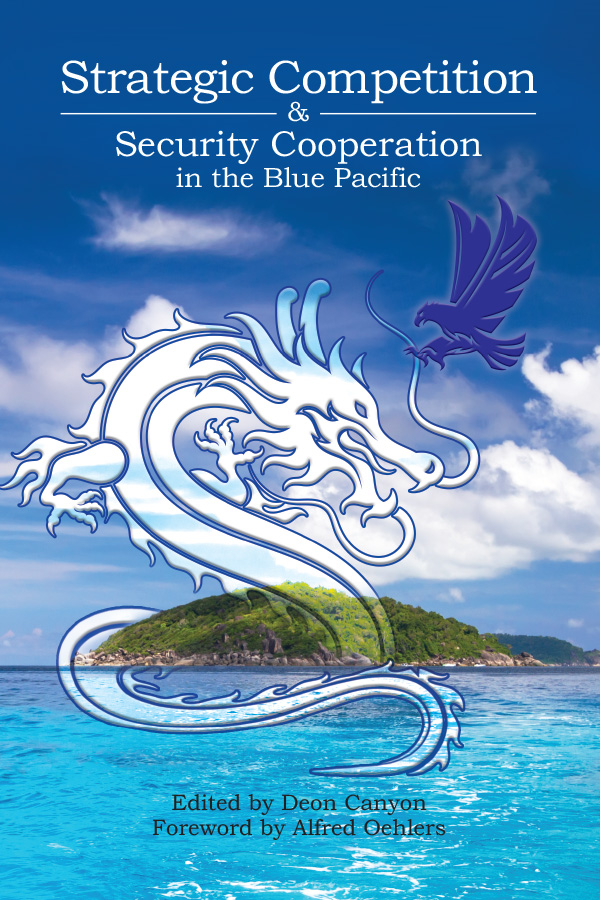
Strategic Competition & Security Cooperation in the Blue Pacific

Deon Canyon

Summary:

The book explores the dynamic geopolitical pressures in the region and addresses how these pressures impact security architecture, relationships, and policy. Multidimensional security challenges, such as COVID-19, climate change, water and food, piracy, and maritime challenge, are deliberated upon and given policy recommendations. It’s 17 contributors represent high-ranking individuals and experts who have geared the content for policymakers, security practitioners, and researchers.

This book represents the third DKI APCSS publication on Oceania security. Previous publications on the topic include “Regionalism, Security & Cooperation in Oceania” and “Security in Oceania in the 21st Century.”

In addressing Oceania’s security challenges, the book aims to spur security practitioners and partners to support these aspirations. With a distinct vision for the region at the forefront, Oceania’s external partners have a significant opportunity to embrace a commitment to the Pacific Region.

Avoiding War Over Taiwan


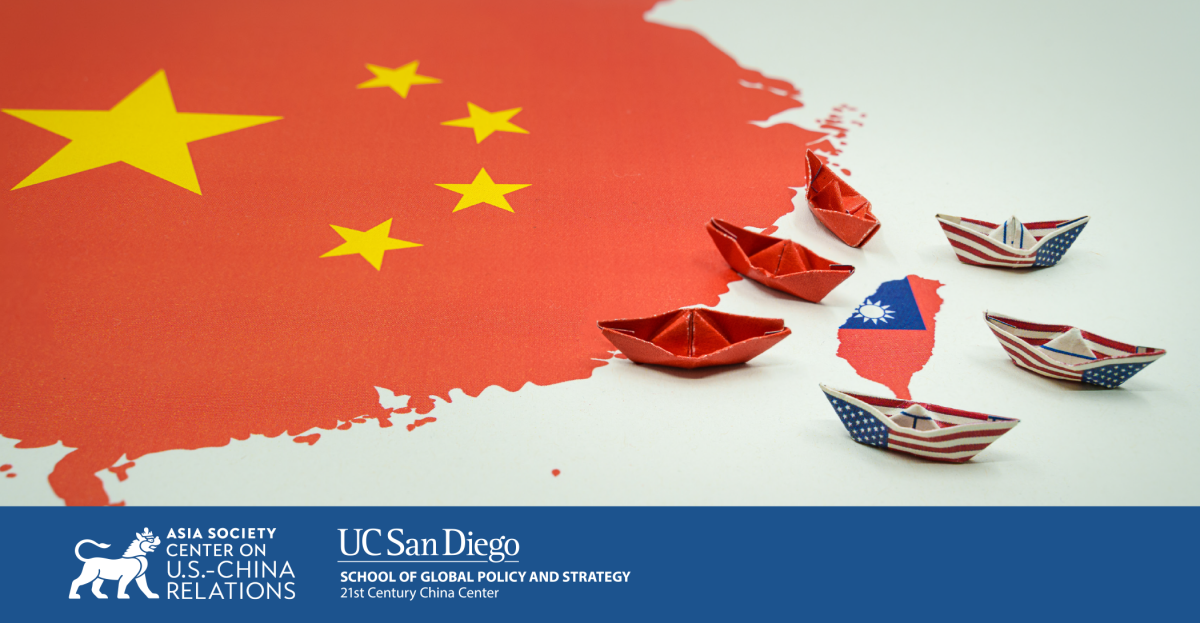
The People’s Republic of China’s (PRC) assertive military exercises in response to Speaker of the House Nancy Pelosi’s visit to Taiwan on Aug. 2-3, 2022 — and the PRC’s continued military actions in the air and maritime space around Taiwan since then — have brought heightened attention to the risk of military conflict between mainland China on the one side and Taiwan and the United States on the other. This policy brief argues that despite rising tensions, it is both essential and possible to avoid war in the Taiwan Strait. None of the three governments wants war. But to avoid war, all three governments must avoid steps that force the other side to launch a military conflict.

As tension rises between the PRC and the United States over Taiwan, strategists on both sides seem to have forgotten the lesson taught years ago by Nobel Prize-winning American game theorist Thomas Schelling: deterring an opponent from taking a proscribed action requires a combination of credible threats and credible assurances. Thus, key for United States policy is to understand that effective deterrence of the PRC requires not only the credible threat of a forceful response to an attack on Taiwan, but also the credible assurance that if the PRC refrains from attacking Taiwan, interests considered vital to Beijing will not be damaged anyway. This second requirement would be violated if Washington were to heed recent calls for a change in its long-standing policy that refrains from supporting statehood for Taiwan or appears to restore the U.S.-Republic of China (ROC) alliance that was scrapped as a prerequisite for the establishment of U.S. diplomatic relations with the PRC.

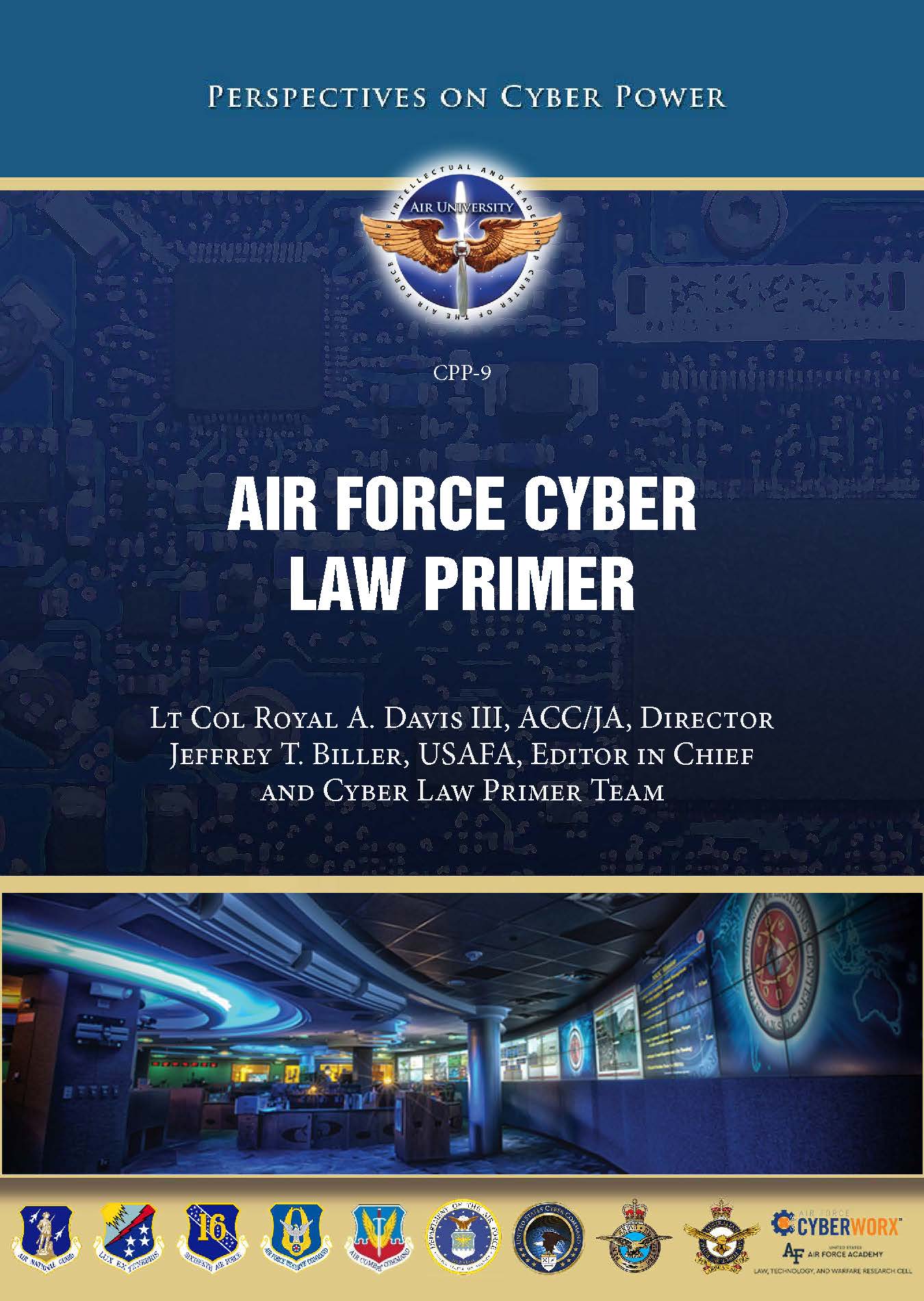
Air Force Cyber Law Primer

Lt Col Royal A. Davis 

Cyber law is a broad discipline that is constantly evolving and growing as technology and applicable law continue to develop. Attorneys and paralegals must inform themselves on the technical aspects of cyber operations to properly advise clients and identify legal issues—many of which will be without precedent. This primer seeks to expedite the rigorous process of learning the practice of cyber law.

The U.S. seeks to support Ukraine, but contain the war

David Ignatius

If you’ve worried that the conflict in Ukraine might escalate into a spasm of nuclear war — and what sane person hasn’t? — the past few weeks have been chilling. But they have also demonstrated some important U.S. efforts to communicate about risks and avert catastrophe.

The baseline for President Biden is that an overall peace settlement between Russia and Ukraine doesn’t appear possible now. The two sides are simply too far apart, and the United States couldn’t dictate terms to Kyiv even if it thought it was time to end the conflict. Instead, the administration has focused its diplomacy on Russia — and averting any escalation into nuclear war.

Take a look at recent U.S. crisis management efforts, to get a sense of how the Biden administration is playing this game of measured confrontation. They have the common theme of helping Ukraine while also containing the conflict.

It’s Costing Peanuts for the US to Defeat Russia

Timothy Ash

Former President Trump, and others in the US including some Democrats as well as Republicans, have criticized continued US support for Ukraine in its war with Russia. They have called for military and financial support to Ukraine to be cut, even ended. They downplay the risk from Russia and argue that the money should be spent at home.

Yet from numerous perspectives, when viewed from a bang-per-buck perspective, US and Western support for Ukraine is an incredibly cost-effective investment. 

Altogether, the Biden administration received Congressional approval for $40bn in aid for Ukraine for 2022 and has requested an additional $37.7bn for 2022. More than half of this aid has been earmarked for defense. 

These sums pale into insignificance when set against a total US defense budget of $715bn for 2022. The assistance represents 5.6% of total US defense spending. But Russia is a primary adversary of the US, a top tier rival not too far behind China, its number one strategic challenger. In cold, geopolitical terms, this war provides a prime opportunity for the US to erode and degrade Russia’s conventional defense capability, with no boots on the ground and little risk to US lives.

China Tosses Out the Developed Nation Playbook

Chris Anstey

For decades, China rode a wave of economic success by following what its neighbors had done. But now it has truly veered from that path—foreshadowing a potential failure to achieve upper income, or developed-economy, status.

Authoritarian governments in South Korea and Taiwan showed how to pull millions of people out of poverty by overseeing rapid and sustained economic growth propelled by an export-led model. Bill Overholt, drawing on his research at (now-defunct) Bankers Trust, recognized how that could be applied in the People’s Republic of China in his 1993 book, The Rise of China.

Overholt, who now conducts his research at Harvard, highlights that South Korea and Taiwan offered further lessons. In the 1980s and 1990s, their political systems evolved to embrace competition, and they became even more market-driven. This allowed them to progress to the next level of the economic scale.

Stealthy Kherson resistance fighters undermined Russian occupying forces

Isabelle Khurshudyan and

KHERSON, Ukraine — Ihor didn’t even know the first name of the person who contacted him. The man said he was a member of Ukraine’s Special Operations Forces and wanted to know if Ihor was interested in helping fight the Russians occupying his city of Kherson.

For months, the two kept up a coded communication over the Telegram messaging app. Sometimes Ihor would be asked to help pinpoint locations from which the Russians were firing artillery. Other times, he sent the man, who asked to be called Smoke, the positions of Russian troops, armored vehicles and ammunition stocks.

Then in August, Ihor had a more dangerous task from Smoke. There was a cache of weapons hidden somewhere in Kherson, and Ihor needed to bury them in a different location and wait for the signal. Eventually, Smoke told him, Ihor might be called on to take up one of the arms and help Ukrainian soldiers if the battle for Kherson turned to street fighting and small sabotage groups would be necessary.

Nothing resolved in Biden-Xi talksBy Joseph Bosco


US President Joe Biden’s news conference after his meeting with Chinese President Xi Jinping (็ฟ’่ฟ‘ๅนณ) on the sidelines of a G20 summit in Bali, Indonesia, revealed no progress on the increasingly tense US-China relationship. The conventional diplo-speak Biden used to describe their exchange of views — “We had an open and candid conversation about our intentions and our priorities” — raised more questions than it answered.

In their candor, did they say to each other’s face what they have repeatedly stated in public? Did Xi say that Taiwan’s integration into what can only be called the Chinese empire — including Tibet, Xinjiang, Mongolia, Macau and Hong Kong — cannot be deferred for another generation and will be accomplished by force if Taiwanese do not submit “peacefully”? Did he also repeat that the US must stay out of it and not cross one of China’s many red lines?

Did Biden tell Xi directly what he told reporters and interviewers four times — that the US would use military force to defend Taiwan if China attacked it?

If the two were that frank with each other, how did the conversation proceed after they had established that their countries would go to war over Taiwan? Or did Biden issue the kind of warning a parent gives a misbehaving child, or the US gave Moscow when it failed to deter Russia’s invasion of Ukraine, saying “there will be consequences”?

Deglobalization Is a Climate Threat

RAGHURAM G. RAJAN

CHICAGO – The deliberations at this year’s United Nations Climate Change Conference (COP27) suggest that while policymakers realize the urgency of combating climate change, they are unlikely to reach a comprehensive collective agreement to address it. But there is still a way for the world to improve the chances of more effective action in the future: hit the brakes on deglobalization. Otherwise, the possibilities for climate action will be set back by the shrinkage of cross-border trade and investment flows, and by the accompanying rise of increasingly isolated regional trading blocs.

Deglobalization is being accelerated through a combination of old-fashioned protectionism, newfangled “friend-shoring” (limiting trade to countries with shared values), and geo-strategically motivated bans and sanctions. To see why this trend will frustrate global responses to climate change, consider the three categories of climate action: mitigation (emissions reduction), adaptation, and migration to better conditions. The sequence here is important, because the challenges implied by each category will become more difficult if less is done in the category preceding it. If we do too little on mitigation, we will need more adaptation, and if we do too little on adaptation, we will see more climate refugees fleeing their increasingly uninhabitable homelands.

An American strategy for the Indo-Pacific in an age of US-China competition

Richard C. Bush, Tanvi Madan, Mireya Solรญs, Jonathan Stromseth

EXECUTIVE SUMMARY

The United States is a leading Indo-Pacific power with an abiding interest in sustaining a strong alliance network and maintaining a free and open regional order that delivers peace, stability, and economic prosperity. The Indo-Pacific is a dynamic region experiencing a rewiring of the lines of security and economic cooperation, as minilateral networks continue to grow and mega trade agreements take hold. The most significant development in the Indo-Pacific is the emergence of China as a peer competitor to the United States. Chinese actions that undermine vital U.S. interests include the use of coercion — whether in the form of gray-zone tactics, political interference, economic pressure, or military force — to weaken the U.S. alliance system in Asia, press unilateral territorial claims, and settle international disputes with disregard to international law. China also seeks to undermine democratic resilience in the region and incorporate Taiwan into the People’s Republic of China, even though its people reject the terms offered.

To sustain U.S. interests and efforts in the Indo-Pacific, we offer three sets of recommendations:Deepening alliances, partnerships, and coalitions. The U.S. should deepen its security alliances, enhance minilateral cooperation initiatives such as the Quad, engage actively with the Association of Southeast Asian Nations (ASEAN) and its individual members, including Indonesia, Singapore, and Vietnam; deepen relations with India; and redouble efforts to promote trilateral U.S.-Japan-Korea collaboration.