15 September 2024

ER&D has become crucial engine for TCS’ growth: Sreenivasa Chakravart

Shraddha Goled

Engineering research and development (ER&D) is a burgeoning space because of the emphasis on digital innovation globally. The ER&D spending is expected to grow at an 8-9% CAGR in the 2023-2030 time period, a Nasscom-BCG report in October 2023.

The growth in this sector has prompted traditional IT service providers to rush for a piece of the pie. Case in point, the largest IT services provider in the country Tata Consultancy Services. ER&D offers a fresh approach, not necessarily in engineering itself, but in areas such as re-engineering products, improving energy efficiency, digitalising products, and advancing software and autonomous systems, said Sreenivasa Chakravarti, Vice President, IoT and Digital Engineering.

“This is a high-growth driver and has become a crucial engine for TCS’ growth. It’s helping us build significant, marquee relationships because we’re now engaging with the very core of these businesses. We’ve moved beyond just managing enterprise systems and are now working deeply with many manufacturing-centric companies,” he added.

Getting Bin Laden What happened that night in Abbottabad.

Nicholas Schmidle

Shortly after eleven o’clock on the night of May 1st, two MH-60 Black Hawk helicopters lifted off from Jalalabad Air Field, in eastern Afghanistan, and embarked on a covert mission into Pakistan to kill Osama bin Laden. Inside the aircraft were twenty-three Navy SEALs from Team Six, which is officially known as the Naval Special Warfare Development Group, or DEVGRU. A Pakistani-American translator, whom I will call Ahmed, and a dog named Cairo—a Belgian Malinois—were also aboard. It was a moonless evening, and the helicopters’ pilots, wearing night-vision goggles, flew without lights over mountains that straddle the border with Pakistan. Radio communications were kept to a minimum, and an eerie calm settled inside the aircraft.

Fifteen minutes later, the helicopters ducked into an alpine valley and slipped, undetected, into Pakistani airspace. For more than sixty years, Pakistan’s military has maintained a state of high alert against its eastern neighbor, India. Because of this obsession, Pakistan’s “principal air defenses are all pointing east,” Shuja Nawaz, an expert on the Pakistani Army and the author of “Crossed Swords: Pakistan, Its Army, and the Wars Within,” told me. Senior defense and Administration officials concur with this assessment, but a Pakistani senior military official, whom I reached at his office, in Rawalpindi, disagreed. “No one leaves their borders unattended,” he said. Though he declined to elaborate on the location or orientation of Pakistan’s radars—“It’s not where the radars are or aren’t”—he said that the American infiltration was the result of “technological gaps we have vis-à-vis the U.S.” The Black Hawks, each of which had two pilots and a crewman from the 160th Special Operations Aviation Regiment, or the Night Stalkers, had been modified to mask heat, noise, and movement; the copters’ exteriors had sharp, flat angles and were covered with radar-dampening “skin.”


China and the Taliban Team Up on Coppe

Christina Lu

Three years after seizing power in Afghanistan, the cash-strapped Taliban are desperate to finally unlock the country’s bounty of copper, a crucial input in electric vehicle batteries and semiconductors. And they’re aiming to do so with the help of a key partner: China.

The Afghanistan Papers: Lies, Damn Lies, and Strategy

Monte Erfourth

Introduction

In the wake of the September 11, 2001, terrorist attacks, the United States launched Operation Enduring Freedom, targeting the Taliban regime in Afghanistan for harboring al-Qaeda, the group responsible for the attacks. What began as a swift mission to dismantle al-Qaeda and oust the Taliban spiraled into a prolonged and costly twenty-year effort to reshape Afghanistan’s political and social landscape. Drawing from "The Afghanistan Papers: A Secret History of the War" (2021) by Craig Whitlock, along with additional analyses and firsthand accounts, this article examines the rationale behind U.S. military intervention in Afghanistan, the evolution of its mission, and the factors that led to the ultimate failure of U.S. efforts there. It also explores the consequences of the American withdrawal in 2021 and reflects on the broader strategic implications of two decades of flawed policies, lack of strategy, and poor management.

The Initial Rationale for U.S. Military Intervention

The initial objective of the U.S. intervention in Afghanistan was clear: to destroy al-Qaeda and remove the Taliban from power for providing a safe haven to the terrorist group. In the immediate aftermath of 9/11, there was widespread international support for U.S. actions, and the mission seemed straightforward. However, as outlined in "The Afghanistan Papers," internal government documents obtained through freedom of information requests reveal a different narrative. From the outset, the U.S. mission had significant ambiguities and contradictions. President George W. Bush’s administration did not clarify whether the goal was solely to punish the Taliban or to eliminate them, nor was there a cohesive strategy for what would follow once these initial objectives were achieved.


China Enables Russia’s War of Aggression Against Ukraine

Taras Kuzio

On July 23–26, former Ukrainian Foreign Minister Dmytro Kuleba conducted an official visit to China—the first visit of a Ukrainian high-ranking official to China since the beginning of Russia’s full-scale invasion. The visit resulted in positive diplomatic rhetoric that, unfortunately, did not match reality (Radio Svoboda, July 23; Ministry of Foreign Affairs of Ukraine, July 24). During the visit, Beijing told Kuleba it supported Ukraine’s territorial integrity and sovereignty, did not supply Russia with military equipment, and was neutral in the war (Korrespondent, July 24). All three claims, however, have been disputed. Robin Brooks, a senior fellow at the Brookings Institution who has tracked exports to Russia directly or through other countries, such as Kyrgyzstan, wrote, “Since Russia invaded Ukraine, there is no country that’s helped Putin as much as China” (X.com/robin_j_brooks, August 12). He added, “Putin wouldn’t be able to keep fighting in Ukraine if it weren’t for China” (X.com/robin_j_brooks, August 16). While China is apparently a supporter of the territorial integrity of states and a critic of separatism, it has undermined Ukraine’s peace-making proposals and even boycotted Ukraine’s June 15–16 peace summit in Switzerland (Holos Ameryky, June 3; President.gov.ua, June 16). China’s support of Russia in its war of aggression against Ukraine is enabling Moscow to continue the long war by providing the necessary materials to maintain its military-industrial complex.

Despite evidence of military trade with Russia, China denies these “allegations,” which it claims “have no factual basis, but are purely speculative and deliberately hyped up” (Novyny, July 31). US Secretary of State Anthony Blinken said China is trying to have friendly relations with Europe both ways while “fueling the biggest threat to Europe” since 1991.


The Coming Clash Between China and the Global South

James Crabtree

Chinese President Xi Jinping has promised to open his country’s vast economy to the world’s emerging nations, pledging on Sept. 5 to introduce a regime of zero tariffs for the world’s least developed countries. The move, unveiled as dozens of leaders gathered at the China-Africa summit in Beijing, seemed deliberately designed to contrast China with the United States, which has largely abandoned its role as a champion of free trade as it drifts toward protectionism. But Xi’s promise also aimed to counter growing alarm among emerging countries that major shifts in global trade flows—as China’s export-heavy economic model meets Western resistance—now risk swamping much of the global south with cheap Chinese goods and undermining their fragile progress in economic development.

China in the Atlantic

George Friedman

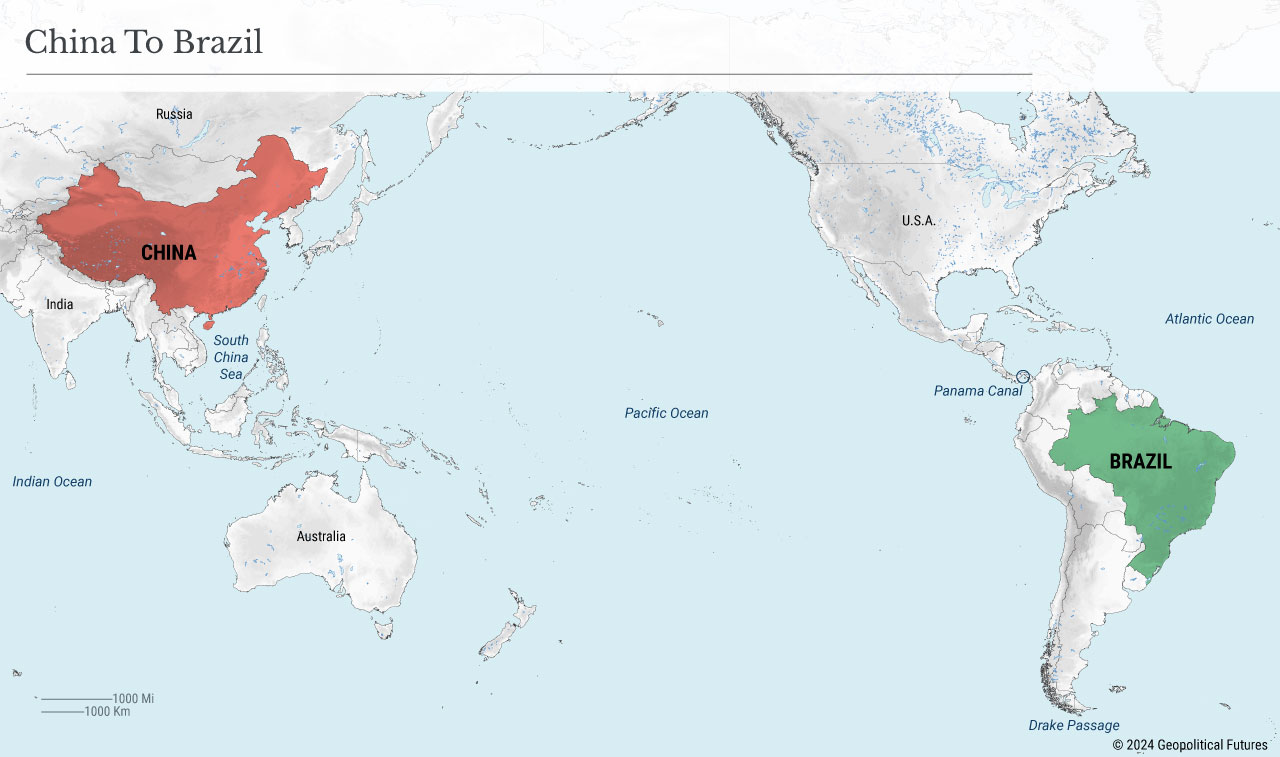
News reports tying China to Brazil are fairly rare from a military perspective. Generally speaking, Brazil holds no great interest for China other than run-of-the-mill resource acquisition and U.S. irritation. So the fact that China for the first time is sending a People’s Liberation Army Navy Marine Corps detachment to participate in joint Brazilian military exercises is worth a discussion. These multilateral exercises, known as Formosa 2024, will take place within the next several weeks. So far, it’s unclear if U.S. assets will participate alongside the Chinese.

China and Brazil have had a relationship since the 19th century, minus a brief interruption after China went communist. Relations were reestablished in the 1970s. Since then, there has been robust trade between the two as Brazil helped replace U.S. soy and grain supplies. (This gave Beijing room to breathe when the trade war started under the Trump administration.) China has become Brazil’s largest trade partner with exports to China in 2023 approaching $105 billion. More recently, Brazil was almost alone in its support of Chinese efforts to build 5G infrastructure in the Western Hemisphere. But Brazil’s invitation to China to participate in military exercises attests to their improved standing and that the partnership is growing beyond economic sectors.

Chinese leader Xi meets US national security adviser as the two powers try to avoid conflict

KEN MORITSUGU & HUIZHONG WU

Chinese leader Xi Jinping met with U.S. National Security Adviser Jake Sullivan on Thursday as the latter wound up a three-day visit with the stated aim of keeping communications open in a relationship that has become increasingly tense in recent years.

Sullivan, on his first trip to China as the main adviser to President Joe Biden on national security issues, earlier met with Chinese Foreign Minister Wang Yi and a top general from the Central Military Commission.

Starting with a trade war that dates back to 2018, China and the United States have grown at odds over a range of issues, from global security, such as China’s claims over the South China Sea, to industrial policy on electric vehicle and solar panel manufacturing. Sullivan’s trip this week is meant to keep the tensions from spiraling into conflict.

“We believe that competition with China does not have to lead to conflict or confrontation. The key is responsible management through diplomacy,” he told reporters at a news conference shortly before leaving Beijing.

Suicide Drones Are Killing Civilians From Syria to Ukraine

Faine Greenwood

On March 11, Syrian farmer Ali Ahmad Barakat was driving a tractor to his fields in the fertile rebel-held lands of the Al-Ghab plain, just a few miles away from the front line with Assadist forces. For years, Al-Ghab’s farmers had refused to let the violence scare them away from working their fields.

How Washington Learned to Stop Worrying and Embrace Protectionism

Bob Davis

Shortly before the U.S. presidential race turned upside down (the attempted assassination of Republican nominee Donald Trump) and upside down again (President Joe Biden dropping out) and upside down again (Vice President Kamala Harris surging in polls compared to Biden), the president made a decision that upended decades of Democratic White House rule. He ordered heavy new tariffs on Chinese imports of high-tech items and continued the massive tariffs he inherited from his Republican predecessor.

U.S. Army Collaborates with Finland Army on Joint Open Source Intelligence Collection Mission

Cpl. Marvin Lopez

In a rapidly changing digital world where information is of utmost importance, the 66th Military Intelligence Brigade's Northern Raven Team collaborated with Finnish Army to carry out a joint open-source intelligence (OSINT) collection mission in Finland in late August 2024. The joint U.S.-Finland OSINT mission takes place as Finland officially joins the North Atlantic Treaty Organization (NATO) in April 2023. As a newly inducted member, Finland has strengthened its security cooperation with NATO allies, particularly the United States. Both nations share strategic interests in maintaining stability in the Baltic region and Northern Europe, especially given heightened geopolitical tensions with Russia in recent years.

Both armed forces utilized advanced OSINT tools and methodologies to accomplish the mission. AI-driven algorithms were utilized to sift through massive amounts of data, flagging relevant information based on keywords, phrases, and geographic locations. In addition, geospatial analysis tools enabled the teams to gather intelligence from publicly available satellite imagery. This allowed them to detect infrastructure changes, movements of military assets, and other indicators that could inform their strategic assessments.

Israel’s Assassination of Hamas Head Creates Dilemma for Tehran

Reza Parchizadeh

The assassination of Ismail Haniyeh, chairman of Hamas’s Political Bureau, in Tehran on July 31 was a significant tactical and propaganda victory for Israel (Middle East Monitor, August 19). The operation both eliminated the leader of a hostile terrorist group aligned with the Iranian regime and demonstrated Israel’s ability to penetrate Iran during a major international political event—in this case, the inauguration of President Massoud Pezeshkian (see Terrorism Monitor, July 31). [1] The assassination was a clear statement that Israel could target any leader of the Islamic Republic at will.

Netanyahu’s Short-Term Concerns

The operation should be seen first in the context of Israeli Prime Minister Benjamin Netanyahu’s immediate concerns. Netanyahu is under intense pressure from various quarters. Domestically, moderate opposition figures have been pushing to oust Netanyahu and reverse his government’s judicial reforms (Al Jazeera, November 16, 2023; Anadolu Agency, August 28). Internationally, the Arab world, some Western countries, international organizations, as well as Russia and China are all pressuring Israel to end the war in Gaza—and in some cases, to recognize a Palestinian state (New York Times, May 31; Amnesty International, February 20; Moscow Times, November 6, 2023; Egypt Today, May 30). During Netanyahu’s recent trip to Washington, American leaders urged him to try to reach a ceasefire with Hamas before all of his conditions were met (AP News, July 25). Israel’s failure so far to achieve its primary objective in the war—eliminating the threat of the Islamist terrorists backed by both the Iranian regime and the Muslim Brotherhood—further compounds these pressures.

The Harris-Trump Debate Taught Us Very Little About U.S. Plans for the World

Ravi Agrawal

On Tuesday night, tens of millions of Americans watched as Vice President Kamala Harris marched up to former President Donald Trump and shook his hand—it was their first-ever meeting—before they tussled on stage for 90 minutes on a range of domestic and foreign-policy issues.

Germany Isn’t Nearly as Important as the U.S. Thinks

Dalibor Rohac

A lot of ink has been spilled on Germany’s supposed stinginess, hypocrisy, and lack of a geopolitical compass. The country’s 2025 draft budget, approved by the governing coalition after some acrimony, is halving aid to Ukraine to just over $4 billion and offers little prospect of future assistance while narrowly meeting NATO’s 2 percent defense spending target—all of it to satisfy the country’s strict public debt rules.

Top Foreign-Policy Moments From the Harris-Trump Debat

Christina Lu and Amy Mackinnon

Former U.S. President Donald Trump and Vice President Kamala Harris faced off in a highly anticipated presidential debate on Tuesday night, in what was their first—and potentially only—showdown ahead of the Nov. 5 election.

How Kamala Harris Knocked Donald Trump Off Course

Brian Bennett, Eric Cortellessa and Philip Elliott

The two candidates for President of the United States are as different as any duo in history. A billionaire businessman versus a career prosecutor and politician; a son of privilege against the daughter of a middle-class single mother; one reckless, one cautious; a former commander in chief against the first Black and South Asian woman to claim the nomination. They hail from different coasts, different generations, different tax brackets. But as stark as the choice facing American voters this November may be, the nation had never gotten a glimpse of Donald Trump and Kamala Harris side by side before they squared off in Philadelphia Sept. 10, in what may be their sole debate before Election Day.

For the Republican, the U.S. is a hellscape of rising crime, unchecked immigration and economic misery. For the Democrat, the nation is beset by the division Trump has sowed, the abortion bans he ushered in, and the economic policies he passed that favor the rich at the expense of the rest. But beyond the canned salvos and campaign boilerplate, the high-stakes clash underscored how dramatically the presidential race has changed since mid-summer, when even top Democrats conceded Trump appeared to be sailing to victory in his rematch with President Joe Biden. As plain as it is that Trump wishes he were still running against Biden, it is equally apparent that Harris has rattled him.


What the presidential debate revealed about how Trump and Harris would conduct foreign policy


With the world riveted by the US presidential election, the debate pivoted on the world. On Tuesday evening, former President Donald Trump and current Vice President Kamala Harris faced off in Philadelphia ahead of the November 5 vote. From tariffs to energy and immigration, and from China to the Middle East, the two candidates often presented sharply contrasting visions on a range of foreign policy issues—including consequential questions about the stakes for the United States in averting a Russian triumph in Ukraine and assuring a Ukrainian victory. Below, Atlantic Council experts offer insight on what we learned from the debate about each candidate’s globe-spanning intentions.

On Ukraine, the debate underscored an unfortunate synergy between the two sides

The presidential candidates largely covered old ground in discussing Moscow’s war on Ukraine. Trump reiterated that he would end the war as president-elect because he knows Ukrainian President Volodymyr Zelenskyy and Russian President Vladimir Putin well and both respect him. He also repeated his claim that Putin never would have launched the full-scale invasion if he, Trump, were in office; Putin attacked, according to Trump, because the Biden administration was weak, as evidenced in its disastrous withdrawal from Afghanistan. Trump also echoed the inaccurate theme often heard on the populist right that the United States has provided significantly more aid to Ukraine than its European allies have.

Perhaps the most interesting moment on Russia and Ukraine came when the moderators asked if Trump thought a Ukrainian victory was in US interests—twice. Trump’s response was that an end to this bloody conflict, which has cost “millions of lives,” was in the US interest.

Harris Needs a Balkans Policy—Quickly

Edward P. Joseph

As multiple crises flare, and as her Sept. 10 debate with former U.S. President Donald Trump approaches, Vice President Kamala Harris needs to anticipate a potential swipe over the Biden administration’s Balkans record. The former president has proudly cited his own record in the region, and Trump’s former Balkans special envoy, Richard Grenell, has trolled Harris on her alleged ignorance of the region. And the truth is that the situation across the Balkans, with barely an exception, has only worsened on U.S. President Joe Biden’s watch.

NATO Frontline States Need an Air Defense Shield Now

Fredrik Wesslau

In the early hours of Sunday, Sept. 8, a Russian drone flew into Romanian airspace during a nighttime attack on Ukraine’s Danube River ports. Romania scrambled two F-16s to monitor the situation, according to the Romanian Defense Ministry. A day earlier, an Iranian-type Shahed drone armed with explosives flew from Belarus into Latvia—which is neither close to Ukraine nor on a direct flight path—and crashed near the Latvian city of Rezekne, about 35 miles from the closest section of the Belarusian border. Throughout the war, by accident or design, Russian missiles and attack drones have repeatedly infringed the airspace of Romania, Latvia, Poland, and other NATO members —and hit the alliance’s territory.

Enabling Human Security from Space

Kyleanne M. Hunter, Joslyn Fleming, Jackie L. Burns, Grace Falgoust

The White House’s 2022 National Security Strategy (NSS) recognizes that human rights are a cornerstone of the nation’s security, and that security also depends on the nation’s ability to address shared human challenges, such as climate change, food insecurity, communicable diseases, terrorism, energy shortages, and inflation.1 Nested under the NSS, the U.S. Department of Defense’s (DoD’s) 2022 National Defense Strategy of the United States (NDS) also emphasizes the importance of addressing cross-cutting security challenges, many of which address human rights concerns, while also ensuring secure and stable allies.2 To
address these human and national security challenges, the United States must be not only reactive to the changing national security environment but also proactive to ensure that human crises are mitigated and potentially prevented before they occur.

The Department of the Air Force (DAF) can be proactive and enhance human security by using the U.S. Space Force’s (USSF’s) capabilities and mission sets to add a human security perspective to promote U.S. security interests. The USSF, as the space-focused component of the U.S. military, is uniquely qualified to ensure that military decision makers have vital information to make human security–enabled decisions when addressing national security challenges. Although several U.S. government agencies and commercial partners collect and monitor indicators that are potentially related to human security, the USSF’s role as a military service makes it a natural nexus for embedding human security principles and perspectives in the security workforce. As a military service, the USSF understands the unique needs of military commanders.

Gold Rush: How Russia is using gold in wartime

John Kennedy, Elena Grossfeld, Zsofia Wolford, Thomas Kenchington

Chapter 1. Introduction

1.1. Gold as a strategic resource in wartime

In the years leading up to Russia’s invasion of Ukraine, gold had become an increasingly valuable economic commodity for Russia, particularly after 2014, when the state reduced its dollar exposure and added more gold to its foreign reserves than any other country. Gold also became Russia’s most important revenue-generating metal. Since the start of the war, however, gold has become a strategically important resource widely regarded as an essential means to respond to Western economic pressure. Gold now appears in the policies of several Russian ministries and has become an important feature in Russia’s international relations, not least as a means of payment for weapons and hard currencies (although the scale of this activity is hard to determine).

We did not find evidence of an underpinning strategy guiding Russian gold policy. Rather, three general trends appear to be at play. First, with the notable exceptions of the reserve policy of the Central Bank of Russia (CBR), which broadly resembles that of the pre-war period, and the Ministry of Finance’s (MinFin) use of the National Welfare Fund (NWF) to support the budget, much of the government’s gold policy seems to be made reactively or ‘on the go’. 


A U.S. Strategy for Ukraine…Finally

Mick Ryan

In the past 24 hours, it has been reported that the Biden administration has finally submitted a strategy for supporting Ukraine to the U.S. Congress. As Reuters reported:

A congressional aide said the long-awaited report had reached lawmakers on Monday and they had not yet had a chance to review it. Two other sources, requesting anonymity to discuss a classified matter, confirmed that it had been delivered. The White House did not immediately respond to a request for comment.

The strategy, which is linked to ongoing U.S. assistance for Ukraine, was due to have been submitted to Congress back in June. Given the war is now in its 31st month, the lack of a strategy until now says much about the prevarication and strategic timidity demonstrated during the war by many (but not all) of Kyiv’s backers.

The aim of this article to explore the current U.S. strategy for Ukraine, and what the new strategy, submitted in the dying days of the Biden administration, might look like and whether it will have an influence on the trajectory of the war.

The Current U.S. Strategy

There is no clear U.S. strategy for the war in Ukraine. After 31 months, the Biden administration is still using crisis management, speeches and slogans such as ‘for as long as it takes’ rather than developing and executed a clear, well resourced strategy for Ukraine.

Global Chip Shortage: Everything You Need to Know

Fiona Jackson

The global chip shortage was sparked in early 2020 due to the COVID-19 pandemic. Supply issues continued for over three years, impacting industries such as consumer electronics and artificial intelligence.

Nearly every digital electronic device today is powered by semiconductors, which contain silicon and are critical for creating integrated circuits, also referred to as microchips. And anything that needs to compute or process information, such as smartphones, computers, and even everyday appliances, contains a chip.

Unfortunately, chips aren’t that easy to make — some experts estimate that chips take as long as six months to produce. As a result, chip makers said ending the shortage was difficult “because it takes years to get new factories up and running,” according to the WSJ.

By July 2023, manufacturers had ramped up production and their customers had adjusted to more predictable chip supply. Improvements in production capacity and demand for consumer electronics cooling off have allowed industries like automotive to adapt and recover.

However, export restrictions on key semiconductor materials from China, such as gallium and germanium, have fueled fears that a second chip shortage is on the horizon.

Four Fallacies of AI Cybersecurity

Chad Heitzenrater

As with many emerging technologies, the cybersecurity of AI systems has largely been treated as an afterthought. The lack of attention to this topic, coupled with increased realization of both the potential and perils of AI, has opened the door for the development of various AI cybersecurity models—many of which have emerged from outside the cybersecurity community. Absent active engagement, the AI community is now positioned to have to relearn many of the lessons that have been developed by software and security engineering over many years.

To date, the majority of AI cybersecurity efforts do not reflect the accumulated knowledge and modern approaches within cybersecurity, instead tending toward concepts that have been demonstrated time and again not to support desired cybersecurity outcomes. I'll use the term “fallacies” to describe four such categories of thought:

Cybersecurity is linear. The history of cybersecurity is littered with attempts to define standards of action. From the Orange Book (PDF) to the Common Criteria, pre-2010s security literature was dominated by attempts to define cybersecurity as an ever-increasing set of steps intended to counter an ever-increasing cyber threat. It never really worked. Setting compliance as a goal breeds complacence and undermines responsibility.


The War Crimes That the Military Buried

Parker Yesko

War entails unspeakable violence, much of it entirely legal. And yet some violence is so abhorrent that it falls outside the bounds of law. When the perpetrators are U.S. service members, the American military is supposed to hold them to account. It is also supposed to keep records of wrongdoing in a systematic manner. But the military has failed to do so, leaving the public unable to determine whether the military brings its members to justice for the atrocities they have committed. To remedy this failing, the reporting team of the In the Dark podcast has assembled the largest known collection of investigations of possible war crimes committed in Iraq and Afghanistan since 9/11—nearly eight hundred incidents in all. Much of the time, the reporting concluded, the military delivers neither transparency nor justice.

The database makes it possible, for the first time, to see hundreds of allegations of war crimes—the kinds that stain a nation—in one place, along with the findings of investigations and the results of prosecutions. The picture that emerges is disheartening. The majority of allegations listed in the database were simply dismissed by investigators. Those which weren’t were usually dealt with later, by commanders, in a justice system that can be deferential to defendants and disbelieving of victims.

14 September 2024

India’s Pivot: China Not As A Foe, But As A Potential Partner For Development Of Supply Chain – Analysis

Subrata Majumder

Burying the hatchet of a security menace, India made a voltae face towards China for economic partnership. India’s Finance Minister Nirmala Sitaraman supported Economic Adviser’s suggestion to permit Chinese investment in India. Her Chief Economic Adviser V. Ananata Nageswala said in the Economic Survey 2023-24 that New Delhi should focus on Chinese investment in India. Currently, Chinese investment is subject to several restrictions due to security concerns.

This change in policy raised eyebrows, given the fact the China menace has not mitigated. Border tensions continue to engulf the India-China tiff.

There are several reasons behind this new look towards Chinese investment as an economic partner. FDI flow in India plateaued despite the fact that it pitched the highest growth in global GDP. FDI in India dropped consecutively for 2 years. In 2022-23, it fell by 22 percent and dropped further by 3 percent in 2023-24.

India experienced sparkling growth in electronic and automobile industries, but the growth relied more on imports. China has been the biggest supplier of components and parts for the development of these industries. In other words, lest China falter to supply critical components, these industries are unlikely to spur growth.

US Military Warnings of Dire Situation in Afghanistan During Withdrawal Ignored, House GOP Report Finds

Rebecca Kheel

Warnings from U.S. military officers about the Taliban's swift advances as American troops withdrew from Afghanistan in 2021 went unheeded in Washington, D.C., a disconnect that contributed to a lack of planning for evacuating civilians, House Republicans found in an investigation on the Afghanistan withdrawal being released Monday.

The report, the culmination of a two-year probe into the withdrawal that cites testimony from public hearings, closed-door interviews with witnesses, newly obtained State Department documents, previously released military documents and previous news reports, largely faults the White House National Security Council and State Department for having a rosy outlook on the situation and resisting calls from military officials to plan for an evacuation amid dire warnings from military leaders on the ground about rapidly deteriorating conditions.

That failure to plan, the report argues, led to the chaos during the eventual evacuation that allowed for a terrorist to set off a suicide bomb outside Hamid Karzai International Airport, killing 13 U.S. service members.

Myanmar: UN Investigators Warn Of Widespread Abuses In Conflict

Vibhu Mishra

Warfare in Myanmar has escalated into systematic atrocities, including attacks targeting civilians, torture and sexual violence, the UN independent rights probe into the country said on Monday.

Addressing the Geneva-based Human Rights Council, Nicholas Koumjian, the head of the Independent Investigative Mechanism for Myanmar (IIMM), said that in many instances, civilians were “not just collateral damage but rather the target of attacks”.

“Just last week, airstrikes near a night market in northern Shan state reportedly killed about a dozen people, including a pregnant woman and two children,” he said, noting also aerial bombings that struck a wedding party, IDP camps, schools and monasteries.

He added that the Mechanism received many reports and testimonies regarding crimes against the thousands in detention, including torture and sexual assault.

“Victims and witnesses have recounted beatings, electric shocks, strangulations and torture by pulling out fingernails with pliers. There is evidence that minors and other victims of all genders have been subjected to gang rape, burns on sexual body parts and other violent sexual and gender-based crimes.”

Dissecting China’s purported carrier strategy against Taiwan

Ben Ho Wan Beng

Last month, Taiwan’s Mainland Affairs Council (MAC) published a report that has a section outlining how China would likely use its aircraft carriers as part of Beijing’s much-touted anti-access/area-denial (A2/AD) strategy. Citing declassified sources from Taiwan’s Ministry of National Defense (MND), the report added that Chinese carrier operations are “geared towards ‘denying’ the United States military access to the Taiwan Strait area of operations.”

While many naval observers — including this author, who previously covered this issue on these pages — believe that carrier strike groups (CSGs) of the People’s Liberation Army-Navy (PLAN) would only have a limited role to play in a Taiwan contingency, the MAC seems to suggest that this would not be the case — and perhaps with some credibility, given that the council drew its conclusion from MND sources.

How then would such a scenario — let’s say in the late 2020s, which brings China’s carrier total to three — possibly play out and what to make of it?


Our Moonshot Moment Is Here

Nadia Schadlow & Craig Mundie

American policymakers have spent years decrying the loss or impending loss of key competitive sectors to China, including 5G telecommunications networks, solar panels, advanced manufacturing, and quantum computing. Recently, it was reported that China was outspending the United States on fusion energy and that it could surpass U.S. fusion capabilities in three to four years. The United States can’t let this happen.

Fusion will provide reliable, carbon-free electricity for an expanding global economy. That will have profound geopolitical consequences. If we allow China to dominate fusion technology and to deploy it at scale at home and abroad, Beijing will hold a central position in the geopolitics of energy going forward.

Fusion occurs when two atoms combine into one, releasing astronomical amounts of energy. Some new fusion designs produce superheated plasma that can reach temperatures of up to 100 million degrees Celsius, producing energy with minimal radiation risks.


The Misuse of Sun Tzu and the Cult of Maneuver

Ren Hongpeng

Introduction

The concept of “maneuver warfare” has returned to the forefront of debate with the Russo-Ukrainian war. As for the development of maneuver warfare, Liddell Hart and John Boyd played an important role, and they paved the way for the acceptance of maneuver warfare doctrine by the U.S. Army and Marine Corps[ii]. Meanwhile, they both misused Sun Tzu’s theories to serve their own.

However, all the theories are misused: Deutsches Heer misused Clausewitz[iii], and Imperial Japanese Navy misused Satō Tetsutarō[iv]. Considering the textual simplicity and ambiguity of Sun Tzu’s The Art of War, it is undoubtedly more difficult to translate it to fully reflect its original meaning. What makes it necessary to explain the misuse of an ancient Chinese militarist?

First, the misuse of Sun Tzu is still widespread today. Second, it has played a role in the history of maneuver warfare. Third and most importantly, it represents a false methodology: serving one’s theory through the selective use of text and history. Texts and histories from other times, can serve as motivations, perspectives, and descriptions of the historical evolution, but they are evidence only after rigorous analysis and argumentation. Most references to Sun Tzu are divorced from their original meaning and context, as well as from the time period.

EU battle with China leaves no space for Ukraine

William Nattrass

The sands are shifting in European perceptions of the need for peace in Ukraine. In a TV interview on Sunday, German Chancellor Olaf Scholz urged intensified effort to end the war through negotiations, saying: “I believe now is the moment when we must discuss how we get out of this war situation faster.”

Significantly, Scholz underlined his belief that Russia must be present at future peace discussions. Having met with Volodymyr Zelensky last Friday in Germany, Scholz asserted that “there will certainly be a further peace conference,” with the Ukrainian President supposedly in agreement that “it must be one with Russia present.”

That a key donor of military aid to Ukraine should call for Russian involvement in peace discussions marks a major shift from the Ukraine Peace Summit held in Switzerland earlier this summer, to which Russia was not invited. It’s a notable — some might say necessary — evolution of the West’s mantra to date: “Nothing about Ukraine without Ukraine.”

MBZUAI Partners With US Tech, Collaborates With PLA Scientists

Cheryl Yu

The Mohamed bin Zayed University of Artificial Intelligence (MBZUAI), a research university in Abu Dhabi, has ties to the united front system in the People’s Republic of China (PRC). It also has access to US technologies that are currently subject to US export controls, such as NVIDIA A100 graphics processing units (GPUs). This raises the possibility that the university could function as a site for entities or individuals from the PRC to acquire or gain access to such technologies, thereby circumventing US export controls. Numerous PRC researchers are based at MBZUAI, many of whom come from People’s Liberation Army (PLA) or PLA-affiliated institutions. Meanwhile, US companies such as IBM and Meta, and academic institutions such as the University of Michigan and University of California, Berkeley, have partnered with MBZUAI (China Brief, August 15). The PRC’s weaponization of international cooperation to bolster its defense capabilities suggests the potential scale of this problem. Ultimately, research done at MBZUAI and using US technology could later be used to enhance the PRC’s military capabilities.

International Collaboration to Boost Defense Modernization

The PRC has long advocated for international technology cooperation. In November 2023, at the inaugural “One Belt One Road” Technology Exchange Conference (“一带一路” 科技交流大会), the PRC proposed an “International Science and Technology Cooperation Initiative (国际科技合作倡议).” This initiative advocates for building “a global community of science and technology (全球科技共同体)” and an “open and free ecosystem of international technology cooperation.” The aspiration is for “scientific and technological innovation personnel and resources to flow freely around the world” (Ministry of Science and Technology [MOST], November 7, 2023).

Kubernetes: A Dilemma in the Geopolitical Tech Race

Sunny Cheung

To date, open-source technologies have remained an area of cooperation between the United States and the People’s Republic of China (PRC). This comes despite worsening geopolitical tensions that have impacted or even severed cooperation in other technological domains. Kubernetes, an open-source platform, presents an unusual case of cooperation. It has been widely adopted not just in commercial industries but also in sensitive areas like US military systems. It is even used in F-16 fighter jets and nuclear infrastructure. On the PRC side, tech giants like Huawei that face sanctions from the United States, are major contributors to the platform and beneficiaries of its development.

While open source offers advantages over closed source systems, its use in critical systems and by US competitors are not without risks. The presence of state-affiliated companies from the PRC in the management and built environment of Kubernetes compounds those potential problems. Given the platform’s centrality and widespread use, however, it is unlikely to be replaced by an alternative any time soon. This suggests that risks surrounding Kubernetes’s use will need to be managed carefully.


Hezbollah relies on 'sophisticated' tunnel system backed by Iran, North Korea in fight against Israel

Caitlin McFall

Despite Israel’s nearly one-year-long war with Hamas in Gaza after the Oct. 7 attacks, security experts continue to sound the alarm that Jerusalem’s greatest threat actually lies to the north in Lebanon, where Hezbollah has developed a sophisticated tunnel system.

Hezbollah, an Islamic terrorist organization that has long had the backing of Iran, has over the last two decades developed a network of tunnels that stretch more than 100 miles in cumulative length throughout southern Lebanon.

Though the existence of the tunnels has been known for decades, the significant role they play in arming Hezbollah has once again come to light during the Israeli-Hamas war in Gaza, where terrorists have not only relied on tunnels for operational rearmament and maneuvering capabilities but also to house hostages taken by Hamas nearly a year ago.

While it is estimated that the Israel Defense Forces (IDF) have eradicated roughly 80% of Hamas’ tunnels, Hezbollah’s tunnels, which have largely remained untouched since the war in Gaza began, are believed to be far more sophisticated and "significantly larger," according to a report by the Alma Research and Education Center, a nonprofit organization that researches Israeli security challenges along its northern border.