By Alicja Bachulska
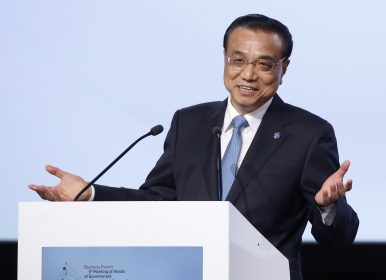 Sofia, Bulgaria hosted the annual China-CEEC think tank conference on June 29 under the theme of “Advancing 16+1 Cooperation Platform – the Way Ahead.” The conference was part of the official calendar of events of the 7th CEEC-China 16+1 Summit that will take place in the Bulgarian capital on July 7. The 16+1 was established in 2012 as a multilateral platform facilitating cooperation between China and 16 Central and Eastern European countries (CEEC). In recent years, the platform’s summits have attracted a lot of attention, especially in Western Europe. The intensifying level of engagement between the 16 countries in the CEE region and China has considerably alarmed Brussels and Berlin. Many Western European observers and policymakers have raised concerns about the potential risks of growing Chinese presence in Eastern Europe, claiming that Beijing’s major interest in engaging with the region is a part of its long-term strategy to undermine EU unity. This is by no means a new perspective, as these kinds of concerns have been raised multiple times since the platform’s establishment.
Meanwhile, the international situation has changed significantly during the last six years. China under Xi Jinping has changed its foreign policy course, intensifying its international presence in many parts of the world. The promotion of the Belt and Road Initiative (BRI) as China’s major foreign policy tool has been accompanied by the advancement of local regional initiatives, such as the 16+1 platform. Simultaneously, China’s new international behavior has become one of the major points of contention among observers and policymakers looking at Chinese presence in places like Australia, New Zealand, and Czech Republic, just to name a few.
What is important to note is the emergence of certain trends highlighted by a number of experts during the Sofia conference. One of the dominant themes was the anticipation of some kind of breakthrough regarding the broader direction of China-EU relations and a need for the CEEC to find its “own voice” when it comes to bringing forward a desirable model of cooperation. This does not imply accepting Chinese investment and engagement without critical assessment, but it points toward a more fact-based approach to managing the region’s relations with Beijing. Uncertainty as one of the dominant themes of the current international situation and its impact on China-CEE-Western EU states trilateral relationship was said to be included in the draft version of the 16+1 Sofia Summit Declaration to be published after the main summit on July 7.
The opinions articulated by many experts during the 16+1 think tank conference in Sofia seem to present a counterpoint to the dominant Western European narrative about growing Chinese influence in the CEE and the region’s alleged inability to critically assess this new development. Experts from the region do have insights into the complicated nature of China-CEE relations. A lack of critical perspective is far from the biggest problem. Already, existing cases of business deals and political cooperation between China and some individuals or groups within CEEC should be considered more alarming. In other words, it is elite capture that should generate worry, rather than the general existence of the 16+1 platform itself.
The example of Ye Jianming, Czech President Milos Zeman’s economic adviser, is a case in point. The former CEO of Chinese energy giant CEFC has been under investigation in China for a couple of months now. A controversial figure himself, he was accused in the West of having ties to Chinese military intelligence. In China, he has been accused of having committed “economic crimes,” meaning high-level corruption. Although the investigation is still ongoing, it seems alarming enough to conclude that this is precisely the kind of relationship that should be looked out for when it comes to future projects between individuals or institutions from the CEE region and China.
Increased Eastern European interest in fostering ties with China could be seen as a purely pragmatic attempt to diversify the region’s international trade ties. Simultaneously, from the perspective of Berlin and Brussels, this new trend overlaps with the anti-progressive political turn among some Eastern European nations, most notably Poland and Hungary. While concerns about the region’s populist turn are indeed rooted in reality, there seems to be little evidence that this development is in any way related to the growing Chinese presence in the region.
It is crucial to bear in mind the way in which many CEE states might perceive Brussels and Berlin’s anxiety as somehow exaggerated. Chinese economic engagement in the region still has been marginal compared to other Asian investors, like Japan and South Korea, not to mention Western investors. Despite growing tensions, EU remains the most important political and economic partner of CEEC.
Nevertheless, Berlin has objected many times to the further development of the 16+1 framework. Most recently, German Chancellor Angela Merkel raised the topic during her visit to China in late May 2018. Shortly after the end of her visit, Chinese Minister of Foreign Affairs Wang Yi met with his German counterpart in Berlin, where he suggested that Germany would be welcome to participate trilaterally in the 16+1 platform’s activities.
How could that change the decision-making processes and the bargaining power of each CEE state involved in the platform? Could it become a tool ensuring more accountability and transparency within its work? Or would it rather help to benefit the two largest partners, namely China and Germany? Declarations about China’s willingness to combine economic complementary advantages of China and Germany together with the CEE region’s developmental needs seem reasonable, yet their implementation might prove difficult. The same applies to finding a common ground to even start discussing certain problematic issues trilaterally.
Although the overall feeling of deepening divisions between Eastern and Western Europe and a general crisis of both EU as an institution and its transatlantic relations were all evident throughout the conference, constructive proposals for future development of the platform were also brought forward. But given the importance of the international environment, what might eventually be more important is the upcoming China-EU summit in late July. Brussels and Berlin expect Beijing to accommodate their anxieties, which are partially reasonable, but are also rooted in many misperceptions on the part of the EU. Most importantly, the EU should critically assess the overestimation of the scale of Chinese engagement in the CEEC. This does not mean that the issue of the political implications of Chinese presence in the region should be overlooked. It is not a non-issue, yet it should be assessed on the basis of a truly fact-based discussion, ensuring the agency of all parties involved.
Alicja Bachulska works as a Chinese politics analyst at the Asia Research Centre, War Studies University in Warsaw. She is also a PhD candidate at the Graduate School for Social Research, Polish Academy of Sciences. She is a regular contributor to the Poland-Asia Research Centre (polska-azja.pl). She is a School of Oriental and African Studies (SOAS) and Fudan University alumna.
No comments:
Post a Comment