BY PATRICK TUCKER
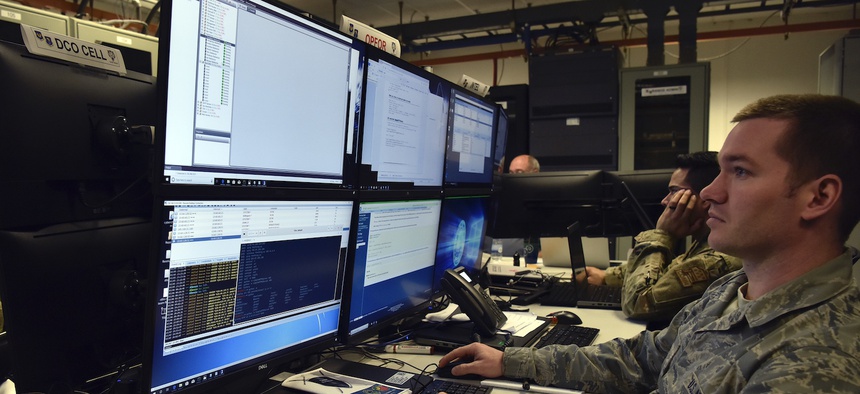 The U.S. military isn’t keeping up with information-warfare threats from Russia, Iran, and China, defense officials told lawmakers on Tuesday, adding that the military needs to prioritize information operations, diversify its information-ops units, and relearn how to coordinate IO across units, forces, and services.
“We’re evolving as a country and a force from a heavy focus on counter...violent extremist organizations to a much more diverse threat environment where information is one of the tools they’re using,” said Christopher Maier, the acting assistant defense secretary for Special Operations and Low-Intensity Conflict. “We’ve got to be able to play their game against them and beat them in some respects on their own playing field.”
Right now, the job of conducting information operations as part of broader military operations falls primarily to U.S. Special Operations Command or SOCOM. In April 2019, the command stood up a new Joint Web Ops Center to better tackle information operations.
The Army, too, is making information ops a key component of its future cyber operations. Last July, Lt. Gen. Stephen G. Fogarty, who leads the Army Cyber Command, or ARCYBER, outlined how the Army plans to integrate information operations into exercises and eventually operations over the coming decade. “Internally, ARCYBER will work to build information capabilities into combined arms teams with converged cyber, influence, and electromagnetic capabilities that deploy to bring immediate, turn-key informational combat power to maneuver commanders,” Fogarty wrote.