23 January 2015

North Korea’s Cyber Capability- A “Magic Weapon”

By Suparna Banerjee 

The paper attempts to highlight the depth of the North Korean cyber strategy in light of the recent attack on the SONY Entertainments. It also puts into perspective the manner in which the country has consistently used this instrument to torment its adversaries.

Background

It all began with a movie named “The Interview” which revolves around a plot to assassinate the supreme leader of North Korea (officially known as Democratic People’s Republic of Korea or DPRK), Kim Jong Un. United States, more particularly the SONY Entertainment the distributor of the movie, found itself at the receiving end of one of the biggest hacking attempt allegedly committed by DPRK. While the war of words flung across the Pacific with allegations and its rebuttal by both sides. DPRK outrightly rejected its involvement but praised it as the righteous deed of its supporters and sympathisers. In retaliation North Korea went off the internet on 22nd December which was restored only nine and half hours later. While SONY overturned its earlier decision to postpone the release of the movie after severe criticisms from the US President, DPRK reacted stating that “Obama always goes reckless in words and deeds like a monkey in a tropical forest.” The allegation against North Korea, though, was based on circumstantial evidence linking the similarity in the attack by the North against South Korean companies and banks in 2013. The recent attack is claimed to have been done by a group called “Guardians of Peace” which is quite similar to taking unknown names like the Dark Seoul gang responsible for the Seoul cyber attack.

Japan Scrambling Jets at Cold War Levels

January 22, 2015

Tokyo reportedly scrambling its fighter jets at record pace in the face of growing incursions. 

Government statistics suggest Japanese air force jets are scrambling at levels not seen since the Cold War, with Chinese fighters testing its airspace in the southwest and Russian aircraft probing Tokyo in the north, according to Reuters.

According to Japan’s defense ministry, in the nine months ending December 31, fighter jets from Japan’s Air Self-Defense Force (ASDF) scrambled 744 times, about a third more than during the same period the previous year. If scrambles continue at their current numbers up until March 31, they would exceed the 944 mark registered in 1984, in the midst of the Cold War.

The ministry’s statistics show that encounters with Chinese aircraft accounted for about half of the nine month total, surging to 164 in the final quarter of 2014, which was the most ever since such records started to be kept in 1958.

Chinese flights have especially increased in and around the East China Sea, where Beijing and Tokyo are locked in a dispute over islands that Japan calls the Senkaku and China calls the Diaoyu islands.

In their bid to respond to possible territorial incursions by Chinese flights in the southwest, Japan has reportedly thinned out its forces to the country’s north, close to four islands contested by Japan and Russia which Tokyo calls the Northern Territories and Moscow calls the Kuril Islands. But the unexpected resurgence of flights from Russia in the north in response to this has left Tokyo with a dilemma as it is increasingly sandwiched in a two-front struggle. In the last three quarters, Japan’s jets scrambled 369 times to meet Russian planes, four times the number just a decade ago.

The Changing Face of War and the Importance of Cybersecurity


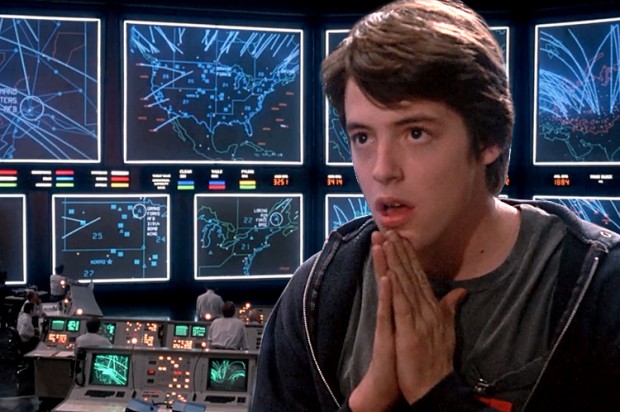
For the longest time we've heard tell that the major battles to determine the outcomes of future wars won't be fought on physical battlefields but rather by hacker combatants in cyberspace. And whilethe future Ferris Bueller learned first hand the dangers associated with computer war, the broader, non-Matthew Broderick public has yet to come into contact with full scale cyberwarfare. Now that's not to say these cyberwars haven't already been happening -- there's compelling evidence to support that they have -- but it's important to note that this is not war as we know it.

It's also likely not the kind of war we were expecting.

BBC technology reporter Dave Lee does a fantastic job exploring this issue in a terrific piece that went up yesterday. The crux of his article revolves around the innate challenges of reporting a conflict you can't see. It's this concept of invisibility -- that cyberwar exists not in the public eye but in the shadows -- that's imperative to grapple and understand.


Think about how traditional war is conducted, promoted, and sold. Goosestepping Nazis, caricature-laden propaganda posters, showy tests of shiny new weapons: war is as much about optics as it is about tactics. Every conflict needs to be sold to an audience. This is usually done with visuals, examples being war bond posters, editorials with rhetorical images, and well-orchestrated photo-ops. Each of these visualizes war -- makes it palpable, not just an abstraction. More importantly, they visualize war to suit the whims of those who employ the images. As Umberto Eco once said, "today a country belongs to the person who controls communications."

Interview with Eugene Kaspersky II: On war, espionage and the mafia in cyberspace

2015-01-21

Eugene Kaspersky's rise from a whiz-kid in high school solving advanced mathematical problems to the leader of a gobal cyber-security empire has been meteoric. His company, Kaspersky Lab, is today one of the pre-eminent Anti-Virus and cyber security companies in the world, with a cutting-edge database of 1.3 million records.

Enterprise Innovation sat down with Kaspersky late last year for an exclusive interview on how he sees the cybersecurity space evolve in the future, the difference between Asian and Western security spaces, and looking ahead to designing anti-malware products for technologies that are still on the cusp of public adoption.

Could you talk about your day to day role at Kaspersky?

From the very beginning, we were very focused on two things.

First of all, on the technologies, on being the very best in security technologies for computers, then for mobile devices, and work in industrial security as well. And the second focus was on our global presence - to build our partner network everywhere around the world and every nation.

NSA’s Metadata SIGINT Program has Proved Ineffective in Foiling Terrorist Attacks, Report

Mattathias Schwartz
January , 2015 

Almost every major terrorist attack on Western soil in the past fifteen years has been committed by people who were already known to law enforcement. One of the gunmen in the attack on Charlie Hebdo, in Paris, had been sent to prison for recruiting jihadist fighters. The other had reportedly studied in Yemen with Umar Farouk Abdulmutallab, the underwear bomber, who was arrested and interrogated by the F.B.I. in 2009. The leader of the 7/7 London suicide bombings, in 2005, had been observed by British intelligence meeting with a suspected terrorist, though MI5 later said that the bombers were “not on our radar.” The men who planned the Mumbai attacks, in 2008, were under electronic surveillance by the United States, the United Kingdom, and India, and one had been an informant for the Drug Enforcement Administration. One of the brothers accused of bombing the Boston Marathon was the subject of an F.B.I. threat assessment and a warning from Russian intelligence.

In each of these cases, the authorities were not wanting for data. What they failed to do was appreciate the significance of the data they already had. Nevertheless, since 9/11, the National Security Agency has sought to acquire every possible scrap of digital information—what General Keith Alexander, the agency’s former head, has called “the whole haystack.” The size of the haystack was revealed in June, 2013, by Edward Snowden. The N.S.A. vacuums up Internet searches, social-media content, and, most controversially, the records (known as metadata) of United States phone calls—who called whom, for how long, and from where. The agency stores the metadata for five years, possibly longer.

Gen. Martin Dempsey won’t deny White House is micromanaging Pentagon


Chairman of the Joint Chiefs of Staff Gen. Martin Dempsey said Sunday that he believes President Obama heeds his advice on military and national security matters, but he wouldn’t deny that the White House micromanages the Pentagon.

Speaking on “Fox News Sunday,” Gen. Dempsey first answered questions about micromanagement with a tongue-in-cheek response.

“If you’re asking me if I’m being micromanaged, I don’t know. I better go check with the White House before I answer that question,” he said, adding that he believes the Pentagon’s relationship with theWhite House should be measured on whether he has access to the president and whether top administration officials listen to what he has to say.

“The metric we should be focused on is access and whether my advice influences decisions,” Gen. Dempsey said. “Whether someone wants to characterize the desire, the almost insatiable appetite for information about complex issues as micromanaging, they can have at it. But for me, the metric is access and advice.”

Former Defense Department officials, including outgoing Defense Secretary Chuck Hagel, reportedly have taken serious issue with the White House’s frequent micromanagement of matters inside thePentagon.

‘Concrete Hell': Urban Warfare in the 20th Century


January 18, 2015 
 

It is difficult to deny that the threat of urban warfare en masse is starker than ever in the twenty-first century. Cities are strategically important locations due to their positions as economic, political and cultural centers and so are highly valuable military targets. There is also the crude argument that warfare is a human phenomenon and it is clear that people are increasingly to be found in cities and so war will naturally follow them there.

The most recent UN report on the subject estimated 54 percent of the world’s population reside in urban areas and that this will rise to 66 percent by 2050, adding 2.5 billion to the world’s urban population. A related and more sophisticated argument – prominently made in David Kilcullen’s Out of the Mountains – is that due to this urbanization, cities are placed under increasing strain to deliver municipal services, leading to a breakdown of law and order as insurgent or criminal entities step into the ensuing power vacuum. As a result of these trends and realities, militaries can expect to find themselves engaged in wrestling a city from the hands of another conventional military or, more likely in this century, insurgents and must be prepared from the struggles they are likely to face in this environment.

The Golden Age of Black Ops


20/01/2015 20:09


In the dead of night, they swept in aboard V-22 Osprey tilt-rotor aircraft. Landing in a remote region of one of the most volatile countries on the planet, they raided a village and soon found themselves in a life-or-death firefight. It was the second time in two weeks that elite U.S. Navy SEALs had attempted to rescue American photojournalist Luke Somers. And it was the second time they failed.

On December 6, 2014, approximately 36 of America’s top commandos, heavily armed,operating with intelligence from satellites, drones, and high-tech eavesdropping, outfitted with night vision goggles, and backed up by elite Yemeni troops, went toe-to-toe with about six militants from al-Qaeda in the Arabian Peninsula. When it was over, Somers was dead, along with Pierre Korkie, a South African teacher due to be set free the next day. Eight civilians were also killed by the commandos, according to local reports. Most of the militants escaped.

22 January 2015

FULL TEXT: STATE OF THE UNION ADDRESS

January 20, 2015 


As Prepared for Delivery —


Mr. Speaker, Mr. Vice President, Members of Congress, my fellow Americans:

We are fifteen years into this new century. Fifteen years that dawned with terror touching our shores; that unfolded with a new generation fighting two long and costly wars; that saw a vicious recession spread across our nation and the world. It has been, and still is, a hard time for many.

But tonight, we turn the page.

Tonight, after a breakthrough year for America, our economy is growing and creating jobs at the fastest pace since 1999. Our unemployment rate is now lower than it was before the financial crisis. More of our kids are graduating than ever before; more of our people are insured than ever before; we are as free from the grip of foreign oil as we’ve been in almost 30 years.

Tonight, for the first time since 9/11, our combat mission in Afghanistan is over. Six years ago, nearly 180,000 American troops served in Iraq and Afghanistan. Today, fewer than 15,000 remain. And we salute the courage and sacrifice of every man and woman in this 9/11 Generation who has served to keep us safe. We are humbled and grateful for your service.

NITI AAYOG: A KEY STEP TO TRANSFORM INDIA

Shakti Sinha 

Intro: The NITI Aayog has been designed keeping all the different aspects of ‘Good Governance’ in mind. The government resolution on a rare piece of public document is a model of transparency, clear cut thinking and effective communications. It has a good beginning and is expected that the NITI Aayog would facilitate India's transformation by getting it back on the rails of ‘Good Governance’ and rapid economic growth. 

With the appointment of noted economist and public policy thinker, Arvind Panagariya as the Vice Chairman and leading scientist VK Saraswat and of Bibek Debroy, another acclaimed economist, the NITI (National Institution for Transforming India) Aayog has been launched. Far from being a revamped Planning Commission, the Aayog has been conceived as a wholly new institution that will function as the government's think tank with State governments as equal partners. The NITI Aayog, as its name suggests, is about adapting governing institutions, policies, strategies and processes in keeping with the changed, and changing, circumstances. The Planning Commission had outlived its utility as will be clear in this narrative.

Unlike 1950, when the Planning Commission, was set-up based on the presumption that the government should be at the 'commanding heights of the economy', economic growth in India is now driven primarily by the private sector. The farmer in his field, crafts-person in her shed, the street vendor, the self-employed motor mechanic, the corner kirana shop owner, and the multi-billionaire factory owner—the economy is driven by their decisions to invest, to borrow, to hire. This raises the question—does a government have a role in economic growth? The answer is most certainly but not in the way the UPA acted.

View from the right: Republic day

January 22, 2015 

The Republic Day special issue of the Organiser urges the country to assess whether it lacks a strategic culture and calls for efforts to build one. Pointing out that India had a tradition of grand strategic thinking, as reflected in the Arthashastra and the Mahabharata, the editorial says, “unfortunately, after Independence, while tuning to the Western new nation-state system, we did not make any effort to build our own strategic culture based on our civilisational heritage. At the best, we tried to throw some idealist rhetoric to Western realist paradigms.” It argues that Bheeshma and Krishna embody strategic thinking.

The Organiser also cautions that India, which has arrived on the global stage, should understand potential threats and how those can be mitigated. When the world is talking about India, the country should “think in tune with” its civilisational wisdom: “Realist power equations should be mastered and managed in such a way that Indian ideals are not only accepted but also protected globally… For this… threats to our existence, external and internal, should be identified. Human, economic, military resources should be marshalled in such a way that future threats are annulled even before arriving.”

SECURITY SILENCE

The Panchjanya editorial, in the special Republic Day issue, argues that national security has been dealt with half-heartedly by Indian governments. What should have been solved using logic and political skill, has often been dealt with keeping political calculations in mind. It argues that, in 67 years of Indian democracy, priorities have been set as per the convenience of political parties rather than the national interest. In the 1962 war, land measuring 40,000 sq km was captured by China. We still do not know how many Indian soldiers were killed in that war.

Emptiness of the loss

Raj Mehta
Jan 22 2015 

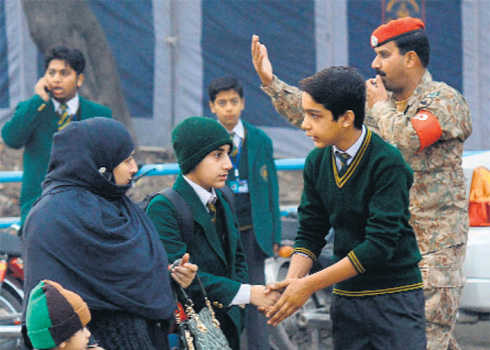
Cynical Pakistan watchers will undoubtedly respond to the cataclysmic attack in Peshawar in which most of the 134 Army Public School children butchered by nine Tehrik-i-Taliban Pakistan gunmen were the progeny of military personnel with “serves them right” certitude; even a sense of déjà vu. While this view has some merit, a larger issue stands unaddressed: The emptiness of loss that is universal and the axiomatic inheritance of a flawed ideological construct.

Watching the recent, poignant BBC reportage of the Peshawar shooting, I was grieved by the sense of irretrievable loss of a young Pakistani mother as she recounted in mind-numbing, dignified words the chill morning of 16 December 2014 when she learnt that her 14-year-old son had been shot dead at school. Through muted tears, she recalled that her son's body was grievously lacerated yet, on his innocent face, she felt she saw the trace of a smile, almost as if he had cocked a snook at death. You thought you saw her quiet pride in the way in which her son had faced death. Peshawar, the legendary city of flowers, lost many flowers that day before they could bloom — her brave son among them.

She told her empathetic lady interlocutor that she somehow steeled herself to go and sit on her son's school desk to sense his presence again. With gathering determination and resolve she ended by stating, ‘I am not afraid...I will keep going back...I don’t want the school to close, but instead to bloom. 

Major issues still stuck, diplomats bargain hard on Obama return gifts

January 22, 2015 

Furious last-minute negotiations are underway on deals the US is insisting emerge from Sunday’s summit meeting between Prime Minister Narendra Modi and President Barack Obama, government sources have told The Indian Express. The US, the sources said, is pushing for announcement of major military co-production and civilian projects Obama will be able to showcase as successes when he returns home.

Pressure to show results had intensified as progress on three big prizes the two leaders had promised to work towards achieving at their last summit meeting in September has been slow — meaning no agreements on these issues will be announced when the two leaders address the media on Sunday.

“There will be some tangible results from this meeting but the big-ticket issues that slowed the relationship down are not ready for resolution just yet,” a senior diplomat said. “The significance of this visit is mainly symbolic.”

India and the US have held at least two rounds of talks since Prime Minister Manmohan Singh’s government announced last year that it intended to rapidly resolve concerns over nuclear liability issues that have stalled implementation of the decade-old civilian nuclear agreement. However, negotiators from both countries have been unable to arrive at a way forward.

Will hunt terrorists from Pak to Paris, says Obama

January 22, 2015

By: Lalit K Jha

US President Barack Obama today vowed to hunt down terrorists from “a school in Pakistan to the streets of Paris” and called on Congress to approve new war powers against Islamic State militants.

“We stand united with people around the world who’ve been targeted by terrorists — from a school in Pakistan to the streets of Paris,” Obama said in the annual State of the Union Address, ahead of his visit to India.

About 40 lawmakers — mainly Democrats — waved yellow pencils during the speech to show solidarity with the victims of the recent Charlie Hebdo attack in Paris and the suicide assault at a Peshawar school last month.

The promise of a presidential visit

Frank Wisner
January 22, 2015


PTIFRESH IMPULSE: “The invitation to Barack Obama and his decision to visit India speak volumes about prospects for the Indian-American relationship.” Picture shows officials reviewing the security arrangements for the Republic Day parade in New Delhi.

As President Barack Obama sets out for India, he will find that the same favourable winds which are driving India’s economy are also moving the U.S.-India relationship. The President will be the first American chief of state to visit India twice during his incumbency. He will also be the first President to be received as Prime Minister Narendra Modi’s guest at India’s Republic Day. The invitation to Mr. Obama and his decision to visit India speak volumes about prospects for the Indian-American relationship.

We have come a long way over the past two decades. Indian and American trade and investment are buoyant, defence trade has surged, and strategic consultations, intelligence sharing and counter-terror cooperation are closer than ever in history. The U.S., including our two political parties, believe that a strong India is good for this country; India believes a successful and prosperous America is good for India. This said, to achieve the potential of the relationship, we need to deepen strategic and economic cooperation and set new goals for the relationship.

Team Modi to sell ‘Make in India’

Puja Mehra
January 21, 2015 


As the global business elite converge on Davos for the World Economic Forum (WEF), two Central Ministers and two Chief Ministers will be pitching the Modi government’s ambitious ‘Make in India’ programme amid renewed international interest in India’s economic potential.

The Indian contingent is being led by Union Finance Minister Arun Jaitley and includes Power Minister Piyush Goyal and the Chief Ministers of Maharashtra and Andhra Pradesh along with Chief Economic Adviser Arvind Subramanian.

Industry Secretary Amitabh Kant is also a key member of the Indian contingent.

Mr. Jaitley, leading Team Modi from India, is expected to speak on the new leadership’s transformation of the business, political and social landscape of India.

INDIA: LEFT-WING EXTREMISM IN 2015 – ANALYSIS


At the onset of 2015, left-wing extremism (LWE) in India under the aegis of the Communist Party of India-Maoist (CPI-Maoist) is confronted with a choice of either coming to terms with the realities of its weakness and revisit the strategy of sustaining a protracted war with the state; or continuing with carrying out periodic attacks on the security forces and other state protagonists with the long-term aim of resurrecting itself yet again in the coming years.

Although the past few years have reinforced the notion that CPI-Maoist has ceased to be the force it used to be, there is little hope that in 2015, the outfit would halt pursuing its strategy of carrying out intermittent raids as well as expanding into newer areas. How the state responds to this challenge via its reformulated strategy would be something to watch out for.

Shrinking Extremist Domination

In 2014, the trend of declining fatalities in LWE-related violence continued. According to provisional data, only 314 fatalities were registered, which is the lowest since the formation of the CPI-Maoist in 2004. While Chhattisgarh and Jharkhand account 67 per cent of these fatalities, Odisha, Maharashtra and Bihar are the other states that reported the remaining fatalities. The CPI-Maoist, which once wielded influence over almost one-third of the country’s geographical expanse, now operates with a constrained presence in these five states. A sudden expansion in the CPI-Maoist’s area of operation is unlikely in 2015. The outfit would mostly be involved in guarding its remaining influence in these states.
Persisting Weakness

IMF: India Will Be Fastest Growing Major Economy by 2016

January 21, 2015

On the heels of China posting its lowest GDP growth rate in almost 25 years, the International Monetary Fund released an update to its World Economic Outlook report predicting that India’s economy will overtake China in terms of its annual growth rate by 2016. The IMF released estimates predict that India’s economy will grow at 6.3 and 6.5 percent respectively over the next two years. This puts India’s projected growth in 2016 ahead of the organization’s estimates for China (which stand at 6.8 and 6.3 percent for 2015 and 2016, respectively), leaving India the fastest growing major emerging economy in the world. The IMF’s projections represent a substantial increase from the actual growth rates of the Indian economy in 2013 and 2014, when the economy grew by 5 and 5.8 percent respectively. The IMF’s World Economic Outlook (WEO) projects global economic growth at 3.5 and 3.7 percent in 2015 and 2016 respectively.

The IMF’s reasoning is based primarily on high expectations for Indian Prime Minister Narendra Modi, who has been in office for almost 8 months after winning May 2014′s general election. Gian Maria Milesi-Ferretti, deputy director of the IMF’s Research Department, told the Times of India that the “reform plans of the new prime minister are promising.” However, Milesi-Ferretti cautioned that the implementation of Modi’s planned economic reforms will be “key.” The prime minister’s first eight months in office have resulted in modest attempts at economic reform, but have fallen short of the expectations of many observers. Most notably, Modi has taken concrete steps to make manufacturing a greater proportion of India’s GDP (primarily via his “Make in India” initiative).

Mutual Economic Reforms Can Rejuvenate Indo-US ties

By Swaminathan S Anklesaria Aiyar
January 21, 2015

When U.S. President Barack Obama visits India to attend its Republic Day on January 26, he should propose a mutual reduction of economic barriers to rejuvenate the sputtering Indo-U.S. economic partnership.

U.S. corporations became a major foreign policy lobby for India after it embarked on economic reforms in the 1990s, creating a booming economic partnership. That ended when India stopped liberalizing after the Great Recession. Earlier, many Fortune 500 companies had set up shop in India. But after 2008, investment and trade flows decelerated sharply, and protectionist tendencies rose in both countries.

Obama should view energy as holding the greatest potential for the partnership. India is a major importer of oil and gas, and the U.S. is set (thanks to fracking) to become the world’s largest oil and gas producer. However, its liquefied natural gas (LNG) exports are limited to countries that have signed free trade agreements with the U.S., and India hasn’t. This has no economic logic. As a special case, India has been allowed limited LNG purchases from the proposed Cheniere terminal. The U.S. should drop the FTA clause, or at least greatly liberalize exceptions for countries like India.

The U.S. bans the export of unprocessed crude. This is dubious nationalism. The U.S. lacks the refining capacity to process all its sweet crude, but India has it. India is already buying U.S. natural gas liquids, and would be interested in U.S. crude as well.

India's relations with the US must not be one-sided


'It is in the interest of both sides that the visit is seen as being successful. Both sides have invested considerable political capital in it.'

'This rapid exchange of visits and the decisions taken have to be justified, beyond the symbolism, which is no doubt important in itself. This opportunity to impart a fresh momentum to ties should not be missed,' says former foreign secretary Kanwal Sibal.

Prime Minister Narendra Modi's ready acceptance of United States President Barack Obama's invitation to visit Washington in September 2014 came as a surprise against the background of the visa denial humiliation heaped on him for nine years.

Modi's invitation to Obama to visit India as chief guest at our 2015 Republic day celebrations came as an equal surprise, as did Obama's acceptance at such short notice.

The messaging from both sides is clear. Modi wants to give a fresh impetus to the India-US relationship, seen as languishing for some time now. Obama has conveyed that he is ready to respond.

Afghans Ponder the End of ISAF

By Franz J. Marty
January 20, 2015

Kabul – The end of 2014 marked also the end of international combat missions in Afghanistan. Only a small number of foreign troops will remain in the country, mostly to train and advise the Afghan Security Forces with a much smaller counter-terrorism mission. No one is talking about a victory against the Taliban. Rather, officials reiterate the enduring international engagement in Afghanistan and insist that the Afghan Security Forces are, in spite of the tense security situation, up to the task of combating the insurgents. The Afghans themselves neither seem to know what they should make of all this nor what exactly they want for the future of their country. 

More than 13 years after the invasion of Afghanistan in the aftermath of 9/11 and the overthrow of the Taliban regime, an official ceremony on December 28 marked the end of the U.S.-mission Enduring Freedom as well as the NATO-led International Security Assistance Force (ISAF) mission, which had seen up to 150,000 foreign troops stationed in the Hindu Kush. Under the new NATO Resolute Support Mission approximately 12,000 soldiers will remain in the country to train and advise the Afghan Security Forces. A separate U.S. counter-terrorism mission, also new, will involve about 1,000 troops. However, according to U.S. President Barack Obama nearly all U.S. troops will be out of Afghanistan by the end of 2016.

Pakistan’s Korean link


North Korea, arguably the world’s most dangerous totalitarian country, has recommended a range of 28 hairstyles for its citizens, claiming that they are “the most comfortable” styles and capable of warding off the corrupting effects of capitalism, according to a report in the times of India. Quoting a Hong Kong-based website, the paper said that North Korean women could choose from 18 feathery looks, while men must make do with only 10. And here too, there are further restrictions. Married women are instructed to keep their tresses short, while the single ladies are allowed let loose with longer and curlier locks. As regards men, the hair of the country’s young men should be less than 5 cm long and they should have a haircut once every 15 days as longer hair apparently takes away nutrition from their brains! Older men, whose brains are presumably in decline, anyway, are allowed to rock out with hair as long as 7 cm, according to the country’s new rules.

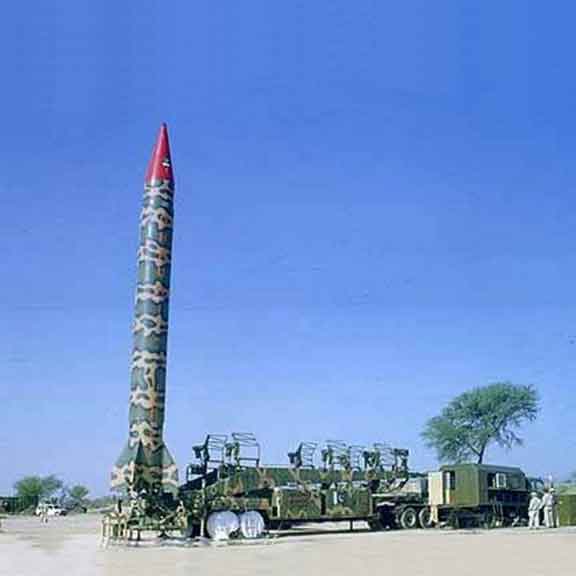
Pakistan has been a major supplier of critical equipment for North Korea’s nuclear weapons programme.

Take Note, America: 5 Weapons of War China Should Build Now

January 21, 2015 

What weapons should China be developing and building right now? There’s an inherent tension between defense procurement and innovation. On the one hand, the Chinese military needs platforms now in order to fulfill the increasing scope of its responsibilities. On the other hand, funds committed to production and operations don’t go into innovation, or to the integration of new weapon systems.

With this trade-off in mind, this article takes a look at five kinds of weapon that China can develop in the short, medium, and long terms. China needs systems to secure its borders, ensure the defense of its trade routes, and potentially challenge the United States in the Western Pacific. The list concentrates on systems that enable these missions, with a focus on weapons that other countries either already have or are developing.

Nuclear Powered Aircraft Carriers:

Chinese naval aviation has developed in impressive fashion since the commissioning of the Liaoning (CV-16). The PLAN has done good work with the J-15 navalized Flanker, as well as several support aircraft. In the short-to-medium term, we can expect China to press forward with the construction of conventionally powered carriers currently on the slips (reportedly a pair of Type 089 conventional carriers, although accounts vary). These ships will give the PLAN a real, operational naval aviation capability, and will provide the service with additional experience in carrier operations.

China Posts Lowest Growth Since 1990

January 21, 2015

China registered 7.4 percent GDP growth in 2014, according to data released this morning by the National Bureau of Statistics. That is China’s slowest economic growth rate since 1990, when China’s economy was severely hampered by sanctions following the Tiananmen Square incident of 1989.

While the GDP growth figure technically misses China’s GDP growth target of 7.5 for the year, Premier Li Keqiang had been adamant that this was a “soft” target – meaning the government would be satisfied with growth slightly under or over that goal. Instead of dithering over slow growth, the Chinese government put on a public show of confidence, reminding analysts that slower growth is China’s “new normal” as it transitions to sustainable development model. “The economy is maintaining steady operation under the new normal, with positive trends of stable growth, optimized structure, enhanced quality and improved social welfare,” NBS head Ma Jiantang told the media.

Premier Li is expected to deliver that same message to the World Economic Forum in Davos later this week. Acommentary in Xinhua said that “Li is expected to send a clear message of confidence in China’s economic development to boost confidence in the Chinese economy, and that of other emerging economies.” It’s the same message China’s leaders have been delivering since they rolled out their economic reform plan at the Third Plenum in fall 2013: yes, the economy is slowing, but there’s no reason to be concerned. After all, as Chinese analysts are quick to point out, most large economies would be thrilled to get anything close to 7.4 percent growth.

Time to Rethink Chinese Diplomacy

January 21, 2015

In the current international system, China is a “nonconformist” when it comes to its political system and ideology. Strictly speaking, China is part of a small minority, with only North Korea, Vietnam, and Cuba as ideological allies. While some Chinese are thinking about how to restrain or even replace the U.S. after China has fully risen, most countries are either openly or secretly considering how to restrain or limit a risen China.

Many years ago, when some IR scholars were considering how to restrain the U.S., I put forth my opinion: If China wants to truly rise, the first question it needs to solve is not how to restrain the U.S., but how to restrain China’s own behavior after it has risen. Many people were confused or even shocked to hear this. I explained: “If you don’t let the world see that a risen China can be restrained, it may be that China will not get a chance to rise at all!”

I was not exaggerating. Just look at China’s current leaders: in their speeches at every international forum, they endlessly emphasize China’s peaceful rise and promise that China will never seek hegemony. Everywhere they go, they give promises and assurances to people. In truth, China’s leaders are quite clear about this point: the whole world is afraid that China will be completely uncontrollable after it has risen.

China’s Economy Registers Weakest Economic Growth in 24 Years


China’s economy expanded by just 7.4% in 2014, undercutting earlier official forecasts and registering the Asian superpower’s weakest economic growth in 24 years, according to data released by the National Bureau of Statistics on Tuesday.

Late last year, authorities released official forecasts putting growth in 2014 at 7.5%. Tuesday’s revelation marked the first time in 16 years that the country’s economic performance missed the government’s annual target. However, authorities have largely tried to paper over the misstep.

“China has entered a new normal of economic growth,” Li Baodong, a Vice Foreign Minister, told reporters on Friday, according to Agence France-Presse. “That is to say we are going through structural adjustment and the structural adjustment is progressing steadily.”

Yet experts were not so quick to downplay China’s soaring debt, weak and volatile real estate market and plummeting domestic demand.

“Among all the problems, the biggest one is low domestic demand and the other is overcapacity. And when the global economy is not great, exporting is affected,” Chenggang Xu, a professor in economic development at the University of Hong Kong, tells TIME. “In the near future, we’ll see it slowdown further.”

The China factor in Obama's visit to New Delhi


India and China have always jockeyed for influence in Washington, sometimes against each other. So when President Barack Obama visits New Delhi next week, Beijing is all eyes and ears on what transpires in New Delhi.

Already, the first official meeting between Prime Minister Narendra Modi and President Obama last year led to 'great convergence' between the two countries and resulted in an 'Act East' policy and strengthening democracy -- the two red herrings for Beijing.

Of course, the Modi-Obama talks will be heavy on issues concerning the bilateral agenda -- civil nuclear technology and commerce, defence sales, climate change, economic, trade and investment issues.

But Beijing is wary equally of what is going to be said next week and what subtle signals emerge between the US and India on regional and global issues. For many of these signals, ironically China proved to be one of the triggers.

Firstly, while teaching a lesson to India in 1962, China drove a non-aligned India to seek defence supplies from the United States. Fortunately, for China the 'estranged democracies' of India and the US remained so for decades.

Islamic State Threatens to Kill Two Captured Japanese Citizens

January 21, 2015

The Islamic State, a militant group that has terrorized eastern Syria and northern Iraq for over a year, released an online video on Tuesday purportedly showing two Japanese citizens it had captured. IS threatened to kill the hostages unless it received $200 million in ransom within 72 hours. The video resembles other threatening videos released by the group, including most notoriously the videos including U.S. citizens James Foley and Stephen Sotloff, and British citizens David Haines and Alan Henning. Similar to those videos, this one also features a figure clad in black standing with a knife and speaking in English, outlining the nature of the threat. The video is notable for being the first in which the Islamic State overtly demands financial ransom for captives.

“To the prime minister of Japan: Although you are more than 8,500 km away from the Islamic State, you willingly have volunteered to take part in this crusade,” notes the militant in the video. In the video, he demands “200 million” without specifying a currency, but Arabic subtitles clarify that the currency is indeed U.S. dollars. According to Reuters, the captured Japanese citizens have been identified as Haruna Yukawa and Kenji Goto. Although the exact date of the video’s production remains indeterminate, its release comes shortly after a trip to Cairo by Japanese Prime Minister Shinzo Abe on January 17. In Cairo, Abe promised $200 million in non-military assistance for states engaged in the fight against the Islamic State.

For Ukraine, Weakness Could Be Its Greatest Strength

Samuel Charap,Tymofiy Mylovanov
January 21, 2015 

The United States and the EU have demonstrated significant commitment to Ukraine’s success since the Maidan revolution. However, no Western leader has ever suggested that Ukraine has a blank check—that the Western commitment is without limits. Instead, as evidenced by the measured extent of financial and military assistance to Ukraine, this commitment is both limited and conditional. In particular, if Kyiv’s promises to implement meaningful reforms are not fulfilled soon, then Western support might evaporate.

Russia has also demonstrated significant commitment to achieving its objectives in Ukraine. The Kremlin has shown willingness to incur significant costs—international sanctions, political isolation and economic and human losses from the military conflict—since the crisis broke out a year ago. Thus, in contrast to the West, Russia’s actions demonstrate that its commitment in this conflict is essentially unconditional and unlimited.

Thankfully, Ukraine’s circumstances have not deteriorated to the point of the U.S. big banks in 2008, when the federal bailout demonstrated that they were in fact too big to fail. But the threat of a dramatic deterioration in Ukraine’s security or economic conditions looms large in 2015. Policy makers in Kyiv certainly need to prepare for the worst. After a year of nearly every Western leader proclaiming firm commitments to Ukraine, some of those policy makers might well believe that they can still take certain risks; after all, they might reassure themselves, the West will never allow Ukraine to fail. While we cannot say with certainly that such a reassurance is baseless, there is strong evidence to suggest precisely that.

Syria Calling: Radicalisation in Central Asia


Growing numbers of Central Asian citizens, male and female, are travelling to the Middle East to fight or otherwise support the Islamic State (IS, formerly ISIL orISIS). Prompted in part by political marginalisation and bleak economic prospects that characterise their post-Soviet region, 2,000-4,000 have in the past three years turned their back on their secular states to seek a radical alternative. IS beckons not only to those who seek combat experience, but also to those who envision a more devout, purposeful, fundamentalist religious life. This presents a complex problem to the governments of Central Asia. They are tempted to exploit the phenomenon to crack down on dissent. The more promising solution, however, requires addressing multiple political and administrative failures, revising discriminatory laws and policies, implementing outreach programs for both men and women and creating jobs at home for disadvantaged youths, as well as ensuring better coordination between security services.

Should a significant portion of these radicalised migrants return, they risk challenging security and stability throughout Central Asia. Kazakhstan, Kyrgyzstan, Tajikistan, Turkmenistan and Uzbekistan form a brittle region, sandwiched between Russia and Afghanistan, Iran and China. Each suffers from poor governance, corruption and crime. Uzbekistan and Turkmenistan resemble authoritarian police states. Kazakhstan has some wealth, but its regions are in disrepair, and its political system is autocratic. All five fail to deliver quality social services, particularly in rural areas. Their security services – underfunded, poorly trained and inclined to resort to harsh methods to compensate for a lack of resources and skills – are unable to deal with a challenge as intricate as radical Islam. Rather than promoting religious freedom while safeguarding secular constitutions and attempting to learn from European or Asian experiences in rehabilitating jihadis, the five fuel further radicalisation by using laws to curb religious growth and the police to conduct crackdowns.

TERRORIST PLOT 63: ATTEMPT TO BOMB CAPITOL SHOWS US CANNOT IGNORE THREAT OF TERRORISM – OPED

By David Inserra


On January 14, the FBI arrested Christopher Cornell for plotting to bomb the U.S. Capitol and then fire upon those who fled from the buildings. According to the complaint filed against him, Cornell, who was using the alias Raheel Mahrus Ubaydah, supported the Islamic State and sought to wage jihad against the U.S. This is the 63rd successful or foiled Islamist terrorist plot against the United States since 9/11 and continues the trend of homegrown terrorism.

In light of this plot and the recent Islamist terrorist attack in Paris, it is clear that the U.S. cannot simply wish away the threat of terrorism at home and abroad. Despite rhetoric about the defeat of al-Qaeda, the insignificance of ISIS, and the end of the war on terror, the reality is that the threat of terrorism remains. The U.S. cannot merely be content with its existing counterterrorism efforts, but must look to improve and build on these efforts to keep the U.S. safe.

The Plot
The criminal complaint filed by the FBI against Cornell states that he created Twitter accounts in the summer of 2014 and began posting statements and videos supportive of ISIS as well as voicing support for violent jihad and acts of terrorism around the world.[1] The FBI used a confidential informant to reach out to Cornell and investigate his intentions.

9/11 Forever (and Ever)

January 21, 2015 


"The specter of '9/11' continues to be used as justification for a seemingly endless list of security measures, funding for a never-ending stream of weapon systems and for every military action overseas."

The horrific events surrounding 9/11 traumatized a considerable number of Americans, leaving most feeling vulnerable and insecure. In the first few days and weeks after the attack, there were many rumors of “second wave” attacks. Americans were understandably jittery. Our government had to make a number of decisions with imperfect information to protect us and to find the guilty as quickly as possible. It is the constitutional responsibility for the government to “provide for the common defense” of the nation from all enemies, foreign and domestic. But what if, in the just pursuit of that objective, we unwittingly harmed our security? What if we harmed it a lot? Would we, as a nation, be able to recognize the error, admit mistakes had been made, and then take necessary corrective action?

Impressively, within just a few months of the 2001 attacks, the Taliban had been virtually wiped out and al-Qaeda decimated; bin Laden was hiding impotently in a cave somewhere in Pakistan. The government also took defensive action domestically such as strengthening TSA security measures to make flying safer, establishing the Department of Homeland Security, and facilitating greater FBI and CIA cooperation. As a result of these and other actions, there have been no large scale terrorist attacks in the U.S .since.

The 5 Most Precarious U.S. Allies of All Time

January 21, 2015 


An old truism recommends keeping your friends close and your enemies closer. But how to tell the two apart?

Alliances in international politics are at best a necessary evil, somewhat analogous to government in liberal political philosophy. For a regional hegemon with global interests, like the United States, allies are particularly indispensable, given Washington’s need to project power globally.

That fact is cold comfort for the diplomats and military officers tasked with maintaining them, as even the best allies are a never-ending source of migraines and anguish. Many would contend that America has no greater friend than Israel. And yet, Israel is a counterintelligence nightmare with a habit of announcing settlement expansions at particularly inopportune times for U.S. officials.