18 April 2018

Is India Inc missing trillion dollar opportunity of climate change?


In the year 2010, barely two years after Apple produced the first smartphone, China doubled the price of 17 rare earth metals. These difficult to mine materials are considered critical to modern day electronics. Be it mobile phones, solar batteries, semiconductors, electromagnets, aerospace or defence industry, these rare earths are the backbone of the technology hardware world. Incidentally, 95 per cent of the world’s rare earth is controlled by China. It did not happen by chance, but by design. The post Mao Chinese economic revival was shaped by party strongman Deng Xiao Ping after 1978. It ensured an annual GDP growth of 9.5 per cent for more than two decades, peaking to over 15 per cent in 1984.
How China established lead in green technology

Level playing field missing in India, says L&T Shipbuilding MD & CEO

T E Narasimhan

L&T Shipbuilding, part of the engineering conglomerate Larsen & Toubro (L&T), has said its facility, as also those of other private shipyards, is running at a low capacity in the absence of a level playing field. The company has invested around Rs 40 billion so far to set up a facility at Katuppali, near Chennai, which is capable of manufacturing 10 ships but it making only two at present. “...not only us, the private sector utilisation (capacity) is only 20-25 per cent, since we are over-feeding the public sector,” B Kannan, managing director and chief executive, L&T Shipbuilding Ltd told Business Standard. 

Why are Walmart and Amazon desperate to buy Flipkart?

Itika Sharma Punit

The Indian e-commerce sector seems to have turned into a battleground for two American giants. Over the recent weeks, several news reports have suggested that retail major Walmart and e-commerce behemoth Amazon are in the fray to acquire a majority stake in Bengaluru-based Flipkart. Currently, Japan’s Softbank is the largest investor in the company. Last week, Reuters reported that Arkansas-based retail giant Walmart has completed its due diligence on Flipkart and has made a proposal to buy a 51% stake in it for between $10 billion (Rs66,527.5 crore) and $12 billion (Rs79,833 crore). The deal could close by the end of June, the news agency said. At the same time, Seattle-based e-commerce major Amazon, too, is trying to acquire a significant stake in the Indian e-retail major, FactorDaily has reported. The US firm has even offered a “breakup fee” of up to $2 billion. A breakup fee is a penalty set during the process of takeover agreements, to be paid if the target backs out of the deal. The fee underscores the seriousness of the negotiations.

Sale of Chinese Advanced Tracking System to Pakistan: Impact and Implications

Lt Gen (Dr) V K Saxena (Retd), PVSM,AVSM,VSM

According to a statement by Chinese Academy of Sciences (CAS) reported in the South China Morning Post (SCPM) on 22 March 18, China has provided Pakistan a highly advanced Optical Tracking and Measurement System which will be a boon to its missile programmei. This article attempts to examine, the impact and implication of the above sale with reference to India.

Factual Details

Broad System constituents

Pakistan's Jihadi corps and its Commander

By Vikram Sood 

New Delhi [India], April 7 (ANI): For the Pakistani establishment, Hafiz Muhammed Saeed is no mere mortal. He is their Most Favoured Jihadi. The association between Hafiz Saeed and the Pakistani establishment is now over 30 years old and the bond has only grown stronger. Besides, Saeed is an amenable and loyal jihadi. Unlike the other India-specific jihadi Masood Azhar of the Jaish-e-Mohammed, whose jihadis tried to assassinate General Musharraf, Hafiz Saeed's Lashkar-e-Tayyaba are not just Caliphate's soldiers, they are also Rawalpindi's main jihadi strike corps for the Kashmir theatre. He is no pawn; he is more like the versatile Queen on the chessboard, he can be moved in any direction any time as many times as necessary.

Who is Pushing Dalai Lama to Surrender to China?

Vijay Kranti

Dr. Lobsang Sangay’s attempt to present Dalai Lama’s return to a Chinese ruled Tibet as the monk’s “last unfulfilled dream”, and his call to Tibetan people for making this ‘dream’ of Dalai Lama a reality deserves a closer scrutiny by the Tibetan society, supporters of the Tibetan cause, and above all, the Government of India. This statement becomes extremely meaningful in light of the fact that it is the first ever official Tibetan endorsement of Beijing’s agenda which is seriously focused at bringing back Dalai Lama to Chinese ruled Tibet before he passes away and the search for his next (15th) reincarnation starts.

China Just Conducted Its Biggest-Ever Display of Naval Power

BY STEVE MOLLMANASIA 

It involved 48 warships, 76 aircraft, and more than 10,000 personnel in the South China Sea, plus an onboard speech by president Xi Jinping in military fatigues. China’s military put on something of a show in the contested South China Sea this week. In its largest-ever maritime exercise, the People’s Liberation Army sent forth 48 warships, 76 aircraft, and more than 10,000 personnel, with president Xi Jinping making an appearanceyesterday to watch the proceedings and address the troops. Speaking aboard a destroyer and dressed in military fatigues, Xi reiterated the goal of transforming the nation’s navy into a world-class force, adding, “The mission of building a mighty people’s navy has never been more urgent than it is today.”

The Syrian Tangle


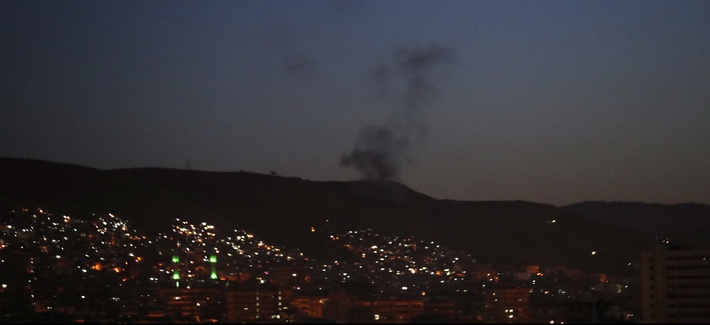
About a year ago, the Trump administration carried out a cruise missile strike on a Syrian airfield within 48 hours of a major chemical weapons attack on civilians, allegedly carried out by the Assad regime. The strike did some damage but nothing of such significance as to force the regime to change its strategy, either in general or on chemical weapons. Indeed, there was no expectation of change. The response was the military equivalent of a strong diplomatic note and was treated as such by the Syrians.

Lawmakers Ask: Where’s the Broader Syria Strategy?

BY CAROLINE HOUCK

No surprise that Democrats questioned Friday’s retaliatory strike, but even a few GOP defense hawks wondered aloud. Democrats widely questioned President Donald Trump’s decision to strike Syria in response to a suspected chemical weapons attack, calling it “unconstitutional” and “reckless.” But lawmakers on national security committees — even those endorsing the Friday night strikes, and some in the president’s own party — said the U.S. needed a comprehensive strategy for its involvement in Syria. Republican lawmakers largely endorsed the strikes on Friday night. Senate Majority Whip John Cornyn, R-Texas, tweeted “Good,” a response to Trump’s statement that “We are prepared to sustain this response until the Syrian regime stops its use of prohibited chemical agents.”

Legal Questions Loom Over Syria Strikes

by Jonathan Masters

In the wake of recent air strikes on Syria by the United States and its allies, some lawmakers in Washington and other world capitals are questioning the attacks’ legal basis. The Trump administration claims the recent assault was justified, but it has not laid out a rationale based on international law, says CFR’s John Bellinger, legal advisor at the National Security Council and the State Department during the George W. Bush administration. This leaves the United States open to charges of acting lawlessly and inviting similar behavior by other countries, he says. The United Kingdom is the only government that has explicitly said its use of force comports with international law, citing humanitarian grounds.

The Great Distraction of Punitive Airstrikes

by Jonathan Spyer

Despite escalating worries about Russia in past weeks, the skies did not fall as a result of the American-led punitive raid on Syria’s chemical weapons storage and research facilities Saturday morning. Great care was taken to avoid hitting the many sites within “Assad-controlled” Syria which are in fact administered by powers other than the Syrian dictator—namely, Russia and Iran. “A perfectly executed strike,” the president declared on Twitter. “Mission accomplished.” U.S. ambassador to the UN Nikki Haley struck a similar tone of satisfaction. ‘“If the Syrian regime uses this poisonous gas again,” she told an emergency meeting of the UN Security Council, “the United States is locked and loaded.”

Military Strikes on Syria: Critical Considerations

Michael Eisenstadt

Military action should seek to restore deterrence by hitting not just chemical weapons-related targets, but also ground and air units that are key to the Assad regime's war effort. In response to the latest reported use of chemical weapons (CW) by Assad regime forces near Damascus on April 7, which reportedly killed dozens of civilians in the town of Douma, President Trump tweeted that there would be a "Big price to pay." He subsequently told a cabinet meeting on April 9, "We cannot allow atrocities like that. Cannot allow it...Nothing's off the table." He then warned that regardless of whether Russia, the Assad regime, or Iran was responsible, the U.S. response would be "very tough," repeating that everybody involved would "pay a price."

Trump Proposes Rejoining Trans-Pacific Partnership

By Ana Swanson
Source Link

WASHINGTON — President Trump, in a sharp reversal, told a gathering of farm-state lawmakers and governors on Thursday morning that the United States was looking into rejoining a multicountry trade agreement known as the Trans-Pacific Partnership, a deal he pulled out of days after assuming the presidency. Mr. Trump’s reconsideration of an agreement he once denounced as a “rape of our country” caught even his closest advisers by surprise and came as his administration faces stiff pushback from Republican lawmakers, farmers and other businesses concerned that the president’s threat of tariffs and other trade barriers will hurt them economically.

Keeping Europe Safe after Brexit

Mark Leonard et al contend that there is a strong rationale for close EU-UK cooperation on security and defense after Brexit. So how could the EU and the UK develop a new partnership that not only sustains, but also potentially enhances Europe' security and global power? To help provide an answer, our authors here discuss 1) the principles that could serve as a basis for future EU-UK security relations; 2) key security concerns and major obstacles to a future EU-UK partnership; 3) how to potentially structure the future security ties, and more.

Fixing Foreign Intelligence: The Linguist Dimension

Dheeraj P C

Indian intelligence agencies needs to include language skills if they wish to improve their effectiveness. Fans of the James Bond series are well aware that the fictional MI6 character spoke German, French, Japanese and Danish. One may wonder: does the real world of espionage and intelligence agencies in the West really have such diverse linguistic expertise? The answer is both yes and no! That begs a deeper inquiry: what has been their experience so far with employing people with linguistic skills in collecting and analysing intelligence on foreign threats? It has been a story of severe catastrophe, followed by noteworthy remedial actions. The business of foreign intelligence requires a high level of language proficiency, which is sometimes hard to come by, and at times, unable to put to use effectively. This is explored in great detail in the sections below.

Can a one-off military strike deter Syria’s Assad from using chemical weapons again? The data suggests no

Chris Meserole

On Saturday, the Assad regime used chemical weapons on the last remaining rebel enclave of Douma, outside Damascus, killing over 40 civilians. In response, the Trump administration has vowed to respond forcefully, with President Trump most recently taunting Russia to get ready for a barrage of “smart” missiles. President Trump’s justification for his response rests on two arguments. The first is that the Assad regime’s use of chemical weapons owes directly to the Obama administration’s failure to uphold its red line after the horrific attack in Ghouta in August of 2013. The second is that a single, retaliatory missile strike is enough to deter future chemical weapons attacks.

Military Set for Cyber Attacks on Foreign Infrastructure

Paul Nakasone 

American military cyber warriors are ready to shut critical infrastructures in China and Russia during a future conflict by conducting cyber intrusions into their networks, according to the general set to lead Cyber Command. Both China and Russia have been detected conducting similar cyber battlefield reconnaissance against the U.S. networks used to control critical infrastructure in the United States, including electric grids, transportation, financial, and other critical systems. U.S. military plans for similar cyber attacks on foreign infrastructure was disclosed last month in a little-noticed written Senate testimony from Army Lt. Gen. Paul Nakasone, nominee for the dual positions of commander of Cyber Command and director of the National Security Agency.

The Russian Troll Army Isn't The Only One We Need To Worry About

Fruzsina Eordogh 

Much has been made of Russia’s troll army in the last year in regards to 2016 election inference but the Kremlin’s cyber soldiers aren’t the only country running disinformation campaigns in the US. In fact, every country that has an adversarial stance with the United States has amassed at least hundreds of online propaganda warriors, mostly in the form of bots and fake accounts. An Oxford study two years ago noted at least 30 nations were utilizing them. While most countries use their troll armies to police and influence their own citizens, some have already turned their attention to our shores as well as to our allies.

Cybersecurity in Sino-American Relations

By Marie Baezner for Center for Security Studies (CSS)

In this article, Marie Baezner describes how tensions built up between China and the US owing to the two powers conducting cyberespionage campaigns against each other, and how Washington and Beijing sought to ease this situation through a bilateral agreement in 2015. Baezner also looks at 1) the successes and limitations of the 2015 agreement; and 2) how internet governance and the possibility of the application of anti-access/area-denial (A2/AD) in cyberspace continue to cause disagreement between the US and China.

Meet the New Robot Army

By Paul Scharre

In contemporary sci-fi—HBO’s “Westworld,” for example—sentient machines take up arms against humanity. In the real world, intelligent—and increasingly autonomous—robots are being created with weapons already in hand. More than 16 countries (not to mention terrorist groups like the Islamic State) already possess armed drones. Militaries around the globe are racing to deploy robots at sea, on the ground and in the air. For now, these machines operate mostly under human control, but that may not be the case for long. This raises a question: What happens when a Predator drone has as much autonomy as a driverless car?

Bring on the cyber apocalypse

By Gary Anderson

Many “progressives” — particularly millennials — were horrified to learn that some Facebook data might have been used to help elect Donald Trump president. Conservatives understand that social media was used to elect both Mr. Trump in 2016 and Barack Obama in 2012. They can’t blame me; I have been off the social media grid since early 2012. Actually, I was never truly on it. I briefly opened a Facebook account when my son was in Afghanistan so I could see pictures of his surroundings. I quickly closed it after I began getting friend invitations from people I didn’t want to be friends with.

AI And Cybersecurity: Are We Fueling Hackers' Fire?


In cybersecurity, innovation is critical to fence in the constantly increasing attacks from cybercriminals. And the rise of innovation in cybersecurity is showing no signs of slowing down. New ventures emerge every year that quickly become the new must-have security applications that will strengthen an organization’s security posture. Just type "hottest cybersecurity startups" into your web browser search bar and you will be met with a slew of companies identified as the next big thing, including businesses using machine learning for smarter threat intelligence and those that promise to secure the Internet of Things.

A new target for hackers? Satellites

By: Mike Gruss  

The medium terminals in the Very Small Aperture Terminal Family of Systems undergo interoperability evaluations at Marine Corps Tactical Systems Support Activity aboard Camp Pendleton, California. Marines want to replace this system with a newer, lighter, faster and more reliable satellite communications platform (Marines)  WASHINGTON – Government and commercial satellite operators are increasingly the target of hackers, who are looking for inexpensive, but effective ways to limit space capabilities, according to a new report from the Secure World Foundation.

Two Decades of War Have Eroded the Morale of America’s Troops


After nearly 17 years of war, service members have seen plenty of patriotic displays but little public debate about why they’re fighting. South of fallujah’s Route Fran were hundreds of insurgents who’d spent months digging trench lines, emplacing roadside bombs, barricading streets, training with their weapons, reading the Koran, and watching videos of suicide bombers to inspire them for the fight to come. North of Route Fran were the roughly 1,000 men of 1st Battalion, 8th Marine Regiment, preparing themselves for the assault. Route Fran itself was a wide, four-lane highway. On November 9, 2004, the highway was wet—it’d rained the previous day—and the sky was gray and foreboding.

To hear more feature stories, see our full list or get the Audm iPhone app.

GENERATING, EXPRESSING AND IMPLEMENTING IDEAS – PART I

by James Davis

The realisation of a human/machine, robotics, autonomous systems and artificial intelligence approach, may represent the biggest single step innovation change our Army has ever undertaken. Army, Defence industry, and society need to further develop our collective thinking on this, possible, future. We will be looking to build partnerships of thought and action with interested parties and stakeholders. You might consider this a call for collaboration.[1]

Introduction

17 April 2018

India is not a currency manipulator


Indian policymakers have to be sensitive, without actually overreacting, to the risk that Donald Trump may move from rattling the sabres to actually using them. 

The Indian government reported last week that the trade deficit with the rest of the world nearly doubled in the financial year ended 31 March. The US Treasury Department said a few hours later that it would be adding India to the list of countries that it considers as potential currency manipulators. All this comes against the backdrop of growing global trade tensions. It is important to recognize that India has been put on a watch list rather than being actually accused of manipulating its exchange rate to hurt US interests. However, the mere fact that India is on the watch list now could restrict the Reserve Bank of India (RBI) in the foreign exchange operations it needs to pursue to protect financial stability, especially when global capital flows threaten to overwhelm domestic monetary policy.

Malala is building more schools in Pakistan. That’s not likely to reduce support for extremism.

Madiha Afzal

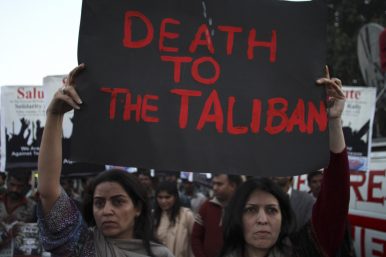
Since the Taliban targeted Malala Yousafzai for her advocacy for girls’ education, she has become known globally for promoting girls’ schooling. But will increasing access to education actually decrease support for the kind of extremism that led to the TTP’s attack on Malala? The answer is far from clear, writes Madiha Afzal. This piece originally appeared in the Washington PostLast weekend, Malala Yousafzai visited Pakistan for the first time since she was shot by the Tehrik-e-Taliban Pakistan (TTP) more than five years ago. That she was able to visit—albeit amid exceptionally tight security—is a testament to how much safety has improved in Pakistan. According to the South Asia Terrorism Portal, 748 civilians and security personnel died in terrorism-related incidents in Pakistan in 2017, a drop from 3,739 such deaths in 2012.

Afghan-Pakistani Cross-Border Terrorism Cuts Both Ways

By Franz J. Marty

KABUL — Reports about Afghan Taliban safe havens on Pakistani soil are abundant and such refuges are seen as crucial for the militants’ ability to sustain their insurgency inside Afghanistan. What is often overlooked is that some extremist groups, like the Tehrik-e-Taliban Pakistan (TTP), do the same, but in reverse – seeking shelter on the Afghan side of the border (which Kabul does not officially recognize) to launch assaults on the Pakistani side. While Pakistani officials have been making such accusations for years, they – unlike the allegations from Afghan and U.S. officials regarding Afghan insurgents hiding out on Pakistani soil – never really gained much traction or attention.

Pentagon Declares Strike Successful. Here’s A Look at What Went Into It

BY PATRICK TUCKER, APRIL 14, 2018
U.S., French, and British planes and ships used a wide variety of precision weapons to hit Syrian chemical weapons facilities. Some saw their first day of combat.
Saturday’s U.S.-French-British strike “overwhelmed” the Syrian air defenses and degraded the Assad regime’s chemical weapons capabilities, Pentagon leaders told reporters this morning. Three facilities were targeted in the 4 a.m. strike, in which allied warships and -planes fired 105 weapons, including the first combat use of the Joint Air to Surface Standoff, or JASSM, missile, Lt. Gen. Kenneth McKenzie, Jr. said.

McKenzie said the Syrians responded by firing 40 surface-to-air missiles, most of them after the allied munitions had already struck their targets. The head of the joint staff called the defensive fire “materially ineffective” against the coalition forces, but said it likely did pose a threat to civilians on the ground. “It is likely that the regime shot many of these missiles on a ballistic trajectory – without guidance,” he said. “When you shoot iron in to the sky without guidance, it will inevitably fall to earth.”

The most significant target was the Barzah Research and Development Center, located close to downtown Damascus, and heavily protected by Syrian air defenses. It was targeted by U.S. warships, which launched 57 Tomahawk cruise missiles and B-1 bombers 19 JASSM missiles. The bombers were escorted by attack aircraft and an EA-6B electronic warfare jet. McKenzie said initial assessments indicated the Barzah center was destroyed. “This Is going to set the Syrian chemical weapons [program] back years” he said. (Story continues below.)

The Importance of Seychelles

Pratap Heblikar

Seychelles is of vital geopolitical importance, and China is fighting to get an upper hand. India must not allow this. India’s relations with Seychelles have run into rough weather following the agreement to establish a military base on Assumption Islands. That exposed fault lines leading to racial tensions between the majority community and the minority comprising people of Indian origin and Indian nationals currently resident there. Political dissensions in the country between the ruling dispensation and the opposition, particularly anti-India elements on both sides of the political divide, have come to the fore.

The Full Story Behind China's Gold Mine-Power Plant Swap in Tajikistan

By Dirk van der Kley

The swap is the culmination of a longstanding agreement that began almost a decade ago.

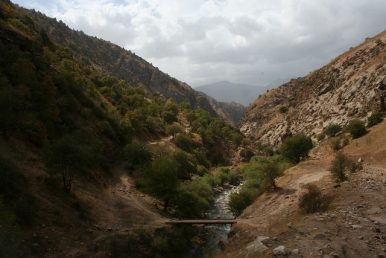
In the last couple of days, it was reported that a Chinese company, TBEA, has been granted a license to operate the Upper Kumarg gold mine in northern Tajikistan in exchange for the construction of a power plant in Dushanbe. This is likely to be true. It is the culmination of a long-standing agreement that began almost a decade ago.

Is Trump Serious About Trade War? China’s Leaders Hunt for Answers

By KEITH BRADSHER and JANE PERLEZ
Source Link

BEIJING — In an elegantly furnished back room at a conference in eastern China in December, a member of the Chinese leadership asked American tech executives for help. The official, Wang Huning, a Communist Party strategist who has spent much of his career sizing up the United States as a geopolitical rival, wanted to know whether President Trump was serious about a trade war with China— and whether his American visitors could serve as a channel of communication to the White House.

The sneaky ways China and Russia could threaten US satellites

By: Aaron Mehta and Mike Gruss   

WASHINGTON – Major global powers, such as China and Russia, are focusing more on space weapons that neutralize others’ satellites rather than those that destroy payloads on orbit, a new report has foundThe study by the Secure World Foundation, released Wednesday morning and previewed exclusively with Defense News, is a comprehensive collection of public-source information about the counterspace capabilities of China, Russia, North Korea and other world powers that could threaten American dominance in space.

China’s Moves in Vanuatu: What Should Australia Do?

By David Brewster

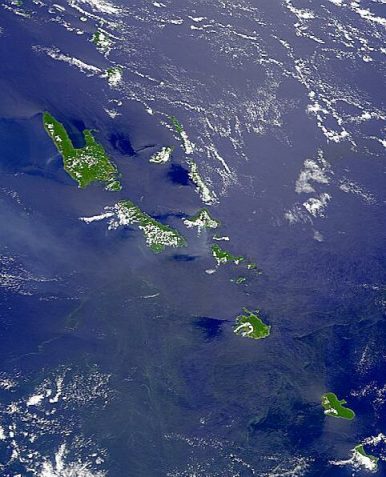
Australia woke up on Tuesday morning to extraordinary reports that China had made an informal approach to Vanuatu to establish some type of naval or military presence in that tiny island state. This set off big alarm bells for Australians, who since the bloody battles of 1942-45 have successfully managed to avoid the militarization of the South Pacific by major powers. These reports were flatly denied by the government of Vanuatu and by Beijing. Indeed, for several reasons, we should be skeptical about whether China would want to establish a military base in the South Pacific in the foreseeable future. But China does have growing interests in the region — which Australia needs to understand and do its best to help manage.

Ring Of Fire: Tremors and Eruptions in the US-China Trade War

By Roncevert Ganan Almond

On April 5, 1815, Mount Tambora erupted on the island of Sumbawa in the Dutch East Indies, present day Indonesia. Located along the “Ring of Fire” – the seismic belt surrounding the Pacific Ocean – the volcano’s blast was one of the most severe in recorded history. Nearly 800 miles away in Java, Thomas Stamford Raffles, the lieutenant-governor of British Java and founder of colonial Singapore, mistook the thunderous bang for cannon fire. The eruption’s ash plume was so vast that it literally changed the world’s climate, lowering global temperatures for years. The following year, 1816, became known as the “Year without Summer” as the persistent chill from the sun-blocking ash cloud killed crops and disrupted commerce across the globe, from China to America. This foreboding environment inspired Mary Shelley to pen her masterpiece Frankenstein, a tale drawing upon human ambivalence and fear in the face of technology and industrialization.