The Profession of Arms: A Guide for Young Army Officers
It takes courage, especially for a young officer, to check a man met on the road for not saluting properly or for slovenly appearance, but, every time he does, it adds to his stock of moral courage, and whatever the soldier may say, he has respect for the officer who does pull him up.
Read Document →The Dragon's Teeth: Assessing China's Military Modernization
PLA has focused on modernising its capabilities across all warfare domains to achieve these goals. This includes land, air, and maritime operations, nuclear, space, counter-space, electronic warfare and cyberspace operations, aiming to become a fully integrated joint force.
Read Document →Transforming the PLA: A Decade of reorganisation from SSF to ISF
PRC has engaged in a sustained and broad effort to transform the PLA from an infantry-heavy, low-technology, ground forces-centric military into a high-technology, networked force with an increasing emphasis on joint operations and naval and air power projection.
Read Document →Eyes without Borders: Exploring the World of Open Source Intelligence (OSINT) in the Digital Age
Open Source Intelligence (OSINT) is gaining prominence with the rise of social media, the digital society and the vast growth of publicly and commercially available information (PAI and CAI).
Read Document →
The PLA’s Developing Cyber Warfare Capabilities and India's Options
Informationised warfare blurs the lines between peacetime and wartime. A nation in the information age cannot wait for the hostilities to break out to collect intelligence, carryout influence operations, develop antisatellite systems or design computer software weapons.
Read Document →
Galwan and After
Why did China did this when he is under tremendous pressure in all fronts, is this China's salami slice tactics being progressed rigorously, what will be new Rules of Engagement, what will be escalatory control mechanism, who has taken this decision, will there be some pressure put by China in India's North-East through insurgency.
Read Document →
India’s Joint Doctrine for Cyberspace Operations: A Critical Review
Chief of Defence Staff (CDS) General Anil Chauhan and Secretary, Department of Military Affairs, formally released declassified versions of the Joint Doctrines for Cyberspace Operations during the Chiefs of Staff Committee meeting in New Delhi.
Read Document →
Know your Enemy General(now Field Marshal) Syed Aseem Munir
Gen SA Munir's position in the hierarchy of Pakistan was not very comfortable. The state of economy, insurgency in Pakhtoonistan and Balochistan, attack on the Jaffar Express, constant protests by supporters of Imran Khan's supporters inside and outside of parliament.
Read Document →
Decoding Operation SINDOOR: Key Aspects and Implications
Precision strikes were carried out on nine sites—four in Pakistan and five in PoK—linked to anti-India terrorist groups such as the LeT, JeM and the Hizbul Mujahideen. The targeted sites included Muridke (LeT headquarters) and Bahawalpur (JeM headquarters).
Read Document →
Chinese Cyber Exploitation in India's Power Grid - Is There a linkage to Mumbai Power Outage?
The New York Times (NYT), based on analysis by a U.S. based private intelligence firm Recorded Future, reported that a Chinese entity penetrated India’s power grid at multiple load dispatch points. Chinese malware intruded into the control systems that manage electric supply across India, along with a high-voltage transmission substation and a coal-fired power plant
Read Document →30 December 2019
10 Conflicts to Watch in 2020
All-India NRC will certainly fail. Here’s what Modi govt should do for its citizenship plan
China’s Central Asian Plans Are Unnerving Moscow
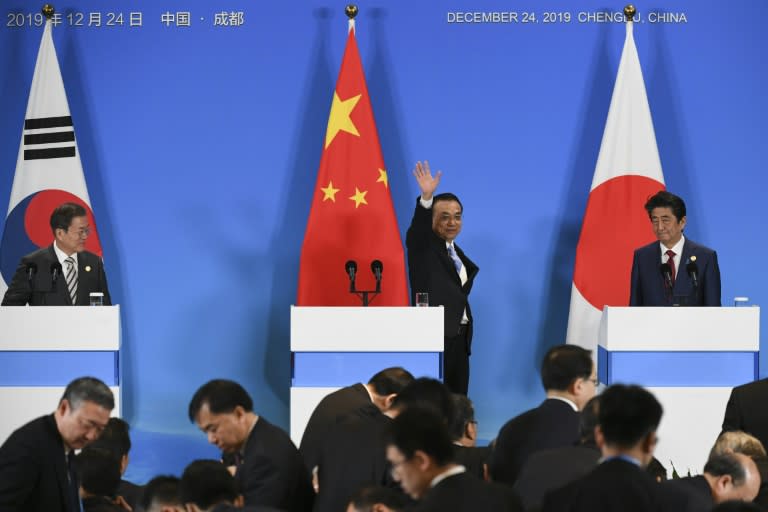
KHORGOS, Kazakhstan—On the China-Kazakhstan border, flanked by snowcapped peaks, a highway cuts through a barren landscape to reach this terminal at Khorgos. Here, amid a collection of cranes, rail tracks, and warehouses, a growing town is poised to become a bustling inland transport hub and a vital link in China’s vast and battered Belt and Road Initiative.China hosts Japan, South Korea with eyes on nuclear North
How Will China Act In The South China Sea? Just Ask Russia.
The “sail by” of USS Lassen within the 12 nautical mile claim line of the new Chinese facilities on Subi reef in the South China Sea occurred without major incident last week. Despite some fiery Chinese rhetoric, war has not broken out and that is a profoundly good thing. Actually, nothing much has changed at all, so it seems. The tense stalemate persists as before. China will continue to build up its new “bases” in and among the Spratly islets. The U.S. will continue to patrol regularly and exercise with its alliance partners. Perhaps, as Xi Jinping said not so long ago, the Pacific Ocean really is big enough to accommodate the interests of both China and the U.S.?On Both Sides of the Pacific, Skepticism Over China Farm Purchases
President Donald Trump likes to joke that America’s farmers have a nice problem on their hands: They’re going to need bigger tractors to keep up with surging Chinese demand for their soybeans and other agricultural goods under a preliminary deal between the world’s two largest economies.China’s Second Aircraft Carrier: A Sign of PLA Naval Muscle?
On December 17, China commissioned into service its first home-built aircraft carrier, Shandong, at the Sanya naval base in Hainan, with President Xi Jinping presiding over the commissioning ceremony.Star Wars: How Taiwan’s Celebrities Became Pawns in the Cross-Strait Struggle
With U.S. Help No Longer Assured, Saudis Try a New Strategy: Talks
Worried that they can no longer count on American defense, the Saudis have begun talking to their enemies to cool conflicts in the region.Near Disaster: Gwadar’s Little Village Faces a Crumbling Coastline
Abdul Jabbar sits under the porch of his only remaining room. He raises his finger in the air, pointing toward the sea and its waves breaking two to three meters away. “This had fed us for centuries but now we fear for our lives and our homes,” Jabbar says.US contemplates information warfare to counter Russian interference in the 2020 election
WASHINGTON (WASHINGTON POST) - United States military cyber officials are developing information warfare tactics that could be deployed against senior Russian officials and oligarchs if Moscow tries to interfere in the 2020 US elections through hacking election systems or sowing widespread discord, according to current and former US officials.Why the Liberal International Order Will Endure Into the Next Decade
It’s become fashionable to wonder whether the liberal international order can survive the malign forces that have been lining up against it during the 2010s—what the Wall Street Journal called the “Decade of Disruption.” But based on recent trends, it’s a fair bet that democracy, globalism, and open trade will endure handily into the third decade of the 21st century.Japan Delays Key Steps in Fuel Removal from Tsunami-wrecked Fukushima Nuclear Plant
More than 4,700 units of fuel rods remain inside the three melted reactors and two others that survived the 2011 earthquake and tsunami.A New Americanism
U.S. Cybercom contemplates information warfare to counter Russian interference in 2020 election
Military cyber officials are developing information warfare tactics that could be deployed against senior Russian officials and oligarchs if Moscow tries to interfere in the 2020 U.S. elections through hacking election systems or sowing widespread discord, according to current and former U.S. officials.Shinzo Abe Can’t Afford to Rest on His Laurels
Shinzo Abe has defied the political odds to become Japan’s longest-serving prime minister since the office was first created in 1885. Despite this notable achievement in the bare-knuckles world of Japanese politics, a weakening economy, an unfinished political agenda, and a minor but politically debilitating scandal that has hit his approval ratings mean that this is no time for him to take a victory lap.Return to the Rat Hole
Coal miners in the mineral-rich northeastern Indian state of Meghalaya have something to celebrate. Over the summer, the Supreme Court of India passed an order to reopen mining in their state.Infographic Of The Day: 10 Global Insights Into A Transforming World
Jokowi’s Political Record Could Derail His Big Plans for Indonesia’s Economy
Japan Wants to Dump Nuclear Plant’s Tainted Water. Fishermen Fear the Worst.
IWAKI, Japan — The overpowering earthquake and tsunami that ripped through northern Japan in March 2011 took so much from Tatsuo Niitsuma, a commercial fisherman in this coastal city in Fukushima Prefecture.Putin the Great
On January 27, 2018, Vladimir Putin became the longest-serving leader of Russia since Joseph Stalin. There were no parades or fireworks, no embarrassingly gilded statues unveiled or unseemly displays of nuclear missiles in Red Square. After all, Putin did not want to be compared with Leonid Brezhnev, the bushy-browed septuagenarian whose record in power he had just surpassed. Brezhnev, who ruled the Soviet Union from 1964 to 1982, was the leader of Putin’s gritty youth, of the long stagnation that preceded the empire’s collapse. By the end, he was the butt of a million jokes, the doddering grandfather of a doddering state, the conductor of a Russian train to nowhere. “Stalin proved that just one person could manage the country,” went one of those many jokes. “Brezhnev proved that a country doesn’t need to be managed at all.”20 Years of Russia’s Institutionalism in Eurasia
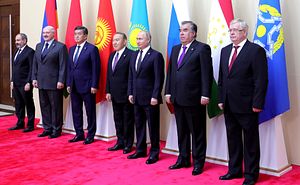
Over the past two decades, the Russian Federation sponsored and promoted several influential integrative organizations in Eurasia. These diverse bodies developed different foci, ranging from the hard security oriented Collective Security Treaty Organization (CSTO), to the economics driven Eurasian Economic Union (EAEU), to the politico-security centered Shanghai Cooperation Organization (SCO), which Moscow established together with China. While sometimes its efforts were dismissed as nothing more than attempts to “re-Sovietize” the Eurasian space, or were questioned for their intergovernmental character centered on the protection of the region’s entrenched governments, Russia’s true motivations were grounded in some practical needs. Among these, the most palpable were various security challenges that affected the post-Soviet space, a necessity of addressing globalization’s negative impact on the local economies, and a desire to settle a tense frontier with erstwhile Cold War rival China. Therefore, these institutions became essential vessels in Russia’s drive to deal with Central Asia’s complex environment, and also help it restore its formerly enjoyed status of a true global power.CSIS Bad Idea: Giving Space Command An AOR
We’ve decided to make it a tradition: partnering with the Center for Strategic and International Studies (CSIS) to bring you their BEST Bad Ideas in national security over the Holiday Season. Given all the folderol last week over the Final Frontier, we’re starting with Kaitlyn Johnson’s critique of the Pentagon’s move to designate the new(ish) Space Command as a geographic command (whose AOR starts 100 kilometers above the Earth’s surface). Instead, CSIS’s Johnson argues, it ought to have been structured as a functional command like Transportation Command, given the nature of the space domain and the types of military operations likely in space. The Editor.The United States Needs a Strategy for Artificial Intelligence
In the coming years, artificial intelligence will dramatically affect every aspect of human life. AI—the technologies that simulate intelligent behavior in machines—will change how we process, understand, and analyze information; it will make some jobs obsolete, transform most others, and create whole new industries; it will change how we teach, grow our food, and treat our sick. The technology will also change how we wage war. For all of these reasons, leadership in AI, more than any other emerging technology, will confer economic, political, and military strength in this century—and that is why it is essential for the United States to get it right.Best of The Interpreter 2019: Technology
The endless blessings of technology – where would we be without them? Not reading this page, for a start. Several decades into the so-called digital revolution (depending where you mark the start), tech has become almost as essential to our everyday lives as air and water, and yet behind the utopian glimmer, doubts linger that we have tricked ourselves, and the Luciferian fire that brings light also has the power to consume us and destroy us.Information Warfare: South Asian Cyber War
What the Pentagon needs before it makes a decision on satellite communications
The U.S. military will likely take a hybrid approach to meet its satellite communications needs in the future, relying on bandwidth from commercial services and government-owned systems. But the mechanics of how the Pentagon will get there isn’t exactly clear.Combining AI and Playbooks to Predict Cyberattacks
Mature machine learning can analyze attack strategies and look for underlying patterns that the AI system can use to predict an attacker’s next move.DHS updates its view of trust in new network security guidance
New Department of Homeland Security draft guidance on an updated version of the federal government’s external network security program takes a new approach to trust, moving toward a more “nuanced” view to allow for flexibility across different agencies’ mission areas.