The Profession of Arms: A Guide for Young Army Officers
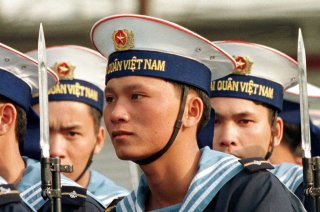
It takes courage, especially for a young officer, to check a man met on the road for not saluting properly or for slovenly appearance, but, every time he does, it adds to his stock of moral courage, and whatever the soldier may say, he has respect for the officer who does pull him up.
Read Document →The Dragon's Teeth: Assessing China's Military Modernization
PLA has focused on modernising its capabilities across all warfare domains to achieve these goals. This includes land, air, and maritime operations, nuclear, space, counter-space, electronic warfare and cyberspace operations, aiming to become a fully integrated joint force.
Read Document →Transforming the PLA: A Decade of reorganisation from SSF to ISF
PRC has engaged in a sustained and broad effort to transform the PLA from an infantry-heavy, low-technology, ground forces-centric military into a high-technology, networked force with an increasing emphasis on joint operations and naval and air power projection.
Read Document →Eyes without Borders: Exploring the World of Open Source Intelligence (OSINT) in the Digital Age
Open Source Intelligence (OSINT) is gaining prominence with the rise of social media, the digital society and the vast growth of publicly and commercially available information (PAI and CAI).
Read Document →
The PLA’s Developing Cyber Warfare Capabilities and India's Options
Informationised warfare blurs the lines between peacetime and wartime. A nation in the information age cannot wait for the hostilities to break out to collect intelligence, carryout influence operations, develop antisatellite systems or design computer software weapons.
Read Document →
Galwan and After
Why did China did this when he is under tremendous pressure in all fronts, is this China's salami slice tactics being progressed rigorously, what will be new Rules of Engagement, what will be escalatory control mechanism, who has taken this decision, will there be some pressure put by China in India's North-East through insurgency.
Read Document →
India’s Joint Doctrine for Cyberspace Operations: A Critical Review
Chief of Defence Staff (CDS) General Anil Chauhan and Secretary, Department of Military Affairs, formally released declassified versions of the Joint Doctrines for Cyberspace Operations during the Chiefs of Staff Committee meeting in New Delhi.
Read Document →
Know your Enemy General(now Field Marshal) Syed Aseem Munir
Gen SA Munir's position in the hierarchy of Pakistan was not very comfortable. The state of economy, insurgency in Pakhtoonistan and Balochistan, attack on the Jaffar Express, constant protests by supporters of Imran Khan's supporters inside and outside of parliament.
Read Document →
Decoding Operation SINDOOR: Key Aspects and Implications
Precision strikes were carried out on nine sites—four in Pakistan and five in PoK—linked to anti-India terrorist groups such as the LeT, JeM and the Hizbul Mujahideen. The targeted sites included Muridke (LeT headquarters) and Bahawalpur (JeM headquarters).
Read Document →
Chinese Cyber Exploitation in India's Power Grid - Is There a linkage to Mumbai Power Outage?
The New York Times (NYT), based on analysis by a U.S. based private intelligence firm Recorded Future, reported that a Chinese entity penetrated India’s power grid at multiple load dispatch points. Chinese malware intruded into the control systems that manage electric supply across India, along with a high-voltage transmission substation and a coal-fired power plant
Read Document →26 June 2020
Responding to the Standoff on the LAC in Ladakh
Understanding the military build-up on the China–India border
Donald Trump Should Talk to Russia to Thwart China
Russian President Vladimir Putin is thinking about his country’s place in the world. We in America should be thinking about that too, especially as the long-term conflict with China intensifies. This is a chance to focus more on what we might have in common.How Much Will Coronavirus Damage China's Economy?
Why It's Dangerous to Blindly "Follow the Science" on Coronavirus
History Lesson: Yes, Vietnam Did Halt China's 1979 Invasion
China’s quantum satellite enables first totally secure long-range messages
In the middle of the night, invisible to anyone but special telescopes in two Chinese observatories, satellite Micius sends particles of light to Earth to establish the world’s most secure communication link. Named after the ancient Chinese philosopher also known as Mozi, Micius is the world’s first quantum communications satellite and has, for several years, been at the forefront of quantum encryption.China cyber attacks: Beijing’s misinformation war against Australia
Libya: A Catastrophe for Russia’s Pantsir S1 Air Defense System
Vladimir Putin: The Real Lessons of the 75th Anniversary of World War II
John Bolton's Mission: Destroy Donald Trump's Detente with North Korea
National Security and the Lasting Damage of Ruthless Partisanship
As Donald Trump’s electoral prospects diminish amid a pandemic-induced recession, his blame-deflecting attacks have become ever more desperate. The most immediate and obvious damage from a presidential performance characterized by desperation and demagoguery is to be measured in terms of public health and the toll of the coronavirus. At last count, the United States, with 4.2 percent of the world’s population, had 31 percent of the coronavirus infections and 29 percent of the deaths. This type of damage is likely to get even worse as Trump rolls the dice on an economic recovery between now and November 3 that he hopes will overshadow the resurgence of disease and death that epidemiologists say will result from premature relaxation of pandemic-required restrictions. How the Coronavirus Could Crush the U.S. Economy
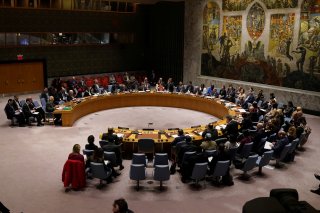
The UN Security Council Isn’t Working. Can It Be Reformed?
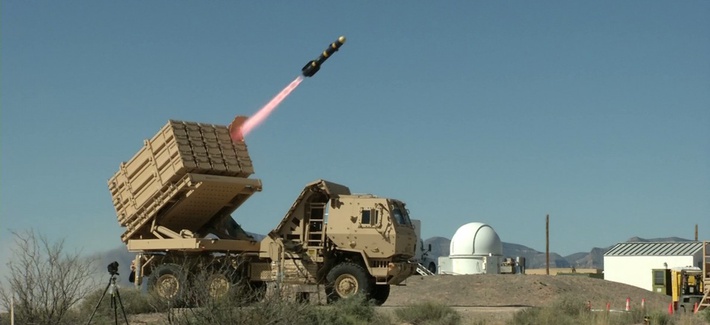
How the U.S. Military Plans to Destroy Hypersonic Missiles in a War
Will Trump’s Trade Wars Reshape the Global Economy?
Infographic Of The Day: Tesla Is Now The World's Most Valuable Automaker
Why North Korea Blew Up Its Dรฉtente With the South
Opinion – The Good, the Bad and the Ugly of COVID-19 Recovery Financing in Europe
Enduring Stark Utopia: A Polanyian Reading of the Global Political Economy
This content was originally written for an undergraduate or Master's program. It is published as part of our mission to showcase peer-leading papers written by students during their studies. This work can be used for background reading and research, but should not be cited as an expert source or used in place of scholarly articles/books.Top Analyst: Apple Will Stop Using Intel Chips in All Macs by 2021
Apple is reportedly planning to move all of its Mac computers from Intel processors to its own Apple chips by 2021, according to a note by TF International Securities analyst Ming-Chi Kuo.Crypto Die-Hards Turn Back to Origins With Anti-Inflation Push
A crisis was supposed to be Bitcoin’s time to shine, when the need for an international currency outside the reach of central banks would prove invaluable. That hasn’t been the case.The Pentagon Must Not Falter in Its Drive To Network Its Weapons and Sensors
American military superiority depends on a complete and successful integration of all services' forces.Remote Warfare and the Utility of Military and Security Contractors
This chapter explores the role of military and security[1] contractors in remote warfare. As the chapter explains, contractors in general have been a feature of warfare for centuries. This is not a coincidence, but rather the result of how warfare has been organised since the beginning of sixteenth century if not earlier. It was only after the rise of nationalism and the emergence of the modern state after the French Revolution, alongside industrialisation, and improvements in methods of bureaucracy that military contractors were temporarily marginalised, with many of their roles taken over by nationalised armed forces. This way of organising state violence survived until after the Second World War, when military and security contractors once more began to appear on the battlefield, supporting military operations, or conducting foreign military training. Today, they are a regular part of modern warfare. The Remote Warfare Paradox: Democracies, Risk Aversion and Military Engagement
Liberal Western democracies are increasingly resorting to remote warfare to govern security threats from a distance. From the 2011 NATO-led bombings in Libya, the US Africa Command training Ugandan soldiers to fight al-Shabaab, or the US-led coalition against IS in Syria and Iraq, violence is exercised from afar. Remote warfare is characterised by a shift away from ‘boots on the ground’ deployments towards light-footprint military interventions. This may involve using drone and air-strikes, special forces, intelligence operatives, private contractors, and training teams assisting local forces to do the fighting, killing, and dying on the ground (Demmers and Gould 2018: 365; Watts and Biegon 2017: 1).