26 May 2016

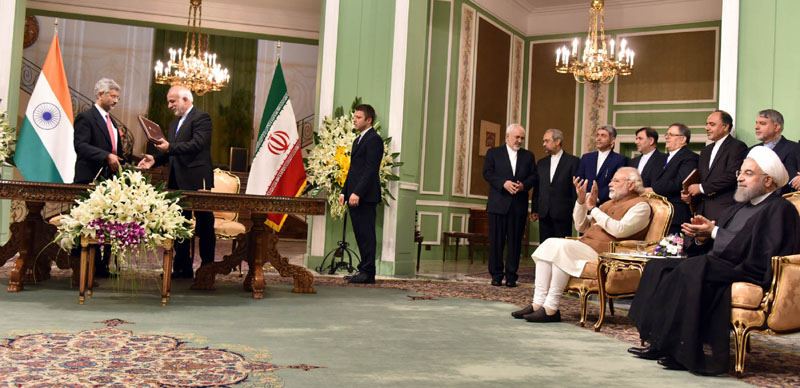
The geopolitics of Indian PM Modi’s Iran visit


The Indian Prime Minister Narendra Modi has been widely regarded as a friend of Israel. High expectations were placed on Modi undertaking an early visit to Israel. But that has not happened yet, and instead even as he completes two years in office, his main focus in West Asia happens to be on the Persian Gulf region.

Indian Prime Minister Narendra Modi (L) holds talks with Iran’s Supreme leader Ayatollah Seyyed Ali Khamenei in Tehran Tuesday

Does it mean he has put Israel on the backburner? Far from it. There can be no two opinions that India regards Israel as an almost irreplaceable partner in the West Asian region.

Other than Russia, it is from Israel that India sources advanced military technologies. The strategic nature of the Israel ties gives that country a unique status in the Indian regional policies.
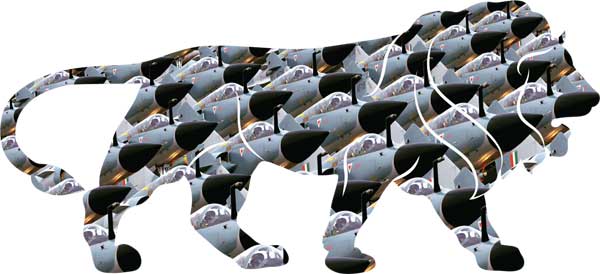
Make In India: Indian Defence Industry – The Road Ahead

By Maj Gen Rajiv Narayanan
25 May , 2016

The PMs vision of ‘Make in India’ and the thrust being given in the Defence Procurement Procedure 2106 to ‘Indian Designed, Developed and Made (IDDM)’ products is a welcome shift from the decades old concept of licensed production. While laying the foundations for the Indian Defence Industry, via the Ordnance factories and the Defence Public Sector Undertakings, the then PM, Shri Jawaharlal Nehru, had the lofty vision of setting up an Indian defence industry to meet the needs of the Indian Armed Forces with state of art ‘Indian Made’ weapons and equipment. However, the flaw of having ‘licensed production for a captive market’ belied those dreams.

While many foreign companies from the global defence industry have stepped forward by establishing Joint Ventures (JVs) with Indian private industry, it is unlikely that ‘niche’ technology would be available in India soon.

While the current course correction is laudable, there is a need for a calibrated approach to achieve the same. The vision of the then PM and the current PM remains the same – to provide the Indian Armed Forces with state of art weapons and equipment designed and developed in India. While many foreign companies from the global defence industry have stepped forward by establishing Joint Ventures (JVs) with Indian private industry, it is unlikely that ‘niche’ technology would be available in India soon. No country or company would share its ‘niche technology’ since it would impact its uniqueness and its commercial viability.

The Pakistan factor in India-Iran ties

By Monish Gulati
25 May , 2016

As Prime Minister Modi makes his first visit to Iran, numerous factors are at play ranging from the timing of the visit, which is taking place after his visit to Saudi Arabia and before an expected visit to Israel, to discussions on expectations about how India would shape its relations with a post-sanctions Iran and issues of energy cooperation and connectivity. A question that intrigues some analysts, given the present geopolitical environment and the geo-strategic power play in Middle East and South Asia, is whether Pakistan is a factor in India-Iran relations. 

Besides the geographical reality of Pakistan interposing itself between India and Iran and historical Iran-Pakistan relations, it is the complex interplay of more recent events such as (a) developments in Afghanistan (b) Iran-Saudi dynamics with its sectarian dimension (c) Pakistan’s efforts to balance its relations including refusal to be a part of the Arab intervention force in Yemen and a hesitant consent to be part of the Saudi-led anti-terrorism alliance; and (d) the Chinese interest in the region, which support the argument on the Pakistan factor in Iran-Pakistan relations. All of these seem to precipitate during the Iranian President Rouhani’s visit to Pakistan.

India’s New Fighters Have Serious Engine Problems

by THOMAS NEWDICK

The SU-30MKIs constantly break down

In the past decade, the Indian Air Force has bought hundreds of Su-30MKI fighter jets from Russia. Some of Moscow’s most advanced export fighters, the warplanes should have helped New Delhi strengthen its military.

But it turns out, the twin-engine jets have failure-prone motors. Their AL-31FP engines break down with alarming frequency.

In March, Indian defense minister Manohar Parrikar revealed the propulsion problems.

There have been no fewer than 69 investigations involving engine failures since 2012, according to Parrikar. Between January 2013 and December 2014 alone, the Indian Air Force recorded 35 technical problems with the turbofans.

A shortfall in India’s Sukhoi fleet is a big deal. Especially at a time when India’s fighter squadrons are shrinking, and plans to induct the French Rafale fighter have stalled.

The Su-30MKI remains the pride of the Indian Air Force. Russia’s Irkut Corporation initially supplied the jets, and today Hindustan Aeronautics Limited produces them under license.

How significant is India's $500 million deal with Iran?


May 24, 2016 

India and Iran, along with Afghanistan, have agreed to develop the southern Iranian port of Chabahar, giving India vital access to Central Asia, as well as highlighting regional rivalries and burgeoning friendships.

India pledged Monday to contribute up to $500 million to the development of a port at Chabahar in southern Iran, part of a three-nation agreement that also includes Afghanistan.

The deal represents a victory for India, which has long sought access to the markets of Iran, Afghanistan, and Central Asia, but has been unable to overcome its thorny relationship with neighboring Pakistan to easily realize that dream.

But other geopolitical forces are also at play, not least with respect to what the agreement says about the deepening, maturing relationship between India and the United States – and Indian efforts to keep Chinese dominance at bay.

“This is highly significant for India, especially if they follow up and seize upon these opportunities,” says Sumit Ganguly, senior fellow for the Asia program at the Foreign Policy Research Institute, in a telephone interview with The Christian Science Monitor.

US General in Afghanistan: Mansour Was an Obstacle to Peace


By lynne o"donnell, associated press 
May 23, 2016

The top U.S. commander in Afghanistan said Monday that Taliban leader Mullah Mohammed Akhtar Mansour was an obstacle to peace and his death will have a disruptive effect on the insurgency.

Resolute Support Commander, Gen. John W. Nicholson, said during a visit to the northern province of Kunduz that Mansour rejected the chance offered by Afghan President Ashraf Ghani to participate in the peace process.

"I hope that the Taliban leadership will realize it is time to lay down their weapons and join the peace efforts, so the people of Afghanistan can enjoy peace and prosperity in the future," Nicholson said.

President Barack Obama also said Mansour's death marks an "important milestone" in the longstanding effort to bring peace to Afghanistan.

Nicholson was in Kunduz for the second time since becoming commander of the Resolute Support mission. In late September 2015, Mansour's Taliban fighters overran the city of Kunduz and held it for four days before being driven out. The takeover was a major embarrassment for Ghani's government.

U.S. Strike on Taliban Leader Is Seen as a Message to Pakistan


By MARK LANDLER and MATTHEW ROSENBERG 
May 23, 2016 

WASHINGTON — Early on Saturday, a middle-aged Pashtun man used forged documents to cross from Iran into Pakistan. A few hours later, on a lonely stretch of highway, he was incinerated by an American drone.

It is not exactly clear how the Americans tracked Mullah Akhtar Muhammad Mansour, leader of the Afghan Taliban, to a white sedan rattling across the arid expanse of Baluchistan Province. The United States picked up a mix of phone intercepts and tips from sources, American and European officials said, and there were reports that Pakistan also provided intelligence. President Obama described Mullah Mansour’s death on Monday as an “important milestone” — but the strike was also an illustration of the tangled relationship between Washington and Islamabad.

Not since Mr. Obama ordered Navy SEALs to hunt down Osama bin Laden in May 2011 has he authorized a military incursion in Pakistan as audacious as this one. The White House did not inform the Pakistanis in advance of the operation, which occurred outside the frontier region near Afghanistan, the one place where Pakistan has tolerated American drone strikes in the past.

By using the military’s Joint Special Operations Command rather than the C.I.A. to carry out the attack, the United States denied Pakistan the fig leaf of a covert operation, which in the past has given the Pakistanis the ability to claim they had been consulted beforehand.

Obama’s ‘Pakistan Care’: Are The Days Over? – Analysis

By Sunny Makroo*
MAY 24, 2016

It is no secret that US President Barrack Obama’s policy towards Pakistan was at best cautiously friendly, despite the growing unease of his administration’s duplicity with Pakistan, and consequently America’s receding fortunes in Afghanistan.

Furthermore, it was aided with Pakistan’s covert and overt sabotages of American interests. However, there are strong headwinds to this uncomfortable friendship and the telltales now are more shriller than ever. Is America’s bitter honeymoon with Pakistan over?

The background

Pakistan for decades has played out a well rehearsed and an effective foreign policy doctrine which consists of inter-alia, duplicity, double-cross, selective action and over-active military-diplomacy, which, much to their credit, has worked very well, especially since the Soviet withdrawal from Afghanistan and thereafter.

Pakistan has well cultivated two faces — the one that it shows to the world, which is benign, modern-Islamic, culturally rich and economically progressive. To visualise this face — pick up an artist, a novelist, human right activist, a retired military officer or a mainstream politician and follow their narrative in pitch-fine English language. You will hear progressive and accommodating voices often laced with self-pity and haplessness. These faces are visible in literary festivals, cultural and diplomatic exchanges, and are advocating people to people contacts. While some of these faces are genuinely interested in durable peace and establishment of a progressive and modern state, others are purposefully injected for perception and more so for deception.

New Strategy: U.S. Circumvented Pakistani Obstructionism When It Killed Taliban Leader Inside Pakistan

Mujib Mashal
May 23, 2016

Taliban Chief Targeted by Drone Strike in Pakistan, Signaling a U.S. Shift

KABUL, Afghanistan — After months of failed Pakistani efforts to broker peace talks with the Taliban, an American drone strike against the leader of the Afghan militants signaled a major break with precedent as the United States circumvented Pakistan in an effort to disrupt the strengthening insurgency, officials said on Sunday.

The Afghan intelligence agency said Sunday that the Taliban leader, Mullah Akhtar Muhammad Mansour, had been killed in the strike in the restive Pakistani province of Baluchistan. The United States announced the strike Saturday but could not confirm that Mullah Mansour had been killed.

Although there was still no official reaction from the main Taliban spokesman, some Taliban commanders on Sunday denied the reports, saying their leader was not in the area of the strike.

Even if Mullah Mansour was not killed, the attack was significant, as it is believed to be the first American drone strike in Baluchistan, the de facto headquarters of the Afghan Taliban, after years of such attacks in other Pakistani and Afghan areas.

The death of Mullah Mansour, who was consolidating his authority over a fracturing Taliban as the militants made major gains on the battlefield, would throw the insurgency into its second leadership crisis within a year. Still, it was unclear whether it could create any significant breathing space for the Afghan government of President Ashraf Ghani, which has struggled to bring the insurgency into negotiations.

The Never-ending War in Afghanistan and Pakistan’s Role In It

May 21, 2016

Afghanistan: Blame Pakistan

Afghanistan is holding the Pakistani military responsible for the continued Taliban violence in Afghanistan. Pakistan refuses to shut down the Afghan Taliban in southwest Pakistan and says it will not pressure the Afghan Taliban to negotiate a peace deal unless Afghanistan shows it is decisively defeating the Taliban militarily. The Pakistani attitude has not just made the Afghans angry, but the United States and India as well. In response the Americans have cut their military aid to Pakistan, which includes halting sales of F-16s. This tension has been getting worse for over a decade, Afghanistan is becoming increasingly aggressive in demanding that Pakistan end the sanctuary it has provided the Afghan Taliban since 2002. Afghanistan points out that recent security agreements between the two countries obliges Pakistan to shut down all Islamic terrorist sanctuaries and Pakistan says it has done so even while the Afghan Taliban continue of operate openly in southwest Pakistan and in northwest Pakistan Islamic terrorist camps continue to train Pakistanis (and a few Indians) to become effective terrorists and cross the border into India to kill and terrorize. The Pakistanis lie just as unconvincingly to India about this.

Afghan officials also accuse Pakistan of controlling much of what the Afghan Taliban does, including ordering terror attacks inside Afghanistan. If Pakistan continues to deny any involvement with all this Afghanistan is threatening to take the matter to the UN and other international tribunals. Meanwhile the main Afghan Taliban sanctuary remains in Quetta. This is the capital of Baluchistan and just south of the Taliban homeland in Kandahar and Helmand provinces. Quetta was always off limits to the American UAVs and remains a sanctuary despite constant and increasingly angry calls from the United States and Afghanistan to shut down the sanctuaries. Pakistan has long been dismissive of Afghan protests and either ignores them or dismisses them with curt denials. The reality is that Pakistan considers Afghanistan a client state. The Afghans are considered a collection of fractious tribes pretending to be a nation. Many Pakistanis believe Afghanistan must be controlled by Pakistan, as much as possible. This is why Pakistan created the Taliban in the mid-1990s. Then there is the economic dependence. With no access to the sea, most Afghan road connections to ports are via Pakistan. The Afghans have long resented this and are supporting a Chinese financed (and Indian backed) effort to upgrade a port in neighboring Iran and extend highways and railroads to the Afghan border. This will replace the dependence on Pakistani roads.

Pakistan Army Chief’s Dash to China May 2016 Analysed

By Dr Subhash Kapila
23-May-2016
http://www.southasiaanalysis.org/node/1994

Pakistan Army Chief General Raheel Sharif’s hurried dash to Beijing on May 15 2016 for a two day visit is a pointer to Pakistan’s growing strategic insecurities and re-seeking Chinese security assurances for Pakistan and Pakistan Army

Scouring the Pakistani media one failed to find any advance references to the visit of Pak Army Chief’s visit to China. The first sentences of the visit were visible on Tweets and Facebook by ISPR Chief, Lt. Gen. Asim Bajwa on May 16 2016 evening which was the day after Pak Chief’s arrival in Beijing and after he had met top Chinese political leaders and Chinese military hierarchy. No information available that he met the Chinese President.

The follow-up Tweets by ISPR Chief on conclusion of Pak Army Chief’s visit reflected that the Vice Chairman of the Central Military Commission stressed that “the security of the China Pakistan Economic Corridor was the unshirkable responsibility of the two militaries”. Notice the stress by China on the “two militaries” and not that of China and Pakistan.

Summing-up his ‘Impressions” on the China visit, the ISPR Chief tweeted that the visit was “Very intense, highly formal visit, strategic relationship manifested in talks and interactions.” The stress on “intense” should be read as signifying the serious discussions on Pak Army –centric strategic concerns.

It should be evident that China’s strategic investments in Pakistan including the latest flagship project, the China Pakistan Economic Corridor, do merit re-assuring each other’s firm intentions to stand by each other. The China-Pakistan Army Axis is a vivid example of how China and Pakistan use and exploit each other’s strategic uncertainties.

Will Killing Mullah Mansour Work?

May 23, 2016 

Email On Saturday, the Pentagon released a remarkable statement: “Today, the Department of Defense conducted an airstrike that targeted Taliban leader Mullah Mansur.” Soon after, a tweet from the Office of the Chief Executive of Afghanistan, Abdullah Abdullah, read, “#Taliban leader #AkhtarMansoor was killed in a drone strike in Quetta, #Pakistan at 04:30 pm yesterday. His car was attacked in Dahl Bandin.” An anonymous U.S. official stated, “Mansour was the target and was likely killed,” while the Pentagon press release noted, “We are still assessing the results of the strike.” As of Monday afternoon, the Taliban had yet to release any statement.

The attack was significant in that it was acknowledged by the U.S. military (and thus not a covert CIA drone strike), and was conducted in Balochistan (only one other strike—under CIA covert authorities—has occurred outside of either North or South Waziristan). There have been other clandestine U.S. military operations within Pakistan: a March 12, 2008 artillery shelling against a suspected Haqqani network house within the Pakistani border, a September 3, 2008 Navy SEAL raid in the town of Angor Adda in South Waziristan, and Apache helicopter and AC-130 airstrikes—which killed twenty-four Pakistani soldiers—a few hundred meters into Pakistani territory. Defense officials later admitted to the artillery shelling and airstrikes after the fact as being justified under “hot-pursuit” requirements, while the SEAL raid was never acknowledged.

Drone Blowback in Pakistan is a Myth. Here’s Why.


May 17, 2016
Source Link


Drone warfare in the Federally Administered Tribal Region of Pakistan has many problems. Blowback is not one of them. In fact, data show the opposite: Most respondents support drone strikes.


Since 2001, the United States has used armed drones (or unmanned aerial vehicles, UAVs) against Islamist militants in Afghanistan, Iraq, Syria, Somalia, Yemen and Pakistan. Obama administration officials and other proponents believe drones work because they deny terrorists sanctuaries and degrade their ability to plan attacks.


However, human rights organizations and even some former U.S. military commanders argue that drone strikes inadvertently increase terrorism by exerting a “blowback” effect. Their logic is simple. Drone strikes kill more innocent civilians than terrorists, which radicalizes affected populations and motivates them to join terrorist groups to retaliate against the United States. Prominent American counterinsurgency expert David Kilcullen and co-author Andrew Exum wrote that “every one of these dead noncombatants represents an alienated family, a new desire for revenge, and more recruits for a militant movement that has grown exponentially even as drone strikes have increased.”

The perfect case for testing the blowback effect is Pakistan, where, since 2004, the CIA has launched an estimated 423 strikes, constituting 75 percent of the agency’s drone strikes worldwide. While the drone campaign in Pakistan began under the Bush administration, President Obama sharply escalated it with 128 strikes in 2010 alone. Since 2012, when Obama signaled a shift in counterterrorism away from targeted killings, the drone war has been winding down with sporadic strikes. Secretly endorsed by Pakistani authorities, these strikes were carried out in the country’s Federally Administered Tribal Areas (FATA) bordering Afghanistan, where al-Qaeda and Taliban militants found a safe haven after the U.S. invasion of Afghanistan in 2001. Inhabited by Pashtuns, FATA consists of seven agencies (districts) and six Frontier Regions (FRs). Pakistan still governs FATA under the colonial-era Frontier Crimes Regulation, 1901, which deprives locals of their basic legal and political rights but has allowed the military to use the area as a covert staging ground for jihad in Afghanistan.
Drones and public opinion

Threats on Everest Keep Mounting

Kraig Becker
05.24.16

Climate change, unrest among the Sherpas, and a radically shifting business model are all signs of a mountain in transition—and almost all of it makes Everest a more dangerous place.
Standing in Mt. Everest base camp—located at 17,700 feet—it is a little hard not to be overwhelmed. After all, it takes the better part of a week just to trek to that point, and when you do reach it you’re still standing more than 11,000 feet below the summit. The air is thin, of course, with about half the level of oxygen that you’re use to breathing at sea level. All around you, a tent city has been erected in an orderly fashion, with several hundred climbers, guides, porters, and various support staff buzzing about. It is a surprisingly vibrant place considering its remote and stunningly beautiful location. But at night you can hear the thunderous sound of avalanches as you huddle in your sleeping bag, while during the day you can witness that phenomenon first hand, as snow, ice, and rock tumble down the slopes above. It is a stark reminder of the dangers that await at higher altitude.

I made the trek to Everest base camp (EBC) in the spring of 2016 for two reasons. The first was to fulfill a lifetime dream of reaching the summit of the tallest mountain on the planet. The other reason was to support my ongoing mission to raise awareness of the challenges that U.S. veterans face as they transition from active duty back to civilian life. That’s a subject I know a little something about after serving a career as a Navy SEAL.

France Strikes Again

By Claude Arpi
25 May , 2016

In France, May is traditionally the month of pleasant weather, but also the period when the French go on strike. 

Considering that as a student I lived through the momentous month of May 1968, I should not have overlooked this detail when I booked a ticket to visit my family.

This year, the French confront a new wave of strikes; this time it is against a new Labour bill, known as the ‘El Khomri Law’ after the lady minister who introduced it.

For the CGT, the hard-line trade union, like every spring, the ‘rolling strikes’ are a ‘make-or-break’ situation. Why?

Francois Hollande’s government has invoked Article 49.3 of the Constitution, allowing the government to bypass the parliament to get the new labour law through.

The Government used this rare procedure because part of the ruling Socialist party were ready to vote against their own government and like in India, whenever the Government proposes a reform, the opposition does everything to block it …for the sake of opposing something they would have liked to propose themselves.

You may ask what a ‘rolling strike’ is.

China: How Is Nuclear Security Understood? – Analysis

By Chao Xie*
MAY 24, 2016

China is situated in a nuclear neighborhood, with Russia, India, and Pakistan in possession of nuclear weapons, the DPRK a potential owner, and several others with nuclear materials. Just as some of these states are confronted with eminent threats of political instability, terrorism and homegrown insurgencies, China is not immune from terrorist threats, and it has to tackle both domestic terrorism and the penetration of outside terror into its own territory. Thanks to the greater importance attached to nuclear security and safety, China has maintained a good record for more than 60 years, which is a remarkable achievement considering the volume of nuclear materials involved in its nuclear power capacity generation, and the threat level it has faced and is now facing.

According to the latest statistics, the Chinese mainland has installed 30 nuclear power generating units with a total capacity of 28.31 GW, and another 24 units of a total installed capacity of 26.72 GW have been planned or under construction. There are also plans to build offshore floating nuclear power stations. China is on the way to assure the world that more than enough measures have been taken to ensure security and safety. In order to make these achievements better known to the world, it published its first ever nuclear white paper in January 2016 – an unprecedented gesture – to show that its nuclear emergency responses have adopted “the most advanced technology and most stringent standards.”

Assertive Engagement: An Updated U.S.-Japan Strategy for China

May 23, 2016

China’s phenomenal economic growth of the past quarter century has been both enabled and welcomed by the United States and Japan. However, with the economic influence and greatly increased military capability funded by that growth, China has developed the power and influence to assert its claims and interests at the expense of other countries in the region and beyond. A combination of historical grievances and authoritarian impulses has fueled China’s persistent and increasingly insistent campaign to expand its current territory and influence around the world. The current American and Japanese strategy of encouraging common economic and diplomatic interests with China, while maintaining military deterrence against direct aggression, is no longer adequate to protect both countries’ interests against Chinese activities such as gray-zone aggression and intellectual-property theft. The U.S.-Japan alliance needs to adopt a more active strategy of its own—“Assertive Engagement”—to protect bilateral interests, while still cooperating with China in forging common responses to common concerns, and equitable and peaceful compromises where interests conflict.

The Current Strategy

The current strategy of the United States and Japan was first announced in the April 1996 Joint Declaration on Security by Prime Minister Ryutaro Hashimoto and President Bill Clinton. Although it has been given different names, the strategy has been remarkably consistent. It has emphasized the concepts of institutionalization and reassurance to channel Chinese behavior, along with internal and external balancing to prepare for stronger opposition to Chinese actions, should that prove necessary. The United States and Japan have employed a mix of cooperation in economic, diplomatic and even some minor military areas—modest military modernization and redeployment of forces and declarations of military red lines on select issues and efforts with like-minded states to strengthen rulemaking in the Asia-Pacific in ways that shape China’s choices.

China: Muted 50th Anniversary of the Cultural Revolution

By Bhaskar Roy 
23-May-2016 

May 16, 2016 marked the 50th year of the Great Proletariat Cultural Revolution (GPCR) launched by the founding father of communist China Mao Zedong. In this hey days Mao was known as the Great Helmsman. 

In Chinese practice every ten years of an event is either celebrated with great fanfare, or equally vociferous condemnation, depending on how the event is perceived at that point of time. But under President Xi Jinping’s regime, the event was given a pass over. 

The only mention this year was a short commentary in the Communist Party’s mouth piece, the People’s Daily, and paraphrased by the official news service, the Xinhua (May 17). To note, the commentary was not published on the day the Cultural Revolution started, but a day after, thus downgrading the event. Next, it was not an article but a commentary, meaning it was vetted and directed from a very high level. In this particular case it may be safely speculated that the commentary went through the desk of President and Party General Secretary, Xi. 

The commentary cautioned: “the Cultural Revolution was a major detour in the development path of the Party and the nation”, and emphasised that China had learned the lessons of that decade (1966-1976) of “tumult” and was “determined to avoid any social unrest that would disrupt national progress”. The focus, the commentary pointed out, was the great national rejuvenation (GNR)” and nothing would be allowed to disturb the path of this objective. 

ISIS Bombings in Baghdad Are Taking Their Toll

May 24, 2016

IS attacks undermine Iraqi state in war weary capital

BAGHDAD (AP) – Even as Iraq slowly claws back territory from the Islamic State group, faith in the government is crumbling among many, particularly the country’s Shiites, angered by political disarray and the continual pounding of the capital, Baghdad, by militants’ bombings.

Prime Minister Haider al-Abadi triumphantly announced the beginning of operations to retake the IS-held city Fallujah, promising over the weekend that “the Iraqi flag will rise high” once more over the city. On Monday, Iraqi forces backed by U.S. warplanes battled the militants on the outskirts of Fallujah, a major prize that has been held for more than two years by the Islamic State group.

But in Baghdad, many residents are still reeling from a stunning barrage of suicide attacks the previous week that hit crowded markets, checkpoints a restaurant, a cafe and a gas plant killing more than 200 people, largely in Shiite areas. Rather than sow fear, the attacks seemed to stoke anger, particularly at the political elite.

Hundreds of protesters, including families of victims from the bombings, stormed Baghdad’s fortified Green Zone on Friday, demanding better security and government reform. Iraqi forces fired tear gas and live ammunition on the crowds, and the violence left two protesters dead and a number of military personnel wounded in knife attacks. It was the second time in a month that protesters have broken into the zone, where the government is headquartered.

Inside Iraq's Popular Mobilization Units

May 23, 2016

To many observers, the Hashd al-Shaabi were the militia that spelled the end of Iraq, as much as the emergence of ISIS signalled endless chaos. The popular narrative goes like this: the paramilitary organization formed in the wake of a call by Grand Ayatollah Ali al-Sistani in June 2014 for Iraqis to take up arms against the ISIS onslaught.

But instead of saving Iraq, Iranian-backed groups used the call to multiply in strength. As the Iraqi army continued to stumble from defeat to defeat, the Hashd surged into Sunni majority areas, sparking a sectarian bloodbath.

The former allies of the United States, tribal sheikhs who formed the backbone of the Anbar Awakening, were then trapped between ISIS and the Hashd, while Abadi’s embattled government was subsumed by Iran.

While dramatic, in many ways this story is an oversimplification. To begin with, the Hashd, or Popular Mobilization Units (PMU), comprise about forty groups with slightly differing agendas. This open-tent diversity has given the Hashd raw strength in numbers. But as Moqtada al-Sadr’s Hashd look set to clash with Iran-backed groups, it could become an Achilles’ heel.

ISIS Has Lost Ground Outside Fallujah in Iraq

May 23, 2016

Iraqi forces battle IS militants outside Fallujah

BAGHDAD (AP) – Iraqi government forces on Monday pushed Islamic State militants out of some agricultural areas outside of Fallujah as they launched a military offensive to recapture the city from the extremists, officials said.

Backed by U.S.-led coalition airstrikes and paramilitary troops, Iraqi government forces launched the long-awaited military offensive late Sunday. The city, located about 40 miles (65 kilometers) west of Baghdad, has been under the militants’ control since January 2014.

The commander of the Fallujah operation, Lt. General Abdul-Wahab al-Saadi, could not say how long the offensive would take, citing terrain, the number of civilians in the city and bombs planted by the militants. Al-Saadi added that the first phase aims to surround and bomb IS positions.

Federal police battalion commander, 1st Lt. Ahmed Mahdi Salih, said ground fighting was taking place around the town of Garma, east of Fallujah, which is considered the main supply line for the militants. IS holds the center of Garma and some areas on its outskirts.

Col. Mahmoud al-Mardhi, who is in charge of paramilitary forces, said his troops recaptured at least three agricultural areas outside Garma. Al-Mardhi added that airstrikes and artillery shelling intensified against IS positions inside Fallujah.

Principled Pragmatism: Fredrik Logevall on Obama's Legacy

May 23, 2016

Pulitzer Prize–winning historian Fredrik Logevall says foreign policy realists who are critics of President Obama should take heart.

According to Logevall, Obama exercises a flexible “principled pragmatism” that gives American diplomacy and soft power a chance to reduce international tensions without resorting to questionable military solutions.

That approach might not please the critics who say Obama lacks a post-9/11 grand strategy comparable to containment during the Cold War. But the president’s ability to frame foreign policy concerns on a case-by-case basis “has much to recommend it,” Logevall said.

He is the author of Embers of War: The Fall of an Empire and the Making of America’s Vietnam, which won the Pulitzer for history in 2013. The book meticulously examines the rise and fall of French military and political fortunes in Indochina during the 1950s and the origins of America’s deepening involvement in what becomes Vietnam after the devastating Battle of Dien Bien Phu.

Logevall, who is the Laurence D. Belfer Professor of International Affairs at Harvard University’s John F. Kennedy School of Government, was the keynote speaker on May 13 during the Rethinking Grand Strategy Conference held at Oregon State University. The conference brought together an international panel of scholars to examine how the United States developed its grand strategy, how it operates and what grand strategy might become in the future, said Christopher McKnight Nichols, assistant professor of history at Oregon State University and director of the OSU Citizenship and Crisis Initiative.

No, Russia Isn't Trying to Make Nuclear War Easier

May 23, 2016

Somehow, the notion that Russia has lowered its nuclear threshold has become a truism in recent years. Analysts and officials alike repeat the conventional wisdom that Russia’s doctrine is one of “escalate to de-escalate.” They reference Russian development of small-scale nuclear weapons, or nuclear“scalpels,” and Russian modernization more generally as evidence of the danger Russia poses. These arguments are used often, if not always, to indicate that the United States and its NATO allies should also consider lowering theirnuclear threshold and/or developing new, smaller, more usable nuclear systems.

Having spent the last two decades studying the Russian armed forces, including Russia’s nuclear capabilities, I have been surprised by these statements. They do not track with what I know of Russian nuclear strategy, nor with how Russians talk about it, for the most part. De-escalation strategies were all the rage in Russia in the late 1990s, but they’d largely gone away in recent years. So why do so many of my colleagues in the U.S. believe in them? I decided to figure out what was actually going on.

Hiroshima With or Without Remorse?

MAY 20, 2016 5

NEW YORK – The announcement that US President Barack Obama’s visit to Japan later this month will include a stop in Hiroshima is welcome news. Of course, Obama will not apologize for America’s 1945 nuclear attack, which annihilated the city and instantly killed about 90,000 people (with many more dying later from the effects of radiation). Nonetheless, the visit will inevitably spur reflection and debate about what happened there and why.

The main argument in favor of dropping an atomic bomb on Hiroshima, and a second bomb on Nagasaki three days later, has always been that it would hasten an end to World War II. The attacks actually saved many more Japanese and American lives, the argument goes, than they claimed. Implicitly, this argument recognizes that Hiroshima was not a military target. The main tactical purpose of the attack was to kill large numbers of civilians, thereby demonstrating to the Japanese the high cost of continuing the war.

One might ask why the awesome power of the atomic bomb was not demonstrated to the Japanese with an attack on, say, a military site away from a city. That option was considered at the time, but American officials decided that the effect on Japanese policymakers would not be as great.

In fact, US officials had another reason for choosing to target Hiroshima and Nagasaki, instead of remote sites: they wanted a firsthand look at the impact of an atomic bomb on a city. They didn’t choose, say, Tokyo, because it had previously been firebombed, the devastation from which could not easily be differentiated from the effects of the atomic bomb. Kyoto was also considered, but a top American official, Secretary of War Henry Stimson, had visited that city during his honeymoon and objected to the destruction of the city’s cultural treasures. So Hiroshima and Nagasaki it was.

THE GHOSTS OF SOVIET PAST: CRAWLING THROUGH THE DECAYED NUCLEAR MISSILE BASES OF THE USSR

MAY 24, 2016

Editor’s note: In December 2015, two Army intelligence officers set out on a trip to explore the mysterious remnants of the Soviet Union in the Baltic States. In the first of this two part series, they showed War on the Rocks readers what they saw in an abandoned Soviet military city. In this part, they explore the remnants of the Soviet nuclear missile infrastructure in Latvia and Estonia.

“Da?” (ะ”ะฐ) muttered the broad-shouldered man behind the diner counter, eyes apathetically glancing at the television mounted in the corner of the room playing Russian pop music videos. The place was a far cry from a favorable Yelp review, but it was the only open restaurant in the isolated municipality of Gulbene. We occupied a table in the corner and noticed two other patrons giving us a piercing stare. It seemed we were more interesting to them than the scandalously-dressed teenage Russian pop-stars on TV, and the gaze lasted the full duration of our Latvian truck stop dinner.

Our destination in the vicinity of this sleepy little town was an enormous subterranean Dvina missile silo complex, once the home of R-12 medium-range ballistic missiles (NATO designation: SS-4 Sandal) of the Soviet nuclear arsenal. Placed on the western edges of the Soviet Union due to their limited range of 2,000 kilometers, the Sandals could reach targets as far west as London. From their initial fielding in 1959 through the 1980s, the Sandals were the mainstay of Soviet nuclear missile forces in Europe, and became infamous in 1962 

when 42 of them were revealed in Cuba.

REALISM RESTRAINED: THE WASHINGTON PLAYBOOK STRIKES BACK

MAY 24, 2016

In Washington, D.C., where calls for the United States to do more abroad are incessant — whether in Syria, Libya, Ukraine, or the South China Sea — it can be unexpected and even jarring to hear speakers say that America should do less. So last week’s Advancing American Security conference, hosted by the Charles Koch Institute, provided an interesting counterpoint., as many of the panelists advocated a more realist or restrained approach to foreign policy. In doing so, they raised ideas that rarely form a part of what President Obama terms the “Washington Playbook.” As several speakers pointed out, public opinion, and even electoral politics, appear to be shifting in a more restrained direction. If Washington’s foreign policy community doesn’t want to become an unrepresentative bubble, we must make more of an effort to include realist voices in the policy conversation.

Wednesday’s conference didn’t have the narrow focus typical of many think tank events (i.e., how to take Mosul, how to deal with Libya, or how to resolve the Russia-Ukraine crisis). Instead, panelists throughout the day took a step back to debate questions rarely discussed in the age of the 24-hour news cycle: Has American foreign policy, viewed broadly over the last 25 years, been effective? And should today’s foreign policy status quo be altered? Certainly, some of the answers panelists proposed were relatively radical, such as Andrew Bacevich’s contention that the United States should withdraw from NATO and turn European defense over to Europeans, an idea likely to provoke hyperventilation in Washington’s hallways of power.

THE PRICE OF PERPETUAL WAR

MAY 24, 2016

The United States has entered an era of perpetual war. The U.S. military has been at war for 15 straight years with no end in sight, and President Obama will soon have the dubious distinction of being the only American president to have been at war for all eight years of a two-term presidency. The traditional logic of American wars — that the United States would mobilize, fight, win, and end its wars through overwhelming force of arms — no longer seems to apply. Today’s wars can be characterized more as conflicts in the gray zone, ambiguous battles with less-defined shapes and even less-clear outcomes. This increasingly blurred line between peace and war is posing a range of new challenges for the U.S. military, for elected officials, and for the nation as a whole.

The United States did not choose this era of perpetual war. It is the price of living in a world where, for the first time, terrorist groups and malevolent individuals can reach the United States and wreak havoc from virtually any corner of the world. That threat was literally brought home by al Qaeda on 9/11 and reinforced all too recently by the terror attacks in Paris, Brussels, and San Bernardino.

25 May 2016

Chabahar and the Afghan roundabout

May 25, 2016

PTIHistoric deal: “Once the Chabahar port is developed, goods from India will not only travel up to Afghanistan, but beyond.” Prime Minister Narendra Modi with Iranian President Hassan Rouhani and Afghan President Ashraf Ghani in Tehran.

Whether it’s security or connectivity, Afghanistan is now a focal point of world powers and regional leaders. India needs to find its own role to build on the potential of the Chabahar gambit

The signing of the trilateral agreement between India, Iran and Afghanistan has been described as a “game changer”, improving manifold the way India can deal with both countries in its “extended neighbourhood” without having to deal with its most intractable neighbour, Pakistan. Once the Chabahar port is developed, goods from India will not only travel up to Afghanistan, but beyond, along the yet-to-be developed International North-South Transport Corridor (INSTC) to Central Asia.

The idea isn’t new, but it has faced many challenges, including U.S. sanctions on Iran and the war against terror in Afghanistan. In 2003, India signed a tripartite agreement with Iran and Afghanistan for preferential trade that would eventually ply through the Chabahar port and Special Economic Zone, and in 2013, committed $100 million for the port’s development. In 2009, India also handed over a $135-million Zaranj-Delaram highway to Afghanistan that ran to the Iran border, while Iran constructed the road connecting Chabahar to Zahedan on its side.

A changed country

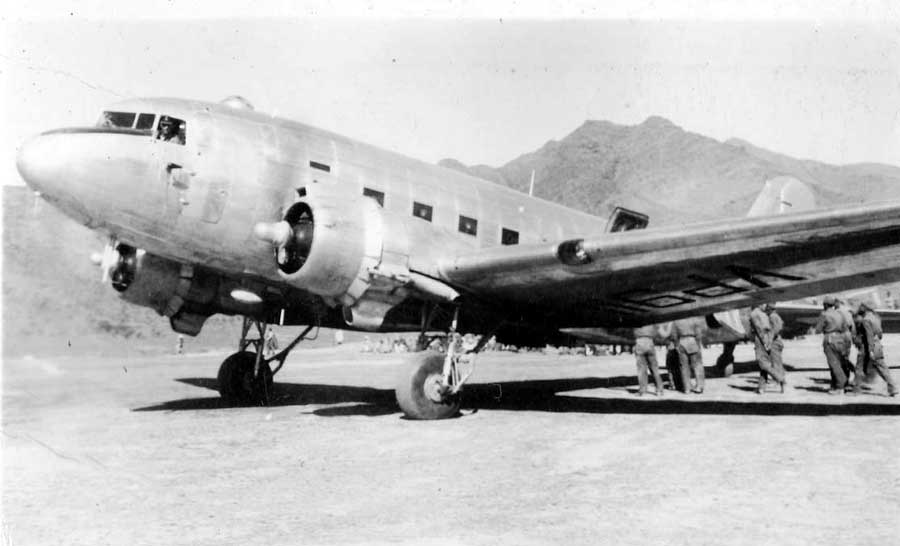
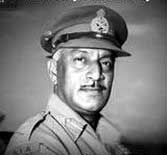
The Men Who Saved Ladakh

By Lt Gen NS Brar
24 May , 2016

The land is so barren and the passes so high that only the best of friends or fiercest enemies would want to visit us. – A Ladhaki saying

Ladakh, the crown on India’s map, was the transit route of trading caravans to and from Central Asia with Leh as the communication and barter hub. The three valleys formed by the Indus, Zanskar and Shyok rivers provided the natural routes amidst mountains towering upto 18000 feet. Branching off from the Silk Route, caravans from Chinese Turkistan crossed over the Karakoram Pass moving along the Shyok River and onto Leh and thence along the Indus to Skardu and Gilgit West of Leh. Branching off Southwards from this route was Kargil and and across the Zojila to Srinagar. Towards the South East Leh was connected to Manali over the Rohtang Pass. The high altitude cold desert averages 11000 feet along the Indus which runs through Ladakh from East to West.

Following the Anglo Sikh War 1845-46 and the Treaty of Amritsar 1846, Jammu and Kashmir, including Ladakh and Baltistan was acquired by Maharaja Gulab Singh. British strategic interest in Baltistan bordering Afghanistan and Russia ensured constant interference in this region culminating in the entire region of Nagar, Hunza, Gilgit and Skardu being leased by the Maharaja to the British in 1935 for 60 years. With the impending lapse of British Paramountcy on 15 August 1947, the region was to technically and legally revert to Jammu and Kashmir State on that date. It was handed over by the British Political Agent to the Governor of Gilgit appointed by the Maharaja of Jammu and Kashmir on 30 June 1947. In a grave error of judgment, the British officers including the commander of the Gilgit Scouts, were retained by the Maharaja. A coup was staged by these officers on 31 October 1947 and the Governor imprisoned. Major Brown hoisted the Pakistani flag on 03 November 1947 and handed over the administration to Pakistan.