By Air Marshal Anil Chopra
28 Jul , 2016
 The Indian Armed Forces operate nearly 150 mid-sized UAVs and many more handheld ones. India needs to push its ‘Make in India’ initiative for UAVs. Mumbai and New Delhi police are on the verge of acquiring UAVs. Aviation may come to the rescue of India’s dismal population-to-police ratio of 130 to every 1,00,000. The Hindustan Aeronautics Limited (HAL) along with DRDO’s Aeronautical Development Establishment (ADE) and National Aeronautical laboratory (NAL) Bangalore have developed mini and micro UAVs of three-kilogramme class. HAL designers are working on eight to ten kilogramme UAVs, which are expected to receive certification by early 2016. India’s indigenous capability has to be built up through a leapfrog by joining up with Israel, the world leader in UAV technology.
The entire concept of aerial warfare will see a change as UAVs become a part of all our day-to-day chores…
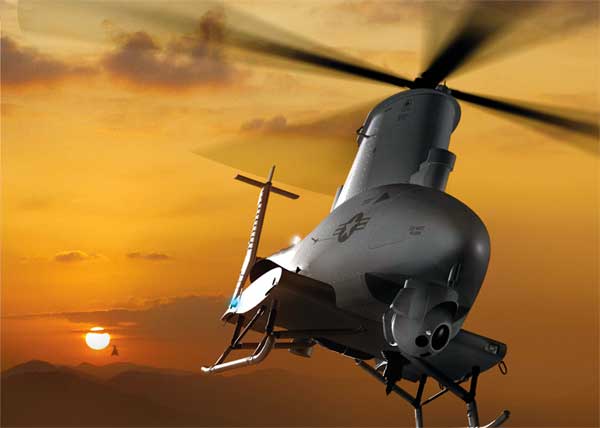
Whether tiny quadcopters that fly within a few hundred feet of their operator or huge winged craft piloted via satellite thousands of miles away, Unmanned Aerial Vehicles (UAVs) are taking to the skies in ever increasing numbers for a variety of applications. The exotic military reconnaissance UAVs of Iraq and Afghanistan War have now grown in numbers and sophistication and are now undertaking full-fledged combat engagements and ground strikes in near autonomous operations.
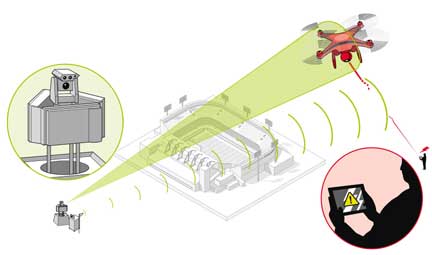
In April 2013, a BAE Systems Jetstream, a standard commercial propeller plane converted into an UAV research aircraft, autonomously flew an 805-km journey without a pilot onboard heralding a huge revolution in civil aviation. The main difference between this and hundreds of other UAV projects was that this was an unmanned airliner. UAVs are already being employed as eye-in-the-sky in roles such as policing, law enforcement, border control, sea lane monitoring, traffic control, crime scene photography, searching for missing persons, monitoring wildfires and combating drug trafficking. They could replace hundreds of CCTV cameras. The applications are as wide as human imagination.
The entire concept of aerial warfare will see a change as UAVs become a part of all our day-to-day chores and the day will come when we may be passengers onboard an aircraft without a conventional cockpit.
 The era of UAVs began with the concerns of the United States Air Force (USAF) over losing pilots in hostile territory. This was more so after a U-2 was shot down over the Soviet Union in 1960. UAVs were first used in Vietnam. Israel developed the first UAV after the 1973 Yom Kippur war. UAVs helped Israel completely neutralise the Syrian defences in the beginning of 1982 Lebanon War in the famous Bekka Valley operation. UAVs were used in the 1991 Gulf War.
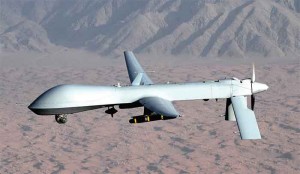
Initial generations were primarily for surveillance but others such as General Atomics MQ-1 Predator were armed with AGM-114 Hellfire air-to-ground missiles.