2 October 2017

Open Source Intelligence for the Modern Intelligence Agency

by Gina Cerami

For government agencies, open source intelligence (OSINT) fuel the never-ending charge to make informed decisions. The mainstay of OSINT to government agencies are the social and local news posts found on the web – with 90%-95% of these being non-english text and sources.

With so much data being created every day, how can agencies focused on National Security like the NSA, DHS, CIA and others gain a higher level of confidence identifying and acting on the posts? Combine Connotate’s market leading web data extraction platform with Basis Technology’s Rosette text analytics platform, ensuring a continuous flow of contextually accurate, disambiguated data about people, places, organizations and things into analytical and intelligence systems.

COMMAND AND CONTROL IN NORTH KOREA: WHAT A NUCLEAR LAUNCH MIGHT LOOK LIKE

VIPIN NARANG AND ANKIT PANDA

A new nuclear state, in a major crisis with a conventionally superior nuclear-armed adversary, contemplates and prepares to move nuclear assets in the event it has to use them. Who controls the nuclear forces? Who decides when they might be assembled, mated to delivery vehicles, moved, and launched? Who has nominal authority to order those decisions? Who has the physical ability to implement them even without proper authorization? How experienced are the relevant units in these operations? What could go wrong?

NSA and the Rest of the US Intelligence Community Now Rely Heavily on “Big Data” for Their Work


Data are a defining feature of modern society. Every day, humans and the machines they interact with create 2.5 trillion megabytes of data. As data become more prominent and readily available, the temptation to analyze them and make sense of the world through specific analytics methods or algorithms grows.

This is particularly true for national security. Big data is a “big deal” for U.S. spy agencies, which have long relied on multiple data sources to produce intelligence reports. In the past decade, agencies like the CIA and the NSA have institutionalized big data through the development of dedicated analytics units and research and development projects focusing on the analysis of online data such as YouTube videos and social media posts.

Are Facebook And Google The New Colonial Powers?

by Charles Hugh Smith
Source Link

To qualify as colonial powers, Facebook and Google must effectively limit the choices and power of users, and punish or coerce those who question or resist their power.

As Taplin points out, that remark 'unwittingly revealed a previously unspoken truth: Facebook and Google are the new colonial powers.'

1 October 2017

China in 2025

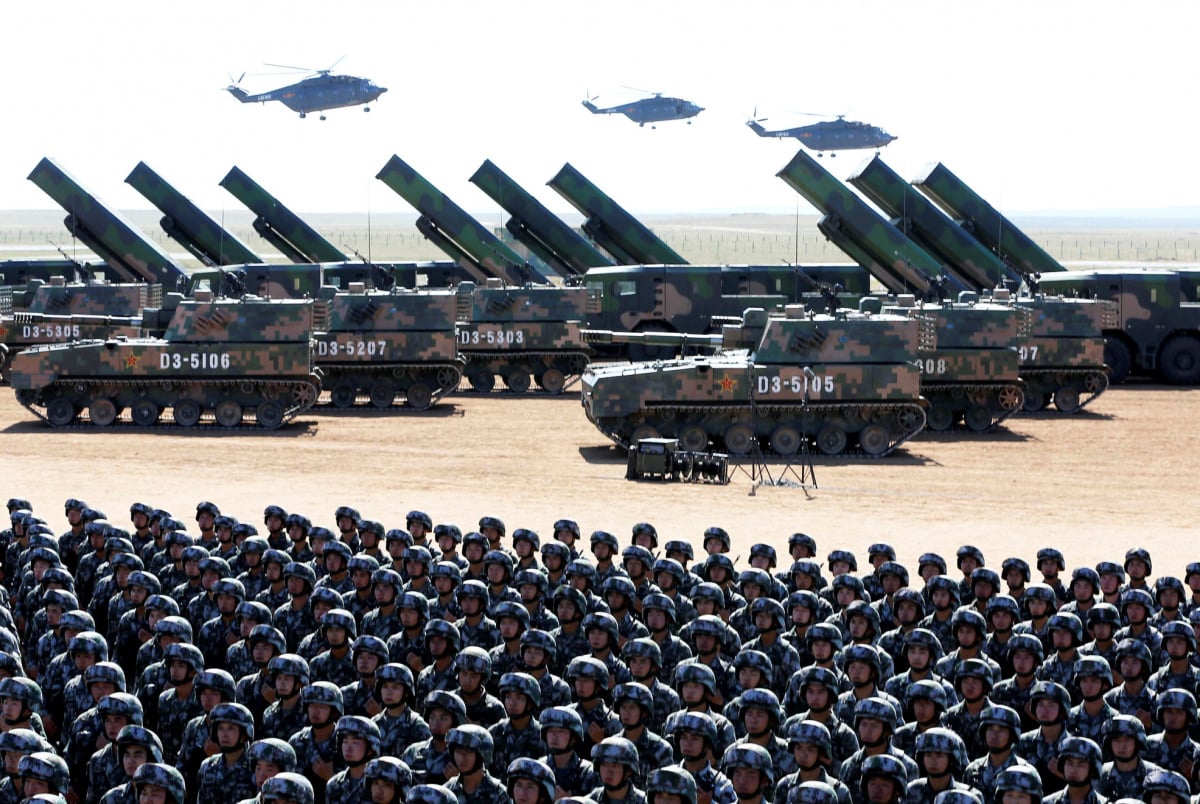
China was identified this week as posing the most significant long-term military challenge to the United States by America’s senior-most military leader Gen. Joseph Dunford, chairman of the joint chiefs of staff, as he set out new US military strategies and policies toward China and Asia more generally in a congressional hearing. The four-star Marine Corps general said, over the longer term, China represents the most significant danger, overshadowing the nuclear and cyber power of Moscow. “If I look out to 2025, and I look at the demographics and the economic situation, I think China probably poses the greatest threat to our nation by about 2025, and that’s consistent with much of our analysis,” Dunford said. China has closely studied US warfare weapons and tactics and has developed both arms and strategies that will enable its weaker forces to defeat US military forces in a future conflict, he said, adding that the gap has been closed between the two militaries over the last decade and a half.
Earlier CIA Director Mike Pompeo, who said in July that he believes China is the most significant regional security threat. “I think China has the capacity to present the greatest rivalry to America… over the medium and long term,”
In June 2017, the US Defense Department issued a major report titled on Risk Assessment in a Post-Primacy World, finding that the U.S. military “no longer enjoys an unassailable position versus state competitors,” and “it no longer can … automatically generate consistent and sustained local military superiority at range.”

In April 2015, for instance, the Department of Agriculture reported that the U.S. economy would grow by nearly 50 percent over the next 15 years, while China’s would expand by 300 percent, equaling or surpassing America’s around 2030. in the critical race for worldwide patents, American leadership in technological innovation is clearly on the wane. In 2008, the United States still held the number two spot behind Japan in patent applications with 232,000. China was, however, closing in fast at 195,000, thanks to a blistering 400 percent increase since 2000.
In 2008, the United States still held the number two spot behind Japan in patent applications with 232,000. China was, however, closing in fast at 195,000, thanks to a blistering 400 percent increase since 2000. By 2014, China actually took the lead in this critical category with 801,000 patents, nearly half the world’s total, compared to just 285,000 for the Americans.
With supercomputing now critical for everything from code breaking to consumer products, China’s Defense Ministry outpaced the Pentagon for the first time in 2010, launching the world’s fastest supercomputer, the Tianhe-1A. For the next six years, Beijing produced the fastest machine and last year finally won in a way that couldn’t be more crucial: with a supercomputer that had microprocessor chips made in China. By then, it also had the most supercomputers with 167 compared to 165 for the United States and only 29 for Japan.

Over the longer term, the American education system, that critical source of future scientists and innovators, has been falling behind its competitors. In 2012, the Organization for Economic Cooperation and Development tested half a million 15-year-olds worldwide. Those in Shanghai came in first in math and science, while those in Massachusetts, “a strong-performing US state,” placed 20th in science and 27th in math. By 2015, America’s standing had declined to 25th in science and 39th in math.

But why, you might ask, should anybody care about a bunch of 15-year-olds with backpacks, braces, and attitude? Because by 2030, they will be the mid-career scientists and engineers determining whose computers survive a cyber attack, whose satellites evade a missile strike, and whose economy has the next best thing.
China has conducted what the Pentagon in 2010 called “a comprehensive transformation of its military” meant to prepare the People’s Liberation Army (PLA) “for extended-range power projection.” With the world’s “most active land-based ballistic and cruise missile program,” Beijing can target “its nuclear forces throughout…most of the world, including the continental United States.” Meanwhile, accurate missiles now provide the PLA with the ability “to attack ships, including aircraft carriers, in the western Pacific Ocean.” In emerging military domains, China has begun to contest US dominion over cyberspace and space, with plans to dominate “the information spectrum in all dimensions of the modern battlespace.”Instead of competing across the board, Beijing, like many late adopters of technology, has strategically chosen key areas to pursue, particularly orbital satellites, which are a fulcrum for the effective weaponization of space. As early as 2012, China had already launched 14 satellites into “three kinds of orbits” with “more satellites in high orbits and…better anti-shielding capabilities than other systems.” Four years later, Beijing announced that it was on track to “cover the whole globe with a constellation of 35 satellites by 2020,” becoming second only to the United States when it comes to operational satellite systems.

China has recently achieved a bold breakthrough in secure communications. In August 2016, three years after the Pentagon abandoned its own attempt at full-scale satellite security, Beijing launched the world’s first quantum satellite that transmits photons, believed to be “invulnerable to hacking,” rather than relying on more easily compromised radio waves. According to one scientific report, this new technology will “create a super-secure communications network, potentially linking people anywhere.” China was reportedly planning to launch 20 of the satellites should the technology prove fully successful.

Weighing this balance of forces, the RAND Corporation recently released a study, War with China, predicting that by 2025 “China will likely have more, better, and longer-range ballistic missiles and cruise missiles; advanced air defenses; latest generation aircraft; quieter submarines; more and better sensors; and the digital communications, processing power, and C2 [cyber security] necessary to operate an integrated kill chain.”
In the event of all-out war, RAND suggested, the United States might suffer heavy losses to its carriers, submarines, missiles, and aircraft from Chinese strategic forces, while its computer systems and satellites would be degraded thanks to “improved Chinese cyberwar and ASAT [anti-satellite] capabilities.” Even though American forces would counterattack, their “growing vulnerability” means Washington’s victory would not be assured. In such a conflict, the think tank concluded, there might well be no “clear winner.”

Make no mistake about the weight of those words. For the first time, a top strategic think-tank, closely aligned with the US military and long famous for its influential strategic analyses, was seriously contemplating a major war with China that the United States would not win.

** India’s Post-Demonetization Policy Agenda

V. ANANTHA NAGESWARAN, GULZAR NATARAJAN
Source Link

Indian Prime Minister Narendra Modi announced in November 2016 that denominations of 500 and 1,000 Indian rupees would cease to be legal tender with immediate effect and that the Indian public had fifty days to deposit the old notes into their bank accounts, removing the notes from circulation. This demonetization was a drastic decision because these notes constituted 86 percent of the cash in circulation in India, a high cash economy. Given the mammoth scale and extraordinary nature of the exercise, it is almost an obligation on the government’s part to reap a wide range of economic benefits from it and not just treat it as an exercise in raising tax revenues.

The World Will Soon Have a New Terror Hub in Myanmar If the Rohingya Crisis Continues


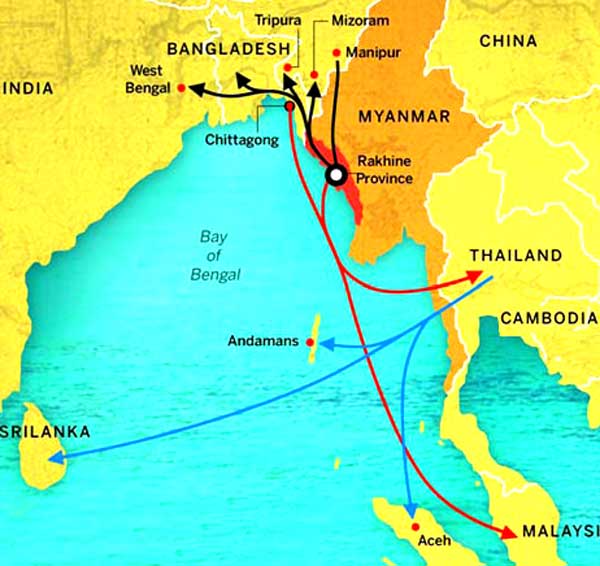
The brutal treatment of the Muslim Rohingya minority in Myanmar is creating severe rifts with the country’s newly won friends in Washington and London. China, for geopolitical reasons, quickly stepped in to support the Myanmar government’s position while India worries about the spread of Islamic militancy. Bangladesh, as the reluctant host of hundreds of thousands of Rohingyas, also worries about internal security.

How the U.S. and Iran Play the Afghan ‘Great Game’

BENNETT SEFTEL 

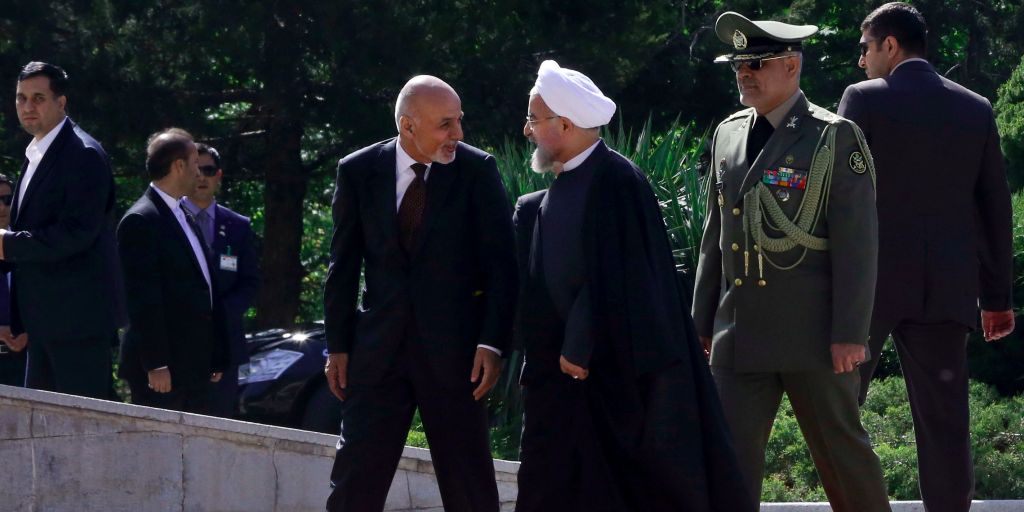
As Afghanistan’s western neighbor, Iran maintains a vested interest in prodding war-torn Afghanistan towards achieving political and economic stability. Burdened by Afghan refugees and a stream of narcotics that have traversed the Iranian-Afghan border and strained the Iranian economy, Iran’s leadership has prioritized resolving these issues and pursuing its own goals when it comes to the future of Afghanistan.

Top US general: China will be 'greatest threat' to US by 2025

By Ryan Browne

(CNN)America's top military officer, Gen. Joseph Dunford, told Congress Tuesday China is likely to be the "greatest threat" of any foe to the US within a decade.

"I think China probably poses the greatest threat to our nation by about 2025," Dunford told the Senate Armed Services Committee during a hearing on his re-appointment as Chairman of the Joint Chiefs of Staff.

China's Presence in Djibouti is Not a National Security Threat—Yet

Erica S. Downs Jeff Becker

On September 22, Chinese troops staged their first live-fire exercises at China’s first overseas military base, which opened in Djibouti on August 1. Ever since Beijing publicly acknowledged in November 2015 that China was building a logistical support facility in Djibouti, the home of the only permanent U.S. military installation in Africa, much ink has been spilt detailing China’s growing involvement in the Horn of Africa nation. The conventional wisdom holds that China has spent billions of dollars building infrastructure in Djibouti, which might prompt the government to prioritize China’s interests over those of the United States and other countries with a military presence in Djibouti. Moreover, it is suspected that China will use its military facility in Djibouti for more than just logistics, and that this facility will be the first of many overseas outposts for China’s military.

Inside China’s Huge Cyber Censorship Machine


censorship, china, beijing, tiananmen, internet censorship, media rules china, indian expressIn a glass tower in a trendy part of China’s eastern city of Tianjin, hundreds of young men and women sit in front of computer screens, scouring the Internet for videos and messages that run counter to Communist Party doctrine.

References to President Xi Jinping are scrutinized. As are funny nicknames for state leaders. And any mention of the Tiananmen protests in 1989 is immediately excised, as is sexual innuendo and violent content.

ISIS ‘Caliphate’ Fades but Social Media Empire Remains

BENNETT SEFTEL 

Since the U.S. declared its War on Terror 16 years ago, it has achieved a number of battlefield successes against its main terrorist adversaries, al Qaeda and more recently ISIS. U.S. operations in South and Central Asia have crippled core al Qaeda’s capabilities, while a U.S.-led international coalition has thwarted ISIS’ ambitions to build a caliphate and put the group on the run across Syria and Iraq.

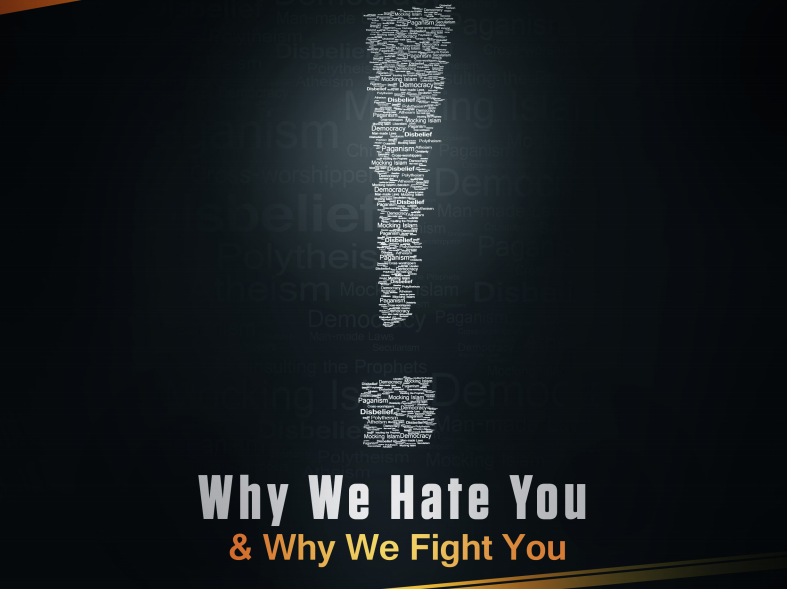
However, the fight against terrorism is not relegated to territorial gains; defeating the spread of jihadist ideology and propaganda represents an even more daunting task that the U.S. and its partners must confront to ultimately defeat this threat.

As North Korea threatens, U.S. to send ‘strategic assets’ to Seoul

By Anna Fifield and Dan Lamothe 

The United States will send “strategic” military assets to South Korea on a more regular basis to better deter North Korea, the South’s national security adviser said Thursday. 

The decision comes at a time of escalating tensions between the United States and North Korea, with many analysts concerned that incendiary rhetoric, combined with more frequent flyovers by U.S. bombers, could lead to a catastrophic miscalculation.

Are America and North Korea Destined for War?

Daniel L. DavisHarry J. Kazianis

Last Friday National Security Advisor H. R. McMaster emphatically told reporters that despite what many have said to the contrary, “there is a military option” for North Korea. Tuesday afternoon at the United Nations, President Trump went even further, saying that if he felt certain conditions warranted it, then he would have no choice “but to totally destroy North Korea.” The president and his national security advisor, however, are wrong. Engaging in a “preventive war” with Pyongyang, as McMaster phrased it last month, would turn a tense situation into a catastrophic failure for America. There is no cost-effective military option and claiming there is only puts America’s security at risk.

The Who, Where, and When of Secession

JOSEPH S. NYE

National self-determination, the principle that US President Woodrow Wilson put on the international agenda in 1918, is generally defined as the right of a people to form its own state. The independence referendums in Iraqi Kurdistan and Catalonia are the latest examples showing why that principle is so often difficult to apply. 

CAMBRIDGE – This week, Kurds in northern Iraq voted overwhelmingly in favor of independence for the country’s Kurdistan Region. With some 30 million Kurds divided among four states (Iraq, Turkey, Syria, Iran), nationalists argue that they deserve the world’s recognition. In Spain, some 7.5 million Catalans have raised the same question.

The effects of a single terrorist nuclear bomb

Matthew Bunn Nickolas Roth

The escalating threats between North Korea and the United States make it easy to forget the “nuclear nightmare,” as former US Secretary of Defense William J. Perry put it, that could result even from the use of just a single terrorist nuclear bomb in the heart of a major city.

At the risk of repeating the vast literature on the tragedies of Hiroshima and Nagasaki—and the substantial literature surrounding nuclear tests and simulations since then—we attempt to spell out here the likely consequences of the explosion of a single terrorist nuclear bomb on a major city, and its subsequent ripple effects on the rest of the planet. Depending on where and when it was detonated, the blast, fire, initial radiation, and long-term radioactive fallout from such a bomb could leave the heart of a major city a smoldering radioactive ruin, killing tens or hundreds of thousands of people and wounding hundreds of thousands more. Vast areas would have to be evacuated and might be uninhabitable for years. Economic, political, and social aftershocks would ripple throughout the world. A single terrorist nuclear bomb would change history. The country attacked—and the world—would never be the same.


As the War of Words With North Korea Escalates, So Does the Risk of Real War


The United States has declared war on North Korea, according to North Korean Foreign Minister Ri Su Yong. In a brief news conference in New York on Sept. 25, Ri said that U.S. President Donald Trump's recent statements to the U.N. General Assembly were tantamount to a declaration of war and that all of the members of the United Nations clearly heard that it was the United States that first declared war on North Korea. Therefore, Ri argued, Pyongyang has a right to self-defense under the U.N. charter and would be justified if it were to shoot down U.S. strategic bombers, even outside North Korean territory.

The Future the US Military is Constructing: a Giant, Armed Nervous System

BY PATRICK TUCKER
Source Link

That means everything from F-35 jets overhead to the destroyers on the sea to the armor of the tanks crawling over the land to the multiplying devices in every troops’ pockets. Every weapon, vehicle, and device connected, sharing data, constantly aware of the presence and state of every other node in a truly global network. The effect: an unimaginably large cephapoloidal nervous system armed with the world’s most sophisticated weaponry.

* United Nations Peacekeeping Offensive Operations: Theory and Doctrine


by Antonio Garcia
Source Link

The strategic decision of the United Nations (UN) to pursue offensive operations in order to achieve mandate objectives in peacekeeping missions, was met with a mixed response by the international community.[1] Many observers regard the decision of deploying the Force Intervention Brigade (FIB) in the UN Mission in the Democratic Republic of Congo (DRC) MONUSCO, and the mandating of unilateral offensive operations in peacekeeping to be contradictory to the principles of impartiality and non-use of force except in self-defence and defence of the mandate. The fact that the UN, in response to certain threats has opted for the use of combat operations, necessitates a new way of thinking about peacekeeping operations.

Notes from the drone arms race

By Elisabeth Eaves

Enemy drones rigged with bombs or explosives have become more than a nuisance to US-backed forces in recent years. Political scientists Itai Barsade and Michael C. Horowitzcompare the role of ISIS drones today—often souped-up versions of off-the-shelf models—to that of improvised explosive devices, a cheap, adaptable technology that fundamentally shaped battlefields in the 2000s. Earlier this year, the head of the US Special Operations Command described a day on which an anti-ISIS campaign “nearly came to a screeching halt” as it faced 70 drones in the air. New York Times national security reporter Eric Schmitt calls ISIS drones “one of the Pentagon’s most vexing counterterrorism conundrums.”

30 September 2017

To ‘Act East’, Act in the North East India First!

By Col Anil Athale

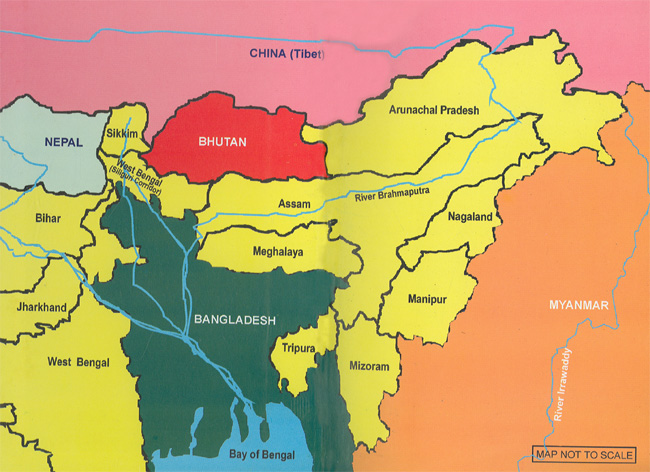
As China rises and acts aggressively on our Northern borders laying claim to the whole of state of Arunachal Pradesh, establishing contact and strengthening our ancient ties with South East Asia is a strategic necessity. South East Asia is China’s soft underbelly. Our North East is a bridge to South East Asia to further our economic, cultural and strategic ties with that region. However despite all this obvious logic, we have been generous with words and short on action.

Special Operations and Intelligence Agencies: India’s Incapability

By Air Marshal Dhiraj Kukreja

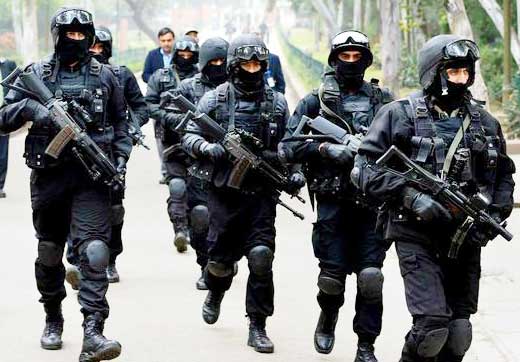
Wikipedia defines Special Operations as “military operations that are ‘special’ or unconventional and carried out by dedicated special-force units using unconventional methods and resources. Special operations may be performed independently of, or in conjunction with, conventional military operations. The primary goal is to achieve a political or military objective where a conventional force requirement does not exist or might adversely affect the overall strategic outcome. Special operations are usually conducted in a low-profile manner that aims to achieve the advantages of speed, surprise, and violence of action against an unsuspecting target. Special operations are typically carried out with limited numbers of highly trained personnel that are adaptable, self-reliant and able to operate in all environments, and able to use unconventional combat skills and equipment. Special operations are usually implemented through specific, tailored intelligence.”

The Issue of Rohingyas

By Prakash Nanda
The opposition parties and the habitual critics of the present dispensation have now made the presence of about 40000 Rohingyas in India a political issue. With the usual and unthinking support of the human rights activists and the National Human rights Commission, the issue has now become communal.

In fact, now there are demands that seem to suggest that legal status have to be accorded to these Rohingyas of Myanmar as they happen to be Muslims! In other words, there is now the wider realisation among the NDA government’s critics that former Prime Minister Manmohan Singh’s thesis is right that minorities in general and Muslims in particular have got the “first rights” over India’s resources that include land and jobs.

The Islamic State's Support Base in Pakistan Continues to Grow


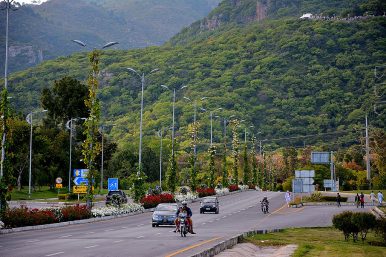
Last week, an Islamic State (IS) flag was seen hoisted above one of Islamabad’s main highways. The flag, which sprung the capital’s law enforcement agencies into action, bore the message “The caliphate is coming.” While the capital police have not been able been able to find the people behind the incident, the hoisting of the flag in Pakistan’s capital offers a chilling reminder that support for militant groups such as IS is growing in Pakistan.

China's Presence in Djibouti is Not a National Security Threat—Yet

Erica S. Downs Jeff Becker

On September 22, Chinese troops staged their first live-fire exercises at China’s first overseas military base, which opened in Djibouti on August 1. Ever since Beijing publicly acknowledged in November 2015 that China was building a logistical support facility in Djibouti, the home of the only permanent U.S. military installation in Africa, much ink has been spilt detailing China’s growing involvement in the Horn of Africa nation. 

Why China Will Never Crackdown on North Korea


This has been a potentially momentous week in U.S.-China relations, particularly as they relate to the growing threat of North Korea’s nuclear and missile programs.

In his address before the United Nations General Assembly, President Trump used unusually direct and powerful language in warning Pyongyang that it would be “completely destroyed” if it precipitates a conflict with the United States or its allies.

How America Is Losing the Battle for the South China Sea

Bill Bray

What a difference a year makes. In late summer 2016, there was some hope the July 2016 UN Permanent Court of Arbitration’s ruling in favor of the Philippine interpretation of the UN Convention on the Law of the Sea regarding the Spratly Islands and Scarborough Shoal would curtail Beijing’s subsequent activity in the South China Sea (despite China’s refusal to even participate in the arbitration case or recognize the court’s jurisdiction, let alone accept the ruling).

No, North Korea Isn't Dependent on Russia and China For Its Rocket Fuel

By Ankit Panda

North Korea is clearly getting quite good at long-range missile engineering. It’s Hwasong-12 and Hwasong-14 missiles have made that clear this year with their multiple successful flight tests, demonstrating what is by far the best-performing family of missiles North Korea has ever flight-tested.

Despite this, several observers refuse to believe that North Korea could have achieved this level of performance primarily through indigenous research-and-development. In August, we saw reports that alleged that the RD-250-variant engine that sits at the heart of both missiles’ first stage was likely stolen or imported illicitly from the former Soviet Union.

Trump's Expanded Drone Wars

Daniel R. DePetris

Throughout U.S. history, presidents have been known to blame their predecessors if things in the country aren’t going particularly well. To explain away America’s awful economic outlook in 2009 and the slow economic recovery of 2010 and 2011, Barack Obama pointed to George W. Bush as the main culprit for the fiscal disaster. He told Americans repeatedly in his first year that he “inherited” the worst economic recession since the Great Depression—true enough, but a statement that still seemed to many people in America’s middle and working classes as a passing of the buck.

The Turkish Military Base in Doha

By Md. Muddassir Quamar

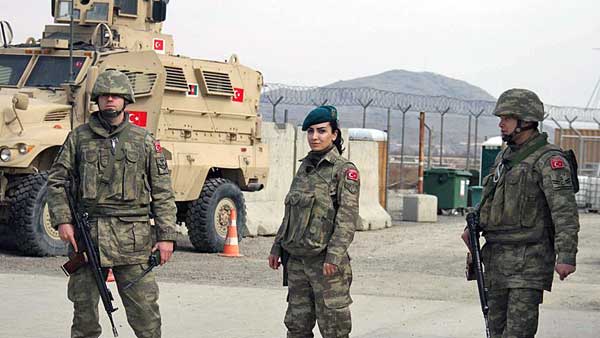
Turkey’s reaction to the rift among the Gulf Cooperation Council (GCC) countries—the June 5, 2017 embargo imposed by Saudi Arabia, the United Arab Emirates (UAE), Bahrain and Egypt against Qatar for its alleged support to terrorism—has been significant. Within two days of the Saudi-led quartet announcing the severing of ties with Qatar, Turkey’s parliament approved a bill for deploying troops in the Turkish military base at Doha. The bill had been pending for approval since early May 2017 and its approval was hastened by the surprise developments in the Gulf. 

As the War of Words With North Korea Escalates, So Does the Risk of Real War


In a brief news conference in New York on Sept. 25, North Korean Foreign Minister Ri Su Yong said that U.S. President Donald Trump's recent statements to the U.N. General Assembly were tantamount to a declaration of war. Therefore, he argued, Pyongyang has a right to self-defense under the U.N. charter and would be justified if it were to shoot down U.S. strategic bombers, even outside North Korean territory.


Will artificially intelligent weapons kill the laws of war?

Herbert Lin

On September 1, Vladimir Putin spoke with Russian students about science in an open lesson, saying that “the future belongs to artificial intelligence” and whoever masters it first will rule the world. “Artificial intelligence is the future, not only for Russia, but for all humankind,” he added. “It comes with colossal opportunities, but also threats that are difficult to predict. Whoever becomes the leader in this sphere will become the ruler of the world.”

Small Satellites, Big Missions The Implications of the Growing Small Satellite Market for Launch and Key Applications


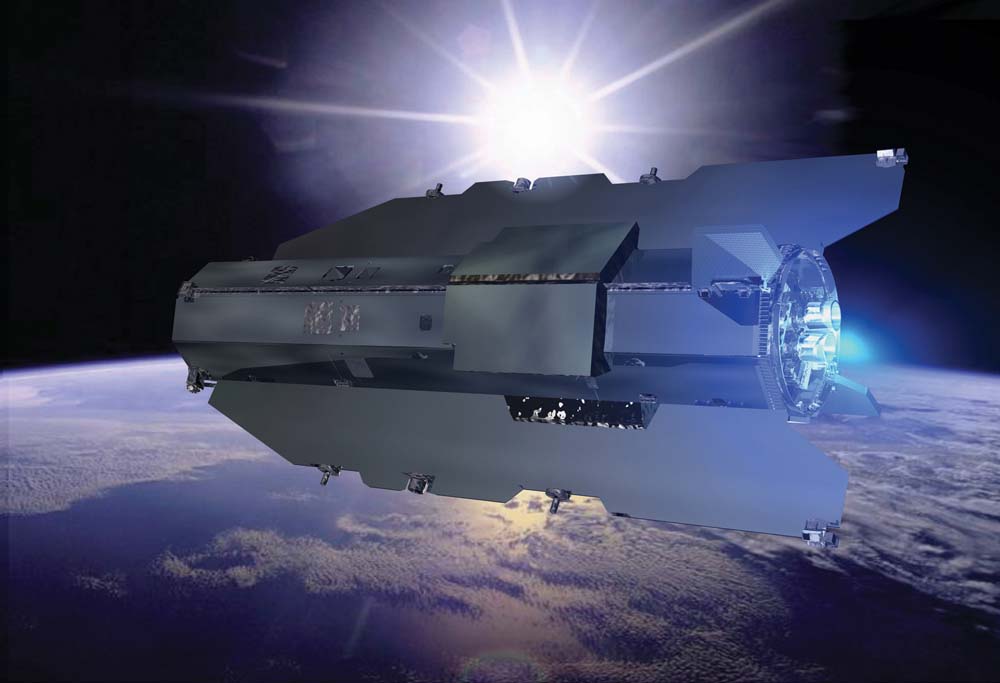
On June 21, 2017, the Center for Strategic and International Studies (CSIS) hosted a two-panel event on opportunities emerging from new space technologies, particularly small-scale satellites. Panelists discussed the implications of new small satellite technology and small satellite market dynamics, not only for the government space sector, but also for private-sector users of satellite technology and the growing cohort of commercial space systems suppliers. That small satellites will continue to grow—in use, market share, capability, and overall importance—is now widely accepted. Appreciation for the direction, pace, and implications of this growth, however, remains limited. The June CSIS event and the report that follows represent an effort to understand and describe the shape and consequences of the growth ahead. For a complete record of the session, please access the full video file at https://www.csis.org/events/small-satellites-big-missions.

Weapons in Space: Conventional War in the Cosmos?

By Allyson Rimmer

Outer space has been called the last frontier, but could it become the battleground of the future? Warfare in space seems difficult to imagine outside works of science fiction, but the concept and advantages of weapons in space have been under serious deliberation by global powers in the recent past. Though the international community in years past has made great strides in addressing and eliminating the nuclear threat emanating from outer space, additional threats have yet to be addressed. As it stands now there exists an international consensus banning the placement of strategic Weapons of Mass Destruction (WMD) in outer space and on celestial bodies. 

Beyond the Battlefield: Towards a Better Assessment of the Human Cost of Armed Conflict

By Erik Alda and Claire Mc Evoy for Small Arms Survey

For Erik Alda and Claire McEvoy, prevailing methods for measuring conflict deaths are inadequate. They believe that the current understanding of conflict related deaths is too narrow and that mortality measurement methods must change to address this problem, particularly when it comes to deaths among forcibly displaced populations. As a result, they here examine 1) opportunities provided by the UN’s Sustainable Development Goal 16.1 to broaden the scope of recorded conflict deaths; and 2) the importance of developing a better understanding of the relationship between direct and indirect conflict deaths.