by Rajeev Srinivasan
We are seeing a watershed moment in the history of the use of private data to stealthily subvert the democratic process, and Facebook and its tech friends may face a serious backlash. Whether this will finally persuade lethargic regulators in India, to put in place regulations about data protection, remains to be seen. There has been a lot of concern about how the cavalier use of customer data by various technology platforms can lead to unforeseen consequences, and there have been calls to restrict the ways data is captured, analysed and stored. I have been particularly concerned about the way Indian customer data is flowing to Chinese and American entities, as I mentioned in these pages earlier (Tech giants and data: Is India giving away a treasure trove of data about its citizens?)
23 March 2018
DoD and interagency group looking to step up collaboration on space technology
by Sandra Erwin
The Social-Media Panic
By MICHAEL BRENDAN DOUGHERTY
‘Make no mistake: 2016 will never happen again.” Historians are not always reliable predictors of the future, but Niall Ferguson’s analysis of how Silicon Valley and the center-Left would react to the successive and surprise victories of Brexit and Donald Trump is proving correct. Conservatives and populists will not be allowed to use the same tools as Democrats and liberals again, or at least not use them effectively.
‘Make no mistake: 2016 will never happen again.” Historians are not always reliable predictors of the future, but Niall Ferguson’s analysis of how Silicon Valley and the center-Left would react to the successive and surprise victories of Brexit and Donald Trump is proving correct. Conservatives and populists will not be allowed to use the same tools as Democrats and liberals again, or at least not use them effectively.The Problem Is Facebook, Not Cambridge Analytica
Leonid Bershidsky
Facebook is being hammered for allowing the data firm Cambridge Analytica to acquire 50 million user profiles in the U.S., which it may or may not have used 1 to help the Trump campaign. But the outrage misses the target: There's nothing Cambridge Analytica could have done that Facebook itself doesn't offer political clients. Here, in a nutshell, is the CA scandal. In 2014, Aleksandr Kogan, an academic of Russian origin at Cambridge University in the U.K., built a Facebook app that paid hundreds of thousands of users to take a psychological test. Apart from their test results, the users also shared the data of their Facebook friends with the app. Kogan sold the resulting database to CA, which Facebook considers a violation of its policies: The app was not allowed to use the data for commercial purposes. Carol Cadwalladr and Emma Graham-Harrison, writing for the U.K. publication Observer, quoted former CA employee Christopher Wylie as saying the firm "broke Facebook" on behalf of Stephen Bannon, the ideologue and manager behind the Trump campaign.Causes of War: A Theory Analysis
Kyle Amonson
“To expect states of any sort to rest reliably at peace in a condition of anarchy would require the uniform and enduring perfection of all of them” (Waltz, 2001, pg. 9). War and conflict has been as much a constant in human history as humans. As Kenneth Waltz states, “there is no peace in a condition of anarchy,” and there will always be a form of anarchy as long as human nature is a variable in our complex domestic and international systems. Many scholars have analyzed the causes of war on a state-by-state-basis, other writers believe that it is possible to provide a wider, more generalized explanation (Baylis et al, 2017, pg. 239). Additionally, many well-known international relations theorists have applied forms of theoretical framework to understand how and why we create friction in our societies, focusing on a variety of aspects, from international institutions to gender. For neorealist writers such as John Mearsheimer, international politics is not characterized by these constant wars, but nevertheless a relentless security competition, as we will discuss in this essay (Baylis et al, 2017, pg. 242).
Machine Learning is Fun!
Have you heard people talking about machine learning but only have a fuzzy idea of what that means? Are you tired of nodding your way through conversations with co-workers? Let’s change that! This guide is for anyone who is curious about machine learning but has no idea where to start. I imagine there are a lot of people who tried reading the wikipedia article, got frustrated and gave up wishing someone would just give them a high-level explanation. That’s what this is. The goal is be accessible to anyone — which means that there’s a lot of generalizations. But who cares? If this gets anyone more interested in ML, then mission accomplished.
Army, Struggling to Get Technology in Soldiers’ Hands, Tries the Unconventional
By HELENE COOPER
WASHINGTON — The platoon of Army Special Operations soldiers was on a routine night patrol in eastern Afghanistan when one of them suddenly opened fire on what looked to the others to be a bush. The bush, it turned out, had been obscuring a militant fighter. He was detectable only to the one platoon member wearing prototype night vision goggles that could detect heat signatures — a happenstance that Army officials say probably saved many lives. That incident took place in 2015. Three years later, soldiers in the field still do not have the new night vision goggles, and that is just one example of a process that can take a decade to get new weapons from the lab to the hands of troops. Worried about that lag, the Army is creating a new and decidedly unconventional department to address it: the Futures Command.
Perhaps We Can Eat Soup with a Knife: Prospect Theory and the Use of Conventional Military Strategies in Counterinsurgency Operations
Introduction
Combating insurgencies with conventional forces has long been regarded as being, to paraphrase T.E Lawrence’s colorful formulation, comparable to eating soup with a knife (Lawrence, 1922, 53). Indeed, the inutility of force with regards to combating a phenomenon that primarily exists in the minds of a target population has been noted by figures from General Rupert Smith to General David Petraeus, the latter articulating this principle as a central premise upon which he built his population centric theory of counterinsurgency in FM-3-24 (Petraeus, 2006, 60-100) (Smith, 2005, 40). Within the context of this argument, any effort to destroy an insurgent militarily by a policy of attrition or annihilation ignores the insurgents innate capacity to trade space for time, avoiding the strengths of a conventional force and eroding both its domestic will and its control over the target populace (over which the insurgent and counterinsurgent force are fighting) by policies of assassination, intimidation of the counterinsurgency’s local supporters and dispersed attacks on occupying troops. The ability of an insurgency, even one which has held territory for a significant period to revert to what T.X. Hammes dubs phase I of an insurgent strategy (whereby it resorts to asymmetrical warfare) is central to the argument regarding the inutility of an enemy-centric Clausewitzian approach to combating insurgencies (Hammes, 2006, 50).
22 March 2018
Chinese crackdown separates Pakistani husbands from Uighur wives
Memphis Barker
“Where is Mama?” screams Ahmed’s 10-year-old daughter in a WeChat message he can hardly bear to replay. Like many traders in Pakistan’s northernmost region of Gilgit-Baltistan, Ahmed fell in love with a Chinese woman on a work trip across the border. And like dozens of others, he has now been forcibly separated from the woman he married – and the child they had together – for months.Last week lawmakers in Gilgit-Baltistan demanded that authorities in China’s Xinjiang province immediately release from detention at least 50 Chinese women married to Pakistani men, some of whom have been held for a year on vague charges of extremism.The Bajwa Doctrine: from chauvinism to realism
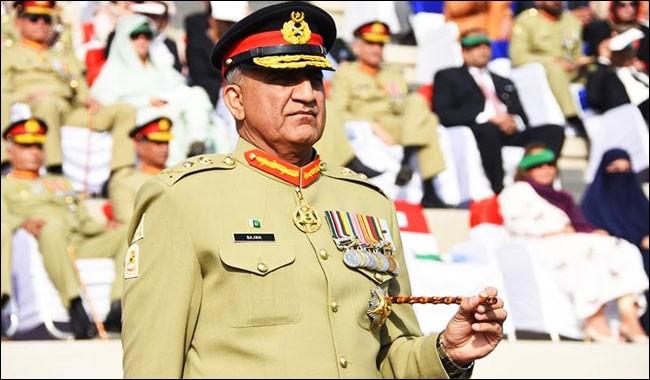
After 70 years of extreme chauvinism, we are finally into the doctrine of realism which focuses on the peaceful coexistence with the neighbouring countries. The Bajwa Doctrine, initiated by the rationalistic and logical Gen Qamar Bajwa and his equally able team of the top military command, is all about realising the changes taking place around the country and reshaping policies according to the needs of the modern times.Water Wars: Conflict in the Maldives Between Major Powers
By Timothy Saviola, Nathan Swire
India and China have become entangled in a constitutional crisis in the Maldives, with both countries brandishing their navies while attempting to come to a diplomatic solution. The crisis began on Feb. 1 when the Maldives Supreme Court ordered the release of all political prisoners, citing violations of due process in their trials. The released prisoners included multiple members of the opposition Maldivian Democratic Party (MDP), and the order also covered former president Mohamad Nasheed, who was sentenced to 13 years in prison in 2015 but is now living in exile in London. In response to this ruling, President Abdulla Yameen declared a state of emergency, arresting members of the Supreme Court, dispatching police to keep order, and suspending parts of the constitution. However, the Maldives government has stated it does not intend to extent the state of emergency past March 22. The Maldives are scheduled to hold presidential elections this summer.Ex-chief of strategic missile force named China’s defence minister
Ex-chief of strategic missile force named China’s defence minister
BEIJING - China has named its former strategic missile force chief as defence minister, completing a shake-up of its top military brass that began in October last year. General Wei Fenghe’s appointment on Monday (March 19) underscored the firm grip that President Xi Jinping now has over the People’s Liberation Army (PLA), said analysts. Gen Wei, 63, was the first officer to be promoted to full general when Mr Xi took office in 2012 and also the youngest to hold the rank at the time. A career artillery officer, he rose through the ranks of the Second Artillery Force, which oversees China’s land-based nuclear arsenal, and became its commander in 2012. That year, Gen Wei was among the first in the PLA’s senior leadership to both pledge allegiance to Mr Xi and actively execute his military reform agenda, which included a sweeping reorganisation of the PLA and its command structure.
How to Beat Russia and China on the Battlefield: Military Robots
Jeff Becker
15 Years After Invading Iraq: Winning the War, But Still Fighting for Peace
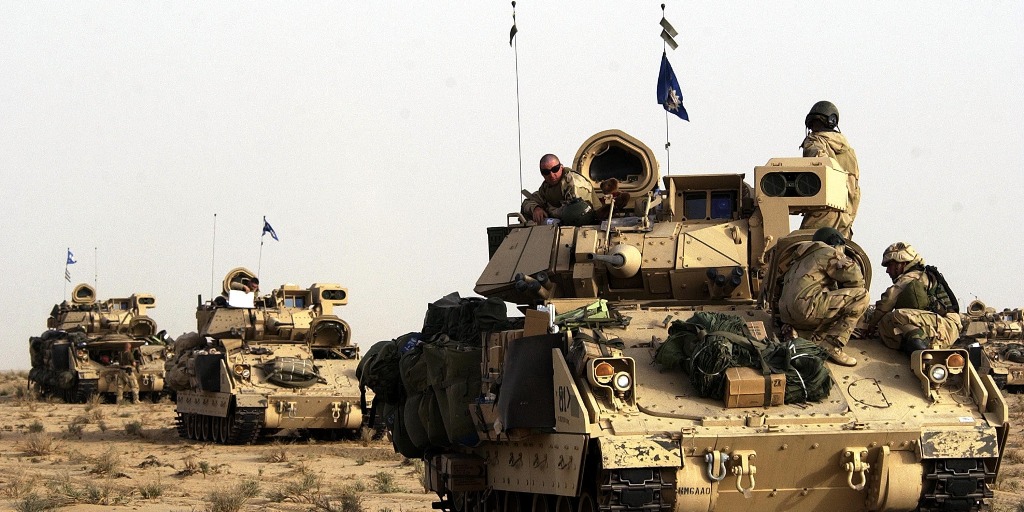
Monday marks 15 years since President George W. Bush announced the start of the Iraq war, followed by a ‘decapitation’ air strike on Baghdad meant to target Saddam Hussein. After a 48-hour deadline for Saddam to leave Iraq expired, ground troops from the U.S., UK, Australia and Poland invaded Iraq from Kuwait, launching a war that lasted from 2003 to 2011. The Cipher Brief asked its experts in the intelligence, diplomatic and military to assess the war’s impact. Their conversations are adapted for print below.Erdogan the Magnificent, Turkey's Neo-Ottoman Revival
By Joseph V. Micallef
In 1994, an aspiring Turkish politician named Recep Tayyip Erdogan leveraged his fame as a player for Istanbul's Kasimpasa Soccer Club into a successful run for mayor of Istanbul as a candidate of the Islamist Welfare Party. His initial success proved short-lived. In 1998, he was dismissed from his position as mayor, banned from further political office and imprisoned for four months for having recited a poem, during a speech, that promoted an Islamic point of view of the role of government.
15 Years After Invading Iraq: Winning the War, But Still Fighting for Peace
Source Link
Monday marks 15 years since President George W. Bush announced the start of the Iraq war, followed by a ‘decapitation’ air strike on Baghdad meant to target Saddam Hussein. After a 48-hour deadline for Saddam to leave Iraq expired, ground troops from the U.S., UK, Australia and Poland invaded Iraq from Kuwait, launching a war that lasted from 2003 to 2011. The Cipher Brief asked its experts in the intelligence, diplomatic and military to assess the war’s impact. Their conversations are adapted for print below.
Monday marks 15 years since President George W. Bush announced the start of the Iraq war, followed by a ‘decapitation’ air strike on Baghdad meant to target Saddam Hussein. After a 48-hour deadline for Saddam to leave Iraq expired, ground troops from the U.S., UK, Australia and Poland invaded Iraq from Kuwait, launching a war that lasted from 2003 to 2011. The Cipher Brief asked its experts in the intelligence, diplomatic and military to assess the war’s impact. Their conversations are adapted for print below.How Will America Respond To Cold War II?
Robert Kuttner
In the past month, we’ve learned from special counsel Robert Mueller that 13 Russian officials and three Kremlin-linked agencies were involved in 2016 election trolling and hacking to a sufficient degree to indict them; that the Kremlin was almost certainly behind the assassination attempt on a former double agent living in Britain; and that Russian cyberwar agencies penetrated vital U.S. electrical and other infrastructure systems, and could have shut them down. That latest finding, reported last week by the FBI and the Department of Homeland Security, was sufficiently alarming that even the White House bleated a mild protest, for the very first time. And the Trump administration joined Britain and other allies in condemning the attempted hit job.
In the past month, we’ve learned from special counsel Robert Mueller that 13 Russian officials and three Kremlin-linked agencies were involved in 2016 election trolling and hacking to a sufficient degree to indict them; that the Kremlin was almost certainly behind the assassination attempt on a former double agent living in Britain; and that Russian cyberwar agencies penetrated vital U.S. electrical and other infrastructure systems, and could have shut them down. That latest finding, reported last week by the FBI and the Department of Homeland Security, was sufficiently alarming that even the White House bleated a mild protest, for the very first time. And the Trump administration joined Britain and other allies in condemning the attempted hit job. Putin Plans for a Russia Without Him
By Lauren Goodrich
Though Russian President Vladimir Putin is assured an election win on March 18, his fourth term will usher in a period of deep challenges for Russia and his continued rule. Putin's pledge to maintain stability is facing economic and demographic shifts that will ripple throughout society and test compliance with Putin's government. Thinking of the longer term, the Kremlin is considering a spate of reforms and has allowed political discourse to return to Russia, though each maneuver is not without its risks. Putin, his cultlike government and the Russian people are starting to consider what life in Russia will look like after he leaves the political stage.Why Israel Is Stuck with Hamas
By Daniel Byman
Hamas, the anti-Israel Palestinian faction that rules the Gaza known for its terrorist attacks on Israel—is on the ropes. Although the violent back-and-forth with Israel goes on, Hamas spends much of its energy trying to undermine its Palestinian rivals rather than fighting Israel with all its might. Israeli pressure, international isolation and Hamas’s own failings all make the group’s fate unclear. However, this seeming policy success poses a dilemma for Israel. Although Hamas is Israel’s enemy and would happily see the Jewish state destroyed, its continued control of Gaza (for now) is a necessary evil for Israel given the paucity of alternatives.
NUCLEAR WEAPONS’ NEW PURPOSE: DETERRING CYBER ATTACKS?
Nerea Cal
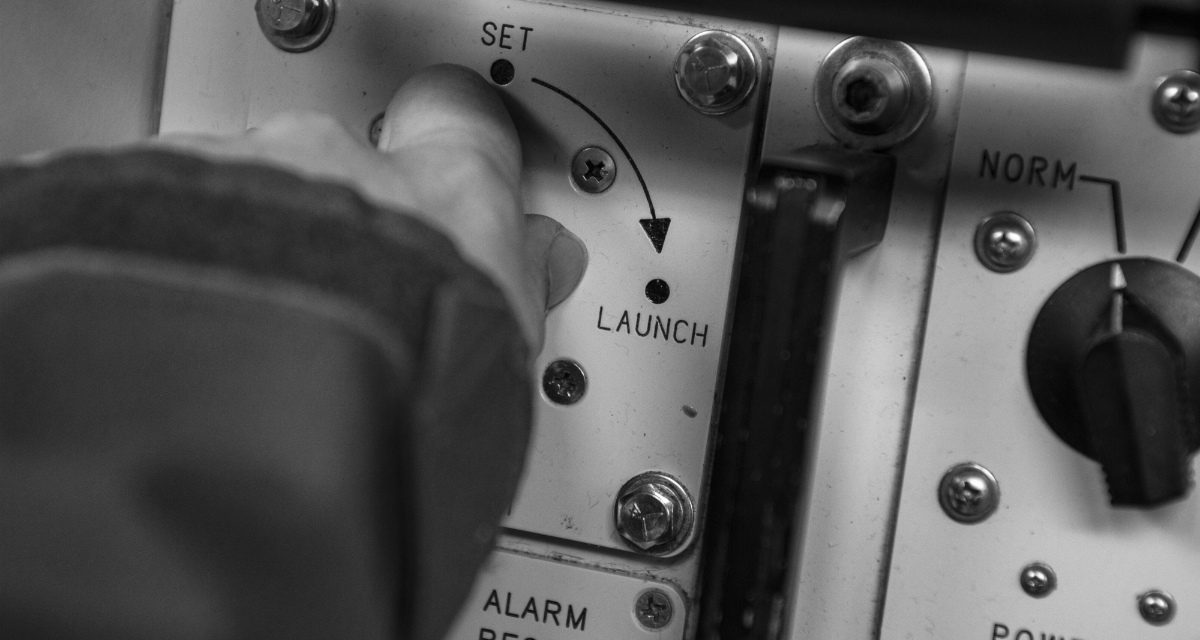
Last month, the Trump administration officially unveiled the results of a year-long review of the United States’ nuclear posture and its strategic vision for how to incorporate nuclear capabilities into an overarching security strategy. In the official White House press release announcing the publication of the 2018 Nuclear Posture Review (NPR), President Trump states that this strategy “enhances deterrence of strategic attacks against our Nation, and our allies and partners, that may not come in the form of nuclear weapons.” The NPR makes clear that the American nuclear arsenal serves a deterrent purpose not only against nuclear threats, but also against “non-nuclear aggression,” including cyber threats. It also emphasizes that the United States’ non-nuclear forces, though an important component of its overall deterrent strategy, “do not provide comparable deterrence effects—as is reflected by past, periodic, and catastrophic failures of conventional deterrence to prevent Great Power war before the advent of nuclear deterrence.” Thus, it seems that while the Trump administration’s nuclear strategy considers non-nuclear actions as legitimate causes for retaliation, it sees a nuclear response as the most effective threat against those actions.How Russia Meddled in its Own Elections
ALINA POLYAKOVA
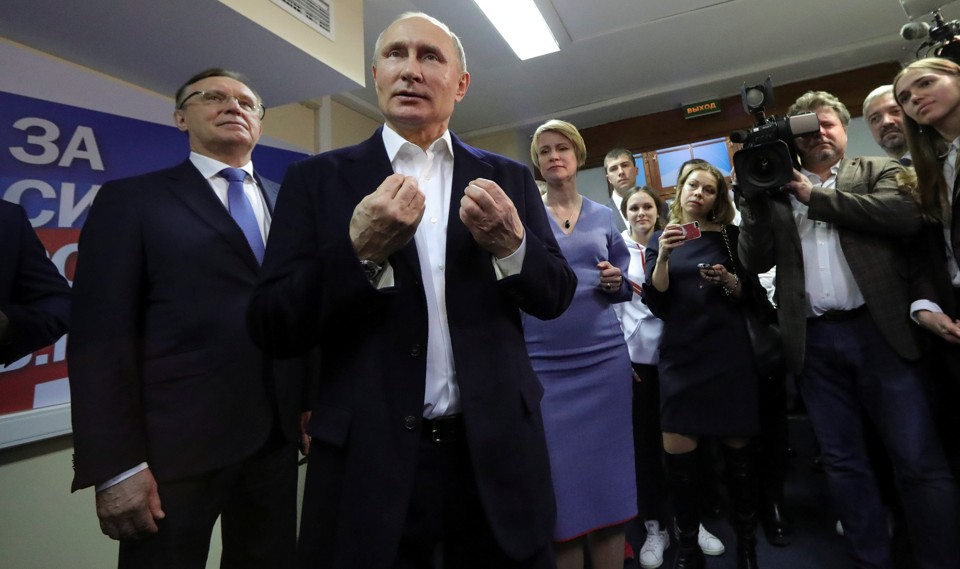
Vladimir Putin, Russia’s longest-serving ruler since Joseph Stalin, surprised no one with his landslide re-election on Sunday. While his victory, in which he claimed 73.9 percent of the vote according to state-run exit polls, was a foregone conclusion, the Kremlin was reportedly anxious about turnout, and conducted an elaborate, well-financed get-out-the-vote campaign. For an authoritarian regime in which election results and turnout are pre-ordained, such concerns may seem odd. But even in Russia’s “managed democracy,” appearances still matter, and the Kremlin needed to present believably high levels of support to ensure Putin’s mandate. Shortly after polling centers closed on Sunday night, Putin appeared to be on target to achieve the desired 65 percent turnout. But even more important for Putin is that this election marked the culmination of his nearly two-decades-long project to control information in Russia and manipulate Russian society. Now, Putin has proven beyond any doubt that the Russia he has built is his and his alone.Infographic Of The Day: Craft Oil - The Lesser Known Side Of America's Energy Industry
Today's infographic focuses on a key part of the turnaround in the U.S. energy sector that often gets overshadowed by Big Oil players like ExxonMobil or Royal Dutch Shell. It covers the role of "Craft Oil" in the industry, an umbrella that includes many small, independent, and focused companies across America that produce oil and gas on a domestic basis.
Russia Sends A Chilling Message With Its Latest Chemical Attack
To pedestrians passing outside the Maltings shopping center in Salisbury, England, on the afternoon of March 4, the pair slumped on a bench appeared to be another tragic case of opioid overdose. The younger woman was unconscious, having lost control of her bodily functions, and was propped against the older man, himself twitching and mumbling in an incoherent manner. But as police arrived at the scene and identified the victims, it soon became clear that this was not an accidental narcotics overdose.
Cryptocurrencies Challenge The Status Quo – Analysis
By Ousmรจne Jacques Mandeng and Piroska Nagy-Mohacsi*
Cryptocurrencies have been the subject of recent attacks by official sector representatives, and the G20 finance ministers will consider regulatory proposals at their next meeting in Buenos Aires. This column argues that while cryptocurrencies present certain risks, they also represent an important innovation that promises to enhance choice and efficiency in monetary transactions. A proportionate, risk-based regulatory approach is required to accommodate differential attitudes and experiences and to avoid stifling innovation and competition. This implies having an open debate before sweeping regulatory action. Cryptocurrencies, today’s privately issued monies or quasi-monies, are threatened with a regulatory clampdown. Many central banks and regulators are calling for their comprehensive regulation, and an announcement is expected at the forthcoming G20 meetings in Argentina. Most economists now echo this sentiment (James 2018, Turner 2018, Danielsson 2018) following earlier, more sympathetic voices (Fernandez-Villaverde 2017).
NSA Pick Will Develop Cyber Retaliation Plans But Don’t Expect Government to Use Them
BY JOSEPH MARKS
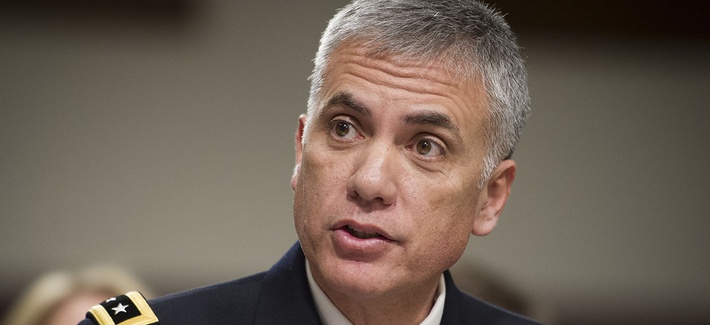
Lawmakers pressed President Donald Trump’s pick to lead the National Security Agency over the government’s failure to deter Russian cyber aggression Thursday at the same time the Treasury Department imposed the broadest sanctions to date against Russian government hackers. The timing underscored two points made frequently by government cyber officials and by their critics outside government. First, the best response to a cyber strike often isn’t a cyber counterstrike. Second, those non-cyber responses, though they keep piling up, still aren’t doing the trick. Thursday’s sanctions target five Russian entities, including intelligence services and social troll creator, the Internet Research Agency, as well as 19 individuals, many of whom were previously indicted by Special Counsel Robert Mueller.The Pentagon Wants AI To Reveal Adversaries’ True Intentions
BY PATRICK TUCKER
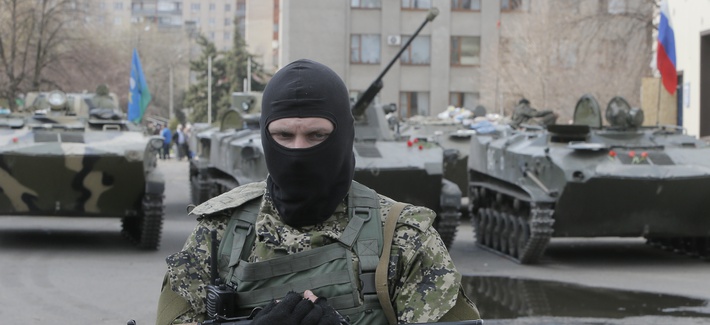
The U.S. military is looking to enlist game theory and artificial intelligence to fight tomorrow’s unconventional warfare tactics. From eastern Europe to southern Iraq, the U.S. military faces a difficult problem: Adversaries pretending to be something they’re not — think Russia’s “little green men” in Ukraine. But a new program from the Defense Advanced Research Projects Agency seeks to apply artificial intelligence to detect and understand how adversaries are using sneaky tactics to create chaos, undermine governments, spread foreign influence and sow discord.4 predictions for the future of work
Stephane Kasriel
I contemplate the future of work on a daily basis in both my professional and personal life. As a father of four children from four to 14 years old, and as a citizen of the world, I care about our future. As CEO of freelancing website Upwork, I am witnessing firsthand not only the immense changes within our industry, but also the speed at which they are occurring. At the World Economic Forum, where I co-chair the Council on the Future of Work, Gender and Education, we have heated discussions on the future impact of artificial intelligence on work and our responsibilities to help manage the change. We see that as the workforce evolves, we must finally break free from the industrial-era habits of the past to ensure a more productive and equitable future.Power Grid Cyber Attacks Keep the Pentagon Up at Night
By Michael McElfresh
It’s very hard to overstate how important the US power grid is to American society and its economy. Every critical infrastructure, from communications to water, is built on it and every important business function from banking to milking cows is completely dependent on it. And the dependence on the grid continues to grow as more machines, including equipment on the power grid, get connected to the Internet. A report last year prepared for the President and Congress emphasized the vulnerability of the grid to a long-term power outage, saying “For those who would seek to do our Nation significant physical, economic, and psychological harm, the electrical grid is an obvious target.”Battlefield Singularity
Artificial intelligence (AI) is fast heating up as a key area of strategic competition. U.S. leaders have signaled that AI is a major component of the Defense Department’s strategy to reinvigorate American military technological dominance. In October 2016, the U.S. government released a “National Artificial Intelligence Research and Development Strategic Plan,” one of three reports on AI issued by the Obama administration. Other nations have similarly taken note of the transformative potential of AI. In July 2017, China released its own national-level AI development plan. In September, Russian President Vladimir Putin observed, “whoever becomes the leader in this sphere [artificial intelligence] will become the ruler of the world.”
ISRO computer had malware, could’ve been hacked, say researchers
Dismantling Contemporary Military Thinking and Reconstructing Patterns of Information: Thinking Deeper About Future War and Warfighting
Bradley L. Rees
“Capturing the perceptions of foreign audiences will replace seizing terrain as the new high ground for the future joint force.” “This is a totally new kind of threat, as we all know. Our adversaries, both state and non-state actors, view the entire information domain as a battlespace, and across it, they are waging a new kind of war against us, a war involving but also extending beyond our military, to include our infrastructure, our businesses, and our people.” SASC Hearing on the Roles and Responsibilities for Defending the Nation from Cyber Attack,
Army, Struggling to Get Technology in Soldiers’ Hands, Tries the Unconventional
By HELENE COOPER
Soldiers training at Fort Sill, Okla., last month. The Army’s planned Futures Command will consult directly with troops there about how to update artillery pieces to improve speed and range.CreditTamir Kalifa for The New York Times. The platoon of Army Special Operations soldiers was on a routine night patrol in eastern Afghanistan when one of them suddenly opened fire on what looked to the others to be a bush. The bush, it turned out, had been obscuring a militant fighter. He was detectable only to the one platoon member wearing prototype night vision goggles that could detect heat signatures — a happenstance that Army officials say probably saved many lives.Does Success Come Mostly from Talent, Hard Work—or Luck?
At a campaign rally in Roanoke, Va., before the 2012 election, President Barack Obama opined: “If you were successful, somebody along the line gave you some help. There was a great teacher somewhere in your life.... Somebody invested in roads and bridges. If you've got a business—you didn't build that. Somebody else made that happen.” Although Obama was making a larger point about the power of collective action, such as building dams, power grids and the Internet, conservative heads exploded at the final sentiment. “I did build that!” is an understandable rejoinder to which I can relate. I research my books, edit my magazine, teach my courses and write these columns (this one is my 200th in a row for Scientific American). If I don't make them happen, nobody else will. But then I started thinking as a social scientist on the role of circumstance and luck in how lives turn out. It's a sobering experience to realize just how many variables are out of our control:21 March 2018
‘Pakistan is isolated and has fewer friends in the international community’
By KUNWAR KHULDUNE SHAHID
We Asked Gen. Petraeus If The Iraq War Was Worth It. Here’s What He Said
by Jeff Schogol
Fifteen years of war have turned Iraqi cities such as Ramadi, Fallujah, and Mosul into ruins. Iraq remains as divided as ever along sectarian lines, despite the deaths of more than 4,500 U.S. troops and untold numbers of Iraqis. U.S. troops remain in Iraq to help advise and assist Iraqi forces as they try to prevent ISIS from launching yet another insurgency. Meanwhile, Iran has flooded the country with thousands of proxy fighters, giving it a large say in what the government of Iraq does post-ISIS. This wasn’t the Iraq that was supposed to emerge when U.S. troops crossed the berm from Kuwait to Iraq in March 2003. Nor is this the Iraq that troops who trounced al Qaeda during the surge bled for. There are few tangible signs of success, and Iraq’s future is still unclear.
Subscribe to:
Posts (Atom)