10 October 2020

5G Outlook Series: Transforming Essential Services for Economic Recovery in the Great Reset


The global health pandemic and the severe recession that many countries face have brought into focus a number of important challenges as governments attempt to keep their populations healthy and workforce productive. There is a growing crisis for essential services, such as healthcare and public transport as well as inequality in access to opportunities to work remotely. The emerging “new normal” is a window of opportunity to shape the economic recovery for essential health and public transport services and the move to hybrid modes of working. Looking further ahead, countries can accelerate their economic recovery by upgrading their digital infrastructure to enable flexible working, innovation, and more geographically even distribution of work opportunities. This second publication of the 5G Outlook Series explores three ways for 5G to accelerate the digital transformation of these types of essential services and workplace activities in the near term:

Accelerating the move to a value-based healthcare system that is predictive, preventative, personalized, and participatory.

Building confidence in public transport so citizens can travel safely to their workplace and begin to bring citizens back into city centres.

Enabling the widespread use of extended reality using 5G to usher in a more immersive alternative to current collaboration tools which will unlock efficiencies and opportunities in the workplace.

To illustrate the enabling opportunities to transform essential services and boost economic recovery in the Great Reset, see the accompanying Compendium of Use Cases that can be found here.

Alternative Approaches to Information-Age Dilemmas Drive U.S. and Russian Arguments about Interference in Domestic Political Affairs

Pavel Sharikov

This paper investigates differences in Russian and American approaches to challenges of the information age, and explores some destabilizing effects on bilateral relations. The governments and societies in Russia and the United States base political and economic decisions about the development and use of information technology on different principles; in a globalized, interconnected world Russia’s collectivistic approach clashes with American individualistic approach. This exacerbates numerous problems in Russia-U.S. relations, including reciprocal allegations of information attacks as a form of interference in domestic affairs. Alternative approaches to information-age dilemmas make Russia and the United States particularly sensitive to different ways of using information technology to impact electoral processes and domestic politics, with little understanding of each other’s narratives and national priorities.

CLTC Report: “Security Implications of 5G Networks”


A new report published by the Center for Long-Term Cybersecurity, “Security Implications of 5G Networks,” explores how the widespread adoption of fifth-generation (5G) cellular service will both bring potential improvements in security — and also expose new risks.

Authored by Jon Metzler, a lecturer at the Haas School of Business at UC Berkeley and founder of consulting firm Blue Field Strategies, the paper draws upon research and interviews conducted over a two-year period with support from a CLTC grant. The paper aims to help network operators — and their customers and partners — prepare for new risk vectors opened by 5G service, in terms of service models or network deployment models, at a critical moment in the development of 5G. “The long-lasting nature of network investments means that supplier selection decisions will have implications for decades,” Metzler writes.

Network operators around the world are rapidly expanding 5G service, and this new technology is expected to have significant advantages over prior generations, including increased speed, reduced latency (the time lag experienced by the user between a query and response), and the ability to “slice” wireless spectrum to support different applications. Yet 5G also has potential to introduce new security concerns by introducing greater diversity in suppliers, increased densification in network devices, and other factors.

The paper aims to help policymakers understand the economic and operational implications of 5G network deployment, including the switching costs of replacing suppliers and the site access needed to deploy robust, pervasive 5G networks; and to highlight security benefits of deploying both 5G RAN (which provides the wireless interface with customer devices and manages related radio resources) and core (which handles authentication, switching, interface with other networks, etc.)

Patents and Artificial Intelligence

Dewey Murdick

Patent data can provide insights into the most active countries, fields and organizations in artificial intelligence research. This data brief analyzes worldwide trends in AI patenting to offer metrics on inventive activity.Download Full Data Brief

This data brief informs policymaker audiences who desire to understand how they might use patent data in planning for the quickly advancing impacts of Artificial Intelligence (AI). Such data can provide policymakers with insights into which areas of AI are rapidly developing, which countries are especially active in AI research, and which organizations are responsible for key AI inventions.

In this primer, we report analytic results on worldwide trends in AI patenting and suggest options for how these results might be interpreted and leveraged.

Key findings presented in this primer include:

There were 10 times as many AI patent applications published worldwide in 2019 as in 2013, most of which have yet to be examined.

Patent applications increased by 500 percent from 2009 to 2019 within the Chinese patent office—90 percent were domestic applications. The U.S. patent office has seen a 35 percent increase in applications during the same time, 48 percent of which were domestic.

While the quality of Chinese patents has been repeatedly called into question, there are signs that the situation may be improving.

Large companies—notably IBM, Microsoft, and Google—dominate AI patenting among U.S. organizations. Meanwhile, Chinese AI patenting is distributed much more broadly across companies (e.g., Ping An, Baidu, Tencent), government organizations (e.g. State Grid), and universities (e.g., Electronic Sci/Tech, Zhejiang, Xidian).

Joint Doctrine for Unconventional Warfare 2.0

Robert Burrell

In 2013, under the leadership of Admiral William McRaven, U.S. Special Operations Command made a herculean effort in advocating for joint doctrine on unconventional warfare. The final approval of Joint Publication 3-05.1 Unconventional Warfare (JP 3-05.1) required the combined endorsement of the Joint Staff, the Services, and the Combatant Commands. Published in 2015, this doctrine opportunistically hit the shelves during U.S. efforts to counter ISIS, a success in large part due to working through and with partners in the region. Prophetically, in 2016, General Joseph Votel, wrote about unconventional warfare in the “gray zone” – attempting to push the Defense Department even further past the joint doctrine milestone of JP 3-05.1 into developing real political warfare tools to combat China, Russia, and Iran. Unfortunately, the Joint Force is taking a giant step backward by terminating JP 3-05.1 instead of revising it – again relegating this irregular warfare activity to the sole realm of special operations. 

Each of the five irregular warfare activities – foreign internal defense, counterterrorism, counterinsurgency, stabilization, and unconventional warfare – need institutionalization and operationalization in the Joint Force. On 2 October 2020, the Defense Department endorsed this vision by releasing the Irregular Warfare Annex to the 2018 National Defense Strategy. In an age of great power competition, this new Defense priority on irregular warfare portends to provide important methods in countering the malign activities of China and Russia, who are “undermining the international order,” as well as “rogue regimes,” like Iran, who undercut regional stability through sponsored proxies. If the Cold War is a predictor of a future operating environment, the internal struggle for regime change within nation states – combined with the overt or covert assistance of outside sponsors – will certainly escalate. Instead of direct confrontation with our adversaries, conflict will likely appear on the periphery and fall short of major war. Of all the irregular warfare activities, the Defense Department arguably needs to invest in unconventional warfare the most.

As fighting rages, what is Azerbaijan’s goal?

Joshua Kucera 

The Azerbaijani offensive against Armenian forces is its most ambitious since the war between the two sides formally ended in 1994. But what, precisely, is the aim of the operation?

Azerbaijani officials haven’t said precisely what their strategic goal is in this round of fighting, but the scale of the offensive suggests that it is more ambitious than previous escalations.

Azerbaijani analysts say that the aim this time may be the recapture of one or two of the territories surrounding Nagorno-Karabakh that Armenian forces took during the war three decades ago.

“I assume that Azerbaijan intends at least to retake control in Fuzuli and Jabrayil; [those are] the two main priorities for this campaign,” said Fuad Shahbaz, an Azerbaijani analyst, in an email interview with Eurasianet.

Those two territories are on the southeastern edge of the Azerbaijani territory that Armenia occupies, and they have seen the heaviest fighting since the new offensive began on the morning of September 27. That day, the Azerbaijan Ministry of Defense announced that it had retaken several villages in the Fuzuli and Jabrayil districts.

Armenia-Azerbaijan War: Military Dimensions of the Conflict

Michael Kofman

On Sept. 27, Azerbaijan launched a military offensive, resulting in fighting that spans much of the line of contact in the breakaway region of Nagorno-Karabakh, which is de facto occupied by Armenia. As of this writing, artillery and rocket strikes are taking place through the depth of Armenian lines, including in the regional capital of Stepanakert. This is the most serious fighting to take place between the two sides since 1994. It is a large scale conventional war between the two countries that is likely to upend the status quo of territorial control in the region. Turkey has publicly, and militarily, backed Azerbaijan in this conflict, while Moscow will be forced to reassess its long-standing policy of maintaining relations with both sides and upholding the status quo, which may not be possible given the rapidly unfolding events. What can be surmised about the course of the war thus far is that Armenia is at a disadvantage, but Azerbaijan will pay a considerable price for any territorial gains.

The war should not come as a surprise. In 2016, Azerbaijan conducted a limited offensive, seizing minor tracts of territory in a brief four-day conflict. That war proved an early test of Azerbaijan’s growing qualitative and quantitative military superiority against Armenian defenses in the region, demonstrative of revanchist intent. More recently skirmishes took place in July 2020 after a border incident between the two sides. This fighting was not centered on Nagorno-Karabakh, but rather the border between Armenia and Azerbaijan proper and cost the life of an Azerbaijani Major General. Moscow brokered a ceasefire, but Azerbaijan’s desire to revise the status quo has been met with Armenian recalcitrance.

9 October 2020

Why China Has the Power to Dictate Pakistan’s Future

by William Shriver

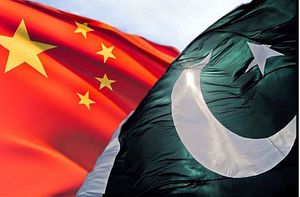
China has made its presence known in South Asia in 2020. Over the past few months, China-India relations have quickly deteriorated as the two nations have violently confronted each other in Aksai Chin, an intensely contested region that has had disputes since the 1950s. On the other hand, China-Pakistan relations have continued to flourish as Pakistan’s Prime Minister Imran Khan downplayed the early stages of the coronavirus in China and Pakistan. He has balanced his criticism of China because Pakistan receives billions of dollars of investment through the Belt and Road Initiative. Thus, China’s role in the region can be seen through these two parallel stories—one relationship which has come to an ugly boiling point, while the other continues to thrive under difficult circumstances. It is likely that the gap between India and Pakistan’s relationships with China will only continue to widen as both India and China seek to cement themselves as key regional actors. 

The northern border of India along Chinese Xinjiang has long been a dangerous flashpoint in the region. However, India’s Prime Minister Narendra Modi and China’s President Xi Jinping came together to build the “Wuhan Spirit” and “Chennai Connect” after border disputes in 2018 and 2019. In spite of that, relations have taken a nosedive after a serious border melee in May when about 150 Indian and Chinese soldiers engaged in fistfights and verbal taunting. In June another violent faceoff occurred, this time in the Galwan Valley, with reportedly twenty Indian soldiers and forty-three Chinese soldiers being killed. This caused border tensions to rise to the highest level since 1962. 

Andrew Small on the China-Pakistan Economic Corridor’s Return to the Shadows

By Catherine Putz

In the five years since the China-Pakistan Economic Corridor (CPEC) was launched, it’s been beset by the winds of local politics and the waves of geopolitics alike. In a new report, titled “Returning to the Shadows: China, Pakistan, and the Fate of CPEC,” Andrew Small catalogues the grand promises and countless pitfalls of CPEC. In an interview with The Diplomat, Small, a senior transatlantic fellow with the German Marshall Fund’s Asia Program, explains the significance of CPEC to the China-Pakistan relationship, the contours of its highs and lows, and what the fate of the grand scheme means for China’s broader Belt and Road Initiative.

What’s the significance of the China Pakistan Economic Corridor (CPEC) to the China and Pakistan bilateral relationship? 

CPEC was supposed to act as a vehicle to upgrade the China-Pakistan partnership. Some Chinese analysts used to describe the relationship as a “stool with two legs”: While security and political ties have been strong for decades, economic ties had always been extremely weak. Even this characterization somewhat overstates the breadth of the relationship — it was almost entirely confined to military and intelligence matters, and managed by a very small cast of individuals on the two sides. China was never a factor in day-to-day economic or political life in Pakistan, and its strong approval ratings in opinion polls reflected its unimpeachable reputation as the “all-weather friend” rather than any deeper affinity among the Pakistani public. 

Pakistan to Keep Top Suspect in Daniel Pearl Murder in Jail, Despite April Acquittal

By Munir Ahmed

A British-born Pakistani man who has been on death row over the 2002 killing of American journalist Daniel Pearl will remain in jail for another three months despite his acquittal by a lower court earlier this year, according to a government order on Wednesday.

The development was announced by prosecutors during a brief hearing of the high-profile case at Pakistan’s Supreme Court, which was to decide whether the key suspect in Pearl’s slaying, Ahmed Omar Saeed Sheikh, should stay in jail following his acquittal. 

The court convened on an appeal by Pearl’s family, seeking to keep Sheikh on death row over the beheading of the Wall Street Journal reporter.

According to Faisal Siddiqi, the lawyer representing Pearl’s family, government prosecutor Fiaz Shah told the judges he needed more time for paperwork in connection with the case. The judges then adjourned the hearing till October 21.

Siddiqi, who had expected the court to rule against Sheikh’s acquittal on Wednesday, said he still hopes such a decision would come before the expiration of the suspect’s new, 90-day detention.

China’s Two-Pronged Response to the Quad

By Shannon Tiezzi

The Quad – consisting of Australia, India, Japan, and the United States – held its second-ever foreign ministers meeting this week in Japan. Notably, the meeting came amid the global COVID-19 outbreak, furthering highlighting the importance ascribed to the gathering by its participants. Japan’s Ministry of Foreign Affairs noted that it was “the first ministerial-level international conference in Japan since the outbreak and spread of COVID-19.” Meanwhile, U.S. Secretary of State Mike Pompeo cut out every part of his planned Asia trip except for the Quad ministerial.

The renewed commitment to the Quad is not lost on China. The grouping pointedly brings together four Indo-Pacific democracies committed to a rules-based order – with China standing as the often-unidentified threat to both democracy and international rules in the region.

Ahead of the meeting, Beijing reiterated its concern. Foreign Ministry spokesperson Wang Wenbin was asked about the upcoming Quad meeting in a press conference on September 29. He replied by advocating against “ forming exclusive cliques”: “Instead of targeting third parties or undermining third parties’ interests, cooperation should be conducive to mutual understanding and trust between regional countries.”

Dealing with China: Lessons Learned from Three Case Studies

by Christopher W. Bishop

Preface

The idea for this paper began after several conversations with Canadian friends and colleagues about the cases of Michael Kovrig and Michael Spavor. On December 10, 2018, Chinese officials detained the two Canadian citizens for “endangering state security”, 10 days after Canadian authorities arrested Meng Wanzhou, Huawei’s chief financial officer, on an extradition warrant from the United States, where she was wanted for bank fraud. Despite Chinese statements denying any connection between the two Michaels and Meng, some Canadians have argued the only way to gain their release is for Canada to release Meng – a classic “prisoner exchange”. Others, however, have argued just as forcefully that trading Meng for the two Canadians would only give legitimacy to China’s “hostage diplomacy”. One friend asked me if China had ever done anything like this before. How had those cases been resolved, and what would China do this time?

Those were good questions. As a U.S. Foreign Service officer who has spent much of my career working on China – including at the U.S. embassy in Beijing from 2015-2018, where I analyzed the Communist Party leadership and China’s state security apparatus – I had some insight into Chinese foreign policy. I also had a personal connection to one of the cases. I knew Michael Kovrig – he had been one of my counterparts at the Canadian embassy in Beijing – and I had great respect for his work as a diplomat, and later as a senior advisor at the International Crisis Group. Moreover, because I was now on leave from the U.S. Department of State to serve as a Council on Foreign Relations International Affairs Fellow in Canada, I had time to look for some answers.

With Little Hope for Reform, Lebanon Continues Down the Road to Ruin


Patricia Karam 

BEIRUT—With yet another failed attempt to form a government and no replacement in sight, Lebanon’s future is looking a lot like its bleak past.

The prime minister-designate, Mustapha Adib, resigned in late September after nearly a month of fruitless talks to create a Cabinet of technocrats. French President Emmanuel Macron had publicly backed that process, which came on the heels of Prime Minister Hassan Diab’s resignation following the Aug. 4 port explosion that devastated parts of Beirut.* Nonetheless, Lebanon’s politicians are still mired in a dispute over control of the powerful Finance Ministry, as the economy collapses and the social fabric frays. If even the destruction of its capital city does not lead to palpable change, can the country be saved?

The Long March : A Generational Approach to Achieving the People’s Republic of China Strategic Objective to Annex Taiwan


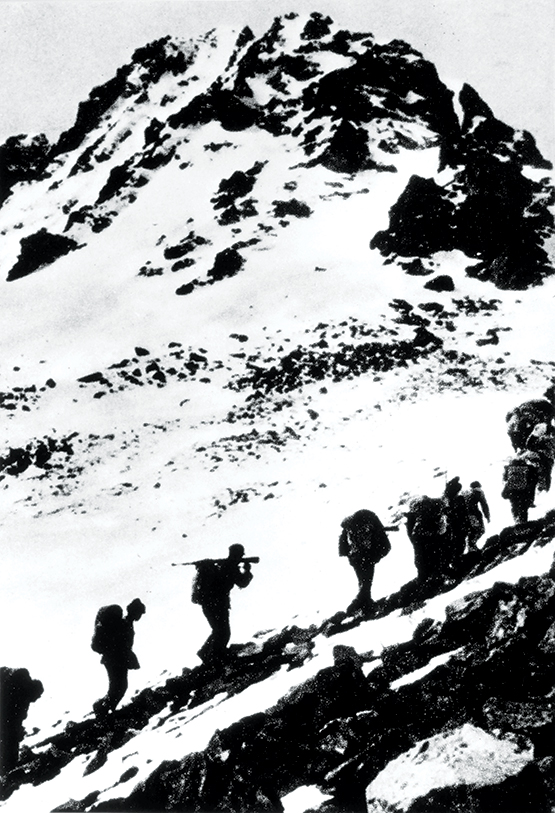
Editor’s post script: “The Long March” is a frequently invoked phrase in socialist literature that has deep metaphorical significance to the global communist movement in general and to Chinese Maoist communists specifically. The phrase literally refers to the epic journey of the Chinese Communist army, which broke through encirclement by the Nationalist Chinese Army (Kuomintang) in October 1934 and survived by escaping to hiding places in northern China under the leadership of Mao Tse-tung. The trek lasted over a year and covered more than four thousand miles. It was accomplished at the cost of great hardship and suffering, and required great forbearance to complete. Today the phrase “The Long March” is frequently invoked by the PRC as a meaning-packed symbol and supercharged mantra to stress the need for complete devotion to the cause of communism, willingness to endure extreme hardship, and—above all—indefatigable persistence and patience in single-minded pursuit of national objectives that might require decades to accomplish.

In contrast to the symbolism of the Long March, the remnants of the Republic of China’s government fled mainland Chain to the island of Taiwan in “The Great Retreat” to escape the advancing Communist People’s Liberation Army led by Mao Tse-tung. There the Kuomintang (Chinese Nationalist Party), under the leadership of Pres. Chiang Kai-shek, established what was envisioned as a temporary alternate government headquarters in anticipation of returning to mainland China to recover power from the communist Chinese.

Mexico’s Water Dispute With the U.S. Is a Symptom of Its Governance Crisis

Tony Payan 

For nearly 75 years, the United States and Mexico have transferred giant quantities of water to each other each year as part of a system set up to ensure the equitable sharing of water sheds that straddle their border. The terms and obligations are clearly laid out in a treaty the two sides signed in 1944: The U.S. sends 489 billion gallons of water southward via the Colorado River, and Mexico allocates 114 billion gallons northward, from the Rio Grande and the Rio Conchos. To deal with the technical aspects of this water exchange and settle any issues, the two countries created the El Paso-based International Boundary and Water Commission and its Mexican counterpart, the Comision Internacional de Limites y Aguas, located across the Rio Grande, in Ciudad Juarez.

Most experts consider the treaty fair, and the joint river commission is widely seen as a model of effective bilateral cooperation. Problems do arise occasionally though, primarily due to severe droughts, which can cause Mexico to fall behind on its water payments, as it has this year. Pressured by the U.S. to pay a shortfall of around 100 billion gallons of water by Oct. 24, the Mexican government took control of three dams in northern Chihuahua state this summer, with the intention of opening the flood gates to pay its water debt to the U.S. as stipulated in the 1944 treaty.

But farmers in Chihuahua, already suffering from a bad drought this year, view the water reserves as insurance against the possibility of more dry conditions in 2021. The farmers took matters into their own hands this summer to try to prevent the water from being released, even clashing periodically with the Mexican National Guard, a force originally created to confront organized crime.

The Public in Advanced Economies are Not Happy with China – or Xi

By Abhijnan Rej

If you need a number to tell you how angry the world is at Xi Jinping’s China, I have one: 85.

A new Pew Research Center survey of public opinion in 14 advanced industrial economies about China show that 85 percent of Swedes – Swedes – surveyed view the country unfavorably, compared to 40 percent in 2006. According to Pew, “[v]iews of China have grown more negative in recent years across many advanced economies, and unfavorable opinion has soared over the past year.”

And soared it has indeed. For example, 81 percent of Australians surveyed expressed negative views about China in this year’s survey, compared to 57 percent last year. Crucially, in the United States, negative opinion of China has increased by almost 20 percent since 2016, when President Donald Trump assumed office, to 73 percent this year; 13 percent of that increase was from last year alone.

Alternative Approaches to Information-Age Dilemmas Drive U.S. and Russian Arguments about Interference in Domestic Political Affairs

Pavel Sharikov

Introduction Relations between the United States and Russia have deteriorated to their lowest level since the worst times of the Cold War. The current Russia-Western standoff, which intensified in 2014 over the events in Ukraine, has become a major feature of the new international system. The same level of courage and creativity that helped stabilize and end the U.S.-Soviet Cold War is needed today. 

The current situation differs enough from the earlier Cold War to be called the “Cold War 2.0.” It does not involve the same ideological premises; the parties are not peer competitors; and they are not locked in a zero-sum competition for world dominance. Cold War 2.0 also has a new feature: the widespread use of cyber and information technologies (IT) for strategic advantage through espionage, disruptive cyber-attacks, and interference in domestic politics. 

Just as Cold War security experts worried that the superpowers’ nuclear competition could lead to a disastrous war that neither desired, some are now starting to recognize that unconstrained cyber competition could have a similar result. For example, some current security experts have become increasingly concerned that as mistrust grows, exploitative cyber operations intended to collect information about a potential adversary’s military capabilities for defensive reasons could be misperceived as a prelude to disruptive cyber-attack, eliciting a pre-emptive reaction that escalates out of control. Russian offensive cyber capabilities are perceived as serious security risks and have not yet became subject to international regulation. 1

Publication File

TIME TO REAPPLY DEFENSE DIPLOMACY IN THE INDO-PACIFIC

DANIEL H. KATZ

Everywhere one looks in the Indo-Pacific region, a potential geopolitical crisis seems just on the horizon. Whether it is maritime vessels plying the disputed waters of the South China Sea,1 rising tensions related to Taiwan, or the contested Line of Actual Control2 separating India and China, the risks of armed conflict appear to be rising as the projection of hard power continues apace. These ongoing flashpoints require that the national security establishments of adversarial countries intensify their resolve to pursue discreet defense diplomacy, which has the potential to mitigate conflict and avert crises. 

Competition among nations over influence and territorial claims is an enduring feature of the international system. The preeminence of the United States throughout the Indo-Pacific in the post-Cold War period has largely helped maintain a stable equilibrium. However, tectonic shifts largely driven by the dramatic rise of China are underway in the region, presaging a more dangerous future. While a strong military deterrent 

Winning Strategic Competition in the Indo-Pacific

Jason Begley

The strategic competition in the Indo-Pacific involving the United States (U.S.), Australia and the Chinese Communist Party (CCP) is arguably the most significant contemporary international relations issue. It spans all aspects of state power: hard, sharp and soft; diplomatic, information, military and economic; and all domains: air, sea, land, space, cyber, technology and innovation. But in their rush to recover ground perceived to be already lost to the CCP, neither the U.S. nor Australia have paused to devote sufficient attention to understanding the nature of strategic competition, to comprehend what winning it actually means, and therefore to grasp how best to approach it. As a result, they both continue to cede the initiative to the CCP, while it continues to compete on the terms most favorable to it.

Most current interpretations of strategic competition view it as a constant state, one that therefore defies clear articulation of end-states and the metrics that demonstrate progress towards their attainment. Such interpretations are not only imprecise but unhelpful, as they prevent development of concrete strategies, leaving only abstract visions against which executable planning and commitment of resources is unachievable. A more exact approach views strategic competition structurally—poised atop a hierarchy made up of a range of smaller competitions, which are themselves comprised of discrete, single-issue contests. In this context, the objective of strategic competition can be best understood and expressed as the effort to gain and maintain a relative advantage over an adversary regarding contested goods such as power, security, wealth, influence, and status. This is achieved by winning the component competitions and contests that contribute to that strategic end-state without escalation to conflict. To win strategic competition necessarily requires a clear grasp of its key terrain. Approaches that focus on a single domain are too narrow and tactical to achieve a strategic end-state. Instead, reference to conflict, decision-making and power theories reveal that, from a Western perspective, the human-cognitive process is the critical element of strategic competition, a view also reflected in the CCP’s adoption of the Three Warfares. In concrete terms, this key terrain is best understood as the observe, orient, decide and act (OODA) loops of strategic competition’s actors.

The EU’s Role in Fighting Disinformation: Crafting A Disinformation Framework

JAMES PAMMENT

INTRODUCTION

For the European Union (EU) to mount an effective defense against the various threats it faces in the information space, the various institutions that compose it must work better in concert. To do so, the EU and its many affiliated bodies should adopt commonly held terms for discussing the challenges they face, clearly delineate institutional responsibilities based on each body’s comparative strengths, and formulate countermeasures that more fully leverage those advantages.

SHARED EU TERMINOLOGY

The European Union (EU) should first revise the relevant terminology used by its various institutions in order to distinguish between different aspects of the problem of countering disinformation. The term disinformation itself is currently being used as a catchall that does not assist policymakers in defining different areas of activity or potential countermeasures. This conceptual groundwork muddles the distinctions between often unwitting individuals who inadvertently share factually incorrect information with the deliberate tactics of hybrid influence operations organized by hostile states. These problems can be averted by adopting four terms that define specific aspects of the problem: misinformation, disinformation, influence operations, and foreign interference.

Framing the policy area in this way has several benefits. For instance, this approach to the problem:

allows EU institutions to use shared terminology, thereby strengthening consistency and coordination;

enables stakeholders, including digital platforms, to use these terms in reports to the EU, rather than using their own preferred terminology (as in the Code of Practice on Disinformation), thereby strengthening coherence of knowledge and oversight;

Russia and Europe: Stuck on Autopilot

ANDREW S. WEISS

Many observers predicted that the coronavirus pandemic might lead Russian President Vladimir Putin to rethink his highly opportunistic, zero-sum approach to foreign policy. Such assessments turned out to be little more than exercises in wishful thinking. If anything, the Kremlin’s policy toward “core Europe”—Germany, France, and the United Kingdom—has followed the same aggressive, in-your-face approach, leading to growing awareness that Moscow is not at all serious about lowering the tensions that followed the annexation of Crimea and war in eastern Ukraine.

Today, Russia’s relations with core Europe are getting worse. The Kremlin taunts the West over the attempted assassination of Russian opposition leader Alexey Navalny using a banned military-grade nerve agent. Its suggestions that he was somehow poisoned in Germany, where he was flown for treatment, have pulled the rug out from under longtime advocates of closer cooperation in the economic and energy sphere, including Germany’s Angela Merkel. A controversial attempt by French President Emmanuel Macron to re-engage the Kremlin on a range of strategic and regional issues is also now at risk. The United Kingdom continues to try to push back against Russian malign activities on its territory and to limit undue influence, but a light-touch approach to regulation has made it difficult to achieve major breakthroughs.

Why does the Kremlin pursue policies toward Europe that appear so counterproductive on their face? Instead of carefully seeking to exploit long-standing differences within NATO and the European Union about the proper response to Russian aggression against Ukraine or interference in the affairs of European nations, it is Moscow’s own overreach and missteps that time and again encourage greater Western unity, or at the very least leave the allies no alternative to confronting Russia. That pattern, in turn, fosters a dynamic that only makes the Kremlin feel more insecure over the long term.

Headset technology is cheaper and better than ever


The cubes fly towards your correspondent slowly at first, then quickly gather pace as the music speeds up. On his head he wears a chunky set of goggles. In each hand, he holds an imaginary laser sword that can chop the cubes in half before they reach his body. Each cube is marked with an arrow (designating the direction in which it must be sliced) and a colour (for which hand has to do the slicing—blue for right, red for left). The more vigorously the cubes are sliced in time with the music, the more points are scored. Horizontal and vertical barriers, mixed in with the cubes, must be avoided at all costs. A few minutes of swinging the imaginary swords around is tiring but oddly diverting. The simulation breaks down only when your correspondent gets too energetic with his jabs and crashes into a nearby (non-virtual) bookshelf.

Welcome to “Beat Saber”, one of the most popular games available on the Oculus Quest, a virtual-reality headset. Though it is possible to experience and explore virtual worlds without having to put on a headset, doing so provides a new level of immersion, as screens in front of each eye, and sensors that map the movement of the wearer’s head, create the illusion of being inside a 3d environment. It is magical—but the awkwardness and cost of vr headsets is the main reason why there has always been a gulf between the promise of vr and the reality.

US Cyber Command’s top general makes case for partnering with tech firms

Mark Pomerleau

WASHINGTON — To stay at the cutting edge of technology and ahead of budding adversaries, U.S. Cyber Command is trying to increase its partnership with the commercial technology sector.

In an article published in Foreign Affairs on Aug. 25, Gen. Paul Nakasone, head of the National Security Agency and Cyber Command, and Michael Sulmeyer, senior adviser to the commander, argued that partnering with the government is not only necessary for success in cyberspace, but is mutually beneficial.

“Given that some of the most innovative thinking today is happening in the offices of American tech companies, we would be shortsighted if we were not pursuing partnerships with them. Such partnerships should of course be voluntary — companies can decide on their own if and when it makes sense to work with Cyber Command — but partnering with technology companies has been one of Cyber Command’s top priorities,” they wrote. “Many leading U.S. companies find themselves on the frontlines of competition in cyberspace. Working collaboratively where we can allows us to improve collective defense and stay a step ahead of our adversaries. This is all the more important as technology continues to advance.”

Cyber Command and the NSA have been on a yearslong tour to woo the private sector and Silicon Valley back into its good graces following disclosures from former contractor Edward Snowden that detailed global espionage.

US Army Cyber Command to take ‘more direct role’ in offensive, influence operations

Mark Pomerleau

WASHINGTON — Army Cyber Command’s new headquarters will allow the organization to take a sharper focus on its offensive and influence mission, its commander said Sept. 3.

The command officially commemorated its move from Fort Belvoir, Virginia, to Fort Gordon, Georgia, in a Sept. 3 ceremony, a move that has long been in the works. The ceremony celebrated the opening of the command’s new building, called Fortitude Hall, a 336,000-square-foot facility that cost about $366 million.

The facility is co-located with the National Security Agency’s Georgia post.

The Army’s Joint Force Headquarters-Cyber — the entity that plans, synchronizes and conducts operations for combatant commands to which they’re assigned under U.S. Cyber Command — has been at Fort Gordon, co-located with NSA Georgia, conducting operations for years. But the new facility and headquarters boasts several new benefits.

“We’re going to take a much more direct role in the attack or offense and influence portion of the mission,” Lt. Gen. Stephen Fogarty, commander of Army Cyber Command, told reporters Sept. 3.

Treat AI As Intelligence — Not Technology

By BRYAN CLARK and DAN PATT

The US military is rolling out AI-enabled projects like the Air Force’s Airborne Battle Management System or the Army’s Project Convergence. But the novelty of these demonstrations and the effort required to pull them off suggest that—unlike Silicon Valley—DoD is struggling to incorporate AI into its combat systems, aircraft, ships, and other equipment. 

DoD promulgated an Artificial Intelligence Strategy, established the Joint Artificial Intelligence Center, and the services all stood up their own AI offices, so we know they’re trying hard. The problem is these initiatives treat AI as a tool rather than a method for using a tool. For example, copying past efforts to field nuclear weapons and nuclear propulsion, the Defense Innovation Board advised the JAIC to be made the central manager for all DoD AI efforts; the vice-chair of the National Security Commission on Artificial Intelligence proposed creating a Naval Reactors-like organization to accelerate introduction of AI into the US military. 

Recently the JAIC changed course and announced a series of moves that break with the flawed “AI is a thing” paradigm. By transforming itself into an enabler of AI adoption across the US military, the JAIC will treat AI like a technique that is bought as a service, complete with new contracting mechanisms for the continuous data management, model refinement, software development, and testing needed for defense organizations and vendors to incorporate AI into their products and processes.

Boston Tech Hub Faculty Working Group Annual Report 2019-2020

Ash Carter, Frank Doyle

The Boston Tech Hub Faculty Working Group, hosted by former Secretary of Defense and Belfer Center Director Ash Carter and Harvard John A. Paulson School of Engineering and Applied Sciences Dean Frank Doyle, holds monthly discussion-based meetings that explore and answer the question:

How do we resolve the dilemmas posed to public good and public purpose that are created by technology’s unstoppable advances?

These meetings are an opportunity for faculty members from across Harvard, MIT, and other universities, as well as industry experts and leaders from government and civic society, to both evaluate the impacts of an emerging technology and to exchange interdisciplinary approaches to shape its development. Furthermore, by gathering, developing connections, and advancing new ideas, this community will be the place that shapes the future of technological advancement.

In the fall semester, Faculty Working Group sessions focus on specific emerging and disruptive technologies in various stages of development—from early applied science to commercially available products. The technologies also each raise different policy questions and impact different dimensions of public purpose or societal values. The spring semester sessions build upon topics and questions raised during the fall by exploring potential policy proposals to help shape a future in which technology serves humanity as a whole.

The Boston Tech Hub Faculty Working Group Annual Report is a summary report of findings, key insights, and outstanding questions from the discussions held during the 2019-2020 academic year, and includes the brief primers created for each of the seven sessions held during the academic year. 

Download the full report:

Virtual environments are being used everywhere


In an early scene from Disney’s new television series, “The Mandalorian”, a door opens to reveal a barren, icy landscape. The camera swoops outside to follow the titular character, a solitary gunslinger in silver armour, making his way across the vast expanse of ice. It is an impressive, expensive-looking shot, of the kind you might expect for a show set in the “Star Wars” universe.

The “Star Wars” franchise has been pushing the limits of film-making technology for more than 40 years. Its creator, George Lucas, set up a now-iconic special-effects company, Industrial Light and Magic (ilm), specifically to serve the fantastical effects needs of his space opera. ilm went on to create special effects for dozens of films, including some of the earliest computer-generated 3d characters in “The Abyss”, “Terminator 2” and “Jurassic Park”, pioneering a new industry in the process. Now ilm is at the forefront of using computer-generated reality to bring cinematic special effects to the small screen—and it is using game engines to do it.

War in the Caucasus will spread to Russia and Turkey

BY JAMES STAVRIDIS

The “frozen conflict” between Armenia and Azerbaijan has turned very hot. What may seem to many Westerners a minor clash in a remote corner of the world actually has significant implications for regional security, energy markets and the ambitions of two problematic strongmen: Vladimir Putin of Russia and Recep Tayyip Erdogan of Turkey.

The fighting, which goes back to the collapse of the Soviet Union, centers on a small enclave of ethnic Armenians inside Azerbaijan called Nagorno-Karabakh. The mountainous self-declared republic (which is not even formally recognized by its patron, Armenia) has a population of 150,000 but is highly militarized. The Azeris lost control of the area in a conflict in the 1990s that cost 30,000 lives, and despite much saber-rattling have been unable to get it back though diplomatic or military means.

In my time at the North Atlantic Treaty Organization, I visited both countries several times. Dislike and distrust permeated the environment. The two defense chiefs at the time hated each other, and although both nations were nonmember partners with NATO (and had small troop contingents in Afghanistan), all that either man wanted to talk about was the duplicity and venality of the other. Unfortunately, each was accurately channeling the national view toward their neighbor in the Caucasus. Neither side seemed willing to give an inch, either literally and figuratively.

Tanks vs. Drones Isn’t Rock, Paper, Scissors

By Jacob Parakilas

In the first days of the new war between Armenia and Azerbaijan, the Azeri military claimed a number of destroyed tanks and other armored fighting vehicles. Those strikes seem to have been made — and filmed — by a Turkish-designed armed drone, the Bayraktar TB2. With armed drones bearing anti-tank ordnance increasingly cheap, accessible and capable, does it spell the end of the tank’s century of battlefield dominance?

Two decades ago, the U.S. rushed the first armed drones into service for its post-9/11 campaigns. They carried no more than two Hellfire missiles and were propelled by an engine producing less power than a contemporary Toyota Camry. But what they had was endurance: a drone could circle its target for hours on end before striking, whereas a high-performance jet or attack helicopter would have to return to base for fuel and crew rest in a fraction of that period. This was a crucial factor in the irregular campaigns the U.S. employed them in, where the targets had little or no anti-aircraft capability. Most strategists, however, assumed that in a high-end war, drones flying lower and slower than a Second World War fighter plane would be shredded by an adversary with integrated air defenses.

But as the control systems have become more reliable and components more affordable, drones are increasingly seen as a relevant capability for regular warfare as well, especially since there is no danger of a pilot being captured or killed. Cheap unmanned combat aerial vehicles may not have the stealthy features of a 5th-generation fighter, but they are small and quiet enough to evade notice from personnel on the ground. And air defenses can be overcome with specialist suicide drones, like the IAI Harop, which have been used in Nagorno-Karabakh as far back as 2016.

THE CHEMICAL AND BIOLOGICAL ATTACK THREAT OF COMMERCIAL UNMANNED AIRCRAFT SYSTEMS


In September 2013, at a political campaign rally in Dresden, Germany, a small unmanned aircraft system (UAS),2 or “drone,” flew within feet of German Chancellor Angela Merkel and Defense Minister Thomas de Maiziere, hovering briefly before crashing into the stage near Merkel’s feet.3 This harmless stunt by a political activist demonstrated that drones, especially those using autonomous navigation systems, could be stealthy, accurate and potentially deadly. Had this drone been armed with a chemical or biological warfare (CBW) agent, it may have incapacitated or killed this high-level delegation, garnering international attention and triggering profound concern regarding the government’s inability to secure and defend vulnerable populations from any UAS capable of delivering CBW agents. 

RECENT EVENTS

There have been other incidents involving commercial UAS and national security. In April 2015, a small UAS, possibly tainted with radioactive cesium, was discovered on the roof of the Japanese Prime Minister’s office. The UAS was “carrying a camera and a bottle of unidentified liquid that bore a sticker with the universal symbol of radioactivity.”4 In January 2017, the Islamic State of Iraq and Syria (ISIS) started using commercial UAS to provide reconnaissance and targeting information against coalition forces5 and began showing interest in conducting UAS-based CBW attacks.6

Some violent extremist organizations (VEO) are arming commercial UAS with small munitions to attack adversaries.7 Likewise, UAS confrontations with military, law enforcement, pilots and citizens are increasing, as the Federal Aviation Administration (FAA) now receives over 100 adverse UAS reports each month.8 These examples illustrate the intrusive, undetectable and potentially lethal nature of this emerging technology.9

Competitive strategy insights from wargames

by Benjamin Jensen, John T. Watts, Christian Trotti, and Mark J. Massa

What is competitive strategy?

Warfighting eclipses the moment of battle. Prior to conflict, a defense strategy produces the concepts, capabilities, and formations that any operational or tactical leader finds at their disposal. Many wars have simply been fought with weapons systems accumulated over time. However, a forward-looking approach to competitive strategy requires conceptualizing the actions needed to shape adversary decisions and position one’s forces before the battle begins, primarily through strategic military-modernization investments. In World War II for instance, it was the United States’ Victory Program that mapped out how to scale combat power through the US industrial base, as well as investments in key capabilities such as the Higgins Boat, which enabled larger campaigns and key moments like the Normandy invasion.

Thus it is that in war the victorious strategist only seeks battle after the victory has been won…

Sun Tzu, The Art of War

Today, the competitive strategies that the US military uses to prioritize future force-modernization investments have the potential to shape long-term geopolitical and military competition. New capabilities also affect how rival great powers, like China and Russia, conduct strategic planning and make decisions on the types of forces best suited to challenge the United States.

Renewed fighting between Armenia and Azerbaijan: what makes it different this time?

Alexander Stronell

Renewed clashes between Armenia and Azerbaijan appear to have been sparked by a major Azerbaijani offensive in the Nagorno-Karabakh region. Rising casualties have been accompanied by hardened rhetoric on both sides. Amid conflicting reporting on losses, it seems clear that at least several hundred service personnel and civilians have died since fighting began on 27 September, with several hundred more reportedly wounded. Baku has described the operation as a ‘counter-offensive’ launched in response to ‘large-scale provocation’ and shelling of Azerbaijani positions by Armenian forces. Armenia, Azerbaijan and the de-facto authority of the Nagorno-Karabakh region have all declared martial law; Armenia and Nagorno-Karabakh have ordered the total mobilisation of their armed forces. A chorus of world leaders calling for an immediate truce has been brushed aside by the Azerbaijani leader, who has stated that the only precondition for ceasefire can be the total withdrawal of Armenian troops from the Armenian-majority Nagorno-Karabakh region.

Clashes between the two sides have not been uncommon over the past few years. Several hundred people have been killed in at least eight major incidents since 2008. In July of this year, well over a dozen (and possibly considerably more) service personnel and civilians were killed in a four-day period of fighting between the two countries in which no clear victor emerged.

Nevertheless, the last week of fighting stands out from earlier skirmishes in many ways. Firstly, the fighting is more intense than it has been in recent skirmishes: the closest parallel in recent history is the 2016 ‘Four-Day War’, which claimed at least 350 lives. There is, however, evidence to suggest that the combat has now become the most intense since the 1990s. Secondly, the renewed operations are marked by significantly intensified foreign interest − in particular, Turkey’s avowed support for Azerbaijan. Thirdly, the renewed clashes have thwarted any near-term hopes of a resolution to the conflict, which appeared close to realisation only last year. Fourthly, it stands out as a deliberately planned and premeditated Azerbaijani offensive – and, if the president’s statements are anything to go by, Baku seems determined to carry this operation to a decisive finish.

8 October 2020

Modi’s Himalayan Dilemma

By Sushant Singh

For nearly five months now, around 100,000 Indian and Chinese soldiers have been engaged in a precarious standoff high in the Himalayas. Negotiations between military commanders and diplomats have so far prevented border clashes from escalating into a wider military conflict between the world’s two most populous countries. But after fighting in June led to the first combat fatalities on the frontier in 45 years, both sides rushed additional troops to the frontier and tensions are still running high. China has rapidly consolidated territorial gains along the border to take the upper hand in negotiations, leaving Indian Prime Minister Narendra Modi’s government with some tough choices to make in the middle of a raging pandemic and as the Indian economy craters.

The border crisis has snowballed into an intractable political, diplomatic, and economic challenge for Modi. He can’t accept Beijing’s aggression in the region without denting his own nationalist strongman credentials, but he can’t stand up to China militarily without making enormous investments in his military—investments that are impossible in the midst of an economic crisis. Modi could enlist external friends and allies, both in the region and globally, to put pressure on China, but that risks deviating from India’s long-standing commitment to “strategic autonomy”—that is, a foreign policy of self-reliance that doesn’t forge close alliances with great powers. And courting allies may be a little harder for India after Modi’s domestic policies, which have often channeled the Hindu nationalist politics of his political base, have reduced India’s attractiveness as a liberal, secular democracy. Modi, the most powerful ruler India has had in decades, now faces a moment of reckoning.

Where India stands on peace in Afghanistan | Opinion

Jayant Prasad

A significant minority in India’s policy circles questions what India has gained from its reconstruction activities in Afghanistan. India has earned (back) goodwill and traction with Afghans from all parts of the country. Before Taliban rule in Afghanistan, India had an exiguous presence in the minds of Afghans, who felt that India had turned away from them. They now know that India wants Afghans to stand on their own feet and make their own decisions. They know India is working for a sovereign, united, and peaceful Afghanistan. They believe in the commonalities between Indian and Afghan objectives, and that India will celebrate Afghan successes.

India’s effort to rebuild Afghanistan goes beyond financial support or constructing the Afghan parliament, a dam on the Hari Rud River, transmission lines and a power station to bring electricity to Kabul, and Small Development Projects for education and health. India has contributed to building institutions, developing human resources, training Afghan public officials and providing the country with a new generation of educated and skilled workers.

The Taliban gained ground in parts of Afghanistan not because they are “smart” and “tough” as Donald Trump believes, but because of American mismanagement, Afghan incapacity, and support to the Taliban from the Pakistan army. Afghanistan’s defence minister, Asadullah Khalid, told me several years ago, when he was Kandahar’s governor: “It is not that the Taliban are strong, it is that we are weak.” The Taliban profile is disproportionate to its gains on the ground.

Chinese anxiety over Tibet fuels rising tensions with India

Brahma Chellaney

Is China's insecurity over the restive Tibetan Plateau, which has already led to a major military standoff between the two Asian giants along their long and treacherous Himalayan frontier, driving President Xi Jinping's belligerent policy toward India? The extended standoff has certainly raised the risks of further localized battles or another full-scale border war.

Xi recently underscored his regime's anxieties by ordering Communist Party, government and military leaders to turn remote Tibet into an "impregnable fortress" against separatism and "solidify border defenses" to ensure frontier security with India. He also called for the Sinicizing of Tibetan Buddhism to help accelerate the Tibetan minority's assimilation into the dominant Han culture.

Several issues are fueling Xi's concerns over Tibet: controlling who succeeds the 85-year-old Dalai Lama; continued Tibetan resistance to Chinese rule; and China's growing suspicions about India, which hosts a Tibetan government-in-exile and welcomes fleeing Tibetans.

Xi has sought to ruthlessly root out all signs of unrest in Tibet, the world's largest and highest plateau that is very far from Beijing. Tibet's capital, Lhasa, is more than 3,500 kilometers from the Chinese capital, but only 1,356 kilometers from New Delhi.