27 January 2015

America Upgrades Its Biggest Bomb

by JAMES DREW

If diplomatic efforts to halt Iran’s nuclear program fail, the country’s underground nuclear facilities could expect a surprise package delivery from Uncle Sam and his stealthy B-2 bomber.

Last year, while the White House was negotiating a settlement to curb Iran’s nuclear ambitions, the U.S. military was upgrading a terrifying weapon that could smash Supreme Leader Ali Khamenei’s thinly-veiled nuclear weapons program, albeit at great risk of sparking a shooting war.

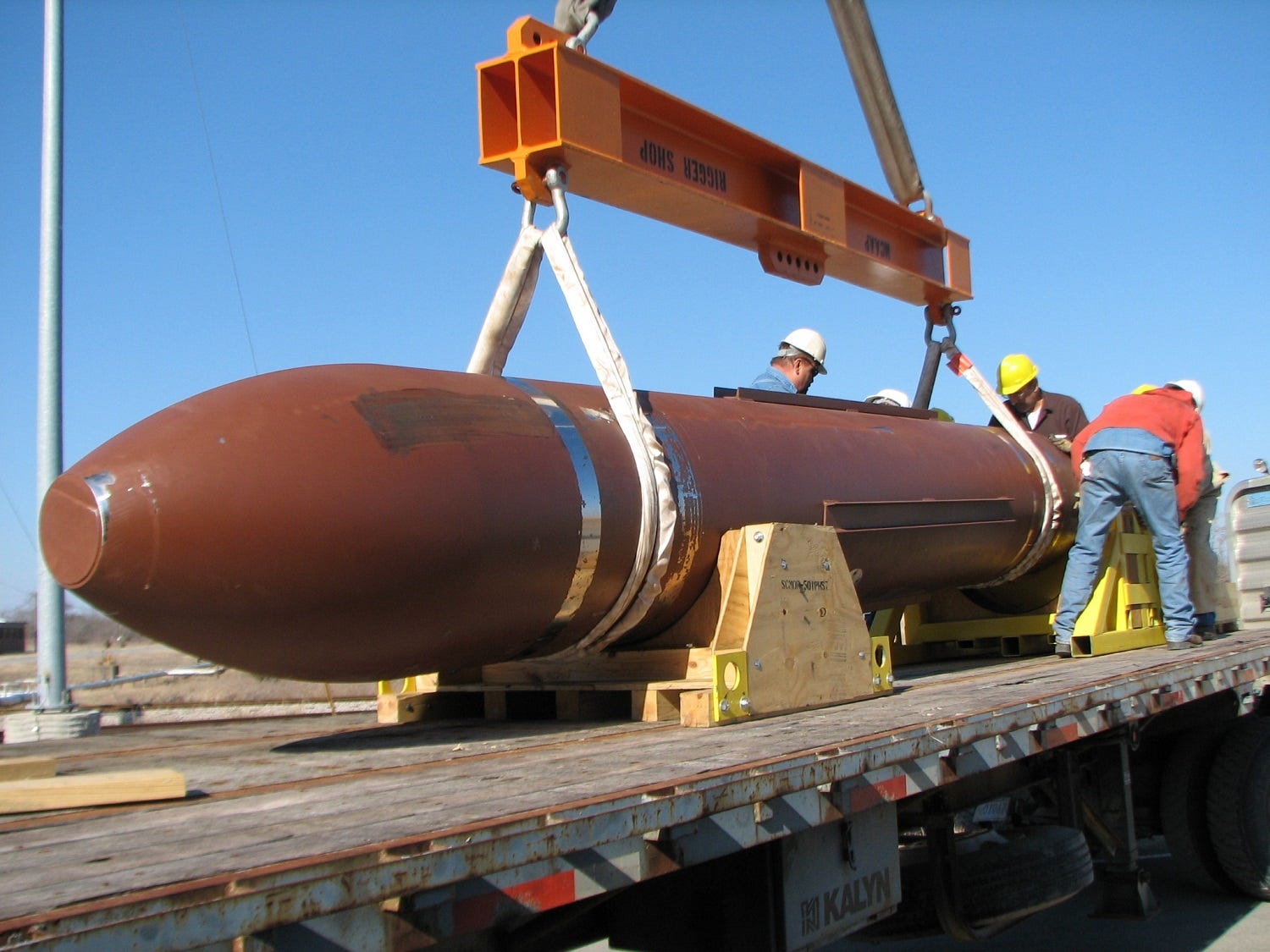
We’re talking about the 15-ton Massive Ordnance Penetrator, the world’s most powerful non-nuclear bomb, which Boeing and the Pentagon have tailored for punching deep into the ground to destroy buried targets including nuclear, chemical or biological weapons facilities.

In mid-January, the Pentagon’s top weapons tester confirmed in a report that flight testing of an enhanced version of the MOP went ahead in late 2014, and one live-fire test was planned.

According to Pentagon documents, that test was panned for December at White Sands Missile Range, New Mexico. The military had previously dropped a MOP from a B-2 under test conditions at White Sands in October 2012.

That earlier test also involved an RQ-170 stealth drone that apparently assessed the bomb damage—a possible model for how America could deploy the giant munition in a real-life crisis.

The older B-52 bomber has also dropped MOPs in tests, but doesn’t routinely carry the weapon.

4 Future U.S. Weapons of War That Should Be Canceled Now

January 26, 2015


The Pentagon spends billions of dollars developing weapons every year, but often that money is squandered on projects that never bear fruit. Part of the problem is the Pentagon’s byzantine acquisition process—but many weapons are simply ill conceived where a system is overburdened with competing requirements. In other cases, the Pentagon simply fails to fully take into consideration the kinds of threats it might be facing in the future.

Here are five examples of programs that should be canceled.

Ohio-class replacement

There is no question that the United States needs to maintain its strategic nuclear deterrence. But the Navy’s future replacement for its Ohio-class ballistic missile submarines is much more expensive than its predecessor while carrying fewer missiles. The Ohios carry 24 Trident D5 submarine launched ballistic missiles, the new boats will carry only 16 such weapons.

The boats will cost $4.9 billion if the Navy can get the unit price down—which means it will cost nearly $59 billion to build the 12 vessels. But with the cost of research and development factored in, the Navy will have to shell out $100 billion.

Sorry, America: China Can't Solve Your North Korea Problem

January 26, 2015


It’s no secret that China-North Korea relations are extremely strained these days.

In recent months, China’s tolerance of Pyongyang has seemed to reach its limit. Increasingly, state media outlets in China have been running negative stories about North Korea, such as the recent killing of Chinese residents by North Korean military defectors and illegal drug smuggling and spyingactivities by North Korean agents. Meanwhile, North Korea’s young leader, Kim Jong-un has long sought an official trip to Beijing. Thus far, China has rebuffed his repeated requests reportedly because Chinese President Xi Jinping has been annoyed by North Korea’s recent reckless policies and wants to teach it a lesson.

Indeed, within China there has been an increasingly fierce debate about how to deal with North Korea. The debate has mostly been limited to retired generals, scholars, and independent analysts, but its potential impact on China’s North Korea policy should not be underestimated. A closer look at these debates reveal three main positions: support North Korea, abandon it, or pressure it.

The support camp argues that China and North Korea still share fundamental national interests, which are result of the geopolitical situation in Northeast Asia. If China abandons North Korea, this camp argues, North Korea will seek an accommodation with the United States, giving Washington a tremendous advantage. Therefore, all conflicts between China and North Korea must be managed.

Russia Seeks Political Influence on Ukraine Via the ‘Normandy’ Group

January 23, 2015

Foreign affairs ministers Frank-Walter Steinmeier of Germany, Sergei Lavrov of Russia, Pavlo Klimkin of Ukraine, and Laurent Fabius of France—representing the so-called “Normandy” group of countries—met in Berlin on January 21. Germany convened the meeting amid an upsurge in Russian-led attacks on Ukrainian positions along the ceasefire line (Ukrinform, January 22; see EDM, January 22).

Named after the venue of its inaugural meeting in France in June 2014, the “Normandy format” is designed to promote an armistice in Ukraine. The ongoing offensive by Russian and proxy forces represents the most serious breach yet of the September 2014 formal ceasefire agreements (which never took effect) and the December 2014 informal “silence regime” (which the Russian side broke from the second week of January onward). The ministerial meeting in Berlin was meant to defuse the ongoing hostilities in Ukraine and start preparations for a possible meeting of heads of state / heads of government in the Normandy format.

Kazakhstan’s president, Nursultan Nazarbayev, had offered to host the Normandy group summit in Astana by January 15, a rush date undoubtedly coordinated with Russian President Vladimir Putin. German Chancellor Angela Merkel halted the rush to Astana in the nick of time. On January 10, Merkel asked Putin to ensure “substantive progress” in implementing the September 2014 armistice agreements, as a pre-requisite to a possible summit. Additional ministerial-level meetings in the Normandy format would be held to ensure that the ceasefire holds, ahead of a possible summit of the heads of state and government (Bundeskanzlerin.de, January 10, 14).

Analyst Provides Insider View of Russian Government Think Tank

January 20, 2015

The revelations of Alexander Sytnik, who recently left his position as a senior fellow at the Russian Institute for Strategic Research, a government-funded think tank, provides a rare glimpse into the inner mechanisms of policymaking in Russia. In his personal account of the run-up to the war in Ukraine, Sytnik details the Russian government’s failure to take advice from the expert community. “Ideally, an analyst should say and write what he thinks,” Sytnik writes. “If he starts saying and writing things that people want to hear and uses his analytical skills to comply with the views of the ‘elites,’ to ‘blend into the trend,’ then he is not an expert anymore” (Nomos.by, January 3).

According to Sytnik, Leonid Reshetnikov, the director of the Russian Institute for Strategic Research, and Tamara Guzenkova, the head of the Institute’s department responsible for Ukraine, were vehemently opposed not only to Ukraine, but to the very notion of a distinct Ukrainian identity as such. The two, along with their subordinates, writes Sytnik, “could not say anything, but ‘there is no Ukraine, only Little Russia [Malorossiya]’; ‘Ukrainian statehood is a bluff and it is a failed state’; ‘it is a result of the criminal destruction of the Russian Empire by the Bolsheviks’; ‘the Ukrainian language was artificially created by the Austrians and the Poles to break up Russian unity’; ‘the consolidation of the post-Soviet space on the foundation of territorial and spiritual rebirth…’ ” According to Sytnik, the Russian Institute for Strategic Research illegally funded pro-Russian analysts in Ukraine though third parties (Nomos.by, January 3).

Experts complaining about politicians not listening to them is quite common, and the offended expert’s testimony, as is the case with Sytnik, has certain inherent limitations. Yet, the detailed account of his publicly available testimony is still quite revealing. According to the expert, who specialized in the Baltic States during his time in the Russian Institute for Strategic Research, he was fired after his analytical report on Belarus was delivered in September 2014. Sytnik’s main premise was that Belarus would participate in the Moscow-crafted Eurasian Union only as long as Belarus’ sovereignty remained intact. In his words, he was subsequently told that his point of view contradicted that of the Russian presidential administration and, therefore, the view of the Institute, and he had to go (Nomos.by, December 12, 2014).

The Abundance of Oils in the Water-Stressed Rockis

Deborah Gordon, Eugene Tan,

More oil resources are deposited in the Rocky Mountain region of Colorado, Utah, and Wyoming than the entire world’s proven oil reserves combined. And nowhere are oil-water nexus issues more complex than in the Rockies. Many different types of oil are abundant in these states, including unconventional oils that require complicated, energy-intensive processes to produce. Additionally, unconventional oil production is more water intensive and involves more potential sources of contamination compared to conventional oil production.

The tensions between water and oil resource challenges and opportunities are considerable in the Rockies. And the management of this oil-water interaction is particularly important because energy and water demands are intensifying as the region’s population grows rapidly. While the development of unconventional oil resources in this area is anticipated for economic and geopolitical reasons, problems could arise due to the region’s persistent water concerns and fragmented governance.

America’s Plentiful, Diverse Oil Region

Unlike other global geographies, the three heterogeneous varieties of unconventional oils—tight shale oil, oil sands, and oil shale—are all found in the Rockies (see figure 1). Overall oil production in the region is on the upswing due to shale oil production, as new technologies like horizontal drilling, directional drilling, and hydraulic fracturing have been developed to extract the oil trapped in these rock formations.

Massive Tight Shale Oil Reserves

A Clear and Present Danger to Planet Earth: Climate Change

January 26, 2015

We are facing a new security threat, and, if left unaddressed, it has the potential to kill thousands of people in a single summer. We are talking, of course, about climate change. A new study authored by the British Met Office Hadley Center notes that the chances of extremely hot summers, on par with the heat wave that plagued Europe in 2003 and killed 70,000 people, have increased tenfold in this century.

While the deadly 2003 heat wave may have been the most severe in the last 500 years, the world can expect similar ones more frequently. Back in the early 2000s, Europe could expect extremely warm summers once every fifty years. Now, we can expect them every five years.

This is not an exaggeration of risk, and it’s a direct result of the rapidly warming climate. With 2014 weighing in as the hottest year ever on record, extreme weather events—like the deadly heat waves that hit Europe, and France especially hard—will become much more frequent.

If the West ever faced an armed insurgent group capable of killing tens of thousands of its citizens in a single summer, it would rally quickly and arm the North Atlantic Treaty Organization in its defense. And yet, climate change, which is also human-made and armed with a different but equally deadly weapon gets a response that pales in comparison.

"Strengthening International Nuclear Security Cooperation"

Nickolas Roth
January 22, 2015

October 15 to 17, 2014 the Stanley Foundation convened a group of experts and policymakers from the United States and abroad to address these issues at its 55th annual Strategy for Peace Conference. The group, chaired by Professor Matthew Bunn, discussed ways to overcome challenges to nuclear security cooperation faced by the United States, Russia, and China, and next steps to ensure that countries put in place effective and sustainable nuclear security measures with strong security cultures.

The objectives of the roundtable were to identify the potential of and constraints on nuclear security cooperation and to develop options for action. As part of the discussion, the group assessed what strategies are most effective for strengthening and sustaining physical security and security culture at the operator and organizational levels; whether cooperation to strengthen security was still in the interests of all countries and to what extent; what approaches would best help facilitate cooperation; and whether there are new avenues of cooperation that should be considered. The group also examined ways to identify and incentivize domestic nuclear security champions in these countries.

This policy brief, written by Nickolas Roth, outlines lessons about challenges from past nuclear security cooperation and outstanding issues that the United States, Russia, and China still need to address. It also identifies options for action for strengthening US cooperation with Russia and China, respectively, and for strengthening nuclear security overall.

"Rebuilding U.S.-Russian Nuclear Security Cooperation"

Matthew Bunn
January 22, 2015

"As the Boston Globe reported Monday, Russia has put a stop, for now, to most U.S.-Russian nuclear security cooperation. Russian, U.S., and world security will be in more danger as a result. But some small pieces of cooperation continue – and with creativity and effort, it may be possible to rebuild a robust nuclear security dialogue of equals, rather than a donor-recipient relationship..."

Full text of this publication is available at:

THE DILEMMA OF AN AFRICAN SOLDIER

January 26, 2015

Two days before the world entered 2015, a handful of former officers from the Gambian Armed Forces attacked the State House in Banjul, The Gambia. Published accounts call Lamin S. Sanneh, a former Gambian military officer, the ringleader of the aborted coup. Accounts vary, but 3-4 of the dissidents were killed, including Sanneh. He was my friend, and as I write these words, I still can’t believe that he is dead.

To most people (including me), news of gunfire in an African capital is commonplace enough to barely glance at the headline before moving on to more remarkable news. But those of us in the U.S. defense and foreign policy communities should pay attention to the Gambian case because it tells us something important about our military-to-military (mil-to-mil) relationships. My fear is that we are creating an untenable situation for many of the officers that attend professional military education (PME) institutions in the United States. We teach them our approach to a “profession of arms” and professional ethics, and we teach them our approach to how they can create a successful, secure, and prosperous society back home. But what happens when there are profound contradictions between the ideal they are taught in their PME education and the reality they see back home? The way in which my friend Sanneh answered that question led to his death on December 30.

Questioning Military #Professionalism


Dr. Pauline Shanks.Kaurin holds a PhD in Philosophy from Temple University, Philadelphia and is a specialist in military ethics, just war theory, social and political philosophy, and applied ethics. She is Associate Professor of Philosophy at Pacific Lutheran University in Tacoma, WA and teaches courses in military ethics, warfare, business ethics, and history of philosophy. Recent publications include: “When Less is not More: Expanding the Combatant/Non-Combatant Distinction;” “With Fear and Trembling: A Qualified Defense of Non-Lethal Weapons;” andAchilles Goes Asymmetrical: The Warrior, Military Ethics and Contemporary Warfare (Ashgate, 2014). 

On a rainy day in January I was doing what I usually do in the month of January: preparing for my philosophy class (Military Ethics) by picking the brains of smart and experienced people on Twitter about the class topic for the day. Like all good ideas, I appropriated this strategy from fellow military ethicist Rebecca Johnson, who hosted a military ethics discussion on Twitter with the hash tag #METC. I posed some questions about whether the military was a ‘profession’ and if it was, how that shapes ethical values. What followed was an energetic discussion that I mostly moderated, without weighing in — as is my practice in class.

To provide some context for the other posts in this series that stemmed from my questions, I want to provide some context — in other words, why I think they are important and some of my own thoughts to further the discussion.

First, why think about the military as a ‘profession’ and what does that mean? I am not asking whether members of the military can display a sense of ‘professionalism,’ that is doing your job well and in accordance with certain basic standards. When I refer to a ‘profession,’ I have some quite specific traits in mind: 

26 January 2015

Agni missing as Obama witnesses Republic Day parade

Dinakar Peri
January 26, 2015 

The focus of this year’s parade was more on cultural diversity than on military might.

Nuclear-capable Agni missiles - a highlight for the past several years - were missing as U.S. President Barack Obama witnessed India's military might and cultural diversity on what proved to be a rainy and cold 66th Republic Day.

In doing so, Mr. Obama became the first U.S. President to be the chief guest at the parade as President Pranab Mukherjee took the salute at the parade.

In another departure from practice, Mr. Obama arrived in his own motorcade and not with President Pranab Mukherjee as is the practice. The crowd erupted in cheers as Mr. Obama and First Lady Michelle stepped out of the ‘Beast’ vehicle.

Mr. Obama watched as several Russian-made tanks rolled over. The latest imported military hardware took part in the flypast such as the C-130 Hercules tactical transport, C-17 heavy transport and the Naval P-8I maritime patrol aircraft flying in formation with the two latest Russian-built MiG-29Ks.

While some of India’s latest military arsenal was on display and impressive marching contingents marched in precision, it marked a departure from past years in that the focus of this year’s parade was more on cultural diversity than on military might.

Some of the recent inductions both indigenous and imported were on display. The Akash medium-range surface-to-air missile and Weapon Locating Radar developed by the Defence Research and Development Organisation (DRDO), INS Kolkata, the most advanced ship in the Navy’s arsenal and BrahMos cruise missile were the indigenous highlights.

In R-Day message, China tells India don't fall into ‘trap’ laid by U.S.

Atul Aneja
January 26, 2015

China has offered to lift its strategic partnership with India to a “higher level,” and prompted New Delhi to avoid a “zero-sum trap” that was being set up by Washington and its allies.

In a message, on the occasion of 65th Republic Day, to President Pranab Mukherjee, his Chinese counterpart, Xi Jinping expressed China’s willingness “to make concerted efforts with India to lift their strategic cooperative partnership oriented to peace and prosperity to a higher level”.

The felicitations coincided with the New Delhi visit of U.S. President Barack Obama.

An article on Monday that appeared in the Global Times and People’s Daily, cautioned India, not to fall into the “trap” that was being laid, to pit New Delhi against Beijing, by Washington, as part of its “pivot to Asia” doctrine.

The commentary noted that "the second visit by a sitting U.S. President to India, the first time on record, has undoubtedly drawn wide attention from the international community”.

It added that many Western media reports “have pointed out that the U.S., regardless of historical complications, is putting more efforts into soliciting India to act as a partner, even an ally, to support Washington's "pivot to Asia" strategy, which is mainly devised to counter China's rise.

In a further elaboration, the daily pointed to the West’s “ulterior motives’’ to frame the "Chinese dragon" and the "Indian elephant" as natural rivals. “The West is egging India on to be fully prepared for "threats" posed by its large neighbour.

Rajpath in full colour

January 26, 2015 

The HinduPrime Minister Narendra Modi and United States President Barack Obama at the 66th Republic Day parade in New Delhi .

United States President Barack Obama and First Lady Michelle Obama arrive at Rajpath for the Republic Day celebrations under cloud cover.

In a first, all-women contingents of the three Services march across Rajpath during this year’s parade.

12:03 pm: Republic Day parade comes to a close as tricolour balloons are released into the air.

11: 57 am: Huge applause for the Indian Nay's P-81 as it flies above Rajpath


11: 51 am: The Air-Force Flypast now begins. MI-35 helicopters fly past saluting dais at 240 kmph

Beyond the immediate present

Rudra Chaudhuri
January 26, 2015 

President Obama’s attendance on this January 26 is as important from the perspective of furthering bilateral ties, as it is to show the world that India is ready to play a central role well beyond its borders

“There is a peculiar appropriateness about this January 26 for this day links up the past with the present and this present is seen to grow out of that past.” This was the central argument in Jawaharlal Nehru’s message to the nation prior to the inauguration of the Republic in 1950. That the day itself was of “great significance” is hardly contestable. It demonstrated the “fulfilment to a dream,” as Nehru put it. It was to communicate an achievement accomplished by no other nation in the modern world. History, as Nehru argued, was full of examples of the “chaos giving birth to the dancing star of freedom.” India was an exception. On the whole, the great change that ushered Independence had “taken place by agreement.” This is perhaps the single most important fact that connects India and the United States. This was as true in 1947 as it is today. It was not just that India won her independence from colonialism, but that she did so minus violent rebellion. Similarly, it’s not just that India is the largest democracy in the world that attracts American entrepreneurs and political leaders today, but that it is a democracy able to absorb huge amounts of variance and remain largely steady.

Opportunities created by history

The invitation to President Barack Obama to be the chief guest at the 66th Republic Day is both a reflection of something bold and at the same time unsurprising, when understood in historical context. Bold because concerns about perception and the bogeyman of empire matter little to a Prime Minister more interested in the future than in history. Unsurprising because much like Nehru’s message in 1950, the relationship between India and the U.S. too is an example of how the present has in fact grown out of the past. Most commentators have preferred to look at the opportunity of today. Nuclear agreements, defence contracts and export control laws absorb the headlines and for good reason.

The pride and poaching of our heritage

Hemang Desai
Jan 26 2015

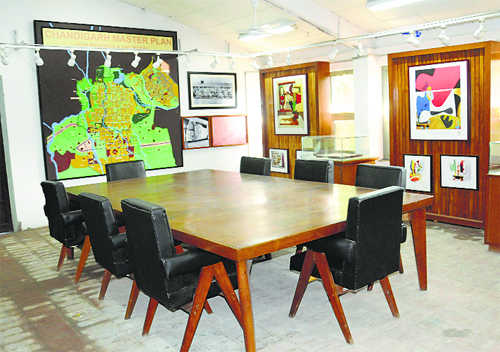
PRICELESS: Furniture pieces designed by Le Corbusier have fallen prey to the game of the antique vultures and the collectibles industry.

Lost to future

A 17th-century idol of Lord Raghunath, made of pure gold, worth crores of rupees was stolen from Kullu town of Himachal Pradesh in December, 2014. It has been recovered recently.

In April, 2014, the furniture designed by Le Corbusier and Pierre Jeanneret, auctioned by Phillips auction house in London, fetched more than Rs 1.62 crore.

The furniture has made many millionaires. They sold the heritage furniture to auction houses abroad since it was thrown out as a piece of junk by an ignorant administration.
UNESCO estimates nearly 50,000 objects have been smuggled out of India between 1979 and 1989 alone, with figures multiplying in the last two decades.

On December 16, 2014, classic modernist furniture pieces, designed by Le Corbusier for the Ahmedabad Textile Mill Owners Association (ATMA) building in Ahmedabad were auctioned at the second floor gallery of the Philips Auction House in New York. The auction was called "The Collector - Icons of Design" and consisted of a conference table, chairs and a wall-cupboard. That title of the auction may have brought a smile on the face of Le Corbusier who reportedly wanted to conquer New York with his urban plans. Whatever the famously irascible, iconoclastic, Calvinistic and caustic Le Corbusier may have thought about the just-concluded auction of furniture made in India by him, the auction was certainly a loss for India for having lost a Modernist legacy made for and in the country.

REVITALISING INDIA-US RELATIONS – ANALYSIS

By Lt Gen Kamal Davar*

On his first visit to India in November 2010, addressing the joint session of the Indian parliament, US President Barack Obama had enthusiastically proclaimed that “India-US relations will be the defining relationship of the 21st century”.

That after the stirrings of a promising relationship in 2005, between the world’s largest and most powerful democracies, commencing under US president George W. Bush and then his successor, Barack Obama with then Indian prime minister Manmohan Singh, the relationship, driven by common concerns of Islamist terrorism, energy security, climate change and US support, in principle, of India’s permanent membership of the Security Council — did lose its momentum is a well-accepted fact as regards an uneasy and unequal roller coaster relationship.

Notwithstanding clichรฉs like ‘India and US being natural partners’ attributable to convergence of varied interests both regionally and globally, mutual relations between US and India, in the last three-four years in particular, had become rather lukewarm. However, it must be stated in all fairness to the previous United Progressive Alliance (UPA) regime that in the last few years India did receive some high -ticket, modern military equipment from the US, like the C-130, C-17 and P-80 aircraft, besides heavy lift and attack helicopters, all worth $10 billion, besides the signing of a strategic framework in 2005 and importantly, the widely acclaimed civil nuclear agreement in 2010 between the two nations.

Obama to Visit the New Owner of the 21st Century, India

January 23, 2015 

President and Mrs. Obama are now on their way to what may be the world’s most important city at mid-century.

Are they going to Beijing? No, they will be traveling to New Delhi.

The trip is historic. For the first time, an American leader will attend Republic Day celebrations in the Indian capital, and Obama will be the first U.S. president to visit India twice while in office. Moreover, this is the first time, in recent memory, that a White House occupant has taken a long-distance flight to just one destination.

The trip has just about everything. The president and Prime Minister Narendra Modi will conduct wide-ranging discussions on, among other topics, climate change, education, nuclear power, Pakistan, Afghanistan, and Iran. There will also be pomp aplenty. India’s January 26 events, commemorating the adoption of the Indian constitution, are among the world’s most colorful. Expect business-deal making with CEOs in attendance. Speeches? Obama will lay out his “vision” for relations with India. There will even be time for sightseeing: the Obamas will tour the Taj Mahal.

Apart from the national pride of hosting the leader of the world’s most powerful state on the 66th Republic Day—chests will swell and hearts beat hard across the subcontinent on Monday—there is, in India, concern about China.

With Obama Trip, India and US Deepen Ties

January 23, 2015 

Mention January 26 and the thoughts of Australians jump quickly to barbeques, beaches and cricket. But this post isn’t about Australia Day. Many Australians will be aware that Indians celebrate their Republic Day on January 26. This year, the 66th since the Indian constitution entered into force in 1950, will be no different. Festivities in New Delhi will center around the Republic Day Parade, a showcase of the country’s defense capabilities—”the glories and follies old and new of the Indian armed forces, from camel regiments to tanks to ballistic missiles”—alongside the lush diversity of Indian culture. Moreover, Barack Obama is set to attend this year’s parade as the invited chief guest, the first time a U.S. president has received the honor. Obama’s attendance represents a diplomatic coup for Indian PM Narendra Modi. It’s yet another sign that relations between India and the U.S. are being reinvigorated, and serves as a reminder of the foreign policy dynamism Modi has displayed since his election last May.

The Republic Day parade will be rich in symbolism for both leaders. The imagery of an American president watching on as India flexes its military muscle won’t escape the attention of India’s neighbors. That Obama’s trip marks the first time a U.S. president has visited India twice while in office (he visited in 2010) will bring additional diplomatic cachet. The chief guest role will offer simple yet important sponsorship of the “rebalance;” it’ll similarly illustrate Modi’s support for a continuing American role in Asia.

The most crucial Indo-US defence issue that Modi-Obama need to discuss

January 25, 2015 

'Implementation of the US-India Defence Technology and Trade Initiative is as much a test for the Modi government to direct its bureaucratic processes, as it is of US commitment,' says Lieutenant General Anil Chait (retd).

President Barack Obama's visit to India is without doubt a watershed event in India-US Relations. Besides being the very first occasion when a US president is the chief guest at India's Republic Day Parade, the invitation, as also its acceptance, are both reflective of a new resolve and determination of the two countries, to enhance their relationship across several areas of mutual interests.

The invitation also indicates the determination of the present government in India under Prime Minister Narendra Modi to re-shape India's foreign policy -- the corner stone of which is its policy towards the US.

Equally, it signals an incremental restoration of US confidence in India, because of the energy that the two nations have generated in each other, in the last couple of months, giving a significant boost to bilateral relations.

The zeal to take forward this revived mutual bonding is visible in the extraordinary efforts underway to ensure that the visit is a memorable one.

PAKISTAN’S ONGOING EXISTENTIAL CRISIS – ANALYSIS

By Dr Subhash Kapila*

Pakistan’s existential crises generated by Pakistan Army’s repetitive onslaughts on Pakistan’s democratic fabric are widely recognised. Constitutional abdication once again stands forced by the Pakistan Army on PM Nawaz.

In wake of TTP suicide attack on Peshawar Army Public School, the Pakistan Army instead of shouldering responsibility for its institutional inadequacies deflected Pakistani public reaction and outcry by demanding a Constitutional Amendment for setting-up Special Military Courts for trial of terrorists.

Pakistan Army’s not so subtle manoeuvre in this direction is nothing but a “Back-Door Coup” in which Constitutional organs of the Pakistan nation-state like the Prime Minister, the Government and the Pakistan Supreme Court stand short-circuited and by-passed. Implicitly and effectively, the Pakistan Army Chief and his generals have taken over the administration of Pakistan.

Regular readers would recall that at the height of Imran Khan and Qadri’s protest movement besieging the government of incumbent PM Nawaz Sharif I had pointed out that this prolonged besieging of Pakistan Parliament and government offices in Islamabad was a Pakistan Army facilitation as a prelude to a possible coup or a soft coup. What has occurred in the wake of Peshawar suicide bombings was a subtle operation by the Pakistan Army without sending soldiers on the streets forcing PM Nawaz Sharif to virtually hand over effective reins of government to Pakistan Army Chief.

As the Western Powers Withdraw: Afghanistan at a Crossroads

EN Rammohan
24 Jan , 2015

The withdrawal of foreign forces from Afghanistan has left the troubled country in an undecided state. NATO alone had 1, 30,000 troops on the ground. By the year’s end this number will become around 12,000. Will this not leave a vacuum into which the forces of disruption—the Afghan Taliban—backed by their masters Pakistan’s Army are waiting to pounce?

Let us go back to briefly recount when, how and why Afghanistan descended into this mess. The first problem for Afghanistan happened when the British drew the Durand line dividing Afghanistan from India in 1893. The eastern portion of Afghanistan comprising two areas that later came to be called the Frontier Administered Tribal areas consisted of Pashtun tribes who lived in eastern Afghanistan. This constitutes two areas South and North Waziristan. The Pashtuns are a proud warrior tribe who live in eastern Afghanistan. They have a proud, peculiar code of tribal law that probably does not exist anywhere in the world of tribes. This is called Pashtunwali. Its distinctive code is that any insult has to be avenged to restore the honour of the tribe.

…leaving a vacuum in the security and economic sphere in Afghanistan. The result is that there is going to be a big drop in the employment of local Afghans in serving all the foreign agencies and troops.

Iraq Situation Summary

January 24, 2015

A joint force of Iraqi Police, Iraqi Army, and Popular Mobilization Units containing Iraqi Shi’a militias reportedly launched an operation to retake villages in the Mansuriyah sub-district, north of Muqdadiyah. Badr Organization leader Hadi al-Ameri claimed that attack was launched from four axes, affirming his involvement in the operation. This operation is likely intended to clear ISIS from its remaining stronghold in Diyala northwest of Muqdadiyah. A separate attack by ISF and PMUs recaptured the Sudur irrigation dam from ISIS, a longstanding ISIS stronghold between Diyala and southern Salah ad Din. ISIS control of the dam has begun to cause a water crisis in Balad Ruz, Diyala. Residents of Balad Ruz had protested recently on January 18, demanding the recapture of the dam. The Anbar Operations Command additionally launched an operation to clear villages southeast of Fallujah. An additional report suggested that Peshmerga and PMUs had killed an ISIS commander in Ninewa, north of Shirqat. Peshmerga and IA have recently begun to attack ISIS from east of the Tigris near this position. Although difficult to verify, this would be the first suggestion of PMU activity this far north. ISIS is still likely the dominant military power in southern Ninewa, but there have been indications that ISIS control of local villages has begun to slip. ISIS executions across Ninewa are also further indications that ISIS is feeling pressured by internal resistance in the province.

January 24, 2015

Nepal has been without an effective constitution or political system since the abolition of its monarchy in 2008, despite an interim constitution. As TheDiplomat previously reported, Nepal has tried for years to successfully draft a permanent constitution. Violent protests broke out a few days ago in anticipation of Thursday’s deadline for the Constitutional Assembly to finish their work. To nobody’s surprise, Nepal failed to produce a constitution by then (yet again).

Despite constant negotiations, attempts at compromise, and even advice from Indian Prime Minister Narendra Modi, Nepal’s politicians have failed to come up with a constitution for several years. There is nothing to indicate that this is likely to change any time soon. The problem lies in the fact that there are two irreconcilable positions among Nepalese politicians. The first position is taken by the majority alliance of the Nepali Congress Party and the Communist Party of Nepal (Unified Marxist Leninist), which together hold more than two-thirds of the seats in the assembly. This party wants Nepal, a multiethnic country, to be a unitary state. This would, in effect, concentrate power in upper-caste Nepali speakers, who form only 44.6 percent of the Nepali population. The alternative proposal, mooted by the Maoists and regional parties, would see Nepal become a federal state with ethnic-based states. Additionally, they want the constitution to be formed on the basis of consensus rather than majority. India seems to lean toward this position.

Nepal consists of roughly three ethnic belts. The terai or plains form the southern belt and border India; half of Nepal’s population lives there and is virtually indistinguishable from the Hindi, Maithili, and Bhojpuri speaking population of the Indian states of Uttar Pradesh and Bihar. The central belt of Nepal is the hilly belt (pahad), which forms the bulk of Nepal and is the dominant political region of that country. This region is inhabited by ethnic Gorkha or Nepali speakers (Nepali is related to Hindi). The northernmost belt, the mountainous belt borders the Tibet region of China and consists of ethnicities that have religious and linguistic affinities with Tibetans.

Chinese SIGINT Stations Opposite Taiwan Have Been Modernized and Expanded

Jason Pan
January 24, 2015

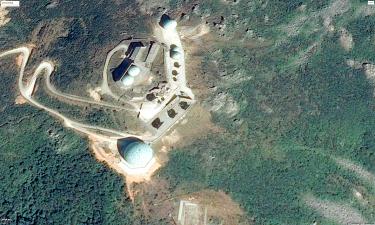
China has installed new aerial listening stations on the coast of its Fujian Province, a military spokesman said yesterday, adding that are being taken to counter surveillance and enhance the security of important electronic communications.

Ministry of National Defense spokesperson Major General David Lo (็พ…็ดนๅ’Œ) said the military is monitoring the development closely and that Taiwan has its own surveillance system to deal with intelligence gathering by Chinese signal-snooping stations.

The statement came one day after the Canada-based Kanwa Information Center reported that the Chinese People’s Liberation Army (PLA) had set up at least three large aerial listening stations, directly across the Strait from Taiwan.

Lo said that the ministry has instructed its telecommunications units to strictly follow established regulations on frequency signals and radio data encryption to ensure the security of classified information.

According to Kanwa, the PLA has been installing new facilities in Fujian to monitor telecommunications and radio signals, including mobile phones and other types of wireless communications, from military bases and government institutions across the nation’s western region.

China, Japan, and the 21 Demands

By Yanzhong Huang
January 24, 2015

Compared with the high-profile national Memorial Day for the Nanjing Massacre last month, the date January 18 passed uneventfully. Chinese media appeared to have forgotten that one hundred years ago, on exactly that day, Japan presented Chinese President Yuan Shikai (Yuan Shih-Kai) with requests that would have turned China into a de facto Japanese protectorate.

The Japanese requests included five groups of secret demands that became known as the Twenty-One Demands. Groups One and Two were designed to confirm Japan’s dominant position in Shandong, southern Manchuria, and eastern Inner Mongolia. Group Three would acknowledge Japan’s special interests in an industrial complex in central China. Group Four forbade China from giving any further coastal or island concessions to foreign powers except for Japan. The most outrageous was Group Five. Group Five required China to install Japanese advisors who could take effective control of Chinese government, economy, and military. These demands would have had a similar impact to that of what the Japan-Korea Annexation Treaty had on Korea in 1910.

These notorious demands were issued at a time of shifting balance of power in East Asia. With the Qing dynasty’s humiliating defeat in the first Sino-Japanese War (1894-95), regional dominance for the first time had moved from China to Japan. Japan’s ambitions in China were further emboldened by its decisive victory in the Russo-Japanese War (1904-05), which affirmed the Japanese presence in south Manchuria and Korea. The 1911 Revolution brought an end to the Qing dynasty and ushered in the Republican era in China, but China remained a pushover in the face of pressure from Western powers.

Chinese Hackers Stole 50 Terabytes of Data From Computer Databases of US Defense Contractors

Bill Gertz 
January 23, 2015 

China obtained more than 50 terabytes of data from U.S. defense and government networks, notably the Joint Strike Fighter’s stealth radar and engine secrets, through cyber espionage, according to newly disclosed National Security Agency documents. 

A NSA briefing slide labeled “Top Secret” and headlined “Chinese Exfiltrate Sensitive Military Data,” states that the Chinese have stolen a massive amount of data from U.S. government and private contractors. 

The document was made public by the German magazine Der Spiegel in a two articles detailing how NSA in the mid-2000s was capable of conducting global cyber intelligence-gathering by tapping into the networks of foreign intelligence services and stealing the data they were collecting from others. 

The unique capability of spying on the spies was described in a series of documents that were stolen in 2013 by former NSA contractor Edward Snowden, currently a fugitive in Russia. 

For the F-35, according to NSA the Chinese were able to obtain digital design information on several different types of radar modules used by the fighter. 

Northrop Grumman, the jet’s manufacturer, built the AN/APG-81 active, electronically scanned array radar for the F-35. The high-tech radar uses small, solid-state transmitter and receiver modules that allow the jet to avoid detection by enemy radar, a key stealth feature. 

The West’s four-part strategy to deal with radical Islam

Fareed Zakaria


The conversation at Davos is often dominated by economics, and this year it’s no different. But the shock of the Paris terror attacks lingers, and discussions at the World Economic Forum here often turn to radical Islam. I posited in my previous column that the solution does not lie in more American military interventions in the Middle East. What, then, is the answer? 

The problem is deep and structural (as I wrote a few weeks after 9/11 in Newsweek, in an essay titled “Why They Hate Us”). The Arab world has been ruled for decades by repressive (mostly secular) dictatorships that, in turn, spawned extreme (mostly religious) opposition movements. The more repressive the regime, the more extreme the opposition. Islam became the language of opposition because it was a language that could not be shut down or censored. Now, the old Arab order is crumbling, but it has led to instability and opportunities for jihadi groups to thrive in new badlands. 

Over the past few decades, this radical Islamist ideology has been globalized. Initially fueled by Saudi money and Arab dissenters, imams and intellectuals, it has taken on a life of its own. Today it is the default ideology of anger, discontent and violent opposition for a small number of alienated young Muslim men around the world. Only Muslims, and particularly Arabs, can cure this cancer. 

The Once and Future Saudi Kings


The most significant political news from Saudi Arabia this week was not the death of King Abdullah, at the age of ninety, or the ascension of his half-brother Salman to the throne. Abdullah had been ill and Salman had been his designated successor for some time. The real news lay in a secondary announcement that Salman made upon becoming King. He named his nephew Muhammad bin Nayef as the Deputy Crown Prince, meaning that he is third in line for the throne. For the first time in modern Saudi Arabian history, a grandson of the kingdom’s first ruler, rather than a son, has a place in the order of succession.

In the information-pinched, refracted realm of Saudi watching, this is a thunderbolt. It means that the opaque shura of royal-family elders known as the Hayat Al Bayah, or the Allegiance Council, has for now resolved a puzzle that had been hanging over the kingdom for decades, namely, how to move power within the royal family down a generation without causing a bloody fissure among cousins of the sort depicted on “Game of Thrones.”

To appreciate the significance of this week’s news, it is necessary to go back to the deathbed of Saudi Arabia’s founding king, Abdul Aziz, who died in November, 1953, at about the age of seventy-seven. Abdul Aziz seized power in Riyadh in 1902. During the next three decades, he conquered the lucrative, pilgrim-gorged cities of Jeddah, Mecca, and Medina to his west. He also took over a succession of small oasis emirates to his east. Then, in the early nineteen-thirties, oilmen arrived and informed Abdul Aziz not only that he was the ruler of the holiest cities in Islam but that he would soon be unimaginably rich.

U.S. Should Stay Out of the Russo-Ukrainian Quarrel: Why the Conflict in Ukraine Isn’t America’s Business, Part I


Fighting over the Donetsk airport between Ukraine’s military and separatist forces backed by Russia has flared anew. The U.S. has begun providing heavier weapons as well as personnel training to Kiev. The conflict could go on for a long time, with Kiev and Moscow locked in a small hot war and the U.S. and Russia stuck in a larger Cold War lite. An extended confrontation would be in no one’s interest, especially America’s.

The U.S. has made a habit of promiscuously meddling around the world. The results rarely have been pretty. Thousands of Americans have been killed, tens of thousands have been wounded, hundreds of thousands of foreigners have died, and a multitude of international furies have been loosed.

At least none of these conflicts involved a real military power. In contrast, advocates of confrontation with Russia over Ukraine want to challenge a nation armed with nuclear weapons and an improving conventional military, steeped in nationalist convictions, rooted in historic traditions, and ruled by a tough authoritarian. No one should assume that in a military showdown the Kremlin would yield to Washington or that war with Moscow would be a cakewalk.

“The U.S. has made a habit of promiscuously meddling around the world. The results rarely have been pretty.”

Yet Ukraine’s most fervent advocates assume that any American who fails to believe that, say, inaugurating global nuclear war to save their distant ethnic homeland is a Putin troll, Russian agent, friend of dictators, proto-communist fellow traveler, or even worse. Of course, Ukrainian nationalists are not alone in their conclusion that anyone who disagrees with them is not only wrong but evil. That’s Washington politics today.