30 August 2016

Special Operations Forces and the Professionalization of Foreign Internal Defense

August 24, 2016

Special Operations Forces and the Professionalization of Foreign Internal Defense

FID is the participation by civilian and military agencies of a government in any of the action programs taken by another government or other designated organization, to free and protect its society from subversion, lawlessness, insurgency, terrorism, and other threats to their security.

-- Joint Publication 3-22

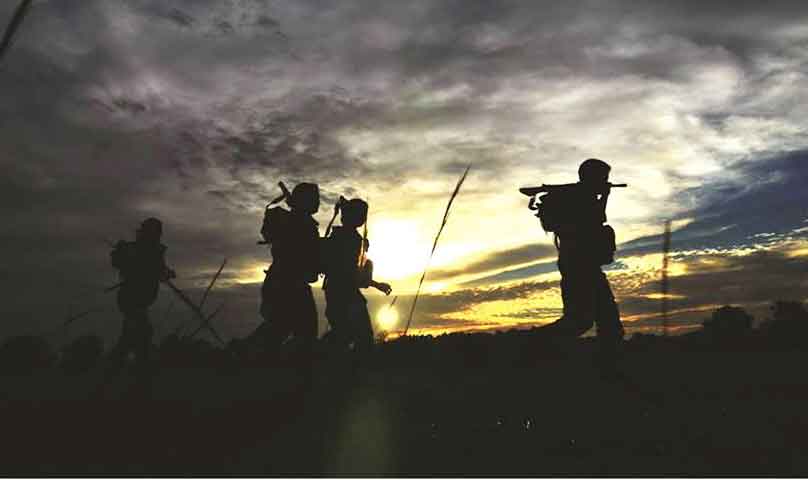
A world with rapidly evolving instability has required U.S. Special Operations Forces (SOF) to assume a global posture. Through an examination of SOF support of persistent global operations, it is easy to identify the successes. Striking raids conducted by secretive, highly specialized units against terrorist organizations perforate the 24 hour media cycle. These highly publicized successes such as the killing of Osama bin Laden or the rescue of Captain Phillips from Somali pirates does well for the U.S. military, the administration, and the SOF community. However, if the community chooses to take an honest look across the spectrum of special operations' core activities, one of these ‘core activities’ that has failed and failed consistently is foreign internal defense (FID).[1] In this era of persistent global conflict, we do not have to look back even as far as the 1970s and 1980s to see the challenges and failures of FID. Rather, a review of the first 14 years of the 21st century is telling. FID is facing serious challenges in Afghanistan and has catastrophically failed in Libya and Iraq. FID is failing now. The solution is to create a mid-career SOF FID specialization for SOF Officers from all four special operations service components to build long-term institutional knowledge of regional issues and personal relationships with foreign SOF organizations.

Air Force, Pentagon Have More Work to Do Before Ditching the A-10, Watchdog Says

BY CHARLES S. CLARK
AUGUST 25, 2016

Losing the aircraft would also mean a loss of U.S. combat search-and-rescue capabilities, the Government Accountability Office said in a newly declassified report. 

The A-10 “Warthog,” the four-decade-old close air support plane that has proven to be a cat with nine lives, is causing confusion within the Air Force and the Defense Department over how to phase it out.

In the latest in a series, the Government Accountability Office on Wednesday released an unclassified version of an earlier report saying that neither the Air Force nor the Defense Department “have quality information on the full implications of A-10 divestment, including gaps that could be created by A-10 divestment and mitigation options.”

The absence of firm data on the impact of phasing out the plane raises issues about the Pentagon’s general approach to terminating legacy weapons systems, GAO said.

Congress has blocked plans to immediately terminate the A-10, in part because it has proved invaluable in the current campaign against ISIS in Iraq and Syria. 

“While A-10 pilots are recognized as the Air Force experts in providing close air support to friendly forces, the A-10 and its pilots also perform other missions that are important to ongoing operations or to combatant commander operational plans, and divestment will result in reduced capacity and capability in these other areas,” the report to congressional committees said. “The Air Force is taking a number of steps to try to mitigate any potential negative impacts.” But it “has not established clear requirements for the missions the A-10 performs, and in the absence of these requirements, has not fully identified the capacity or capability gaps that could result from the A-10 divestment.”

Warplanes: Killer Software


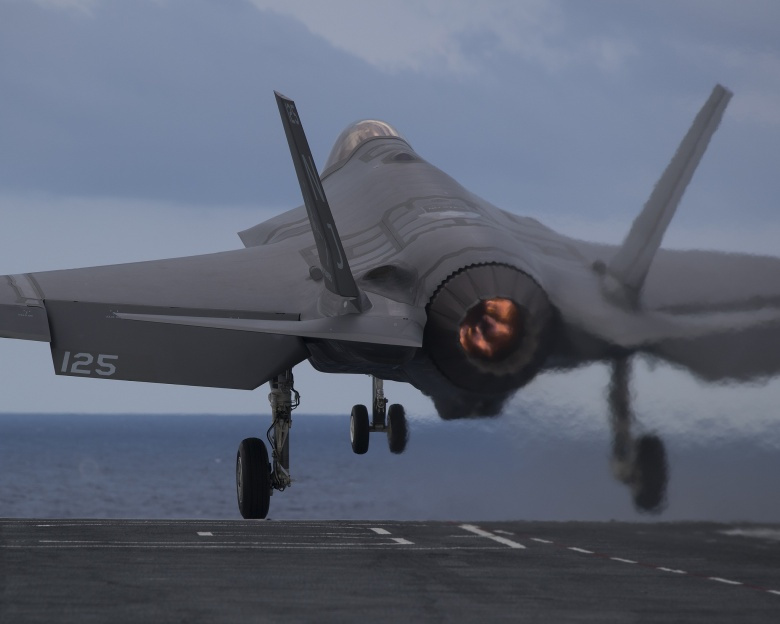
August 23, 2016: Back in 2009 the U.S. Chairman of the Joint Chiefs (a navy admiral and the senior military guy in the Pentagon) and his boss (the Secretary of Defense) both admitted that the future of combat aviation is UAVs (unmanned aircraft). Senior Department of Defense officials agreed that the next heavy bomber would probably be a UAV. The Chairman of the Joint Chiefs believes that the F-35 will probably be last American manned combat aircraft. Since then

Now comes an American company (PSIBERNETIX) that has developed software that gives an unmanned aircraft the ability to defeat manned aircraft in air-to-air combat. The U.S. Air Force recently tested the PSIBERNETIX software in a combat simulator against experienced human pilots. The software controlled aircraft could not be defeated, at least not yet. What shocked the experienced human pilots, who had the technical skills to understand what the PSIBERNETIX software did and how it did it, was that the new software, as many software developers have been predicting, can outperform humans because with enough information (from the growing number of sensors available to manned or unmanned combat aircraft) the software can think faster than the human pilot. This is how software eventually defeated the best human chess players and have replaced humans in many jobs that require absorbing a lot of data, sorting it out and making decisions quickly.

Air-to-air combat with UAVs was long one topic no one wanted to discuss openly. This was seen as the last job left for pilots of combat aircraft. The geeks have long believed they had this one licked and were giving the fighter pilot generals the "bring it on" look. The American generals were not keen to test their manned aircraft against a UAV, but this will change the minute another country, like China or Russia, demonstrates that they are seriously moving in that direction. Meanwhile the U.S. Air Force was willing to test challengers in simulators, and now they have lost. Russia and China are paying close attention.

29 August 2016

Pakistan waging dirty war on its Balochs

http://www.dailypioneer.com/columnists/oped/pakistan-waging-dirty-war-on-its-balochs.html
Saturday, 27 August 2016 | Makhan Saikia | in Oped
While Baloch people want azadi from atrocities committed by Pakistani authorities, the federal Government has unleashed State and non-State forces against them
Today, Balochistan is bleeding. Pakistan is fighting its “other war”. Its military and security establishments are continuously at war either with the Baloch nationalists or with the separatists. It is an unending war since 1947 when the Pakistan Army forcefully annexed the province to the country. Pakistan’s Baloch puzzle has its own negative repercussions for the country which is fighting for its survival since its independence. Balochistan needs immediate attention. To be honest, the people of Balochistan have suffered both at the hands of the Federal and provincial Governments as well as their own dear chieftains and sardars for decades. At times the Baloch sub-nationalists try to thwart developmental efforts made by the Federal Government because these do not serve their agenda. But then who will take the responsibility of the ordinary Baloch people? It would be really sad if the province remains a permanent fault line, as it seems today; its people will have to suffer both for the mistakes of the Pakistani establishment and for their own leadership. 

Why has Pakistan so far ignored the welfare and development of Balochistan? Being the largest province of the country and having rich reservoir of natural resources, Pakistan should have taken the task of developing the province even long back. The Baloch nationalists blame the Federal Government for its sheer negligence of their mineral rich province and the Pakistani establishment holds the insurgents responsible for its underdevelopment. But how long will this blame game continue? Who is suffering at the end? When the entire world is moving beyond its borders, there are only a few places like Afghanistan, Pakistan, North Korea, and a host of African nations which are still stuck with their war-mongering spree and purposefully thwart the welfare of their own people. To be precise, these countries are simply ruining their own futures and making generations handicap for the greed of a few individuals or a section of elite who always wish to cling on to power forever. When it comes to Balochistan, it is Pakistan’s Army which is controlling its affairs and designing the future strategies for containing the Baloch separatists. Sadly, the Army is viewing it as a simple law and order problem. Thus, the conflict in the province is dragging on and on. Simultaneously, the local leaders must think about their own people who are just sandwiched in the fight between the Pakistan Army and the nationalists. It is no one else, only the ordinary civilians who are caught in the quagmire and laying their lives with a hope of a better living. But when will they be allowed to lead a life of their own choice? 

What is Kashmiriyat?

http://indianexpress.com/article/opinion/columns/kashmir-unrest-burhan-wani-aftermath-mehbooba-mufti-kashmir-curfew-what-is-kashmiriyat-2998136/ 

Or insaniyat? Or jamhooriyat? In Kashmir, so-called solutions are riddled with contradictions and divisions 
Written by Pratap Bhanu Mehta | Published:August 27, 2016
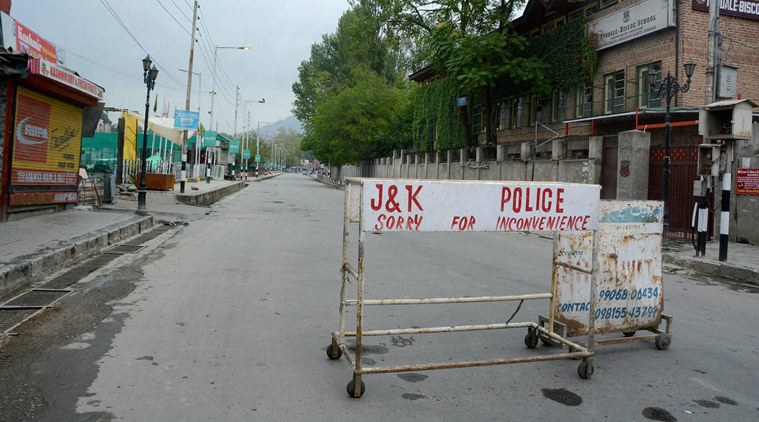
Kashmir has been under curfew for nearly 50 days. This curfew will, inevitably, risk a new cycle of alienation, brutalisation and deprivation. There is a desperate search for small consolations. It is a failure of our political imagination that it took an army commander to remind us of the banal truth that at least all parties need to be talking to each other. We may console ourselves, as Chief Minister Mehbooba Mufti seems to claim, that only five per cent are responsible for this agitation. But we should not deny the fact that this agitation is geographically unprecedented. The state’s assumption that an informational clampdown will reduce the protestors’ ability to organise seems to have been deeply mistaken. The ability to perpetuate a cycle of violent provocation and counter provocation remains unabated. Fatigue may produce a fragile peace. But the suffocating logjam that has produced this crisis is not likely to abate in the absence of political boldness. 

Platitudes are all back in play. But these platitudes may mark a strategy of avoidance rather than heralding a new breakthrough. Take the oft cited trinity: Kashmiriyat, jamhooriyat, and insaaniyat. When Vajpayee invoked them, they were a good starting point. But now they sound more like metaphysical abstractions unmoored from actual politics. Invoking them seems more like begging the question. Kashmiriyat has now mutated in ways that its meaning is not clear. Who will it include and exclude, and on what terms? There is no question, as this column has argued, that the Indian state has unconscionably failed in Kashmir. Its legitimacy is tenuous at best, a legal artefact secured by brute force. But normatively speaking, the very thing that makes us suspicious of hyper Indian nationalism should also make us suspicious of sub-nationalisms. 

** The Sacking of Iraq's Defense Minister


The Iraqi government has fired its defense minister at a highly inopportune time. On Aug. 25, the Iraqi National Assembly moved against Defense Minister Khaled al-Obeidi in a vote of no confidence, held in secret because of continued political haggling aimed at preventing the decision. Of the 262 lawmakers who participated in the vote, 142 elected to withdraw confidence in al-Obeidi, who has been repeatedly accused of corruption. According to the Iraqi Constitution, the absolute majority reached will trigger the minister's immediate resignation.

Al-Obeidi gained the bulk of his military experience serving as an officer in the Iraqi air force under Saddam Hussein. Hailing from Nineveh province and belonging to one of Iraq's most important Sunni tribes, al-Obeidi specialized in engineering aircraft engines until he accepted a job in 2003 as a professor in the Ministry of Higher Education. Four years later, he became a member of the Ministry of Education's Technical Education Authority, and in October 2014, Prime Minister Haider al-Abadi appointed al-Obeidi to his ministerial post.
During al-Obeidi's tenure, the Iraqi parliament has twice opened investigations into corruption charges against him regarding defense procurement contracts. In the course of the second investigation, al-Obeidi openly accused several lawmakers and the parliamentary speaker of trying to blackmail him to secure contracts of their own. But after reviewing the case, Iraq's judiciary released the parliamentary speaker citing a lack of evidence, and a number of lawmakers demanded a vote of no confidence be held against al-Obeidi.

** The Pentagon's Third Offset Facade

http://nationalinterest.org/blog/the-buzz/the-pentagons-third-offset-facade-17486?page=show
August 26, 2016
The principal proponent of the Third Offset, Deputy Secretary of Defense Robert Work, has declared the Department of Defense has undertaken the initiative to secure and enhance the “competitive advantage of our American forces and our allies over the coming decades.” If the initiative fails, the United States runs the risk of undermining its credibility and greater instability around the world. The purposeful pursuit of innovation is laudable, but this initiative runs the risk of concealing a more fundamental structural problem.
According to Work, the Third Offset is simply the successor to preceding strategies whereby DOD addressed security challenges by capitalizing on technological advantages.

In the First Offset, the Eisenhower Administration embraced nuclear weapons as the means for deterring the Soviet Union from attacking Western Europe.
In the Second Offset, the Carter and Reagan Administrations exploited breakthroughs in precision guidance to ensure American conventional forces would remain a credible deterrent after the Soviet Union finally attained parity in nuclear weapons. The result was the stunning American victory over Iraq in the 1991 Persian Gulf War.
In this regard, purposefully pursuing a “Third Offset” is only prudent in that it could provide future Administrations with the technological advantages that would enable the American military to surmount the given security challenge, whether its anti-access area denial, terrorists, hackers, or “little green men.”
The seemingly conclusive narrative, however, conceals a factor common to both of them -- extant manpower considerations.
To his credit, Work acknowledges the impetus for the first offset flowed from the Eisenhower Administration’s appreciation for the obvious -- that the American military was numerically inferior to that of the Soviets’.

Is Assam The Next Target For Jihadi Terror?

http://swarajyamag.com/politics/is-assam-the-next-target-for-jihadi-terror
Nava Thakuria - August 26, 2016,
Who was behind the attack in the Kokrajhar district? Some call it the handiwork of the banned National Democratic Front of Bodoland while others point out that the modus-operandi is similar to that of the attacks of Islamist terrorists.
On 5 August, Assam witnessed a new kind of terrorism, seemingly inspired by Islamist terrorists. The armed militants, on that fateful day, opened fire and also lobbed a grenade over civilians in broad daylight in Kokrajhar. The post-incident confusions just mounted on the speculation about the external element’s involvement in the massacre.
The gory incident left 14 civilians dead and over 25 wounded while a gunman was also killed by the State Police and Central Armed forces at the Balajan Tiniali weekly market of Kokrajhar district. Among the victims, there were eight from the Bodo community and two from the Nath community whereas four were Muslims. The slain militant was identified as Manjay Islari alias Mwdan.

According to the additional Assam Police Chief L.R. Bishnoi, a group of three gunmen arrived at the location and started indiscriminately firing over the market crowd. The security personnel succeeded in neutralising Manjay on the spot, from whose possession one AK-56 rifle, a mobile phone and two SIM cards with a Chinese grenade were recovered.
Defense Ministry spokesman Lt Col Suneet Newton stated - “the Army had launched a massive combing operation, pressing into service specialised troops and tracker dogs” in the locality. 
Assam Police Chief Mukesh Sahay termed it as the handiwork of the banned National Democratic Front of Bodoland (NDFB)— the I.K. Songbijit faction— though the character of the terror attack was different from their earlier disruptive activities. His version was echoed by Assam Finance Minister Himanta Biswa Sarma and the Bodoland Territorial Council Chief, Hagrama Mohilary.

Why India Should Urgently Address App-Based Cab Regulation Issues

http://swarajyamag.com/business/why-india-should-urgently-address-app-based-cab-regulation-issuesAashish Chandorkar - August 21, 2016,
A government that prides itself on using technology should ensure that technology innovation is not smothered at the altar of appeasing sub-scale, often sub-standard, incumbency.
Technological advancements and regulations have had an uneasy coexistence in most countries. What constitutes the “Goldilocks regulation” for technology firms, especially start-ups which transfer economic surplus of a complex value chain to the consumers, is a hotly contested topic.

The views on this subject cover a wide range. In Silicon Valley, it is not unusual for the industry stalwarts to resist any regulation at all. The problem of regulatory capture thwarting innovation has found resonance in statements made over the past few years by Steve Jobs, Elon Musk and Bill Gates. In India, the emergent focus on “Ease of Doing Business” often shines the spotlight on the mismatch between top-down open vision and the bottom-up business execution challenges.
On 30 July, Amitabh Kant— the CEO of NITI Aayog and a top bureaucrat in the Modi government— tweeted: Govt must change with changing times. Technology will always be ahead of rules & regulations. Rules must b altered.
And yet, despite this recognition that technology will always outpace regulation, the reactionary approach of governments at various levels in India to disruptive changes is to throttle them. Nowhere is this phenomenon more starkly observed than with the regulation of the app-based cab services.
Cabs have been a highly regulated, revenue-generating service with high entry barriers in all large cities globally, not just in India. In 2013, financial blog Zerohedge reported that New York City taxi medallions, which represented the right to operate hail-cabs, were the best returning asset class in the preceding 12 months.

Why Pakistan's nuclear threat is nothing but hot air India's muscular policy on PoK and Balochistan will make Islamabad resort to empty sabre-rattling.

If you think Indian media is biased, take a look at American media: it's leagues ahead in prejudice.
A flashback is necessary. India had just tested a nuclear device at Pokhran in May 1998. We were on holiday with the children in New York.
The news of the Pokhran nuclear test came in that afternoon, US time. Surfing the news channels, I was shocked at the tone of the reportage. On CNN, ABC, CBS, NBC and Fox, anchors hectored India for this unpardonable sin. How dare India, a non-NPT member, test a nuclear device?
The Indian point of view was totally absent. American nuclear experts, security officials and defence hawks all came together on TV to denounce India.
President Bill Clinton was urged to impose immediate economic and technology sanctions on India (which he did days later).
Annoyed by the one-sided coverage, I called CNN. "Get an Indian version on your programme," I said to someone in the newsroom.
India's nuclear-capable Agni 5 ballistic missile. 
They had no idea whom to contact. "Talk to the Indian ambassador Naresh Chandra in Washington," I suggested. "You need balance in your story."
Eventually the network did get Chandra and other Indian viewpoints on air but the coverage remained skewed.

While president Clinton was a friend of India, Atal Bihari Vajpayee had been prime minister for just two months. The two leaders hadn't yet developed a rapport.
Indian diplomacy was lacklustre and defensive. In Washington, India lacked clout.
American newspapers were as biased as the TV networks. The New York Times and The Washington Post harangued India over the nuclear test. The tone was febrile.
Having spent a few days persuading the networks to broadcast the Indian view (and doing some of my own haranguing to make sure they did), we returned to India. The children's school holidays were over and I had to get back to work.
Back home, the reaction to the nuclear test was euphoric. But there was bitterness over the hostile reaction in the West, especially in the US and Britain.
And yet, like our diplomats, Indian media remained defensive. Even the US economic sanctions evoked only tepid criticism.
I called the editor-in-chief of The Times of India under whom I had trained years ago. He told me to quickly write a strong op-ed on the Indian nuclear test and the West's reaction to it which he agreed smacked of hypocrisy and arrogance.
Here's what I wrote in The Times on June 16, 1998 in an op-ed titled "The NPT game is up - India must set the agenda now":

"India's nuclear test has shaken the edifice of nuclear hegemony carefully constructed by the five 'original' nuclear weapon powers (the P-5). Their duplicity in denying the same right to other countries - a responsible nuclear weapons programme - that they arrogate to themselves stands exposed in the glare of international debate that will now increasingly focus on the P-5's double standards. "By testing its nuclear device, India broke no laws, domestic or international. It is the P-5 nations who have been in consistent breach of the law by reneging on two of their legal obligations under the nuclear non-proliferation treaty (NPT). First that they would not abet the transfer of nuclear technology to a third country (China did so clandestinely to Pakistan, Iran and North Korea). And second that they would work towards eliminating their own nuclear arsenals.

"Strategically, India was absolutely justified in pursuing its nuclear option to a logical end - testing and eventual weaponisation."

* The New Frontier in Terror Fundraising: Bitcoin


https://www.thecipherbrief.com/column/private-sector/new-frontier-terror-fundraising-bitcoin-1089
AUGUST 24, 2016 | YAYA FANUSIE
When I worked as a counterterrorism analyst for the CIA, I always looked out for signs of terrorist groups adapting their methods. Now, as someone outside of government who analyzes how nefarious groups fund themselves, I am concerned about terrorists using innovative technologies to bolster their finances. And I recently came across a troubling case of terrorist financial innovation.
The Ibn Taymiyya Media Center (ITMC), an online jihadist propaganda unit based in the Gaza Strip, is running a social media fundraising campaign that is the first publicly verifiable instance of a terrorist group using bitcoin. Although the campaign has not yet raised much digital currency, this effort shows how terrorists are experimenting with new financial technology to expand funding.

ITMC is the media wing of the Mujahideen Shura Council in the Environs of Jerusalem (MSC), a collection of Salafi-jihadist groups in Gaza that is designated by the U.S. State Department as a foreign terrorist organization. Although the MSC mainly targets Israel, its leadership also supports the Islamic State (IS), and Treasury designated the MSC deputy head in February 2016 for facilitating financial resources and foreign fighter travel for IS. The group’s videos feature high-quality production, showcasing its training, bomb making, and explosives testing.
ITMC’s online campaign Jahezona (“Equip us” in Arabic) began in July 2015 (see this interactive timeline). It calls for Muslims worldwide to donate funds, arguing that such donations fulfilled a religious obligation to fight for Islam. The campaign regularly posts graphics showing the group’s desired weapons and ammunition, alongside the cost for each. Initially, most posts pointed followers to an email address or an account on the encrypted messaging platform Telegram as a way to communicate securely.

ISIS expands presence in restive south Afghanistan

http://www.dailypioneer.com/columnists/oped/isis-expands-presence-in-restive-south-afghanistan.html
Saturday, 27 August 2016 | MIRWAIS KHAN/LYNNE O’DONNELL | in Oped
Afghan officials in Zabul say their requests for military action against ISIS in the south have gone unanswered. But US officials insist there is no substantial evidence to suggest that the Islamic State group is active in Zabul
The Islamic State (ISIS) group, which has been building a presence in Afghanistan for more than a year, has established a recruitment and training camp in a restive southern province bordering Pakistan, Afghan officials said.

Last year, hundreds of insurgents fled to Afghanistan from neighbouring Pakistan, where the military launched a campaign to clear militants from the lawless tribal regions in the country’s north. Among them were members of the Islamic Movement of Uzbekistan, who joined forces with local Taliban fighters to attack northern Afghan cities such as Kunduz, which was briefly overrun in September.
The Pakistani military campaign also caused around 400 families loyal to the Islamic State group to flee to Afghanistan, Afghan authorities said. The families, many of them Arabs and Chechens, settled in the southern province of Zabul, in the district of Khak-e-Afghan, a former Taliban stronghold with a history of militant violence that has made it a no-go area for Afghan security forces.

** Don’t shoot the messenger: are social media giants really “consciously failing” to tackle extremism?

http://www.newstatesman.com/science-tech/social-media/2016/08/don-t-shoot-messenger-are-social-media-giants-really-consciously
MPs today accused social media companies of failing to combat terrorism, but just how accurate is this claim? 

Today’s home affairs committee report, which said that internet giants such as Twitter, Facebook, and YouTube are “consciously failing” to combat extremism, was criticised by terrorism experts almost immediately.
“Blaming Facebook, Google or Twitter for this phenomenon is quite simplistic, and I'd even say misleading,” Professor Peter Neumann, an expert on radicalisation from Kings College London, told the BBC.
“Social media companies are doing a lot more now than they used to - no doubt because of public pressure,” he went on. The report, however, labels the 14 million videos Google have removed in the last two years, and the 125,000 accounts Twitter has suspended in the last one, a “drop in the ocean”.
It didn’t take long for the sites involved to refute the claims, which follow a 12-month inquiry on radicalisation. A Facebook spokesperson said they deal “swiftly and robustly with reports of terrorism-related content”, whilst YouTube said they take their role in combating the spread of extremism “very seriously”. This time last week, Twitter announced that they’d suspended 235,000 accounts for promoting terrorism in the last six months, which is incidentally after the committee stopped counting in February.

When it comes to numbers, it’s difficult to determine what is and isn’t enough. There is no magical number of Terrorists On The Internet that experts can compare the number of deletions to. But it’s also important to judge the companies’ efforts within the realm of what is actually possible.
“The argument is that because Facebook and Twitter are very good at taking down copyright claims they should be better at tackling extremism,” says Jamie Bartlett, Director of the Centre for the Analysis of Social Media at Demos.
“But in those cases you are given a hashed file by the copyright holder and they say: ‘Find this file on your database and remove it please’. This is very different from extremism. You’re talking about complicated nuanced linguistic patterns each of which are usually unique, and are very hard for an algorithm to determine.”

Has the Pentagon’s Office of Threat Assessments (OTA) Gone to the Dogs?

Office of No Threat Assessment
Bill Gertz
Washington Times, August 24, 2016
The Pentagon’s storied Office of Net Assessment (ONA) is coming under fire from critics inside the military and in Congress for failing to produce more of its signature product, namely, top-secret net assessments.
Instead, the office, whose director reports directly to Defense Secretary Ashton Carter, has focused its $20 million annual budget mainly on producing outside research projects, some of them of questionable value, according to critics.
Net assessments are very secret, in-depth analyses that compare U.S. weapons, forces and policies with those of other countries. The assessments, usually running 100 pages or more, also seek to forecast military and strategic trends.

Unlike intelligence assessments, net assessments include the most secret details of American vulnerabilities and weaknesses, and thus very few net assessments have been made public. Doing so might provide U.S. enemies with a road map to defeating the military in a future conflict.
Proponents argue that net assessments are essential because they help thePentagon define strategies, guide roles and missions, and outline remedies for war fighting gaps. Without net assessments, foreign threats like those posed by revanchist Russia and increasingly aggressive China are often played down as not posing strategic challenges for the United States.
Pentagon spokesman Army Lt. Col. James Brindle did not respond directly when asked whether ONA has produced net assessments in decades, but told Inside the Ring: “The Office of Net Assessment has sponsored considerable outside research. It provides net assessments when needed or requested by the secretary” and the chairman of the Joint Chiefs of Staff.
Mr. Brindle said any discussion of the contents or timing of net assessments “would defeat the purpose of meeting the secretary’s guidance.” He did not elaborate.
But in the Pentagon, some military officers have begun calling ONA the “Office of No Threat Assessments.”

Russia's Illusion of Influence in the Middle East

Aug. 23, 2016
By Kamran Bokhari
Moscow’s position in the region is not as dominant as it might seem. 
Over the past several months, media reports have made it seem like Russia’s influence is growing in the Middle East. After all, Russian air support helped Syrian President Bashar al-Assad’s regime regain the upper hand against the rebels in Syria. Then, Turkey suddenly and intensely moved to improve ties with Russia – at a time when Turkish-American relations have deteriorated. Finally, and most recently, Russian strategic bombers conducted airstrikes in Syria after taking off from an Iranian air base.

Today, however, the serious geopolitical constraints that Russia faces in expanding its influence in the Middle East became quite apparent. The Kremlin’s Foreign Ministry spokeswoman said that Russia and Turkey remained at odds over Syria. Turkish Justice Minister Bekir BozdaฤŸ said that anyone who accuses Turkey of aiding the Islamic State – which Moscow has done quite loudly – is an enemy. Elsewhere, within days of allowing Russian aircraft to take off from one of its bases, Iran rescinded the permission. Defense Minister Hossein Dehghan accused Russia of a “betrayal of trust” for publicizing the deal. These different but definitive signs underscore how uncomfortable Turkey and Iran are with getting too close to Russia.

Russian-Iranian Relations
Russia and Iran are on the same side as far as Syria is concerned. They are the principal allies of the Syrian regime and cooperate closely to ensure that Assad remains in power. Tehran and Moscow also have very close bilateral relations in a number of fields. Russia has helped Iran on the international front with regards to the latter’s controversial nuclear program.
That said, there is a huge debate within Iran on trusting Russia. Here we are not talking about the reformists versus hardliners. The mistrust runs deep within Tehran’s conservative establishment. Just the other day, Heshmatollah Falahatpisheh, a ranking hardline member of the powerful parliamentary committee on national security and foreign policy, warned that, in recent years, Russia had demonstrated “a different and volatile foreign policy.”
Criticizing the decision to allow Russian aircraft to use the Shahid Nojeh air base, the lawmaker remarked that whenever Iran was faced with a crisis, Russia had sided against it. The Iranians are well aware that Russia views Iran as a bargaining chip for extracting concessions from the Americans. Indeed, Russia supported the most recent wave of U.S.-led crippling sanctions against Iran in 2012 and for many years delayed the supply of the S-300 missile system to Tehran.

** STIGLITZ: Italy could be the 'cataclysmic event' that leads to the fall of the eurozone

Aug. 22, 2016, 

Europe is heading towards a "cataclysmic event" that could lead to the collapse of the euro and the end of the European project as we know it, according to Nobel prize-winning economist Joseph Stiglitz.
In an interview with Business Insider following the launch of his latest book "The Euro: How A Common Currency Threatens the Future of Europe" — which argues that the European single currency will inevitably cease to be at some point in the future unless drastic changes are made — Stiglitz said that a "disastrous" political event similar to the United Kingdom's decision to leave the European Union could trigger such a collapse.
"I think the most likely thing is something along the lines of a political cataclysmic event like Brexit. In other words, the eurozone’s member countries are democracies and one sees increasing hostility to the euro, which is unfortunately spilling over to a broader hostility to the broader European project and liberal values," Stiglitz told BI from his office in New York.
Stiglitz continued: "That’s going to be the end. What’s going to happen is that there will be a definite consensus that Europe is not working. The diagnosis will be to shed the currency and keep the rest, or that Europe is not working and a broader rejection — like in the UK.

"So my worry that this is precisely that kind of political event [something like Brexit] is that is what will be the catalyst for change."
Asked if he believed that the ongoing problems — both politically and economically — in Italy could trigger such an event, Stiglitz agreed, saying: "That is a big risk. Many people are now trying to work with Matteo Renzi [Italy's prime minister] to have him climb down from his commitment that he will resign if his referendum fails."
Renzi has frequently reiterated that he will step down as prime minister if he loses the referendum, in a move that would mimic British PM David Cameron's resignation following the EU referendum in June.
As it stands, Stiglitz argued, the referendum is "not just a referendum on the constitutional changes, but also on Renzi."Although Renzi is adamant that he and his government will succeed in their aim of reforming Italy's senate, saying in a recent interview "I will win" — Stiglitz believes that the best option for the future stability of Europe would be for the referendum to be abandoned.
"[There is an argument] to make him even step down from holding the referendum and say that the Brexit has led to a whole change in the debate about the future democracy in Europe, and that we need to re-examine those terms."

Lesson From Old India: When an Economy Just Doesn’t Get Better

By TYLER COWEN AUG. 22, 2014
Commentators have often compared the recent Great Recession of the United States and Europe to the Great Depression of the 1930s. In both cases, asset prices tumbled, financial systems turned insolvent and demand plummeted. One difference is that in the recent case, we mounted a swifter rescue effort than we did in the 1930s; for instance, Ben S. Bernanke, as chairman of the Federal Reserve in the recent crisis, drew upon his academic research in supporting bailouts and reflating the economy.
This comparison is intriguing, but we may be neglecting other, less obvious and yet more unsettling historical parallels for today’s global economy. For all the talk of the Great Depression, we might look at a different exemplar for modern times, 18th- and 19th-century economic history India. That country’s economic retrogression during that era may help us understand the quandary that some parts of the world face today.

In 1750, India accounted for one-quarter of the world’s manufacturing output, but by 1900 that was down to 2 percent. The West became more productive as a result of the Industrial Revolution, and India lost much of its leading export sector, textiles. While the data is fragmentary, the best estimates show that India’s living standards declined through the middle of the 19th century and that its economy retrogressed, even as it borrowed some technological improvements from the West. India just didn’t do enough to move toward production on a larger scale or with better machines.
This story of India’s loss to foreign competition is documented in “Deindustrialization in 18th and 19th Century India,” a paper by David Clingingsmith, an economics professor at Case Western Reserve University, and Jeffrey G. Williamson, an emeritus professor of economics at Harvard.
Economists are accustomed to emphasizing the benefits of international trade, and these arguments are largely correct. But in India, internal regulations and underdevelopment, combined with British colonial depredations, prevented Indian resources from being redeployed productively. The lesson is that a sufficiently large international trade shock can lead to decades of economic decline in a major economy, especially if that economy isn’t geared to mounting a flexible response.Photo

Quantum Keys for Classic Codes: China's New Satellite

Aug. 22, 2016
By Jacob L. Shapiro
Beijing’s recent quantum satellite launch gives us a glimpse at the future of secure communications.
China announced on Aug. 16 that it had successfully launched the world’s first quantum satellite. The technical name of the satellite is Quantum Experiments at Space Scale (QUESS), and according to Xinhua News Agency, the satellite will establish “ultra-secure quantum communications” that will be “un-crackable.” China Daily noted it was just the first step toward China’s goal of creating a space-based unbreakable quantum communications system by roughly 2030.

QUESS is going to be performing a variety of experiments over the course of its two-year mission. One will be conducted in conjunction with the Austrian Academy of Sciences and will test the phenomenon known as quantum entanglement. Another will be an attempt to set up extremely secure communication between Beijing and Urumqi in Xinjiang province using what is called Quantum Key Distribution.
Quantum entanglement is what makes all of this possible. It is possible to “entangle” two very small particles, meaning that the two particles share physical properties. When a feature of one particle is measured, the other particle’s corresponding feature is instantly known, no matter how far away the two particles have been moved from each other. Einstein famously called this phenomenon “spooky action at a distance.”
Quantum communication as we understand it today means that, if both sides’ equipment is properly set up (which is by no means an easy thing to do, as Chinese scientists have noted), they can share access to a large set of entangled particles.

** Making Sense of the China-Japan Relationship

By Jacob L. Shapiro
Both countries will continue to dance around the disputed islands issue.
In 2007, Japan, South Korea and China decided that their foreign ministers should hold a summit once a year. Since then, they have met each year except 2013 and 2014. The most recent meeting was Aug. 24, in the Japanese city of Kurashiki. This year, the Chinese and Japanese officials held a separate bilateral meeting as well. One of Japan’s major national newspapers, the Yomiuri Shimbun, led its coverage of the meeting with the headline: “Tense Japan-China Relationship Expected to Continue.” Another of Japan’s major papers, the Asahi Shimbun, instead led with a different headline: “Japan, China Agree on Need to Avoid Clashes on Senkaku Issue.” So, which is it? Are tensions between Japan and China increasing, or have both sides agreed to take a step forward in resolving a sore spot?

The surface level answer is that of course tensions are rising. There has been no shortage of threats and minor actions between Beijing and Tokyo this year. Last Saturday, a story appeared in Japanese media that China had warned Japan about dispatching the Japan Self-Defense Forces to the South China Sea for joint freedom of navigation operations with the U.S. Navy. China said doing so would cross a “red line.” Earlier this month, hundreds of Chinese fishing vessels were accompanied by various Chinese coast guard vessels as they entered territory disputed with Japan as parts of their Exclusive Economic Zones near the Senkaku/Diaoyu Islands. Those are just two of the most recent events.


The problem with focusing on every minor incident or perceived diplomatic slight in East Asia is that it tends to overinflate the issue. There are many instances that could be described as “raising tensions” in the waters separating China from Japan. At a certain point, however, it becomes unclear just what “raising tensions” means. There have been no shots fired between either side. No one has died, and no declarations of war have been issued. The only country doing any shooting is North Korea, and it is in the North Koreans’ interest to be sure not to hit anyone. It’s also not clear that they could if they tried, but that’s a separate issue.

Zero-days: Why these security flaws are so dangerous and expensive

http://www.csmonitor.com/World/Passcode/2016/0826/Zero-days-Why-these-security-flaws-are-so-dangerous-and-expensive?cmpid=ema:nws:Daily%2520Newsletter%2520%2808-26-2016%29&utm_source=Sailthru&utm_medium=email&utm_campaign=20160826_Newsletter:%20Daily&utm_term=Daily
Hackers hunt for them and governments around the world use them to carry out spy operations. What are zero-days and why are they increasingly valuable? 
By Jaikumar Vijayan, Correspondent AUGUST 26, 2016 

The National Security Agency practice of finding and hoarding zero-days – previously undiscovered security flaws in computer products – is generating a new wave of criticism from security researchers and tech companies. 
That's because an unknown group calling itself the Shadow Brokers recently dumped a cache of hacking tools that contained several zero-days. Many experts and former agency employees have said the tools originated from the NSA.
Since several of the leaked tools target software bugs in security products widely used by American businesses, forcing at least two vendors to rush out fixes for affected products. The leak is also resurfacing long-standing questions about the wisdom of the NSA – and other defense and intelligence agencies – hoarding information on zero-day flaws. 
It's an ongoing tension between the government's desire to keep valuable intelligence-gathering tools a secret and disclosing security flaws to companies so their users are no longer at risk. 

Commentary: Evidence points to another Snowden at the NSA

http://www.reuters.com/article/us-intelligence-nsa-commentary-idUSKCN10X01P?mc_cid=58aef7456e&mc_eid=7771692f7d
In the summer of 1972, state-of-the-art campaign spying consisted of amateur burglars, armed with duct tape and microphones, penetrating the headquarters of the Democratic National Committee. Today, amateur burglars have been replaced by cyberspies, who penetrated the DNC armed with computers and sophisticated hacking tools. 
Where the Watergate burglars came away empty-handed and in handcuffs, the modern- day cyber thieves walked away with tens of thousands of sensitive political documents and are still unidentified.
Now, in the latest twist, hacking tools themselves, likely stolen from the National Security Agency, are on the digital auction block. Once again, the usual suspects start with Russia – though there seems little evidence backing up the accusation. 

In addition, if Russia had stolen the hacking tools, it would be senseless to publicize the theft, let alone put them up for sale. It would be like a safecracker stealing the combination to a bank vault and putting it on Facebook. Once revealed, companies and governments would patch their firewalls, just as the bank would change its combination. 
A more logical explanation could also be insider theft. If that’s the case, it’s one more reason to question the usefulness of an agency that secretly collects private information on millions of Americans but can’t keep its most valuable data from being stolen, or as it appears in this case, being used against us.
In what appeared more like a Saturday Night Live skit than an act of cybercrime, a group calling itself the Shadow Brokers put up for bid on the Internet what it called a “full state-sponsored toolset” of “cyberweapons.” “!!! Attention government sponsors of cyberwarfare and those who profit from it !!!! How much would you pay for enemies cyberweapons?” said the announcement. 

French, German ministers demand new encryption backdoor law

http://www.theregister.co.uk/2016/08/24/french_german_ministers_call_for_new_encryption_backdoor_law/
But is it just a matter of looking tough with elections around the corner?
Rear entry ... French interior minister Bernard Cazeneuve
24 Aug 2016 , Kieren McCarthy

A meeting this week between the interior ministers of France and Germany has focused on the issue of encryption and its potential impact on security.
In the lead-up to the meeting and in subsequent public comments from the ministers, they both made repeated mention of the issue of data encryption, even calling out the app Telegram as an example of a problem they wish to find a solution to.
French interior minister Bernard Cazeneuve even went so far as to argue that the European Commission (EC) should draft a new law that would require companies to work with the authorities to decrypt secure communications on demand and help track down terrorist suspects.
This proposed law would "impose obligations on operators who show themselves to be non-cooperative, in particular when it comes to withdrawing illegal content or decrypting messages as part of an investigation," Cazeneuve said to reporters.

Predictably, those remarks have led to concerns that the European Union will pass new legislation that would effectively ban secure end-to-end-encryption, and hence outlaw the use of apps such as Whatsapp and Telegram.
However, while the debate is fresh in Europe, an almost identical path has already been trodden in the United States in the past year.
Politicians make the case, persuasively, that while they approve of greater security in communications to limit things such as fraud, when it comes to issues of national security, they want there to be the ability to investigate what people are saying to one another. It is a long-held compromise that has worked in the best interests of nations for a long time despite periodically swinging too far in favor of the naturally secretive security services.
Magical thinking

Cyber Cold War: Unmasking the ‘Russian Hacker’

http://www.cbronline.com/news/cybersecurity/cyber-cold-war-unmasking-the-russian-hacker-4990078
August 26 2016
Analysis: From IP smokescreens to political espionage - CBR separates fact from fiction in the recent surge in attacks purportedly from Russia.
Hackers have certainly been pushed front and centre into the public eye recently. The New York Times, the World Anti-Doping Agency, Hilary Clinton and the Democratic National Convention are just a few of the high-profile names and organisations who have fallen victim to a cyber attack.
Not only have they all fallen victim to hacking, but they are all said to share the same perpetrator(s) – hackers that seemingly originate from Russia.

The media has been bold in pointing the finger of blame at ‘Russian Hackers’, bandying round claims that the attacks are state-sponsored and are the start of a cyber cold war. So is there any truth to these claims?
Identifying the hackers as Russian is no simple task. Russia has for a long time been renowned for the calibre of its white and black-hat hackers, as well as the significant positive contributions to the cyber security industry. The relative ease in which a hacker can point the finger of blame elsewhere must be considered in the ‘Russian hacker’ narrative, as Stephen Gates, chief research intelligence analyst at NSFOCUS, told CBR:
“What most people don’t realise outside of cybersecurity circles, is that just because an attack appears to come from Russia (due to the source IP address involved), often times those hacks are not actually being performed by “Russians”. Instead, hackers understand how to compromise computers in homes, schools, and businesses all over the world. Once they compromised a computer and are running it remotely, they use that computer instead of their own computer to launch an attack.”

Robot Wars: DOD Report Warns of Enemy AI

http://www.newsmax.com/Newsfront/DOD-Report-Warns-Enemy/2016/08/25/id/745229/
By Jason Devaney | Thursday, 25 Aug 2016
A new report from the Department of Defense has a strong warning regarding artificial intelligence: the U.S. military is lagging behind and needs to take "immediate action" to catch up.
Defense One examines the Defense Science Board's report titled "Autonomy," which makes recommendations for the U.S. government to step up its efforts regarding AI before America's enemies can outsmart us with the technology.

"For years, it has been clear that certain countries could, and most likely would, develop the technology and expertise to use cyber and electronic warfare against U.S. forces," the study report reads. "Yet most of the U.S. effort focused on developing offensive cyber capabilities without commensurate attention to hardening U.S. systems against attacks from others.
"Unfortunately, in both domains, that neglect has resulted in DoD spending large sums of money today to 'patch' systems against potential attacks."
The study's authors argued that the current system of testing AI is "inadequate" and needs to be addressed.
Artificial intelligence involves robots and other pieces of technology that can make decisions and take actions either on their own or with little human input. The technology is controversial in some circles, with some of the world's biggest brains calling an AI arms race among countries "a bad idea."

U.S. Army Fears Major War Likely Within Five Years -- But Lacks The Money To Prepare

by Loren Thompson, Forbes

Nothing focuses the mind like fear. What’s focusing the minds of U.S. Army leaders right now is the fear that they will be in a major war within five years. They know they’ll be fighting terrorists and insurgents for the foreseeable future, but what really preoccupies them is the likely return of large-scale conventional conflict — maybe with Russia in Eastern Europe, or Iran in the Middle East, or North Korea in Northeast Asia. Maybe in all three places.
Senior Army officials are circumspect about discussing the danger in open forums — they don’t want to advertise U.S. vulnerabilities — but it seems clear that the Obama administration’s “pivot to the Pacific” announced in 2012 has created a geopolitical vacuum stretching from the Baltic Sea to the Persian Gulf that Russia and Iran are trying to fill. Meanwhile, the unpredictable government of North Korea continues its bellicose behavior toward the South, which the U.S. is pledged to defend.

There isn’t much appetite for new wars in Washington, but U.S. leaders would have little choice if these countries sought to impose their will by force in neighboring nations. Whether aggression took the form of subversion or outright invasion, the U.S. would have to respond, because success for the attackers would drastically alter the global landscape to America’s detriment. It doesn’t take much imagination to see what it would mean if Russian forces were back in the heart of Europe, or Iran controlled most Middle East oil, or North Korea overran the South.
What worries Army planners is that their service isn’t adequately prepared for any of these scenarios — much less a situation in which more than one unfolded simultaneously…

The Pentagon Takes Aim at Bomb-Carrying Consumer Drones

http://www.bloomberg.com/news/articles/2016-08-23/the-pentagon-takes-aim-at-bomb-carrying-consumer-drones
Terrorist groups are turning a popular hobby item into a deadly strategic challenge.
August 23, 2016 
​They’re cheap, they’re light, and they can carry a small bomb: The commercial drone is essentially a new terror gadget for organizations such as Hezbollah, Islamic State, or anyone else looking to wreak havoc on a budget.
“That’s the same quad copter you can get on Groupon or go down to Sam’s Club and buy for $400,” U.S. Marine Corps Commandant General Robert Neller said last week at a Washington forum on future warfare. The elusive nature of small drones is one reason the federal government has designated the District of Columbia a “national defense airspace” and prohibited drone flights there. A recent spate of drone-related incidents, including one last year in which a drone crashed on the White House lawn, probably didn’t help, either.

But the problem is no longer about enthusiasts with a bad sense of direction. Weaponized to various degrees of sophistication, such unmanned aerial vehicles (UAVs) are now being used in the Syrian civil war and along parts of Lebanese and Syrian borders with Israel, where Hezbollah holds sway.
“There has been an increasing concern in the military and a wider acceptance of how pernicious this problem is going to be, moving forward,” says Andrew Metrick, an intelligence security analyst at the Center for Strategic & International Studies. “From a U.S. and allies perspective, we haven’t had to think about how to fight where we don’t have total aerial supremacy.”

28 August 2016

*** Potent Indigenous War Unfolding in Jammu & Kashmir

By Brig Narender Kumar (Retd.)
26 Aug , 2016

The real problem is not the terrorists or separatists, but the fragmented approach of the government. All stakeholders should ideally work in an integrated manner and not independent of each other. If the military is taking tough action against the terrorists, the police must act against the workers on the ground to prevent the atmosphere from being vitiated by them. The political leadership should play a role in keeping the channels of communication open so that at every stage there is a window of opportunity to negotiate and cool down the tempers.

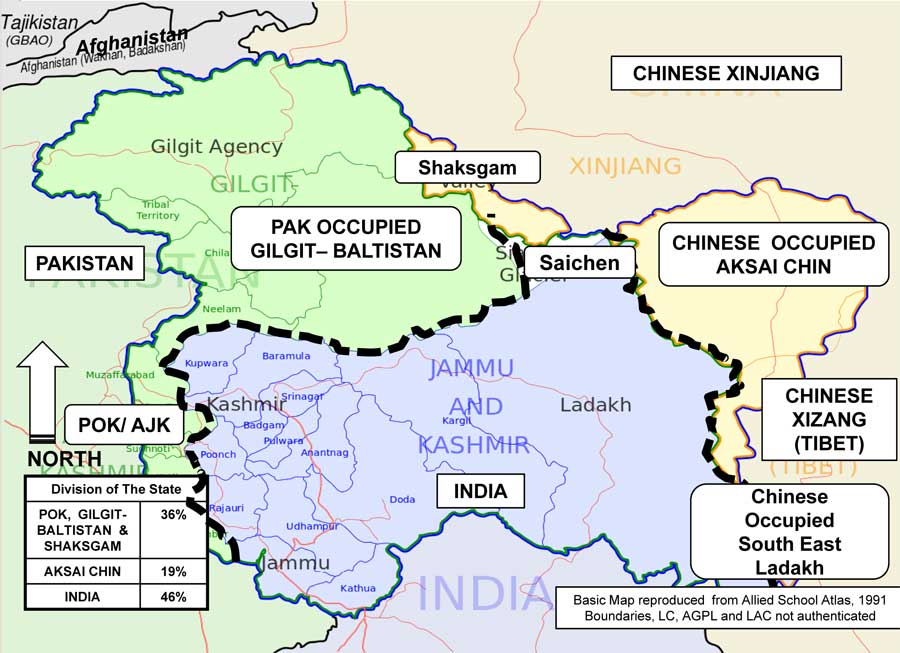
People of Kashmir believed that resolution of conflict was possible and peace was achievable if a political consensus was achieved between India and Pakistan. It was indeed cautious optimism but surely not a forsaken idea. The period between 1990 and 2006 saw cross-border terrorism driving the agenda in Jammu and Kashmir (J&K). After the initial euphoria, local support started dwindling for terrorists and a majority of Kashmiri Awam realised the futility of a proxy war because this started hurting the Awam economically, politically and proved to be a threat to their own security. Thus for peace and development, the choice was obvious. This was also facilitated by an effective counter-insurgency grid and improved law and order situation.

But in 2010, the proxy war took a turn for the worse and the focus was on Intifada or agitational strategy since terror outfits were under tremendous pressure from security forces. This agitational strategy has been carefully crafted and security forces have no answer to this shift in strategy. Organised stone pelting, public disorder and obstruction in the conduct of anti-terror operations have become a powerful tool to break the counter-terror strategy of the Indian Army. The ground situation that was considered stable has become volatile and the Valley is plunging into instability.

*** Socio Economic Transformation: Through Ex-Servicemen

By Lt Gen SK Gadeock and Col Nishant Sharma
26 Aug , 2016

Ex-servicemen are ‘role models’ of ethical leadership with ingrained morals and value systems focused on ‘Duty, Honour and Country’ contributing to society and nation building in substantial proportion with a great sense of commitment towards multi-faceted progression and excellence in all spheres of activities. Perhaps the first step in this direction is to identify the cardinal segment of the rural economy, which has so far not attracted adequate attraction of the policymakers but which deserves focus in the new government strategy.

The latest Human Development Report released by the United Nations Development Programme has ranked India 135 in a list of 187 countries…

The contemporary world presents a transformed scenario of a human society undergoing a rapid transition in terms of role and expectations. For the emerging nation states and powers, the principal task is to plan and achieve rapid economic development so that the trajectory of high, inclusive growth can be achieved and poverty can be rapidly ameliorated.1 The objective is to create an economic and social order based on equality of opportunity, full employment and provision of adequate means of livelihood. It is multi- dimensional task, encompassing an extensive range of activities, viz economic, social, technical and cultural.

From the days of Independence till the opening of the economy in 1991, the government both at the Union and State levels were guided by the socialist ideals of the Constitution and played a major role in the funding and execution of all major development programmes and projects in many key areas of the economy. In terms of social stratification of the people, success could not be achieved because of the deteriorating law and order situation, corruption, spiralling price index, criminalistion of politics, poor ethical and social norms and degeneration of our value system.

** The Long Arm Of Russian Intelligence

from STRATFOR

-- this post authored by Scott Stewart


After Russian 800-meter runner Yulia Stepanova and her husband exposed the systematic state-sponsored doping regimen pervasive in Russian athletics, the couple and their young son fled to the United States, fearing for their safety. Now it seems that their fears were well founded.

The World Anti-Doping Agency (WADA) announced Aug. 13 that hackers had illegally accessed Stepanova's account in an agency database, which contains, among other personal information, her family's address in the United States. (Athletes are required to maintain current address information in the WADA system to facilitate unscheduled, off-competition drug testing.) WADA also noted that no other accounts had been accessed in the data breach, suggesting that Stepanova, who has since moved again with her family, was the specific target of the hack.

That someone's personal information was compromised by a data intrusion is hardly surprising in this age of widespread hacking. It is unusual, however, for hackers to home in on a single person in the course of an attack. Given the strange and sometimes fatal incidents that have befallen other figures involved in the Russian doping scandal, Stepanova and her family had good reason to relocate immediately in the wake of the breach. The investigation that the runner and her husband incited, and the mass suspension of Russian athletes from the Summer Olympics that it precipitated, was a black eye for the Russian government. And Moscow does not take kindly to embarrassment. The Kremlin's track record in dealing with those who cross it - even people who seek refuge in the West - proves that the Russian government has a long reach, made all the longer by the country's prodigious hacking capabilities.
Moscow's Wet and Dirty Work

* Quantum Keys for Classic Codes: China's New Satellite

By Jacob L. Shapiro 
Aug. 22, 2016 

A daily explanation of what matters and what doesn't in the world of geopolitics. 

Beijing’s recent quantum satellite launch gives us a glimpse at the future of secure communications. 

China announced on Aug. 16 that it had successfully launched the world’s first quantum satellite. The technical name of the satellite is Quantum Experiments at Space Scale (QUESS), and according to Xinhua News Agency, the satellite will establish “ultra-secure quantum communications” that will be “un-crackable.” China Daily noted it was just the first step toward China’s goal of creating a space-based unbreakable quantum communications system by roughly 2030. 

China's quantum satellite - nicknamed Micius after a fifth century BC Chinese scientist - blasts off from the Jiuquan satellite launch center in China's northwest Gansu province on Aug. 16, 2016. STR/AFP/Getty Images 

QUESS is going to be performing a variety of experiments over the course of its two-year mission. One will be conducted in conjunction with the Austrian Academy of Sciences and will test the phenomenon known as quantum entanglement. Another will be an attempt to set up extremely secure communication between Beijing and Urumqi in Xinjiang province using what is called Quantum Key Distribution.

Quantum entanglement is what makes all of this possible. It is possible to “entangle” two very small particles, meaning that the two particles share physical properties. When a feature of one particle is measured, the other particle’s corresponding feature is instantly known, no matter how far away the two particles have been moved from each other. Einstein famously called this phenomenon “spooky action at a distance.”