21 September 2016

Keyboard commandos, here's one simple reason why nuclear war is a bad, bad thing


The Uri attacks have inspired some ballistic bombast.

A horrible attack on an Indian Army base in Uri, Kashmir leaving 18 dead and 19 injured.
Social media, with characteristic restraint, decided to demand retribution by asking for more to be killed. Many, many, many more.

Here, an instant classic example:

Are we Indians prepared for a nuclear war for finishing Pakistan as a country. Many of us may die in the process— Sanjay Dixit (@Sanjay_Dixit) September 18, 2016

That's a former Indian Administrative Services officer who works with the Rajasthan government choosing to run a Twitter essentially calling for nuclear warfare. That might be worth underling and putting in bold:Nuclear warfare.

On TV last night, @sushantsareen literally said: '500 mn Indians might die, but remaining 500 mn will make a stronger India.' Yay patriotism— Raghu Karnad (@rkarnad) September 19, 2016

This bellicosity was not restricted to social media – the television channels certainly got in on the game too – but it thrived online.

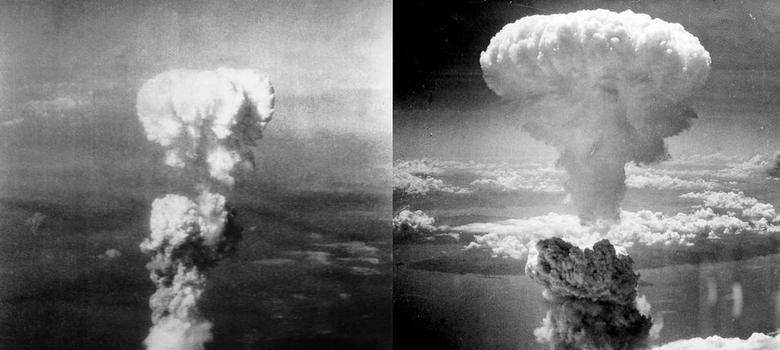
Social media by its nature can be both trivial-seeming and more serious-than-you-realise, so it's worth spelling out exactly what is being demanded here: The use of nuclear weapons against Pakistan, a move that would almost certainly result in the use of nuclear weapons against India and kill untold millions.

Let's spell that out even more. There are a lot of nuclear weapons on this planet. 15,375 according to the World Nuclear Weapon Stockpile. India and Pakistan have 250 between them. Even North Korea is believed to have a few. Despite all these weapons out there, using technology that was developed in the 1940s, nuclear bombs have only been used twice.

Raring for a Rare Earths Revolution


Posted by Jaideep A. Prabhu 

Since the birth of the nuclear age, the beach sands of peninsular India have attracted much attention. Every day, the sea washes up on the beaches of Kerala, Tamil Nadu, Andhra Pradesh, and Orissa valuable deposits of minerals that had been carried to the sea from the Ghats by natural erosion through sun, wind, and rain. Soon after independence, the new government brought the sands under national control due to their significance in nuclear technology. Some small exports were allowed but only to secure vital technology or cooperation in the nuclear arena.

In 1998, private companies were invited to enter the beach sand mining sector and six of the seven minerals – garnet, ilmenite, leucoxene, rutile, sillimanite, and zircon – were deregulated. Only monazite remained under the purview of the Department of Atomic Energy due to its uranium and thorium content. Since then, production has increased 80 percent and the export value of beach sand minerals has skyrocketed from Rs 35 crores in 1998 to Rs 4,500 crores in 2015. Yet despite having some 35 percent of the global deposits, India still lags significantly behind other global players such as Australia in production. One benchmark the industry uses is the ratio of extracted ore to proven deposits, known as the production reserve ratio – in India, that number is 0.0018 percent while Australia is substantially ahead at 0.01 percent.

The potential for capacity expansion and value addition in the six deregulated minerals notwithstanding, the miracle story lies in the seventh and as yet controlled atomic mineral, monazite. Although famous for its thorium content, monazite has actually only eight percent of the fissile element; the rest is composed of 0.3 percent uranium, 65 percent rare earth elements, and phosphates. After bastnäsite, the mainstay of Chinese rare earth mines, monazite is the richest source of rare earth elements and the rare earth ore most common in India.

What Did KGB Get From Palestinian President?


09.17.16 

The evidence is clear and convincing that the Soviets cultivated Mahmoud Abbas, but what did that bring them in the past, and what does it mean in the present?

In a way, it was the most anticlimactic news item of the year.

In 1983 the KGB recruited Mahmoud Abbas, who is now president of the Palestinian National Authority and chairman of the Palestine Liberation Organization, according to two Israeli scholars researching Soviet-Palestinian relations.

Identified by his codename “Krotov,” or “Mole” in the documents cited by the researchers, Abbas is described in a capsule biography that includes his birth in British Mandate Palestine in 1935, his membership in the central committee of Fatah, his political party, and the PLO, followed by the citation of his alleged recruitment by the KGB in Damascus, where he spent his childhood and passed his formative political years, and where he had returned from other ports of exile in the Middle East in the early 1980s.

Also of interest: the main liaison between the Israelis and Palestinians today is Russian Deputy Foreign Minister Mikhail Bogdanov, who twice acted as Moscow’s ambassador to Damascus, the first stint beginning in 1983, the year Abbas supposedly was turned.

The timing of this embarrassing disclosure may have been suspicious, coming amid a news cycle in which Russian President Vladimir Putin has been trying to foster Israeli-Palestinian peace talks in Moscow, one more regional role that Putin lately usurped from his American counterpart. However, the provenance of the information was decidedly more convincing.

Gideon Remez and Isabella Ginor of the Truman Institute at Hebrew University in Jerusalem came across Abbas’s name in documents of the Mitrokhin File, a tranche of handwritten copies of decades of KGB archives, which was painstakingly smuggled out of the then-collapsed Soviet Union in 1991 by the eponymous former archivist, Vasili Mitrokhin.

Put Globalization to Work for Democracies


By DANI RODRIK
SEPT. 17, 2016

A Chinese student once described his country’s globalization strategy to me. China, he said, opened a window to the world economy, but placed a screen on it. The country got the fresh air it needed — nearly 700 million people have been lifted from extreme poverty since the early 1980s — but kept mosquitoes out.

China benefited from the flourishing of trade and investment across national borders. For many, this was the magic of globalization.

But it’s not the whole story. Look closely at the economies that converged with richer counterparts — Japan, South Korea, China — and you see that each engaged globally in a selective, strategic manner. China pushed exports, but it also placed barriers on imports to protect employment in state enterprises and required foreign investors to transfer know-how to domestic companies.

Other countries that relied on globalization as their growth engine but failed to put in place a domestic strategy became disillusioned. For example, few countries tried as hard as Mexico to integrate with the world economy, through Nafta and liberal trade and financial policies. Yet the country’s economic growth in recent decades has been sluggish, even by the modest standards of Latin America.

The bigger worry today is that unmanaged globalization is undermining democracy. Democratic politics remain tethered to nation-states, while institutions that make the rules for global markets are either weak or seem too distant, especially to middle- and lower-class voters.

Putin wants revenge and respect, and hacking the U.S. is his way of getting it


September 16 2016

Russian President Vladimir Putin, left, talks to the head of Moscow State University, Viktor Sadovnichiy, during a visit to a laboratory that contains the Lomonosov supercomputer in 2014. (Mikhail Klimentyev/AP)

MOSCOW — The recent spate of embarrassing emails and other records stolen by Russian hackers is President Vladimir Putin’s splashy response to years of what he sees as U.S. efforts to weaken and shame him on the world stage and with his own people, according to Russia experts here and in the U.S. intelligence world and academia. 

Putin is seeking revenge and respect, and trying to reassert Russia’s lost superpower status at a time of waning economic clout and an upcoming Russian election, according to interviews with specialists here and in Washington, with a senior U.S. intelligence official, recently retired CIA operations officers in charge of Russia, and the last three national intelligence officers for Russia and Eurasia analysis in the Office of the Director of National Intelligence. 

“He’s saying, if you think you have the chops to do this — well, we do, too!” said Fiona Hill, a national intelligence officer for Russia during the George W. Bush and Obama administrations who is now at the Brookings Institution. 

First came the electronic break-ins of senior U.S. officials’ emails, followed by the Democratic National Committee’s email server just before the convention, then a few state election records. And this week, the medical files of celebrated American Olympians marked tit-for-tat revenge against the ouster of Russian athletes found to be illegally doping from this year’s Olympics. 

From Bad to Worse in Syria

September 18, 2016

Why are we surprised that the ceasefire brokered between the United States and Russia as a way to end (or at least suspend) the fighting in Syria is unraveling? Washington and Moscow may use the same diplomatic language in crafting joint statements, but they often operate on very different interpretations.

For the American side, the recent cease-fire effort was an attempt to show that Washington, despite its continued unwillingness to escalate its involvement in the Syrian morass, that it has not ceded the initiative on Syria to Russia (and by extension, Iran). U.S. diplomatic power would bring about a temporary cessation of hostilities, allow for the provision of humanitarian assistance to opposition-controlled parts of Syria that are increasingly being squeezed between the Syrian government and the forces of the Islamic State, and perhaps even get a political process started that might, in the long run, validate the Obama administration's demand that "Assad must go."

Suffice it to say, none of the above were critical concerns to the Kremlin. But Moscow's willingness to engage Secretary of State John Kerry's push for a diplomatic process was grounded in the Kremlin's assumption that, perhaps the United States was taking its first gingerly steps down the same road as Turkey's president Recep Tayyip Erdogan: the grudging recognition that Bashar al-Assad was no longer the primary threat in the Syria conflict. While humoring Washington's continued insistence that Assad's departure from power at some unspecified date in time must still be part of any deal, Foreign Minister Sergei Lavrov and his team believed that the U.S. had accepted the reality of Assad's presence for the foreseeable future.

Keeping Watch Against Cyber Espionage

By Christopher Castelli, Director; Adam Malone, Director; and Craig Stronberg, Director, PwC
September 13, 2016

In Part 1 of this series, we looked at four myths around cyber espionage. In Part 2, we’re examining how companies can adjust to this evolving threat landscape.

As state-sponsored hacking worldwide fuels debate about how nations can deter sophisticated digital attacks, companies across the globe might feel powerless to address espionage in cyberspace. In the latest sign of government action in this arena, the Group of 20 largest economies this month affirmedtheir 2015 commitment to banning cyber-enabled economic espionage and further pledged to address security risks, threats and vulnerabilities in the digital economy – a new agreement that the White House said echoed U.S. efforts to promote risk-based cybersecurity efforts. Industry, however, also has a key role to play in blunting sophisticated cyber risks. Increasingly, businesses can seize opportunities to be more watchful; to better understand the risk landscape; to proactively mitigate cyber risks in ways that meaningfully improve security; to reduce the likelihood of breaches; and to ensure business continuity in the event of a major incident.

PwC believes that companies that think broadly and act boldly to improve cybersecurity and privacy are not only less likely to be successfully hacked, but are also better able to demonstrate that they and their leaders undertook due diligence and aggressive security measures in the face of legal, insurance, board, and other stakeholder challenges in the aftermath of a major attack.

Focusing on prompt detection of intrusions – not all breaches are preventable – and better leveraging the power of cybersecurity information sharing can enable companies to more effectively understand the threat landscape and allocate limited resources to counter the most significant cyber risks. Timely sharing of actionable threat data can also support rapid adjustments to cyber controls based on emerging challenges.

Cybersecurity predictions for 2016: How are they doing?


Cybersecurity predictions for 2016: How are they doing?

Like death and taxes, few things are more certain than the annual deluge of cybersecurity breaches, which shows no sign of abating despite the best efforts of the 'good guys' -- the security industry, CSIOs, government bodies, 'white hat' hackers, academics and others. Another fixture in the tech calendar is a spate of articles around the turn of every year that attempt to predict how the cybersecurity landscape will change over the next 12 months.

At the beginning of 2016, ZDNet's sister site Tech Pro Research examined 244 cybersecurity predictions for 2016 from 38 organisations, and assigned them among 22 emergent categories (occasionally splitting a prediction among two or three categories). The results were as follows:


Predictions from: A10 Networks, Appriver, AT&T, BAE Systems, Blue Coat, DataVisor, DomainTools, Experian, FireEye, Forrester, Fortinet, Hexis Cyber Solutions, HyTrust, IBM, Imperva, Kaspersky, Lancope, Lieberman Software Corporation, LogRhythm, McAfee, MWR Info Security, NSFOCUS Global, OpenSky/TUV Rheinland, Ovum, Palerra, PCI Security Standards Council, Proofpoint, Raytheon/Websense, RSA, Seculert, Sophos, Symantec, Technology Business Research, ThreatStream, Trend Micro, Varonis, Vectra Networks, ZScaler Image: TechProResearch

Armed Forces and Democratization in Myanmar: Why the U.S. Military Should Engage the Tatmadaw

September 13, 2016 

Zoltan Barany is a non-resident Senior Associate, Burke Chair in Strategy; and Frank C. Erwin, Jr. Centennial Professor of Government at the University of Texas. His most recent book is How Armies Respond to Revolutions and Why (Princeton University Press, 2016). 

Even after the November 2015 landslide electoral victory of Aung San Suu Kyi’s National League for Democracy the armed forces of Myanmar (Burma) continue to be the country’s most powerful politicalinstitution. This is hardly surprising. The Burmese military—also known as the Tatmadaw—has been the most influential political player since the country’s independence from Britain in 1948, and outright ruled it from 1962 to 2011. 

It must be acknowledged, however, that the 2015 election itself was the culmination of a deliberate—if extremely cautious and non-linear—liberalization process, the regime started over a decade earlier. Since the elections, Burmese military leaders have found ways to work together with State Counselor (and de facto government leader) Aung San Suu Kyi and her government. 

The United States should recognize and encourage the Tatmadaw’s cooperative role and foster its professionalization and speedy withdrawal from politics. The Pentagon—in close consultation with the State Department and Myanmar’s civilian leadership—should intensify its thus far minimal engagement with the Burmese army. At the same time, the United States must ensure that the government in Yangon retains significant leverage to use against the army if necessary. 
Background: The Exceptionality of Burmese Military Rule 

Even before General Ne Win mounted a coup d’état in 1962, the Burmese military enjoyed significant political influence.[i] The coup heralded one of the longest periods of uninterrupted military rule in modern times. The Tatmadaw was officially in power until 2011, when it created a pseudo-civilian government—virtually all of its members were former generals—that ruled the country until last November. 

20 September 2016

*****Stratfor: China builds a new Silk Road for the 21st century


Summary: As we watch the candidates babble in the Campaign2016 circus, we can look across the Pacific to see a rational geopolitical strategy, something America has not had for decades. Here’s a note about China rebuilding its fabled Silk Road — revised for the 21st century.

The Grand Design of China’s New Trade Routes

Over the next several years, China will devote significant resources to the construction of Eurasian trade routes under its Belt and Road Initiative. 

As transit routes come online, the proportion of Chinese maritime trade passing through South China Sea chokepoints will shrink. 

The new infrastructure built as part of the Belt and Road Initiative will support China’s economic rebalancing by opening new markets, generating demand for higher value-added Chinese goods and helping China build globally competitive industries. 

Improving transit routes will lead to new security and political risks, and China’s efforts to mitigate these threats could create frictions in the very areas where Beijing is trying to diversify its trade routes. 

Analysis

In 2013, China’s President Xi Jinping proposed a plan to stimulate development in Eurasia by constructing what he called the Silk Road Economic Belt and the 21st Century Maritime Silk Road — revivals of the overland and maritime trade routes that once connected China and Europe. Since then, the “Belt and Road Initiative” has become a fixture in official Chinese discussions on both foreign and domestic policy. Nonetheless, the initiative is still loosely defined. Beijing claims there are about 60 Belt and Road countries, but there is no public listing of these countries.


Although the initiative clearly centers on infrastructure investment, Chinese media coverage offers no straightforward definition of what projects count as part of the program. A pledge to install signs and information kiosks in Armenia is said to be under the banner of the Belt and Road Initiative, as is a $46 billion infrastructure investment package that Xi promised to Pakistan in April.

*** Narendra Modi is implementing the Doval doctrine in Kashmir

Sushil Aaron

Sep 16, 2016 

Security personnel patrol a street dotted with rocks and bricks used during a protest in Srinagar, Jammu-Kashmir, Wednesday, Sept. 7, 2016. (AP)

The Modi government’s hardline strategy in Kashmir is a straight lift from the approach suggested by National Security Adviser Ajit Doval in 2010. Speaking about protests that year he told policymakers not to overreact and give in. He said the crisis will pass off, “It looks big in the midst of it, they cannot sustain it beyond a point and even if they do there is a price they have to pay.” As an assimilationist strategy it has certain astute aspects but it will eventually harm India and damage Kashmir irreparably.

Kashmir is bracing itself for another crackdown. The Narendra Modi government has made it clear that it wants to take back control of the streets from stone-pelting youth. A security official told the Business Standard “Sooner or later, we will have to retake control in South Kashmir. The longer we wait, the more emboldened the protesters become, the more force will be required to deal with them”.

What is bewildering analysts is the persistence of Delhi’s hardline strategy. More than 80 civilians have been shot dead, many blinded and over 10,000 reportedly injured. There is no attempt to scale back the response of security forces. Indian governments have brutally put down unrest before such as in 2010 when 120 youth were killed – but this time Delhi’s reaction seems to be crafted for larger purposes.

To establish that this flows from a well-thought strategy one needs to see a candid 2010 lecture on Kashmir by India’s National Security Adviser Ajit Doval and discern the continuity between the approach he commended then and Delhi’s policy now. The lecture, available on YouTube, offers a fascinating insight into how Doval and the Modi government view the Kashmir question.

Troubling mindsets

*** Non-Technical Military Innovation: The Prussian General Staff and Professional Military Education

September 14, 2016
Source Link


Non-Technical Military Innovation: The Prussian General Staff and Professional Military Education

Author’s Note: This monograph is a revision of a paper submitted for consideration during the 2008 U.S. Army Command and General Staff College historical writing competition for CGSC Course 08-01. The original paper was awarded 2nd place in that competition. In revising the monograph, the author added considerable original work and thought on the subject of professional military education relative to the lessons learned from the German general staff as it pertains to the foundation of our American system of professional military education and the roots of the U.S. Army General Staff.

Introduction

Innovation within western militaries over the centuries is at best a contentious subject, not by historical standards, but when attempting to judge the innovation in the context of the period in which it occurred. Too often, a particular aspect of military innovation or evolution is viewed or evaluated solely along the lines of its technological cause and effect. Often, however, the subtle effects brought about by shifting cultural norms or values are what lead to enduring forms of non-technical or administrative military innovation. Political commentator Max Boot observes that, “History abounds with examples of the failure to effectively innovate.”[1] However, in looking at the Prussian example of the creation of the General Staff in the early nineteenth century, an example is provided that illustrates a very successful non-technical, administrative military innovation which not only greatly upset the overmatch of Napoleonic dynastic military power, but continued to resonate in Germany during the interwar period between World War I and World War II. The creation of the Prussian General Staff was a profoundly administrative innovation that had virtually nothing do with technology and was born of a Prussian desire of self-preservation in the face asymmetric advantages of the Grand Armée based on the reforms brought about by the French Revolution and Napoleon.

Prime minister’s Uri choice

Praveen Swami 

Forty-eight hours after the 26/11 attacks, Mumbai still burning, Prime Minister Manmohan Singh chaired a meeting of grim-faced security officials to consider the most important decision leaders can make. The evidence that the Lashkar-e-Taiba was involved, National Security Advisor M.K. Narayanan pointed out, was irrefutable. India, he argued, had to punish the perpetrators — or open itself up to further assault, time and again.

Fali Homi Major, the then Air Force chief, told the prime minister he was prepared to strike inside Pakistan — but could not do so because the intelligence services could not provide adequate digital data on Lashkar camps. Army vice-chief Milan Naidu insisted on waiting for his boss, then out of the country, to return — and when General Deepak Kapoor was consulted, he flatly said the army could not wage a surgical strike.

“They did nothing,” said the man who is now India’s Prime Minister, in a campaign speech centred on 26/11, “Indians died and they did — nothing”. “Talk to Pakistan in Pakistan’s language,” he said, “because it won’t learn lessons until then”.

What to do after Uri? Choices before Modi


The world is less cautious, less politically correct and less and less reined in by coherent global leadership. September 2016 is not September 2001; it is not even November 2008.

Even if one discounts the war gaming in news television studios and the civilisational conflicts being played out daily on social media, it is apparent that the aftermath of the Uri attack is not the same as that of the Pathankot raid in January this year. True, there is enough in common between the two incidents. In Pathankot, an Indian Air Force base was invaded by a terror militia. In Uri, an Indian Army camp was targeted. In both cases, the victims were men in uniform, rather than civilians.

Yet, that is where the similarities cease. The sheer number of soldiers killed in Uri — 18 — makes this a bigger political-management challenge for the Narendra Modi government. The public anger and grim mood in the ranks of the Army are understandable. Seldom if ever in peacetime has the Indian Army lost so many soldiers in one day. There is the sense that an assault of this nature, so close to the Line of Control, would have required logistical support and meticulous planning that could only have come from military backing by (sections of the) Pakistani state.

Responding to Uri


Gathering evidence regarding the four terrorists who stormed the army base in Uri, killing 18 soldiers, suggests they are from Pakistan and had been sent across the border explicitly for this attack. In fact, the entire operation has the fingerprints of Pakistan’s military establishment, showing yet again the country’s persistent use of terrorism as state policy. The four terrorists reportedly got to the camp early in the morning, in all probability across the Line of Control just 6 km away. The terrorists carried automatic rifles, under-barrel grenade launchers and other equipment, most of it with Pakistani markings, according to Director General of Military Operations Lt. Gen. Ranbir Singh. Over the last three decades or so, India has been at the receiving end of Pakistani statecraft of terrorists unleashed to attain state objectives; Uri is the latest provocation. India has limited manoeuvrability as far as a military response goes. Narendra Modi’s restrained, but firm, response is an indication that India may not play the reckless game many would like it to. Condemning the “cowardly” attack, he said those behind it would not go unpunished — the heavy-lifting will in all probability be done diplomatically.

Will The Uri Attack Mark The Point Of Change Of Modi’s Pakistan Policy?


17 soldiers of the Indian Army were killed today (18 September) in attack on army camp in Uri, in Baramuula district of Jammu and Kashmir. The Indian army has said that the attack was carried out by the Jaish-e-Mohammed and that all those involved were foreigners. 

The Uri attack is being described as an act of war. The Indian response, thus, has to keep in mind this reality. The only appropriate response in this situation has to necessarily be sustained & unequivocal. 

India can’t meet the challenge of an unreasonable and rabid, anti-status-quo Pakistan by offering compromises and goodwill. Pakistan has to be defeated both psychologically and militarily. You don’t win against a fascist force by signing “peace in our time” deals. With Pakistan, which is dedicated to bleeding us with a thousand cuts, peace is not even an option – except for the photo-ops, which have their own value. So far the war has been fought on Pakistan’s terms; it is time to prosecute the war on more even terms.

The immediate question that follows is: what will Pakistan do once we pursue this policy? Will whatever we do increase the risks of formal war or reduce it? 

Uri: India’s Moment of Truth

Sushant Sareen
If the government talks tough but does nothing, India will lay itself open to even more terror attacks; and if it breaks the past pattern, it could end up pushing the country into an inferno

The idea originally was to write about a very sinister development in Kashmir that is staring us in the face and yet isn’t really being accorded the importance it deserves. But as happens so often, the immediate and urgent supersedes the important. The terror attack on the army base in Uri – 17 soldiers have died and it is feared that the figure may go up since some of the wounded are reportedly in a critical condition – is being described as ‘a watershed moment’. But if at all it is anything, it is a moment of truth for the government, for the Indian state and for the Indian people.

The Uri attack has caused not just outrage, but also raised an outcry for visiting retribution on the terrorists and their handlers – the Islamic State of Pakistan. The mood is dangerously ugly and there will be enormous pressure on the government to not just talk tough but also act tough. Not only is the reputation of the government at stake, its political credibility too is at stake. What this means is that more than the whys and whereofs of the Uri attack, it is the what nows that are more important. Although Prime Minister Narendra Modi has assured the country that ‘the attack won’t go unpunished’, he doesn’t have too many options available to him to punish the planners and perpetrators of the Uri terror attack.

Kashmir Valley Troubles: Has the Penny Dropped?

By Col Anil Athale
19 Sep , 2016

The recent events in Kashmir and robust Indian response does seem to indicate that Indian approach to trouble in Kashmir valley has finally come to terms with changed global scenario. Unmindful of the howl of protest from the usual media/political suspects, the govt. of India cracked the whip and imposed curfew on the holy day of Bakar Id. There are indications that the security provided to the separatist leaders is also likely to be withdrawn.

Kashmir issue complexities could be understood only in the context of the global situation and forces.

This hardening of position has not come a day soon, in fact it is a belated realization (thanks to the advent of Modi government) that one of the important aspect of the Kashmir problem, the international dimension, has changed in India’s favour giving India much greater space to maneuver.

Kashmir issue has three distinct dimensions. It is an internal problem of people in Valley wanting independence from both India and Pakistan. It is regional problem since Pakistan wants the whole of J&K to merge with it. Internationally, during the Cold War, the West came down in favour of its ally Pakistan and against pro Soviet Union India. These are not watertight compartments and impact on each other. Kashmir issue complexities could be understood only in the context of the global situation and forces. A look at the history of international intervention in Kashmir is well worth our time to understand the present.

The motives of China and US in interfering in Kashmir were similar. China also uses it as a pressure point against India taking up the issue of Tibet as well as to keep India engaged in the region so as not to let her influence South East Asia- the natural battle ground between Indic and Sinic civilization. The US in the past saw many uses of Kashmir. It was a convenient pressure point on issue like the Nuclear Non Proliferation. On a long term basis, the US thought of detaching Kashmir to be used as a wedge to disintegrate India or at the least force a second partition on religious lines. Late Jean Kirk Patrick, the US permanent representative in the UN in 1980s is on record of having said that India is too large and unwieldy and needs to be broken up in several manageable parts. President Clinton’s Secretary of State, Albright (a contradiction) was a vocal supporter of Kashmiri separatists. In the 1990s, it was not unusual to hear slogans in the valley hailing President Clinton as a savior.

Terrorism: India Losing War of Ideas

By RSN Singh
18 Sep , 2016

A recent report of National Consortium for the Study of Terrorism and Responses to Terrorism contracted with the US state department has revealed that India is the fourth in terms of terrorist victimhood, the other three being Iraq, Afghanistan and Pakistan.

The jihad that consumes Iraq, Afghanistan and Pakistan is explicable, but why on this earth, India – a non-Islamic country, is being buffeted by terrorism to the extent that it has become the fourth worst victim.

It is pertinent to note that the first three are Islamic countries, which are in a state of destabilization for various reasons that continue to haunt the so-called Muslim World. Iraq continues to be destabilized since the US attack on Iraq in 2003. Similarly Afghanistan continues to be in the grip of violence since 2001. The vicious and bigot Taliban retreated from Afghanistan but retained the ability to wage ‘Jihad’. And as far as Pakistan is concerned it occupies a different category because it uses jihad as an instrument of state-policy and a tool for proxy war against India and Afghanistan, hence it cannot escape the blowback.

The jihad that consumes these three countries is therefore explicable, but why on this earth India, a non-Islamic country, is being buffeted by terrorism to the extent that it has become the fourth worst victim.

The answer lies very much in the said report. In 2015, 289 Indians died in terrorist attacks of which 43 percent of the 791 attacks were attributed to the Maoists. The Maoists of India in fact have been portrayed as the fourth deadliest terror outfit after Taliban, Islamic State and Boko Haram. These three organizations span Af-Pak region, West Asia and Africa. If the attacks by the Maoists were to be excluded the residual jihadi terror narrative in India would have been much milder. The comparative table with regard to terror attacks and the corresponding fatalities that they caused in 2015 are given below:-

India-Vietnam Relations Elevated to Comprehensive Strategic Partnership

By Sumit Kumar
18 Sep , 2016

India’s foreign policy towards East Asia has witnessed a marked shift over the last two years, with the government intent on transforming India’s relations with this part of the world under its “Act East” policy. Vietnam is, of course, one of the East Asia Countries which has received a special place in the list of India’s foreign policy priorities, given its profound significance in India’s strategic and economic interests.

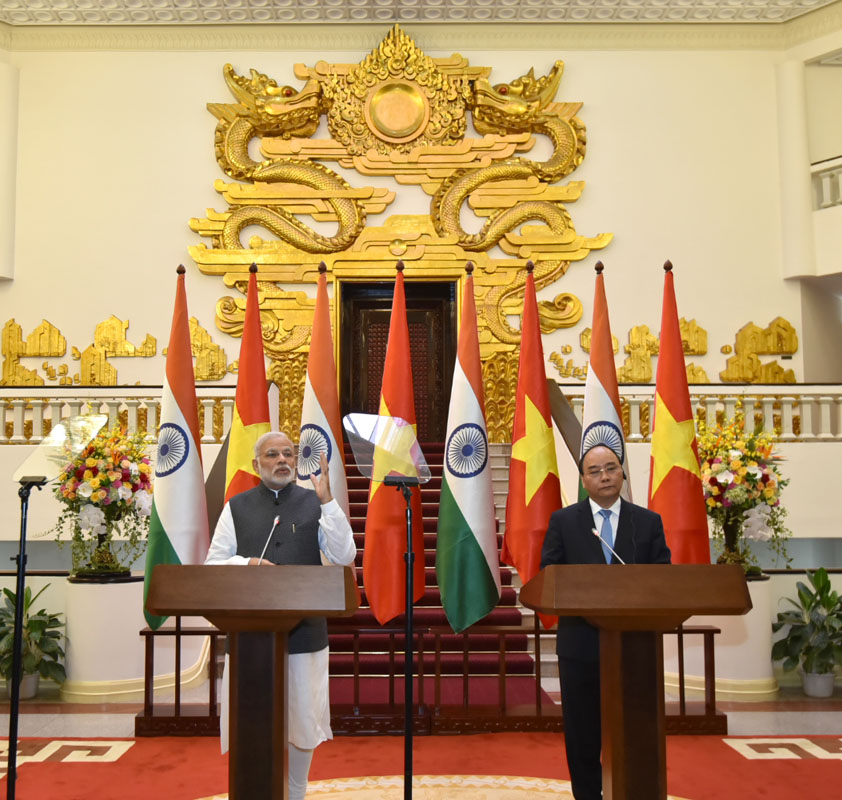
This became evident when President Pranab Mukherjee and External Affair Minister Sushma Swaraj visited Vietnam respectively in 2014. In the same year, Delhi hosted Vietnam’s Prime Minister Nguyen Tan Dung. The just concluded visit of PM Modi to Vietnam, first in the last fifteen years by an Indian Prime Minister, is being viewed to have finally led the foundation for the beginning of a new chapter in the cherished relationship between the two countries.

While Defence cooperation has been an important cornerstone of the strategic partnership between the two countries for the last many years, New Delhi and Hanoi have taken several steps to expand their cooperation in the recent time. During Pranab Mukherjee’s visit, India provided a credit line of US $ 100 million for defence procurement.

The two countries signed a vision statement for next five years in 2015 and a MoU on cooperation between the coast guards of the two countries. During his two day visit Prime Minister Modi announced extending a new defence credit line of $500 million and elevated the strategic partnership to the comprehensive strategic partnership, signifying India’s deep commitment to help Vietnam to build its defence capabilities.

The deepening defence engagement between India and Vietnam indeed is the reflection of India’s deeply interested in actively participating in shaping the political security order in Asia-Pacific. In so doing, the Indian strategic community believes that a strong defence relationship with Vietnam can prove a huge strategic asset for India, so far as its interests in the South China Sea are concerned. As About 50 per cent of its trade transits through the South China Sea, New Delhi needs foster security ties Hanoi to ensure that there is absolute freedom of navigation in this part of the world.

India-US Partnership Lifted to New Height

By Sumit Kumar
19 Sep , 2016

Two recent profound developments took place in the relationship between India and the United States. One was the signing of the Logistics Exchange Memorandum of Agreement (LEMOA) in Washington and another was the second meeting of the India-US Strategic and Commercial Dialogue in New Delhi.

These two developments certainly have given an idea of the transformational shift that has taken place between New Delhi and Washington over the last two years. When the Modi government came to power in May 2014, the relationship between the two countries was at a low level. However, soon after coming to power in May 2014, Prime Minister Modi decided to redirect his government’s efforts to sustain and deepen ties with the United States. President Obama warmly reciprocated to Prime Minister Modi’s attempt to forge a new bonhomie between New Delhi and Washington. This, in turn, elevated the relationship to the height of India-US Strategic and Commercial Dialogue.

True, as the Indian External Affair Minister Sushma Swaraj and US Foreign Secretary John F. Kerry held the second India-US Strategic and Commercial Dialogue on 30 August in the background of an unprecedented political unrest in which Pakistan role is seemingly visible, the Indian strategic community eagerly waited to see how Secretary Kerry would react to these developments. Undoubtedly, his stand on both the issues bolstered India.

Despite Pakistan’s efforts to internationalise the political unrest in the Kashmir Valley, the US has chosen, rightly so, not to extend any attention to Pakistan’s outcry. Instead, the joint statement released on the meeting of second India-US Strategic and Commercial Dialogue has once again asked Pakistan to bring Pakistan to bring the perpetrators of the 2008 Mumbai and 2016 Pathankot terrorist attacks, vindicating India’s concerns over Pakistan’s role in exporting the menace of terrorism into its territory including the state of Jammu and Kashmir.

Cold Start

By Maj Gaurav Arya
18 Sep , 2016

It was an unusually warm afternoon in the autumn of 1935. Adolf Hitler sat under a tent, faithful Guderian seated next to him, reviewing maneuvers of tanks and armored vehicles, on the plains of Kummersdorf. Every now and then, he would glance at Heinz Wilhelm Guderian’s classic “Achtung Panzer”, the tank man’s Bible.

It was early evening when Hitler suddenly rose from his chair. Guderian got up, unsure of what was going on inside Hitler’s mind. Hitler could be extremely temperamental. He looked at Guderian and keeping his hand on his shoulder in an unusually familiar gesture, he said looking at the rolling tanks, “That is what I want – and that is what I will have.”

German strategic thinking had evolved from the writings of Carl Von Clausewitz, Helmuth von Moltke the Elder and Alfred von Schlieffen. But it was the defeat in the First World War and the humiliating Treaty of Versailles that violently changed German thinking. This violent change brought with it anti-Semitism, National Socialism and a spiritual connect with ancient Rome. In 1933, it catapulted Adolf Hitler to power. The Nazi Party was a one-man dictatorship and drew heavily from the Prussian (German) military masters. When Hitler started rearmament in direct contravention of the Treaty of Versailles, his vision was the Alfred von Schlieffen’s ‘Schlieffen Plan’ and Guderian model of warfare; heavy concentration of armor, fast moving infantry, total air superiority and mass deployment of mobile artillery. Hitler had a galaxy of military geniuses with him – Guderian, Schmidt, Model, Manstien, Rundstedt, Goering, Rommel and many more.

Balochistan and the ‘India’ Factor in Pakistan’s Civil-Military Equation


Pakistan’s pursuit of actions to confront and counter India will likely gain momentum in the face of New Delhi’s evolving policy on Balochistan.

“The spirit of independence in occupied Kashmir [sic] is on its peak. The new generation of Kashmiris has raised the flag of freedom with new vigor,” declared Pakistani Prime Minister Nawaz Sharif in his Independence Day speech last month.

Sharif’s speech came shortly after home minister Rajnath Singh – who visited Islamabad for the SAARC Home Minister’s conference – left the country in a huff, allegedly as a result of less-than-cordial treatment meted out to him by his hosts. Since then, Pakistan has attempted to rally its diplomatic corps to call the world’s attention to India’s response to the large-scale rioting in Jammu and Kashmir.

Sharif also dispatched 22 parliamentarians from Pakistan to world capitals to “shake the collective conscience of the international community.”

Prime Minister Narendra Modi, on his part, assailed Pakistan for its continued use of terrorism as an instrument of foreign policy and made references to Balochistan in his Independence Day speech to the nation. More recently, India’s representative at the United Nations Human Rights Council unequivocally raised the issue of human rights violations in Balochistan on September 14.

While there has been debate on the wisdom – or the folly – behind Modi’s statement on Balochistan, it is important to anchor our analysis on the current state of civil-military relations in Pakistan, which might help in gauging Pakistan’s potential reaction to the Indian government’s new policy.

First, the context.

The Afghan War Quagmire

SEPT. 17, 2016

Eight years ago, President Obama pledged to wind down the war in Iraq and redouble efforts to defeat the Taliban in Afghanistan. “As president, I will make the fight against Al Qaeda and the Taliban the top priority that it should be,” he said during a campaign speech. “This is a war that we have to win.”

Lasting peace, Mr. Obama said, would depend on not only defeating the Taliban but helping “Afghans grow their economy from the bottom up.” He added, “We cannot lose Afghanistan to a future of narco-terrorism.”

Now, at the twilight of his presidency, these goals are receding further into the distance as America’s longest war deteriorates into a slow, messy slog. Yet despite this grim reality, there has been no substantive debate about Afghanistan policy on the campaign trail this year. Neither Donald Trump nor Hillary Clinton has outlined a vision to turn around, or withdraw from, a flailing military campaign.

The war in Afghanistan has cost American taxpayers in excess of $800 billion — including $115 billion for a reconstruction effort, more than the inflation-adjusted amount the United States spent on the Marshall Plan. The Afghan government remains weak, corrupt and roiled by internal rivalries. The casualty rate for Afghan troops is unsustainable. The economy is in shambles. Resurgent Taliban forces are gaining ground in rural areas and are carrying out barbaric attacks in the heart of Kabul, the capital. Despite an international investment of several billion dollars in counternarcotics initiatives, the opium trade remains a pillar of the economy and a key source of revenue for the insurgency.

The War in Afghanistan Has Become What All the Politicians Since 9/11 Said Was Impossible - a Quagmire

September 18, 2016

The Afghan War Quagmire

Eight years ago, President Obama pledged to wind down the war in Iraq and redouble efforts to defeat the Taliban in Afghanistan. “As president, I will make the fight against Al Qaeda and the Taliban the top priority that it should be,” he said during a campaign speech. “This is a war that we have to win.”

Lasting peace, Mr. Obama said, would depend on not only defeating the Taliban but helping “Afghans grow their economy from the bottom up.” He added, “We cannot lose Afghanistan to a future of narco-terrorism.”

Now, at the twilight of his presidency, these goals are receding further into the distance as America’s longest war deteriorates into a slow, messy slog. Yet despite this grim reality, there has been no substantive debate about Afghanistan policy on the campaign trail this year. Neither Donald Trump nor Hillary Clinton has outlined a vision to turn around, or withdraw from, a flailing military campaign.

The war in Afghanistan has cost American taxpayers in excess of $800 billion — including $115 billion for a reconstruction effort, more than the inflation-adjusted amount the United States spent on the Marshall Plan. The Afghan government remains weak, corrupt and roiled by internal rivalries. The casualty rate for Afghan troops is unsustainable. The economy is in shambles. Resurgent Taliban forces are gaining ground in rural areas and are carrying out barbaric attacks in the heart of Kabul, the capital. Despite an international investment of several billion dollars in counternarcotics initiatives, the opium trade remains a pillar of the economy and a key source of revenue for the insurgency.

“It does not appear that the Afghan forces in the near future will be able to defeat the Taliban,” said a senior administration official who spoke about the White House’s appraisal of the campaign on the condition of anonymity. “Nor is it clear that the Taliban will make any significant strategic gains or be able to take and hold on to strategic terrain. It’s a very ugly, very costly stalemate.”

The full circle of reason


Its faith in Pakistan as an interlocutor for peace shaken, Afghanistan opts for a tighter embrace of its old ally India.

If any proof were needed of the dramatic course correction under way in Afghanistan’s foreign policy, then President Ashraf Ghani could not have given us a better example on his second official visit to New Delhi. There were agreements on extradition, mutual legal assistance, and even space cooperation. But the most telling moment of the trip was none of these things. Nor was it India’s announcement of $1 billion in aid. Rather, it was Mr. Ghani’s address at the think tank Institute for Defence Studies and Analyses (IDSA) where he praised C. Christine Fair’s book, Fighting to the End: the Pakistan Army’s Way of War, as the best exposition of the Pakistani military establishment’s philosophy. Ms. Fair’s book, spotted in the arms of Defence Minister Manohar Parrikar last summer, characterised Pakistan as a “purely greedy state, driven by ideological motives”. “Military defeat short of nuclear emasculation,” she warned, “is not likely to convince the Pakistan Army that its goals are unreasonable.” “Pakistan is a revisionist state,” echoed Mr. Ghani at IDSA, “every defeat is celebrated as victory.”

Realignments over time

Bangladesh, China, India and Myanmar-Economic Corridor: Ushering a New Era of Interconnectedness

By Dr Rupak Bhattacharjee
19 Sep , 2016

Bangladesh, China, India and Myanmar-Economic Corridor (BCIM-EC) seeks to deepen friendly cooperation among the four member nations and connect South Asia with South East and East Asia by establishing multi-modal connectivity, harnessing economic complementarities, promoting trade and investment and enhancing people-to-people contacts. The proposed economic corridor would run from Kunming, a south-western Chinese city, to Kolkata via Mandalay and Dhaka. 

This regional grouping has unique features which could potentially bring huge benefits to the participating nations through integration of their economies. The BCIM region is home to 40% of the world’s population. It covers 9% of the world’s total area and contributes 7.3% of the global gross domestic product. There has been commonality of interests between the two rising global economic powers, China and India, on the one hand, and Bangladesh and Myanmar, the two Least Developed Countries (LDCs) in the group, on the other.

The idea of creating such an economic corridor was first conceived by Chinese scholars in Yunnan by the end of 1990s—then called the “Kunming Initiative”. It converted into BCIM Forum for Regional Cooperation when its meeting was first convened in 1999, with the objectives to: a) build a forum where the key stakeholders could meet periodically and discuss issues related to the enhancement of economic growth and trade in the BCIM region; b) identify specific sectors and projects that would promote greater collaboration among the BCIM nations and c) strengthen cooperation and institutional arrangements among major players and stakeholders to deepen BCIM ties.

Though most Chinese arms are better than what they used to be, Western, Russian, and Israeli weapons systems still outclass them. Most of what China sells is low-end kit and its main arms buyers are from South Asia and Africa. To remain a leading arms exporter, Beijing needs to come up with more competitive products and expand its customer base.

One of the frequent arguments made about China’s 20-year-long military buildup is that its locally produced weapons are better than they used to be. To a certain extent this is true, if hardly surprising. Relatively modern systems, such as the J-10 fighter jet, the Yuan-class submarine, and the Type-99 main battle tank, are certainly superior to the weapons systems they replaced, that is, the J-7, theMing-class sub, and the Type-59 tank – all basically copies of Soviet weapons dating back to the 1950s. They could not help but be better.

China’s advanced fighter jet, JF-17, has so far been purchased only by Pakistan

At the same time, it is true that some current Chinese arms are highly competitive with their Western or Russian counterparts. These include unmanned aerial vehicles, anti-ship cruise missiles (ASCMs), shoulder-fired surface-to-air missiles, and lightweight trainer jets. But all this raises an important point: if Chinese weapons are supposed to be so great, how come hardly any other country wants to buy them?

China Is Supporting Syria's Regime. What Changed?

September 17, 2016

On August 14, Guan Youfei, a rear admiral in China’s People’s Liberation Army Navy, visited the Syrian capital of Damascus, escorted around the city under heavy guard. Guan’s visit reportedly included meetings with senior military officials and Russian officers, as well as pledges that the Chinese military would provide medical training for Syrian medical staff. The question is why China is increasing this engagement now.

Admiral Guan’s engagement contrasts with previous Chinese behavior during the Syrian crisis. While China has been one of the few powers to maintain an embassy in Damascus throughout the current crisis, Beijing’s engagements have been fairly limited, and mostly focused on attempts from the Chinese Ministry of Foreign Affairs to insert itself into peace negotiations and occasional expressions of concern around individual nationals who appear on the battlefield (either as hostages or fighters). The approach has been driven by a mix of motives, including Beijing’s long-standing principle of “non-interference,” aversion to what China sees as largely Western-led regime change in the guise of humanitarian intervention and a Chinese desire to insulate its growing economic interests in the Middle East from the continuing consequences of the Arab Spring.

That dynamic may now be about to change. China has started to become a participant in the many international discussions around countering terrorism, and ISIS in particular. China has participated in the Global Counterterrorism Forum and hosted sessions about terrorists’ use of the internet, while engaging in discussions at home about contributing more to the fight against ISIS. Last year, a decision was made to alter national legislation to allow Chinese security forces to deploy abroad as part of a counterterrorism effort, and China has sought to establish overseas bases in Djibouti. In neighboring Afghanistan, it has established a new sub-regional alliance between Afghanistan, Tajikistan, Pakistan and China to discuss and coordinate the fight against militancy and terrorist groups in the area. All these actions highlight the degree to which China is slowly pushing its security apparatus out into the world in a more aggressive posture than before. Seen within this light, Admiral Guan’s visit to Damascus is another piece in this puzzle, and the most ambitious yet in many ways for a power that has historically preferred to play a more standoffish role in addressing hard military questions.