17 February 2020

Creating an Effective CDS for India’s National Defence

VIF Study Group Report
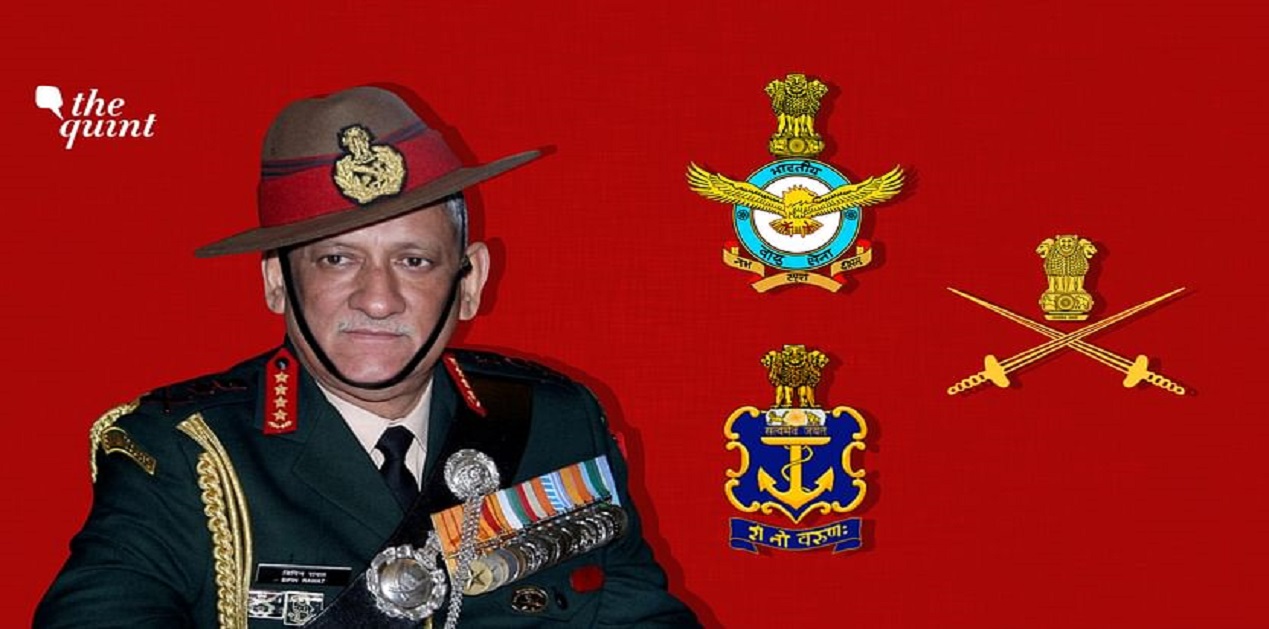
Nearly two decades after submission of the Kargil Review Committee (KRC) report in 1999, the Group of Ministers (GOM) Report in 2001 and recommendations of the Naresh Chandra Task Force in 2012, the Chief of Defence Staff (CDS) for the Indian armed forces has become a reality. Implementation was set into motion following Prime Minister Modi‘s announcement to this effect on August 15, 2019. Thereafter, a high-level committee under the National Security Adviser (NSA) set about evolving a framework and charter of responsibility for the CDS. After nearly four months of extensive deliberations, the Cabinet Committee of Security (CCS), on December 24, 2019 accorded approval for creation of the post of the CDS.

A surprise but welcome `supplement’ to this was the creation of the Department of Military Affairs (DMA) as the fifth vertical in the Ministry of Defence (MoD), (others being the Department of Defence (DOD), Department of Defence Production (DDP), Department of Defence Research and Development (DRDO) and Department of Ex-Servicemen Welfare (DESW). Finally, following a formal notification regarding revision of retirement age of CDS to 65 years, the outgoing Army chief General Bipin Rawat who was to superannuate on December 31, 2019 was designated as the first CDS. The year 2020, thus dawned with the long-awaited CDS for the Indian armed forces finally becoming a reality.

Beyond Rajapaksa’s Visit, Are India and Sri Lanka Really on the Same Page?

By Rajeswari Pillai Rajagopalan

Sri Lankan Prime Minister Mahinda Rajapaksa just completed a five-day trip to India, making it his first foreign trip since his appointment as prime minister in late November 2019. While the trip highlighted some areas for collaboration between the two sides, it also left broader questions lingering about the future direction of ties.

By all accounts, Rajapaksa’s visit appears to have been a successful one. For instance, Mahinda touched the right cords in New Delhi even on sensitive issues by stating that developments relating to Jammu and Kashmir and Article 370 were India’s internal affairs. Prime Minister Narendra Modi, for his part, said in his press statement that he appreciated Sri Lanka’s importance not only to India but to the entire Indian Ocean Region. He added that “stability, security and prosperity in Sri Lanka” is an essential element in ushering peace and prosperity in the Indo-Pacific region.

In line with the “Neighborhood First” approach and the “Sagar” doctrine, Modi went on to say that New Delhi attaches “a special priority” to its relations with Colombo, which will no doubt be welcome. Sri Lanka also appears to be satisfied with the comfort level that exists between Modi and Rajapaksa and the pace of the relationship.

Is Donald Trump About to Make Peace with the Taliban?

by Daniel R. DePetris 

Before President Donald Trump scuttled the talks last September, the United States and the Taliban were the closest they had ever been to sign an agreement since the war in Afghanistan began 18 years ago. Now, three months after those talks resumed thanks in part to a prisoner exchange that swapped two western professors in Taliban custody for three of the movement’s commanders, U.S. and Taliban negotiators are really, really close—so close, in fact, that a deal could be announced within a matter of days.

According to Secretary of Defense Mark Esper, there is a deal on the table that could decrease the violence substantially and lead to the intra-Afghan political negotiations Washington has been advocating for. "The best if not only way forward is a political agreement,” Esper said as he attended the NATO Defense Ministerial Conference in Brussels. “We have the basis for one on the table...I think peace deserves a chance, but it will demand all parties to comply with their obligations, if we move forward.”

Therein lies the rub: all parties need to actually implement what they signed up to. If that first, crucial step doesn’t happen, the entire diplomatic edifice could collapse as quickly as Trump tweeting about his political enemies.

What’s the True Human Cost of US Reconstruction Efforts in Afghanistan?

By Catherine Putz

Costs are all-too-often spoken of in dollar signs and bottom lines, rather than an accounting of coffins. And when death is factored in, war-related deaths get the headlines, or sometimes the nigh uncountable number of civilian casualties gets top billing. But the ongoing reconstruction efforts in Afghanistan have had their human costs, too.

In a report released this week, the Special Inspector General for Afghanistan Reconstruction (SIGAR) noted that the bulk of its work has been in tracking the financial costs of reconstruction and stabilization activities in the war-torn country but that relatively little effort “has been made up to now to track the human costs – the number of people killed, wounded, or kidnapped – to accomplish these activities.”

As SIGAR pointed out, “This has left policy makers with an incomplete picture of the true cost of our efforts in Afghanistan.”

Stuck in Central China on Coronavirus Lockdown


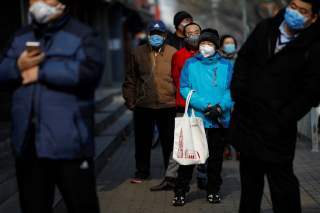
Shiyan, China—Before Shiyan, a city in Hubei province, went into quarantine, the sum of thirty yuan (about $4) could buy two cabbages, enough spring onions for two soups, a large white radish, two lettuces, a potato, and ten eggs. Not any more. Wanting to record the hiked prices, I took two photos of price cards in my local district’s largest supermarket. Immediately, a shop assistant approached. “You can’t do that,” she said. “Please delete them.” Even after I agreed, she stood peering over my shoulder to see my phone, to make sure that the images were gone. “You could report her,” a local resident told me later: national orders have forbidden merchants to raise their prices.

Shiyan may be in the same province as Wuhan, the epicenter of the coronavirus outbreak that has so far seen more than 20,000 cases reported in China, but it’s a seven-hour drive away if there’s no traffic. I had planned to spend the Lunar New Year holiday there in Shiyan with my roommate, Ningning, and her family. On the day I took the train from Beijing, where I have lived for the last four years, the coronavirus seemed largely confined to Wuhan; Shiyan had reported no cases. Over our first meal together in Shiyan, I learned that the local government had prepared an order to quarantine the city. There were coronavirus cases already, just not made public.

While U.S. Worries About China, Europe Stays Focused on Russia

by Robert Burns

China and its increasingly sophisticated and far-flung military sit atop U.S. Defense Secretary Mark Esper’s list of international security worries, but in Europe a bigger concern is closer to home: Russia.

The Trump administration has been trying since 2018 to reorient its defense strategy toward China, with reduced focus, when possible, on Russia and the years-long insurgency wars in the greater Middle East. Russia remains a U.S. worry, but Esper and other administration officials want the allies to see China as Washington does – as a far more capable adversary.

China was not on the formal agenda when Esper met with allies at NATO headquarters Wednesday and Thursday, but he made a point of publicly expressing American concerns.

“I’ve raised it every time I’ve been here, about the ‘great power’ competition with China and Russia — but China in particular,” he told reporters…

Coronavirus Casualty: China’s Ambitious Belt and Road Plan Is Under Threat

by L. Todd Wood

The Year of the Rat bodes ill for China as the worst public health crisis in decades continues to develop in its backyard. The coronavirus—first discovered in Wuhan—has now infected forty thousand people and killed almost one thousand of them across nineteen countries. These numbers are rising exponentially and impacting the protests in Hong Kong, which are now fueled by the virus outbreak. Thus, this proves for Asian investors an age-old truth that it's never a good thing to put all your financial eggs in one basket. 

The financial flows coursing through Hong Kong, a former British colony, is a lifeline for Beijing and is now in jeopardy; the loss of that prestige comes with a sting.

China’s ambitious Belt and Road plan is under threat because of the epidemic. In fact, the coronavirus may be the worst blow to the precarious economies of China, to the Far East, and beyond. The virus is threatening to trigger a global recession, which is something that terrifies the Chinese leadership. The outbreak, which came amidst China’s Lunar New Year celebrations, known as the largest annual migration of humans in the world, has now shut down factories, schools, and government offices. Beijing is taking extreme steps to fight the epidemic.

The Emergence of a China-Backed Cryptocurrency in the Era of the Digital Yuan

by Hugh Harsono
Source Link

The People’s Republic of China’s Belt and Road Initiative has provided an interesting window into the economic practices of the PRC in developing nations. While the Belt and Road Initiative, often referred to as BRI, promises immense growth potential for those involved in its construction, it has also brought the PRC’s predatory lending practices, also termed debt-trap diplomacy, to light. These actions provide an excellent context to potential future PRC actions in the cryptocurrency market, particularly given the increasing potentiality of a PRC-backed cryptocurrency.

The rise of PRC-backed debt-trap diplomacy

Debt-trap diplomacy can most clearly be seen in the example of Sri Lanka’s Hambantota Port. The Sri Lankan government eagerly took on multiple loans in the hundreds of millions of dollars from PRC-backed banks to fund the development of the Hambantota Port starting in 2007. However, the increasing amounts of debt and rising project costs surrounding the fledgling port caused Sri Lankan officials to accept an agreement for a PRC State-Owned Enterprise to take a dominant equity share in the Hambantota Port. These actions eventually culminated in the Sri Lankan government handing the port and fifteen thousand acres of land around it to the PRC for 99 years in 2015. Similar examples of debt-trap diplomacy can be seen in other developing countries throughout the world, to include Africa, Asia, the Middle East, and even South America.

Earth just had hottest January since records began, data shows

Oliver Milman

Last month was the hottest January on record over the world’s land and ocean surfaces, with average temperatures exceeding anything in the 141 years of data held by the National Oceanic and Atmospheric Administration.

The record temperatures in January follow an exceptionally warm 2019, which has been ranked as the second hottest year for the planet’s surface since reliable measurements started. The past five years and the past decade are the hottest in 150 years of record-keeping, an indication of the gathering pace of the climate crisis.

According to Noaa, the average global land and ocean surface temperature last month was 2.5F (or 1.14C) above the 20th-century average. This measurement marginally surpassed the previous January record, set in 2016.

A pulse of unusual warmth was felt across much of Russia, Scandinavia and eastern Canada, where temperatures were an incredible 9F (5C) above average, or higher. The Swedish town of Örebro reached 10.3C, its hottest January temperature since 1858, while Boston experienced its hottest ever January day, at 23C (74F).

How the Arctic Caught Fire

Janet McCabe 

The World Meteorological Organization labeled summer 2019's arctic and boreal wildland fires "unprecedented." In the first episode of In This Climate, the interviewers explore with scientists and policy experts how and why this circumpolar fire season was so significant and what we can do moving forward.

Germany’s Unwelcome Leadership Gap

JUDY DEMPSEY
Source Link

What happens in Germany matters. Not only for the country but for Europe.

It’s not just because Germany is the European Union’s largest and most successful economy. It’s not just because Angela Merkel, as German Chancellor since 2005, had become a symbol of stability during the euro crisis, Russia’s invasion of eastern Ukraine in 2014, and the decision by Britain to quit the EU.

It’s because of how Germany has dealt with its past after World War II.

It is that past that on February 10, 2020, led to the resignation of Annegret Kramp-Karrenbauer as leader of the governing Christian Democratic Union (CDU) party. As Merkel’s designated successor, the resignation of AKK, as she is known, is a triple blow.

It’s a blow to AKK’s own credibility as a leader, a blow to Merkel’s credibility in grooming her, and a blow to the CDU over how it deals with the ever-growing popularity of the far-right, anti-immigration, and anti-Semitic Alternative for Germany (AfD). Officially, the CDU has banned any cooperation with that party.

The Middle East Thinks America Is Going Crazy

BY STEVEN A. COOK

When I landed in Abu Dhabi, United Arab Emirates, last week, the United States was in the throes of a bruising debate about Shakira, Jennifer Lopez, and the Super Bowl halftime show. It was either the worst halftime show ever or the best, women were either shamed or empowered, and the kids were forever damaged. The next day, things got more serious with the absurd debacle that was the Iowa Democratic caucuses, whose winner could not be announced until the following Sunday due to “quality control” issues. Almost immediately, the conspiracy theorists kicked into high gear, ignoring the most obvious explanation for the problems Iowa Democrats encountered: incompetence.

On my second morning in the Emirates, I woke up to President Donald Trump’s State of the Union address and all the fury that it produced over Rush Limbaugh’s Presidential Medal of Freedom—which surely debases the value of the honor for all past and future recipients—and House Speaker Nancy Pelosi ripping up the president’s speech. Before I got on the plane back to Washington, the Senate acquitted Trump of abusing his power and obstructing Congress. The lone Republican dissenter in the abuse of power charge, Sen. Mitt Romney of Utah, was promptly disinvited from the Conservative Political Action Conference because organizers could not assure his safety. Watching these events unfold in succession from 7,000 miles away rather from my usual perch inside the Beltway made America’s apparent crackup feel all the more real.

Irish unification is becoming likelier


For most of the century since Ireland gained independence from Britain, control of the country has alternated between two parties. On February 8th that duopoly was smashed apart, when Sinn Fein got the largest share of first-preference votes in the republic’s general election. The party, with links to the Irish Republican Army (ira), which bombed and shot its way through the 1970s, 1980s and 1990s, won with a left-wing platform that included promises to spend more on health and housing. Yet it did not hide its desire for something a lot more ambitious. “Our core political objective”, its manifesto read, “is to achieve Irish Unity and the referendum on Unity which is the means to secure this.”

Scottish independence has grabbed headlines since Brexit, but it is time to recognise the chances of a different secession from the United Kingdom. Sinn Fein’s success at the election is just the latest reason to think that a united Ireland within a decade or so is a real—and growing—possibility.

Understanding the Deterrent Impact of U.S. Overseas Forces

by Bryan Frederick

To what extent do steady-state overseas deployments of U.S. forces contribute to interstate deterrence? Do they make militarized disputes or outright wars launched by potential U.S. adversaries more or less likely?

If U.S. steady-state forward posture is inadequate to deter an international crisis, can rapid deployments of U.S. forces to the region prevent further escalation of the crisis? Can such crisis deployments secure better bargaining outcomes?

For both steady-state and crisis deterrence, do different types of forces produce different effects?

In the aftermath of Russian military aggression against Ukraine in 2014, and with increasing tensions in the U.S.-China strategic competition, the question of whether U.S. overseas military presence can enhance deterrence remains central. At the same time, U.S. overseas military commitments are increasingly coming under question at home, both among the public at large and among many foreign- and defense-policy elites.

RAND Report: Are Heavy Ground Combat Units Better Than Light Forces and Airstrikes?

By Todd South

In recent years, the Army has stationed more troops in Europe to balance against Russia and also increased temporary Pacific rotations, while the Marine Corps is throwing much of its weight into highly mobile, distributed units to counter China.

But which approach is more likely to keep either adversary in check?

A recently released RAND Corporation report has found that a combination of heavy ground forces and air defense in theater but not necessarily on the front lines, has had the best effect on deterring conflict.

Its authors looked at the main arguments around deploying forces – keeping most U.S. forces in the United States to deploy only as a last resort versus keeping large numbers permanently stationed in critical regions such as Europe and Asia…

'Mixed Reality' Goggles Will Give U.S. Army Soldiers Super Vision

By Kyle Mizokami

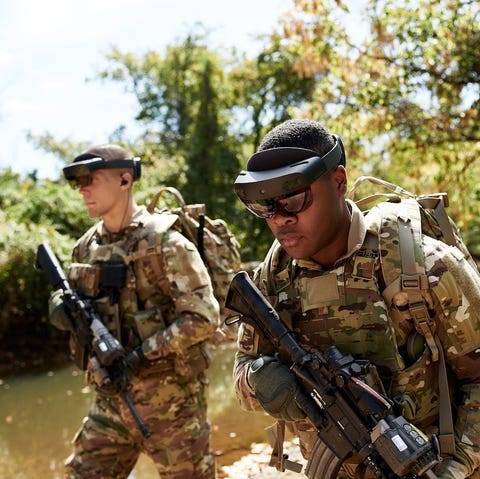
The U.S. Army, using Microsoft’s Hololens, has developed new goggles to help soldiers on the battlefield.

IVAS will put data in a soldier’s field of view, allowing wearers to maintain situational awareness while interacting with the system.
The system will eventually allow soldiers to fire their weapons without seeing the enemy.

The U.S. Army is planning to buy 40,000 pairs of 'mixed reality' goggles, enough to outfit nearly one in ten soldiers. The IVAS goggles, derived from Microsoft’s Hololens program, will allow soldiers to identify friendly and enemy forces and aim their weapons without directly seeing the enemy. Soldiers will be better informed and able to trade fire on the battlefield while benefiting from better cover and protection.

The Landscape of Economic Change: 1990-2018


The Nationwide View in 1990

The U.S. economy has undergone significant changes in the last 30 years. One of the most notable trends has been the decline in manufacturing employment. In 1990, about 17.7 million people in the United States were employed in manufacturing. The map on the right shows the makeup of employment on a state-level in 1990.

The Nationwide View in 2018

By 2018, the United States had shed 5 million manufacturing jobs across the country. The sector now employs 12.7 million Americans. Although manufacturing employment has risen since an all-time low in 2010, the overall makeup of the U.S. economy has changed. Manufacturing occupations now make up a smaller percentage of overall employment in states across the country.

Locating Production in 1990

The Top 200

This Gas Glut Feels Different


By now, everyone knows that the world is flush with natural gas. Commodities go through cycles, of course, and gas is no different—today’s oversupply is tomorrow’s undersupply, and up and down the roller coaster we go. But this glut feels different. For one, it is an unusual glut. There is too much gas in the market, plunging spot prices in North America, Europe, and Asia, but there is also record investment in new supply for liquefied natural gas (LNG). It is, in other words, a downward super cycle, where record oversupply is coinciding with record-level investment in new supply. What exactly is happening, and how might it play out?

The US Fears Huawei Because It Knows How Tempting Backdoors Are


After publicly pressuring its allies to ban Huawei equipment in their 5G networks, US officials are now publicly accusing the Chinese telecom giant of being able to spy on mobile data. The allegations, reported by the Wall Street Journal on Tuesday, represent the first specific concern the US has articulated about Huawei after months of conceptual arguments.

Sinn Fein Just Upended Ireland’s Status Quo. What Comes Next?

BY COLM QUINN
Source Link

“THE SHINNERS TAKE IT ALL” blared the front page of the Irish Daily Star on Monday, using a slang term for Sinn Fein supporters, as it became clear that a true electoral earthquake had hit Ireland. As exit polls showed Brexit was a nonissue compared to Ireland’s housing and health crises, voters turned on the establishment parties that have been leading them since the foundation of the state a century ago.

With a plurality of votes going to her party, Sinn Fein’s left-wing nationalist leader, Mary Lou McDonald, declared that Ireland is “no longer a two-party system.” It’s hard to argue with her. Every election since the 1922 founding of what is now called the Republic of Ireland has led to a victory for either of the country’s two large centrist parties, Fianna Fail and Fine Gael. Simply put, in the nearly 100 years since the island of Ireland was divided in two, something like this has never happened.

Other records were set, too. In what was meant to be his party’s post-Brexit victory lap, Fine Gael leader and Taoiseach (Prime Minister) Leo Varadkar watched as Sinn Fein topped the poll in his multiseat constituency of Dublin West. He eventually won his seat back after the fifth round of counting, but it’s the first time a sitting taoiseach has failed to win the most votes on his own turf.

Trump Policy Tactics that Target Foreigners Put America's Artificial Intelligence at Risk

by Sam Peak
Source Link

When it comes to artificial intelligence (AI), America is still on top. A major reason for that? America is quite good at recruiting AI students from around the world and retaining them after they graduate from school. But if certain plans proposed by the White House come to fruition, then that could all change very quickly.

America’s increasingly convoluted and unwelcoming immigration system has put the country’s front-runner status in jeopardy, according to a landmark report from Georgetown University’s Center for Security and Technology (CSET). And, if the Trump administration moves forward with its plan to rescind the Optional Practical Training (OPT) program, then America’s. leadership position in AI will become even more vulnerable. 

Rescinding OPT, which allows thousands of international students to work in the United States after graduation, notably undermines President Donald Trump’s own plan to protect America’s AI advantage. More than two hundred thousand people are brought into the American workforce each year through the OPT program. Roughly two-thirds of them hold the sorely-needed advanced graduate and Ph.D. degrees that AI relies on. 

The Triangle in the Long Game

Fidel Sendagorta

The author thanks the whole team of the Project on Europe and the Transatlantic Relationship Program for their constant support during my year-long fellowship at the Belfer Center for Science and International Affairs: Nick Burns, Faculty Chair; Cathryn Clüver Ashbrook, Executive Director; Karl Kaiser, Senior Associate; Alison Hillegeist, Assistant Director; Erika Manouselis, Project Coordinator; and Elsa Kudzi, Junior Program Associate.

Attending the regular Belfer Center Director and Board events was always enlightening and valuable and I thank its Director Ash Carter and its Co-Director Eric Rosenbach for their invitation to participate in them.

I am grateful to Victor Pérez García who, as the Research Assistant of this paper, provided useful and timely documentation throughout its preparations.

The paper also benefited greatly from the insights and comments of many Harvard Kennedy School Professors and Fellows and particularly the following: Graham Allison, Philippe Le Corre, Rolf Mowatt-Larssen, Joseph Nye, John Park, Tony Saich, Ezra Vogel, Arne Westad and Stephen Walt. The author is grateful to all of them but accepts full responsibility for the contents of the paper.

Seizing the Golden Hour

by James Dobbins

Research Questions

What is the evidence for the existence of golden hours? Assuming they exist, what are the key factors that cause them?

What has been the American experience with missions conducted during the golden hour, and how has this experience been shaped by steps taken in the early weeks and months of such missions?

What tasks are essential in the earliest weeks and months of an intervention to take advantage of golden hours to stabilize host nations?

How should the United States organize itself to seize golden hours?

What military capabilities and capacities does the United States require to take advantage of golden hours?

Seizing the Golden Hour: Tasks, Organization, and Capabilities Required for the Earliest Phase of Stability Operations

by James Dobbins

This report analyzes the golden hour—the early phase of a postconflict stability operation—and the actions, organization, and capabilities necessary to seize it and set the conflict-affected country on a path to self-sustaining peace. The report combines a review of the literature in this field and a brief examination of key cases of U.S.-led stability operations. The authors find evidence that the early phases of postconflict operations are, in fact, critical for improving the odds of success and reducing the eventual costs of achieving an acceptable outcome. Both diplomatic and military actions to provide security in the postconflict country, as well as efforts to broker a broad-based coalition in support of the new political order, are essential. The United States must work to improve civil-military coordination in these early phases. There are also several relatively small investments the United States could make now, in a period of relative peace, to prepare for future contingencies so that it will be prepared to seize golden hours when they arise…

Inside Mark Zuckerberg's Lost Notebook


I first met Mark Zuckerberg in March 2006. At the time, I was the lead tech writer at Newsweek and was working on a story about what we were calling Web 2.0—the notion that the next stage of the internet would be a joyful, participatory creation of individuals. I'd heard about a social networking startup that was spreading like kudzu on college campuses. I wanted to learn more about it, perhaps give it a name-check in the story. Luckily, Zuckerberg, its cofounder and CEO, was scheduled to appear that month at PC Forum, a conference I regularly attended, at a resort in Carlsbad, California.

We agreed to meet at the lunch hour on the conference grounds. We sat side by side at one of the big, crowded, round tables set up on a lawn under the bright sun. He was accompanied by Matt Cohler, who had left LinkedIn to join Facebook. Cohler, unable to nab a seat next to us, sat across the table, barely within ear range.

16 February 2020

The China Factor Behind India’s Pullout from RCEP


The Regional Comprehensive Economic Partnership was set to become the world’s largest free trade agreement. But India’s withdrawal from it has thrown the negotiated trade bloc into imbalance and has underscored India’s qualms with China’s trade practices.

The 16-nation Regional Comprehensive Economic Partnership (RCEP) was supposed to establish the world’s largest trading bloc, covering half of the global population. But India’s abrupt withdrawal from the RCEP has undercut that goal. The decision came soon after the latest “informal” summit between Chinese President Xi Jinping and Indian Prime Minister Narendra Modi, during which Xi acknowledged India’s China-related concerns over the RCEP and pledged to address them.

New Delhi’s entry into the RCEP would effectively create a China-India free trade agreement (FTA) via the backdoor, at a time when Chinese exports are already swamping the Indian market and questions are being raised domestically on Modi’s management of the economy.

What Iran’s Attacks on American Bases Tell Us About China’s Missile Program

By Christopher K. Colley
The Iranian missile attack on the American bases in al-Asad and Erbil on January 8 surprised many security experts because of their reported accuracy. Until now, the poor accuracy of Iranian missiles was considered by some to be a major deficiency in Iran’s conventional arsenal. The missiles’ circular error probable (CEP – the radius within which half of all missiles launched will fall) of most Iranian missiles was believed to be several hundred meters. In other words, these were dangerous weapons, but they lacked the pinpoint precision necessary to hit specific targets on land or at sea. But reports indicate that the latest attacks may have had a CEP as low as 5-10 meters as they succeeded in six direct hits on empty aircraft hangers. 

While the advances in Iranian missile accuracy are a worrisome development for the United States and its allies and partners in the Middle East, another key question is what this tells us about the accuracy of China’s ballistic missiles. It is public knowledge that China shared missile technology with Iran for several decades. The Iranian attacks on oil tankers in the late 1980s in the Arabian Gulf during the Iran-Iraq war were attributed to Silkworm missiles that Iran purchased from China. A 2012 Rand report stated that China played a “crucial” role in establishing Iran’s military-industrial sector and is suspected of helping Iran with its ballistic missile technology.

Considering China’s previous assistance to Iran’s missile programs, a reasonable assumption can be made that if Iranian missiles are capable of successfully hitting targets within a few meters, Chinese missiles should be able to equal, if not surpass, Iranian accuracy.

Rising to the China Challenge

By Ely Ratner

Foundational Principles of U.S. Strategy in the Indo-Pacific

The United States and China are locked in strategic competition over the future of the Indo-Pacific—the most populous, dynamic, and consequential region in the world. At stake are competing visions for the rules, norms, and institutions that will govern international relations in the decades to come.1

The U.S. government aspires toward a “free and open” Indo-Pacific, defined by respect for sovereignty and the independence of nations, peaceful resolution of disputes, free and fair trade, adherence to international law, and greater transparency and good governance.2 For the United States, successful realization of this regional order would include strong U.S. alliances and security partnerships; a military able to operate throughout the region, consistent with international law; U.S. firms with access to leading markets, and benefiting from updated technology standards, investment rules, and trade agreements; U.S. participation in effective regional and international institutions; and the spread of democracy and individual freedoms in the context of an open information environment and vibrant civil society.3

By contrast, China is driving toward a more closed and illiberal future for the Indo-Pacific, core aspects of which would undermine vital U.S. interests.4 Key features of China-led order would include the People’s Liberation Army controlling the South and East China Seas; regional countries sufficiently coerced into acquiescing to China’s preferences on military, economic, and diplomatic matters; an economic order in which Beijing sets trade and investment rules in its favor, with dominance over leading technologies, data, and standards; and Beijing with de facto rule over Taiwan and agenda-setting power over regional institutions. The order would be further characterized by weak civil society, a dearth of independent media, and the gradual spread of authoritarianism, reinforced by the proliferation of China’s high-tech surveillance state. The net result would be a less secure, less prosperous United States that is less able to exert power and influence in the world.5

China wants to put itself back at the centre of the world


On china’s border with Kazakhstan, a new Silk Road city has sprung up with such speed that Google Earth has scarcely begun to record the high-rises that now float on a winter mist above the steppe. What once would have been flattered to be called a hard-scrabble border town is now home to 200,000 people, giant outdoor video screens extolling the glories of a new Silk Road, and restaurants serving sashimi and European wine. Khorgos has become China’s gateway to Central Asia, and all the way to Europe.

A twin town is going up in Kazakhstan. A duty-free mall already straddles the border for Kazakhstanis to get deals on booze, perfume and cut-price Chinese goods. But the key features, just across the border, are the giant gantry cranes more usually seen in the world’s ports. The Khorgos Gateway is a container terminal, a “dry port” built from scratch in 2014. The transport hub is intended as a critical link in what China’s president, Xi Jinping, has called the “Eurasian land bridge”. Among its investors is China’s cosco, one of the world’s shipping giants. It is run by dp World, Dubai’s port operator. Last year the dry port handled 160,000 teus (a unit equivalent to a 20-foot container). Hicham Belmaachi, its Moroccan manager, expects that to rise to 400,000 in 2025.

A virus is crippling China's economy — and threatening the world's

BY BRADLEY A. THAYER AND LIANCHAO HAN

China’s pandemic caused by the rapid spread of the deadly novel coronavirus (2019-nCoV) and the Chinese regime’s failed response to control it has had a tremendous impact on China’s economy, as well as the world’s. Although it is hard to quantify the economic impact because of a lack of data, given the scope and magnitude of the pandemic inside China and its spread outside the country’s borders, analysts reasonably can conclude that it will result in a global disaster with serious economic effects.

As of Feb. 11, reported cases have skyrocketed to 43,104 and the death toll has exceeded 1,000, surpassing the 2003 SARS epidemic when at least 8,096 people were infected and 774 died. But the real numbers involving the coronavirus likely are much larger than what is reported. Many victims were cremated immediately, before their diagnosis and treatment in China. And the Chinese government’s information control regarding the outbreak has included public opinion manipulation that has lied about the disaster from the beginning. 

Western governments should have been ready for Huawei

Shanker Singham

In the late 1990s, I represented Lucent Technologies, a firm focused on delivering telecommunications equipment which had been spun out of AT&T. 

At the time, in addition to the more familiar competitors such as Nortel Networks and Alcatel, we faced an additional threat — a relatively new Chinese competitor called Huawei. 

Huawei was able to bid at a fraction of the western firms’ bids, because of the subsidies it enjoyed from the Chinese government. Nor were efforts for others to become market leaders in the US helped by the Chinese government’s relaxed attitude towards intellectual property theft.

The US government seemed powerless to act in the face of this Chinese threat, and in due course, Lucent and Alcatel were forced to merge, prior to their inevitable failure.

Europe Needs a China Strategy; Brussels Needs to Shape It

By Julianne Smith, Torrey Taussig 

Editor’s Note: Europe's relationship with China is fraught with disagreements and inconsistencies. Different countries have different approaches, and they are not capitalizing on the collective power of the European Union—all to China’s benefit. Julianne Smith of the German Marshall Fund and Torrey Taussig of the Harvard Kennedy School detail the problems this is causing for Europe and lay out a set of steps that would put Europe in a stronger negotiating position.

Europe’s momentum in developing a clear-eyed approach toward China has stalled. In March 2019, the European Commission issued a white paper naming China a systemic rival and economic competitor. That publication marked a fundamental shift in how far European institutions were willing to go in raising the challenges China poses to Europe’s openness and prosperity. It also reflected shifts that were occurring in capitals across Europe. Just as the European Union was rolling out its white paper on China, German Chancellor Angela Merkel was arguing that Europe should view China as a competitor as much as a partner, and French President Emmanuel Macron warned China that “the period of European naivety is over.”

China’s Digital Revolution in Bank Lending

HUANG YIPING

BEIJING – China’s economy is growing at is lowest rate in over 30 years, but if the country’s nearly 40 million small and medium-size enterprises (SMEs) could overcome a lack of access to funding, they could become a powerful engine of economic dynamism. Can digital innovators close the SME financing gap?

China’s government has certainly tried. Since 2005, policymakers have been working to expand access to financial services for SMEs, as well as for low-income households. Measures have included the establishment of more than 8,000 micro-credit companies, higher annual SME loan requirements for banks, and a mandatory reduction in the average interest rate on loans to SMEs, by one percentage point per year in 2018 and 2019.

Yet, despite these efforts, only 20% of Chinese SMEs ever borrow from banks.One reason for this is that SMEs, while plentiful, are not always easy to find, given their small size and geographical diffusion. A more important reason is that many banks are unable to employ market-based risk pricing effectively for SMEs.

With the average Chinese SME surviving for fewer than five years, one cannot claim that lending to them is not risky. But mandatory lower borrowing costs for SMEs mean that banks cannot use interest rates to offset the higher risks, and the government hasn’t offered compensatory subsidies.

Surging Jihadist Wave In Western Africa: Conflict Spillover – Analysis

By Dr. Shanthie Mariet D Souza and Dr. Bibhu Prasad Routray

The Sahel region in Western Africa is witnessing a massive surge in terrorist attacks. Three countries- Mali, Niger and Burkina Faso- reported 4000 deaths in 2019 and the trend of staggering casualties in attacks by al Qaeda and Islamic State-linked outfits continues in 2020. The governments and militaries of the affected states are ill prepared to deal with the upscale in violence. With the United States of America considering pulling out its troops, 5000 French troops may not be able to contain the Jihadist wave in general and the resurgence of the Islamic State in particular, which may engulf the entire Sahel region causing deaths and producing thousands of IDPs. 
Spate of Attacks

On 1 February 2020, unidentified heavily armed men on motorbikes arrived in Lamdamol village in Seno province of Burkina Faso, north of the capital Ouagadougou and massacred 20 civilians.[1] The attack took place a week after a similar carnage in the province of Soum. Suspected Islamist terrorists had rounded up the villagers, executed the men and asked the women to leave the village. In early January, 36 people had been massacred at two villages in the northern Sanmatenga province. Jihadists also kidnapped and killed a Canadian mine worker and abducted two other humanitarian workers in December 2019. These incidents are the latest in a series of attacks that have taken place in this West African nation. A day before the 27 January attack, the prime minister of Burkina Faso and cabinet had resigned taking responsibility for the slide in security situation.

Iran admits worst ‘cyber attack in its history’ before latest failed satellite launch

By BILL MCLOUGHLIN

Just hours before the launch, the country’s deputy information minister, Hamid Fatah confirmed the breach of the network. He tweeted: “Hackers today launched the most widespread attack in Iranian history against the country’s infrastructure.

“Millions of origin targeted millions of destinations and are seeking worldwide disruption to Iran’s Internet network.”

The attack occurred at the Imam Khomeini Spaceport.

The space centre has seen multiple failed launches and is believed to be a testing place for ballistic missile technology by the US.

Although Iran revealed the attack, it is unclear whether it caused the malfunction.