6 December 2020

Line of Narrative Control

SUSHANT SINGH

On 2 October, images of a war memorial in eastern Ladakh started appearing on the social-media accounts of some journalists. The memorial, “Gallants of Galwan,” was built for the 20 Indian soldiers who died in a violent physical clash with the Chinese People’s Liberation Army on 15 June. The unacknowledged source of those images, which made it to all newspapers the next day, was the army headquarters, and the pictures contained more details about the incident than had been made public till date. The inscription on the memorial stated that Colonel Santosh Babu, the commanding officer of 16 Bihar Regiment, and his team had been “tasked to evict the PLA OP (observation post) from Gen A (General Area) Y-Nala and move further to Patrolling Point 14.” It further clarified that this team “successfully evicted the PLA OP from Y-Nala and reached PP 14 where a fierce skirmish broke out between the IA (Indian Army) and PLA troops.”

Till then, the government or the army had never officially confirmed that Babu and his men had been tasked to evict Chinese soldiers and then move further to PP 14, a few hundred yards away, in an area where inches of space are fiercely contested by both armies. The images of the memorial established that the clash—which, along with the deaths, also injured another 78 and left ten soldiers in Chinese captivity—occurred not during the eviction but subsequently at PP 14.
If the U.S. Pulls Out, the Taliban Could Seize Afghanistan

by Brian Glyn Williams

President Donald Trump’s recent call to withdraw just over half of the 4,500 U.S. troops in Afghanistan has been condemned as an act that “would hurt our allies and delight, delight, the people who wish us harm” by members of his own party and key military leaders. The Nov. 17 announcement of troop reduction is part of a ceasefire agreement with the Taliban, but may not help deliver a lasting peace to the Afghan people.

The Taliban are a fanatical minority who seek to replace Afghanistan’s fledgling democracy with harsh Islamic law. They also have close ties to al-Qaida, offering refuge to other terrorist groups and supporting terrorist campaigns against neighboring Uzbekistan and Pakistan.

The country’s long-suffering people will be most affected by the pullout. Many of them rely on the U.S. military to keep the Taliban from moving out of the countryside – much of which they control, especially in the southeast – to take provincial capitals and the rest of the country.

Procedure Set, Intra-Afghan Talks to Move on to Setting an Agenda

By Catherine Putz

Intra-Afghan talks began on September 12 with high hopes and deep concerns. Just shy of three months later, the two sides — the Afghan government and the Taliban — have agreed on a three-page document setting the rules and procedures for negotiations between them. Setting an agenda comes next.

U.S. Special Representative for Afghanistan Reconciliation Zalmay Khalilzad welcomed the agreement in a series of tweets, calling it a “significant milestone.”

“This agreement demonstrates that the negotiating parties can agree on tough issues. We congratulate both sides on their perseverance,” he tweeted, thanking Qatar for hosting the talks. The Taliban have maintained a political office in Qatar since 2013.

“The people of #Afghanistan now expect rapid progress on a political roadmap and a ceasefire. We understand their desire and we support them,” Khalilzad tweeted.

Curb Your Enthusiasm for an Israel-Pakistan Peace Agreement

By Varsha Koduvayur and Akhil Bery

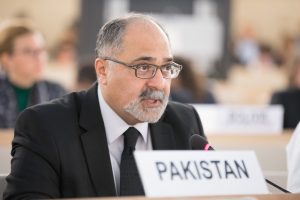
Ambassador Farukh Amil, permanent representative of Pakistan to the United Nations at Geneva speaks on behalf of the Organization of Islamic Cooperation, at the Human Rights Council special session on “the deteriorating human rights situation in the occupied Palestinian territory, including East Jerusalem,” on May 18, 2018.Credit: Flickr/UN Geneva

After the United Arab Emirates announced it was pursuing full bilateral relations with Israel, Bahrain and Sudan followed suit, while Morocco and Oman may be the next dominoes to fall. But one country is likely to buck this trend, despite its allies’ wishes to the contrary: Pakistan.

Last month, Prime Minister Imran Khan stated that he was facing pressure from foreign leaders to recognize Israel. But while Pakistan is not at war with the Jewish state, normalization will remain elusive, given Pakistan’s ideological equating of the Palestinian struggle with its own efforts to liberate Kashmir, the political costs of establishing ties with Israel, and Islamabad’s deepening linkage with Iran.

A Hitch in the Belt and Road in Myanmar

By Gene Ryack

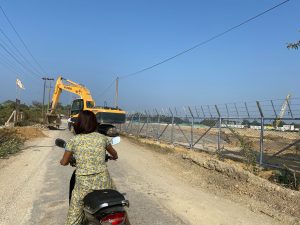
A construction site of the new power plant in the area.Credit: Gene Ryack

Kyi Kyi Hnin sits beneath a fan on a bright morning in her village along the coast of Kyaukphyu, a township in Myanmar’s Rakhine State on the edge of the Indian Ocean.

“The government just signs laws, but they are committing violations,” she says. “The government should consider the communities’ desires and interests.”

Kyi Kyi Hnin is a local community organizer and her speech is quick and resolute: She knows the challenges facing Kyaukphyu and spends her days working to support local residents.

Kyaukphyu is home to a cluster of busy fishing towns and villages. But in the past few years, the township has been thrown into the center of geopolitics, armed conflict and, more recently, Myanmar’s struggle against COVID-19.

Myanmar’s Kachin State Sees Boom in Chinese Banana Cultivation

By Sebastian Strangio

Northern Myanmar’s Kachin State is in the midst of a boom in commercial banana cultivation driven by cross-border investment from China, according to a new report. The report from Mekong Region Land Governance (MRLG), published on November 30, outlines the recent rapid expansion of tissue-culture banana plantations in the state, intended almost entirely for export to the Chinese market.

According to the MRLG report, the volume of bananas exported to China has jumped from less than 100,000 tons in 2015-16 to 733,949 tons in 2019-20, according to Myanmar government export data. As of 2019, the report states, banana plantations covered an estimated 170,000 hectares across Kachin State.

“With strong demand from China, the presence of cheap land and labor, fertile soils, favorable climatic conditions, and a proximity to Yunnan Province,” the MRLG report states, “the high potential net return of banana over a short period of time explains the rapid expansion of the crop and the related rush to acquire land.”

Current and Future Trends in Chinese Counterspace Capabilities

Brian WEEDEN

Since 2015, Chinese official and unofficial writings have increasingly emphasized the importance of space warfare, including for offensive and coercive uses. In parallel, China has engaged in a significant and dedicated effort to develop a wide array of destructive and non-destructive offensive counterspace capabilities since the early 2000s, some of which are – or soon will become – operational. 

This study explores the multiple areas of Chinese counterspace capability developments, from co-orbital rendezvous operations to direct ascent antisatellite interceptors and electronic and cyber warfare. It summarizes what is known about current programs, offers estimates regarding the unique characteristics of each capability area and how advanced Chinese capabilities are in each field. 

While China’s search for a large array of counterspace capabilities is not unique, it could both directly and indirectly affect U.S. and European strategic interests and thus has vast implications for transatlantic security.

China’s Path to Net Zero

ERIK BERGLร–F


BEIJING – China is aiming to halt the rise in its carbon dioxide emissions before 2030 and to achieve carbon neutrality before 2060. If it succeeds, the country will have gone, in less than 40 years, from being the world’s largest CO2 emitter to bringing its emissions into balance.

China is far from being the only country to have declared its intention to reach net-zero CO2 emissions within that time frame – over 120 countries are actively discussing achieving that goal even sooner, by 2050 – but it is the most important one by far. In fact, President Xi Jinping’s announcement of China’s 2060 commitment at the recent United Nations General Assembly was doubly significant, given that the 2015 Paris climate agreement is being actively challenged by leaders of major governments, and undermined by inaction elsewhere, partly as a result of COVID-19.

But is China’s ambition credible? Although Xi did not elaborate in his speech on how the zero-carbon goal will be reached, China has a track record of delivering on major initiatives in areas such as energy efficiency, renewables, pollution reduction, and poverty alleviation. But Xi’s carbon-neutrality pledge is on a very different scale and must be fulfilled in a different global context.

Perspectives | How China gains from Armenia-Azerbaijan war

Nima Khorrami

A commentary
The Russian-brokered ceasefire that stopped fighting between Armenia and Azerbaijan last month included a provision allowing Azerbaijan to use a road through Armenian territory to access its Nakhchivan exclave.

Nakhchivan shares a border with Turkey. The road, then, should boost trade between close partners Turkey and Azerbaijan, while reducing the role Iran plays in regional transportation networks.

Yet it is China and its ambitious Belt and Road Initiative that may ultimately emerge as an unlikely winner in the six-week Nagorno-Karabakh war.

For the better part of a decade, Beijing has been building transport routes to Europe that bypass Russia. One of these overland routes crosses the Caspian Sea from Kazakhstan to Azerbaijan and onward to Georgia, Turkey and ultimately Europe.

Iran will lose the battle, but win the war

Ranj Alaaldin

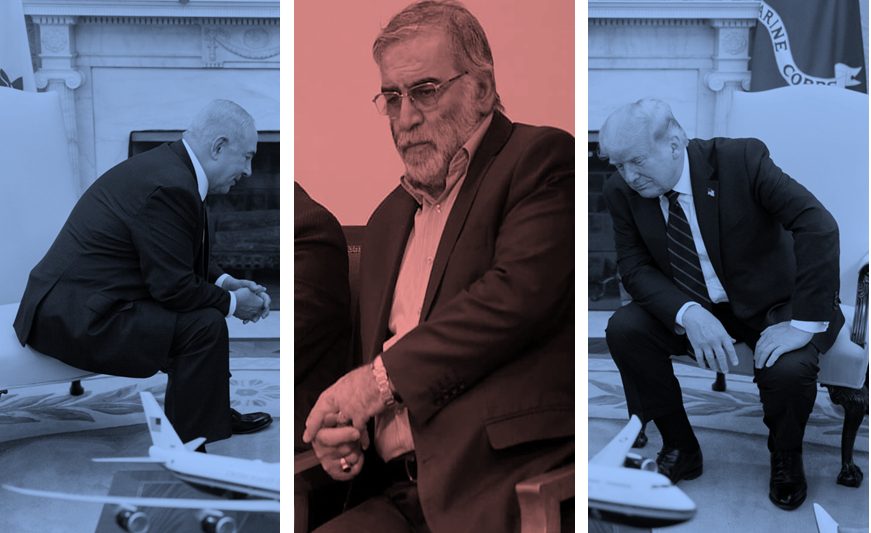
The assassination of Mohsen Fakhrizadeh-Mahabadi, the architect behind Iran’s nuclear program, has raised the spectre of a major conflict in the run-up to President-elect Joe Biden’s inauguration in January. Iran is under unprecedented pressure at home (facing economic reverberations of the Trump administration’s maximum pressure campaign) and in the region (as Tehran struggles to protect its influence in key countries like Iraq and Syria). It has suffered a wave of airstrikes recently, including an attack this week that purportedly killed a senior commander of the Islamic Revolutionary Guard Corps’ (IRGC) elite Quds Force near the Syria-Iraq border; in Iraq, the U.S. has imposed sanctions on an array of Iranian front companies.

Iran will survive these destabilizing events, though its leaders are convinced the administration (or some within it) sees the next two months as their last chance to settle a series of old scores with Iran. Far from pushing it to the brink, Tehran is still strongly positioned to pick up the pieces as the Trump administration makes its way out.

IRAN’S DILEMMA

While Iran has believed the U.S. has sought its demise since the founding of the Islamic Republic in 1979, the notion of a major U.S. attack on the country or its allies has become increasingly palpable over the past year.

The end of the embarrassment


Appalling as it has been to witness an American president try to steal an election, Donald Trump’s efforts have amounted to less than the best-informed prognosticators feared. Back in June a bipartisan group of over 100 political operatives and scholars, gathered by the Election Integrity Project, war-gamed the aftermath of four scenarios: an unclear result, a narrow win for Joe Biden, a clear victory for Mr Trump and the same for Mr Biden. Only in the last simulation was America spared authoritarianism by Mr Trump, a constitutional crisis and street battles.

Mr Biden’s actual winning margin was at the outer edge of a “clear victory”. And the president’s response to it has been even wilder than the war-gamers envisaged. (They did not imagine, in such an event, that he would try to coerce Republican state legislators to overthrow the results.) Yet none of the other features of the Trump coups they envisioned has materialised. Attorney-General Bill Barr has gone to ground. High-powered conservative lawyers have taken a pass on the president’s bogus fraud claims.

4 looming foreign policy crises that could derail Biden’s agenda early on

By Alex Ward

President-elect Joe Biden may want his administration to focus on long-term issues like the coronavirus pandemic, climate change, rebuilding alliances, and America’s relationship with China, but some key near-term foreign policy problems will likely require his attention first.

After the assassination of its top nuclear scientist by an unknown attacker, Iran might be less willing to engage in diplomacy with America and instead seek revenge by targeting US officials. North Korea could test an intercontinental ballistic missile early in Biden’s term to try to gauge the new administration’s response. The last remaining nuclear arms control deal between the US and Russia is set to expire just over two weeks after Biden takes office. And the reduced number of American troops in Afghanistan could derail sputtering peace talks and worsen the country’s security situation.

Such a dilemma wouldn’t be unique to Biden. Every new president comes in with ideas on how to handle larger global problems, only to have the colloquial “tyranny of the inbox” monopolize their time. “If you assume that foreign policy is less than half, and maybe a quarter, of the president’s time, then that really shines a light on how serious this inbox problem is,” said Christopher Preble, co-director of the New American Engagement Initiative at the Atlantic Council think tank.

Who Still Loves Trump?

IAN BURUMA


NEW YORK – Apart from 74 million voters in the United States, who still approves of President Donald Trump? Most Europeans are overjoyed to see the back of him. But he has been popular with a number of right-wing strongmen and demagogues, and many of their followers. His admiration for autocrats, his disdain for immigrants, racial minorities, and Muslims (except for a few Saudi princes), and his contempt for liberal democratic norms boosted authoritarian governments in Hungary, Poland, Brazil, India, and the Philippines. His esteem for Russian President Vladimir Putin was never in doubt.

Trump’s election defeat is a setback for the global populist right. While many of its leaders will survive him, an already-rampant anti-liberal movement probably would have grown even stronger with a triumphant champion of its cause in the White House.

Trump also found support among a majority of the population in two democratic countries, Israel and Taiwan, where he was seen as the most powerful enemy of their enemies, Iran and the People’s Republic of China, respectively.

Air University Press

Journal of Indo-Pacific Affairs, Winter 2020, v. 3, no. 4

Strategic Competition?

Risks and Benefits of Autonomous Weapon Systems: Perceptions among Future Australian Defence Force Officers

India and the Quadrilateral Forum as a Means of US Deterrence in the Indo-Pacific

Japan Cancels Aegis Ashore: Reasons, Consequences, and International Implications

Lassoing the Haboob: Countering Jama'at Nasr al-Islam wal Muslimin in Mali, Part I

Lassoing the Haboob: Countering Jama'at Nasr al-Islam wal Muslimin in Mali, Part II

A Peacekeeping Mission in Afghanistan: Pipedream or Path to Stability?

Path to Nuclear Weapons: Balancing Deterrence, Preemption, and Defense for South Korea

Stout Pilots and Aircraft: Air Transport in the 1944 Burma–India Campaigns

Penetrating Artificial Intelligence–enhanced Antiaccess/Area Denial: A Challenge for 
Tomorrow’s Pacific Air Forces

Indonesia: Lessons for the US–China Geo-economic Competition

Sticks and Stones: Nuclear Deterrence and Conventional Conflict

A War by Words: Language and Cultural Understanding in the Age of Information Warfare

Space Entanglements: The India–Pakistan Rivalry and a US–China Security Dilemma

A European Economic Policy in the Making

Dr Peter Becker
Source Link

Although the roots of the European Union lie in economic integration, the EU’s economic policy competences and possibilities are narrowly limited in European primary law. Nevertheless, the influence of the EU, and in particular the European Commission, on economic policies of the member states is clearly visible and tangible.

The focus of European economic policy is on the coordination of member state policies by the European Commission. It uses strategic planning in­struments such as 10-year strategies, guidelines, and reform recommen­dations, which it bundles within the European Semester.

European economic policy-makers are actually faced with the task of limiting the acute socio-economic consequences of the Covid-19 pandemic on the one hand, and finding answers to the structural challenges posed by globalisation, digitisation, and climate change on the other. A com­mon European economic policy is becoming increasingly necessary, and expectations are growing.

The European Commission is trying to combine these two tasks – the stimulation of the European economy and the sustainable transformation of national economies – with the new European recovery fund “Next Generation EU”. The European Green Deal will become the guiding prin­ciple for both economic policy coordination and economic policy at the national level.

Nagorno-Karabakh: This Could Be How the Next Caucasus War Begins

by Michael Rubin

The guns are silent, Russian peacekeepers both separate Armenians and Azeris and guard ancient Armenian monasteries to prevent their destruction by Azerbaijani soldiers and Syrian mercenaries. The joint Turkey-Russia truce monitoring center will soon begin operations in Azerbaijani-controlled portions of Nagorno-Karabakh. American and French diplomats assigned to the Minsk Group, meanwhile, seek to return to a diplomatic process shredded when Azerbaijani forces backed by Turkey launched a surprise attack on Artsakh, as Armenians called the self-declared independent entity in Nagorno-Karabakh.

It might seem the war is over but Western diplomats should be wary: The modalities surrounding the Lachin corridor—the land route connecting Armenia to Armenian-held portions of Nagorno-Karabakh through Azerbaijani-controlled territory—are not been fully resolved, and the route remains dangerous for civilians who are subject to sniper fire and kidnapping, Russian peacekeepers notwithstanding.

NATO in 2030: Charting a New Path for the Transatlantic Alliance

Pierre Morcos

Last year’s NATO summit in London was supposed to be a celebration of the 70th anniversary of one of the most successful military alliances in history. But growing internal divisions amid a rapidly deteriorating security environment dimmed the mood. As NATO has done in similar moments in its history, it paused to reflect on its challenges, a preparatory stage for a shift in direction. This year was a time for NATO to step back and take stock by launching a “forward-looking reflection process” on the future of the alliance.

Carried out under the auspices of NATO’s secretary general, the publication of the findings of a group of independent experts appointed by Jens Stoltenberg was recently released to provide insight on how to adapt NATO to a changing landscape. Presented to NATO foreign ministers on December 1, “NATO 2030: United for a New Era” offers a great deal to reflect upon and recommendations for allies at a timely moment, as the United States undergoes a presidential transition.

The Mandate: Strengthening NATO’s Political Dimension

NATO Huddles With Asia-Pacific Democracies to Talk China

By Shannon Tiezzi

NATO, the transatlantic alliance binding together the United States, Canada, and 28 European countries – including France, Germany, and the United Kingdom – is turning its focus to China in a bid to adapt to changing global realities.

That’s one of the major recommendations of a new report from experts tapped by the NATO secretary general, titled “NATO 2030: United for a New Era.” The report has a dedicated section on China, which opens with a stark warning: “The scale of Chinese power and global reach poses acute challenges to open and democratic societies, particularly because of that country’s trajectory to greater authoritarianism and an expansion of its territorial ambitions.” It classifies China as a “full-spectrum systemic rival,” and notably cautions against viewing China as “a purely economic player or an only Asia-focused security actor.” Indeed, the report notes that NATO members are directly feeling the impact of China’s rise, with cyberattacks traced to Chinese actors targeting NATO states, Chinese infrastructure being built in NATO members, and China’s direct military reach expanding “into the Atlantic, Mediterranean, and Arctic” – NATO’s traditional areas of focus.

Follow the Money: Exposing China’s Influence Operations at Academic Institutions and Think Tanks

Craig Singleton

Secretary of State Michael Pompeo issued an ultimatum last month to think tanks and academic institutions around the country: Publicly disclose funding received from foreign governments or risk losing access to State Department officials. The move comes amid growing bipartisan concerns about the role of foreign governments in shaping academic and policy debates, especially the threat posed by the Chinese Communist Party’s (CCP’s) robust influence apparatus, including its efforts to interfere in the 2020 U.S. presidential election.

Early this year, the Department of Education initiated a broad investigation to determine whether U.S. academic institutions had properly reported foreign contracts and gifts. Around the same time, the Justice Department announced criminal indictments involving a Harvard department chair who reportedly lied to federal authorities about his ties to Chinese government entities and his acceptance of Chinese grant funding. Since then, the Justice Department has issued a number of indictments against other U.S. academics involving unreported ties to Beijing.

Following its investigation, the Department of Education issued a report revealing that several of America’s most prominent universities accepted billions of dollars in unreported foreign funds. While accepting foreign funds is not illegal, the law requires disclosure. For example, Georgetown University declined to report more than $2 million from an arrangement with the CCP Central Committee to host academic exchanges with CCP officials through the Central Committee’s Party School. Moreover, Cornell University failed to disclose more than $1 million in contracts with Chinese telecommunications company Huawei Technologies, which is itself the subject of numerous U.S. investigations.

The end of a golden age for oil producers

BY GREGG CARLSTROM

FOR DECADES Arab oil producers have been caught in a quandary. When prices fall, they pledge to wean their economies off the black stuff. But low prices mean they cannot afford costly reforms. Then output falls, demand climbs and prices begin their inevitable rebound. Treasuries are once again flush, and the pressure to reform disappears.

Privately, some officials now wonder if this cycle is over, making the needed reforms unavoidable. The drop in demand caused by covid-19 sent Brent crude as low as $21 a barrel in 2020. Prices will recover a bit in 2021, perhaps crossing the $50 mark. They will not go much higher, though. Most oil states in the Middle East will still be unable to balance their budgets.

Saudi Arabia, the region’s biggest producer, will push on with its search for non-oil revenue. Last year it tripled value-added tax to 15%. Saudis who hoped the rise was temporary will be frustrated to learn it was not. Still, the deficit will widen. Contractors will struggle with late payments for public-sector work. Yet the kingdom will plough ahead with its biggest megaprojects, such as Neom, a $500bn high-tech city in the north-western desert, and a planned Red Sea resort larger than some European countries. It will also force more migrants out of the labour market, freeing up jobs, albeit low-paying ones, for its citizens.

RUSSIA'S LOST WAR

BY IZABELLA TABAROVSKY

The official narrative of Soviet victory in World War II erases uncomfortable truths. Can Russians reclaim the forgotten human stories of those who defeated Nazi Germany?

Somewhere in the recesses of my memory, there is an image. Is it from a movie? A picture seen in childhood?

It was a picture of a man in a Soviet standard-issue gray cotton-felt quilted jacket and a cocked ear-flapped hat sitting awkwardly on a low, rough-hewn wooden platform held up, not by wheels, but by four ball-bearings – a primitive skateboard of sorts. He has no legs, and his trousers are fully turned in. In each hand, he holds a thick, rounded block of wood to propel himself forward.

This image of a severely disabled veteran of the 1941-1945 Soviet-German War, known in Russia as the Great Patriotic War, has stayed with me. It is pertinent now. Earlier this year, the Soviet Union marked the 75th anniversary of its victory in the war against Nazi Germany.

How Artificial Intelligence Could Widen The Gap Between Rich And Poor Nations – OpEd

By Cristian Alonso, Siddharth Kothari, and Sidra Rehman*

New technologies like artificial intelligence, machine learning, robotics, big data, and networks are expected to revolutionize production processes, but they could also have a major impact on developing economies. The opportunities and potential sources of growth that, for example, the United States and China enjoyed during their early stages of economic development are remarkably different from what Cambodia and Tanzania are facing in today’s world.

Our recent staff research finds that new technology risks widening the gap between rich and poor countries by shifting more investment to advanced economies where automation is already established. This could in turn have negative consequences for jobs in developing countries by threatening to replace rather than complement their growing labor force, which has traditionally provided an advantage to less developed economies. To prevent this growing divergence, policymakers in developing economies will need to take actions to raise productivity and improve skills among workers.

Taiwan Is Crucial to the Global Fight Against Cybercrime

By Huang Ming-chao

Since emerging in late 2019, COVID-19 has evolved into a global pandemic. According to World Health Organization statistics, as of December 1, 2020, there were more than 61.8 million confirmed COVID-19 cases and more than 1.4 million related deaths worldwide. Having experienced and fought the SARS epidemic in 2003, Taiwan made advance preparations in the face of COVID-19, conducting early onboard screening of inbound travelers, taking stock of anti-pandemic supply inventories, and forming a national mask production team. The government’s swift response and the Taiwanese people’s cooperation helped effectively contain the spread of the disease. Taiwan’s success in containing COVID-19 has won it worldwide acclaim.

The international community has been putting its resources into fighting COVID-19 in the physical world, yet the cyber world has also been under attack, and faces major challenges. The Cyber Attack Trends: 2020 Mid-Year Report, published in August 2020 by Check Point Software Technologies Ltd., a well-known IT security company, pointed out that COVID-19 related phishing and malware attacks increased dramatically, from less than 5,000 per week in February to over 200,000 in late April.

Turkey, Azerbaijan drone success should worry Europe, says European Council analyst


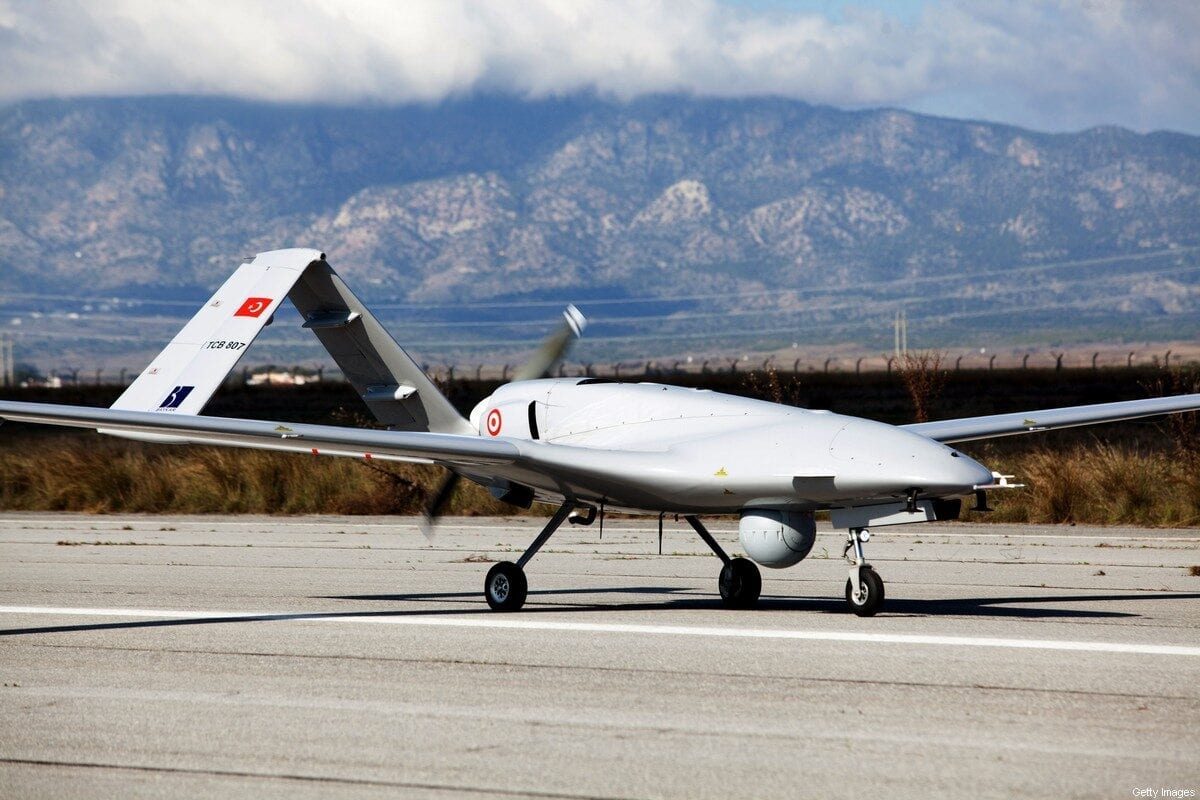
The success in drone warfare conducted by Turkey and Azerbaijan is a cause of concern for Europe and should force it to consider its options, a senior policy fellow and analyst at the European Council on Foreign Relations (ECFR) has warned.

In the analysis written by Gustav Gressel, he noted that Azerbaijan's victory over Armenia in the renewed conflict for the Nagorno-Karabakh region offers "distinct lessons for how well Europe can defend itself".

During that 44-day conflict, in which Armenia and its militias suffered the loss of thousands of troops and military vehicles, one of the key decisive factors which granted Azerbaijan superiority were the Turkish drones used by the Azeri military.

Those drones, along with the methods of warfare developed through their use in other fronts, enabled Azerbaijan to capture the strategic city of Shusha and force Armenia's surrender on 9 November, leading to the Russia-brokered ceasefire deal which returned the territory to Baku.

The Real Nuclear Balance

By Peter Pry

A President Joe Biden is likely to revisit the Nuclear Posture Review and fundamentally reimagine the U.S. nuclear deterrent as a much smaller, less diverse, less capable, and less expensive force.

Rep. Adam Smith, Chairman of the House Armed Services Committee (HASC), presently the most powerful Democrat shaping U.S. national security policy, speaking before the Center for a New American Security recently opined:

What I want us to have is a nuclear arsenal that is sufficient to deter anyone from thinking that it makes sense to start a nuclear war. We have a nuclear arsenal that still envisions 'winning a nuclear war'…That's what I find insane. It's worth having the debate to envision what our nuclear deterrence policy should look like, and what do we need to build to achieve it?"[i]

In March 2019, Chairman Smith held hearings before the HASC that called for unilaterally banning U.S. ICBMs and strategic bombers, replacing the nuclear Triad of land-based missiles, bombers, and ballistic missile submarines (SSBNs) with a Monad of SSBNs reduced from 14 boats to 6 SSBNs. Radical anti-nuclear activists from such groups as Ploughshares, Union of Concerned Scientists, and Federation of American Scientists have testified before Congress as strategic “experts” advocating for such a posture of “Minimum Deterrence.”[ii]

5 December 2020

Why India’s V-Shaped Economic Recovery Falls Short


India’s economy appears to be staging a V-shaped recovery after four rounds of coronavirus lockdowns, but a closer look reveals that the economic woes are more severe, according to a recent article by researchers at Wharton and elsewhere. The article, titled “Employment, Income, and Consumption in India During and After the Lockdown: A V-Shaped Recovery?” was published on the website of the University of Chicago Booth School’s Rustandy Center for Social Sector Innovation.

The conventional indicators of trends in unemployment, employment, income and consumption show “rapid improvement” after the lockdowns began to be eased in phases, but those gains are limited. “We do see some recovery in income, but those incomes are staying still substantially lower than they were prior to the lockdowns,” said Heather Schofield, Wharton professor of business economics and public policy and assistant professor of medical ethics and health policy at the Perelman School of Medicine.

Schofield is one of the article’s authors, along with Marianne Bertrand, professor of economics at the University of Chicago Booth School of Business and faculty director of the Rustandy Center and UChicago’s Poverty Lab; Rebecca Dizon-Ross, associate professor of economics at Booth; and Kaushik Krishnan, chief economist at the Centre for Monitoring Indian Economy. Their latest effort is a follow-up of their earlier research that captured the economic distress in India after the first round of lockdowns.

China’s Defense Minister Visits Pakistan

By Abhijnan Rej

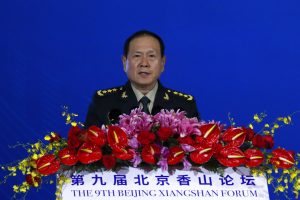
The Chinese defense minister, Wei Fenghe, visited Pakistan on December 1 and met with the country’s President Arif Alvi and Prime Minister Imran Khan, along with meeting Chairman of the Joint Chiefs of Staff Committee Nadeem Raza and Chief of Army Staff General Qamar Javed Bajwa. Earlier this week Wei had also visited Nepal.

Writing on Wei’s Islamabad trip, China Global Television Network (CGTN) noted him as saying that “the China-Pakistan all-weather strategic cooperative partnership is unique in the world,” language consistent with how China publicly describes Pakistan. During Wei’s visit, both countries signed a memorandum of agreement around greater defense cooperation.

According to CGTN, during Wei’s visit, Alvi promised Pakistan’s support to China across issues including the South China Sea, Taiwan, and Tibet, and also to push ahead with the China-Pakistan Economic Corridor. Interestingly, according to CGTN, Wei also said China is “keen to jointly cope with risks and challenges with Pakistan, firmly safeguard the sovereignty and security interests of both countries and maintain regional peace and stability,” language that would inevitably be interpreted in India as directed toward that country.

US Has Achieved ‘Modicum of Success’ in Afghanistan, Top General Says

BY KATIE BO WILLIAMS

Two decades of war in Afghanistan have seen a “modicum of success” but also years of “strategic stalemate,” the nation’s top general said Wednesday in one of the military’s frankest assessments of progress in the wartorn nation in recent memory. 

The United States has been successful at preventing another 9/11-style attack from originating in Afghanistan, Gen. Mark Milley said during an online Brookings event, through its model of training and supporting the Afghan military and working with the government in Kabul.

"We believe that after two decades of consistent effort, we've achieved a modicum of success,” Milley said. “I would also argue over the last five to seven years at a minimum, we have been in a condition of strategic stalemate.”

Because neither the Taliban nor the government of Afghanistan—backed by the U.S.—was going to be victorious on the battlefield, Milley said, “the only way that war should or could come to an end that was somewhat in alignment with U.S. national security interests—and also in the interests of the people of the region—was through a negotiated settlement.”

China Won 2020

JOSCHKA FISCHER

BERLIN – In future history books, 2020 will be known as the year of the great COVID-19 pandemic, and rightly so. But it will also be remembered as the year when US President Donald Trump’s vile tenure was brought to an end. Both episodes are closely connected and will leave lasting traces, partly because they unfolded during a broader global transition from the US-dominated twentieth century to a Chinese-dominated twenty-first century.

Against this backdrop, 2020 proved to be a highly successful year for China. To be sure, things didn’t look that way at its start, when a novel coronavirus, SARS-CoV-2, was rampaging through the metropolis of Wuhan. Serious failures by Chinese authorities permitted that outbreak to grow into a pandemic that has now killed almost 1.5 million people and brought the global economy to a standstill. Earlier in the year, it looked as though China’s central leadership was facing a deep crisis of confidence. Coming on the back of a trade war with the United States, COVID-19 momentarily brought the country to its knees.

Since then, Chinese President Xi Jinping’s forceful suppression of the democracy movement in Hong Kong has further increased Western distrust. The administrative clampdown under a draconian new national-security law ends the era of “one country, two systems,” and raises grave questions about the future of Taiwan.1

China drafts rules on mobile apps' collection of personal data


(Reuters) - China unveiled draft guidelines on Tuesday seeking to limit the scope of mobile apps’ collection of personal data in the latest attempt to curb the sprawling technology sector.

The set of draft rules published by the Cyberspace Administration of China covers 38 types of apps from online shopping and instant messaging to ride-hailing and bike sharing.

China has increased scrutiny of its technology sector in recent weeks, last month drafting anti-monopoly rules for tech firms.

It has also expressed concerns about data protection and consumer rights, while authorities have on a number of occasions ordered apps to be suspended for mishandling user information.

“In recent years, mobile internet applications have been widely used and have played an important role in promoting economic and social development and serving people’s livelihoods,” the cyber administration said in a statement.

“At the same time, it is common for apps to collect ... personal information beyond their scope, and users cannot install and use them if they refuse to agree.”

Does the Cost of the Fakhrizadeh Assassination Outweigh the Benefits?

Shlomo Brom, Shimon Stein

No party has yet taken responsibility for the assassination of Mohsen Fakhrizadeh, the head of the Iranian nuclear weapons project, but the prevailing assumption in both the international and Israeli media and among governments around the world is that Israel is responsible. This assumption requires us to assess the costs and benefits of an Israeli decision to carry out the assassination. To this end, certain questions must be answered: What was the strategic purpose of this action, and what is the likelihood of its ultimate success? Given this goal, was the timing of the action correct? And finally, are the potential costs greater or smaller than the expected benefit?

If Israel is indeed responsible for Fakhrizadeh’s assassination, the decision to take this action was likely made with the approval of the Trump administration and in coordination with it, less than two months before President-elect Joe Biden enters the White House. Perhaps Israel and the United States deliberated and coordinated the strike during the most recent visit of Secretary of State Mike Pompeo to the region, on November 18-21, 2020. Perhaps there was also a certain level of coordination with the Saudi leadership during the clandestine tripartite meeting in the city of Neom in Saudi Arabia that included Israeli Prime Minister Israel Benjamin Netanyahu. Coordination and approval from the US are necessary, given that the US and the Gulf states may well pay some of the prices of the anticipated Iranian response.

The battle over Trump’s huge UAE arms deal, explained

By Alex Ward

On Monday evening, members of the Senate Foreign Relations Committee met for a classified briefing with Trump administration officials to hear about a proposed $23 billion weapons sale to the United Arab Emirates. Right when it ended, one of the attendees blasted what had transpired behind closed doors.

“Just a mind blowing number of unsettled issues and questions the Administration couldn’t answer,” tweeted Democratic Sen. Chris Murphy. “Hard to overstate the danger of rushing this though.”

That remark underscored the growing political fight over the arms deal announced in early November, a standoff that could severely impact America’s relations with its authoritarian ally and the military balance in the Middle East.

President Donald Trump wants to sell up to 50 F-35 fighter jets, nearly 20 Reaper drones, and around 14,000 bombs and munitions to the UAE — and he wants to do it before President-elect Joe Biden enters the Oval Office and potentially scuttles the sale.

Ash Carter: How the U.S. Congress and STEM Experts Must Work Together

by Ashton B. Carter

The incoming Biden-Harris administration brings hope that scientific expertise will once again be a cornerstone of good governance. 

There are good reasons to expect that Washington will do so. As President-elect Biden said during his victory speech, “Americans have called on us to marshal…the forces of science and the forces of hope in the great battles of our time.”

We are in the midst of one such great battle now. Despite promising news on several potential vaccines, COVID-19’s trajectory of cases portends a dark pandemic winter

At times like these, we need all hands on deck. Especially critical to our efforts will be enlisting more scientists and technologists into the policymaking process. So, let me speak directly to those engineers, coders, geneticists, and others on the front lines of innovation who may be considering public service. 

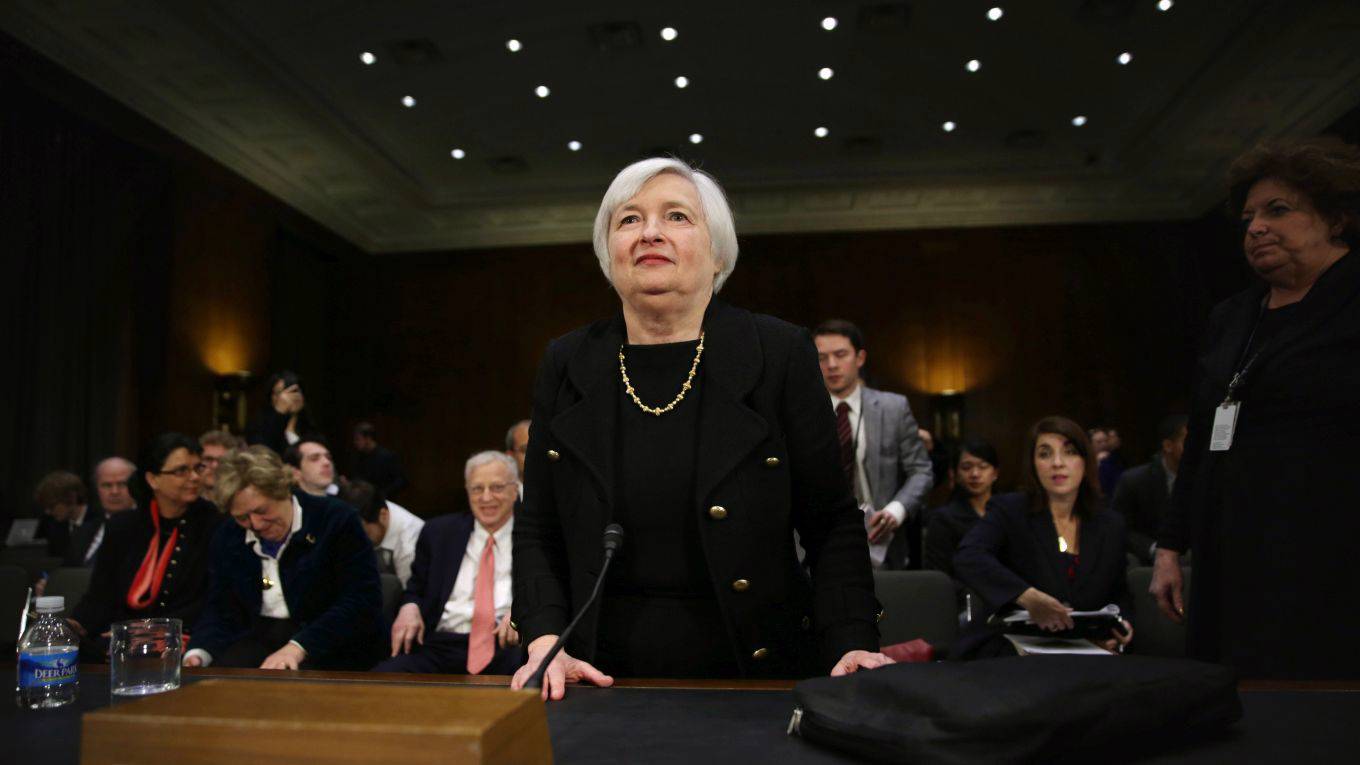
What Yellen Must Do

JOSEPH E. STIGLITZ

NEW YORK – US President-elect Joe Biden’s decision to appoint Janet Yellen as the next Secretary of the Treasury is good news for America and the world. The United States has survived four years under a mendacious president who has no understanding of, let alone respect for, the rule of law, the principles undergirding democracy and the market economy, or even basic human decency. Not only has Donald Trump spent the weeks since the presidential election spewing lies about non-existent voter fraud; he has also convinced a large majority of his party to embrace these lies, thus revealing the frailty of American democracy.

Undoing the damage will not be easy, especially with the COVID-19 pandemic compounding America’s problems. Fortunately, no one is better equipped – in intellect, experience, values, and interpersonal skills – to deal with today’s economic challenges than Yellen, whom I first met when she was a graduate student at Yale University in the 1960s.

First on the agenda will be recovery from the pandemic. With multiple vaccines in sight, the immediate task is to build a bridge from here to the post-crisis economy. It is too late for a “V-shaped recovery.” Many businesses have gone bankrupt, and many more will do so in the coming weeks and months; household and firm balance sheets are being eviscerated. Worse, headline figures may belie the depth of the crisis. The pandemic has taken a massive toll at the bottom of the income and wealth distribution. Those who have availed themselves of policies to prevent evictions and foreclosures are nonetheless falling deeper into debt, and could soon face a reckoning.

Biden Wants America to Lead the World. It Shouldn’t.

By Peter Beinart

There’s a lot we still don’t know about how President-elect Joe Biden and his foreign policy team will approach the world. But this much is clear: They believe in American “leadership.”

In a 2015 speech, Antony Blinken, Mr. Biden’s choice to be secretary of state, employed some version of the word 21 times. This spring, Mr. Biden wrote an essay in Foreign Affairs titled “Why America Must Lead Again.” Last week, when he introduced his national security nominees, he said that “America is back, ready to lead the world.”

Let’s hope not. In the post-Trump age, “leadership” is a misguided, and even dangerous, vision for America’s relationship with the rest of the globe.

For the past four years, foreign policy elites have trumpeted American “leadership” as the safe, bipartisan and benign alternative to the Trump administration’s belligerent America First nationalism. But look up the word “lead” in a dictionary and you’ll find definitions like “the first or foremost place,” being “at the head of” and “to control a group of people.” Leadership doesn’t mean motherhood and apple pie. It means being in charge.