Rathindra Kuruwita
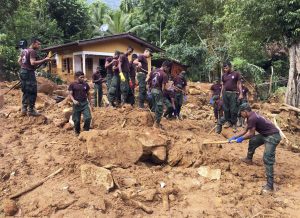
In early December, Sri Lankan media outlets announced that the Sri Lankan Army had decided to reduce troop numbers by 16,000. According to Sri Lanka’s libertarian-leaning publication, EconomyNext, President Ranil Wickremesinghe proposed to introduce a voluntary retirement scheme for troops in a bid to reduce military spending.
Sri Lanka is working on negotiating a $2.9 billion package from the IMF and several influential figures close to the government have been pressing for a reduction in military spending.
They argue that in recent decades, military spending has been excessive, reducing the residual supply of productive resources (that is, capital and labor) available for private and non-defense public investment, thereby weakening the economy, i.e., the depletion theory. The hypothesis is that lower rates of investment and economic growth are the effect of higher levels of military spending. Thus, the expected result of reduced military spending is greater investment and economic growth.
As I pointed out in a previous article, of the total defense allocation of $1.45 billion, $1.29 billion is for recurrent expenditure, mainly for the payment of troops. Only a fraction of the budget goes toward capital expenditure and any meaningful reduction of the defense budget cannot be made without a reduction in troop numbers. Defense spending is about 2 percent of the country’s GDP.
:quality(100)/cloudfront-us-east-1.images.arcpublishing.com/thesummit/5JDLMRFQ6VBQXEKDOKXI4Q7O4Y.jpg)






.jpg)