8 January 2020

The Year of the Trade Truce

BY SALVATORE BABONES

U.S. President Donald Trump meets with Chinese Vice Premier Liu He and members of the U.S. and Chinese trade negotiation teams while announcing a “phase one” trade agreement with China at the White House on Oct. 11. 

Impeachment used to be a big deal. The 1868 impeachment of U.S. President Andrew Johnson paralyzed Congress for three months, and the Senate came within one vote of removing him from office. President Bill Clinton’s 1999 trial lasted five weeks, with many Republicans joining the minority Democrats in rejecting the charges. President Donald Trump’s trial could be over in a day, if Senate Majority Leader Mitch McConnell sees no political benefit in prolonging it. Even if it goes on longer, Trump will be exactly where he most likes to be: at the center of attention.

Thinking back to the early days of the Trump presidency, no one would have been surprised by the thought that, within three years, he would be impeached. People might be considerably more surprised to hear that he would successfully renegotiate the North American Free Trade Agreement and obtain broad congressional support for the new deal. They would be even more shocked to discover that mainstream political opinion had swung behind his trade war with China.

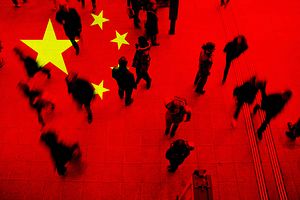
Going Backwards in the “Race for 5G”

By Tom Wheeler 

The collision of corporate opportunism and Republican anti-government orthodoxy has pushed the United States backwards on the allocation of important spectrum for fifth-generation wireless networks (5G). Positioning the U.S. as engaged in no-holds-barred competition with China, President Trump declared in April, “The race to 5G is on and we must win.” With typical bravura, he then promised, “my administration is freeing up as much wireless spectrum as is needed.”

Unfortunately, such is not the case when it comes to the most desired piece of 5G spectrum. Thanks to the Trump Federal Communications Commission (FCC), the effort to free up a large and important piece of 5G spectrum known as C-Band is farther behind at the end of 2019 than it was at the beginning of the year.

A Phone Call

7 January 2020

India–UK counter-terrorism cooperation: convergences and challenges

Rahul Roy-Chaudhury

Cooperation on counter-terrorism is an important, but little-known, aspect of the India-UK security relationship. This was formally institutionalised in 2002 with the establishment of their foreign ministry-led Joint Working Group (JWG) on Terrorism. Continued and more sustained cooperation on counter-terrorism will remain key to a meaningful bilateral strategic partnership.

Both countries have a strong shared interest in preventing terror attacks on their mainland, having suffered such attacks in the recent past. The deadliest single terror act on British soil took place in London on 7 July 2005; one of the most devastating terror attacks in India took place in Mumbai on 26-28 November 2008. With the Indian government now perceiving terrorism as the single biggest threat to peace, security and development, counter-terrorism has emerged as one of Indian Prime Minister Modi’s top priorities for bilateral and multilateral cooperation.

Bilateral cooperation

Suicide Bombings Worldwide in 2019: Signs of Decline following the Military Defeat of the Islamic State

Yoram Schweitzer, Aviad Mendelboim, Dana Ayalon
Source Link

Suicide bombings in 2019, despite a sharp decline in number from the previous year, remained one of the most effective tactics available to terrorist groups. The drop in number is in keeping with an ongoing (albeit more modest) decline seen in recent years, but the figures of 2019 can be attributed to the final military defeat of the Islamic State. Therefore, while the Islamic State and its affiliates - the organizations that since 2015 have committed the most suicide bombings – remain the groups primarily responsible for suicide bombings, the actual number of attacks plummeted. According to collected data in 2019, 149 suicide bombings were carried out in 24 countries by 236 suicide bombers, among them 22 women. In these suicide bombings, 1,850 people were killed and 3,660 were wounded.In 2019, around 149 suicide bombings were carried out worldwide (compared to around 293 in 2018 - a decline of around 49 percent). For the second consecutive year, the most active arena in this regard was Asia, where around 68 suicide bombings were carried out – primarily in Afghanistan - accounting for 45.5 percent of all suicide bombings globally. In the Middle East, around 47 suicide bombings were carried out in 2019, accounting for around 31.5 percent of all suicide bombings. In Africa, around 33 such attacks were carried out in 2019, accounting for around 22 percent of attacks during the year. Latin America saw a sole, rare attack, launched in Colombia, by the National Liberation Army, killing 21 people.

What to worry about: 6 top risks to watch for in 2020

BY ROBERT A. MANNING

2019 brought no great surprises or “black swans.” But the fragile world order did move further down the path of unraveling. What to worry about in 2020? Some nasty disruptions may lie ahead. Here’s the top of my list of things to watch out for in 2020:

2020 elections: Either a Trump reelection or a victory for a Democratic challenger is bound to deepen U.S. political tribalism. A Trump victory would likely result in four more years of U.S. withdrawal from the multilateral world order and a global leadership deficit, while a narrow Trump loss could cause domestic political turmoil. A Democratic victory and left populist economic policies could also fuel uncertainty and turmoil in markets; 

Brexit: One certainty is that Brexit will finally occur, with the United Kingdom out of the European Union by January 31. But political and economic uncertainties abound. A U.K.-EU trade deal may drag out beyond 2020. Brexit may lead to the breakup of the United Kingdom, as the Scottish Nationalist Party pursues another independence referendum and Irish nationalist MPs strong election performance in Northern Ireland positions them to ponder their future; London’s global financial hub is also at risk; 

SecDef Esper Warns Iran: US May Take ‘Preemptive Action’

By PAUL MCLEARY
Source Link

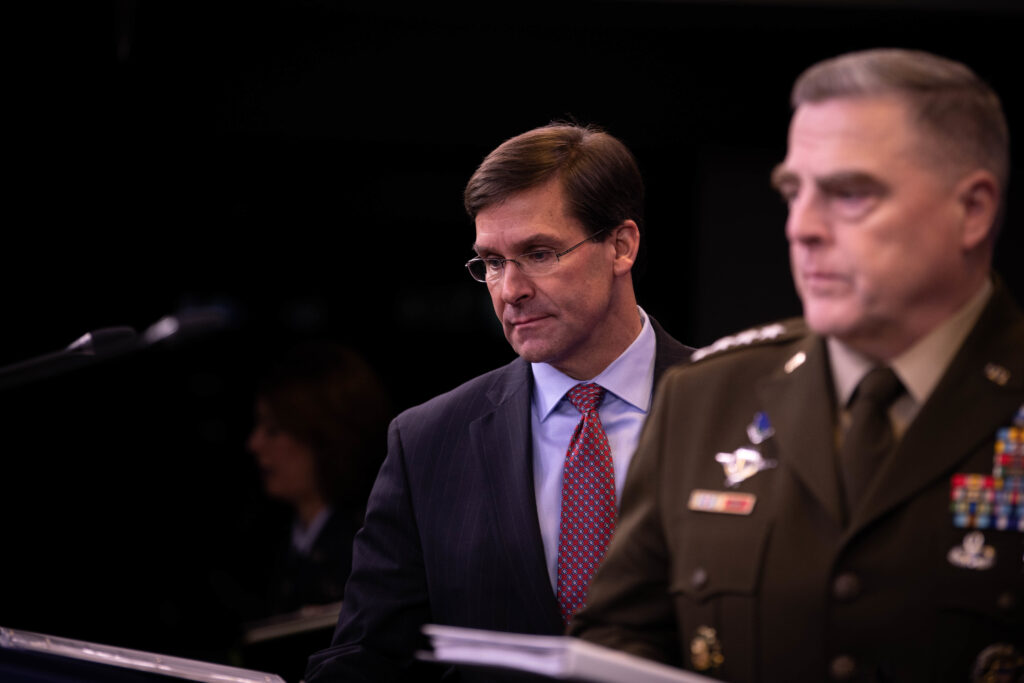
PENTAGON: In what appears to be a return to the Bush Doctrine, the United States will consider launching preemptive strikes on Iran to stop what it says are months of attacks on US forces and facilities in Iraq and the Middle East, Defense Secretary Mark Esper says.

The warning came this morning during an off-camera meeting with reporters at the Pentagon, where Esper said there are indications Iran may be planning more attacks on the US and its interests in the region. “We will take preemptive action as well to protect American forces and protect American lives,” he said. “The game has changed, and we’re prepared to do what is necessary to defend our personnel and our interests and our partners in the region.”=

Lending weight to the secretary’s statement, Chairman of the Joint Chiefs Gen. Mark Milley appeared alongside and said Iran has been running “a sustained campaign at least since October,” targeting the US in the region. “We know that for certain. We know that the campaign has increased in tempo and intensity.”

Are Saudi Arabia and Its Gulf Neighbors Close to Ending the Qatar Boycott?

Neil Quilliam 

Saudi Arabia and Qatar appear to be closer to resolving a diplomatic feud that has isolated Doha from its neighbors since 2017, although wide gaps still remain. In an attempt to break the impasse, which has sharply divided the six-member Gulf Cooperation Council, Saudi Arabia recently invited Qatar’s emir, Sheikh Tamim bin Hamad Al Thani, to attend the annual GCC summit in Riyadh on Dec. 10. Tamim in turn invited the Saudi national soccer team to participate in the 24th Arabian Gulf Cup, hosted by Qatar.

But while Saudi Arabia did ultimately compete in the tournament, Tamim decided to send his prime minister to the GCC summit instead. It was an unmistakable signal from Doha that while it wants to resolve some of its differences with its larger neighbor, it will continue to reject Saudi demands for deep changes in its foreign policy and regional footing. Tamim’s snub is also a sign that he believes Qatar can negotiate with Saudi Arabia from a position of strength, as Saudi leaders, embattled on a number of other fronts, badly need a win. As Qatar’s foreign minister recently told CNN, the two countries are still “at a very early stage” in the process of rebuilding trust. ...

How Tehran Rolled Donald Trump In Iraq

by Dov S. Zakheim
Source Link

On December 29, 2019, in retaliation for a rocket attack two days earlier by the Tehran-backed Kataib Hezbollah (KH) militia on the K-1 military base near Kirkuk that killed an American contractor, Air Force F-15E fighters struck three of the militia’s bases in Iraq and two more in Syria. The attacks left about twenty-five militiamen dead and more than fifty wounded. The targets were KH storage facilities and command posts; Washington asserted that the command posts had masterminded a series of eleven rocket attacks that had culminated with the December 27 KH strike on the K-1 base.

Tehran did not waste much time responding to the American strike. One day later, led by its Iraqi puppets—notably Iraqi National Security Advisor Faleh al Fayyad, and Hadi al Ameri, leader of the Shia Badr organization—rioters charged the American embassy compound, used makeshift battering rams to break down its outer doors and ransacked the facility’s entrance lobby. 

The Real Start Of “Maximum Pressure” Against Iran

by Ilan Berman
Source Link

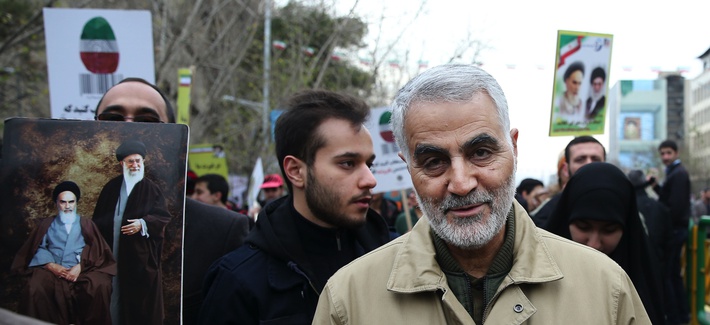
The targeting of Soleimani – which followed on the heels of U.S. military strikes on multiple facilities in Iraq operated by Kataib Hezbollah, a key Iranian regional proxy – has ushered in a qualitatively new phase in the Trump administration’s confrontation with Iran. Chances are, it will be one punctuated by heightened hostilities.

The U.S. airstrike that killed Iranian general Qassem Soleimani in Baghdad overnight is a major milestone in the “war on terror,” at least on a par with the Obama administration’s 2011 killing of al-Qaeda chief Osama bin Laden or the Trump administration’s elimination of the Islamic State’s self-declared emir, Abu Bakr al-Baghdadi, this past October.

Until his death, Soleimani had been in charge of the Qods Force, the paramilitary arm of Iran’s feared clerical army, the Islamic Revolutionary Guard Corps (IRGC). In that capacity, he had served as a true terror master, operating as the Iranian regime’s principal liaison with a bevy of radical groups throughout the region, from Hezbollah in Lebanon to Yemen’s Houthi rebels to the extensive cadre of Shi’a fighters that Iran has deployed in Syria over the past half-decade.

President Trump Should Worry About Iran's Military

by Jonathan Ruhe
Source Link

To understand how, look at the last major provocation in the Middle East: Iran’s September surprise attack on the Saudi oil facility at Abqaiq. Unlike the glaring lack of response to that strike, however, Tehran likely feels emboldened to hit back now.

That is because Iran and its proxies can now credibly threaten to carry out disabling, and potentially catastrophic, strikes on their adversaries’ vital strategic targets across the region, using swarms of new long-range precision munitions. This stems from three factors: Iran’s upgraded weapons, its regional expansion and its enemies’ lack of strategic depth.

Amazingly, it accrues this leverage despite sanctions, antiquated conventional military forces, a small defense budget and no nuclear weapons. Instead, Iran is creating clear offensive advantages by improving the precision and range of its ballistic and cruise missiles and drones.

More Than Mines: Iran Is Ready To Harass And Destroy The U.S. Navy

by David Axe
Source Link

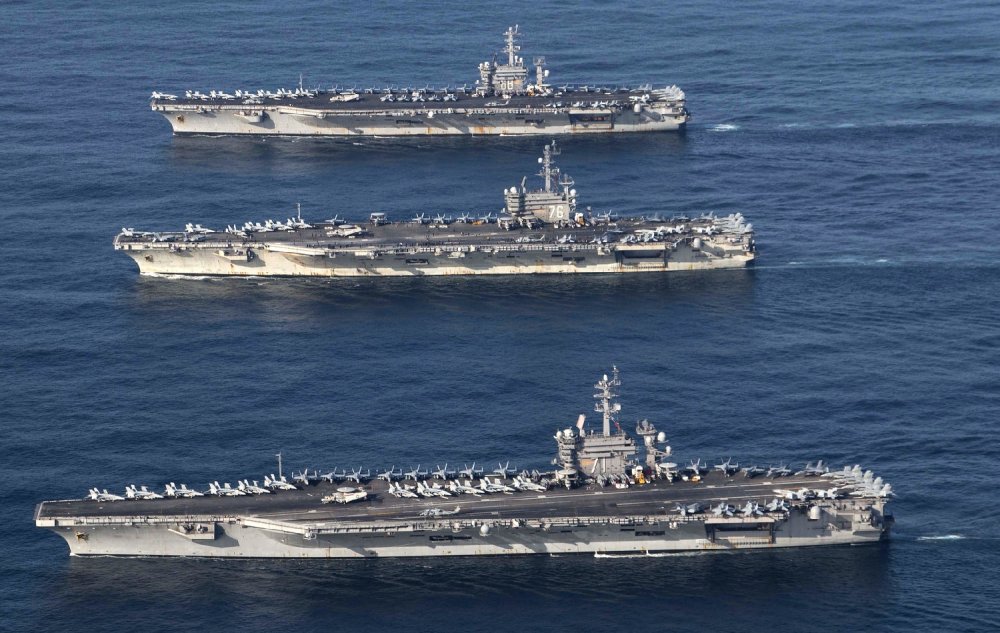
In the event of war with Iran, the U.S. Navy’s small, aging force of Persian Gulf-based minesweepers would struggle to locate and disarm Iran’s underwater mines.

The consequences for U.S. military operations, not to mention world trade, could be severe.

Four of the Navy’s 11 1980s-vintage Avenger-class minesweepers sail from Bahrain and, if war broke out, would be responsible for clearing the strategic Strait of Hormuz and other important waterways of mines.

But the Avengers suffer from obsolete equipment and a lack of spending. The minesweepers “routinely need repairs,” one Navy officer told Pro Publica reporters Robert Faturechi, Megan Rose and T. Christian Miller.

Prime Minister Ariel Sharon of Israel suffers a second, apparently more serious stroke. His authority is transferred to acting Prime Minister Ehud Olmert.

The Netherlands, Great Britain, and France sign the Triple Alliance.

Chapter One: Tehran’s strategic intent


Explore how Iran has refined its strategic doctrine since the end of the Iraq-Iran War and learn how its expeditionary security and military capacity has evolved to meet new demands. 

On 19 March 2003, American cruise missiles hit Baghdad, beginning a series of high-intensity, precision salvos. Within three weeks, the US-led international coalition had occupied the Iraqi capital and effectively ended a regime that Iran had failed to defeat during the eight-year Iran–Iraq War, a conflict that had consumed a generation of Iranians and crippled Iran’s economy.

Iran Loses Its Indispensable Man

BY ANDREW EXUMFORMER 

The killing of Qassem Soleimani robs the regime of the central figure for its ambitions in the Middle East.

Today the United States killed Major General Qassem Soleimani, the commander of the Iranian Revolutionary Guard Corps’s Quds Force. The United States is now in a hot war with Iran after having waged war via proxies for the past several decades.

This doesn’t mean war, it will not lead to war, and it doesn’t risk war. None of that. It is war.

I don’t claim to be an expert on Iran—when I served as deputy assistant secretary of defense for Middle East policy, I used to remind my Iran team at the Pentagon that my regional expertise ended at the Shatt al-Arab waterway that divides Iraq and Iran, and with them, the Arabic- and Farsi-speaking regions of the Middle East.

Around the halls: Experts discuss the recent US airstrikes in Iraq and the fallout

Ranj Alaaldin

There are serious questions that have to be addressed in Washington and Baghdad: How is the U.S. working with its allies in Iraq to push back against Iran’s influence? Why did the Iraqi military allow Kata’ib Hezbollah militias to storm the U.S. embassy? What steps has the Iraqi government taken to ensure the U.S. and Iran do not use its territory as a launching pad for attacks on one another?

Things in Iraq could turn ugly very quickly. How would the U.S. react if there were another American fatality, this time in the heart of Baghdad? The storming of the embassy was partly the proxies reasserting their presence in the country and partly an attempt to diminish the protest movement. For the coming weeks, they’ll have the upper hand in the political theater, which is precisely what they wanted. Their rivals can only hope they won’t be able to sustain the momentum.

Moving forward, there needs to be a far greater effort by Iraqi politicians and institutions like the Iraqi military to constrain the space for Iran’s proxies to operate. Otherwise, Iraq could dramatically deteriorate, possibly prompting the U.S. to give up on Iraq’s institutions and move toward a more coercive containment strategy (including, for instance, airstrikes on Iraqi territory and sanctions on the Iraqi state). That would be catastrophic for a country that has yet to defeat terrorist groups like ISIS, is struggling to ensure it doesn’t relapse into another civil war, and is already on the brink of a socio-economic implosion.

Iran’s Year of Living Dangerously is Just Beginning

by James Jay Carafano
Source Link

The president’s critics are so desperate to pin a foreign policy failure on the White House that they jump on every news cycle like a starving man watching a Wendy’s commercial. So when news came of the attack on the U.S. embassy in Baghdad this week, they were off to the races.

Commentator Joy Reid on MSNBC called the incident Trump’s “Benghazi moment.” Having spent years claiming the Obama team did nothing wrong in the 2012 attack in which the U.S. ambassador and three other Americans were killed, Trump-haters were quick to claim that the president had failed just like at Benghazi. It was almost as if they had forgotten their own talking points.

And as usual, they also spoke too soon. In less than 24 hours, it was clear that the American response in Baghdad was the polar opposite of Benghazi. The U.S. compound wasn’t overrun. No U.S. personnel were killed. The enemy retreated.

Trump’s Ground Game Against Iran

By Michael Doran

More than any other American military operation since the invasion of Iraq, the assassination yesterday of Maj. Gen. Qassim Suleimani, the head of Iran’s Qods Force of its Islamic Revolutionary Guards Corps, is a seismic event. The killings of Osama bin Laden and Abu Bakr al-Baghdadi, the leaders of al-Qaeda and the Islamic State, were certainly meaningful, but they were also largely symbolic, because their organizations had been mostly destroyed. Taking out the architect of the Islamic Republic’s decades-long active campaign of violence against the United States and its allies, especially Israel, represents a tectonic shift in Middle Eastern politics.

To see just how significant Mr. Suleimani’s death truly is, it helps to understand the geopolitical game he’d devoted his life to playing. In Lebanon, Mr. Suleimani built Lebanese Hezbollah into the powerful state within a state that we know today. A terrorist organization receiving its funds, arms and marching orders from Tehran, Hezbollah has a missile arsenal larger than that of most countries in the region. The group’s success has been astounding, helping to cement Iran’s influence not just in Lebanon but farther around the Arab world.

After Soleimani: Confronting Iran's Dangerous Regime

By Charles Lipson

News reports say Maj. Gen. Qassem Soleimani, the powerful commander of the Islamic Revolutionary Guard Corps' Quds Force, was killed Thursday in a rocket attack near Baghdad Airport. U.S. officials have been tight-lipped about the operation, but the speed and precision of the strike clearly point to American forces.

It is hard to overstate the importance of the news, mainly because Soleimani was so important to Iran’s regional power. He reported directly to Supreme Leader Ali Khamenei. As head of the Quds Force, Soleimani led proxy militias in Iraq, Syria, and Yemen, and he worked hand-in-glove with Hezbollah in Lebanon and with Islamist forces in Gaza. Soleimani was far more than a field general. He was a major architect of Tehran’s arc of influence, which stretches from the Persian Gulf to the Mediterranean. He met directly with Russian President Vladimir Putin to discuss the actions of their countries' forces in Syria. He was behind a foiled plot to kill Saudi Arabia’s ambassador in a restaurant in Washington, D.C. When Iran-backed militias attacked the U.S. embassy in Baghdad, their graffiti proclaimed Soleimani as their leader.

Iran will not let his death go unanswered. His loss is simply too important. But their retaliation, if it is large and provocative enough, could force yet another strike from Washington, raising the grim possibility of tit-for-tat escalation with unpredictable consequences and no sure end.

America’s Failed Strategy in the Middle East: Losing Iraq and the Gulf

By Anthony H. Cordesman

It is all too tempting for the United States to focus on the current crisis over the clash between Iran and the United States in Iraq. Events have steadily escalated since late December. Iranian has sponsored attacks by Iraqi Popular Militia Forces on U.S. forces and facilities. The U.S. has launched retaliatory attacks on these PMFs. This has been followed by well-organized demonstrations and attacks on the U.S. Embassy in Baghdad and then by U.S. drone strikes that killed Qasem Solemani, the head of Iran’s Quds Force, and Abu Mahdi al-Muhandis, the head of Al-Hashd al-Shaabi, an Iraqi militia group tied to Iran that had been linked to attacks on U.S. targets.

Moreover, the Iraqi central government had virtually collapsed even before these events. Its corruption, ineffectiveness, and failed economic policies had led to massive popular demonstrations. Its legislature virtually disbanded, and legislation was passed calling for a different, locally elected and more representative system. Prime Minister Mahdi had resigned and then stayed on in an uncertain “acting’ capacity. The Kurdish regional government remained divided, and the government failed to effectively aid the Sunni cities in the West that had been shattered in the fight with ISIS.

Turkey Makes Its Move

By George Friedman
In “The Next 100 Years,” I described Turkey as an emerging regional power that would over time extend its sphere of influence to resemble the range of the Ottoman Empire. Over the past decade, in spite of pressure from various directions, it has refrained from taking risks to assert itself. This changed significantly in recent weeks, signaling what is, in my opinion, the inevitable emergence of Turkish power.

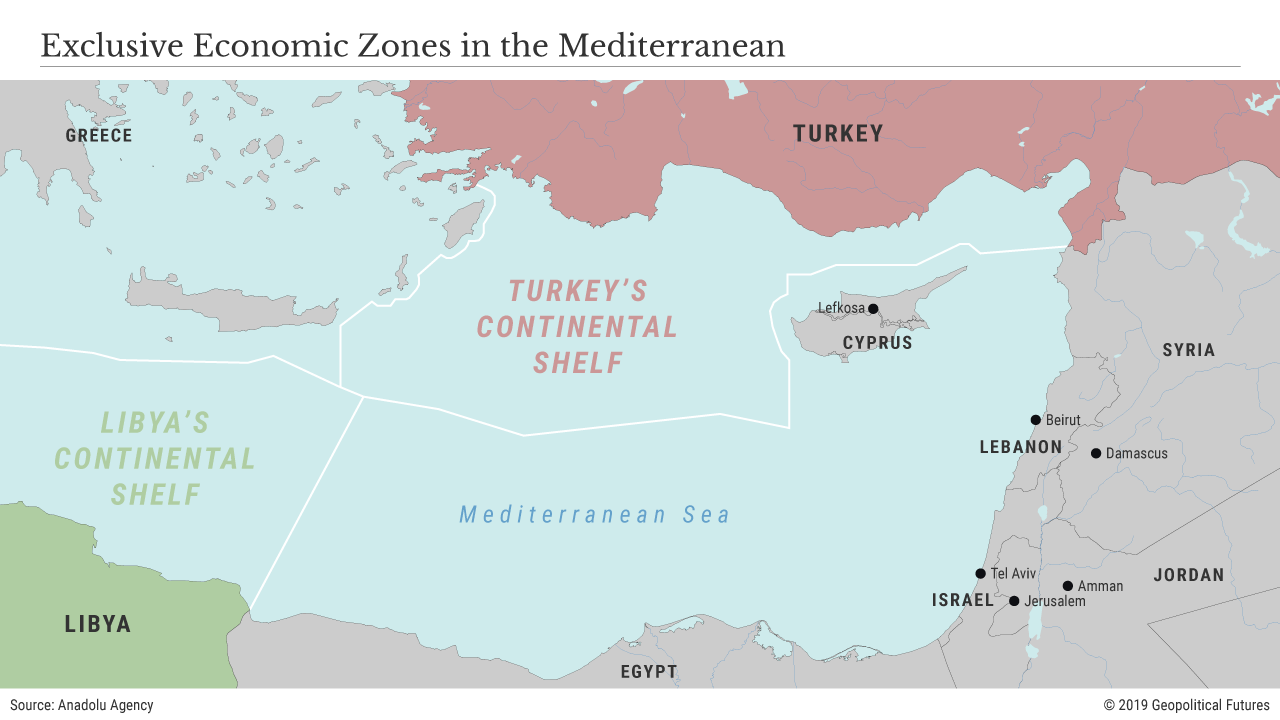
The shift came in two steps. First, Turkey announced that it had expanded its exclusive economic zone in the Eastern Mediterranean in collaboration with Libya’s Government of National Accord. Second, Turkey announced that it was building six new submarines. The construction of new submarines is not of immediate significance, nor is Turkey’s relationship with Libya, whose cooperation it needed to extend its EEZ. But together, these moves indicate a change in Turkish posture.

A Significant Gesture

Notionally, the agreement with Libya creates an economic zone that divides the Mediterranean to the east and challenges Greek Cypriot influence. At first glance, this appeared to be simply a gesture, even if a significant one. An economic zone does not define military spheres of influence. It simply denotes an area of economic domination, and Libya’s agreement to reconfigure Turkey’s EEZ, in the midst of an ongoing civil war, doesn’t mean much. Turkey’s move was perplexing but not necessarily significant.

TURKEY ENTERS LIBYAN ESCALATION SPIRAL AT GREAT RISK


Turkey upended the Eastern Mediterranean's strategic equation with its late November 2019 signing of maritime boundary and military cooperation agreements with the Tripoli-based Government of National Accord in war-divided Libya. By defining maritime borders with the internationally recognized administration in Tripoli, Ankara ostensibly has broken its regional isolation and gained greater legal standing to challenge the boundaries Greece established with Cyprus and Egypt upon which the current arrangements for Eastern Mediterranean natural gas development depend. While previously compartmentalized, Turkey's formalization of its commitment to Tripoli has interlinked an already tense maritime stand-off in the Eastern Mediterranean to a new escalation spiral in the Libyan Civil War in which Turkey's rivals possess escalation dominance over Turkey.

Background

On 27 November 2019, Turkey’s President Recep Tayyip ErdoฤŸan and Fayez al-Sarraj, who heads Libya’s Tripoli-based Government of National Accord (GNA), signed two Memoranda of Understanding on "Delimitation of Maritime Jurisdiction Areas in the Mediterranean” and “Security and Military Cooperation.” Ankara has been steadily increasing its militarily support to Tripoli against its rival, the Tobruk-based government, whose Libyan National Army (LNA) receives military support primarily from Egypt, the United Arab Emirates (UAE), and Russia. In response to the accords, LNA commander General Khalifa Haftar launched an assault on Tripoli to topple the government prompting the Sarraj administration to activate its military agreement with Ankara. Meanwhile, Egypt has vowed to prevent any foreign power from controlling Libya as a matter of its national security. 

Iran is losing its grip on Iraq

BY RAY TAKEYH

Despite the consternation permeating Washington, Iran today is losing Iraq. Since the American invasion in 2003, Iran seemed to be the most consequential external actor in Iraq. Tehran has influenced the choice of prime ministers and parliamentarians, trained militias that it used as an auxiliary force across the region, and was responsible for the deaths of numerous American soldiers. It did all this with impunity. Paradoxically, the latest military clash between the United States and this client of the Islamist regime may hasten the end of its domination of Iraqi politics.

The approach that the Islamic Republic has taken toward Iraq has long been conditioned by its experiences in Lebanon during the early 1980s. Back then, Iran had amalgamated a variety of Shia parties into the lethal Hezbollah terrorist organization. The “Party of God” gained a measure of popularity by dispensing money it received from Iran. More importantly, Hezbollah served as a reliable terrorist organization that could strike at Iranian enemies while providing Tehran with a measure of deniability.

The conflict between America and Iran intensifies in Iraq


For months young Iraqi protesters trying to reach the Green Zone, the government enclave in Baghdad, were met with bullets and tear-gas canisters, the latter often fired at their heads. But on December 31st hundreds of militiamen were allowed to enter unmolested. The men, affiliated to Kataib Hizbullah, an Iranian-backed Shia paramilitary group, tried to storm the American embassy. They threw petrol bombs over the walls and broke into a reception area where security personnel would normally screen visitors. Iraqi police largely stood by for hours; it was not until nightfall that the Counter Terrorism Service (cts), an elite unit, sent men to secure the embassy. They did not have orders to evict the rioters, who made plans to camp outside. As night fell, American Apache helicopters could be seen flying overhead, dropping flares.

The riot was another escalation in a crisis between America, Iran and Iraq. On December 27th more than 30 rockets hit an Iraqi military base near Kirkuk. That attack, the 11th of its kind in two months, killed an American contractor and wounded four American soldiers. The American response, two days later, was a series of air strikes on five bases run by Kataib Hizbullah. At least 25 of its members were killed.

Army University Press


o Field Manual 4-0: Driving Sustainment Change

o A Logic All Its Own: Russian Operational Art in the Syrian Campaign

o The Small-Team Replacement System: Wartime Replacement Systems in Large-Scale Combat Operations

o Leadership during Large-Scale Combat Operations

o Developing Readiness to Trust Artificial Intelligence within Warfighting Teams

o Not an Intellectual Exercise: Lessons from U.S.-Israeli Institutional Army Cooperation, 1973–1982

o Have I Ever Been to War?

o Air Supremacy: Are the Chinese Ready?

2020 for the Future

BY ELISABETH BRAW

They kept negotiating and negotiating and negotiating. In the end, though, the only thing the world’s governments could agree on at their 25th conference on climate change that ended in Madrid in mid-December was to defer all decisions to their next gathering. That’s a pity, because time is quickly running out on keeping global warming under the crucial 2 degrees Celsius mark.

It is a good thing that, in 2019, the climate had other forceful defenders in the form of Fridays for Future, a new movement founded and led by children, teenagers, and other young people. Sure, the kids can’t sign treaties or pass new legislation. But in the movement’s first full year of existence, their protests have already changed the global discourse on the planet’s most pressing problem. In 2020, even more progress may be on the horizon.

“They certainly drove us to speed up,” German Chancellor Angela Merkel said this past July, referring to the impact of Fridays for Future on German climate change policies. Two months later, at the United Nations Climate Action Summit in New York, Merkel told the assembled dignitaries that “we have all heard the young people’s wake-up call.” Indeed, only a few days earlier, her government had passed a climate package that, among other things, bans the sale of new oil heaters from 2026 onward and put a price of 10 euros, about $11, for each ton of carbon dioxide emitted from transport and heating fuels. Although her package was criticized in some corners, there’s no doubt Fridays for Future had nudged Germany’s politicians in the right direction.

Regional power play, propelling Middle East stand-off weapons


Turbojet-engine developments currently pursued by both Iran and the United Arab Emirates should give each country improved stand-off capabilities, Douglas Barrie writes. 

Amid simmering tensions and ongoing conflicts in the Middle East, Iran and the United Arab Emirates are presently pursuing small turbojet-engine developments intended for guided-weapons applications. The weapons involved in each case differ and, unsurprisingly, the motors themselves come from different sources, but they should enhance each country’s stand-off capabilities.

The thrust of Iran’s cruise-missile developments

Iran has begun to publicise an engine produced by the Farzanegan Propulsion Systems Design Bureau, the TJ-HP1 turbojet, which would appear suited to small- to medium-sized cruise missiles. Iran is pursuing a number of land-attack cruise missile (LACM) projects, but some of the larger longer-range systems may be being hampered by the challenges of developing or acquiring turbofan-engine technology. Turbojet engines are less fuel efficient than turbofans of a similar size, meaning that a cruise missile fitted with the latter will have a considerably longer range than if it were fitted with the former.

What US Intelligence Thought 2020 Would Look Like

BY URI FRIEDMAN
Source Link

In 2004, Mark Zuckerberg launched Facebook. George W. Bush was reelected president of the United States. And American intelligence analysts consulted with hundreds of experts across five continents to try to predict what the world would look like in 2020.

The result, a 119-page report by the National Intelligence Council titled “Mapping the Global Future,” is an eerie and illuminating read with 2020 now upon us. The authors, led by Mathew Burrows, then a top official at the council, sensed that the world was approaching an inflection point, even if they didn’t yet know what role the United States would play in it. “At no time since the formation of the Western alliance system in 1949 have the shape and nature of international alignments been in such a state of flux,” they wrote.

As with most expert predictions, the intelligence officials got plenty wrong about our present era. But they got a lot at least partially right, an indication that not everything about the world today is as unpredictable as it might seem. While the analysts at the National Intelligence Council may not have seen President Donald Trump coming 15 years ago, they anticipated Trumpism. They didn’t expect the United States to voluntarily reduce its presence in the world, but they grasped that its clout was eroding. They missed the Islamic State, but foresaw the conditions in which ISIS arose.

Artificial intelligence: the case for international cooperation


As political and strategic tensions are likely to intensify around technological developments such as artificial intelligence (AI), Elina Noor argues that context, communication and cooperation are critical to ensuring that AI develops as a force for good.

A convergence of the informational, kinetic and biological worlds, artificial intelligence (AI) animates the imagination for many reasons. Its simulation of human-learning processes, including self-correction and refinement of reasoning, offers quicker, tailored possibilities beyond simple automation. In a greying world population where life expectancies are longer and fertility rates are falling, smarter machines in the service of (wo)man make sense. AI will only grow in appeal as economies and militaries seek enhanced operational and industrial efficiencies; as connectivity improves with lower-latency capabilities; and as the ‘Internet of Things’ becomes more ubiquitous.

There are two matters of digital disjuncture related to AI that warrant closer treatment: the first relates to the evolving global order; the second to inclusivity in governance.
Order, disrupted

6 January 2020

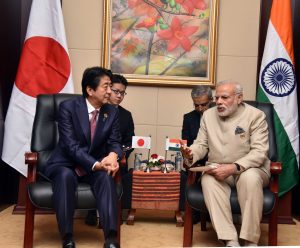
India in Japan’s Strategic Thinking: Charting Convergences in the Indo-Pacific

By Titli Basu

The arrival of China as a major actor in the international system is causing structural shifts in the distribution of power as it challenges the role of the United States and its allies. In its attempt to alter the existing hierarchy of states and exert its primacy, China has challenged the core tenets of the U.S.-led liberal international order.

For traditional U.S. allies like Japan ⁠⁠– a critical anchor in the hub-and-spokes San Francisco system of alliances — the strategic calculus has complicated even more under the Trump presidency.

At the global level, President Donald Trump’s America First policy is underscored by an imprudent transactional approach, lacking a nuanced understanding of alliance management, and an aversion toward multilateralism, challenging the very rules that the United States created and has upheld since the end of World War II. At the regional level, strategic fluidity in the East Asian is influencing Japan to revisit its grand strategy. Although the overall U.S.-China military balance remains favorable in terms of aggregate capabilities, Japan is acutely aware that Beijing does not need to catch up to the U.S. globally to dominate its immediate periphery.

2019 in Tibet: The Year of Relocation


In Tibet, 2019 should be declared "The Year of Relocation".
On December 24, China Daily announced that in 2019 in China, more than 10 million people were expected to be lifted from poverty; some 340 counties would no longer be labeled as 'impoverished'. This was stated by Liu Yongfu, director of the State Council Leading Group Office of Poverty Alleviation and Development in Beijing.

Liu particularly mentioned the Tibet Autonomous Region (TAR), as well as the four provinces where ethnic Tibetan people live (particularly in three prefectures in Gansu, Sichuan and Yunnan), the southern part of the Xinjiang Uygur Autonomous Region is clubbed with these areas: “Officials commonly refer to these regions as the Three Areas and Three Prefectures, the deeply impoverished areas.”

Liu’s report added: “In the renewed effort to combat poverty, local authorities were barred from merely handing out State benefits to farmers. Instead, they were required to adopt targeted measures in developing local industries and creating jobs that would help the poor attain sustainable incomes.”

The Politics of Peace: The Collapse and Resumption of US-Taliban Peace Talks

Dr. Nilofar Sakhi
Source Link

After a three-month-long stalemate of the US-Taliban negotiations, President Donald Trump made an unannounced visit to Afghanistan to celebrate Thanksgiving with US troops in Bagram airbase, alongside Afghan president Ashraf Ghani, November 28, 29019. Trump told reporters that Taliban “wants to make a deal” and that US officials were “meeting with them”. One week earlier, Washington and Talban reached a prisoner-swap agreement to free three Taliban commanders, in exchange for two western university professors, American Kevin King and Australian Timothy John Weeks, taken hostage three years ago. (1) This shift was considered a ‘confidence-building measure’ three months after Trump halted the Qatari-brokered peace talks, and accused Taliban of seeking “false leverage”. After the visit, Trump sounded optimistic about his ceasefire condition; “We’re saying it has to be a ceasefire, and they didn’t want to do a ceasefire… Now they do want to do a ceasefire. I believe it’ll probably work out that way.” However, Taliban maintained it was “way too early” to speak of resuming direct talks.

By mid-November, there were conflicting reports about the whereabouts of the three prisoners. A Taliban spokesperson states they had not left the prison, and blamed the U.S. for the failure of the swap. In early December, U.S. Defense Secretary Mark Esper told Reuters any future troop drawdowns in Afghanistan were “not necessarily” linked to a deal with Taliban. This decision may pave the way for reducing the 13,000 U.S. forces in Afghanistan to 8,600 with the hope they would still carry out an “effective, core counter-terrorism mission.” (2) NATO troops are expected to shrink in numbers in Afghanistan as well. In this paper, Nilofar Sakhi, Fulbright scholar and a visiting fellow at the National Endowment for Democracy, Columbia University, and International Center for Tolerance Education examines the dynamics and strategies of negotiations between the United States and Taliban. She also assesses the accumulative impact of nine rounds of peace talks. This paper builds up on her previous analysis “Peacemaking in Afghanistan: Procedural and Substantive Challenges” published in May 2019. It can accessed through: http://studies.aljazeera.net/en/reports/2019/05/peacemaking-afghanistan-procedural-substantive-challenges-190508101859579.html

Bangladesh: Chinese Firm To Conduct Key Studies For Planned Township, For Free

By Kamran Reza Chowdhury
Source Link

A Chinese firm has agreed to conduct feasibility and environmental impact studies free of charge for a new township that Bangladesh’s government plans to build outside the capital, officials said amid legal, environmental and ethical concerns voiced over the project.

The cost of the planned development in a floodplain along the Turag River has not been determined yet, but the studies will focus on a potential site in a 16-km (9.9-mile) stretch on both sides of the waterway between Aminbazar and Ashulia, the project’s director said.

“On Nov 19, we signed a memorandum of understanding with the China Road and Bridge Corporation to conduct the feasibility study and the environmental impact analysis on the project,” Ashraful Islam, the project director who is an engineer with RAJUK, the Dhaka city development authority, told BenarNews.

“The CRBC is carrying out the studies free of cost. We will not provide them any money for the studies.”

Both studies are due in November 2020, he said.

What RCEP Means for the Indo-Pacific

By Blake Berger

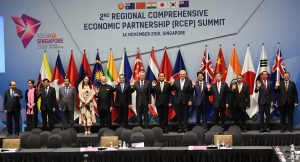
With the world beset by trade and economic conflict, falling gross domestic product (GDP) and trade growth rates, as well as rising protectionism and populism, the conclusion of the Regional Comprehensive Economic Partnership (RCEP) negotiations is all the more a landmark achievement for the Association of Southeast Asian Nations (ASEAN).

RCEP should not be viewed simply as a trade agreement, but as an economic cooperation agreement that strengthens regional political security and stability and reinforces ASEAN centrality in Southeast Asia and the Indo-Pacific. While India’s momentary withdrawal from the agreement has clouded the discussion of the negotiation’s success, RCEP will be the world’s largest trade bloc, covering an estimated 45 percent of the world’s population and encompassing roughly a third of global GDP. The economic benefits of the agreement are significant with or without India. With India in the agreement, RCEP is expected to generate a real GDP increase of approximately $171 billion for the bloc, and without India, an increase of roughly $137 billion. In the context of the U.S.-China trade dispute and turmoil within the European Union (EU), RCEP bucks the prevailing tides by sending a strong signal to the world that Asia is not only committed to a cooperative, multilateral, and rules-based order, but that it is also open to business.

The Geopolitics of a Latent International Conflict in Eastern Mediterranean

Nael M. Shama
Source Link

The strident objections voiced recently by Greece and Egypt to the deals signed between Turkey and the UN-backed Libyan government is but the latest example of a series of incidents that point to rising tensions in the Eastern Mediterranean. Turkey and Libya’s Government of National Accord, in control of the western part of the divided, war-torn country, signed in late November two memoranda of understanding on maritime boundaries and military cooperation. The Turkish parliament ratified the pacts on December 5. Although the details of the deals have not yet been announced, both Greece and Egypt considered them illegal.(1)

In the current scheme of things, the Eastern Mediterranean is sitting atop a dormant volcano. Developments in other hot spots in the Middle East, such as the carnage in Syria, the conflict and humanitarian crisis in Yemen, the Saudi-Iranian standoff in the Gulf and the civil war in Libya, have diverted the attention away from a latent yet perilous conflict. If triggered, such a conflict could have tremendous ramifications for countries in North Africa, West Asia and Southern Europe as well as for the stability of shipping transportation and energy markets worldwide.

To Keep Putin Out, Belarus Invites the U.S. and China In

BY REID STANDISH

MINSK, Belarus—Alexander Lukashenko, Belarus’s 65-year-old authoritarian president, is ratcheting up the geopolitical high-wire act he’s been conducting with Russian President Vladimir Putin by inviting China and the United States to exercise influence in his country as a way of forestalling political union with the Kremlin. 

Lukashenko’s outreach is expected to deepen following a planned visit to Minsk by U.S. Secretary of State Mike Pompeo, which was recently delayed due to escalating tensions in Iraq. 

“We’re not going to cut off our ties with Russia, they are our neighbor and largest economic partner, but surrendering our sovereignty and independence is out of the discussion,” Vladimir Makei, Belarus’s foreign minister, told Foreign Policy in an interview. “There are already three or four generations of people born in the new, independent state of Belarus, and they will never agree with giving up any independence.” 

The Investment War with China: Assessing American Pressure

By Jean-Marc F. Blanchard

The United States has long been concerned about Chinese outward foreign direct investment (COFDI). Even so, U.S. angst has reached new heights during President Donald Trump’s tenure in office. Under his administration, the United States has launched a three-pronged war against COFDI. The first prong entails a harsher environment for COFDI in the United States. The second encompasses maneuvers against COFDI overseas. And the third involves steps to disrupt the progress of China’s Belt and Road Initiative (BRI).

The first prong has been primarily evidenced by the expansion of the Committee on Foreign Investment in the United States (CFIUS)’s role in reviewing FDI. It has been reflected, too, by the 2018 passage of the Foreign Investment Risk Review Modernization Act (FIRMMA). Notably, FIRMMA changed the ownership standard triggering CFIUS reviews from 10 percent of voting shares to one focused more on decision-making abilities/control and also expanded CFIUS’s ambit to cover FDI in critical infrastructure and real estate near sensitive locations like military bases. Recently, Congress passed the 2019 National Defense Authorization Act, which hits COFDI in the United States directly by forbidding the use of federal funds to purchase rail cars and buses from Chinese-controlled firms. The White House has not publicly pilloried COFDI in the United States, but prominent members of the U.S. Congress continue to warn vociferously about its risks.