19 September 2020

Tech cannot be governed without access to its data

Alex Engler

In the late 19th century, chemist Harvey W. Wiley analyzed the health effects of processed foods, alerting the nation to how contaminated they were. His 50-year campaign led to the Food and Drugs Act, the Meat Inspection Act, and, eventually, our modern standards of food safety. But a reformer akin to Wiley would be stymied by the technology sector today. Many observers agree that it’s long past time to implement more regulation and oversight on the tech sector. Yet the practices of these companies are obscured to reporters, researchers and regulators. This information asymmetry between the technology companies and the public is among the biggest issues in technology policy.

Users themselves often have little window into the choices that tech companies make for them. Increasingly more of the web is bespoke: Your feeds, search results, followers, and friends are yours and yours alone. This is true offline, too, as algorithmic tools screen job applicants and provide personalized medical treatments. While there are advantages to these digital services, this personalization comes at a cost to transparency. Companies collect enormous volumes of data and feed them through computer programs to shape each user’s experience. These algorithms are hidden from view, so it is often impossible to know which parts of the digital world are shared.

And it’s not just users who are operating in the dark. Many of the practices of technology companies are also obscured to the government institutions that should be providing oversight. Yet it is impossible to govern algorithms with anecdotes, so this needs to change. Government agencies need to be able to access the datasets that drive the tech sector.

Why Do People Share Disinformation On Social Media?


Why do people spread disinformation online? Are they fooled by the disinformation, and spread it because they believe it is true? Do they know the information is fake but spread it anyway? How does the way disinformation is presented influence our likelihood of sharing it? And are some people more likely to share disinformation than others?
Introduction

This brief summarises a research project commissioned by CREST in 2019 that explored some of the processes underlying the spread of false material on social media. It positions the research and findings within the broader literature relevant to online political disinformation and considers what we currently do and don’t know about the problem. It conceptualises disinformation as false material created and disseminated with the intent of deceiving others and causing harm and focuses specifically on the distribution of that material via social media platforms. This is distinct from other elements of online information operations, such as selective presentation of true material or other forms of polarising or ‘hyperpartisan’ communication.

21st July 2020 was notable for the publication of two reports from UK Parliamentary committees. The first was from the House of Commons Digital, Culture, Media and Sport Committee (DCMS Committee, 2020) on ‘Misinformation in the COVID-19 Infodemic’, which expanded on ‘Disinformation and Fake News’ previously from the Committee (2019); pointed to significant real-world harms arising from the spread of false information; and discussed the role of hostile actors in generating it. The second was the long-awaited ‘Russia Report’ from the Intelligence and Security Committee (2020). While considerably broader in scope, it again noted the problem of political disinformation. It pointed to the use of social media as a tool of disinformation and influence campaigns in support of Russian foreign policy objectives.

The Best (Cyber) Defense Is a Good (Cyber) Offense

JAMIL N. JAFFER 

We are at war in cyberspace. While lawyers might quibble about the definitions of armed attacks and other niceties of international law, the fact of the matter is that, for around a decade, we've been in series of consistent—albeit small-scale—conflicts in cyberspace. These conflicts have intensified recently, particularly since the start of the COVID pandemic, and have had a massive impact on the American public and private sectors. One can hardly pick up a news magazine today without being assaulted by headlines about data breaches, ransomware, cyber-enabled financial crime or social media-spread misinformation and disinformation. Standing alone, cyber-enabled economic warfare conducted by China drains the American private sector of billions of dollars a year, with total damages estimated in the trillions. Former NSA Director Gen. Keith B. Alexander described this concerted effort as "the greatest transfer of wealth in human history," and former House Intelligence Committee Chairman Mike Rogers (R-MI)—nearly a decade ago—called out the ongoing cyber economic war.

Even worse, in the last six years alone, we've seen our adversaries undertake attacks tantamount to acts of war. For example, we've seen North Korea and Iran engage in the affirmative destruction of data and the bricking of computer systems here in the United States. And the threat level continues to grow. Just last year, then-Director of National Intelligence (DNI) Dan Coats told Congress that Iran is actively "preparing for cyber attacks against the United States and our allies" and is "capable of...disrupting a large company's corporate networks for days to weeks." During the same testimony, the DNI noted that "China has the ability to launch cyber attacks [in the U.S.] that [could] cause...disruption of a natural gas pipeline for days to weeks." Of course, we all know about Russia's wildly successful covert influence campaign that has undermined public confidence in our elections and rule of law institutions. While the Russian activities are likely to go down in history as among the most effective covert influence operations ever, what sometimes goes missed in all the election talk is the DNI's assessment that Russia is also actively "mapping our critical infrastructure with the long-term goal of being able to cause substantial damage," including by "disrupting an electrical distribution network for at least a few hours."

18 September 2020

Why Am I Worried About the Taliban’s Return?

By Ali Reza Sarwar

In September 2001, I had just arrived in Pakistan’s Quetta when 9/11 happened. Crossing the Spin Boldak border between Afghanistan and Pakistan, I saw Taliban soldiers for the last time. They checked us and took my brother’s overcoat as it seemed like a military uniform — it was not. Like thousands of other Afghans fleeing the country because of the group’s draconian rules and its overt policy of subjugating ethnic and religious minorities, I was also leaving my family behind in the pursuit of survival and a better, freer future. Waiting in Pakistan for Iran’s border to open, I watched the abrupt fall of the Taliban regime following the U.S. invasion and the opening of a new political trajectory in Afghanistan’s turbulent history.

Like many refugees longing to return home one day, I was excited and began to carve out a new future for myself. The post-Taliban period provided enormous opportunities for many Afghans and altered our fate and expectations forever. 

I became the first in my family to graduate from high school and university. I went on to pursue graduate studies in the United States. I returned to Afghanistan, got a job, and tried my best to be part of Afghanistan’s recovery. We in the post-Taliban generation explored and experimented in ways generations before us never imagined. We exercised democracy by voting in several elections, and campaigned for our favored ideas and candidates. Men studied alongside women in schools and universities. We formed a multi-ethnic political identity inspired and cemented by shared values of democratic governance, political pluralism, observance of human rights, freedom of thought and expression, and respect for dissenting voices. We also freely protested and challenged the government when we felt that our rights were being violated. 

Warring Sides: Is There an End to Violence in South Asia?

By Niha Dagia

Nearly two decades of conflict nears an end with the beginning of the first formal intra-Afghan talks in Doha. But regional peace remains at risk as warring factions of the Tehreek-e-Taliban Pakistan (TTP) reunited on Afghan soil with an agenda to intensify violence back home. 

“It is a worrying development for Pakistan,” says Kamran Yousaf, a journalist who has covered the peace deal extensively. He wants to wait and see whether the reunification can change ground realities.

“To be sure, so long as the war still rages in Afghanistan, the TTP will always be an option to partner on some attacks with the Afghan Taliban,” says Michael Kugelman of the Wilson Center. 

“The TTP continues to have Pakistan in its crosshairs and the fact that the group has recently started deepening its footprint in the Pakistani tribal areas, even as it remains based in Afghanistan, attests to the priority it accords to targeting Pakistan.”

How It All Began

A loosely-knit conglomerate of militant outfits came together in 2003 under the leadership of Baitullah Mehsud in response to the Pakistani military’s growing footprint in the U.S. “war on terror.” It gained ground in the semi-autonomous tribal districts and made its way throughout Pakistan, carrying out numerous deadly attacks. 

Too Old to Fight? Will Demographic Shifts Alter Asia’s Geostrategic Landscape?

By Robert Farley

Will demographic realities make it impossible for Japan to pursue an assertive foreign policy in the foreseeable future? And more broadly, do aging demographic trends across the Asia-Pacific suggest that concerns over a new Cold War may be overblown?

First described by Mark Haas, Geriatric Peace Theory suggests that societies with aging populations have economic and political characteristic that make them less likely to engage in militarized foreign policies. Geriatric Peace Theory depends less on the actual availability of young men than on the socioeconomic structures that emerge in “old” societies, in particular the need for young workers to support social safety net and health care systems that aging citizens require. This leaves fewer young people available to fill the needs of military organizations.

Concerns about the combination of demographic trends and strict immigration controls in East Asia are nothing new. However, David Axe wonders whether the impact of COVID-19 will reduce Japan’s already anemic birthrate, resulting in an even more pronounced age “bulge” than analysts had expected. Axe suggests that the Japanese military is already adapting to this problem; while war always requires people, technology determines how many are strictly necessary at any given time, and more importantly the nature of the skill set of the required population. As Axe notes, the Japanese military has demonstrated a preference for equipment that is capital rather than personnel intensive, such as stealth fighters and submarines.

Of course, Japan’s situation is not unusual within its region. China, Taiwan, and South Korea also face demographic tightening, with South Korea suffering an ever worse problem than Japan. This threatens the heath of public finances as aging (and increasingly expensive) retirees are replaced by ever smaller numbers of workers. China decided to embrace demographic disaster during the Cold War with its “one child” policy. This resulted in a short-term capping of the population, but in a long-term demographic problem that will threaten China’s financial and economic health in the 21st century.

China’s New Carrier Early-Warning Plane Is More Than A Hawkeye Clone

H I Sutton
Source Link

An aircraft carrier transforms a navy. It allows them to project its power thousands of miles from their own shores and is one of the hallmarks of a true ‘blue water’ navy. The Chinese Navy (PLAN) was until recently considered only a 'brown water navy,' but now it has two carriers and is building more.

Yet if the PLAN's carriers sail east into the Pacific or south to the Indian Ocean they may be vulnerable to air attack. This is because they lack airborne early warning and control (AEW&C) aircraft. But the new KJ-600 plane is about to change that.

The KJ-600 aircraft is generally similar to the U.S. E-2 Hawkeye. It has a virtually identical layout, to the point that it can casually be referred to as a ‘copy.’

AEW&C planes can detect and track other aircraft at extreme ranges. This greatly increases the suitability of the carrier, and effectiveness of its combat aircraft, because they can see much further. Incoming raids or missiles can be detected much further away and the carrier’s air wing can be called to action.

China will be the third navy with fixed-wing AEW planes on its carriers. Only the U.S. Navy and French Navy (Marine Nationale) have the E-2 Hawkeye. Other countries such as Britain and India use helicopters. These are still valuable, but they are shorter ranged and generally have smaller radars.

The Vagaries of Crime and Punishment in China

By Jerome A. Cohen

This week saw the detention in China of Geng Xiaonan, a well-known Beijing publisher and outspoken supporter of the famously harassed former Tsinghua University law professor Xu Zhangrun. Geng is reportedly destined for “very heavy” punishment, not the 15 day maximum in an unpleasant detention cell usually imposed for minor offenses not deemed sufficiently grave to constitute a “crime.” The initial “illegal activity” charge against her is vague enough to cover either her publishing business alone or her open support for Xu or, very likely, both. How long her husband, detained with her, will be held will depend on how important his interrogation seems to her case.

The ongoing repression of mainland Chinese protesters against injustice continues to raise many questions about the Communist Party’s punishment systems. Who gets detained? When? After what kinds of warnings and preliminary “education”? What type of detention is chosen and why? When, for example, does the Party select, for up to six months, the widely-feared incommunicado detention by a government “supervisory commission,” initially preempting not only the formal criminal process but the entire justice system?

When is the minor offenses law invoked, as recently in the case of Xu, who was detained for five days for supposedly “soliciting prostitution”? What determines whether someone originally detained by a “supervisory commission” or by police for a minor offense will subsequently be transferred to the formal criminal process for investigation of a “crime”? If the criminal process is selected, what determines whether the suspect will first be sent for investigation to the notorious special “residential surveillance at a designated location” (RSDL) because of ostensible suspicion that “national security” might be involved? What determines whether, when, and why the suspect will eventually be forwarded from RSDL to the regular criminal process for up to an additional 37 days of more conventional detention before a procurator (prosecutor) has to decide whether to approve formal “arrest” leading to months of further detention prior to indictment and eventual trial, conviction, and sentence?

China, EU Leaders Hold ‘Intense’ Virtual Meeting

By Shannon Tiezzi

On Monday, Chinese President Xi Jinping held a virtual meeting with European Council President Charles Michel, European Commission President Ursula von der Leyen, and German Chancellor Angela Merkel.

Von der Leyen described the talks as “frank and open… constructive and intense” in a nod to growing points of friction between the two sides.

“Europe needs to be a player, not a playing field,” Michel declared in the post-meeting press conference. “Today’s meeting represents another step forward in forging a more balanced relationship with China.”

According to Michel, the meeting addressed “four key topics”: climate change, economic and trade issues, “international affairs and human rights,” and “COVID-19 and economic recovery.”

The video call was a sharply downgraded version of what was once planned as a massive in-person summit to be held in Leipzig, Germany this September, bringing together Xi and the heads of state of all 27 EU member countries. The summit – and a long-dreamed-of bilateral investment treaty between China and the EU, known as the Comprehensive Agreement on Investment (CAI) — was to be the crowning achievement of Germany’s rotating presidency of the Council of the EU. But the in-person summit was cancelled months ago, officially due to the coronavirus pandemic. However, as Theresa Fallon outlined in the cover story for the latest issue of The Diplomat Magazine, there were deeper issues involved.

China’s expanding influence at the United Nations — and how the United States should react

Jeffrey Feltman

China’s growing influence inside the United Nations is inevitable, stemming from President Xi Jinping’s more assertive foreign policy and the fact that China’s assessed contributions to the world body are now second only to those of the United States. Traditionally focused on the U.N.’s development activities, China now flexes its muscles in the heart of the U.N., its peace and security work. The Chinese-Russian tactical alignment in the U.N. Security Council challenges protection of human rights and humanitarian access, demonstrated in July 2020 when China and Russia vetoed two resolutions regarding Syria and both blocked the appointment of a French national as special envoy for Sudan.

Yet the fears that China is changing the United Nations from within seem if not overblown, at least premature. Whatever its ambitions, China has not replaced the United States as the U.N.’s most powerful member state. The U.N. can still be a force multiplier for the values and interests of the United States, but only if Washington now competes for influence rather than assume automatic U.N. deference. The U.N. can be characterized as “home turf” for the United States, but walking off the field will facilitate China moving in to fill the vacuum.

A global strategy for China

by Jeffrey Cimmino, Matthew Kroenig, Barry Pavel

Over the past two years, the Scowcroft Center for Strategy and Security has hosted a series of strategy consortium meetings with small groups of experts and officials to discuss a comprehensive US and allied strategy for China. This paper provides a brief preview of an Atlantic Council Strategy Paper to be released this fall.

Strategic Context: The China Challenge and Opportunity

Over the past seventy-five years, the United States and its allies and partners have led a rules-based international system that has generated unprecedented levels of peace, prosperity, and freedom. The system, however, is coming under increasing strain, especially from the re-emergence of great power competition with China. The increasing assertiveness of the Chinese Communist Party (CCP) poses a significant challenge to the interests and values of the United States, its allies and partners, and the rules-based system.

The China challenge is evident in the health, economic, diplomatic, governance, and security domains:

It’s not just China — everyone plays in the world of open-source intelligence

BERNARD KEANE

Hearty congratulations to journalists of The Australian Financial Review and The Australian for discovering the world of open-source intelligence.

The Oz got one story out of a database of western business and political figures leaked from Chinese defence contractor Shenzhen Zhenhua Data. The Fin got not one, not two, but three pieces, including an editorial that the information “may be being weaponised to engage in unacceptable political interference in the democratic process in countries such as Australia”. The targets mentioned included the likes of Scott Morrison, Andrew Hastie, Joe Hockey and Jennifer Westacott and Mike Canon-Brookes.

That’s rich just weeks after the AFR lectured national security officials that they were engaged in a “culture war against the market” for warning China was a national security threat. Maybe one of his own journalists being on the receiving end of a midnight raid alerted editor-in-chief Michael Stutchbury to the fact that no amount of China lobby op-eds will protect you from Xi Jinping’s tyranny.

Kevin Rudd on ‘an Infinitely More Assertive China’ Under Xi Jinping


“What we’ve seen is an infinitely more assertive China,” says Kevin Rudd, president of the Asia Society Policy Institute and former prime minister of Australia, in assessing the country’s evolution under Xi Jinping. As a result, Mr. Rudd is not surprised by how rapidly the consensus view of China has shifted, with strategic competition having replaced win-win cooperation as the buzzword in the capitals of Western and Asian democracies.

“The principle dynamic here has been China’s changing course itself,” he says, as well as China’s emergence as a global power. “We have a new guy in charge who has decided to be more assertive about China’s interests and values in the world beyond China’s borders. And secondly, a more powerful China capable of giving that effect.”

A highly regarded observer and analyst of China’s domestic politics and foreign policy, Mr. Rudd spoke with WPR editor-in-chief Judah Grunstein about the challenge China poses to the West, the impact and implications of Xi Jinping’s rule, and the future prospects of both China’s rise and America’s global leadership role.Listen to the full interview with Mr. Rudd on the Trend Lines podcast.

Despite China’s growing power, Mr. Rudd cautions against what he calls the “excessive pessimism” currently on display in Washington. “America remains a powerful country in economic terms, in technological terms and in military terms, and against all three measures still today more powerful than China.”

China as a Faltering Contender

By Andrew A. Latham

The conventional wisdom has long been that, if there is to be a major war involving China and the U.S., it will be the result of either of a rising China initiating war to displace the failing U.S. hegemon, or a declining U.S. initiating a war to stymie a rising China. But this ignores the possibility that systemic or hegemonic war between China and the U.S. may not have anything to do with a rising power. It ignores the possibility that such a war might be initiated by what I will call a faltering contender, a once-rising power whose ascent is running out of steam and whose leaders believe that it must decisively reshape the global order now while it still can. 

The logic linking a faltering bid for hegemony to systemic war is simple enough. Faced with the prospect that it is losing the demographic or developmental race with other potential challengers, or merely with non-hegemonic rivals, a faltering contender will sometimes launch what might be thought of as a war of desperation. In this kind of war, a faltering contender will initiate hostilities because, having realized that it has reached the peak of its relative power, it decides it must initiate war now, even under unfavorable circumstances, because if it doesn’t, it will not only fail to achieve predominance but will face the prospect of catastrophic defeat in the near future. Such wars are not caused by states leaping through open windows of opportunity created by the military advantage they enjoy over their potential rivals. Instead, they are caused by stalled rising powers, at a current or imminent military disadvantage, attacking despite this disadvantage because it is the least bad of several very bad options open to them.

Promising Liaisons

BERNARD-HENRI Lร‰VY

Isn’t peace—true peace—the surest route to the most enduring security for the Middle East?

Of course, there will always be anti-Trumpers so thoroughly conditioned as to refuse to admit that even a broken clock is right twice a day.

There will always be anti-Zionists for whom the best agreement in the world, if it involves Israel, is null, void, and detestable.

There are the false friends of Palestine fulminating about treason and abandonment at the hands of their champions.

There are Israelis worried about the delivery of F-35 fighter jets to Abu Dhabi under the agreement, because it calls into question their military superiority over their neighbors.

And there is the danger that all of these forces may end up coming together at the last minute to scuttle the deal.

Which would be very unfortunate.

The UN’s Unhappy Birthday

RICHARD HAASS

NEW YORK – The United Nations turns 75 this autumn, and if this were a normal year, many of the world’s leaders would gather in New York City to celebrate this milestone and open the annual meeting of the General Assembly.

But this year is anything but normal. There will be no gathering because of COVID-19 – and even if there were, there would be little grounds for celebration. The United Nations has fallen far short of its goals to “maintain international peace and security,” “develop friendly relations among nations’’ and “achieve international cooperation in solving international problems.”

The pandemic helps illustrate why. The UN Security Council, the most important component of the UN system, has made itself largely irrelevant. China has blocked any significant role for the UN’s executive body lest it be criticized for its initial mishandling of the outbreak and be held responsible for the consequences. Meanwhile, the World Health Organization deferred to China early on and has been further weakened by the United States’ decision to withdraw from it. The result is that the major powers get the UN they want, not the one the world needs.

None of this is new. During the four decades of the Cold War, the UN became a venue for US-Soviet rivalry. The fact that the Cold War did not turn hot (as great power competition had twice before in the twentieth century) was due less to what happened at the UN than to nuclear deterrence and a balance of power that compelled significant caution in US and Soviet behavior. The principal occasion when the UN intervened to maintain international peace – committing an international force to reverse North Korean aggression against South Korea – it could do so only because the Soviet Union was boycotting it.

Reclaiming American Greatness

JOSEPH E. STIGLITZ

NEW YORK – Julia Jackson, the mother of Jacob Blake, a young black man from Kenosha, Wisconsin, who was shot seven times in the back by police, got it right when she said, “America is great when we behave greatly.” Sadly, for the past four years, President Donald Trump has been leading America in the exact opposite direction.

The country’s entire history seems to be on the line when Trump faces the voters again on November 3. It has been 160 years since the United States tried to deal with its “original sin” of African slavery. On that occasion, President Abraham Lincoln famously warned that, “A house divided against itself cannot stand.” Yet, under Trump, all of America’s divisions have been widened.

It comes as no surprise that the rich have gotten richer under Trump, given that he tends to judge overall economic performance on the basis of the stock market, where the richest 10% of Americans own 92% of shares. While equity prices have continued to reach new heights, so, too, has US underemployment and joblessness. Some 30 million US residents currently live in households without enough food, and most of those in the bottom half of the income distribution are living paycheck to paycheck. In a country already riven with deepening inequalities, Trump’s Republicans have not only cut taxes for billionaires and corporations but also implemented policies that will lead to higher tax rates for the vast majority of those in the middle.

As Martin Luther King, Jr., pointed out over a half-century ago, racial and economic injustice are inseparable issues in America. I was there for the March on Washington 57 years ago, when King delivered his heart-rending “I Have a Dream” speech, and we sang, “We shall overcome someday.” As a naive 20-year-old, I could not conceive that someday would lie so far off, that, after a short period of progress, the pursuit of racial and economic justice would stall.

Nuclear Weapons: It’s Time for Sole Purpose

by Steven Pifer

The Democratic Party platform states that Democrats believe that the “sole purpose” of U.S. nuclear weapons should be to deter and—if necessary, retaliate against—a nuclear attack. Presidential candidate Joe Biden has said the same. The sole purpose would mark a significant change in U.S. nuclear policy, eliminating ambiguity that preserves the option to use nuclear weapons first in response to a conventional attack. Adopting the sole purpose is a sensible step that would foreclose an option that no president has ever chosen . . . or ever would. 

Extreme Circumstances 

The U.S. government has long taken the position that it would use nuclear weapons only in “extreme circumstances” in which the vital interests of the United States, its allies or partners were at stake. That formulation leaves ambiguity as to whether an American president might in some cases decide to use nuclear weapons first. Indeed, it explicitly preserves that possibility.

When the Soviet Union and Warsaw Pact held large numerical advantages in conventional military forces during the Cold War, U.S. and NATO officials maintained an explicit option for deliberate escalation to nuclear weapons in the event of a conflict where they were losing at the conventional level. That might have contributed to the deterrence of a conventional conflict, but such escalation would have entailed enormous risks: once the nuclear threshold was crossed, where would matters stop? Many analysts question the ability to control escalation once nuclear weapons enter into use. As reported by Fred Kaplan in The Bomb, in 2017, Secretary of Defense Jim Mattis asked a group of senior Pentagon officials if they believed that nuclear war could be controlled; only one thought that it was possible. 

Joe Biden’s Manufacturing Revival Plan Has Some Serious Flaws

by Alan Tonelson

Actually, the parts that are good but not original create some problems for the former vice president. They raise the question of why they were neglected, went nowhere, or didn't accomplish much in the eight years when Biden was President Barack Obama's second-in-command—when they were all either brought before Congress or put into effect.

In fact, when it comes to one of the most attention-getting provisions of the Biden plans—greatly expanding the use of federal Buy American requirements to boost demand for manufactured goods, tightening enforcement, and narrowing or eliminating loopholes—similar measures were actively opposed by Obama during the worst of the Great Recession of 2007-09. His rationale was, “I think it would be a mistake . . . at a time when worldwide trade is declining, for us to start sending a message that somehow we’re just looking after ourselves and not concerned with world trade."

Ditto for stronger responses to trade and broader economic predation by China—nowadays a Biden bete noire whose “unfair trade practices” and “abuses” he and his campaign have specified in various statements include “robbing the US of our technology and intellectual property, or forcing American companies to give it away in order to do business in China.” along with currency manipulation, dumping of below-cost exports, and “state-owned company abuses, or unfair subsidies,” and that have “got to end.”

Why Are U.S. and Russian Forces Clashing in Syria?

by Giuseppe Maria Del Rosa

Run-ins between the U.S. and Russian forces have increased following President Donald Trump’s short-lived decision to withdraw 1,000 U.S. personnel—after which he changed his mind, agreeing to keep a smaller force in a more confined area to protect “the oil.” The subsequent U.S. forces’ reposition led Russian forces to expand their footprint across northeastern Syria, placing the two factions in close and recurring contact.

In August, a skirmish between Russian and U.S. deployed patrols erupted in northeastern Syria. According to the National Security Council spokesperson, the collision took place near Dayrick (Al-Malikiyah), on the Turkish-Syrian border—when U.S. and Russian patrols encountered each other. At this point, a Russian vehicle deliberately rammed a U.S. mine-resistant, ambush-protected all-terrain vehicle (M-ATV), leading four U.S. soldiers to be injured. The quarrel is the latest in a series of clashes involving Russian and U.S. ground troops in the area, following the U.S. partial withdrawal from Syria’s northeast.

While the incident led to predictable opposite and contradictory statements by the U.S. defense officials and the Russian defense ministry, the collision highlights the presence of overlapping security patrols. Besides, according to some video, two Russian helicopters hovered low over the U.S. patrols during the incident. Both these elements, compounded with a provocatory Russian forces’ attitude, increase risks for future additional direct military clashes.

Mysterious Drone Incursions Have Occurred Over U.S. THAAD Anti-Ballistic Missile Battery In Guam

BY TYLER ROGOWAY AND JOSEPH TREVITHICK

Earlier this year, it came to The War Zone's attention that a series of bizarre and highly concerning events took place in the late Winter of 2019 at Andersen Air Force Base on the Island of Guam. As we understand it, between late February and early March of last year, the massive installation experienced repeated incursions by unmanned aircraft that appeared to be extremely interested in one highly sensitive area of the highly strategic base, the U.S. Army's Terminal High Altitude Area Defense (THAAD) battery that is tasked with defending the island from ballistic missile attacks. 

The incursions, which were said to have occurred in late March and early April 2019, had been observed by personnel manning guard towers that loom over the highly secure THAAD area situated towards the northern end of the air base, often referred to as "North West Field." Andersen itself takes up the northern and western reaches of the entire island.

When Will There Be a COVID-19 Vaccine and Should You Trust That It's Safe?

BY FRED GUTERL 

The unprecedented swiftness with which medical science is developing a vaccine for COVID-19 is one of the most inspiring stories in this historic chapter. Vaccine candidates emerged only weeks after scientists identified SARS-CoV-2 and sequenced its genetic code. Universities and Big Pharma formed teams to develop vaccine candidates in short order. But just as quickly, the search for a vaccine became a political issue, and the sad result is that while the chances of an effective vaccine are rising, so is public distrust.

That's too bad, because the medical and scientific task of developing a COVID-19 vaccine is not the only critical ingredient to a successful vaccination campaign. Public buy-in is essential, because a vaccine is only effective when people agree to be inoculated. The political spectacle surrounding the vaccine efforts is undermining the public trust. Conflicting messages that seem likely to continue for the next two months of the presidential campaign will complicate efforts by doctors and public health officials in communicating, just as the threat of an autumn wave of infections approaches.

The race for a vaccine took shape early on. By July, Moderna, the Massachusetts drug company, moved the vaccine candidate that it was developing with nearly $1 billion dollars from the U.S. National Institutes of Health (NIH) into phase 3 clinical trials. Phase 3 is the gold standard in medicine, the final leg of testing a new vaccine has to complete before the Food and Drug Administration decides if its benefits are sufficiently large and its risks sufficiently small to justify releasing it to millions—perhaps billions—of otherwise healthy people. To persuade the FDA and the rest of the medical community, Moderna will enroll 30,000 people, give some of them the vaccine and the rest a placebo, and wait until 150 of them come down with COVID-19.

Russia’s Crumbling Power Vertical: Decreasing Disposable Income Drives Discontentment

Maria Snegovaya

(PONARS Eurasia Policy Memo) Accumulating evidence points at prospects of growing destabilization at the regional level in Russia. In 2019, five consecutive years of economic stagnation ignited a wave of protests across the country. In 2020, as Russia’s economic situation worsened dramatically due to a pandemic-driven halt to economic activity combined with a fall in oil prices, support for Kremlin appointees might start crumbling as well.

What does it mean for Russia’s September 13 nationwide elections, when residents of 18 regions will elect governors and for which early voting has just started? In an analysis of factors that have contributed to victories by pro-Kremlin candidates in gubernatorial elections in 2012-18, working with Russian electoral statistician Vladimir Kozlov, we find a positive correlation between the dynamics of real disposable incomes and pro-Kremlin candidates’ vote. The crisis-induced decline in real disposable incomes in the second quarter of 2020 raises risks that the Kremlin’s appointees will fail to get reelected in several regions. Aware of these prospects, the authorities have recently passed new legislative amendments that further limit independent candidates’ ability to participate in elections (such as more obstacles for election monitoring). As a result, the September 2020 elections are taking place under what some observers have described as the worst legislative regulation of the electoral process in Russia in the last 25 years.

Why Russia’s Regions?

The Trouble With a Premature Vaccine

By Alex Berezow

Hope is beginning to fade that the world will have a safe and effective coronavirus vaccine before the predicted “second wave” arrives that will further suppress economic activity and recovery. Despite an unprecedented global effort, a deliverable vaccine might still be months away. Almost certainly it won’t be ready by October as many hoped. Dr. Anthony Fauci, head of the U.S. National Institute of Allergy and Infectious Diseases, said November or December would be more realistic.

It is understandable that governments and politicians are trying to be optimistic. The global economy was pummeled in the first wave, and it is hardly in shape to receive another devastating blow if the second wave materializes and lockdowns are reinstated. As economies open back up, some countries that were able to control the spread of the virus are now experiencing a resurgence of cases. In France and Spain, for example, the number of new infections is higher now than it was in March during the peak of the first wave.

Failure to control the coronavirus has put economies and political careers in jeopardy. It’s little wonder why President Donald Trump is under enormous pressure to have a vaccine shipped before Election Day in the U.S. As public confidence in the medical establishment wanes, leading U.S. pharmaceutical companies have pledged that they will not release a vaccine until they are certain of its safety and efficacy. The question of who assumes liability becomes critical to the timing of a vaccine.

Why Vaccines Take Time

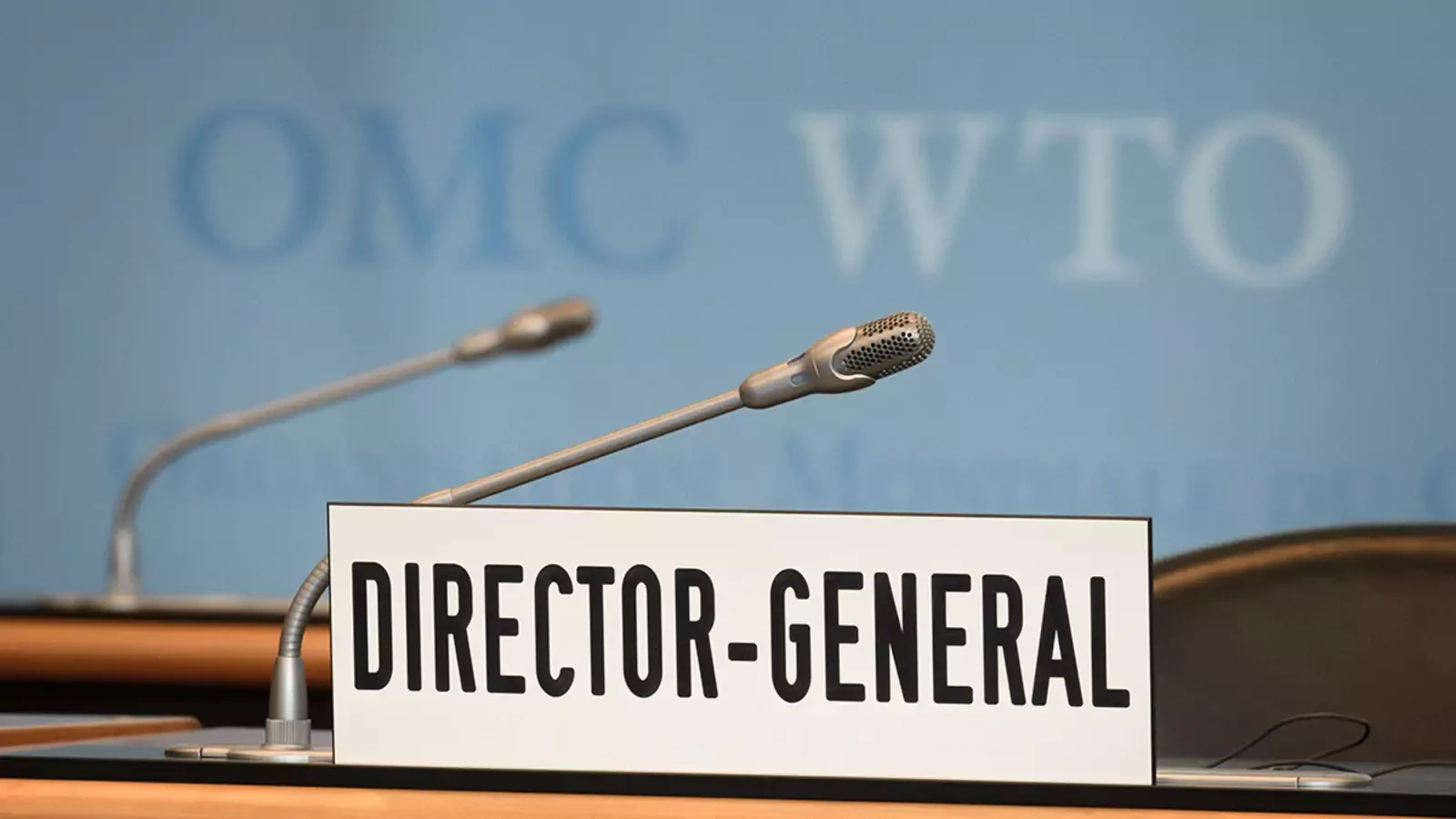
What to Know About the Race to Lead the WTO

by Jennifer Hillman
Source Link

The World Trade Organization (WTO) was left leaderless on Monday when Director-General Roberto Azevedo stepped down with a year left in his term. His departure comes at a pivotal moment for the governing body of international trade, which was in trouble even before the coronavirus pandemic upended the global economy.

Eight candidates are in the running to replace Azevedo. Meanwhile, WTO members were too divided to even agree on an interim director, in part due to the United States’ insistence that they be an American.

The succession process is designed to reach a consensus on a new director-general by November 7. However, some slippage in the date, particularly given the U.S. election on November 3, is likely. The process involves a winnowing down of the candidates in successive rounds beginning on Labor Day, known as “confessionals,” in which the selection committee will hear the preferences of all 164 WTO members. Developed in 2002, the process has worked so far to reach a consensus, but now, gridlock among the biggest economies increasingly hampers the WTO’s operations.

What does the director-general do and why is the role important? 

Fewer Threats, More Bandwidth: DISA Awards $199M For Cloud Browsing

By KELSEY ATHERTON

ALBUQUERQUE: The Defense Information Systems Agency awarded $198.9 million for a Cloud Based Internet Isolation contract to Menlo Security and By Light, the agency announced today. DISA hopes Menlo Security’s tech can, by keeping downloads in the cloud, reduce harmful downloads across the entire Pentagon workforce. By keeping browsing inside the cloud, the program will save on bandwidth, and protect against the department’s 3.5 million users accidentally downloading malware.

It is a kind of “air-gapping,” the style of computer security that keeps networks safe by making sure that computers are not physically connected at all times. Leaving the browser, and all its contained history, in a virtual environment in any of a number of servers makes it harder for adversaries, be they criminals, nonstate actors, or nations, to target the actual computers or tablets used by the military.

Internet browsing is mostly downloading files directly to the end-user’s computer or mobile device. What the Cloud Based Internet Isolation (CBII) does is make sure that all that downloading happens, not on the end user’s computer, but instead in a remotely secured server.

Anduril’s New Drone Offers to Inject More AI Into Warfare


THIS SPRING, A team of small drones, each resembling a small, sensor-laden helicopter, scoured a lush stretch of wilderness near Irvine, California. They spent hours circling the sky, seeking, among other things, surface-to-air missile launchers lurking in the brush.

The missiles they found weren’t enemy ones. They were props for early test flights of a prototype military drone stuffed with artificial intelligence—the latest product from Anduril, a defense-tech startup founded by Palmer Luckey, the creator of Oculus Rift.

The new drone, the Ghost 4, shows the potential for AI in military systems. Luckey says it is the first generation that can perform various reconnaissance missions, including searching an area for enemy hardware or soldiers, under the control of a single person on the ground. The vehicle uses machine learning (the method behind most modern AI) to analyze imagery and identify targets, but it also relies on more conventional rules-based software for critical control and decisionmaking among swarm teammates.

Luckey says the drones can carry a range of payloads, including systems capable of jamming enemy communications or an infrared laser to direct weapons at a target. In theory the drone could be fitted with its own weapons. “It would be possible,” he says. “But nobody’s done it yet.”

Kill Chain In The Sky With Data: Army’s Project Convergence

By SYDNEY J. FREEDBERG JR.

WASHINGTON: In the 100-degree heat of the Yuma desert, Army troops are getting glimpses of how artificial intelligence can help their future fight. Aerial reconnaissance data automatically fills handheld digital maps with threats and targets, while smartphone apps allow them to take temporary control of passing drones to look through their sensors and fire missiles – that is, when the networks work and the tires don’t blow.

“We’ve had Grey Eagle tires exploding on the ramp because it’s so darn hot,” Brig. Gen. Walter Rugen told me. “Some guys [are] working 20 hours a day” to get different Army systems to exchange data they were never designed to share.

But the whole point of the Army’s Project Convergence exercises at Yuma Proving Ground this fall is to take the service’s big ideas for future warfare and test them in the real world. The Army wants to figure out what works and what needs fixing – and figure that out as early on as possible, when it’s much cheaper to make changes. That’s what the service failed to do in its last attempt to link drones and ground troops this ambitiously, the Future Combat Systems program, cancelled in 2009.

11 years later, technology may finally be catching up to the vision. In one recent test, Army Futures Command chief Gen. John Murray said last week, AI data-processing algorithms were able to cut the time from detecting a target to firing at it with artillery – a “kill chain” that normally takes tens of minutes to complete – down to 20 seconds.

Target Gone In 20 Seconds: Army Sensor-Shooter Test

By SYDNEY J. FREEDBERG JR

WASHINGTON: Army experiments have shortened the kill chain remarkably – from the time a satellite or drone detects a target to the time an artillery unit opens fire – to “less than 20 seconds,” the head of Army futures Command said this afternoon.

When you’re fighting an enemy like Iraq, “it was probably okay to take tens of minutes between identifying a target and actually putting round on that target,” Gen. Mike Murray told a Center for a New America Security webcast. But in a future fight against “our near-peer threats, both Russia and China… it’s not going to be tens of minutes.”

The Army’s Project Convergence wargames at Yuma Proving Ground will test a kill chain this fall combining Army and non-Army assets, Murray said:

Sensors: Targeting data will come from satellites in Low Earth Orbit – “not Army-owned, [but] joint and really interagency,” Murray said – as well as Army Grey Eagle drones and sensors on the ground.

Command & Control: That data will flow into a C2 hub at Joint Base Lewis-McChord in Washington, where it’ll be processed and analyzed by what Murray called “a developmental program” – almost certainly some form of artificial intelligence able to sort through information far faster than human staff officers. (McChord is also home to the Army’s first-ever Intelligence, Information, Electronic Warfare, & Space (I2CEWS) battalion, whose raison d’รชtre is long-range targeting for both physical and cyber weapons, though Murray didn’t say whether or not they were involved). The C2 node then calculates the best weapon to destroy that specific target.

17 September 2020

The Problem with Soft Power

Margaret Seymour

International relations is going soft, with countries from India to Qatar to Turkey opting for soft power persuasion over hard power pressure. Soft power collectively refers to the tools in a nation-state’s arsenal that do not punish, reward, or threaten other actors into preferred behavior. It stands in direct contrast to hard power, that is, the tools which do serve as sticks and carrots in international relations. Soft power, for example, includes cultural exchanges and public diplomacy initiatives to help shape behavior, while hard power might explicitly promise trade incentives, threaten economic sanctions, or military action. While the concept was first coined three decades ago by scholar Joseph Nye, soft power has been practiced by nation-states for centuries. Still, it has yet to gain the same credibility or accolades as its hard power counterpart in the national security space. In fact, U.S. soft power, by some measures, is in decline. The Soft Power 30 project ranked the United States fifth globally in 2019, its lowest position since the project began. Internally, this decline mirrors the differences in the budgetary allowances of the Department of Defense (hard power) and Department of State (soft power) for the last two decades. While some of this disparity could be attributed to the inherent cost differential of the two approaches—a PR campaign costs less than an air power campaign—the increasingly large difference between the two accounts is indicative of a U.S. overreliance on hard power.

Considering soft power’s relatively low-risk and low-cost nature, in combination with the castrated successes of military campaigns since 2000, we’re left asking the obvious question: Why hasn’t the United States shifted to a foreign policy approach that incorporates more soft power approaches in lieu of continued bloated hard power initiatives?
Developing Soft Power Approaches Is Complex

India’s turning point: An economic agenda to spur growth and jobs

By Shirish Sankhe, Anu Madgavkar, Gautam Kumra, Jonathan Woetzel, Sven Smit, and Kanmani Chockalingam

India is at a decisive point in its journey toward prosperity. The economic crisis sparked by COVID-19 could spur reforms that return the economy to a high-growth track and create gainful jobs for 90 million workers to 2030; letting go of this opportunity could risk a decade of economic stagnation. A new report from the McKinsey Global Institute identifies a reform agenda that could be implemented in the next 12 to 18 months. It aims to raise productivity and incomes for workers, small and midsize firms, and large businesses, keeping India in the ranks of the world’s outperforming emerging economies.

Section 1

India needs rapid GDP growth to create at least 90 million nonfarm jobs by 2030

A clarion call is sounding for India to put growth on a sustainably faster track and meet the aspirations of its growing workforce. Over the decade to 2030, India needs to create at least 90 million new nonfarm jobs to absorb the 60 million new workers who will enter the workforce based on current demographics, and an additional 30 million workers who could move from farm work to more productive nonfarm sectors. If an additional 55 million women enter the labor force, at least partially correcting historical underrepresentation, India’s job creation imperative would be even greater (Exhibit 1).

Afghanistan peace talks begin – but will the Taliban hold up their end of the deal?

Sher Jan Ahmadzai

Six months after the United States signed an historic accord with the Taliban of Afghanistan, the Islamic militant group has entered into talks with the Afghan government in Doha, Qatar. Meeting with the Afghan government was a condition of the U.S.-Taliban deal.

That deal will end America’s deadly and costly 19-year war in Afghanistan. But it did not resolve the Taliban’s organized military campaign to unseat the Afghan government and rule the country under strict Islamic law. In Doha, the two sides are expected to debate a comprehensive ceasefire and discuss what the Taliban’s role in governing Afghanistan should be, among other topics.

Talks were supposed to begin in March. But the Taliban’s continued attacks on Afghan forces made that impossible. After a brief ceasefire and the release of 5,000 Taliban detainees from Afghan prisons, talks were rescheduled for Aug. 17. Then the Afghan government refused to release its last 320 Taliban prisoners unless the Taliban released more Afghan soldiers from its prisons, leading to another delay.

The commencement on Sept. 12 of the “intra-Afghan” talks represents a significant step forward in the effort to end decades of war in Afghanistan, but peace is far from guaranteed.

Public Support Surges for Trump-Backed Afghan Peace Plan

BY JACK DETSCH
Source Link

Public support for Trump administration-backed peace talks to end the 19-year U.S. war in Afghanistan is surging, according to a report provided to Foreign Policy, as Afghan and Taliban negotiators began talks in Qatar this weekend.

Though the talks remain mostly shrouded in secrecy from the U.S. Congress and the American public, the Eurasia Group Foundation, a New York-based nonprofit, found strong public support among both Republicans and Democrats for the planned withdrawal of all remaining U.S. troops over the next 14 months. Meanwhile, the portion of those calling for U.S. forces to stay in Afghanistan to ensure the defeat of the Taliban and al Qaeda has halved since last year, to just 15 percent of respondents.

The survey found that fatigue with the Afghan war is dovetailing with a broader public desire to see the U.S. Defense Department reduce its footprint overseas and for Congress to slash military spending while reasserting its authority over U.S. war-making authority.

Though the start of the talks has been delayed for months as the Taliban continued military offensives despite pledging to reduce violence, U.S. Defense Secretary Mark Esper touted the start of Afghan negotiations as a “historic moment” in a statement on Saturday. “It is crucial for both sides to take advantage of this opportunity to make a truly Afghan-led and Afghan-owned peace process a success,” he added.

For Real Peace, Afghanistan Needs a Plan B

By Nishank Motwani


In a recent op-ed in the Washington Post, Afghan President Ashraf Ghani outlined what he saw as the objective for his country: “a sovereign, united, democratic Afghanistan at peace with itself, the region and world, capable of preserving and expanding the gains of the past two decades”. For a nation that has seen so many years of conflict and suffering, it is a goal that can’t come soon enough. And his government’s efforts to make good on the U.S.-Taliban peace agreement signed earlier this year by releasing more than 5000 Taliban prisoners shows the lengths to which Ghani will go to prove his commitment.

The Taliban have made no comparable concessions. The Taliban’s consistent position has been to capture state power in Afghanistan. The patronage the group receives from Pakistan demonstrates their common end goal is in direct contrast to Kabul’s objectives. This kinship is unsurprising, given Pakistan’s desire for Islamist rather than nationalist rule to consolidate its influence over Afghanistan, and the Taliban’s aim to impose a puritanical Islamic state to outlaw all other forms of ideological or political competition.

If there is to be any chance of realising the vision Ghani describes, Afghanistan desperately needs a Plan B, a strategy to protect the fragile democracy the country has built over the last two decades. Otherwise, a regression to the dark days of the past is practically inevitable.