3 April 2022

Putin’s Pyrrhic Victory

Brian Milakovsky

On March 25, the deputy chief of the Russian military declared that the main emphasis of Russia’s brutal one-month-old Ukraine invasion would now be in the east, where it would seek “the liberation” of the Donbas. To many Western observers, the aim of the statement was clear: with the Russian offensives around Kyiv, Kharkiv, and other major Ukrainian cities virtually stalled and Russian forces absorbing heavy losses, Moscow needed a way to reclaim the mission. Focusing on the Donbas—where it has long been commanding, arming, and reinforcing separatists in Ukraine’s Donetsk and Luhansk provinces—was a convenient way to do so.

One Of Russia’s Newest Air Defense Systems Has Been Captured In Ukraine

JOSEPH TREVITHICK

Ukrainian forces continue to capture, or at least stumble across, examples of some of Russia's most sophisticated ground combat hardware as the conflict in the country rages on. Just this past weekend, pictures emerged online showing a Russian radar-equipped air defense command post vehicle, part of a larger system known as Barnaul-T, that Ukrainian troops found during a counteroffensive in the northeastern Kharkiv region. The fact that this vehicle is intended to serve as a sensor, command and control, and communications node all rolled into one could make it a particularly invaluable source of intelligence for Ukrainian and foreign governments, as well as be a significant operational loss for Russian forces.

Ukrainian Mi-24 Attack Helicopters Fly Daring Cross-Border Strike On Russia: Reports

TYLER ROGOWAY

Details are very limited at this time and are likely going to change as more information comes available, but reports indicate that a pair of Ukrainian Mi-24 Hind attack helicopters crossed low over the border into Russia early Friday morning and struck an oil storage facility in Belgorod. If these details stick, the pre-dawn strike is the riskiest direct attack on Russian interests outside Ukraine by Ukrainian forces since the war began five weeks ago — it would also seemingly be the first strike launched by manned aircraft against Russian territory since at least the Korean War.

A Country of Their Own

Francis Fukuyama

Liberalism is in peril. The fundamentals of liberal societies are tolerance of difference, respect for individual rights, and the rule of law, and all are under threat as the world suffers what can be called a democratic recession or even a depression. According to Freedom House, political rights and civil liberties around the world have fallen each year for the last 16 years. Liberalism’s decline is evident in the growing strength of autocracies such as China and Russia, the erosion of liberal—or nominally liberal—institutions in countries such as Hungary and Turkey, and the backsliding of liberal democracies such as India and the United States.

Space Technologies – Key to the Modern Battlefield

Grant Anderson

The volume of information and video footage – both from perspectives on the ground and from high in the sky – coming out of the war in Ukraine is simply astounding. Certainly, the world has been exposed to detailed and wrenching combat footage – live and near-live – in wars past, starting really in Vietnam, leaping into real-time in Operation Desert Storm in 1991, and becoming more intimate with every conflict since the September 11th terrorist attacks. But the bird's eye view into combat has never been like this.

17 March 2022

Russia Ukraine Conundrum

Maj Gen PK Mallick, VSM (Retd)

… Biden said that President Vladimir Putin “has never seen sanctions like the ones I promised will be imposed if he moves”... “If they actually do what they’re capable of doing with the forces amassed on the border, it is going to be a disaster for Russia if they further invade Ukraine, and that our allies and partners are ready to impose severe costs and significant harm on Russia and the Russian economy…” as of end February 2022, all these conjectures had been thrown in the wind. The invasion is underway. Times are extremely critical and the attention of the whole world will be on Ukraine …


Russia-Ukraine crisis: Likely insurgency in Ukraine

Maj Gen PK Mallick, VSM(Retd)

Vladimir Putin has never lost a war. Over his two decades in power, during past conflicts in Chechnya, Georgia, Syria and Crimea, Putin succeeded by giving his armed forces clear and achievable military objectives that allowed him to declare victory. Will his latest initiative in Ukraine be any different? We will see.

Putin’s motivations in starting this war may become more evident in the coming days as Russia continues its offensive. But if his aims are redrawing borders or toppling the current government after quickly taking over Kyiv and asserting control over the eastern half of the country, the risk of a prolonged insurgency, supported by the West, would always remain. The Russians may have calculated that occupation is manageable. It is also not certain that regular Ukrainians are prepared to go for the insurgency, and a flat country doesn’t lend itself to guerrilla tactics. However, Guerrilla forces can cause havoc along the supply lines that will provide the logistic needs of an occupying force.

16 March 2022

OSINT accurately predicted Russia’s invasion of Ukraine. But what is Kremlin’s end state?

Maj Gen PK Mallick, VSM(Retd)

In any military campaign, surprise and deception are always very crucial factors. Due to the continuous satellite coverage and Open Source Intelligence (OSINT) resources, knowledge of Russia’s concepts of operation, the familiarity of terrain features etc. has made defence analysts like Seth Jones of CSIS envisage accurately Russia’s like courses of actions. This includes how the operations would unfold with a full-scale Russian offensive employing land, air, and sea power on all axes of attack. It was foreseen that Russia would establish air and naval superiority. Some Russian ground forces would then advance toward Kharkiv and Sumy in the northeast and others now based in Crimea and the Donbas would advance from the south and east, respectively. Russian forces in Belarus could directly threaten Kyiv, and these forces could move on Kyiv to hasten the Ukrainian government’s capitulation.

Ukraine-Russia Conflict: Putin’s likely courses of action

Maj Gen PK Mallick, VSM, (Retd)

Russian air and land forces are pressing into Ukraine from three sides. The three-way Russian advance is being contested but moving ahead. A US senior defence official told reporters in Washington on Thursday, “It is likely that you will see this unfold in multiple phases. How many, how long, we don’t know. But what we are seeing are initial phases of a large-scale invasion. Thus far, we have seen an advance on what are essentially three main axes of assault. One is northward from Crimea toward Kherson; another southward basically from Belarus to Kyiv; and the third from Belarus southwest toward Kharkiv, Ukraine’s second-largest city. These three axes are what we believe, clearly designed to take key population centers. I’m saying they’re making a move on Kyiv…They have every intention of decapitating the government and installing their own method of governance. We see the heaviest fighting in and around Kharkiv, right now

War in Ukraine – It is Conventional war & not Hybrid or Gray

Maj Gen PK Mallick, VSM, (Retd)

Russian forces began a large-scale invasion of Ukraine early on Thursday morning local time as Vladimir Putin announced the start of a “special military operation.” This closed several months of speculation and debate over the purpose of Moscow’s military build-up. However, it is easier to start wars than to end them. Once begun, their course and consequences are impossible to predict. As they say no plan survives the first shot fired in anger. It is not clear what the end state Russia wants after the military operations.

Russia – Ukraine Crisis: As West race to prevent war, why Putin will not allow Kiev to join NATO

Maj Gen PK Mallick, VSM (Retd)

Drumbeats of war were being sounded for some time in Ukraine Russian border with an estimated 150,000 Russian troops massed on three sides of Ukraine. Hectic diplomatic parleys were going on. There were speculations that action may start after the end of Winter Olympic games. Saturday’s statement by Russian President Vladimir Putin ordering forces into separatist regions of eastern Ukraine may well have been a beginning of some military action. Putin said,“I consider it necessary to take a long-overdue decision: To immediately recognize the independence and sovereignty of Donetsk People’s Republic and Luhansk People’s Republic.” Putin’s recognition of the Donetsk and Luhansk rebel regions’ independence paves the way for the long-feared Russian invasion and effectively shatters the Minsk peace agreements.

1 January 2022

New Years Wishes Happy And Healthy

Here is wishing you and your families a very happy new year.

With the pandemic, last year has been very tough. Hope the new year will bring more hope and prosperity.

I have been running this website/earlier blogsite single-handedly for the last 10 years. I have not missed a single day during these years to upload papers.

I needed some support which is not forthcoming. I am not also getting younger.

It is now time, to move on.

I wish to thank each one of you who have been part of this journey.

As old habits of 10 years die land, I may come back as some different avtar after some time. But, I have not decided yet.

From 01 Jan 2022 there will be no further edition of Indian Strategic Studies (https://www.strategicstudyindia.com/).

Once again wish you a very happy and prosperous new year.


                           Maj Gen PK Mallick, VSM (Retd)

                           Email id: strategicstudy2012@gmail.com

31 December 2021

Indian Space Association (ISpA): India on the Move in Space Domain

Maj. Gen. P K Mallick, VSM (Retd) 

Introduction

Prime Minister Narendra Modi, on 11 October, 2021, launched the Indian Space Association (ISpA), an industry body comprising various stakeholders of the Indian space domain.


The Prime Minister said, “ISpA is a premier industry association of space and satellite companies, which aspires to be the collective voice of the Indian space industry. It will undertake policy advocacy and engage with all stakeholders in the Indian space domain, including the government and its agencies. These reforms will provide opportunities for both industry and academia.”

The members of ISpA include government bodies Organisation (ISRO) and private telecom companies. The founding members include leading domestic and global corporations that have advanced capabilities in space and satellite technologies such as Bharti Airtel, engineering firm Larson & Toubro, and other companies such as Nelco of Tata Group, Sunil Bharti Mittal’s OneWeb, Mapmyindia, Walchandnagar Industries and Alpha Design Technologies and Ananth Technology Limited . Other core members include Godrej, Hughes India, Azista-BST Aerospace Private Limited, BEL, Centum Electronics, and Maxar India. The first few start-ups to become members include Astrome Technologies, Pixxel, Agnikul Cosmos, Digantra, and Skyroot Aerospace.


The Andaman and Nicobar Islands: New Delhi’s Bulwark in the Indian Ocean

Ashutosh S. Patki

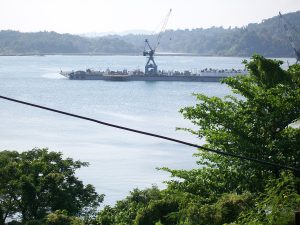
In 2015, the Indian government drew up a 100,000 million Indian rupee plan funded by the Ministry of Shipping and the Andaman and Nicobar Islands administration to transform the Andaman and Nicobar Islands (ANI) into the country’s first maritime hub. In 2018, Prime Minister Narendra Modi visited the islands for the first time, inaugurating several development projects relating to connectivity, energy, and tourism, among other things. Most recently, he inaugurated the Chennai-Andaman and Nicobar undersea internet cable, which is set to provide a high-speed internet connection to seven remote islands of the ANI chain.

The islands have also seen the recent installation of 31 GPS strong motion sensors and accelerometers, SMS alerts dissemination systems, 13 Automated Weather Stations, State Emergency Operation Centers, and the commissioning of a solar power plant at Attam Pahad. The government of India under NITI Aayog’s “Holistic Development Program” for the islands has invited global players to invest in a wide-ranging social and infrastructure development program, including investments in resorts and other tourist infrastructure.

Critical Minerals for India: Assessing their Criticality and Projecting their Needs for Green Technologies

Rajesh Chadha & Ganesh Sivamani

Executive Summary

This working paper assesses the level of criticality of 23 select minerals for India’s manufacturing sector. Various indicators quantify the criticality along the dimensions of economic importance and supply risk. The paper projects India’s mineral needs for green technologies, including renewable electricity generation and electric vehicle manufacturing, in line with the country’s various climate change mitigation objectives over the next two decades.

Lithium, strontium, and niobium have relatively high economic importance, and heavy rare earth elements, niobium, and silicon have relatively high supply risks. The results of this projection exercise indicate that India is not equipped to meet its green technology requirements through domestic mining alone. Imports of minerals for domestic manufacturing or imports of the final product (embedded in these minerals) will be needed to meet its policy agenda on climate change mitigation.

Pakistan revamps education at the point of a gun

James M. Dorsey

A prominent religious scholar and former member of the state-appointed Council of Islamic Ideology that ensures that legislation conforms with Islamic law, Mr. Ghamidi calls a spade a spade in a country in which that can have dire consequences.

To be sure, Mr. Ghamidi can do so because he is no longer resident in Pakistan and therefore less vulnerable. Exile may deprive him of an in-country pulpit but makes his analysis and views no less relevant.

Most recently, Mr. Ghamidi did not shy away from holding responsible just about everyone in Pakistan -- the military, the legislature, the clergy, the government, and the intelligentsia – for the brutal torture, lynching, and mutilation by a mob in the eastern city of Sialkot of a 48-year old Sri Lankan textile factory manager, Priyantha Kumara, accused of blasphemy.

The government condemned the killing and arrested alleged perpetrators but appears oblivious to the underlying structures and policies that enable religious vigilantism.

Omicron Will Test China’s ‘Zero COVID’ Pandemic Strategy

Howard W. French

Last weekend, the number of new symptomatic COVID-19 cases in China hit a peak not seen since the early days of the coronavirus pandemic. The spike was seen as significant enough to warrant locking down Xi’an, a city of more than 13 million people.

Here, as a writer, I feel a little ill-equipped to flesh out this news without some kind of dramatic accompaniment, so please imagine a drumroll. The reported new high for daily symptomatic cases in this country of 1.4 billion people was all of 164

Corridors of Power: How Beijing uses economic, social, and network ties to exert influence along the Silk Road

Samantha Custer, Justin Schon, Ana Horigoshi

This report analyzes Beijing’s efforts to cultivate economic, social, and network ties with 13 countries in South and Central Asia (SCA) over two decades. These ties foster interdependence with the PRC that have the potential to both empower and constrain SCA countries, while threatening to displace or diminish the influence of regional rivals such as Russia, India, and the United States. We marshal a robust set of qualitative and quantitative data to answer four critical questions: (i) How far does Beijing’s public diplomacy footprint extend within countries? (ii) To what extent does the PRC synchronize its economic and soft power tools in reinforcing ways? (iii) Is the PRC well-positioned to adapt its public diplomacy in the face of external shocks such as COVID-19? (iv) How do citizens in SCA countries view the PRC versus other great powers and do these attitudes diverge from their leaders? The answers to these questions provide an evidence base to inform contemporary debates about Beijing’s multi-dimensional influence playbook and how citizens respond to great powers jockeying for primacy in the region.

Americans must rally against the real threat to our democracy: China

Hugh Hewitt 

“I don’t like you,” Samuel L. Jackson yells at Bruce Willis in 1995’s “Die Hard With a Vengeance,” “because you are going to get me killed.” That sort of frustration likely sits near the root of what divides Americans as the year ends: a suspicion that the other side is going to ruin everything. Whatever the root cause, our current venom-based politics will cripple our country if only by diverting our eyes from the one genuinely existential threat: the Chinese Communist Party.

Make an early New Year’s resolution for your country’s sake: Even if you won’t put down your dueling sabers with the other side in our endless cultural and political wars, you will at least try to see that the real danger is China.

Elections in 1968, 1980 and 2004 were driven by unique national security concerns — the Vietnam War, the Soviet Union’s invasion of Afghanistan and a generalized feeling of incompetence in matters foreign, and of course 9/11. The elections of 2022 and 2024 might fall into this category if the country’s political and chattering classes reject both the tyranny of their extremes and the obsessions of social media and cable news. The country cannot afford another 15 years of self-absorption. We can’t afford five.

Saving a Water-Stressed Middle East

Neda Zawahri

The Middle East and North Africa (MENA) will be the most severely affected by climate change. A report by the Intergovernmental Panel on Climate Change forecasts that this region will inevitably experience shorter and warmer winters, hotter and drier summers, and more extreme weather events. Combined, these changes will decrease domestic water resources. In a region already plagued by severe freshwater shortages, any decrease or variability in supplies is likely to intensify an escalating water crisis. Consequently, the region is considered one of the most vulnerable places in the world to the impact of climate change on domestic water resources.

The MENA region is also the world’s driest region. While it contains less than 2 percent of global renewable freshwater resources, it is home to around 6 percent of the world’s population. Twelve of the world’s most water-scarce states are located here, including Algeria, Bahrain, Kuwait, Jordan, Libya, Oman, the Palestinian Territories, Saudi Arabia, Tunisia, the United Arab Emirates (UAE), and Yemen.

Major Power Rivalry and Multilateral Conflict Management

Richard Gowan

In a period of growing major power competition, senior U.S. policymakers may have little time for problems associated with civil wars and regional conflicts. Yet if those conflicts go unaddressed, some are liable to escalate into broader humanitarian and political crises and—depending on their location and the stakes involved—draw in the major powers to some degree. Even if the primary U.S. focus is now on China and Russia, a strong case can be made for investing in conflict management elsewhere to avoid unexpected foreign policy shocks.

Though the major powers will decide their policies on conflict-affected countries on a case-by-case basis, convening broader discussions of the evolution of conflict management and reinforcing international crisis management structures will be valuable. The United States should test China’s and Russia’s willingness to participate in more technical discussions of humanitarian affairs, peacekeeping, and related topics among the five permanent members of the Security Council (P5), with the goal of sketching U.S. priorities for subsequent higher-level meetings. The United States should also continue to look for ways to reinforce regional organizations—such as renewing talks on UN funding for African Union peace operations or staffing and logistical support to African regional mediators—which will have a significant or growing role in international conflict management.

While some U.S. observers remain wary of China’s growing interest in UN peacekeeping, these concerns should not be overstated. China’s role in peace operations remains limited and does not challenge U.S. strategic interests. Washington can afford to test Beijing’s interest in more cooperation in this field, possibly by proposing to work together on those areas, such as increasing the safety and security of peacekeepers, that Beijing has prioritized. This should begin with policy talks between respective diplomats in New York, and potentially continue with small common projects—such as joint safety training—in the field.

International humanitarian agencies such as the World Health Organization and the UN High Commissioner for Refugees will be at the forefront of conflict management efforts. The U.S. Agency for International Development and the U.S. Mission to the United Nations should corral other major aid donors to address these problems together since the United States has a strong interest in developing more efficient aid mechanisms. The United States should also try to induce China to join these discussions and throw more money in the international pot.

The future of international conflict management will likely be messy and shaped by unforeseen events. U.S. initiatives alone will not resolve the fundamental drivers of current armed conflict or erase the problems of major power competition, but the United States can help multilateral institutions adapt to an uncertain future. It would be a mistake for the United States, China, and Russia to allow their overall differences to blind them to areas for cooperation, which can at least limit worsening instability in an era of heightened tensions.

This is the eighth Discussion Paper in the Managing Global Disorder series, which explores how to promote a stable and mutually beneficial relationship among the major powers that can in turn provide the essential foundation for greater cooperation on pressing global and regional challenges.

U.S.-China technology competition


The scale and speed of China’s technological advancements in recent years have raised concerns in Washington and elsewhere over the implications for the United States’ overall economic competitiveness and its national security, as well as the impact on liberal values and good governance globally. There also has been growing concern about the fragmentation of the global technology sector, including the rise of divergent standards and norms, as the Chinese technology market increasingly decouples from those of the United States and the West more broadly.

To evaluate the merits of these concerns and identify potential policy remedies to them, Ryan Hass, Patricia M. Kim, and Emilie Kimball, the co-leads of the Brookings Foreign Policy project “Global China: Assessing China’s Growing Role in the World,” convened 10 additional Brookings scholars – Jessica Brandt, David Dollar, Cameron F. Kerry, Aaron Klein, Joshua P. Meltzer, Chris Meserole, Amy J. Nelson, Pavneet Singh, Melanie W. Sisson, and Thomas Wright – for a written exchange on the role of technology in U.S.-China competition. These experts, drawn from a range of disciplines, were asked to offer their best judgments on the implications of China’s growing technological capabilities and steps the United States could take to strengthen its own technological competitiveness and protect its values. The following are a few key takeaways from their exchange:

Here's the strategy to prevent China from taking Taiwan

DAVID OCHMANEK AND MICHAEL O’HANLON

With the recent revelations that China has built mockups of American warships in its interior desert, presumably for military training purposes, we should not need more reminders about the urgency of bolstering deterrence against a possible Chinese attack against Taiwan. For Beijing, undertaking such an attack, especially an all-out invasion, would be a cosmic roll of the dice. But war games and calculations we have conducted show that China’s armed forces might be able to pull it off.

For example, they might barrage Taiwan’s airfields and air defenses, ports, big ships, lines of communication and command/control systems with missile and air attacks before then loading up amphibious vessels for an assault on the island. With Taiwan’s air defenses suppressed, the amphibious assault could be followed up with an airborne invasion by paratroopers and transport helicopters. China might well also strike American forces and bases in the western Pacific, to include aircraft carrier battle groups, aiming to cripple any U.S. effort to defend Taiwan.

Too many of those forces and bases are vulnerable to such attacks, and planned improvements do not, in the main, do much to fix those vulnerabilities.

Report on U.S.-China Competition in East, South China Sea


The following is the Dec. 12, 2021, Congressional Research Service report U.S.-China Strategic Competition in South and East China Seas: Background and Issues for Congress.
From the report

Over the past several years, the South China Sea (SCS) has emerged as an arena of U.S.-China strategic competition. China’s actions in the SCS—including extensive island-building and base-construction activities at sites that it occupies in the Spratly Islands, as well as actions by its maritime forces to assert China’s claims against competing claims by regional neighbors such as the Philippines and Vietnam—have heightened concerns among U.S. observers that China is gaining effective control of the SCS, an area of strategic, political, and economic importance to the United States and its allies and partners. Actions by China’s maritime forces at the Japan-administered Senkaku Islands in the East China Sea (ECS) are another concern for U.S. observers. Chinese domination of China’s near-seas region—meaning the SCS and ECS, along with the Yellow Sea—could substantially affect U.S. strategic, political, and economic interests in the Indo-Pacific region and elsewhere.

The Charles Lieber case reveals America’s scientific rivalry with China


Charles lieber, a renowned chemistry professor at Harvard, tried to avoid jail by lying to federal investigators about his work in China over the past decade. It may have seemed a reasonable if unethical gamble; the federal probe was investigating allegations that China was stealing scientific insights. No evidence suggests that Mr Lieber stole anything. But sometimes the cover-up is not just worse than the crime—it is the crime. On December 21st Mr Lieber was found guilty of lying to federal authorities and failing to declare both income earned in China and a Chinese bank account. He could face up to 26 years in prison and $1.2m in fines, though as a first-time offender he will probably not be punished so harshly. Still, Mr Lieber is 62 and has late-stage lymphoma. A few years behind bars could prove a life sentence.

His downfall is a cautionary tale. America’s intensifying geopolitical rivalry with China has made previously innocuous relationships with Chinese academics suspect. As in similar cases the Department of Justice (doj) has pursued, proving that Mr Lieber or his associates engaged in espionage was a tall order. His hubris made their job easier. Yet as the crackdown on Chinese economic espionage continues apace, American science could suffer.

It’s Biden’s Turn to Face Putin’s Ukraine Test

William A. Galston

President Barack Obama warned Vladimir Putin in March 2014 not to move Russian troops against Ukraine and told him that his country would face painful economic countermeasures if he ignored the warning. Mr. Putin ordered his special forces to seize the Crimean Peninsula two weeks later and soon claimed it as Russian territory.

Now it is President Biden’s turn to be tested by the Russian leader, and the stakes are even higher. Russia’s troops are massed at the Ukrainian border, and they appear ready to invade as soon as the order is given.

Mr. Putin has put his cards on the table. To eliminate the threat of armed conflict, he insists, the North Atlantic Treaty Organization must pledge never to admit Ukraine as a full member, and NATO must roll back the military assets it has deployed in Poland and the Baltics and in other nearby countries that don’t border Russia.

Mr. Putin is no fool. He knows that the U.S. and NATO cannot agree to his demands. This leaves two possibilities: Either he will use the West’s refusal as a pretext for invasion, or he will use the threat of invasion as leverage for diplomatic concessions he couldn’t otherwise obtain.

Why Is America Pushing Russia and China Together?

Joergen Oerstroem Moeller

Since 1972, it has been a cornerstone of U.S. foreign and security policy to divide China and Russia. Any attempt to form an understanding or even worse an alliance—tacit, written, or embryonic—directed against the United States should be derailed. President Richard Nixon and Henry Kissinger visited China in 1972 precisely to break up what was thought to be a Chinese-Soviet alliance.

Today, this policy has been effectively abandoned. U.S. foreign policy apparently now prioritizes issues that not only allow but push China and Russia into each other’s arms—notwithstanding well-known bilateral disputes and even confrontations. The two countries have never seen one another as natural friends. Military skirmishes over border disagreements have taken place. Russia, as one of the largest net exporters of fossil fuels, benefits from a high oil price. China, the biggest net importer, benefits from a low price. On the major issue of climate change, they disagree too. On December 13, 2021, Russia vetoed a UN Security Council resolution casting the climate crisis as a threat to international peace and security. China abstained. A month earlier at the UN Climate Conference, Beijing signed an agreement with the United States that, John Kerry, President Joe Biden's special envoy on climate, called “a road map for our future collaboration” to lower greenhouse gas emissions.

Combating Terrorism Center (CTC)


The Oath Keepers and Their Role in the January 6 Insurrection

A View from the CT Foxhole: Brigadier Rob Stephenson, Deputy Commander, NATO Special Operations Headquarters

The Iron March Forum and the Evolution of the “Skull Mask” Neo-Fascist Network

Holding Women Accountable: Prosecuting Female Returnees in Germany

A Roadmap for Managing Disasters: How Climate-Vulnerable Countries Can Access Tech


Climate crises threaten to displace 1.2 billion people by 2050, with the cost of adapting to these new threats estimated to reach the range of $280 billion to $500 billion per year. Vulnerable people and regions, including sub-Saharan Africa, will be disproportionately impacted. Yet climate-vulnerable countries have received minimal funding for adaptation to date. Early-warning and early-action systems have an essential role to play in enabling effective disaster-preparedness and response efforts. As we outlined in the opening paper of our series on climate disasters and tech, tech-enabled solutions could potentially help to prevent $66 billion in loss and damage annually. The second paper in the series laid out exactly how these solutions can be used.

Early-warning and climate-information systems are essential for enabling effective disaster preparedness and response efforts, and data- and risk-informed decision-making relies on leveraging the various technologies that underpin these systems in the right ways and at the right time. Early warning and early action also require high-quality, accurate data to be collected and analysed for risk-informed impact forecasts and targeted-response action plans.

Terrorism Research Initiative (TRI)

Perspectives on Terrorism, December 2021, v.15, no. 6

A New Wave of Terrorism? A Comparative Analysis on the Rise of Far-Right Extremism

Extremist Exploitation of the Context Created by COVID-19 and the Implications for Australian Security

CBRN Terrorism Interdictions (1990-2016) and Areas for Future Inquiry

Myanmar’s Arakan Rohingya Salvation Army (ARSA): An Analysis of a New Muslim Militant Group and its Strategic Communications

Linking the August 2017 Attacks in Barcelona and Cambrils to Islamic State External Security Apparatus Through Foreign Fighters

Granting Efficacy to the Religious Motives of Terrorists: A Reply to Schuurman’s Response to “Bringing Religiosity Back In, Parts I & II”

Counter-Terrorism Bookshelf: 8 Books on Terrorism & Counter-Terrorism-Related Subjects

Nina Kรคsehage (Ed.). Religious Fundamentalism in the Age of the COVID-19 Pandemic. Mรผnster: Transcript, 2021

Bibliography: Hostage Takings and Extrajudicial Executions (Part 1)

Recent Online Resources for the Analysis of Terrorism and Related Subjects

Can Latin America and the Caribbean Trust China as a Business Partner?

Leland Lazarus and Evan Ellis

On December 7, a few days after the third China-Community of Latin American and Caribbean States (CELAC) Forum, the Chinese Foreign Ministry released the China-CELAC Joint Action Plan for 2022-2024. It laid out Beijing’s plans to expand cooperation over a range of areas, including defense, finance, trade, public health, and cultural exchanges.

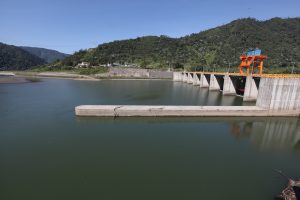
On that same day, the regional Latin American news website Infobae reported that the Ecuadorian government was suing Chinese company Sinohydro for shoddy work on the Coca Codo Sinclair dam, which has seriously harmed the Ecuadorian environment and economy. Constructed in 2016, the dam has over 7,000 cracks, is causing erosion along the Coca River, and is running well below its promised capacity. The erosion has also forced two of Ecuador’s most important gas pipelines to shut down, potentially threatening Ecuador’s ability to fulfill its export contracts. The U.S. Army Corps of Engineers is now working with the Ecuadorian government to mitigate the effects of the erosion.

U.S. and Russia Agree to Talks Amid Growing Tensions Over Ukraine

David E. Sanger

WASHINGTON — The Biden administration said on Tuesday that talks with Russia about tensions over Ukraine and a range of other issues would open on Jan. 10, in what American officials hope will mark a slow shift from a possible military confrontation on Ukraine’s eastern border to a resumption of diplomacy.

The announcement came shortly after Russia declared that 10,000 combat and special forces troops conducting exercises were returning to their barracks. But that move took place at some distance from Ukraine, and it was not clear whether the decision was part of the intense behind-the-scenes discussions underway to get Russia to pull back tens of thousands of troops at the border before serious diplomacy begins.

Jake Sullivan, President Biden’s national security adviser, said last week at the Council on Foreign Relations that “meaningful progress at the negotiating table, of course, will have to take place in the context of de-escalation, not escalation.”

Putin’s Asymmetric Blind Spot

GREGORY SIMS

OPINION — Perhaps it is just a reckless Khrushchevesque opening gambit, but Russia’s recent security demands suggest that Vladimir Putin’s condition for avoiding military action against Ukraine is Western acquiescence in converting Ukraine into a Russian vassal state. Given he also demands NATO roll back deployments of personnel and equipment to its 1997 positions, before Poland or the Baltic republics joined the alliance, it is not just Ukraine he wants to see neutered.

Russian officials never hesitate to raise their country’s genuinely horrific suffering at the hands of the Nazis during World War II when justifying their need for a cordon sanitaire at their borders, but their historical self-righteousness is highly selective. What they fail to mention, but what Russia’s neighbors will never forget, is that in 1932-33, Soviet leader Joseph Stalin precipitated a politically driven famine, the “Holodomor,” which killed nearly 5 million Ukrainians. This was followed by the 1937-38 Anti-Kulak campaign (NKVD Order 00844), resulting in the execution of another 400,000 people. The concurrent anti-Polish campaign (NKVD Order 00485) resulted in the execution of 100,000 ethnic Poles, and the Anti-Latvian campaign (NKVD Order 49990) killed more than 16,000 Latvians. Over a 15-month period, these hundreds of thousands of non-Russians were executed for the alleged crime of being “anti-Soviet.” Most were dispatched by a gunshot to the back of the neck and buried in unmarked mass graves. Many thousands more were imprisoned or deported to Siberia or Central Asia.

The Geopolitics of Video Games

Elisabeth Braw

Holiday greetings. If you are one of the world’s 3 billion video gamers, you already know that gaming consoles are the perfect present—so perfect that retailers are struggling to keep up with demand this holiday season. Delays, not to mention the global semiconductor chip shortage, have affected the production of nearly every digital gadget. Long before Black Friday, retailers had to warn consumers that many consoles could quickly sell out, leaving many shoppers disappointed. But the world of video games faces more menacing geopolitics than supply chain disruptions.

Last year, gaming industry revenues were estimated at $159.3 billion, a 9.3 percent increase over 2019. The boom wasn’t just because the coronavirus pandemic forced people to stay home: Gaming studios are turning out increasingly sophisticated entertainment. It should come as no surprise that Chinese behemoths such as Tencent have started paying considerable attention, especially to the West’s successful studios. In fact, they are buying many of them. On just one day in July, Tencent acquired two gaming firms: one British and one Swedish.

Now Is The Time For NATO To Stand Up To Russia

John Bolton

Thirty years after the Soviet Union dissolved on December 31, 1991, events in its former space seem headed in the opposite direction. Despite initially remaining passive as the USSR split into fifteen independent states, Moscow has more recently steadily pursued a hegemonic agenda, increasingly bold and increasingly successful. It provoked hostilities (notably Ukraine) and exploited weaknesses (as in Belarus) possibly leading to outright re-annexation. Existing “frozen conflicts” (Armenia versus Azerbaijan, Moldova/Transnistria, and Georgia) remained frozen or became more severe. Less-visible Kremlin economic and political initiatives are afoot across Central Asia, and in Tajikistan, Moscow’s largest military base in the former USSR outside Russia itself, its border forces never left.

How and why the West misjudged what was brewing inside Russia following the USSR’s demise is already vigorously debated. After a widespread but sadly erroneous 1990’s optimism Russia would embrace Western institutions and values, hopes for constitutional, representative government are in retreat. Despite the collapse of Europe’s Communist regimes, communism and its ways persisted. The Cold War’s winners could not impose anything comparable to post-World War II denazification, so authoritarian memories, habits, and methods endured even without their prior ideological veneer. Outsiders collectively failed to appreciate that profoundly deep Russian sentiments of revanchism and irredentism persisted below the surface, seeking opportunities to make Russia’s “near abroad” much less “abroad.” History had not ended, notwithstanding the “peace dividend” bled from the U.S. and other NATO militaries.